
Introduction
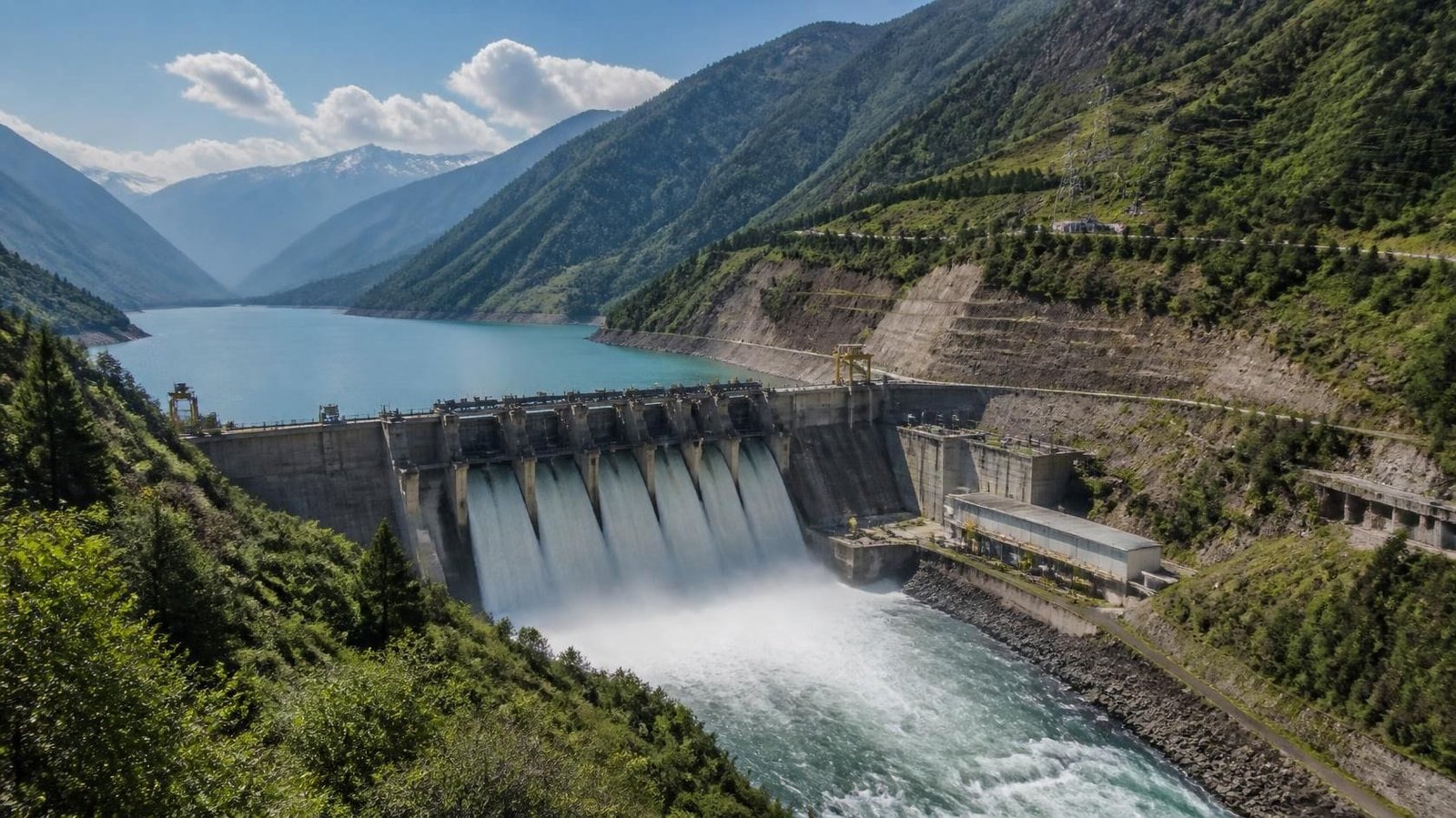
Hydropower Projects in India are among the most important sources of renewable energy, contributing significantly to the country's electricity generation and sustainable development. Hydropower generates electricity by converting the kinetic and potential energy of flowing or stored water into electrical energy through turbines and generators. As a clean, reliable, and renewable energy source, hydropower helps reduce dependence on fossil fuels while supporting economic growth and environmental conservation.
India possesses abundant water resources in the form of perennial rivers, Himalayan glaciers, mountain streams, and multipurpose river valley projects. These natural resources provide enormous potential for developing Hydropower Projects in India, particularly in the Himalayan states and the Western Ghats. Over the years, India has established numerous large, medium, and small hydropower projects to meet the country's rapidly increasing electricity demand and strengthen energy security.
What Are Hydropower Projects in India?
Hydropower Projects in India are electricity generation facilities that utilize the force of flowing or falling water to rotate turbines connected to generators. Depending on the project design, water may be stored behind a dam in a reservoir or diverted directly from a river through canals or tunnels. Since the water cycle is naturally replenished through rainfall and river flow, hydropower is considered one of the most sustainable and environmentally friendly sources of electricity generation.
Importance of Hydropower Projects in India
Hydropower plays a crucial role in India's energy sector by providing reliable, affordable, and low-carbon electricity. Besides power generation, Hydropower Projects in India support irrigation, flood control, drinking water supply, inland fisheries, navigation, tourism, and regional economic development. States such as Himachal Pradesh, Uttarakhand, Arunachal Pradesh, Sikkim, Jammu & Kashmir, Kerala, and Maharashtra possess significant hydropower potential due to their mountainous terrain and fast-flowing rivers.
- Generates clean and renewable electricity.
- Reduces dependence on coal and imported fossil fuels.
- Strengthens India's long-term energy security.
- Supports irrigation and integrated water resource management.
- Helps in flood control and drought mitigation.
- Creates employment opportunities and promotes regional development.
Role of Hydropower Projects in India's Energy Security
Hydropower Projects in India play a vital role in ensuring energy security by providing stable and flexible electricity generation. Unlike solar and wind energy, hydropower plants can quickly increase or decrease electricity production according to grid demand. In addition, Pumped Storage Projects (PSPs) store surplus electricity and release it during peak demand, making hydropower an essential component of India's modern power system and renewable energy transition.
Hydropower as a Renewable Energy Source
Hydropower is recognized as a renewable energy source because it relies on the continuous hydrological cycle driven by rainfall, rivers, and natural water flow. Compared with conventional thermal power plants, Hydropower Projects in India produce significantly lower greenhouse gas emissions during operation. They also complement solar and wind power by providing reliable backup generation, improving grid stability, and supporting India's goal of achieving sustainable development and Net Zero emissions.
What Is a Hydropower Project?
A hydropower project is an electricity generation system that converts the potential and kinetic energy of water into electrical energy. Water stored in a reservoir or flowing naturally through a river is directed towards turbines. The force of the moving water rotates the turbines, which drive generators to produce electricity. The generated power is then transmitted through high-voltage transmission lines to homes, industries, and commercial establishments.
Hydropower projects may be classified as storage-based, run-of-river, or pumped storage projects depending on their design and method of operation. These projects not only generate clean electricity but also contribute to irrigation, flood control, drinking water supply, and regional development.
Working Mechanism of a Hydropower Project
Dam
A dam is constructed across a river to control and store water. It creates sufficient water pressure, known as hydraulic head, which is essential for efficient electricity generation. Dams also assist in flood control, irrigation, and water conservation.
Reservoir
The reservoir is the artificial lake formed behind the dam where water is stored. It ensures a continuous water supply throughout the year, enabling the hydropower plant to generate electricity even during periods of reduced river flow.
Turbine
Water released from the reservoir flows through large pipes called penstocks and strikes the turbine blades. The force of the flowing water causes the turbine to rotate, converting hydraulic energy into mechanical energy.
Generator
The rotating turbine shaft is connected to a generator. As the turbine spins, the generator converts mechanical energy into electrical energy through electromagnetic induction. This electricity is then prepared for transmission to the power grid.
Transmission System
Electricity generated at the power station is transferred to transformers, where the voltage is increased for efficient long-distance transmission. High-voltage transmission lines carry the electricity to substations, from where it is distributed to residential, commercial, and industrial consumers.
How Is Hydropower Generated?
- Water is stored in a reservoir behind a dam or diverted from a flowing river.
- The intake gates are opened to allow water to flow through penstocks.
- The high-pressure water rotates the turbine blades.
- The rotating turbine drives the connected generator.
- The generator converts mechanical energy into electrical energy.
- Transformers increase the voltage of the generated electricity.
- High-voltage transmission lines deliver electricity to the national power grid.
- Electricity is distributed through substations to homes, businesses, and industries.
History of Hydropower Development in India
The development of hydropower in India has evolved significantly over the past century. From small hydroelectric stations established during the colonial period to large multipurpose river valley projects after independence, hydropower has played a crucial role in supporting the country's industrial growth, agricultural development, and energy security.
Hydropower Development Before Independence
Hydropower generation in India began during the late nineteenth and early twentieth centuries under British rule. The primary objective was to supply electricity to urban centres, railway networks, mining operations, and industries. One of the earliest hydroelectric power stations was commissioned at Sidrapong near Darjeeling in 1897, marking the beginning of commercial hydropower generation in the country.
During this period, only a limited number of hydroelectric projects were developed because electricity demand was relatively low and large-scale infrastructure investment remained limited. Most projects were concentrated in regions with favourable river systems and hilly terrain.
Hydropower Development After Independence
After India gained independence in 1947, hydropower became a key component of national development planning. The Government of India launched several large multipurpose river valley projects to generate electricity while also providing irrigation, flood control, and drinking water facilities. Major projects such as the Bhakra Nangal Dam, Hirakud Dam, Nagarjuna Sagar Dam, and Damodar Valley Project became symbols of modern India's infrastructure development.
Public sector organisations were established to accelerate hydropower development, and significant investments were made to harness the country's vast river systems, particularly in the Himalayan and Western Ghats regions.
Growth During the Five-Year Plans
Hydropower received high priority in India's Five-Year Plans. During the First and Second Five-Year Plans, emphasis was placed on constructing large dams and multipurpose river valley projects to support agriculture and industrialisation. Subsequent plans focused on expanding installed generating capacity, improving transmission infrastructure, and developing hydroelectric projects in remote and mountainous regions.
Over time, the government also promoted small hydropower projects, private sector participation, and pumped storage schemes to strengthen grid stability and improve the integration of renewable energy sources.
Present Status
Today, India is among the world's leading producers of hydroelectric power. Hydropower continues to be an important part of the country's renewable energy portfolio, with numerous operational, under-construction, and planned projects across states such as Himachal Pradesh, Uttarakhand, Arunachal Pradesh, Sikkim, Jammu & Kashmir, Kerala, and Maharashtra.
In recent years, the Government of India has encouraged the development of pumped storage hydropower projects to support the rapid expansion of solar and wind energy. Modernisation of ageing hydroelectric stations, environmental sustainability, and efficient water resource management have also become key priorities for the future growth of the hydropower sector.
Major Hydropower Projects in India
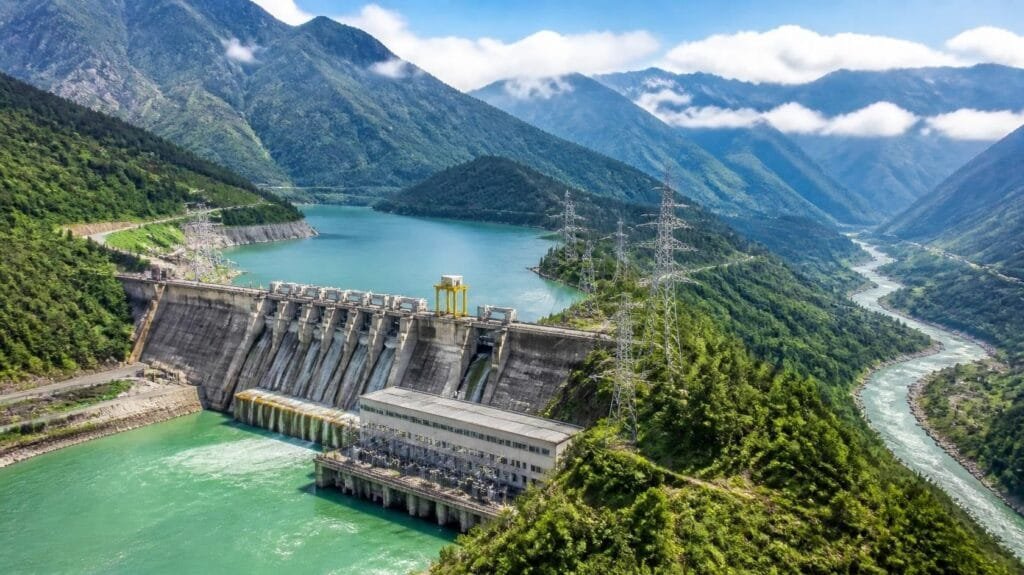
India has developed numerous hydropower projects across its major river systems to meet the growing demand for electricity while supporting irrigation, flood control, and regional development. Most large hydropower projects are located in the Himalayan region and the Western Ghats, where abundant water resources and suitable topography provide excellent conditions for hydroelectric power generation.
The following table highlights some of the major hydropower projects in India along with their respective states, rivers, and installed generation capacities.
| Hydropower Project | State | River | Installed Capacity |
|---|---|---|---|
| Tehri Hydropower Project | Uttarakhand | Bhagirathi River | 1,000 MW |
| Bhakra Nangal Hydropower Project | Himachal Pradesh / Punjab | Sutlej River | 1,325 MW |
| Sardar Sarovar Hydropower Project | Gujarat | Narmada River | 1,450 MW |
| Nathpa Jhakri Hydropower Project | Himachal Pradesh | Sutlej River | 1,500 MW |
| Koyna Hydropower Project | Maharashtra | Koyna River | 1,960 MW |
| Hirakud Hydropower Project | Odisha | Mahanadi River | 347 MW |
| Idukki Hydropower Project | Kerala | Periyar River | 780 MW |
These projects are among India's most significant hydroelectric installations and contribute substantially to the country's renewable energy generation. In addition to producing clean electricity, they support irrigation, flood management, drinking water supply, fisheries, and regional socio-economic development.
Largest Hydropower Projects in India
India has developed several large-scale hydropower projects to meet its increasing electricity demand while supporting irrigation, flood control, water conservation, and sustainable economic growth. These projects are primarily located in the Himalayan region and the Western Ghats, where perennial rivers and favorable topography provide significant hydropower potential.
The following are some of the largest and most important hydropower projects in India based on their installed generation capacity and strategic importance.
| Rank | Hydropower Project | State | River | Installed Capacity | Status |
|---|---|---|---|---|---|
| 1 | Koyna Hydroelectric Project | Maharashtra | Koyna River | 1,960 MW | Operational |
| 2 | Nathpa Jhakri Hydroelectric Project | Himachal Pradesh | Sutlej River | 1,500 MW | Operational |
| 3 | Sardar Sarovar Hydroelectric Project | Gujarat | Narmada River | 1,450 MW | Operational |
| 4 | Tehri Hydroelectric Project | Uttarakhand | Bhagirathi River | 1,000 MW | Operational |
| 5 | Sharavathi Hydroelectric Project | Karnataka | Sharavathi River | 1,035 MW | Operational |
| 6 | Idukki Hydroelectric Project | Kerala | Periyar River | 780 MW | Operational |
| 7 | Bhakra Nangal Hydroelectric Project | Himachal Pradesh / Punjab | Sutlej River | 1,325 MW | Operational |
| 8 | Subansiri Lower Hydroelectric Project | Arunachal Pradesh / Assam | Subansiri River | 2,000 MW | Under Construction / Phased Commissioning |
| 9 | Karcham Wangtoo Hydroelectric Project | Himachal Pradesh | Sutlej River | 1,091 MW | Operational |
| 10 | Indira Sagar Hydroelectric Project | Madhya Pradesh | Narmada River | 1,000 MW | Operational |
These hydropower projects play a vital role in India's renewable energy sector by generating clean electricity and improving grid stability. In addition to power generation, they provide multiple socio-economic benefits, including irrigation, drinking water supply, flood control, fisheries, tourism, and regional development. Upcoming projects such as the Subansiri Lower Hydroelectric Project are expected to further strengthen India's long-term energy security and support the country's transition toward sustainable power generation.
State-wise Major Hydropower Projects in India
Hydropower resources in India are unevenly distributed due to variations in river systems, topography, and rainfall patterns. The Himalayan states possess the highest hydropower potential because of their perennial rivers and steep gradients, while the Western Ghats also host several major hydroelectric projects. The following are some of the most significant hydropower projects located across different Indian states.
Uttarakhand
Uttarakhand is one of India's leading hydropower-producing states due to the presence of the Ganga river system and its tributaries. The mountainous terrain provides ideal conditions for large hydroelectric projects.
- Tehri Hydropower Project – Bhagirathi River – 1,000 MW
- Koteshwar Hydropower Project – Bhagirathi River – 400 MW
- Maneri Bhali Hydropower Project – Bhagirathi River
- Vishnuprayag Hydropower Project – Alaknanda River – 400 MW
Himachal Pradesh
Himachal Pradesh has abundant hydropower resources, primarily along the Sutlej, Beas, Ravi, and Chenab rivers. It is one of the largest hydropower-producing states in India.
- Nathpa Jhakri Hydropower Project – Sutlej River – 1,500 MW
- Karcham Wangtoo Hydropower Project – Sutlej River – 1,091 MW
- Bhakra Nangal Hydropower Project – Sutlej River – 1,325 MW
- Parbati Hydroelectric Project – Parbati River
Jammu & Kashmir
Jammu & Kashmir possesses immense hydropower potential because of the Indus river system and its tributaries flowing through mountainous terrain.
- Baglihar Hydropower Project – Chenab River – 900 MW
- Dul Hasti Hydropower Project – Chenab River – 390 MW
- Kishanganga Hydropower Project – Kishanganga River – 330 MW
- Salal Hydropower Project – Chenab River – 690 MW
Sikkim
Sikkim has significant hydropower potential due to the Teesta River and its tributaries. The state has developed several high-capacity hydroelectric projects.
- Teesta Stage III Hydropower Project – Teesta River – 1,200 MW
- Teesta Stage V Hydropower Project – Teesta River – 510 MW
- Rangit Hydropower Project – Rangit River – 60 MW
Arunachal Pradesh
Arunachal Pradesh has the highest untapped hydropower potential in India because of its fast-flowing Himalayan rivers and steep valleys.
- Subansiri Lower Hydropower Project – Subansiri River – 2,000 MW
- Dibang Multipurpose Project – Dibang River – Proposed
- Kameng Hydropower Project – Kameng River – 600 MW
Kerala
Kerala's hydropower projects are mainly located in the Western Ghats and are fed by high annual rainfall and perennial rivers.
- Idukki Hydropower Project – Periyar River – 780 MW
- Sabarigiri Hydropower Project – Pamba River
- Idamalayar Hydropower Project – Idamalayar River
- Kakkayam Hydropower Project – Kuttiady River
Maharashtra
Maharashtra has several important hydroelectric projects situated in the Western Ghats, contributing significantly to the state's electricity generation.
- Koyna Hydropower Project – Koyna River – 1,960 MW
- Bhira Hydropower Project – Kundalika River
- Khopoli Hydropower Project – Patalganga Basin
- Bhivpuri Hydropower Project – Ulhas Basin
Gujarat
Gujarat's hydropower generation is primarily associated with the Narmada River and multipurpose river valley projects.
- Sardar Sarovar Hydropower Project – Narmada River – 1,450 MW
- Kadana Hydropower Project – Mahi River
- Ukai Hydropower Project – Tapi River
These state-wise hydropower projects contribute significantly to India's renewable energy capacity while supporting irrigation, flood control, drinking water supply, and sustainable regional development. The Himalayan states continue to offer the greatest potential for future hydropower expansion.
Hydropower Capacity in India
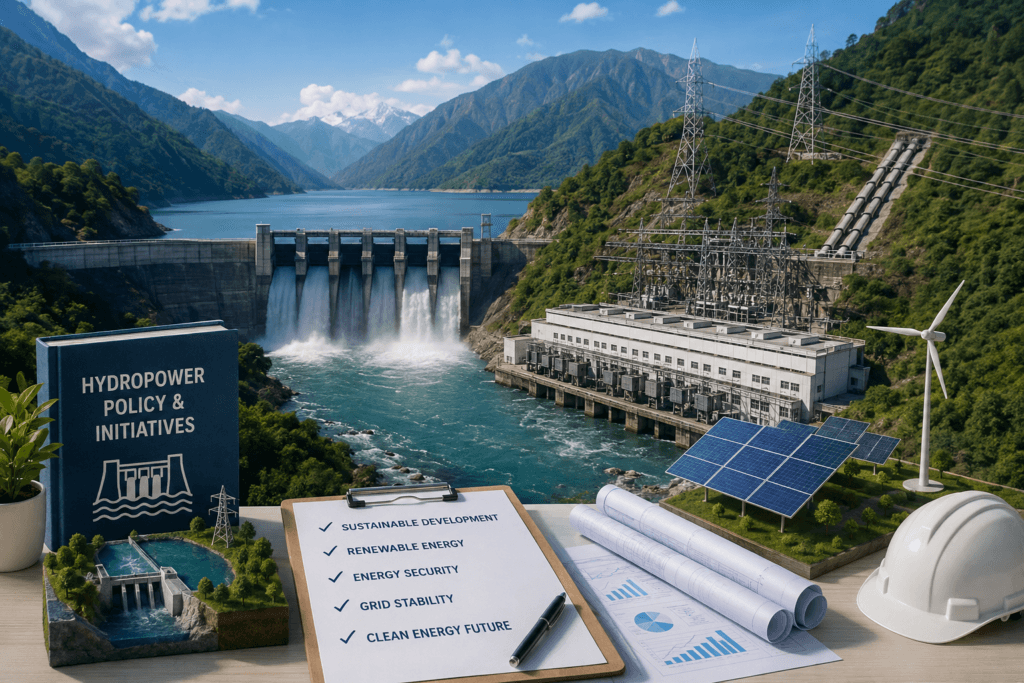
India possesses one of the world's largest hydropower resources due to its extensive river systems, diverse topography, and favorable climatic conditions. Hydropower remains an essential component of the country's renewable energy mix, providing reliable electricity, grid stability, and energy security. Although a significant portion of the available potential has already been harnessed, substantial untapped capacity still exists, particularly in the Himalayan and North-Eastern regions.
Installed Hydropower Capacity
India has developed numerous large, medium, and small hydropower projects over the past several decades. These projects contribute a significant share of the country's renewable electricity generation and provide flexible power during peak demand periods.
- Hydropower is one of India's major renewable energy sources.
- Large hydropower stations are connected to the national power grid.
- Pumped storage projects improve grid flexibility and energy storage.
- Hydropower complements solar and wind energy by providing reliable backup power.
Hydropower Potential
India has an estimated hydropower potential of more than 148 GW from large hydroelectric projects, with additional opportunities available through small hydropower and pumped storage schemes. A considerable portion of this potential remains untapped due to geographical, environmental, financial, and infrastructural challenges.
The Himalayan river systems, including the Indus, Ganga, and Brahmaputra Basins, account for the majority of India's future hydropower development potential.
Regional Distribution of Hydropower Resources
Hydropower resources are concentrated mainly in the northern, north-eastern, and western parts of India because of favorable river gradients and abundant water availability.
| Region | Major States | Hydropower Characteristics |
|---|---|---|
| Northern India | Himachal Pradesh, Uttarakhand, Jammu & Kashmir | High hydropower potential due to Himalayan rivers and steep valleys. |
| North-Eastern India | Arunachal Pradesh, Sikkim, Assam | Largest untapped hydropower resources in the country. |
| Western India | Maharashtra, Gujarat | Major hydropower projects located in the Western Ghats and Narmada Basin. |
| Southern India | Kerala, Karnataka, Tamil Nadu | Hydropower generation supported by perennial rivers and high rainfall. |
Role of North-Eastern India
North-Eastern India plays a strategic role in the future expansion of India's hydropower sector. States such as Arunachal Pradesh, Sikkim, and Assam possess vast untapped hydroelectric resources because of the Brahmaputra River and its numerous tributaries. The region has the potential to become India's largest hydropower-producing area through the development of large storage, run-of-river, and pumped storage projects.
- Hosts the country's largest untapped hydropower reserves.
- Home to major projects such as the Subansiri Lower and Dibang projects.
- Strengthens India's renewable energy and long-term energy security.
- Supports regional economic development and infrastructure expansion.
- Enhances cross-border power connectivity with neighboring countries.
The continued development of hydropower capacity, particularly in the North-Eastern region, is expected to play a vital role in achieving India's clean energy targets, improving grid reliability, and supporting sustainable economic growth.
Types of Hydropower Projects
Hydropower projects are classified based on the method used to harness and utilize water for electricity generation. Each type has unique operational characteristics, advantages, and applications. In India, storage-based, run-of-river, and pumped storage projects collectively contribute to renewable energy generation and grid stability.
Storage Projects
Storage hydropower projects are the most common type of hydroelectric power plants. These projects involve the construction of a dam across a river to create a large reservoir where water is stored. The stored water is released through turbines whenever electricity demand increases, making these projects highly reliable and flexible.
In addition to electricity generation, storage projects provide multiple benefits such as irrigation, flood control, drinking water supply, fisheries, and tourism. Major examples in India include the Tehri Dam, Bhakra Nangal Dam, and Hirakud Dam.
- Stores water in a large reservoir.
- Generates electricity throughout the year.
- Supports peak-load power generation.
- Provides irrigation and flood management benefits.
Run-of-River Projects
Run-of-river hydropower projects generate electricity by utilizing the natural flow of a river without constructing a large storage reservoir. Water is diverted through canals or tunnels to turbines and then returned to the river after power generation.
These projects generally have a lower environmental impact than large storage dams because they require limited water storage. However, electricity generation depends on seasonal river flow, making power output less stable during dry periods.
- Minimal or no large water reservoir.
- Relies on the natural flow of rivers.
- Lower environmental and social impact.
- Power generation varies with seasonal water availability.
Pumped Storage Projects
Pumped storage hydropower projects function as large-scale energy storage systems. During periods of low electricity demand, surplus electricity is used to pump water from a lower reservoir to an upper reservoir. During peak demand, the stored water is released back through turbines to generate electricity.
Pumped storage projects are becoming increasingly important as India expands its solar and wind energy capacity. They help balance fluctuations in renewable energy generation, improve grid reliability, and provide backup power during peak demand.
- Stores energy by pumping water to an upper reservoir.
- Generates electricity during peak demand periods.
- Enhances grid stability and energy storage.
- Supports the integration of solar and wind power.
- Improves the overall efficiency of the national power system.
The growing adoption of pumped storage technology is expected to play a crucial role in India's transition towards a clean, reliable, and sustainable energy future.
Advantages of Hydropower Projects
Hydropower projects offer numerous economic, environmental, and social benefits, making them an essential component of India's renewable energy strategy. In addition to generating clean electricity, these projects contribute to irrigation, water management, employment generation, flood control, and regional development. Their long operational life and low operating costs make hydropower one of the most reliable sources of sustainable energy.
Clean Energy
Hydropower generates electricity using the natural flow of water without burning fossil fuels. As a result, it produces clean energy with minimal environmental impact during operation. It also supports India's transition toward a low-carbon economy and sustainable development.
Low Pollution
Unlike coal-based thermal power plants, hydropower projects emit very low levels of greenhouse gases during electricity generation. They help improve air quality by reducing emissions of carbon dioxide, sulphur dioxide, and particulate matter.
Renewable Energy Source
Hydropower is considered a renewable source of energy because it relies on the continuous water cycle driven by rainfall and river flow. As long as water resources are managed sustainably, hydropower can provide reliable electricity for decades.
Irrigation Support
Many hydropower projects are developed as multipurpose river valley projects. Water stored in reservoirs is used for agricultural irrigation, improving crop productivity and supporting food security, particularly in water-scarce regions.
Drinking Water Supply
Reservoirs created by large dams serve as an important source of drinking water for nearby cities, towns, and rural communities. They help ensure a stable water supply throughout the year, especially during dry seasons.
Flood Control
Large reservoirs regulate river flow by storing excess water during periods of heavy rainfall. This controlled release of water helps reduce the risk of downstream flooding and minimizes damage to lives, agriculture, and infrastructure.
Employment Generation
Hydropower projects create employment opportunities during both the construction and operational phases. They generate jobs in engineering, construction, maintenance, transportation, tourism, and various supporting industries, contributing to regional economic development.
Tourism Development
Many reservoirs and dam sites have become popular tourist destinations due to their scenic landscapes and recreational activities. Boating, water sports, eco-tourism, and nature-based tourism provide additional sources of income for local communities.
Promotion of Fisheries
Reservoirs formed behind dams support inland fisheries by creating suitable habitats for freshwater fish. Fish farming and commercial fishing activities provide livelihoods for local populations while contributing to food production and the rural economy.
| Benefit | Contribution |
|---|---|
| Clean Energy | Produces electricity without burning fossil fuels. |
| Low Pollution | Reduces greenhouse gas emissions and air pollution. |
| Renewable Source | Utilizes the naturally replenished water cycle. |
| Irrigation | Supports agriculture through controlled water supply. |
| Drinking Water | Provides reliable water for domestic consumption. |
| Flood Control | Reduces flood risks through reservoir management. |
| Employment | Creates direct and indirect job opportunities. |
| Tourism | Encourages eco-tourism and recreational activities. |
| Fisheries | Promotes inland fish production and rural livelihoods. |
Overall, hydropower projects provide multiple long-term benefits that extend beyond electricity generation. They strengthen India's energy security, support sustainable water resource management, promote rural development, and contribute significantly to achieving the country's renewable energy and climate goals.
Challenges of Hydropower Projects
Although hydropower is considered a clean and renewable source of energy, the development of large hydroelectric projects is associated with several environmental, social, technical, and economic challenges. Addressing these issues is essential to ensure sustainable hydropower development while balancing ecological conservation and economic growth.
Displacement of Local Communities
Large hydropower projects often require the construction of massive reservoirs, leading to the displacement of thousands of people living in nearby villages and towns. Rehabilitation and resettlement of affected communities remain major challenges, particularly for tribal and indigenous populations whose livelihoods depend on forests and rivers.
- Loss of homes and agricultural land.
- Disruption of traditional livelihoods.
- Social and cultural displacement.
- Challenges in rehabilitation and compensation.
Environmental Impact
The construction of dams significantly alters the natural environment. Large reservoirs submerge forests, wildlife habitats, and agricultural land, affecting biodiversity and ecosystem balance. Changes in river flow can also influence downstream ecosystems and aquatic life.
Deforestation
Large hydropower projects frequently require extensive forest clearance for dam construction, reservoirs, roads, transmission lines, and supporting infrastructure. Deforestation leads to habitat destruction, biodiversity loss, and increased soil erosion.
Construction in Seismic Zones
Many major hydropower projects in India are located in the Himalayan region, which is highly prone to earthquakes. Constructing large dams in seismically active areas requires advanced engineering, continuous monitoring, and strict safety standards to minimize potential risks.
Impact on River Ecology
Hydropower projects modify the natural flow of rivers, affecting aquatic ecosystems and riverine biodiversity. Fish migration routes may be blocked, sediment transport can be interrupted, and changes in water temperature and flow patterns may disturb ecological balance.
Sedimentation (Silt Accumulation)
Rivers naturally carry sediment that gradually accumulates in reservoirs. Excessive silt deposition reduces water storage capacity, lowers power generation efficiency, and shortens the operational life of hydropower projects. Periodic desilting and reservoir management are therefore essential.
High Capital Cost
Hydropower projects require substantial financial investment due to the construction of dams, tunnels, powerhouses, transmission infrastructure, and rehabilitation measures. Long construction periods and cost overruns often increase the overall project expenditure.
Climate Change
Climate change is altering rainfall patterns, glacier melt, and river flows, creating uncertainty in long-term hydropower generation. Extreme weather events such as floods, droughts, cloudbursts, and glacial lake outburst floods (GLOFs) may affect dam safety, reservoir operations, and electricity production.
| Challenge | Major Impact |
|---|---|
| Displacement | Resettlement of affected communities and livelihood loss. |
| Environmental Impact | Loss of biodiversity and ecosystem disturbance. |
| Deforestation | Forest degradation and habitat destruction. |
| Seismic Risk | Potential earthquake-related structural hazards. |
| River Ecology | Disruption of aquatic biodiversity and natural river flow. |
| Sedimentation | Reduced reservoir capacity and lower power generation. |
| High Cost | Large investment and extended construction period. |
| Climate Change | Uncertain water availability and increased disaster risks. |
Sustainable hydropower development requires balancing energy generation with environmental protection, biodiversity conservation, social welfare, and disaster resilience. Careful planning, environmental impact assessments, modern engineering practices, and community participation are essential for addressing these challenges effectively.
Major Government Initiatives for Hydropower in India
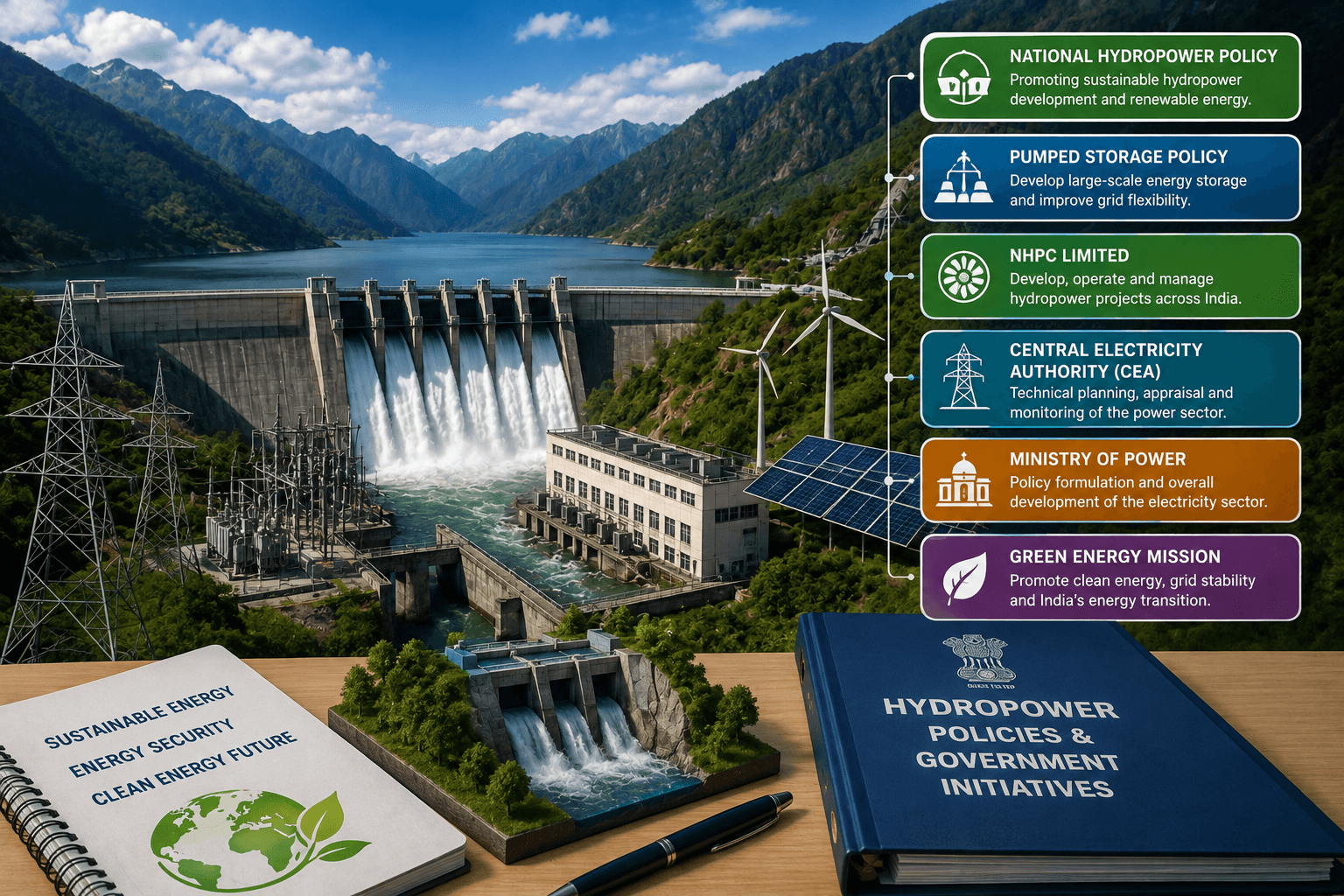
The Government of India has introduced several policies, institutional reforms, and financial incentives to accelerate the development of hydropower. These initiatives aim to enhance renewable energy generation, improve energy security, strengthen grid stability, and promote sustainable utilization of the country's vast water resources.
National Hydropower Policy
The National Hydropower Policy provides the policy framework for promoting the development of large and small hydropower projects across the country. Under this policy, large hydropower projects are recognized as renewable energy sources, enabling them to receive various financial and regulatory benefits.
- Recognition of large hydropower as renewable energy.
- Financial support for infrastructure development.
- Promotion of environmentally sustainable hydropower projects.
- Encouragement of private sector participation.
Pumped Storage Policy
To support the rapid expansion of solar and wind energy, the Government is promoting pumped storage hydropower projects as large-scale energy storage systems. These projects help store surplus electricity and supply power during peak demand, improving grid flexibility and reliability.
- Supports large-scale energy storage.
- Balances intermittent renewable energy generation.
- Improves grid stability during peak demand.
- Encourages investment in pumped storage infrastructure.
NHPC Limited
NHPC Limited is India's premier public sector enterprise engaged in the planning, construction, and operation of hydropower projects. The organization has developed several major hydroelectric projects across the country and also participates in solar and other renewable energy initiatives.
- Develops and operates major hydropower projects.
- Provides technical expertise in hydroelectric development.
- Expands renewable energy generation across India.
Central Electricity Authority (CEA)
The Central Electricity Authority (CEA) is the apex technical organization responsible for planning, monitoring, and advising the Government on electricity generation, transmission, and distribution. It evaluates hydropower projects, prepares power sector plans, and promotes efficient utilization of national energy resources.
- Prepares national power development plans.
- Evaluates technical feasibility of hydropower projects.
- Ensures power system planning and grid reliability.
Ministry of Power
The Ministry of Power formulates policies and programmes for the development of India's electricity sector. It coordinates with state governments, public sector undertakings, and regulatory bodies to promote hydropower development and improve electricity access across the country.
- Frames policies for the power sector.
- Promotes investment in hydropower infrastructure.
- Coordinates implementation of national electricity programmes.
Green Energy Mission
Under India's clean energy transition, hydropower plays an important role in supporting the Green Energy Mission by providing reliable renewable electricity and balancing variable solar and wind generation. The Government is encouraging the development of hydropower and pumped storage projects to help achieve long-term net-zero and renewable energy targets.
- Supports India's renewable energy goals.
- Facilitates integration of solar and wind power.
- Strengthens energy security and grid stability.
- Contributes to sustainable and low-carbon development.
| Initiative / Institution | Primary Objective |
|---|---|
| National Hydropower Policy | Promote sustainable hydropower development and renewable energy generation. |
| Pumped Storage Policy | Develop large-scale energy storage and improve grid flexibility. |
| NHPC Limited | Develop, operate, and manage hydropower projects across India. |
| Central Electricity Authority (CEA) | Technical planning, appraisal, and monitoring of the power sector. |
| Ministry of Power | Policy formulation and overall development of the electricity sector. |
| Green Energy Mission | Promote clean energy, grid stability, and India's energy transition. |
Collectively, these policies and institutions are accelerating hydropower development in India while ensuring energy security, environmental sustainability, and greater integration of renewable energy into the national electricity grid.
Major Organizations Associated with Hydropower in India
The development of India's hydropower sector is supported by several public sector enterprises and technical institutions. These organizations are responsible for planning, constructing, operating, financing, and regulating hydroelectric projects across the country. They play a crucial role in achieving India's renewable energy targets and ensuring long-term energy security.
NHPC Limited
NHPC Limited (National Hydroelectric Power Corporation) is India's premier public sector enterprise dedicated to hydropower development. Established in 1975, it is responsible for the planning, construction, operation, and maintenance of numerous large hydroelectric projects. In recent years, NHPC has also expanded into solar and other renewable energy sectors.
- Established in 1975.
- India's largest hydropower public sector company.
- Develops, operates, and maintains hydroelectric projects.
- Diversified into solar and renewable energy projects.
NTPC Limited
NTPC Limited, India's largest power generation company, has expanded beyond thermal power into renewable energy and hydropower. Through acquisitions and new investments, NTPC is developing several hydropower and pumped storage projects to support India's clean energy transition.
- India's largest electricity generating company.
- Expanding investment in hydropower projects.
- Promotes pumped storage and renewable energy development.
SJVN Limited
SJVN Limited (Satluj Jal Vidyut Nigam) was established to develop hydropower projects on the Sutlej River and has gradually expanded its operations across India and neighboring countries. The company is now engaged in hydropower, solar, wind, and transmission projects.
- Originally focused on the Sutlej River Basin.
- Develops hydropower, solar, and wind energy projects.
- Operates projects in multiple Indian states.
THDC India Limited
THDC India Limited (Tehri Hydro Development Corporation) is a public sector enterprise responsible for developing major hydropower and pumped storage projects. It is best known for the Tehri Hydropower Complex in Uttarakhand, one of India's largest hydroelectric projects.
- Developer of the Tehri Hydropower Complex.
- Focuses on hydropower and pumped storage projects.
- Contributes to renewable energy and water resource management.
NEEPCO Limited
North Eastern Electric Power Corporation Limited (NEEPCO) develops power projects primarily in the North-Eastern region of India. The organization plays a key role in harnessing the vast hydropower potential of the Brahmaputra Basin while also investing in thermal and renewable energy projects.
- Focuses on the North-Eastern states.
- Develops hydropower and renewable energy projects.
- Supports regional infrastructure and economic development.
Central Electricity Authority (CEA)
The Central Electricity Authority (CEA) is the apex technical organization under the Ministry of Power. It is responsible for planning India's power sector, evaluating hydroelectric projects, preparing power development plans, and advising the Government on electricity generation, transmission, and distribution.
- Technical advisor to the Government of India.
- Evaluates hydropower project feasibility.
- Prepares long-term power sector plans.
- Supports reliable and efficient electricity generation.
| Organization | Primary Role | Key Focus Area |
|---|---|---|
| NHPC Limited | Hydropower Developer | Large Hydropower Projects |
| NTPC Limited | Power Generation Company | Hydropower & Renewable Energy |
| SJVN Limited | Hydropower Developer | Hydro, Solar & Wind Projects |
| THDC India Limited | Hydropower PSU | Tehri Complex & Pumped Storage |
| NEEPCO Limited | Regional Power Developer | North-Eastern Hydropower Projects |
| Central Electricity Authority (CEA) | Technical & Regulatory Body | Power Planning and Project Appraisal |
Together, these organizations form the backbone of India's hydropower sector by developing infrastructure, promoting renewable energy, ensuring technical standards, and supporting the country's long-term objective of achieving a secure, reliable, and sustainable electricity system.
Future of Hydropower in India
Hydropower is expected to play a vital role in India's transition toward a clean, reliable, and sustainable energy system. As the country rapidly expands its solar and wind power capacity, hydropower—particularly pumped storage projects—will become increasingly important for balancing the electricity grid, storing renewable energy, and ensuring uninterrupted power supply. With supportive government policies and technological advancements, the hydropower sector is poised for significant growth in the coming decades.
Pumped Storage Projects
Pumped Storage Projects (PSPs) are expected to become the backbone of India's energy storage infrastructure. These projects store surplus electricity generated during off-peak hours and release it during periods of high demand, thereby improving grid flexibility and reliability.
- Provides large-scale energy storage.
- Balances peak and off-peak electricity demand.
- Supports the expansion of renewable energy.
- Improves national grid stability.
Integration with Renewable Energy
As India increases its dependence on renewable energy sources, hydropower will play a critical role in integrating variable solar and wind power into the electricity grid. Hydropower plants can quickly adjust electricity generation to compensate for fluctuations in renewable energy output.
- Balances intermittent renewable generation.
- Ensures uninterrupted electricity supply.
- Enhances power system reliability.
Solar and Hydropower Combination
The integration of solar power with hydropower is emerging as an efficient clean energy solution. Floating solar panels installed on hydropower reservoirs reduce water evaporation while increasing renewable electricity generation. Hybrid solar-hydro projects also optimize the utilization of existing infrastructure.
- Floating solar projects on reservoirs.
- Improved utilization of transmission infrastructure.
- Higher renewable energy generation with lower environmental impact.
Energy Storage Technologies
Energy storage will become increasingly important as renewable energy capacity expands. Pumped storage hydropower offers long-duration storage, making it one of the most economical and reliable solutions for storing electricity on a large scale. It complements battery storage technologies and strengthens India's energy security.
- Long-duration electricity storage.
- Supports grid balancing and peak demand management.
- Improves renewable energy utilization.
Development of Smart Grid
Smart Grid technology will enable efficient integration of hydropower with other renewable energy sources. Advanced digital monitoring, automation, real-time demand forecasting, and intelligent power management systems will improve electricity distribution and reduce transmission losses.
- Real-time monitoring of electricity demand and supply.
- Efficient integration of renewable energy resources.
- Reduced transmission and distribution losses.
- Improved grid resilience and reliability.
| Future Area | Expected Contribution |
|---|---|
| Pumped Storage | Large-scale energy storage and peak load management. |
| Renewable Integration | Supports solar and wind power through flexible generation. |
| Solar + Hydro | Hybrid clean energy generation with better infrastructure utilization. |
| Energy Storage | Improves grid reliability and renewable energy utilization. |
| Smart Grid | Enables efficient, secure, and intelligent power management. |
With abundant water resources, growing renewable energy demand, and strong policy support, hydropower is expected to remain a cornerstone of India's clean energy transition. The expansion of pumped storage projects, hybrid renewable systems, and smart grid technologies will significantly enhance energy security while helping the country achieve its long-term climate and net-zero commitments.
Importance for the UPSC Examination
Hydropower Projects in India is an important topic for the UPSC Civil Services Examination because it covers Geography, Environment, Economy, Infrastructure, energy security, and Current Affairs. Questions related to major dams, river systems, renewable energy policies, climate change, and sustainable development are frequently asked in both the Preliminary and Main examinations.
Prelims
In the Preliminary Examination, UPSC generally asks factual and conceptual questions related to hydropower projects, dams, rivers, installed capacity, and government initiatives.
- Major hydropower projects and dams in India.
- Rivers associated with important hydropower projects.
- States having the highest hydropower potential.
- Installed hydropower capacity and renewable energy statistics.
- National Hydropower Policy, NHPC, CEA, and Ministry of Power.
- Pumped Storage Projects and recent government initiatives.
Mains
In the General Studies (GS) Papers, hydropower is linked with infrastructure development, environmental conservation, renewable energy, and climate resilience. Questions usually require analytical and balanced answers.
- Role of hydropower in India's energy security.
- Environmental and ecological impacts of large dams.
- Hydropower and sustainable development.
- Hydropower in achieving India's renewable energy targets.
- Impact of climate change on river systems and hydropower generation.
- Challenges of balancing development with environmental conservation.
Essay
Hydropower can be used as an important case study in UPSC Essay papers while discussing renewable energy, sustainable development, climate action, and economic growth.
- Renewable Energy and India's energy transition.
- Green Growth and Sustainable Development.
- Energy Security and Self-Reliance.
- Climate Change Mitigation and Clean Energy.
- Infrastructure Development with Environmental sustainability.
Interview (Personality Test)
During the UPSC Personality Test, candidates may be asked opinion-based questions regarding the future of hydropower, environmental concerns, rehabilitation policies, renewable energy integration, and current government initiatives. Answers should be balanced, fact-based, and solution-oriented.
- Importance of pumped storage projects.
- Hydropower versus solar and wind energy.
- Large dams and environmental sustainability.
- Development of the North-Eastern hydropower sector.
- Role of hydropower in achieving Net Zero emissions.
Current Affairs Based Questions
UPSC frequently links hydropower with contemporary developments. Candidates should regularly follow recent government policies, international climate commitments, infrastructure projects, and renewable energy initiatives.
- New hydropower and pumped storage projects approved by the Government.
- Hydropower-related announcements in the Union Budget and Economic Survey.
- India's renewable energy and Net Zero commitments.
- Climate change, glacier melting, and water resource management.
- International cooperation in cross-border hydropower development.
- Reports released by NHPC, CEA, Ministry of Power, and NITI Aayog.
| UPSC Stage | Important Focus Areas |
|---|---|
| Prelims | Dams, rivers, states, installed capacity, government schemes, and factual information. |
| Mains | Energy security, environment, sustainable development, climate change, and policy analysis. |
| Essay | Renewable energy, green growth, climate action, and sustainable infrastructure. |
| Interview | Current affairs, balanced opinions, policy reforms, and future challenges. |
From the UPSC perspective, candidates should prepare this topic by integrating Geography, Environment, Economy, Current Affairs, and Government Policies. A conceptual understanding supported by recent developments, maps, major hydropower projects, and factual data can significantly improve performance in all stages of the Civil Services Examination.
Quick Revision
The following points provide a concise revision of the most important facts related to Hydropower Projects in India. This section is useful for last-minute revision for UPSC, State PCS, SSC, Banking, and other competitive examinations.
Key Facts
- Hydropower is a renewable source of energy that generates electricity using the kinetic energy of flowing or stored water.
- India is among the world's leading producers of hydroelectric power.
- Large Hydropower Projects are classified as renewable energy projects in India.
- Pumped Storage Projects (PSPs) are becoming increasingly important for energy storage and grid stability.
- Hydropower supports irrigation, drinking water supply, flood control, fisheries, and tourism in addition to electricity generation.
Important Hydropower Projects
- Tehri Hydropower Project – Uttarakhand
- Bhakra Nangal Project – Himachal Pradesh/Punjab
- Nathpa Jhakri Project – Himachal Pradesh
- Sardar Sarovar Project – Gujarat
- Koyna Hydroelectric Project – Maharashtra
- Hirakud Dam – Odisha
- Idukki Hydroelectric Project – Kerala
- Subansiri Lower Hydroelectric Project – Arunachal Pradesh/Assam
Important Rivers
- Ganga
- Bhagirathi
- Sutlej
- Beas
- Narmada
- Krishna
- Mahanadi
- Brahmaputra
- Subansiri
- Sharavathi
Important Organizations
- NHPC Limited
- NTPC Limited
- SJVN Limited
- THDC India Limited
- NEEPCO Limited
- Central Electricity Authority (CEA)
- Ministry of Power
| Revision Topic | Key Points |
|---|---|
| Energy Source | Renewable, Clean, Low Carbon |
| Major Projects | Tehri, Bhakra Nangal, Nathpa Jhakri, Koyna, Sardar Sarovar, Hirakud |
| Major Rivers | Bhagirathi, Sutlej, Narmada, Krishna, Mahanadi, Brahmaputra |
| Key Institutions | NHPC, NTPC, SJVN, THDC, NEEPCO, CEA, Ministry of Power |
| Emerging Trend | Pumped Storage Projects, Smart Grid, Renewable Energy Integration |
Revising these facts regularly will help candidates answer both factual and analytical questions related to hydropower projects in competitive examinations.
Frequently Asked Questions (FAQs)
1. What is a Hydropower project?
A hydropower project is a power generation facility that produces electricity by converting the energy of flowing or stored water into electrical energy through turbines and generators.
2. Which is the largest hydropower project in India?
The Koyna Hydroelectric Project in Maharashtra is currently India's largest operational hydropower project in terms of installed capacity.
3. Which river has the maximum number of major hydropower projects in India?
Rivers originating in the Himalayan region, particularly the Sutlej, Chenab, Bhagirathi, Alaknanda, and Brahmaputra river systems, host a large number of major hydropower projects due to their steep gradients and high water flow.
4. What is a Pumped Storage Project (PSP)?
A Pumped Storage Project is a type of hydropower system that stores surplus electricity by pumping water to an upper reservoir and generates electricity by releasing it back to a lower reservoir during peak demand.
5. Why is hydropower considered renewable energy?
Hydropower is considered renewable because it depends on the natural water cycle, which is continuously replenished through rainfall and river flow.
6. What are the major benefits of hydropower projects?
Hydropower projects generate clean electricity, reduce greenhouse gas emissions, support irrigation, provide drinking water, control floods, promote fisheries and tourism, and create employment opportunities.
7. What are the major challenges associated with hydropower projects?
The major challenges include displacement of local communities, environmental degradation, Deforestation, impacts on river ecosystems, sedimentation, high construction costs, seismic risks, and the effects of climate change.
8. Which organization is known as India's premier hydropower company?
NHPC Limited is India's premier public sector enterprise dedicated primarily to the development, operation, and maintenance of hydropower projects.
9. Which state has the highest hydropower potential in India?
Arunachal Pradesh has the highest estimated hydropower potential in India due to its numerous fast-flowing Himalayan rivers.
10. Why is hydropower important for the UPSC examination?
Hydropower is an important UPSC topic because it is related to Geography, Environment, Economy, Infrastructure, Renewable Energy, Climate Change, energy security, Government Policies, and Current Affairs.
Conclusion
Hydropower projects are one of the most important pillars of India's renewable energy sector. Besides generating clean electricity, they contribute significantly to irrigation, flood control, drinking water supply, navigation, fisheries, and regional socio-economic development. As India moves towards achieving its renewable energy and Net Zero commitments, hydropower will continue to play a crucial role in ensuring a reliable, sustainable, and low-carbon energy system.
The growing emphasis on Pumped Storage Projects (PSPs), smart grid technologies, and the integration of hydropower with solar and wind energy is expected to strengthen India's energy security while improving grid stability. At the same time, future hydropower development must balance economic growth with environmental conservation, biodiversity protection, and the rehabilitation of affected communities.
From the perspective of competitive examinations such as UPSC, State PCS, SSC, Banking, and other government exams, candidates should develop a comprehensive understanding of major hydropower projects, important dams, river systems, installed capacity, government policies, key organizations, environmental challenges, and recent Current Affairs. A balanced conceptual understanding combined with factual knowledge will help in answering both objective and analytical questions effectively.
In conclusion, hydropower remains a strategic national asset that supports India's vision of sustainable development, clean energy transition, and long-term energy security. With responsible planning, technological innovation, and environmentally sustainable practices, hydropower will continue to be a key driver of India's economic growth and green future.