
Introduction of Odisha

Introduction of Odisha – <a href="https://gsstudyhub.com/daily-current-affairs-22-february-2026/">History</a>, Culture, Geography & Society

Introduction of Odisha: A Journey Through History, Culture and Heritage

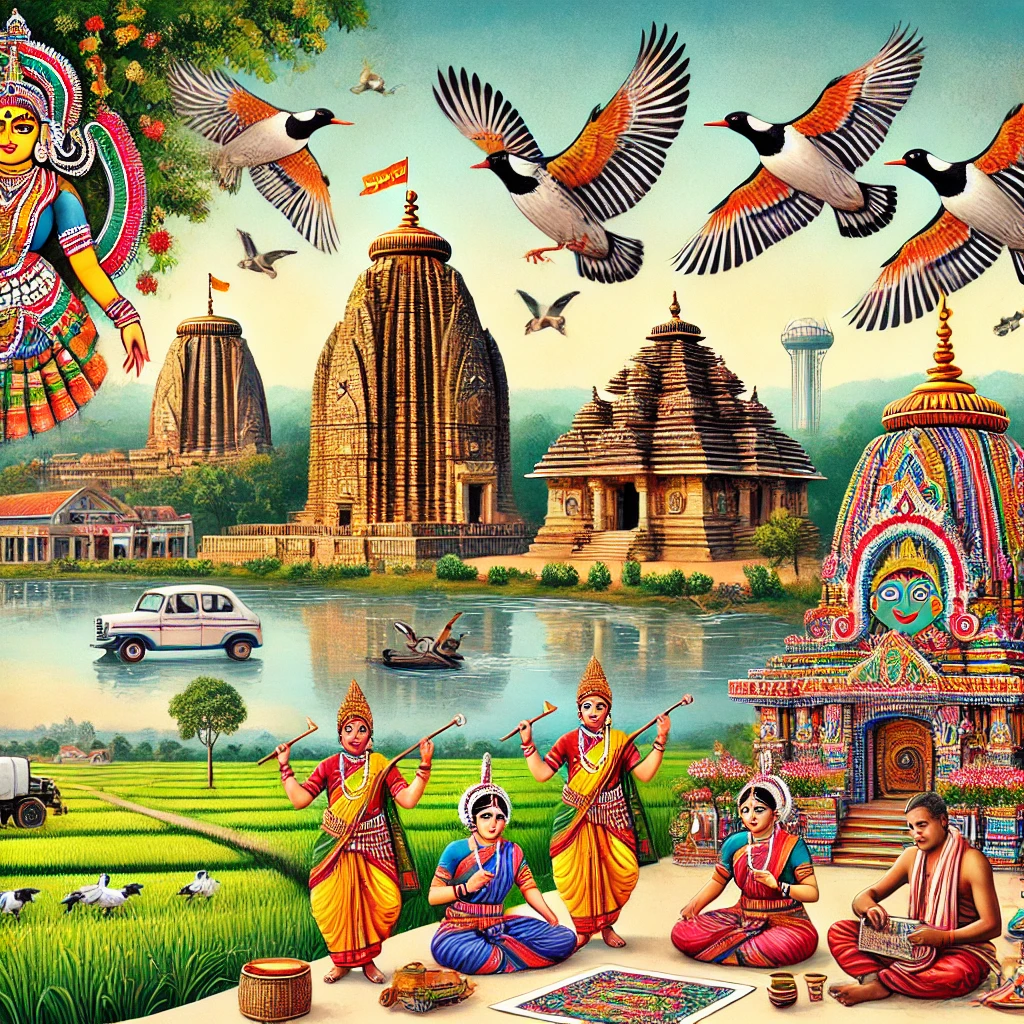
While studying India’s diverse states, my exploration of Odisha felt like opening a living history book—one where geography, culture, and human resilience come together seamlessly. Odisha (official name: Odisha), formerly known as Orissa, is a major state of India, renowned for its cultural heritage, historical monuments, and natural beauty. Formed on 1 April 1936, it holds a unique distinction as the first Indian state created on a linguistic basis. This historic day is celebrated every year as Odisha Day or Utkal Day.

Geographical Location of Odisha

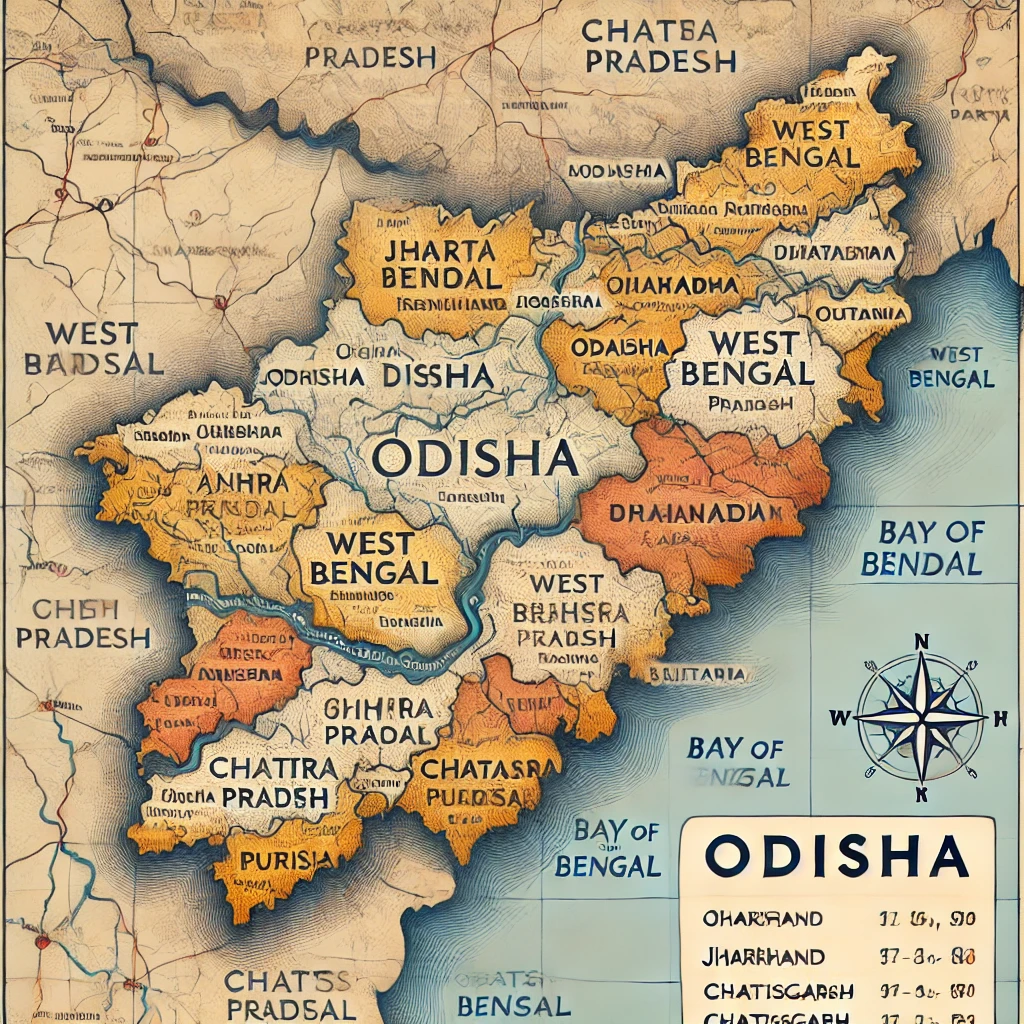
Odisha is located in the eastern part of India, a region where fertile plains, coastal ecosystems, and forested hills coexist.

Boundaries

Area and Climate

The total area of Odisha is 1,55,707 sq km, making it the 8th largest state in India. The state experiences a tropical climate with three distinct seasons—summer, rainy season, and winter. This climatic rhythm deeply influences agriculture, festivals, and daily life.

Historical Background of Odisha

The history of Odisha has been glorious since ancient times. It was once a prominent part of the ancient Kalinga kingdom, whose legacy still shapes the state’s identity.

Major Historical Phases

  • Kalinga War (261 BC): The famous war between Emperor Ashoka and Kalinga, which profoundly transformed Ashoka and inspired him to embrace Buddhism.
  • Rule of Samudragupta: Odisha remained an important region during the Gupta Empire.
  • Maurya, Shunga and Satavahana Dynasties: These dynasties also exercised control over the region at different times.
  • Gajapati Dynasty: A golden period during which Odisha achieved remarkable political and cultural prosperity.

Culture and Traditions of Odisha

What impressed me most about Odisha is how tradition continues to live in everyday practices. The state is famous for its unique and vibrant culture.

Language

Odia is the official language of the state and is one of the 22 languages recognized by the Constitution of India.

Dance and Performing Arts

Odissi Dance, one of the eight classical dance forms of India, has brought global recognition to Odisha through its grace, expressions, and spiritual depth.

Festivals

  • Rath Yatra (Puri)
  • Durga Puja
  • Makar Sankranti
  • Kartik Purnima

Folk Art

Traditional art forms such as Pattachitra painting, Sambalpuri sarees, and intricate stone carvings reflect Odisha’s artistic excellence.

Major Tourist Attractions in Odisha

Odisha offers a balanced blend of spirituality, history, and nature, making it a significant tourist destination in India.

  • Jagannath Temple, Puri: One of the four sacred Dhamas of Hinduism.
  • Sun Temple, Konark: A UNESCO World Heritage Site.
  • Chilika Lake: The largest saltwater lake in Asia.
  • Simlipal National Park: A protected area under Project Tiger.
  • Lingaraj Temple, Bhubaneswar: Dedicated to Lord Shiva.

Economy of Odisha

Odisha’s economy is shaped by its natural resources, agriculture, and industrial development.

Agriculture

Rice, sugarcane, and oilseeds are the major crops cultivated in the state.

Mineral Wealth

Odisha is rich in minerals such as iron ore, coal, bauxite, and chromite, which form the backbone of its industrial sector.

Industry and Fisheries

The development of steel, aluminium, and energy-based industries is prominent. Additionally, fish farming thrives in Chilika Lake and along the coastal areas.

Major Cities of Odisha

  • Bhubaneswar: The state capital, known as the “Temple City”.
  • Puri: A major religious city.
  • Cuttack: Famous for its commercial importance and historical fort.
  • Rourkela: An important industrial center.
  • Sambalpur: A cultural and industrial hub.

Population and Society

As per the 2021 census, the population of Odisha is approximately 4.6 crore.

Religion

Hinduism is the predominant religion, while Buddhism, Christianity, and Islam are also practiced by significant communities.

Tribal Communities

Odisha is home to 62 tribal communities, including Santhal, Gond, and Ho, who contribute richly to the state’s cultural diversity.

Special Facts About Odisha

  • Odisha has the largest coaching depot of Indian Railways.
  • Chilika Lake is a paradise for migratory birds.
  • Artists of Odisha have earned international recognition for Odissi dance and Pattachitra art.

Because of its historical depth, cultural richness, and natural beauty, Odisha truly stands as a precious gem of India.

Frequently Asked Questions (FAQ)

What is Odisha famous for?

Odisha is famous for its ancient temples, Odissi dance, Pattachitra art, Chilika Lake, and rich historical legacy.

Why is Odisha Day celebrated?

Odisha Day, also known as Utkal Day, is celebrated on 1 April to mark the formation of Odisha as the first linguistic state of India.

Which language is spoken in Odisha?

Odia is the official and most widely spoken language of the state.

What are the main sources of income in Odisha?

Agriculture, mineral-based industries, steel and aluminium production, and fisheries are the major sources of income.

Related Articles

Geographical Location of Odisha

The geographical location of Odisha makes it a special and strategically important state in the eastern part of India. While studying its physical features, I realized how geography has shaped Odisha’s economy, culture, natural resources, and even its vulnerability to natural disasters. The geography of Odisha can be clearly understood through the following aspects.

Geographic Location and Boundaries

Odisha is located between 17.49° to 22.34° North latitude and 81.27° to 87.29° East longitude.

Boundaries

Odisha has a long coastline of about 485 km, which gives it significant importance in maritime trade, fisheries, and coastal tourism.

Area and Size

The total area of Odisha is 1,55,707 square kilometres, making it the eighth largest state in India. Geographically, the shape of the state appears similar to a leaf or a shield, which is often mentioned in geographical descriptions.

Topography of Odisha

Odisha has a highly varied topography that includes mountains, plateaus, river valleys, and coastal plains. On the basis of physical features, the state can be divided into four major physiographic regions.

Northern Hilly Region

This region lies near the Jharkhand border. It consists of hills and plateaus, among which the Singhbhum Plateau and the Mayurbhanj Hills are prominent. The region is especially important due to its rich mineral resources.

Central Plateau Region

The Central Plateau spreads across districts such as Kandhamal, Bolangir, and Kalahandi. This region is dominated by red soil and frequently faces drought-related challenges.

Eastern Coastal Plains

Located along the Bay of Bengal, this is the most fertile region of the state. The soil here is mainly alluvial, which is ideal for agriculture. However, this region is also highly vulnerable to floods and cyclones.

South-Western Hills

This region covers areas such as Rairangpur, Kalahandi, and Koraput. Dense forests, rich wildlife, and mineral deposits characterize these hills. The area is well known for its natural beauty and biodiversity.

Rivers and Water Bodies

Odisha is drained by several major rivers and dotted with important lakes and reservoirs, which support agriculture, irrigation, and biodiversity.

Major Rivers

  • Mahanadi: The longest river of Odisha; the famous Hirakud Dam is built on it.
  • Brahmani: The second largest river of the state.
  • Brahmani–Baitarani system: Important for irrigation and agriculture.
  • Other Rivers: Baitarani, Subarnarekha, Indravati, and Chandrabhaga.

Lakes

  • Chilika Lake: Asia’s largest saltwater lake and a major habitat for migratory birds.
  • Other Lakes: Ansupa Lake and Kolab Reservoir.

Forests and Natural Resources

About 31% of Odisha’s total area is covered with forests. The major vegetation types include teak, sal, bamboo, and mahua. The state supports rich biodiversity, with wildlife such as tigers, elephants, and crocodiles.
⭐ Editor's Choice

Discover a highly rated product selected for its quality, functionality, and positive customer feedback.

View Details & Reviews →

Key Features

  • Port: Paradip Port, one of the largest ports in India.
  • Petrochemical Industry: Paradip Refinery of Indian Oil Corporation.
  • Tourism: Scenic beaches and nearby natural attractions.

10. Angul

Angul is an important industrial and energy production hub of Odisha.

Key Features

  • Energy Sector: Major units of NTPC and Jindal Steel.
  • Tourism: Satikoda Lake and the ancient fort of Talcher.

Summary

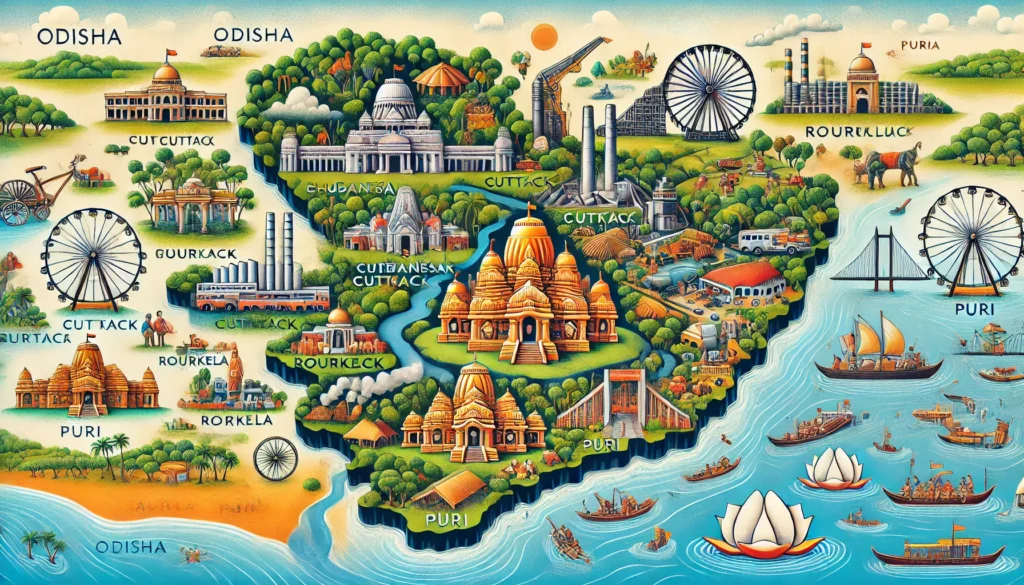
The major cities of Odisha contribute significantly to the economic, cultural, industrial, and educational growth of the state. Cities such as Bhubaneswar, Cuttack, Puri, and Rourkela hold importance not only within Odisha but also at the national level due to their unique identities and diverse contributions.
Population and Society of Orissa (Odisha)

The population and society of Orissa (Odisha) present a rich blend of cultural diversity, social structure, and long-standing traditions. While studying the demographic profile of the state, it becomes evident that Odisha’s population not only reflects its historical and cultural heritage but also plays a crucial role in its economic, educational, and social development.

Population Profile

1. Total Population

According to projected data for 2023, the total population of Odisha is approximately 4.6 crore, accounting for about 3.47% of India’s total population.

As per the 2011 Census:

  • Total Population: 4,19,74,218
  • Male: 2,12,12,136
  • Female: 2,07,62,082

2. Sex Ratio

The sex ratio of Odisha is one of the notable demographic strengths of the state.

  • Census 2011: 979 females per 1000 males
  • This is higher than the national average of 940
  • Urban Areas: 924
  • Rural Areas: 983

3. Population Density

The population density of Odisha is 269 persons per sq. km, which is significantly lower than the national average of 382 persons per sq. km. This makes Odisha a comparatively low-density state.

4. Literacy Rate

As per the 2011 Census:

  • Overall Literacy Rate: 72.87%
  • Male Literacy: 81.59%
  • Female Literacy: 64.01%

There exists a noticeable gap between literacy levels in rural and urban areas, highlighting the need for focused educational development.

5. Urbanization

Odisha remains a predominantly rural state.

  • Rural Population: About 83%
  • Urban Population: About 17%

Social Structure of Odisha

1. Ethnic and Tribal Groups

Odisha is marked by remarkable ethnic and tribal diversity.

Tribal Communities

  • About 22.85% of the population belongs to tribal communities.
  • Major tribes include Santhal, Gond, Saharia, Bhumij, Bhil, and Kandha.
  • These communities mainly inhabit hilly and forested regions.
  • They are known for their distinct lifestyle, languages, customs, and traditions.

Other Social Groups

  • General Category, Other Backward Classes (OBC), and Scheduled Castes (SC).
  • Scheduled Castes constitute about 16.53% of the state’s population.

2. Religion

Odisha is an example of religious harmony and diversity.

  • Hindu: 93.63% – Lord Jagannath and temple culture form the religious identity of the state.
  • Christian: 2.77% – mainly concentrated in tribal regions.
  • Muslim: 2.17% – largely found in Cuttack and Balasore.
  • Buddhists and Others: 1.43% – mostly associated with historical and cultural heritage areas.

3. Languages

Odia is the primary language of Odisha.

  • It is the official language of the state.
  • Odia received the status of a Classical Language in 2014.
  • Other languages spoken include Hindi, English, Telugu, Bengali, and tribal languages like Santhali.

Social Life and Traditions

1. Family and Society

The joint family system has traditionally been important in Odisha, although nuclear families are becoming more common in urban areas. Community life and religious activities form the foundation of social relations.

2. Attire

Traditional clothing reflects simplicity and cultural identity.

  • Women generally wear sarees.
  • Men traditionally wear dhoti and kurta.
  • Sambalpuri sarees and Pattachitra-inspired fabrics are unique symbols of Odisha.

3. Food Habits

The cuisine of Odisha includes both vegetarian and non-vegetarian dishes.

  • Pakhal Bhaat (fermented rice)
  • Dalma (lentils with vegetables)
  • Chhena Poda (a sweet made from cottage cheese)

4. Festivals

  • Rath Yatra (Puri): Annual pilgrimage of Lord Jagannath.
  • Durga Puja: Celebrated with grandeur across the state.
  • Makar Sankranti and Nuakhai: Major harvest festivals.
  • Raja Festival: Dedicated to women and Mother Earth.

Economic and Social Challenges

1. Poverty

Odisha is among the economically weaker states of India. Around 32.59% of the population lives below the poverty line.

2. Backwardness of Tribal and Rural Areas

  • Limited access to education and healthcare in tribal regions.
  • Displacement due to development and mining projects.

3. Gender Inequality

Despite a favorable sex ratio, challenges remain in improving women’s literacy and economic participation.

Government Initiatives

  • Education Reforms: Mid-Day Meal Scheme and scholarship programs.
  • Women Empowerment: Mission Shakti and self-help group initiatives.
  • Tribal Development: TRIFED support and special tribal packages.
  • Poverty Alleviation: MGNREGA and National Rural Livelihood Mission.

Summary

The population and society of Odisha reflect its cultural richness, tribal heritage, and social diversity. Although the state faces challenges related to poverty, education, and healthcare, its strong cultural traditions and ongoing social reform initiatives are steadily guiding Odisha towards a more inclusive and progressive society.

Special Facts About Orissa (Odisha)

Odisha holds a special place in India due to its rich History, natural beauty, cultural diversity, and unique traditions. The following facts highlight what makes the state truly distinctive.

1. Jagannath Temple and Rath Yatra

The Jagannath Temple, Puri is one of the four sacred Char Dhams of Hinduism. The world-famous Rath Yatra attracts lakhs of devotees from India and abroad.

  • The temple flag flies against the direction of the wind.
  • The sacred offering is known as Mahaprasad.

2. Sun Temple of Konark

Built in the 13th century, this UNESCO World Heritage Site is an architectural marvel shaped like the chariot of the Sun God.

3. Hirakud Dam

The world’s longest earthen dam, built on the Mahanadi River in 1957, plays a vital role in irrigation and power generation.

4. Odissi Dance

One of India’s oldest classical dances, Odissi is known for its graceful expressions and Tribhangi Mudra.

5. Chilika Lake

Asia’s largest saltwater lake, famous for migratory birds and sightings of Irrawaddy dolphins.

6. Mineral Wealth

Odisha possesses some of the largest reserves of bauxite, iron ore, and coal in India, with regions like Jharsuguda and Angul known as power hubs.

7. Disaster Management Success

Odisha has gained global recognition for effective cyclone management, especially after the 1999 Super Cyclone.

8. Harvest Festival – Nuakhai

Nuakhai is the major harvest festival of western Odisha, where new crops are offered to Goddess Lakshmi.

Overall, these characteristics make Odisha one of the most culturally rich and unique states of India, attracting scholars, tourists, and researchers from around the world.

References

  • Government of Odisha. Official Website of Odisha. Information on History, culture, economy, population, and administration of the state.
  • Census of India 2011. Odisha Census Data. Office of the Registrar General & Census Commissioner, India.
  • Ministry of Tourism, Government of India. Odisha Tourism. Details on major tourist destinations, heritage sites, and cultural festivals.
  • NCERT. India: Physical Environment, History and Society. Geography and historical references related to Odisha.
  • UNESCO World Heritage Centre. Sun Temple, Konark. Architectural and cultural significance of the Konark Sun Temple.
  • Ministry of Culture, Government of India. Odissi Dance and cultural heritage of Odisha.
  • Odisha Economic Survey. State Economy and Development Report. Government publications on agriculture, industry, and infrastructure.
  • Archaeological Survey of India (ASI). Monuments and Heritage Sites of Odisha.

1. Why is Odisha historically important in India?

Odisha is historically important because it was the center of the ancient Kalinga Kingdom and the site of the famous Kalinga War (261 BCE), which inspired Emperor Ashoka to embrace Buddhism and follow the path of peace.

2. What is Odisha famous for?

Odisha is famous for the Jagannath Temple in Puri, Konark Sun Temple, Chilika Lake, Odissi classical dance, Pattachitra paintings, and its rich cultural and historical heritage.

3. Why is Odisha Day celebrated on 1 April?

Odisha Day, also known as Utkal Divas, is celebrated on 1 April every year to commemorate the formation of Odisha as India's first state created on a linguistic basis in 1936.

4. Which are the major tourist attractions in Odisha?

Major tourist attractions include Jagannath Temple (Puri), Konark Sun Temple, Chilika Lake, Lingaraj Temple, Simlipal National Park, and the ancient caves of Udayagiri and Khandagiri.

5. What are the major rivers and lakes of Odisha?

The major rivers of Odisha are Mahanadi, Brahmani, Baitarani, Subarnarekha, and Indravati. Chilika Lake, Asia's largest saltwater lake, is the state's most famous water body.

6. What are the main economic activities of Odisha?

Odisha's economy is based on agriculture, mining, fisheries, tourism, and industries. The state is rich in minerals such as iron ore, coal, bauxite, and chromite.

7. Which classical dance form originated in Odisha?

Odissi is the classical dance form of Odisha and is considered one of the oldest classical dances of India, known for its graceful movements, expressions, and Tribhangi posture.

Leave a Comment

Your email address will not be published. Required fields are marked *

Scroll to Top