

Uttar Pradesh: The Heartland of India – History, Geography, Culture and Economy
Uttar Pradesh, commonly known as UP, is one of the most important states of the Indian subcontinent. Located in northern India, it holds great significance from historical, cultural, political, and economic perspectives. The region has played an important role in shaping Indian civilization and continues to influence modern India's political, economic, and cultural development.
Geographical Location of Uttar Pradesh
Position
Uttar Pradesh is situated in northern India. It extends from the Himalayan foothills in the north to the Vindhyan hills and plateau region in the south. The fertile Indo-Gangetic Plain covers a large part of the state.
Boundaries
- North: Uttarakhand and Nepal
- North-West: Himachal Pradesh
- West: Haryana, Rajasthan, and Delhi
- South and South-West: Madhya Pradesh
- South and South-East: Chhattisgarh and Jharkhand
- East: Bihar
Area
The geographical area of Uttar Pradesh is approximately 2,40,928 square kilometres. It is the fourth-largest state in India by area.
Geographical Diversity
- Fertile Gangetic plains, the Terai region, and the Vindhyan hills and plateau.
- Major rivers include the Ganga, Yamuna, Gomti, Ghaghara, Ramganga, Betwa, Chambal, and Son.
- The state experiences a tropical monsoon climate with seasonal variations.
History and Cultural Significance of Uttar Pradesh
Uttar Pradesh has been an important centre of Indian civilization, religious traditions, political developments, and cultural exchange since ancient times.
Ancient Period
- Several important places associated with the Ramayana and Mahabharata traditions are located in present-day Uttar Pradesh.
- Ancient cities and settlements include Ayodhya, Varanasi, Kaushambi, Mathura, and Sravasti.
- The region was associated with important ancient kingdoms, including Kosala and Vatsa.
Buddhism and Jainism
- Gautama Buddha delivered his first sermon at Sarnath, near Varanasi.
- Kushinagar is traditionally identified as the place where Buddha attained Mahaparinirvana.
- Several important Buddhist and Jain heritage sites are located across the state.
- Mathura and other ancient centres also played important roles in the development of religious art and traditions.
Medieval History
- Agra became an important political and cultural centre during the Mughal period.
- Fatehpur Sikri was developed as an imperial city under Emperor Akbar.
- The Taj Mahal and Agra Fort are prominent examples of Mughal architecture and are UNESCO World Heritage Sites.
- Varanasi, Awadh, and other regional centres developed distinctive cultural and artistic traditions.
Modern History
- The Revolt of 1857 began at Meerut and spread to several important centres in northern India.
- Kanpur, Jhansi, Lucknow, and other places played significant roles in the uprising and India's freedom struggle.
- The region was known as the United Provinces during British rule.
- On 24 January 1950, it was renamed Uttar Pradesh, with Lucknow as its capital.
Administrative Structure of Uttar Pradesh
Uttar Pradesh has an extensive administrative system to govern its large population and geographical area.
- Capital: Lucknow
- Districts: 75
- Administrative Divisions: 18
- Lok Sabha Seats: 80
- High Court: Allahabad High Court at Prayagraj, with a bench at Lucknow
- Major Cities: Kanpur, Varanasi, Agra, Prayagraj, Meerut, Gorakhpur, and Lucknow
- Official Language: Hindi
- Additional Official Language: Urdu
Economic Structure of Uttar Pradesh
Uttar Pradesh has a diverse economy based on agriculture, manufacturing, trade, and services. Its large population also makes it an important consumer market and labour force centre.
Agriculture
- Uttar Pradesh is one of India's leading agricultural states and an important producer of sugarcane.
- Major crops include wheat, rice, sugarcane, potatoes, pulses, and oilseeds.
- Mango and guava are among the important horticultural products of the state.
- Agriculture and related activities provide livelihoods to a substantial part of the population.
Industry
- Kanpur: Leather, textiles, and manufacturing industries.
- Varanasi: Banarasi silk sarees and traditional handicrafts.
- Moradabad: Brassware and metal handicrafts.
- Firozabad: Glass and bangle industry.
- Aligarh: Locks and hardware manufacturing.
- Food processing, sugar, electronics, and other manufacturing activities also contribute to the state's economy.
Tourism
Religious, historical, cultural, and heritage tourism contributes significantly to the state's economy. Major destinations include the Taj Mahal, Varanasi, Ayodhya, Mathura-Vrindavan, Sarnath, and Prayagraj.
Education and Knowledge Centres
Major Universities and Institutes
- Aligarh Muslim University, Aligarh
- Banaras Hindu University, Varanasi
- Indian Institute of Technology Kanpur
- University of Lucknow, Lucknow
- Mahatma Gandhi Kashi Vidyapith, Varanasi
Education and Research
Uttar Pradesh has a wide network of schools, colleges, universities, and technical institutions. Its educational institutions contribute to higher education, scientific research, professional training, and the development of human resources.
Culture and Traditions of Uttar Pradesh
The culture of Uttar Pradesh is diverse and reflects centuries of interaction among different religious, linguistic, artistic, and regional traditions.
Languages and Dialects
- Hindi and Urdu are widely used across the state.
- Awadhi is spoken in the Awadh region.
- Bhojpuri is widely spoken in eastern Uttar Pradesh.
- Braj Bhasha is associated with the Braj region, particularly Mathura and Vrindavan.
- Bundeli and other regional speech varieties are also found in different parts of the state.
Classical and Folk Dances
- Kathak: A major Indian classical dance form with important historical associations with northern India and the courts of Uttar Pradesh.
- Raslila: A devotional performance tradition associated with the life and stories of Lord Krishna, particularly in the Braj region.
- Charkula: A traditional folk dance associated with the Braj region.
Folk Music
- Birha: A folk singing tradition popular in eastern Uttar Pradesh.
- Kajri: A seasonal folk music tradition associated with the monsoon.
- Hori: Folk songs associated with Holi celebrations, particularly in the Braj region.
- Rasiya: A traditional musical form associated with the Braj region and Krishna devotion.
Religious Traditions
Uttar Pradesh is home to important religious and spiritual centres associated with Hinduism, Islam, Buddhism, Jainism, and other traditions. Varanasi, Ayodhya, Mathura, Sarnath, Kushinagar, and Deoband are among its well-known religious and cultural centres.

Editor's Choice
Explore this recommended product for additional reading and learning resources.
Major Tourist Places in Uttar Pradesh
- Agra: Taj Mahal, Agra Fort, and Fatehpur Sikri.
- Varanasi: Kashi Vishwanath Temple, Dashashwamedh Ghat, and Ganga Aarti.
- Ayodhya: Ram Mandir and the Saryu River.
- Prayagraj: Triveni Sangam and the Kumbh Mela.
- Mathura-Vrindavan: Krishna Janmabhoomi and Banke Bihari Temple.
- Sarnath: Buddhist monuments and the site associated with Buddha's first sermon.
- Kushinagar: Important Buddhist pilgrimage and heritage site.
- Fatehpur Sikri: Buland Darwaza and Mughal-era monuments.
Geographical and Statistical Facts About Uttar Pradesh
- Geographical Area: 2,40,928 sq. km.
- Population: Approximately 19.98 crore according to Census 2011.
- Later Population Estimate: Approximately 23.57 crore for 2023, as reported in a NITI Aayog state profile. This is an estimate, not a Census 2021 count.
- Lok Sabha Seats: 80, the highest among Indian states.
- State Animal: Swamp Deer (Barasingha).
- State Bird: Sarus Crane.
- State Tree: Ashoka.
- State Flower: Palash.
Conclusion
Uttar Pradesh is a historically and culturally rich state that has played an important role in shaping India's past and continues to influence its future. Its fertile agricultural plains, historic cities, religious heritage, educational institutions, and diverse industries make it one of the most significant states in the country. With its large population and growing economic potential, Uttar Pradesh remains an important contributor to India's social, cultural, and national development.
Key Insight
Uttar Pradesh represents an important meeting point of India's ancient heritage and modern development. Its history, cultural diversity, and economic importance make it essential to understanding the evolution of Indian society and the nation.

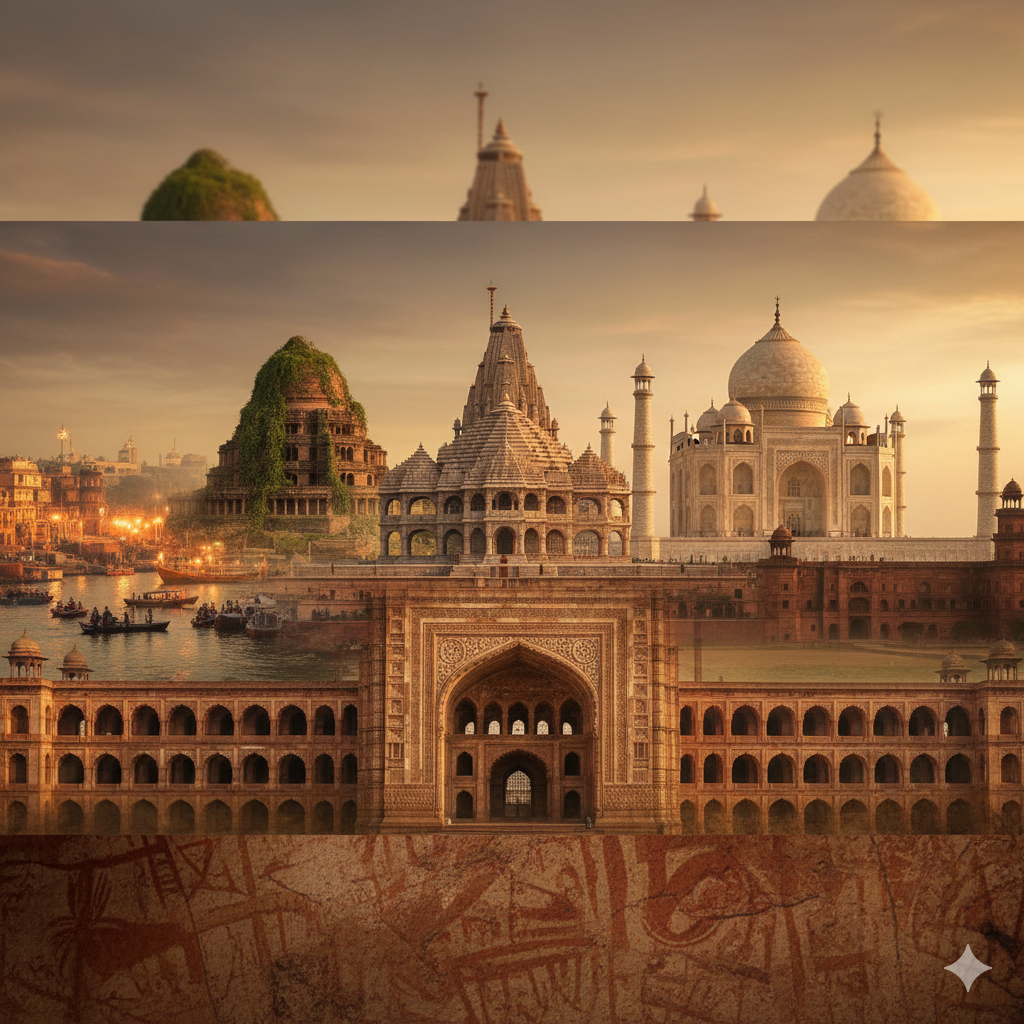
History and Culture of Uttar Pradesh: Ancient Heritage, Traditions and Cultural Legacy
Uttar Pradesh is one of the most historically and culturally rich states of India. For thousands of years, the region has been an important centre of Indian civilization, religion, politics, art, and culture. Its historical cities, religious traditions, architectural monuments, literature, music, and folk arts reflect developments from ancient, medieval, and modern periods.
History of Uttar Pradesh
1. Ancient Period (Prehistoric Era to 12th Century CE)
Prehistoric Era
- Archaeological remains from prehistoric periods, including the Palaeolithic and Neolithic ages, have been discovered at different locations in Uttar Pradesh.
- Rock paintings found in parts of Mirzapur and Sonbhadra provide evidence of prehistoric human activity and artistic expression.
- Ancient settlements and archaeological sites help researchers understand the early development of human communities in the region.
Vedic Age
- Large parts of present-day Uttar Pradesh were important centres of later Vedic culture and political development.
- Ancient cities and regions such as Kashi, Kosala, and Panchala are associated with early Indian literary and historical traditions.
- Ayodhya, Mathura, and other places are mentioned in important Indian religious and literary traditions.
- Hastinapur, located in present-day Meerut district, is traditionally associated with the Kuru kingdom and the Mahabharata tradition.
Buddhism and Jainism
- Gautama Buddha delivered his first sermon at Sarnath, near Varanasi.
- Kushinagar is traditionally identified as the place where Buddha attained Mahaparinirvana.
- Sravasti, Kaushambi, and Sankisa were important centres associated with the spread of Buddhism.
- Several important events in Jain traditions are associated with places in present-day Uttar Pradesh.
- Mathura became an important centre of ancient Jain and Buddhist art and religious activity.
Ancient Empires
- During the Maurya Empire, important parts of present-day Uttar Pradesh came under imperial administration. Ashoka's inscriptions and Buddhist heritage provide evidence of Mauryan influence in the region.
- During the Gupta period, several areas of Uttar Pradesh witnessed significant developments in administration, literature, religion, art, and education.
- Prayag (modern Prayagraj) is historically important for the Prayaga Prashasti inscription associated with Samudragupta.
- Varanasi continued to develop as an important centre of religious learning and cultural activity.
2. Medieval Period (12th to 18th Century)
Delhi Sultanate and Mughal Empire
- From the late 12th century onwards, several parts of present-day Uttar Pradesh came under the influence of the Delhi Sultanate and subsequent regional powers.
- Agra became an important political and administrative centre under the Mughal Empire.
- Emperors such as Akbar, Jahangir, Shah Jahan, and Aurangzeb influenced the political, architectural, and cultural development of the region.
- Important monuments such as the Taj Mahal, Agra Fort, and Fatehpur Sikri reflect the architectural achievements of the Mughal period.
- Fatehpur Sikri was developed as an imperial capital under Akbar.
Cultural Contributions
- Music, painting, literature, architecture, and courtly traditions developed under different regional and imperial patrons.
- Tansen, associated with Emperor Akbar's court, became one of the most celebrated figures in the history of Hindustani classical music.
- Persian, Indian, and regional artistic traditions interacted and contributed to the cultural diversity of the region.
3. Modern Period (18th Century to India's freedom struggle)
Nawabi Period of Awadh
- Lucknow became an important political and cultural centre under the Nawabs of Awadh.
- The Nawabi rulers and their courts supported architecture, poetry, music, dance, cuisine, and other artistic traditions.
- Structures such as Bara Imambara and Chota Imambara reflect the architectural heritage of Awadh.
- Chikankari embroidery became an important part of Lucknow's traditional handicraft heritage.
Revolt of 1857
- The Revolt of 1857 began at Meerut on 10 May 1857 and spread to several centres in northern India.
- Kanpur, Lucknow, Jhansi, and other places in present-day Uttar Pradesh became important centres of the uprising.
- Rani Lakshmibai of Jhansi, Nana Sahib of Kanpur, and Begum Hazrat Mahal of Awadh were prominent figures associated with the revolt.
- The uprising became a significant milestone in the history of resistance against British colonial rule.
Modern Education and Culture
- Banaras Hindu University, established in 1916, became an important centre of higher education and research.
- Aligarh Muslim University and other educational institutions also contributed to intellectual and educational developments.
- Literary, social, and political movements in the region played an important role in modern Indian history.
Culture of Uttar Pradesh
The culture of Uttar Pradesh is a blend of diverse religions, traditions, folk arts, languages, spirituality, and festivals. Its regional diversity is reflected in its architecture, music, dance, cuisine, literature, handicrafts, and religious heritage.
1. Religious Culture
Hinduism
- Ayodhya: Traditionally regarded as the birthplace of Lord Rama.
- Mathura: Traditionally regarded as the birthplace of Lord Krishna.
- Varanasi: One of Hinduism's most important pilgrimage centres and a city closely associated with Lord Shiva.
- Prayagraj: An important pilgrimage centre associated with the Triveni Sangam and Kumbh Mela.
Buddhism
- Sarnath: The place where Gautama Buddha delivered his first sermon.
- Kushinagar: The place traditionally associated with Buddha's Mahaparinirvana.
- Sravasti: An important centre associated with Buddha's teachings and monastic life.
Islam
- The Sultanate, Mughal, and Nawabi periods contributed to the development of Islamic architecture, literature, music, and cultural traditions in Uttar Pradesh.
- Historical mosques, imambaras, dargahs, and other monuments in Lucknow, Agra, and other cities reflect this heritage.
- Awadhi culture is particularly known for its composite artistic, literary, culinary, and musical traditions.
Jainism
- Mathura is an important historical centre of Jain art and religious heritage.
- Shravasti and other locations in the state are associated with Jain pilgrimage traditions.
- Several Jain temples and heritage sites reflect the historical presence of Jain communities in the region.

Editor's Choice
Explore this recommended product for additional reading and learning resources.
2. Folk Arts and Traditions
Folk Dance and Music
- Kathak: A major Indian classical dance form with important historical associations with northern India, including the courts and cultural centres of Uttar Pradesh.
- Birha: A popular folk singing tradition, particularly in eastern Uttar Pradesh.
- Kajri: A seasonal folk music tradition associated with the monsoon.
- Hori: Folk songs associated with Holi celebrations, especially in the Braj region.
- Alha: A traditional heroic ballad-singing tradition associated with the Bundelkhand region.
Important Musicians
- Tansen: A celebrated Hindustani classical musician associated with the court of Akbar.
- Ustad Bismillah Khan: A legendary shehnai maestro born in Dumraon, Bihar, who spent much of his musical life in Varanasi, Uttar Pradesh.
Handicrafts and Arts
- Banarasi Sarees: Famous silk textiles and brocade work from Varanasi.
- Chikankari Embroidery: Traditional embroidery associated with Lucknow.
- Marble Craft: Decorative marble work and inlay craft associated with Agra.
- Brassware: Moradabad is well known for its metal handicrafts.
- Glassware: Firozabad is an important centre of glass and bangle production.
3. Food of Uttar Pradesh
The cuisine of Uttar Pradesh reflects the state's regional diversity and historical influences. Awadhi, Mughlai, Braj, and eastern Uttar Pradesh food traditions are especially well known.
- Lucknowi Kebabs: Famous preparations associated with Awadhi cuisine.
- Awadhi Biryani: A traditional rice dish associated with Lucknow and the Awadh region.
- Mathura Peda: A popular traditional sweet associated with Mathura.
- Agra Petha: A well-known sweet made from ash gourd.

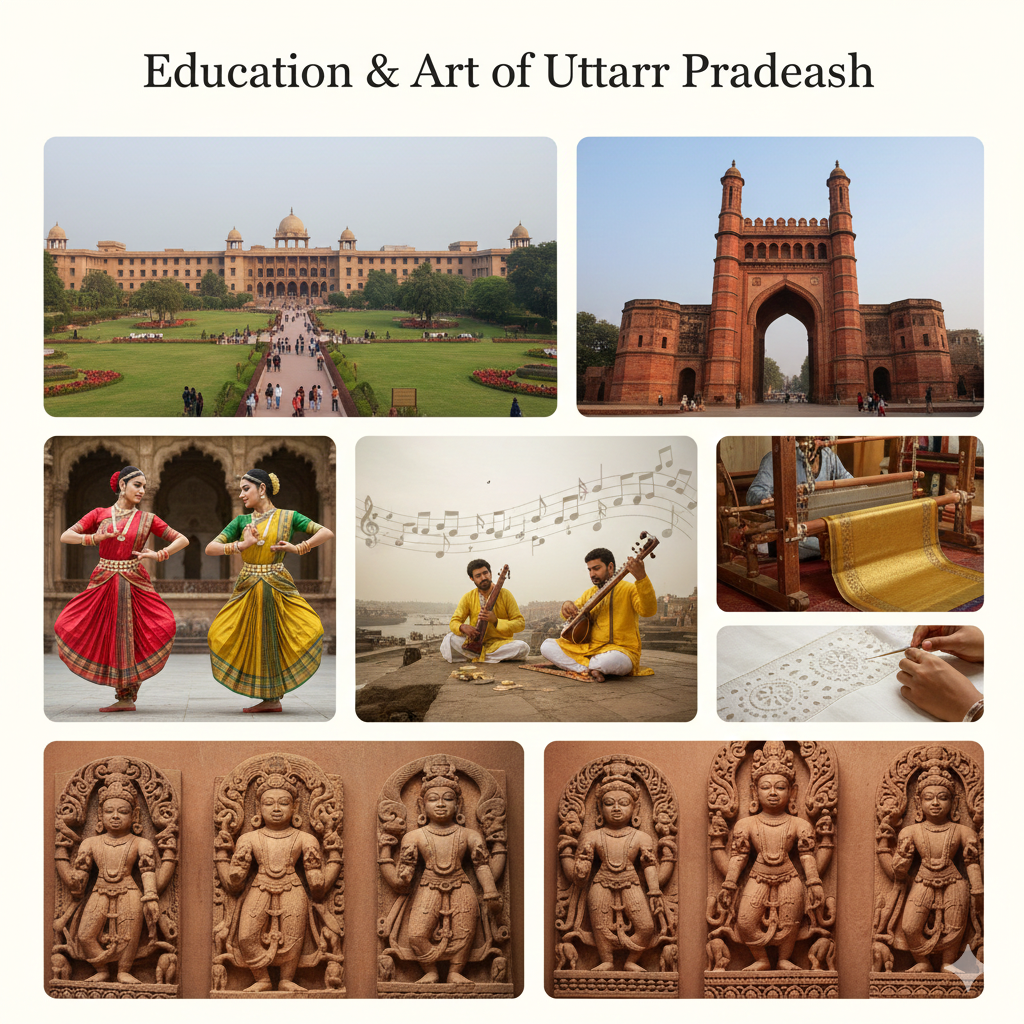
Education and Art in Uttar Pradesh: History, Institutions and Cultural Heritage
Uttar Pradesh is a major cultural and educational centre of India. The state's education system, artistic traditions, literature, music, dance, and handicrafts reflect its rich historical and cultural identity. From ancient centres of learning to modern universities and from classical music to traditional crafts, Uttar Pradesh has made important contributions to India's educational and artistic heritage.
1. Education in Uttar Pradesh
(i) History of Education
Uttar Pradesh has a long and distinguished educational history. Ancient centres such as Varanasi (Kashi), Prayagraj, and Mathura were important places of religious, philosophical, cultural, and intellectual learning. These centres contributed to the development of traditional Indian education, Sanskrit scholarship, Buddhist learning, and philosophical discussions.
(ii) Current Scenario of Education
The education sector in Uttar Pradesh includes government and private schools, colleges, universities, and technical institutions. Educational development has expanded over time, although challenges relating to quality, accessibility, infrastructure, and regional differences remain.
School Education
- The state has an extensive network of government and private schools.
- Primary Education: Government schools play an important role in providing elementary education, particularly in rural areas.
- Secondary Education: Government and private institutions provide education at the secondary and higher secondary levels.
- UP Board Examinations: The Uttar Pradesh Madhyamik Shiksha Parishad conducts Class 10 and Class 12 examinations and is one of the largest school examination boards in India.
Major Universities and Educational Institutions
- Banaras Hindu University (BHU), Varanasi: A major university known for education, research, science, humanities, medicine, and other academic disciplines.
- Aligarh Muslim University (AMU), Aligarh: A prominent central university with a long academic tradition in science, humanities, medicine, and social sciences.
- University of Allahabad, Prayagraj: An important historical university known for its academic and intellectual contributions.
- University of Lucknow, Lucknow: A major state university offering courses across several academic disciplines.
- Indian Institute of Technology Kanpur: A leading institution for engineering, technology, science, and research.
- Mahatma Gandhi Kashi Vidyapith, Varanasi: An important university associated with higher education and India's national movement.
- Chhatrapati Shahu Ji Maharaj University, Kanpur: A major state university serving students in different academic fields.
Education Policies and Reforms
- PM POSHAN Scheme: Provides cooked meals to eligible children in government and government-aided schools. It was previously known as the Mid-Day Meal Scheme.
- Teacher Training: Teacher education and professional development programmes aim to improve teaching quality and classroom learning.
- Digital Education: E-learning platforms, smart classrooms, digital resources, and online educational services support technology-based learning.
- National Education Policy 2020: Provides a framework for educational reforms, multidisciplinary learning, foundational literacy, and skill development.
(iii) Challenges in Education
- Teacher Availability: Some schools face shortages of teachers and subject specialists.
- Infrastructure: Certain rural and remote schools require better classrooms, laboratories, libraries, sanitation, and digital facilities.
- Women's Education: Improving female literacy, school retention, and equal educational opportunities remains important.
- Learning Outcomes: Improving foundational literacy, numeracy, and the quality of classroom education is an ongoing priority.
- Regional Differences: Educational access and facilities vary between urban and rural areas.
2. Art and Artistic Heritage of Uttar Pradesh
Uttar Pradesh has a rich and diverse artistic heritage. Its contributions include classical music, dance, painting, sculpture, literature, handicrafts, and traditional theatre. These art forms reflect the interaction of different regional, religious, and historical traditions.
(i) Music and Dance
Hindustani Classical Music
- Uttar Pradesh has played an important role in the development and preservation of Hindustani classical music.
- Varanasi, Lucknow, and other cultural centres have contributed to different musical traditions and gharanas.
- The Benares Gharana and Lucknow Gharana are important traditions associated with the state's musical heritage.
Kathak Dance
- Kathak is one of India's eight recognised classical dance forms.
- Uttar Pradesh has played an important role in the development and patronage of Kathak.
- The Lucknow Gharana is particularly famous for its graceful movements, expressive storytelling, and refined presentation.
- Varanasi is also associated with an important Kathak tradition.
Notable Musicians and Artists
- Ravindra Jain: Music composer and lyricist associated with Indian cinema and devotional music.
- Ustad Rashid Khan: Renowned Hindustani classical vocalist associated with the Rampur-Sahaswan Gharana.
- Ustad Bismillah Khan: Legendary shehnai maestro born in Dumraon, Bihar, whose musical career and performances were closely associated with Varanasi.
- Tansen: Celebrated historical musician associated with the court of Mughal Emperor Akbar.
(ii) Painting and Sculpture
Painting Traditions
- Miniature Painting: Mughal and regional courtly traditions influenced painting in parts of present-day Uttar Pradesh.
- Company Painting: Developed during the colonial period through interactions between Indian artists and European patrons.
- Traditional and Religious Art: Regional paintings and devotional art reflect the religious and cultural life of different communities.
Sculpture
- Mathura Sculpture: Ancient Mathura was one of the major centres of Indian sculpture, particularly during the Kushan period.
- Buddhist Sculpture: Sarnath became an important centre of Buddhist art, especially during the Gupta period.
- Religious Sculpture: Hindu, Buddhist, and Jain sculptures found across the region reflect its diverse artistic traditions.

Editor's Choice
Explore this recommended product for additional reading and learning resources.
(iii) Handicrafts and Cottage Industries
- Banarasi Sarees: Famous silk textiles and brocade work from Varanasi.
- Lucknowi Chikankari: A renowned traditional embroidery craft associated with Lucknow.
- Bhadohi Carpets: Known for carpet weaving and handmade textile products.
- Agra Marble Work: Famous for decorative marble craftsmanship and stone inlay work.
- Moradabad Brassware: Metal handicrafts and decorative brass products.
- Firozabad Glassware: Glass products and traditional bangle manufacturing.
(iv) Literature and Poetry
Uttar Pradesh has made significant contributions to Hindi, Urdu, Sanskrit, and other literary traditions. Its cities and educational centres have been associated with important writers, poets, scholars, and intellectual movements.
- Acharya Hazari Prasad Dwivedi: Renowned Hindi literary critic, essayist, and scholar.
- Maithili Sharan Gupt: Important Hindi poet associated with modern Hindi literature.
- Munshi Premchand: Celebrated Hindi and Urdu writer known for his realistic portrayal of Indian society.
- Amir Khusrau: Influential poet and musician associated with the Indo-Persian literary tradition and the wider cultural history of northern India.
- Urdu Poetry: Lucknow has a particularly important place in the history of Urdu poetry, especially the classical literary tradition.
(v) Drama and Theatre
- Traditional theatre, folk performances, and religious dramas are important parts of Uttar Pradesh's cultural life.
- Ramlila: A traditional dramatic performance based on the Ramayana, especially popular in several parts of the state.
- Nautanki: A popular North Indian folk theatre tradition with strong associations with Uttar Pradesh.
- Lucknow and other urban centres have contributed to modern theatre, cultural institutions, and stage performances.
Conclusion
The history of education and art in Uttar Pradesh is deeply rooted in its historical and cultural traditions. Its ancient centres of learning, universities, classical music, Kathak dance, literature, sculpture, handicrafts, and theatre have contributed significantly to India's cultural identity. Continued improvements in educational access, research, artistic institutions, and the preservation of traditional crafts can further strengthen Uttar Pradesh's role as an important centre of education and culture.
Key Insight
Uttar Pradesh's educational institutions and artistic traditions connect India's historical knowledge with modern learning and cultural expression. Preserving this heritage while expanding educational opportunities is essential for its future development.
Population Growth, State Symbols and Political Importance of Uttar Pradesh
Uttar Pradesh is the most populous state in India and holds significant demographic, political, and cultural importance. Its population, geographical distribution, representation in Parliament, and official state symbols make it an important subject for understanding India's political and social structure. Census data, particularly the Census of India 2011, provides the most recent completed official census baseline for the state.
1. Population Growth of Uttar Pradesh
Uttar Pradesh has the largest population among Indian states. Its population increased from approximately 16.62 crore in 2001 to 19.98 crore in 2011. The decadal growth rate declined from the previous decade, although population growth continued to place considerable demands on public services, infrastructure, employment, and natural resources.
Population growth is influenced by several factors, including fertility, mortality, migration, healthcare, education, and socioeconomic conditions. Family planning and public health programmes are among the measures intended to support balanced demographic development.
Population Density (2011)
- Population Density: Approximately 829 persons per square kilometre according to Census 2011 data.
- Population density refers to the average number of people living per square kilometre.
- The state's fertile plains and extensive settlement network contribute to its high population density.
Population Structure
Sex Ratio
- According to the Census of India 2011, Uttar Pradesh had a sex ratio of 912 females per 1,000 males.
- This figure was below the national average of 943 females per 1,000 males in 2011.
- Improving women's health, education, nutrition, and social equality remains important for balanced demographic development.
Urban and Rural Population
- Rural Population: Approximately 77.7% of the state's population lived in rural areas according to Census 2011.
- Urban Population: Approximately 22.3% lived in urban areas.
- Major urban centres include Lucknow, Kanpur, Varanasi, Agra, Prayagraj, Ghaziabad, and Noida.
- Urbanisation has increased the importance of housing, transport, sanitation, employment, and Urban infrastructure.
Decadal Population Growth
- 2001 Population: Approximately 16.62 crore.
- 2011 Population: Approximately 19.98 crore.
- Decadal Growth Rate (2001–2011): Approximately 20.23%.
Important Census Note
The Census of India 2011 recorded Uttar Pradesh's population as 19,98,12,341. Population projections and estimates for later years should be clearly labelled as estimates and must not be presented as official census counts.
2. Lok Sabha Seats of Uttar Pradesh
Uttar Pradesh has the largest number of Lok Sabha seats among all Indian states. Its 80 parliamentary constituencies give it substantial representation in the Lok Sabha and make the state politically important in national elections.
Total Lok Sabha Seats
- 80 Lok Sabha seats: Uttar Pradesh has the highest number of parliamentary constituencies among Indian states.
- National Representation: The state accounts for 80 of the 543 elected Lok Sabha seats.
- Comparison: Maharashtra has 48 seats, while West Bengal has 42 seats.
Political Importance
- Uttar Pradesh plays a major role in national political competition because of its large parliamentary representation.
- Major political parties active in the state include the Bharatiya Janata Party (BJP), Samajwadi Party (SP), Indian National Congress (INC), and Bahujan Samaj Party (BSP), along with regional and alliance partners.
- Political trends in the state can significantly influence the overall results of general elections.
- The state's social, regional, economic, and demographic diversity makes electoral politics particularly significant.
Impact on General Elections
Uttar Pradesh is an important state in the formation of governments at the Centre. Political parties seek broad electoral support across its different regions because winning a substantial number of seats can significantly affect their parliamentary strength.
Exam Point
Uttar Pradesh has 80 Lok Sabha seats, 403 Legislative Assembly seats, and 31 Rajya Sabha seats.
3. State Flower of Uttar Pradesh
Palash (Flame of the Forest)
- Common Name: Palash or Flame of the Forest.
- Scientific Name: Butea monosperma.
- Palash is known for its bright orange-red flowers, which appear prominently during the flowering season.
- The tree is associated with Indian traditions, literature, and cultural practices.
- Its flowers have traditionally been used in natural colours and various cultural activities.
Palash represents an important part of the natural and cultural heritage of Uttar Pradesh.
4. State Animal of Uttar Pradesh
Swamp Deer (Barasingha)
- Common Name: Swamp Deer or Barasingha.
- Scientific Name: Rucervus duvaucelii.
- It is known for its distinctive antlers, which traditionally have several points.
- It inhabits grasslands, wetlands, and marshy habitats.
- In Uttar Pradesh, it is particularly associated with the Dudhwa landscape and other protected habitats.
- Habitat protection and conservation programmes are important for maintaining its population.
The Swamp Deer is an important symbol of the state's wildlife heritage and biodiversity.
5. State Bird of Uttar Pradesh
Sarus Crane
- Common Name: Sarus Crane.
- Scientific Name: Antigone antigone.
- It is the tallest flying bird in the world.
- It is recognised by its long legs, long neck, and distinctive red head and upper neck.
- It is commonly found in wetlands, marshes, agricultural fields, and other suitable habitats across Uttar Pradesh.
- Sarus Cranes are known for strong pair bonds and are often observed in pairs.
- Wetland conservation and protection of nesting habitats are important for its survival.
The Sarus Crane represents the natural heritage and ecological importance of Uttar Pradesh.
6. References and Further Reading
- Census of India 2011: Population, sex ratio, density, and rural-urban distribution data.
- Office of the Registrar General and Census Commissioner, India: Official census publications and population statistics.
- Election Commission of India: Parliamentary constituency and Lok Sabha seat information.
- Government of Uttar Pradesh: State profile and official information about Uttar Pradesh.
- Uttar Pradesh State Biodiversity Board: Information on the state's wildlife and biodiversity.
- Uttar Pradesh Forest Department: wildlife conservation and protected-area information.
Official Sources
Conclusion
Uttar Pradesh holds a significant position in India's demographic and political landscape. Its large population, 80 Lok Sabha seats, and distinctive state symbols reflect its importance in national affairs and regional identity. Understanding its population structure, electoral representation, and biodiversity is essential for studying the state's development, governance, and cultural heritage.

Editor's Choice
Explore this recommended product for additional reading and learning resources.