
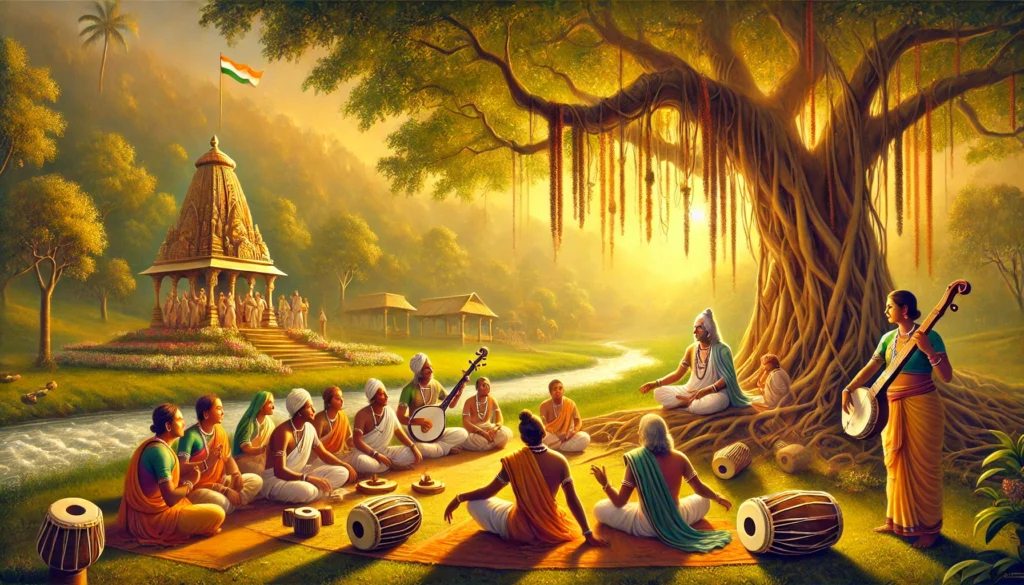
Bhakti Sufi Movements were important religious and social reform movements in medieval India that promoted devotion, equality, and harmony.
Bhakti and Sufi Movements 2026: 10 Key Similarities & Impact on Indian Society (UPSC/SSC Guide)
Why did the Bhakti and Sufi movements change the social and religious fabric of India so deeply? 🤔 From breaking caste barriers to promoting love, equality, and devotion, these movements were not just spiritual—they were revolutionary.In this quick yet powerful guide, you’ll discover the 10 most important similarities, core teachings, and real impact of Bhakti and Sufi movements that are frequently asked in UPSC, SSC, and other competitive exams.Both movements emphasized personal devotion, social equality, and rejection of rigid rituals, making religion simple and accessible to common people :contentReference[oaicite:1]{index=1}.If you want a high-scoring revision + conceptual clarity in just a few minutes, this article is exactly what you need.
The Bhakti Sufi Movements played a major role in transforming Indian society.
Understanding the Bhakti Sufi Movements is important for exams like UPSC and SSC.
The impact of Bhakti Sufi Movements can still be seen in Indian culture today.
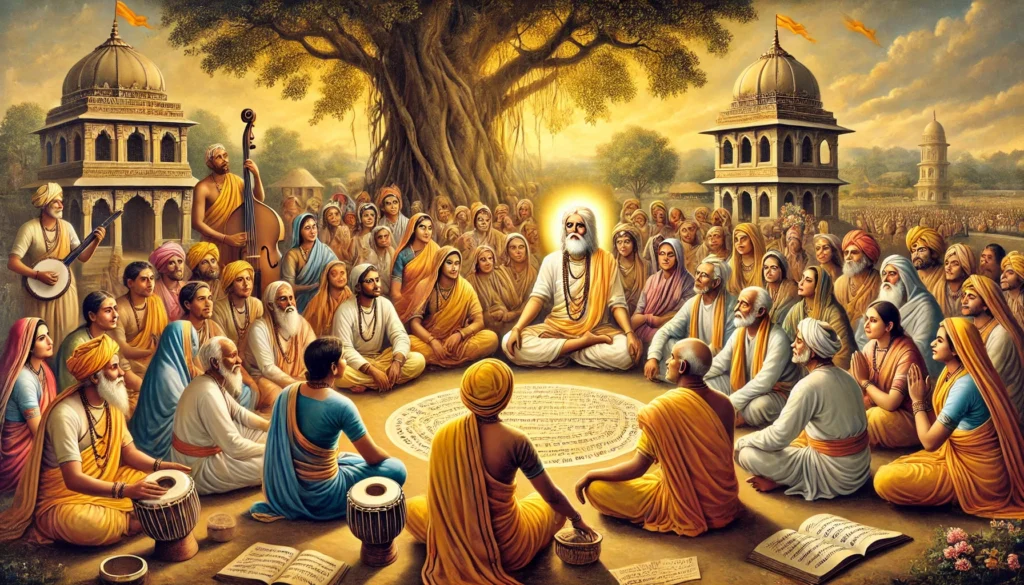
The Bhakti Sufi Movements played a major role in shaping Indian society by promoting unity and spiritual values.
Similarities between Bhakti and Sufi Movements
The Bhakti and Sufi movements were two major religious and social reform movements in medieval India that played a key role in shaping Indian society. Both movements aimed to make religion simple, spiritual, and accessible to common people by opposing rigid rituals, caste discrimination, and religious orthodoxy. They emphasized love, devotion, and humanity as the true path to God. This topic is highly important for UPSC, SSC, and other competitive exams, as it helps in understanding the concept of social harmony and cultural integration in India.
- Focus on inner devotion: Both movements emphasized personal devotion and love for God instead of external rituals and formal practices.
- Promotion of social equality: They rejected caste, class, and religious discrimination, promoting equality among all people.
- Analytical insight: These movements played a crucial role in promoting religious tolerance and cultural unity, which remains a foundation of modern Indian society.
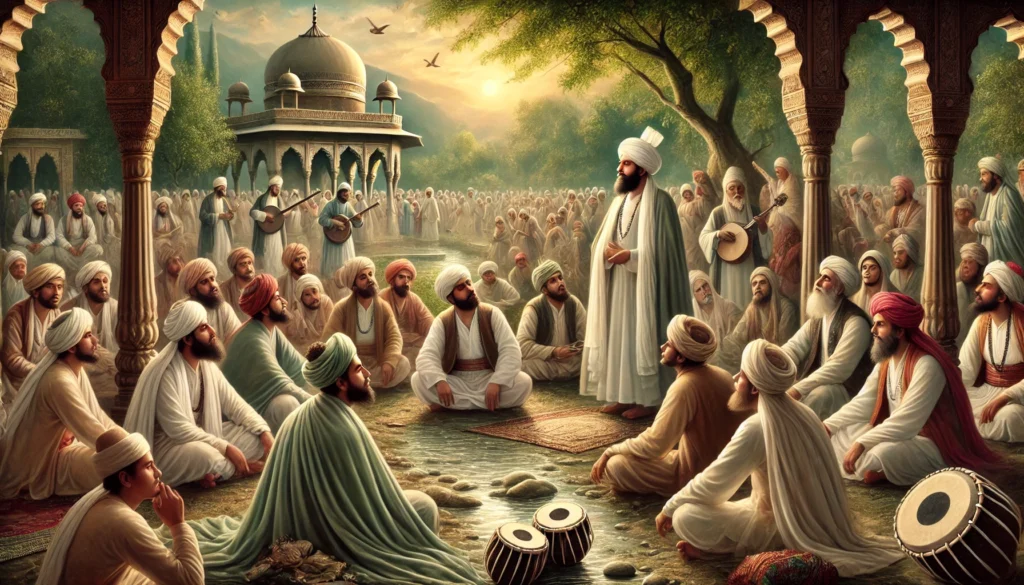
The Bhakti Sufi Movements played a major role in shaping Indian society by promoting unity and spiritual values.
| Topic | Details |
|---|---|
| Time Period | Bhakti: 7th–17th century | Sufi: 8th–17th century (India: mainly after 12th century) |
| Core Idea | Emphasis on devotion, love for God, and inner spirituality over rituals |
| Main Objective | Make religion simple, accessible, and free from rigid practices |
| Social View | Opposed caste system, class division, and promoted equality |
| Religious Approach | Rejected ritualism and religious orthodoxy; focused on personal devotion |
| Language Used | Regional languages (Awadhi, Braj, Tamil, Punjabi) for mass reach |
| Medium of Expression | Bhajans, Kirtans (Bhakti) | Qawwali, Sufi poetry (Sufi) |
| Key Institutions | Bhakti: Guru tradition | Sufi: Khanqah and Dargah |
| Famous Personalities | Bhakti: Kabir, Tulsidas, Mirabai | Sufi: Moinuddin Chishti, Nizamuddin Auliya |
| Major Sufi Orders | Chishti, Suhrawardi, Qadiri, Naqshbandi |
| Impact on Society | Promoted social reform, religious tolerance, and communal harmony |
| Exam Insight | Important for UPSC/SSC: Questions often focus on similarities, saints, and impact |
The Bhakti Sufi Movements played a major role in transforming Indian society.
Understanding the Bhakti Sufi Movements is important for exams like UPSC and SSC.
The impact of Bhakti Sufi Movements can still be seen in Indian culture today.
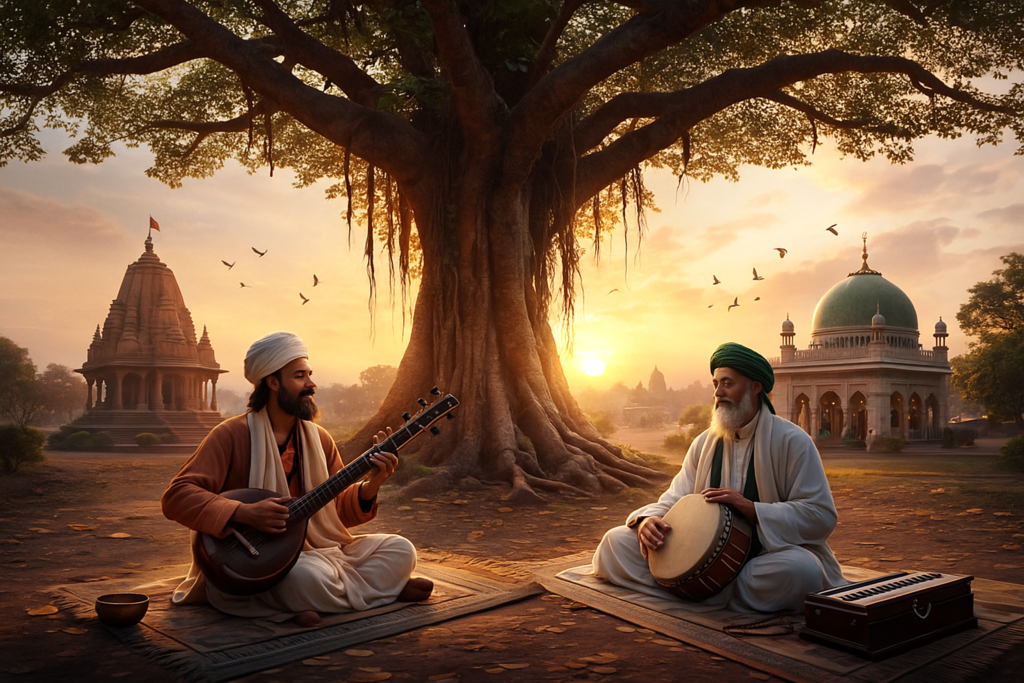
The Bhakti Sufi Movements played a major role in shaping Indian society by promoting unity and spiritual values.
| Topic | Details |
|---|---|
| Meaning | Bhakti: Devotion to God (Hindu tradition) | Sufi: Mystical devotion in Islam |
| Time Period | Bhakti: 7th–17th century | Sufi: 8th–17th century (India from 12th century) |
| Core Principle | Love, devotion, and direct connection with God without intermediaries |
| View on Rituals | Opposed rigid rituals, idol worship excess, and religious formalism |
| Social Reform | Rejected caste system, class divisions, and promoted equality |
| Language | Used regional languages (Awadhi, Braj, Punjabi, Tamil) for mass understanding |
| Religious Harmony | Promoted Hindu-Muslim unity and reduced communal tensions |
| Medium | Bhakti: Bhajans, Kirtans | Sufi: Qawwali, Ghazal |
| Guru Concept | Bhakti: Guru guides devotee | Sufi: Pir guides Murid |
| Key Institutions | Bhakti: Ashrams & Guru tradition | Sufi: Khanqah & Dargah |
| Important Saints | Bhakti: Kabir, Mirabai, Tulsidas | Sufi: Moinuddin Chishti, Nizamuddin Auliya, Amir Khusro |
| Major Sufi Orders | Chishti, Suhrawardi, Qadiri, Naqshbandi |
| Cultural Impact | Development of literature, music, art (Bhajans, Qawwali, poetry) |
| Political Impact | Influenced rulers like Akbar towards tolerance and inclusive policies |
| Exam Insight | Frequently asked in UPSC/SSC: similarities, saints, features, and impact |
The Bhakti Sufi Movements played a major role in transforming Indian society.
Understanding the Bhakti Sufi Movements is important for exams like UPSC and SSC.
The impact of Bhakti Sufi Movements can still be seen in Indian culture today.
Frequently Asked Questions (FAQ)
1. What was the Bhakti Movement?
The Bhakti Movement was a major religious and social reform movement of medieval India that promoted simple, personal, and direct devotion to God, free from rituals and caste restrictions.
2. What was the Sufi Movement?
The Sufi Movement was a mystical and spiritual tradition within Islam that emphasized love, service, and inner devotion over rigid religious rules and formalities.
3. What are the similarities between the Bhakti and Sufi movements?
Both movements stressed love, devotion, equality, simplicity, religious tolerance, the use of local languages, and opposition to religious fanaticism and rituals.
4. Who were the major saints of the Bhakti Movement?
Major Bhakti saints included Kabir, Tulsidas, Mirabai, Surdas, Dnyaneshwar, Basavanna, Guru Nanak, and others from different regions of India.
5. Who were the major Sufi saints?
Important Sufi saints included Khwaja Moinuddin Chishti, Baba Farid, Nizamuddin Auliya, Sheikh Bahauddin Zakariya, and Amir Khusro.
6. What impact did the Bhakti and Sufi movements have on Indian society?
They promoted religious harmony, social equality, cultural unity, and enriched Indian music, poetry, and literature. They also reduced caste discrimination and communal tensions.
7. Which languages were used by Bhakti saints?
Bhakti saints wrote in regional languages such as Awadhi, Braj, Marathi, Tamil, Punjabi, Telugu, and Kannada, making spiritual teachings accessible to common people.
8. What was the role of music and poetry in the Sufi Movement?
Music and poetry played a central role in Sufism. Qawwali, Ghazal, and devotional songs were used to express spiritual love and connect with God.
9. How did the Bhakti and Sufi movements promote communal harmony?
Both movements emphasized unity, brotherhood, and the belief that God is one. Their teachings brought Hindus and Muslims closer together.
10. Are the influences of Bhakti and Sufi movements still visible today?
Yes, their impact can still be seen in Indian music, poetry, art, cultural traditions, religious practices, and the widespread popularity of temples and dargahs.
Conclusion
The Bhakti and Sufi movements were transformative forces in medieval India that reshaped religion, society, and culture. By promoting devotion, love, equality, and simplicity, they challenged rigid rituals and social inequalities. Both movements played a crucial role in establishing religious tolerance and cultural harmony, leaving a lasting impact that is still relevant in modern India. For exams, understanding their similarities, key features, and impact is essential for both conceptual clarity and answer writing.
- Both movements emphasized love, devotion, and inner spirituality over rituals.
- Strong focus on social equality and rejection of caste and class discrimination.
- Used regional languages to spread their message among common people.
- Promoted religious tolerance and Hindu-Muslim unity.
- Important for exams: focus on similarities, saints, and impact (frequent UPSC/SSC questions).
Conclusion
The Bhakti and Sufi movements were transformative forces in medieval India that reshaped religion, society, and culture. By promoting devotion, love, equality, and simplicity, they challenged rigid rituals and social inequalities. Both movements played a crucial role in establishing religious tolerance and cultural harmony, leaving a lasting impact that is still relevant in modern India. For exams, understanding their similarities, key features, and impact is essential for both conceptual clarity and answer writing.
- Both movements emphasized love, devotion, and inner spirituality over rituals.
- Strong focus on social equality and rejection of caste and class discrimination.
- Used regional languages to spread their message among common people.
- Promoted religious tolerance and Hindu-Muslim unity.
- Important for exams: focus on similarities, saints, and impact (frequent UPSC/SSC questions).
References
- NCERT Class 12 – Medieval India (History Textbook)
- IGNOU Study Material – “Bhakti and Sufi Movements”
- R. S. Sharma – “Indian Cultural History”
- B. L. Grover – “Medieval Indian Social and Religious History”
- Hazari Prasad Dwivedi – “History of Bhakti Literature”
- Alok Kumar Mishra – “Sufi Tradition and Indian Culture”
- UPSC Notes – Indian Society and Culture (Modern Analysis)
- Indian Culture Portal (Government of India)
- Guru Granth Sahib – Selected Teachings of Guru Nanak
- Indian Music Research Centre – Amir Khusro Studies