

Hindu Swastika – Meaning, Importance and Religious Significance
The Swastika is one of the oldest and most significant auspicious symbols in Hindu tradition. It represents well-being, prosperity, good fortune and auspicious beginnings. The symbol consists of four arms bent at right angles and is commonly drawn during religious ceremonies, festivals, weddings and other important occasions.
The word Swastika comes from the Sanskrit word Svastika, traditionally associated with well-being and good fortune. It is derived from the Sanskrit elements "su" (good or well) and "asti" (being or existence), with the suffix "ka".
The Swastika is not exclusive to Hinduism. It also holds religious significance in Jainism and Buddhism and has appeared in numerous ancient cultures across the world.
1. Religious and Spiritual Importance of the Hindu Swastika
Symbol of Lord Ganesha and Auspicious Beginnings
In Hinduism, the Swastika is widely associated with auspicious beginnings, prosperity and the removal of obstacles. It is often drawn or placed during the worship of Lord Ganesha, who is traditionally worshipped before starting important religious and ceremonial activities.
The symbol is commonly drawn at the entrances of homes, temples, shops and places of worship as an expression of welcome, well-being and good fortune.
Representation of Four Directions and Universal Order
The four arms of the Swastika are sometimes interpreted as representing the four cardinal directions: North, South, East and West. In different Hindu traditions, they may also be associated with the four Vedas, four stages of life (Ashramas), four goals of human life (Purusharthas) and other symbolic concepts.
These interpretations express ideas of completeness, balance and the interconnectedness of different aspects of existence. Their meanings can vary across religious and regional traditions.
Presence in Hindu Religious Tradition
The Swastika is an important symbol in Hindu religious and cultural practices. It is traditionally associated with auspiciousness, prosperity, well-being and the positive aspects of life.
It is used in religious ceremonies, festivals, household worship and traditional decorations. Its importance is also reflected in Indian art, architecture and cultural heritage.
Use in Yajna and Puja
During Hindu religious ceremonies, the Swastika may be drawn on floors, walls, entrance areas, पूजा platforms, ritual vessels and account books. It is also used in some yajna and puja traditions as an auspicious mark.
Its presence expresses prayers for peace, prosperity and the successful completion of religious activities.
Importance in Vastu Shastra
In traditional Vastu Shastra practices, the Swastika is used as an auspicious symbol on entrances, walls and other parts of buildings. Some practitioners associate it with protection, harmony and positive surroundings.
These interpretations belong to traditional religious and architectural beliefs. There is no established scientific evidence that drawing a Swastika changes physical energy or alters the measurable properties of a building.
2. Scientific, Symbolic and Spiritual Perspectives of the Swastika
Symbolic Meaning of Balance and Harmony
The Swastika has a geometrically structured form based on a central cross and four arms bent at right angles. Its balanced arrangement has allowed different cultures to associate it with concepts such as movement, continuity, direction and harmony.
Geometrical Structure and Symmetry
The Swastika is a geometric motif with repeated right-angle turns. Its form has been used in decorative patterns, textiles, pottery, architecture and religious art.
Although the symbol has a distinctive geometric structure, claims that it is mathematically based on the Golden Ratio or that it generates measurable cosmic energy are not supported by established scientific evidence.
Mental and Spiritual Significance
For many Hindus, seeing or drawing the Swastika is associated with religious devotion, positive intentions, peace and auspicious beginnings. Its use in familiar cultural and religious settings can also provide a sense of continuity, identity and belonging.
These are matters of religious belief, symbolism and personal experience rather than scientifically demonstrated physical effects.
3. Types and Traditional Uses of the Swastika
Right-Facing Swastika
The right-facing Swastika generally has its arms bent in a clockwise direction. In many Hindu traditions, it is used as an auspicious symbol associated with the Sun, prosperity, good fortune and positive beginnings.
It is commonly drawn during puja, festivals, weddings, housewarming ceremonies and other religious occasions.
Left-Facing Swastika (Sauvastika)
The left-facing form has its arms bent in an anticlockwise direction and is sometimes called the Sauvastika. In certain Hindu traditions, it is associated with different symbolic and religious interpretations, including aspects of Goddess Kali and Tantric practices.
However, the meanings and uses of clockwise and anticlockwise forms vary across traditions. The direction of the arms alone should not be used to classify a symbol as universally auspicious, inauspicious or evil.
Swastika in Jainism
The Swastika is one of the most important sacred symbols in Jainism. It represents the four possible states of existence or destinies of living beings (Gatis) in Jain cosmology:
- Deva Gati: Heavenly or celestial beings.
- Manushya Gati: Human beings.
- Tiryanch Gati: Animals, plants and other non-human forms of life.
- Naraka Gati: Beings in hellish states of existence.
The symbol reminds followers of the cycle of birth and rebirth and the importance of pursuing liberation (Moksha). In Jain iconography, it is also an important part of the traditional religious symbolism associated with spiritual teachings.
Swastika in Buddhism
In Buddhism, the Swastika is an auspicious symbol associated with good fortune, eternity, harmony and the teachings of the Buddha. It appears in Buddhist art, religious architecture, manuscripts and images of the Buddha.
In different Buddhist traditions, the symbol may be represented in clockwise or anticlockwise forms. Its interpretation and placement vary across countries and schools of Buddhism.
In East Asian Buddhist cultures, the symbol is also known by names such as Manji in Japan.
4. Historical and Cultural Importance of the Swastika
The Swastika is an ancient geometric symbol that has appeared in archaeological remains and cultural traditions across different parts of the world. It was used long before the emergence of modern political movements.
Historical examples of the symbol have been found in different regions of Asia, Europe and other parts of the world. Its meanings have varied according to the religious, cultural and historical context in which it appeared.
Importance in Indian Civilization
In India, the Swastika has a long-standing presence in religious practices, architecture, decorative arts and everyday cultural life. It can be seen in temples, homes, traditional paintings, wedding decorations and business ceremonies.
It is commonly drawn with red, yellow or other auspicious colours and may include four dots placed around its arms. These dots are sometimes interpreted symbolically in Hindu traditions, including as representations of the four Vedas.
Use in Ancient Civilizations
Swastika-like motifs have appeared in the archaeological and artistic records of several ancient civilizations. Examples are associated with Greek, Roman, European and Asian cultures, although the meanings and uses were not necessarily identical.
Its widespread historical presence demonstrates that similar geometric forms have been used independently or adapted across different societies.
5. Swastika and Nazi Germany: An Important Historical Distinction
The ancient Swastika has a religious and cultural history that is thousands of years old. However, during the twentieth century, the Nazi Party in Germany appropriated a version of the symbol and made it the central emblem of its political movement.
In 1920, the Nazi Party formally adopted the Hakenkreuz, commonly known in English as the Nazi Swastika, as its emblem. Under Adolf Hitler, it became a central symbol of Nazi propaganda, racial ideology, antisemitism and dictatorship.
The Nazi regime used this emblem during its rule from 1933 to 1945. It became associated with the Holocaust, persecution, war crimes and the mass murder of millions of people, including six million Jews.
Difference Between the Hindu Swastika and the Nazi Emblem
- Historical Background: The Hindu Swastika is an ancient religious and cultural symbol, while the Nazi emblem was adopted by a twentieth-century political movement.
- Traditional Meaning: In Hinduism, the Swastika is associated with auspiciousness, well-being and prosperity.
- Nazi Meaning: The Nazi emblem became associated with racial supremacy, antisemitism, dictatorship and genocide.
- Visual Context: Traditional Hindu Swastikas are commonly displayed in religious settings and may be red or yellow. The Nazi emblem was generally presented as a black hooked cross, often tilted within a white circle on a red flag.
Important Historical Note: The Nazi appropriation of the Swastika does not erase its much older religious significance in Hinduism, Jainism and Buddhism. At the same time, its association with Nazi crimes must be understood and acknowledged, especially when discussing the symbol in international contexts.
6. Conclusion – The Meaning and Significance of the Hindu Swastika
The Swastika is one of the most recognizable sacred symbols of Indian religious and cultural traditions. In Hinduism, it represents auspiciousness, prosperity, well-being and positive beginnings. It also holds important religious significance in Jainism and Buddhism.
Its historical use across different civilizations demonstrates the wide cultural presence of this geometric symbol. However, its appropriation by Nazi Germany in the twentieth century created a separate and deeply disturbing political association that must also be acknowledged.
Understanding the Hindu Swastika therefore requires historical awareness, cultural sensitivity and knowledge of its different religious meanings. It remains an important part of India's spiritual heritage and continues to be used in traditional religious and cultural practices.
References and Further Reading
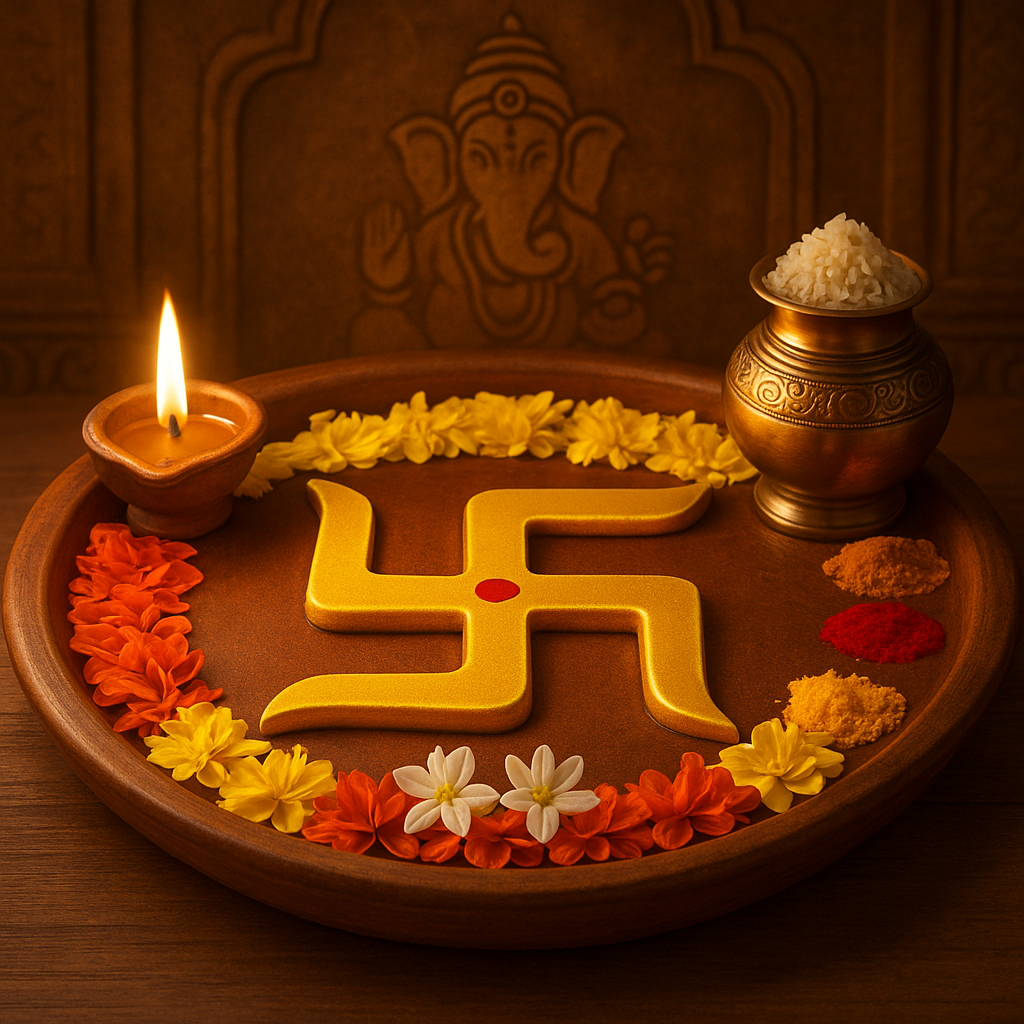
Meaning of the Hindu Swastika
The Swastika is an ancient sacred symbol associated with auspiciousness, well-being and good fortune in Hinduism. The word Swastika comes from the Sanskrit expression traditionally explained through the elements Su (good or auspicious), Asti (it is or existence) and the suffix Ka.
In Hindu traditions, the Swastika is commonly understood as a symbol of prosperity, harmony, auspicious beginnings and positive well-being. It is also used in religious ceremonies, festivals and important life events.
Quick Summary
- Origin: Ancient symbol used in several cultures.
- Meaning: Well-being, auspiciousness and good fortune.
- Religious significance: Important in Hinduism, Jainism and Buddhism.
- Common use: Religious ceremonies, festivals, homes and businesses.
Form and Structure of the Swastika
The Swastika generally consists of four arms bent at right angles. Its geometric form has been interpreted in different religious and cultural traditions in various ways.
In Hindu religious contexts, its four arms are sometimes associated with the four directions, the four Vedas, the four stages of life or other groups of four. These interpretations vary among traditions and should not be treated as one universally accepted explanation.
Important: The meanings associated with the Swastika are primarily religious, cultural and symbolic. Claims that its geometric design is scientifically based on the Golden Ratio or generates measurable cosmic energy are not established scientific findings.
Religious Importance of the Swastika in Hinduism
1. Relationship with Lord Ganesha
In many Hindu traditions, the Swastika is associated with Lord Ganesha, who is worshipped as the remover of obstacles and the deity of wisdom and auspicious beginnings. It is therefore commonly drawn before starting important activities, including religious ceremonies, marriages, business ventures and housewarming rituals.
2. Relationship with Goddess Lakshmi
The Swastika is also associated with Goddess Lakshmi, who represents wealth, prosperity and good fortune. During Diwali and other auspicious occasions, people commonly draw the symbol near entrances, on account books and in places where valuables are kept.
3. Symbol of the Four Directions
The four arms of the Swastika are sometimes interpreted as representing the four cardinal directions: North, South, East and West. This interpretation expresses the idea of completeness and universal auspiciousness.
4. Symbolic Association with the Four Vedas
Some Hindu interpretations associate the four arms with the four Vedas:
- Rigveda: Associated with hymns and knowledge.
- Yajurveda: Associated with ritual formulas and sacrificial practices.
- Samaveda: Associated with melodies and chants.
- Atharvaveda: Contains hymns and traditions relating to everyday life, healing and protection.
5. Association with the Four Yugas
Some traditional interpretations connect the four arms with the four Yugas of Hindu cosmology: Satya Yuga, Treta Yuga, Dvapara Yuga and Kali Yuga. This association expresses the cyclical understanding of time in Hindu tradition.
Types of Swastika
1. Right-Facing Swastika
The right-facing Swastika has arms that turn in a clockwise direction. It is widely used as an auspicious religious symbol in Hindu traditions.
- Commonly associated with auspiciousness and good fortune.
- Used during puja, festivals and religious ceremonies.
- Frequently drawn at the entrances of homes and businesses.
- Associated with prosperity, well-being and positive beginnings.
2. Left-Facing Swastika (Sauvastika)
The left-facing form has arms that turn in the opposite direction. Its interpretation and use differ across Hindu traditions and ritual contexts. It should not automatically be described as evil or exclusively associated with occult practices.
- Has different meanings in different religious traditions.
- May appear in particular ritual and symbolic contexts.
- Its significance depends on the specific tradition and context in which it is used.
Key Point: The direction of the arms alone does not determine the complete religious or cultural meaning of a Swastika. Its context, tradition and use are important.
Vastu and Traditional Religious Significance
1. Use in Vastu Shastra
In traditional Vastu practices, the Swastika is commonly drawn at entrances, on walls and in places of worship. It is believed by many practitioners to represent auspiciousness, harmony and protection.
These are traditional religious and cultural beliefs; there is no established scientific evidence that drawing the symbol physically removes architectural defects or changes measurable energy fields.
2. Use in Homes and Workplaces
Many Hindu families and business owners use the Swastika during religious ceremonies and auspicious beginnings. It may be drawn on doors, account books, shops, offices and places of worship.
Historical and Cultural Importance of the Swastika
The Swastika is an ancient symbol found in archaeological remains and cultural traditions across different parts of the world. It predates its adoption by the Nazi Party by thousands of years.
1. India and the Indus Valley Civilization
Swastika-like motifs have been reported in archaeological material associated with ancient South Asian cultures, including the Indus Valley Civilization. The interpretation and dating of individual motifs require care, but the symbol has a long history in the Indian subcontinent.
2. Hinduism
In Hinduism, the Swastika is widely used as a sacred and auspicious symbol. It is associated with religious ceremonies, prosperity, well-being and important occasions.
3. Buddhism
In Buddhism, the Swastika is an auspicious symbol found in religious art, architecture and traditional representations of Buddhist teachings. Its orientation and use vary across Buddhist cultures. In Japan, a related symbol known as the Manji is used in Buddhist contexts.
4. Jainism
In Jainism, the Swastika is an important religious symbol. Its four arms represent the four states of existence or Gatis through which a soul may be reborn:
- Deva: Heavenly beings.
- Manushya: Human beings.
- Tiryanch: Animals, plants and other non-human forms of life.
- Naraka: Beings in hellish states of existence.
The symbol reminds followers of the cycle of birth and rebirth and the importance of pursuing liberation from it.
5. Other World Civilizations
Swastika-like designs have also appeared in the archaeological and artistic traditions of several other regions, including Europe and parts of Asia. Their meanings varied according to the culture and historical period.
Difference Between the Hindu Swastika and the Nazi Symbol
One of the most important distinctions in understanding the Swastika is the difference between its ancient religious use and its appropriation by Nazi Germany.
The Nazi Party adopted a hooked-cross emblem, commonly called the Hakenkreuz in German, as its political symbol in 1920. The Nazi regime used it as an emblem of racial ideology, antisemitism, dictatorship and aggressive nationalism. It became internationally associated with the Holocaust and Nazi crimes.
The ancient Swastika, by contrast, has been used for thousands of years in Hinduism, Jainism and Buddhism as a religious and auspicious symbol. The two should be understood in their distinct historical and cultural contexts.
| Basis | Traditional Hindu Swastika | Nazi Emblem |
|---|---|---|
| Historical background | Ancient symbol used across several cultures | Adopted by the Nazi Party in 1920 |
| Context | Religious, cultural and ceremonial | Political and ideological |
| Association | In Hindu traditions, associated with auspiciousness and well-being | Associated with Nazism, antisemitism and the Holocaust |
| Visual form | Often shown upright in religious settings | Commonly shown tilted at an angle in Nazi imagery |
Important distinction: Orientation and visual appearance can vary. The historical context and the purpose for which the symbol is used are essential to understanding its meaning.
Modern Use of the Swastika
The Swastika continues to be used in several religious and cultural traditions. In Hindu communities, common uses include:
- Hindu puja, havan and religious ceremonies.
- Diwali and other festivals.
- Marriage and housewarming ceremonies.
- Home entrances, temples and places of worship.
- Business establishments and account books during auspicious beginnings.
Its meaning should always be understood with reference to the cultural and religious context in which it appears.
Swastika in Religious Rituals
1. Housewarming Ceremonies
In many Hindu communities, the Swastika is drawn during housewarming ceremonies and placed near entrances as a traditional expression of auspicious beginnings and blessings.
2. Marriage Ceremonies
The symbol may be used in wedding decorations, ritual spaces and religious ceremonies. It represents good wishes for the couple's well-being and prosperity.
3. Puja and Yajna
During puja and yajna, the Swastika may be drawn on ritual surfaces, containers and other sacred objects as part of traditional worship practices.
Spiritual Interpretations of the Swastika
Different Hindu traditions and spiritual interpretations associate the Swastika with ideas such as harmony, auspiciousness, continuity and the cycles of existence.
1. Cosmic Order and Cyclical Time
Some interpretations connect the symbol with the cyclical nature of creation and the universe. These are philosophical and religious interpretations rather than scientific descriptions.
2. The Five Elements
Some modern spiritual explanations associate the symbol with the five elements: earth, water, fire, air and space. This is one symbolic interpretation and is not a universal explanation across Hindu traditions.
3. Individual Soul and Supreme Reality
In certain philosophical interpretations, the Swastika is connected with ideas of spiritual harmony and the relationship between the individual self (Atman) and ultimate reality (Brahman). This association should not be treated as a universally established scriptural definition.
4. Meditation and Spiritual Practice
The Swastika may be used as a devotional or meditative visual symbol in some spiritual settings. However, claims that viewing it automatically activates Kundalini energy or the Crown Chakra are not scientifically established.
Scientific Perspective on the Swastika
The Swastika is an important subject of historical, archaeological, religious and cultural study. Researchers examine its appearance, distribution and changing meanings across societies.
However, claims that the symbol is based on the Golden Ratio, produces measurable positive energy, cures health problems or directly reduces stress have not been established by reliable scientific evidence.
Its religious and cultural significance can be respected and studied without presenting spiritual beliefs as scientifically proven facts.
Conclusion
The Swastika is an ancient symbol with deep religious and cultural significance. In Hinduism, it is commonly associated with auspiciousness, prosperity, well-being and the beginning of important activities. It also holds important meanings in Jainism and Buddhism and has appeared in many other ancient cultures.
Its historical use must be distinguished from the Nazi Party's appropriation of the symbol in the twentieth century. Understanding this distinction helps explain both its sacred significance in Asian religious traditions and its painful association with Nazi ideology in modern history.
A balanced understanding of the Swastika requires attention to its history, religious interpretations and cultural context.
Frequently Asked Questions (FAQs) About the Hindu Swastika
1. What is the meaning of the Hindu Swastika?
The Hindu Swastika is an ancient religious symbol commonly associated with auspiciousness, well-being, prosperity and good fortune.
2. Why is the Swastika drawn before religious ceremonies?
It is traditionally drawn as a symbol of auspicious beginnings and blessings before puja, marriage, housewarming ceremonies and other important activities.
3. What does the Swastika represent in Jainism?
In Jainism, its four arms represent the four states of existence: heavenly beings, human beings, non-human living beings and hellish beings.
4. Is the Swastika used in Buddhism?
Yes. The Swastika is an auspicious symbol in many Buddhist traditions and appears in Buddhist art, architecture and religious settings.
5. What is the difference between the Hindu Swastika and the Nazi symbol?
The Hindu Swastika is an ancient religious and cultural symbol associated with auspiciousness. The Nazi Party appropriated a hooked-cross emblem as a political symbol associated with racism, antisemitism and the Holocaust.
6. Is the Swastika scientifically proven to generate positive energy?
No reliable scientific evidence establishes that the Swastika generates measurable positive energy or changes physical energy fields. Its significance is primarily religious, historical and cultural.
References and Further Reading
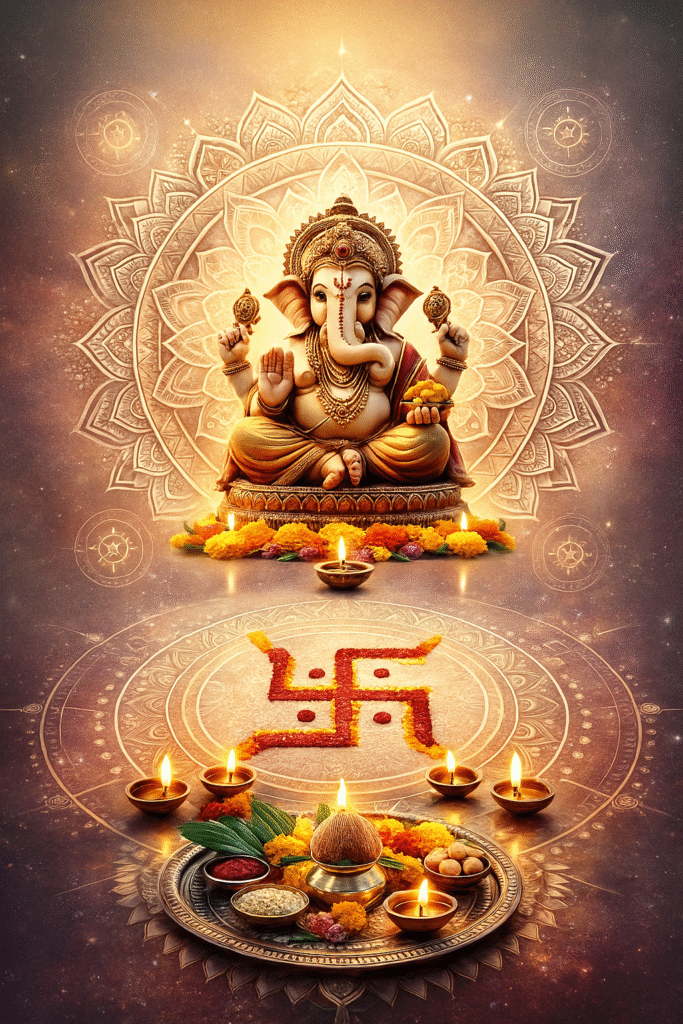
Lord Ganesha and Auspicious Functions of the Swastika
Lord Ganesha is one of the most widely worshipped deities in Hinduism. He is known as Vighnaharta, the remover of obstacles, and is associated with wisdom, knowledge and auspicious beginnings. Many Hindu traditions begin religious ceremonies and important activities with prayers to Lord Ganesha.
His worship is common during marriages, housewarming ceremonies, business inaugurations, educational activities and other important occasions. The Swastika is also frequently used alongside Ganesha worship as a symbol of auspiciousness and well-being.
1. Lord Ganesha: The Deity of Auspicious Beginnings
1.1 First Respected Deity
In many Hindu traditions, Lord Ganesha is worshipped at the beginning of puja, havan and other religious ceremonies. Devotees seek his blessings for wisdom, success and the removal of obstacles.
1.2 Importance of the Expression "Shri Ganesh"
The expression "Shri Ganesh" is traditionally used when beginning a new task. It signifies an auspicious beginning and the invocation of Lord Ganesha's blessings. The tradition of worshipping Ganesha first is explained in different Hindu religious narratives and traditions.
2. Form of Lord Ganesha and Its Symbolic Meaning
2.1 Symbolic Importance of Ganesha's Features
| Feature | Traditional Symbolic Interpretation |
|---|---|
| Large Head | Wisdom, knowledge and broad thinking |
| Small Eyes | Concentration and attention to detail |
| Large Ears | Listening carefully and gaining knowledge |
| Trunk | Adaptability, strength and practical wisdom |
| Large Stomach | Acceptance and the ability to assimilate experiences |
| Mouse as Vehicle | Often interpreted as a symbol of control over desires and humility |
2.2 Meaning of Ganesha's Four Hands
Lord Ganesha is commonly depicted with four hands, although the number and objects shown can vary across different forms and artistic traditions.
- Abhaya Mudra: A gesture of protection, reassurance and blessings.
- Pasha (Noose): Traditionally associated with controlling attachments and guiding the devotee.
- Ankusha (Goad): Symbolically represents discipline and guidance.
- Modak: Associated with spiritual joy, devotion and the reward of knowledge.
3. Importance of Ganesha Worship During Auspicious Functions
3.1 Marriage and Housewarming
Lord Ganesha is worshipped during many Hindu marriage and housewarming ceremonies. Devotees seek blessings for harmony, well-being and an auspicious beginning to a new phase of life.
3.2 New Business and Education
Business owners may worship Ganesha before opening a shop, office or business establishment. Students and families also worship him as a symbol of wisdom, learning and knowledge.
3.3 Travel and Vehicle Worship
Some Hindu families perform a puja when purchasing a new vehicle or beginning an important journey. These rituals express prayers for safety and a successful journey; they do not replace practical road-safety measures.
4. Major Ganesha Mantras
The following mantras are commonly recited by devotees during Ganesha worship.
1. Ganesh Mantra
Om Gam Ganapataye Namah
A prayer offered to Lord Ganesha, seeking his blessings and guidance.
2. Vakratunda Mahakaya Mantra
Vakratunda Mahakaya Suryakoti Samaprabha, Nirvighnam Kuru Me Deva Sarva Karyeshu Sarvada.
A traditional prayer asking Lord Ganesha to remove obstacles from one's activities.
5. Ganesha Chaturthi and Ganapati Celebrations
5.1 Religious Importance
Ganesha Chaturthi is an important Hindu festival celebrating the birth of Lord Ganesha. Devotees perform special puja, offer modaks and other traditional offerings, observe fasting and participate in devotional activities.
5.2 Anant Chaturdashi and Ganapati Visarjan
In many regions, Ganesha idols are immersed on Anant Chaturdashi, the concluding day of the festival. The immersion ceremony symbolically expresses the cyclical nature of life and the return of the deity to the divine.
6. Spiritual Interpretations of Lord Ganesha
6.1 Symbolic Teachings
- Humility: The mouse is often interpreted as a reminder to control ego and desires.
- Listening: The large ears represent the importance of listening carefully.
- Concentration: The eyes symbolize focus and attention.
- Adaptability: The trunk is often associated with flexibility and practical wisdom.
6.2 Devotion and Faith
For devotees, worshipping Lord Ganesha is an expression of faith, devotion and the desire to develop wisdom, patience and discipline. Beliefs about divine blessings are part of religious tradition.
All Four Directions and Their Representation in Hindu Traditions
The four cardinal directions—East, West, North and South—have symbolic importance in Hindu religious traditions, Vastu Shastra and traditional cosmology. Different directions are associated with particular deities, qualities and elements in different traditional systems.
1. Symbolic Meaning of the Four Directions
1.1 East (Purva)
The East is associated with sunrise, light and new beginnings. In Hindu traditions, it is commonly associated with Surya, the Sun deity, and Indra, the guardian deity of the eastern direction.
| Aspect | Traditional Association |
|---|---|
| Natural Association | Sunrise and daylight |
| Directional Deity | Indra |
| Symbolic Meaning | Light, knowledge and new beginnings |
1.2 West (Paschima)
The West is traditionally associated with sunset and the directional guardian Varuna. In Hindu symbolism, Varuna is connected with cosmic order and waters.
| Aspect | Traditional Association |
|---|---|
| Natural Association | Sunset |
| Directional Deity | Varuna |
| Symbolic Meaning | Water, cosmic order and reflection |
1.3 North (Uttara)
The North is associated with Kubera, the traditional deity of wealth and treasures. In some Hindu traditions, the direction is also associated with prosperity, growth and spiritual aspirations.
1.4 South (Dakshina)
The South is traditionally associated with Yama, the deity connected with death and justice. It is also discussed in religious and architectural traditions in relation to discipline, mortality and the cycle of life.
2. Traditional Symbolic Associations of the Directions
| Direction | Directional Deity | Common Symbolic Association |
|---|---|---|
| East | Indra | Light and new beginnings |
| West | Varuna | Water and cosmic order |
| North | Kubera | Wealth and prosperity |
| South | Yama | Justice and the cycle of life |
Note: These are traditional religious and cultural associations. Different scriptures, regional traditions and Vastu systems may describe directions differently. They should not be interpreted as scientifically proven effects on health, wealth or mental behaviour.
Yagya and Puja: Uses of the Swastika
The Swastika is an important auspicious symbol in many Hindu religious practices. It is commonly drawn during puja, havan, Yagya and other ceremonies. It represents well-being, auspiciousness and good fortune in traditional Hindu culture.
1. Importance of the Swastika in Yagya and Puja
1.1 Religious and Spiritual Meaning
The Sanskrit word Swastika is traditionally associated with well-being and auspiciousness. In Hindu religious settings, the symbol may be associated with deities such as Ganesha, Lakshmi and Surya, depending on the ceremony and regional tradition.
1.2 Use During Yagya
| Ritual Context | Traditional Significance |
|---|---|
| Before beginning a Yagya | Marks an auspicious beginning |
| On ritual surfaces | Used as a sacred decorative symbol |
| On puja materials | Expresses religious devotion and auspiciousness |
2. Swastika in Different Hindu Pujas
2.1 Ganesh Puja
During Ganesh Puja, devotees may draw a Swastika near the deity or on the puja platform. It is traditionally associated with auspiciousness and the blessings of Lord Ganesha.
2.2 Housewarming and Vastu Puja
The Swastika is commonly drawn near entrances or in the puja room during housewarming ceremonies. It represents good wishes for peace, well-being and prosperity.
2.3 Marriage Rituals
In many Hindu wedding traditions, the Swastika may appear on invitations, ritual materials, the mandap or other ceremonial objects. It represents auspicious beginnings and blessings for the couple.
3. Traditional Beliefs and Scientific Perspective
Many devotees believe that the Swastika represents protection, positivity and divine blessings. These interpretations belong to religious and cultural traditions.
There is no established scientific evidence that drawing a Swastika physically removes negative energy, guarantees success, improves health or changes measurable energy fields. Its importance can be understood through its religious, historical and cultural meaning.
4. Mantras Used During Auspicious Worship
The following mantras are used in different Hindu devotional and ritual contexts:
- Om Gam Ganapataye Namah: A prayer to Lord Ganesha.
- Om Shri Ganeshaya Namah: A devotional invocation of Ganesha.
- Sarva Mangala Mangalye: A well-known verse associated with Goddess Durga.
- Gayatri Mantra: A sacred Vedic prayer for illumination and wisdom.
5. Conclusion
The Swastika has an important place in Hindu religious ceremonies. It is used as a symbol of auspiciousness, well-being and devotion during Yagya, puja, marriage and housewarming rituals. Its meaning is rooted in religious and cultural traditions.
Swastika in Astrology and Vastu Shastra
The Swastika is used in some Hindu astrological and Vastu-related religious practices as an auspicious symbol. Devotees may use it during prayers and traditional remedies with the intention of seeking blessings, harmony and well-being.
Important distinction: There is no reliable scientific evidence that drawing or wearing a Swastika changes planetary positions, removes horoscope defects or guarantees specific outcomes. The practices described below represent traditional beliefs, not scientifically established remedies.
1. Swastika in Astrology
1.1 Traditional Association with Navagrahas
In some devotional practices, auspicious symbols are used during prayers to the Navagrahas, the nine celestial influences of Hindu astrology. The Swastika may be included as a symbol of auspiciousness, but it does not have a universally established planetary effect in classical astrology.
| Navagraha | Traditional Astrological Association |
|---|---|
| Surya (Sun) | Authority, vitality and confidence |
| Chandra (Moon) | Mind and emotions |
| Mangala (Mars) | Energy, courage and action |
| Budha (Mercury) | Communication and intellect |
| Guru (Jupiter) | Knowledge and wisdom |
| Shukra (Venus) | Relationships, art and comfort |
| Shani (Saturn) | Discipline, responsibility and karma |
| Rahu | Desire, ambition and worldly attachments |
| Ketu | Detachment and spiritual inclination |
1.2 Traditional Remedies and Horoscope Beliefs
Some regional religious practices include the use of auspicious symbols, prayers, donations and devotional activities when people seek remedies for astrological concerns. Practices involving colours, metals or particular symbols vary across traditions.
Specific claims such as wearing a silver Swastika to remove Rahu-Ketu Dosha or placing a copper Swastika under a Peepal tree to eliminate Pitra Dosha should not be presented as universal or guaranteed astrological prescriptions.
2. Swastika in Vastu Shastra
2.1 Directional Use
In some Vastu traditions, the Swastika is drawn at entrances, in prayer rooms or on particular surfaces as a sign of auspiciousness. Its placement may vary according to regional customs and the specific religious practice.
| Location | Traditional Purpose |
|---|---|
| East-facing entrance | Associated with sunrise and auspicious beginnings |
| West-facing entrance | Used as a devotional and auspicious symbol |
| North-facing entrance | Sometimes associated with prosperity in Vastu traditions |
| South-facing entrance | May be used according to local religious customs |
2.2 Use in Homes and Businesses
- Main Entrance: Used as a traditional symbol of auspiciousness.
- Puja Room: Included in religious decoration and worship.
- Business Establishments: Sometimes drawn on account books and during business inaugurations.
- Kitchen: May be used in some households as part of traditional religious customs.
3. Special Occasions and Uses
- Housewarming: Used during Griha Pravesh ceremonies.
- Business Inauguration: Drawn on account books or ceremonial materials.
- Marriage: Used on wedding invitations and ritual objects.
- Festivals: Commonly seen during Diwali and other auspicious occasions.
4. Conclusion
In astrology and Vastu-related traditions, the Swastika is primarily used as an auspicious religious symbol. Its use expresses faith, devotion and the desire for harmony and well-being. Claims about guaranteed planetary remedies or measurable changes in energy should be distinguished from established scientific evidence.
Frequently Asked Questions (FAQs)
1. Why is Lord Ganesha worshipped before auspicious functions?
In many Hindu traditions, Lord Ganesha is worshipped at the beginning of important activities because he is regarded as Vighnaharta, the remover of obstacles, and a symbol of wisdom and auspicious beginnings.
2. What does the Swastika represent in Hinduism?
The Swastika is commonly associated with auspiciousness, well-being, prosperity and good fortune in Hindu religious and cultural traditions.
3. Which deity is associated with the East direction?
Indra is traditionally regarded as the directional guardian of the East. The direction is also associated with sunrise and Surya.
4. Which deity is associated with the North direction?
Kubera is traditionally regarded as the guardian of the North and is associated with wealth and treasures.
5. Why is the Swastika drawn during Yagya and Puja?
It is drawn as a traditional symbol of auspiciousness, devotion and well-being during many Hindu religious ceremonies.
6. Can the Swastika remove planetary defects?
Some religious and astrological traditions include the Swastika in devotional practices. However, there is no scientific evidence that it changes planetary positions or guarantees the removal of astrological defects.
References and Further Reading
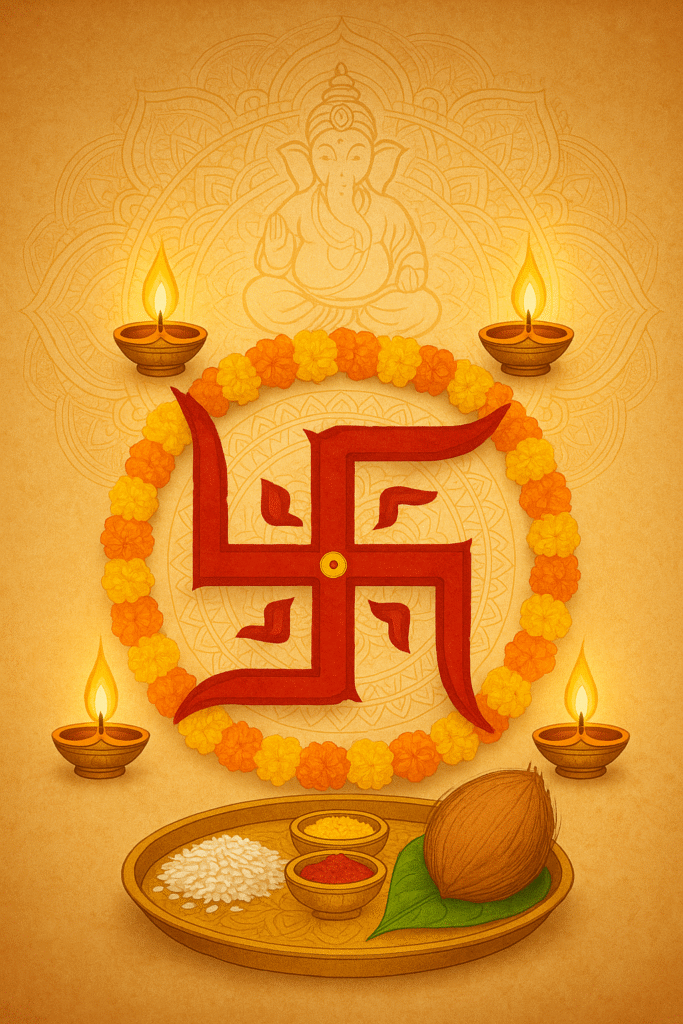
Swastika: A Scientific Approach
The Swastika is an ancient geometric symbol found in Hinduism, Buddhism, Jainism and several other cultural traditions. It has been studied from historical, archaeological, mathematical and cultural perspectives.
Although the symbol has deep religious and spiritual significance, claims that it produces cosmic energy, changes electromagnetic fields or creates measurable health benefits are not supported by established scientific evidence.
1. Geometric and Mathematical Importance
1.1 Swastika Design and Geometry
The Swastika generally consists of four arms bent at right angles. Its geometric structure can be examined through symmetry, angles, orientation and repeated patterns.
| Geometric Property | Explanation |
|---|---|
| Four Arms | The design has four extensions arranged around a central region. |
| Right Angles | The arms typically bend at 90-degree angles. |
| Rotational Appearance | The design can be represented in different orientations. |
| Geometric Pattern | Its structure can be studied as a combination of straight lines and right-angle turns. |
1.2 Mathematical Interpretation
The Swastika can be analysed using elementary geometry, angles, symmetry and transformations. Its visual structure makes it an interesting example for studying geometric patterns.
- Its arms commonly contain right-angle bends.
- Its appearance changes when the figure is rotated or reflected.
- Its design can be constructed using straight line segments and geometric proportions.
- Different versions may have different dimensions and proportions.
Scientific clarification: There is no established mathematical evidence that the Swastika is inherently based on the Golden Ratio or Fibonacci sequence. Its geometric properties can be studied without assuming that it possesses special physical energy.
2. Swastika and the Science of Energy
2.1 Electromagnetic Waves
Electromagnetic waves are studied through the principles of physics, including electric fields, magnetic fields, frequency and wavelength. The shape of an ordinary Swastika drawing does not, by itself, establish that electromagnetic energy is concentrated or redirected.
Claims that Swastika-shaped markings focus electromagnetic energy or create a positive energy field require controlled scientific evidence. Such effects should not be presented as established scientific findings.
2.2 Cosmic Energy and Natural Forces
In some spiritual and Vastu traditions, the Swastika is associated symbolically with the universe, the Sun, natural harmony and auspiciousness.
| Natural Concept | Traditional or Scientific Context |
|---|---|
| Solar Energy | In some traditions, the Swastika is symbolically associated with the Sun and light. |
| Earth's Magnetic Field | A measurable physical phenomenon studied in geophysics; no established Swastika-specific balancing effect is known. |
| Gravity | A fundamental physical interaction that is not known to be altered by drawing the symbol. |
| Cosmic Order | A philosophical and religious interpretation found in some spiritual traditions. |
3. Swastika and Health Science
The Swastika has religious and cultural importance for many communities. People may find personal meaning, comfort or a sense of connection through religious symbols and devotional practices.
3.1 Mental and Physical Health Claims
There is currently no established scientific basis for claiming that simply viewing or drawing a Swastika directly reduces cortisol, increases dopamine or serotonin, improves blood circulation or balances brain-wave activity.
| Claim | Scientific Position |
|---|---|
| Reduces stress and anxiety | A specific effect of the Swastika has not been established. |
| Balances brain-wave activity | No reliable evidence establishes this effect. |
| Improves blood circulation | No established medical evidence supports this claim. |
| Improves concentration | The symbol itself has no established specific cognitive effect. |
3.2 Water and the Swastika
Some traditional or popular claims suggest that water kept near a Swastika becomes purer or gains special energy. However, there is no established scientific evidence that a Swastika marking changes water quality, removes contaminants or makes water safer to drink.
Water safety depends on factors such as its source, microbial contamination, chemical composition and appropriate treatment.
4. Swastika, Sound and Mantras
Hindu religious traditions use mantras, devotional chanting and temple bells during worship. Sound waves can be studied scientifically through acoustics, frequency, vibration and resonance.
Some devotees combine the Swastika with prayers and mantras as part of religious ceremonies. However, claims that a particular mantra interacts with the symbol's geometry to amplify cosmic energy or eliminate negative energy have not been scientifically established.
5. Conclusion
The Swastika is an important subject for the study of geometry, history, archaeology and religious symbolism. Its structure can be examined mathematically, while its spiritual meanings can be understood through cultural and religious traditions.
A balanced scientific approach respects the symbol's historical and religious importance without presenting unverified claims about electromagnetic energy, medical benefits or cosmic forces as proven facts.
Hindu Swastika: Spiritual Approach
The Swastika is a sacred and auspicious symbol in Hinduism. It is commonly associated with well-being, prosperity, good fortune and auspicious beginnings. It is used in religious ceremonies, festivals, homes and business establishments.
1. Spiritual Meaning of the Swastika
The Sanskrit word Swastika is traditionally explained through the elements Su (good or auspicious), Asti (existence or being) and the suffix Ka. It is commonly understood as a symbol associated with well-being.
Some Hindu interpretations connect the Swastika with the four Purusharthas, or the four aims of human life:
- Dharma: Righteous conduct and duty.
- Artha: Material well-being and prosperity.
- Kama: Desires, enjoyment and fulfilment.
- Moksha: Liberation from the cycle of rebirth.
This is a traditional symbolic interpretation; it is not a single universally accepted explanation of the symbol.
2. Relationship with Lord Ganesha
The Swastika is commonly associated with Lord Ganesha in Hindu religious practices. Ganesha is worshipped as Vighnaharta, the remover of obstacles, and as a deity associated with wisdom and auspicious beginnings.
Devotees may draw the Swastika near Ganesha idols, on entrances, on account books and during ceremonies to express devotion and seek blessings.
3. Swastika and Ancient Hindu Scriptures
The Swastika is an ancient symbol with a long history in South Asian religious and cultural traditions. Its use and interpretation developed across different periods and communities.
It is important to distinguish between the symbol's historical use and specific scriptural claims. Individual Vedic passages should not be assigned a particular Swastika interpretation without a reliable textual reference.
4. Four Directions and Five Elements
4.1 Symbolic Association with Four Directions
Some traditional interpretations associate the four arms of the Swastika with the four cardinal directions:
- East: Commonly associated with sunrise and new beginnings.
- West: Associated with sunset and, in Hindu tradition, Varuna.
- North: Traditionally associated with Kubera and prosperity.
- South: Traditionally associated with Yama.
4.2 Association with the Five Elements
Some modern spiritual interpretations connect the Swastika with the five elements, known as Panchamahabhuta:
- Prithvi: Earth.
- Jala: Water.
- Agni: Fire.
- Vayu: Air.
- Akasha: Space or ether.
This is a symbolic association and should not be treated as a universal scriptural definition.
5. Swastika and Chakras
Some contemporary spiritual explanations connect the Swastika with the chakra system and the idea of spiritual awareness. The traditional chakra system includes concepts such as Muladhara (Root Chakra) and Sahasrara (Crown Chakra).
However, there is no established scientific evidence that drawing or viewing the Swastika automatically activates chakras or awakens Kundalini energy.
6. Swastika in Major Religions
6.1 Hinduism
In Hinduism, the Swastika is an auspicious symbol commonly associated with prosperity, well-being and religious ceremonies. It may be connected with deities such as Ganesha, Lakshmi and Surya in different devotional contexts.
6.2 Buddhism
In Buddhism, the Swastika is an auspicious symbol found in religious art, architecture and Buddhist cultural traditions. Its orientation and use differ across regions. A related symbol known as the Manji is used in Japanese Buddhist contexts.
6.3 Jainism
In Jainism, the Swastika is an important religious symbol. Its four arms represent the four Gatis, or states of existence through which a soul may be reborn:
- Deva Gati: Heavenly beings.
- Manushya Gati: Human beings.
- Tiryanch Gati: Animals, plants and other non-human forms of life.
- Naraka Gati: Beings in hellish states of existence.
The symbol reminds followers of the cycle of birth and rebirth and the spiritual goal of liberation.
6.4 Ancient Civilizations
Swastika-like motifs have appeared in archaeological remains and artistic traditions across different regions of the world, including parts of Europe and Asia. Their meanings varied according to the culture and historical period.
7. Swastika in Meditation and Devotional Practice
Some devotees use the Swastika as a visual symbol during prayer, meditation and religious ceremonies. It may serve as a reminder of faith, auspiciousness and spiritual values.
Personal experiences of meditation and devotion can vary. There is no established evidence that the symbol itself guarantees mental peace or produces a particular psychological effect.
8. Spiritual Significance in Daily Life
In Hindu communities, the Swastika is commonly used in daily and ceremonial religious practices:
- Drawing the symbol at home entrances during auspicious occasions.
- Using it in puja rooms and religious decorations.
- Including it in Diwali and other festival celebrations.
- Drawing it on account books during business inaugurations.
- Using it during marriage and housewarming ceremonies.
9. Conclusion
The Swastika holds an important place in Hindu spiritual and cultural traditions. It is associated with auspiciousness, prosperity, well-being and religious devotion. Its significance can be understood through its historical use and the different interpretations developed by Hindu, Buddhist and Jain communities.
Hindu Swastika: Types and Their Importance
Different forms and decorative variations of the Swastika are used in Hindu religious and cultural practices. Their appearance, orientation and associated meanings may vary according to regional customs and devotional traditions.
Important clarification: Not every named variation described in modern religious or Vastu literature is a universally recognised classical type. The following section distinguishes common forms from devotional and decorative variations.
1. Main Visual Forms of the Swastika
1.1 Right-Facing Swastika
The right-facing Swastika has arms that turn in a clockwise direction. It is widely used as an auspicious symbol in Hindu religious and cultural settings.
- Commonly associated with auspiciousness and well-being.
- Used in puja, festivals and ceremonies.
- Frequently drawn at home and business entrances.
- May be associated with prosperity and good fortune.
1.2 Left-Facing Swastika (Sauvastika)
The left-facing form has arms that turn in the opposite direction. Its interpretation varies across religious and cultural traditions. It should not automatically be described as evil or assigned one fixed association with Tantra.
- Appears in different religious and cultural contexts.
- Its meaning depends on the tradition in which it is used.
- Its orientation alone does not determine its complete significance.
2. Devotional and Decorative Variations
2.1 Swastika with Om
In some Hindu devotional designs, the Swastika is drawn alongside the sacred syllable Om. This combination expresses religious devotion and auspiciousness.
2.2 Swastika with Shri
The Swastika may be drawn with the word "Shri" or other auspicious inscriptions. Such designs are commonly used during festivals, business inaugurations and religious ceremonies.
2.3 Swastika Associated with Goddess Lakshmi
Some decorative designs combine the Swastika with symbols or inscriptions associated with Goddess Lakshmi, wealth and prosperity. These designs are particularly common in certain Diwali and business-related rituals.
2.4 Swastika in Religious and Yagya Decorations
Swastika designs may be included in decorations around ritual spaces, puja materials and ceremonial objects. Their use represents auspiciousness and devotion.
3. Swastika in Vastu and Astrological Practices
3.1 Vastu-Related Use
Some Vastu traditions recommend drawing the Swastika at entrances, in prayer rooms or on particular ceremonial surfaces. These practices are based on traditional beliefs about auspiciousness and harmony.
Claims that a Swastika automatically removes Vastu defects or changes the physical energy of a building are not scientifically established.
3.2 Navagraha-Related Practices
In some devotional settings, auspicious symbols may be used during prayers to the Navagrahas. However, there is no universally accepted classical category called the "Navagraha Swastika" with a standard design or proven planetary effect.
4. Colour Significance in Religious Decoration
Different colours are used in Swastika decorations according to regional customs, materials and religious occasions. Their meanings are symbolic and may vary between traditions.
| Colour | Common Symbolic Association |
|---|---|
| Red | Auspiciousness, celebration and religious devotion |
| Yellow | Knowledge, learning and auspicious occasions |
| White | Peace and purity |
| Green | Growth and renewal in some decorative interpretations |
5. Conclusion
The Swastika appears in several visual and decorative forms in Hindu religious practices. The right-facing and left-facing forms are commonly discussed, while designs combining the symbol with Om, Shri or other religious elements are devotional variations.
Its meaning should be understood through its historical, religious and cultural context rather than through unsupported claims of guaranteed prosperity, protection or planetary effects.
Frequently Asked Questions (FAQs) About the Swastika
1. What is the scientific significance of the Swastika?
The Swastika can be studied as a geometric design with four arms and right-angle bends. Its historical, archaeological and cultural significance is well worth studying, but claims about special electromagnetic or cosmic energy effects are not scientifically established.
2. Is the Swastika based on the Golden Ratio?
There is no established evidence that the Swastika is inherently based on the Golden Ratio or Fibonacci sequence. Different versions of the symbol can have different proportions.
3. What is the spiritual meaning of the Hindu Swastika?
In Hindu traditions, the Swastika is commonly associated with auspiciousness, well-being, prosperity and good fortune.
4. What are the two main orientations of the Swastika?
The two commonly discussed orientations are right-facing and left-facing. Their interpretations vary across religious and cultural traditions.
5. What does the Swastika represent in Jainism?
In Jainism, its four arms represent the four Gatis: Deva, Manushya, Tiryanch and Naraka. These represent the different states of existence in the cycle of rebirth.
6. Can the Swastika activate chakras?
Some spiritual interpretations connect the symbol with chakra-related concepts. However, there is no established scientific evidence that viewing or drawing it automatically activates chakras.
7. Does the Swastika improve health or purify water?
No reliable scientific evidence establishes that the Swastika directly improves physical health, changes hormone levels or purifies water. Water safety requires appropriate testing and treatment.
References and Further Reading
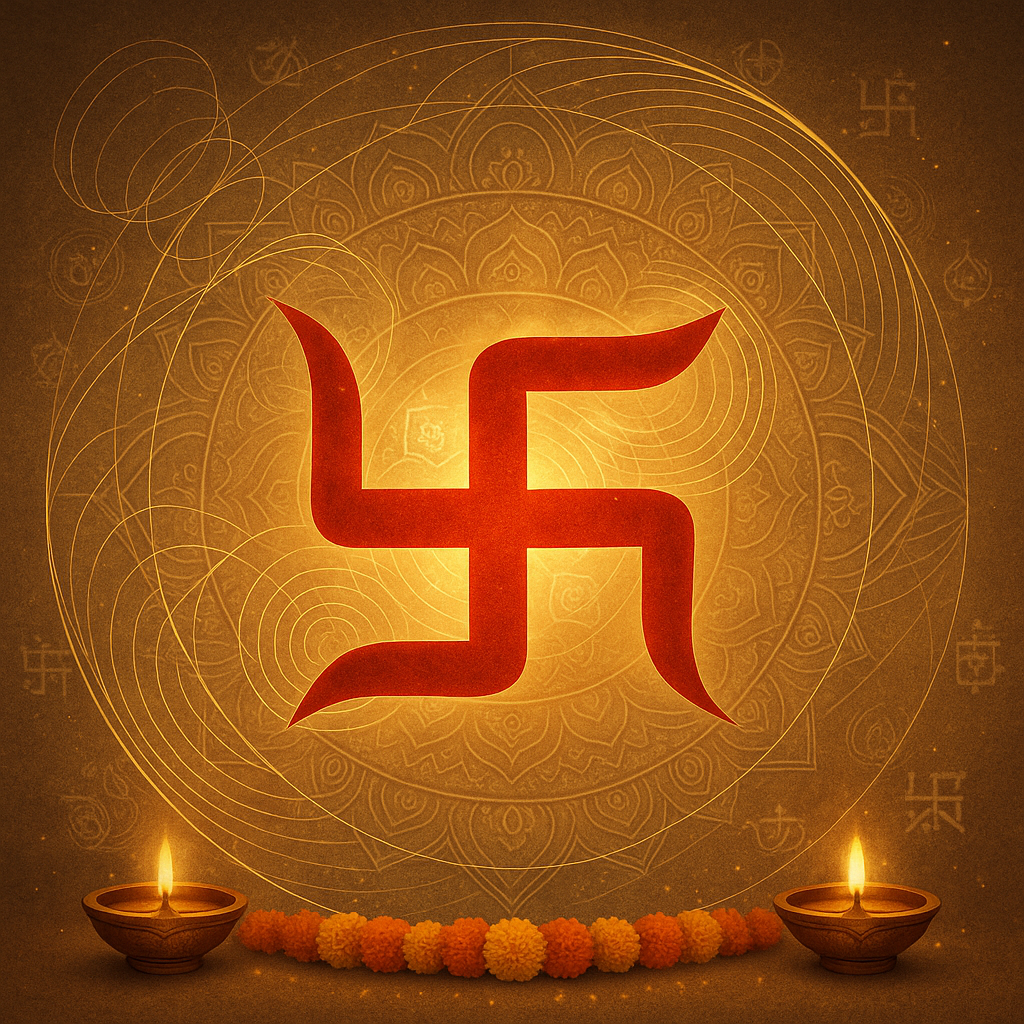
Hindu Swastika: Uses and Religious Significance
The Swastika is an ancient symbol with deep religious and cultural significance in Hinduism. It is commonly associated with auspiciousness, prosperity, well-being and good fortune. It is used during religious ceremonies, festivals, marriages, housewarming rituals and business inaugurations.
The symbol also appears in Jain and Buddhist traditions, where it carries distinct religious meanings. Its use in different cultures should be understood in its historical and religious context.
1. Use of the Swastika in Religious Rituals
The Swastika is widely used in Hindu religious functions and ceremonies.
1.1 Worship and Yajna (Havan)
- It is commonly drawn before beginning auspicious religious activities.
- It represents well-being and auspiciousness in Hindu traditions.
- It may be drawn on ritual surfaces and puja materials during havan and yajna.
1.2 Housewarming and Marriage
- The Swastika is often drawn on entrances, walls and puja areas during Griha Pravesh.
- It may be used on the mandap, kalash and ceremonial objects during Hindu weddings.
- It expresses traditional wishes for harmony, prosperity and an auspicious beginning.
1.3 Temples and Places of Worship
- The Swastika appears in Hindu temple decorations and religious artwork.
- It may be used on entrances, walls, ritual objects and puja materials.
2. Use of the Swastika in Vastu Shastra
In Vastu-related traditions, the Swastika is used as an auspicious religious symbol. Its placement and interpretation may differ according to regional customs and individual traditions.
2.1 Swastika at the Main Entrance
- It is commonly drawn near the main entrance of a home.
- It represents auspiciousness, good fortune and traditional blessings.
- Materials such as vermilion, turmeric and other traditional substances may be used.
2.2 Use on Vaults and Business Counters
- Some families draw the Swastika on lockers, account books and cash boxes.
- Words such as "Shubh-Labh" and "Riddhi-Siddhi" may accompany the symbol.
- These practices express traditional wishes for prosperity and success.
2.3 Use Inside the Home
- It may be used in prayer rooms and religious spaces.
- Some households include it in festival and ceremonial decorations.
- Its use is based on religious and cultural customs.
Scientific clarification: Vastu traditions associate the Swastika with auspiciousness and harmony. However, there is no established scientific evidence that drawing the symbol physically removes architectural defects or changes measurable energy fields.
3. Use of the Swastika in Astrology
3.1 Traditional Planetary Remedies
In some Hindu devotional and astrological practices, auspicious symbols are used during prayers and traditional remedies related to the Navagrahas.
- Some regional practices include the Swastika in Navagraha-related worship.
- Materials such as copper, silver, turmeric or vermilion may be used in different rituals.
- These practices vary across traditions and do not have one universally accepted procedure.
3.2 Horoscope-Related Religious Practices
Some people include the Swastika in devotional activities when seeking blessings for marriage, financial well-being or other personal concerns.
Specific claims that a red Swastika drawn on Tuesdays or Saturdays removes planetary defects or guarantees relief should be understood as traditional beliefs, not scientifically established results.
4. Use in Tantric and Spiritual Practices
4.1 Left-Facing Swastika in Different Traditions
The left-facing form of the Swastika has different interpretations in different religious and cultural contexts. Some modern spiritual explanations associate it with particular ritual practices, but it should not automatically be described as exclusively tantric or associated with harmful practices.
4.2 Meditation and Concentration
Some devotees use sacred symbols as visual objects during prayer and meditation. The Swastika may serve as a reminder of religious beliefs, auspiciousness and spiritual values.
Claims that it automatically activates the Crown Chakra (Sahasrara) or Root Chakra (Muladhara) are not scientifically established.
5. Traditional Beliefs About Protection
5.1 Protection and Auspiciousness
- Some families draw the Swastika near entrances as a traditional symbol of protection and good fortune.
- It may be included in religious ceremonies intended to seek divine blessings.
- Some regional customs use turmeric or vermilion in protective religious markings.
5.2 Safety During Travel
In some Hindu families, a Swastika or other religious symbol is drawn on a new vehicle during a puja. This expresses prayers for safety and a successful journey. Such religious practices do not replace vehicle maintenance or road-safety precautions.
6. Commercial and Social Uses
6.1 Business and Industry
- The Swastika may be drawn during the inauguration of shops, factories and offices.
- It is sometimes included in account books and business-related religious ceremonies.
- It represents traditional wishes for prosperity and success.
6.2 Social and Religious Events
- It appears in decorations at ashrams and religious institutions.
- It may be used during festivals, community celebrations and religious gatherings.
7. Conclusion
The Swastika has an important place in Hindu religious and cultural life. It is used in worship, Vastu-related customs, festivals, business inaugurations and other auspicious occasions. Its significance is primarily religious, historical and symbolic.
Right-Handed Swastika (Clockwise)
The right-facing Swastika is widely used as an auspicious symbol in Hindu religious traditions. It is commonly associated with well-being, prosperity and good fortune.
1. What Is a Right-Facing Swastika?
- Its arms turn in a clockwise direction when viewed in the conventional orientation.
- It is commonly used in Hindu religious ceremonies and decorations.
- It may be associated with deities such as Ganesha, Lakshmi and Surya in different devotional contexts.
2. Spiritual and Religious Importance
2.1 Symbol of Auspiciousness
- It is commonly associated with well-being and good fortune.
- It is used during the beginning of many auspicious activities.
- It appears in religious ceremonies, festivals and household worship.
2.2 Association with Hindu Deities
In different Hindu traditions, the Swastika may be associated with:
- Lord Ganesha: Wisdom and auspicious beginnings.
- Lord Vishnu: Preservation and cosmic order in Hindu theology.
- Lord Surya: Light and vitality.
- Goddess Lakshmi: Wealth and prosperity.
2.3 Symbolic Interpretations of Four Arms
Some traditional interpretations associate the four arms with:
- The four cardinal directions: East, West, North and South.
- The four Vedas: Rigveda, Yajurveda, Samaveda and Atharvaveda.
- The four Purusharthas: Dharma, Artha, Kama and Moksha.
These are symbolic interpretations and are not necessarily shared by every Hindu tradition.
3. Uses of the Right-Facing Swastika
3.1 Worship and Religious Rituals
- Used during puja, havan and other religious ceremonies.
- Commonly included in Ganesha worship and housewarming rituals.
- May be drawn on ceremonial objects and ritual surfaces.
3.2 Vastu-Related Practices
- May be drawn near the main entrance or in a prayer room.
- Used as a traditional symbol of auspiciousness.
- Its placement varies according to regional and household customs.
3.3 Business and Religious Customs
- Used during shop and office inaugurations.
- May be drawn on account books and ceremonial materials.
- Expresses wishes for business prosperity and success.
3.4 Auspicious Beginnings
- Used during marriage and housewarming ceremonies.
- May appear during festivals and religious celebrations.
- Sometimes included in ceremonies marking the beginning of a new venture.
4. Astrological and Tantric Interpretations
4.1 Traditional Planetary Remedies
Some devotional traditions include auspicious symbols in prayers connected with planetary worship. The Swastika may be used as part of such practices, but no universal classical rule establishes that it reduces the influence of Saturn, Rahu or Ketu.
4.2 Tantra and Mantra Traditions
The Swastika may appear in certain religious and ritual settings. Its interpretation depends on the particular tradition and context. It should not be assigned a guaranteed protective or supernatural effect.
5. Traditional Customs for Drawing a Swastika
In many Hindu households, the Swastika is drawn as part of religious and ceremonial customs.
- A clean surface is commonly selected for the ritual marking.
- Traditional materials may include turmeric, vermilion or sandalwood paste.
- Words such as "Shubh-Labh" or "Shri" may be written alongside it.
- A lamp may be lit as part of the associated puja.
Practices differ according to regional traditions and family customs.
6. Scientific Perspective
The right-facing Swastika can be studied as a geometric and historical symbol. Its religious associations with the Sun, cosmic order and auspiciousness belong to cultural and spiritual interpretations.
- There is no established scientific evidence that it attracts solar energy.
- Its shape has no demonstrated ability to alter physical energy fields.
- Claims that it guarantees mental clarity or positive outcomes are not scientifically established.
7. Conclusion
The right-facing Swastika is widely used in Hindu religious and cultural practices as a symbol of auspiciousness, well-being and good fortune. Its significance is rooted in religious tradition and should be understood in its historical and cultural context.
Counter-Clockwise Swastika (Left-Facing)
The left-facing Swastika is another orientation of this ancient symbol. Its meaning and use vary across Hindu, Jain, Buddhist and other cultural traditions. It should not automatically be classified as negative, evil or exclusively tantric.
1. What Is a Counter-Clockwise Swastika?
- Its arms turn in the opposite direction to the right-facing form.
- It is sometimes called a left-facing Swastika or Sauvastika in discussions of Indian traditions.
- Its interpretation depends on the religious and cultural context.
2. Spiritual and Religious Interpretations
2.1 Symbolic Interpretations
Different traditions may assign different meanings to the left-facing form. Some interpretations connect it with particular religious or ritual contexts. These meanings are not uniform across all Hindu communities.
2.2 Association with Transformation
Some modern spiritual explanations associate the left-facing form with transformation or particular aspects of divine symbolism. These should be identified as tradition-specific interpretations rather than universal definitions.
2.3 Use in Tantric Rituals
Some religious literature and contemporary spiritual traditions discuss different symbol orientations in connection with ritual practices. However, claims that the left-facing Swastika is universally used in Aghora, Vashikaran, Mahakali or Baglamukhi rituals are too broad without specific textual or historical evidence.
3. Uses of the Counter-Clockwise Swastika
3.1 Sadhana and Spiritual Practice
Some traditions discuss the left-facing form in particular spiritual or ritual contexts. Its use, meaning and interpretation depend on the specific tradition and should not be generalised to all Hindu worship.
Important: The direction of the Swastika alone does not establish whether it is auspicious or inauspicious. Religious context, regional custom and the tradition in which it appears are essential to understanding its meaning.
Frequently Asked Questions (FAQs) About the Hindu Swastika
1. What is the Hindu Swastika?
The Hindu Swastika is an ancient religious and cultural symbol associated with auspiciousness, prosperity and well-being. The Sanskrit word Swastika is traditionally explained through the elements "Su" (good or auspicious), "Asti" (existence or being) and the suffix "Ka". It is commonly used during Hindu religious ceremonies, festivals and auspicious occasions.
2. What is the difference between the Hindu Swastika and the Nazi symbol?
The Hindu Swastika is an ancient sacred symbol used in Hinduism, Jainism and Buddhism, traditionally associated with auspiciousness and well-being. The Nazi Party adopted a hooked-cross emblem, commonly called the Hakenkreuz, in 1920. It became associated with Nazi ideology, antisemitism, racial persecution and the Holocaust. Their historical contexts and meanings are fundamentally different.
3. Why is the Swastika used in Hindu rituals and festivals?
The Swastika is commonly drawn during pujas, yajnas, weddings, housewarming ceremonies, business inaugurations and festivals such as Diwali. It represents auspiciousness and is often associated with the blessings of Lord Ganesha and Goddess Lakshmi. Devotees traditionally use it to express prayers for prosperity, well-being and successful beginnings.
4. What do the four arms of the Swastika represent?
The four arms of the Swastika have several traditional interpretations. They may represent the four cardinal directions, the four Vedas, the four Yugas or the four goals of human life (Dharma, Artha, Kama and Moksha). These interpretations vary across Hindu traditions and are symbolic rather than one universally accepted definition.
5. What is the difference between the right-facing and left-facing Swastika?
The right-facing Swastika has arms turning clockwise and is widely used as an auspicious symbol in Hindu religious practices. The left-facing form has arms turning in the opposite direction. Its interpretation varies across traditions and contexts; it should not automatically be considered negative or exclusively associated with Tantric practices.
6. Is the Swastika important only in Hinduism?
No. The Swastika is also an important religious symbol in Jainism and Buddhism. In Jainism, its four arms represent the four states of existence (Gatis). In Buddhism, it is an auspicious symbol found in religious art and architecture. Swastika-like designs have also appeared in archaeological remains and artistic traditions of several ancient cultures, although their meanings differed across societies.
7. Why is the Hindu Swastika important for UPSC and other competitive exams?
The Swastika is relevant to the study of Indian art, culture, religious traditions, symbolism and ancient history. It is also useful for understanding Hinduism, Jainism, Buddhism and archaeological heritage. Competitive examinations may include questions about its cultural significance, historical use and distinction from the Nazi emblem.
8. Does the Swastika have any scientifically proven energy or health benefits?
The Swastika has important religious, historical and cultural significance. However, there is no established scientific evidence that it generates measurable cosmic energy, removes planetary defects, improves blood circulation or directly activates chakras.
9. What is the meaning of the Swastika in Jainism?
In Jainism, the Swastika represents the four Gatis: Deva (heavenly beings), Manushya (human beings), Tiryanch (animals, plants and other non-human forms of life) and Naraka (hellish beings). It reminds followers of the cycle of rebirth and the importance of spiritual liberation.
10. Where is the Swastika commonly used in Hindu households?
It is commonly drawn near home entrances, in prayer rooms, on account books, during Diwali celebrations and in marriage and housewarming ceremonies. Its use varies according to regional customs and family traditions.
Counter-Clockwise Swastika: Traditional Interpretations
The counter-clockwise Swastika is a form of the ancient Swastika symbol. Its meaning and religious use vary across cultures and traditions. It is important not to assign one universal meaning to this orientation or assume that it is exclusively associated with Tantric practices.
1. Traditional Interpretations
In some Indian religious and symbolic traditions, the counter-clockwise form is associated with particular ritual contexts and interpretations. However, these associations are not uniform across Hindu communities, and the orientation alone does not establish the purpose of a religious symbol.
2. Use in Religious and Cultural Contexts
- Different Swastika orientations appear in various Indian and Asian religious traditions.
- Specific meanings depend on the religious community, regional custom and ritual context.
- Some traditions distinguish between clockwise and counter-clockwise forms, while others use different conventions.
3. Rules and Precautions
- Understand the relevant religious tradition before interpreting a particular symbol.
- Do not assume that every counter-clockwise Swastika has a negative meaning.
- Ritual practices and their interpretations may differ among communities and religious teachers.
4. Scientific Perspective
The counter-clockwise Swastika is a religious and cultural symbol. There is no established scientific evidence that its orientation absorbs negative energy, changes planetary influences, activates chakras or produces supernatural effects. Such interpretations should be understood as religious or spiritual beliefs rather than scientifically verified facts.
5. Difference Between Clockwise and Counter-Clockwise Forms
| Feature | Clockwise Swastika | Counter-Clockwise Swastika |
|---|---|---|
| Direction | Arms turn clockwise | Arms turn counter-clockwise |
| Traditional Interpretation | Widely associated with auspiciousness in Hindu practices | Interpretations vary across religious and cultural traditions |
| Religious Context | Commonly used in Hindu ceremonies and festivals | Found in different cultural and religious contexts |
| Meaning | Often associated with well-being and auspicious beginnings | Depends on the tradition and context in which it appears |
| Interpretation | Not identical in every community | Not universally associated with Tantra or negative meanings |
6. Conclusion
The counter-clockwise Swastika is one of the orientations found in the wider history of the Swastika symbol. Its significance varies according to cultural and religious traditions. Therefore, it should be studied through historical evidence and the specific beliefs of the community using it rather than through generalized claims.
Jain and Buddhist Swastika
The Swastika is an important religious symbol in Hinduism, Jainism and Buddhism. Although it appears in all three traditions, its interpretation and religious significance are not exactly the same. It is also found in the historical art and material culture of several other civilizations.
1. Importance of the Swastika in Jainism
1.1 Meaning of the Jain Swastika
In Jainism, the Swastika represents the four Gatis, or states of existence through which a soul may be reborn according to its karma.
- Deva Gati: Existence as a celestial being.
- Manushya Gati: Human existence.
- Tiryanch Gati: Animal, plant and other non-human forms of life.
- Naraka Gati: Existence in a hellish realm.
In commonly used Jain representations, three dots above the Swastika symbolize the Three Jewels (Ratnatraya): right faith, right knowledge and right conduct. The crescent-shaped Siddhashila above them represents the abode of liberated souls.
1.2 Religious Importance
- The Swastika is an important symbol in Jain religious worship and ceremonies.
- It is associated with the four states of existence and the cycle of rebirth.
- It reminds followers of the importance of right faith, right knowledge and right conduct.
- It appears in Jain temples, religious artwork and ritual practices.
1.3 Use in Jain Rituals
- It may be drawn using rice, sandalwood, turmeric or other ritual materials.
- It is used during worship and other religious ceremonies.
- It serves as a reminder of spiritual discipline and the goal of liberation (Moksha).
2. Importance of the Swastika in Buddhism
2.1 Meaning of the Buddhist Swastika
In Buddhism, the Swastika is an auspicious symbol associated with the Buddha, Buddhist teachings and the wider religious tradition. Its orientation and use vary across Buddhist regions and artistic traditions.
- It appears in Buddhist religious art and temple decoration.
- It is associated with auspiciousness and the Buddhist tradition.
- It is found in different orientations in various Asian cultures.
2.2 Religious Importance
- The symbol appears in Buddhist images, sculptures and religious artwork.
- It is used in some Buddhist communities as a sign of good fortune.
- Its meaning depends on the historical and cultural context.
2.3 Use in Buddhist Practice
- It can be seen in Buddhist temples and monasteries.
- It appears on religious objects, sculptures and manuscripts.
- In Japan, the Manji symbol is commonly used in Buddhist contexts and on maps to indicate Buddhist temples.
3. Comparison: Jain and Buddhist Swastika
| Feature | Jain Swastika | Buddhist Swastika |
|---|---|---|
| Religious Meaning | Four states of existence and the cycle of rebirth | Auspiciousness and Buddhist religious symbolism |
| Additional Symbols | Often accompanied by three dots and Siddhashila | May appear independently or as part of Buddhist artwork |
| Orientation | Commonly represented in a right-facing form | Orientation varies across regions and traditions |
| Religious Use | Temples, worship and religious ceremonies | Temples, monasteries, sculptures and religious objects |
| Spiritual Focus | Karma, spiritual discipline and liberation | Buddhist teachings and the path to enlightenment |
4. Conclusion
The Swastika has distinct religious meanings in Jainism and Buddhism. In Jainism, it is closely associated with the four Gatis and the path to liberation. In Buddhism, it is an auspicious symbol found in religious art and cultural practices. Understanding these differences helps explain the diversity of Indian and Asian religious traditions.
Historical Significance of the Swastika
The Swastika is one of the oldest geometric symbols known from archaeological and cultural records. It has appeared in different societies across Asia, Europe and other regions. Its meaning has varied according to the period, geographical location and cultural context.
1. Historical Use in Indian Traditions
1.1 Vedic and Later Religious Traditions
The Swastika became an important auspicious symbol in Indian religious and cultural life. It is widely used in Hindu rituals, religious art and traditional ceremonies. However, individual textual references should be verified against specific editions and translations before being attributed to a particular Veda or Purana.
- Associated with auspiciousness and well-being in Hindu religious practices.
- Used in ceremonies, worship and traditional decoration.
- Associated in different contexts with deities such as Ganesha and Lakshmi.
1.2 Ramayana and Mahabharata
The Swastika is part of the wider symbolic vocabulary of Indian religious and cultural traditions. Specific claims that the Ramayana or Mahabharata describes a particular Swastika ritual should be supported by an identifiable passage and reliable textual reference.
1.3 Temples and Traditional Architecture
- Swastika motifs appear in Indian decorative and religious art.
- The symbol is used in temple-related decoration and traditional designs.
- Its architectural meaning depends on the period, region and artistic context.
2. Archaeological and Global Historical Use
2.1 Indus Valley Civilization
Swastika-like motifs have been identified on archaeological objects associated with the Indus Valley Civilization. These finds demonstrate the presence of the geometric motif in ancient South Asian material culture. However, the exact meaning assigned to the symbol by the people of that civilization cannot always be established with certainty.
2.2 Greece and Rome
Swastika-like geometric designs appeared in ancient Greek and Roman decorative art, including pottery, mosaics and architectural ornamentation. Their interpretation varied according to the object and historical setting.
2.3 China and Japan
- In China, the character Wan (卍) is associated with auspiciousness and appears in Buddhist and cultural contexts.
- In Japan, the Manji symbol is associated with Buddhism and is traditionally used to mark Buddhist temples on maps.
- Different orientations and artistic forms occur in East Asian traditions.
2.4 Europe and Other Regions
Swastika-like motifs have been documented in archaeological and artistic traditions across several regions. Their meanings have differed, and it would be inaccurate to assume that every ancient occurrence represented the same religious or solar concept.
3. Use in Indian Art and Historical Periods
3.1 Ancient and Medieval Indian Art
- Swastika motifs appear in different forms of Indian decorative and religious art.
- They are found in some archaeological objects, architectural designs and traditional artworks.
- Their use and interpretation changed across regions and historical periods.
3.2 Temple Architecture and Regional Traditions
Swastika designs are found in a range of Indian artistic and architectural traditions. Their presence should be studied through the specific monument, inscription or archaeological object rather than attributed uniformly to every dynasty.
4. The Swastika in the Modern Era
4.1 Nazi Appropriation of the Symbol
In the twentieth century, the Nazi Party adopted a hooked-cross emblem known as the Hakenkreuz. It became a central political symbol of Nazi Germany and was associated with antisemitism, racial ideology, persecution and the Holocaust. This appropriation gave the symbol a devastating political meaning in many parts of the world.
4.2 Continued Use in Indian Religious Life
- The Swastika continues to be used in Hindu, Jain and Buddhist religious settings.
- It appears during festivals, weddings and other auspicious ceremonies.
- It remains part of traditional Indian art, decoration and cultural practices.
5. Conclusion
The Swastika has a long and diverse history in Indian and global cultures. Its archaeological appearances, religious meanings and modern political appropriation must be understood in their respective historical contexts. Distinguishing its traditional religious use from the Nazi emblem is essential for an accurate understanding of the symbol.
Cultural Importance of the Swastika
The Swastika has a significant place in Indian cultural and religious traditions. It is commonly associated with auspiciousness, well-being and positive beginnings. Its use can be seen in ceremonies, festivals, folk art, architecture and everyday religious practices.
1. Importance in Indian Culture
1.1 Auspicious Functions
- Drawn during weddings, Griha Pravesh and religious ceremonies.
- Used during business inaugurations and other auspicious beginnings.
- Associated with traditional worship of deities such as Ganesha and Lakshmi.
1.2 Vastu Shastra and Traditional Beliefs
In some Vastu and household traditions, the Swastika is placed near entrances and in prayer areas as an auspicious symbol. These practices reflect traditional religious and cultural beliefs; claims about measurable energy effects have not been scientifically established.
2. Folk Art and Regional Traditions
2.1 Folk Art
- Swastika motifs may appear in Rangoli, Mandana, Alpana and traditional wall paintings.
- Regional communities incorporate the symbol into different decorative patterns.
- Its design, materials and placement vary across Indian states.
2.2 Decorative and Performing Arts
Geometric and auspicious motifs are used in several Indian art forms and traditional decorative objects. However, claims that the Swastika is a standard or universal symbol in specific classical dance forms or musical instruments should be supported by examples from documented artistic traditions.
3. Use in Indian Festivals
3.1 Diwali
- Drawn on entrances, prayer areas, shops and account books.
- Associated with prayers for prosperity and auspicious beginnings.
- Often used alongside other traditional symbols during Lakshmi Puja.
3.2 Holi
In some regional customs, auspicious symbols are drawn or displayed during Holi-related ceremonies. Specific practices vary by community and locality.
3.3 Navratri and Durga Puja
- May be used in religious decoration and worship arrangements.
- Appears alongside other traditional auspicious motifs.
- Its use varies according to regional customs and ritual practices.
4. Use in Indian Society
4.1 Business and Trade
- Often drawn in shops and business premises during inaugurations.
- Used on account books and during the beginning of a new financial year in some communities.
- Traditionally associated with prosperity and good fortune.
4.2 Education
- May appear in traditional educational and religious ceremonies.
- Sometimes used to mark auspicious beginnings in learning-related rituals.
4.3 Marriage Traditions
- Used in some wedding decorations and ceremonial arrangements.
- May be drawn on ritual objects, entrances and prayer areas.
- Its use differs across regional and family traditions.
5. Worldwide Cultural Significance
5.1 Hinduism, Jainism and Buddhism
- In Hindu traditions, it is widely associated with auspiciousness.
- In Jainism, it represents the four Gatis and has an important place in religious symbolism.
- In Buddhism, it appears in religious art and is associated with auspiciousness.
5.2 China and Japan
- In China, the Wan symbol appears in Buddhist and cultural settings.
- In Japan, the Manji is used as a Buddhist symbol and to identify temples on maps.
5.3 Historical Use in Western Societies
Swastika-like motifs have appeared in archaeological finds and decorative traditions in Europe and other parts of the world. Their meanings varied across historical societies. The Nazi Party's twentieth-century appropriation of the hooked cross must be distinguished from these earlier uses and from the continuing religious use of the Swastika in Asian traditions.
6. Conclusion
The Swastika remains an important part of the religious and cultural heritage of India and several Asian societies. Its meanings differ across traditions and historical periods. Studying its use in festivals, folk art, architecture and religious practices helps explain the diversity of cultural symbolism.
References
The following sources provide historical, religious and cultural information about the Swastika and its use in different traditions.
1. Historical and Archaeological Studies
- Thomas Wilson (1896) – The Swastika: The Earliest Known Symbol, and Its Migrations. Find the historical publication.
- Encyclopaedia Britannica – Swastika: Symbol and Historical Background.
- The Metropolitan Museum of Art – Collection and research resources on historical art.
2. Hindu Religious and Cultural Traditions
- Encyclopaedia Britannica – Hinduism: Religious and Cultural Background.
- Encyclopaedia Britannica – Ganesha: Hindu Deity and Religious Traditions.
3. Jain and Buddhist Symbolism
- Unicode Consortium – Jainism Symbols: Technical and Cultural Documentation.
- Encyclopaedia Britannica – Jainism: Beliefs and Religious Practices.
- Encyclopaedia Britannica – Buddhism: Teachings and Religious Traditions.
4. Nazi Appropriation and Modern History
- United States Holocaust Memorial Museum – History of the Swastika.
- Parliament of Australia – Report on the Prohibition of Nazi Symbols.