
India’s Agriculture: Introduction, Historical Development and Economic Importance
Introduction: The Nature of Indian Agriculture
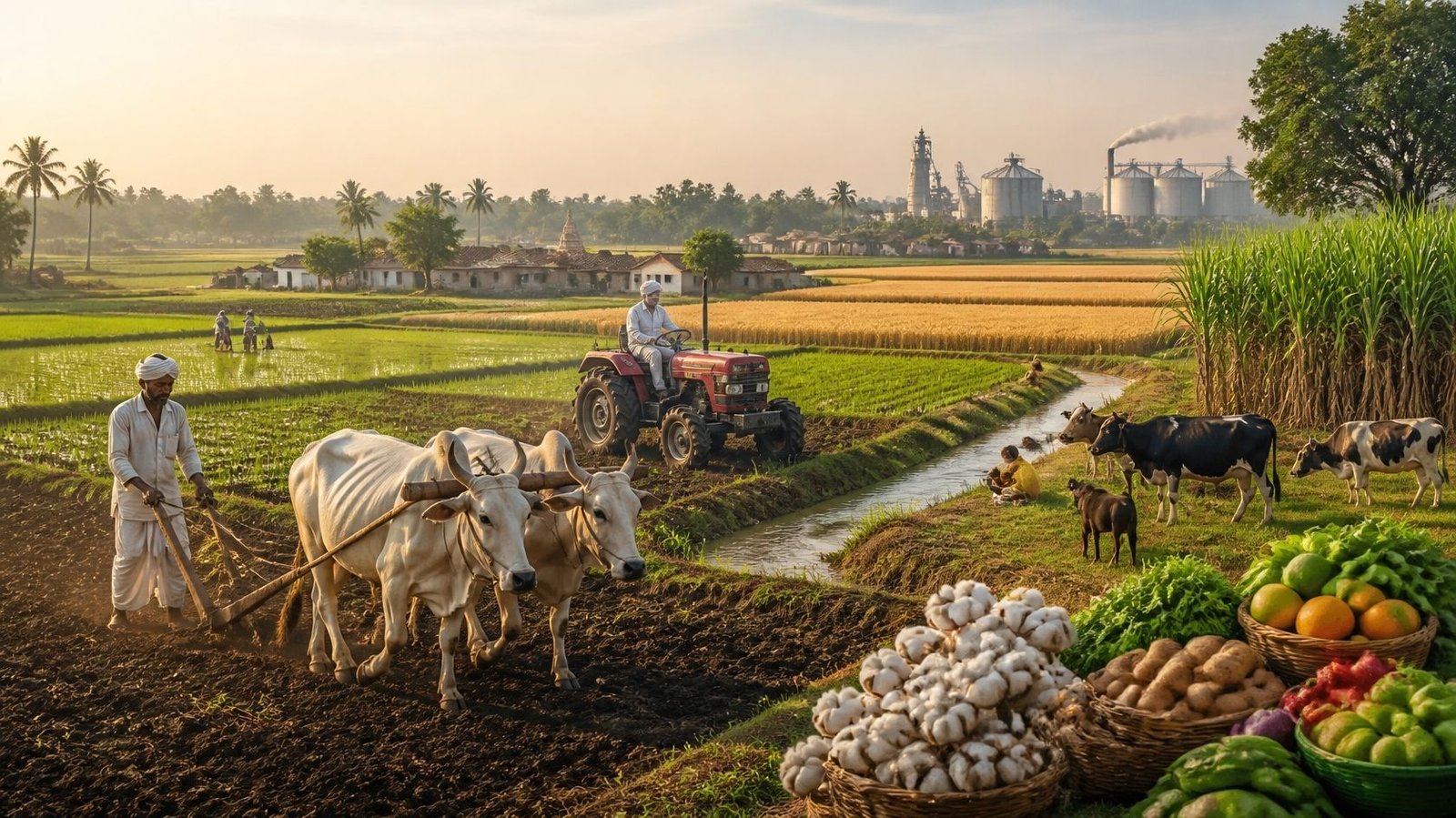
Agriculture is one of the oldest and most important economic activities in India. It is not merely a means of producing food; it is also closely connected with employment, rural livelihoods, social structure, culture and the country's economic development. For centuries, agriculture has shaped the lives of Indian communities and continues to play a significant role in the national economy.
India has a highly diverse agricultural system because of its geographical, climatic and ecological variations. The Himalayan region, the northern plains, the Deccan Plateau, the coastal regions and the desert areas have different soil types, rainfall patterns, temperatures and water availability. As a result, agricultural practices and cropping patterns vary considerably from one region to another.
For example, rice cultivation is widespread in regions receiving relatively high rainfall, while wheat is an important crop in the northern plains. Cotton is cultivated in several parts of western and central India, whereas millets and pulses are important in comparatively dry regions. This diversity makes Indian agriculture a combination of traditional knowledge, regional practices and modern agricultural technology.
Indian agriculture is also closely associated with the monsoon. Although irrigation facilities, groundwater extraction and modern water-management systems have expanded, rainfall continues to influence agricultural production in many regions. Therefore, changes in monsoon conditions, droughts, floods and other climatic events can affect farmers' income and the country's food supply.
Historical Development of Agriculture in India
1. Agriculture in Ancient India
Agriculture has a long history in the Indian subcontinent. Archaeological evidence from the Indus Valley Civilisation indicates that agriculture, animal husbandry and food production were important parts of its economy. People cultivated crops, domesticated animals and developed methods of storing agricultural produce.
During the Vedic period, agriculture became an important foundation of social and economic life. References to ploughing, irrigation, cattle, crops and agricultural activities are found in ancient literature. Cattle were valuable for farming, transportation and the rural economy. Agricultural production was closely connected with village life and local economic activities.
2. Agriculture during the Medieval and Colonial Periods
During the medieval period, agriculture remained the principal occupation of a large part of the population. Different rulers developed irrigation facilities, agricultural lands and systems of land revenue collection. Wells, tanks, canals and other traditional water-management structures supported cultivation in different regions.
During British colonial rule, Indian agriculture underwent significant changes. Land revenue systems such as the Permanent Settlement, Ryotwari and Mahalwari influenced the relationship between cultivators, landlords and the colonial administration. In several regions, farmers were encouraged or compelled to cultivate commercial crops such as indigo, cotton, jute, tea and other cash crops.
These changes connected Indian agriculture more closely with domestic and international markets. However, colonial agricultural policies and revenue demands often placed considerable pressure on cultivators. Limited investment in agricultural development, indebtedness and recurring famines affected rural communities in many parts of the country.
3. Agriculture after Independence
After independence in 1947, agricultural development became an important priority for the Indian government. Land reforms, irrigation projects, agricultural research, rural development programmes and institutional support were introduced to improve agricultural productivity and the living conditions of farmers.
A major transformation took place during the Green Revolution, which began in the 1960s. The adoption of high-yielding varieties of seeds, chemical fertilisers, pesticides, irrigation facilities and modern farming techniques increased the production of wheat and rice, particularly in Punjab, Haryana and western Uttar Pradesh.
The Green Revolution helped India strengthen its food security and reduce dependence on foodgrain imports. However, its benefits were not distributed equally across all regions and farming communities. Differences in irrigation, investment, land ownership and access to technology continued to influence agricultural development.
Economic Importance of Agriculture in India
1. Contribution to National Income
Agriculture and allied activities, including livestock, forestry and fishing, make a substantial contribution to India's economy. According to the Economic Survey 2025–26, the agriculture and allied sector contributes nearly one-fifth of India's national income at current prices. This demonstrates that agriculture remains an important component of the country's economic structure.
2. Employment and Rural Livelihoods
Agriculture is a major source of employment in India, particularly in rural areas. According to the Economic Survey 2025–26, the sector accounts for approximately 46.1 per cent of the country's workforce. Farmers, agricultural labourers, livestock owners, fishers and people engaged in related activities depend directly or indirectly on this sector.
Agriculture also supports rural markets, transport services, storage facilities, food processing and agricultural trade. Therefore, its economic importance extends beyond the farm and creates employment opportunities across several connected sectors.
3. Food Security and Industrial Development
Agricultural production provides foodgrains, fruits, vegetables, milk, meat and other essential products to the population. Adequate agricultural production is necessary for food security, price stability and the nutritional well-being of people.
Agriculture also supplies raw materials to several industries. Cotton supports the textile industry, sugarcane is used in sugar production, oilseeds supply edible-oil industries, and jute provides raw material for jute-based products. In this way, agriculture supports industrial production, trade and economic activity.
4. Agriculture and Indian Society
Agriculture is deeply connected with Indian society and culture. Festivals, local traditions, food habits and many community activities are influenced by agricultural seasons and harvesting cycles. In rural India, land and agricultural activities often play an important role in determining livelihoods, social relationships and local economic conditions.
Important Agricultural Facts and Figures
- Economic contribution: Agriculture and allied activities contribute nearly one-fifth of India's national income at current prices, according to the Economic Survey 2025–26.
- Employment: The sector accounts for approximately 46.1 per cent of India's workforce, according to the Economic Survey 2025–26.
- Average operational landholding: The Agriculture Census 2015–16 recorded an average operational holding of 1.08 hectares.
- Marginal holdings: Marginal operational holdings, below one hectare, accounted for 68.45 per cent of total holdings in the Agriculture Census 2015–16.
- Foodgrain production: India's total foodgrain production was estimated at 332.298 million tonnes in the agricultural year 2023–24.
Key Point
Indian agriculture is not simply an economic activity; it is a foundation of the country's food security, rural employment, industrial development and social structure. Its diversity reflects India's geographical and climatic conditions, while its historical development shows the transition from traditional farming practices to modern, technology-supported agriculture.
Major Characteristics of Indian Agriculture
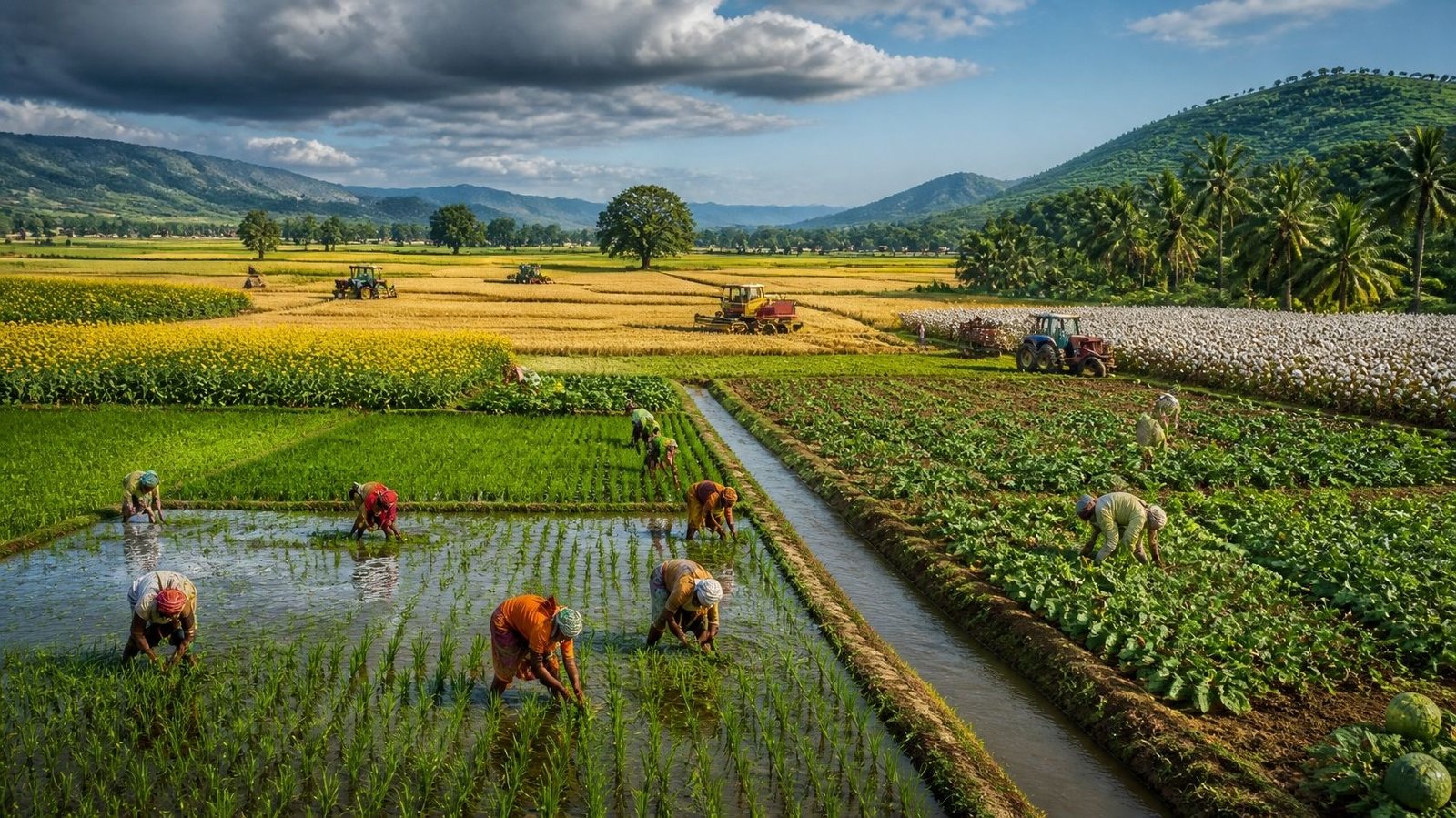
The nature of Indian Agriculture differs from that of many other agricultural regions of the world in several ways. Agriculture in India is not merely a means of food production; it is also an important foundation of employment, the rural economy, food security and social life. Geographical diversity, monsoon climate, land availability, population pressure and the economic conditions of farmers give Indian agriculture its distinctive character. Its major characteristics are discussed below.
1. Dependence on the Monsoon
One of the most prominent characteristics of Indian agriculture is its dependence on the monsoon. In many parts of the country, rainfall is an important source of water for farming. The arrival, duration and distribution of the southwest monsoon influence sowing activities and crop production. Timely and adequate rainfall benefits Kharif crops, whereas insufficient rainfall or drought conditions can reduce agricultural production. Excessive rainfall and floods can also damage fields and crops. Despite the expansion of irrigation facilities, rainfall continues to have a significant influence on Indian agriculture.
2. Small and Fragmented Landholdings
Another important characteristic of Indian agriculture is the small size and fragmentation of landholdings. Population growth, the division of family land and inheritance have resulted in agricultural land being divided into smaller plots. According to the Agriculture Census 2015–16, the average operational holding size in India was 1.08 hectares. The same census recorded that marginal holdings, covering less than one hectare, accounted for 68.45 per cent of total operational holdings. Small landholdings make it difficult for many farmers to use modern machinery, develop irrigation facilities and achieve large-scale production.
3. Labour-Intensive Agricultural System
Agriculture in India has traditionally been labour-intensive. A large number of people participate in activities such as sowing, weeding, harvesting, animal husbandry and crop maintenance. Small and marginal farmers have limited financial capacity to purchase expensive agricultural machinery, so they often depend on family labour and agricultural workers. Although the use of tractors, harvesters, drip irrigation and other modern equipment has increased, their availability is not uniform across all regions.
4. Diversity of Crops and Agricultural Practices
Due to wide variations in climate, soil, temperature and rainfall, India produces a large variety of crops. Wheat and rice are important in northern India; pearl millet and cotton are significant in western India; rice and jute are important in eastern India; while rice, ragi, coconut and spices are widely cultivated in southern India. In addition, pulses, oilseeds, sugarcane, tea, coffee, fruits and vegetables are also important components of agricultural production. This diversity supports the country's food requirements as well as agricultural trade and industries.
5. Coexistence of Subsistence and Commercial Agriculture
Both subsistence and commercial farming systems exist in Indian agriculture. In subsistence agriculture, farmers mainly grow crops to meet the food requirements of their families. In contrast, commercial agriculture focuses on producing crops for sale in the market and earning income. Crops such as wheat, rice and millets are used for domestic consumption as well as sold in markets, whereas cotton, tea, coffee, sugarcane and jute have considerable commercial importance in several regions.
6. Interrelationship between Agriculture and Animal Husbandry
Farming and animal husbandry complement each other in the Indian rural economy. Cows, buffaloes, goats, sheep and other livestock provide farmers with milk, meat, wool and additional sources of income. Animal dung is used as organic manure, which helps maintain soil fertility. Many small farmers combine crop cultivation with dairy farming and animal husbandry. This diversifies their sources of income and can reduce their dependence on a single crop.
7. Seasonal Nature and Cropping Cycle
The nature of agriculture in India is largely determined by seasons and cropping cycles. Three major agricultural seasons are recognised in the country: Kharif, Rabi and Zaid. Kharif crops are generally sown around the arrival of the monsoon, whereas Rabi crops are sown during the winter season after the monsoon. Zaid crops are cultivated during the period between the Rabi and Kharif seasons. Crop selection, irrigation and agricultural activities are planned according to these seasons.
8. Technological Development and Regional Inequality
Since independence, the use of improved seeds, chemical fertilisers, pesticides, irrigation facilities and agricultural machinery has increased in India. The Green Revolution brought significant changes, particularly in the production of wheat and rice. Today, technologies such as drip irrigation, sprinklers, agricultural mechanisation, digital services and modern storage systems are becoming increasingly important. However, differences in access to technology, capital, irrigation and markets continue to exist among states and farming communities. As a result, the benefits of agricultural development have not reached all regions equally.
Summary of Major Characteristics
Indian agriculture is characterised by dependence on the monsoon, small landholdings, a labour-intensive system, crop diversity, the coexistence of subsistence and commercial farming, its close relationship with animal husbandry, seasonal cropping cycles and regional inequalities in technological development. Understanding these characteristics is essential for analysing India's agricultural system and rural economy.
Major Types of Agriculture in India
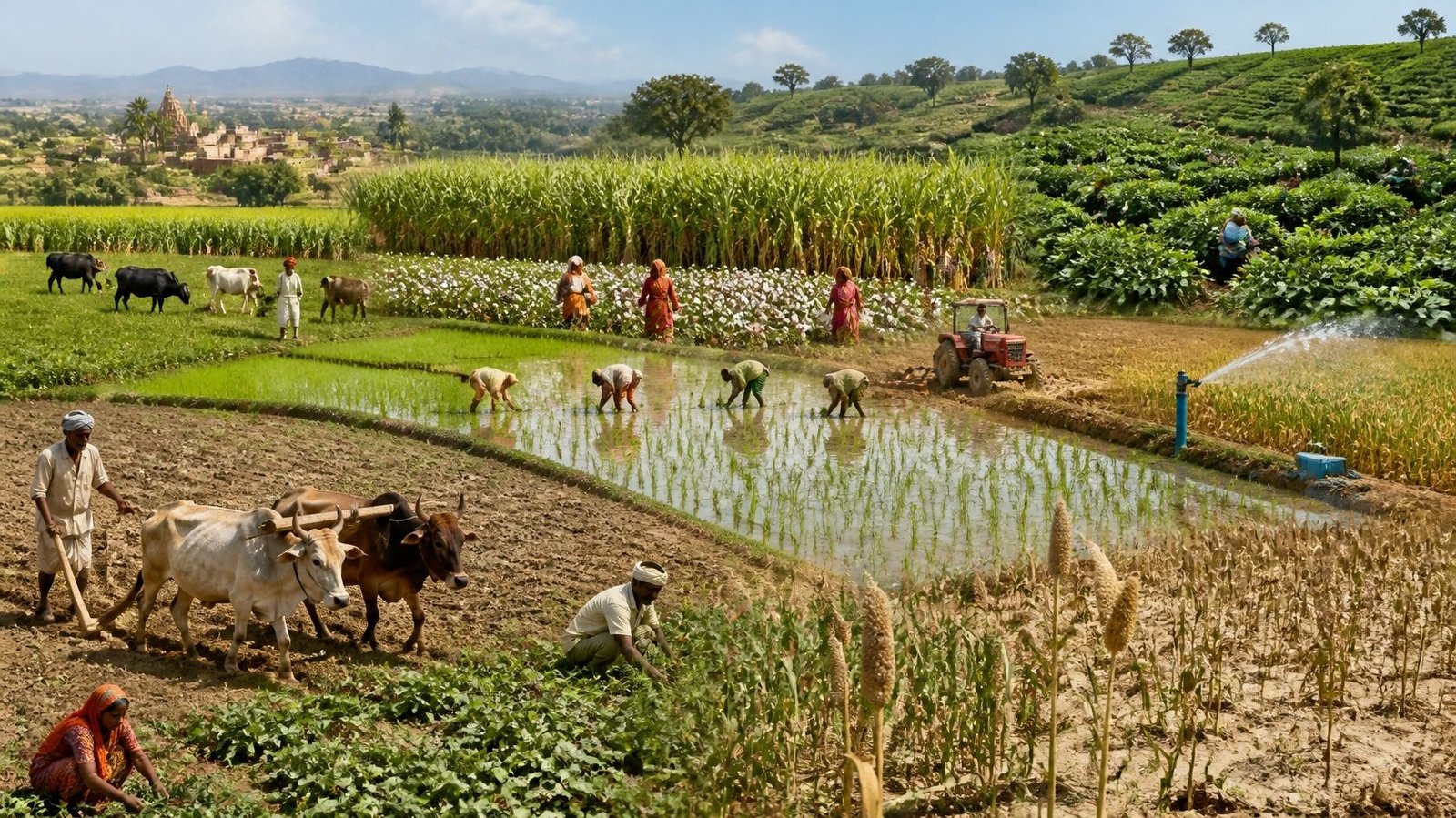
The nature of agriculture is not the same across all regions of India. Different agricultural practices have developed based on land availability, climate, soil, irrigation, capital, technology and market demand. In some regions, farmers cultivate crops to meet their family requirements, while in others, production is carried out on a large scale for sale in the market. Indian Agriculture can be classified into different types on the basis of production objectives, farming techniques and natural conditions.
1. Subsistence Farming
In subsistence farming, farmers primarily grow crops to meet the food requirements of their families. A major portion of the agricultural produce is consumed domestically, and relatively little surplus remains for sale in the market. Small landholdings, limited capital and traditional agricultural tools are its major characteristics. Subsistence farming continues to be important in many rural and tribal regions of India. Traditional practices such as shifting cultivation are also associated with this type of farming.
2. Intensive Subsistence Farming
Intensive subsistence farming aims to obtain maximum production from limited agricultural land. It involves the extensive use of family labour, irrigation, fertilisers, improved seeds and the cultivation of more than one crop in a year. High population pressure and limited availability of agricultural land encourage this farming system. Examples of intensive agriculture can be found in several regions of the Ganga-Brahmaputra plains, West Bengal, Bihar, Uttar Pradesh and Kerala. Rice, wheat, vegetables and other food crops are important under this system.
3. Commercial Farming
The main objective of commercial farming is to earn profits by selling agricultural produce in the market. Farmers cultivate crops by considering market demand, prices and business opportunities. Cotton, sugarcane, oilseeds, tobacco, tea and coffee are among its major crops. Modern seeds, machinery, fertilisers, pesticides and irrigation facilities may be used in this farming system. Cotton cultivation in Maharashtra and Gujarat, sugarcane cultivation in Uttar Pradesh, and tea cultivation in Assam and West Bengal are prominent examples of commercial farming.
4. Plantation Farming
Plantation farming is a specialised form of commercial agriculture in which a major cash crop is generally cultivated over a large area. Capital, organised management, labour and processing facilities play an important role in this system. Tea, coffee, rubber and coconut are its major examples. Plantation agriculture has developed in Assam and the Darjeeling region of West Bengal for tea, Karnataka and Kerala for coffee, and Kerala for rubber. Plantation farming supplies raw materials to domestic industries as well as the export trade.
5. Mixed Farming
Mixed farming involves the combination of crop production and animal husbandry. Farmers cultivate cereals, fodder, pulses and other crops while also rearing cows, buffaloes, goats or sheep. Crop residues are used as animal fodder, while dung obtained from livestock is used to prepare organic manure. This system promotes better utilisation of resources between farming and animal husbandry. It can provide farmers with additional income from milk and other livestock products and reduce their dependence on crop production alone.
6. Dryland Farming
Dryland farming is practised in regions where rainfall is low or irregular and irrigation facilities are limited. Moisture conservation, crops requiring less water and drought-resistant varieties are particularly important in this system. Pearl millet, sorghum, gram, pigeon pea and certain oilseeds are important crops under such conditions. Examples of dryland farming can be found in the arid and semi-arid regions of Rajasthan, Gujarat, Maharashtra and Karnataka. Water conservation and rainwater harvesting help improve its productivity.
7. Irrigated Farming
In irrigated farming, crops receive the required water through canals, wells, tube wells, ponds and other irrigation sources. This reduces dependence on rainfall and makes it possible to grow more than one crop annually in many regions. Wheat, rice, sugarcane and other crops are important in the irrigated regions of Punjab, Haryana, western Uttar Pradesh and Rajasthan. In modern agriculture, technologies such as drip and sprinkler irrigation are helping farmers use water more efficiently.
Important Statistics Related to Indian Agriculture
- Gross Cropped Area: 219.36 million hectares in 2022–23.
- Net Sown Area: 141.71 million hectares in 2022–23.
- Area Sown More Than Once: 78.65 million hectares in 2022–23.
- Cropping Intensity: 155.85 per cent in 2022–23.
- Net Irrigated Area: 79.31 million hectares in 2022–23.
- Foodgrain Production: 332.298 million tonnes in 2023–24. Rice production was 137.825 million tonnes and wheat production was 113.292 million tonnes.
Analytical Conclusion
Different farming systems, including subsistence, intensive, commercial, plantation, mixed, dryland and irrigated agriculture, coexist in India. Their development has been shaped by local natural conditions, land availability, technology and market requirements. Studying these types is important for understanding India's agricultural system because each farming practice has different production capacities, resource requirements and economic roles.
India’s Cropping Systems and Regional Agricultural Patterns
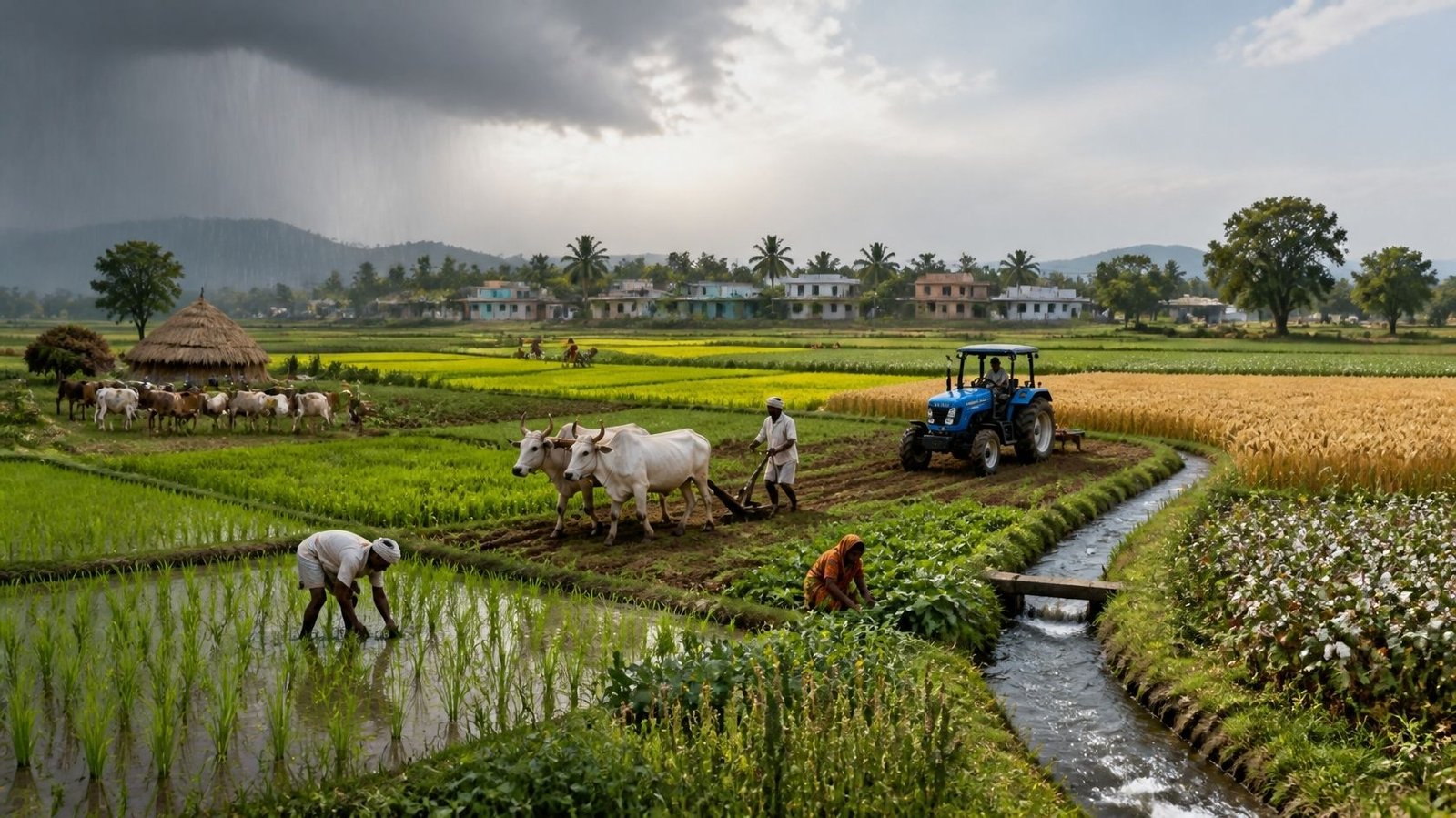
Indian Agriculture is characterized by diverse cropping systems and regional variations. Differences in climate, soil, rainfall, temperature, irrigation facilities, and geographical conditions influence the types of crops cultivated in different parts of the country. The agricultural calendar of India is broadly divided into three major crop seasons: Kharif, Rabi, and Zaid. These cropping seasons play an important role in determining agricultural production and food security.
1. Kharif Cropping System
Kharif crops are generally sown with the arrival of the southwest monsoon, mainly during June and July, and harvested between September and October. These crops require relatively high temperatures and adequate rainfall during their growing period. Rice, maize, cotton, soybean, groundnut, millets, and pulses are among the major Kharif crops cultivated in India.
The eastern, northeastern, and coastal regions of India are particularly important for rice cultivation because of their favourable rainfall and climatic conditions. States such as West Bengal, Uttar Pradesh, Telangana, Andhra Pradesh, Odisha, and Chhattisgarh contribute significantly to rice production. However, in regions with insufficient rainfall, Kharif cultivation depends heavily on irrigation facilities and Water conservation practices.
2. Rabi Cropping System
Rabi crops are generally sown during October and November, after the withdrawal of the southwest monsoon, and harvested between March and April. These crops require relatively cool temperatures during their initial growth period and warm, dry weather during harvesting. Wheat, barley, mustard, gram, peas, and lentils are the major Rabi crops of India.
The northern and northwestern plains of India are particularly suitable for Rabi cultivation. Punjab, Haryana, Uttar Pradesh, Rajasthan, and Madhya Pradesh are important wheat-producing states. Irrigation plays a crucial role in Rabi agriculture because most crops are cultivated during the period when rainfall is limited. Canals, tube wells, and other irrigation facilities support agricultural production in these regions.
3. Zaid Cropping System
Zaid is the short agricultural season between the Rabi and Kharif seasons. It generally extends from March to June. During this period, farmers cultivate crops that can grow within a relatively short duration and tolerate warm climatic conditions. Watermelon, muskmelon, cucumber, vegetables, fodder crops, and some pulses are commonly grown during the Zaid season.
Zaid cultivation is particularly dependent on irrigation because most parts of India receive limited rainfall during this period. The availability of groundwater, canals, and other irrigation facilities enables farmers to use agricultural land between the two major cropping seasons. This season also helps increase cropping intensity and provides additional income to farmers.
4. Crop Rotation and Multiple Cropping
Crop rotation refers to the practice of growing different crops on the same agricultural land in a planned sequence. For example, wheat may be cultivated after rice, while pulses may be grown after cereals. This practice helps maintain soil fertility, reduce the risk of pests and diseases, and improve the efficient use of soil nutrients.
Multiple cropping refers to growing more than one crop on the same piece of land during a single agricultural year. In areas with adequate irrigation facilities, farmers may cultivate two or even three crops annually. Rice-wheat, rice-potato, and maize-wheat are some examples of multiple cropping systems. These practices increase agricultural productivity and help farmers obtain better returns from limited land resources.
5. Agricultural Pattern of Northern India
Northern India has a well-developed agricultural system because of its fertile alluvial soil, extensive plains, and irrigation infrastructure. The Indo-Gangetic Plain is one of the most important agricultural regions of the country. Wheat, rice, sugarcane, pulses, and oilseeds are among the major crops cultivated here.
Punjab, Haryana, and western Uttar Pradesh are particularly important for wheat and rice production. The Green Revolution brought significant changes to this region through the adoption of high-yielding varieties of seeds, chemical fertilizers, pesticides, and modern irrigation techniques. However, excessive groundwater extraction and the continuous cultivation of rice and wheat have created environmental challenges in some areas.
6. Agricultural Pattern of Western and Central India
Western and central India have diverse agricultural conditions because of variations in rainfall, soil types, and topography. Rajasthan has extensive dryland farming areas where crops such as bajra, guar, pulses, and mustard are cultivated. In regions with limited rainfall, farmers depend on drought-resistant crops and traditional water conservation practices.
Gujarat and Maharashtra are important for cotton, groundnut, sugarcane, and other commercial crops. Black soil, particularly in parts of Maharashtra and Madhya Pradesh, is suitable for cotton cultivation. Madhya Pradesh is also an important producer of soybean, wheat, pulses, and oilseeds. Agricultural patterns in these regions are strongly influenced by monsoon rainfall and the availability of irrigation.
7. Agricultural Pattern of Eastern, Southern and Northeastern India
Eastern India receives relatively high rainfall and has extensive areas suitable for rice cultivation. West Bengal, Bihar, Odisha, Assam, and Jharkhand are important agricultural states. Rice, jute, pulses, maize, and oilseeds are among the major crops grown in this region. Floods, waterlogging, and irregular rainfall can affect agricultural production in several areas.
Southern India has diverse agricultural systems influenced by the monsoon, river valleys, plateau regions, and irrigation networks. Rice, sugarcane, cotton, millets, coconut, coffee, and spices are important crops. States such as Tamil Nadu, Karnataka, Andhra Pradesh, Telangana, and Kerala have distinct agricultural patterns based on their local climatic and geographical conditions.
Northeastern India has considerable agricultural diversity because of its rainfall, hills, valleys, and forest resources. Rice, tea, horticultural crops, spices, and plantation crops are important in this region. Shifting cultivation, also known as jhum cultivation, is practised in some hill areas, although permanent and sustainable farming methods are increasingly being promoted.
Important Agricultural Data of India
- Rice production (2024–25): Approximately 150.18 million tonnes.
- Rice production in Uttar Pradesh (2024–25): Approximately 20.76 million tonnes.
- Rice production in Telangana (2024–25): Approximately 17.45 million tonnes.
- Wheat production (2024–25): Approximately 117.945 million tonnes.
- Agricultural year in India: Generally considered from July to June.
Key Point
India's agricultural system is shaped by three major cropping seasons—Kharif, Rabi, and Zaid—and significant regional variations. While northern India is known for wheat and rice cultivation, western and central India have important dryland and commercial farming systems. Eastern and southern India are characterized by diverse rice-based, horticultural, and plantation agriculture. Understanding these cropping systems and regional patterns is essential for analysing India's agricultural economy, food security, and rural development.
Nature of Indian Agriculture: 7 Important FAQs
The following questions and answers are important for understanding the nature of Indian Agriculture, its characteristics, cropping systems, major problems, and future prospects. These questions are useful for students, candidates preparing for competitive examinations, and general readers.
1. What is the nature of Indian agriculture?
Indian agriculture is primarily monsoon-dependent, labour-intensive, and diverse in nature. The country has a large number of small and marginal landholdings. Due to variations in climate, soil, rainfall, and irrigation facilities, crops such as rice, wheat, pulses, millets, oilseeds, cotton, sugarcane, and horticultural crops are cultivated in India. Both subsistence agriculture and commercial agriculture coexist in the Indian agricultural system.
2. What are the major characteristics of Indian agriculture?
The major characteristics of Indian agriculture include dependence on the monsoon, small and fragmented landholdings, a labour-intensive production system, crop diversity, the coexistence of subsistence and commercial agriculture, the relationship between agriculture and animal husbandry, and regional inequalities. In addition, agricultural patterns in many parts of the country are influenced by local natural conditions and irrigation facilities.
3. What are the major cropping seasons in India?
There are three major cropping seasons in India:
- Kharif: Generally, sowing takes place in June–July and harvesting in September–October. Major crops include rice, maize, cotton, soybean, and pearl millet.
- Rabi: Generally, sowing takes place in October–November and harvesting in March–April. Major crops include wheat, barley, mustard, gram, and peas.
- Zaid: A short season between Rabi and Kharif, extending from March to June. Major crops include watermelon, muskmelon, cucumber, and some vegetables.
4. What has been the impact of the Green Revolution on Indian agriculture?
The Green Revolution played an important role in increasing the production of wheat and rice, particularly in India. The use of high-yielding variety seeds, chemical fertilizers, pesticides, irrigation, and modern agricultural technologies increased foodgrain production. This strengthened India's food security. However, the benefits of the Green Revolution did not reach all regions equally, and problems related to excessive groundwater extraction and declining soil quality also increased in some areas.
5. What are the biggest problems of Indian agriculture?
The major problems of Indian agriculture include small and fragmented landholdings, dependence on the monsoon, unequal availability of irrigation, rising production costs, inadequate market prices for farmers, limited availability of agricultural credit, lack of storage facilities, and climate change. In addition, soil degradation and excessive groundwater use are also challenges to the long-term sustainability of agriculture.
6. What is the importance of modern technology in Indian agriculture?
Modern technology helps make agricultural production more efficient and scientific. Technologies such as tractors, harvesters, drip irrigation, sprinklers, drones, satellite-based monitoring, and Artificial Intelligence (AI) can improve various agricultural activities. Digital agricultural services are also useful in providing farmers with information related to weather, market prices, and crop management. However, it is essential to ensure that these technologies are accessible to small farmers.
7. In which direction will the future of Indian agriculture develop?
The future of Indian agriculture will depend on sustainable farming, Water conservation, soil health, crop diversification, modern technology, and improvements in farmers' income. Natural farming, organic farming, micro-irrigation, agroforestry, and climate-resilient cropping systems can play important roles. Along with this, it will be necessary to promote Farmer Producer Organizations, agricultural processing, better storage facilities, and digital markets. The objective of the future agricultural system should be to ensure farmers' prosperity and environmental conservation along with increased production.
Important Conclusion
Indian agriculture is a major foundation of the country's food security, rural employment, and economic development. Understanding its characteristics and challenges is essential for making agriculture more productive, profitable, and sustainable. Through modern technology, scientific research, and the balanced use of natural resources, Indian agriculture can be developed to meet future requirements.
Major Problems of Indian Agriculture, Modern Transformations and Future Direction
Indian Agriculture has made a significant contribution to foodgrain production, rural employment, and the national economy. The Green Revolution, irrigation facilities, improved seeds, and agricultural machinery have increased production capacity. Despite these achievements, Indian agriculture continues to face several structural, economic, and environmental challenges. Climate change, small landholdings, rising production costs, water scarcity, and market-related problems affect farmers' incomes and the long-term sustainability of agriculture. Therefore, the future of Indian agriculture depends not only on increasing production but also on promoting sustainable development and strengthening the economic condition of farmers.
1. Major Problems of Indian Agriculture
One of the biggest problems of Indian agriculture is the existence of small and fragmented agricultural landholdings. Most farmers possess limited land, making it difficult to use modern machinery, produce on a large scale, and reduce production costs. In addition, many farmers do not have adequate access to quality seeds, fertilizers, agricultural credit, and modern technology. Since agricultural production depends on weather conditions, irregular rainfall, droughts, floods, and rising temperatures cause damage to crops.
Another important problem is the imbalance between agricultural production costs and the prices received by farmers. Rising costs of seeds, fertilizers, pesticides, diesel, electricity, and labour increase the expenses of farming. On the other hand, many farmers are unable to receive fair market prices for their produce. Due to inadequate storage, cold storage, transportation, and processing facilities, agricultural products also suffer losses after harvesting.
2. Climate Change and Pressure on natural resources
Climate change is emerging as a serious challenge for Indian agriculture. Rising temperatures, irregular monsoons, prolonged dry spells, and excessive rainfall affect crop productivity. Farmers in rainfed agricultural regions face particularly high risks. The production of major crops such as wheat, rice, pulses, and oilseeds can be affected by changing weather conditions.
Along with this, excessive groundwater extraction, declining organic carbon in soil, land degradation, and the imbalanced use of chemical fertilizers weaken the long-term capacity of agriculture. Groundwater scarcity in several areas of states such as Punjab, Haryana, and Rajasthan is a matter of particular concern. Therefore, Water conservation, soil health, and the balanced use of natural resources should be important objectives of agricultural policy.
3. Modern Technological Transformations in Indian Agriculture
Modern technology is playing an important role in making Indian agriculture more productive and efficient. Machinery and systems such as tractors, harvesters, seed drills, drip irrigation, and sprinklers help save labour and water. Custom hiring centres and agricultural machinery banks are useful options for small farmers, where they can obtain machinery on rent instead of purchasing it.
The use of mobile applications, weather forecasting, satellite imagery, sensors, drones, and Artificial Intelligence (AI) is increasing under digital agriculture. These technologies help monitor fields, identify pests, manage irrigation, and make crop-related decisions. Digital market platforms can also help connect farmers with mandis and buyers. However, their benefits will become widespread only when internet connectivity, training, and technological facilities are available in rural areas.
4. Need for Sustainable and Environment-Friendly Agriculture
In the agricultural system of the future, increasing production alone will not be sufficient. Conservation of soil, water, and biodiversity will also be essential. Alternatives such as natural farming, organic farming, crop rotation, mixed farming, agroforestry, and integrated farming systems can help improve the use of resources. Including pulse crops in crop rotation helps maintain soil fertility.
Micro-irrigation, rainwater harvesting, farm ponds, and watershed development can ensure more efficient use of water. Management of crop residues, balanced fertilizer use, and solar-powered agricultural pumps can also contribute to reducing environmental pressure. These measures should be selected according to local soil conditions, climate, and the economic circumstances of farmers.
5. Improvement in Farmers' Income and Agricultural Markets
To make agriculture profitable, it is necessary to provide farmers with better markets, fair prices, and value-addition facilities. Farmer Producer Organizations (FPOs), cooperative societies, and digital agricultural markets can help small farmers sell their produce collectively and improve their bargaining power. The development of food processing, packaging, storage, and cold-chain facilities can increase the value of agricultural products.
In addition, integrating dairy farming, animal husbandry, fisheries, beekeeping, and horticulture with agriculture can provide farmers with additional sources of income. Arrangements such as the Pradhan Mantri Fasal Bima Yojana, agricultural credit, and Minimum Support Price (MSP) also play an important role in providing economic security to farmers.
6. Future and Development Direction of Indian Agriculture
The future of Indian agriculture will depend on the coordination of technology, research, climate adaptation, and market reforms. Improved seeds, Precision Agriculture, Artificial Intelligence, drones, and digital advisory services can improve production-related decisions. Along with this, it is essential to provide affordable technology, training, institutional credit, and strong rural infrastructure for small farmers.
According to NITI Aayog's 2026 report on agriculture, the agricultural sector recorded an average annual growth rate of 5.22 per cent between 2017–18 and 2024–25. Despite this progress, challenges such as climate risks, soil degradation, and water scarcity continue to exist. Therefore, future strategies must give equal importance to increasing production, farmers' income, food security, and environmental sustainability.
Important Facts Related to Indian Agriculture
- Average annual growth of the agricultural sector: Approximately 5.22 per cent between 2017–18 and 2024–25.
- Greenhouse gas emissions: Agriculture and allied sectors contribute approximately 14 per cent of India's total emissions.
- Electricity consumption: The agricultural sector uses approximately 18–20 per cent of the country's total electricity consumption.
- Major future priorities: Water conservation, soil health, climate-resilient farming, digital technology, and agricultural market reforms.
Conclusion: A New Direction for the Development of Indian Agriculture
The development of Indian agriculture cannot be measured only by increased foodgrain production. Real progress will be achieved when farmers are assured of fair income, modern technology, better markets, and the sustainable use of natural resources. Climate-resilient farming, agricultural diversification, scientific research, and investment in rural infrastructure can make agriculture more sustainable. The Indian agriculture of the future should establish a balance between all three objectives: farmers' prosperity, the country's food security, and environmental conservation.
Conclusion: Present Structure and Future of Indian Agriculture
Indian Agriculture is an important foundation of the country's economy, social structure, and cultural traditions. From ancient times to modern India, agriculture has shaped food production, employment, trade, and rural life. India's geographical diversity, monsoon climate, soil types, and water resources have led to the development of different agricultural systems across the country. For this reason, Indian agriculture is not merely a system of food production but an integral part of the country's economic and social structure.
The structure of Indian agriculture has continuously evolved over time. The journey from traditional farming to the Green Revolution, modern irrigation, improved seeds, agricultural machinery, and digital technology has brought significant changes in production capacity. India has made remarkable progress in foodgrain production, and the importance of allied sectors such as animal husbandry, fisheries, and horticulture has also increased. According to the Economic Survey 2025–26, agriculture and allied activities contribute nearly one-fifth of India's national income at current prices and provide employment to 46.1 per cent of the country's workforce.
1. Agriculture and National Food Security
The most important contribution of Indian agriculture is ensuring the country's food security. Rice, wheat, pulses, millets, oilseeds, fruits, and vegetables play an important role in meeting the food requirements of the country. In 2024–25, India's foodgrain production reached a record level of approximately 357.73 million tonnes. This achievement reflects the importance of agricultural research, farmers' efforts, better agricultural management, and institutional support. Considering the growing population and changing food requirements, it will be necessary to focus on nutritional security along with production in the future.
2. Farmers' Prosperity and rural development
agricultural development can be considered meaningful only when its benefits reach farmers and rural communities. It is essential to provide farmers with fair prices, affordable institutional credit, quality seeds, irrigation, insurance, and modern technology. Farmer Producer Organizations (FPOs), cooperative societies, and collective agricultural services can be particularly useful for small and marginal farmers. In addition, promoting dairy farming, animal husbandry, fisheries, horticulture, and food processing can create additional opportunities for employment and income in rural areas.
3. environmental conservation and Sustainable Agriculture
Indian agriculture faces challenges such as water scarcity, declining soil fertility, excessive groundwater use, and climate change. Therefore, conservation of natural resources should be a major priority of future agricultural policy. It is necessary to promote rainwater harvesting, micro-irrigation, crop diversification, soil health management, agroforestry, and climate-resilient cropping systems. It is also important to ensure that scientific technologies developed by agricultural research institutions reach farmers according to local conditions.
4. Modern Technology and the Future of Agriculture
Digital agriculture, Artificial Intelligence (AI), drones, satellite-based monitoring, and Precision Agriculture can make the agricultural system of the future more efficient. These technologies can improve decision-making related to weather information, crop conditions, irrigation, and pest control. However, the benefits of Technological Development will become widespread only when small farmers have access to training, internet facilities, and affordable equipment. Investment in research, education, market reforms, and rural infrastructure is essential for the modernization of agriculture.
5. Overall Conclusion
The real future of Indian agriculture lies in establishing a balance between increased production, farmers' economic prosperity, and environmental conservation. Producing more foodgrains alone is not sufficient; providing farmers with fair prices for their produce, stable income, and a better standard of living is equally important. Traditional knowledge must be integrated with modern science to make agriculture more profitable. If the government, scientific institutions, agricultural markets, cooperative organizations, and farmers work together, Indian agriculture can become more productive, competitive, and sustainable.
Final Thoughts
Indian agriculture is not limited to fields and crops. It is closely connected with the country's food security, rural economy, social stability, and national development. A strong agricultural system can play an important role in building an inclusive and self-reliant India. Therefore, the future of Indian agriculture should be based on a system in which farmers prosper, natural resources remain protected, and every citizen has access to adequate and nutritious food.
References and Sources
- Government of India, Ministry of Finance: Economic Survey 2025–26, Chapter 6 – Agriculture and Food Management: Raising Productivity, Securing Income and Ensuring Food Security. View Official Report.
- Ministry of Agriculture and Farmers Welfare, Government of India: Agricultural Statistics at a Glance 2024–25. View Agricultural Statistics Report.
- Press Information Bureau (PIB), Government of India: Agriculture Will Be Central to Achieving Viksit Bharat – Economic Survey Highlights, 29 January 2026. View Official Press Release.
- Indian Council of Agricultural Research (ICAR): Natural Resource Management Division – Soil, Water and Sustainable Agriculture Research. View ICAR Information.
- Indian Council of Agricultural Research (ICAR): Research Priorities – Climate-Resilient Agriculture, Soil Health and Water conservation. View Research Priorities.
- Ministry of Agriculture and Farmers Welfare: Directorate of Economics and Statistics – Agricultural Production Estimates and Statistics. Visit Official Website.