

India-China Border Dispute: Statements by Key Leaders and Officials of the Current Indian Government, Strategy and Future Challenges
The India-China border dispute is one of the most important strategic and diplomatic issues in Asia. India and China are two major Asian powers, but differences remain between them over the historical determination of their boundary, territorial claims, and the Line of Actual Control. The dispute is not limited to territorial ownership; it also affects national security, military preparedness, border infrastructure, and the political relations between the two countries.
Understanding India-China relations in 2026 requires examining efforts to maintain peace along the border, official statements issued by both countries, and ongoing military and diplomatic negotiations. India's declared approach is to safeguard its territorial sovereignty, maintain peace and stability in border areas, and resolve disputes through dialogue.
What Is the India-China Border Dispute?
The India-China border dispute refers to disagreements between the two countries over border areas where the boundary has not been finally determined by mutual agreement. Both countries claim certain territories, and their perceptions of the Line of Actual Control (LAC) also differ in some locations.
The length of the India-China border is commonly stated to be approximately 3,488 kilometres. However, the two countries have not agreed upon a fully defined and demarcated international boundary along its entire length. As a result, tensions periodically arise over patrolling, troop movements, and infrastructure development in border areas.
Meaning of the Line of Actual Control (LAC)
The Line of Actual Control is the line separating the areas under the actual control of Indian and Chinese forces. It is not the same as a finally agreed international boundary. In some areas, differences in the two countries' perceptions of the LAC can lead to face-offs or disputes during patrols.
India and China have signed various agreements and established military commander-level and diplomatic channels to maintain peace along the border. These arrangements aim to reduce tensions, prevent misunderstandings, and manage situations in disputed areas.
Strategic Importance of Aksai Chin and Arunachal Pradesh
Two major areas associated with the India-China border dispute are Aksai Chin in the western sector and Arunachal Pradesh in the eastern sector.
Aksai Chin: This is a high-altitude, sparsely populated region associated with Ladakh and currently under Chinese control. India claims the territory. Aksai Chin is strategically important to China because of its road connectivity between Xinjiang and Tibet and its significance for regional security.
Arunachal Pradesh: This is an Indian state in the country's northeast. India considers it an integral part of the country, while China claims large parts of the state. Tawang is an important area associated with this dispute. India does not accept China's territorial claims.
Political and Strategic Significance of the Border Dispute Today
The India-China border dispute affects the foreign policies, defence preparedness, and economic relations of both countries. Roads, bridges, communication networks, and military logistics in areas such as Ladakh and Arunachal Pradesh are important for national security. Maintaining troop deployments and supply lines in difficult mountainous terrain is also a major challenge.
Studying statements by India's key government leaders, Ministry of External Affairs officials, and military leadership helps explain how India seeks to maintain border peace, protect its national interests, and manage its relationship with China.
This article examines the historical background of the border dispute, current official statements, military and diplomatic efforts, major challenges, and possible future strategies. When assessing current developments, the date, official source, and actual context of each statement are particularly important.
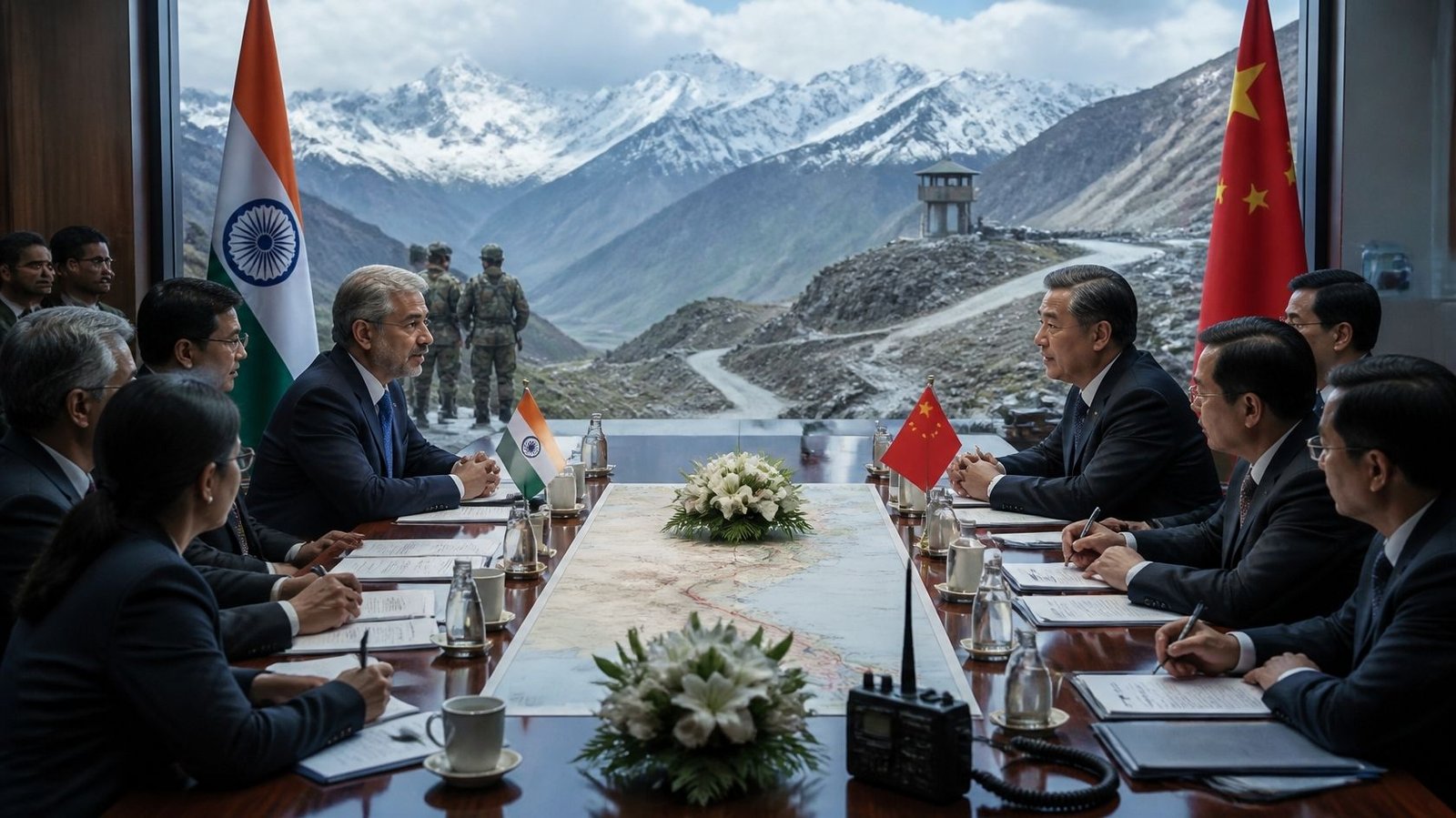
Historical Background of the India-China Border Dispute
Understanding the India-China border dispute requires examining its historical development and major events. Historical boundary arrangements, the status of Tibet, and competing territorial claims have made the dispute complex.
The 1914 Simla Conference and the McMahon Line
During the Simla Conference of 1914, an understanding concerning the boundary in the eastern sector was reached between representatives of British India and Tibet. This boundary is known as the McMahon Line. India regards it as the basis of the boundary of Arunachal Pradesh, while China does not accept this arrangement.
The 1950s and the India-China War of 1962
During the 1950s, China's establishment of control over Tibet and the construction of a road through Aksai Chin connecting Xinjiang with Tibet made the border dispute more serious. The India-China War began in October 1962, with fighting in Ladakh and the northeastern frontier region. China announced a ceasefire in November 1962, but the border dispute remained unresolved.
The 1967 Clashes and the 1987 Border Tensions
In September 1967, Indian and Chinese troops were involved in serious clashes in the Nathu La and Cho La areas of Sikkim. During 1986–1987, military tensions increased in the Sumdorong Chu area near Arunachal Pradesh. Diplomatic negotiations subsequently helped move the situation towards de-escalation.
The 2017 Doklam Standoff
In 2017, Indian and Chinese troops faced each other for several weeks in the Doklam area near Bhutan over road construction. In August 2017, the two sides agreed on a process for disengaging their troops. The incident illustrated the connection between border disputes and regional security in the Himalayan region.
The 2020 Galwan Valley Clash
In June 2020, Indian and Chinese troops were involved in a violent clash in the Galwan Valley of eastern Ladakh. Twenty Indian soldiers lost their lives. China subsequently officially confirmed the deaths of four of its soldiers. Both countries increased military deployments and held several rounds of talks to reduce tensions.
The 2024 Patrolling Agreement
On 21 October 2024, India and China reached an understanding on patrolling arrangements in the Depsang and Demchok areas of eastern Ladakh. This was followed by troop disengagement and verification of the agreed arrangements. The agreement was an important step towards reducing border tensions, but it did not constitute a final settlement of the entire boundary dispute.
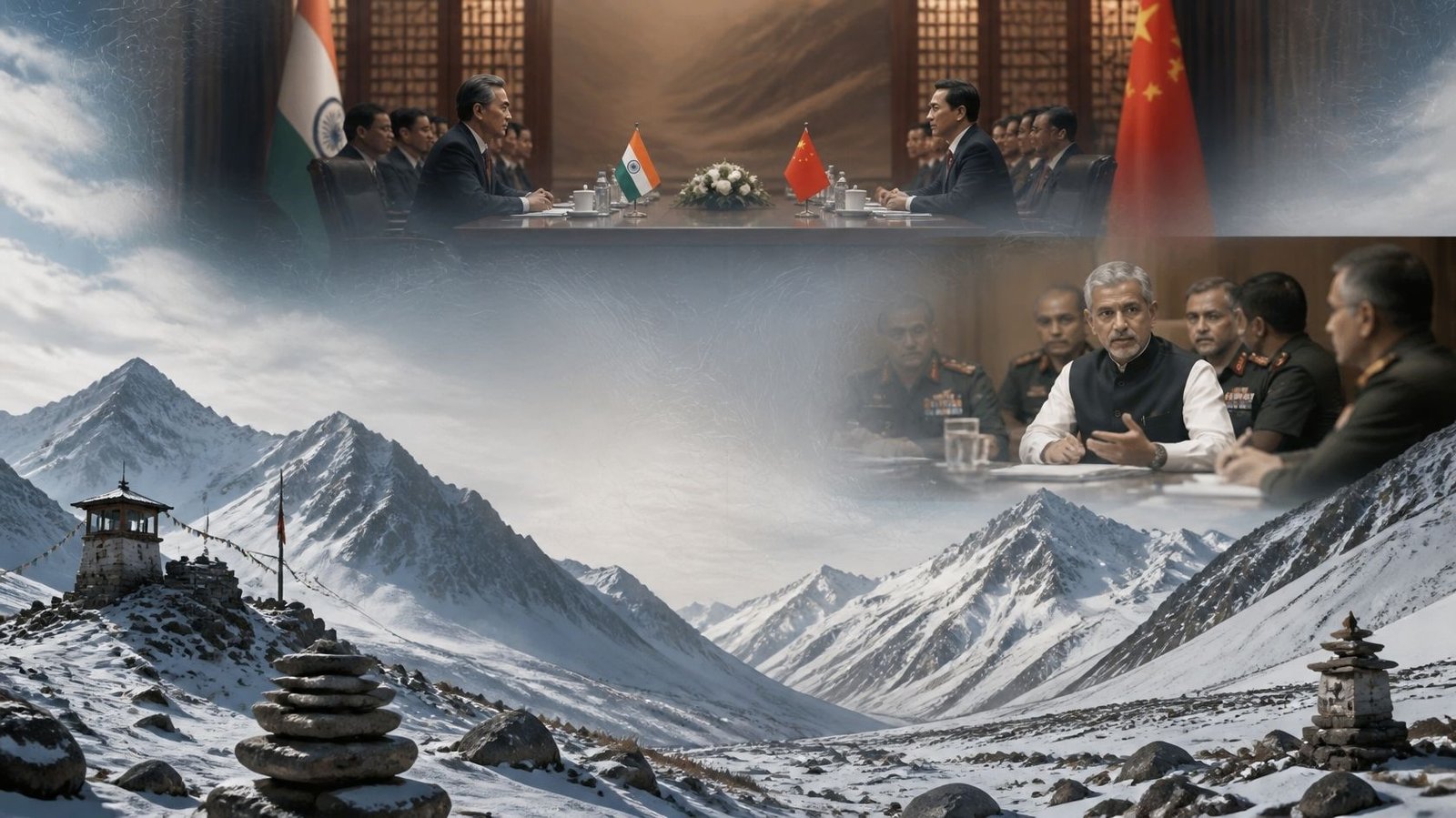
Official Positions of Key Leaders on the India-China Border Dispute
Understanding the Indian government's approach to the India-China border dispute requires examining verified statements by Prime Minister Narendra Modi, External Affairs Minister Dr. S. Jaishankar, and Defence Minister Rajnath Singh. Their statements have emphasised border peace, India's territorial sovereignty, the reduction of military tensions, and dialogue as a means of resolving disputes.
Statement by Prime Minister Narendra Modi
Date: 23 October 2024. Occasion: Meeting with Chinese President Xi Jinping on the sidelines of the 16th BRICS Summit in Kazan, Russia.
Prime Minister Modi welcomed the recent agreement concerning troop disengagement in India-China border areas. He emphasised that differences and disputes should be handled appropriately and should not be allowed to disturb peace and tranquillity along the border. Both leaders agreed to continue Special Representative-level discussions on the boundary question and use other diplomatic channels.
The significance of this statement lies in India's support for reducing border tensions while pursuing a fair, reasonable, and mutually acceptable resolution of the dispute. This is a verified official position expressed by the Prime Minister; it should not be presented as a new statement made in October 2026.
Source: Prime Minister's Office, Government of India — 23 October 2024
Statement by External Affairs Minister Dr. S. Jaishankar
Date: 25 October 2026. Occasion: NDTV World Summit 2026.
Jaishankar said that differences between large neighbouring countries are not unusual, but they must be recognised and addressed through dialogue. He clarified that any final settlement of the boundary dispute would have to cover the entire India-China boundary. At the same time, concrete discussions on specific areas could provide a starting point for progress.
His remarks indicate that India seeks a comprehensive resolution of the boundary dispute while remaining open to practical discussions. He also highlighted the importance of restoring peace along the border in efforts to normalise relations that deteriorated after the Galwan clash.
Source: NDTV — 25 October 2026
Statement by Defence Minister Rajnath Singh
Date: 26 June 2025. Occasion: Bilateral meeting with China's Defence Minister on the sidelines of the SCO Defence Ministers' Meeting in Qingdao, China.
The Defence Minister emphasised the need to maintain peace and tranquillity along the India-China border and resolve issues through structured engagement and de-escalation. He also called for revitalising established mechanisms to pursue a permanent solution to boundary demarcation.
The strategic significance of this position is that India gives importance to institutional dialogue and a lasting boundary settlement alongside military preparedness. This is a verified statement from June 2025, not a new statement made in October 2026.
Source: Ministry of Defence, Government of India — 27 June 2025
Overall Analysis
The statements of these three leaders reflect a common approach: maintaining peace along the border, reducing military tensions, and continuing dialogue to resolve disputes. However, troop disengagement, de-escalation, and the final demarcation of the international boundary are distinct processes. Therefore, no single agreement should be treated as a complete resolution of the entire border dispute.
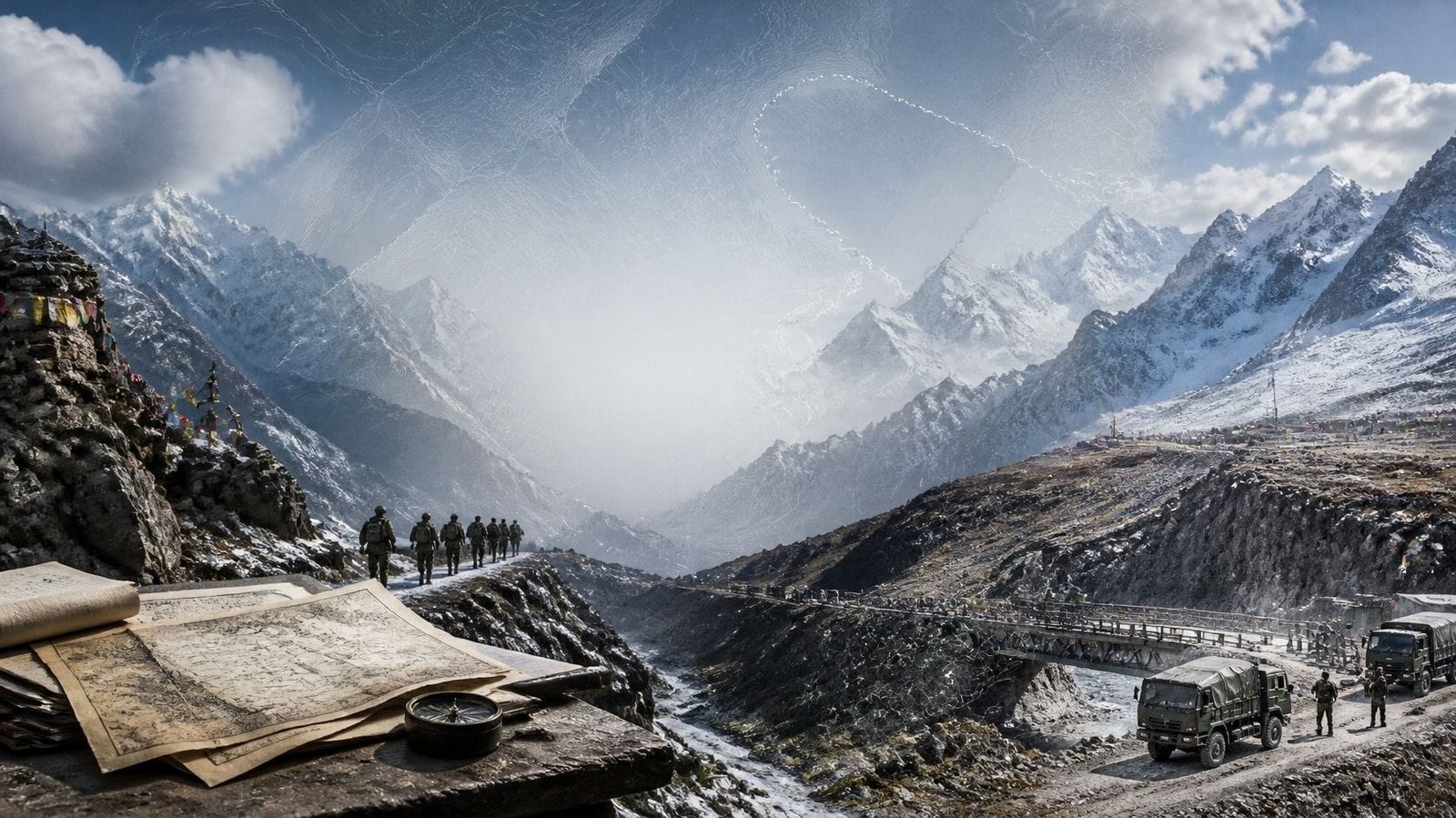
Statement by MEA Spokesperson Randhir Jaiswal
During the media briefing on 23 October 2026, Ministry of External Affairs spokesperson Randhir Jaiswal stated that the situation along the India-China border is periodically affected when Chinese forces deviate from established patrolling patterns. He explained that both countries continue to use existing diplomatic and military mechanisms to address outstanding issues along the Line of Actual Control (LAC) and avoid miscalculations.
His statement highlights the importance of regular dialogue, a shared understanding of patrolling arrangements, and timely communication in border management. It addressed local tensions and their management and should not be interpreted as an announcement of a wider military conflict.
Ajit Doval and Special Representative-Level Talks
On 25 August 2026, national security Adviser and India's Special Representative Ajit Doval held the 25th round of boundary talks with China's Special Representative Wang Yi in Beijing. Both sides agreed to continue working towards a political settlement of the boundary question and to maintain peace and stability in border areas.
The discussions covered boundary delimitation, border management, and the continuation of existing dialogue mechanisms. Both sides also emphasised using established channels to prevent misunderstandings along the LAC. These talks represent a diplomatic effort towards a settlement, not a final boundary agreement.
The Role of WMCC and Military Communication
The 36th meeting of the Working Mechanism for Consultation and Coordination on India-China Border Affairs (WMCC) was held in New Delhi on 6 August 2026. Both sides reviewed the situation along the LAC and agreed to continue using diplomatic and military channels to address outstanding issues.
The WMCC is a diplomatic mechanism for discussing border management. It does not replace military commander-level meetings; instead, it works alongside them. During the August 2026 Special Representatives' talks, the two sides also recorded agreement on additional meeting points and two additional border military hotline channels in the eastern and middle sectors.
ITBP and Border Security Arrangements
The Indo-Tibetan Border Police (ITBP) plays a major role in monitoring and safeguarding the India-China border under difficult Himalayan conditions. In October 2026, remarks by ITBP Director General Shatrujeet Kapur were followed by reports of face-offs between troops at some locations in Arunachal Pradesh. These developments highlight the importance of local vigilance and effective communication.
Overall, government officials, diplomats, and military leaders play complementary roles in maintaining border peace, managing tense incidents, and continuing dialogue towards a long-term settlement.
Current Status of the India-China Border
Understanding the India-China border situation requires examining current control, border management, and strategic infrastructure together. According to reports available up to October 2026, both countries continue to address border-related issues through military and diplomatic channels. On 23 October 2026, Ministry of External Affairs spokesperson Randhir Jaiswal stated that the situation along the border is periodically affected when forces deviate from established patrolling patterns. This indicates that local differences have not completely disappeared despite continued dialogue.
Western Sector: Ladakh, Aksai Chin and Key Locations
Ladakh, Aksai Chin, Depsang, Demchok, and the Galwan Valley are strategically important locations in the western sector. Aksai Chin is under Chinese control, while India claims the territory. In October 2024, India and China reached an understanding on patrolling arrangements in Depsang and Demchok and proceeded with troop disengagement. The agreement helped reduce tensions but did not resolve the entire boundary dispute. The current situation at each location should be assessed separately using verified information.
Eastern Sector: Arunachal Pradesh and Tawang
Arunachal Pradesh and Tawang are particularly important in the eastern sector. India considers Arunachal Pradesh an integral state, while China claims large parts of it. In October 2026, reports described face-offs between troops at some locations in Arunachal Pradesh. Such reports indicate local tensions but should not be treated as evidence of a war-like situation across the entire border.
Difference Between the LAC and an International Boundary
The Line of Actual Control (LAC) separates the areas currently under the actual control of the two countries, whereas an international boundary is a boundary formally accepted by the countries concerned. India and China have differing perceptions of the LAC in certain areas, and the entire boundary has not been finally settled. This difference complicates patrolling and border management.
Roads, Military Logistics and regional security
The development of border roads, bridges, tunnels, air connectivity, and surveillance systems supports the movement of troops and essential supplies. Border Roads Organisation projects play an important role in improving connectivity in challenging regions such as Ladakh and Arunachal Pradesh. These facilities also support civilian movement and emergency relief operations.
Peace along the border is important for stabilising India-China relations and strengthening regional security. Troop disengagement, de-escalation, and the final settlement of the boundary are separate processes. Continued dialogue and clear agreements therefore remain necessary for a lasting resolution.
Major Challenges Facing India in the Border Dispute
Managing the India-China border dispute is a long-term diplomatic, military, and economic challenge for India. The two countries have differing perceptions of the Line of Actual Control (LAC) in some areas. This can lead to face-offs during patrols, local disputes, and the risk of miscalculation. Clear communication and effective border management arrangements are therefore essential.
The Challenge of Rebuilding Trust After 2020
The violent Galwan Valley clash in June 2020 seriously affected trust between India and China. Although agreements have been reached on troop disengagement and patrolling arrangements in certain areas, rebuilding confidence damaged by these events remains a separate process. India's challenge is to maintain peace along the border while ensuring that agreements are implemented and conditions on the ground are monitored effectively.
Military Preparedness and Border Infrastructure
Roads, bridges, tunnels, communication networks, air connectivity, and military logistics are important for national security in challenging mountainous regions such as Ladakh and Arunachal Pradesh. India must also consider local environmental conditions, costs, and civilian needs while developing these facilities. Effective surveillance and the timely delivery of supplies to troops are essential components of border management.
Trade and Economic Dependence
China is an important trading partner of India, but dependence on imports for certain industrial goods and electronic components can create economic risks. India faces the challenge of increasing domestic production, diversifying supply chains, and managing essential trade relations. Economic policy and border security should be understood as related but distinct areas of policymaking.
Diplomatic Dialogue and Military Communication
Regular discussions involving the Ministry of External Affairs, the Working Mechanism for Consultation and Coordination (WMCC), Special Representatives, and military commanders can help reduce tensions. Clear patrolling arrangements, hotlines, and timely communication at the local level can reduce the risk of misunderstandings. However, the existence of these dialogue mechanisms does not itself guarantee a final settlement of the border dispute.
Future Strategy and a Lasting Settlement
India's potential strategy includes maintaining military preparedness, strengthening border infrastructure, reducing economic risks, and continuing diplomatic negotiations. Maintaining peace along the border is an immediate security objective, whereas a permanent boundary agreement would require the final determination of the boundary by mutual consent. Distinguishing between these processes is important for policymaking.
This analysis outlines possible policy options and does not predict any future military or political outcome. The effectiveness of any strategy will depend on its implementation, the conduct of both sides, and changing regional circumstances.
Conclusion: Key Takeaways from the India-China Border Dispute
The India-China border dispute is not merely a territorial issue; it is a complex matter involving national security, historical claims, diplomacy, and regional stability. The two countries have differing perceptions of the Line of Actual Control (LAC) in certain areas, leading to disagreements over patrolling and border management. The Galwan Valley incident of 15 June 2020 further highlighted the need to rebuild trust.
The understanding reached in October 2024 on patrolling arrangements in Depsang and Demchok was an important step towards reducing tensions, but it should not be considered a final resolution of the entire border dispute. For India, military preparedness, the development of border infrastructure, the reduction of economic risks, and continued diplomatic dialogue are all important. A lasting solution will require mutual agreement and sustained negotiations between the two countries.
When reading official Indian government statements, parliamentary answers, and reliable news reports, readers should consider the publication date, context, and the distinction between the government's official position and independent analysis.
Frequently Asked Questions (FAQ)
1. What is the main cause of the India-China border dispute?
The main causes are the absence of an agreed final boundary settlement and differing perceptions of the Line of Actual Control in certain areas. Historical claims, particularly in the western and eastern sectors, make the dispute more complex.
2. What is the difference between the LAC and an international boundary?
The LAC separates areas under the actual control of the two countries, whereas an international boundary is a boundary formally accepted by the countries concerned. The final demarcation of the India-China boundary remains incomplete.
3. Who controls Aksai Chin, and what is India's claim?
Aksai Chin is currently under Chinese control. India considers it part of its Union Territory of Ladakh and maintains its territorial claim over the region. The current situation of control and India's territorial claim are two distinct matters.
4. When did the Galwan Valley incident take place?
A violent clash between Indian and Chinese troops took place in the Galwan Valley on 15 June 2020. The Indian Defence Minister's parliamentary statement on 17 September 2020 referred to the incident and the sacrifice of Indian soldiers.
5. Are troop disengagement and the final resolution of the border dispute the same thing?
No. Troop disengagement is the process of reducing the deployment of opposing forces at a tense location. A final resolution requires boundary determination and broader agreement between the two countries. A reduction in tensions does not, by itself, mean that the border dispute has ended.
Official References and Reliable Sources
The following sources are useful for checking the historical background of the border dispute, government statements, and current developments. Prefer dated documents and read news reports alongside the relevant official statements.
- Ministry of External Affairs, Government of India — Official Statements and India-China Dialogue
- Ministry of External Affairs — Lok Sabha Question No. 843, India-China Border-Related Agreement, 7 February 2025
- Ministry of Defence, Government of India — Defence Policy and Official Information
- Press Information Bureau — Defence Minister Rajnath Singh's Rajya Sabha Statement, 17 September 2020
- Press Information Bureau — Background on the India-China LAC Understanding and 2024 Patrolling Arrangements
- United Nations Digital Library — Letter from India, 7 October 1963, Document S/5435
- Business Standard — Ministry of External Affairs Comments on the LAC, 23 October 2026
- The Indian Express — Statement on Border Peace and the LAC, 23 October 2026