
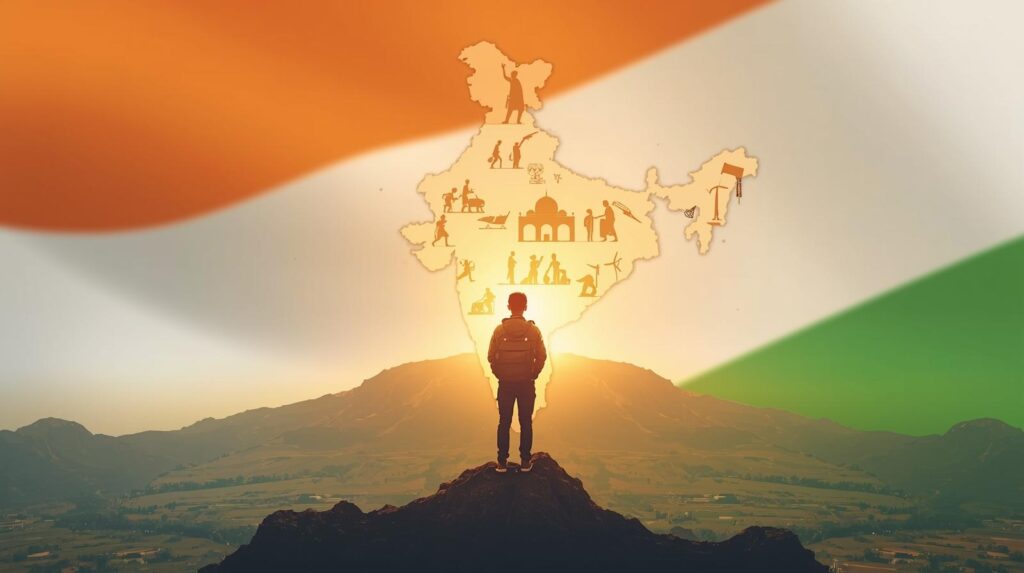
Introduction: A Journey Through My Learning and India’s Story
Indias Condition Expansion and Boundaries have significantly influenced the nation's historical and geopolitical evolution.
The identity of a nation is not defined merely by its geographical boundaries or size — it is shaped by the dreams, struggles, and collective consciousness of its people. India’s story is no different. It is a land that has taught me the essence of learning, the courage to question, and the strength to rise again after every fall. When I first read about India’s long history — of empires, revolutions, and rebirth — I realized that this country is not just a map; it is an emotion that breathes through every generation.
During my academic journey, I tried to understand India’s economic, social, and political structure from the inside. As a student, I often observed how this vast nation stands as a living example of “unity in diversity,” while also confronting countless boundaries — both visible and invisible. My experiences in rural India made me realize that true development is tested not where resources are abundant, but where hope still thrives despite limitations. From education to employment, from technology to environment — India has made remarkable progress, yet behind every achievement lies a story of resilience and vision.
This article is the outcome of my personal learnings, experiences, and reflections — an attempt to present India’s current condition, its expansion, and its limitations through a narrative lens. My goal is not just to display data, but to reveal how India continues to move towards self-reliance, sustainability, and social consciousness. The insights shared here are inspired by my education, the mentors who guided me, and the real-world lessons learned from people striving to make change happen at the ground level.
When we discuss the condition of India, it is not merely an economic or geopolitical debate — it becomes a process of self-reflection. And perhaps that is where education turns into experience, and experience transforms into perspective. Through this lens, I invite you to walk with me — to explore a nation that is redefining its own identity every single day, reaching beyond its boundaries to build a future rooted in learning, inclusivity, and vision.
- India’s identity lies beyond geography — it lives in the spirit and struggles of its people.
- Education and experience together shape a deeper understanding of India’s journey.
- Progress in India is driven by unity in diversity and the constant pursuit of hope.
Conclusion: Enduring Lessons from the Cold War
The end of the Cold War was not merely the collapse of a geopolitical rivalry — it was the conclusion of a long experiment in power, fear, and ideology. It revealed that true strength lies not in domination or weapons, but in dialogue, restraint, and cooperation. history reminds us that when nations lose the ability to communicate, they also lose their humanity.
As the modern world once again faces polarization, information wars, and strategic mistrust, the legacy of the Cold War urges us to rediscover empathy and global responsibility. Peace, after all, is sustained not by fear but by understanding and collaboration.

Current Condition — Economic, Social, and Political Perspectives
Indias Condition Expansion and Boundaries are not merely historical references; they remain central to understanding the nation’s present transformation. Whenever we examine India’s current condition, we see how geography, development, and governance intersect in powerful ways. As a learner and observer, I have witnessed how India’s economic framework, social fabric, and political direction are deeply interconnected. In every sphere, waves of change are visible — some rapid, some gradual — but together they are shaping a new vision of India.
Economic Perspective: Balancing Growth and Challenges
Today, India stands as the world’s fifth-largest economy. Continuous GDP growth, the rise of the startup ecosystem, and the expansion of digital infrastructure demonstrate how Indias Condition Expansion and Boundaries influence economic planning and regional development strategies. From metropolitan cities to rural districts, economic transformation is unfolding at multiple levels.
Yet, growth also brings challenges. Inflation, unemployment, and income inequality remain pressing concerns. sustainable development requires not only expansion but equitable distribution — ensuring that progress reaches every segment of society.
- Economic expansion must be balanced with sustainability and equity.
- Regional development reflects the broader dynamics of national transformation.
Social Perspective: Redefining unity in diversity
India has always been a symbol of unity in diversity. In modern times, digital connectivity, educational reforms, and greater gender participation are redefining social structures. These changes once again show how Indias Condition Expansion and Boundaries shape not only territorial realities but also identity, mobility, and opportunity.
Social inclusion remains essential. Bridging gaps of caste, class, and economic disparity is crucial for long-term stability. Education and awareness continue to be the strongest foundations for inclusive progress.
Political Perspective: From Policy to Purpose
India’s democracy is the largest in the world, grounded in participation and representation. Policy-driven governance, digital transparency, and administrative reforms illustrate how Indias Condition Expansion and Boundaries connect political direction with national priorities.
Overall, India’s present condition reflects a dynamic balance between expansion and responsibility. Economic growth, social evolution, and political maturity together define the ongoing journey of transformation.
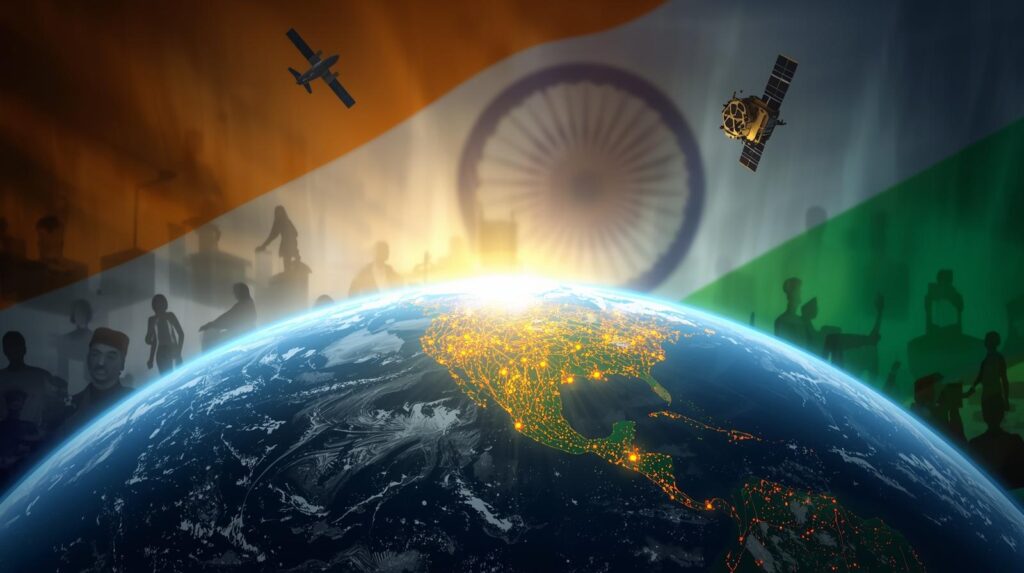
Expansion — How India Is Growing: Opportunities and Strategies
India today stands at a pivotal point in its history — where growth is no longer just an ambition, but a continuous movement. Within the broader framework of Indias Condition Expansion and Boundaries, expansion represents the nation’s evolving strength and strategic vision. Across industry, education, technology, and diplomacy, India is redefining its identity with confidence and purpose.
Economic Expansion: From Self-Reliance to Global Competitiveness
Economically, India’s expansion is unprecedented. Initiatives like Atmanirbhar Bharat and Make in India highlight how Indias Condition Expansion and Boundaries influence economic planning and industrial outreach. India is transitioning from a consumption-driven economy to one focused on innovation, exports, and strategic partnerships.
True expansion begins when MSMEs receive access to finance, technology, and markets. Digital initiatives such as UPI and e-commerce platforms have empowered small enterprises, bridging traditional geographic and economic boundaries.
Technological Expansion: The New Era of Innovation
India’s technological growth extends beyond IT services into Artificial Intelligence, biotechnology, renewable energy, and space exploration. This transformation reflects the dynamic interplay between innovation and the larger context of Indias Condition Expansion and Boundaries shaping development priorities.
Universities and startup incubators are nurturing a generation that moves from job-seeking to job-creating. If sustained, this innovation ecosystem can position India as a global technology leader.
Global Expansion: India’s Growing Role in the World
Expansion is not confined within national borders. India’s diplomatic outreach, trade partnerships, and global leadership initiatives demonstrate how Indias Condition Expansion and Boundaries extend beyond territory into influence and cooperation.
Policies such as “Neighbourhood First” and “Act East” strengthen regional connectivity and global engagement. This phase of expansion reflects both strategic pragmatism and civilizational philosophy.
Strategic Vision: Toward Sustainable and Inclusive Growth
Sustainable expansion requires balance — between development and environment, speed and equity. Long-term visions emphasize harmony among technology, education, and ecological responsibility.
Ultimately, India’s expansion is not merely economic or territorial — it is intellectual, social, and aspirational. The evolving narrative of Indias Condition Expansion and Boundaries demonstrates that growth must be inclusive, resilient, and future-oriented.

Limitations — What Holds Progress Back?
Within the broader framework of Indias Condition Expansion and Boundaries, limitations represent the internal challenges that shape the pace of national progress. Every growing nation carries certain constraints — some structural, some psychological, and some deeply systemic. India’s development journey has been rapid and impressive, yet equally complex.
Economic Limitations: Inequality and Imbalance of Opportunities
While Indias Condition Expansion and Boundaries reflect strategic growth, economic inequality remains a serious concern. Urban regions often benefit more quickly from investment and infrastructure, whereas rural communities continue to struggle with limited access to capital and markets.
Agriculture — the backbone of India’s economy — still requires structural reforms and technological modernization. Inclusive growth must become the foundation of the next phase of expansion so that opportunity is distributed more equitably.
- Economic inequality slows balanced national development.
- Inclusive rural empowerment is essential for sustainable growth.
Social Limitations: Inequality and Mindset Barriers
Social challenges continue to influence Indias Condition Expansion and Boundaries. Diversity is India’s strength, yet caste discrimination, gender inequality, and limited access to quality education create invisible barriers.
Progress demands not only policy reform but transformation in mindset. Education, awareness, and equal opportunity remain the pillars of lasting social advancement.
Technological and Infrastructure Gaps
Although India’s technological rise is significant, its benefits have not reached every citizen equally. Infrastructure gaps — especially in rural regions — restrict the full realization of Indias Condition Expansion and Boundaries in practical terms.
Investments in connectivity, healthcare, and education must extend beyond metropolitan areas to ensure that technological growth translates into empowerment.
Policy and Implementation Challenges
A recurring limitation lies in implementation. Policies often reflect ambition and vision, but administrative gaps slow execution. Strengthening governance mechanisms is essential to align Indias Condition Expansion and Boundaries with tangible outcomes.
Ultimately, these limitations are not permanent barriers. They are opportunities for reform, innovation, and collective responsibility. Recognizing internal boundaries is the first step toward transcending them.

Personal Lessons — Insights from My Education and Experience
When I reflect on my education and life experiences, I realize that true learning does not come only from textbooks — it also emerges from challenges, people, and failures. In many ways, my journey mirrors the broader narrative of Indias Condition Expansion and Boundaries, where growth is shaped not only by ambition but by resilience and self-correction.
Education — The Force That Changed My Way of Thinking
The greatest gift of education is understanding — not just information. While studying economics and sociology, I began to see how Indias Condition Expansion and Boundaries are reflected not only in geography or policy, but in the lived realities of citizens. Development, I realized, must be measured through opportunity, dignity, and access.
During my university research on rural development, I witnessed grassroots innovation in action. Villagers adopted solar irrigation systems and mobile-based market tools, proving that education becomes meaningful only when it transforms lives.
Experience — Learning from Failures and New Directions
Experience often teaches lessons that theory cannot. In one challenging project, unexpected setbacks revealed that collaboration and communication are essential for sustainable outcomes. Similarly, national growth within the framework of Indias Condition Expansion and Boundaries depends on coordinated effort between citizens, institutions, and leadership.
I learned that consistency of purpose outweighs abundance of resources. Inspiration frequently begins at the grassroots level — a lesson that applies both personally and nationally.
Lessons from Work and Everyday Life
My professional experiences reinforced a simple truth: progress requires participation. Leadership is not dominance; it is guidance and shared responsibility.
A small village learning initiative once showed me how incremental change can reshape futures. Such moments illustrate that development — whether personal or national — begins with intention and grows through persistence.
Self-Development and Responsibility Toward Society
Over time, I realized that personal growth and social responsibility are inseparable. Just as individuals evolve, nations evolve through awareness and accountability. The evolving reality of Indias Condition Expansion and Boundaries reminds us that progress is collective, not individual.
Ultimately, my education and experiences have taught me that transformation begins when personal purpose aligns with a larger vision. Learning is not merely accumulation of knowledge — it is preparation to contribute meaningfully to society.
Conclusion — The Road Ahead and Inspiring Takeaways
Reflecting upon Indias Condition Expansion and Boundaries, one truth stands clear — India is not merely a geographical entity; it is a living force of ideas, resilience, and renewal. Progress has never followed a straight path. It has moved through challenges, setbacks, and reinvention — shaping a nation capable of redefining its own future.
The years ahead demand balanced and sustainable growth. Economic advancement must align with education, environmental responsibility, and social equity. The evolving reality of Indias Condition Expansion and Boundaries reminds us that development is not just territorial or economic — it is human and ethical at its core.
India’s greatest strength lies in its people — their diversity, innovation, and courage. When these qualities are integrated into governance, industry, and education, the nation can emerge not only as an economic power but as a responsible global leader. The future of India will depend on collective awareness and shared accountability.
The Road Ahead — What Must Be Done?
- Make education the foundation of transformation: Integrate creativity, research, and practical learning at all levels.
- Empower through technology: Ensure digital inclusion across rural and urban regions.
- Guarantee equal opportunities: Bridge economic and social disparities.
- Balance growth with sustainability: Protect nature while pursuing development.
- Promote ethical leadership: Encourage transparency, collaboration, and civic responsibility.
Ultimately, Indias Condition Expansion and Boundaries are not fixed realities — they are evolving dimensions of a nation in motion. By recognizing internal limitations and strengthening collective purpose, India can transform challenges into opportunities for long-term progress.
- National progress depends on inclusive collaboration and innovation.
- Collective responsibility accelerates sustainable development.
- True growth uplifts society as a whole, not just select sections.
This conclusion is not an ending — it is a beginning. A beginning of responsibility, introspection, and renewed commitment to progress. The spirit of transformation that defines Indias Condition Expansion and Boundaries will continue to guide the nation toward a stronger and more compassionate future.
References / Further Reading
A deeper understanding of Indias Condition Expansion and Boundaries requires a balanced blend of academic research, historical documentation, and policy analysis. The following books, reports, and institutional resources provide valuable insights into India’s economic transformation, social development, and geopolitical evolution.
1. Books and Academic Studies
- Amartya Sen & Jean Drèze — India: Development and Participation (Oxford University Press, 2002). Explores the link between economic growth and social development.
- Raghuram G. Rajan — The Third Pillar (Penguin, 2019). Examines how community and governance influence sustainable growth.
- Ramachandra Guha — India After Gandhi (HarperCollins, 2007). A comprehensive account of post-independence political evolution.
- Pavan K. Varma — Being Indian (Viking, 2004). Reflects on Indian identity in a changing world.
2. Government and Policy Reports
- NITI Aayog — Vision India @2047.
- Ministry of Statistics and Programme Implementation — National Survey Reports.
- UNDP Human Development Report.
- World Bank India Development Update.
3. Research Papers and Digital Resources
- NITI Aayog Official Portal
- World Bank Open Data – India
- Press Information Bureau (PIB)
- United Nations Sustainable Development Goals
4. Suggested Further Reading
- The Economist – India Section
- Brookings India
- Observer Research Foundation (ORF)
Together, these sources provide academic and policy-oriented perspectives that contextualize Indias Condition Expansion and Boundaries within broader debates on development, governance, and global engagement. Readers are encouraged to consult these works to gain a more nuanced and evidence-based understanding of India’s evolving national trajectory.
Frequently Asked Questions (FAQs)
1. What do India's condition, expansion, and boundaries mean?
India's condition refers to its current economic, social, political, and developmental status. Expansion represents its growth in areas such as the economy, technology, infrastructure, and global influence, while boundaries include both its geographical borders and the internal challenges that shape national development.
2. What are the major factors driving India's expansion?
India's growth is driven by rapid economic development, digital transformation, infrastructure projects, technological innovation, startup ecosystems, manufacturing initiatives such as Make in India, Atmanirbhar Bharat, expanding global trade, and an increasingly skilled workforce.
3. What are the major challenges limiting India's development?
India continues to face challenges such as unemployment, income inequality, poverty, regional disparities, inadequate infrastructure in some areas, environmental degradation, climate change, population pressure, and uneven access to quality education and healthcare.
4. Why is India's geographical location strategically important?
India occupies a strategic position in South Asia with a long coastline along the Indian Ocean and land borders with several countries. Its location strengthens maritime trade, regional connectivity, energy security, defence preparedness, and its influence in the Indo-Pacific region.
5. How is India strengthening its global position?
India is expanding its global influence through economic diplomacy, technological innovation, space exploration, renewable energy initiatives, participation in international organizations such as the G20, BRICS, QUAD, and the United Nations, while strengthening bilateral partnerships across the world.
6. Why is sustainable development important for India's future?
Sustainable development ensures that economic growth is balanced with environmental conservation and social inclusion. Investments in renewable energy, clean technologies, quality education, healthcare, digital infrastructure, and rural development are essential for achieving long-term and inclusive national progress.
7. Why are India's condition, expansion, and boundaries important for UPSC and other competitive exams?
This topic is highly relevant because it integrates Geography, Indian Polity, Economy, International Relations, Environment, and Current Affairs. Questions frequently focus on India's development, strategic location, border issues, infrastructure, demographic trends, foreign policy, and sustainable growth, making it important for UPSC, State PCS, SSC, CDS, Banking, and other competitive examinations.