Slave Dynasty (1206–1290) – Rise, Rulers, Achievements & Downfall
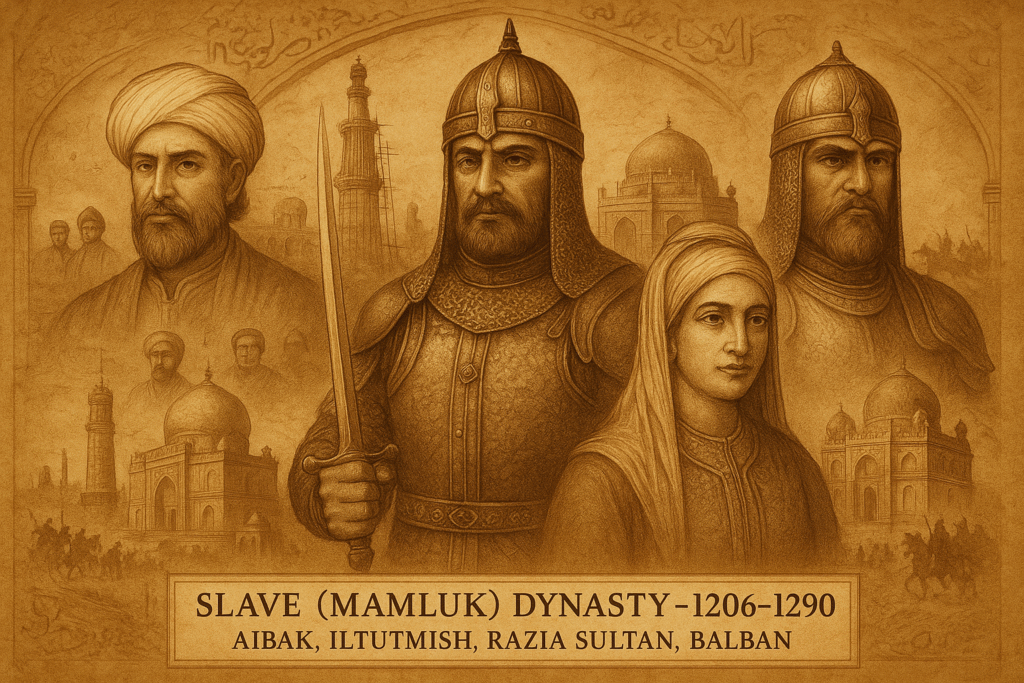
The Slave Dynasty, also known as the Mamluk Dynasty, was the first ruling lineage of the Delhi Sultanate. Established by Qutubuddin Aibak in 1206, this dynasty laid the strong administrative, military, and political foundation for future Sultanates in India. Spanning from 1206 to 1290, the dynasty witnessed powerful rulers, administrative reforms, architectural wonders, and cultural transitions.
Founding of the Slave (Mamluk) Dynasty
The dynasty was founded by Qutubuddin Aibak, a Turkish slave who rose to prominence due to his military brilliance, loyalty, and administrative capability. Serving as the commander of Muhammad Ghori, he later declared independence and established the Delhi Sultanate.
Major Rulers of the Slave Dynasty
1. Qutubuddin Aibak (1206–1210)
- First Sultan of the Delhi Sultanate.
- Capital established at Lahore.
- Victory at the Battle of Lakhnauti.
- Started the construction of the Qutub Minar and Quwwat-ul-Islam Mosque.
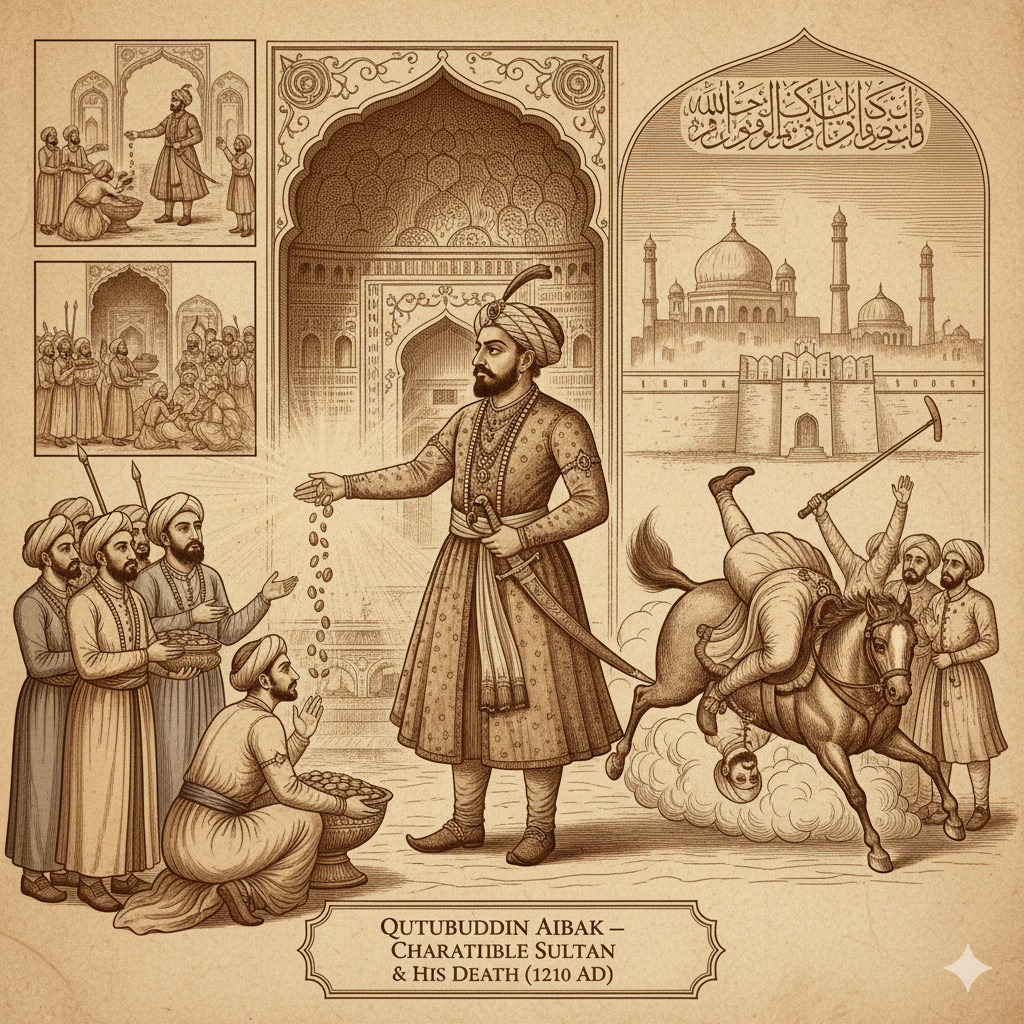
- Known as "Lakh Baksh" due to his generosity.
- Died after falling from a horse while playing polo.
2. Aram Shah (1210–1211)
- Successor of Qutubuddin Aibak.
- A weak and ineffective ruler.
- Removed by nobles and replaced by Iltutmish.
3. Iltutmish (1211–1236)
- Strongest ruler of the Slave Dynasty.
- Shifted the capital to Delhi.
- Introduced the Iqta system.
- Strengthened the Delhi Sultanate by organizing Turkish nobles.
- Issued new coins: Tanka (silver) and Jittal (copper).
- Died in 1236.
4. Razia Sultan (1236–1240)
- India’s first and only woman Sultan.
- Known for her administrative efficiency and justice.
- Faced strong opposition from Turkish nobles.
- Her reign ended due to rebellions.
5. Nasiruddin Mahmud (1246–1266)
- Son-in-law of Balban.
- Considered a nominal ruler.
- Real authority remained with Ghiyasuddin Balban.
6. Ghiyasuddin Balban (1266–1287)
- One of the most powerful rulers of the Slave Dynasty.
- Strengthened the authority of the Sultan.
- Introduced strict court discipline.
- Adopted the theory of the "Divinity of Kingship".
- Defended India from Mongol invasions.
Downfall of the Slave Dynasty
The last ruler, Kayqubad, ruled weakly and failed to control the administration. In 1290, Jalaluddin Firoz Khilji overthrew him and established the Khilji Dynasty, marking the end of the Slave Dynasty.
Mamluk Dynasty: Meaning and Background

⭐ Editor's Choice
Discover a highly rated product selected for its quality, functionality, and positive customer feedback.
View Details & Reviews →The word Mamluk is derived from the Arabic word meaning "slave". Many rulers of this dynasty were originally slaves who rose to power due to their talent and military capability.
Major Contributions of the Mamluk Dynasty
1. Administrative Reforms
- Foundation of a stable Islamic government in India.
- Introduction of the Iqta system and structured military reforms.
- Development of a strong centralized administration.
2. Architectural Developments
- Construction of the Qutub Minar (started by Aibak, completed by Iltutmish).
- Quwwat-ul-Islam Mosque built using remains of Hindu and Jain temples.
Life and Achievements of Qutubuddin Aibak
Early Life
- Born in Turkistan in Central Asia.
- Sold as a slave in childhood.
- Bought by Muhammad Ghori and trained in administration and warfare.
- Rose to prominence due to loyalty and military talent.
Military and Political Achievements
- Played a key role in the Second Battle of Tarain (1192).
- Became governor after Ghori’s death in 1206.
- Declared himself Sultan and founded the Delhi Sultanate.
- Expanded control over Rajasthan and the Ganga plains.
Architectural Legacy
- Started the construction of the Qutub Minar, a symbol of his authority.
- Built the Quwwat-ul-Islam Mosque—India’s first major Islamic structure.
Personality and Governance
- Known as "Lakh Baksh" for his generosity.
- Practiced religious tolerance.
- Laid the foundation for effective governance in the Delhi Sultanate.
Death (1210)
Aibak died in 1210 after falling from his horse during a polo game. He was buried in Lahore, where his tomb still stands.
Conclusion
The Slave or Mamluk Dynasty played a crucial role in shaping the early Delhi Sultanate. From Aibak's foundation to Balban's strong administration, this period laid the political and institutional framework that guided future dynasties. Their contributions in architecture, administration, military reforms, and governance continue to hold historical importance.
Qutubuddin Aibak: Early Life, Struggles, Rise to Power & Foundation of the Mamluk Dynasty
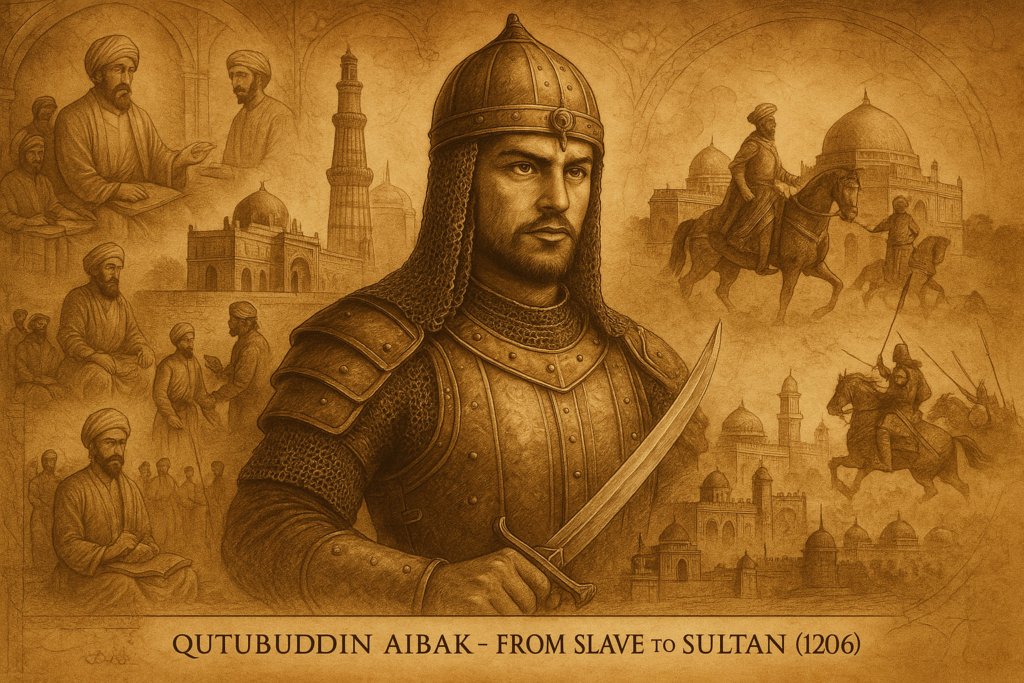
The early life of Qutubuddin Aibak was filled with conflict and challenges. Born in Turkistan (Central Asia) in a poor Turkish family, Aibak’s childhood was marked by hardships. Sold as a slave at a young age, he passed through many hands before rising to become the first Sultan of the Delhi Sultanate. His difficult beginnings shaped his personality, strengthened his determination, and fueled his ambition.
1. Life in Slavery
- Aibak was sold repeatedly in various slave markets during his childhood.
- Eventually, an Islamic merchant purchased him and provided him with education.
- During this period, Aibak learned horse riding, archery, and warfare techniques.
- He also received Islamic education, which later helped him in administration and Governance.
2. Entry into the Court of Muhammad Ghori
Impressed by Aibak’s abilities and discipline, Sultan Muhammad Ghori purchased him and brought him into his service. Recognizing Aibak’s potential, Ghori appointed him to important positions within his military system.
- Ghori integrated Aibak into his army due to his exceptional military skills.
- Aibak showed complete loyalty and dedication to Ghori.
- Gradually, he was entrusted with significant responsibilities and higher ranks.
3. Military Training and Leadership Development
- By serving alongside Muhammad Ghori, Aibak received advanced military training.
- He mastered the art of warfare and proved his leadership abilities in multiple campaigns.
- Ghori appointed him as the chief commander of his Indian expeditions.
4. Entry into India
Under Ghori’s leadership, Qutubuddin Aibak participated in several major battles in India. The most important among them was the Second Battle of Tarain (1192) where Prithviraj Chauhan was defeated.
- Aibak played a crucial role in Ghori’s victories in India.
- He expanded control over Delhi and the surrounding regions.
- Ghori appointed him as the administrative and military head of the conquered territories in India.
5. Step Toward Independence
After Muhammad Ghori’s death in 1206, Aibak strengthened his position in India. He declared himself the independent Sultan of Delhi and laid the foundation of the Mamluk (Slave) Dynasty.
Impact of His Early Life
The hardships of Qutubuddin Aibak’s early life inspired him to rise above every struggle. From a slave to a Sultan, his journey reflects determination, courage, and the power of perseverance.
- His difficult early years made him strong, wise, and resilient.
- His experiences developed his humility and generosity.
- He became famous as “Lakh Baksh” for his habit of giving generous gifts.
Conclusion
Qutubuddin Aibak’s early life is a story of struggle, discipline, and remarkable transformation. Breaking the chains of slavery, he not only gained freedom but also laid the foundation of a new Sultanate in India. His leadership established the beginning of the Delhi Sultanate, shaping the future of Indian history for centuries.
Mamluk Dynasty Founder: Qutubuddin Aibak
Qutubuddin Aibak (1206–1210), a Turkish slave, was the founder of the Mamluk (Slave) Dynasty and the first ruler of the Delhi Sultanate. His reign laid the foundation of Islamic governance in India and established an organized administrative structure.
Early Life of Qutubuddin Aibak
- Born in Turkistan in a Turkish family.
- Sold as a slave multiple times during childhood.
- Purchased by a merchant who trained him in Islamic studies, warfare, horse riding, and archery.
- Later purchased by Muhammad Ghori, who inducted him into his army.
Role as Commander under Muhammad Ghori
Military Contributions
- Played an important role in Ghori’s Indian expeditions.
- Significant contribution in the Second Battle of Tarain (1192) against Prithviraj Chauhan.
- Expanded the Sultanate’s control over Delhi and the Ganga plains.
Administrative Responsibilities
- Appointed as the chief administrator of conquered territories in India.
- Made Delhi the center of Ghori’s control in India.
Establishment of the Mamluk Dynasty (1206)
- After Ghori’s death in 1206, Aibak declared himself an independent Sultan.
- Established the Mamluk Dynasty and made Lahore his capital.
- Organized and strengthened the Delhi Sultanate’s military and administrative systems.
Contributions as the Founder
administrative reforms
- Developed an efficient administrative framework.
- Improved local governance and streamlined tax systems.

⭐ Editor's Choice
Discover a highly rated product selected for its quality, functionality, and positive customer feedback.
View Details & Reviews →Architectural Achievements
- Started the construction of the Qutub Minar.
- Built the Quwwat-ul-Islam Mosque.
religious tolerance and Personality
- Aibak was known for generosity and tolerance.
- Referred to as “Lakh Baksh” for his charitable nature.
Death and Legacy
In 1210, Qutubuddin Aibak died after falling from a horse while playing polo. His successor, Aram Shah, proved weak, but Aibak’s contributions ensured that the Delhi Sultanate had a strong foundation.
Conclusion
Qutubuddin Aibak was not only a great commander and administrator but also the pioneer of Islamic governance in India. His vision and leadership gave the Mamluk Dynasty a powerful beginning, helping the Delhi Sultanate remain influential for nearly 300 years.
Qutubuddin Aibak: Why He Made Lahore His Capital & The Truth Behind the Lakhnauti Victory
Lahore as the Capital
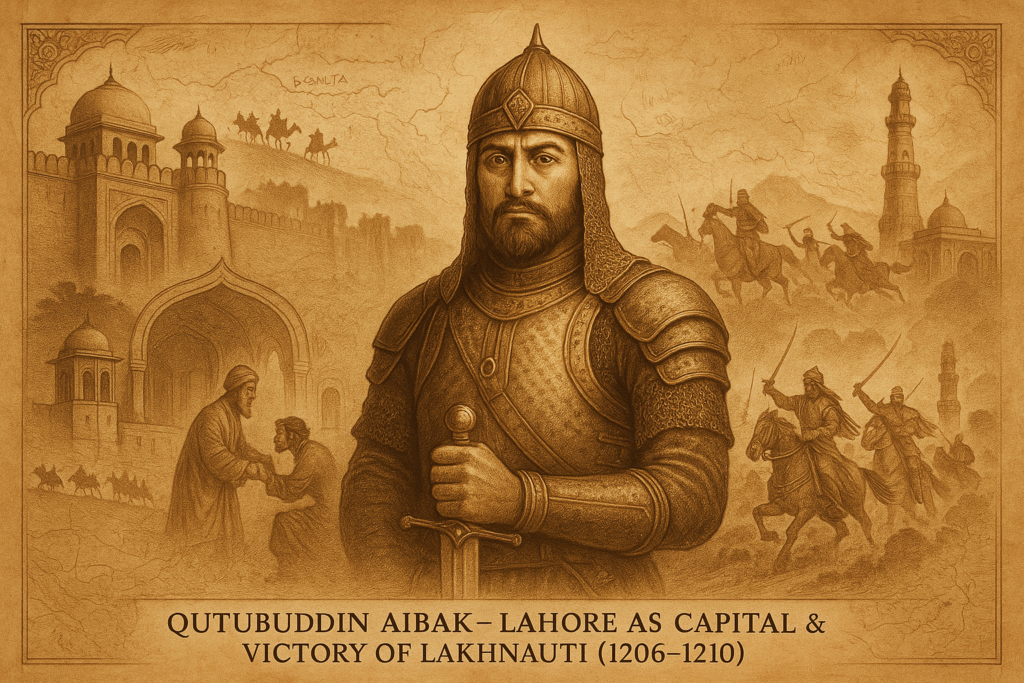
During his reign (1206–1210), Qutubuddin Aibak made Lahore his capital. This decision was based on several strategic, cultural, and administrative reasons that played a crucial role in the early formation of the Delhi Sultanate.
1. Strategic Importance of Lahore
Geographical Location
- Lahore was situated in North-West India, close to the trade and invasion routes from Central Asia.
- It served as a major center of Muhammad Ghori’s expanding empire.
- Turkish armies used Lahore as an important military base for expeditions into India.
Security Advantages
- Lahore’s geographical position acted as a strong defensive line against Mongol invasions.
- The city served as a protective shield for the newly-formed Sultanate.
2. Influence of Muhammad Ghori
- During Muhammad Ghori’s rule, Lahore was already an important administrative and military center.
- After Ghori’s death, Aibak strengthened this legacy by declaring Lahore his capital.
3. Cultural and Commercial Importance
- Lahore was a prosperous cultural and trading hub during that period.
- Its location on major trade routes ensured economic stability and commercial control.
4. Administrative Convenience
- By choosing Lahore as the capital, Aibak could maintain better administrative control over North India.
- The city offered easier connectivity with Delhi and other recently conquered regions.
5. Why Not Delhi?
- At that time, Delhi was still developing and not yet suitable as a permanent capital.
- Lahore, already established as a strong administrative center, aligned better with Aibak’s immediate needs.
- However, Aibak still recognized Delhi’s importance and initiated major construction there, including the Qutub Minar.
Limitations of Lahore as a Capital
- After Aibak’s death, Iltutmish replaced Lahore with Delhi as the new capital.
- Delhi offered a more central and strategically suitable location for the expanding Sultanate.
Conclusion
Qutubuddin Aibak’s decision to choose Lahore as his capital reflects his strategic thinking and administrative expertise. Although his reign was short, Lahore played a significant role in establishing the Mamluk Dynasty and shaping the early years of the Delhi Sultanate.
Lakhnauti War Victory
The reference to “Lakhnauti war victory” is often linked to Qutubuddin Aibak, but historical evidence shows that the actual victory was achieved by his commander, Bakhtiyar Khilji.
Historical Background of the Lakhnauti Campaign
About Lakhnauti
- Lakhnauti was located in present-day West Bengal and parts of Bihar.
- The region was an important part of ancient Bengal, situated along the lower Ganga plains.
Credit to Bakhtiyar Khilji
- Bakhtiyar Khilji, one of Aibak’s commanders, led the campaign against Lakhnauti.
- Between 1199–1200, he attacked major centers such as Nalanda and Vikramshila Universities.
- He captured Lakhnauti and brought the region under the control of the Delhi Sultanate.

⭐ Editor's Choice
Discover a highly rated product selected for its quality, functionality, and positive customer feedback.
View Details & Reviews →Role of Qutubuddin Aibak
- Although Bakhtiyar Khilji won the campaign, the victory was recorded under Aibak’s reign.
- Aibak supported the eastern expansion through administrative supervision and military backing.
Importance of the Lakhnauti Victory
1. Control Over Bengal
- The victory marked the beginning of Delhi Sultanate’s control over Bengal.
- Bengal, being rich and fertile, added significant value to the empire.
2. Strategic Advantage
- It strengthened the Sultanate’s position in Eastern India.
- Control over Ganga trade channels improved transportation and commerce.
3. Cultural Impact
- Islamic influence increased in the region after the conquest.
- However, local resistances and conflicts continued for many years.
Conclusion
The Lakhnauti victory highlights both Aibak’s strategic policy and the talent of his generals. While the credit for the military success goes to Bakhtiyar Khilji, the campaign significantly expanded the Delhi Sultanate’s rule in Eastern India. This victory laid the foundation for future expansions by subsequent rulers.
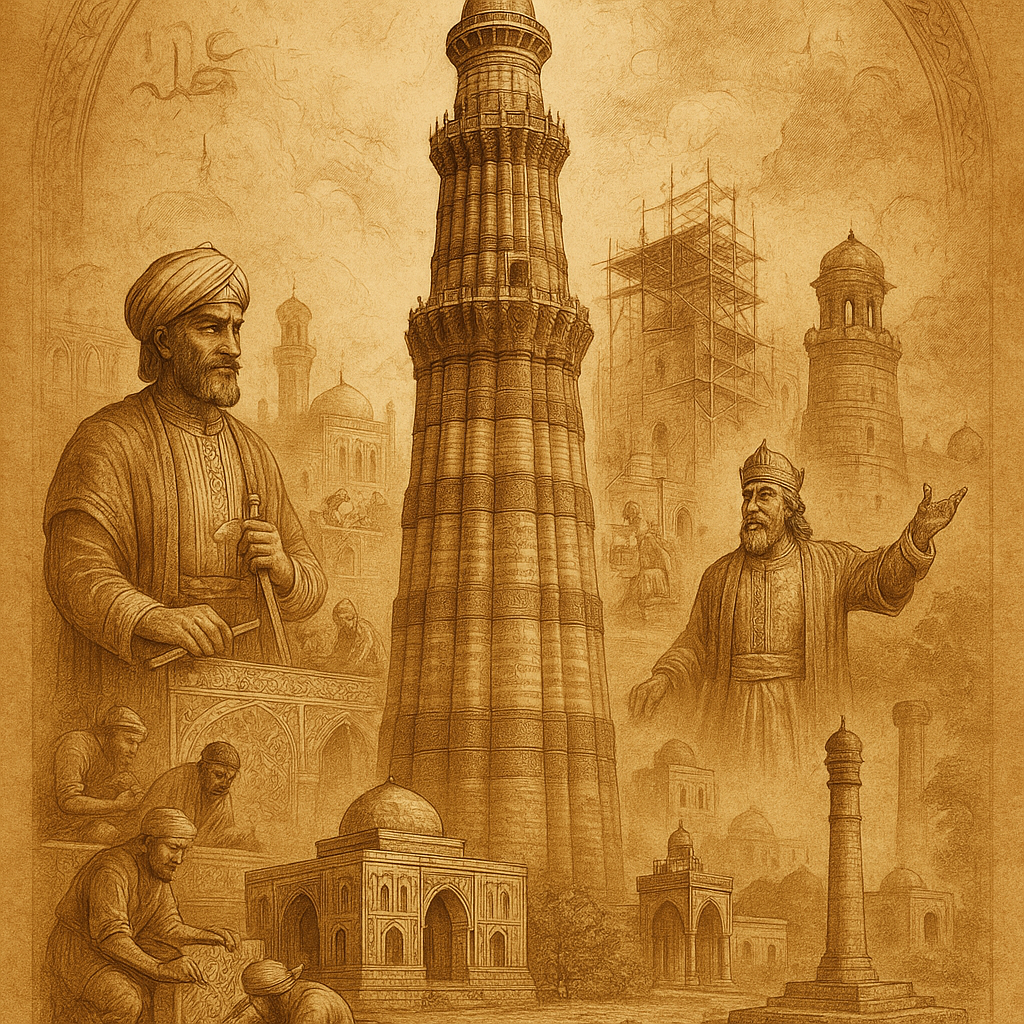
Qutb Minar (Qutb Tower): History, Architecture & Cultural Importance
Qutb Minar is one of the most famous and historic monuments of India. Located in Delhi, it represents the earliest example of Islamic architecture in the country. The construction of the tower was started by Qutubuddin Aibak in 1199 AD and later completed by his successor Iltutmish and other rulers.
History and Construction of Qutb Minar
Purpose of Construction
- The tower was built as a symbol of Islamic victory and political power.
- It was constructed beside the Quwwat-ul-Islam Mosque, the first Islamic mosque in India.
Artistic Craftsmanship and Architectural Style
- Built in Indo-Afghan architectural style with red sandstone.
- Carvings include Quranic inscriptions, floral patterns, and intricate designs.
Phases of Construction
- First Phase: Qutubuddin Aibak completed the first storey.
- Second & Third Phase: Iltutmish added three more storeys.
- Fourth & Fifth Phase: Firoz Shah Tughlaq rebuilt and added the upper storeys.
- Later, Sikandar Lodi and the British repaired and preserved the structure.
Features of Qutb Minar
Height and Structure
- Height: 73 meters (239.5 ft).
- Divided into five storeys, each surrounded by a projecting balcony.
- The lower three storeys are made of red sandstone, while the upper two combine marble and sandstone.
Carvings and Design
- The tower features Quranic inscriptions carved across its surface.
- Shows a blend of Hindu and Islamic architecture, as many materials were reused from existing temple structures.
Base and Top
- The base is 14.3 meters wide, tapering to 2.7 meters at the top.
- The conical shape provides stability and elegance.
Important Historical Incidents
Earthquakes and Repairs
- The tower suffered damage from earthquakes and lightning multiple times.
- Firoz Shah Tughlaq and Sikandar Lodi conducted major restoration efforts.
UNESCO World Heritage site
In 1993, Qutb Minar was declared a UNESCO World Heritage Site for its architectural, cultural, and historical significance.
Other Structures in the Qutb Complex
Quwwat-ul-Islam Mosque
Located beside Qutb Minar, this is considered the first Islamic mosque in India.
Iron Pillar
- A 4th-century Gupta-period iron pillar known for its rust-resistant metal.
- A remarkable example of ancient Indian metallurgy.
Alai Minar
- Started by Alauddin Khilji, who planned it to be twice the height of Qutb Minar.
- Construction remained incomplete after his death.
Importance of Qutb Minar
Cultural Significance
- Represents the advent and growth of Islamic architecture in India.
Religious Significance
- The tower was used by the muezzin to call worshippers to prayer.
Tourism
- One of India’s most visited tourist attractions and a symbol of national heritage.
Conclusion
Qutb Minar is not only a symbol of the beginning of Islamic rule in India but also an outstanding example of Indian architectural excellence. Historically, culturally, and artistically, it stands unmatched.
Quwwat-ul-Islam Mosque: India’s First Islamic Mosque
The Quwwat-ul-Islam Mosque, located in the Qutb Minar complex in Delhi, is considered the first Islamic mosque built in India. It was constructed by Qutubuddin Aibak in 1193 AD after the victory of Muhammad Ghori. Its name means “Power of Islam”, symbolizing the establishment of Islamic authority.
Construction and History
Foundation
- Construction began soon after the victory of Muhammad Ghori in Delhi.
- The mosque served as a memorial of this conquest.
Construction Material
- Built using remains of Hindu and Jain temples.
- Pillars and stones from earlier structures were reused, displaying traces of pre-Islamic art.
Expansion Over Time
- Originally built by Qutubuddin Aibak.
- Later expanded by Iltutmish and Alauddin Khilji.
Architectural Features
Influence of Hindu-Jain Style
- Pillars display carvings, patterns, and designs typical of Hindu and Jain temples.
- Images on pillars were defaced in accordance with Islamic beliefs.

⭐ Editor's Choice
Discover a highly rated product selected for its quality, functionality, and positive customer feedback.
View Details & Reviews →The Courtyard
- The mosque has a large open courtyard for worshippers.
Mihrab and Arches
- Beautiful arches and mihrabs showcase the excellence of early Islamic architecture in India.
- Arabic inscriptions decorate the mosque walls.
Iron Pillar
- Located in the mosque's courtyard, the iron pillar dates to the Gupta period (Chandragupta II).
- Famous for its exceptional rust-resistant metal.
Religious and Historical Importance
First Mosque of India
- A symbol of the beginning of Islamic Governance in India.
Victory Monument
- Commemorates the establishment of Islamic rule over former Hindu kingdoms.
Cultural Integration
- Reused temple materials reflect the merging of available resources with Islamic design principles.
Expansion by Later Sultans
Iltutmish
- Extended the mosque complex and enhanced its beauty.
Alauddin Khilji
- Further expanded the complex and built the Alai Darwaza.
- The Alai gate is considered a masterpiece of Islamic architecture.
Significance of Quwwat-ul-Islam Mosque
Architectural Beginning
- Marks the first phase of Islamic architecture in India.
Political and Religious Significance
- Built over temple ruins, symbolizing political control and Islamic expansion.
Tourism and Heritage
- Now a UNESCO World Heritage site and one of Delhi’s major tourist attractions.
Conclusion
The Quwwat-ul-Islam Mosque holds a significant place in Indian history. Along with the Qutb Minar, it represents the early establishment of Islamic governance and the evolution of Indo-Islamic architectural heritage in India.