
Bengal Election 2026 has become one of the most discussed political events in India. West Bengal has long been considered one of India’s most politically influential states, where regional identity, ideological politics, and voter polarization play a crucial role. The Bengal Election 2026 has also indicated that the state could become a decisive battleground for the 2029 Lok Sabha Elections, shaping the future of national politics.
The Bengal Election 2026 has marked a major turning point in the political landscape of West Bengal. The intense political battle between the ruling TMC and the BJP not only changed the electoral dynamics of the state but also significantly influenced its social, economic, and political direction. After the election results, issues such as the Muslim vote bank, rural Bengal politics, political violence, industrial investment, unemployment, and Centre-State relations have become key topics of national discussion.
In this detailed article, we will analyze the Bengal Election 2026 in depth and understand what has truly changed in West Bengal after the election results, including its impact on politics, governance, economy, law and order, and India’s broader political landscape.

Bengal Election 2026 Overview
The Bengal Election 2026 emerged as one of the most closely watched state elections in India, drawing nationwide attention due to the fierce political contest between the Trinamool Congress (TMC) and the Bharatiya Janata Party (BJP). The election was not only a battle for power in West Bengal but also a test of political influence ahead of the 2029 Lok Sabha Elections.
The results highlighted the changing political dynamics of the state, where issues such as regional identity, minority vote consolidation, unemployment, political violence, welfare schemes, and rural development played a crucial role in shaping voter behavior. While the TMC focused on regional pride and welfare politics, the BJP attempted to expand its influence through aggressive campaigning and polarization strategies.
One of the biggest political messages from the Bengal Election 2026 was the continued importance of regional parties in Indian politics. At the same time, the election demonstrated that West Bengal remains a politically sensitive and strategically important state for national parties aiming to strengthen their position in eastern India.
Major Political Messages from the Election
- TMC maintained strong influence in rural Bengal.
- BJP continued to expand its voter base in several districts.
- Minority and women voters played a decisive role.
- Regional politics remained stronger than national narratives.
- The results may significantly influence the strategy for the 2029 General Elections.

Best Affiliate Marketing Book for Beginners
If you want to start earning online through Blogging and Amazon Affiliate Marketing, this guide can be very useful. It explains SEO, Blog Monetization, Passive Income, and Affiliate Marketing strategies in an easy-to-understand way.
→ How to Earn Money with Amazon Affiliate Program
→ How to Build Passive Income with Blogging
→ How to Write SEO Friendly Blog Posts
ed heavily on “Bengali identity” and welfare politics during the election campaign. The party targeted women voters, rural communities, and minority groups through social welfare schemes and regional narratives.
TMC attempted to project itself as the true protector of Bengal’s culture, language, and regional interests. This strategy proved highly effective in rural constituencies, where the party maintained strong grassroots support.
BJP’s Strengths and Weaknesses
The BJP entered the Bengal Election 2026 with an aggressive campaign centered on nationalism, Hindutva politics, and organizational expansion. The party managed to strengthen its support base in several urban regions and border districts.
However, BJP struggled to achieve the same level of influence in rural Bengal. Lack of strong local leadership, difficulty in countering regional identity politics, and the TMC’s well-established ground network emerged as major weaknesses for the party.
Despite these challenges, the “TMC vs BJP Bengal 2026” battle clearly demonstrated that the BJP has become a permanent political force in West Bengal.
Rural vs Urban Voting Pattern
One of the most significant trends in the election was the clear divide between rural and urban voting behavior. Rural voters largely favored the TMC due to welfare schemes, local outreach programs, and strong organizational presence.
On the other hand, urban voters showed relatively greater support for the BJP, particularly on issues such as unemployment, corruption, and economic development. This divide may further intensify political competition in West Bengal in the coming years.
Impact of Hindutva Politics
The BJP strongly emphasized Hindutva and religious identity during the election campaign. This strategy had a visible impact in certain regions, especially in areas with higher communal polarization.
However, regional identity and Bengali cultural pride remained dominant political factors in West Bengal. TMC successfully portrayed BJP’s narrative as an “outsider political approach,” limiting the broader impact of Hindutva politics across the state.
Condition of the Opposition
The Congress and the Left Front appeared significantly weakened in the Bengal Election 2026. In many constituencies, their traditional vote banks shifted toward either the TMC or the BJP.
The election made it increasingly clear that West Bengal politics is now primarily shaped by the direct “TMC vs BJP Bengal 2026” rivalry, which is likely to dominate the state’s political future for years to come.
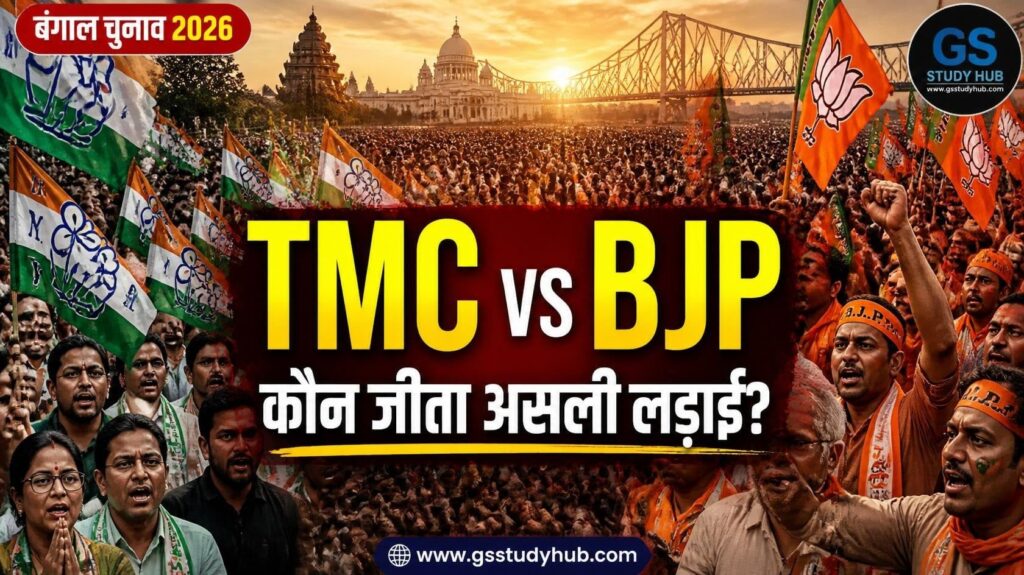
Muslim Vote Bank and Rural Bengal Politics
The Muslim vote bank and rural Bengal politics played a decisive role in shaping the outcome of the Bengal Election 2026. West Bengal has long been known for its identity-based politics, regional issues, and complex social equations, where minority voters hold significant influence in many constituencies. In this election as well, the support of Muslim voters and rural communities became a central factor in the strategies of major political parties.
Muslim Vote Percentage and Electoral Influence
The Muslim population in West Bengal is estimated to be around 27–30%, but in several districts, the percentage is significantly higher. As a result, the Muslim vote bank emerged as one of the most influential political factors in the Bengal Election 2026.
Districts such as Murshidabad, Malda, and North 24 Parganas played a particularly important role, as Muslim voters directly influenced the electoral outcomes in many constituencies. According to several political observers, the TMC received strong support from the Muslim community in these regions, helping the party maintain its political dominance.
Politics of Border Districts
The politics of border districts remained highly sensitive during the election. Areas connected to the Bangladesh border witnessed intense debates over citizenship, border security, illegal immigration, and identity politics.
In districts like Murshidabad and North 24 Parganas, political parties adopted different strategies based on religious and social demographics. Alongside local issues, national security and citizenship-related concerns also influenced voter behavior in these regions.
TMC’s Stronghold in Rural Bengal
The TMC focused heavily on welfare schemes, local leadership, and social alliances to maintain its dominance in rural Bengal and minority-majority regions.
Government welfare programs for women, healthcare support, rural assistance schemes, and strong grassroots organization helped the party retain significant support among rural voters.
In districts such as Malda and Murshidabad, the TMC emphasized regional identity and social security as key components of its election campaign.
BJP’s Polarization Campaign
The BJP strongly emphasized Hindutva politics, citizenship issues, and border security during the Bengal Election 2026 campaign. The party attempted to consolidate its voter base through religious polarization, particularly in constituencies where demographic balance played a crucial political role.
However, many political analysts believe that regional identity and local political culture continue to be stronger influences in West Bengal than national-level polarization narratives. Despite this, the BJP succeeded in expanding its influence in several urban and border areas.
Impact of Rural Welfare Schemes
Government welfare schemes had a major impact on voting patterns in rural Bengal. Programs targeting farmers, women, low-income families, and rural youth helped strengthen the TMC’s support base.
Development in roads, healthcare, ration distribution, education, and direct benefit schemes became important factors influencing voter decisions. Many rural voters viewed local development and welfare delivery as key reasons behind their electoral choices.
Importance of Murshidabad, Malda, and North 24 Parganas
- Murshidabad: A Muslim-majority district that became a central focus of electoral strategies.
- Malda: Politically significant due to its traditional political influence and social composition.
- North 24 Parganas: A densely populated border district that remained strategically important for both the TMC and the BJP.
The electoral outcomes in these districts clearly demonstrated that rural politics and the Muslim vote bank were among the most decisive factors in the Bengal Election 2026. Their importance is expected to grow even further ahead of the 2029 Lok Sabha Elections.
Related Articles on Indian Constitution
If you want to understand the complete background, evolution, and important features of the Indian Constitution for UPSC, SSC, State PCS, and other competitive exams, check these detailed articles from GS Study Hub.
- Government of India Act 1919 (Montagu-Chelmsford Reforms) – Features, Importance & Impact
- Government of India Act 1935 – Key Features, Federal Structure & Historical Significance
- Preamble of the Indian Constitution – Meaning, Objectives & Important Facts
- Fundamental Rights in Indian Constitution – Articles, Features & UPSC Notes
- Directive Principles of State Policy (DPSP) – Articles, Features & Importance
- Fundamental Duties of Indian Citizens – Articles & Constitutional Importance
- Making of Indian Constitution – Constituent Assembly, Drafting Committee & Timeline
- Dr. B.R. Ambedkar’s Role in Indian Constitution – Father of Indian Constitution
- Important Articles of Indian Constitution – Complete List for UPSC & SSC
- Amendment Process of Indian Constitution – Types & Important Amendments
Political Violence and Law & Order in Bengal After the Election
After the Bengal Election 2026, political violence and law-and-order concerns once again became major topics of national debate. Following the announcement of the election results, reports of clashes, violence, and political tension emerged from several parts of West Bengal. The state has long been associated with intense political rivalry and party-based conflicts, but the recent incidents have raised serious questions about democratic stability and administrative neutrality.
Electoral Violence
During and after the election, several districts witnessed violent clashes, arson, and politically motivated incidents. Major political parties accused each other of spreading violence and intimidating voters.
Political violence was reported more frequently in rural and politically sensitive regions, where tensions remained high around polling booths and local party strongholds. These incidents increased concerns regarding the fairness and transparency of the electoral process.
Attacks on Party Workers
Reports of attacks on both TMC and BJP workers surfaced after the election results. Incidents of vandalism, protests, and local-level political confrontations were reported from multiple areas across the state.
Opposition parties alleged that their workers were targeted due to political pressure and misuse of state machinery, while the TMC dismissed these allegations as politically motivated accusations. The continued political conflict contributed to an atmosphere of fear and instability in several regions.
Role of Police and Administration
The role of the police and state administration became one of the most debated issues during and after the election. Opposition parties accused the administration of failing to remain politically neutral and alleged bias in handling violence-related incidents.
On the other hand, the state government claimed that strict measures were taken to maintain law and order and that action was initiated against individuals involved in violent activities.
However, many political observers believe that concerns regarding political influence over administrative institutions are becoming increasingly serious in West Bengal.
Impact on Democracy
Political violence directly affects the credibility of democratic institutions and the electoral process. When voters participate in elections under fear, tension, or intimidation, democratic values are inevitably weakened.
Experts argue that if political violence continues to intensify, it could negatively impact social stability, investor confidence, governance, and the overall democratic environment of the state.
Is Political Violence in Bengal Becoming a Threat to Democracy?
This question is no longer limited to West Bengal alone; it has become a broader issue linked to India’s democratic framework and political culture. The Bengal Election 2026 highlighted that along with political competition, strengthening democratic institutions, administrative neutrality, and law-and-order mechanisms is equally important.
If political violence is not effectively controlled, its impact may extend beyond Bengal’s politics and affect India’s democratic image at the national and international levels.
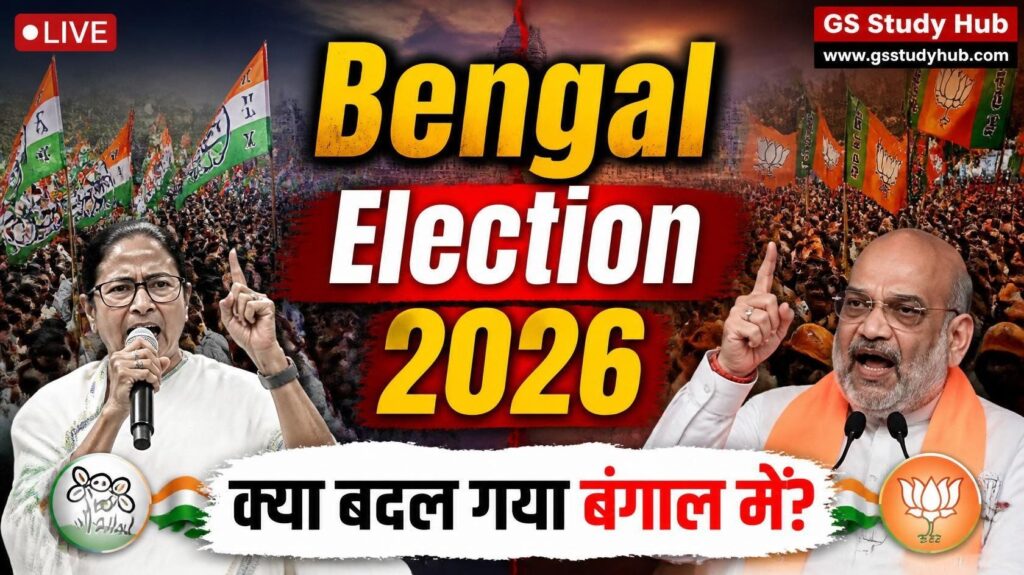
Impact of Election Results on Industry, Investment, and Employment
The impact of the Bengal Election 2026 was not limited to politics alone; it also significantly influenced the state’s economy, investment climate, and employment opportunities. West Bengal has long been considered an economically important state due to its industrial potential, port connectivity, and large consumer market. After the election results, one of the biggest questions is how the Bengal economy will move forward and whether there will be meaningful improvement in Employment in West Bengal.
Confidence of Industrialists and Investors
Following the election results, industrialists and investors closely observed the state’s political stability and law-and-order situation. Large investors generally prioritize administrative stability, security, and policy clarity before committing investments to any region.
If political violence and administrative uncertainty continue, investor confidence may weaken, directly affecting the Bengal economy. On the other hand, if the government succeeds in maintaining stability and implementing industry-friendly policies, West Bengal could attract fresh domestic and international investments.
IT and Manufacturing Sector
The IT and manufacturing sectors are considered key drivers of economic growth and employment in West Bengal. Kolkata and nearby urban centers have witnessed gradual expansion in the IT industry, while efforts are also being made to strengthen manufacturing activities across the state.
However, compared to several other Indian states, West Bengal still faces challenges in attracting large-scale industrial investments. Experts believe that improved infrastructure, policy reforms, and political stability could accelerate industrial growth and strengthen the Bengal economy in the coming years.
Challenge of Unemployment
Employment in West Bengal remained one of the most important issues during the election campaign. Rising unemployment among youth, limited private-sector opportunities, and a shortage of government jobs continue to create public concern.
In many rural regions, the lack of employment opportunities forces large numbers of young people to migrate to other states in search of work. After the election, public expectations have increased for the government to focus more seriously on job creation and industrial development.
Condition of the Startup Ecosystem
As India’s startup ecosystem continues to grow rapidly, West Bengal is also attempting to encourage entrepreneurship and innovation. Cities like Kolkata are witnessing the gradual emergence of startups related to technology, fintech, and digital services.
However, lack of investment, funding limitations, and weaker corporate networks remain major challenges for the state’s startup ecosystem. If the government improves startup policies, digital infrastructure, and support for young entrepreneurs, this sector could become an important source of employment in the future.
Economic Impact of Centre–State Relations
Relations between the central and state governments also have a direct impact on the Bengal economy. Political conflicts and policy disagreements can sometimes affect development projects, financial support, and industrial cooperation.
Experts argue that stronger coordination between the Centre and the state government on infrastructure, investment, and economic development could significantly improve Employment in West Bengal and accelerate economic growth.
Bengal Economy and Future Prospects
After the Bengal Election 2026, the biggest challenge before the state is balancing political stability with economic growth. Without effective policies focused on investment, industry, employment generation, and startup development, it will be difficult for West Bengal to achieve rapid economic progress.
If the government succeeds in creating an industry-friendly environment, strengthening law and order, and implementing employment-oriented policies, the Bengal economy and Employment in West Bengal could witness positive transformation in the coming years.

Top Blogging & Affiliate Marketing Guide for Beginners
Looking to start a successful blogging journey and earn passive income online? This beginner-friendly guide covers Affiliate Marketing, SEO strategies, content writing, blog monetization, and online income methods in a simple way.
→ Best AI Tools for Bloggers in 2026
→ Complete Keyword Research Guide for Beginners
→ High CPC Blogging Niches for Maximum Earnings
→ How to Create High CTR Thumbnails with Canva Pro
Will Bengal Election 2026 Impact the 2029 Lok Sabha Elections?
The Bengal Election 2026 is not being viewed merely as a state election; it is also considered a major political indicator for the 2029 Lok Sabha Elections. West Bengal has emerged as one of India’s most strategically important political battlegrounds, where regional politics, identity-based voting, and national party strategies directly collide. This is why the outcome of the election is expected to significantly influence national politics and future electoral strategies.
BJP’s National Strategy
The Bharatiya Janata Party (BJP) has been attempting to strengthen its political presence in eastern India for several years. After consolidating its position in northern India, the party has increasingly focused on states such as West Bengal, Odisha, and Bihar.
The Bengal Election 2026 made it clear for the BJP that achieving major success in West Bengal would not be easy without expanding its grassroots organization, strengthening local leadership, and understanding regional political issues.
Despite these challenges, Bengal remains strategically important for the BJP because the state’s Lok Sabha seats could significantly influence the national balance of power in the 2029 elections.
Position of the INDIA Alliance
The Bengal Election 2026 was equally important for the opposition coalition known as the INDIA Alliance. The election was seen as a test of whether regional parties could collectively present a strong political challenge to the BJP at the national level.
However, the weak performance of the Congress and the Left Front also exposed the limitations of the opposition alliance. Many political analysts believe that if the opposition wants to present a stronger challenge in 2029, it will need better coordination with regional parties.
Importance of Politics in Eastern India
Politics in eastern India may become the center of national political competition in the coming years. States such as West Bengal, Bihar, Odisha, and Assam are witnessing increasingly intense political rivalry.
In these states, issues related to caste, religion, regional identity, and economic development strongly influence electoral outcomes. The Bengal Election 2026 clearly demonstrated that eastern India is becoming one of the most important regions in national electoral strategy.
National Importance of Bengal’s Lok Sabha Seats
West Bengal holds a large number of Lok Sabha seats, making the state politically significant at the national level.
A strong electoral performance in Bengal can directly influence a party’s chances of forming the central government. This is why both the TMC and the BJP consider West Bengal a strategically crucial state ahead of the 2029 Lok Sabha Elections.
UPSC Perspective: Federalism and Regional Politics
From the perspective of UPSC GS Paper 2 and Essay preparation, the Bengal Election 2026 offers valuable insight into several important political themes.
Federalism
Relations between the central and state governments, administrative authority, and political conflicts highlight the complexities of Indian federalism.
Regional Parties
The strength of regional parties such as the TMC demonstrates that regional identity and local political issues continue to play a powerful role in shaping national politics in India.
Coalition Politics
The Bengal Election 2026 highlighted both the strengths and limitations of coalition politics in India. Coalition-based political strategies may become even more important in the 2029 elections.
Conclusion
The impact of the Bengal Election 2026 is unlikely to remain limited to West Bengal alone. The election could significantly influence national politics, opposition strategies, BJP’s expansion plans, and the political equations leading up to the 2029 Lok Sabha Elections.
For this reason, political analysts view this election as an important indicator of India’s changing political direction and future democratic landscape.
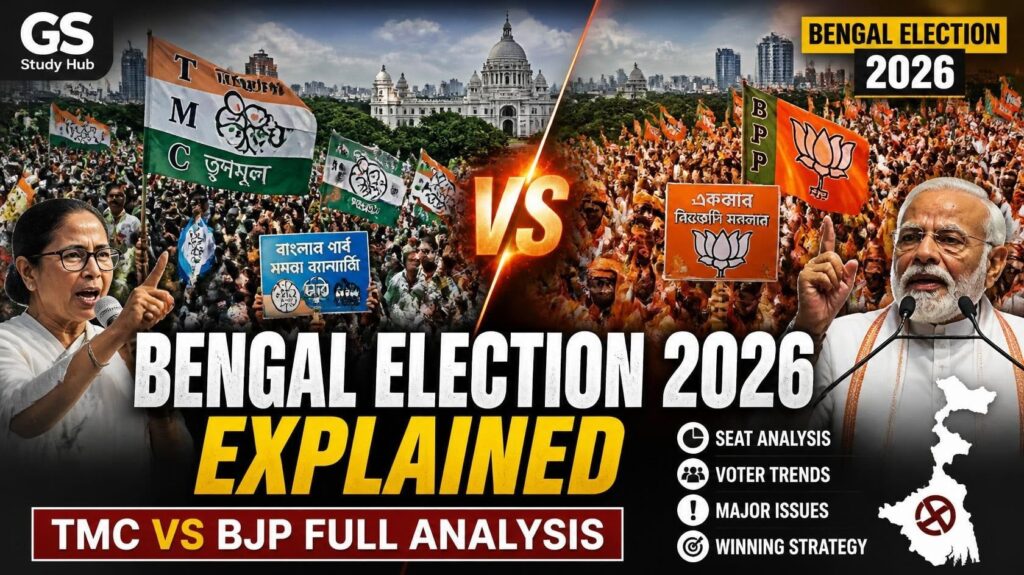
Why Is This Election Important for UPSC Aspirants?
The Bengal Election 2026 is not just a state election; it is also an important example for understanding Indian politics, democracy, and the federal structure of the country. For UPSC aspirants, this election is highly relevant because many of its themes are directly connected to GS Paper 2, Essay Paper, Current Affairs, and Political Science topics.
The election provides practical insight into electoral politics, the role of regional parties, identity-based politics, Centre–State relations, and the functioning of democratic institutions in India.
Importance for GS Paper 2
UPSC GS Paper 2 focuses on governance, the Constitution, political systems, and democratic institutions. The Bengal Election 2026 is closely linked to all these areas.
Electoral Politics
The election serves as an important case study for understanding electoral politics in India. It highlights issues such as vote bank politics, election strategies, political polarization, welfare politics, and media influence.
Aspirants can use this example to explain how both regional and national issues influence voter behavior and electoral outcomes.
Federalism
The Bengal Election 2026 also brought Centre–State relations into focus. Administrative authority, the role of central agencies, and political conflicts between the state and the Centre reflect the complexities of Indian federalism.
Since federalism is a frequently discussed topic in UPSC examinations, this election provides a practical understanding of how federal structures function in real political situations.
Democracy
Issues such as political violence, electoral competition, administrative neutrality, and voter participation highlight the real challenges faced by Indian democracy.
The election demonstrates why free and fair elections, strong democratic institutions, and public trust are essential for a healthy democratic system.
Useful for Essay Topics
The UPSC Essay Paper requires analytical writing on social and political issues. The Bengal Election 2026 provides strong examples for several important essay themes.
Regional Politics in India
The election clearly demonstrates that regional politics continues to play a powerful role in India. Regional parties like the TMC have successfully maintained support through local identity, culture, and regional interests.
This topic is highly useful for understanding political diversity and the multi-party democratic system in India.
Role of Identity Politics
Issues related to religion, language, culture, and regional identity played a major role in the Bengal Election 2026. The election can therefore be used as a strong case study for understanding the impact of identity politics.
Aspirants can use this example to explain how identity-based politics influences democracy, social harmony, voter behavior, and electoral outcomes.
Conclusion
For UPSC aspirants, the Bengal Election 2026 is not merely a current affairs topic; it is an important opportunity to understand Indian politics and democratic institutions in depth.
The issues connected with this election can be effectively used in GS Paper 2 answers, essays, interviews, and political analysis. Therefore, students preparing for UPSC should closely study the political, social, and constitutional dimensions of this election.
What Could Be the Future of Politics in Bengal?
After the Bengal Election 2026, one of the biggest questions emerging in Indian politics is how the political landscape of West Bengal will evolve in the coming years. The state’s politics is no longer limited to regional importance alone; its influence is increasingly visible in national politics and may significantly impact the 2029 Lok Sabha Elections.
The growing political rivalry between the TMC and the BJP, identity-based politics, changing voter behavior among youth, and the possibility of new political alliances could deeply shape the future of Bengal’s political environment.
Will TMC Continue Its Dominance?
For several years, the Trinamool Congress (TMC) has remained the most influential political force in West Bengal. Mamata Banerjee’s popularity, the party’s strong organizational network, and its deep roots in rural areas continue to provide a significant political advantage.
Support from women voters, minority communities, and rural populations may help the TMC maintain its dominance in the future as well. If the party succeeds in addressing issues such as law and order, corruption, and employment, its political position could remain strong for many more years.
However, prolonged rule may also create anti-incumbency challenges, which could become a major obstacle for the party in the future.
Can the BJP Make a Strong Comeback?
Over the past few years, the BJP has rapidly expanded its political presence in West Bengal. Although the party has not yet succeeded in securing a full majority, it has firmly established itself as the principal opposition force in the state.
If the BJP strengthens its local leadership, focuses more on regional issues, and expands its influence in rural areas, it could emerge as a serious challenge to the TMC in future elections.
Political observers believe that ahead of the 2029 Lok Sabha Elections, the BJP may adopt an even more aggressive organizational and political strategy in Bengal.
Could New Regional Fronts Emerge?
The possibility of new regional alliances or political fronts emerging in West Bengal cannot be completely ruled out. The weakening position of the Congress and the Left Front may create space for new political equations in the future.
If opposition parties manage to develop a coordinated strategy, Bengal could witness a triangular political contest in upcoming elections. However, at present, the direct “TMC vs BJP” rivalry remains the most dominant political battle in the state.
Growing Role of Youth Politics
Young voters may play the most important role in shaping the future of Bengal politics. Issues such as unemployment, education, digital opportunities, startup culture, and economic development are increasingly influencing the political mindset of the youth.
The younger generation is paying greater attention to development, transparency, and job opportunities rather than traditional ideological politics. At the same time, the growing influence of social media and digital campaigning could significantly transform future election strategies.
Future Direction of Bengal Politics
In the coming years, West Bengal politics may become even more competitive and strategically complex. Regional identity, religious polarization, economic development, and youth aspirations are likely to remain central political issues.
If the TMC maintains its organizational strength and voter base, it may continue to dominate state politics. At the same time, the BJP’s growing presence keeps alive the possibility of a future political shift in the state.
For this reason, the Bengal Election 2026 is being viewed not only as a present political outcome but also as a major indicator of the future direction of politics in West Bengal.

Best Online Business & Affiliate Marketing Guide
Want to build an online income source through Blogging and Affiliate Marketing? This practical guide helps beginners understand SEO, content strategy, traffic generation, monetization methods, and passive income systems step by step.
→ Affiliate Marketing for Beginners: Complete Guide
→ How to Increase Blog Traffic Organically
→ Best SEO Tools Every Blogger Should Use
→ Top Passive Income Ideas Online in 2026
Conclusion
The Bengal Election 2026 was not merely a state election; it emerged as an important indicator of India’s changing political direction, the strength of regional politics, and the evolving nature of democratic competition. The election clearly demonstrated that West Bengal is no longer just a regional political battleground, but also a key center of national political strategy.
The growing rivalry between the TMC and the BJP, the influence of the Muslim vote bank, rural political dynamics, political violence, employment concerns, and economic development turned this election into a subject of nationwide discussion. At the same time, the election highlighted how identity politics, regional parties, and coalition-based strategies may continue to shape Indian democracy in the coming years.
The impact of the Bengal Election 2026 is unlikely to remain limited to West Bengal alone. Its influence may extend to national politics, opposition strategies, and the political equations leading up to the 2029 Lok Sabha Elections.
For this reason, political analysts consider the Bengal Election 2026 to be a major political turning point that reflects the future direction of Indian politics and democratic governance.
Must Read: Expert Political Analysis on Bengal Elections
For a deeper understanding of West Bengal politics, BJP’s electoral strategy, Mamata Banerjee’s leadership, and the future political landscape of Bengal, read this detailed analysis published by Frontline Magazine.
Read this comprehensive political report covering Bengal’s electoral dynamics, BJP vs TMC competition, voter behavior, regional issues, and future political possibilities in West Bengal.
FAQs: Bengal Election 2026
Q1. Which party won the highest number of seats in the Bengal Election 2026?
The Trinamool Congress (TMC) won the highest number of seats in the Bengal Election 2026, helping the party maintain its strong political position in West Bengal.
Q2. Has the BJP become stronger in West Bengal?
Yes, the BJP has significantly expanded its political presence and vote share in West Bengal. Although the party did not form the government, it has firmly established itself as the principal opposition force in the state.
Q3. How important was the Muslim vote bank in the election?
The Muslim vote bank played a highly influential role in the Bengal Election 2026. Districts such as Murshidabad, Malda, and North 24 Parganas witnessed strong minority voter influence on electoral outcomes.
Q4. What impact could this election have on the 2029 Lok Sabha Elections?
Political analysts believe that the Bengal Election 2026 could strongly influence political strategies and alliances ahead of the 2029 Lok Sabha Elections, making West Bengal even more important in national politics.
Q5. Why does political violence occur in West Bengal?
Political violence in West Bengal is often linked to intense political rivalry, cadre-based party structures, local power struggles, and highly competitive electoral politics.
Q6. Can the TMC continue its political dominance in the future?
If the TMC continues to maintain strong support among rural voters, women, and minority communities through welfare schemes and grassroots organization, the party may remain politically dominant in the coming years.
Q7. Why is the Bengal Election 2026 important for UPSC aspirants?
The election is considered an important case study for topics such as Electoral Politics, Federalism, Democracy, Regional Parties, and Identity Politics, all of which are highly relevant for UPSC preparation.
Q8. Has the Bengal Election 2026 influenced national politics?
Yes, the election has significantly influenced national political discussions, opposition strategies, BJP’s expansion plans in eastern India, and the growing importance of regional parties in Indian politics.