
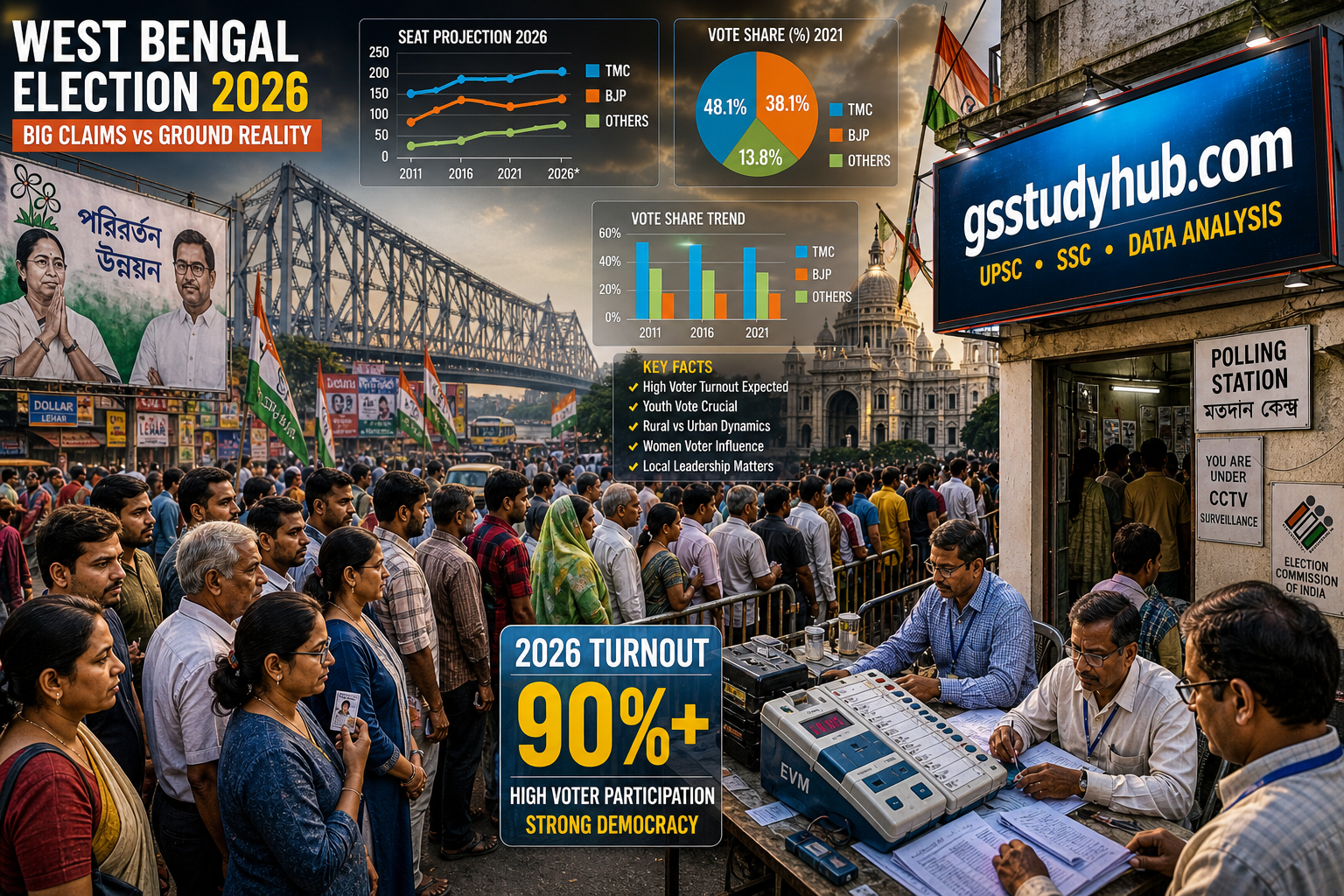
West Bengal Election 2026: 7 Key Facts, Data & Analysis for UPSC/SSC Aspirants
Can the West Bengal Election 2026 change the direction of Indian politics? π€ After a highly competitive previous election, the battle between TMC vs BJP is expected to intensify once again. But the real question is β do electoral data, vote share trends, and ground realities indicate a major political shift? For UPSC, SSC and other competitive exam aspirants, this topic is extremely important as it covers political dynamics, governance, social issues, and electoral trends in one place. In this article, we will break down 7 key facts and data points in a simple and clear way to help you strengthen your concepts and gain an exam advantage.
π₯ Best Study Tool for UPSC/SSC Aspirants
Improve your preparation with this highly recommended study resource for UPSC and SSC exams. Perfect for understanding concepts, current affairs, and exam strategy.
For a deeper understanding of election reforms in India, read our detailed guide on One Nation One Election in India, covering key concepts, advantages, and challenges.
West Bengal Election 2026: Ground Reality Analysis
During elections, headlines often use phrases like βbig winβ or βgame overβ, but real politics is far more complex. In West Bengal, the contest between TMC and BJP remains highly competitive, where vote share, social factors, and local leadership play a decisive role. From a UPSC/SSC perspective, students should focus on fact-based and balanced analysis rather than emotional or one-sided narratives.
- Importance of Electoral Data: Claims of a βbig victoryβ must be analyzed through vote share and seat distribution.
- Example: In the 2021 elections, TMC secured a clear majority, but BJP significantly increased its vote share β indicating strong competition rather than a one-sided result.
- UPSC/SSC Focus:
- GS Paper II β State politics and federal structure
- Essay β Electoral competition in democracy
- Prelims β Election Commission, political parties, voting data
- Key Learning: In exams, balanced and data-driven answers score higher than biased statements.
π Must-Have Study Resource for UPSC / SSC Preparation
Boost your exam preparation with this high-quality study material designed for UPSC and SSC aspirants. It helps in building strong concepts, current affairs understanding, and answer writing skills.
- βοΈ Exam-focused content
- βοΈ Easy to understand concepts
- βοΈ Useful for GS + Current Affairs
*Affiliate Disclosure: We may earn a small commission at no extra cost to you.*
Artificial Intelligence is rapidly transforming politics in 2026 by enabling data-driven campaigns, voter targeting, and smarter governance. However, it also creates risks like deepfakes, misinformation, and bias that can influence public opinion and elections :contentReference[oaicite:0]{index=0}. For UPSC/SSC aspirants, understanding both the opportunities and challenges of AI in democracy is essential. π Read Full Analysis: AI in Politics 2026 Impact
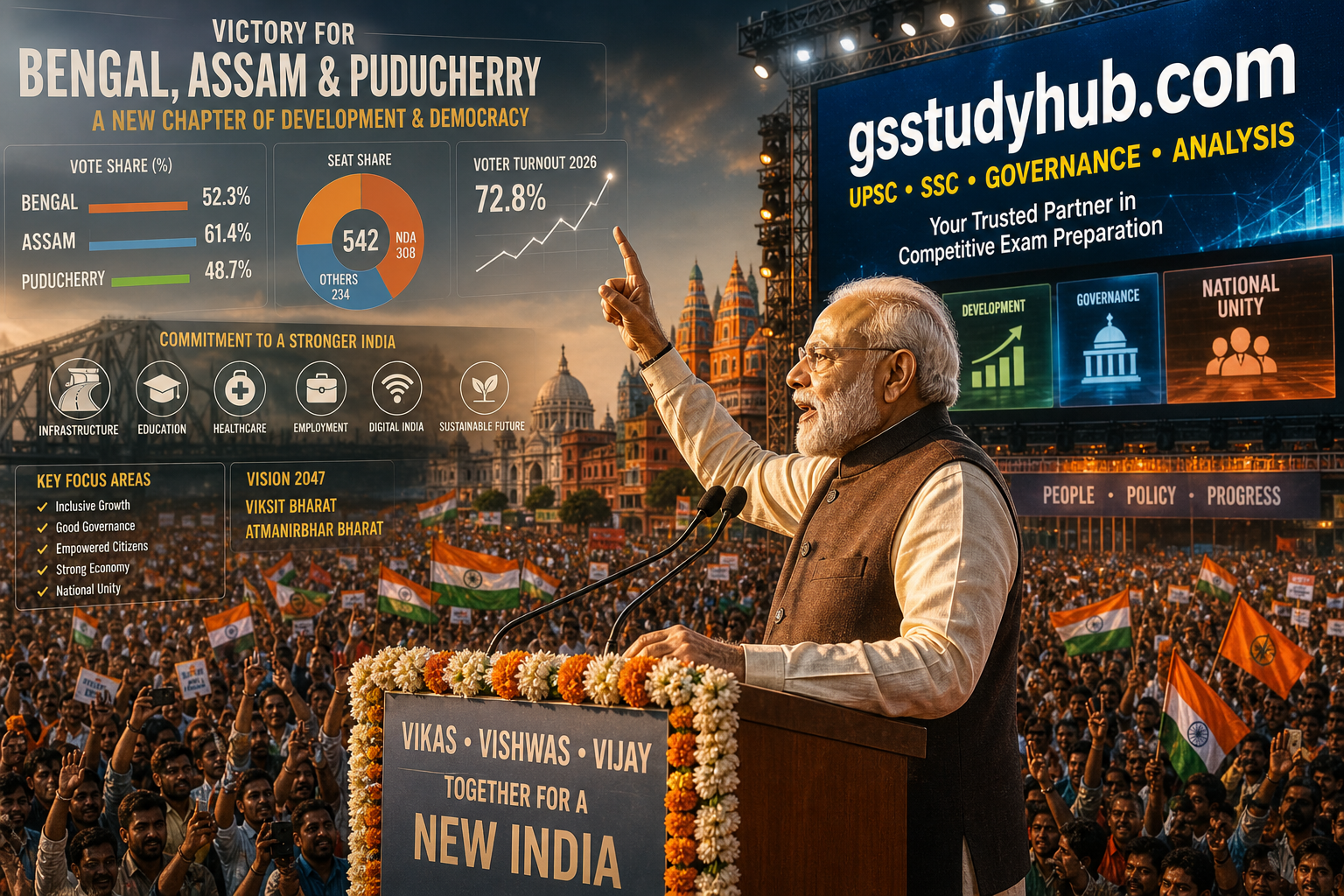
Narendra Modi's Victory Speech After WIN in Bengal, Assam, Pondicherry
A victory speech after elections is not just a political message, but also reflects the policy direction, priorities, and leadership vision of the government. When Narendra Modi delivers a post-election speech, it usually emphasizes development, governance, national unity, and public participation. For UPSC/SSC aspirants, such speeches are important because they provide insights into government policies, administrative approach, and political thinking.
- Policy Focus: The speech often highlights development, infrastructure growth, and welfare schemes.
- Example: After election victories, the government may stress inclusive growth through slogans like βSabka Saath, Sabka Vikasβ.
- UPSC/SSC Focus:
- GS Paper II β Governance, public policy, leadership
- Essay β Role of leadership in democracy
- Current Affairs β Election results and political analysis
- Key Learning: Such speeches help students understand policy direction and governance approach effectively.
β Top Recommended Study Material for UPSC / SSC
Enhance your preparation with this highly effective study guide specially designed for UPSC and SSC aspirants. It covers concept clarity, exam trends, and important topics to boost your performance.
- βοΈ Covers key exam topics
- βοΈ Easy & structured learning
- βοΈ Ideal for beginners & advanced students
*Affiliate Disclosure: We may earn a commission at no extra cost to you.*

The Constitution of India was adopted on 26 November 1949 by the Constituent Assembly, marking a historic step towards democratic governance and rule of law. :contentReference[oaicite:0]{index=0} It later came into force on 26 January 1950, establishing India as a sovereign republic with a comprehensive legal framework. :contentReference[oaicite:1]{index=1} For UPSC/SSC aspirants, this topic is crucial to understand constitutional development, fundamental rights, and governance structure. π Read Full Topic: Adoption of the Constitution (26 November 1949)

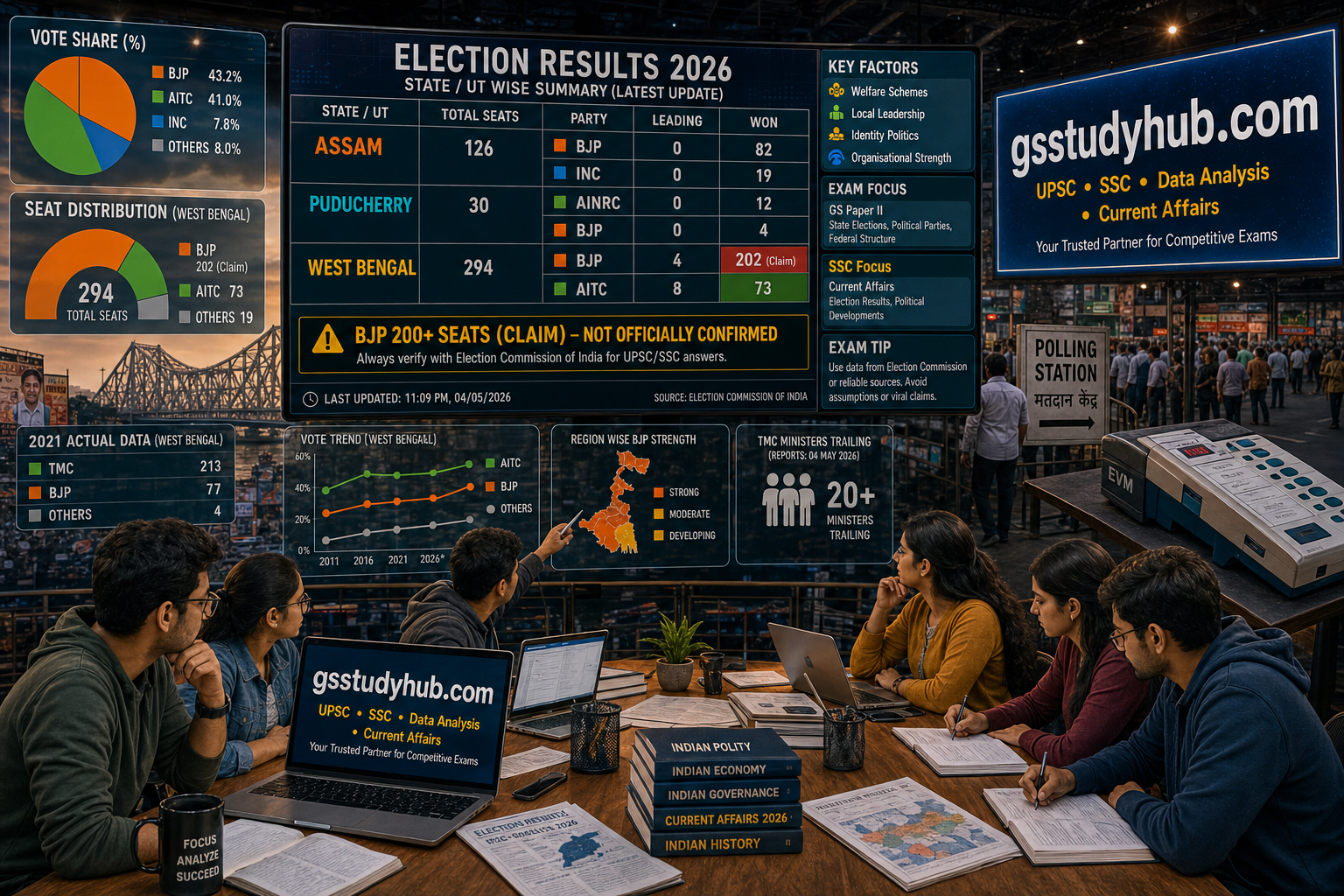
Election Result Summary (Exam-Oriented)
| State/UT | Total Seats | Party | Leading | Won |
|---|---|---|---|---|
| Assam | 126 | BJP | 0 | 82 |
| INC | 0 | 19 | ||
| Puducherry | 30 | AINRC | 0 | 12 |
| BJP | 0 | 4 | ||
| West Bengal | 294 | BJP | 4 | 202 (Claim) |
| AITC | 8 | 73 |
βBJP 200+ seats in West Bengalβ is a claim or projection, not officially confirmed. Always verify with Election Commission of India for UPSC/SSC answers.
Last Updated: 11:09 PM, 04/05/2026
π₯ Smart Study Companion for UPSC / SSC Aspirants
Take your preparation to the next level with this high-quality study resource designed for UPSC and SSC exams. It helps in concept clarity, revision, and exam-focused practice for better performance.
- βοΈ Covers important exam topics
- βοΈ Easy revision & quick learning
- βοΈ Suitable for beginners & advanced aspirants
*Affiliate Disclosure: We may earn a commission at no extra cost to you.*
The history of artificial intelligence dates back to early ideas of thinking machines and formally began in the 1950s with pioneers like Alan Turing and the Dartmouth Conference. :contentReference[oaicite:0]{index=0} Over time, AI evolved through phases like AI winters, machine learning, and modern deep learning breakthroughs, shaping todayβs smart technologies. :contentReference[oaicite:1]{index=1} For UPSC/SSC aspirants, this topic is crucial to understand the evolution, applications, and future impact of AI. π Read Full Topic: History of Artificial Intelligence

West Bengal Election 2026: Vote Share and Trends
| Topic | Details |
|---|---|
| 2021 Actual Data | TMC β 213 seats BJP β 77 seats Others β 4 seats |
| Regions Where BJP is Strong | Bengal Village , urban areas where BJP had higher vote share. |
| TMC Ministers Defeated | According to news reports dated May 4, 2026, more than 20 ministers from the Mamata Banerjee-led TMC are trailing in their respective seats in the 2026 West Bengal Assembly elections. |
| Key Factors | Voting is influenced by welfare schemes, local leadership, identity politics, and organizational strength. |
| UPSC Focus | GS Paper II β State elections, political parties, federal structure |
| SSC Focus | Current Affairs β Election results, political developments |
| Exam Tip | Always use data from Election Commission or reliable sources. Avoid assumptions or viral claims. |
π Top Choice for UPSC / SSC Preparation
Upgrade your preparation with this top-rated study resource designed for UPSC and SSC aspirants. It provides clear concepts, updated content, and exam-focused coverage to help you score better.
- βοΈ Updated syllabus & exam pattern
- βοΈ Strong concept clarity
- βοΈ Ideal for revision & practice
*Affiliate Disclosure: We may earn a commission at no extra cost to you.*
The process of making the Indian Constitution was a detailed and systematic effort carried out by the Constituent Assembly between 1946 and 1950, involving debates, committees, and multiple drafts. :contentReference[oaicite:0]{index=0} It took nearly 2 years, 11 months, and 18 days to finalize the Constitution, making it one of the most comprehensive legal documents in the world. :contentReference[oaicite:1]{index=1} For UPSC/SSC aspirants, understanding this process is essential to grasp constitutional development, governance structure, and democratic principles. π Read Full Topic: Process of Making Indian Constitution
FAQs
1. Why is the West Bengal Election 2026 important for UPSC/SSC?
This election helps in understanding Indian politics, federal structure, and electoral systems. It is highly relevant for UPSC GS Paper II and SSC Current Affairs.
2. Is the claim that BJP will win 200 seats accurate?
This claim is not officially verified. Always use data from the Election Commission or trusted sources in exams.
3. Who are the main competitors in West Bengal elections?
The primary contest is between TMC and BJP, while other parties influence vote share.
4. How are election-related questions asked in exams?
In UPSC, it appears in GS Paper II and Essay. In SSC, it is asked under Current Affairs and General Knowledge.
5. What should be kept in mind while writing answers?
Always write balanced, fact-based, and data-supported answers. Avoid exaggerated or biased statements.
π Best Selling Study Resource for UPSC / SSC Aspirants
Master your preparation with this high-quality and exam-focused study material designed for UPSC and SSC aspirants. It helps in building strong concepts, quick revision, and better answer writing skills.
- βοΈ Covers latest syllabus & trends
- βοΈ Easy to understand explanations
- βοΈ Perfect for revision & practice
*Affiliate Disclosure: This post contains affiliate links. We may earn a commission at no extra cost to you.*
The process of making the Indian Constitution began in 1946 with the formation of the Constituent Assembly, which debated and drafted the framework of governance over nearly three years. :contentReference[oaicite:0]{index=0} Key stages included the Objectives Resolution, committee reports, drafting by Dr. B.R. Ambedkar, and detailed discussions before final adoption in 1949. :contentReference[oaicite:1]{index=1} For UPSC/SSC aspirants, this topic is crucial to understand constitutional development, democracy, and governance structure. π Read Full Topic: Process of Making Indian Constitution
Conclusion
The West Bengal Election 2026 reflects the complexity and competitiveness of Indian democracy. Election outcomes are not decided by political claims alone but depend on vote share, leadership, policies, and socio-political factors. From an exam perspective, students should focus on fact-based and balanced analysis rather than biased narratives.
- Main contest is between TMC and BJP
- Always verify claims like β200 seatsβ with official data
- Focus on vote share and regional dynamics
- Important for UPSC GS Paper II and SSC Current Affairs
- Write balanced, data-driven answers
References
- Election Commission of India (eci.gov.in)
- PRS Legislative Research
- The Hindu Newspaper
- Indian Express
- PIB (Press Information Bureau)
Stay updated with the latest political analysis, current affairs, and exam-focused content for UPSC & SSC preparation. Our platform provides data-driven insights, simplified concepts, and high-quality study resources to boost your success.
Explore more topics on Indian politics, governance, and competitive exams to strengthen your knowledge and stay ahead.
π Visit gsstudyhub.com for MoreΒ© 2026 GS Study Hub | Learn Smart, Score Better π
