
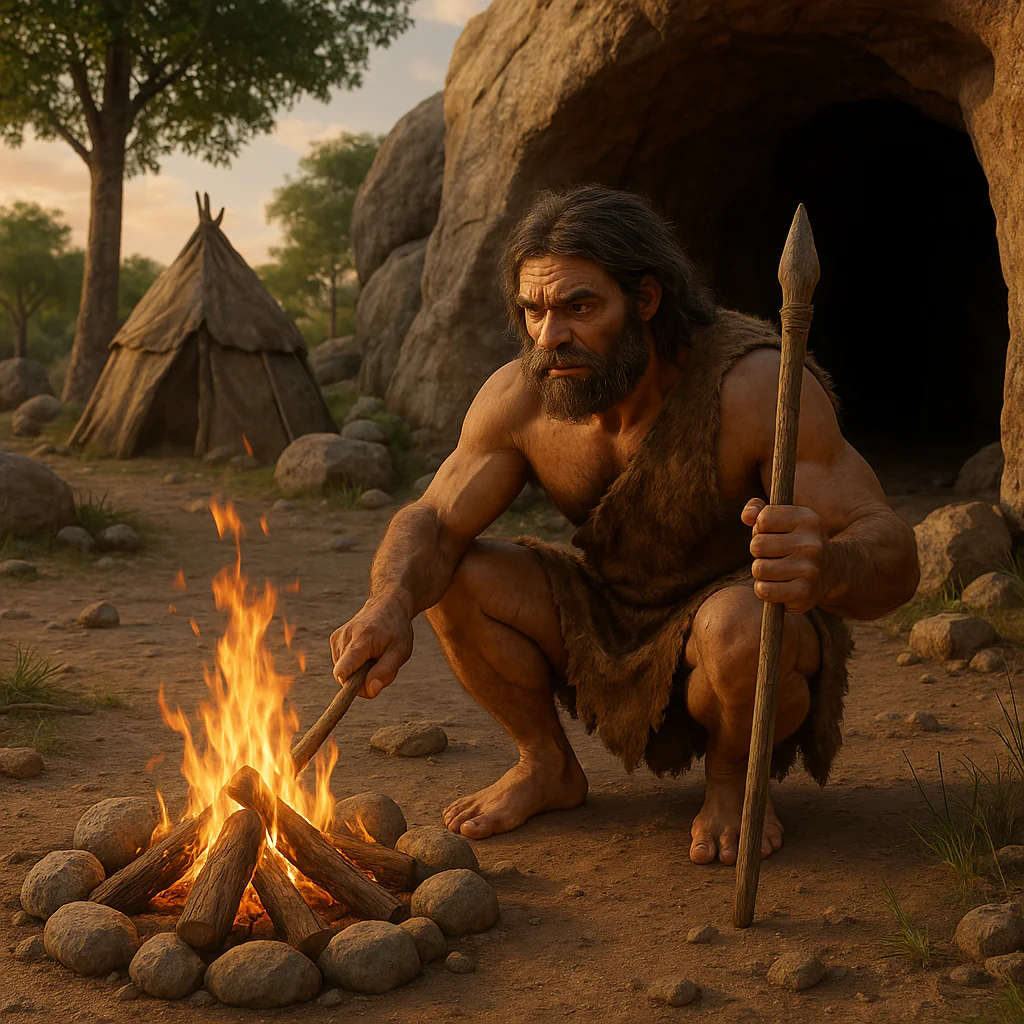
The Prehistoric Period: Foundations of Human Civilization
The prehistoric period represents the earliest and most transformative phase of human history. It was during this long journey that humans gradually learned how to survive, adapt, and innovate. From simple stone tools to early agriculture, this era laid the foundation of civilization as we know it today.
Prehistory is classified based on technological progress, lifestyle changes, and the development of human skills. Broadly, it is divided into four major stages.
Classification of the Prehistoric Period

Featured Amazon Product
A quality product available on Amazon — click below to view the full product details, latest price, and customer reviews on the official Amazon listing.
Check Price on Amazon1. Paleolithic Age (Old Stone Age)
Period: Around 500,000 BCE to 10,000 BCE
Key Features
- Human life was based on hunting and food gathering.
- Use of stone tools such as axes, scrapers, and chisels.
- Humans lived in caves and forests.
- Discovery and use of fire.
- Rock paintings, especially in the Bhimbetka caves.
Important Sites: Narmada Valley, Bhimbetka (Madhya Pradesh), Belan Valley (Uttar Pradesh)
2. Mesolithic Age
Period: Around 10,000 BCE to 8,000 BCE
Key Features
- Use of small and sharp stone tools called microliths.
- Beginning of animal domestication and early agriculture.
- Gradual movement towards permanent settlements.
- Improved fishing and hunting techniques.
Important Sites: Adamgarh (Madhya Pradesh), Baigha (Rajasthan)
3. Neolithic Age
Period: Around 8,000 BCE to 2,000 BCE
Key Features
- Development of agriculture and permanent villages.
- Domestication of animals.
- Use and manufacture of pottery.
- Cultivation of crops like cotton.
- Emergence of complex tribal societies.
Important Sites: Mehrgarh (Balochistan), Burzahom (Jammu & Kashmir), Chirand (Bihar)
4. Chalcolithic Age
Period: Around 3000 BCE to 1500 BCE
Key Features
- Use of both copper and stone tools.
- Early signs of the Indus Valley Civilization.
- Advanced agriculture, animal husbandry, and trade.
Important Sites: Ahar (Rajasthan), Jorwe (Maharashtra)
Summary of the Prehistoric Period
During the prehistoric period, humans evolved from stone tool users to early metal users. They transitioned from a nomadic hunting life to agriculture and permanent settlements. This long process shaped the foundations of social organization, culture, and technology.
The Paleolithic Age: The First Chapter of Human Life
The Paleolithic Age is the earliest stage of human history. Humans were entirely dependent on nature for survival. This age is known as the Old Stone Age due to the use of rough and unpolished stone tools.
Key Characteristics of the Paleolithic Age
1. Lifestyle
- Humans lived as hunters and food gatherers.
- They lived in groups and took shelter in caves or under rocks.
2. Tools and Techniques
- Tools were made from thick and unpolished stones.
- Common tools included axes, scrapers, spears, and knives.
- Stones were sharpened by striking them together.
3. Discovery and Use of Fire
- Fire was one of the greatest discoveries of this age.
- It was used for cooking, warmth, and protection from animals.
4. Food Habits
- Diet included fruits, roots, tubers, and hunted animals.
- Fishing also began during this period.
5. Social Structure
- Society was nomadic in nature.
- People lived in small groups with a sense of equality.
- Resources were shared collectively.
6. Art and Cultural Activities
Cave paintings were an important form of expression. Scenes of hunting, animals, and daily life were drawn on cave walls. The famous paintings of Bhimbetka in Madhya Pradesh belong to this age.
7. Environment and Habitat
- People lived near rivers, forests, and grasslands.
- The climate was cold, and the later phase witnessed an Ice Age.
Important Paleolithic Sites in India
- Bhimbetka: Cave paintings and early human evidence.
- Narmada Valley: Fossil remains of prehistoric humans.
- Indus and Son River regions: Stone tools.
- Belan Valley: Tools and habitation remains.
Importance of the Paleolithic Age
The Paleolithic Age represents the foundation of human development. Humans learned tool-making, the use of fire, social cooperation, and artistic expression. These achievements guided humanity toward later stages of civilization.
Lifestyle in the Paleolithic Age: A Story of Survival and Learning
In the Paleolithic era, human life was deeply connected to nature. Survival depended on observation, cooperation, and adaptation.
Key Aspects of Paleolithic Lifestyle
1. Food and Hunting
- Humans hunted animals and gathered plant-based food.
- Stone tools and spears were used for hunting.
- Fishing gradually became common.
2. Shelter and Living Spaces
- People lived in caves, under rocks, or in open spaces.
- Caves offered protection from animals and harsh weather.
3. Society and Organization
- Nomadic lifestyle with frequent movement.
- Small family groups with shared responsibilities.
- Equality and cooperation were essential for survival.
4. Tools and Equipment
- Stone tools were essential for daily life.
- Used for hunting, cutting food, and preparing skins.
5. Use of Fire
- Fire was used for cooking and warmth.
- It provided safety from wild animals.
6. Art and Creativity
Cave art reflected early human imagination. Natural colors from minerals, clay, and charcoal were used. Art likely played a role in rituals and social bonding.
7. Environment and Movement
- Life depended entirely on natural surroundings.
- No means of transport; humans traveled on foot.
Why the Paleolithic Lifestyle Matters
This lifestyle shaped humanity’s physical strength, mental growth, and social behavior. The use of tools and fire laid the groundwork for all future civilizations.
Frequently Asked Questions (FAQs)
Q1. What is the Prehistoric Period?
The Prehistoric Period refers to the time before written records, when humans relied on tools, nature, and experience for survival.
Q2. Why is the Paleolithic Age called the Old Stone Age?
It is called the Old Stone Age because humans used rough, unpolished stone tools during this period.
Q3. What was the biggest discovery of the Paleolithic Age?
The discovery of fire was the most important achievement, transforming human lifestyle and safety.
Q4. Where are Paleolithic cave paintings found in India?
The most famous Paleolithic cave paintings are found at Bhimbetka in Madhya Pradesh.
Q5. How did prehistoric humans survive without agriculture?
They survived through hunting animals, gathering plant-based food, fishing, and living in groups.
Related Articles
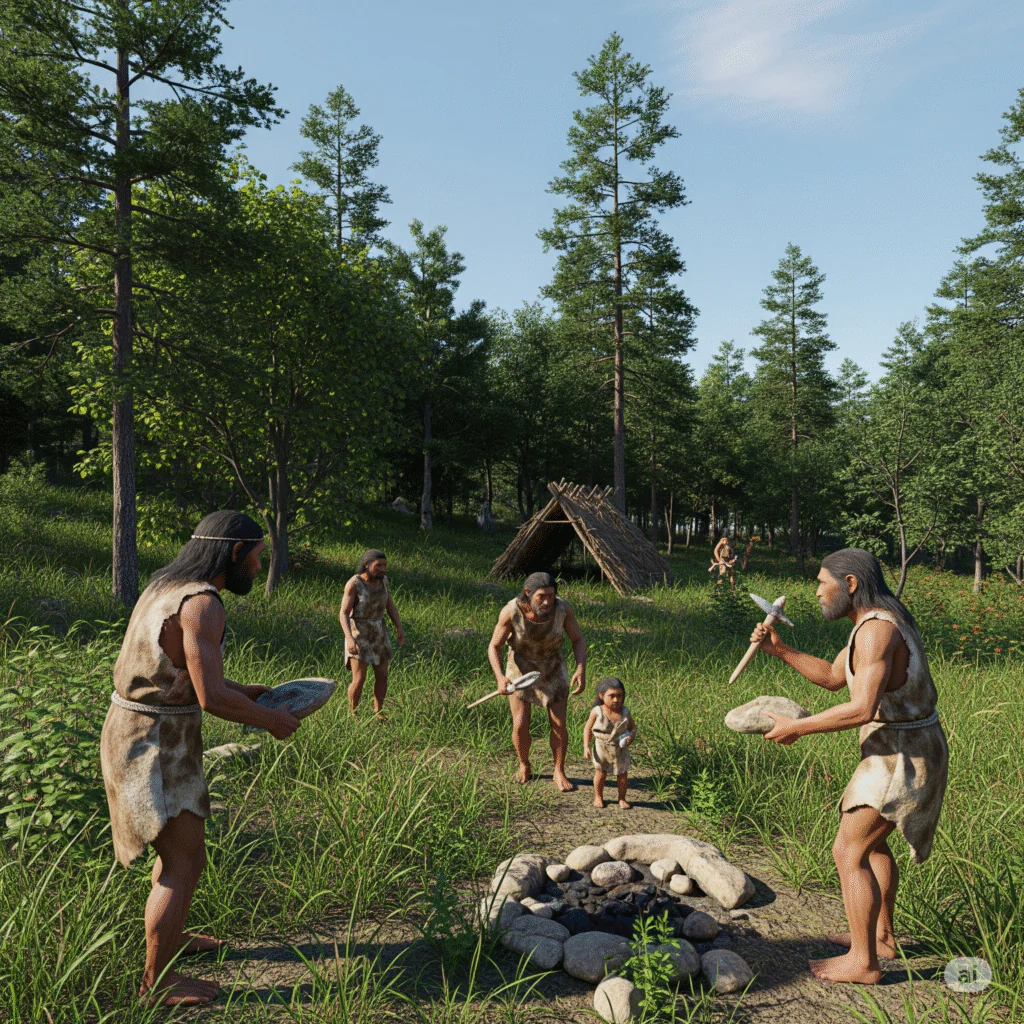
Life in the Paleolithic Age: Tools, Fire, Food, and Social Structure
The Paleolithic Age marks the earliest phase of human history, when survival depended entirely on nature. During this period, humans developed tools, learned to control fire, adapted their food habits, and formed simple yet effective social structures. These achievements became the foundation of human civilization.
Tools and Technology in the Paleolithic Age
In the Paleolithic era, humans used stones to perform essential daily tasks. This was the stage when survival itself began through tools and basic technology.
Types and Uses of Paleolithic Tools
1. Coarse and Unpolished Stone Tools
- Most tools were made by breaking thick stones.
- Stones were sharpened by striking them against each other.
- Used for hunting, cutting meat, breaking wood, and scraping animal skins.
2. Main Types of Tools
- Axe: The most common tool, used for hunting, chopping wood, and digging.
- Scraper: Used to remove flesh from animal skins and prepare leather.
- Spear: Sharp stone points attached to wooden sticks for hunting.
- Blade: Used for cutting meat and peeling roots.
- Hammer Stones: Used to break stones and make tools.
- Pointed Tools: Used for hunting and protection.
Tool-Making Technology
1. Flaking Technique
Sharp edges were created by striking stones. Smaller stones were used to remove thick surfaces and shape tools.
2. Core Tools
Tools were made from a large piece of stone. These tools were thick, strong, and durable.
3. Flake Tools
Small sharp pieces obtained from broken stones were used as tools.
4. Percussion Method
Two stones were struck together with force to shape tools.
Evolution of Tool Technology
- Over time, tools became sharper and more efficient.
- Wood and bones were also used along with stone.
- Development of spears and early arrow-like weapons improved hunting.
Importance of Tools and Technology
- Made hunting and food collection easier.
- Encouraged creativity and problem-solving skills.
- Laid the foundation for copper and iron tools in later ages.
The tools and technology of the Paleolithic Age represent humanity’s first mechanical efforts to adapt to nature and survive.
Discovery of Fire in the Paleolithic Era
The discovery of fire was one of the most revolutionary events in human history. Its use during the Paleolithic Age transformed lifestyle, survival strategies, and social life.
How Was Fire Discovered?
- Forest fires caused by lightning.
- Sparks produced by the collision of stones.
- Initially, humans learned to preserve natural fire.
- Later, fire was produced by striking stones or rubbing wood.
Uses of Fire
1. Cooking Food
- Made food softer, tastier, and easier to digest.
- Reduced the risk of infection from raw food.
2. Protection from Cold
- Provided warmth during cold and snowy conditions.
- Enabled humans to live in colder regions.

Featured Amazon Product
A quality item available on Amazon — click below to view full product details, the latest price, and customer reviews on the official Amazon listing.
Check Price on Amazon3. Security and Safety
- Fire scared away wild animals.
- Provided light during the night.
4. Development of Tools
- Fire was used to harden wooden tools.
- Helped shape weapons and equipment.
5. Center of Social Life
Groups gathered around fire, shared food, and exchanged experiences, strengthening social bonds.
Effects of the Discovery of Fire
- Improved physical strength and brain development.
- Encouraged migration and settlement in harsh climates.
- Laid the foundation for future technological and agricultural development.
The discovery of fire made humans more capable than other creatures and became a pillar of civilization.
Food in the Paleolithic Age
Food in the Paleolithic Age was entirely dependent on nature. Humans were hunters and food gatherers who gradually improved their food-searching techniques.
Major Sources of Food
1. Plant-Based Diet
- Tubers and roots such as underground plants.
- Fruits and berries from wild trees and bushes.
- Seeds and edible leaves of wild plants.
2. Meat-Based Diet
- Hunting animals such as deer, buffalo, rabbits, birds, and small animals.
- Fishing in rivers and lakes using stone and wooden tools.
3. Insects and Small Creatures
During food shortages, insects, snails, and small creatures were also consumed.
Methods of Food Collection
- Food was collected collectively in groups.
- Humans explored new areas in search of food.
- Food was consumed immediately due to lack of storage technology.
Cooking and Its Importance
After the discovery of fire, cooking became possible. Cooked food provided more energy, improved digestion, and reduced diseases caused by raw food.
Importance of Food
- Provided energy for survival and long journeys.
- Proteins and fats supported brain and physical development.
- Food sharing strengthened social cooperation.
Social Structure in the Paleolithic Age
The social structure of the Paleolithic Age was simple, cooperative, and closely linked to survival needs.
Main Features of Paleolithic Social Structure
1. Nomadic Lifestyle
- People moved continuously in search of food and water.
- No permanent settlements existed.
2. Small Group Organization
- People lived in small groups or clans.
- Each group consisted of about 20–30 members.
3. Equality-Based Society
- No class divisions or discrimination.
- Resources were shared collectively.
4. Cooperation and Dependence
- Men focused on hunting and tool-making.
- Women and children gathered food and performed supporting tasks.
5. Security and Collectiveness
- Living in groups ensured safety from animals.
- Dangerous activities like hunting were done collectively.
6. Traditions and Rituals
Cave paintings reflected social events, hunting scenes, and early beliefs, indicating collective cultural expression.
Importance of Paleolithic Social Structure
- Marked the beginning of collective human life.
- Laid the foundation for complex societies.
- Ensured survival through cooperation.
The Paleolithic social structure was simple yet effective, prioritizing equality, cooperation, and collective survival.
Frequently Asked Questions (FAQs)
Q1. Why were stone tools important in the Paleolithic Age?
Stone tools helped humans hunt animals, process food, and protect themselves, making survival possible.
Q2. How did fire change human life?
Fire enabled cooking, warmth, protection, and social bonding, accelerating human development.
Q3. What type of food did Paleolithic humans eat?
They ate wild plants, fruits, roots, meat, fish, and occasionally insects.
Q4. Was Paleolithic society equal?
Yes, Paleolithic society was based on equality, with shared resources and collective responsibilities.
Q5. How did Paleolithic life influence future civilizations?
Tool-making, fire usage, food cooperation, and social organization laid the foundation for agriculture and settled life.
Related Articles
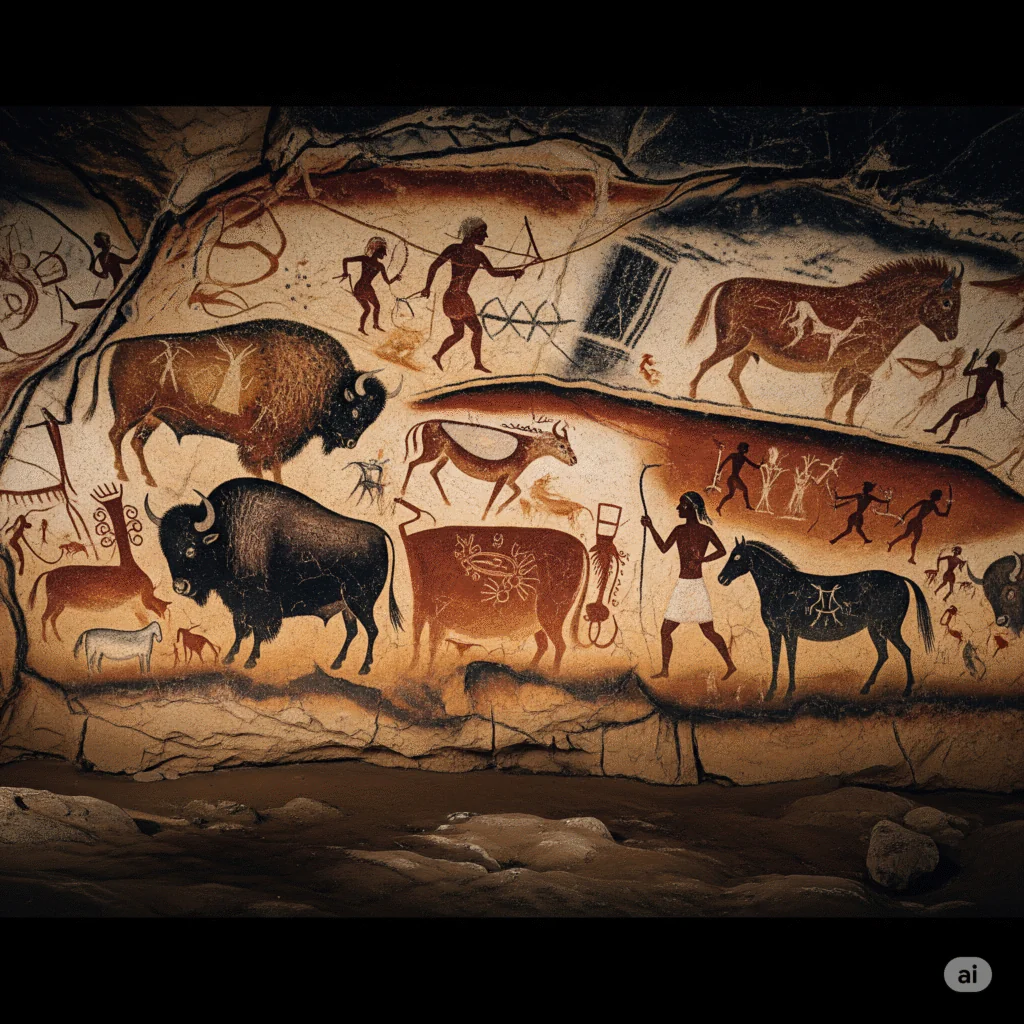
Art, Culture, Environment, and Habitat in the Paleolithic Age
The Paleolithic Age was not only a period of survival but also the beginning of human creativity, cultural expression, and environmental adaptation. Through art, shelter, and interaction with nature, early humans developed ways to understand and represent their world.
Art and Cultural Activities in the Paleolithic Age
Art and cultural activities in the Paleolithic Age were a means of expressing human creativity, emotions, and daily life. The most prominent artistic expression of this era was cave painting, which represents the earliest known form of human art.
Main Features of Cave Paintings
1. Location of the Paintings
- Paintings were made on the walls and ceilings of caves.
- These caves were places of residence or ritual activities.
- In India, the caves of Bhimbetka (Madhya Pradesh) are the finest examples.
2. Themes of the Paintings
The paintings mainly depict nature and daily life.
- Hunting scenes: Interaction between humans and animals.
- Animals: Deer, buffalo, elephant, lion, and horse.
- Dance and festivity: Group and community activities.
- Primitive humans: Engaged in hunting or daily tasks.
3. Colors and Materials
- Red and Yellow: Made from ochre clay (hematite).
- Black: Obtained from charcoal.
- White: Made using lime.
These colors were prepared using stones, wood, and animal bones, and applied to cave walls.
4. Style of Painting
- Simple and symbolic line drawings.
- Animals and humans were prominently depicted.
- Sense of movement and realism was visible.
5. Objectives and Significance
- Hunting preparation: Mental planning before hunting.
- Spiritual beliefs: Animal images possibly linked to rituals.
- Communication: Sharing experiences and group stories.
Important Cave Painting Sites
1. In India
- Bhimbetka (Madhya Pradesh): Famous for hunting, dancing, and community life scenes.
- Belan Valley (Uttar Pradesh): Cave paintings and stone tools.
2. Global Sites
- Lascaux Caves (France): Major Paleolithic art site in Europe.
- Altamira Cave (Spain): Known for detailed buffalo paintings.
Importance of Cave Paintings
- Evidence of creativity and intellectual development.
- Preservation of cultural identity and beliefs.
- Important historical sources for lifestyle and environment.
- Marked the origin of human artistic expression.
Cave paintings symbolize human creativity and cultural awareness in the Paleolithic Age. They document early life and show how humans began to immortalize their thoughts and emotions.
Environment and Habitat in the Paleolithic Age
Humans of the Paleolithic Age were completely dependent on nature for survival. Their habitat and lifestyle were shaped by environmental conditions and the availability of natural resources.
Effect of Environment on Human Life
1. Dependence on Natural Resources
- Nature provided food, water, and protection.
- Rivers, forests, and mountains were ideal for survival.
2. Climatic Conditions
- People lived mainly in temperate and subtropical regions.
- Caves and rocks offered shelter from heat and cold.

Featured Amazon Product
A high-quality item available on Amazon — click the button below to view full product details, latest price, and customer reviews on the official Amazon page.
Check Price on AmazonPlaces of Residence
1. Along Rivers
- Rivers supplied water and fish.
- Animals gathered near rivers, making hunting easier.
2. Near Forests
- Forests provided wood, fruits, tubers, and animals.
- Dense vegetation offered shelter and hiding places.
3. Caves and Rocks
- Caves were the main shelters.
- Provided protection from rain, cold, and storms.
- Cave paintings show caves were also cultural centers.
Types of Residence
1. Temporary Shelters
- Nomadic lifestyle required temporary shelters.
- Huts were made using leaves, branches, and animal skins.
2. Use of Caves
- Caves were preferred in cold regions.
- Fire and group living provided warmth and safety.
3. Open Area Habitation
- In warm climates, people lived in open spaces.
- Shelters were built from branches and animal skins.
Importance of Environment and Habitat
- Ensured food and water availability.
- Strengthened social bonds through group living.
- Protected humans from wild animals and natural hazards.
- Laid the foundation for permanent settlements.
In the Paleolithic Age, humans lived in harmony with nature. Their environmental adaptation became the basis for agriculture, settlements, and the growth of civilization.
Frequently Asked Questions (FAQs)
Q1. Why are cave paintings important?
Cave paintings provide insight into Paleolithic lifestyle, beliefs, and creativity, making them valuable historical sources.
Q2. What materials were used in Paleolithic art?
Natural materials like ochre clay, charcoal, lime, stones, wood, and animal bones were used.
Q3. Why did Paleolithic humans live in caves?
Caves offered protection from weather, wild animals, and served as cultural and social spaces.
Q4. How did the environment influence Paleolithic life?
Environment determined food sources, shelter, movement, and survival strategies.
Q5. How did Paleolithic habitats influence future civilizations?
Their habitat choices laid the foundation for permanent settlements and agriculture-based societies.
Related Articles
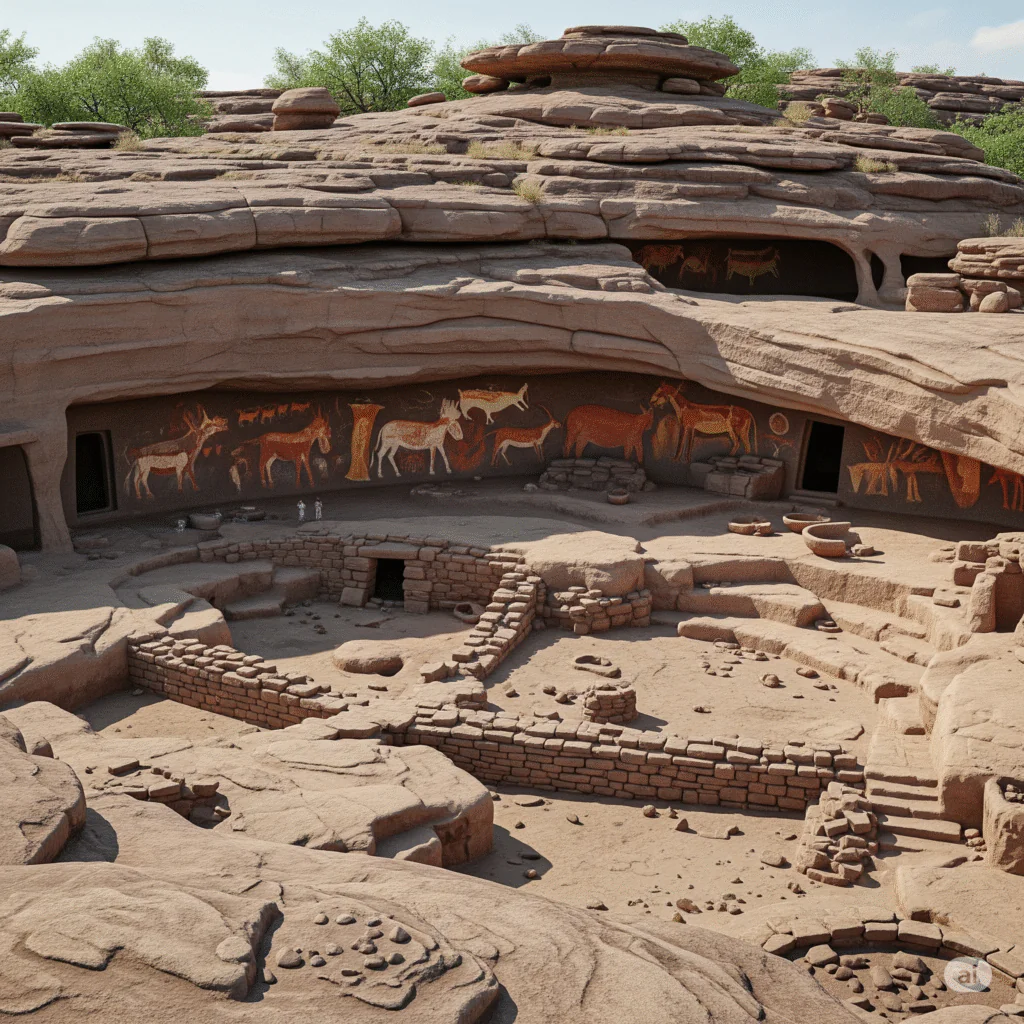
Important Paleolithic Sites in India: Evidence of Early Human Life
India is home to some of the most significant Paleolithic archaeological sites in the world. Places such as Bhimbetka, the Narmada Valley, and the Indus–Son River region provide clear evidence of early human life, tools, art, and environmental adaptation.
Bhimbetka (Madhya Pradesh): Cave Paintings and Evidence of Human Life
Bhimbetka is an important archaeological site located in the Raisen district of Madhya Pradesh. It is famous for its ancient cave paintings and early evidence of human habitation. Bhimbetka is recognized as a UNESCO World Heritage Site.
Introduction to Bhimbetka
- Situated in the foothills of the Vindhyachal ranges.
- Evidence of human life from the Paleolithic Age to the Medieval period.
- The name Bhimbetka is believed to be associated with Bhima from the Mahabharata.
Features of Cave Paintings
1. Number of Caves
- Approximately 750 caves are found at Bhimbetka.
- Paintings have been discovered in around 500 caves.
2. Themes of the Paintings
- Nature and daily life: Hunting, dancing, warfare, and group activities.
- Animals: Deer, buffalo, elephant, horse, wild boar, and lion.
- Human figures: Humans engaged in hunting, dancing, and music.
3. Colours Used
- Red and Yellow: Ochre soil.
- Black: Charcoal or coal.
- White: Lime.
Animal fats and plant juices were used to make the colours durable.
4. Style of Paintings
- Simple lines with a sense of movement.
- Symbolic as well as realistic scenes.
Archaeological Importance of Bhimbetka
- Evidence of Paleolithic, Mesolithic, and Neolithic cultures.
- Discovery of stone tools, weapons, and food remains.
- Reflection of early cultural and religious beliefs.
- Clear signs of collectivism and hunting strategies.
Environment and Habitat
Bhimbetka is located near forests and rivers, which provided food, water, and protection. This environment was ideal for the nomadic lifestyle of early humans.
Importance of Bhimbetka
- One of the oldest evidences of human civilization.
- Represents early cultural and artistic development.
- Major center for archaeological education and research.
- A significant tourist destination connecting people with ancient history.
Bhimbetka is among the oldest cultural sites in the world. Its caves offer a glimpse into the life, art, and creativity of ancient humans living in harmony with nature.
Narmada Valley (Madhya Pradesh): Remains of Prehistoric Humans
The Narmada Valley is one of the most important regions for understanding early human life in India. It is renowned for Paleolithic remains, especially fossil bones and stone tools.
Major Archaeological Discoveries
1. Remains of Primitive Humans
- In the 1970s, a cranial fragment was discovered at Hathnora near Hoshangabad.
- The remains are believed to be 500,000–200,000 years old.
- This skull is considered evidence of Homo erectus.
- The fossil is commonly known as “Narmada Man”.

Featured Amazon Product
A high-quality and well-reviewed item available on Amazon — click below to view full product details, latest price, and customer reviews on the official Amazon listing.
Check Price on Amazon2. Stone Tools
- Axes, scrapers, and spear-like tools.
- Made mainly from quartzite and other hard stones.
3. Fossil and Environmental Evidence
- Fossils of elephants, horses, deer, and other animals.
- Indicates a rich and diverse prehistoric ecosystem.
Archaeological Importance of the Narmada Valley
- Provides evidence of the earliest human life in India.
- Important link in the study of Homo erectus in Asia.
- Shows how early humans adapted to their environment.
- Indicates early development of tool-making skills.
Environment and Habitat
The Narmada River provided water, food, fishing opportunities, and a favorable environment for habitation.
Scientific Research Importance
The study of Narmada Man contributes to the global understanding of human evolution. Geological evidence shows the valley has supported life for millions of years.
The Narmada Valley is a cornerstone in the study of prehistoric human evolution in India and the world.
Indus and Son River Region: Evidence of Stone Tools
The Indus and Son River regions, extending across Pakistan and North India, are among the most important areas for Paleolithic stone tools and early human activity.
Geography and Importance
Indus River
- Flows mainly through Pakistan and parts of India.
- Crucial for early human settlement.
- Later became the center of the Indus Valley Civilization.
Son River
- A major tributary of the Ganges River.
- Son Valley contains important Paleolithic evidence.
Stone Tools: Discovery and Significance
Technology of Tools
- Tools were thick and rough.
- Used for hunting, cutting, peeling, and daily activities.
- Axes, scrapers, spears, and knives were common.
Manufacture of Tools
- Made from quartz, sandstone, and flint.
- Prepared by breaking, rubbing, and shaping stones.
- Shows technical skills and efficient use of natural resources.
Types of Stone Tools
- Scraping tools: Used for cutting and scraping.
- Pointed tools: Used for hunting.
- Flake tools: Used for shaping wooden tools.
Lifestyle and Habitat
- Hunting was the main livelihood.
- Diet included meat, tubers, fruits, and roots.
- Rivers provided water, fish, and fertile land.
Cultural and Historical Significance
- The Indus Valley later developed into the Harappan Civilization.
- The Son Valley remained a stronghold of Paleolithic and Mesolithic cultures.
The stone tools of the Indus and Son River regions show how early humans efficiently used natural resources to improve their survival and lifestyle.
Frequently Asked Questions (FAQs)
Q1. Why is Bhimbetka important in Paleolithic studies?
Bhimbetka contains extensive cave paintings and evidence of human life from the Paleolithic period onward.
Q2. Who is Narmada Man?
Narmada Man refers to the fossil remains of Homo erectus found in the Narmada Valley.
Q3. What do stone tools of the Indus and Son valleys indicate?
They indicate hunting practices, tool-making skills, and adaptation to river-based environments.
Q4. Why were river valleys important for early humans?
River valleys provided water, food, fertile land, and safe habitats.
Q5. How do these sites help understand human evolution?
They provide direct archaeological and fossil evidence of early human life and technological development.
Related Articles
From Prehistoric Settlements to Vedic Thought: Belan Valley and Vedic Literature
The history of the Indian subcontinent reflects a long journey from prehistoric hunter-gatherer societies to complex religious and philosophical traditions. Archaeological sites like the Belan Valley provide evidence of early human life, while Vedic literature represents the intellectual and spiritual foundation of ancient Indian civilization.

Featured Amazon Product
A quality item available on Amazon — click the button below to view full product details, the latest price, and customer reviews on the official product page.
Check Price on AmazonBelan Valley (Uttar Pradesh): Tools and Other Archaeological Remains
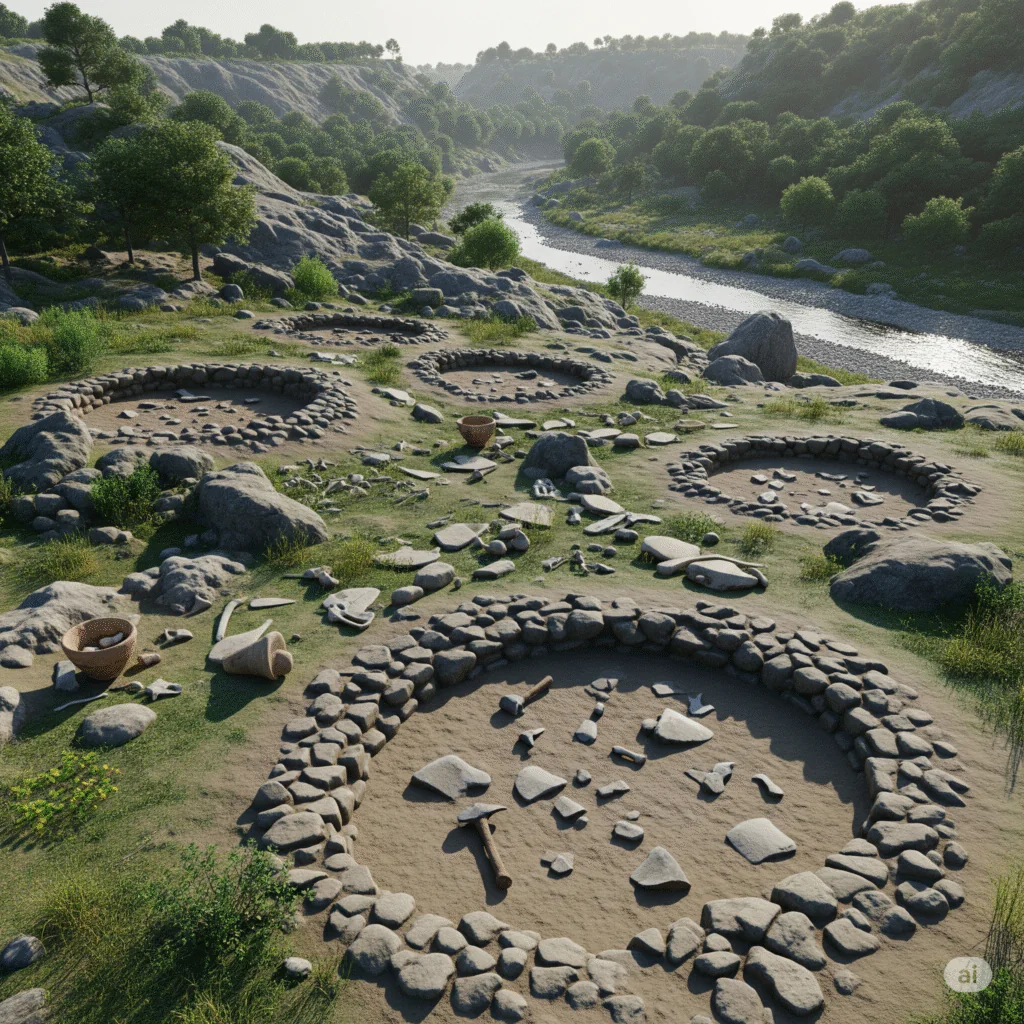
Belan Valley is an ancient archaeological site located in the Mirzapur district of Uttar Pradesh. It is famous for important evidence of human life from the Paleolithic and Mesolithic periods. The discovery of stone tools and other remains plays a crucial role in understanding early human civilization.
Geography and Importance of Belan Valley
- Located in Mirzapur district, between the Ganga and Yamuna river systems.
- The environment was ideal for hunting and food gathering.
- The valley contains evidence of multiple ancient human cultures.
Importance of Tools and Archaeological Remains
1. Stone Tools
Important Paleolithic and Mesolithic stone tools have been discovered in Belan Valley, proving that early humans used advanced hunting and food-gathering techniques.
- Large Axes: Used for hunting and cutting wood.
- Scrapers and Knives: Used for skinning animals and cutting meat.
- Spears and Pointed Tools: Used mainly for hunting wild animals.
- Carving Tools: Stones shaped for multiple daily uses.
2. Animal Bones and Other Remains
- Animal bones and fossils have been discovered.
- Remains of deer, bears, elephants, and other wild animals.
- Indicate that the region was an important hunting ground.
3. Reservoirs and Environmental Evidence
- Evidence of ponds and water reservoirs.
- Indicates availability of water and favorable climate.
Environment and Habitat
- The Belan River provided water and fish.
- Forests supported hunting and food gathering.
- Humans lived in caves and temporary shelters in small groups.
Cultural and Historical Significance
- Strong evidence of Paleolithic and Mesolithic life.
- Shows hunting, food gathering, and early social organization.
- Indicates development of early human societies and culture.
The archaeological evidence of Belan Valley contributes significantly to understanding the lifestyle, hunting practices, and tool-making skills of ancient humans.
Vedic Literature: Foundation of Indian Civilization
Vedic literature is a vital part of ancient Indian thought, composed during the Vedic period (1500–600 BCE). It includes the Vedas, Upanishads, Brahmanas, Aranyakas, and Sutras, forming the basis of Indian religion, philosophy, and culture.
The Four Vedas
1. Rigveda
- The oldest Veda, composed around 1500 BCE.
- Contains 10 mandalas and 1028 hymns.
- Praises gods such as Indra, Agni, Varuna, and Surya.
- Written in early Sanskrit with poetic and philosophical depth.
2. Yajurveda
- Focuses on rituals and yajna procedures.
- Contains 40 chapters of ritual mantras.
- Two versions: Shukla Yajurveda and Krishna Yajurveda.
- Emphasizes social harmony, purity, and welfare.
3. Samaveda
- Known as the root of Indian classical music.
- Contains 1875 musical mantras.
- Introduced swaras and rhythmic chanting.
- Used during Somayajna and other rituals.
4. Atharvaveda
- Composed around 1200–1000 BCE.
- Deals with medicine, health, social life, and tantra.
- Contains 20 kandas and about 6000 mantras.
- Forms the early basis of Ayurveda.
Other Vedic Texts
Upanishads
Philosophical texts discussing Brahman, Atman, liberation, and self-knowledge. Major Upanishads include Chandogya, Brihadaranyaka, and Katha.
Brahmanas and Aranyakas
These texts explain rituals, yajnas, and meditative practices followed by sages living in forests.
Sutra Literature
Includes Vedanga Sutras, Dharmasutras, and Grihyasutras dealing with rituals, grammar, and daily conduct.
Importance of Vedic Literature
- Foundation of Indian religion and philosophy.
- Insights into social structure and ethics.
- Development of Sanskrit language and literature.
- Explanation of yajnas, rituals, and moral values.
Conclusion
Belan Valley provides valuable archaeological evidence of early human life, while Vedic literature represents the intellectual and spiritual evolution of Indian civilization. Together, they reflect humanity’s journey from survival-based societies to structured philosophical and cultural traditions.
References
- Allchin, B., & Allchin, R. (1982). The Rise of Civilization in India and Pakistan. Cambridge University Press.
- Singh, Upinder. (2008). A History of Ancient and Early Medieval India. Pearson Education India.
- Sharma, R.S. (1992). India’s Ancient Past. Oxford University Press.
- Thapar, Romila. (2002). Early India. University of California Press.
- Archaeological Survey of India – Indian Archaeology: A Review.
- Paddayya, K. (2013). The Acheulian Culture of the Hunsgi Valley. Deccan College.