

Brihadeeswara Temple and Gangaikonda Cholapuram: Architecture and History
Brihadeeswara Temple (Thanjavur)
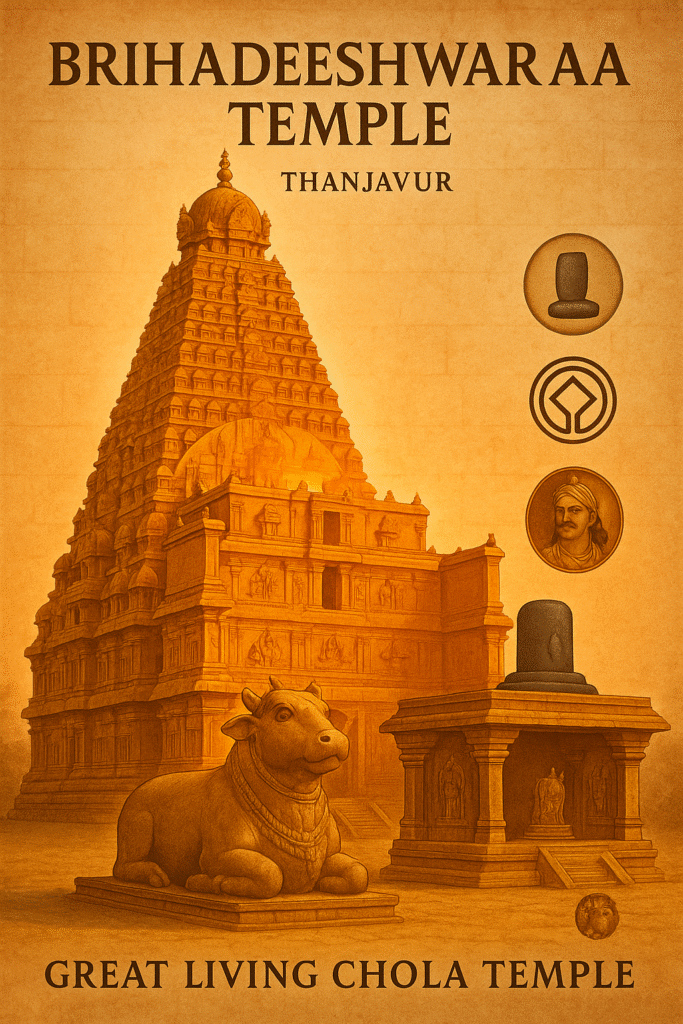
The Brihadeeswara Temple, also known as Rajarajesvaram and Periya Kovil, is a magnificent Hindu temple located in Thanjavur, Tamil Nadu, South India. Built during the reign of Rajaraja Chola I, it is an outstanding example of Dravidian architecture and one of the most remarkable monuments of the Chola dynasty.
Construction and History
- The Brihadeeswara Temple was commissioned by Rajaraja Chola I and consecrated around 1010 CE.
- The temple is dedicated to Lord Shiva, worshipped here as Brihadisvara.
- It reflects the political power, religious devotion and architectural achievements of the Chola Empire.
- The temple is an important part of the UNESCO World Heritage property known as the Great Living Chola Temples.
Architecture and Features
Outstanding Example of Dravidian Architecture
- The temple is predominantly constructed using granite stone.
- Its main vimana (tower above the sanctum) rises to approximately 216 feet (66 metres).
- The tower is one of the most impressive examples of monumental temple architecture from the Chola period.
- The uppermost structure is crowned by a massive stone element, reflecting the engineering skills of its builders.
Nandi Mandapam (Sacred Bull Sculpture)
- A massive statue of Nandi, the sacred bull associated with Lord Shiva, stands in the temple complex.
- The sculpture is an important example of the artistic excellence of the Chola period.
- The Nandi statue is housed in a mandapam facing the main shrine.
Beautiful Carvings and Paintings
- The temple walls feature sculptures depicting Lord Shiva, other Hindu deities and religious themes.
- Its corridors and inner spaces preserve examples of Chola-period paintings.
- The sculptures and paintings provide valuable information about the religious and artistic traditions of the period.
Main Sanctum
- The main sanctum houses a large Shiva Lingam, representing Lord Shiva.
- The sanctum is surrounded by a carefully planned architectural structure and monumental walls.
- The temple's layout reflects the religious symbolism and architectural principles of the Dravidian tradition.
Religious and Cultural Significance
The Brihadeeswara Temple is not only an important centre of Shiva worship but also a symbol of the cultural and artistic achievements of the Chola dynasty. It is part of the UNESCO World Heritage property known as the Great Living Chola Temples, which also includes the temples at Gangaikonda Cholapuram and Darasuram.
Special Events and Festivals
- Mahashivaratri is an important religious festival celebrated at the temple.
- Other religious ceremonies and festivals are organised throughout the year.
- During the Chola period, temple institutions supported religious rituals, music and dance performances.
Conclusion
The Brihadeeswara Temple is a priceless treasure of India's architectural and religious heritage. It reflects the grandeur of the Chola Empire and continues to attract visitors, historians, researchers and devotees because of its remarkable architecture and historical importance.
Gangaikonda Cholapuram
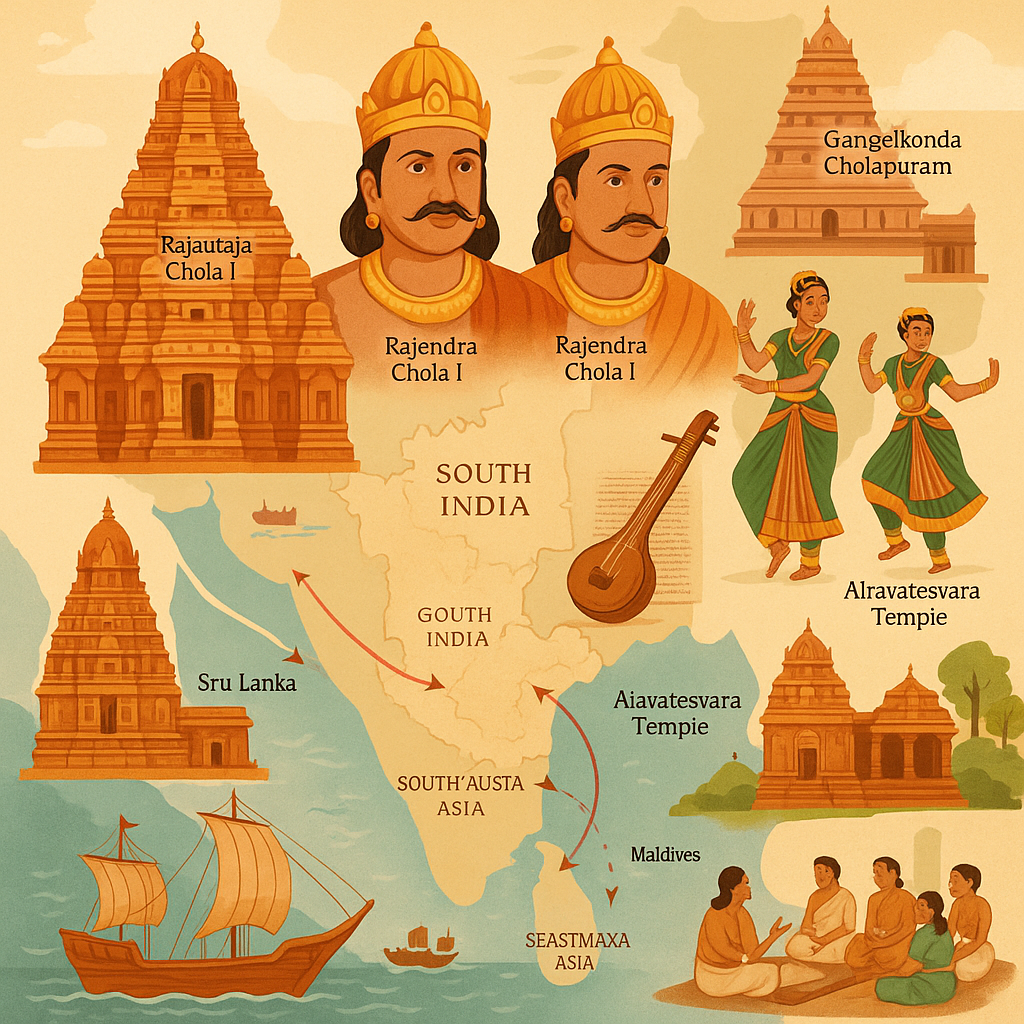
Gangaikonda Cholapuram is a historic town in Tamil Nadu, established by Emperor Rajendra Chola I in the 11th century CE. It served as an important capital of the Chola Empire and is renowned for the magnificent Gangaikondacholisvaram Temple, which represents the political power and architectural excellence of the Chola dynasty.
Founding and Naming
- After his successful military expedition towards the Ganges in northern India, Rajendra Chola I established a new capital to commemorate his victory.
- He named the city Gangaikonda Cholapuram, meaning the city of the Chola ruler who conquered the Ganges region.
- Rajendra Chola I developed the city as an important political and administrative centre of the empire.
- The establishment of the new capital symbolised the prestige and military achievements of the Chola dynasty.
Gangaikondacholisvaram Temple
Editor's Choice
Explore this recommended product and check its details, features and customer reviews.

1. Architecture and Structure
- The temple is a masterpiece of Chola architecture and shares important architectural features with the Brihadeeswara Temple at Thanjavur.
- Its vimana (tower above the sanctum) rises to approximately 182 feet (55 metres).
- The main sanctum houses a large Shiva Lingam, reflecting the importance of Shaivism during the Chola period.
- The walls, pillars and sculptures display detailed carvings and artistic elements associated with Chola craftsmanship.
- The temple's proportions and decorative features demonstrate the architectural sophistication of the Chola builders.
2. Nandi Statue
- A large Nandi statue is positioned in front of the main shrine.
- The sculpture represents Nandi's association with Lord Shiva.
- It is an important feature of the temple's religious and architectural design.
3. Chola Gangam Reservoir
- Rajendra Chola I constructed a large reservoir known as Chola Gangam.
- It was associated with the commemoration of his northern military expedition and the symbolic bringing of Ganges water to the Chola capital.
- The reservoir also reflected the importance of water management and irrigation in the Chola Empire.
Significance and Cultural Contribution
Religious Significance
- The town and temple became important centres of Shiva worship during the Chola period.
- The temple complex reflects the religious traditions and practices supported by Chola rulers.
- Its inscriptions provide valuable historical information about religious endowments and temple administration.
Art and Culture
- The temple features sculptures of Hindu deities and scenes associated with religious traditions.
- Its artistic details represent the high level of craftsmanship achieved during the Chola period.
- The monument provides important evidence of the development of South Indian temple architecture and sculpture.
Administrative and Economic Importance
- Gangaikonda Cholapuram served as an important political and administrative centre of the Chola Empire.
- The city was associated with royal institutions, religious establishments and economic activities.
- Its location formed part of the wider network of settlements, agricultural areas and trade routes within the Chola kingdom.
Decline and Present Status
Gangaikonda Cholapuram gradually lost its political importance as Chola power declined during the 13th century CE. The region subsequently experienced changes in political control under later South Indian dynasties. Today, the temple remains an important historical and archaeological monument. It is included in the UNESCO World Heritage property known as the Great Living Chola Temples.
Conclusion
Gangaikonda Cholapuram and its magnificent temple stand as enduring symbols of the Chola Empire's architectural achievements, political influence and cultural heritage. They remain valuable monuments of Indian archaeological and historical heritage and continue to reflect the glory of the Chola dynasty.
Brihadeeswara Temple and Gangaikonda Cholapuram: Architecture and History
Brihadeeswara Temple (Thanjavur)
The Brihadeeswara Temple, also known as Rajarajesvaram and Periya Kovil, is a magnificent Hindu temple located in Thanjavur, Tamil Nadu, South India. Built during the reign of Rajaraja Chola I, it is an outstanding example of Dravidian architecture and one of the most remarkable monuments of the Chola dynasty.
Construction and History
- The Brihadeeswara Temple was commissioned by Rajaraja Chola I and consecrated around 1010 CE.
- The temple is dedicated to Lord Shiva, worshipped here as Brihadisvara.
- It reflects the political power, religious devotion and architectural achievements of the Chola Empire.
- The temple is an important part of the UNESCO World Heritage property known as the Great Living Chola Temples.
Architecture and Features
Outstanding Example of Dravidian Architecture
- The temple is predominantly constructed using granite stone.
- Its main vimana (tower above the sanctum) rises to approximately 216 feet (66 metres).
- The tower is one of the most impressive examples of monumental temple architecture from the Chola period.
- The uppermost structure is crowned by a massive stone element, reflecting the engineering skills of its builders.
Nandi Mandapam (Sacred Bull Sculpture)
- A massive statue of Nandi, the sacred bull associated with Lord Shiva, stands in the temple complex.
- The sculpture is an important example of the artistic excellence of the Chola period.
- The Nandi statue is housed in a mandapam facing the main shrine.
Beautiful Carvings and Paintings
- The temple walls feature sculptures depicting Lord Shiva, other Hindu deities and religious themes.
- Its corridors and inner spaces preserve examples of Chola-period paintings.
- The sculptures and paintings provide valuable information about the religious and artistic traditions of the period.
Main Sanctum
- The main sanctum houses a large Shiva Lingam, representing Lord Shiva.
- The sanctum is surrounded by a carefully planned architectural structure and monumental walls.
- The temple's layout reflects the religious symbolism and architectural principles of the Dravidian tradition.
Religious and Cultural Significance
The Brihadeeswara Temple is not only an important centre of Shiva worship but also a symbol of the cultural and artistic achievements of the Chola dynasty. It is part of the UNESCO World Heritage property known as the Great Living Chola Temples, which also includes the temples at Gangaikonda Cholapuram and Darasuram.
Special Events and Festivals
- Mahashivaratri is an important religious festival celebrated at the temple.
- Other religious ceremonies and festivals are organised throughout the year.
- During the Chola period, temple institutions supported religious rituals, music and dance performances.
Conclusion
The Brihadeeswara Temple is a priceless treasure of India's architectural and religious heritage. It reflects the grandeur of the Chola Empire and continues to attract visitors, historians, researchers and devotees because of its remarkable architecture and historical importance.
Gangaikonda Cholapuram
Gangaikonda Cholapuram is a historic town in Tamil Nadu, established by Emperor Rajendra Chola I in the 11th century CE. It served as an important capital of the Chola Empire and is renowned for the magnificent Gangaikondacholisvaram Temple, which represents the political power and architectural excellence of the Chola dynasty.
Founding and Naming
- After his successful military expedition towards the Ganges in northern India, Rajendra Chola I established a new capital to commemorate his victory.
- He named the city Gangaikonda Cholapuram, meaning the city of the Chola ruler who conquered the Ganges region.
- Rajendra Chola I developed the city as an important political and administrative centre of the empire.
- The establishment of the new capital symbolised the prestige and military achievements of the Chola dynasty.
Gangaikondacholisvaram Temple
Editor's Choice
Explore this recommended product and check its details, features and customer reviews.
1. Architecture and Structure
- The temple is a masterpiece of Chola architecture and shares important architectural features with the Brihadeeswara Temple at Thanjavur.
- Its vimana (tower above the sanctum) rises to approximately 182 feet (55 metres).
- The main sanctum houses a large Shiva Lingam, reflecting the importance of Shaivism during the Chola period.
- The walls, pillars and sculptures display detailed carvings and artistic elements associated with Chola craftsmanship.
- The temple's proportions and decorative features demonstrate the architectural sophistication of the Chola builders.
2. Nandi Statue
- A large Nandi statue is positioned in front of the main shrine.
- The sculpture represents Nandi's association with Lord Shiva.
- It is an important feature of the temple's religious and architectural design.
3. Chola Gangam Reservoir
- Rajendra Chola I constructed a large reservoir known as Chola Gangam.
- It was associated with the commemoration of his northern military expedition and the symbolic bringing of Ganges water to the Chola capital.
- The reservoir also reflected the importance of water management and irrigation in the Chola Empire.
Significance and Cultural Contribution
Religious Significance
- The town and temple became important centres of Shiva worship during the Chola period.
- The temple complex reflects the religious traditions and practices supported by Chola rulers.
- Its inscriptions provide valuable historical information about religious endowments and temple administration.
Art and Culture
- The temple features sculptures of Hindu deities and scenes associated with religious traditions.
- Its artistic details represent the high level of craftsmanship achieved during the Chola period.
- The monument provides important evidence of the development of South Indian temple architecture and sculpture.
Administrative and Economic Importance
- Gangaikonda Cholapuram served as an important political and administrative centre of the Chola Empire.
- The city was associated with royal institutions, religious establishments and economic activities.
- Its location formed part of the wider network of settlements, agricultural areas and trade routes within the Chola kingdom.
Decline and Present Status
Gangaikonda Cholapuram gradually lost its political importance as Chola power declined during the 13th century CE. The region subsequently experienced changes in political control under later South Indian dynasties. Today, the temple remains an important historical and archaeological monument. It is included in the UNESCO World Heritage property known as the Great Living Chola Temples.
Conclusion
Gangaikonda Cholapuram and its magnificent temple stand as enduring symbols of the Chola Empire's architectural achievements, political influence and cultural heritage. They remain valuable monuments of Indian archaeological and historical heritage and continue to reflect the glory of the Chola dynasty.

Economy, Decline and Legacy of the Chola Dynasty
Economy of the Chola Dynasty
The Chola dynasty, particularly during its imperial phase from the 9th to the 13th century CE, developed a prosperous economy based on agriculture, trade, crafts, taxation and water management. Agricultural production in the fertile Kaveri River delta, together with extensive commercial networks, supported the political and economic strength of the empire. The Cholas also developed important maritime connections with Southeast Asia and other regions across the Indian Ocean.
1. Agriculture-Based Economy
(a) Importance of Agriculture
- Agriculture was the backbone of the Chola economy.
- The fertile Kaveri River delta was one of the most productive agricultural regions of South India.
- Rice was the principal crop, while other crops included millets, sugarcane, coconut and various pulses.
- Agricultural prosperity supported population growth, trade, temple institutions and state revenue.
(b) Irrigation and Water Management
- The Cholas maintained and developed irrigation facilities to support agricultural production.
- They constructed and maintained reservoirs, tanks, canals and water-control structures.
- Existing irrigation systems were also repaired and expanded through royal and local initiatives.
- Village assemblies and local institutions played important roles in managing irrigation resources.
Chola Gangam Reservoir
- Rajendra Chola I established a large reservoir known as Chola Gangam near his new capital, Gangaikonda Cholapuram.
- The reservoir commemorated his northern expedition and the symbolic association with the waters of the Ganges.
- It also demonstrated the importance of water storage and irrigation in the Chola economy.
2. Taxation and Revenue System
(a) Land Revenue
- Land revenue was one of the principal sources of income for the Chola state.
- Land surveys and assessments helped determine revenue obligations.
- Assessment could take account of land quality, cultivation and irrigation facilities.
- Agricultural productivity was an important factor in the revenue system.
Land Classification
- Land was assessed according to its agricultural characteristics and productivity.
- Differences in soil quality, irrigation and cultivation conditions influenced revenue assessment.
- Land surveys helped maintain records of agricultural holdings and revenue obligations.
(b) Other Taxes and Duties
- Taxes and duties were associated with trade, markets, occupations and various economic activities.
- Customs duties and commercial taxes contributed to state revenue.
- Artisans, merchants and occupational groups could be subject to different forms of taxation.
- Some temples and religious institutions received land grants and tax concessions.
(c) Revenue Management
- Revenue collection was supported by land surveys, inscriptions and administrative records.
- State resources supported military activities, administration, irrigation and public works.
- Royal grants and donations also supported temple institutions and religious establishments.
3. Trade and Commerce
(a) Internal Trade
- Trade developed between villages, towns and important commercial centres.
- Markets and merchant organisations supported the exchange of agricultural and manufactured goods.
- Roads and transport networks connected production centres with markets and ports.
- Merchant associations contributed to commercial activity within South India.
Maritime Trade
- The Cholas maintained strong maritime connections and developed naval capabilities that supported overseas activities.
- Nagapattinam was an important port associated with Chola-period overseas connections.
- Commercial networks connected South India with Sri Lanka, China, Sumatra, Java and other Southeast Asian regions.
- Merchant organisations participated in long-distance trade across the Indian Ocean.
(c) Export and Import Items
Exports
- Cotton textiles and other woven products.
- Rice and agricultural commodities.
- Spices and other regional products.
- Craft goods and metal objects.
Imports
- Horses, which were important for military purposes.
- Silk and luxury textiles.
- Precious stones and other valuable commodities.
- Metals and specialised goods from overseas markets.
(d) Merchant Associations
- Merchant organisations played an important role in Chola-period trade.
- Nagaram was associated with commercial settlements and merchant activity.
- Other merchant associations, including the Ayyavole 500 and Manigramam, participated in regional and overseas commerce.
- These organisations helped establish commercial networks and facilitate the movement of goods.
4. Crafts and Industry
(a) Cottage Industries
- Textile production, weaving, metalworking, sculpture and pottery were important craft activities.
- Artisans produced goods for local consumption as well as wider commercial networks.
- Bronze sculptures, particularly images of Nataraja, became outstanding examples of Chola craftsmanship.
(b) Textile Industry
- Cotton weaving was an important economic activity in the Chola territories.
- Textile production supported both domestic markets and overseas commerce.
- Different types of cloth and woven products formed part of regional trade networks.
(c) Metal Crafts
- Chola artisans achieved remarkable skill in copper and bronze casting.
- Religious sculptures demonstrate the technical and artistic excellence of metalworkers.
- Iron and other metals were also used in tools, weapons and everyday objects.
5. Importance of Temples as Economic Centres
- Temples functioned as important religious, social and economic institutions.
- They received land, money, livestock and other donations from rulers, officials and private individuals.
- Temple establishments employed priests, artisans, musicians, dancers, administrators and other workers.
- Temple lands supported agricultural production and associated economic activities.
- Inscriptions recorded donations, land grants and arrangements for the maintenance of temples.
6. Social and Economic Organisation
(a) Village Assemblies
- Village assemblies such as the Ur and Sabha participated in local administration.
- They dealt with matters such as land management, irrigation, public works and certain revenue-related responsibilities.
- Local participation helped manage agricultural and community resources.
(b) Charity and Public Works
- Chola rulers, officials and wealthy individuals made donations to temples and religious institutions.
- Water reservoirs, irrigation channels and other public facilities supported agricultural and community needs.
- Religious endowments and charitable activities formed part of the social and economic life of the period.
Editor's Choice
Explore this recommended product and check its details, features and customer reviews.
7. Monetary System
- Coins formed an important part of commercial and economic transactions.
- Gold, silver and copper coins were issued and used during different phases of Chola rule.
- Some coins carried royal names, titles and distinctive symbols.
- Coinage and inscriptions provide valuable evidence about the economic and political history of the Cholas.
Conclusion
The Chola economy was based on a combination of agricultural production, trade, crafts, taxation and water management. The fertile Kaveri delta, irrigation networks, merchant associations and overseas commercial connections supported the prosperity of the empire. Its economic institutions played an important role in the political and cultural development of medieval South India.
Decline and Legacy of the Chola Dynasty
The Chola dynasty represents an important chapter in South Indian history. Its achievements in architecture, administration, literature, trade and religious culture made a lasting contribution to Indian civilisation. This section examines the greatness of the Cholas, the decline of their political power and their enduring historical legacy.
1. The Greatness of the Chola Dynasty
(a) Stable and Organised Governance
- The Cholas developed an organised system of central, provincial and local administration.
- Village assemblies such as the Ur and Sabha played important roles in local affairs.
- Inscriptions provide detailed evidence of administrative decisions, land grants and local institutions.
(b) Flourishing Art and Culture
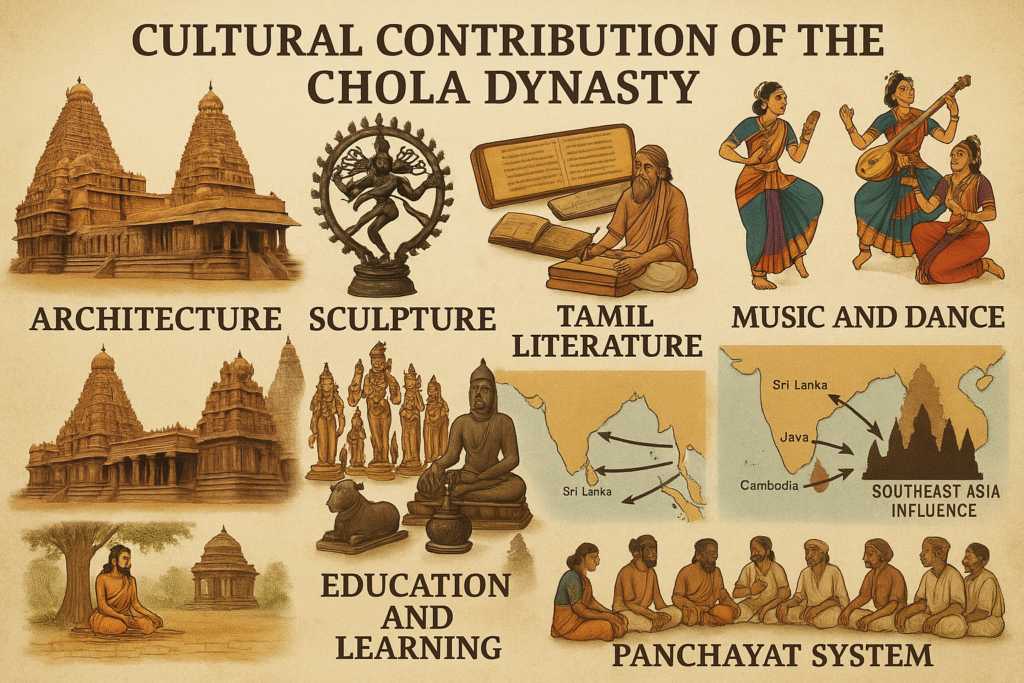
- Chola rule witnessed remarkable progress in temple architecture, sculpture, bronze casting and literature.
- The Brihadisvara, Gangaikondacholisvaram and Airavatesvara temples remain outstanding architectural achievements.
- Bronze sculptures, particularly Nataraja images, represent the artistic excellence of the period.
(c) Maritime Power and Trade
- The Cholas maintained a powerful navy and extensive maritime connections.
- Commercial and cultural connections extended to Sri Lanka and Southeast Asian regions.
- Merchant organisations supported regional and overseas trade.
(d) Religious and Social Contributions
- The Chola rulers supported Shaivism and, in different periods, other religious traditions including Vaishnavism.
- Temples served as centres of worship, employment, cultural activities and economic organisation.
- Tamil devotional literature and temple traditions flourished during the period.
2. Decline of the Chola Dynasty
(a) Succession and Political Challenges
- Changes in royal succession and political competition created challenges for later Chola rulers.
- The empire increasingly faced difficulties in maintaining authority over distant territories.
- regional powers gradually strengthened their political and military positions.
(b) Rise of Rival Dynasties
- The Pandya dynasty emerged as a major rival and gradually expanded its influence in southern Tamil regions.
- The Hoysalas also became important political and military powers in South India.
- Conflicts with regional powers weakened Chola control over several territories.
(c) Loss of Territorial Control
- During the later Chola period, the empire lost control over several regions that had previously recognised Chola authority.
- Increasing Pandya power placed considerable pressure on the remaining Chola territories.
- By the late 13th century, the Cholas had lost their position as a major imperial power.
(d) Economic and Revenue Challenges
- political instability and territorial losses affected the resources available to later Chola rulers.
- Military conflicts placed pressure on state resources and administration.
- Changes in political control also affected the economic networks of the later Chola kingdom.
(e) Administrative Challenges
- Maintaining control over a large empire became increasingly difficult as regional powers grew stronger.
- Changes in political authority affected the relationship between the central government and regional institutions.
- Administrative challenges contributed to the gradual weakening of Chola political power.
3. Legacy of the Chola Dynasty
- The Brihadisvara Temple and other Chola monuments remain outstanding examples of South Indian architecture and are part of the UNESCO Great Living Chola Temples World Heritage property.
- Chola inscriptions provide important evidence about medieval administration, taxation, village assemblies and temple institutions.
- Chola bronze sculptures, especially Nataraja images, remain celebrated examples of Indian art.
- Chola-period Tamil literature and devotional traditions continue to influence South Indian culture.
- Maritime connections and commercial networks contributed to historical interactions between South India and Southeast Asia.
4. Relevance of the Cholas Today
The legacy of the Chola dynasty continues to attract historians, archaeologists, architects and researchers. Its achievements in administration, irrigation, temple construction, sculpture and maritime trade provide valuable insights into the political and economic organisation of medieval South India. The surviving monuments and inscriptions remain important sources for understanding India's historical development.
Reasons for the Fall of the Chola Empire
The Chola Empire gradually declined during the later medieval period due to a combination of political, military, territorial and administrative challenges. The growing power of the Pandyas and other regional dynasties played a particularly important role in the final decline of Chola imperial authority.
1. Political Reasons
(a) Succession Disputes and Political Instability
- Political competition and changes in royal succession created difficulties for some later Chola rulers.
- Weakening central authority made it harder to maintain control over distant territories.
- Regional powers increasingly challenged Chola political supremacy.
(b) Weakening of Imperial Authority
- The Chola Empire gradually lost control over several subordinate territories.
- Local and regional rulers gained greater political influence as central power weakened.
- These developments reduced the ability of later Chola rulers to maintain imperial unity.
2. External Military Challenges
(a) Conflicts with the Western Chalukyas and Other Powers
- The Cholas fought several major conflicts with the Western Chalukyas during the 10th to 12th centuries.
- Military competition with regional powers placed pressure on Chola resources and political authority.
- The Hoysalas also emerged as an important power in the later political history of South India.
(b) Rise of the Pandyas
- The Pandya dynasty gradually recovered its strength and expanded its territorial influence.
- Pandya rulers challenged Chola authority and captured important territories in southern Tamil Nadu.
- By the 13th century, the Pandyas had become the dominant political power in much of the region.
(c) Regional Military Conflicts
- Repeated conflicts with neighbouring dynasties weakened the military and political position of later Chola rulers.
- The Cholas increasingly struggled to defend their remaining territories against stronger regional rivals.
3. Economic Challenges
(a) Pressure on Trade and Commercial Networks
- Political changes and regional conflicts affected some of the commercial networks associated with the Chola Empire.
- Maintaining overseas influence became more challenging as the political and maritime environment changed.
- Economic difficulties were among the pressures faced by later Chola rulers, although they cannot be treated as the sole cause of the empire's decline.
(b) Revenue and Resource Pressures
- Territorial losses reduced the resources available to the later Chola state.
- Military campaigns and political conflicts placed additional demands on royal resources.
- Changes in political control affected the administration of land and revenue.
4. Administrative Challenges
(a) Difficulty in Maintaining Central Control
- As the empire weakened, maintaining authority over distant regions became increasingly difficult.
- Regional rulers and competing dynasties gained greater independence and influence.
- The political fragmentation of the empire contributed to the loss of Chola imperial authority.
(b) Military and Administrative Pressure
- Continuous military competition placed pressure on the administration and armed forces.
- Later Chola rulers faced growing difficulties in defending their territories and maintaining political stability.
5. Social and Religious Factors
- Social structures and religious institutions changed over the long period of Chola rule.
- However, social divisions or conflicts between Shaivism and Vaishnavism cannot be established as major direct causes of the fall of the Chola Empire.
- The decline is better understood through documented political, military and territorial developments.
6. Climatic and Environmental Factors
- Agriculture depended heavily on irrigation and the management of water resources.
- Environmental and agricultural conditions could affect local economic activity and revenue.
- However, there is insufficient evidence to identify a specific climatic or environmental crisis as a decisive cause of the fall of the Chola Empire.
7. End of Chola Imperial Power
The final decline of Chola imperial authority occurred during the 13th century. The last significant Chola ruler, Rajendra Chola III, ruled during the period of growing Pandya dominance. By approximately 1279 CE, Chola political independence had come to an end, and the Pandyas had emerged as the dominant power in the region.
Conclusion
The fall of the Chola Empire was a gradual process caused primarily by political instability, territorial losses, military conflicts and the rise of powerful regional dynasties, especially the Pandyas. Despite the end of Chola imperial rule, its achievements in architecture, administration, literature, trade and culture continued to shape the history of South India. The surviving temples and inscriptions remain lasting evidence of the dynasty's remarkable legacy.