
Sultans of the Deccan: History, Culture, Architecture and Legacy
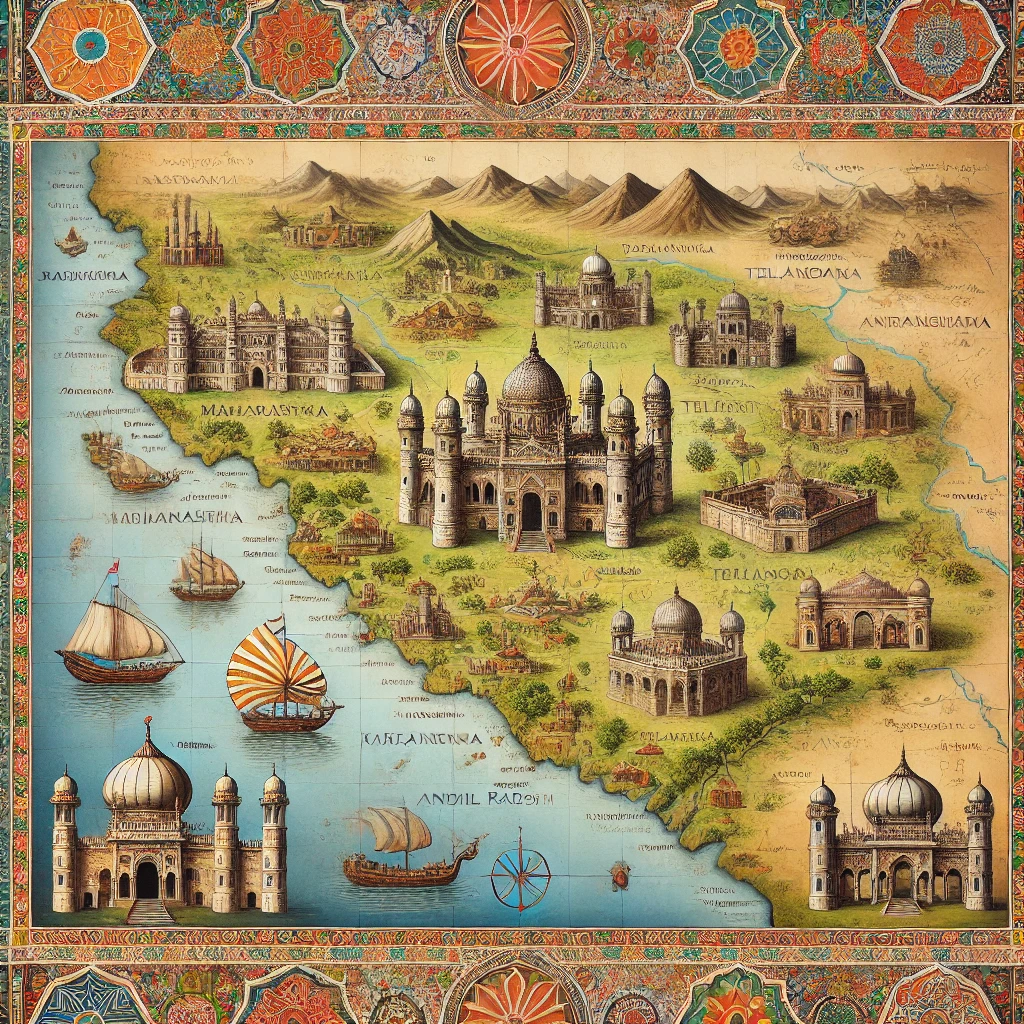
The history of the Sultans of the Deccan is an important chapter in the expansion of Islamic rule and the development of culture in the central and southern regions of the Indian subcontinent. From the 14th to the 17th centuries, various sultanates in the Deccan enriched the region culturally, politically and economically.
Introduction: The Deccan and Its Historical Importance
The Deccan region is a significant landmass of the Indian subcontinent, extending over parts of present-day Maharashtra, Karnataka, Telangana, Andhra Pradesh and Tamil Nadu. This region was ruled by many powerful sultans, whose history is known for its rich culture, magnificent architecture and efficient administration.
The period of the Deccan Sultans is generally considered to span from the 14th to the 17th century. During this time, they shaped the political landscape of the Deccan and contributed significantly to art, literature, music and trade.
Rise of the Deccan Sultans
Background: Decline of the Delhi Sultanate
Islamic rule in the Deccan began to take shape in the 14th century, when regional power centres started emerging after the weakening of the Delhi Sultanate. The political vacuum created by this decline opened the way for independent kingdoms in South and Central India.
Establishment of the Bahmani Sultanate
The Bahmani Sultanate (1347–1527) was the first major Muslim empire in the Deccan. It came into existence as a result of a revolt against Muhammad bin Tughlaq of the Delhi Sultanate. Hasan Gangu Bahmani founded this sultanate and made Gulbarga (Kalaburagi) its capital.
The Bahmani rulers established a strong base in the region and made important contributions in the fields of art, music and architecture. For nearly two centuries, the Bahmani Sultanate remained the dominant power in the Deccan, known for its capable administration and strong military organisation.
Growth and Disintegration of the Bahmani Sultanate
From Unity to Fragmentation
Although the Bahmani Sultanate was powerful, internal conflicts, succession struggles and regional rivalries gradually weakened it. By the 16th century, the sultanate split into several smaller but independent kingdoms, which came to be known as the Deccani Sultanates.
Formation of the Five Deccani Sultanates
After the disintegration of the Bahmani Sultanate, five major independent sultanates emerged in the Deccan:
- Ahmednagar Sultanate (1490)
- Bijapur Sultanate (1490)
- Golconda Sultanate (1518)
- Bidar Sultanate (1528)
- Berar Sultanate (1490)
These sultanates established their power in their respective regions. They engaged in wars, alliances and diplomatic competition with one another, while also maintaining their own unique cultural and artistic identities.
Cultural Achievements of the Deccan Sultans
The Sultans of the Deccan made major contributions in the fields of architecture, music, literature and art. Their courts became important centres of cultural synthesis, where Persian, Arab and local Deccani traditions came together.
Architectural Excellence
The Deccan sultans developed a distinctive architectural style marked by grand domes, intricate stonework and impressive fortifications. Some notable examples include:
- Gol Gumbaz (Bijapur): A remarkable example of Deccani architecture, famous for its massive dome and whispering gallery.
- Golconda Fort (Golconda): Known worldwide for its strong defensive system, complex layout and association with the diamond trade.
- Ahmednagar Fort (Ahmednagar): An important military and administrative centre that reflects the strategic thinking of the Nizam Shahi rulers.
- Charminar (Hyderabad): Built under the Qutb Shahi rulers, it symbolises the blend of Persian and local Deccani architectural traditions.
Literature and Language
The courts of the Deccan sultans were vibrant centres of learning and literature. They actively patronised scholars, poets and writers in multiple languages:
- Dakhni (Deccani) Urdu developed significantly during their reign, becoming a unique literary language of the region.
- Persian was used as the language of administration and high culture.
- Arabic and Telugu literature also received patronage in various courts.
Music, Art and Court Culture
The Deccan sultans encouraged music, painting and performing arts, making their courts centres of refined culture. A distinctive Deccani musical style evolved under their patronage, blending Indian and Persian influences.
Dance and singing were encouraged in the royal courts, and many rulers themselves were connoisseurs of art and music. This created an environment where creativity and spiritual devotion were often combined.

Major Deccani Sultans and Their Contributions
Rulers of Bijapur
Ali Adil Shah (Bijapur)
Ali Adil Shah of Bijapur is remembered for promoting art and architecture. Under his rule, Bijapur grew as a cultural centre, with the construction of impressive buildings and the patronage of artists and scholars.
Ibrahim Adil Shah II (Bijapur)
Ibrahim Adil Shah II was one of the most remarkable rulers of Bijapur. A great lover of art and music, he is known for writing “Kitab-e-Navras”, a work that celebrates music and devotion. His rule is often seen as a golden period for culture in Bijapur, where religious tolerance and artistic expression flourished.
Qutb Shahi Rulers of Golconda
The Qutb Shahi rulers of Golconda played a major role in developing the region’s economy and culture. They:
- Encouraged the diamond trade, making Golconda famous as a global centre for precious stones.
- Strengthened and beautified the Golconda Fort.
- Supported architecture, poetry and Sufi traditions.
Nizam Shahi Dynasty of Ahmednagar
The Nizam Shahi dynasty of Ahmednagar turned the city into a strong political and cultural centre. Ahmednagar became known for:
- Its forts and buildings, which combined practical defence with aesthetic design.
- Its role as a centre of trade and commerce in the Deccan.
- Patronage of scholars, poets and religious thinkers.
Political Rivalries and Alliances
The five Deccani Sultanates often engaged in power struggles, yet they also formed alliances when necessary. They sometimes united against common threats, and at other times fought each other to expand their territories. This dynamic political environment shaped the history of the Deccan for nearly three centuries.
Fall of the Deccan Sultans
By the 17th century, the expanding power of the Mughal Empire under Emperor Aurangzeb turned towards the Deccan. After a series of long and intense campaigns, Aurangzeb gradually annexed all the major Deccani Sultanates into the Mughal Empire.
With this, the independent sultanates of the Deccan came to an end. Although their political power disappeared, their cultural and architectural legacy continued to influence the region for centuries.
Conclusion: Legacy of the Sultans of the Deccan
The Sultans of the Deccan have left a deep and lasting mark on Indian history and culture. They did not merely rule territories; they also built cities, forts and monuments, encouraged literature and music, and created a unique fusion of Persian and Deccani traditions.
Their statecraft, architecture and cultural contributions still make us feel their greatness. The monuments, forts and artistic heritage they left behind continue to remind us of a glorious past in which the Deccan was a vibrant centre of power, creativity and cultural exchange.
Rise of the Deccan Sultans
The rise of the Deccan Sultans is an important chapter in Indian history. It is linked to the weakening of the Delhi Sultanate in the 14th century and the emergence of regional powers in South India. Islamic rule in the Deccan began with the formation of the Bahmani Sultanate, which established the first organised Muslim power in the region.
Formation of the Bahmani Sultanate (1347)
The foundation of the Deccan Sultanates began with the creation of the Bahmani Sultanate. As the Tughlaq dynasty weakened, rebellions spread across the Deccan provinces.
- Hasan Gangu (Alauddin Bahman Shah), a soldier who later assumed the royal title, founded the Bahmani Sultanate in 1347.
- The first capital was Gulbarga (Kalaburagi), later shifted to Bidar.
Key Features of the Bahmani Sultanate
- Independent Power: The Sultanate emerged as a sovereign state instead of remaining subordinate to the Delhi Sultanate.
- Administrative Efficiency: The rulers developed a strong administrative framework.
- Cultural Development: Persian and Deccani cultural traditions blended during Bahmani rule.
Disintegration of the Bahmani Sultanate and the Rise of the Deccani Sultanates
By the 16th century, internal conflicts and weakening administration led to the breakup of the Bahmani Sultanate. Its fragmentation resulted in the formation of five independent sultanates, collectively known as the Deccani Sultanates.
The Five Deccani Sultanates
- Ahmednagar Sultanate (1490)
- Bijapur Sultanate (1490)
- Golconda Sultanate (1518)
- Bidar Sultanate (1528)
- Berar Sultanate (1490)
Mutual Struggles and Development
Though these sultanates frequently fought among themselves, they also contributed significantly to regional cultural and economic development.
- Bijapur and Golconda: Known for their architectural and cultural achievements.
- Ahmednagar: Emerged as a strong military and commercial centre.

Major Contributions of the Deccan Sultans
- Development of Deccani architecture, such as Bijapur's Gol Gumbaz and structures of Golconda.
- Growth of Dakhni Urdu in literature and music.
- Expansion of trade and economy in the Deccan region.
Conclusion
The rise of the Deccan Sultans was not merely a political transformation but also a significant phase of cultural and social development. The Bahmani Sultanate and the later Deccan Sultanates gave a new dimension to Indian history, transforming the Deccan into a vibrant, prosperous, and multi-cultural region.
Disintegration of the Bahmani Sultanate and Formation of Independent Sultanates
The Bahmani Sultanate, established in 1347 by Hasan Gangu Bahman Shah, ruled the Deccan for nearly two centuries. However, by the early 16th century, internal conflicts, succession disputes and administrative weaknesses led to its decline. As a result, five independent sultanates emerged in the Deccan region.
Reasons for Disintegration
Internal Conflict
Persistent rivalry between Turkish, Persian, and Deccani elites weakened the Sultanate. The power struggle between the “Afaqi” (foreign) and “Deccani” (local) factions destabilised governance.
Political Instability
Succession disputes and the presence of weak rulers contributed to administrative breakdown.
Burden of a Vast Empire
Managing an expansive territory became increasingly difficult, leading to structural collapse.
Shifting of Capitals
Moving the capital from Gulbarga to Bidar indicated weakening central authority and administrative strain.
Formation of the Five Independent Sultanates
Around 1500 AD, the Bahmani Sultanate fragmented into smaller regions, giving rise to five independent powers:
1. Ahmednagar Sultanate (1490)
- Founder: Malik Ahmad Nizam Shah
- Capital: Ahmednagar
- Known for military strength and cultural richness.
2. Bijapur Sultanate (1490)
- Founder: Yusuf Adil Shah
- Capital: Bijapur
- Famous for its architectural marvels, especially Gol Gumbaz.
3. Golconda Sultanate (1518)
- Founder: Qutub Shah
- Capital: Golconda
- Known for global diamond trade and architectural wonders such as the Charminar.
4. Bidar Sultanate (1528)
- Founder: Qasim Barid
- Capital: Bidar
- Small in size but rich in cultural and literary contributions.
5. Berar Sultanate (1490)
- Founder: Fathullah Imad Shah
- Capital: Achalpur
- Considered the weakest and was soon annexed by neighbouring sultanates.
Relations Among These Sultanates
The five sultanates often engaged in conflicts but also formed strategic alliances when necessary. A notable example is the Battle of Talikota (1565), where Bijapur, Golconda and Ahmednagar united to defeat the Vijayanagara Empire.
Significance and Impact
- These sultanates enriched the Deccan culturally, politically and economically.
- Deccani architecture, literature and music flourished during this period.
- However, continued internal rivalry made it easier for the Mughals to annex the region.
Conclusion
The disintegration of the Bahmani Sultanate marked a major political shift in the Deccan. While the formation of the five independent sultanates promoted regional identity and cultural development, internal conflicts eventually weakened them, paving the way for Mughal domination. Nevertheless, their contributions left a lasting legacy in the cultural and architectural heritage of India.
Cultural Achievements of the Deccan Sultans
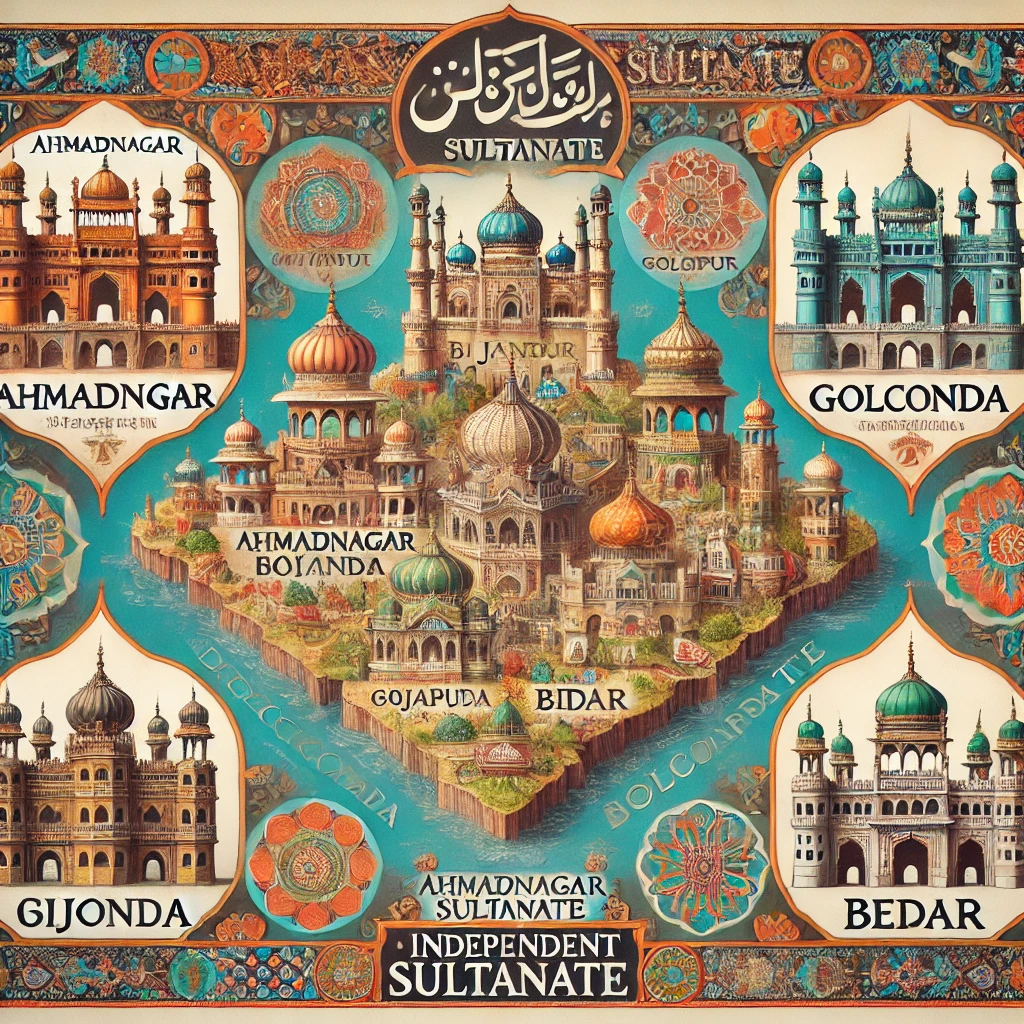
The Deccan Sultans not only established their political influence in Indian history but also made remarkable contributions to art, literature, music, architecture and cultural development. Under their rule, the Deccan became a centre of cultural prosperity, showcasing a unique blend of Persian, Turkish and local Indian traditions.
1. Architecture
The Deccan Sultans constructed magnificent buildings, forts, tombs and mosques—reflecting a fusion of Indo-Islamic styles.
Gol Gumbaz (Bijapur)
- Built by the Bijapur Sultans, known for its massive dome—one of the largest in the world.
- The whispering-gallery resonance feature makes it architecturally unique.
Charminar (Golconda / Hyderabad)
- A masterpiece built by the Qutb Shahi rulers.
- Shows a fine blend of Persian and Indian architectural elements.
Golconda Fort
- Renowned for its strong defensive structure and grandeur.
- Associated with historical diamond trade.
Bidar Fort
- Built by the Bidar Sultans; a classic example of Deccani architectural style.
2. Literature and Language
The Deccan Sultans deeply patronised literature, aiding the development of both Persian and Dakhni Urdu.
Rise of Dakhni Urdu
- A blend of Persian, Arabic and local languages.
- Widely used in poetry and literary works.
Persian Literature
- Flourished under royal patronage.
- Poets and scholars wrote extensively in Persian across Deccan courts.
Major Literary Works
- Ibrahim Adil Shah II (Bijapur) authored the famous “Kitab-i-Navras”, focused on music, devotion and love.
3. Music and Dance
The Deccan Sultans nurtured musical traditions, merging Indian and Islamic styles.
Deccani Style of Music
- A unique musical style developed under their patronage.
Ibrahim Adil Shah II
- Considered a great patron of music.
- Encouraged the “Navras” musical style based on ragas of devotion and love.
- Court performances of singing and dancing were common.
4. Art and Painting
Fine arts flourished under the Deccan Sultans, especially painting and metal crafts.
Meenakari and Metal Art
- Developed extensively in Bijapur and Golconda.
Persian-Indian Painting Fusion
- A remarkable blend of Persian and Indian artistic styles emerged.
5. Syncretism of Religion and Culture
The Deccan Sultans promoted harmony between different religions and cultures.
Hindu-Muslim Cultural Coordination
- Hindu poets, artists and architects received royal patronage.
- Ibrahim Adil Shah II was called “Jagat Guru” for his inclusive approach towards Hinduism and Indian music.
6. Trade and Crafts
Trade and craftsmanship flourished during the Deccan Sultanates.
Diamond Trade
- The Golconda region became world-famous for its diamond mines.
Weapons and Metal Crafts
- Deccani weapons and metalwork gained recognition across India.
Conclusion
The cultural achievements of the Deccan Sultans form an essential part of their legacy. Through their patronage of architecture, literature, music, art and cultural integration, they transformed the Deccan into a vibrant cultural hub. Their influence still survives through their monuments, manuscripts and artistic traditions.

Major Sultans of the Deccan and Their Contributions
The Deccan Sultans made substantial contributions to politics, administration, architecture, art and cultural prosperity. Their policies gave the Deccan a distinct identity. Below are some of the most prominent rulers and their achievements.
1. Hasan Gangu Bahman Shah (1347–1358)
Founder of the Bahmani Sultanate
- Founded the Bahmani Sultanate and assumed the title “Alauddin Bahman Shah”.
Construction of the Capital
- Established Gulbarga (Kalaburagi) as the capital.
Administrative Reforms
- Developed a strong administrative system and stabilised the Sultanate.
2. Mahmud Gawan (1463–1481)
Great Prime Minister (Vazir)
- One of the most influential administrators of the Bahmani Sultanate.
- Strengthened military, financial and administrative frameworks.
Mahmud Gawan Madrasa
- Built a grand Islamic educational centre at Bidar.
3. Yusuf Adil Shah (1490–1510)
Founder of the Bijapur Sultanate
- Declared independence from Bahmani rule and founded the Bijapur Sultanate.
Religious Tolerance
- Promoted harmony between Hindu and Muslim communities.
Architectural Growth
- Laid the foundation for Bijapur’s later architectural achievements.
4. Ibrahim Adil Shah II (1580–1627)
The Great Ruler of Bijapur
- Known as “Jagat Guru” for promoting cultural syncretism.
Interest in Music and Literature
- Authored “Kitab-e-Navras”, celebrating music and devotion.
Architectural Development
- Oversaw planning and development of grand monuments including Gol Gumbaz.
5. Qutb Shahi Dynasty (1518–1687)
Muhammad Quli Qutb Shah (1580–1612)
- Builder of the Charminar.
- Founded the city of Hyderabad in 1591.
- Encouraged Persian, Urdu and Telugu literature.
6. Ahmad Nizam Shah (1490–1510)
Founder of the Ahmednagar Sultanate
- Established Ahmednagar after breaking away from Bahmani rule.
Military Reforms
- Developed a strong and organised military system.
Architectural Patronage
- Constructed mosques and palaces across Ahmednagar.
7. Mohammed Adil Shah (1627–1656)
Ruler of Bijapur
- Transformed Bijapur into a cultural and architectural hub.
- Completed the construction of Gol Gumbaz, a marvel of Indian architecture.
8. Qasim Barid (1492–1504)
Founder of the Bidar Sultanate
- Established the Barid Shahi Dynasty.
Cultural Preservation
- Encouraged Persian literature and arts.
Development of Bidar Fort
- Expanded and strengthened Bidar Fort.
9. Fathullah Imad Shah (1490–1510)
Founder of the Berar Sultanate
- Established the Berar Sultanate.
Military Organisation
- Strengthened military forces to stabilise his kingdom.
Conclusion
The Deccan Sultans played a significant role in shaping the region's architecture, art, music, literature and administration. Their contributions enriched the Deccan socially, culturally and politically. Their enduring legacy can still be seen in their monuments, artistic works and cultural integration.

References
- Indian History Sources: Based on various historical texts and research works related to the political and cultural history of medieval India.
- Bahmani and Deccan Sultanate Records: Historical documents, inscriptions and archaeological materials associated with the Bahmani, Adil Shahi, Nizam Shahi and Qutb Shahi dynasties.
- Archaeological Survey Reports: Information derived from ASI reports on monuments such as Gol Gumbaz, Charminar, Golconda Fort, Bidar Fort and other Deccan architectural sites.
- Scholarly Research Articles: Academic papers focused on the political decline of the Deccan Sultanates, Mughal–Deccan conflicts, rise of the Marathas and medieval Deccan culture.
- Academic Books:
- "History of Medieval India" – by various historians
- "The Bahmani and Deccan Sultanates" – modern historical interpretations
- "History of Medieval Deccan" – academic publications
- Regional Historical Traditions: Study of cultural, architectural and literary traditions prevalent in the Deccan region.
- Expert Commentary: Insights from historians specialising in Deccani music, literature, architecture and socio-cultural integration.