
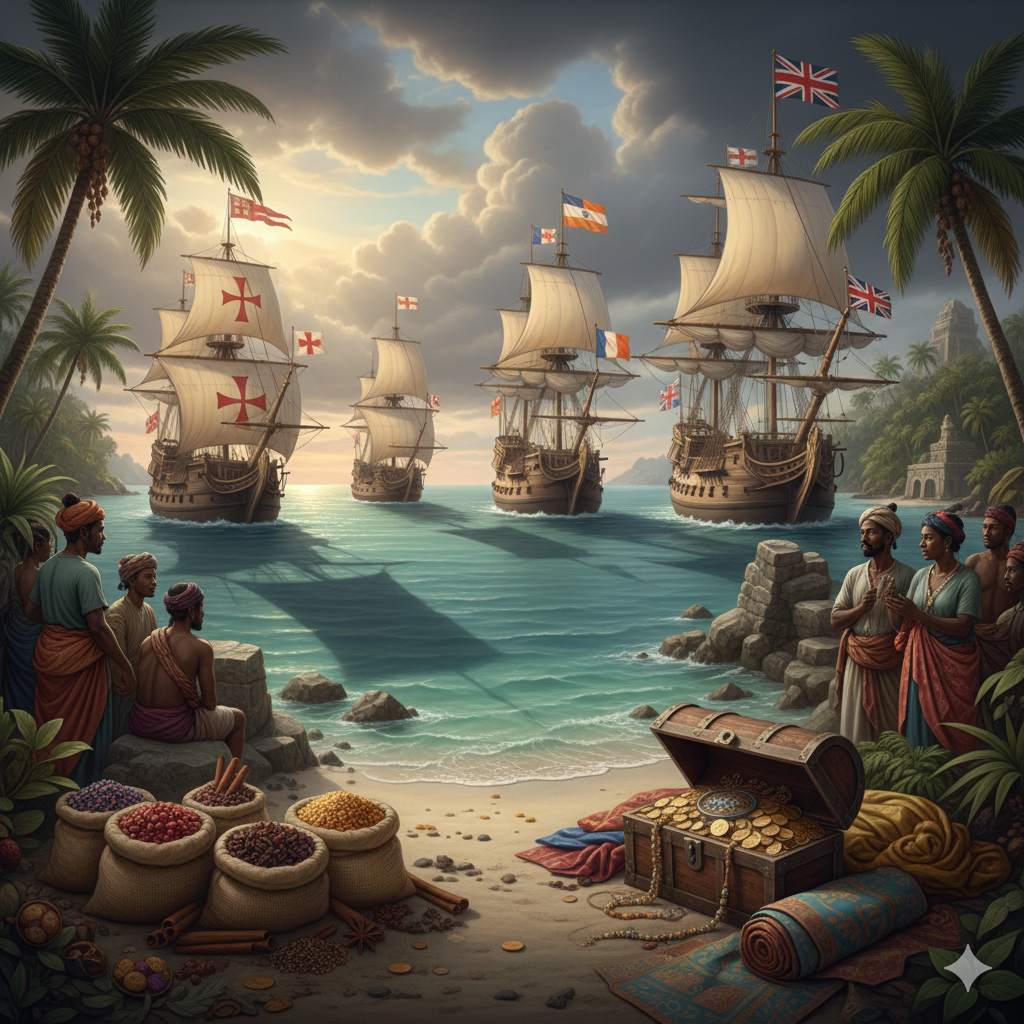
What Were the Effects of Colonialism?
The effects of colonialism included economic exploitation, destruction of local industries, political domination, social and cultural changes, spread of Western education, and emergence of nationalist movements. Colonial powers controlled resources and markets of colonized countries while reshaping their administration, economy, and society.
Effects of Colonialism
The effects of colonialism transformed the political, economic, social, and cultural structure of countries across Asia, Africa, and Latin America. European colonial powers exploited natural resources, destroyed local industries, imposed foreign rule, and reshaped societies for their own economic and strategic interests. At the same time, colonialism introduced modern administration, railways, education, and communication systems. Understanding the positive and negative effects of colonialism is extremely important for UPSC, SSC, State PCS, and other competitive examinations.
1. Background and Objectives of Colonialism
European colonialism began towards the end of the 15th century when various European countries started exploring new trade routes across the seas. The main objectives behind this expansion were varied but interconnected.
1.1 Key Objectives of European Colonialism
- Business interests: Exploration and control of lucrative resources such as spices, gold, silver, and other valuable commodities.
- Religious expansion: Propagation of Christianity and attempts to convert local populations.
- Geographical exploration: Discovery of new lands, sea routes, and natural resources to expand influence and power.
- Strategic control: Capture and control of important sea routes, ports, and key land areas for military and commercial advantage.
2. Arrival of Major European Powers
Several European powers entered Asia, Africa, and the Americas with different strategies, time frames, and areas of control. Each of them left a distinct mark on the regions they dominated.
2.1 Portuguese Colonialism (1498)
- Vasco da Gama reached Calicut (now Kozhikode) in India by sea in 1498.
- Portugal established control over key areas such as Goa, Diu, and Daman on the west coast of India.
- They established their dominance over the spice trade in the Indian Ocean region.
2.2 Spanish Colonialism
- Spain established colonies mainly in South America and the Philippines.
- Spanish colonialism focused heavily on gold and silver mining.
- They actively promoted the preaching and spread of Christianity among local communities.
2.3 Dutch Colonialism
- The Dutch East India Company (VOC) established trading bases in Southeast Asia and India during the 17th century.
- Their focus was primarily on spices, textiles, and maritime trade.
- The Dutch built a powerful commercial network through their ports and trading posts.
2.4 French Colonialism
- The French East India Company captured territories such as Pondicherry, Chandannagar, and Mahé in India in the 17th century.
- The main aim of French colonialism in India was to challenge and counter the growing British influence.
- They tried to create political and commercial alliances with local rulers to strengthen their position.

2.5 British Colonialism
- The British East India Company entered India in 1600 for the purpose of trade.
- The British gradually established political dominance in India, especially after winning the Battle of Plassey (1757) and the Battle of Buxar (1764) in Bengal.
- In 1858, after the Revolt of 1857, India became a formal colony of the British Empire under direct Crown rule.
3. Effects of Colonialism
European colonialism changed the internal structures of colonized societies in many ways. Its impact can be studied under economic, social, political, and cultural dimensions.
3.1 Economic Impact
- Collapse and decline of many local industries, such as the traditional textile industry in India.
- Systematic exploitation and extraction of natural and human resources from colonized countries.
- Introduction of new tax systems and land revenue arrangements, such as the Permanent Settlement in India.
- Restructuring of local economies to serve the needs of European markets and industries.
3.2 Social Impact
- Deep influence of European culture, lifestyle, and values on local societies.
- Changes and reforms in the fields of education and health through new institutions and systems.
- Transformation in traditional caste, class, and social relations in many regions.
- Emergence of new social groups such as educated middle classes, who later led reform and freedom movements.
3.3 Political Influence
- Defeat of local kings and rulers, and the establishment of direct or indirect European rule.
- Political instability in many regions during the transition from traditional kingdoms to colonial administration.
- Creation of centralized and bureaucratic colonial administrative systems.
- Introduction of new legal and judicial frameworks that reshaped governance structures.
3.4 Cultural Influences
- Significant impact on local languages, literature, art, and traditions.
- Active work of Christian missionaries, which led to conversions in some areas.
- Cultural suppression and devaluation of many indigenous traditions and belief systems.
- Simultaneously, cross-cultural interactions also led to new forms of literature, ideas, and social thought.
4. Protests and Freedom Struggle
European colonial rule did not remain uncontested. The local people in many regions resisted and fought against foreign domination in different ways and at different points of time.
4.1 Forms of Resistance
- In India, people rose against British rule in various uprisings, the most famous being the Revolt of 1857, which is often called the First War of Independence.
- In Africa, tribal and community-based conflicts and uprisings challenged European control.
- In America, independence movements in North and South America gradually ended Spanish and other European rule.
4.2 End of Colonialism
- After World War II, the process of decolonisation accelerated across Asia and Africa.
- Most colonized countries gained political independence during the mid-20th century.
- New nation-states emerged, trying to rebuild their economies, societies, and political systems.
Conclusion
Legacy of European Colonialism
European colonialism brought about major and long-lasting changes in global politics, economy, and society. On the one hand, it promoted modern education, transportation, and communication systems. On the other hand, it was also responsible for exploitation, inequality, and cultural suppression on a massive scale.
Colonialism formally ended in the 20th century, but its effects can still be seen today in the political boundaries, economic structures, social inequalities, and development patterns of many countries. Understanding this history is essential for understanding the present world and working towards a more just and balanced future.
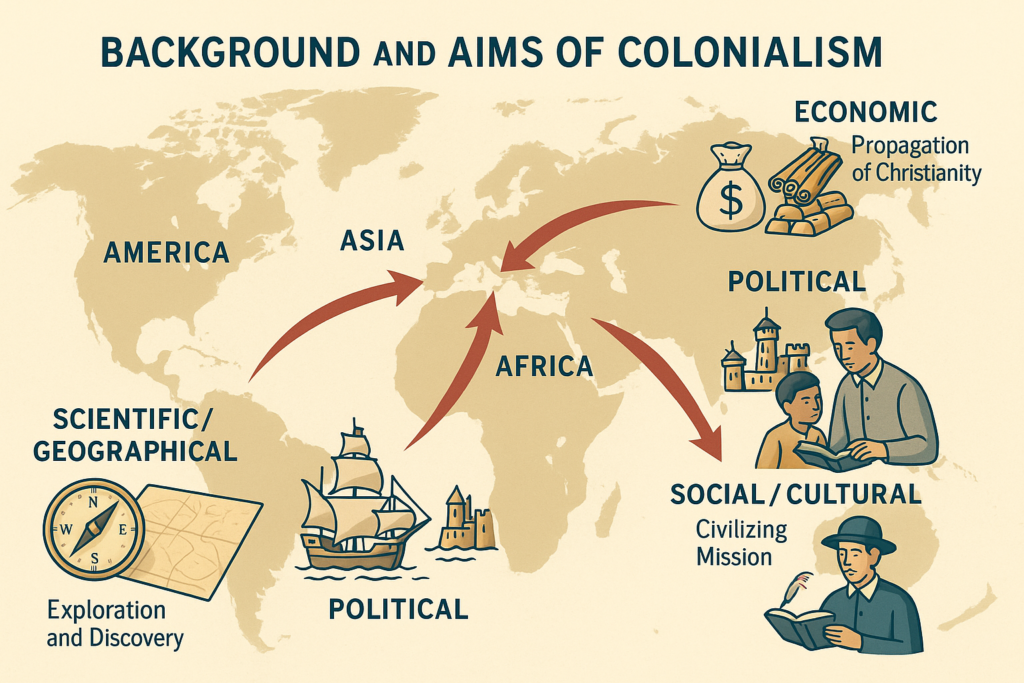
Background and Aims of Colonialism
Colonialism refers to the system in which powerful countries (called colonizers) exercised control over the territories, resources, and populations of weaker or less developed countries for their own benefit. This process began in the 15th century as “modern colonialism” and continued until the 20th century.
1. Background of Colonialism
1.1 Renaissance and Knowledge of Geography
- The Renaissance in Europe in the 14th and 15th centuries led to developments in science, art, and geography.
- There was growing inspiration for the discovery of new sea routes and geographical areas.
1.2 Mercantile Revolution and Economic Reasons
- The 15th and 16th centuries saw rapid growth in trade in Europe, known as the “Merchant Revolution”.
- There was a need to travel to Asia, Africa, and the Americas for new trade opportunities for textiles, spices, gold, and silver.
1.3 Religion and Religious Propaganda
- The feeling of expansion of Christianity was strong in Europe.
- Through colonialism, the Church and missionaries attempted to convert non-Christian areas.
1.4 Impact of the Industrial Revolution
- By the 18th century, Europe needed large quantities of raw materials.
- It became necessary to establish colonies for cheap labour, new markets, and the consumption of industrial products.

1.5 Strategic and Political Reasons
- The European powers wanted to strengthen their military power by establishing dominance over sea routes and strategic locations.
- Competition from other European countries further encouraged colonial expansion.
1.6 The Idea of Social and Racial Superiority
- European countries considered themselves “civilized” and regarded the people of Asia, Africa, and America as “uncivilized”.
- They named it a “Civilizing Mission” and claimed they wanted to “civilize” these areas.
2. The Objectives of Colonialism
2.1 Economic Objective
Exploitation of Resources
- Bringing precious goods such as spices, tea, silk, cotton, silver, and gold from the colonies to Europe.
- Obtaining raw materials (for example, coal, iron, sugarcane) for industrial production.
Exploring New Markets
- Using the colonies as markets to sell European manufactured products.
Use of Cheap Labour
- Taking advantage of cheap labour from local workers in colonial territories.
2.2 Political Objective
Global Dominance
- The European powers wanted to expand their empires on a global scale.
Strategic Control
- Capturing important ports, naval bases, and sea routes to secure political and military advantage.
2.3 Religious Purpose
Propagation of Christianity
- Converting local religions and traditions, often dismissing them as “uncivilized” and inferior.
Activities of Missionaries
- Missionaries influenced the colonies through education, medicine, and religious instruction, thereby expanding Christian influence.
2.4 Social and Cultural Objectives
Civilizing Mission
- European powers, considering themselves “civilized”, attempted to bring the colonies under their own culture, language, and system of governance.
Propaganda of Racial Superiority
- They maintained control over the colonies by spreading the idea of “White Supremacy” and justifying unequal treatment.
2.5 Scientific and Geographical Purposes
Exploration and Research
- Discovery of new lands, flora, fauna, and minerals through voyages and expeditions.
New Geographic Routes
- Discovery and control of sea routes to reach Asia, Africa, and other regions more easily and cheaply.
3. Conclusion
The purpose of colonialism was not merely commercial or geographical; it was a complex process motivated by economic, political, social, religious, scientific, and cultural objectives.
European countries justified colonialism as a “civilising act”, but in reality it was a means to increase their economic and political dominance. Colonialism subjected colonized regions to long-term exploitation, poverty, and cultural destruction.
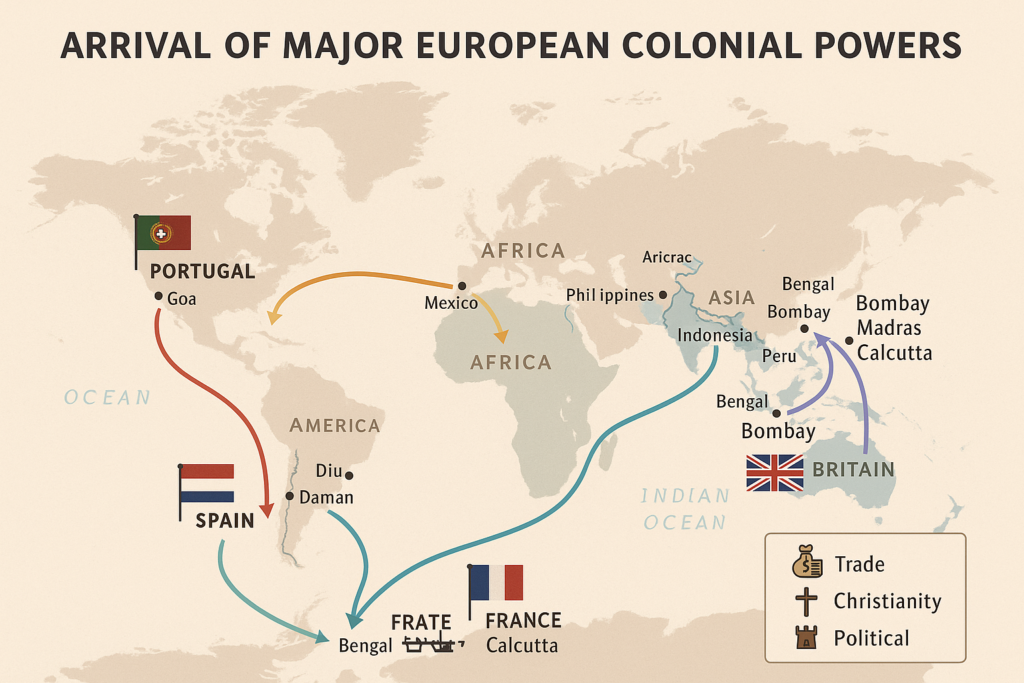
Arrival of the Major European Powers
In the late 15th and early 16th centuries, European countries began exploring sea routes with the aim of establishing colonies in Asia, Africa, and the Americas. The Portuguese and Spanish were the first to come to the forefront, followed by the Dutch, French, and British colonial powers. Their arrival and impact on various regions were profound and multifaceted.
1. Portugal: Beginning of Colonialism
Entry and Objective
- Portugal played a leading role in the exploration of sea routes in the 15th century.
- Their primary objective was to establish control over the spice trade of India and Asia.
Key Events
Vasco da Gama (1498)
- Vasco da Gama discovered the sea route to India by rounding the southern tip of Africa, the “Cape of Good Hope,” and reaching Calicut (now Kozhikode).
Establishment of Local Bases
- Goa (1510) was made the main centre of the Portuguese Empire.
- Portugal captured Diu, Daman, and several other coastal regions.
Control of the Spice Trade
- Portugal established colonies in India and Southeast Asia for the trade of pepper, cloves, and other spices.
Effect
- Portugal gained control over major sea trade routes between Europe and Asia.
- Goa emerged as a political, cultural, and religious centre under Portuguese rule.
- Portuguese influenced local society, architecture, and religious traditions.
2. Spain: Colonialism in America and the Philippines
Entry and Objective
- Spain established colonies mainly in the Americas and the Pacific region.
- Their objectives were to acquire gold, silver, and other precious resources and to spread Christianity through missionary activities.
Key Events
Christopher Columbus (1492)
- Columbus discovered the “New World” (America), marking the beginning of Spanish colonialism.
Control of Central and South America
- Spain defeated the Aztec Empire in Mexico and the Inca Empire in Peru and occupied their territories.
Colonies in the Philippines
- Spain established its rule over the Philippines in the 16th century.
Effect
- Significant cultural and religious transformation occurred in South America.
- Local indigenous populations faced suppression, forced labour, and exploitation.
- Mining for gold and silver was intensified to enrich Spain.
3. Netherlands: Rise as a Trading Power
Entry and Objective
- The Dutch began trading activities in the 17th century through the “Dutch East India Company” (VOC).
- Their aim was to surpass Portugal in the lucrative spice trade.
Key Events
Colonies in Indonesia
- The Dutch developed Indonesia as their primary commercial and trading centre.
Establishment of Bases in India
- The Dutch set up trading posts in Surat, Machilipatnam, and Nagapattinam.
Control over the Spice Trade
- They established dominance over spice-producing regions such as Malacca and Indonesia.
Effect
- The Dutch controlled significant Asian trade routes and spice production networks.
- Their influence declined in the 18th century due to the rise of British and French power.
4. France: Influence in India and Africa
Entry and Objective
- France began trading activities in India and other regions in the 17th century through the “French East India Company.”
- Their aim was to challenge British influence and increase their share in Asian trade.

Key Events
Pondicherry (1674)
- Pondicherry was established as the main centre of French power in India.
Other Bases
- The French established bases in Chandannagar, Mahe, Karaikal, and Yanam.
Conflict with the British
- The Carnatic Wars between the French and the British East India Company were major political and military struggles for control over South India.
Effect
- France left notable cultural and political influence in South India.
- The Treaty of Paris (1763) significantly reduced French political power in India.
5. Britain: Major Colonial Power
Entry and Objective
- The British East India Company began trading in India and Asia in the early 1600s.
- Their main aim was to acquire raw materials and find markets for manufactured goods produced in British industries.
Key Events
Battle of Plassey (1757)
- The British defeated Siraj-ud-Daulah, Nawab of Bengal, and gained control of Bengal.
Battle of Buxar (1764)
- The British consolidated their power by defeating the combined forces of Awadh, Bengal, and the Mughal Emperor.
Acquisition of 1858
- After the Revolt of 1857, India came directly under the rule of the British Crown.
Effect
- The British deeply influenced Indian politics, society, education, and economy.
- They introduced railways, telegraph services, modern administration, and Western education.
- However, British rule led to exploitation, economic destruction, and poverty among local industries and communities.
Conclusion
The arrival of the European powers marked a major shift in global history. Each power had its own objectives and strategies, but all exploited and extracted the resources of the territories they colonized. Their arrival shaped modern political and economic systems while also causing widespread exploitation, poverty, and social disruption.
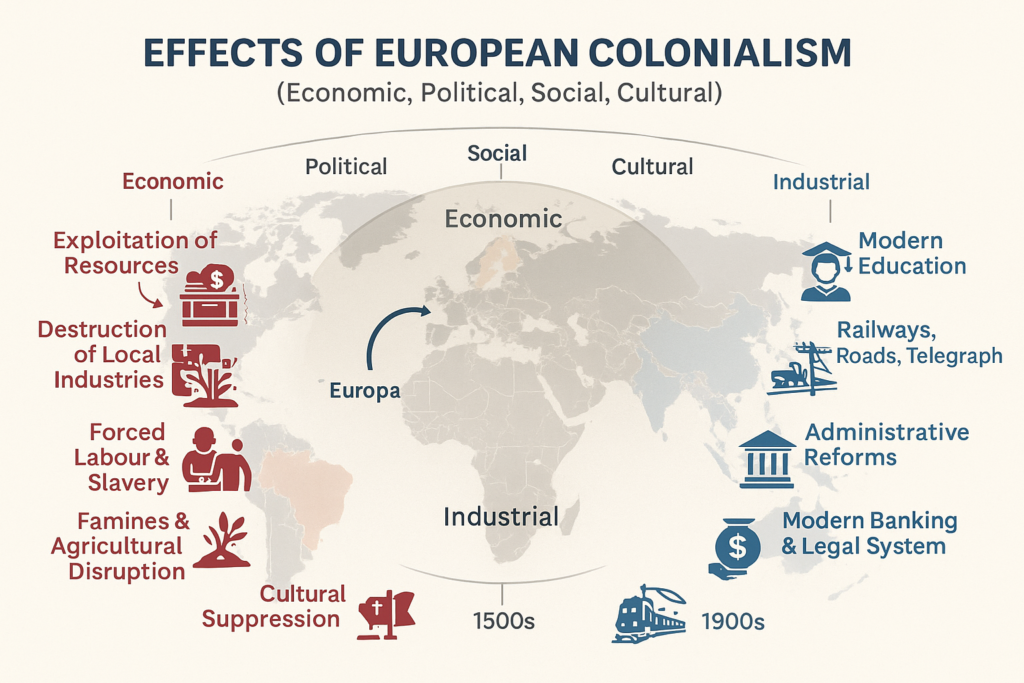
Effects of Colonialism
European colonialism had profound, far-reaching, and long-lasting effects on the society, politics, economy, and culture of the colonized regions. These effects shaped the modern world in significant ways. While colonialism introduced modernity, technology, and administrative reforms, it also brought exploitation, inequality, cultural destruction, and long-term underdevelopment. The true impact of colonialism can be understood by analysing its economic, political, social, cultural, industrial, and global dimensions.
1. Economic Impact
1.1 Exploitation and Extraction of Resources
- The central objective of colonialism was the large-scale exploitation of natural resources in colonized regions.
- Minerals, spices, cotton, tea, timber, agricultural products, and other valuable resources were exported to Europe.
- The wealth extracted from colonies fueled European industrialization and economic growth.
- Local industries were systematically destroyed to eliminate competition. Example: The decline of India’s traditional handloom and textile industry due to British policies.
- Colonies became suppliers of cheap raw materials and markets for expensive finished European goods—a structure that created long-term economic dependency.
1.2 Commercialisation of Agriculture
- Colonial powers encouraged the cultivation of cash crops such as indigo, sugarcane, cotton, rubber, and tea.
- Traditional food grain production was neglected, leading to shortages, economic instability, and catastrophic famines.
- The shift from subsistence farming to commercial farming disrupted rural economies and farmer livelihoods.
1.3 New Tax System and Land Revenue Arrangements
- European rulers introduced land systems such as Zamindari, Ryotwari, and Mahalwari in India and other colonies.
- These systems forced farmers to pay high taxes even during droughts and crop failure.
- Heavy taxation pushed millions of farmers into debt, bonded labour, and landlessness.
- Traditional community-based land ownership disintegrated, weakening rural social structures.
1.4 Trade Imbalance and Deindustrialization
- Colonies exported cheap raw materials and imported costly finished goods from Europe, creating an unfair trade system.
- This unequal economic relationship caused local industries to collapse and halted indigenous technological growth.
- European monopolies prevented the growth of local entrepreneurship and business development.
1.5 Labour Exploitation
- Colonizers used cheap labour, forced labour, and slavery to maximize profits.
- Plantation labour in the Caribbean, mining labour in Africa, and indentured labour systems in Asia exploited millions.
- Workers faced harsh conditions, long hours, and little to no compensation.
2. Political Influence
2.1 Military Control and Expansion
- European powers established political dominance by defeating local rulers and kingdoms.
- Example: British rule in India after the Battles of Plassey (1757) and Buxar (1764).
- Large standing armies were maintained to crush revolts and control local populations.
2.2 Introduction of European Administrative Systems
- Colonizers introduced modern administrative reforms, legal codes, and centralized bureaucracy.
- Institutions like the Indian Civil Service (ICS) were created to strengthen colonial authority.
- Although these systems appeared modern, they were designed primarily to extract revenue and maintain control.
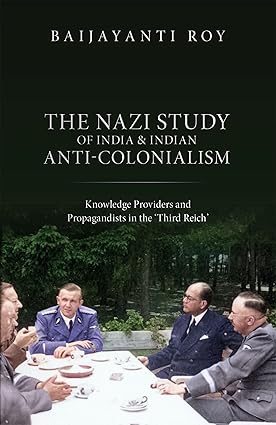
2.3 Political Unity and National Awareness
- Large territories were unified under single administrative frameworks.
- This political integration, though imposed, sowed the seeds of nationalism and anti-colonial resistance.
- Modern political consciousness emerged through education, newspapers, and social reform movements.
2.4 Control of Strategic Regions
- Colonizers captured ports, naval bases, and major trade routes for military and economic advantage.
- This competition often resulted in conflicts and prolonged instability within the colonies.
3. Social and Cultural Influences
3.1 Transformation of Traditional Social Structures
- Colonial rule weakened traditional authority systems such as kingships, clans, tribes, and community elders.
- Caste, class, and religious dynamics changed under new laws and social policies.
3.2 Spread of Western Education and Ideology
- Western-style education introduced modern science, rationalism, and humanistic thinking.
- A new educated middle class emerged, which later led reform and independence movements.
- However, education policies were primarily designed to create clerks loyal to colonial power.
3.3 Missionary Activities and Religious Conversion
- Missionaries spread Christianity and often dismissed local Religions as “uncivilized.”
- This created cultural conflicts, social divisions, and identity crises in many regions.
3.4 Cultural Destruction and Westernization
- Local arts, crafts, literature, and traditions were suppressed or replaced by European culture.
- European languages and lifestyles were promoted as superior.
- Many indigenous traditions declined due to cultural marginalization and displacement.
4. Economic and Industrial Development (Positive Impact)
4.1 Development of Infrastructure
- Construction of railways, roads, and ports improved long-distance connectivity.
- Telegraph and postal systems enhanced communication across vast regions.
- Infrastructure projects were mainly intended to facilitate resource extraction.
4.2 Expansion of Trade and Industry
- New markets were opened for trade and industrial goods.
- However, these markets primarily served European economic interests and profit motives.
4.3 Introduction of Modern Banking and Finance
- Modern banking institutions and financial systems were established.
- These systems facilitated trade, taxation, and administrative efficiency, though not necessarily local prosperity.
5. National Movement and Freedom Struggle
- Colonial oppression and exploitation inspired organized resistance movements.
- The Revolt of 1857 in India, tribal uprisings in Africa, and independence movements in the Americas are notable examples.
- Nationalism spread rapidly, ultimately leading to the downfall of colonial empires.
6. Global Impact
6.1 Expansion of Cultural Diversity
- Colonialism resulted in the exchange of ideas, foods, languages, and cultural practices.
- However, the exchange was often one-sided, favouring European dominance.
6.2 Modernity and Technological Development
- Colonizers introduced modern education, medicine, printing press, sanitation, and technology.
- But these developments largely served colonial administration and economic interests.
Conclusion
Colonialism transformed colonized regions economically, politically, socially, and culturally. It led to modernization, administrative reforms, and technological progress, but it also caused exploitation, inequality, economic destruction, and cultural oppression. The legacy of colonialism continues to shape global inequalities, political boundaries, and social structures today.
At the same time, resistance to colonialism ignited strong nationalist movements that inspired colonized nations to rebuild their identity, assert sovereignty, and work towards self-reliance and independence.
Protests and Independence Struggle
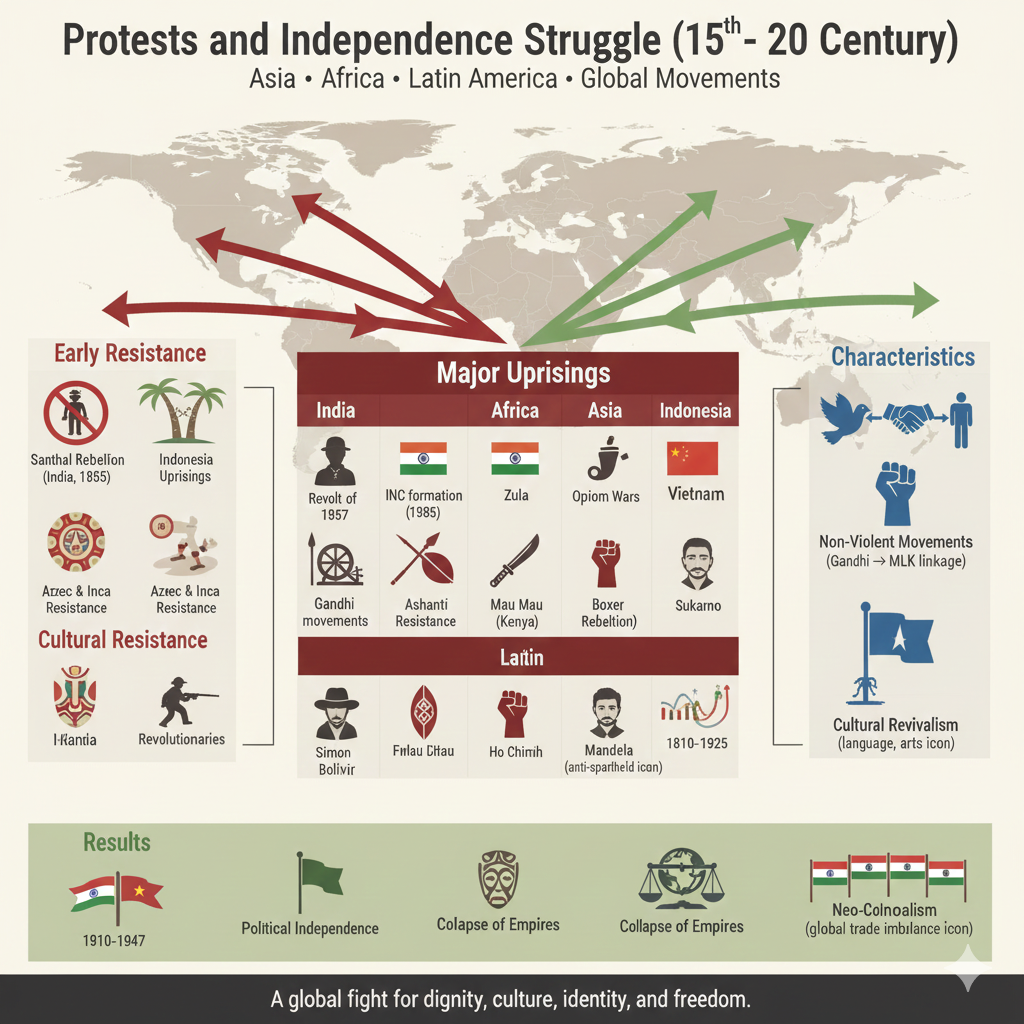
European colonialism forced the people of colonized countries to endure deep economic, social, political, and cultural exploitation. The oppressive policies of colonial rulers led to widespread resentment, resulting in protests, rebellions, and ultimately comprehensive national independence movements. These struggles evolved from isolated revolts to well-organized mass movements that reshaped world history. The freedom struggle was not only for political liberation but also a fight to protect cultural identity, social dignity, and economic independence.
1. Beginning of Opposition to Colonialism
1.1 Initial Local Rebellions
In the early phases of colonial expansion, resistance arose from local rulers, tribal communities, and regional kingdoms. These rebellions were spontaneous reactions to land occupation, unfair taxation, forced labour, and interference in religious and social practices.
- Santhal Rebellion (India, 1855): A major uprising of the Santhal tribes against the British zamindari and revenue system, driven by exploitation and displacement.
- Indonesian Rebellions: Various local uprisings took place against Dutch rule, protesting forced plantation systems and cultural suppression.
- Aztec and Inca Resistance (Mexico & Peru): Indigenous civilizations fought against Spanish invaders to protect their land, culture, and sovereignty.
1.2 Opposition to Christian Conversion and Cultural Suppression
European missionaries attempted to spread Christianity, often dismissing local Religions as “barbaric.” This deeply affected traditional societies and led to cultural resistance movements.
- Movements to protect indigenous religious practices in the Philippines, Africa, and parts of India.
- Social leaders and communities resisted religious interference to preserve their cultural identity.
2. Major Rebellions and Conflicts
2.1 India’s Freedom Struggle
(i) Revolt of 1857 – The First War of Independence
The Revolt of 1857, also known as the Sepoy Mutiny, was the first major challenge to British rule. It was triggered by military grievances, religious insults, and widespread resentment against oppressive policies.
Reasons:- Use of cartridges allegedly coated with cow and pig fat, which hurt religious sentiments.
- Heavy land taxes that impoverished farmers and zamindars.
- Disrespect for Indian rulers, traditional systems, and cultural practices.
- The rebellion failed militarily but sparked national awakening.
- The British Crown took direct control of India in 1858.
- It laid the foundation for future independence movements.
(ii) Growth of the National Movement (1885–1947)
After 1857, India witnessed the rise of organised national movements.
- Formation of Indian National Congress (1885): Moderates like Dadabhai Naoroji and Gopal Krishna Gokhale demanded constitutional reforms.
- Revolutionary Activities: Leaders like Bhagat Singh, Chandrashekhar Azad, and Subhash Chandra Bose adopted armed struggle for complete independence.
- Mahatma Gandhi’s Leadership: Gandhi transformed the freedom movement through non-violent mass movements such as Satyagraha, Non-Cooperation (1920), Civil Disobedience (Dandi March, 1930), and Quit India (1942).
2.2 Freedom Struggle in Africa
(i) Early Conflicts
- Zulu Rebellion (1879): A major conflict against British dominance in South Africa.
- Ashanti Rebellion (1900): Resistance in Ghana against British interference.
(ii) Rise of Nationalist Movements
- African countries began organising national movements in the 20th century to resist colonial exploitation.
- Mau Mau Rebellion (Kenya, 1952–1960): A powerful armed uprising against British rule.
- Nelson Mandela & Apartheid: Mandela led a historic struggle against racial segregation and colonialism in South Africa.
(iii) Achieving Independence
- Ghana (1957): The first Sub-Saharan African nation to gain independence.
- Algeria (1962): Won independence from France after a violent and prolonged struggle.
- By the 1970s, most African colonies became independent, reshaping the political landscape of the continent.
2.3 Freedom Movements in Asia
(i) Opposition in China
- Opium Wars (1839–42, 1856–60): China resisted British-imposed trade restrictions and foreign control.
- Boxer Rebellion (1899–1901): A nationalist uprising to expel European powers.
- Sun Yat-Sen: Led the Chinese national movement that laid the foundation for modern China after the fall of the Qing dynasty.

(ii) Vietnam’s Independence Struggle
- Vietnamese people resisted French colonial rule through political and armed movements.
- Ho Chi Minh: Led Vietnam’s liberation movement, which inspired the Vietnamese to fight against both colonial and foreign intervention.
- Vietnam War (1955–1975): The struggle united the country and ended foreign interference.
(iii) Indonesia
- Long struggle against Dutch colonialism.
- Sukarno: Played a central role in the Indonesian independence movement.
- Indonesia finally became independent in 1945.
2.4 Independence Movements in Latin America
- Major movements arose against Spanish and Portuguese colonial rule in the 19th century.
- Simon Bolivar: Known as the “Liberator,” he played a key role in freeing countries like Venezuela, Colombia, Ecuador, Peru, and Bolivia.
- Between 1810–1825, most Latin American countries achieved independence.
3. Characteristics of the Independence Movements
- Non-Violent Movements: Inspired by Gandhi, nations adopted peaceful resistance. Mahatma Gandhi’s Satyagraha influenced global leaders, including Martin Luther King Jr.
- Armed Resistance: Revolutionary groups used militant methods. Examples include Bhagat Singh in India, Mau Mau fighters in Kenya, and guerrilla movements in Latin America.
- Cultural Revivalism: Colonized societies revived local culture, language, and traditions to strengthen collective identity.
4. Results of the Freedom Struggle
4.1 Political Independence
- Most Asian, African, and Latin American countries gained independence in the 20th century.
- India (1947), Ghana (1957), Algeria (1962), and many others broke free from colonial rule.
4.2 Global Impact
- The colonial empires collapsed, reshaping global political boundaries.
- Institutions like the United Nations emerged as guardians of peace, cooperation, and human rights.
4.3 Neo-Colonialism
- Despite political freedom, many countries continued to face indirect economic and cultural domination through global power structures.
- Unequal trade relations, foreign debt, and multinational corporations led to new forms of exploitation.
Conclusion
Protests and independence struggles were not limited to political resistance; they also represented a profound fight for cultural survival, economic freedom, and human dignity. These movements brought an end to centuries of colonial rule and paved the way for the rise of new nation-states across the world.
Through these struggles, people affirmed their right to self-governance, equality, and identity—principles that continue to guide global politics and human rights movements today. The legacy of these struggles remains a powerful reminder of humanity’s unwavering desire for freedom, justice, and self-determination.
References
-
Books and Publications:
- Bipan Chandra – India’s Struggle for Independence
- R.C. Majumdar – The Freedom Struggle in India
- Romila Thapar – A history of India
- John Darwin – After Tamerlane: The Global History of Empire
-
Government and Historical Documents:
- National Archives of India
- British Colonial Records – The UK National Archives
- United Nations – Reports on Decolonization
-
Academic Journals and Research Sources:
- Journal of Asian Studies
- African Historical Review
- Cambridge History of the British Empire
- Oxford University Press – Research on Colonial and Post-Colonial Studies
-
Online Sources:
- Indian Council of Historical Research (ICHR) – Articles on Colonial History
- UNESCO – Cultural Heritage & Colonialism
- Stanford History Education Group – Colonialism Study Materials
- BBC History – Articles on Colonial Rule and independence movements
-
Other Important Sources:
- The Collected Works of Mahatma Gandhi
- Nelson Mandela – Long Walk to Freedom
- Ho Chi Minh – Revolutionary Writings and Speeches
- Simon Bolivar – Selected Letters and Speeches