
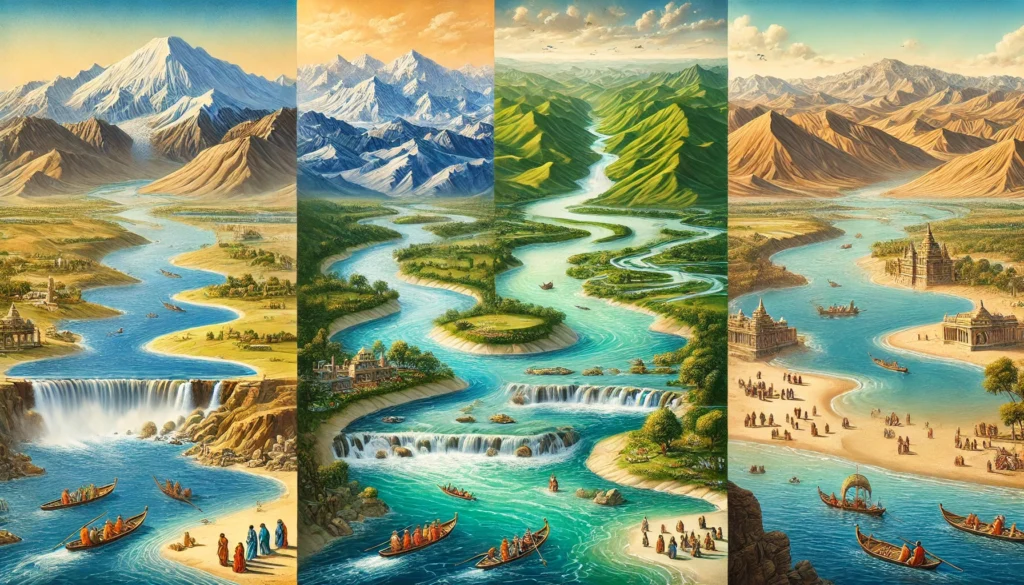
Rivers of India
Rivers in India play a vital role in shaping the country's cultural, religious, economic, and social structure. These rivers are not only essential sources of irrigation and water supply but have also supported the rise and growth of civilizations since ancient times, making them the backbone of India's development.
1. Himalayan Rivers
Himalayan rivers are the major rivers flowing through northern India. Originating from snow-covered peaks and glaciers, these rivers maintain a continuous water flow throughout the year.
Major Himalayan Rivers
The Ganges River
- Importance: The most sacred and significant river in India.
- Origin: Gangotri Glacier, Uttarakhand.
- Tributaries: Yamuna, Son, Ghaghra, Kosi, Gandak.
- Length: Approximately 2,525 km.
- Note: The Ganga Plain is among the most fertile regions in the world.
Yamuna River
- Origin: Yamunotri Glacier.
- Feature: Largest tributary of the Ganga.
- Major Cities: Delhi, Agra, Mathura.
Brahmaputra River
- Origin: Tibet (near Mansarovar Lake).
- Significance: Plays a crucial role in Assam and Arunachal Pradesh.
- Total Length: Approx. 2,900 km.
2. Peninsular Rivers
Peninsular rivers originate in the southern part of India. Their flow primarily depends on rainfall and seasonal variations.
Major Peninsular Rivers
Narmada River
- Origin: Amarkantak Hills, Madhya Pradesh.
- Feature: A major west-flowing river.
- Length: Approximately 1,312 km.
Godavari River
- Origin: Trimbakeshwar, Maharashtra.
- Specialty: Known as the “Dakshin Ganga”.
- Length: Approximately 1,465 km.
Krishna River
- Origin: Mahabaleshwar, Maharashtra.
- Feature: Second largest river in South India.
- Length: Approximately 1,400 km.
Cauvery River
- Origin: Brahmagiri Hills, Karnataka.
- Specialty: Considered the lifeline of South India.
Top Amazon Product
High-quality product with excellent performance and trusted user reviews — available on Amazon!
Buy on Amazon3. Coastal Rivers
Coastal rivers are relatively short in length and flow quickly into the sea.
Major Coastal Rivers
- Mandovi River (Goa)
- Zuari River
- Periyar River (Kerala)
Cultural and Religious Significance of Rivers
Indian rivers have deep religious and cultural importance. Rivers like the Ganga, Yamuna, Saraswati, and Kaveri are worshipped as divine goddesses. Major pilgrimage sites such as Haridwar, Prayagraj, Varanasi, and Rishikesh are situated along these sacred riverbanks.
Economic Importance of Rivers
Irrigation
Rivers play a vital role in India’s agricultural activities by providing essential water for irrigation.
Hydroelectricity
Dams built on rivers contribute significantly to hydroelectric power generation.
Transportation and Trade
Several rivers serve as important inland waterways, supporting transportation and trade across the country.
Conclusion
The rivers of India are not only life-giving resources but also integral to the nation’s culture, history, and economic development. Ensuring their conservation and sustainable use is essential for a prosperous future.
Frequently Asked Questions (FAQs)
1. How many major types of rivers exist in India?
India’s rivers are mainly classified into three categories: Himalayan Rivers, Peninsular Rivers, and Coastal Rivers.
2. Why are Himalayan rivers perennial?
Himalayan rivers originate from glaciers and snow-covered mountains, ensuring continuous water flow throughout the year.
3. Which river is called the “Dakshin Ganga”?
The Godavari River is popularly known as the “Dakshin Ganga”.
4. Why are rivers important for the Indian economy?
Rivers support irrigation, hydroelectric power, transportation, fisheries, and agriculture, making them vital for economic growth.
5. What is the cultural importance of the Ganga River?
The Ganga is considered the most sacred river in India and plays a significant role in Hindu rituals, traditions, and pilgrimage.
Internal Link
Himalayan Rivers
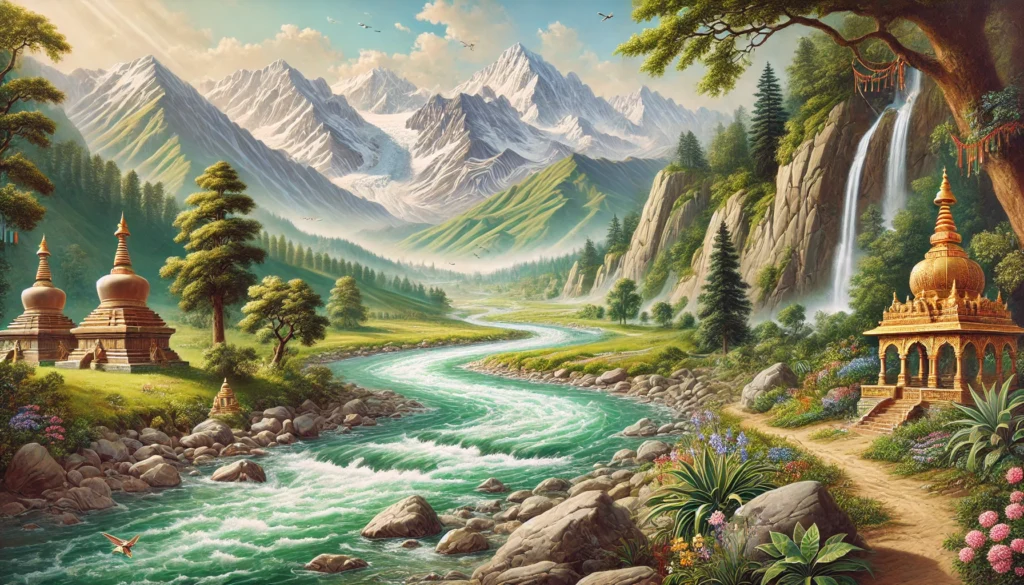
Himalayan rivers are the major rivers of northern India. These rivers originate from glaciers and snow-covered regions of the Himalayas. Their water flow remains perennial, as they depend on both Himalayan snowfall and monsoon rainfall. Himalayan rivers are considered the backbone of Indian civilization and hold great geographical, religious, and cultural significance.
Classification of Himalayan Rivers
The Himalayan rivers are mainly divided into three major river systems:
- Indus River System
- Ganges River System
- Brahmaputra River System
1. Indus River System
The Indus River system is one of the largest and most important river systems of the Indian subcontinent.
Origin
It originates from Mount Kailash near Mansarovar Lake in Tibet.
Length
The total length of the Indus River is about 3,180 km, of which around 1,114 km flows within India.
Important Tributaries
- Jhelum
- Chenab
- Ravi
- Beas
- Sutlej
Drainage Area
Most of the Indus River flows through Pakistan.
Importance
This river serves as a primary source of irrigation in Jammu & Kashmir, Himachal Pradesh, and Punjab.
Major Tributaries Details
Jhelum River
It flows through the Kashmir Valley and drains the famous Dal Lake.
Chenab River
Also known as Chandrabhaga, it is one of the largest tributaries of the Indus.
Ravi River
A historically significant river, often called the “Lifeline of Punjab”.
Sutlej River
Well-known for the Bhakra Nangal Dam built on it.
2. Ganges River System
The Ganga is the most sacred and culturally important river of India. In Hinduism, it is revered as a motherly divine entity.
Origin
The Ganga originates from the Gangotri Glacier (Gaumukh) in Uttarakhand.
Length
The total length of the river is approximately 2,525 km.
Important Tributaries
- Yamuna
- Ghaghra
- Gandak
- Kosi
- Son
Drainage Area
The Ganga flows through India and Bangladesh before merging with the Bay of Bengal.
Importance
It is the lifeline of agriculture, irrigation, and drinking water in the fertile Ganga plains.
Major Tributaries Details
Yamuna River
Originates from the Yamunotri Glacier and meets the Ganga at Prayagraj.
Ghaghra River
Originates in Nepal and joins the Ganga in Uttar Pradesh.
Gandak River
Also rising in Nepal, it meets the Ganga in Bihar.
Kosi River
Known as the “Sorrow of Bihar” due to frequent floods.
Son River
Flows through central India before merging with the Ganga.
3. Brahmaputra River System
The Brahmaputra is the most prominent and powerful river in northeastern India.
Origin
It originates near Mansarovar Lake in Tibet, where it is known as Yarlung Tsangpo.
Length
The total length of the river is approximately 2,900 km.

Awesome Amazon Product
Premium quality product with great features and reliable performance — available on Amazon!
Buy on AmazonImportant Tributaries
- Dihang
- Lohit
- Subansiri
- Manas
Drainage Area
The Brahmaputra flows through Tibet, India (Arunachal Pradesh and Assam), and Bangladesh.
Feature
It is one of the few rivers in the world influenced by tidal effects.
Major Tributaries Details
Dihang River
Meets the Brahmaputra in Arunachal Pradesh.
Lohit River
An important river contributing significantly to the Brahmaputra basin.
Subansiri River
Known as the “Lifeline of Arunachal”.
Characteristics of Himalayan Rivers
- Perennial Flow: Water remains throughout the year due to snowmelt and rainfall.
- Source of Irrigation: These rivers make the northern plains extremely fertile.
- Flat Plains Formation: Their long journey creates vast alluvial plains.
- Flooding: Floods are common during the monsoon season.
Importance of Himalayan Rivers
- Agriculture: Support advanced agricultural practices in north India.
- Hydroelectricity: Dams on these rivers generate significant hydropower.
- Transportation: Rivers like the Ganga and Brahmaputra enable inland water transport.
- Religious Significance: Rivers such as Ganga and Yamuna play a central role in Indian culture.
Conclusion
Himalayan rivers are the lifeline of India’s economy, culture, and ecosystem. Their conservation and sustainable management are essential for the nation’s long-term development.
Frequently Asked Questions (FAQs)
1. How many major Himalayan river systems exist?
There are three major systems: the Indus, Ganges, and Brahmaputra river systems.
2. Why are Himalayan rivers perennial?
They originate from glaciers and receive both snowmelt and monsoon rainfall, ensuring year-round flow.
3. Which is the longest river in the Himalayan region?
The Indus River is the longest among the Himalayan rivers.
4. Why is the Ganga considered sacred?
The Ganga is revered in Hinduism and plays an important role in rituals, spirituality, and cultural traditions.
5. Which Himalayan river is affected by tides?
The Brahmaputra River is one of the few rivers in the world influenced by tidal effects.
Internal Link
Peninsular Rivers
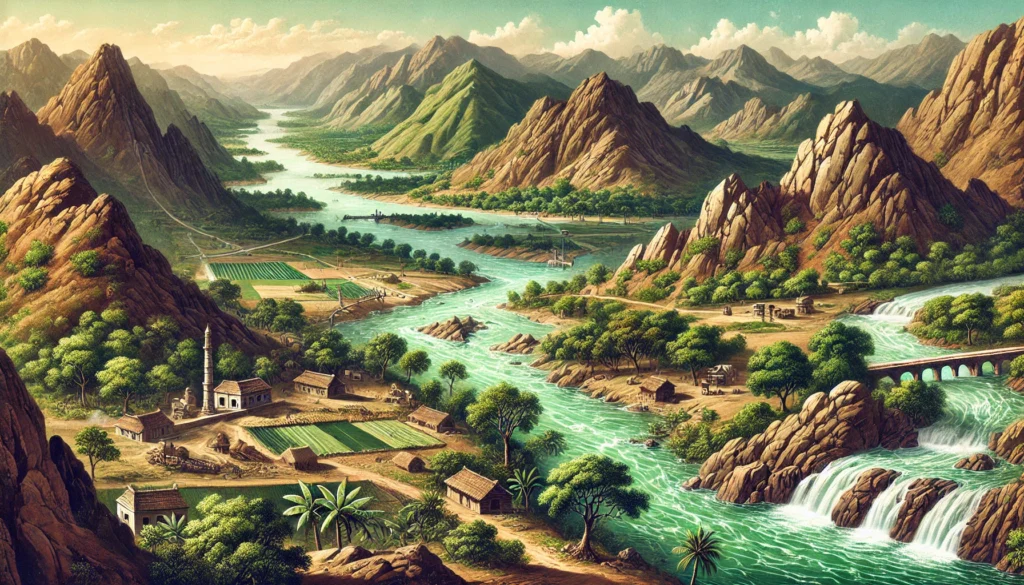
Peninsular rivers are the major rivers flowing through southern and central India. These rivers originate from the hills and mountains of the peninsular plateau. Since they primarily depend on rainfall, their water flow varies throughout the year. The water level increases during the monsoon and decreases significantly in the summer.
Categories of Peninsular Rivers
The peninsular rivers are divided into two main categories:
- East-flowing rivers (drain into the Bay of Bengal)
- West-flowing rivers (drain into the Arabian Sea)
Characteristics of Peninsular Rivers
- Geographical Location: These rivers originate from the peninsular plateau with natural slopes either eastward or westward.
- Water Flow: Dependent on rainfall, they are not perennial.
- Erosion: Their flow is slower than Himalayan rivers, so deep valleys are not formed.
- Delta & Estuary: East-flowing rivers form deltas, while west-flowing rivers form estuaries.
1. East Flowing Rivers
These rivers drain into the Bay of Bengal and generally form large deltas.
Major Rivers
Godavari River
- Origin: Trimbakeshwar, Nashik (Maharashtra)
- Length: 1,465 km (longest river in South India)
- Specialty: Also known as “Dakshin Ganga”.
- Important Tributaries: Pravara, Indravati, Manjira, Wainganga, Penganga
- Delta Region: Andhra Pradesh
Krishna River
- Origin: Mahabaleshwar (Maharashtra)
- Length: 1,400 km
- Important Tributaries: Bhima, Tungabhadra, Koyna
- Delta Region: Andhra Pradesh
- Feature: Major source for irrigation and hydropower.
Cauvery River
- Origin: Brahmagiri Hills, Kodagu (Karnataka)
- Length: 800 km
- Important Tributaries: Amravati, Hemavati, Bhavani
- Delta Region: Tamil Nadu
- Specialty: Considered the lifeline of South India.
Mahanadi River
- Origin: Near Raipur district of Chhattisgarh
- Length: 858 km
- Important Tributaries: Shivnath, Jonk, Tel
- Delta Region: Odisha
- Feature: Known for its large delta.
Pennar River
- Origin: Nandi Hills, Karnataka
- Length: 597 km
- Feature: Provides water to semi-arid regions of Andhra Pradesh.
2. West Flowing Rivers
These rivers drain into the Arabian Sea and mostly form estuaries instead of deltas.
Major Rivers
Narmada River
- Origin: Amarkantak Hills (Madhya Pradesh)
- Length: 1,312 km
- Feature: Most prominent west-flowing river of India.
- Importance: Key source for irrigation and hydropower in Madhya Pradesh and Gujarat.
Tapti River
- Origin: Satpura Hills (Madhya Pradesh)
- Length: 724 km
- Important Tributaries: Panjra, Girna, Purna
- Feature: Provides irrigation and drinking water in Maharashtra and Gujarat.
Mahi River
- Origin: Madhya Pradesh
- Length: 583 km
- Feature: Flows through Madhya Pradesh, Rajasthan, and Gujarat.
Sabarmati River
- Origin: Aravalli Range (Rajasthan)
- Length: 371 km
- Specialty: The city of Ahmedabad is located on its banks.
Mandovi and Zuari Rivers
- Location: Goa
- Feature: Major water sources for the coastal regions of Goa.

High-Quality Amazon Product
Premium product with excellent performance and positive customer reviews — available on Amazon!
Buy on AmazonImportance of Peninsular Rivers
- Irrigation & Agriculture: These rivers help make surrounding land fertile.
- Hydropower Generation: Dams on rivers like Krishna, Godavari, and Cauvery generate electricity.
- Economic Development: Essential for industries, drinking water, and household use.
- Religious Significance: Rivers like Kaveri, Narmada, and Godavari hold religious importance.
Conclusion
Peninsular rivers play a vital role in India’s economy, agriculture, and cultural heritage. Their conservation and sustainable water management are essential for long-term development.
Frequently Asked Questions (FAQs)
1. How are Peninsular rivers different from Himalayan rivers?
Peninsular rivers depend on rainfall and have non-perennial flow, whereas Himalayan rivers originate from glaciers and have perennial flow throughout the year.
2. Why do east-flowing rivers form deltas?
East-flowing rivers carry large amounts of sediment and have a gentle slope, allowing them to deposit sediments and form deltas.
3. Which is the longest Peninsular river?
The Godavari River is the longest Peninsular river, stretching 1,465 km.
4. Why do west-flowing rivers form estuaries?
They flow through steep gradients and reach the Arabian Sea quickly, preventing sediment deposition needed for delta formation.
5. Which Peninsular rivers are important for hydropower?
Krishna, Godavari, and Cauvery rivers are major contributors to hydropower generation.
Internal Link
Coastal Rivers
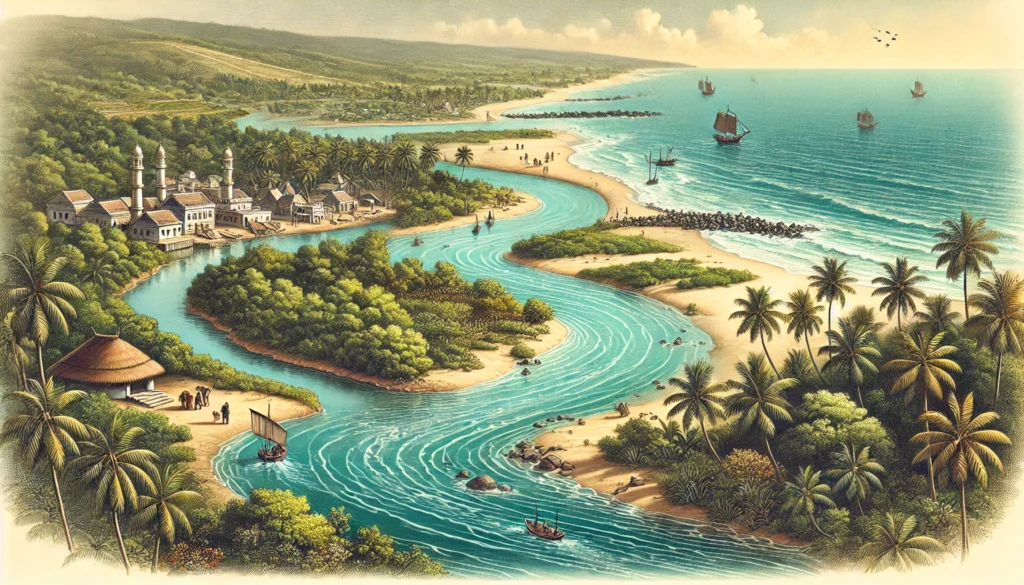
Coastal rivers are those rivers of India that flow near the coastal areas and drain directly into the sea. These rivers are relatively short and depend mainly on rainfall for their water supply. They are found along both the eastern and western coasts of India and are classified based on their location and flow characteristics.
Characteristics of Coastal Rivers
- Short Length: These rivers are smaller with limited catchment areas.
- Water Flow: Their water flow increases during monsoon rains.
- Rain-fed: They are non-perennial rivers dependent mainly on rainfall.
- Estuary Formation: Most coastal rivers form estuaries, not deltas.
- Regional Importance: Essential for agriculture and local water supply.
Classification of Coastal Rivers
Coastal rivers are located on both the West Coast and the East Coast of India.
1. Coastal Rivers of the West Coast
The rivers of the west coast are mostly short streams flowing into the Arabian Sea.
Major West Coast Rivers
Mandovi River
- Location: Goa
- Length: Approximately 77 km
- Feature: Most important river of Goa
- Importance: Plays a major role in agriculture and tourism
Juri (Zuari) River
- Location: Goa
- Feature: Along with Mandovi, provides water to coastal areas
Periyar River
- Location: Kerala
- Length: Approximately 244 km
- Feature: Longest river in Kerala with many dams
- Importance: Major source of drinking water, irrigation, and power generation
Bharathapuzha River
- Location: Kerala
- Length: Approximately 209 km
- Specialty: Also known as “Nila” or “Blue River”
- Importance: Supports Kerala’s agricultural regions
Sharavati River
- Location: Karnataka
- Length: Approximately 128 km
- Specialty: Famous for Jog Falls
- Importance: Major contributor to hydroelectric power generation
Netravati and Gurupura Rivers
- Location: Karnataka
- Feature: Provide essential water supply to South Karnataka coastal regions
2. Coastal Rivers of the East Coast
The rivers of the east coast are relatively longer and typically drain into the Bay of Bengal. Many of them form large deltas, although some smaller coastal rivers also exist.
Major East Coast Rivers
Vaigai River
- Location: Tamil Nadu
- Length: Approximately 258 km
- Feature: Main river of southern Tamil Nadu
- Importance: Provides irrigation and drinking water
Pennar River
- Location: Andhra Pradesh
- Length: Approximately 597 km
- Feature: Rain-fed river forming small deltas
Palar River
- Location: Tamil Nadu & Andhra Pradesh
- Length: Approximately 348 km
- Feature: Water used mainly for irrigation
Kolleru River
- Location: Andhra Pradesh
- Feature: Small river draining into the Bay of Bengal
Subarnarekha River
- Location: Jharkhand & West Bengal
- Length: Approximately 395 km
- Feature: Falls into the Bay of Bengal and supports local irrigation
Importance of Coastal Rivers
- Local Water Supply: Main source for drinking water and irrigation in coastal areas.
- Fisheries: Support fisheries and aquatic ecosystems.
- Tourism: Waterfalls, estuaries, and scenic riverbanks promote tourism.
- Agriculture: Essential for agriculture along coastal plains.
- Navigation: Some coastal rivers aid local transport and navigation.
Recommended Amazon Product
Reliable quality item with good reviews — available now on Amazon.
Buy on AmazonProblems and Conservation of Coastal Rivers
Issues
- Water Pollution: Increasing industrial and domestic waste entering rivers.
- Water Crisis: Water level falls drastically during drought due to rain dependency.
- Illegal Sand Mining: Severe damage to river ecosystems.
Conservation Measures
- Strict laws for pollution control
- Adoption of water conservation techniques
- Community participation in river protection
Conclusion
Coastal rivers are extremely important for India’s coastal regions. They support agriculture, water supply, economic activity, and tourism. Their conservation and sustainable use are essential for the long-term development of coastal areas.
Frequently Asked Questions (FAQs)
1. What are coastal rivers?
Coastal rivers are rivers that flow near or along the coastal regions of India and drain directly into the seas.
2. Why do most coastal rivers form estuaries?
Due to their short length and steep gradient, sediment deposition is lower, leading to estuary formation instead of deltas.
3. Which is the longest river on the west coast?
The Periyar River in Kerala is the longest west-coast river.
4. What is the importance of coastal rivers?
They support irrigation, drinking water supply, fisheries, tourism, and agriculture in coastal regions.
5. What major issues affect coastal rivers?
Water pollution, sand mining, and seasonal water scarcity are the major issues affecting coastal rivers.
Internal Link
Cultural and Religious Significance of Rivers
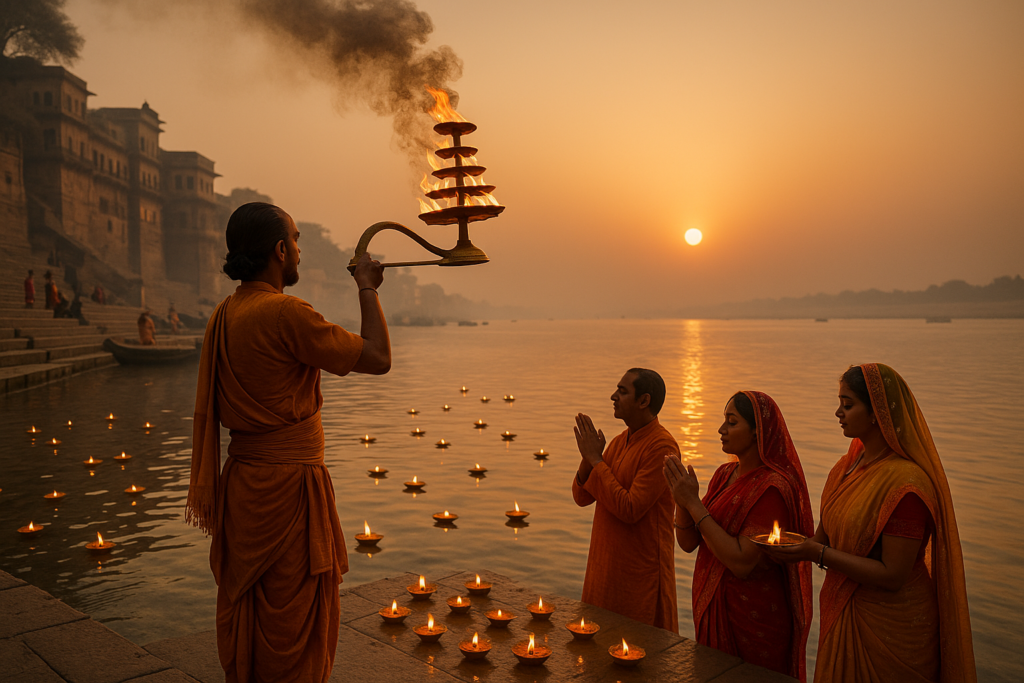
Rivers in India are not merely sources of water; they are the very foundation of Indian culture, religion, and civilization. They are revered as mothers and symbolize purity, life, rebirth, and spirituality. Since ancient times, rivers have held deep cultural and religious importance.
1. Religious Significance
(a) Worship of Rivers as Goddesses
In Indian culture, many rivers are worshipped as divine goddesses.
- Ganga River: Revered as “Maa Ganga”, believed to purify sins and grant salvation.
- Yamuna River: Holds importance due to its association with Lord Krishna.
- Saraswati River: In the Vedic period, considered sacred to Goddess Saraswati, the deity of knowledge and arts.
- Narmada & Godavari: Both are regarded as Mokshadayini (givers of liberation).
(b) Religious Ceremonies and Festivals
Rivers are central locations for meditation, worship, and rituals.
- Kumbh & Ardh Kumbh Mela: Held at the confluence of Ganga, Yamuna, and Saraswati (Prayagraj) and other holy sites.
- Chhath Puja: Celebrated mainly on the banks of Ganga and other rivers in Bihar and Eastern India.
- Mahashivratri: Observed prominently along the banks of the Narmada River.
(c) Salvation and Final Rites
- Immersion of ashes in the Ganga is believed to ensure peace of the soul.
- In cities like Varanasi, cremation rituals take place on riverbanks.
- Bathing in the Ganga is believed to lead to heaven after death.
2. Cultural Significance
(a) Centre of Civilization
- Ancient civilizations like the Indus Valley Civilization flourished along rivers.
- Rivers supported agriculture, trade, transport, and settlement.
- Ganga, Yamuna, Godavari, and Cauvery nurtured several cultural centres.
(b) Place in Literature and Art
- Texts such as the Vedas, Puranas, Mahabharata, and Ramayana describe rivers in detail.
- Poet Kalidasa vividly depicted rivers like Ganga and Yamuna in his works.
- Rivers are central themes in Indian paintings, sculptures, and folk art.
(c) Folk Tales and Legends
- The descent of Ganga to Earth (Ganga Avataran).
- Myths related to Narmada and Tapti.
- The disappearance and sanctity of Saraswati River.
(d) Music and Dance
- Rivers are praised in classical music, bhajans, folk songs, and kirtans.

Quality Amazon Product
Top-rated item with excellent performance and trusted reviews — available on Amazon now!
Buy on Amazon3. Social Significance
(a) Community Gatherings
- Fairs and festivals, such as Ganga Dussehra and River Festivals, take place near rivers.
(b) Pilgrimage Sites
- Varanasi (Ganga)
- Prayagraj (Sangam)
- Rishikesh and Haridwar (Ganga)
- Nashik (Godavari)
- Mahabaleshwar (Krishna River)
(c) Means of Livelihood
- Rivers provide livelihood to fishermen, boatmen, farmers, and traders.
- Coastal communities depend heavily on rivers for daily life.
4. Spiritual Significance
- Rivers are viewed as purifiers of mind and soul.
- Riverbanks are ideal locations for meditation, yoga, and spiritual practices.
- Many saints and sages choose to reside near rivers.
5. Environmental and Ethical Significance
- Rivers are seen as life-givers, making their protection a moral duty.
- Keeping rivers clean is considered a cultural and religious responsibility.
Cultural Contribution of Major Rivers
| River | Cultural Significance |
|---|---|
| Ganges | Symbol of purity and salvation |
| Yamuna | Associated with Lord Krishna |
| Saraswati | Goddess of knowledge and learning |
| Narmada | Narmada Parikrama; devotion to Lord Shiva |
| Godavari | Hosts the Kumbh Mela (Godavari Pushkaram) |
| Cauvery | Lifeline of South India |
Conclusion
Rivers in India are not just water bodies—they are the spiritual, cultural, and social lifelines of Indian civilization. Their preservation and cleanliness are not only environmental necessities but important cultural and religious duties.
Frequently Asked Questions (FAQs)
1. Why are rivers worshipped in India?
Rivers are considered divine mothers and purifiers, symbolizing life, purity, and spiritual liberation.
2. Which river is considered the holiest in India?
The Ganga is regarded as the holiest river and is believed to grant salvation.
3. Why are rivers important in Hindu rituals?
Bathing, meditation, cremation, and festivals take place on riverbanks due to rivers' spiritual importance.
4. Which festivals are celebrated on riverbanks?
Kumbh Mela, Chhath Puja, Ganga Dussehra, and other major rituals are held near rivers.
5. What is the cultural importance of the Yamuna River?
The Yamuna is deeply connected with the life and legends of Lord Krishna.
Internal Link
References

Recommended Amazon Product
High performance, quality build & trustworthy reviews — a great pick on Amazon!
Buy on Amazon- Authentic books on Indian geography and river systems
- Official reports of the Ministry of Jal Shakti, Government of India
- Documents published by the National Mission for Clean Ganga (NMCG)
- NCERT textbooks and other academic sources
- Research studies on major river basins and water conservation in India