
Biography of P. V. Narasimha Rao
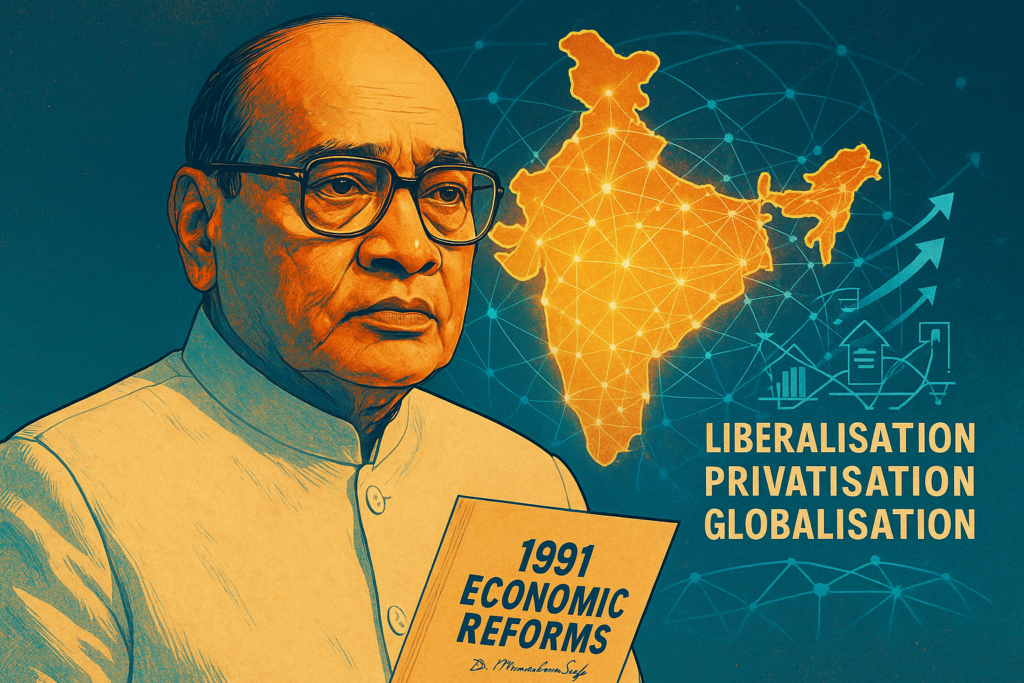
Pamulaparthi Venkata Narasimha Rao, commonly known as P. V. Narasimha Rao, was India’s ninth Prime Minister, serving from 1991 to 1996. He is remembered as the leader who transformed India’s economy and introduced liberal economic reforms that shaped the country’s global direction. His inspiring journey is described below in detail.
Early Life
Birth and Background
- Born: 28 June 1921, Wangara village, Karimnagar district, Hyderabad State (now Telangana)
- Full Name: Pamulaparthi Venkata Narasimha Rao
- Family: A farmer belonging to a Brahmin family
Education
- B.A. (Arts) from Nagpur University
- L.L.B. (Law) from Osmania University
Participation in the Freedom Struggle
Narasimha Rao actively participated in India’s independence movement. He joined the struggle against the Nizam of Hyderabad State and later went underground during the Quit India Movement. His commitment to national freedom shaped his future political vision.
Political Life
Early Politics
- Began political journey with the Indian National Congress
- Became a member of the Andhra Pradesh Legislative Assembly
- Served as Chief Minister of Andhra Pradesh in 1971
Union Ministerial Roles
During the governments of Indira Gandhi and Rajiv Gandhi, Narasimha Rao held several important ministries, including:
- Ministry of External Affairs
- Ministry of Defence
- Ministry of Human Resource Development
- Ministry of Home Affairs
As Prime Minister (1991–1996)
Historic Economic Reforms
When he took office in 1991, India was facing a severe economic crisis. Rao appointed Dr. Manmohan Singh as Finance Minister and introduced the groundbreaking Liberalisation, Privatisation & Globalisation (LPG Model). These reforms opened India’s economy to global markets, encouraged foreign investment, and dismantled the restrictive License Raj.
Other Major Contributions
- Strengthening education, science, and technology
- Promoting the growth of information technology and telecommunications
- Reforming foreign policy and deepening India’s global relations
Controversies and Criticism
Babri Masjid Demolition (1992)
The Babri Masjid was demolished during his tenure, which drew widespread criticism and placed him at the center of national debate.
Other Allegations
His name was linked to certain political scandals, though he was later acquitted of all charges.
Personal Characteristics
- He was proficient in more than 10 languages, including Hindi, Telugu, Marathi, Urdu, Sanskrit, and English.
- A passionate writer who authored novels and other literary works.
Death
- Date: 23 December 2004
- Place: New Delhi
After his death, his body was taken to Hyderabad, where he was cremated with full respect.
Legacy
P. V. Narasimha Rao is often remembered as the "Father of Indian Economic Reforms". His visionary policies laid the foundation for modern India’s economic rise. Today, his contributions are seen as pivotal in shaping India into a global economic power.
Early Life of P. V. Narasimha Rao (Detailed Overview)

Top Amazon Product
Explore this excellent product on Amazon — click below for the latest price, key features, and customer reviews!
👉 View on Amazon(Amazon Affiliate Link – Thank you!)
Narasimha Rao’s early life was marked by simplicity, learning, and resilience. Growing up in a modest farmer family, he developed a deep interest in education and national service, which ultimately shaped his extraordinary leadership.
Birth and Family Background
- Full Name: Pamulaparthi Venkata Narasimha Rao
- Born: 28 June 1921
- Birthplace: Wangara village, Karimnagar district, Hyderabad State
- Born into a Telugu-speaking Brahmin family
- Adopted by his uncle during childhood
Education Journey
- Primary education in his village
- Further studies in Warangal and Hyderabad
- Bachelor’s (B.A.) degree from Nagpur University
- LL.B. degree from Osmania University
- Excelled academically and mastered several languages
Knowledge of Languages
Narasimha Rao had exceptional linguistic skills, with knowledge of 17 languages, including:
Telugu, Hindi, Urdu, Marathi, Bengali, Gujarati, Kannada, Tamil, Sanskrit, French, Arabic, Persian, Spanish, German, Latin, Greek, and English.
Participation in the Freedom Movement
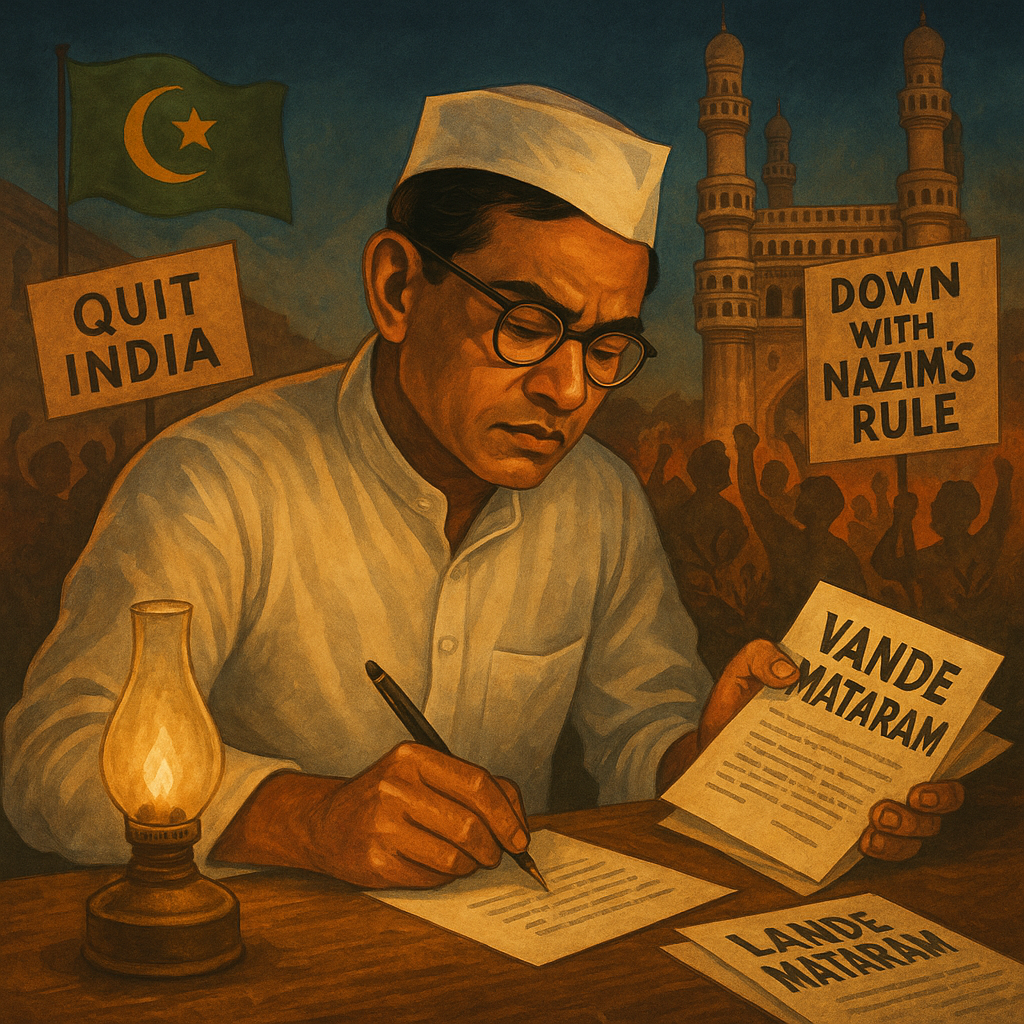
From a young age, he was inspired by the spirit of the independence struggle. He associated with social activists and freedom fighters who opposed the Nizam’s rule. His dedication led him to go underground during the Quit India Movement, demonstrating his commitment to India’s freedom.
P. V. Narasimha Rao’s Participation in the Freedom Struggle
P. V. Narasimha Rao’s participation in the freedom struggle, especially in the context of Hyderabad State, played a significant role in shaping his political journey. Although he was not directly under British rule, he lived under the Nizam’s princely state, where the struggle for freedom had a different environment. Despite these challenges, Rao actively contributed to India’s independence movement.
Hyderabad State and the Freedom Struggle
- Narasimha Rao was born in Hyderabad State, where the Nizam ruled independently.
- Even after India’s independence in 1947, the Nizam refused to merge Hyderabad with India.
- This resistance created a powerful movement demanding the integration of Hyderabad into India.
Role of Narasimha Rao
Active in Student Life
- As a young student, he began working with nationalists and freedom fighters.
- He actively participated in the Vande Mataram Movement, Hindi Propaganda Movement, and various indigenous campaigns.
Underground Activities
During the Quit India Movement (1942), Rao went underground for a period to avoid surveillance by both the British authorities and the Nizam’s forces. During this time, he continued carrying out secret pro-independence activities and spreading awareness among people.
Anti-Nizam Struggle
He also took part in the Hyderabad Liberation Movement, which began after India’s independence. This struggle aimed to merge Hyderabad State with the Indian Union. Rao, along with other educated youth, worked to spread political awareness and organize mass movements against the Nizam’s authoritarian rule.
Subsequent Recognition
Although he didn’t serve long jail terms or make major anti-British speeches, Rao displayed remarkable courage by participating in the freedom struggle in a region where political activism was extremely difficult. His efforts in social awakening and political mobilization contributed significantly to India’s progress. Even after independence, he carried the same commitment to national service into his political career.
Political Life of P. V. Narasimha Rao
P. V. Narasimha Rao’s political life was diverse, influential, and transformative. His journey spanned from state politics to national and global leadership. He served as Chief Minister of Andhra Pradesh, Union Minister in multiple departments, and eventually as the Prime Minister of India.
1. Beginning of State Politics
Andhra Pradesh Legislative Assembly
- In 1957, he was elected as a member of the Andhra Pradesh Legislative Assembly for the first time.
- He soon became a respected and influential leader within the Congress Party.
Chief Minister of Andhra Pradesh (1971–1973)
- Became Chief Minister in 1971.
- Focused on land reforms, improving education, and promoting rural development.
- Implemented Zamindari Abolition Programmes and key land reform laws.
- Resigned in 1973 due to the Andhra–Telangana movement.
2. Entry into National Politics
As Union Minister
Rao served under the leadership of Indira Gandhi and Rajiv Gandhi in several significant ministries:
| Ministry | Tenure |
|---|---|
| Ministry of External Affairs | 1980–84, 1988–89 |
| Ministry of Home Affairs | 1984 |
| Ministry of Defence | 1990 |
| Ministry of Human Resource Development | 1985–88 |
He was regarded as an educated, thoughtful minister with deep understanding of national policies.
3. As Prime Minister (1991–1996)
Circumstances Leading to His Appointment
- After the assassination of Rajiv Gandhi in 1991, the Congress party faced a leadership crisis.
- Rao was considering retirement, but circumstances led him to become Prime Minister.
- He became the first non-Gandhi Prime Minister to complete a full five-year term.
Major Achievements
Economic Reforms
- India was facing a severe economic crisis, with depleted foreign reserves.
- Rao appointed Dr. Manmohan Singh as Finance Minister and laid the foundation of economic liberalisation.
- Abolished the License Raj, promoted private investment, and opened the country to foreign companies.
Expansion of Foreign Relations
- Strengthened ties with the USA, European nations, and East Asian countries.
- Launched the strategic Look East Policy.
Support for Information Technology and Science
- Promoted the IT sector to position India as a future technological power.
Political Stability
- Successfully ran a minority government, demonstrating sharp political acumen.
4. Controversies
Babri Masjid Demolition (1992)
- The demolition took place on 6 December 1992, leading to nationwide unrest.
- Rao faced criticism for alleged inaction during the crisis.
Corruption Allegations
- He was linked to cases such as the Jharkhand Mukti Morcha bribery scandal.
- Eventually, courts acquitted him of all major charges.

Top Amazon Product
Check out this quality product available on Amazon — click below to view the latest price, key features, and customer reviews!
👉 View on Amazon(Amazon Affiliate Link – Thank you!)
5. Characteristics of His Political Life
- Known as a silent, thoughtful, and strategic politician.
- Called the "Chanakya of Indian Politics" for his ability to handle complex situations.
- His tenure laid the foundations of India’s modern economic era.
Early Politics of P. V. Narasimha Rao
Rao’s early political life began in Andhra Pradesh and steadily grew to national prominence. His actions reflected ideology, social commitment, and strong organizational capabilities.
Political Beginnings
Association with the Congress Party
- Became actively associated with the Indian National Congress in the early 1950s.
- Recognized as a thoughtful, studious, and disciplined leader.
- Focused on rural development, education, and social justice issues.
Debut as MLA
- Elected as MLA in the Andhra Pradesh Legislative Assembly in 1957.
- Played an important role in state-level policy development.
Land Reforms and Social Work
- Opposed the zamindari system and unequal land distribution.
- Led the land reform movement in Andhra Pradesh.
- Worked to provide land rights to poor farmers.
- Gained popularity as a people-oriented leader.
Becoming Chief Minister
- In 1971, he became Chief Minister due to his administrative ability.
- Focused on land reforms and rural development.
- Resigned in 1973 during the Jai Andhra Movement.
Features of His Early Politics
- Believed in action rather than publicity.
- Respected linguistic and cultural diversity, earning trust across regions.
- His multilingual skills strengthened his image as an intellectual leader.
P. V. Narasimha Rao’s early political life laid a strong foundation for his future national leadership. Would you like to explore the policies of his Chief Minister tenure in detail?
P. V. Narasimha Rao as Union Minister
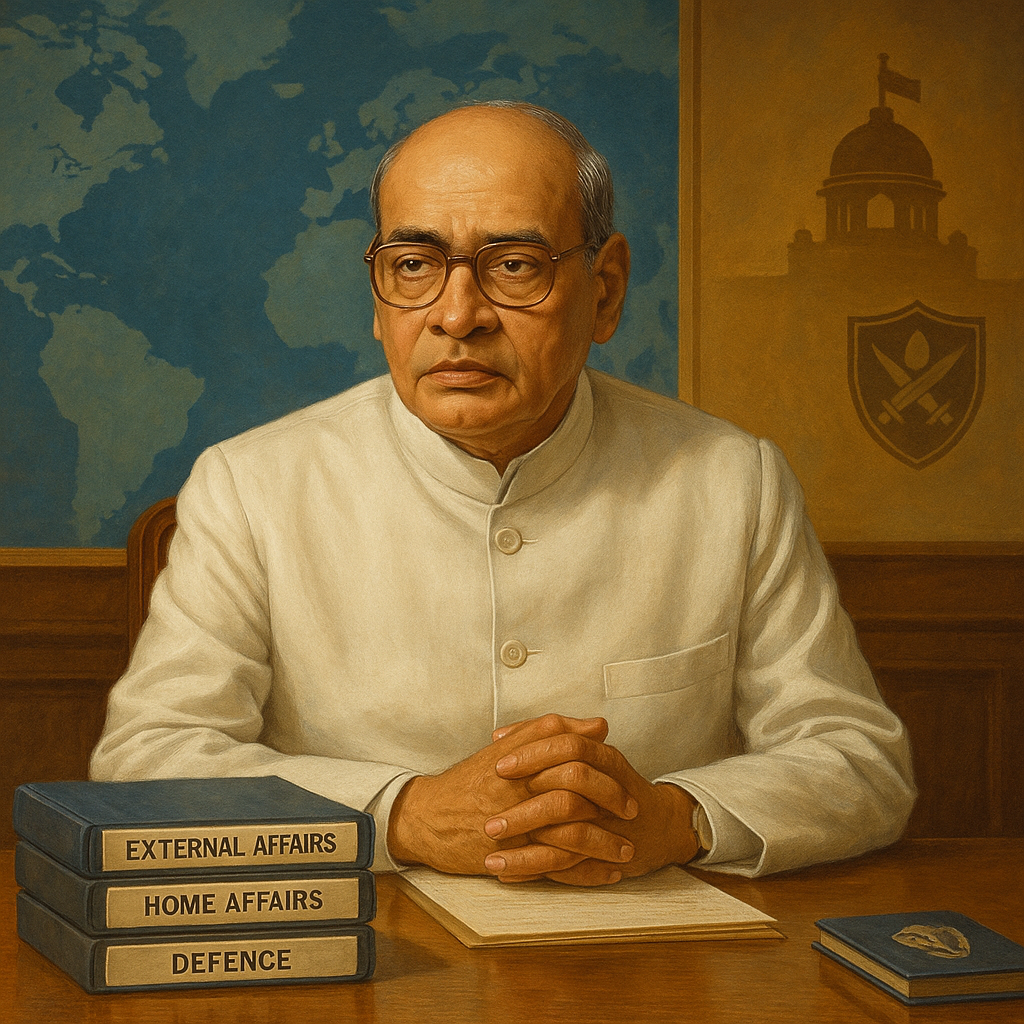
P. V. Narasimha Rao’s entry into central politics and his role as a Union Minister were highly influential. He handled many important ministries under different Prime Ministers and emerged as an intelligent, efficient, and multi-dimensional leader.
Contribution as a Union Minister
When He Became Union Minister
- Became a Member of Lok Sabha for the first time in 1967.
- Served under the prime ministership of Indira Gandhi and Rajiv Gandhi.
- Handled several key ministries at the Centre and became known as one of the most learned and trusted ministers in the party.
Key Ministries and Tenures
| Ministry | Tenure | Special Contribution |
|---|---|---|
| Ministry of External Affairs | 1980–1984, 1988–1989 | Strengthened India's Non-Aligned policy; maintained balanced relations with both the Soviet Union and Western nations. |
| Ministry of Home Affairs | 1984 | Handled the tense situation after the assassination of Indira Gandhi; ensured internal security. |
| Ministry of Human Resource Development (HRD) | 1985–1988 | Introduced the National Education Policy (1986), reformed higher education, and promoted Sanskrit and Indian languages. |
| Ministry of Defence | 1990 | Focused on defence strategy and budget management. |
Highlights of His Ministerial Tenure
1. New Education Policy (1986)
- As HRD Minister, he led India’s first comprehensive National Education Policy.
- Focused on education for all, vocational learning, and promotion of girls’ education.
2. Cultural and Linguistic Enrichment
- Had deep knowledge of Indian languages and literature.
- Promoted preservation and development of Sanskrit, Urdu, and regional languages.
3. Balance in Foreign Policy
- Strengthened India’s role in the Non-Aligned Movement (NAM).
- Maintained balanced relations with the USA, Soviet Union, and Western countries.
4. Administration During Crisis
- Handled the national crisis following Indira Gandhi’s assassination as Home Minister.
- Played a key role in restoring stability and internal security.
Personality and Image
- Known as a calm, thoughtful, and strategic administrator.
- His logical and balanced approach was appreciated in Parliament.
- Often called an “intellectual politician.”
His vast experience as a Union Minister prepared him for the highest office—Prime Minister of India.
P. V. Narasimha Rao as Prime Minister (1991–1996)
P. V. Narasimha Rao’s tenure as Prime Minister was a turning point in Indian history. He led the nation during a time of severe economic crisis, political instability, and social tension. His leadership marked the beginning of economic liberalisation and strengthened India’s global presence.
Background of Becoming Prime Minister
- After the assassination of Rajiv Gandhi in 1991, the Congress Party faced a leadership vacuum.
- Rao, who was considering retirement, was chosen as Prime Minister.
- Became the first Prime Minister outside the Gandhi family to complete a full 5-year term.
Major Achievements and Works
1. Beginning of Economic Liberalisation
At that time, India was facing heavy foreign debt, a balance-of-payments crisis, and extremely low foreign exchange reserves. Rao appointed Dr. Manmohan Singh as Finance Minister and initiated historic economic reforms.
Highlights of the Reforms
- Abolition of the Licence-Permit Raj
- Greater freedom for the private sector
- Permission for foreign investment
- Liberalisation of import–export policies
- Reforms in the banking and insurance sectors
These reforms transformed India from a closed socialist economy to a liberal and globally integrated economy.
2. New Direction in Foreign Policy
“Look East Policy”
- Strengthened India’s ties with East Asian nations, boosting trade and investment.
Relations with the West
- Deepened relations with the USA, Europe, and Japan after the Cold War.
3. Promotion of Information Technology and Education
- Gave strong government support to the emerging IT sector.
- Introduced new technology policies that helped India become a global IT hub.
4. Political Management and Stability
- Successfully ran a minority government for five years.
- His diplomacy and patience earned respect across the political spectrum.

Top Amazon Product
Discover this quality item on Amazon — click below to view price, key features, and customer reviews!
👉 View on Amazon(Amazon Affiliate Link – Thank you!)
5. Cultural and Linguistic Encouragement
- Launched initiatives to promote Sanskrit, Urdu, and Indian languages.
- Known for being a polyglot and a writer.
Controversies and Challenges
1. Demolition of Babri Masjid (6 December 1992)
- This was the most controversial incident during his tenure.
- He faced criticism for alleged inaction in preventing the demolition.
2. Corruption Allegations
- Accused in cases such as the Jharkhand Mukti Morcha bribery scandal.
- Eventually acquitted by the courts in most cases.
Work Style and Image
- Known for being calm, serious, and farsighted.
- Called “Chanakya” for his skill in maintaining political stability.
- Believed in the philosophy: “Speak little, think deeply.”
Conclusion
Narasimha Rao’s tenure as Prime Minister marked a new era for India. The reforms he introduced in the economy, foreign policy, and administration continue to drive India’s progress even today. His legacy remains one of transformation, vision, and strategic leadership.
Historic Economic Reforms Done by P. V. Narasimha Rao
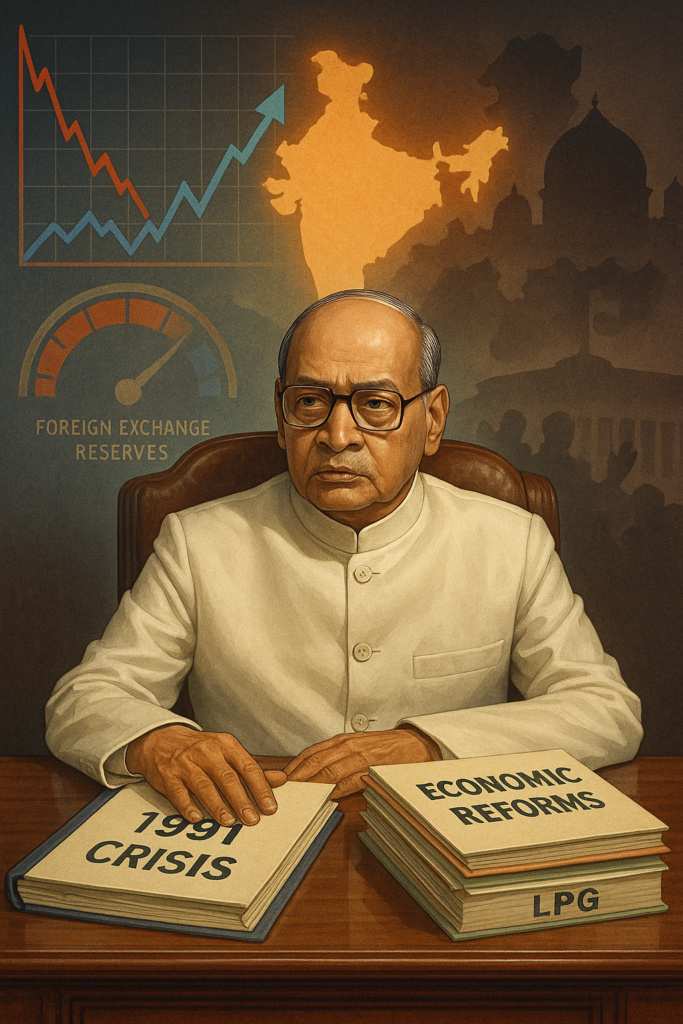
The historic economic reforms undertaken by P. V. Narasimha Rao in 1991 are considered a milestone in India’s economic history. He, along with Dr. Manmohan Singh (then Finance Minister), transformed India from a closed socialist economy into a liberal, competitive, and globally integrated economy.
Situation in India in 1991
- Foreign exchange reserves were barely enough for 15 days of imports.
- Fiscal deficit had increased to alarming levels.
- India was burdened with huge foreign debt.
- Trade deficit was rising, pushing the nation to the brink of financial bankruptcy.
- To secure loans from the World Bank and IMF, India was required to implement major policy changes.
Major Economic Reforms Done by the Narasimha Rao Government
| Area | Reform |
|---|---|
| Industrial Policy | Ended the Licence Raj; government permission no longer mandatory for opening industries. |
| Foreign Investment | Permitted FDI; foreign companies were allowed to enter various sectors. |
| Privatization | Encouraged private investment in Public Sector Undertakings (PSUs). |
Other Main Functions of P. V. Narasimha Rao
P. V. Narasimha Rao’s tenure as Prime Minister (1991–1996) was not limited to economic reforms alone. He introduced major changes in politics, administration, society, culture, and foreign policy that continue to influence India today.
1. Constitutional and Political Reforms
- Laid the groundwork for several important constitutional and political changes.
- Successfully ran a minority government, ensuring political stability.
- Started a new tradition of coalition politics in India.
2. Kashmir Problem and Terrorism
- Took strong measures to curb terrorist violence in Jammu & Kashmir.
- Worked to restore peace in the valley and reduce political conflict.
- Made efforts to improve relations with Pakistan.
3. Social and Cultural Reforms
- Implemented reforms in education and cultural development.
- Introduced a new education framework, promoting higher and professional education.
- Launched programs for the preservation of Sanskrit and other Indian languages.
4. Women Empowerment
- Introduced schemes for women's financial independence and workplace equality.
- Encouraged women's participation in credit schemes and employment programs.
5. Health and Environment
- Laid the foundation for several public health initiatives, which later evolved into major schemes.
- Promoted environmental initiatives such as plantation drives and water conservation programs.
6. Preservation of Sanskrit and Hindi
- A passionate lover of Sanskrit and Indian languages.
- Introduced schemes for the preservation and development of Sanskrit.
- Took initiatives to promote Hindi across the country.
7. Change in Foreign Policy
- Re-established India’s foreign relations with major global powers.
- Strengthened diplomatic and trade relations with the United States and European nations.
- Enhanced ties with East Asian and Central Asian countries.
8. Social Security and Government Schemes
- Launched several public welfare schemes focusing on rural and urban development.
- Improved rural healthcare, road construction, and initiated “smart village” projects.
9. National Security and Defence
- Took steps to modernize and strengthen the security forces.
- Implemented reforms to improve national security systems.
Conclusion
During his tenure as Prime Minister, P. V. Narasimha Rao introduced reforms whose impact is still visible in India’s economy, society, and politics. His vision and political skill helped India transition into a modern and globally competitive nation.
P. V. Narasimha Rao – Controversy and Criticism
Although Narasimha Rao’s tenure was marked by success and transformative reforms, he also faced several controversies and criticisms. While his decisions strengthened India’s economic foundation, they also brought political challenges and opposition.
Major Controversies and Criticisms

Top Amazon Product
Discover this quality product available on Amazon — click below to view the latest price, key features, and customer reviews!
👉 View on Amazon(Amazon Affiliate Link – Thank you!)
1. Demolition of Babri Masjid (1992)
- The Babri Masjid was demolished on 6 December 1992 by supporters of the Ram Janmabhoomi movement.
- He was criticized for alleged inaction during the incident.
- The central government was accused of failing to prevent widespread communal violence.
2. Issues of Minority Government
- His government depended heavily on support from smaller parties.
- Critics accused him of compromising political ethics to maintain power.
- Opposition claimed he lacked a clear ideological direction.
3. Corruption Allegations
- Faced major allegations such as the Jharkhand Mukti Morcha (JMM) bribery scandal.
- His name appeared in several corruption cases during and after his tenure.
- Although courts later acquitted him, his image was affected.
4. Criticism of Economic Reforms
- Economic liberalisation was criticized by socialist groups and trade unions.
- Critics alleged privatisation hurt poor and working-class sections.
- Many felt reforms benefited urban areas more than rural India.
5. Handling of Rajiv Gandhi Assassination Case
- Critics argued he did not take a strong administrative stand in the case.
- His silence on issues regarding the assassins led to political criticism.
6. Social Discontent
- His policies were seen as favouring industries and cities.
- Rural and unorganized sectors felt neglected during initial economic reforms.
- This contributed to Congress’s electoral defeat later.
7. Internal and External Pressure
Internal Pressure
- Faced resistance from factions within the Congress Party.
- His leadership was often challenged internally.
External Pressure
- Global institutions like IMF exerted pressure on India during economic crisis.
- Some critics felt India compromised on economic sovereignty.
Conclusion
P. V. Narasimha Rao’s tenure was filled with challenges and controversies, yet he provided India with a new direction through visionary economic reforms. His policies laid the foundation for India’s modern economic era, even though political and social criticisms continued throughout his term. His contribution remains undeniable and historically significant.
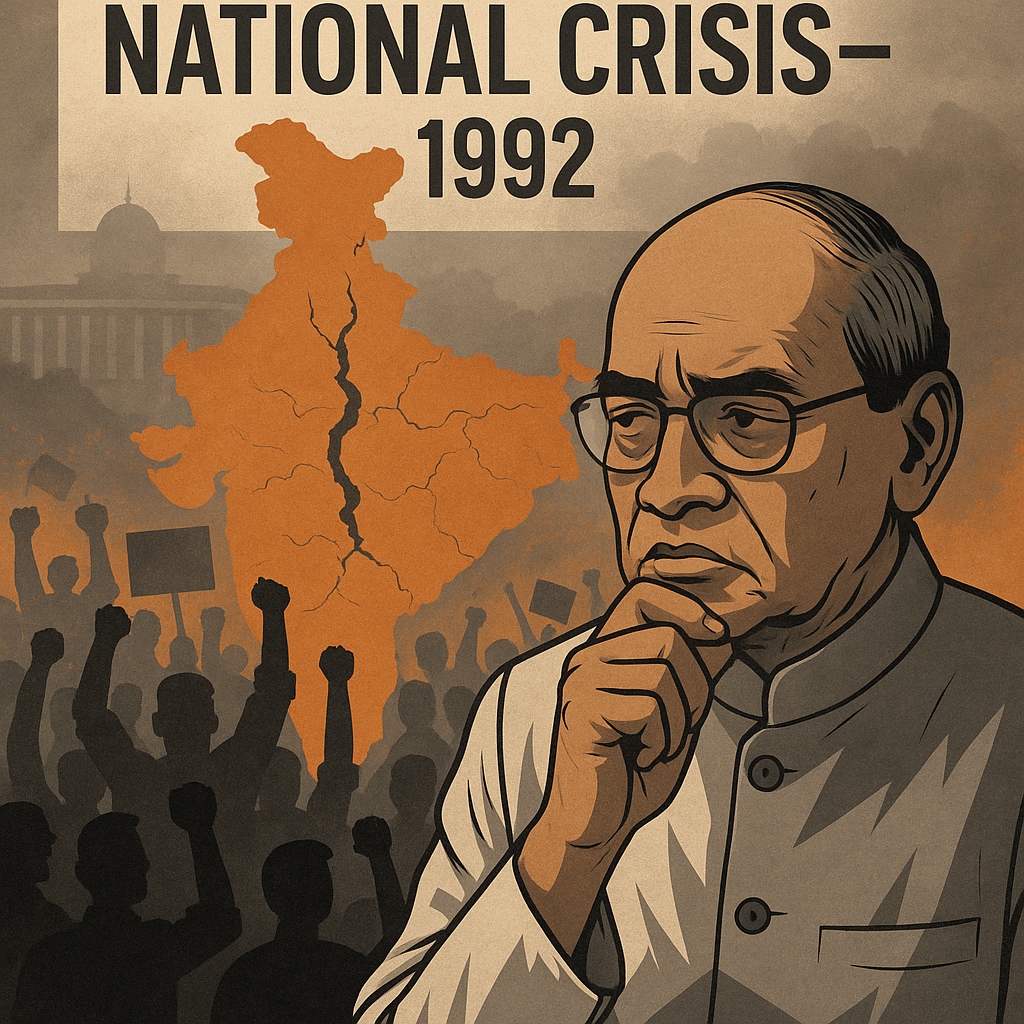
Demolition of Babri Masjid (1992)
The demolition of the Babri Masjid on 6 December 1992 remains one of the most sensitive and controversial events in Indian political and social history. This incident not only shook the country but also deepened communal tensions, influencing India’s political landscape and religious sentiments.
Millions of people were emotionally affected, leading to nationwide unrest, sectarian violence, and widespread political and social instability.
Babri Masjid and Ram Janmabhoomi Dispute
1. Historical Background
- The Babri Masjid, located in Ayodhya, Uttar Pradesh, was built in the 16th century by Mughal emperor Babur.
- Many Hindus believed that the mosque stood on the birthplace of Lord Rama, known as the Ram Janmabhoomi.
- This belief created long-standing tension between Hindu and Muslim communities.
2. Rise of the Ram Mandir Movement
- In the late 1980s, the Rajiv Gandhi government opened the gates of the disputed site, increasing religious tensions.
- Hindu organizations began demanding the construction of the Ram Temple.
- In 1990, L. K. Advani launched the famous Rath Yatra, fueling the Ram Mandir movement politically and socially.
Demolition of Babri Masjid (6 December 1992)
1. The Incident
- On 6 December 1992, supporters of VHP, Shiv Sena, and kar sevaks demolished the Babri Masjid structure.
- The movement supported the construction of a Ram Temple at the site.
- The demolition triggered widespread communal riots across India, resulting in heavy loss of life and property.
2. Opposition Reaction
- Opposition parties condemned the event as a serious constitutional and religious violation.
- Prime Minister P. V. Narasimha Rao and his government were accused of failing to prevent the incident.
- Critics alleged that the Centre did not take timely action, allowing the situation to escalate.
Aftermath of the Babri Masjid Demolition
1. Communal Violence
- Riots erupted nationwide after the demolition.
- Mumbai witnessed the worst violence, resulting in nearly 1,000 deaths and massive displacement.
- Other states, including Uttar Pradesh, Maharashtra, and Gujarat, also faced severe communal unrest.
2. Political Consequences
- Hindutva ideology gained political momentum following the incident.
- The BJP capitalized on the Ram Mandir movement and significantly increased its political influence.
- The Congress Party faced criticism and a decline in political credibility.
3. Legal and Constitutional Impact
- The demolition raised serious questions about India’s secularism and constitutional framework.
- Multiple legal cases and investigations were initiated, many of which continued for years.
P. V. Narasimha Rao and the Babri Masjid Demolition
1. Rao’s Viewpoint
- During the demolition, Narasimha Rao was the Prime Minister of India.
- He faced strong criticism for allegedly not taking proactive measures to prevent the incident.
- Rao maintained that the central government was committed to peace but was constrained by legal limitations.
2. Impact on Secularism and Politics
- The event cast doubts on the government's ability to uphold secular values.
- It reshaped Indian politics, increasing the influence of religion in political discourse.
Conclusion
The demolition of the Babri Masjid left a deep and lasting mark on Indian society, politics, and secularism. It heightened communal tensions and reshaped the political structure of India, leading to greater religious polarization and a new era of socio-political transformation.
Personal Characteristics of P. V. Narasimha Rao
P. V. Narasimha Rao possessed a unique personality marked by intelligence, restraint, foresight, and diplomatic skill. These qualities gave him a special place in Indian politics and made him a highly respected leader.
1. Foresight and Strategic Thinking
- He had a long-term vision for India’s political and economic future.
- His decisions on economic reforms and foreign investment transformed India's global position.
2. Calm and Balanced Personality
- Rao remained calm even under intense pressure.
- He avoided unnecessary public controversy and focused on thoughtful decision-making.
3. Diplomatic Skills and Communication
- He was a skilled diplomat with deep understanding of political negotiation.
- Successfully maintained coalition governments by building trust among diverse partners.
4. Highly Educated and Knowledgeable
- Rao was proficient in multiple languages and had deep interest in Sanskrit.
- He was a scholar with extensive knowledge of politics, economy, and culture.
5. Patience and Restraint
- He valued logic over emotional reactions.
- His patient approach helped him execute complex policy reforms successfully.
6. Sensitivity and Social Responsibility
- He showed empathy toward social issues and fought against injustice.
7. Simple Personal Life
- Despite his high political stature, he lived a humble and simple life free from showmanship.
8. Truthfulness and Integrity
- He believed in truth and honesty as the foundation of leadership.
- Never prioritized personal or party interests over national welfare.
9. Independent Thinking
- Rao made decisions independently, without external influence.
- Maintained confidence even in challenging circumstances.
Conclusion
The personal qualities of P. V. Narasimha Rao reflect leadership, integrity, and responsibility. His foresight, diplomacy, calmness, and dedication established him as one of the most influential leaders in Indian political history.
Death of P. V. Narasimha Rao
P. V. Narasimha Rao passed away on 23 December 2004 at the age of 83 in New Delhi. He had been suffering from multiple health issues in his last years.
Causes of Death
- Rao suffered from chronic heart and kidney problems.
- He eventually died of cardiac arrest after prolonged illness.
Political and Public Reaction
- Leaders across political parties paid tribute to him.
- Prime Minister Dr. Manmohan Singh described him as a “Maker of Modern India.”
- His contributions to India’s economy and foreign policy were widely acknowledged.
Posthumous Assessment
- While controversies remained, his policies were appreciated over time.
- His decisions on liberalisation and globalisation reshaped India’s future.
The Legacy of P. V. Narasimha Rao
P. V. Narasimha Rao’s legacy has long-lasting importance in Indian politics, economy, and diplomacy. His leadership reshaped India and laid the foundation for its modern economic rise.
1. Historic Economic Reforms
- Introduced liberalisation, privatisation, and globalisation in 1991.
- Opened India to foreign investment and global markets.
- His reforms continue to define India's economic structure today.
2. Strengthening India’s Diplomacy
- Enhanced India’s global presence through strategic foreign policies.
- Strengthened ties with China, the US, Europe, and neighboring countries.
- Enabled India's entry into the World Trade Organisation (WTO).
3. Balancing Communal Issues
- Believed in India’s secular values and cultural diversity.
- Despite criticism, he worked toward maintaining communal balance during tense periods.
4. Coalition Politics and Stability
- Understood the dynamics of India’s multi-party system.
- Successfully ran a coalition government despite political challenges.
5. Effective Leadership Style
- Known for his calm, analytical, and prudent decisions.
- Led India’s political system with maturity during economic crisis.
6. Stability Despite Controversies
- Maintained political stability despite communal unrest and criticism.
- His economic reforms overshadowed many controversies over time.
7. Contribution to Education and Culture
- Promoted Sanskrit, Indian culture, and higher education initiatives.
- Supported academic and cultural institutions across India.

Top Amazon Product
Discover this excellent product on Amazon — click below to view the latest price, key features, and customer reviews!
👉 View on Amazon(Amazon Affiliate Link – Thank you!)
Conclusion
P. V. Narasimha Rao’s legacy extends far beyond politics. His economic reforms, diplomatic efforts, and leadership skills reshaped modern India. He is remembered as a visionary statesman who prepared India for the global era and strengthened its democratic foundations.
References

Top Amazon Product
Check out this quality item on Amazon — click below to view the latest price, key features, and customer reviews!
👉 View on Amazon(Amazon Affiliate Link – Thank you!)
- Government of India – Ministry of Information & Broadcasting Archives
- Lok Sabha Secretariat – Biographical Sketch of P. V. Narasimha Rao
- Reserve Bank of India (RBI) – 1991 Economic Crisis Reports
- Planning Commission of India – Economic Reforms Documentation (1991–1996)
- Books: P. V. Narasimha Rao: The Architect of Modern India by Vinay Sitapati
- India Today Archives – Articles on 1991 Economic Reforms
- The Hindu Archives – Babri Masjid Demolition Coverage (1992)
- Press Information Bureau (PIB) – Statements and Speeches of P. V. Narasimha Rao