
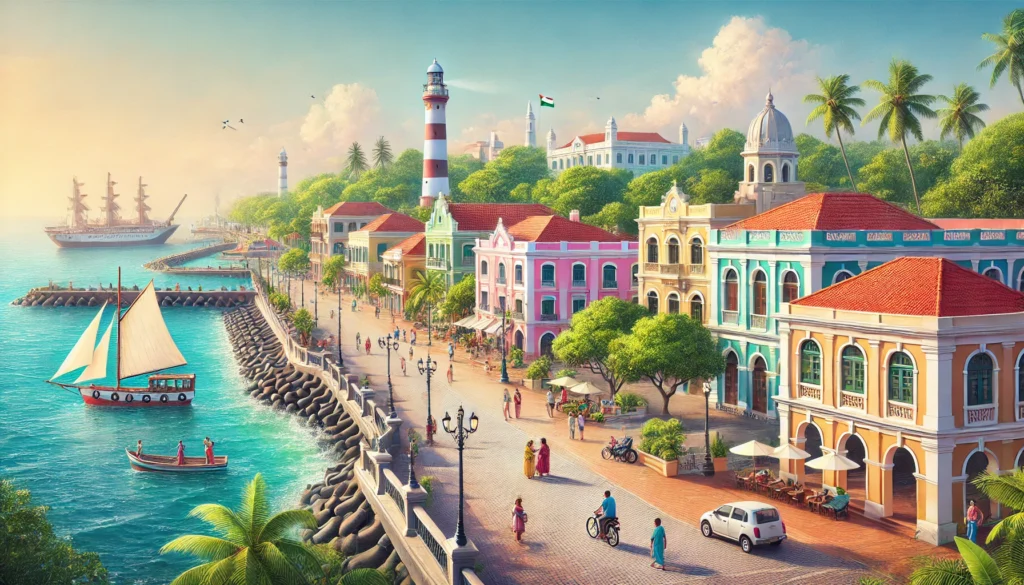
Puducherry: A Peaceful Blend of French Heritage and Indian Culture
Puducherry, formerly known as Pondicherry, is a Union Territory of India. It is located on the south-eastern coast of the country and is famous for its unique cultural heritage, French colonial history, and natural beauty.
Geographical Location of Puducherry
The area of Puducherry is approximately 492 square kilometers. It is divided into four different geographical regions:
Administrative Regions of Puducherry
- Puducherry (within Tamil Nadu)
- Karaikal (within Tamil Nadu)
- Mahé (within Kerala)
- Yanam (within Andhra Pradesh)
All these areas are surrounded by different states in their respective locations, but they are administratively managed together as a single Union Territory.
History and French Influence
Puducherry has been under French rule for a long period in history. It became a French colony in 1674 and remained under French control until 1954.
After India gained independence, Puducherry officially merged into the Union of India in 1954. The influence of French architecture, town planning, and culture can still be clearly seen in many parts of the city.
Culture and Language of Puducherry
The culture of Puducherry is a wonderful blend of Indian and French traditions. This harmonious mix makes the city unique and attractive for travelers seeking both spirituality and heritage.
Languages Spoken in Puducherry
The major languages spoken in Puducherry are:
- Tamil
- Telugu
- Malayalam
- English
Religions in Puducherry
Along with Hinduism, Christianity and Islam are also prevalent in Puducherry. This religious diversity adds to the cultural richness and peaceful environment of the region.
Major Attractions in Puducherry
Puducherry offers a variety of attractions, from colonial streets and spiritual centers to calm beaches and historic monuments.
French Quarters and Heritage Streets
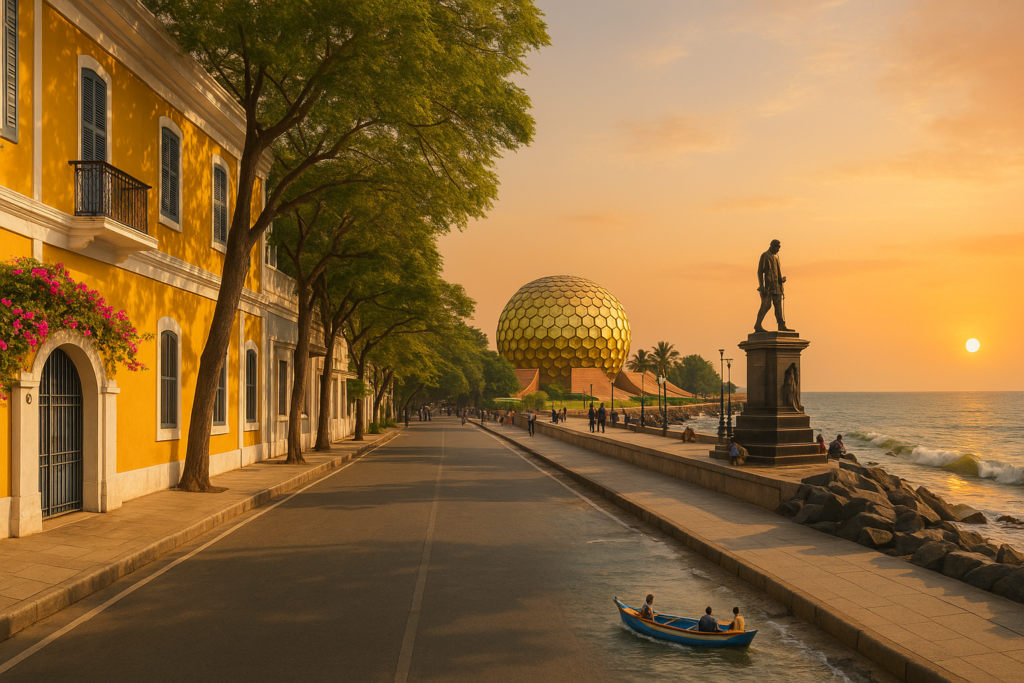
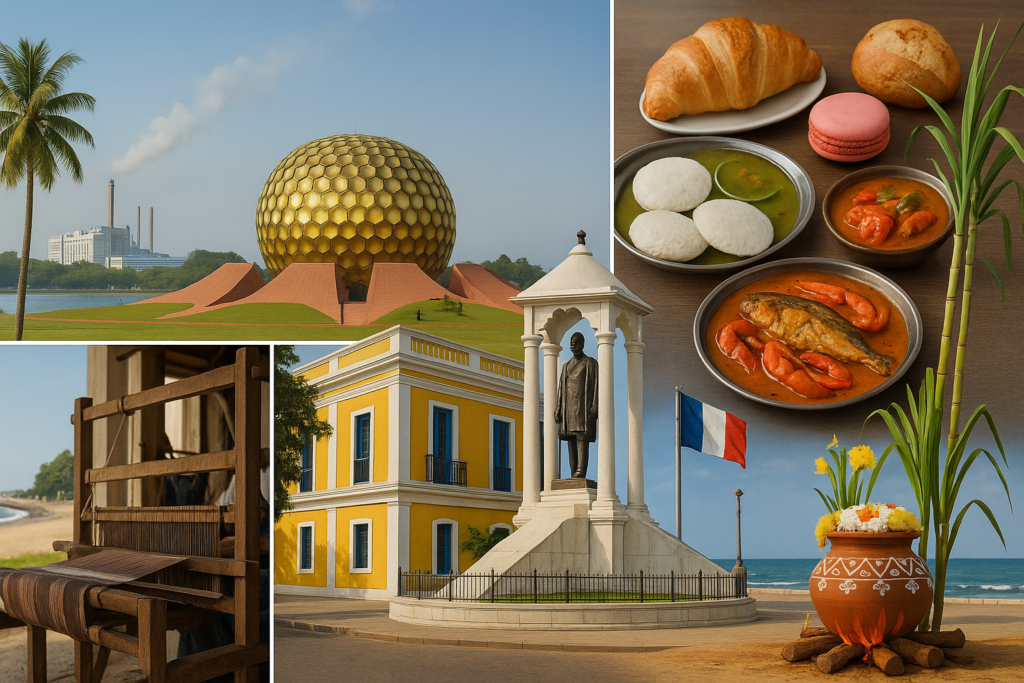
The French colonies, with their yellow-coloured houses, bougainvillea-covered walls, and European-style architecture in the old town, attract tourists who want to experience a slice of French charm in India.
Popular Plages and Beaches
Some of the most famous beaches of Puducherry are:
- Promenade Beach
- Paradise Beach
- Auroville Beach
Promenade Beach
Promenade Beach is ideal for peaceful morning and evening walks along the sea, with a charming sea-facing road and colonial-era buildings nearby.
Paradise Beach
Paradise Beach is known for its clean sand and scenic beauty. It is accessible by boat and is perfect for those who want to relax away from the city’s noise.
Auroville Beach
Auroville Beach is popular among locals and visitors for its gentle waves and pleasant atmosphere, making it a favourite spot for families and youth.
Auroville: City of Unity
Auroville is a unique global community based on the principles of spirituality, peace, and human unity. People from different countries live here together, focusing on sustainable living and inner growth.
The Matrimandir, located at the center of Auroville, is a golden, spherical structure famous for meditation and deep silence. It is considered the soul of Auroville.
Sri Aurobindo Ashram
Sri Aurobindo Ashram in Puducherry is a renowned center for meditation, yoga, and spiritual study. Many visitors come here seeking peace, guidance, and inner transformation.
Museums and Churches
Puducherry also has several places of historical and cultural importance, such as:
- Puducherry Museum
- Basilica of the Sacred Heart of Jesus
These locations reflect the artistic, religious, and colonial heritage of the region and are worth visiting for history and culture enthusiasts.
Economy of Puducherry
The economy of Puducherry is mainly based on tourism, agriculture, and fishing. These sectors provide livelihoods to a large part of the local population.
Along with this, small industries, handicrafts, and services also contribute to the economic growth of Puducherry. Handcrafted products and local art are popular among tourists.
Food and Drink in Puducherry
The cuisine of Puducherry is a delightful fusion of Tamil, Kerala, and French flavours. This unique food culture reflects the history and diversity of the region.
What to Eat in Puducherry
- French bakery products such as croissants, baguettes, and pastries
- Fresh seafood prepared with coastal spices
- Local Tamil dishes such as sambar, rasam, dosa, and idli
From street food to cosy cafes and French-style restaurants, Puducherry offers something for every food lover.
Major Festivals Celebrated in Puducherry
Festivals in Puducherry reflect both Indian and French influences. Some of the important festivals celebrated here are:
- Makar Sankranti
- Pongal
- French National Day (14 July)
During these festivals, the streets come alive with cultural programs, traditional rituals, and community gatherings.
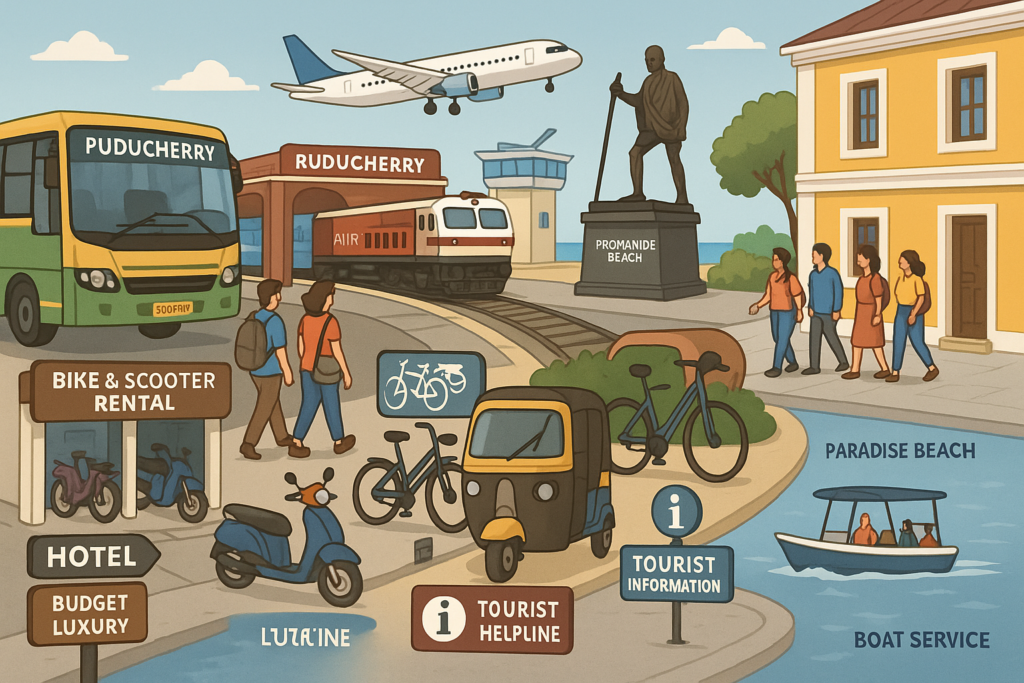
How to Reach Puducherry
By Air
The nearest major airport to Puducherry is Chennai International Airport. From Chennai, travellers can reach Puducherry by road in a few hours.
By Rail
Puducherry Railway Station is connected to important cities by rail, making it convenient for tourists coming from different parts of India.
By Road
Puducherry is well connected by road to Chennai and nearby states. The scenic East Coast Road (ECR) from Chennai to Puducherry is especially popular among road travelers for its beautiful sea views.

Conclusion: Why Puducherry is Worth Visiting
Puducherry is famous for its peaceful lifestyle, cultural heritage, spiritual centers, and beautiful beaches. This destination offers a completely different experience from many other parts of India.
Whether you are looking for history, spirituality, food, or relaxation by the sea, Puducherry is a perfect choice for a memorable trip.
Frequently Asked Questions About Puducherry
Q1. Why is Puducherry famous among tourists?
Puducherry is famous for its French colonial architecture, calm beaches, spiritual centers like Auroville and Sri Aurobindo Ashram, and its unique blend of Indian and French culture. It offers a peaceful and relaxed environment, making it ideal for a short getaway or a long stay.
Q2. What is the best time to visit Puducherry?
The best time to visit Puducherry is generally from October to March, when the weather is relatively pleasant and suitable for sightseeing, beach walks, and outdoor activities.
Q3. Is Puducherry safe for solo and family travelers?
Yes, Puducherry is considered a safe destination for solo travelers, couples, and families. Like any other travel destination, it is advisable to follow basic safety precautions and respect local customs.
Q4. How many days are enough to explore Puducherry?
A trip of 2 to 4 days is usually enough to explore major attractions in Puducherry, including the French quarters, beaches, Auroville, Sri Aurobindo Ashram, and local markets.
Q5. What kind of food can I expect in Puducherry?
In Puducherry, you can enjoy a mix of South Indian dishes like dosa and idli, fresh seafood, as well as French bakery items and continental cuisine. There are many cafes and restaurants that cater to different tastes and budgets.
Q6. Is Auroville open to visitors?
Yes, Auroville is open to visitors. Tourists can visit the Matrimandir viewing point and explore the surroundings. However, meditation inside the inner chamber of Matrimandir usually requires prior permission and advance booking.
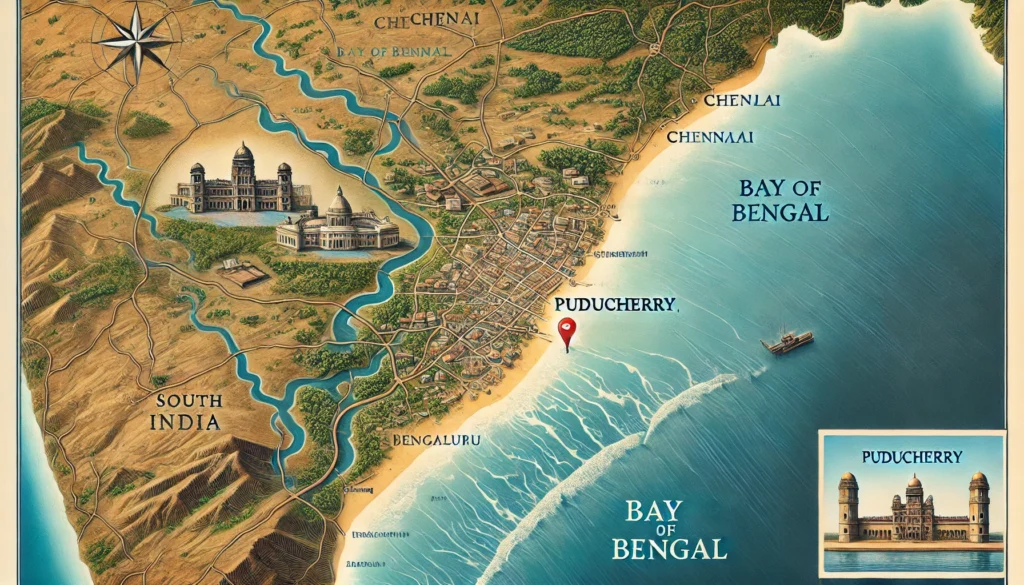
Geographical Location of Puducherry: Regions, Climate and Natural Resources
The geographical location of Puducherry is on the south-eastern coast of India, and it is divided into four distinct regions. These regions are located within different states of India, but are administratively united as the Union Territory of Puducherry. Each region has its own distinct geographical features and characteristics.
Administrative and Geographical Division of Puducherry
Puducherry consists of four geographically separated regions:
- Puducherry (Core Area)
- Karaikal
- Mahe
- Yanam
Although these four regions fall within different states, they are collectively governed as a single Union Territory, giving Puducherry a unique administrative and geographical identity.
Puducherry (Core Area)
Location
Puducherry (core area) is located on the coast of the Bay of Bengal within the state of Tamil Nadu.
Size and Extent
- Area: About 293 square kilometers
- Bordered by the Bay of Bengal on the east and Tamil Nadu on the remaining three sides
Geographical Features
- The length of the coastline is approximately 32 kilometres.
- The region mainly consists of plains and flat lands.
- The climate is tropical, with high heat and humidity.
- Tributaries of the Godavari River contribute to the water resources.
Karaikal Region
Location
Karaikal is located within the state of Tamil Nadu, south of the Puducherry (core) region.
Size and Extent
- Area: About 161 square kilometers
- Bordered by Nagapattinam district to the south and Tiruvarur district to the north
Geographical Features
- Located in the coastal area of the Bay of Bengal.
- Agriculture is the major activity here.
- It forms part of the fertile Kaveri River delta region.
- The Karaikal Port plays a vital role in the economic development of the region.
Mahe Region
Location
Mahe is located within the state of Kerala and lies on the coast of the Arabian Sea.
Size and Extent
- Area: About 9 square kilometers
- Surrounded by Kannur and Kozhikode districts of Kerala
Geographical Features
- Known for its coconut trees, backwaters, and natural beauty.
- The climate here remains relatively moderate due to strong marine influence.
Yanam Region
Location
Yanam is located on the banks of the Godavari River within the state of Andhra Pradesh.
Size and Extent
- Area: About 30 square kilometers
- Situated between major cities such as Kakinada and Rajahmundry
Geographical Features
- The area of Yanam consists mainly of plains and river deltas.
- The Godavari River is the main source of irrigation and transportation in this region.
- The environment is tropical and extremely humid.
Climate of Puducherry Regions
All regions of Puducherry experience a tropical monsoon climate.
Summer Season
During summer, temperatures generally range from 28°C to 40°C, with high levels of heat and humidity.
Monsoon Season
The regions receive rainfall due to the influence of both the south-west and north-east monsoons, which are important for agriculture and water resources.
Winter Season
In winter, temperatures usually range between 20°C and 30°C. The weather remains relatively mild and comfortable compared to the summer months.
Natural Resources and Land Use in Puducherry
Marine and Coastal Resources
- Marine fishing and coastal trade are prominent in the coastal areas of Puducherry, Karaikal, and Mahe.
- The coastal location supports activities such as port services, fisheries, and small-scale marine industries.
Agricultural Resources
- The delta regions of the Kaveri and Godavari rivers are highly fertile and useful for agriculture.
- Major agricultural products include coconut, rice, and sugarcane.
- These crops support both local consumption and regional trade.
Overall Geographical Significance
The geographical location of Puducherry not only gives it a special cultural and administrative identity, but also strongly influences its tourism, agriculture, and economic activities. This unique combination of four separate regions, spread across different states yet governed as one unit, makes Puducherry different from other Union Territories of India.
Frequently Asked Questions on the Geography of Puducherry
Q1. How many regions form the Union Territory of Puducherry?
The Union Territory of Puducherry is formed by four distinct regions: Puducherry (core area), Karaikal, Mahe, and Yanam. These regions lie in different states but are administered together as one Union Territory.

Q2. In which states are the regions of Puducherry located?
Puducherry and Karaikal are located within Tamil Nadu, Mahe is in Kerala on the Arabian Sea coast, and Yanam is situated in Andhra Pradesh on the banks of the Godavari River.
Q3. What type of climate is found in Puducherry?
All regions of Puducherry experience a tropical monsoon climate, with hot summers, significant monsoon rainfall, and mild winters. Temperatures typically range between 20°C and 40°C throughout the year.
Q4. Which rivers influence the geography of Puducherry?
The Kaveri River delta region influences agriculture in Karaikal, while the Godavari River and its tributaries play a major role in the geography and irrigation of Yanam and contribute to the overall water resources of the Union Territory.
Q5. What are the main agricultural products of Puducherry?
The main agricultural products of the Puducherry regions include coconut, rice, and sugarcane, especially in the fertile delta and coastal areas influenced by the Kaveri and Godavari rivers.
Q6. How does the geographical location of Puducherry affect its economy?
The coastal and deltaic location supports marine fishing, ports, coastal trade, and fertile agriculture, which together contribute to tourism, farming, fisheries, and small industries. This makes geography a key factor in Puducherry’s economic activities and development.
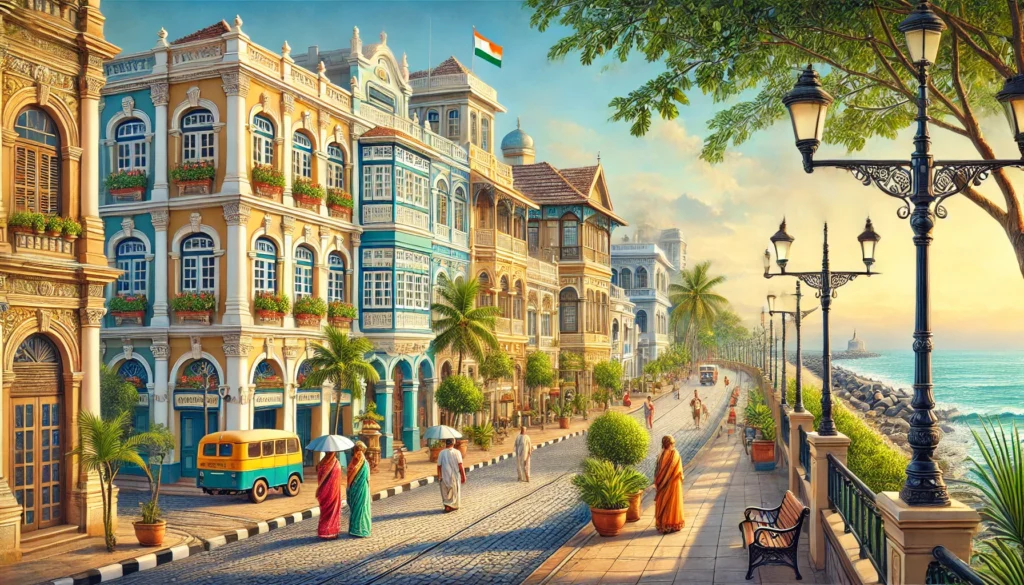
History of Puducherry: From Ancient Civilizations to French Colonial Heritage
The history of Puducherry is rich, diverse, and shaped by centuries of trade, culture, and governance. Mentioned in ancient literature and supported by archaeological findings, this beautiful coastal region has played an important role in India’s maritime and cultural evolution.
Ancient Period of Puducherry
Sangam Age (300 BC – AD 300)
- Puducherry finds mention in early Tamil Sangam literature.
- The region had active maritime trade with Southeast Asia and Rome.
- Exports included pearls, cotton, textiles, and spices.
Foreign Contact and Trade
- Roman coins and archaeological remains confirm strong Indo-Roman trade ties.
- Puducherry was also important in trade routes connecting India with China and Malaysia.
Pallava Empire (4th to 9th Century)
- The Pallava dynasty exerted strong cultural influence over Puducherry.
- They supported the spread of Hinduism and constructed early temples.
- The Pallava architectural style of Mahabalipuram also influenced the region.
Chola Empire (9th to 13th Century)
- The Chola kings annexed Puducherry into their kingdom.
- They controlled sea routes and expanded maritime trade through this region.
- Chola architecture and sculpture can still be seen in temples around Puducherry.
Pandya Kingdom (13th to 14th Century)
- After the decline of the Cholas, the Pandyas ruled the region.
- Puducherry continued as an active cultural and commercial center under their rule.
Vijayanagara Empire (14th to 16th Century)
- The Vijayanagara Empire controlled large parts of South India, including Puducherry.
- This period saw peace, economic growth, and artistic development.
Local Varman Rule
After the collapse of the Vijayanagara Empire, local Varman rulers governed Puducherry and surrounding areas. Although small feudal lords, they contributed to local administration, culture, and temple construction.
Establishment as a French Colony (1674)
Foundation by the French East India Company
- France established the French East India Company in 1664 to expand trade in Asia.
- Puducherry was chosen due to its strategic coastal location on the Bay of Bengal.
Beginning of French Control (1674)
Arrival of François Martin
- In 1674, French Governor François Martin established French authority in Puducherry.
- He set up a small trading center, which developed into a well-planned French colony.
Treaties with Local Kings
- The French secured commercial rights through agreements with Tamil Nadu’s local rulers.
- These treaties strengthened their foothold in the region.
Development of the City
- The French introduced modern city planning with wide roads and square blocks.
- They built European-style buildings, forts, and administrative structures.
French–Dutch Conflict (1693–1699)
- Growing French influence alarmed the Dutch.
- The Dutch captured Puducherry in 1693.
- However, France regained control in 1699 and further strengthened its presence.
18th Century: British–French Rivalry
- By the 17th century, Puducherry had become a strong French colony.
- In the 18th century, the Anglo-French struggle for dominance in India intensified.
- Puducherry became a major strategic center of this conflict.
Expansion of French Influence
- French rulers expanded trade, education, and administration.
- A blend of Tamil and French culture began to flourish.
- Puducherry became the headquarters of French India.
Long-Term French Rule (1674–1954)
- Puducherry remained under French control for nearly 280 years.
- French architecture, lifestyle, and administrative systems left a lasting influence.
- The region grew as a major center of trade and education.
Merger with India (1954)
- After India gained independence in 1947, integration discussions began.
- Puducherry officially joined India on 1 November 1954 through a formal treaty.
- However, it was fully merged only after the French Parliament ratified the treaty in 1962.
French Influence Still Visible Today
- French-style yellow houses, tall windows, and colonial architecture decorate the old town.
- Influence is still seen in schools, administration, cuisine, and social life.
- The Promenade Beach and French Colony remain iconic examples of French heritage.
Conclusion: Why Puducherry's History is Unique
The history of Puducherry sets it apart from other parts of India. Its French colonial past, ancient maritime trade, and peaceful blend of cultures make it a unique historical and cultural destination. From the arrival of the French in the 17th century to its merger with India, Puducherry’s story reflects strategic planning, cultural exchange, and architectural brilliance. The French legacy still enriches its identity today.
Frequently Asked Questions About the History of Puducherry
Q1. When did the French first arrive in Puducherry?
The French first established control in Puducherry in 1674 under Governor François Martin.
Q2. Why was Puducherry important in ancient times?
Puducherry was a major maritime trading center connected to Rome, Southeast Asia, China, and Malaysia.
Q3. How long did French rule last?
French rule lasted for nearly 280 years, deeply influencing the region’s architecture and culture.

Q4. When did Puducherry officially merge with India?
Puducherry joined India on 1 November 1954, and the merger was finalized in 1962.
Q5. What makes Puducherry’s history unique?
The mix of ancient Indian dynasties, maritime trade, and long-term French colonial rule makes Puducherry historically distinctive.
Major Attractions of Puducherry
Puducherry (Pondicherry) is known for its cultural diversity, French architecture, spiritual ambience, and beautiful beaches. The city is historically significant and is an ideal destination for nature lovers, photographers, researchers, and spiritual seekers.
1. French Colonies (French Quarter / White Town)
The old part of Puducherry, known as the French Quarter or White Town, is a classic example of French architecture and urban planning.
Main Features
- Magnificent yellow and white colonial-style buildings.
- Iron balconies on windows and beautifully curved gates.
- Tree-lined streets on both sides of wide roads.
- A perfect place for photography, art lovers, and history researchers.
- Streets like Rue Suffren and Rue Boulevard reflect rich French culture.
2. Plages and Beaches
(i) Promenade Beach
The most popular and iconic beach of Puducherry.
Major Attractions
- A long seaside promenade perfect for walking and relaxing.
- Famous monuments like the Gandhi Statue and the War Memorial.
- Beautiful views of waves and the evening sunset.
- An ideal place for walking, yoga, and spending peaceful time.
(ii) Paradise Beach
A beautiful and serene beach located in the southern part of Puducherry.
Key Features
- Golden white sand and crystal-clear water.
- Accessible only by boat, offering an exciting experience.
- Famous for kayaking and various water sports.
(iii) Auroville Beach
A calm and meditative beach located near Auroville.
Major Attractions
- Golden sand and clear blue sea.
- Ideal for swimming, sunbathing, and quiet time.
- Perfect for nature lovers and peace seekers.
3. Auroville
Auroville, also known as the Universal City, is a symbol of human unity. Founded in 1968 by Mira Alfassa (The Mother), it is a global community where people live beyond religion, caste, and nationality.
Major Attractions
- Matrimandir: The spiritual center of Auroville, dedicated to meditation. Its golden dome and stunning architecture attract tourists.
- Eco-sensitive lifestyle and organic farming practices.
- A peaceful environment encouraging spiritual growth and inner balance.
4. Sri Aurobindo Ashram
Founded in 1926 by Sri Aurobindo and Mira Alfassa (Mother), this ashram is a major center of Indian philosophy, spirituality, and yoga.
Key Features
- A peaceful and serene environment for meditation and yoga.
- A rich library containing the spiritual works of Sri Aurobindo and The Mother.
- Meditation halls and gardens designed for inner peace.
5. Puducherry Museum
The Puducherry Museum showcases the history, culture, and colonial heritage of the region.
Key Collections
- Sculptures from the Pallava and Chola dynasties.
- French-era furniture, coins, clothing, and household items.
- Archaeological remains and artifacts related to maritime trade.
6. Churches and Religious Places
(i) Immaculate Conception Cathedral
One of the oldest churches in Puducherry, built in 1791. Constructed in French Gothic style, it is significant for its architecture and religious history.

(ii) Basilica of the Sacred Heart of Jesus
Famous for its stunning Gothic architecture and beautifully designed stained glass windows. It attracts large numbers of visitors, especially during Christmas.
(iii) Temples and Mosques
- Historic Hindu temples like the Monkey Temple and Varadaraja Perumal Temple.
- Many ancient mosques serving the local Muslim community.
Conclusion
Puducherry offers a unique blend of history, spirituality, architecture, and natural beauty. The French Colony, beaches, Auroville, Aurobindo Ashram, museums, and churches make this coastal town a memorable travel destination. It provides travelers with peace, joy, and a deep understanding of India–France shared heritage.
Frequently Asked Questions About Major Attractions of Puducherry
Q1. Which is the most visited place in Puducherry?
Promenade Beach and the French Quarter are the most visited and iconic attractions.
Q2. What is special about the French Colony in Puducherry?
The French Colony is known for its yellow buildings, colonial architecture, and scenic streets that reflect the French heritage.
Q3. Is Auroville open to tourists?
Yes, tourists can visit the Matrimandir viewing point and explore the peaceful surroundings of Auroville.
Q4. Which beaches are best for water sports?
Paradise Beach is popular for kayaking and other water-based activities.
Q5. What can we see at the Puducherry Museum?
The museum displays Chola and Pallava sculptures, French colonial artifacts, and maritime trade items.

References
- Government of Puducherry – Official website for cultural, historical, and administrative information.
- Ministry of Tourism, Government of India – Travel, tourism data, and visitor information on Puducherry.
- Archaeological Survey of India – Historical references related to Pallava, Chola, and Pandya dynasties.
- Auroville and Sri Aurobindo Ashram Publications – Details on architecture, spirituality, and cultural initiatives.
- Geographical and Economic Survey Reports – Information on agriculture, industries, and economic activities.
- Puducherry Tourism & Local Administration Department – Travel facilities, transport, and tourist services.