
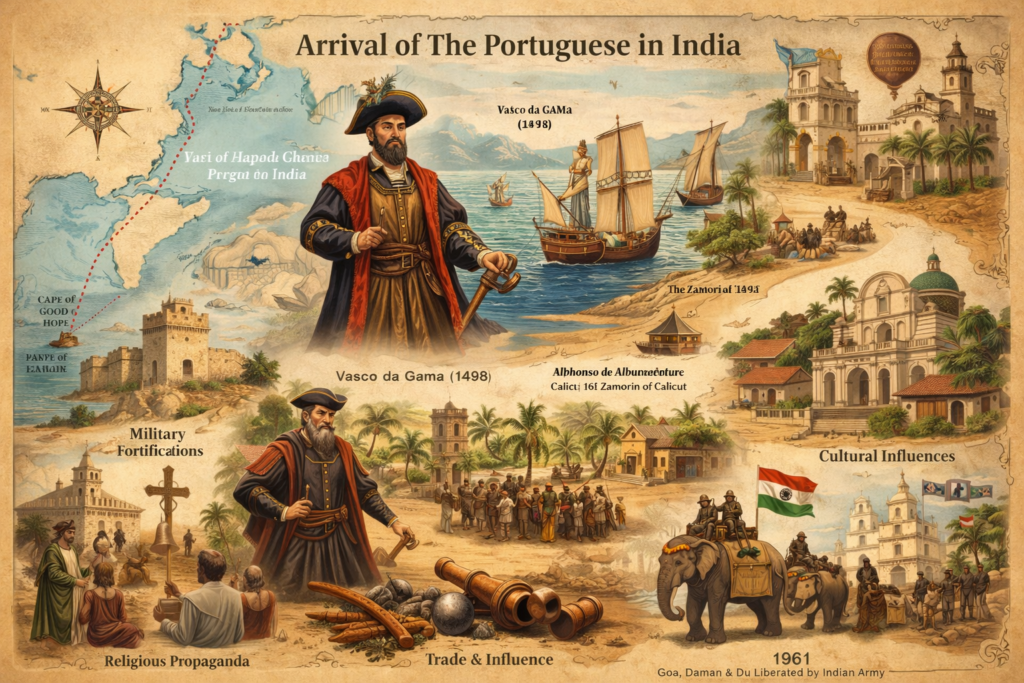
Arrival of The Portuguese in India
The history of the arrival of the Portuguese in India is linked to the era of exploration of sea routes during the 15th and 16th centuries. Its purpose was mainly to explore trade routes and establish control over the spice trade. Let us understand this in detail:
1. Background: Discovery of Sea Routes
In the 15th century, European countries began exploring sea routes so they could trade products such as spices and silk with India and other parts of Asia. The land route (like the Silk Route) was expensive and risky as it was under the control of Arabs and Turks. Portugal took the initiative in finding sea routes, in which King Henry the Navigator played a major role.
2. Arrival of Vasco da Gama (1498)
On 20 May 1498, Vasco da Gama, a Portuguese sailor, reached Calicut (present-day Kozhikode) in the Indian state of Kerala. He discovered the sea route to reach India by crossing the southern tip of Africa (Cape of Good Hope). He was welcomed by the Zamorin (ruler) of Calicut, and Vasco da Gama was successful in trading spices, especially pepper and cinnamon.
3. Trade Activities of the Portuguese
Portuguese traders tried to establish a monopoly on the trade of spices and other goods in India. They strengthened their presence in coastal areas such as Calicut, Cochin, and Goa. In 1510 Alphonso de Albuquerque conquered Goa and made it the capital of Portuguese India.
4. Strategy of the Portuguese
Military Strength and Fortifications
The Portuguese built forts to secure maritime trade routes and coastal areas.
Religious Propaganda
The Portuguese also showed interest in spreading Christianity and sent missionaries to India.

Amazon Choice Recommended
Trusted quality • Great performance • Excellent value for money
- ✔ 100% Genuine Product
- ✔ Fast & Secure Amazon Delivery
- ✔ Easy Return Policy
Relations with Local Kings
To facilitate trade, they entered into treaties with local rulers and sometimes even waged war.
5. Impact and Decline
The Portuguese were successful in establishing a monopoly on trade activities in India, but their rule and influence gradually began to decline. The rise of the British and French in the 17th century weakened the position of the Portuguese. Eventually, their rule was limited to areas like Goa, Daman and Diu. In 1961, the Indian Army liberated Goa and other areas from Portugal.
6. The Influence of the Portuguese on India
Cultural Influences
The Portuguese contributed to Christianity, architecture, music, and cuisine in India. Their cultural influence can still be seen in Goa today.
Business and Administration
They organised maritime trade off the Indian coast and linked it to the global market.
Conclusion
The arrival of the Portuguese in India was a landmark event that marked the beginning of European colonialism in the Indian subcontinent. Their trading and cultural legacy can still be seen in the coastal areas of India.
Background: Discovery of Sea Routes
The 15th and 16th centuries are known in history as the “Age of Inventions and Explorations”. This was the time when European countries began exploring sea routes, which made trade and cultural expansion possible. To understand this background, we have to look at several aspects.
1. Economic and Trade Situation of Europe
The center of trade in medieval Europe was the Mediterranean Sea and the areas around it. Spices (pepper, cinnamon, cloves), silk, and other valuable goods were in great demand from India, China, and other Asian countries.
These goods were brought from India and Asia via land routes (e.g., Silk Route), but these routes:
• Were very tall.
• Were controlled by the Ottoman Empire and Arab traders, who collected heavy taxes from European merchants.
European countries needed new routes that could connect directly to Asia, bypassing intermediaries.
2. Religious and Political Purposes
Religious Purposes
The propagation of Christianity was a major objective for the European powers. They wanted to challenge the influence of Islam and other religions. Religious sentiment was also involved in the search for new routes.
Political Competition
Countries such as Spain, Portugal, England, and France wanted to expand their empires. Control over the sea routes could make them global powers.
3. Technological Development and the Rise of Seamanship
15th century saw several technological and scientific advances that made oceanic exploration possible:
Development of Maps and Compass
Compass: It was very useful to steer the voyage in the right direction.
Astrolabe: It helped sailors to know their position at sea.
Better Ship
Caravel — such light and strong ships were built, which were suitable for long sea voyages.
Knowledge of Astronomy and Geography
European sailors understood that the Earth was round and that new places could be reached through the sea.
4. Leading Role of Portugal
Portugal was the first to take steps in exploring sea routes. The main reasons behind this were:
Geographical Location
Portugal was located along the Atlantic Ocean, making it ideally located for seafaring.
King Henry “the Navigator”
This prince of Portugal established schools for maritime exploration, where sailors were trained.
Exploration of Sea Routes
In 1488, Bartholomew Diaz discovered the “Cape of Good Hope”, the southern tip of Africa.
In 1498, Vasco da Gama discovered the sea route to India.
5. Discovery of Spain
Spain also played a major role in the exploration of sea routes.
In 1492, Christopher Columbus travelled westwards, but mistakenly reached America, thinking he had reached India. Competition grew between Spain and Portugal, which in 1494 was resolved by the Treaty of Tordesillas.
6. The Main Objectives of the Discovery of Sea Routes
Amazon Choice Quality Product
Trusted performance • Great build quality • Excellent value for money
- ✔ 100% Genuine & Verified
- ✔ Fast & Secure Amazon Delivery
- ✔ Easy Return & Refund
• Asian Spice Trade: Spices were considered as valuable as “gold”.
• Cheap and direct routes: Making trade cheaper for European countries by eliminating Arab and Turkish traders.
• Colonization of new territories: To establish rule over new territories along with trade.
• Propaganda of religion: To spread Christianity and weaken Muslim influence.
7. The Importance of the Discovery of Sea Routes
• Global Connectivity: The way was paved to connect different parts of the world.
• New Business Centres: Trade activities increased in India, Southeast Asia, and the Americas.
• Beginning of European Imperialism: This discovery became the foundation of European colonialism.
• Developments in Geography and Science: New information was discovered about the earth and the oceans.
Conclusion
The discovery of sea routes enriched European countries economically, politically, and culturally. Their contacts with India and Asia paved the way for trade and cultural exchange. These discoveries by Portugal, Spain, and other European countries gave a new turn to history, which became the foundation of today’s globalization.
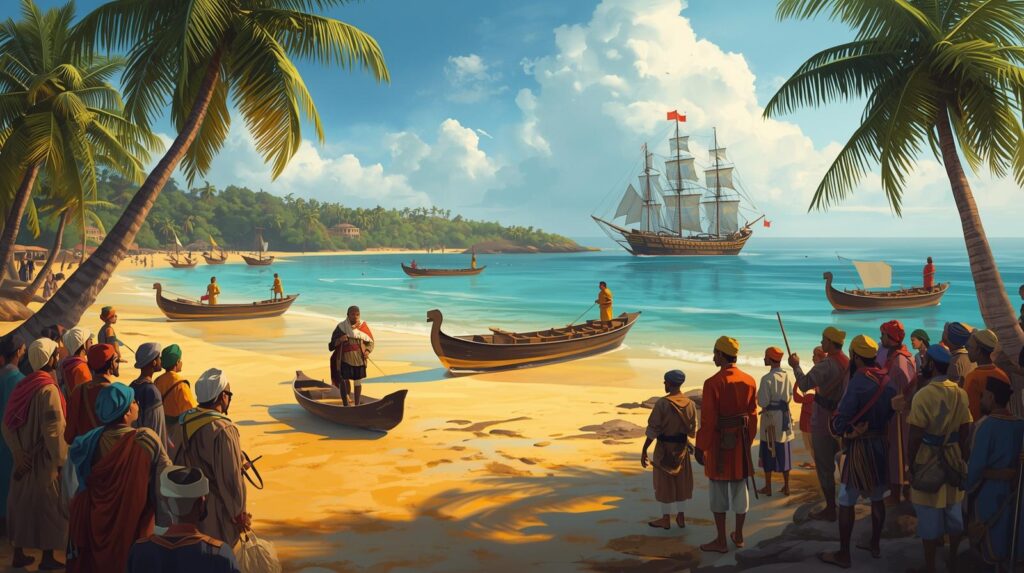
Arrival of Vasco da Gama
Arrival of Vasco da Gama (1498): A Landmark Event in the History of India
Vasco da Gama, a famous sailor from Portugal, was the first European to reach India using the sea route. This event happened in 1498 and had a profound impact on not only the history of India but also global trade and colonialism. Let us understand this event in detail:
1. Background and Objectives
European trade demand: Spices (pepper, cinnamon, cardamom), silk, and other Asian goods were in great demand in Europe during the 15th century. These goods were traded through Arab and Ottoman merchants, which was expensive and lengthy.
New Sea Route: Portugal attempted to find a sea route to trade directly with India and Asia.
Support of the King of Portugal: King Manual-I of Portugal sent Vasco da Gama to find a sea route to India. This was part of Portugal’s earlier exploration efforts.
2. Start of the Journey
Vasco da Gama began his journey on 8 July 1497. He had four ships with him: São Gabriel, São Rafael, Berio, and a cargo ship.
During the voyage, Vasco da Gama and his team stopped at several places along the west coast of Africa and also visited the southern tip of Africa, crossing the Cape of Good Hope.
3. From the Coast of Africa Towards India
Vasco da Gama stopped at Mozambique and the shores of Malindi (East Africa) and received help from local rulers.
In Malindi, an Arab sailor (guide) showed them the way to India with the help of the monsoon. This route was known earlier to Arab merchants, but the Europeans adopted it for the first time.
4. Arrival at Calicut (Kozhikode)
On 20 May 1498, Vasco da Gama arrived on the south-western coast of India at Calicut (present-day Kozhikode).
Zamorin (local king): Vasco da Gama was welcomed by the Zamorin (local ruler) of Calicut. The Zamorin had strong trading influence and already traded with Arab merchants.
5. Relationship Between Vasco da Gama and Zamorin
Vasco da Gama proposed trade to the Zamorin and presented the gifts he had brought with him. However, the Zamorin did not find Vasco da Gama’s gifts (cheap clothes and goods) impressive, as Arab traders brought better goods.
Despite this, Vasco da Gama was successful in obtaining permission to trade spices (especially pepper).
6. Return Journey of Vasco da Gama
Vasco da Gama filled his ships with spices and returned to Portugal in 1499. The return voyage was difficult, and about half the crew died, but the spice trade was so profitable that it recovered all the costs of the voyage.
7. Significance of the Arrival of Vasco da Gama
(i) For Europe
Route of Maritime Trade: Vasco da Gama’s voyage provided a direct sea route linking Europe to Asia. Dominance of Portugal: His success made Portugal a major power in maritime trade and colonization.
(ii) For India
Challenge to Arab traders: The Portuguese tried to establish control over the trade of Arab merchants.
Beginning of a new era: The arrival of Vasco da Gama signaled the beginning of European colonialism in India.
8. Expansion of Portuguese Activities
After Vasco da Gama, Portugal made several other voyages to India. In 1510 Alphonso de Albuquerque took control of Goa, which was made the capital of Portuguese India.
9. Impact of Relations Between India and Portugal
Cultural and Religious Influences
The Portuguese preached Christianity and left their mark in India through architecture and music.
Local Opposition
The aggressive trade and military stance of the Portuguese also led to conflicts between Indian coastal rulers and the Portuguese.
Conclusion
Vasco da Gama’s arrival in India in 1498 was not just a trading achievement, but it also ushered in an era of colonialism and European intervention in the Indian subcontinent. The voyage signalled a new era for India, profoundly influencing global trade, politics, and cultural exchange.
Portuguese Trade in India Activities
The 15th and early 16th centuries mainly for commercial purposes. Their trade focus was mainly on spices (such as pepper, cloves, cinnamon) and other valuable goods. They not only expanded trade in India, but also strengthened their supremacy through military power and administrative system.
1. Beginning of the Trading Presence of the Portuguese in India
After the arrival of Vasco da Gama in India in 1498, the Portuguese planned to control trade through the sea route. They focused mainly on the Indian coastal areas (Calicut, Cochin, Goa), where spices were produced and traded.
The main objective of the Portuguese was to establish a monopoly on trade by eliminating Arab and other European traders.
2. Trading Strategy of the Portuguese
(i) Control Over the Sea Routes
The Portuguese began attacking merchant ships in the Indian Ocean and the Arabian Sea. They used their ships and forts on the sea routes to control the spice trade.
(ii) Establishment of Fortifications and Trading Centres
They built forts at several major trading points, such as:
Goa (1510): The main centre and capital of the Portuguese.
Daman and Diu: Important places for business and administration.
Cochin and Calicut: Major centres for the spice trade.

Amazon Recommended Product
Trusted quality • Great performance • Excellent value for money
- ✔ 100% Genuine & Verified Product
- ✔ Fast & Secure Amazon Delivery
- ✔ Easy Return & Refund
(iii) Treaty With the Local Rulers
The Portuguese entered into treaties with the Indian coastal rulers and used them for their trading purposes. Where cooperation was not available, they used military force.
3. Trade Products of the Portuguese
(i) Spices Trade
Spices such as pepper, cardamom, cinnamon, and cloves were the most prominent part of the Portuguese trade. They made huge profits by exporting spices to Europe.
(ii) Other Merchandise
Silk, cotton textiles, metal objects, seashells, pearls, and jewels were also profitable for them.
4. Challenges in Setting Up Business Activities
(i) Competition From Arab and Gujarati Traders
Arab traders already maintained trade networks across the Indian Ocean. Gujarati merchants were active on the Indian coasts and traded in spices.
(ii) Conflict With Local Rulers
Military conflicts occurred when local rulers opposed Portuguese expansion. Example: The war between the Portuguese and the Zamorin of Calicut.
(iii) European Competition
In the 17th century, Dutch, English, and French traders challenged the Portuguese trade.
5. Trading System of the Portuguese
Cartaz System
The Portuguese implemented a licensing system called Cartaz. Any ship wishing to trade in the Indian Ocean had to obtain a license. Ships trading without a license were confiscated.
Monopoly Business
The Portuguese established a monopoly on the spice trade and collected tolls on trade routes.
6. Goa: Trading and Administrative Center of the Portuguese
In 1510 Alphonso de Albuquerque conquered Goa and made it the main trading centre of the Portuguese. They controlled trade and administration over the entire western coastal areas (Daman, Diu). Goa also became a centre of religious propagation.
7. Impact of Portuguese Trade in India
(i) Economic Impact
Spices and textiles were exported from India on a large scale. Indian traders faced both cooperation and competition with the Portuguese.
(ii) Cultural Influences
The Portuguese propagated Christianity and influenced Indian cuisine, architecture, and music—especially in Goa.
(iii) Impact on Local Trade
Arab and Gujarati merchants weakened. Indian traders suffered economic losses due to Portuguese policies.
8. Decline of Portuguese Trade
By the 17th century, Dutch and British traders began to gain control over Indian trade. The military and economic power of the Portuguese weakened. Eventually, their trade became limited to small areas like Goa, Daman, and Diu.
Conclusion
The trading activities of the Portuguese marked the beginning of European intervention and colonialism in India. Though their trading and military power remained limited, they made a profound impact on trade, culture, and administration on the Indian shores. The systems established by them brought major changes in Indian trade and society.
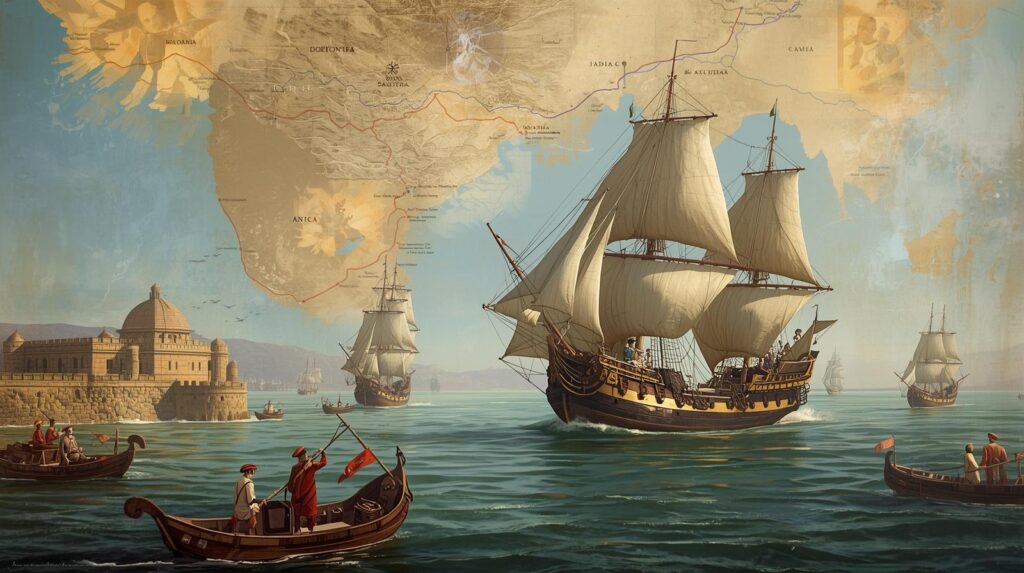
Portuguese Strategy in India
The Portuguese adopted planned and elaborate strategies to establish commercial and strategic dominance in India and other Asian countries in the 15th and 16th centuries. Their main objectives were to establish a monopoly over the spice trade, control the sea routes and dominate the local rulers. Their strategy was based on trade, military power, diplomatic agreements and religious preaching.
1. Control Over Sea Routes
(i) Development of the Cape of Good Hope Route
The Portuguese developed the sea route to India via the southern tip of Africa (Cape of Good Hope). This route gave them the opportunity to trade directly with India, bypassing Central Asia and Arab traders.
(ii) Dominance in the Indian Ocean
The Portuguese devised a strategy to establish control over merchant ships and routes in the Indian Ocean and the Arabian Sea. They implemented the Cartaz System. Under this, merchant ships were required to obtain Portuguese licenses, and ships trading without a license were confiscated.
2. Establishment of Trading Centers
(i) Capture of Goa (1510)
Alphonso de Albuquerque made Goa the main administrative and commercial centre of the Portuguese. From Goa they conducted trade and administration throughout the west coast.
(ii) Other Trading Centres
The Portuguese also established other coastal areas of India as trading centers, such as:
- Calicut
- Cochin
- Daman and Diu
- Hooghly (Bengal region)
(iii) Fortifications
To protect the trading centres they built forts on the seashore. Example: Forts built in Goa, Daman, Diu and Calicut.
3. Strategy for Relations With Local Rulers
(i) Diplomatic Relations and Treaties
The Portuguese entered into trade treaties with local rulers. They often tried to win the rulers’ support by providing them economic and military help. Example: The King of Cochin entered into an alliance with the Portuguese.
(ii) Use of Military Force
Where diplomatic relations failed, the Portuguese used force. They attacked the ships of local rulers and Arab merchants.
(iii) Suppression of Local Traders
They tried to restrict the trade of Indian and Arab merchants and suppressed competitors to establish monopoly on spices and other goods.
4. Monopoly on the Spice Trade
The spice trade was the mainstay of Portuguese strategy. They established control over spice producing areas (such as the Malabar Coast) and made huge profits by exporting Indian spices to Europe.
5. Military Strategy
(i) Use of Armed Ships
The Portuguese used armed ships that not only carried out trade but also protected against enemies. They began to resort to piracy, looting the ships of other merchants.
(ii) Suppressing Local Rebellions
Wherever there was a rebellion against the Portuguese, they suppressed it with military force. Example: They crushed the local rebellion in Goa and strengthened their position.
6. Religious Propaganda Strategy
(i) Spread of Christianity
The Portuguese propagated Christianity through missionaries and made Goa the main centre for religious activities.
Amazon Choice Quality Product
Trusted quality • Great performance • Excellent value for money
- ✔ 100% Genuine & Verified Product
- ✔ Fast & Secure Delivery by Amazon
- ✔ Easy Return & Refund Policy
(ii) Impact on Local Culture and Religion
They encouraged local people to embrace Christianity, built churches, and spread religious education.
7. Political Strategy
(i) Interference in Local Politics
The Portuguese interfered in the internal affairs of local rulers. Wherever there was political instability, they used it to expand their influence.
(ii) Conflict With Indian Empires
The Portuguese struggled with the Mughals and other Indian empires over trade and power. However, they could not make much impact on the Mughals.
8. Competing With Competitors
(i) Competition From Arab Traders
Arab traders already dominated trade activities in the Indian Ocean. The Portuguese attacked the sea routes to weaken their position.
(ii) Competition With the Dutch and the British
In the 17th century, the Dutch and the British weakened the position of the Portuguese. Their military and economic power was limited and their influence was restricted only to Goa, Daman and Diu.
9. Failures and Downfall of the Portuguese
(i) Financial Difficulties
The Portuguese had excessive economic dependence on spices only. The Dutch and the British destroyed their trade.
(ii) Administrative Weaknesses
The Portuguese administration was plagued by dictatorship and corruption, increasing dissatisfaction among the local people.
(iii) International Pressure
Other European powers pushed the Portuguese back in the competition for trade control in the Indian subcontinent.
Conclusion
The Portuguese adopted several planned strategies to establish trade and power in India. Their strategy not only affected the Indian trading structure, but also brought changes in Indian politics and society. However, their policies were not successful in the long run, and they eventually had to succumb to other European powers. But their influence was seen in the Indian coastal areas for several centuries.
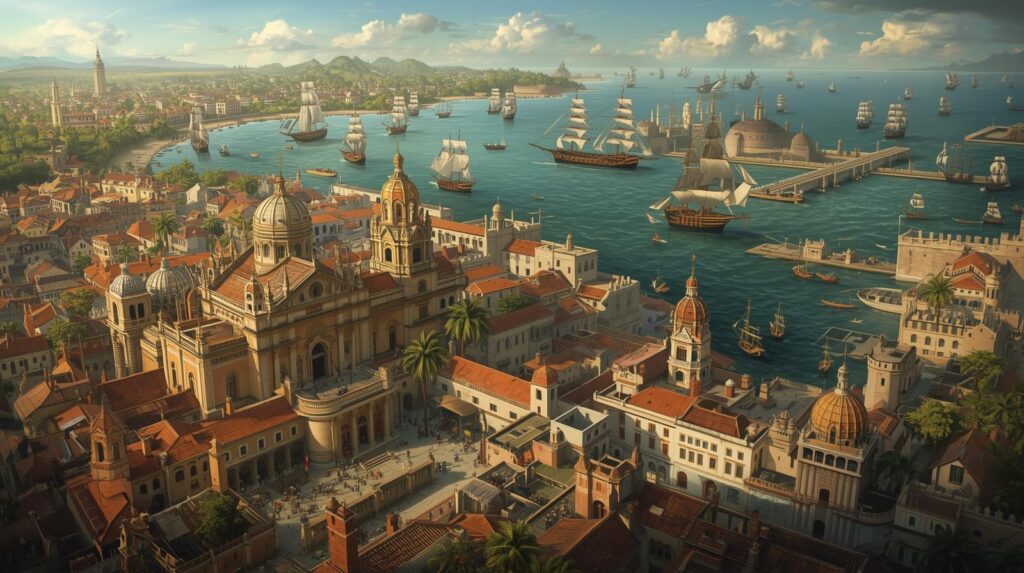
Portuguese Influence in India and Their Decline
The Portuguese arrived in India in the 15th and 16th centuries with trading purposes. They exerted significant influence in trade, administration, and culture in the coastal regions of India. However, their dominance did not last long, and they began to decline in the 17th century due to the dominance of other European powers such as the Dutch, the British, and the French. Let us understand the influence of the Portuguese in India and their decline in detail.
1. Influence of the Portuguese
(i) Effect on Trade
The Portuguese took Indian trade to a new dimension. Trade in spices (especially pepper, cinnamon, cardamom) was their major economic resource. They established trading centres (such as Goa, Cochin, Daman and Diu) in the Indian coastal areas. The Portuguese established control over merchant ships through the Cartaz System.
(ii) Religious Influence
The Portuguese propagated Christianity in India. They developed Goa as a religious centre. Through churches and missionaries they inspired the local people to embrace Christianity. Goa has many famous churches (like The Basilica of Bom Jesus) which are examples of Portuguese influence.
(iii) Impact on Culture and Architecture
Portuguese architecture had a profound influence on Indian churches and buildings. Forts and buildings built in Goa are amazing examples of the Portuguese architectural style. They also influenced the local culture in terms of music, food and way of living.
(iv) Military and Administrative Influence
The Portuguese built many forts on the Indian coast. They made Goa their capital and from there administered the entire western coast. The Portuguese laid the foundation for the development of a modern navy in India.
(v) Influence on Local Politics
The Portuguese formed alliances with local rulers and interfered in their politics. They supported weak rulers and used them for their own purposes.
2. Decline and Fall of the Portuguese
(i) Arrival of the Dutch and the British
Dutch, English, and French traders entered India in the 17th century. Dutch merchants took control of the spice trade and pushed the Portuguese back. The British began to take over trade and administration in the coastal areas through the East India Company.
(ii) Economic Weaknesses
The Portuguese trade policies were highly one-sided. Their trade was highly dependent on spices, and their interest in other trade goods was limited. Their trade routes became disorganised due to competition with other European powers.
(iii) Military Weakness
The Portuguese did not have sufficient military strength. Their navy was vulnerable to the modern navies of the Dutch and the British. The Dutch and the British ended their dominance over the sea routes.
(iv) Administrative Failures
The Portuguese administration was marred by dictatorship and corruption. Dissatisfaction towards them increased among the local people. Due to administrative instability, the Portuguese did not get support in Indian society.
Top Rated Amazon Choice
Trusted quality • Excellent performance • Great value for money
- ✔ 100% Genuine & Verified Product
- ✔ Fast & Secure Amazon Delivery
- ✔ Easy Return & Refund Policy
(v) Local Opposition
Local people in Goa and other areas resisted Portuguese rule. Their religious and cultural interference led to a growing feeling of rebellion among the local people.
(vi) Industrial Revolution and Competition
The Industrial Revolution led to the British and the French developing large-scale trading networks in India. The Portuguese did not have the resources and technical expertise to cope with this competition.
3. Impact Limited to Goa
After the 17th and 18th centuries, Portuguese influence was limited only to Goa, Daman, and Diu. Their control over Goa lasted until 1961, when the Indian government liberated it. However, the cultural influence of the Portuguese can still be seen in Goa today.
4. Summary of the Causes of the Decline of the Portuguese
• Other European powers (Dutch, British, French) weakened the Portuguese.
• Their military and economic power was weak.
• Corruption in administration and lack of local support.
• No flexibility in trade policies.
• Faced local revolts and cultural opposition.
Conclusion
The Portuguese exerted a profound influence in India in the areas of trade, religion, and culture, but their decline was swift. Their military and economic strategies failed in the face of Dutch, English, and French powers. Though their rule ended, their cultural and religious influence can still be clearly seen in parts of India, especially Goa.
References

Amazon Choice Recommended
Trusted quality • Excellent performance • Great value for money
- ✔ 100% Genuine & Verified Product
- ✔ Fast & Secure Amazon Delivery
- ✔ Easy Return & Refund Policy
- History of Portuguese in India – Standard NCERT & academic sources
- Maritime Trade and European Expansion – Historical documents
- Records of Vasco da Gama’s Voyage – Portuguese Archives
- Goa: Cultural and Religious Influence – Archaeological and cultural studies
- European Colonial Expansion in Asia – Research papers & history books