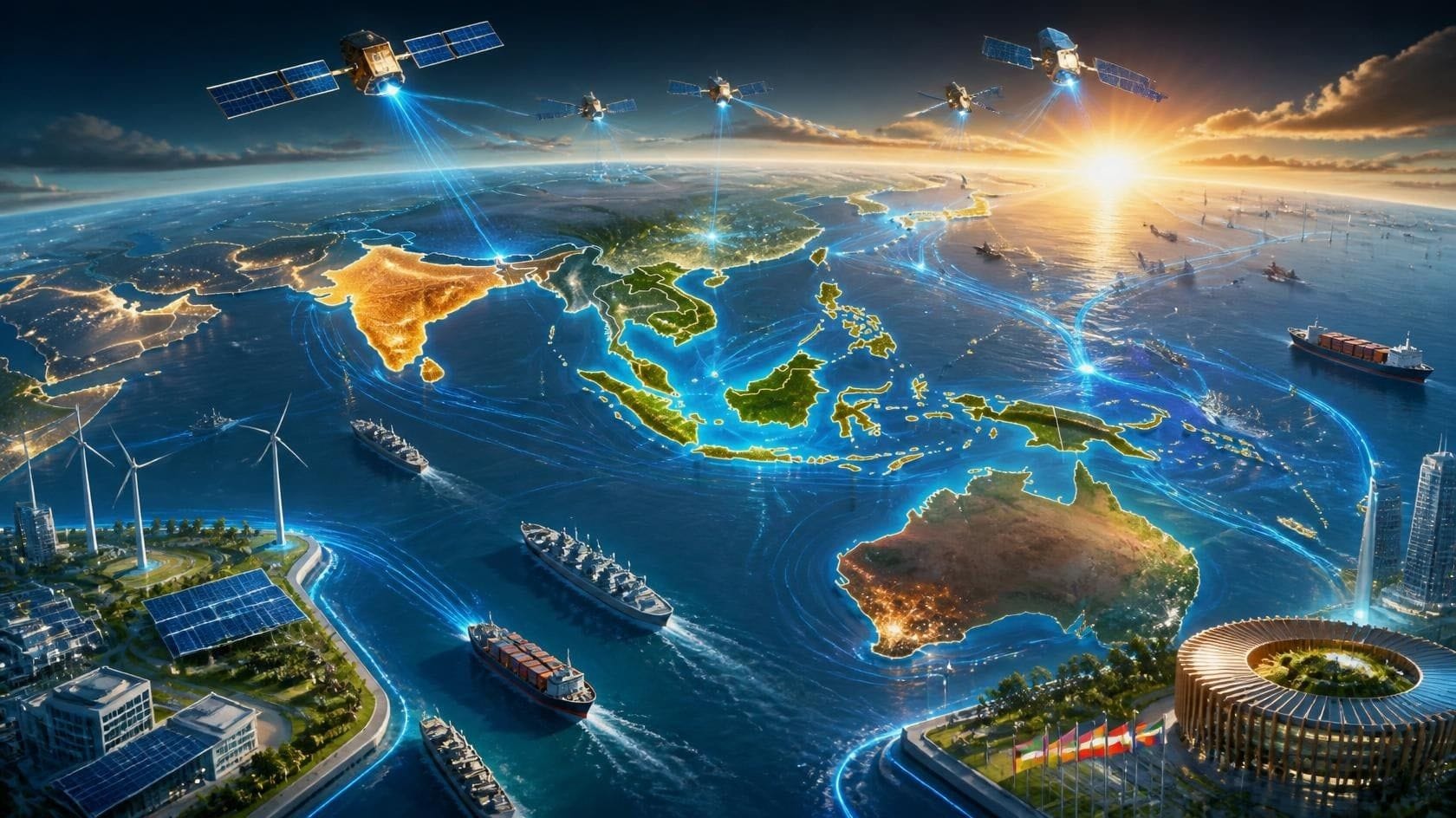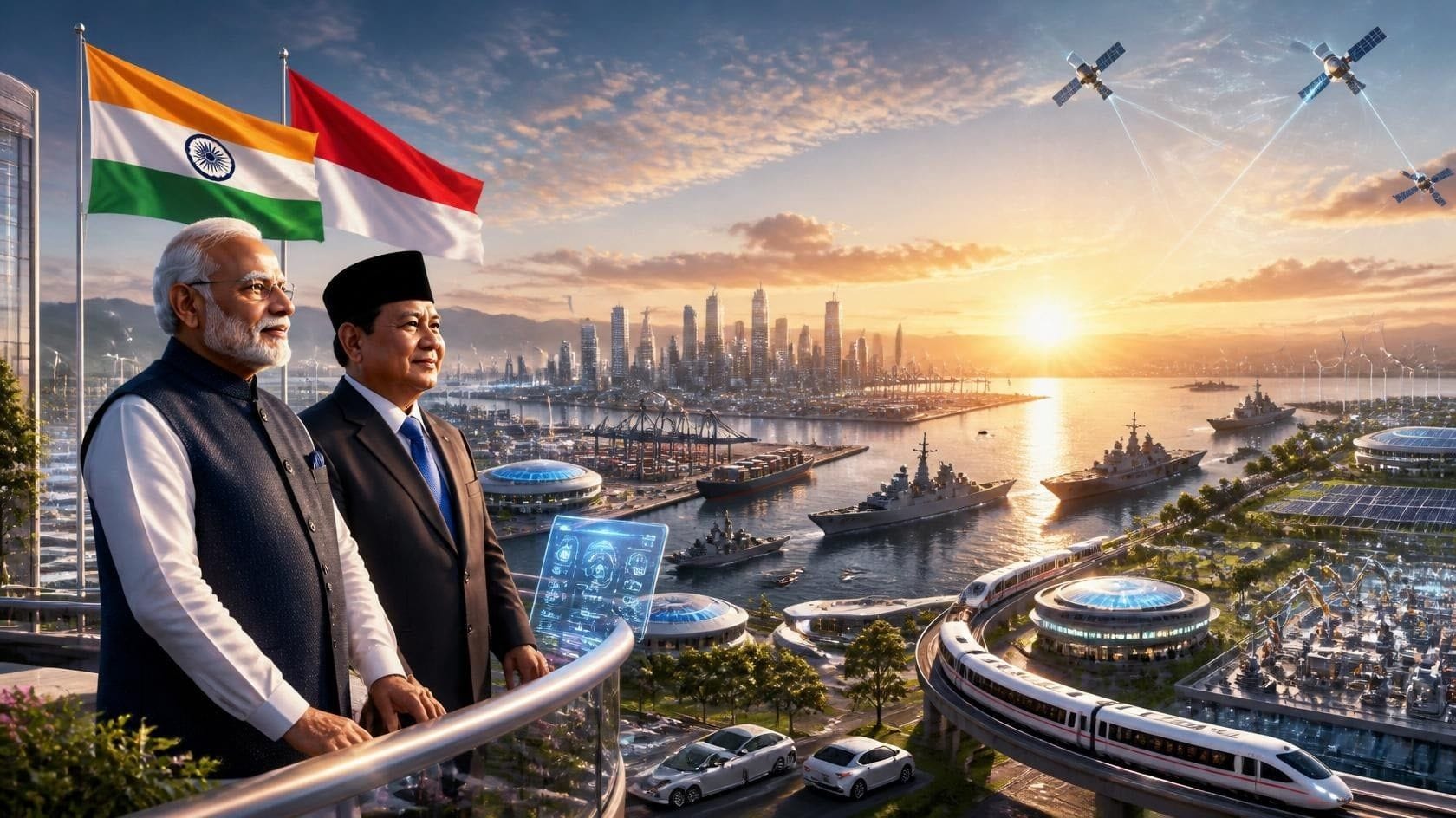
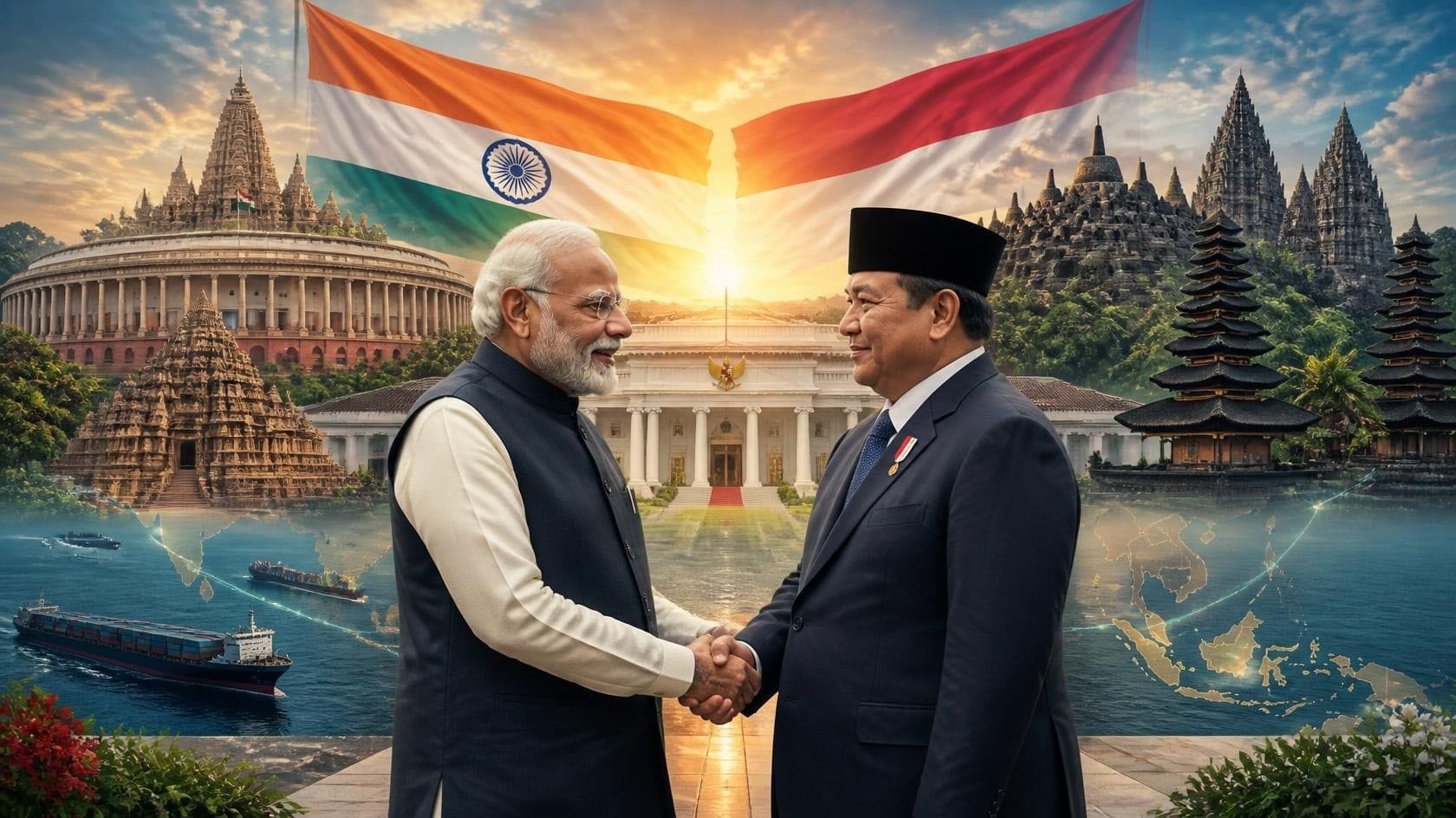
PM Modi Indonesia Visit 2026 marks a significant milestone in strengthening India–Indonesia strategic relations, defence cooperation and Indo-Pacific partnership.
Prime Minister Narendra Modi's Indonesia Visit 2026: A New Chapter in India–Indonesia Strategic Partnership
PM Modi Indonesia Visit 2026 Introduction
India and Indonesia share one of Asia's oldest and strongest civilizational relationships. For centuries, the two countries have remained connected through maritime trade, culture, religion, and people-to-people exchanges. Even today, Indian cultural influence can be seen in Indonesia's traditions, architecture, language, and the famous island of Bali.
In the 21st century, the relationship has evolved into a comprehensive strategic partnership covering defence, maritime security, trade, investment, digital technology, critical minerals, energy, education, and regional cooperation. Prime Minister Narendra Modi's official visit to Indonesia in July 2026 further strengthened this partnership and highlighted India's growing role in the Indo-Pacific region.
Background of the Visit
The Indo-Pacific has become one of the world's most strategically important regions. More than half of global maritime trade passes through these waters, making regional stability essential for the global economy. India and Indonesia, located on important sea routes, share common interests in ensuring peace, freedom of navigation, secure supply chains, and sustainable economic growth.
Why Was This Visit Important?
- Strengthening bilateral strategic partnership.
- Expanding defence cooperation.
- Improving maritime security.
- Boosting trade and investment.
- Securing access to critical minerals.
- Supporting India's Act East Policy.
- Enhancing Indo-Pacific cooperation.
Objectives of Prime Minister Modi's Visit
The visit was designed to deepen cooperation across multiple sectors while creating a long-term roadmap for India-Indonesia relations. Both countries emphasized shared democratic values, regional stability, economic growth, and strategic collaboration.
Major Objectives
- Expand defence and security cooperation.
- Increase bilateral trade.
- Strengthen maritime collaboration.
- Develop resilient supply chains.
- Enhance cooperation in critical minerals.
- Promote digital economy partnerships.
- Increase educational and cultural exchanges.
- Support a free, open, and inclusive Indo-Pacific.
Historical Relations Between India and Indonesia
Ancient Connections
India and Indonesia have maintained cultural and commercial relations for over two thousand years. Indian traders travelled across the Indian Ocean, bringing trade, religion, art, architecture, and language to the Indonesian archipelago. The spread of Hinduism and Buddhism significantly influenced Indonesian civilization. Even today, epics like the Ramayana and Mahabharata remain popular across Indonesia.
Medieval Period
During the medieval era, trade in spices, textiles, and precious goods strengthened commercial relations. Indian merchants became an important part of Southeast Asia's maritime trade network.
Post-Independence Relations
India was among the earliest countries to support Indonesia's independence. The two nations later worked closely through the Non-Aligned Movement (NAM), promoting peace, decolonization, and cooperation among developing countries.
India's Act East Policy and Indonesia
Indonesia occupies a central position in India's Act East Policy. As Southeast Asia's largest economy and an influential ASEAN member, Indonesia plays a vital role in regional connectivity, maritime security, and Indo-Pacific cooperation. Its strategic location near the Strait of Malacca makes it an indispensable partner for India's maritime interests.
Key Highlights
- India and Indonesia share centuries-old civilizational ties.
- The visit reflects India's growing Indo-Pacific strategy.
- Maritime security remains a major area of cooperation.
- Critical minerals are emerging as a strategic priority.
- Indonesia is a key pillar of India's Act East Policy.
- Both countries support a free, open, and rules-based Indo-Pacific.
Summary
Prime Minister Narendra Modi's Indonesia visit in 2026 represents an important milestone in strengthening India's engagement with Southeast Asia. Built upon centuries of historical and cultural ties, the partnership now focuses on strategic cooperation, maritime security, trade, critical minerals, technology, and regional stability. As the Indo-Pacific continues to shape global geopolitics, India and Indonesia are expected to play increasingly significant roles in maintaining peace, prosperity, and sustainable development across the region.
📚 Recommended Article
India and Indonesia share deep civilizational connections rooted in religion, culture, and maritime history. Explore how religion has shaped societies and civilizations by reading our detailed guide:
Read: Influence of Religion on Personal, Social & Cultural Life →
PM Modi Indonesia Visit 2026: Major Agreements, Defence Cooperation, Trade, Investment & Maritime Partnership
Major Agreements
Prime Minister Narendra Modi's visit to Indonesia marked an important milestone in strengthening bilateral relations. Both countries agreed to deepen cooperation in defence, maritime security, trade, investment, critical minerals, digital technology, agriculture, healthcare, education, and scientific research. These agreements are expected to provide a long-term roadmap for strategic cooperation.
Key Areas of Cooperation
- Defence & Security
- Maritime Cooperation
- Trade & Investment
- Critical Minerals
- Digital Technology
- Agriculture & Food Security
- Healthcare
- Education & Skill Development
- Science & Technology
- Cultural Exchange
Defence Cooperation
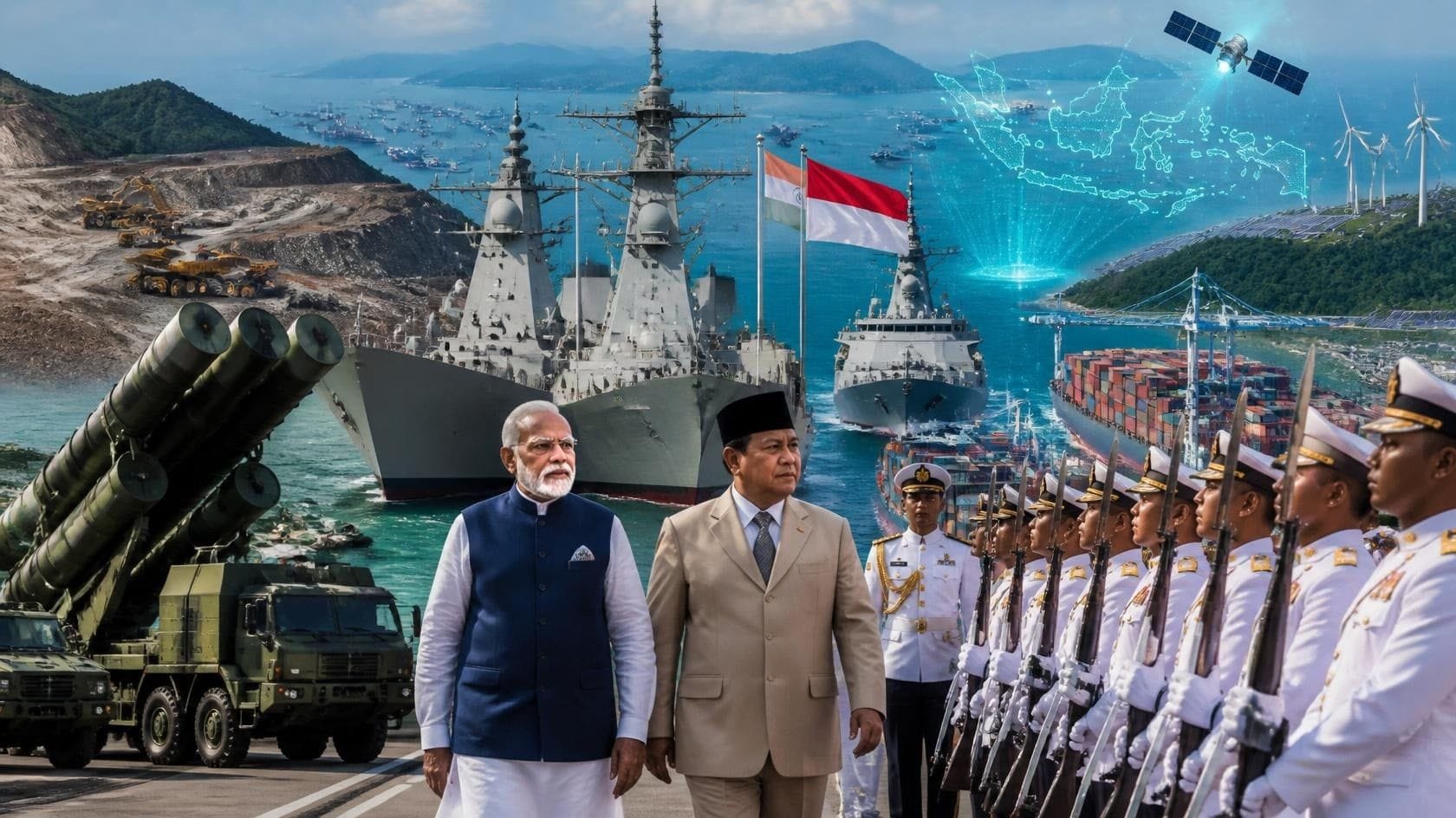
Defence remains one of the strongest pillars of the India–Indonesia Strategic Partnership. Both countries agreed to expand cooperation through defence manufacturing, joint military exercises, naval cooperation, maritime surveillance, and defence technology exchange. These initiatives aim to enhance regional security and strengthen defence capabilities.
Defence Priorities
- Joint Military Exercises
- Naval Cooperation
- Defence Manufacturing
- Technology Transfer
- Maritime Domain Awareness
- Counter-Terrorism Cooperation
BrahMos Missile Cooperation
India's BrahMos supersonic cruise missile has attracted growing international interest. Indonesia's interest in advanced defence cooperation reflects India's emergence as a reliable defence manufacturing partner in Southeast Asia. Future collaboration may strengthen regional deterrence and defence preparedness.
Maritime Security
India and Indonesia are two major maritime nations located in the Indo-Pacific region. Both countries reaffirmed their commitment to maintaining a free, open, secure, and rules-based maritime order. Cooperation will focus on protecting sea lanes, combating piracy, preventing illegal fishing, and strengthening naval coordination.
Maritime Cooperation Includes
- Anti-Piracy Operations
- Search and Rescue (SAR)
- Naval Exercises
- Maritime Surveillance
- Disaster Management
- Protection of Sea Lanes
Strategic Importance of Sabang Port
Sabang Port, located near the Strait of Malacca, holds immense strategic importance for India. The port is situated close to one of the busiest maritime trade routes in the world. Closer cooperation at Sabang can improve logistics, maritime connectivity, regional security, and disaster response capabilities.
Trade and Investment
India and Indonesia agreed to strengthen economic cooperation by promoting bilateral trade, encouraging investment, and reducing trade barriers. The two countries aim to diversify trade and improve business connectivity.
Major Trade Commodities
- Palm Oil
- Coal
- Petroleum Products
- Pharmaceuticals
- Automobiles
- Machinery
- Chemicals
- Agricultural Products
Critical Minerals Cooperation
Indonesia is one of the world's largest producers of nickel, a critical mineral essential for electric vehicles, battery manufacturing, renewable energy, and advanced electronics. Both countries agreed to develop resilient supply chains and strengthen cooperation in the critical minerals sector.
Digital Economy & Technology
India and Indonesia discussed expanding cooperation in Artificial Intelligence (AI), Digital Public Infrastructure (DPI), Cyber Security, Financial Technology (FinTech), Start-up ecosystems, and E-Governance. These initiatives are expected to accelerate digital transformation and promote innovation-led growth.
Education & Skill Development
The two countries agreed to strengthen academic partnerships, student exchange programmes, research collaboration, scholarships, and vocational skill development. These efforts will deepen people-to-people ties and support future workforce development.
Summary
Prime Minister Narendra Modi's Indonesia visit significantly expanded cooperation across defence, maritime security, trade, investment, critical minerals, digital technology, and education. The agreements signed during the visit demonstrate the commitment of both nations to building a resilient, future-oriented strategic partnership that contributes to peace, prosperity, and stability across the Indo-Pacific region.

Indo-Pacific Significance, ASEAN Partnership, Global Impact & Future Prospects
India's Indo-Pacific Vision
Prime Minister Narendra Modi's visit to Indonesia reinforced India's commitment to a Free, Open, Inclusive, Peaceful, and Rules-Based Indo-Pacific. As two major maritime democracies, India and Indonesia share a common vision of promoting regional stability, maritime security, sustainable economic growth, and freedom of navigation. The visit demonstrated the growing importance of strategic partnerships in addressing emerging geopolitical and economic challenges across the Indo-Pacific region.
Importance for ASEAN
Indonesia is the largest economy in Southeast Asia and a founding member of ASEAN. Its strategic location and regional influence make it an indispensable partner for India. Through stronger engagement with Indonesia, India aims to deepen cooperation with ASEAN in trade, connectivity, digital transformation, maritime security, and regional integration.
Why Indonesia Matters for ASEAN
- Largest economy in Southeast Asia.
- Founding member of ASEAN.
- Gateway to the Indo-Pacific region.
- Strategic maritime location.
- Strong regional diplomatic influence.
- Important partner in regional security.
Strategic Importance of the Strait of Malacca
The Strait of Malacca is one of the busiest maritime trade routes in the world, connecting the Indian Ocean with the Pacific Ocean. A significant portion of global trade and energy supplies passes through this narrow sea lane. India and Indonesia recognize that maintaining security and stability in this region is essential for global commerce and regional peace.
Strategic Benefits
- Protection of international shipping routes.
- Energy security.
- Regional economic stability.
- Secure maritime supply chains.
- Counter-piracy operations.
- Freedom of navigation.
Global Geopolitical Significance
The visit took place at a time when geopolitical competition in the Indo-Pacific continues to intensify. India and Indonesia emphasized peaceful dialogue, respect for international law, territorial integrity, and cooperation rather than confrontation. Their partnership contributes to a balanced regional order based on international norms.
Economic Opportunities
Closer economic cooperation is expected to create new opportunities in manufacturing, renewable energy, digital innovation, logistics, tourism, infrastructure, critical minerals, and sustainable development. Expanding bilateral investment will support long-term economic growth and strengthen supply-chain resilience.
Emerging Growth Sectors
- Renewable Energy
- Electric Vehicle Ecosystem
- Critical Minerals
- Digital Economy
- Artificial Intelligence
- Tourism
- Infrastructure Development
- Blue Economy
Challenges Ahead
Despite strong bilateral relations, several challenges remain. Both countries need to improve trade connectivity, reduce logistical barriers, enhance investment flows, strengthen technological collaboration, and ensure effective implementation of signed agreements. Maintaining regional stability amid evolving geopolitical tensions will also require continuous diplomatic engagement.
Major Challenges
- Geopolitical competition in the Indo-Pacific.
- Global supply-chain disruptions.
- Trade barriers.
- Maritime security threats.
- Climate change.
- Economic uncertainties.
Future Outlook
India and Indonesia are expected to further strengthen cooperation in defence, technology, digital infrastructure, renewable energy, critical minerals, education, healthcare, and maritime connectivity. The strategic partnership has the potential to become one of the strongest bilateral relationships in the Indo-Pacific region over the coming decade.
Summary
Prime Minister Narendra Modi's Indonesia visit reaffirmed India's commitment to a free, open, inclusive, and rules-based Indo-Pacific. The visit strengthened India's engagement with ASEAN, expanded regional cooperation, and highlighted the growing importance of India–Indonesia strategic relations. With shared democratic values, maritime interests, and economic ambitions, both countries are well positioned to play a leading role in shaping the future of the Indo-Pacific region.

Conclusion, Future Outlook, UPSC Perspective & Key Takeaways
Conclusion
Prime Minister Narendra Modi's visit to Indonesia in 2026 represents an important milestone in India's foreign policy and Indo-Pacific strategy. The visit strengthened bilateral cooperation across defence, maritime security, trade, investment, digital technology, critical minerals, education, healthcare, agriculture, and sustainable development.
More importantly, the visit reinforced the long-term strategic partnership between the two largest maritime democracies in the Indian Ocean region. As geopolitical dynamics continue to evolve, stronger India–Indonesia relations will contribute significantly to regional stability, economic growth, and a secure Indo-Pacific.
Significance for India
- Strengthened India's Act East Policy.
- Enhanced strategic engagement with ASEAN.
- Expanded defence and maritime cooperation.
- Improved access to critical minerals.
- Promoted resilient global supply chains.
- Boosted trade, investment, and digital partnerships.
- Reinforced India's Indo-Pacific vision.
Significance for Indonesia
- Expanded strategic partnership with India.
- Greater opportunities for defence cooperation.
- Higher foreign investment potential.
- Technology and digital collaboration.
- Improved maritime connectivity.
- Enhanced regional and global diplomatic engagement.
Global Significance
The visit goes beyond bilateral relations. It contributes to strengthening a free, open, inclusive, and rules-based Indo-Pacific while promoting international cooperation, secure maritime trade, and sustainable economic development.
Global Impact
- Supports regional peace and stability.
- Strengthens maritime security.
- Improves supply-chain resilience.
- Encourages sustainable economic growth.
- Promotes international cooperation.
- Supports a balanced Indo-Pacific order.
Future Outlook
India and Indonesia are expected to deepen cooperation in renewable energy, critical minerals, defence manufacturing, maritime connectivity, artificial intelligence, digital public infrastructure, space technology, education, healthcare, and the Blue Economy. The strategic partnership is likely to become one of the strongest bilateral relationships in the Indo-Pacific over the coming decade.
UPSC Examination Perspective
Important Themes
- India's Act East Policy
- India–ASEAN Relations
- India–Indonesia Strategic Partnership
- Indo-Pacific Strategy
- Maritime Security
- Critical Minerals
- Blue Economy
- Defence Diplomacy
Key Takeaways
- India and Indonesia share centuries-old civilizational ties.
- The 2026 visit elevated bilateral strategic cooperation.
- Maritime security remains a central pillar of the partnership.
- Critical minerals have emerged as a major area of cooperation.
- Indonesia is a key partner in India's Act East Policy.
- Both countries support a Free, Open, Inclusive and Rules-Based Indo-Pacific.
- Closer cooperation will enhance regional peace, prosperity, and connectivity.
Final Verdict
Prime Minister Narendra Modi's Indonesia visit in 2026 was more than a diplomatic engagement; it marked a significant step toward building a stronger strategic partnership capable of addressing future geopolitical, economic, and security challenges. As two leading Indo-Pacific democracies, India and Indonesia are well positioned to shape a peaceful, prosperous, and resilient regional order through mutual trust, shared values, and long-term cooperation.