
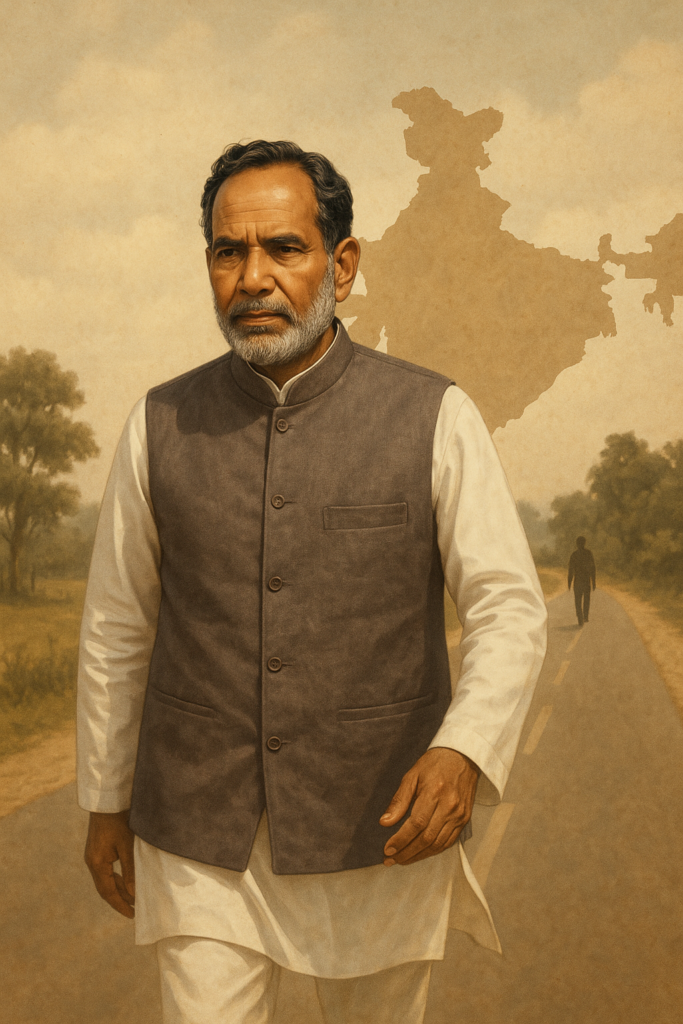
Biography of Shri Chandra Shekhar
Shri Chandra Shekhar was a prominent and highly respected leader in Indian politics who also served as the Prime Minister of India. He was known for his independent thinking, fearless personality, and unwavering dedication to the nation. Below is a detailed description of his life, journey, and contributions.
🛒 Buy Now on AmazonEarly Life
Birth and Family Background
Chandra Shekhar was born on 1 July 1927 in a simple farmer family in Ibrahimpatti village of Ballia district, Uttar Pradesh. His father’s name was Shri Sita Ram Singh and his mother’s name was Julie Devi. He grew up in a rural environment that deeply shaped his personality.
Education
He completed his early education in his village and later pursued higher studies at Allahabad University. Before that, he graduated from Satishwar College, Ballia. He obtained his Master’s degree (MA) in Political Science from Allahabad University.
Inclination Towards Politics
During his student life, he actively participated in student politics and social issues. He was strongly influenced by socialist ideology and leaders such as Dr. Ram Manohar Lohia. This ideological influence laid the foundation for his entry into national politics.
Political Life
Early Political Journey
Chandra Shekhar initially joined the Praja Socialist Party and later became a part of the Indian National Congress. He was influenced by great leaders like Jawaharlal Nehru and Ram Manohar Lohia.
Rise as a National Leader
In 1962, he was elected to the Rajya Sabha. His bold and straightforward views made him stand out, and he soon became known as one of the “Young Turks” of the Congress ― leaders who were unafraid to speak the truth even when it differed from the party line.
Positions and Contributions
- From 1983 to 1985, he served as the President of the Indian National Congress (Socialist).
- In 1977, he joined the Janata Party and remained active until 1988.
- In 1990, he formed the Samajwadi Janata Party (National) and became its leader.
Role as Prime Minister
On 10 November 1990, Chandra Shekhar became the 8th Prime Minister of India. Although his tenure lasted only till 21 June 1991 (about 7.5 months), it came at a time when India was facing a severe economic crisis.
Despite limited resources and political support, he took courageous decisions to stabilize the nation and address rising economic challenges.
Personal Life and Characteristics
Chandra Shekhar was known for his simplicity, integrity, honesty, and fearless leadership. He rejected the lure of power multiple times and never compromised his principles.
Bharat Yatra
He undertook a historic nationwide foot march called “Bharat Yatra”, during which he traveled across the country to understand the struggles and realities of common citizens. This journey greatly enhanced his connection with the masses.
Death
Shri Chandra Shekhar passed away on 8 July 2007 in New Delhi, leaving behind a legacy of dedication, honesty, and unwavering commitment to democratic values.
Conclusion
Chandra Shekhar was an inspiring, honest, and popularly respected leader of Indian politics. Even though his tenure as Prime Minister was brief, he made a lasting impression on Indian political history with his strong ideals, struggles, and integrity. His life continues to inspire future generations to stand firmly for truth and justice.
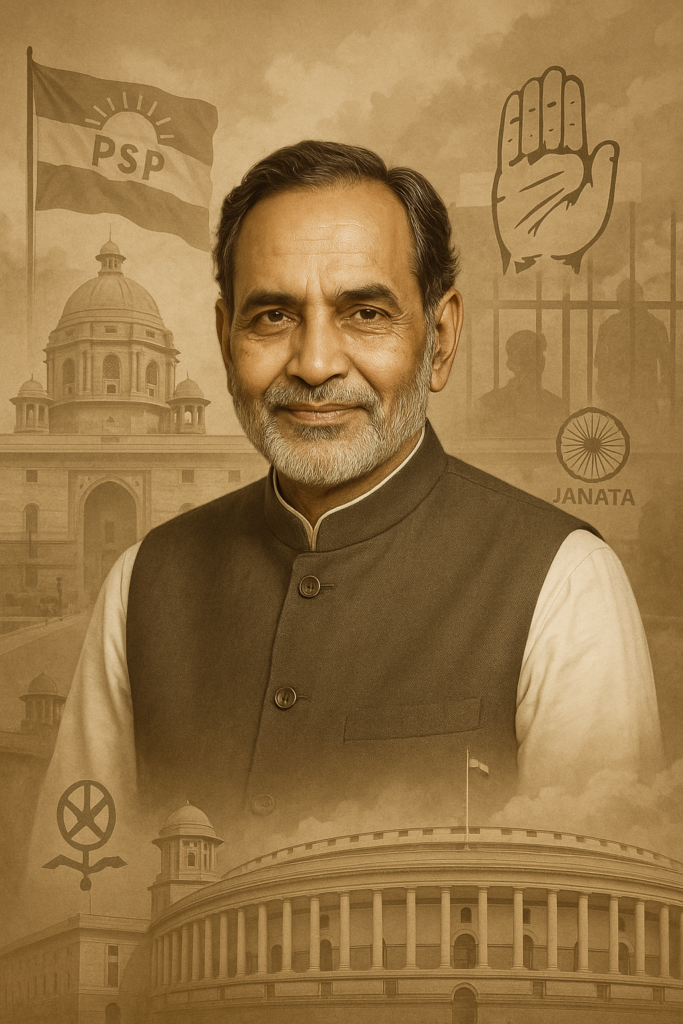
Political Life of Shri Chandra Shekhar
The political life of Shri Chandra Shekhar reflects a leader who was principled, combative, and deeply connected with the people. His entry into politics began during his student life at Allahabad University in 1950, where he was influenced by socialist thinkers such as Dr. Ram Manohar Lohia and Achyut Patwardhan, who raised their voice for the weaker sections of society.
🛒 Buy Now on AmazonEarly Politics
Chandra Shekhar began his political journey as a member of the Praja Socialist Party (PSP). Later, in 1955, he joined the Indian National Congress (INC). Within the Congress, he emerged as an independent-minded and sharp-witted young leader, popularly known as a “Young Turk.”
The term “Young Turks” referred to leaders who boldly opposed wrong policies within the party, irrespective of position or power.
Role in Parliament
Rajya Sabha
In 1962, Chandra Shekhar was elected to the Rajya Sabha for the first time. He was known for raising issues related to the exploited, deprived, and backward sections of society. His writings and speeches established him as a powerful speaker and intellectual.
Differences with Indira Gandhi
During the 1970s, he openly criticized the policies of Prime Minister Indira Gandhi and demanded internal democracy within the Congress Party. These ideological differences led to his separation from the party.
During the Emergency in 1975, he was arrested because he strongly opposed the government’s policies.
Contribution to the Janata Party
After the Emergency, in the 1977 general elections, Chandra Shekhar emerged as a key leader of the Janata Party. When the Janata government was formed, he consistently raised his voice for principles, ethics, and the welfare of the public.
Due to increasing internal differences within the Janata Party, he eventually left the organisation.
Formation of the Samajwadi Janata Party
In 1990, he founded the Samajwadi Janata Party (National). With the support of this party, he became the Prime Minister of India on 10 November 1990.
Chandra Shekhar’s political journey was always guided by principles, ideals, and a strong commitment to public service. He believed that politics was a medium for the welfare of the poor, farmers, and unemployed youth.
Key Positions Held by Shri Chandra Shekhar
1. Rajya Sabha Member (1962–1977)
He was elected to the Rajya Sabha for the first time in 1962 and represented the House for three consecutive terms. During this period, he became known for his strong speeches and commitment to social justice.
2. President of the Indian National Congress (Socialist) (1983–1985)
After parting ways with the Congress Party, he took over leadership of the Congress (Socialist). Under his guidance, the party worked to strengthen socialist and democratic values in India.
3. Member of Lok Sabha (1977–2007)
He was elected to the Lok Sabha continuously from 1977 to 2007 from the Ballia constituency, serving for almost 30 years. He was first elected under the Janata Party, and later repeatedly re-elected due to his strong public connect.
4. Prime Minister of India (10 November 1990 – 21 June 1991)
He became the 8th Prime Minister of India. Though his party did not have a majority, he formed the government with external support. His tenure lasted about 7.5 months, during which he played a critical role in trying to steer India out of an economic crisis.
5. Home Minister (Interim Period)
During his tenure as Prime Minister, due to the small size of his Council of Ministers, he also temporarily handled the responsibilities of the Ministry of Home Affairs.
6. Founder and President of the Samajwadi Janata Party (National)
Chandra Shekhar founded the Samajwadi Janata Party (National) in 1990 and remained its president throughout his life. The party reflected his commitment to socialist ideology and democratic values.
Conclusion
In his political life, Shri Chandra Shekhar served as Prime Minister, MP, party president, and thinker—yet for him, every position was a responsibility, not a tool for power. He remains a towering figure in Indian politics, remembered for his honesty, simplicity, and unwavering principles.
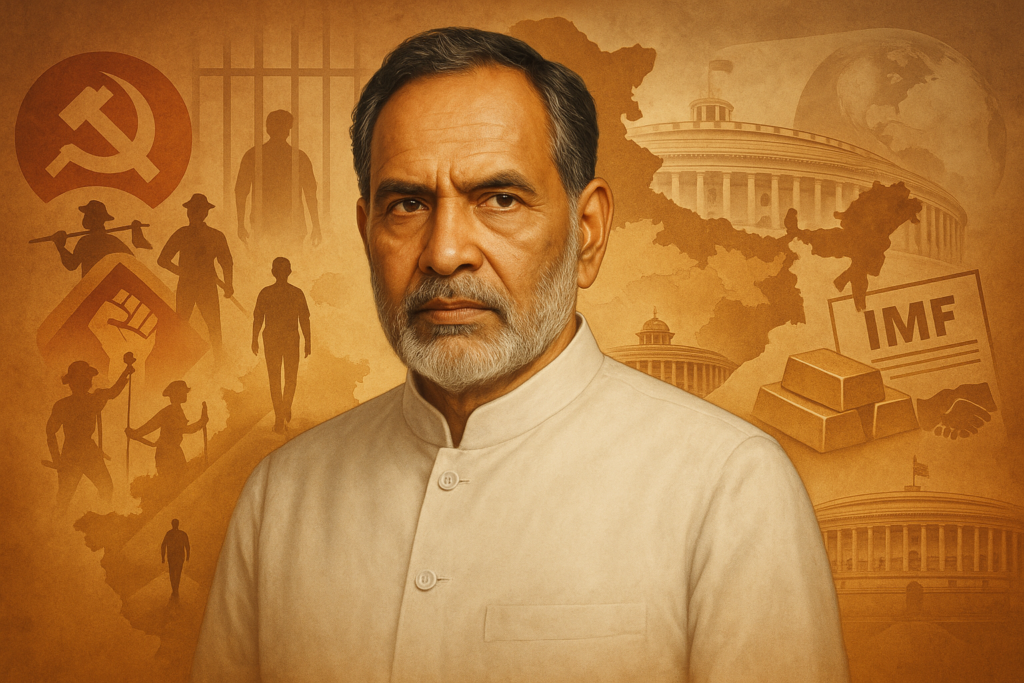
Contribution of Shri Chandra Shekhar
Shri Chandra Shekhar’s contribution to Indian politics and society was rooted in strong principles, public service, honesty, and national interest. Throughout his political journey, he remained a firm voice for the poor, farmers, workers, and the general public. His contributions were remarkable in many fields and continue to inspire democratic and ethical politics.
1. Strengthening the Socialist Movement
🛒 Buy Now on AmazonChandra Shekhar was a committed supporter of socialist ideology. Inspired by Dr. Ram Manohar Lohia, he consistently fought for equality, social justice, and the rights of the poor. At a time when many leaders were focused on power politics, he preserved and promoted socialist values in Indian political discourse.
2. Bharat Yatra (1983) – Connecting with the Common People
In 1983, Chandra Shekhar undertook the historic ‘Bharat Yatra’, a massive foot march covering approximately 4,260 kilometers. He traveled across villages and towns to listen to people's concerns directly. This journey lasted more than six months and made him widely known as the “Leader of Bharat Yatra.”
3. Opposition to the Emergency (1975)
During the Emergency of 1975, he fearlessly opposed the government’s actions. He was one of the few leaders who willingly accepted imprisonment to defend democracy and the rights of the people. His stand during the Emergency remains a milestone in Indian democratic history.
4. Contribution as Prime Minister (1990–1991)
Although his tenure as Prime Minister lasted only about 7.5 months, India was facing a serious economic crisis during that time. Chandra Shekhar handled the situation with wisdom and simplicity. He initiated negotiations with the International Monetary Fund (IMF), which played a major role in stabilizing India’s collapsing economy.
His administration ran with minimal expenditure, staying true to his principles of simplicity and honesty.
5. A Symbol of Honesty and Simplicity
Chandra Shekhar never used politics for personal gain. He is often remembered as a symbol of ideal politics. He led a simple, disciplined life and never compromised with his values, even when faced with political challenges.
6. Writing and Intellectual Contributions
Apart from being a political leader, he was also a thinker and writer. He wrote numerous articles on society, politics, and the economy, many of which were published in the magazine ‘Young Indian’. His writing demonstrated deep thought, strong logic, and a clear national vision.
Conclusion
Shri Chandra Shekhar’s contributions extended far beyond political positions. He gave a new direction to Indian democracy, socialism, and ethical politics. He was a leader who always stood among the people, for the people, and with the people.
Prime Minister Post – Shri Chandra Shekhar
Shri Chandra Shekhar became the 8th Prime Minister of India at a time when the country was facing political instability and a severe economic crisis. Although his tenure was brief—from 10 November 1990 to 21 June 1991—he made courageous decisions to stabilize the nation.
Circumstances Leading to His Becoming Prime Minister
- The government of Vishwanath Pratap Singh collapsed in 1990.
- Chandra Shekhar formed a new government with the support of his Samajwadi Janata Party (National).
- The government received external support from the Indian National Congress.
- Although it was a minority government, he took several bold decisions despite various limitations.
Main Challenges During His Tenure
1. Economic Crisis
India’s foreign exchange reserves were near depletion. The country was close to default. International institutions expressed serious concerns about India’s financial stability.
2. Political Instability
His government lacked a majority and was dependent on support from other political parties. Despite Congress support, political mistrust persisted.
3. Social Tensions
The Ram Mandir–Babri Masjid dispute had created communal tension across the country.
Important Actions and Decisions
Beginning of Economic Reforms
He initiated negotiations with the IMF for financial assistance. During his tenure, the idea of pledging India’s gold reserves to raise foreign exchange was proposed (implemented later during the Narasimha Rao government). This initiative laid the groundwork for the economic reforms of 1991.
Simple and Economical Administration
He kept the expenses of the Prime Minister's Office extremely low. There was no unnecessary extravagance, and he continued to live a simple lifestyle.
Independent Foreign Policy
He attempted to give India’s foreign policy a more independent identity. He initiated efforts to strengthen relations with countries like the United States, Iraq, and others.
End of Term
The Indian National Congress withdrew its support, leading to his resignation on 21 June 1991. Subsequently, general elections were held, and P. V. Narasimha Rao became the Prime Minister.
Conclusion
Chandra Shekhar’s tenure as Prime Minister may have been short, but his leadership during one of India’s toughest economic periods showed that strong will and honest intentions can guide a nation in the right direction, even with limited resources and support.
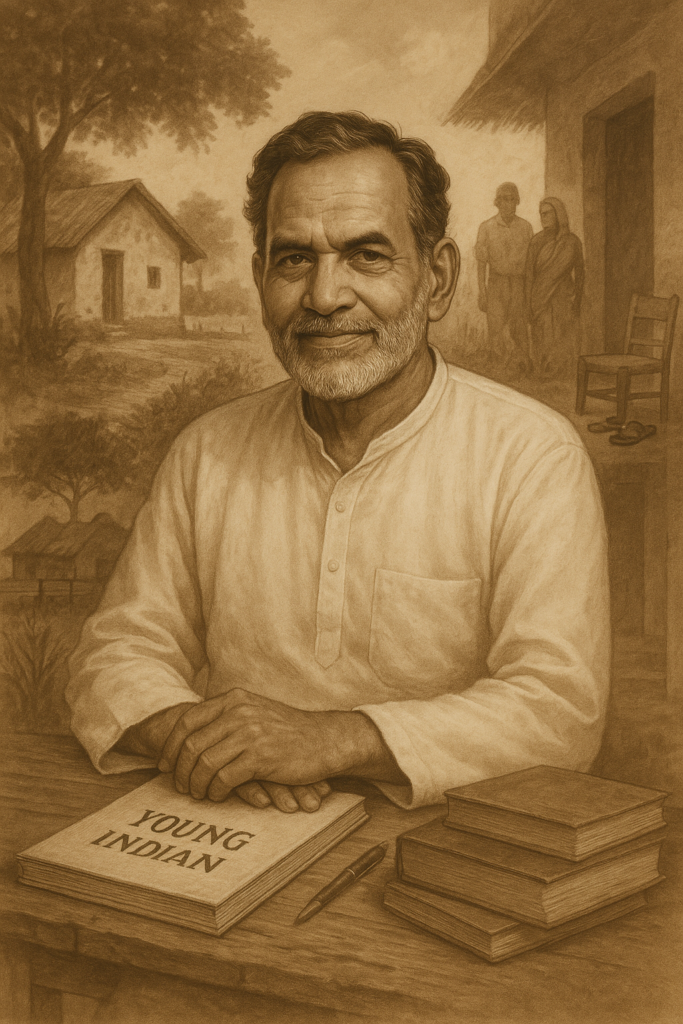
Personal Life of Shri Chandra Shekhar
The personal life of Shri Chandra Shekhar was rooted in simplicity, honesty, and unwavering principles. He was among the rare politicians who had no desire for personal gain, luxury, or power. His entire life was dedicated to public service and socialist ideals.
🛒 Buy Now on AmazonFamily Background
Shri Chandra Shekhar was born on 1 July 1927 in a farmer’s family in the village of Ibrahimpatti, Ballia district, Uttar Pradesh.
- Father: Shri Sita Ram Singh — a simple farmer
- Mother: Julie Devi
He grew up in a rural atmosphere and carried that simplicity throughout his life.
Marriage and Children
He was married to Smt. Durga Devi. He had two sons, including Neeraj Shekhar, who later became active in politics and also served as a Member of Parliament.
Interests and Temperament
Chandra Shekhar had a deep interest in reading and writing. He was a serious thinker and writer who edited the magazine ‘Young Indian’, where he wrote on political, social, and economic issues.
By nature, he was courageous, outspoken, and principled. Even his critics admired his honesty and simplicity.
Simple Living – High Thinking
He lived an extremely simple life. He never sought extravagant facilities or privileges. Even after becoming the Prime Minister, his personal lifestyle remained unchanged.
Death
Shri Chandra Shekhar passed away on 8 July 2007 in New Delhi after battling cancer (Multiple Myeloma). The entire nation mourned the loss of an honest and idealistic leader.
Conclusion
His personal life shows that a leader can truly represent the people without pomp, luxury, or desire for power. He remained a symbol of honesty, struggle, and values throughout his life.
Features of Shri Chandra Shekhar
Shri Chandra Shekhar was one of the rare leaders of Indian politics who symbolized principles, simplicity, courage, and patriotism. His ethics, ideals, and public service remain unmatched. His key qualities are listed below:
1. Unwavering Loyalty to Principles
His political life was firmly rooted in ideals and principles. He never compromised for power nor backed away from his views. He was an independently minded leader both inside and outside Parliament.
2. Courageous and Outspoken Leader
He always spoke what he believed—even if it went against powerful leaders or governments. During the Emergency, he openly protested and accepted imprisonment for the sake of democracy.
3. Life of Simplicity and Frugality
He lived a simple life, avoiding personal comforts. Even as Prime Minister, he maintained the same lifestyle and remained committed to public service.
4. Deep Connection with the Public
He undertook a 4,260 km long Bharat Yatra to connect with people directly. This journey reflected his sincerity and sensitivity toward the common masses.
5. Influential Speaker and Thinker
He was an outstanding orator and thinker. His speeches had emotional power and clarity. Through the magazine ‘Young Indian’, he wrote on important social and political issues.
6. Symbol of Honesty and Integrity
His name is synonymous with honesty. He remained free from scandals and corruption throughout his career and advocated clean politics.
7. Strong Leadership Skills
He showed fearless leadership during crisis situations, especially during his minority government as Prime Minister.
8. Simple, Friendly, and Popular Personality
He was humble and approachable. People saw him as a true ‘leader of the people.’
Conclusion
Shri Chandra Shekhar was a thoughtful, popular, and honest leader whose qualities serve as an ideal for modern Indian politics. His life teaches that politics is a medium of service, not power.
Shri Chandra Shekhar — Death and Legacy
Illness and Last Moments
He suffered from Multiple Myeloma (a severe type of blood cancer). His health deteriorated in the final months, and he was admitted to Apollo Hospital in New Delhi, where he breathed his last on 8 July 2007.
National Mourning and Tributes
The Government of India declared a 7-day state mourning. His last rites were performed with full state honours at Ekta Sthal, New Delhi. Leaders across political parties paid tributes to him in Parliament, describing him as a symbol of honesty, simplicity, and courage.
Funeral
His funeral was held at Ekta Sthal, New Delhi. Thousands of people, including political leaders and admirers, attended. His son, Neeraj Shekhar, performed the last rites.
In Memory
After his demise, many institutions, roads, and programs were named in his honour. Various organizations continue to hold annual memorial lectures and events to celebrate his ideals.
Conclusion
The passing of Shri Chandra Shekhar marked the end of an era when politics was guided by values, service, and principles. His life remains an inspiration for future generations.
Conclusion – Life of Shri Chandra Shekhar
Shri Chandra Shekhar was a great leader whose life represented simplicity, principles, struggle, and service. He never used politics for power but saw it as a medium for public welfare.
Key Points in Summary
- Rose from an ordinary farmer family to become the Prime Minister of India.
- Strong supporter of socialist ideology.
- Opposed the Emergency and went to jail to protect democracy.
- Connected with people through the historic Bharat Yatra.
- Known as a brave, independent, and outspoken leader.
- Handled India during a major economic crisis as Prime Minister.
- Lived a life of simplicity and honesty.
- Continues to inspire today’s politicians and citizens.
Dedication and Legacy
Shri Chandra Shekhar’s life teaches that the height of any position is never greater than the depth of one’s character. Even at the peak of power, he remained true to his values. His thoughts and lifestyle continue to guide India’s political and social leadership like a beacon of light.
References
- Government of India Archives – Speeches and Parliamentary Records of Shri Chandra Shekhar.
- Lok Sabha & Rajya Sabha Official Documents on Tenure and Contributions of Shri Chandra Shekhar.
- “Young Indian” Magazine – Articles Written and Edited by Shri Chandra Shekhar.
- Press Information Bureau (PIB) – Press Releases and Government Announcements.
- National Newspapers and Journals covering political life and milestones of Shri Chandra Shekhar.
- Autobiographical interviews and recorded speeches available in public domain.