
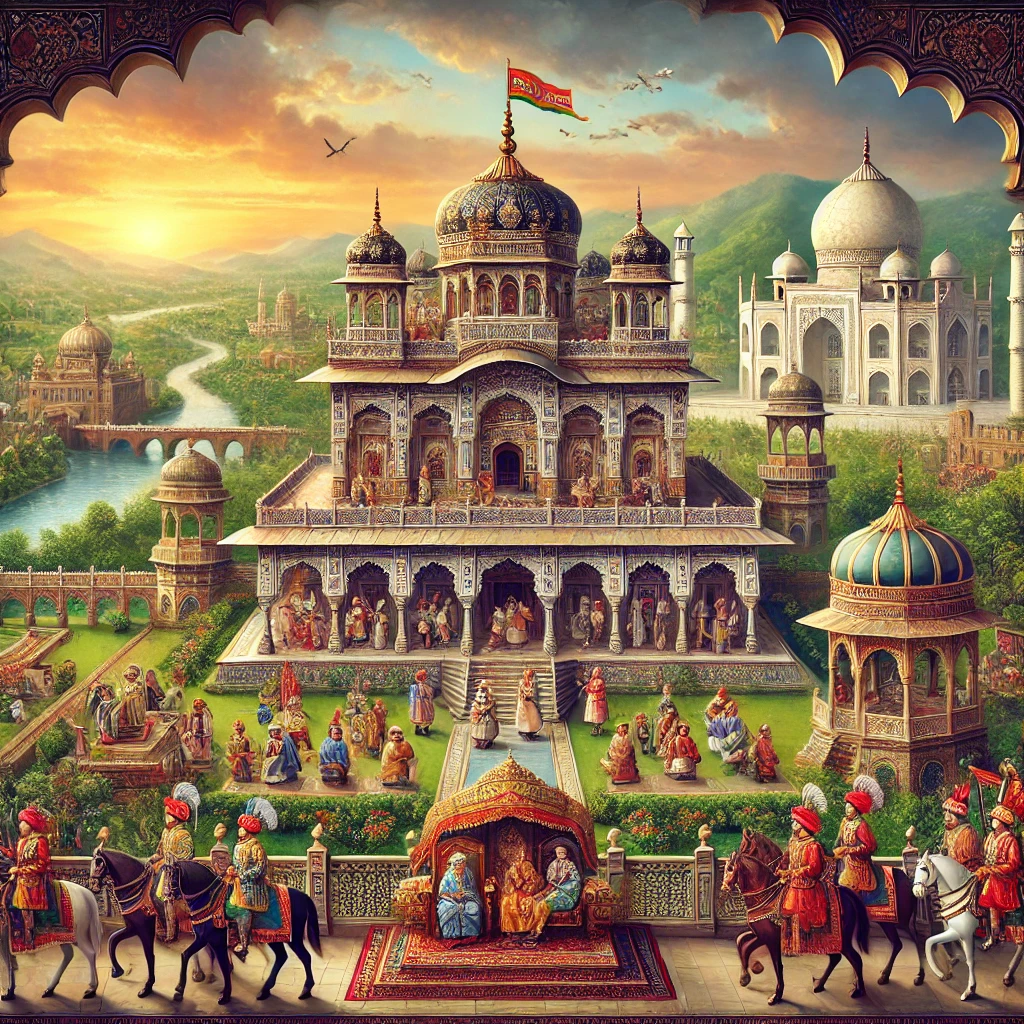
Mughal Empire: A Journey Through Power, Culture, and Legacy
While studying Indian history, the story of the Mughal Empire felt less like a sequence of dates and more like a long, unfolding human journey—one filled with ambition, struggle, creativity, tolerance, and eventual decline. The Mughal Empire remains one of the most influential chapters of the Indian subcontinent, shaping politics, culture, architecture, and administration for centuries.
Introduction to the Mughal Empire
The Mughal Empire was a great empire of the Indian subcontinent, founded by Babur in 1526 AD. For nearly 300 years, the Mughals ruled over vast territories of India. The Mughal rulers belonged to the Turk–Mongol dynasty and claimed descent from Timur and Genghis Khan. Their rule combined military strength with cultural brilliance, leaving behind a legacy that still defines India’s historical identity.
Establishment of the Mughal Empire
The foundation of the Mughal Empire was laid in 1526 AD when Babur defeated Sultan Ibrahim Lodi of the Delhi Sultanate in the First Battle of Panipat. This victory was not accidental; it was the result of Babur’s military strategy, leadership, and effective use of artillery, which was relatively new in Indian warfare.
This battle marked a decisive shift in Indian political history and opened the door for Mughal dominance across North India.
Important Mughal Rulers and Their Contributions
Babur (1526–1530)
- Founder of the Mughal Empire.
- Victories in the First Battle of Panipat and the Battle of Khanwa.
- Author of Baburnama, an important autobiographical work.
Humayun (1530–1556)
- Son of Babur.
- Defeated by Sher Shah Suri and forced into exile.
- Regained the throne in 1555.
- His life reflects struggle, failure, and eventual reconstruction.
Akbar (1556–1605)
- Considered the greatest and most successful Mughal ruler.
- Introduced Deen-e-Ilahi and strengthened alliances with Rajputs.
- Implemented major administrative reforms and promoted religious tolerance.
- His court was adorned with the Navaratnas, including Birbal, Tansen, and Abul Fazal.
Jahangir (1605–1627)
- Known for his love of art, painting, and culture.
- Nur Jahan played a significant role in administration.
- Architecture and court culture flourished during his reign.
Shah Jahan (1628–1658)
- Era considered the golden age of Mughal architecture.
- Constructed the Taj Mahal, Jama Masjid, and other iconic monuments.
- Mughal art and aesthetics reached new heights.
Aurangzeb (1658–1707)
- The last powerful Mughal emperor.
- Expanded the empire into South India.
- Reintroduced religious orthodoxy and the Jaziya tax.
- His strict policies contributed to the beginning of imperial decline.

Quality Amazon Product
यह प्रोडक्ट शानदार build quality, practical design और everyday performance के लिए जाना जाता है। Home use और gifting दोनों के लिए एक बढ़िया विकल्प है।
Buy on AmazonAdministrative System of the Mughal Empire
One of the strongest pillars of Mughal power was its well-organized administrative system. The empire followed a centralized structure that ensured control over vast territories.
Key Administrative Features
Subedari System
The empire was divided into provinces called Subas, each governed by a Subedar.
Mansabdari System
Mansabdars were appointed to manage military and administrative responsibilities, ensuring loyalty and efficiency.
Revenue Policy
Akbar’s Zabt System systematized land revenue collection based on agricultural productivity.
Cultural Contributions of the Mughal Empire
The Mughal Empire is renowned not only for political dominance but also for its extraordinary cultural achievements.
Architecture
Iconic structures such as the Taj Mahal, Red Fort, Jama Masjid, and Fatehpur Sikri reflect Mughal architectural excellence.
Art and Painting
The Mughal painting style blended Persian and Indian traditions, producing detailed miniature artworks.
Literature
Persian and Urdu literature flourished under Mughal patronage, enriching India’s literary heritage.
Decline of the Mughal Empire
After the death of Aurangzeb in the early 18th century, the Mughal Empire gradually weakened. Rising powers such as the Marathas, Sikhs, and the British captured large portions of Mughal territory.
Following the Revolt of 1857, the last Mughal ruler, Bahadur Shah Zafar, was exiled by the British, bringing the Mughal Empire to a formal end.
Conclusion: Lessons from the Mughal Experience
The Mughal Empire stands as a glorious and complex chapter in Indian history. It shaped India’s political systems, enriched its cultural life, and left behind monuments that continue to inspire awe. Even though the empire collapsed, its administrative ideas, artistic achievements, and cultural values remain an invaluable part of India’s heritage.
Frequently Asked Questions (FAQ)
Who founded the Mughal Empire?
The Mughal Empire was founded by Babur in 1526 AD after his victory in the First Battle of Panipat.
Who was the greatest Mughal ruler?
Akbar is widely regarded as the greatest Mughal ruler due to his administrative reforms, military success, and policy of religious tolerance.
Why did the Mughal Empire decline?
The decline was caused by weak successors, internal conflicts, rigid policies, and the rise of regional powers and British colonial expansion.
What is the cultural legacy of the Mughal Empire?
The Mughals contributed significantly to architecture, painting, literature, and governance, leaving a lasting imprint on Indian civilization.
Internal Links
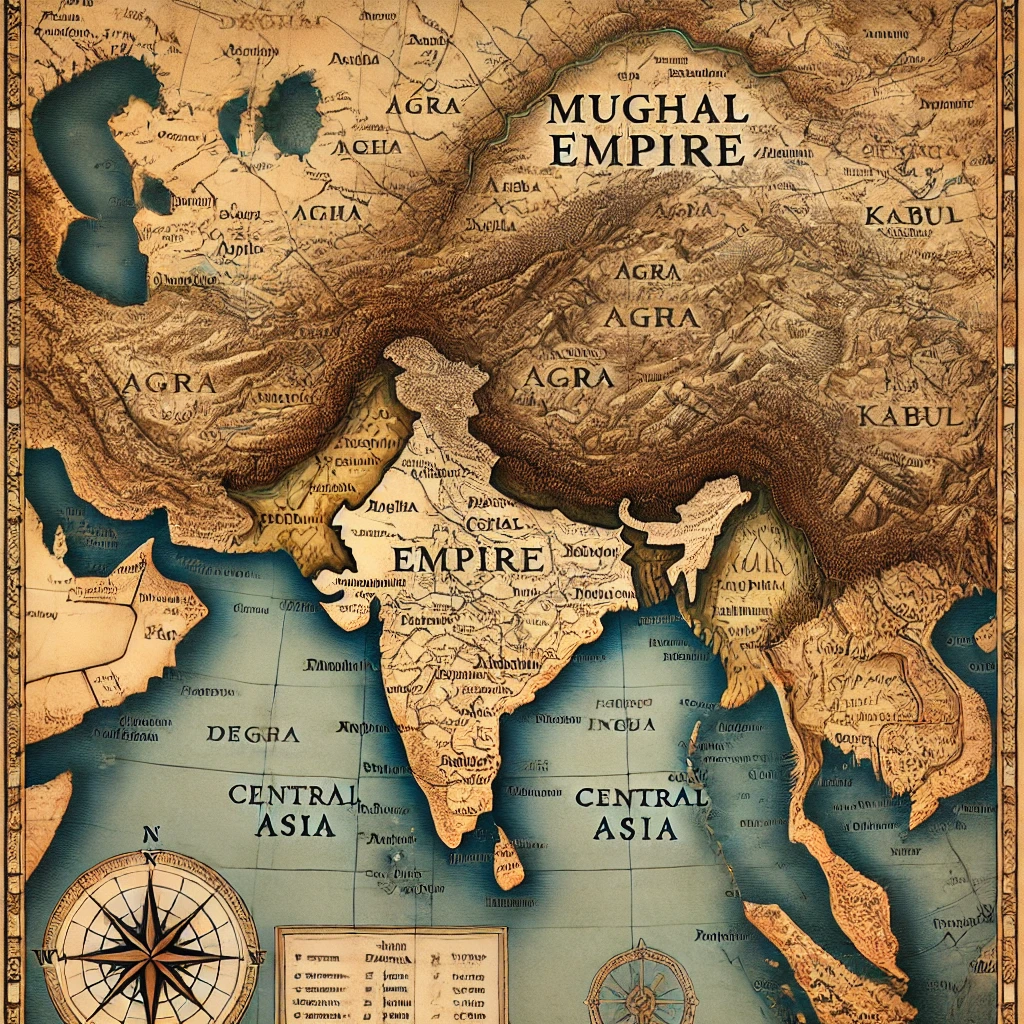
Introduction to the Mughal Empire
The Mughal Empire was one of the most important and powerful empires in Indian history, founded by Babur in 1526 AD. For nearly three centuries, this empire ruled over a large part of the Indian subcontinent. The Mughal rulers were descendants of Timur and Genghis Khan and left a deep and lasting influence on Indian administration, art, architecture, and culture.
Initially, the primary objective of the Mughal rulers was to establish their political authority in India. Gradually, however, they went far beyond conquest and reshaped Indian society through efficient administration, advanced military strategies, and remarkable cultural contributions. The Mughal period witnessed unique achievements in religious tolerance, revenue reforms, and monumental architecture.
From the rise of the Mughal Empire to its eventual decline, this period stands as a defining chapter in Indian history—one that not only transformed the political landscape but also enriched India’s cultural and social fabric.
Establishment of the Mughal Empire
The Mughal Empire was formally established by Babur in 1526 AD. This event proved to be a turning point that fundamentally altered the political structure of the Indian subcontinent. Three major factors played a crucial role in its establishment: Babur’s ambition, the weakness of the Lodi dynasty, and the use of modern military techniques.
Babur and His Background
Babur (1483–1530), whose full name was Zahiruddin Muhammad Babur, was the ruler of Fargana (in present-day Uzbekistan). He belonged to the prestigious lineage of Timur and Genghis Khan, which gave him both confidence and ambition to establish a powerful empire.
Control over Fargana
Babur ascended the throne of Fargana at a very young age. However, limited resources, internal conflicts, and continuous struggles for power compelled him to look beyond Central Asia for expansion.
Purpose of Invading India
Babur turned his attention toward India after recognizing the declining strength of the Lodi dynasty. The political instability in North India and the immense wealth of the region made it an attractive target for establishing a strong empire.
The First Battle of Panipat (1526)
The most decisive moment in the establishment of the Mughal Empire came on 21 April 1526, when Babur defeated Ibrahim Lodi, the Sultan of Delhi, on the plains of Panipat.
Reasons for the Battle
- Weakness of the Lodi Dynasty: Ibrahim Lodi was an unpopular ruler, facing dissatisfaction from feudal lords and Rajput chiefs.
- Ambition of Babur: Babur saw India’s vast territory and resources as ideal for building a powerful empire.
Babur’s Military Strategy
Babur introduced modern warfare techniques in India. He equipped his army with advanced artillery and adopted the Tulughma strategy, which involved attacking the enemy from both flanks.
He also used Rumi artillery, based on Turkish cannons. This marked one of the earliest uses of modern cannons in Indian warfare. Although Ibrahim Lodi commanded a large army, his tactics were outdated and ineffective.
Result of the Battle
- Ibrahim Lodi was defeated and killed.
- Babur captured Delhi and Agra.
- This victory laid the foundation of the Mughal Empire.
Awesome Amazon Product
यह प्रोडक्ट बेहतर क्वालिटी, स्मार्ट डिजाइन और भरोसेमंद प्रदर्शन के लिए जाना जाता है। दैनिक उपयोग और गिफ्टिंग दोनों के लिए एक शानदार विकल्प है।
Buy on AmazonReasons for Babur’s Victory
- Military Skill: Effective use of artillery and cavalry.
- Strategic Leadership: Babur was an experienced commander, unlike Ibrahim Lodi.
- Army Discipline: Babur’s forces were well-organized and united.
Post-Establishment Steps Taken by Babur
Capture of Delhi
After his victory, Babur captured Delhi and declared it the capital of his newly established empire.
Relations with Local Rulers
Babur adopted a diplomatic approach by forming alliances and political agreements with local rulers to stabilize his authority.
Expansion of the Empire
He further consolidated his power by winning significant battles such as the Battle of Khanwa and the Battle of Ghaghra, expanding Mughal control across North India.
Conclusion
The First Battle of Panipat paved the way for the establishment of the Mughal Empire and marked the beginning of a new era in Indian history. Babur emerged not only as a skilled military commander but also as a visionary ruler. His victory ended the Delhi Sultanate and initiated a period that profoundly transformed India’s political, cultural, and economic conditions.
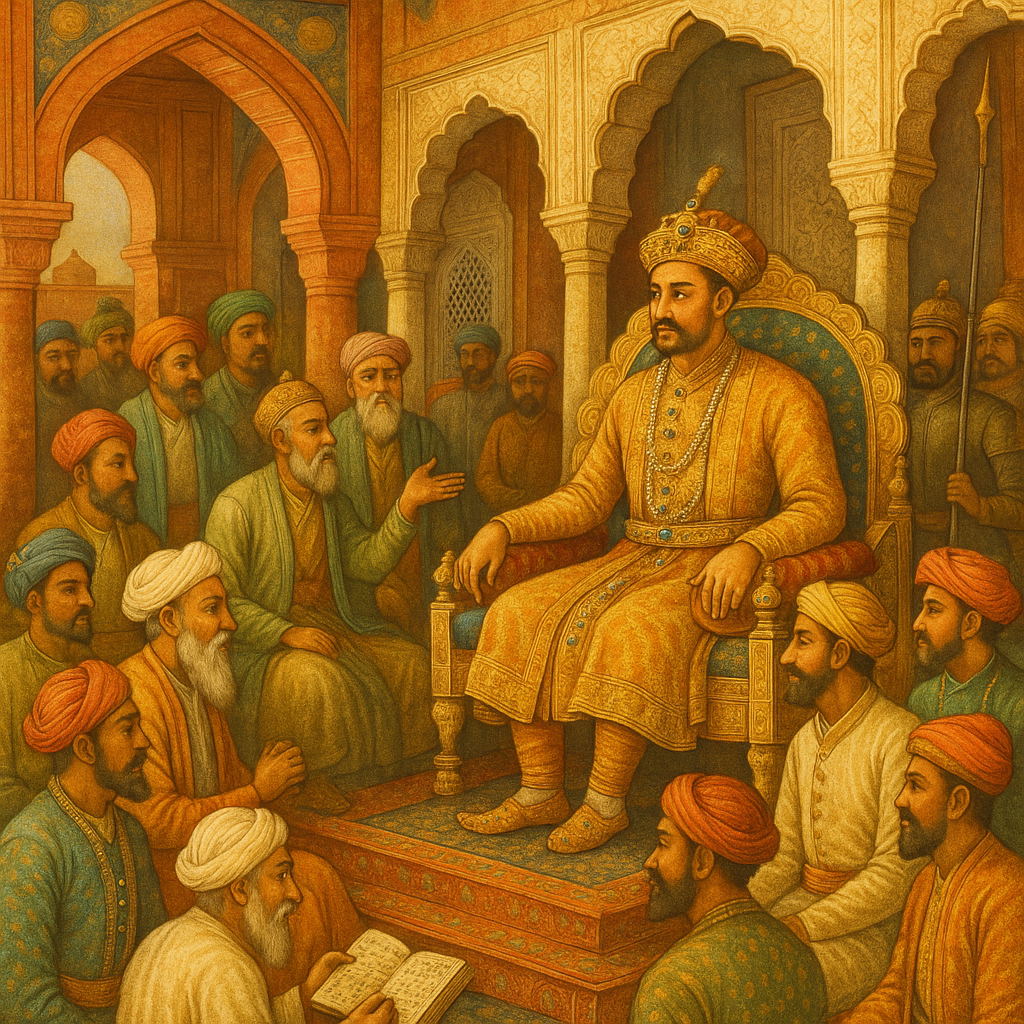
Important Rulers of the Mughal Empire
Important Rulers of the Mughal Empire and Their Works
The Mughal Empire witnessed many rulers, but a few visionary emperors strengthened the empire and transformed it into a golden chapter of Indian history. Their contributions shaped the Mughal Empire politically, economically, culturally, and administratively, leaving a lasting legacy.
1. Babur (1526–1530)
Babur, the founder of the Mughal Empire, ruled for a short period, but his historical importance is immense.
Main Contributions
- First Battle of Panipat (1526): Defeated Ibrahim Lodi and captured Delhi and Agra.
- Battle of Khanwa (1527): Defeated the Rajputs under Rana Sanga.
- Battle of Ghaghra (1529): Subdued the rulers of Bengal and Bihar.
- Baburnama: Authored his autobiography, providing valuable insights into society, politics, and warfare.
2. Humayun (1530–1556)
Humayun’s reign was marked by struggle, conflict, and eventual restoration.
Main Contributions
- Faced resistance from rival rulers in the early years.
- Defeat by Sher Shah Suri (1539–1540): Lost battles at Chausa and Kannauj and went into exile.
- Restoration of Power (1555): Recaptured Delhi with Persian support.
- Cultural Contribution: Promoted Persian art and architectural styles.
3. Akbar (1556–1605)
Akbar is regarded as the greatest Mughal ruler, bringing political stability and cultural prosperity to the empire.
Main Contributions
- Second Battle of Panipat (1556): Defeated Hemu and consolidated Mughal authority.
- Religious Tolerance: Introduced Deen-e-Ilahi and respected all religions.
- Administrative Reforms: Implemented the Mansabdari system and Zabt revenue system.
- Rajput Policy: Established matrimonial alliances with Rajput rulers.
- Architecture: Built Fatehpur Sikri.
- Navratnas: His court included Birbal, Tansen, and Abul Fazal.
4. Jahangir (1605–1627)
Jahangir’s reign is remembered for its emphasis on justice, art, and culture.
Main Contributions
- Art and Painting: Golden age of Mughal miniature painting.
- Justice System: Established the Zanjeer-e-Adalat (Chain of Justice).
- Foreign Relations: Allowed the British East India Company to trade in India.
- Influence of Noor Jahan: Played a significant role in governance.
5. Shah Jahan (1628–1658)
Shah Jahan’s reign is known as the golden age of Mughal architecture.
Main Contributions
- Taj Mahal: Built in memory of his wife Mumtaz Mahal.
- Red Fort and Jama Masjid: Symbols of Mughal grandeur.
- Magnificent Court: Known for splendor and ceremonial richness.
- Military Campaigns: Conducted expeditions in South India and Kandahar.
6. Aurangzeb (1658–1707)
Aurangzeb was the last powerful Mughal emperor, whose policies significantly affected the empire’s future.
Main Contributions
- Territorial Expansion: Expanded the empire to its greatest extent in South India.
- Religious Policy: Reintroduced the Jaziya tax and adopted orthodox measures.
- Administration: Led a simple life and enforced strict governance.
- Maratha Conflict: Long struggle with Shivaji and the Marathas.
- Beginning of Decline: Harsh policies weakened imperial unity.
Conclusion on Mughal Rulers
The Mughal rulers made remarkable contributions to Indian history. Babur laid the foundation, Akbar strengthened and organized the empire, Shah Jahan added architectural magnificence, and Aurangzeb expanded its boundaries. However, Aurangzeb’s rigid policies also accelerated the decline of the empire. Their achievements remain visible in India’s culture, monuments, and administrative traditions.
Administrative System of the Mughal Empire
Overview of the Mughal Administrative System
The Mughal administrative system was highly organized and efficient. Authority was centralized under the emperor, yet effectively distributed at provincial and local levels. The primary goals were political stability, efficient revenue collection, and social order. Akbar structured this system systematically, and later rulers continued its use.
Administrative Structure
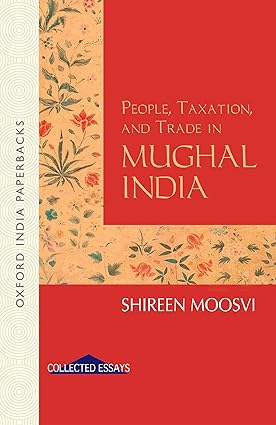
Featured Amazon Product
यह प्रोडक्ट उत्कृष्ट गुणवत्ता, आकर्षक डिजाइन और विश्वसनीय प्रदर्शन के लिए जाना जाता है। रोज़मर्रा के उपयोग और गिफ्टिंग दोनों के लिए एक बेहतरीन विकल्प है।
Buy on AmazonThe administration was divided into three main levels:
- Central Administration
- Provincial Administration (Subedari System)
- Local Administration
1. Central Administration
The emperor was the supreme authority and governed with the assistance of ministers and advisors.
Key Officials and Their Roles
- Emperor: Supreme ruler and final authority.
- Wazir (Prime Minister): Managed finance and revenue.
- Diwan-i-Khas: Advisor on important state matters.
- Mir Bakshi: Head of military administration.
- Diwan-i-Risalat: Managed foreign relations.
- Sadr-us-Sadr: In charge of religious affairs and charities.
- Police Chief: Maintained internal security.
2. Provincial Administration (Subedari System)
The empire was divided into provinces called Subas, each governed by a Subedar.
Provincial Officials
- Subedar: Head of the province.
- Diwan: Revenue and finance officer.
- Faujdar: Military and law enforcement head.
- Qazi: Judicial authority.
3. Local Administration
Subas were divided into Sarkars and Parganas.
- Shikdar: Maintained law and order.
- Amil: Collected revenue.
- Qanungo: Maintained land records.
- Patwari: Kept village-level accounts.
Mansabdari System
The Mansabdari system formed the backbone of Mughal administration and military organization.
Key Features
- Mansab (Rank): Defined official status and responsibility.
- Zat and Sawar: Determined personal rank and number of soldiers.
- Salary: Paid in cash or Jagir.
Revenue System
Raja Todarmal organized revenue administration under Akbar.
- Land measurement was conducted systematically.
- Tax rate was usually one-third of produce.
- Revenue could be paid in cash or kind.
Judicial and Military Administration
The judicial system was based on Islamic law and local customs, ensuring justice for all communities. Military administration relied on cavalry, infantry, artillery, and the Mansabdari system for efficiency.
Conclusion on Administration
The Mughal administrative system provided stability, promoted economic growth, and influenced modern Indian governance. Many principles introduced during Akbar’s reign continued until the empire’s fall.
Cultural Contributions of the Mughal Empire
Overview
The Mughal Empire significantly enriched the cultural heritage of India by blending Indian and Persian traditions. This cultural synthesis is visible in architecture, painting, music, literature, and social life.
1. Architecture
Mughal architecture represents a harmonious fusion of Indian and Islamic styles.
- Domes, minarets, and intricate carvings.
- Charbagh-style gardens.
- Extensive use of marble and inlay work.
Famous Monuments
- Taj Mahal
- Red Fort
- Jama Masjid
- Fatehpur Sikri
- Humayun’s Tomb
2. Painting
Mughal painting blended Persian, Indian, and Islamic traditions and excelled in miniature art.
3. Music
The Mughal period was a flourishing era for Hindustani classical music, with great musicians like Tansen patronized by Akbar.
4. Literature
Persian, Urdu, and Hindi literature flourished, producing works such as Akbarnama, Ain-e-Akbari, and Tuzhuk-e-Jahangiri.
5. Social and Religious Tolerance
Akbar promoted religious harmony through Deen-e-Ilahi, abolished Jaziya tax, and encouraged interfaith dialogue.
Conclusion on Cultural Contributions
The cultural contributions of the Mughal Empire remain an invaluable part of India’s heritage. This fusion of cultures continues to symbolize India’s unity in diversity.