
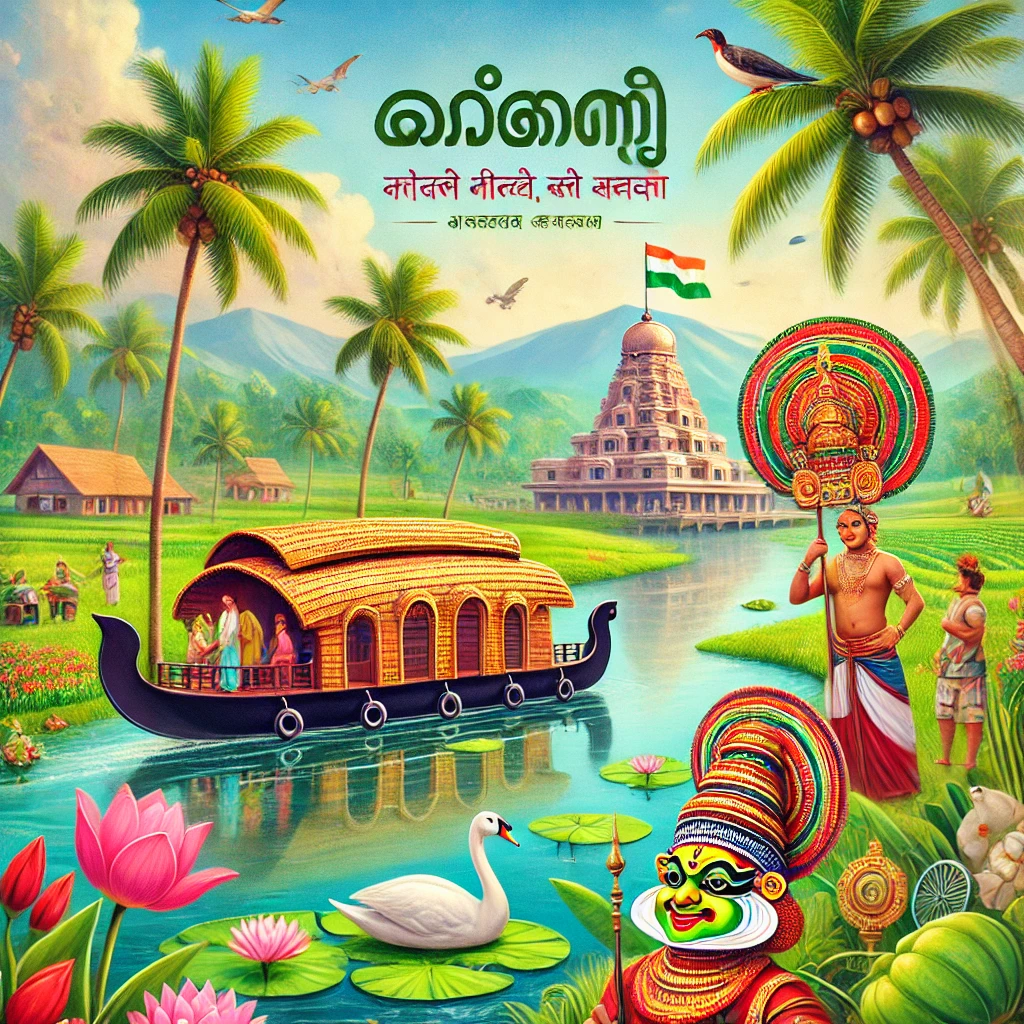
Kerala: God’s Own Country
Kerala is a small but prosperous state located in the southwestern corner of India. It is known for its natural beauty, cultural heritage, and excellence in social development. Because of its scenic landscapes and peaceful life, Kerala is often called “God’s Own Country.”
Geographical Location and Climate of Kerala
Location: Kerala is situated between the Arabian Sea in the west and the Western Ghats range in the east.
Area: 38,863 square kilometres, which is about 1.18% of India’s total area.
Number of Districts: There are 14 districts in Kerala, including Thiruvananthapuram, Kochi, Kasaragod, and Kozhikode.
Climate: Kerala has a tropical climate and remains green throughout the year. The region receives heavy rainfall during the monsoon, which nourishes its rivers, backwaters, and forests.
History of Kerala
Ancient Times
The history of Kerala dates back to the ancient Sangam period. The region was known worldwide for its spices. In ancient times, Kerala was a major centre for Roman, Arab, and Chinese traders who came in search of pepper and other valuable products.
Colonial Period
Kerala came to the attention of European powers with the arrival of Vasco da Gama in 1498. After that, the Portuguese, Dutch, and eventually the British established their influence and rule in different parts of Kerala.
Modern Period
In independent India, Kerala was formed in 1956 on a linguistic basis by merging Malayalam-speaking regions. This gave Kerala a distinct identity based on its language and cultural unity.
Language and Culture of Kerala
Languages
Malayalam is the main language of Kerala. Apart from this, English and Tamil are also widely spoken and understood, especially in urban and border areas.
Religion and Society
Kerala is known for its religious harmony. Here we can see a mix of Hindu, Muslim, and Christian communities living together with mutual respect and cooperation.
Cultural Heritage
Classical and Folk Dance
Kerala is famous for classical and traditional dance forms such as Kathakali, Mohiniyattam, and Koodiyattam, which reflect its rich artistic heritage.
Music Traditions
Sopana music and traditional temple music are important parts of Kerala’s musical tradition, often performed in temples and cultural festivals.
Festivals and Folktales
Onam, Vishu, Christmas, and Eid are celebrated with great enthusiasm. Kerala also has a rich tradition of folktales and old stories that are passed down through generations.
Natural Beauty of Kerala
Kerala is globally known for its scenic landscapes, lush greenery, and serene water bodies.
Backwaters
The backwaters of Alleppey and Kumarakom are major attractions, where houseboat cruises offer a unique experience of Kerala’s rural life and natural beauty.
Beaches
Kerala has some of the most beautiful beaches in India, such as Kovalam, Varkala, and Mararikulam, which attract domestic and international tourists.
Hill Stations
Hill stations like Munnar, Wayanad, and Thekkady are known for tea gardens, cool climate, and misty hills.
Wildlife and Forests
Silent Valley National Park and Periyar Tiger Reserve are famous for their biodiversity and wildlife conservation efforts.
Economy and Industry of Kerala
Main Industries
Kerala’s economy is diverse and based on both traditional and modern sectors.
- Tourism: Kerala is a major tourist destination of India, known for backwaters, beaches, Ayurveda, and eco-tourism.
- Spice Production: The state is famous for black pepper, cardamom, and ginger.
- Plantation Crops: Coconut, rubber, and tea production are important for the state’s economy.
- Other Industries: Fishing, bamboo handicrafts, and the cooperative sector also play an important role.

Premium Amazon Product
High-quality build, dependable performance and excellent everyday value — a great choice for users.
Buy on AmazonKerala’s strategic location along the Arabian Sea also enhances its role in India’s geographical importance and maritime trade.
Education and Health in Kerala
Literacy Rate: Kerala has a literacy rate of around 96%, the highest in India. Education is given high priority, and schools and colleges are widely accessible.
Health Services: Kerala’s public health services and Ayurvedic medical system are internationally renowned. Primary health centres, hospitals, and traditional Ayurvedic centres together create a strong health network.
Tourism in Kerala
Main Tourist Attractions
- Alleppey backwater cruise
- Jungle safari of Thekkady
- Tea plantations of Munnar
- Varkala and Kovalam beaches
Unique Tourism Features
Kerala tourism is also known for its houseboats, Ayurvedic spa, and traditional food. These experiences attract visitors who are looking for relaxation, wellness, and cultural immersion.
Unique Features of Kerala
Onam Festival
Onam is the main festival of Kerala. It symbolizes the harvest season and the legendary return of King Mahabali. The festival is marked by floral decorations, traditional games, boat races, and grand feasts.
Traditional Attire
Women traditionally wear the white and gold-bordered Kasavu saree, while men wear the mundu, a white or cream garment draped around the waist.
Food
A traditional feast called Sadya is served on a banana leaf. Kerala cuisine is known for coconut-based curries and a variety of seafood dishes.
Waterways
Kerala has many rivers and lakes, making the state truly the “Land of Water.” These waterways support transport, irrigation, fishing, and tourism.
Conclusion
Kerala is a state where a unique blend of tradition and modernity can be seen in everyday life. Its culture, natural beauty, and lifestyle give it a special place not only in India but also in the world. From backwaters and beaches to festivals and social progress, Kerala truly lives up to the name “God’s Own Country.”
FAQ: Frequently Asked Questions about Kerala
Why is Kerala called “God’s Own Country”?
Kerala is called “God’s Own Country” because of its lush green landscapes, backwaters, beaches, hill stations, and peaceful lifestyle. The natural beauty and rich culture together create a unique charm that inspires this title.
What is Kerala famous for?
Kerala is famous for its backwaters, Ayurvedic treatments, spices, classical dances like Kathakali, beautiful beaches such as Kovalam and Varkala, and hill stations like Munnar and Wayanad. It is also known for its high literacy rate and strong health system.
Which language is mainly spoken in Kerala?
The main language spoken in Kerala is Malayalam. English and Tamil are also widely used, especially in cities and business areas.
What are the major tourist attractions in Kerala?
Major tourist attractions in Kerala include Alleppey and Kumarakom backwaters, Munnar tea plantations, Thekkady wildlife and jungle safaris, Silent Valley National Park, and the beaches of Varkala, Kovalam, and Mararikulam.
How does Kerala perform in education and health?
Kerala has the highest literacy rate in India, around 96%, and is known for its strong public health system. Primary healthcare centres, hospitals, and Ayurvedic institutions make healthcare accessible and effective for most people.
Geographical Location of Kerala
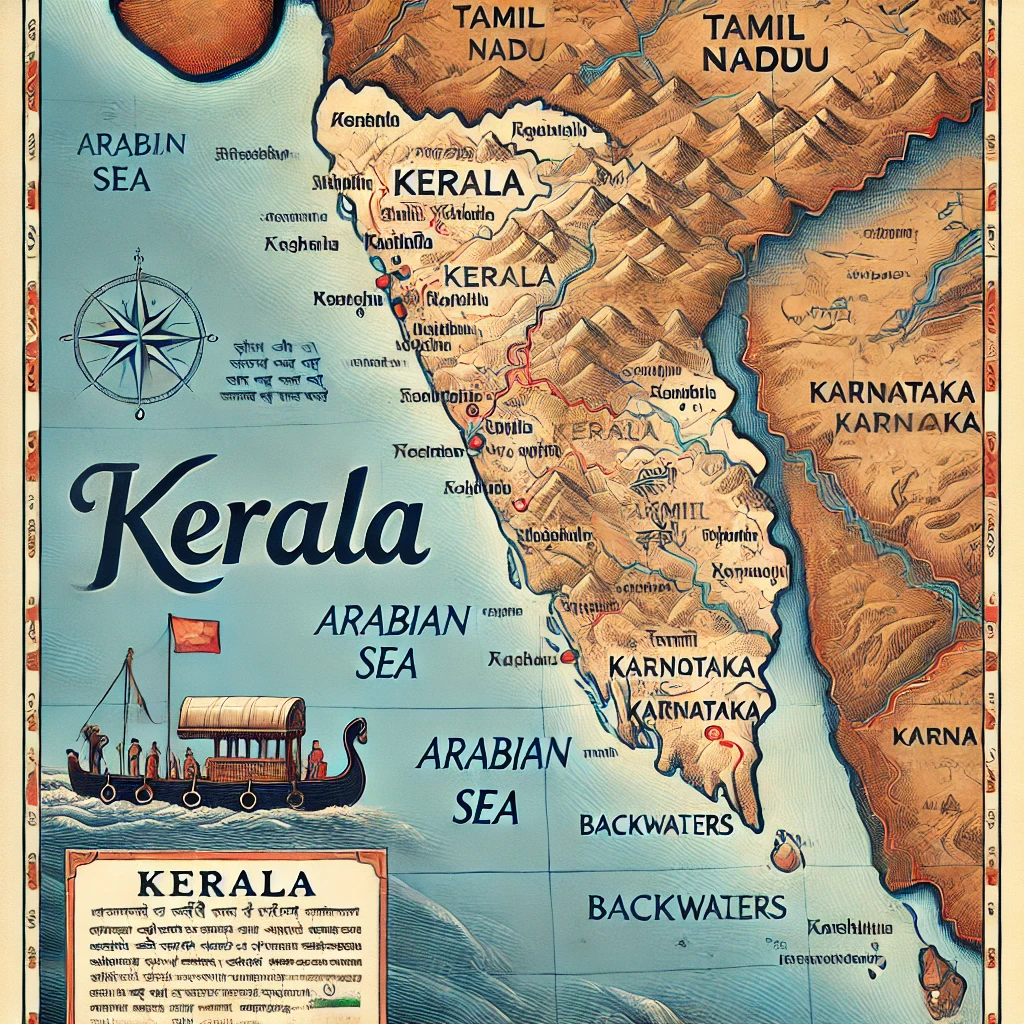
The geographical location of Kerala makes it a small yet geographically diverse state situated on the south-western tip of India. The state is widely known for its unique geographical structure, greenery, and natural beauty. Kerala’s strategic location between the sea and the mountains gives it a special identity not only in India but also around the world.
Status and Latitudinal–Longitudinal Location
Location
Kerala is located between 8°18′ North latitude and 12°48′ North latitude and 74°52′ East longitude and 77°22′ East longitude. It lies along the coast of the Arabian Sea in the south-western corner of India.
Boundaries
- North and North-East: Karnataka
- East: Tamil Nadu
- West: Arabian Sea
- South: Southern end near Kanyakumari, Tamil Nadu
Coastline
Kerala has a long coastline of approximately 590 kilometres. This coastal belt is rich in natural ports and scenic beaches such as Kovalam, Varkala, and Mararikulam.
Physiographic Structure of Kerala
The geographical structure of Kerala is divided into three major physiographic regions, each with its own distinct features.
1. Western Ghats (Mountainous Region)
The eastern part of Kerala is bordered by the Western Ghats, a mountain range rising from about 1,500 metres to 2,695 metres. This region contains important hill stations, dense forests, and wildlife sanctuaries.
Important Peaks
- Anaimudi (2,695 m): The highest peak in South India
- Agasthyarkoodam
- Mekurthi
The Western Ghats region is the main source of most major rivers of Kerala.
2. Central Plains (Valleys and Plateaus)
The central plains lie between the Western Ghats and the coastal region. This area consists of fertile valleys and plateaus, making it ideal for agriculture.
The region is famous for plantations of spices, rubber, tea, and coffee.
3. Coastal Area (Sea Plain)
The coastal area forms the western part of Kerala along the Arabian Sea. It is characterized by coconut groves, rice fields, and extensive backwaters.
Backwaters in regions such as Alleppey and Kumarakom are major attractions and play an important role in local transportation and tourism.
Premium Amazon Product
Reliable performance and sturdy build — a great choice for everyday use with excellent value.
Buy on AmazonMajor Rivers and Lakes of Kerala
Rivers
Kerala has 44 rivers, most of which flow westward and drain into the Arabian Sea. These rivers are vital for agriculture, transportation, and hydroelectric power generation.
Important Rivers
- Periyar (244 km): The longest river in Kerala
- Bharathapuzha
- Chaliyar
- Pumba
- Kadalundi
Lakes
- Vembanad Lake: The largest lake in Kerala
- Ashtamudi Lake
- Kayal Lake
These lakes are important centres of tourism, fishing, and inland water transport.
Soil and Vegetation
Soil Types
Kerala has diverse soil types including red soil, laterite soil, and coastal sandy soil. These soils are suitable for crops such as paddy, spices, and rubber.
Vegetation and Wildlife
About 30% of Kerala is covered with dense forests. The Western Ghats region is dominated by evergreen forests.
Wildlife includes elephants, tigers, rhinoceroses, and many rare species of birds.
Climate of Kerala
Type of Climate
Kerala experiences a tropical monsoon climate.
Rainfall
Rainfall is received mainly from the south-west and north-east monsoons. The average annual rainfall is around 3,000 mm.
Temperature
Summer temperatures range between 20°C to 37°C, while winter temperatures vary from 18°C to 32°C.
Geographical Importance of Kerala
Agriculture
Kerala’s geography is suitable for the cultivation of paddy, coconut, tea, coffee, rubber, and a wide variety of spices.
Tourism
Due to its backwaters, beaches, hill stations, and wildlife sanctuaries, Kerala is one of the most important tourist destinations in India.
Trade and Business
Kerala’s coastal location has made it a historical hub of India’s spice trade. The Kochi Port is one of the major ports of India and plays a key role in international trade.
Conclusion
The geographical location and natural diversity of Kerala make it a truly unique state. Its mountains, plains, rivers, coastline, and climate not only support economic and cultural development but also give Kerala a prominent place on the global map.
History of Kerala
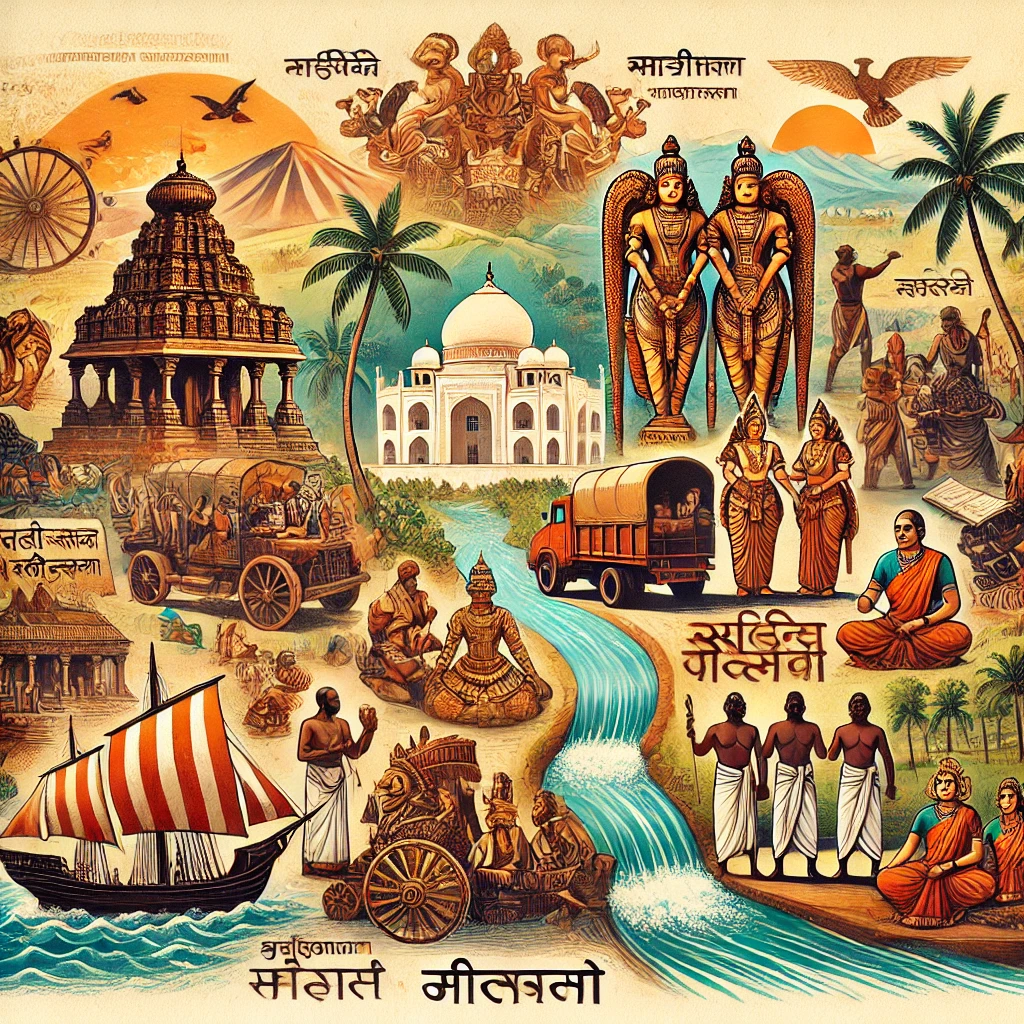
The history of Kerala is rich with ancient civilisations, cultural heritage, and powerful social reform movements. Since ancient times, the region has been an important centre of trade, art, and religious activities. Over centuries, Kerala witnessed the rule of various dynasties, foreign influences, and progressive social movements, all of which contributed to the development of modern Kerala.
Ancient Period
1. Mythological Stories
The name Kerala is believed to be derived from the word “Ksheeralam”, meaning the land of coconuts. According to a popular legend, this land was reclaimed from the sea by Lord Parashurama.
It is believed that Parashurama pushed back the sea with his axe, and the fertile land that emerged later came to be known as Kerala. This legend holds an important place in the cultural and spiritual history of the state.
2. Early Human Settlement
Evidence of human settlement in Kerala dates back to the Stone Age. Archaeological findings such as ancient dolmens, caves, and pottery sites provide proof of early habitation in the region.
3. Sangam Age (300 BC – 300 AD)
The Sangam Age is associated with the classical Sangam literature of Tamil tradition. During this period, Kerala is referred to as “Chera land” in literary sources.
Chera Dynasty
The Chera dynasty ruled over Kerala and parts of present-day Tamil Nadu. The Chera kings played a significant role in promoting trade, especially in spices and other valuable goods, making Kerala an important centre of international commerce.
4. Trade and Foreign Contacts
Kerala has been a major centre of trade since ancient times. Roman, Greek, Arab, and Phoenician traders visited the region to buy spices, silk, pearls, and sandalwood.
Muziris Port
Muziris was an ancient port city of Kerala, believed to be located near present-day Kodungallur. It was famous for its flourishing trade relations with the Roman Empire and other ancient civilisations.

Premium Amazon Product
High-quality product with reliable performance and great everyday value — perfect choice for daily use.
Buy on AmazonMedieval Period
1. Second Chera Empire (9th – 12th Century)
The Second Chera Empire ruled Kerala from the 9th to the 12th centuries. This period saw political stability and cultural development.
Important Rulers
Kulasekhara Varman was one of the prominent rulers of this period. Another important figure, Kulasekhara Alvar, contributed significantly to the Bhakti movement through devotional literature and philosophy.
2. Bhakti Movement and Temple Culture
The Bhakti movement had a deep influence on Kerala’s social and religious life. Many important temples were established during this time, including the Padmanabhaswamy Temple and the Guruvayur Temple.
Along with temples, classical art forms, architecture, and cultural traditions also flourished.
3. Foreign Influence
Arab and Chinese Traders
Arab and Chinese traders maintained strong commercial ties with Kerala. Through Arab traders, Islam and Judaism spread in the region, contributing to Kerala’s religious diversity.
Arrival of Christianity
Christianity reached Kerala with the arrival of St. Thomas in the 1st century AD. Kerala is considered one of the oldest centres of Christianity in India.
Importance of Calicut
Calicut (Kozhikode) emerged as a major port and a global hub of the spice trade during the medieval period. It attracted traders from Asia, Africa, and Europe.
Modern Period
1. European Colonialism
Portuguese Influence
In 1498, Vasco da Gama reached Calicut and discovered the sea route to India. This marked the beginning of European colonial influence in Kerala. The Portuguese attempted to dominate the spice trade.
Dutch and British Rule
The Dutch arrived in Kerala in the 17th century and defeated the Portuguese in several regions. Later, the British East India Company established control over parts of Kerala during the 18th century.
2. Indigenous Rulers
During this period, Kerala had two major princely states: Travancore and Cochin.
Travancore was ruled by Maharaja Marthanda Varma (1729–1758), who expanded and strengthened the kingdom through administrative and military reforms. Cochin also played an important role as a centre of trade and governance.
3. Social Reform Movements
The 19th and 20th centuries witnessed powerful social reform movements that transformed Kerala’s society.
Narayana Guru
Narayana Guru led movements against caste discrimination and social inequality. His message of “One caste, one religion, one God for humankind” inspired social unity.
Ayyankali
Ayyankali worked tirelessly for the upliftment of Dalits and fought for their rights, especially in education and social access.
Vaikom Satyagraha (1924–25)
The Vaikom Satyagraha was a historic movement against caste discrimination and restrictions on temple entry. It played a major role in promoting social justice in Kerala.
Independence Movement and Formation of Kerala
Many freedom fighters from Kerala actively participated in India’s struggle for independence. After independence, the state of Kerala was formed on 1 November 1956 on a linguistic basis.
The regions of Travancore, Cochin, and Malabar were merged to form modern Kerala.
Contemporary Kerala
After independence, Kerala achieved remarkable progress in education, health, and social development. The state is known for having one of the highest literacy rates and Human Development Index (HDI) values in India.
Conclusion
The history of Kerala reflects its cultural richness, its long-standing role as a global trading centre, and its tradition of social reform. From ancient civilisations to modern democratic society, Kerala has passed through many phases of development. Its heritage, art, and progressive social structure make it a truly unique and important part of India.
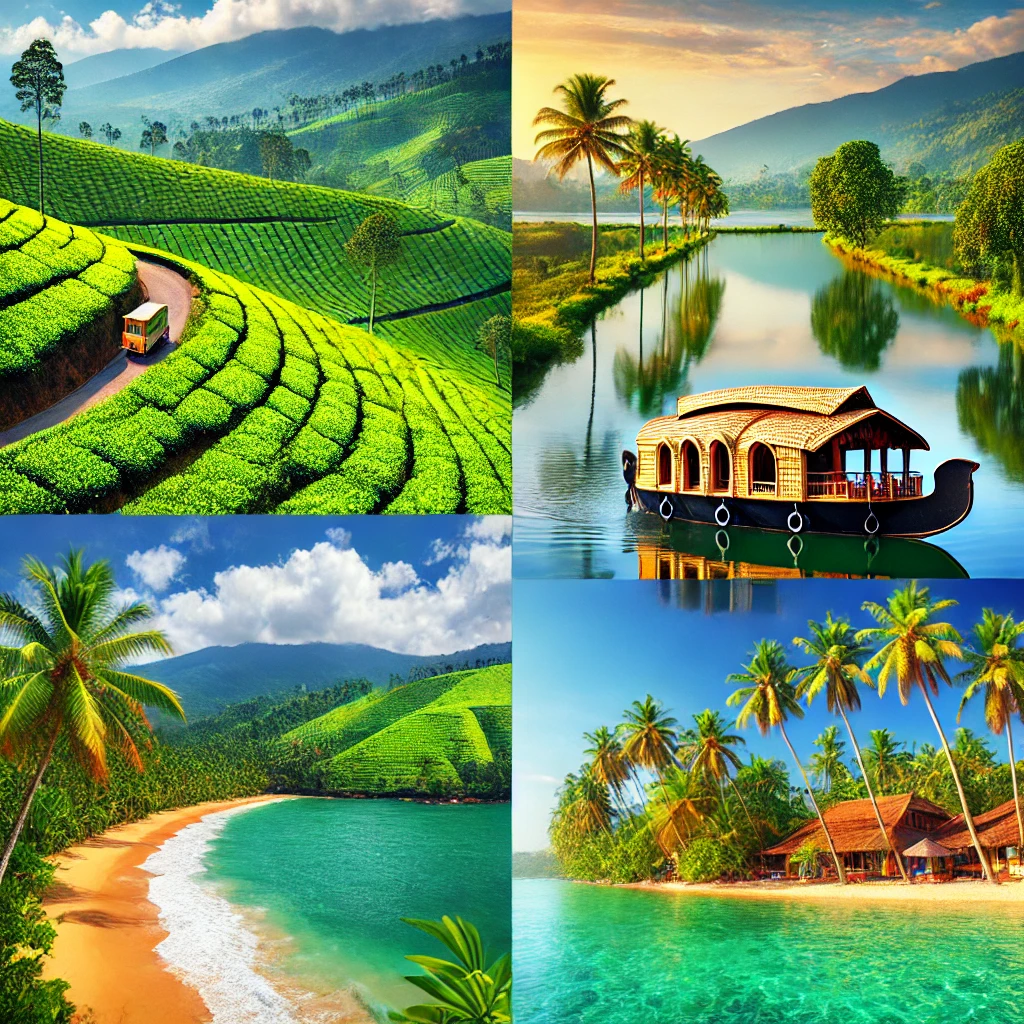
Natural Beauty of Kerala
Kerala is famous all over the world for its unique natural diversity and scenic beauty. The greenery, tranquil backwaters, serene beaches, misty mountains, and dense forests of this state have earned it the nickname “God’s Own Country.” The natural beauty of Kerala not only attracts tourists from across the globe but also plays an important role in the economic, cultural, and social life of the state.
1. Backwaters of Kerala
The backwaters of Kerala are a remarkable example of its natural beauty and ecological richness.
Main Backwater Regions
- Alleppey (Alappuzha): Known as the “Venice of the East,” famous for houseboat cruises.
- Kumarakom: Popular for scenic backwaters and the bird sanctuary.
- Kollam and Kottayam
Visitors can enjoy calm waterways, coconut groves, and traditional rural life. Traditionally, these backwaters have been used for transportation and fisheries.
2. Beaches of Kerala
The beaches of Kerala symbolize peace, beauty, and natural harmony.
Major Beaches
- Kovalam Beach (Thiruvananthapuram): The most famous beach in Kerala.
- Varkala Beach: Known for its rocky cliffs and Ayurvedic centres.
- Mararikulam Beach: A quiet beach ideal for honeymooners.
- Cherai Beach (Kochi): Famous for clear waters and coconut plantations.
Sunrise and sunset views along these beaches create unforgettable experiences.
3. Hill Stations of Kerala
The hill stations of Kerala, located in the Western Ghats, are among the most attractive natural destinations.
Munnar
Munnar is famous for tea plantations, cool climate, and scenic landscapes. It is home to Anaimudi Peak (2,695 m), the highest peak in South India, and Eravikulam National Park, known for the Nilgiri tahr.
Wayanad
Wayanad is known for dense forests, waterfalls, and ancient caves. Major attractions include Edakkal Caves and Banasura Sagar Dam.
Thekkady
Thekkady is famous for the Periyar Wildlife Sanctuary and is surrounded by spice and rubber plantations.
Ponmudi
Located near Thiruvananthapuram, Ponmudi is known for its natural beauty and trekking trails.
4. Forests and Wildlife
About 30% of Kerala is covered by forests. The forests of the Western Ghats are extremely rich in biodiversity.
Major Wildlife Sanctuaries and National Parks
- Periyar National Park (Thekkady): Famous for elephants and tigers.
- Silent Valley National Park: Known for lion-tailed macaques.
- Wayanad Wildlife Sanctuary: Home to leopards and bears.
- Idukki Wildlife Sanctuary
These forests contain tropical evergreen vegetation, rare medicinal plants, and diverse wildlife including elephants, tigers, leopards, and numerous bird species.
5. Lakes and Waterfalls
Major Lakes
- Vembanad Lake: The largest lake in Kerala.
- Ashtamudi Lake: Located near Kollam, popular for backwater tourism.
- Punalur Lake
Major Waterfalls
- Athirappilly Falls: Known as the “Niagara of South India.”
- Vazhachal Waterfall
- Sochittaal Waterfall
- Meyyaru Falls
These waterfalls are at their peak beauty during the monsoon season.
6. Rural Beauty and Farmland
Coconut groves and paddy fields dominate the rural landscape of Kerala. These farmlands reflect the traditional lifestyle and natural harmony of the state.
Spice Plantations
Cardamom, black pepper, ginger, and cloves are the hallmark of Kerala’s agriculture. Regions like Idukki and Wayanad are famous for spice cultivation.
7. Rivers and Streams
Kerala has 44 rivers, most of which flow westward into the Arabian Sea.
- Periyar: The longest river in Kerala.
- Bharathapuzha
- Pamba
- Chaliyar
These rivers support agriculture, fisheries, and hydroelectric projects.
8. Ayurvedic Centres and Peaceful Environment
Kerala’s greenery and calm atmosphere make it ideal for Ayurvedic treatment and yoga. Natural surroundings play a vital role in holistic healing and wellness tourism.
Conclusion on Natural Beauty
The natural beauty of Kerala lies in its coastlines, backwaters, hill stations, forests, and biodiversity. It is not only a paradise for tourists but also the foundation of life for local communities. This unique combination of nature and culture gives Kerala a special place on the world map.
Economic and Social Condition of Kerala
Kerala is one of the most progressive states in India, known for its high literacy rate, advanced health services, and social harmony. The economy of Kerala is mainly based on the service sector, agriculture, tourism, and remittances from the Indian diaspora. Socially, the state has set a benchmark for inclusive development.
Premium Amazon Product
High-quality product with reliable performance and excellent everyday value — perfect choice for daily use.
Buy on AmazonEconomic Situation of Kerala
1. Economic Structure
Service Sector
The service sector contributes the largest share to Kerala’s economy. It includes education, health, banking, and tourism.
Agriculture and Fisheries
Agriculture remains an important part of Kerala’s economy. Major crops include coconut, rice, rubber, pepper, cardamom, ginger, and tea. Kerala is often called the “Spice Garden of India.”
Fisheries provide livelihood to coastal communities and contribute significantly to India’s marine fish production.
Industrial Sector
Kerala mainly has light industries such as bamboo products, coconut-based industries, rubber processing, and related small-scale units. Heavy industries are limited.
Remittances
Remittances from Gulf countries play a crucial role in the state’s economy. Migrant income has significantly increased per capita income and living standards.
2. Tourism Industry
Tourism is a backbone of Kerala’s economy. Attractions include backwaters, hill stations, wildlife sanctuaries, beaches, and Ayurvedic wellness centres.
Tourism generates employment and supports local businesses. Natural beauty of Kerala is the key driver of this sector.
3. Human Development Index
Kerala has the highest Human Development Index (HDI) in India. This is due to high literacy, quality healthcare, and social equality.
4. Economic Challenges
- High unemployment among educated youth
- Limited industrial infrastructure
- Dependence on overseas remittances
Social Status of Kerala
1. Literacy and Education
Kerala has a literacy rate of around 96%, the highest in India. Women’s education is particularly strong, with high female literacy rates.
2. Health Services
Kerala’s healthcare system combines modern medicine with traditional Ayurveda. Infant mortality is the lowest in India, and life expectancy is about 75 years.
3. Social Equality and Women Empowerment
Kerala is a leader in women empowerment and social equality. Women actively participate in education, healthcare, and social life.
4. Cultural Diversity
Hindu, Muslim, and Christian communities live together in harmony. Festivals such as Onam, Eid, and Christmas are celebrated with enthusiasm.
5. Rural and Urban Development
While most people live in rural areas surrounded by coconut trees and paddy fields, cities like Thiruvananthapuram, Kochi, and Kozhikode offer modern urban facilities.
6. Diaspora Society
The large Malayali diaspora working abroad has positively influenced both the economic and social life of Kerala.
Special Features of Kerala
- High quality of life
- Strong tradition of social reform
- High environmental awareness
Conclusion
The economic and social condition of Kerala makes it a role model among Indian states. Despite challenges like unemployment and limited industrial growth, Kerala continues to maintain high standards of education, health, and social harmony. Its balanced approach to development ensures a sustainable and inclusive future.
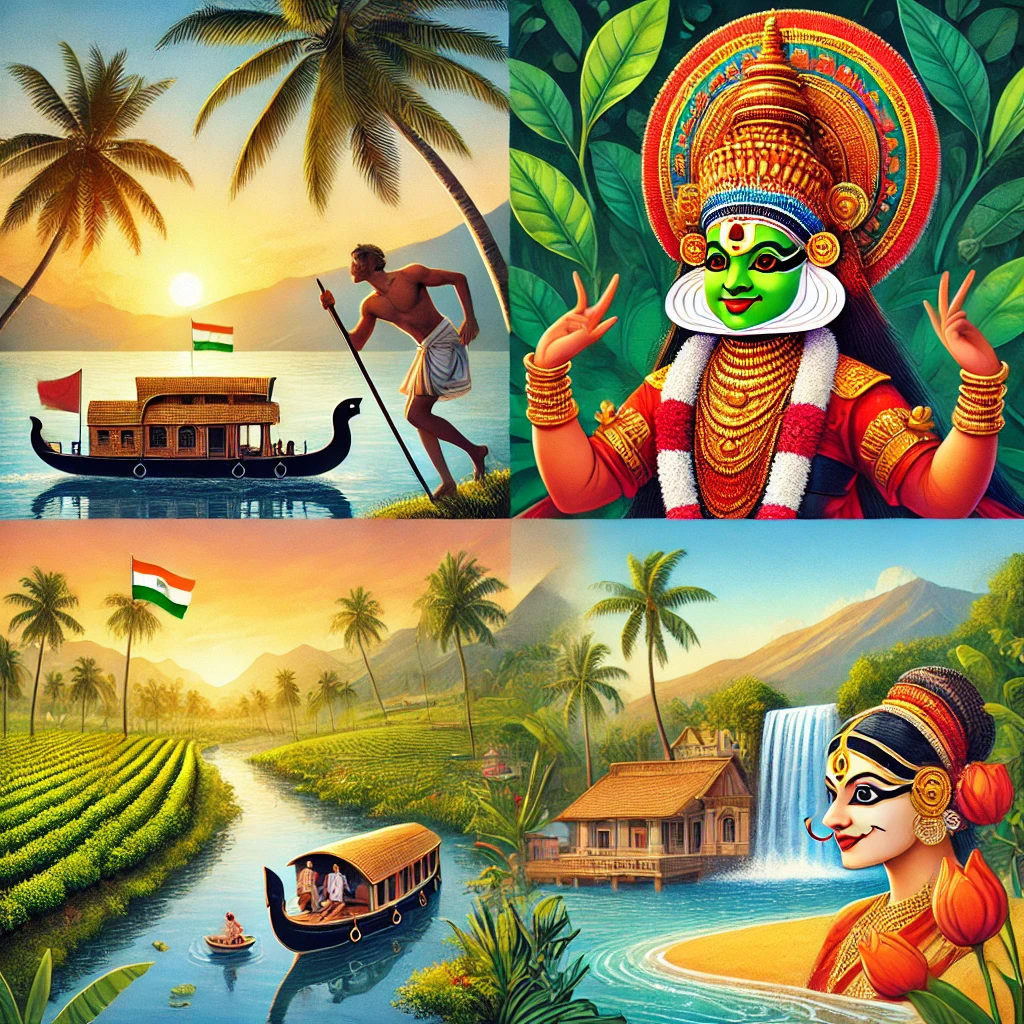
Specialties of Kerala
Kerala is known as “God’s Own Country”, a name that reflects its extraordinary natural beauty, rich cultural traditions, and remarkable social progress. The unique characteristics of Kerala distinguish it from other states of India and give it a special identity on the global stage.
1. Natural Features of Kerala
Geographical Diversity
Kerala is located between the majestic Western Ghats and the Arabian Sea. Hill stations, tranquil backwaters, scenic beaches, and dense forests together make its geography unique.
Backwaters and Waterways
The peaceful backwaters of Alleppey and Kumarakom are world-famous and attract tourists from across the globe.
Beaches
Beaches such as Kovalam, Varkala, and Cherai are major attractions known for their serenity and natural charm.
Climate
Kerala’s tropical monsoon climate supports lush greenery and makes the state highly suitable for agriculture.
2. Cultural Characteristics of Kerala
Cultural Heritage
Kerala is a centre of classical dance forms such as Bharatanatyam, Kathakali, and Mohiniyattam. Temples, churches, and mosques in the state are also architecturally significant.
Festivals
Festivals like Onam, Vishu, and Thiruvathira reflect Kerala’s cultural diversity. Traditional dishes like Payasam and floral decorations called Pookkalam are unique features of Onam celebrations.
Language and Literature
Malayalam is the main language of Kerala. Contributions by literary figures such as Kumaran Asan and Vaikom Muhammad Basheer have enriched Malayalam literature immensely.
Ayurveda
Kerala is a global centre of Ayurveda and naturopathy. Ayurvedic treatments and wellness therapies here are renowned worldwide.
3. Economic Characteristics of Kerala
Spice Production
Kerala holds a prominent position in the production of black pepper, cardamom, ginger, and nutmeg.
Agriculture
Cultivation of coconut, rice, rubber, and tea forms the backbone of the state’s agricultural economy.
Tourism
Tourism based on backwaters, hill stations, beaches, and wildlife sanctuaries is a major source of income for Kerala.
Remittances
Non-Resident Indians (NRIs), especially those working in Gulf countries, contribute significantly to Kerala’s economy through remittances.

Premium Amazon Product
High-quality build with reliable performance and excellent everyday value — perfect choice for daily use.
Buy on Amazon4. Social Characteristics of Kerala
Education and Literacy
Kerala has the highest literacy rate in India, around 96%.
Health Services
The state is known for its advanced public health system and widespread use of Ayurvedic medicine.
Women Empowerment
Kerala leads in women’s literacy, social participation, and empowerment.
Social Equality
Strong social reform movements have significantly reduced casteism and social discrimination in the state.
5. Tourism Specialties
Natural Attractions
Alleppey backwaters, Munnar tea plantations, and the Periyar Wildlife Sanctuary are among the most popular tourist attractions.
Traditional Boat Races
Events such as the Nehru Trophy Boat Race play an important role in promoting tourism.
Local Handicrafts
Bamboo products, coconut-based items, and traditional textiles such as Kasavu sarees are famous across India and abroad.
6. Environmental Awareness
Green Kerala Initiatives
Kerala places strong emphasis on environmental protection and greenery through initiatives like the Green Kerala Campaign.
Biodiversity
Regions such as Silent Valley National Park and Periyar Wildlife Sanctuary reflect the state’s rich biodiversity.
Conclusion
The specialties of Kerala make it a unique state not only in India but in the world. Its natural beauty, cultural richness, and social progress give it the status of an “ideal state.”
Geographical Location and Climate of Kerala
Geographical Location
1. Location
Kerala is located in the south-western corner of India. The state stretches as a narrow strip of land between the Western Ghats and the Arabian Sea.
Latitude and Longitude
Latitude: 8°18′ N to 12°48′ N
Longitude: 74°52′ E to 77°22′ E
2. Area
The total area of Kerala is 38,863 square kilometres, which is about 1.18% of India’s total geographical area.
3. Boundaries
- North and North-East: Karnataka
- East: Tamil Nadu
- West: Arabian Sea
- South: Kanyakumari (Tamil Nadu)
4. Major Geographical Features
Western Ghats
The Western Ghats run along the eastern part of Kerala and are known for dense forests, wildlife sanctuaries, and tea and coffee plantations.
Intermediate Plains
This region lies between the hills and the coastal belt and is important for agriculture and settlement.
Coastal Region
The coastal plains along the Arabian Sea are famous for backwaters, beaches, fishing activities, and coconut cultivation.
Rivers and Lakes
Kerala has 44 rivers, of which 41 originate in the Western Ghats. Important rivers include Periyar, Bharathapuzha, Pampa, and Chaliyar. Major lakes are Vembanad, Ashtamudi, and Kayamkulam.
5. Backwaters
Backwaters are one of the most distinctive geographical features of Kerala. They are formed by a mix of freshwater rivers and saline seawater and are important for transport, fishing, and tourism.
6. Flora and Wildlife
Nearly 30% of Kerala’s area is covered by forests. Tropical evergreen and moist deciduous forests are common. Major protected areas include Silent Valley National Park, Periyar Wildlife Sanctuary, and Eravikulam National Park.
Climate of Kerala
Kerala has a tropical monsoon climate, with hot and humid weather throughout the year.
1. Seasonal Division
Summer (March to May)
Temperature ranges from 25°C to 35°C. Coastal sea breezes help reduce extreme heat.
South-West Monsoon (June to September)
This is the main rainy season in Kerala. Monsoon arrives first in Kerala, with average rainfall of 250–300 cm.
North-East Monsoon (October to November)
Also called the retreating monsoon, this season brings moderate rainfall.
Winter (December to February)
Temperatures range from 20°C to 30°C, making this season pleasant and comfortable.
2. Humidity
Humidity levels remain high throughout the year, averaging between 70% and 90%, especially in coastal areas.
3. Rainfall
Kerala receives rainfall from both the south-west and north-east monsoons, making it one of the wettest regions of India.
4. Special Climatic Effects
Influence of the Western Ghats
The Western Ghats enhance rainfall and play a crucial role in shaping the state’s climate.
Coastal Influence
Winds from the Arabian Sea regulate temperatures in coastal areas.
Natural Disasters
Heavy monsoon rains sometimes lead to floods and landslides.
Importance of Geographical Location and Climate
Impact on Agriculture
Monsoon rainfall and fertile soil support crops like rice, coconut, rubber, and spices.
Impact on Tourism
Backwaters, beaches, forests, and monsoon landscapes attract tourists throughout the year.
Wildlife Conservation
Tropical forests and rich biodiversity help maintain environmental balance.
Impact on Lifestyle
Due to geography and climate, the local diet is mainly based on rice, coconut, and fish.
Final Conclusion
Kerala’s geographical location and tropical monsoon climate make it ideal for natural beauty, biodiversity, and agriculture. The balance between coastal plains and mountain regions has made Kerala an important centre for tourism, wildlife conservation, and cultural prosperity.
Premium Amazon Product
High-quality build, reliable performance, and excellent everyday value — a perfect choice for daily use.
Buy on AmazonReferences
- Department of Tourism, Government of Kerala – Official information related to Kerala’s natural beauty, tourism destinations, cultural heritage, and travel initiatives.
- Government of India Publications (Ministry of Information & Broadcasting) – Authoritative data on Kerala’s geographical features, social structure, and economic conditions.
- National Informatics Centre (NIC) – Verified information on Kerala’s geographical location, climate, administrative divisions, and digital governance.
- Kerala State Textbook & Education Board – Academic resources covering the history, geography, and social development of Kerala.
- NITI Aayog / Planning Commission Reports – Data and analysis related to Human Development Index (HDI), literacy rate, healthcare indicators, and social progress in Kerala.
- Ministry of AYUSH, Government of India – Information on Ayurveda, naturopathy, wellness tourism, and traditional medical practices in Kerala.
- Standard Geography and History Books – Widely used reference books and academic publications on Kerala’s history, culture, economy, and natural resources.
Social Development in Kerala
Kerala leads in many social indicators in India. Life expectancy is high, women’s empowerment is relatively strong, and the infant mortality rate is among the lowest in the country. This combination of education, health, and social awareness makes Kerala a model for human development.