Geography of India
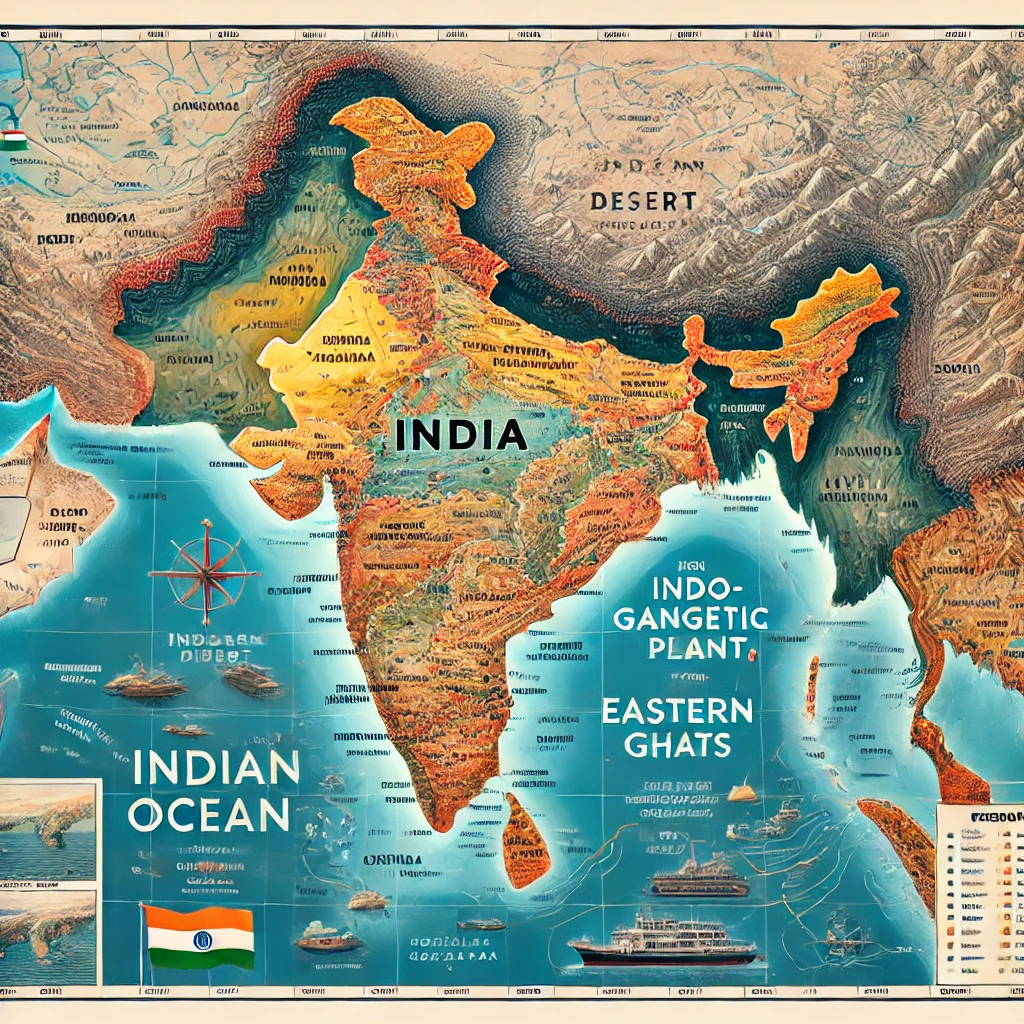
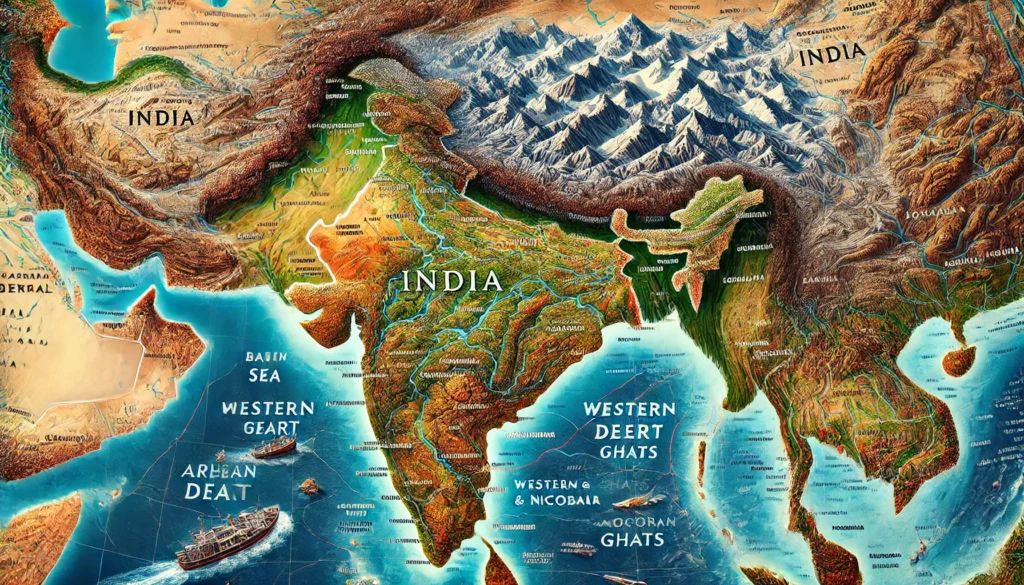
Geographical Importance of India is extremely significant due to its strategic location, diverse physical features, and rich natural resources. India’s geography plays a vital role in shaping its climate, economy, and global influence.
For a deeper understanding of how India is bounded by other countries and seas, you can also read our detailed article on The Border of India.
1. Location and Extent
1.1 Latitudinal and Longitudinal Location
Location: India is located in the Northern Hemisphere. It lies approximately between 8°4′ North latitude to 37°6′ North latitude and 68°7′ East longitude to 97°25′ East longitude.
1.2 Limits and Neighbouring Countries
Geographical Limits
- North: Himalaya Mountains
- West: Pakistan and the Arabian Sea
- East: Bangladesh, Myanmar, and the Bay of Bengal
- South: Indian Ocean
Neighbouring Countries
India shares its borders (land and sea) with the following neighbouring countries:
2. Geographical Area and Major Regions
The geographical area of India can be divided into five main regions:
- Himalayan Region
- Northern Plains
- Peninsular Plateau
- Thar Desert
- Coastal Areas and Islands
2.1 Himalayan Region
Location
Located in Northern India, this region is home to the mighty Himalayan mountain range.
Features
The Himalayan region includes some of the world’s highest peaks, such as:
- Mount Everest (in Nepal)
- Kanchenjunga (one of the highest peaks in the world)
Rivers
It is the source of many major rivers, including:
- Ganga
- Yamuna
- Brahmaputra
Importance
- Controls and influences the climate of North India
- Provides natural protection from cold winds and invasions
- Supports dense forests and rich biodiversity
2.2 Northern Plains
Location
This region is formed by the alluvial deposits of rivers like Ganga, Yamuna, and Brahmaputra. It extends across northern and eastern India.
Features
- Extremely fertile and flat land
- One of the most important agricultural regions of India
- The Ganga–Brahmaputra Delta is the largest delta in the world
Major Crops
- Paddy (rice)
- Wheat
- Sugarcane
- Pulses
2.3 Peninsular Plateau
Location
The Peninsular Plateau is located in central and southern India.
Special Features
- One of the oldest landmasses in the world
- Rich in ancient rocks and mineral resources
- Includes important ranges such as the Vindhya and Satpura mountains
Rivers
- West-flowing rivers: Narmada, Tapti
- East-flowing rivers: Godavari, Kaveri, Krishna
Mineral Resources
- Iron
- Bauxite
- Coal
- Gold
2.4 Thar Desert
Location
The Thar Desert is located in the western part of Rajasthan and Gujarat.
Features
- Dry and arid climate
- Sand dunes spread over large areas
- Cultivation of drought-resistant crops
Important Irrigation Project
The Indira Gandhi Canal has been developed to promote agriculture and support life in the Thar Desert region.
2.5 Coastal Areas and Islands
Coastal Areas
- Western Coast: Extends from Kutch to Kanyakumari
- Eastern Coast: Extends from the Sundarbans Delta to Kanyakumari
Islands
- Andaman and Nicobar Islands in the Bay of Bengal
- Lakshadweep in the Arabian Sea
3. climate of India
The climate of India is mainly of the tropical monsoon type, but due to its vast size and varied relief, different types of climates are found in different regions. Broadly, the climate of India can be divided into the following types:
- Tropical monsoon climate – affects most parts of India
- Temperate climate – found in mountainous areas, especially the Himalayas
- Dry climate – in the Thar Desert and adjoining regions
- Subtropical climate – in many parts of North India
- Equatorial climate – in some southern coastal regions and islands
4. Rivers of India
India is often called the “land of rivers”. The rivers of India are generally divided into two main categories:

⭐ Recommended Study Resource
Explore a highly rated educational resource selected to support learning, revision, and exam preparation with trusted content and positive reader feedback.
4.1 Himalayan Rivers
These rivers originate from the Himalayan Mountains and are perennial (flow throughout the year). Major Himalayan rivers are:
- Ganga
- Yamuna
- Brahmaputra
4.2 Peninsular Rivers
These rivers originate from the Peninsular Plateau and are mostly rain-fed. Major Peninsular rivers include:
- Narmada
- Godavari
- Kaveri
- Krishna
5. Forests and Vegetation
Forests cover about 21.71% of the total land area of India. Due to variations in climate and relief, different types of forests are found here.
5.1 Major Types of Forests
- Tropical rain forests – found in areas with heavy rainfall
- Dry deciduous forests – common in central and southern India
- Mountain forests – found in Himalayan and high-altitude regions
- Mangrove forests – especially in the Sundarbans region
6. Natural Resources of India
India is rich in minerals, water, forests, and agricultural resources, which play a vital role in its economy and development.
6.1 Mineral Resources
- Coal
- Iron
- Manganese
- Bauxite
- Gold
6.2 Energy Resources
- Hydroelectric power
- Solar energy
- Wind energy
7. Geographical Importance of India
India’s geographical location makes it central to Asian and world trade routes. It is located at the crossroads of major sea routes in the Indian Ocean, connecting the Middle East, Africa, and Southeast Asia.
Its diverse geographical landscape and climate make India suitable for:
- Agriculture – due to fertile plains and favourable climate
- Mining – because of rich mineral deposits
- Tourism – mountains, beaches, deserts, forests, and islands attract tourists from all over the world
- Trade and business – strategic location supports international commerce
Thus, the geography of India not only shapes its environment and resources, but also plays a key role in its economic, social, and cultural development.
Frequently Asked Questions (FAQ) – Geography of India
Q1. What is the total geographical area of India?
Answer: The total geographical area of India is approximately 3,287,263 square kilometres, which makes it the seventh-largest country in the world.
Q2. How is the geography of India divided?
Answer: The geography of India is broadly divided into five major regions: the Himalayan region, the Northern Plains, the Peninsular Plateau, the Thar Desert, and the coastal areas and islands.
Q3. Which are the main rivers of India?
Answer: The major Himalayan rivers are the Ganga, Yamuna, and Brahmaputra. The important Peninsular rivers include the Narmada, Godavari, Kaveri, and Krishna.
Q4. What kind of climate is found in India?
Answer: India mainly has a tropical monsoon climate, along with temperate climate in mountainous regions, dry climate in the Thar Desert, subtropical climate in many northern areas, and equatorial climate in some southern regions and islands.
Q5. Why is the geography of India important for its economy?
Answer: India’s geography is important because its strategic location supports major trade routes, while its diverse landforms and climate favour agriculture, mining, tourism, and other businesses, contributing significantly to economic growth.
Location and Boundary of India
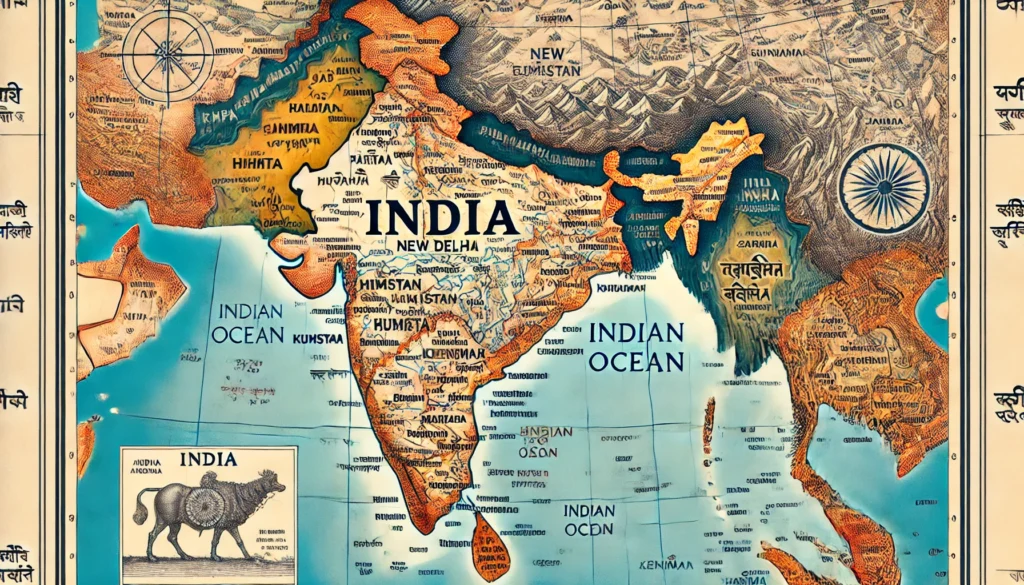
India is a country with unique characteristics due to its geographical location and extent. It is located in South Asia, and because of its central position on the Asian landmass, it is often called the “Heart of Asia”.
To understand how India’s location connects with its physical features and diversity, you can also read our detailed article on Geography of India.
1. Location of India
The geographical location of India is defined mainly by its latitudinal and longitudinal extent, as well as by the passage of the Tropic of Cancer through the country.
1.1 Latitudinal Extension
- India is located between 8°4′ North latitude and 37°6′ North latitude.
- This makes India lie entirely in the Northern Hemisphere.
1.2 Longitudinal Extension
- India extends between 68°7′ East longitude and 97°25′ East longitude.
- Indian Standard Time (IST) is based on 82°30′ East longitude, which passes approximately through the middle of the country.
1.3 Tropic of Cancer
Path of the Tropic of Cancer in India
- The Tropic of Cancer (23°30′ North latitude) passes through the middle of India.
- It divides India into almost equal northern and southern parts.
- It passes through the following states:
1.4 Geographical Location in Asia
- India is located in the southern part of Asia.
- Its southern part extends deep into the Indian Ocean, forming a triangular peninsula.
- This location makes India an important centre for maritime trade between the countries of the East and the West.
2. Boundary of India
India’s boundaries are surrounded by various land areas, seas, and island groups on all sides. Its borders can be divided into three main types: land boundary, coastal (sea) boundary, and island boundary.
2.1 Land Boundary of India
- India’s land boundary is approximately 15,106 kilometres long.
- Many countries lie along India’s north, north-west, and north-east borders.
Neighbouring Countries and Their Land Borders
- Pakistan: About 3,323 km (borders Jammu and Kashmir, Punjab, Rajasthan, and Gujarat).
- China: About 3,488 km (borders Ladakh, Himachal Pradesh, Uttarakhand, Sikkim, and Arunachal Pradesh).
- Nepal: About 1,751 km (borders Uttarakhand, Uttar Pradesh, Bihar, West Bengal, and Sikkim).
- Bhutan: About 699 km (borders Sikkim, West Bengal, Arunachal Pradesh, and Assam).
- Bangladesh: About 4,096 km (borders West Bengal, Assam, Meghalaya, Tripura, and Mizoram).
- Myanmar: About 1,643 km (borders Arunachal Pradesh, Nagaland, Manipur, and Mizoram).
2.2 Coastal Boundary of India
- India has a maritime (sea) boundary of approximately 7,516.6 km.
- It is surrounded by the sea on three sides:
- West: Arabian Sea
- East: Bay of Bengal
- South: Indian Ocean
Coastal States and Islands
- Coastal States: Gujarat, Maharashtra, Goa, Karnataka, Kerala, Tamil Nadu, Andhra Pradesh, Odisha, and West Bengal.
- Islands along the Coasts:
- Andaman and Nicobar Islands in the Bay of Bengal
- Lakshadweep in the Arabian Sea
2.3 Island Boundary of India
India has two major island groups which form an important part of its boundary:
Major Island Groups
- Andaman and Nicobar Islands: About 572 islands, located in the Bay of Bengal.
- Lakshadweep Islands: About 36 islands, located in the Arabian Sea.
These island groups are very important from a strategic and security point of view, as well as for trade and tourism.
⭐ Recommended Study Resource
Explore a highly rated educational resource selected to support learning, revision, and exam preparation with trusted content and positive reader feedback.
3. Important Facts Related to India’s Border
3.1 Importance of Maritime Trade
- India’s maritime position makes it a natural centre of trade between the countries of the East and West.
- Sea routes through the Indian Ocean connect India with Europe, Africa, Southeast Asia, and the Middle East.
3.2 Border Security
- There are many military posts and security installations along India’s borders.
- Disputed areas in the Himalayan region with China, such as Aksai Chin and parts of Arunachal Pradesh, are sensitive.
- The Line of Control (LoC) in Jammu and Kashmir between India and Pakistan is also a highly sensitive border region.
3.3 International Relations
- India continuously makes efforts to maintain and improve bilateral relations with its neighbouring countries.
- India plays an important role in regional organizations such as SAARC (South Asian Association for Regional Cooperation) and BIMSTEC (Bay of Bengal Initiative for Multi-Sectoral Technical and Economic Cooperation).
4. Geographical Importance of India’s Location and Boundary
The geographical location and extent of India make it an important strategic and economic centre at the southern tip of Asia.
- Its central location in the Indian Ocean strengthens its geopolitical position.
- Diverse land and sea boundaries enhance India’s trade power and connectivity.
- The combination of land borders, long coastline, and island groups supports cultural diversity, defence, and economic growth.
Thus, the location and boundary of India not only define its physical presence on the world map but also strengthen the country’s diversity, business power, and geopolitical importance.
Frequently Asked Questions (FAQ) – Location and Boundary of India
Q1. In which part of the world is India located?
Answer: India is located in South Asia, in the Northern Hemisphere and the Eastern Hemisphere. It lies between 8°4′ N to 37°6′ N latitudes and 68°7′ E to 97°25′ E longitudes.
Q2. What is the significance of 82°30′ East longitude for India?
Answer: The 82°30′ East longitude is important because Indian Standard Time (IST) is based on it. This meridian passes approximately through the middle of India and provides a standard time for the whole country.
Q3. Through which states does the Tropic of Cancer pass in India?
Answer: The Tropic of Cancer (23°30′ N) passes through Gujarat, Rajasthan, Madhya Pradesh, Chhattisgarh, Jharkhand, West Bengal, Tripura, and Mizoram.
Q4. How many countries share their land border with India?
Answer: India shares its land border with six countries: Pakistan, China, Nepal, Bhutan, Bangladesh, and Myanmar.
Q5. What is the length of India’s land and coastal boundaries?
Answer: India’s land boundary is about 15,106 kilometres long, while its coastal boundary, including the mainland and islands, is about 7,516.6 kilometres long.
Q6. Why are the Andaman and Nicobar and Lakshadweep islands strategically important?
Answer: The Andaman and Nicobar Islands in the Bay of Bengal and the Lakshadweep Islands in the Arabian Sea are strategically important because they help India monitor key sea routes, strengthen its naval presence, and support maritime trade and security in the Indian Ocean region.
Climate of India
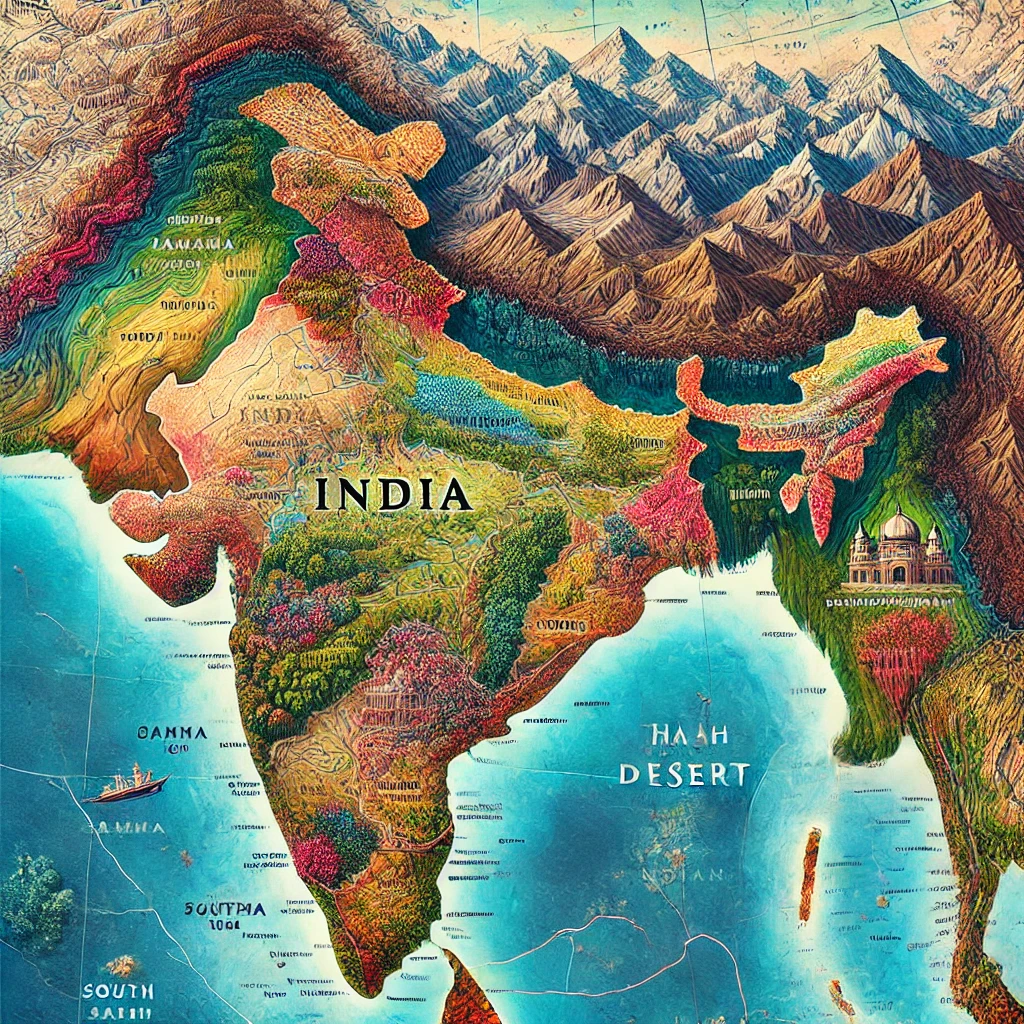
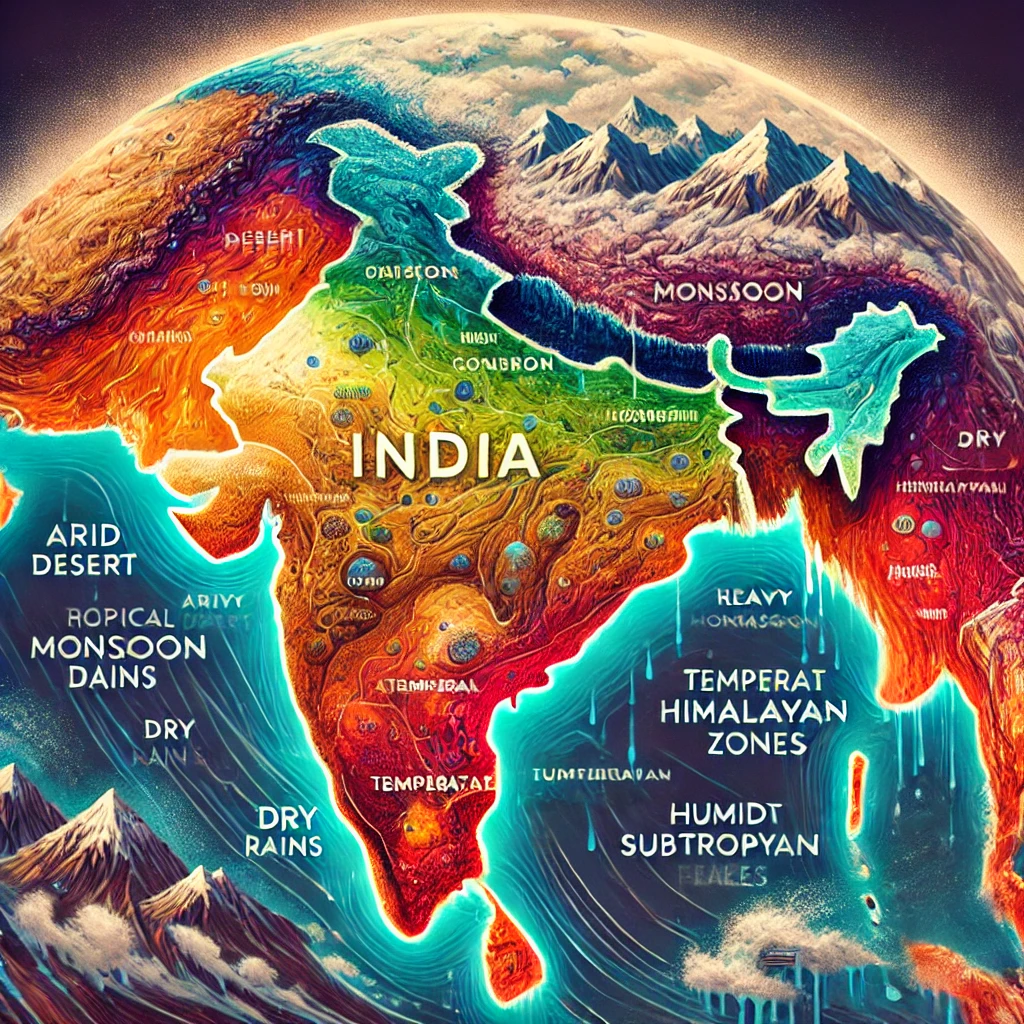
The climate of India is extremely diverse due to the country’s large geographical area, varied topographical features, and the influence of surrounding oceans. India is primarily characterized by a tropical monsoon climate. However, significant variations in temperature, rainfall, seasons, and climatic conditions are observed across different regions.
To understand how climate is shaped by physical features, you may also read our article on The Geographical Area of India.
1. Factors Affecting the Climate of India
India’s climate is influenced by several geographical and environmental factors:
1.1 Latitudinal Position
- The Tropic of Cancer passes through the middle of India.
- The southern part lies in the tropical zone, while the northern part lies in the subtropical zone.
- Southern regions experience higher temperatures, while northern regions have colder winters.
1.2 Himalayan Mountains
- The Himalayas act as a natural barrier preventing cold winter winds from Central Asia.
- They protect northern India and significantly influence rainfall patterns.
1.3 Influence of the Sea
- Coastal regions of western and eastern India experience a moderate or equable climate.
- Interior regions have more extreme temperatures due to the absence of marine influence.
1.4 Monsoon Winds
- The monsoon is the most important component of India’s climate.
- India is influenced by both the South-West Monsoon and the North-East Monsoon.
1.5 Topography
- Mountains, plateaus, plains, and deserts create climatic diversity.
- For example, the Thar Desert has a dry climate, while the Himalayan region experiences cold conditions.
2. Seasons of India
The climate of India is divided into four main seasons:
2.1 Summer Season
Duration: March to June
Temperature
- Northern India: 30°C to 45°C
- Southern India: Comparatively less hot
Features
- Long and warm days
- Heat waves in the Thar Desert
- Hill stations become major tourist attractions

⭐ Recommended Study Resource
Explore a highly rated educational resource selected to support learning, revision, and exam preparation with trusted content and positive reader feedback.
2.2 Monsoon Season
Duration: June to September
Cause
South-West Monsoon winds bring moisture from the Arabian Sea and the Bay of Bengal.
Features
- Heavy rainfall in the Western Ghats, North-Eastern states, and Himalayan regions
- Low rainfall in Rajasthan and Gujarat
Notable Facts
- Cherrapunji and Mawsynram (Meghalaya) are among the rainiest places in the world
2.3 Autumn (Post-Monsoon Season)
Duration: October to November
- Temperature becomes slightly cooler
- Clear skies due to withdrawal of the monsoon
- North-East Monsoon causes rainfall in Tamil Nadu and Andhra Pradesh
2.4 Winter Season
Duration: December to February
Temperature
- Northern India: 5°C to 15°C
- Southern India: Comparatively warm
Features
- Cold conditions in North India
- Snowfall in hilly regions
- Equable and pleasant climate in South India
3. Types of Climate in India
3.1 Tropical Humid Climate
Regions: Kerala, Western Ghats, Andaman and Nicobar Islands
- High temperatures and heavy rainfall
- Dense tropical rainforests
3.2 Arid Climate
Regions: Rajasthan, Gujarat, parts of Punjab
- Very low rainfall (100–200 mm)
- Thorny vegetation and sand dunes
3.3 Subtropical Monsoon Climate
Regions: Ganga–Brahmaputra Plains
- Hot summers and cold winters
- Rainfall mainly from monsoon winds
3.4 Mountain Climate
Regions: Himalayan and North-Eastern states
- Cold climate
- Snowfall and alpine vegetation
3.5 Coastal Climate
Regions: Western and Eastern Coastal Plains
- Humid climate
- Less variation in temperature throughout the year
4. Monsoon and the Agricultural Sector of India
- About 70% of Indian agriculture depends on monsoon rainfall.
- Kharif crops such as paddy and maize grow with the arrival of the South-West Monsoon.
- Rabi crops such as wheat and gram are influenced by winter rains and the North-East Monsoon.
5. Climate Change and Challenges in India
5.1 Effects of Climate Change
- Unseasonal rainfall and floods
- Droughts and extreme heat waves
- Melting of Himalayan glaciers
5.2 Major Problems
- Decline in agricultural productivity
- Water scarcity and impact on energy supply
5.3 Possible Solutions
- Adoption of climate-friendly agricultural practices
- Promotion of renewable energy sources such as solar and wind power
Conclusion
The climate of India deeply affects its biodiversity, agriculture, economy, and culture. The monsoon is the most significant aspect of India’s climate, influencing not only farming but the entire economic system. Addressing the challenges posed by climate change will be essential for India’s sustainable development in the future.
Frequently Asked Questions (FAQ) – Climate of India
Q1. What is the main characteristic of India’s climate?
Answer: The main characteristic of India’s climate is the tropical monsoon system, which causes seasonal rainfall and temperature variations.
Q2. Which season brings maximum rainfall in India?
Answer: The Monsoon Season (June to September) brings maximum rainfall to most parts of India.
Q3. Why is the Himalayan region colder than the plains?
Answer: The Himalayan region is colder due to its high altitude and frequent snowfall.
Q4. How does climate change affect India?
Answer: Climate change affects India through extreme weather events, irregular monsoons, floods, droughts, and water shortages.
Q5. Why is the monsoon important for Indian agriculture?
Answer: The monsoon is crucial because a large portion of Indian agriculture depends on rainfall for crop production.
Forest and Vegetation Regions of India
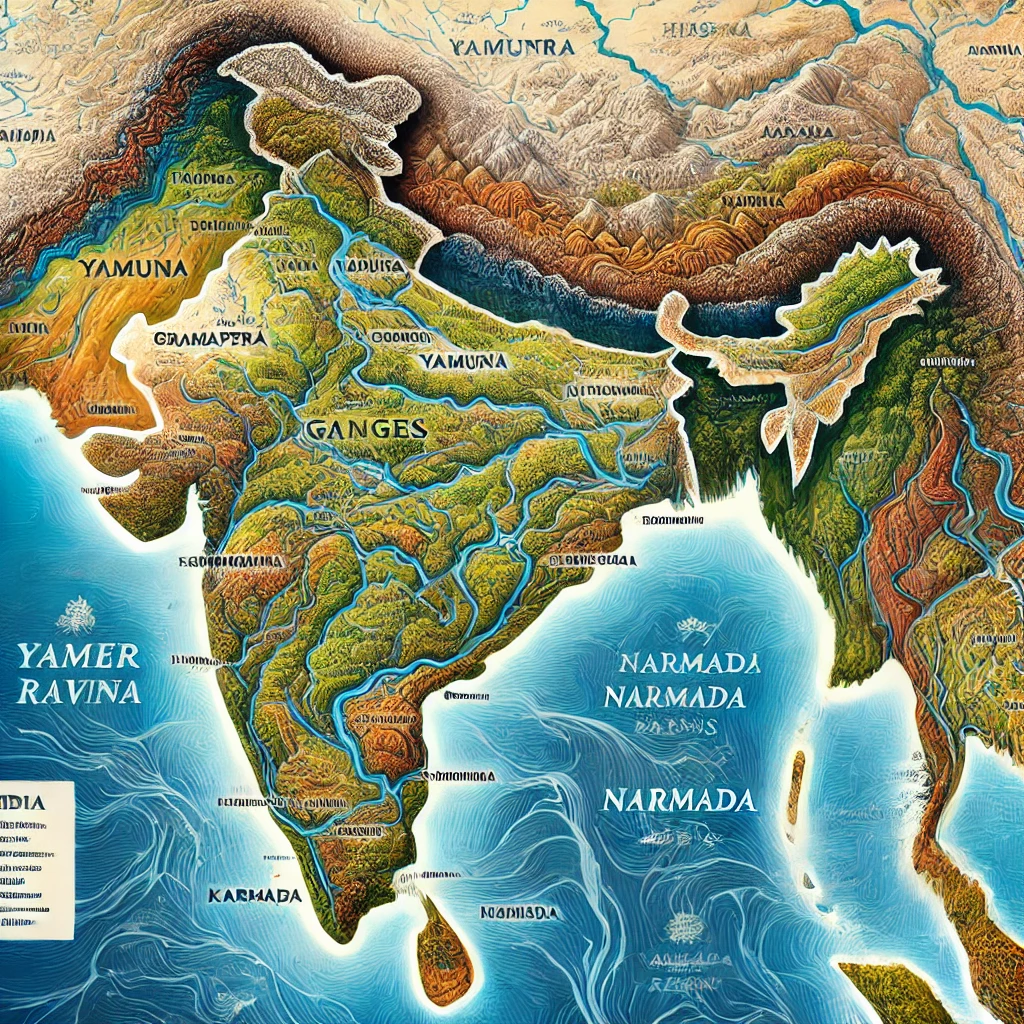
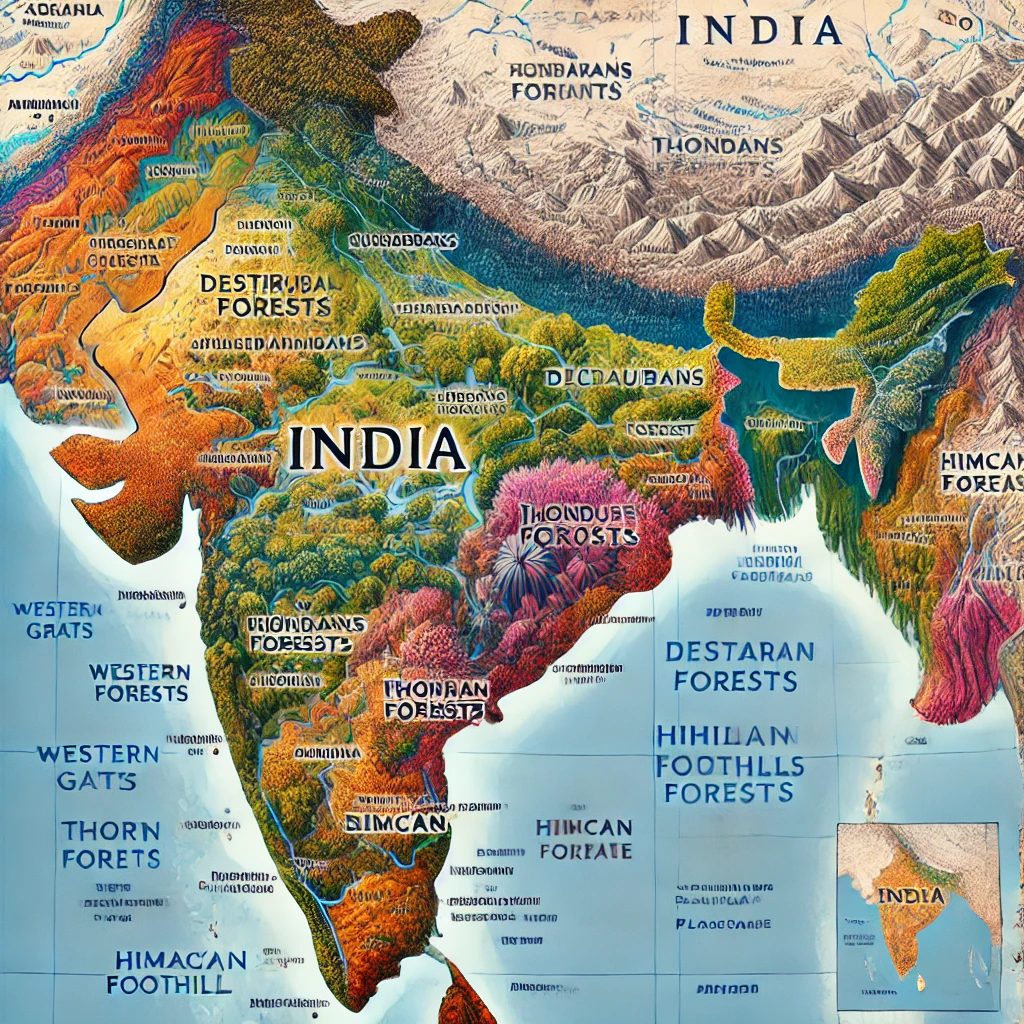
India’s forest and vegetation regions form the foundation of the country’s biodiversity, environmental balance, and economic resources. Due to the wide variation in climate, soil, and topography, India has an exceptional diversity of forests and vegetation types.
To understand how forests are linked with landforms and climate, you may also read: Climate of India and Geographical Area of India.
1. Forest Area in India
1.1 Forest Cover
- About 21.71% of India’s total geographical area is covered by forests.
- States with maximum forest area include Madhya Pradesh, Arunachal Pradesh, and Chhattisgarh.
Classification of Forests Based on Density
- Dense Forests: More than 70% tree cover
- Moderately Dense Forests: 40%–70% tree cover
- Open Forests: 10%–40% tree cover
1.2 Importance of Forests
Environmental Benefits
- Absorption of carbon dioxide
- Maintenance of biodiversity
- Soil conservation and prevention of erosion
Economic Benefits
- Supply of timber, paper, rubber, and medicinal plants
- Support to forest-based industries
Social and Cultural Importance
- Source of livelihood for tribal communities
- Associated with religious and cultural traditions
2. Types of Forests in India
Based on climate, soil, and topography, forests in India are classified into the following major types:
2.1 Tropical Rain Forests
Location: Western Ghats, Andaman and Nicobar Islands, Assam, and North-Eastern states
- High temperature and heavy rainfall (200–250 cm)
- Evergreen vegetation
- Major trees: Mahogany, Rosewood, Ebony
- Extremely rich biodiversity
Importance: Habitat for rare wildlife and medicinal plants
2.2 Tropical Deciduous Forests
Location: Madhya Pradesh, Uttar Pradesh, Chhattisgarh, Jharkhand
- Rainfall between 100–200 cm
- Wet and dry deciduous species
- Major trees: Sal, Teak, Shisham, Acacia
Importance: Main source of timber for agriculture and construction
2.3 Tropical Thorn Forests
Location: Rajasthan, Gujarat, Haryana, Punjab
- Rainfall between 50–100 cm
- Thorny shrubs and bushes
- Main trees: Acacia, Khejari, Khair
Importance: Soil conservation in arid and semi-arid regions
2.4 Montane Forests
Location: Himalayan region and high mountains of South India
- Vegetation varies with altitude
- Temperate and alpine vegetation
- Major trees: Cedar, Pine, Spruce
Importance: Environmental balance and promotion of tourism
2.5 Mangrove Forests
Location: Sundarbans (West Bengal), Andaman and Nicobar Islands
- Found in tidal and brackish water areas
- Major tree: Sundari
Importance: Coastal protection, prevention of erosion, and biodiversity conservation
3. Major Vegetation in India
3.1 Natural Vegetation
- Depends on climate and soil
- Ranges from evergreen forests to thorny vegetation

⭐ Recommended Study Resource
Explore a highly rated educational resource selected to support learning, revision, and exam preparation with trusted content and positive reader feedback.
3.2 Agricultural Vegetation
- Major crops: Wheat, Rice, Sugarcane, Maize
- Production of fruits, vegetables, and spices
3.3 Medicinal Plants
- Tulsi, Neem, Amla, Ashwagandha
- Widely used in Ayurveda and traditional medicine
4. Need for Conservation of Forests and Vegetation
4.1 Reasons for Destruction of Forests
- Deforestation
- Urbanization and industrialization
- Forest fires and encroachment
4.2 Conservation Measures
- Afforestation and reforestation
- Tree plantation programmes
- Creation of reserved and protected forests
- Public awareness campaigns
4.3 Government Efforts
- National Forest Policy: Target of increasing forest cover to 33%
- Protection through biosphere reserves, national parks, and wildlife sanctuaries
5. Impact of Climate Change on Forests and Vegetation
- Global warming: Rising temperatures threaten plant species
- Reduced rainfall: Moisture stress in tropical forests
- Impact on wildlife: Loss of natural habitats
Conclusion
India’s forests and vegetation are not only essential for maintaining environmental balance, but also provide resources vital for human survival. Protecting forests and ensuring their sustainable use must be a national and collective priority for a balanced and secure future.
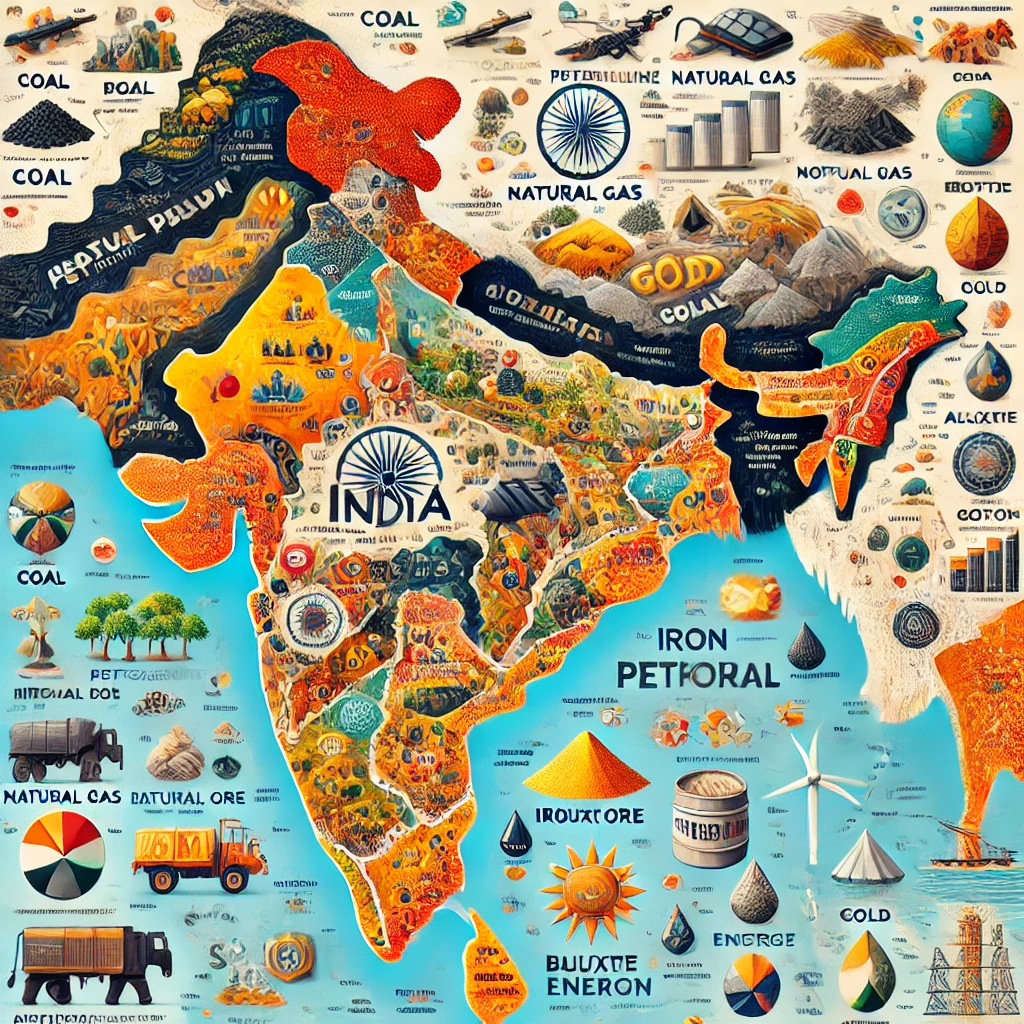
Natural Resources of India
Natural resources are resources obtained directly from nature that are essential for human survival and development. These resources play a crucial role in sustaining life on Earth. India is a resource-rich country with a wide variety of natural resources that support its economy, culture, and environment.
To better understand how these resources are shaped by physical features and climate, you may also read: Geographical Area of India and Climate of India.
1. Classification of Natural Resources
1.1 On the Basis of Source
Biotic Resources
- Obtained from living sources
- Examples: Plants, animals, wood, food items
Abiotic Resources
- Obtained from non-living sources
- Examples: Minerals, water, air, soil
1.2 On the Basis of Renewability
Renewable Resources
- Resources that can regenerate over time
- Examples: Solar energy, wind energy, water, forests
Non-Renewable Resources
- Resources that get exhausted after use
- Examples: Coal, petroleum, natural gas, minerals
1.3 On the Basis of Distribution
Ubiquitous Resources
- Found everywhere on Earth
- Examples: Air, sunlight, water
Localized Resources
- Found only in specific locations
- Examples: Minerals, petroleum
1.4 On the Basis of Usage
Raw Materials
- Used directly in industries
- Examples: Iron ore, bauxite
Processed Resources
- Obtained after processing raw materials
- Examples: Steel, petrol
2. Major Natural Resources of India
2.1 Water Resources
Sources of Water
- Rivers: Ganga, Yamuna, Godavari
- Lakes: Chilika Lake, Wular Lake
- Groundwater: Major source for irrigation and drinking
Importance
- Irrigation and agriculture
- Hydroelectric power generation
- Drinking water and industrial use
2.2 Land Resources
Total geographical area of India: About 32.87 lakh sq. km
Land Use Pattern
- Agriculture: ~54%
- Forests: ~21.71%
- Barren and unused land
Importance
- Agriculture and food production
- Housing and industrial development
- Vegetation and ecological balance
2.3 Forest Resources
- About 21.71% of India’s land area is covered by forests
- Types: Tropical, Deciduous, Montane, Mangrove
Uses
- Timber, rubber, medicinal plants
- Conservation of biodiversity
2.4 Mineral Resources
India is a major producer of minerals.
Major Minerals and Locations
Uses
- Energy production
- Industrial development
2.5 Energy Resources
Conventional Sources
- Coal, petroleum, natural gas
- Used in thermal power and transportation
Non-Conventional Sources
- Solar energy, wind energy, tidal energy
- Environment-friendly and sustainable
2.6 Biodiversity
- India ranks 7th in the world in biodiversity
- Source of medicinal plants
- Helps maintain ecological balance
3. Importance of Natural Resources
- Economic development: Supports agriculture, industry, and energy sectors
- Support of human life: Provides food, water, and energy
- Environmental balance: Maintains climate and ecosystems
- Scientific research: Helps in developing new medicines and technologies
4. Problems of Resource Exploitation
4.1 Deforestation
- Indiscriminate cutting of forests
4.2 Overexploitation of Minerals
- Uncontrolled mining and resource depletion
4.3 Water Crisis
- Water pollution and wastage

⭐ Recommended Study Resource
Explore a highly rated educational resource selected to support learning, revision, and exam preparation with trusted content and positive reader feedback.
4.4 Environmental Imbalance
- Increase in greenhouse gases
5. Conservation of Natural Resources
5.1 Water Conservation
- Rainwater harvesting
- Efficient irrigation methods
5.2 Forest Conservation
- Prevention of deforestation
- Tree plantation and social forestry
5.3 Energy Conservation
- Use of solar and wind energy
- Energy-efficient appliances
5.4 Mineral Conservation
- Recycling of minerals
- Sustainable mining practices
6. Sustainable Use of Natural Resources
- Balanced use: Avoiding unnecessary exploitation
- Natural energy use: Promoting renewable energy sources
- Education and awareness: Informing people about conservation
Conclusion
Natural resources are an inseparable part of human life. Their conservation and sustainable use are essential not only for the present generation but also for future generations. It is our collective responsibility to use these resources wisely and maintain environmental balance for a sustainable future.