
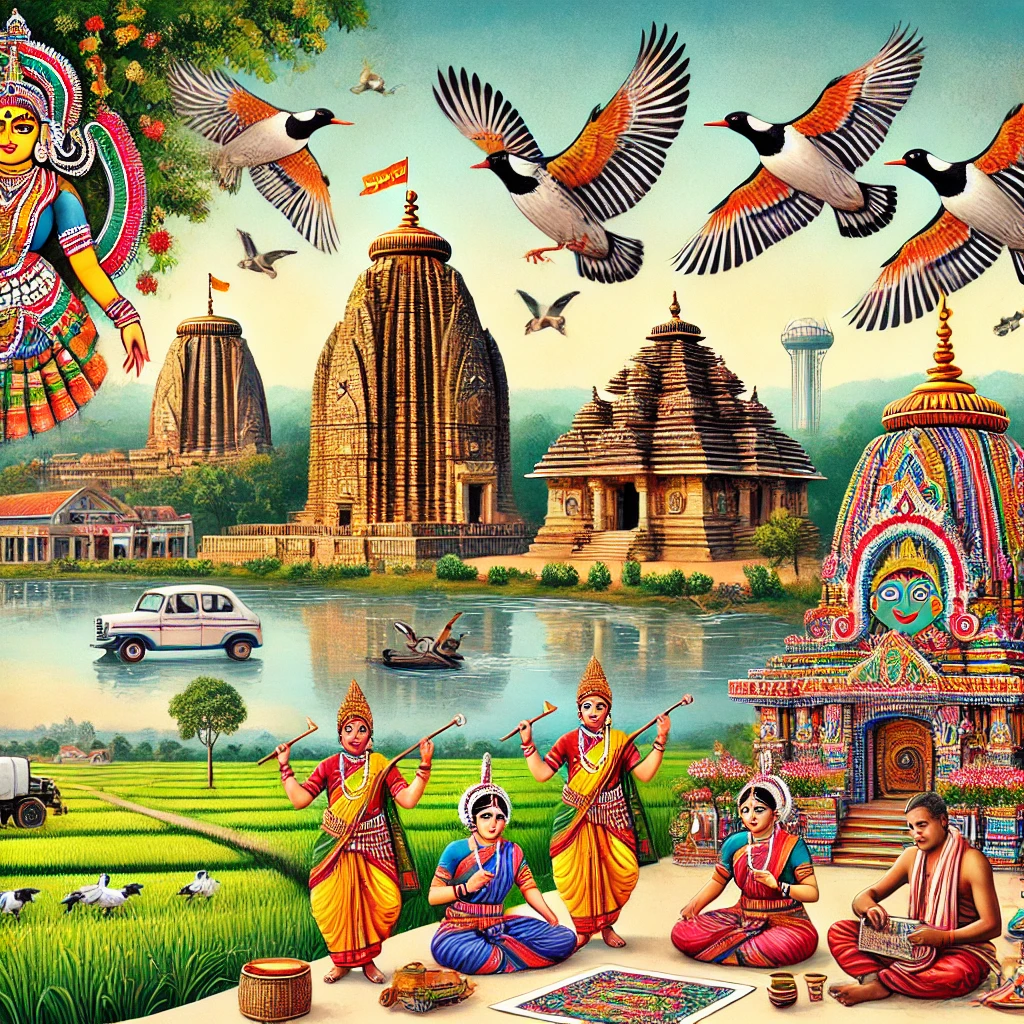
Introduction of Odisha: A Journey Through History, Culture and Heritage
While studying India’s diverse states, my exploration of Odisha felt like opening a living history book—one where geography, culture, and human resilience come together seamlessly. Odisha (official name: Odisha), formerly known as Orissa, is a major state of India, renowned for its cultural heritage, historical monuments, and natural beauty. Formed on 1 April 1936, it holds a unique distinction as the first Indian state created on a linguistic basis. This historic day is celebrated every year as Odisha Day or Utkal Day.
Geographical Location of Odisha
Odisha is located in the eastern part of India, a region where fertile plains, coastal ecosystems, and forested hills coexist.
Boundaries
- North: Jharkhand and West Bengal
- South: Andhra Pradesh
- West: Chhattisgarh
- East: Bay of Bengal
Area and Climate
The total area of Odisha is 1,55,707 sq km, making it the 8th largest state in India. The state experiences a tropical climate with three distinct seasons—summer, rainy season, and winter. This climatic rhythm deeply influences agriculture, festivals, and daily life.
Historical Background of Odisha
The history of Odisha has been glorious since ancient times. It was once a prominent part of the ancient Kalinga kingdom, whose legacy still shapes the state’s identity.
Major Historical Phases
- Kalinga War (261 BC): The famous war between Emperor Ashoka and Kalinga, which profoundly transformed Ashoka and inspired him to embrace Buddhism.
- Rule of Samudragupta: Odisha remained an important region during the Gupta Empire.
- Maurya, Shunga and Satavahana Dynasties: These dynasties also exercised control over the region at different times.
- Gajapati Dynasty: A golden period during which Odisha achieved remarkable political and cultural prosperity.
Culture and Traditions of Odisha
What impressed me most about Odisha is how tradition continues to live in everyday practices. The state is famous for its unique and vibrant culture.
Language
Odia is the official language of the state and is one of the 22 languages recognized by the Constitution of India.
Dance and Performing Arts
Odissi Dance, one of the eight classical dance forms of India, has brought global recognition to Odisha through its grace, expressions, and spiritual depth.
Festivals
- Rath Yatra (Puri)
- Durga Puja
- Makar Sankranti
- Kartik Purnima
Folk Art
Traditional art forms such as Pattachitra painting, Sambalpuri sarees, and intricate stone carvings reflect Odisha’s artistic excellence.
Major Tourist Attractions in Odisha
Odisha offers a balanced blend of spirituality, history, and nature, making it a significant tourist destination in India.
- Jagannath Temple, Puri: One of the four sacred Dhamas of Hinduism.
- Sun Temple, Konark: A UNESCO World Heritage Site.
- Chilika Lake: The largest saltwater lake in Asia.
- Simlipal National Park: A protected area under Project Tiger.
- Lingaraj Temple, Bhubaneswar: Dedicated to Lord Shiva.
Economy of Odisha
Odisha’s economy is shaped by its natural resources, agriculture, and industrial development.
Agriculture
Rice, sugarcane, and oilseeds are the major crops cultivated in the state.
Mineral Wealth
Odisha is rich in minerals such as iron ore, coal, bauxite, and chromite, which form the backbone of its industrial sector.

Featured Amazon Product
यह प्रोडक्ट बढ़िया quality, reliable performance और practical design के लिए जाना जाता है। डेली यूज़ और gifting दोनों के लिए एक अच्छा विकल्प है।
Buy on AmazonIndustry and Fisheries
The development of steel, aluminium, and energy-based industries is prominent. Additionally, fish farming thrives in Chilika Lake and along the coastal areas.
Major Cities of Odisha
- Bhubaneswar: The state capital, known as the “Temple City”.
- Puri: A major religious city.
- Cuttack: Famous for its commercial importance and historical fort.
- Rourkela: An important industrial center.
- Sambalpur: A cultural and industrial hub.
Population and Society
As per the 2021 census, the population of Odisha is approximately 4.6 crore.
Religion
Hinduism is the predominant religion, while Buddhism, Christianity, and Islam are also practiced by significant communities.
Tribal Communities
Odisha is home to 62 tribal communities, including Santhal, Gond, and Ho, who contribute richly to the state’s cultural diversity.
Special Facts About Odisha
- Odisha has the largest coaching depot of Indian Railways.
- Chilika Lake is a paradise for migratory birds.
- Artists of Odisha have earned international recognition for Odissi dance and Pattachitra art.
Because of its historical depth, cultural richness, and natural beauty, Odisha truly stands as a precious gem of India.
Frequently Asked Questions (FAQ)
What is Odisha famous for?
Odisha is famous for its ancient temples, Odissi dance, Pattachitra art, Chilika Lake, and rich historical legacy.
Why is Odisha Day celebrated?
Odisha Day, also known as Utkal Day, is celebrated on 1 April to mark the formation of Odisha as the first linguistic state of India.
Which language is spoken in Odisha?
Odia is the official and most widely spoken language of the state.
What are the main sources of income in Odisha?
Agriculture, mineral-based industries, steel and aluminium production, and fisheries are the major sources of income.
Related Articles
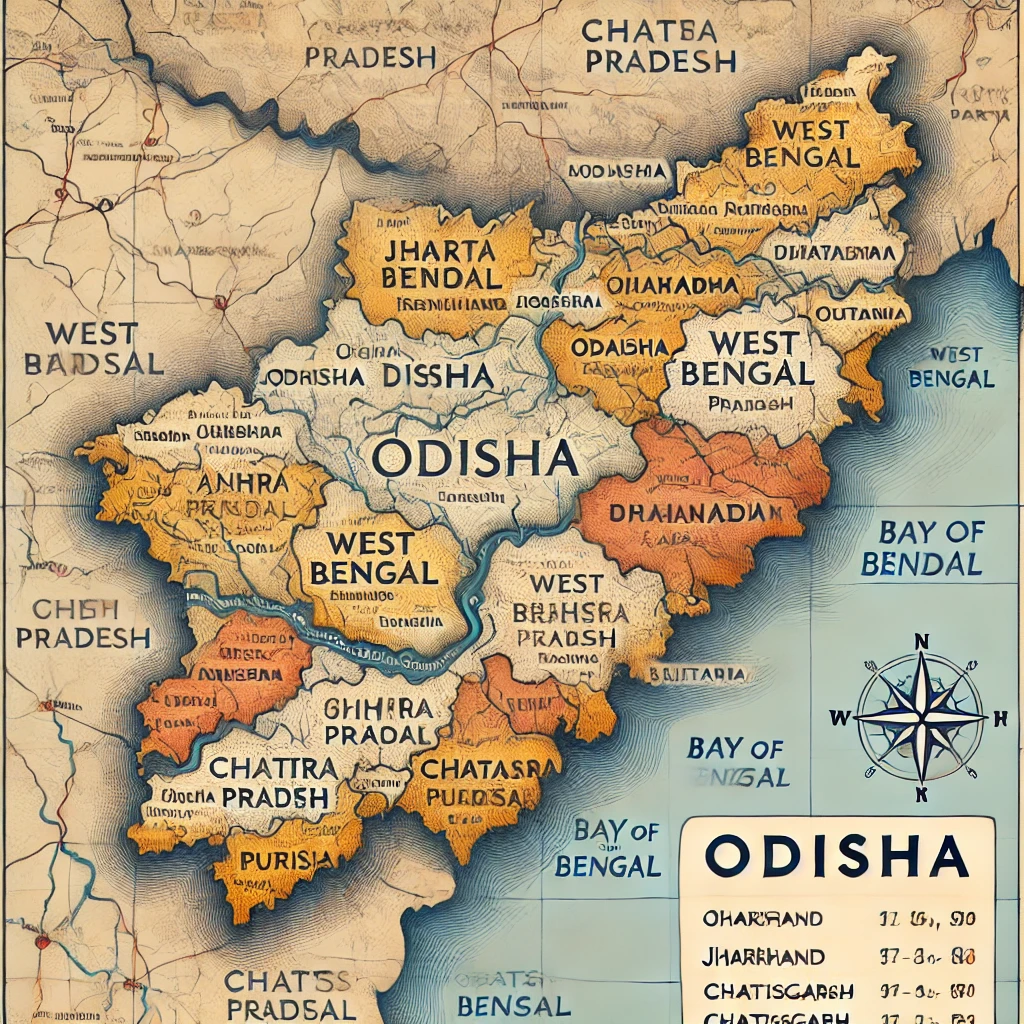
Geographical Location of Odisha
The geographical location of Odisha makes it a special and strategically important state in the eastern part of India. While studying its physical features, I realized how geography has shaped Odisha’s economy, culture, natural resources, and even its vulnerability to natural disasters. The geography of Odisha can be clearly understood through the following aspects.
Geographic Location and Boundaries
Odisha is located between 17.49° to 22.34° North latitude and 81.27° to 87.29° East longitude.
Boundaries
- North: Jharkhand and West Bengal
- West: Chhattisgarh
- South: Andhra Pradesh
- East: Bay of Bengal
Odisha has a long coastline of about 485 km, which gives it significant importance in maritime trade, fisheries, and coastal tourism.
Area and Size
The total area of Odisha is 1,55,707 square kilometres, making it the eighth largest state in India. Geographically, the shape of the state appears similar to a leaf or a shield, which is often mentioned in geographical descriptions.
Topography of Odisha
Odisha has a highly varied topography that includes mountains, plateaus, river valleys, and coastal plains. On the basis of physical features, the state can be divided into four major physiographic regions.
Northern Hilly Region
This region lies near the Jharkhand border. It consists of hills and plateaus, among which the Singhbhum Plateau and the Mayurbhanj Hills are prominent. The region is especially important due to its rich mineral resources.
Central Plateau Region
The Central Plateau spreads across districts such as Kandhamal, Bolangir, and Kalahandi. This region is dominated by red soil and frequently faces drought-related challenges.
Eastern Coastal Plains
Located along the Bay of Bengal, this is the most fertile region of the state. The soil here is mainly alluvial, which is ideal for agriculture. However, this region is also highly vulnerable to floods and cyclones.
South-Western Hills
This region covers areas such as Rairangpur, Kalahandi, and Koraput. Dense forests, rich wildlife, and mineral deposits characterize these hills. The area is well known for its natural beauty and biodiversity.
Rivers and Water Bodies
Odisha is drained by several major rivers and dotted with important lakes and reservoirs, which support agriculture, irrigation, and biodiversity.
Major Rivers
- Mahanadi: The longest river of Odisha; the famous Hirakud Dam is built on it.
- Brahmani: The second largest river of the state.
- Brahmani–Baitarani system: Important for irrigation and agriculture.
- Other Rivers: Baitarani, Subarnarekha, Indravati, and Chandrabhaga.
Lakes
- Chilika Lake: Asia’s largest saltwater lake and a major habitat for migratory birds.
- Other Lakes: Ansupa Lake and Kolab Reservoir.
Forests and Natural Resources
About 31% of Odisha’s total area is covered with forests. The major vegetation types include teak, sal, bamboo, and mahua. The state supports rich biodiversity, with wildlife such as tigers, elephants, and crocodiles.
Featured Amazon Product
यह प्रोडक्ट premium quality, modern design और reliable performance के लिए जाना जाता है। Daily use और gifting दोनों के लिए एक शानदार विकल्प है।
Buy on AmazonMineral Wealth
Odisha is one of the most mineral-rich states of India. Nearly 90% of India’s chromite, 70% of bauxite, and about 24% of coal reserves are found here. In addition, minerals like iron ore, manganese, and granite are also abundantly available.
Climate of Odisha
Odisha experiences a tropical climate with three distinct seasons.
- Summer (March to June): Average temperature ranges from 30°C to 45°C.
- Monsoon (July to September): Heavy rainfall with an average of 150–200 cm.
- Winter (October to February): Average temperature ranges between 12°C and 27°C.
Natural Disasters
Due to its coastal location and river systems, Odisha is highly vulnerable to natural disasters such as floods, cyclones, and droughts. The 1999 Super Cyclone and Cyclone Yaas (2021) remain among the most devastating events in the state’s history.
Key Geographical Features
- The long coastline makes Odisha a major centre for maritime trade and fisheries.
- Dense forests and hill regions enhance its environmental significance.
- The Mahanadi Delta and Chilika Lake contribute greatly to ecological diversity.
Overall, the geographical structure of Odisha makes it a unique centre of natural wealth, biodiversity, and mineral resources, playing a crucial role in the state’s development and identity.
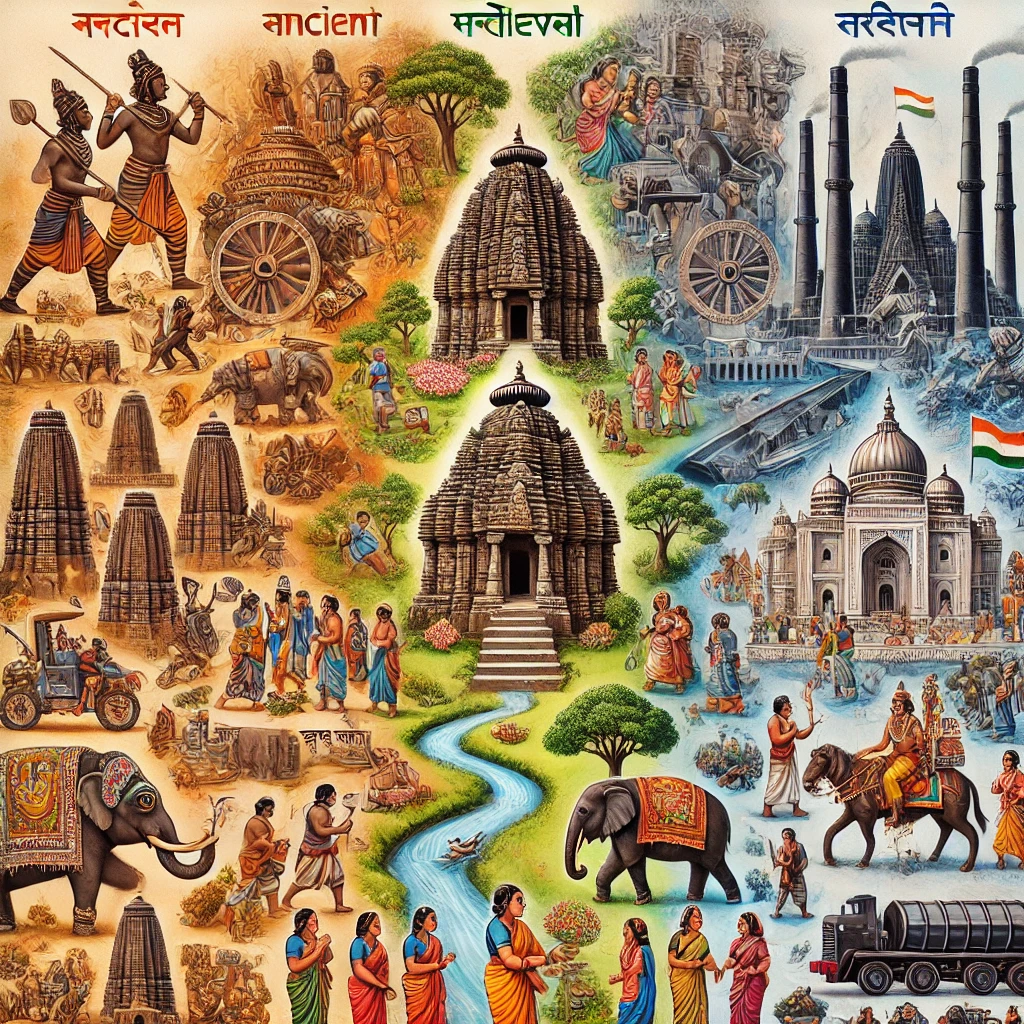
History of Orissa (Odisha)
The history of Orissa (Odisha) is traditionally divided into ancient, medieval, and modern periods. While studying this historical journey, I felt that Odisha’s past is not merely a sequence of rulers and wars, but a continuous story of cultural resilience, craftsmanship, and political transformation. Its monuments, inscriptions, and traditions still echo this long and remarkable heritage.
Ancient Period
In ancient times, Orissa was known as Kalinga. This name itself reflects the region’s historical importance and glorious legacy.
1. Vedic and Epic Period
- Orissa finds mention in ancient texts such as the Rigveda and the Mahabharata.
- The region was originally inhabited by tribal communities who later came into contact with Vedic civilization.
- According to the Mahabharata, the army of Kalinga participated in the Kurukshetra War.
2. Rise of the Kalinga Empire
- Around 600 BC, the Kalinga kingdom emerged as a powerful state in Orissa.
- Kalinga was famous for its maritime trade and strong naval power.
- It maintained trade relations with Southeast Asia, including Malaysia, Sumatra, and Java.
- The kingdom often remained in political and military competition with the Maurya Empire.
3. Kalinga War (261 BC)
The Kalinga War was fought between Emperor Ashoka and the Kalinga Empire. Although Ashoka emerged victorious, the massive destruction caused by the war—nearly one lakh deaths and the displacement of about 1.5 lakh people—deeply affected him.
This tragedy inspired Ashoka to embrace Buddhism and propagate the message of non-violence. The Kalinga War thus became a major turning point, not only in the history of Orissa but also in Indian history as a whole.
4. Maurya and Shunga Period
- Under the Maurya Empire, Kalinga became an important centre of Buddhism.
- Later, the Shunga and Kanva dynasties ruled the region.
5. Gupta Period
During the Gupta period, Orissa emerged as a major cultural centre. Temple construction, art, and literary activities flourished, leaving a lasting imprint on the region’s cultural identity.
6. Rule of Utkala and Kharavela (2nd Century BC)
Kharavela was one of the greatest rulers of ancient Orissa. He led military campaigns in both North and South India with a powerful army of elephants. His reign marked a period of prosperity in art, culture, and trade.
The Hathigumpha inscription stands as important evidence of Kharavela’s achievements and administrative vision.
Medieval Period
The medieval period of Orissa witnessed the rise and fall of several powerful dynasties, each contributing to its political stability and cultural growth.
1. Som Dynasty (8th–10th Century)
The Som dynasty established a stable administration in Orissa. One of the most significant achievements of this period was the construction of the Lingaraj Temple at Bhubaneswar.
2. Ganga Dynasty (11th–15th Century)
The Ganga dynasty is considered the most important dynasty in the history of Orissa.
- During the reign of Anang Bhima Dev, the famous Jagannath Temple at Puri was built.
- The territorial expansion of Orissa extended from Bengal to Andhra Pradesh.
- Maritime trade reached its peak during this period.
3. Surya Dynasty (15th–16th Century)
The Surya dynasty played a major role in promoting artistic and cultural development. The iconic Sun Temple of Konark is the most celebrated monument of this era.
After the decline of the Surya dynasty, Orissa gradually began to weaken politically.
4. Muslim Invasions
- In the 16th century, rulers of Bengal launched repeated attacks on Orissa.
- In 1568, Sultan Qutb Shah of Bengal conquered Orissa, establishing Muslim rule in the region.
Modern Period
The modern history of Orissa was shaped by Maratha administration, British colonial rule, and the Indian freedom struggle.
1. Maratha Rule
In 1751, the Marathas took control of Orissa from the Nawabs of Bengal. They encouraged temple administration and supported cultural activities.
Amazon Quality Product
यह प्रोडक्ट शानदार क्वालिटी, टिकाऊ डिज़ाइन और भरोसेमंद प्रदर्शन के लिए जाना जाता है। डेली यूज़ और गिफ्टिंग दोनों के लिए एक शानदार विकल्प है।
Buy on Amazon2. British Rule
Orissa came under British control in 1803. This period proved economically devastating for the region.
The Great Famine of 1866 was a tragic consequence of British administrative negligence. Despite hardships, many leaders from Orissa actively participated in the Indian freedom struggle.
3. Formation on a Linguistic Basis
On 1 April 1936, Orissa was recognized as a separate province. It became the first state in India to be formed on a linguistic basis, marking a milestone in India’s administrative history.
Significant Events and Heritage
- Jagannath Temple, Puri: A major religious and cultural symbol.
- Sun Temple, Konark: An outstanding example of Indian art and architecture.
- Hirakud Dam: A landmark achievement of modern India.
- Freedom Movement: Leaders like Gopabandhu Das, Madhab Das, and Harekrushna Mahtab played key roles.
Cultural and Historical Significance
The coexistence of Hindu, Buddhist, and Jain traditions has deeply influenced the cultural and artistic development of Orissa. Its temples, monuments, and inscriptions bear living testimony to a glorious past.
Overall, the history of Orissa reflects an extraordinary cultural and political journey. This enduring legacy makes Odisha one of the most historically significant states of India.
Culture and Tradition of Orissa (Odisha)
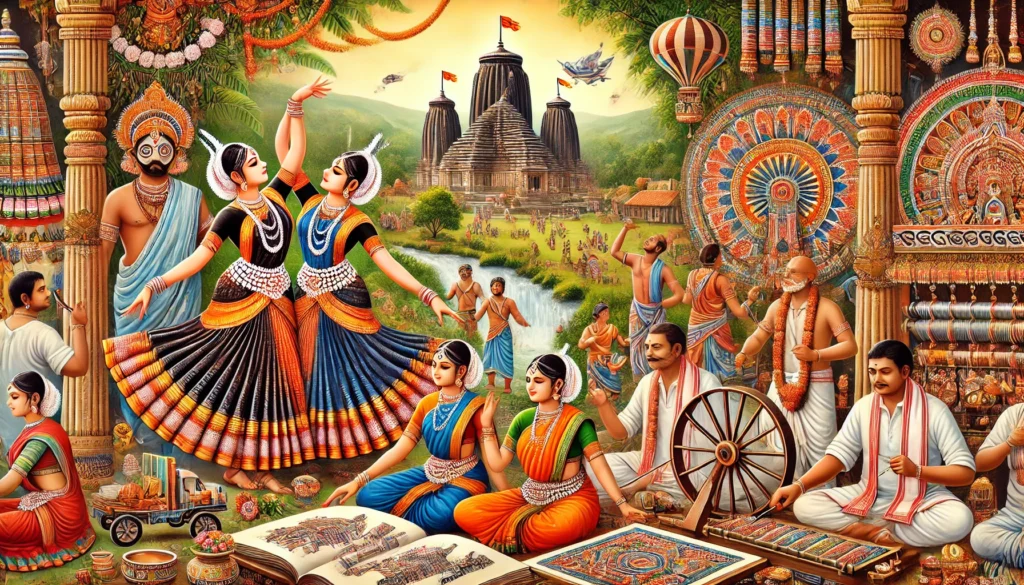
Orissa (Odisha) is an integral part of India’s rich and multifaceted cultural heritage. While exploring its traditions, I realized that Odisha’s culture is not limited to monuments or rituals alone—it lives through its language, folk traditions, crafts, music, festivals, and deeply rooted religious beliefs. Together, these elements create a vibrant and enduring cultural identity.
Language and Literature
Language
- Odia is the principal language of Odisha and is recognized as a classical language under the Eighth Schedule of the Constitution of India.
- The history of the Odia language dates back to the 10th century, giving it an important place in ancient Indian linguistic traditions.
- Other languages such as Hindi, Sanskrit, and tribal languages like Santhali, Ho, and Mundari are also spoken.
Literature
Odia literature began with ancient religious and mythological narratives. Poets like Sarala Das, who translated the Mahabharata into Odia, and Upendra Bhanja, known for his poetic excellence, are legendary figures. In modern times, Fakir Mohan Senapati is regarded as the “Father of Odia Prose”.
Religious Traditions and Beliefs
Odisha has long been a center of multiple religious traditions, including Hinduism, Buddhism, and Jainism, along with rich tribal belief systems.
Jagannath Culture
The Jagannath Temple of Puri and the world-famous Rath Yatra define the religious identity of Odisha. Lord Jagannath is considered an incarnation of Lord Vishnu, and the temple is one of the sacred Char Dhams of Hinduism.
Buddhism
In ancient times, Odisha was an important center of Buddhism. Sites such as Ratnagiri, Udayagiri, and Lalitgiri are renowned Buddhist centers and attract scholars and pilgrims alike.
Jainism
King Kharavela of Kalinga was a follower of Jainism. Several mountain caves in Odisha contain statues and inscriptions of Jain Tirthankaras, reflecting the influence of Jain philosophy.
Tribal Religions
The tribal communities of Odisha practice nature worship. Beliefs centered on Mother Earth and Forest Deities play a vital role in their rituals and daily life.
Dance and Music
Odissi Dance
Odissi is one of the eight classical dance forms of India. It originated in temples as a form of devotion and worship. Artists such as Guru Kelucharan Mohapatra and Sanjukta Panigrahi brought Odissi global recognition.
Folk Dances
- Gotipua: An early form of Odissi, performed by male dancers dressed as women.
- Chhau Dance: A tribal and martial dance form.
- Dhalkhai, Jhumar, and Sambalpuri: Popular dances in tribal and rural regions.
Music
Odissi music is an important part of Indian classical music, based on ragas, talas, and devotional compositions. Folk songs like Kandha Geet, Rangbati, and Dhalkhai Geet are widely loved.
Arts and Crafts
Pattachitra
Pattachitra is the traditional art of painting on cloth or palm leaves. These paintings often depict Lord Jagannath and scenes from the Ramayana and Mahabharata.
Sambalpuri Saree
The Sambalpuri saree is a famous handloom product of Odisha, known for its intricate designs and Bandhej weaving technique.
Stone and Metal Crafts
The stone carvings of the Sun Temple at Konark and temples of Bhubaneswar are masterpieces of craftsmanship. The traditional metal craft known as Dhokra showcases Odisha’s ancient metallurgical skills.
Wood and Cane Crafts
Wooden statues and cane furniture are produced in various regions, reflecting both artistic creativity and functional design.
Food and Drink
The traditional cuisine of Odisha is simple, nutritious, and flavorful.
Main Dishes
- Rice and Dalma (a mix of lentils and vegetables)
- Vegetables prepared with mild and balanced spices
- Seafood such as fish and prawns
Sweets
- Rasgulla: Believed to have originated in Odisha
- Chhena Poda: A baked dessert made from cottage cheese
- Kheer: Prepared with milk, rice, and jaggery
Pakshaal (Temple Offering)
The 56 varieties of dishes offered at the Jagannath Temple in Puri are world-famous and hold deep religious significance.
Festivals and Celebrations
Festivals in Odisha reflect its cultural vibrancy and spiritual depth.
Rath Yatra
The grand annual chariot festival of Lord Jagannath, Balabhadra, and Subhadra attracts lakhs of devotees from across the world.
Durga Puja
Durga Puja is celebrated with great enthusiasm, similar to West Bengal, with elaborate rituals and decorations.
Makar Sankranti
Celebrated as Makar Mela, this festival includes traditions like kite flying and special food preparations.
Kartik Purnima
Associated with Odisha’s maritime heritage, people float small lamps in rivers like the Chandrabhaga to honor ancient sailors.
Chaitra Festival
Celebrated mainly by tribal communities, this festival is closely connected to nature and agriculture.

Premium Amazon Product
यह प्रोडक्ट high-quality material, modern design और excellent performance के लिए जाना जाता है। रोज़मर्रा के उपयोग और गिफ्टिंग दोनों के लिए एक शानदार विकल्प है।
Buy on AmazonFolk Traditions and Social Customs
Traditional Marriage
Odisha’s wedding ceremonies are generally simple and traditional, following local customs and rituals.
Tribal Traditions
Tribal communities are known for their distinctive culture, attire, jewelry, music, and rituals, which form an inseparable part of Odisha’s cultural fabric.
Group Rituals
Collective worship and community-based religious practices hold special significance in social life.
Architecture and Monuments
- Sun Temple, Konark: A UNESCO World Heritage Site built in the form of the chariot of the Sun God.
- Jagannath Temple, Puri: A major religious and cultural center.
- Lingaraj Temple: Located in Bhubaneswar and dedicated to Lord Shiva.
- Raja Rani Temple: Famous for its exquisite stone carvings.
Summary
The culture and tradition of Odisha are beautifully reflected in its art, music, dance, festivals, and religious beliefs. Through its cultural diversity, tribal lifestyle, and timeless traditions, Odisha makes a unique and invaluable contribution to the cultural heritage of India.
Major Tourist Spots in Odisha
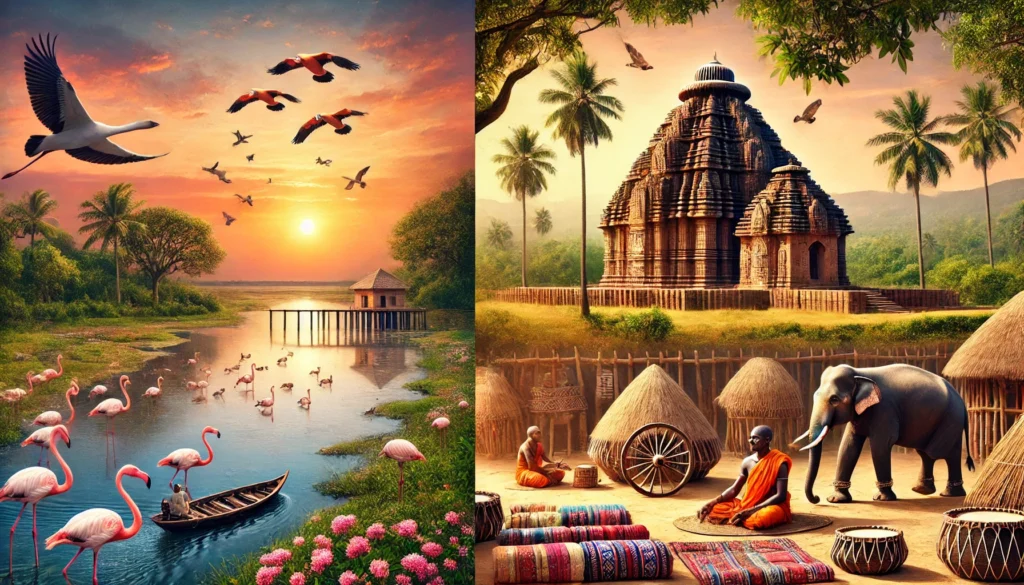
Odisha (Orissa) is renowned for its natural beauty, historical heritage, religious importance, and cultural diversity. While exploring the state, one realizes that its beaches, temples, wildlife sanctuaries, lakes, and ancient monuments together create some of the most attractive tourist destinations in India. Each place reflects a unique blend of spirituality, history, and nature.
1. Puri
Puri is the most famous pilgrimage site and one of the major tourist centers of Odisha.
Major Attractions
- Jagannath Temple: Dedicated to Lord Jagannath, Balabhadra, and Subhadra. It is one of the sacred Char Dham pilgrimage sites. The annual Rath Yatra is world-famous.
- Puri Beach: A calm and beautiful beach known for its mesmerizing sunrise and sunset views.
- Gundicha Temple: The temporary residence of Lord Jagannath during the Rath Yatra.
2. Konark
Konark is internationally famous for its architectural brilliance and craftsmanship.
Major Attractions
- Sun Temple, Konark: A UNESCO World Heritage Site built in the form of the Sun God’s chariot with 12 pairs of wheels and seven horses. Its sculptures and carvings are truly unique.
- Chandrabhaga Beach: Located near the Sun Temple, known for its cleanliness and scenic beauty.
3. Bhubaneswar
Bhubaneswar, the capital of Odisha, is famously known as the “City of Temples”.
Major Attractions
- Lingaraj Temple: The largest and oldest temple in Bhubaneswar, dedicated to Lord Shiva.
- Raja Rani Temple: Famous for its exquisite architecture and sculptures.
- Udayagiri and Khandagiri Caves: Ancient Jain caves dating back to the reign of King Kharavela.
- Nandankanan Zoological Park: Known for white tigers and rare wildlife species.
4. Chilika Lake
Chilika Lake is the largest saltwater lake in India and one of the largest lagoon lakes in Asia.
- Nalabana Island: A paradise for migratory birds.
- Kalijai Temple: Located in the middle of the lake and significant both religiously and tourist-wise.
5. Ratnagiri, Lalitgiri and Udayagiri (Buddhist Sites)
These places were important ancient Buddhist centers of Odisha and are collectively known as the “Diamond Triangle of Odisha”.
- Ancient Buddhist stupas, viharas, and statues can be seen here.
- They reflect the rich Buddhist heritage of the region.
6. Simlipal National Park
Simlipal National Park is famous for its rich biodiversity, including tigers, elephants, and dense forests. It has been declared a UNESCO Biosphere Reserve.
7. Gahirmatha Marine Sanctuary
This sanctuary is known as the world’s largest breeding ground of Olive Ridley turtles. Large numbers of tourists visit to witness the unique sea turtle migration.
8. Hirakud Dam
Built on the Mahanadi River, Hirakud Dam is the longest earthen dam in the world. Its vast reservoir and surrounding scenery attract many visitors.
9. Chandipur Beach
Chandipur Beach is famous for its rare natural phenomenon where the sea retreats several kilometers and returns again. Due to this unique feature, it is popularly known as the “Vanishing Sea”.
10. Dharasuri Waterfalls (Barhipani and Joranda)
Located near Simlipal National Park, the Barhipani and Joranda waterfalls are among the most beautiful waterfalls in Odisha and a fine example of natural splendor.
11. Sambalpur
Sambalpur is situated in western Odisha and is known for its folk culture and handicrafts.
Major Attractions
- Hirakud Dam
- Samaleswari Temple: Dedicated to Goddess Samaleswari.
- Sambalpuri Sarees: World-famous handwoven textiles.
12. Cuttack
Cuttack is considered the commercial and cultural center of Odisha.
Major Attractions
- Barabati Fort: Dating back to the Ganga dynasty.
- Silver Filigree and Dhokra Craft: A specialty of Cuttack.
- Baliyatra Festival: Celebrated to commemorate ancient maritime trade.

Top Rated Amazon Product
यह प्रोडक्ट premium quality, modern design और reliable performance के लिए जाना जाता है। Daily use और gifting दोनों के लिए एक शानदार विकल्प है।
Buy on Amazon13. Taratarini Temple
Taratarini Temple is an important Shakti Peeth dedicated to Goddess Taratarini and holds great religious and historical significance.
14. Gupteshwar Caves
Located in the Koraput district, these natural caves are dedicated to Lord Shiva and are popular among pilgrims and tourists.
15. Rourkela
Rourkela is an important industrial city of Odisha. One of its main attractions is Hanuman Vatika, where a huge statue of Lord Hanuman is located.
Summary
Odisha is a remarkable destination for tourists because of its sacred religious sites, breathtaking natural beauty, and rich historical heritage. Each place offers something unique, attracting visitors from across India and around the world.
Economy of Orissa (Odisha)
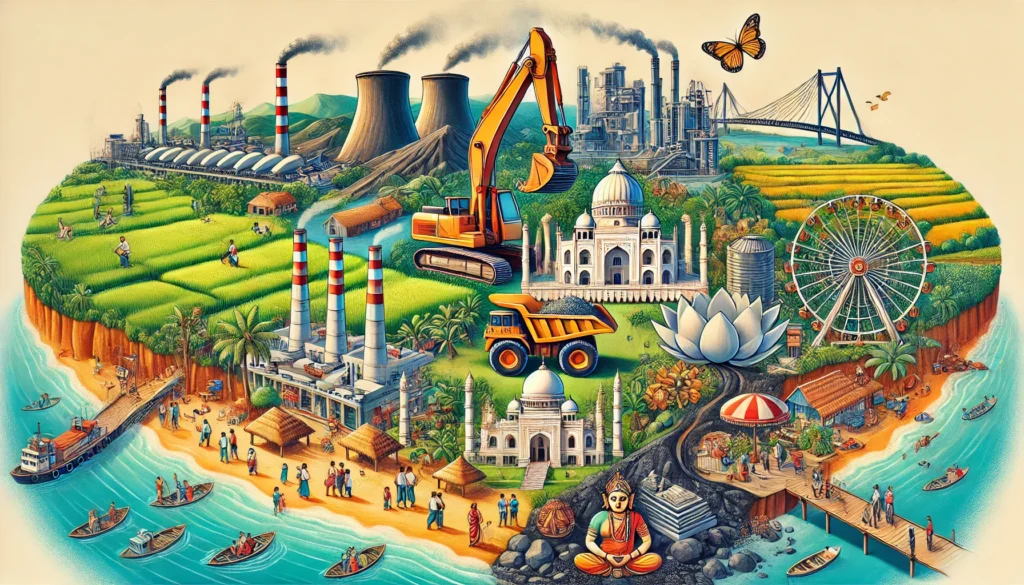
Orissa (Odisha) is one of the economically significant states of India, presenting a balanced combination of agriculture, mineral resources, industry, and the service sector. While studying Odisha’s economy, it becomes clear that the state’s natural resources, rich mineral reserves, long coastline, ports, and growing tourism sector together strengthen its economic foundation.
The economic structure of Odisha can be understood through the following major sectors:
1. Primary Sector: Agriculture and Fisheries
Agriculture plays a vital role in Odisha’s economy and remains the main source of livelihood for a large section of the population.
Agriculture
Main Crops
- Paddy (rice) is the principal crop and the staple food grain of the state.
- Other important crops include sugarcane, pulses, oilseeds (mustard and groundnut), jute, maize, and wheat.
Horticulture
- Major horticultural products include mango, banana, coconut, cashew, and turmeric.
Irrigation
- Large irrigation projects such as the Hirakud Dam and the Mahanadi Delta system significantly enhance agricultural productivity.
Agricultural Reforms
- Farmers receive financial and technical support through schemes like Krushi Sahayata Yojana and Biju Kisan Kalyan Yojana.
Fisheries
Odisha’s long coastline and inland water bodies, especially Chilika Lake, play an important role in fisheries.
- Marine products such as shrimp, crabs, and fish make a significant contribution to the state economy.
2. Secondary Sector: Industry and Mining
Industry and mining form a strong pillar of Odisha’s economy, largely driven by its rich mineral resources.
Mineral Resources
Odisha contributes a substantial share of India’s mineral production.
- Major minerals: Iron ore, bauxite, chromite, coal, limestone, and manganese.
- Odisha is one of the largest producers of iron ore and bauxite in India.
- Mineral-based industries such as steel and aluminium manufacturing play a crucial economic role.
Industrial Development
Steel Industry
- Rourkela Steel Plant (SAIL) is a major public sector unit.
- Private companies like Tata Steel, Jindal Steel, and Essar Steel have also made large investments.
Aluminium Industry
- NALCO is a leading aluminium producer in Odisha.
Petrochemical and Fertilizer Industry
- The Paradip Refinery, located near Paradip Port, is a key component of the state’s petrochemical sector.
Handloom and Handicrafts
- Traditional industries such as Sambalpuri sarees, Pattachitra paintings, and Dhokra metal crafts represent Odisha’s cultural and economic identity.
3. Tertiary Sector: Service Sector and Tourism
The service sector is one of the fastest-growing segments of Odisha’s economy.
Service Sector
Banking and Finance
- Branches of several public and private banks serve both rural and urban populations.
IT and IT-enabled Services
- Bhubaneswar is emerging as an IT hub.
- Companies such as Infosys, Tech Mahindra, and TCS operate in the state.
Education and Health
- Premier institutions like IIT Bhubaneswar, NISER, and KIIT contribute to higher education.
- Healthcare services are improving through both government and private hospitals.
Tourism
Tourism is a rapidly expanding sector in Odisha.
- Religious tourism: Jagannath Temple (Puri), Sun Temple (Konark), and Lingaraj Temple (Bhubaneswar).
- Nature tourism: Chilika Lake, Simlipal National Park, and Gahirmatha Marine Sanctuary.
- Cultural tourism: Promotion of Odissi dance, handicrafts, and traditional festivals.
4. Infrastructure Development
Strong infrastructure in transportation, energy, and ports supports Odisha’s economic growth.
Transportation
- Roadways: An extensive network of national and state highways.
- Railways: Efficient rail connectivity linking mineral and industrial regions with the rest of India.
- Ports: Paradip and Dhamra ports are among the major ports of India.
- Airports: Biju Patnaik International Airport in Bhubaneswar is the main airport.
Energy
Odisha is a leading state in hydroelectric power generation. Thermal power plants and renewable energy sources are also being increasingly utilized.
5. Advantages and Challenges of a Resource-Based Economy
Advantages
- Abundant mineral resources attract large-scale industrial investment.
- Mineral-based industries generate significant employment and state revenue.
Challenges
- Environmental degradation and deforestation due to mining.
- Displacement and social inequality in tribal areas.
- Industrial pollution and water scarcity.

Featured Amazon Product
यह प्रोडक्ट high-quality build, stylish design और reliable performance के लिए जाना जाता है। Daily use और gifting दोनों के लिए एक शानदार विकल्प है।
Buy on Amazon6. State Government Initiatives
The Odisha government has launched several initiatives to accelerate economic development.
- Make in Odisha Initiative: Promotes industrial investment and manufacturing.
- Skill Development Programs: Provide skill-based training to youth.
- Women Empowerment: Support for women entrepreneurs and self-help groups.
- Co-operative Societies: Expansion in agriculture, dairy, and handicrafts.
Summary
The economy of Odisha represents a balanced blend of agriculture, mineral-based industries, services, and tourism. Due to its natural wealth, cultural heritage, and improving infrastructure, the state is increasingly attracting national and international investors. At the same time, environmental and social challenges highlight the need for a strong focus on sustainable and inclusive development.
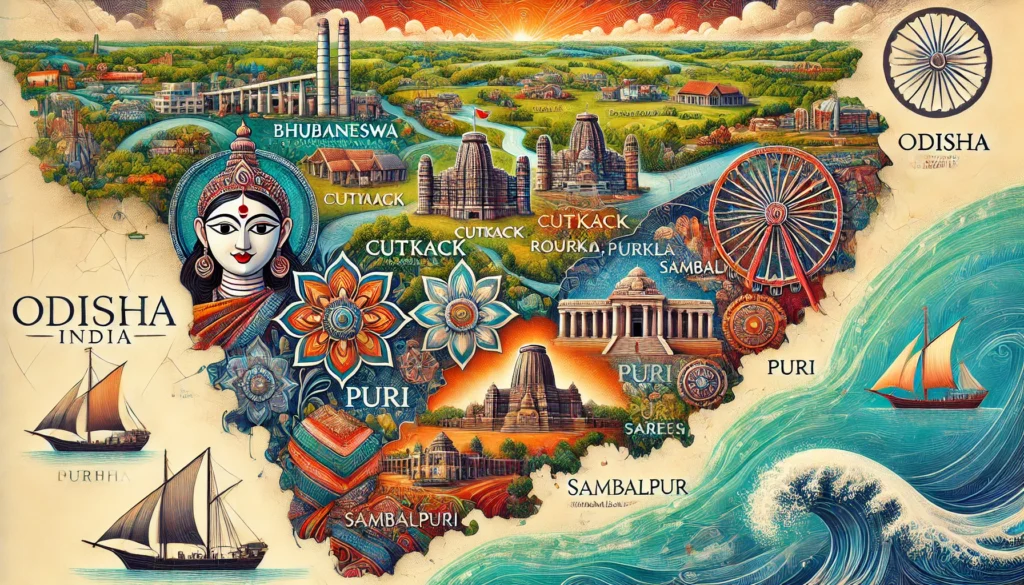
Major Cities in Orissa (Odisha)
Orissa (Odisha) has several major cities that serve as the economic, cultural, industrial, educational, and administrative centers of the state. While studying these cities, it becomes clear that each one has developed its own unique identity based on history, geography, industry, and culture. Together, they play a vital role in the overall development of Odisha.
1. Bhubaneswar
Bhubaneswar is the capital of Odisha and is famously known as the “City of Temples”.
Key Features
- Religious Centers: Lingaraj Temple, Mukteshwar Temple, and Raja Rani Temple.
- Education and Research: Prestigious institutions such as IIT Bhubaneswar, NISER, and KIIT.
- IT and Industrial Hub: Presence of companies like Infosys, TCS, and Wipro.
- Culture and Tourism: Udayagiri and Khandagiri Caves, Nandankanan Zoological Park.
- Modern Facilities: Selected as one of India’s top cities under the Smart Cities Mission.
2. Cuttack
Cuttack is the oldest city of Odisha and is regarded as the commercial capital of the state.
Key Features
- Historical Importance: Barabati Fort and the famous Cuttack Chaitra Festival.
- Handicrafts and Industries: Renowned silver filigree work and Dhokra metal craft.
- Educational Hub: Ravenshaw University, one of the premier institutions of Odisha.
- Healthcare: SCB Medical College and Hospital.
- Festivals: Baliyatra Festival, symbolizing ancient maritime trade traditions.
3. Puri
Puri is the main religious and tourist destination of Odisha and is known as the “City of Lord Jagannath”.
Key Features
- Religious Importance: Jagannath Temple, one of the four sacred Char Dham sites.
- Rath Yatra: The world-famous annual chariot festival.
- Tourism: Puri Beach, a major attraction for pilgrims and tourists.
- Cultural Significance: A major center for Odissi dance and classical music.
4. Rourkela
Rourkela is the principal industrial city of Odisha and is widely known as the “Steel City”.
Key Features
- Industrial Importance: Rourkela Steel Plant (SAIL), one of India’s largest steel plants.
- Education: NIT Rourkela, among the top engineering institutions in India.
- Tourism: Hanuman Vatika, featuring a massive statue of Lord Hanuman.
- Modern Infrastructure: Well-developed roads and industrial-scale urban facilities.
5. Sambalpur
Sambalpur is the major city of western Odisha, famous for its cultural heritage and handicrafts.
Key Features
- Religious Importance: Samaleswari Temple, dedicated to the regional deity.
- Handicrafts: World-famous Sambalpuri sarees.
- Tourism: Hirakud Dam, the longest earthen dam in the world.
- Cultural Contribution: Rich folk art, music, and dance traditions.
6. Balasore
Balasore is a historical and industrial city, often called the “Gateway to the Sea Coast”.
Key Features
- History and Culture: Known for its past maritime trade links.
- Strategic Importance: DRDO’s missile testing range, where many Indian missiles are tested.
- Tourism: Chandipur Beach, famous for the unique “Vanishing Sea” phenomenon.
7. Brahmapur (Berhampur)
Brahmapur is popularly known as the “Silk City of Odisha”.
Key Features
- Silk Industry: Famous for silk weaving and Brahmapuri sarees.
- Religious Importance: Taratarini Temple, one of the important Shakti Peethas.
- Education and Business: A major commercial and educational center of southern Odisha.
8. Jharsuguda
Jharsuguda is known as the “Power Hub of Odisha”.
Key Features
- Energy Production: Several thermal power plants are located here.
- Mineral-Based Industries: Coal mining and aluminium production.
- Tourism: Historical sites such as Vikramkila and Hiramunda.
9. Paradip
Paradip is the major port city of Odisha.
Premium Amazon Product
यह प्रोडक्ट excellent quality, sleek design और reliable performance के लिए जाना जाता है। Daily use और gifting दोनों के लिए एक शानदार विकल्प है।
Buy on AmazonKey Features
- Port: Paradip Port, one of the largest ports in India.
- Petrochemical Industry: Paradip Refinery of Indian Oil Corporation.
- Tourism: Scenic beaches and nearby natural attractions.
10. Angul
Angul is an important industrial and energy production hub of Odisha.
Key Features
- Energy Sector: Major units of NTPC and Jindal Steel.
- Tourism: Satikoda Lake and the ancient fort of Talcher.
Summary
The major cities of Odisha contribute significantly to the economic, cultural, industrial, and educational growth of the state. Cities such as Bhubaneswar, Cuttack, Puri, and Rourkela hold importance not only within Odisha but also at the national level due to their unique identities and diverse contributions.
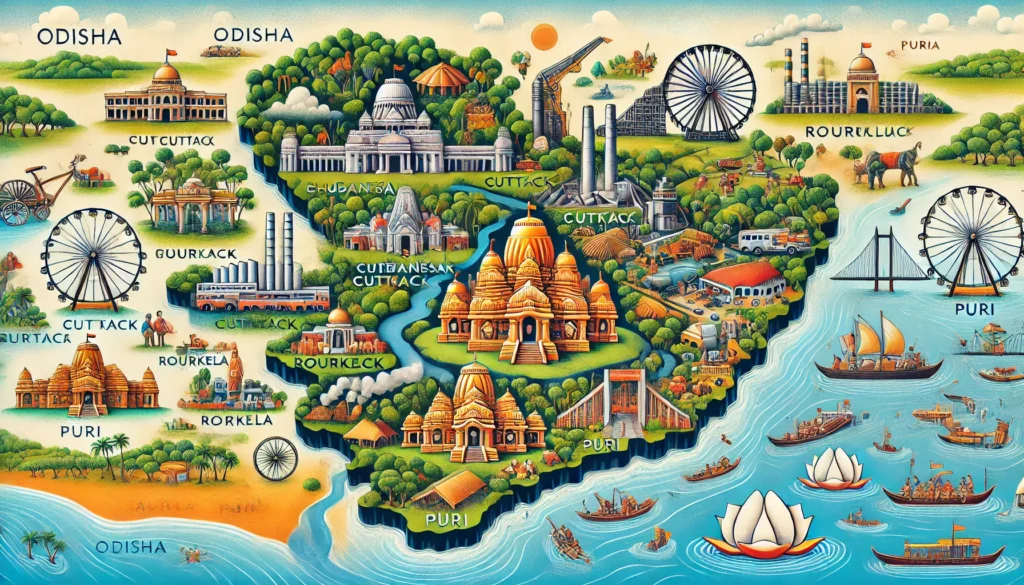
References
- Government of Odisha. Official Website of Odisha. Information on history, culture, economy, population, and administration of the state.
- Census of India 2011. Odisha Census Data. Office of the Registrar General & Census Commissioner, India.
- Ministry of Tourism, Government of India. Odisha Tourism. Details on major tourist destinations, heritage sites, and cultural festivals.
- NCERT. India: Physical Environment, History and Society. Geography and historical references related to Odisha.
- UNESCO World Heritage Centre. Sun Temple, Konark. Architectural and cultural significance of the Konark Sun Temple.
- Ministry of Culture, Government of India. Odissi Dance and Cultural Heritage of Odisha.
- Odisha Economic Survey. State Economy and Development Report. Government publications on agriculture, industry, and infrastructure.
- Archaeological Survey of India (ASI). Monuments and Heritage Sites of Odisha.
Featured Amazon Product
यह प्रोडक्ट बढ़िया quality, practical design और reliable performance के लिए जाना जाता है। रोज़मर्रा के उपयोग और gifting दोनों के लिए यह एक अच्छा विकल्प है।
Buy on Amazon