
Introduction to Hezbollah
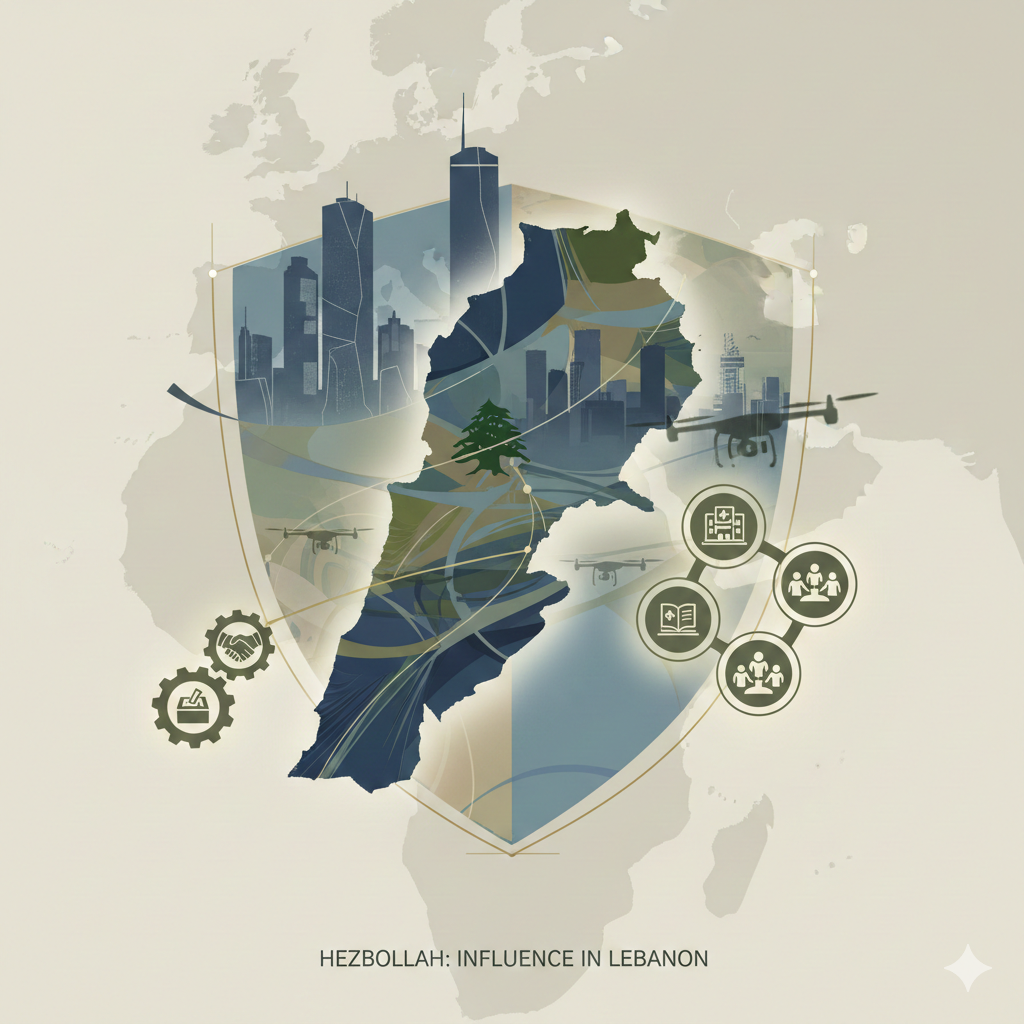
Hezbollah is a Shia Islamic organization and political party headquartered in Lebanon. Founded in the early 1980s with strong support from Iran, it emerged during a period of deep conflict. Its formation was closely linked to the resistance movement that arose in response to Israeli and Western influence in the region. Over time, Hezbollah has evolved into a major force that shapes Lebanon’s political, military, and socio-economic landscape.
Founding and Objectives of Hezbollah
Establishment
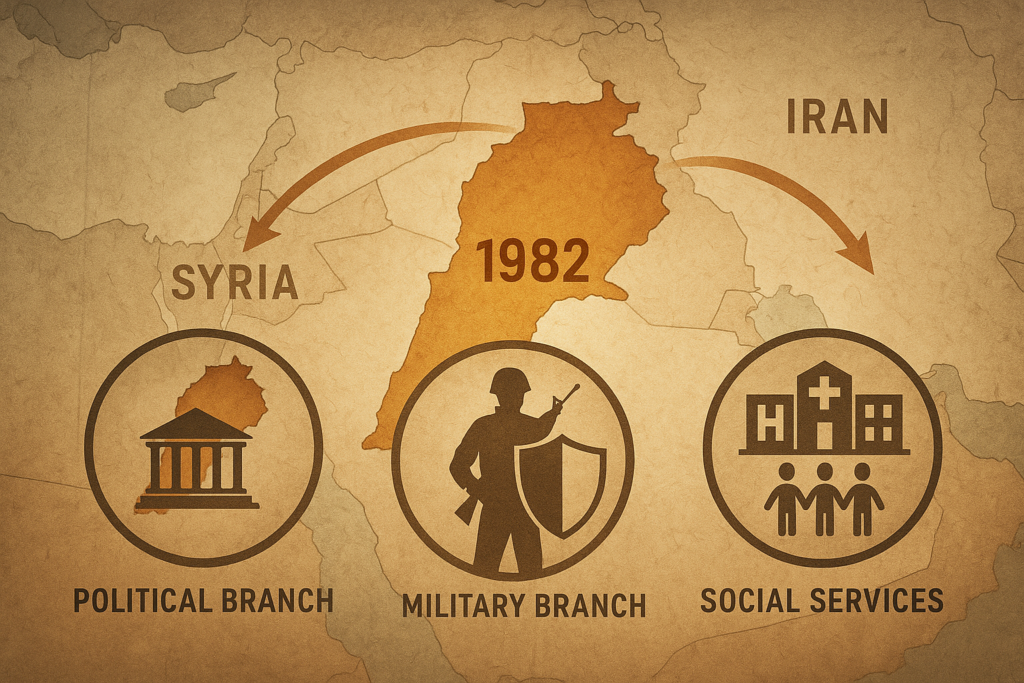
The story of Hezbollah began in 1982, when Israel invaded Lebanon. This event created a wave of resistance among Lebanese Shia communities, who felt the urgent need for a strong defence force. Under the ideological and military influence of Iran’s Islamic Revolution, Hezbollah took shape with training and logistical support from Iran’s Islamic Revolutionary Guard Corps (IRGC). From the very beginning, the organization positioned itself as a defender of Lebanese sovereignty and Shia identity.
Main Objectives
1. Resistance Against Israel
Hezbollah sees itself as an anti-Israel resistance movement. Over decades, it has been engaged in various confrontations with Israel, presenting itself as a protector against foreign military aggression.
2. Defence of the Shia Community
The organization represents the Shia Muslim community in Lebanon and aims to safeguard their rights, cultural identity, and political participation. This support has helped Hezbollah build a strong grassroots base.
3. Establishment of an Iran-Inspired Islamic Ideology
Another long-term ideological goal of the organization is the formation of a governance system inspired by Iran’s Islamic model. Although Lebanon’s diverse society makes this complex, the influence of this ideology remains central to Hezbollah’s identity.
Amazon Best Value Product
Reliable quality • Customer trusted • Great value for money
- ✔ Genuine & Verified Item
- ✔ Safe Packaging
- ✔ Easy Return Policy
Structure and Power of Hezbollah
1. Political Branch
Hezbollah is not only a militia but also an influential political actor. It actively participates in Lebanese elections, holds seats in parliament, and collaborates with other political groups to shape government decisions. Its political presence gives it legitimacy and broad influence over national policies.
2. Military Branch
The military wing of Hezbollah is considered one of the most powerful non-state armed forces in the world. It possesses advanced weapons, missiles, and a sophisticated command structure—much of which has been supported by Iran and Syria. Hezbollah’s military capabilities received global attention during the 2006 Israel–Lebanon War.
3. Social and Economic Programs
Beyond politics and military operations, Hezbollah has built a wide network of social welfare programs. The organization runs hospitals, schools, charitable institutions, and community services across its areas of influence. These programs strengthen its credibility and help it maintain loyal public support.
Hezbollah and the Global Perspective
Hezbollah’s position in international politics is deeply polarizing. The United States, the European Union, and several other countries classify it as a terrorist organization due to its military activities and alleged involvement in regional conflicts. Conversely, nations like Iran and Syria consider it a legitimate resistance movement and openly support it.
Its influence extends beyond Lebanon, with activities observed in Syria, Israel, and various other parts of the Middle East. This makes Hezbollah a significant player in the region’s geopolitical landscape.
Conclusion
Hezbollah is a multifaceted organization whose role goes far beyond the battlefield. It functions as a political party, a military force, and a social welfare provider—making it one of the most complex and influential groups in the Middle East. Its presence continues to shape Lebanon’s internal politics, regional conflicts, and global diplomatic discussions. Understanding Hezbollah requires examining its history, motivations, and the environment in which it continues to operate—an environment shaped by conflict, ideology, and the aspirations of the communities it represents.
Founding and Objectives of Hezbollah
Establishment
Year: Hezbollah was founded in 1982.
Background
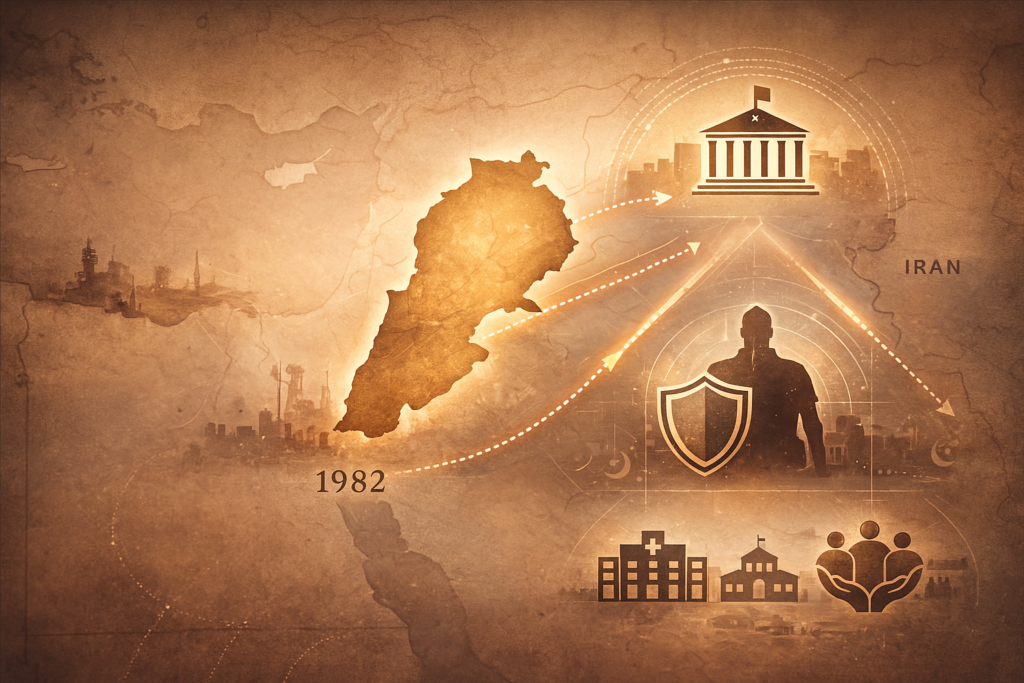
In 1982, Israel invaded Lebanon and occupied southern Lebanon. These events created an atmosphere of resistance among the local Shia population. In response, Iran supported various Shia militia groups and helped unite them under one banner, leading to the formation of Hezbollah (meaning: “Party of Allah”). Iran’s Islamic Revolutionary Guard Corps (IRGC) provided training, financial assistance, and military support to the newly formed organization. Hezbollah also received support from Syria, which used the organization to protect its strategic interests in Lebanon and the wider region.
Main Objectives
1. Resistance Against Israel
Hezbollah’s primary objective is to drive Israel out of Lebanon and oppose its expansionist policies. Viewing Israel as its biggest enemy, Hezbollah has engaged in long-term armed struggle and multiple military confrontations.
2. Security and Leadership of the Shia Community
Hezbollah positions itself as the protector of the Shia Muslims in Lebanon. It works to safeguard their rights and seeks to influence society and politics according to Shia ideology.
3. Establishment of Islamic Rule
The organization supports the establishment of an Islamic government in Lebanon based on Iran’s ideology of Wilayat-e-Faqih. It strongly opposes Western influence, secularism, and Western-backed political forces.
4. Expanding Iran’s Influence in the Middle East
Hezbollah collaborates with Iran-backed groups such as Hamas, Houthi insurgents, and Iraqi militias. It also supports the Assad government in Syria, strengthening Iran’s regional power network.

Top Quality Amazon Product
Strong performance • Trusted by buyers • Worth the price
- ✔ 100% Genuine Product
- ✔ Amazon Fulfilled Delivery
- ✔ Easy Return & Refund
Conclusion (Founding & Objectives)
Hezbollah was originally formed to resist Israel and protect the Shia community. Over time, however, it evolved into a powerful military force, a political party, and a regional influencer. Today, Hezbollah plays a decisive role in Lebanese politics and remains a major player in the conflicts across the Middle East.
Structure and Power of Hezbollah
Hezbollah is a multi-dimensional and complex organization, divided into three major branches:
- Political Branch
- Military Branch (Militia)
- Social and Economic Branch
1. Political Branch
Hezbollah functions as an influential political party in Lebanon. It has representation in the Lebanese parliament and government. Its main leadership operates under Hassan Nasrallah, who has served as the General Secretary since 1992. The organization is considered the strongest representative of the Lebanese Shia community and maintains close ties with Iran and Syria. It also forms alliances with Shia, Sunni, and Christian groups to strengthen its national political presence.
2. Military Branch (Militia)
Hezbollah’s military wing is its most powerful component, designated as a terrorist organization by countries such as the USA, the European Union, and Saudi Arabia.
(A) Weapons and Military Capability
Hezbollah possesses modern missiles, drones, rockets, and advanced anti-tank weapons. Its fighters are trained in both guerrilla warfare and conventional military tactics. Iran and Syria regularly supply weapons, funding, and military training. During the 2006 Israel–Lebanon War, Hezbollah gave a strong fight to the Israeli army, gaining international recognition for its military capacity. The organization has also participated in military operations in Syria, Iraq, and Yemen.
(B) Military Organisation
Hezbollah’s military structure functions similarly to a fully organized army, consisting of specialized divisions:
- Special Forces (Radwan Unit): Hezbollah’s most advanced and elite military unit.
- Rocket and Missile Units: Hezbollah claims to possess more than 100,000 missiles, ready for strikes against Israel.
- Cyber and Intelligence Wing: Conducts espionage operations against Israel, the US, and other enemies, while also engaging in cyber warfare.
3. Social and Economic Branch
(A) Social Programmes
Hezbollah actively runs multiple social welfare programmes in Lebanon. It provides financial assistance to the poor, supports families of martyrs, operates hospitals, schools, and religious centres, and participates in reconstruction efforts in war-damaged areas.
(B) Economic Power
Hezbollah operates extensive business and financial networks in Lebanon and other countries. It receives millions of dollars in annual aid from Iran. Many international governments allege that Hezbollah is also involved in illicit trade, money laundering, and drug trafficking to generate additional revenue.
Assessment of Hezbollah’s Total Strength
- Political Power: Strong influence in Lebanese government and parliament.
- Military Power: A highly trained and well-equipped militia.
- Economic Power: Access to international funds and economic networks.
- Public Support: Broad support from the Shia community and certain other groups.
Conclusion
Hezbollah is a multidisciplinary organization whose political, military, and social structures make it a significant regional power. Its influence extends far beyond Lebanon and is felt across the entire Middle East. As part of Iran’s regional network, Hezbollah remains one of the most powerful non-state actors and continues to pose major strategic challenges for Israel and other regional players.
Hezbollah and the Global Perspective
Hezbollah is not merely a local or national organization; it has evolved into a powerful entity with influence at both regional and global levels. Its presence is interpreted differently across the world—some view it as a legitimate resistance movement, while others classify it as a dangerous terrorist organization. This duality shapes global diplomacy, alliances, and ongoing conflicts in the Middle East.
1. Global Perspective on Hezbollah
(A) Supporting Countries and Organizations
Several countries and groups consider Hezbollah a legitimate resistance movement and openly support it. These include:
Iran
- Iran is Hezbollah’s largest and most important supporter.
- It provides hundreds of millions of dollars in financial assistance annually.
- The Islamic Revolutionary Guard Corps (IRGC) offers military training, weapons, and technical support.
- Hezbollah serves as a key component of Iran’s expansionist strategy in the Middle East.
Syria
- The Syrian government, especially under President Bashar al-Assad, strongly supports Hezbollah.
- Syria allows the movement of arms and logistics for Hezbollah across its territory.
- During the Syrian Civil War (2011–2020), Hezbollah fought alongside the Assad regime.
Russia
- Russia has cooperated with Hezbollah in Syria, particularly in operations against ISIS and other insurgent groups.
- However, Russia avoids officially endorsing Hezbollah on the international stage.
Palestinian Groups (Hamas and Others)
- Hezbollah and Hamas often collaborate in their fight against Israel.
- Hezbollah provides various forms of assistance to Palestinian resistance groups in Gaza and the West Bank.
(B) Opposing Countries and Organizations
Many countries view Hezbollah as a terrorist organization and a direct threat to their national security.
United States of America (USA)
- In 1997, the US designated Hezbollah a Foreign Terrorist Organization (FTO).
- The US blames Hezbollah for several attacks, including the 1983 Beirut bombings.
- Washington regularly imposes economic sanctions and issues military threats against Hezbollah leaders.

Amazon Recommended Product
Reliable quality • High customer satisfaction • Value for money
- ✔ Genuine & Verified Product
- ✔ Fast Amazon Delivery
- ✔ Easy Return Policy
European Union (EU)
- The EU designates Hezbollah’s military wing as a terrorist organization, while acknowledging its political wing.
- There are ongoing reports of Hezbollah’s involvement in drug trafficking and money laundering within Europe.
Israel
- Israel considers Hezbollah its most dangerous enemy.
- The 2006 Israel–Lebanon War was fought between the Israeli military and Hezbollah.
- Israel frequently conducts airstrikes against Hezbollah targets in Lebanon and Syria.
Saudi Arabia and Arab Countries
- Saudi Arabia and Gulf nations (UAE, Bahrain) classify Hezbollah as a terrorist organization.
- These countries believe Hezbollah’s activities strengthen Iran’s influence in the region.
- Hezbollah is also accused of supporting Houthi rebels in Yemen.
2. Hezbollah’s Global Activities and Influence
(A) Military Activities
Hezbollah has participated in military operations in Syria, Iraq, Yemen, and other countries. It is a key component of Iran’s regional militia network and helps implement Iran’s strategic objectives. Due to its military strength and covert operational capabilities, Hezbollah is considered one of the world’s most formidable non-state armed groups.
(B) Allegations of Terrorist Activities
Hezbollah has been accused of involvement in numerous terrorist attacks, including:
- 1983: Bombing of the US Embassy and Marine barracks in Beirut (241 US soldiers killed).
- 1994: Attack on the Jewish Cultural Center in Argentina (85 people killed).
- 2005: Suspected involvement in the assassination of Lebanese Prime Minister Rafik Hariri.
(C) Economic Activities
Hezbollah’s financial power depends on multiple sources, including:
- Funding from Iran
- Drug trafficking networks (as alleged by several countries)
- Money laundering operations
- Legitimate business enterprises across Lebanon
The organization is also accused of generating revenue through illegal trade networks in Africa, South America, and Europe.
3. Hezbollah’s Challenges and Future
(A) Growing International Pressure
The US and Israel continue to impose sanctions and conduct military operations to weaken Hezbollah. Sanctions on Iran have also reduced Hezbollah’s financial resources, creating long-term uncertainty for the group.
(B) Political Instability in Lebanon
Lebanon is experiencing a severe economic crisis, corruption issues, and political divisions. Due to these internal problems, Hezbollah’s popularity has declined among some Lebanese citizens who hold the organization responsible for contributing to national instability.
(C) Israel and Regional Conflicts
Future conflict between Israel and Hezbollah remains a real possibility. Israel continuously targets Hezbollah’s missile systems and infrastructure in Syria and Lebanon. Any escalation could potentially lead to a large-scale regional war.
Conclusion
Hezbollah remains a powerful military and political organization with influence that extends far beyond Lebanon. For Iran and its allies, it serves as a crucial strategic asset. Meanwhile, the US, Israel, and Arab countries view it as a major security threat. As global tensions rise—especially between Iran and Western nations—Hezbollah’s role in international geopolitics may become even more complex in the years ahead.
Sources / References
Trusted Amazon Pick
Premium build • Customer approved • Excellent value
- ✔ 100% Genuine Product
- ✔ Amazon Fulfilled Delivery
- ✔ Easy Return & Refund
- Political reports and publications on Lebanon and the Middle East
- International news agencies (BBC, Al Jazeera, Reuters)
- Official reports from the United Nations Security Council
- Government statements and press releases from Iran, Lebanon, and the United States
- Research papers and analytical studies on Middle East geopolitics
- Historical documents, military assessments, and policy reports