
Introduction to Chandragupta Maurya and the Mauryan Empire
The story of Chandragupta Maurya and the Mauryan Empire is not just a chapter in history—it is a powerful example of vision, determination, and transformation. Imagine a time when the Indian subcontinent was divided into numerous small kingdoms, constantly fighting among themselves. There was no unity, no central authority, and external threats were always looming. This was the environment into which Chandragupta Maurya emerged, changing the course of Indian history forever.
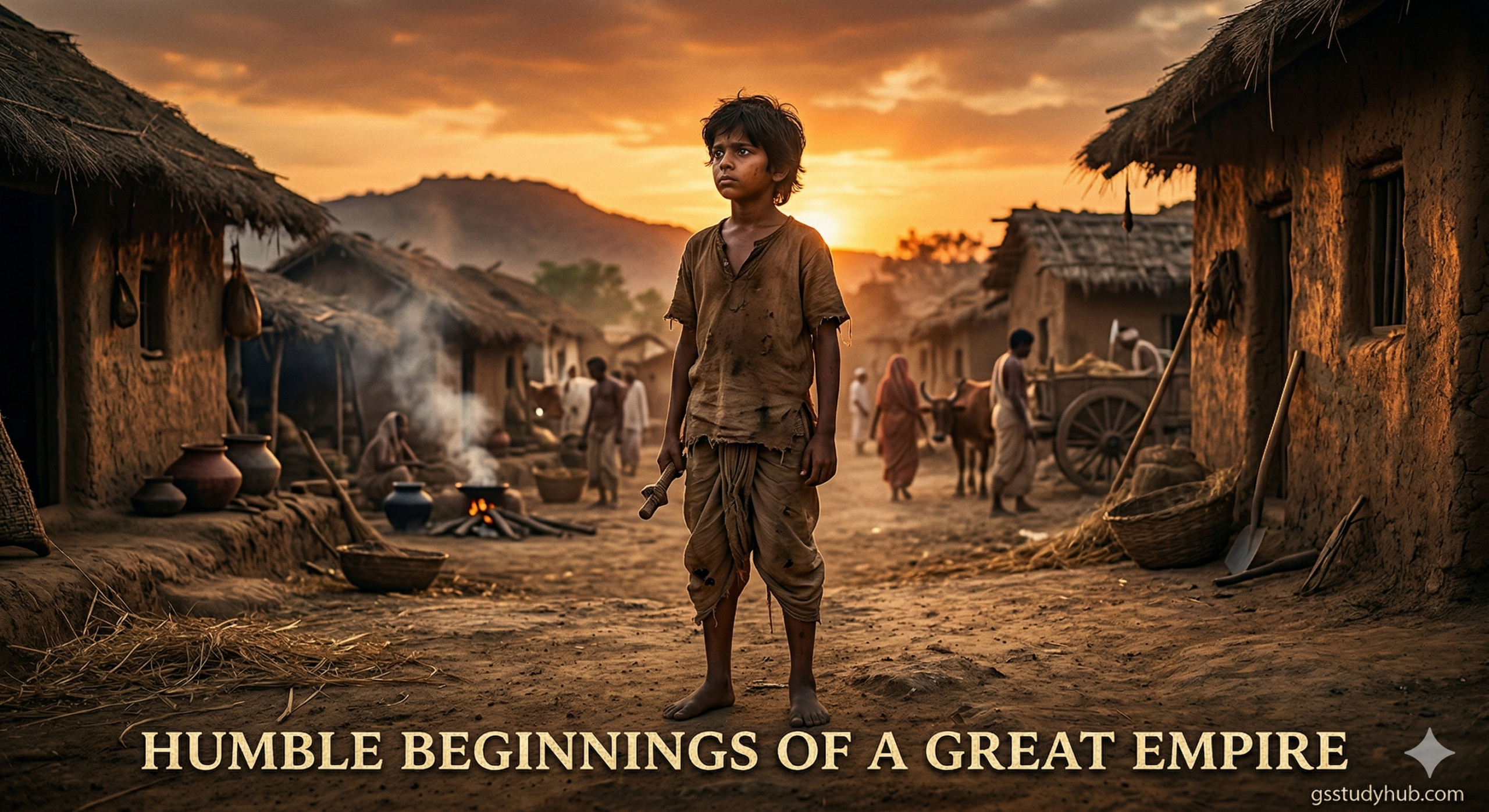
Born into humble beginnings, Chandragupta Maurya did not inherit a throne or royal privilege. Instead, he built his destiny through courage and strategic thinking. His journey reflects a truth we often see in real life—great leaders are not always born in power; they create their own path. With the guidance of the brilliant strategist Chanakya (Kautilya), Chandragupta transformed from an ordinary young man into a ruler who would unify a vast region under one empire.
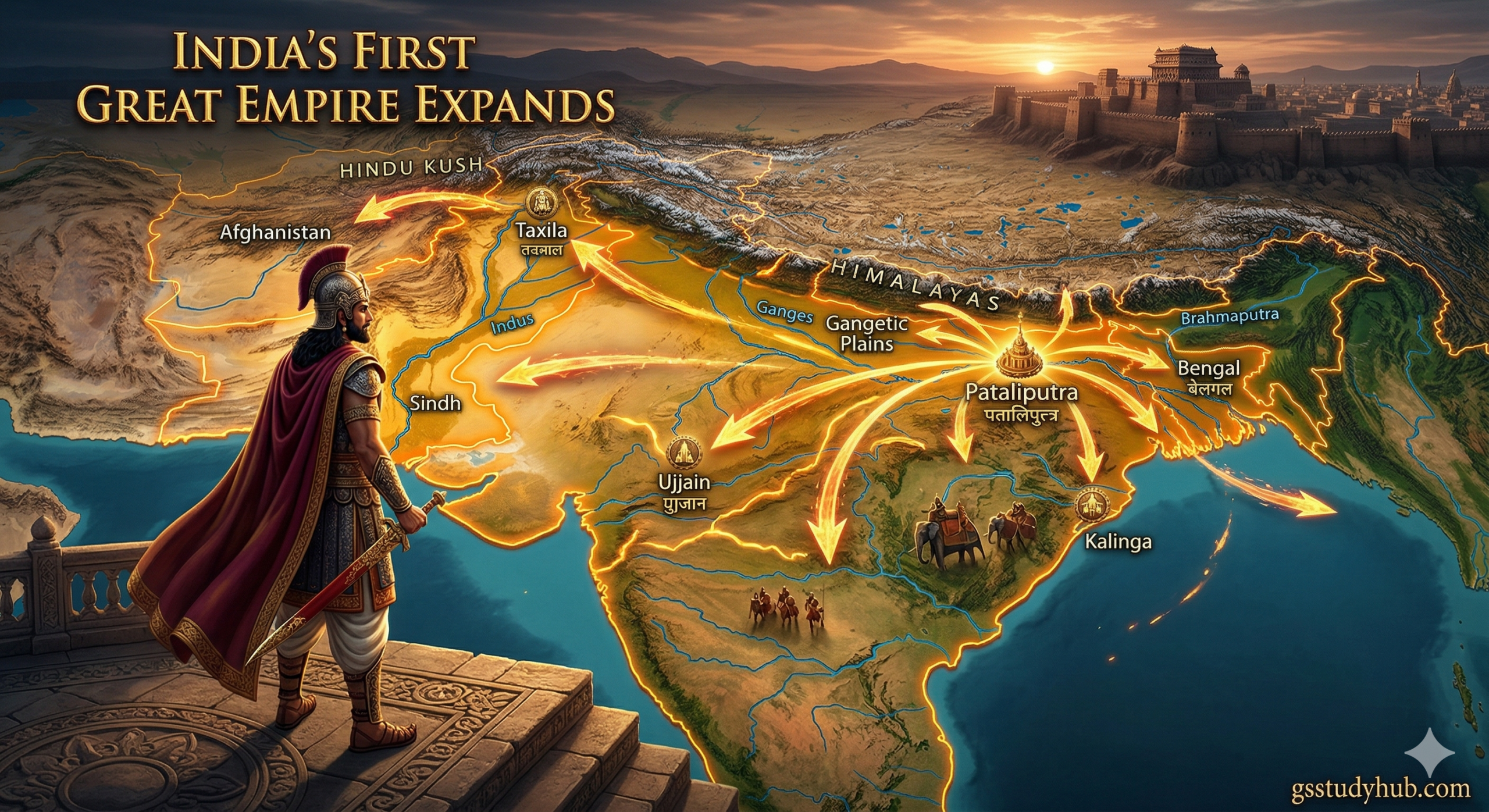
The foundation of the Mauryan Empire around 321 BCE marked a turning point in Indian political history. For the first time, a strong centralized administration replaced fragmented rule. The empire expanded rapidly, covering regions from Afghanistan in the northwest to Bengal in the east, and from the majestic Himalayas to the Deccan Plateau. This vast geographical spread showcased not just military strength but also effective governance and vision.
What makes Chandragupta Maurya and the Mauryan Empire truly remarkable is their administrative innovation. The empire was not only about conquest but also about stability and growth. A well-structured bureaucracy, efficient tax system, and strong intelligence network ensured that the empire functioned smoothly. These systems were far ahead of their time and are still studied today as examples of effective governance.
From a broader perspective, the rise of Chandragupta Maurya teaches us an important lesson: vision combined with strategy can change the destiny of nations. Whether you are building a business, planning a career, or leading a team, the principles seen in his journey remain relevant. He saw opportunities where others saw chaos, and he acted with precision and confidence.
In today’s world, where leadership and strategic thinking are highly valued, the story of Chandragupta Maurya and the Mauryan Empire continues to inspire millions. It reminds us that even in the most uncertain times, strong vision, right guidance, and consistent effort can build something truly extraordinary.
📌 Deep Dive: Want to understand the detailed structure of Mauryan governance? Read this in-depth article → Mauryan Administration and Governance Features Explained
Early Life and Struggles of Chandragupta Maurya
The early life of Chandragupta Maurya is a powerful reminder that greatness often begins in the most challenging circumstances. Unlike many rulers who were born into royal families, Chandragupta’s childhood was filled with uncertainty and hardship. Historical sources suggest that he was born into a modest background, possibly from a lower social status, which made his journey to power even more extraordinary.
Imagine growing up in a time when opportunities were limited and survival itself was a daily challenge. This was the reality for young Chandragupta. He did not have access to luxury, formal education, or political influence. Yet, within him burned a strong desire to achieve something bigger. This is something many of us can relate to—starting with limited resources but holding onto big dreams.
During this period, India was politically fragmented, and powerful kingdoms like the Nanda dynasty ruled large territories. The common people were often burdened with heavy taxes and harsh administration. Witnessing such conditions likely shaped Chandragupta’s thinking and fueled his ambition to bring change. His struggles were not just personal—they were connected to the larger condition of society.
A turning point in his life came when he met Chanakya, a brilliant scholar and strategist. Chanakya saw potential in Chandragupta that others had overlooked. This meeting changed everything. With proper guidance and mentorship, Chandragupta began to develop the skills needed to become a leader. It shows how important the right guidance can be in transforming raw talent into greatness.
However, the path was not easy. Chandragupta faced multiple failures and setbacks in his early attempts to gain power. Building an army, forming alliances, and challenging established rulers required immense courage and patience. There were moments when success seemed distant, but he did not give up. His persistence is a key lesson—failure is not the end; it is a step toward success.
From a real-life perspective, his story feels incredibly relatable. Many people today struggle with limited opportunities, financial constraints, or lack of support. Chandragupta’s journey teaches us that these challenges can become stepping stones if we stay focused and determined. Your starting point does not define your final destination.
In the end, the early struggles of Chandragupta Maurya shaped him into a resilient and visionary leader. These experiences built his character, strengthened his mindset, and prepared him for the challenges ahead. His story reminds us that behind every great success lies a journey filled with struggle, learning, and growth.
📖 Must Read: Discover the complete journey, struggles, rise to power, and life lessons from Chandragupta Maurya → Chandragupta Maurya Empire History and Life Lessons
The Role of Chanakya in Chandragupta Maurya and the Mauryan Empire
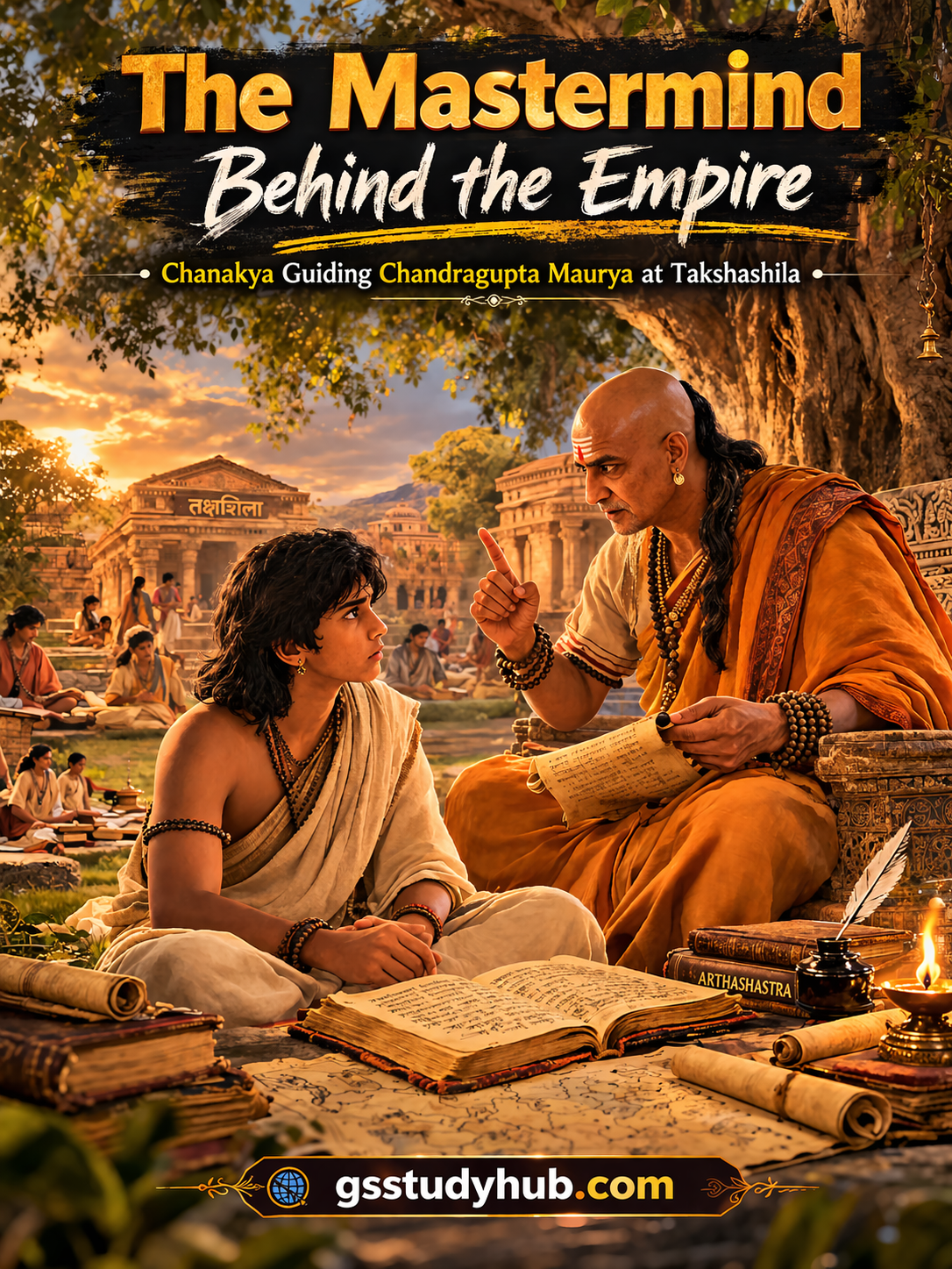
When we talk about Chandragupta Maurya and the Mauryan Empire, one name that stands out as the backbone of this success is Chanakya, also known as Kautilya. He was not just a teacher but a visionary strategist, economist, and political mastermind. His role in shaping Chandragupta’s journey is a perfect example of how the right mentor can transform an individual into a legendary leader.
Chanakya’s life itself was driven by a strong purpose. According to historical accounts, he was deeply dissatisfied with the rule of the Nanda dynasty due to their corruption and mismanagement. He believed that India needed a capable and ethical ruler who could unify the fragmented kingdoms. This vision led him to search for someone who could fulfill this mission—and he found that potential in a young Chandragupta Maurya.
What makes Chanakya’s role truly remarkable is his ability to see greatness where others saw nothing special. Chandragupta was not born into power, but Chanakya recognized his courage, intelligence, and leadership qualities. He took him under his guidance and began training him in various fields such as warfare, administration, diplomacy, and economics. This mentorship laid the foundation for the future Mauryan Empire.
Chanakya’s strategies were not based on brute force alone—they were built on intelligence and planning. His famous work, Arthashastra, outlines detailed principles of governance, economic management, espionage, and statecraft. Even today, many of these ideas are considered relevant in modern politics and business. This highlights his deep expertise and long-lasting influence.
One of the most important contributions of Chanakya was his strategic approach to overthrowing the Nanda dynasty. Instead of direct confrontation, he used a combination of diplomacy, alliances, and calculated moves to weaken the enemy. This shows that success is not always about strength—it is often about strategy and timing. His methods can still be applied in real-life situations, whether in business or personal growth.
From a practical perspective, Chanakya’s role teaches us an important lesson: guidance and knowledge can accelerate success. Many people struggle because they lack the right direction. Just like Chandragupta needed Chanakya, we too need mentors, teachers, or advisors who can guide us toward our goals.
In conclusion, Chanakya was not just a supporting figure—he was the architect behind the success of Chandragupta Maurya and the Mauryan Empire. His vision, intelligence, and mentorship turned a young boy into a powerful emperor and laid the foundation for one of the greatest empires in Indian history.
📉 Important Insight: Discover why one of India’s greatest empires declined and what lessons we can learn → Fall of Maurya Empire: Causes and Decline
Rise to Power of Chandragupta Maurya
The rise to power of Chandragupta Maurya is one of the most inspiring stories in history—a journey from struggle to supremacy. At a time when the Indian subcontinent was divided into multiple kingdoms, political instability was at its peak. Foreign invasions, especially after Alexander the Great’s campaign, had weakened the existing systems, creating an opportunity for a new leader to emerge.
Chandragupta did not rise to power overnight. His journey was a result of careful planning, continuous effort, and strong mentorship under Chanakya. Together, they analyzed the political situation and understood that the time was right to challenge the ruling powers. Instead of rushing into battle, they focused on building a strong foundation—training soldiers, forming alliances, and gathering intelligence.
One of the most important aspects of Chandragupta’s rise was his ability to learn from failures. Early attempts to capture power were not always successful. However, instead of giving up, he adapted his strategies and improved his approach. This mindset is something we see in successful individuals even today—failure is treated as a lesson, not a defeat.
The political environment of that time worked in his favor. The decline of foreign influence after Alexander’s retreat left many regions unstable. Chandragupta used this situation wisely, gradually expanding his control over smaller territories before targeting larger powers. His strategic thinking ensured that he grew stronger step by step, rather than risking everything in one move.
The most decisive moment in his rise to power was the overthrow of the Nanda dynasty, which ruled Magadha. The Nandas were powerful but unpopular due to heavy taxation and administrative issues. Chandragupta, with Chanakya’s guidance, used both military strength and public support to defeat them. This victory marked the beginning of the Mauryan Empire.
From a modern perspective, this phase of Chandragupta’s life teaches us a valuable lesson: success is a combination of preparation, timing, and persistence. Whether you are building a career or starting a business, the same principles apply. You need a clear vision, the right strategy, and the patience to execute your plan step by step.
In conclusion, the rise to power of Chandragupta Maurya was not just about conquering territories—it was about transforming challenges into opportunities. His journey continues to inspire generations, reminding us that with determination and strategic thinking, even the most ambitious goals can be achieved.
📜 Must Read: Discover how Ashoka used inscriptions and pillars to spread the idea of Dhamma and moral governance → Ashoka’s Edicts and Pillars: History, Dhamma & Legacy
Defeat of the Nanda Dynasty
The defeat of the Nanda Dynasty marks one of the most decisive and dramatic turning points in the story of Chandragupta Maurya and the Mauryan Empire. At that time, the Nandas ruled the powerful kingdom of Magadha and possessed immense wealth, a large army, and strong political control. However, despite their strength, they were deeply unpopular among the people due to heavy taxation and administrative oppression.
For a young and ambitious Chandragupta Maurya, the Nanda rule represented both a challenge and an opportunity. Under the guidance of Chanakya, he carefully studied the weaknesses of the Nanda administration. Instead of rushing into a direct confrontation, they chose a strategic and calculated approach. This highlights an important principle—success is not just about strength, but about understanding your opponent.
Initially, Chandragupta faced setbacks in his attempts to overthrow the Nandas. The Nanda army was vast and well-equipped, making it difficult to defeat them in open battle. However, rather than losing hope, Chandragupta and Chanakya refined their strategies. They focused on building a strong support system, gaining the trust of local communities, and gradually weakening the Nanda influence from within.
One of the key elements in their success was the use of intelligence and diplomacy. Chanakya’s deep knowledge of politics and espionage played a crucial role. They used spies, formed alliances, and created internal divisions within the Nanda administration. This strategic planning ensured that when the final battle came, the Nandas were already weakened and vulnerable.
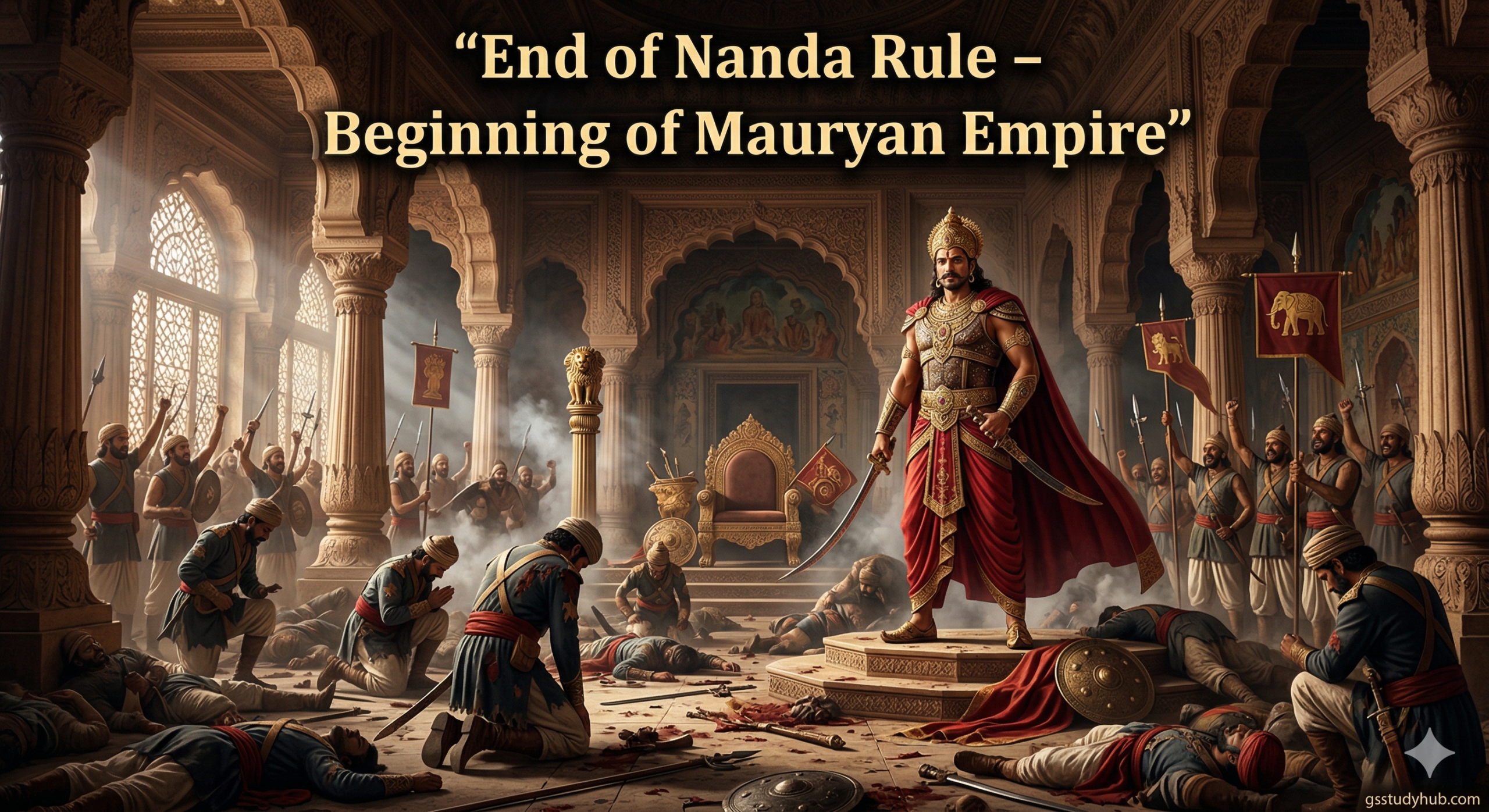
The final overthrow of the Nanda dynasty was not just a military victory—it was a victory of planning, patience, and persistence. Chandragupta successfully defeated the last Nanda ruler and took control of Magadha, which became the foundation of the Mauryan Empire. This victory marked the beginning of a new era in Indian history, where a strong centralized empire replaced fragmented and unstable rule.
From a real-life perspective, this event offers a powerful lesson: even the strongest systems can fall if they lose public trust and fail to adapt. Whether in business, leadership, or personal growth, understanding weaknesses and acting strategically can lead to remarkable success.
In conclusion, the defeat of the Nanda Dynasty was not just a political change—it was the birth of a new vision under Chandragupta Maurya. It demonstrated that with the right strategy, determination, and guidance, even the most powerful empires can be challenged and transformed.
🕊️ Must Read: Discover how Ashoka’s Dhamma promoted peace, moral values, and social harmony across the empire → Ashoka and His Dharma
Expansion of the Mauryan Empire
The expansion of the Mauryan Empire under Chandragupta Maurya is a remarkable example of strategic vision and powerful leadership. After successfully defeating the Nanda Dynasty and establishing control over Magadha, Chandragupta did not stop there. Instead, he focused on expanding his empire to create a unified and stable political structure across the Indian subcontinent.
At that time, many regions in northwestern India were under the influence of Greek rulers who had been left behind after the invasion of Alexander the Great. These regions were politically unstable, providing Chandragupta with an opportunity to extend his control. Using a combination of military strength and diplomacy, he gradually brought these territories under his rule.
One of the most significant events in this expansion was Chandragupta’s conflict with Seleucus I Nicator, one of Alexander’s successors. Instead of prolonged warfare, the conflict ended in a treaty. Chandragupta gained vast territories in the northwest, including parts of present-day Afghanistan and Pakistan, while Seleucus received 500 war elephants in return. This agreement not only expanded the Mauryan Empire but also established diplomatic relations between the two powers.
The empire soon stretched across a vast geographical area—from Afghanistan in the northwest to Bengal in the east, and from the Himalayas to parts of the Deccan Plateau. This made the Mauryan Empire one of the largest and most powerful empires of its time. However, this expansion was not just about increasing territory—it was about ensuring stability, security, and economic growth.
Chandragupta understood that maintaining such a vast empire required efficient administration. Therefore, he established a well-organized system of governance in newly acquired regions. Local administrators were appointed, infrastructure was developed, and trade routes were secured. This ensured that the empire remained connected and economically strong.
From a modern perspective, the expansion of the Mauryan Empire teaches us an important lesson: growth should be strategic and sustainable. Whether in business or personal life, expanding too quickly without proper systems can lead to failure. Chandragupta’s approach shows that planning, balance, and adaptability are key to long-term success.
In conclusion, the expansion of the Mauryan Empire was not just a story of conquest—it was a story of intelligent leadership, diplomacy, and vision. Chandragupta Maurya transformed a newly established kingdom into a vast and powerful empire, setting the stage for future rulers like Ashoka to take it to even greater heights.
📚 Must Read: Discover how Chanakya’s Arthashastra shaped ancient governance, economic policies, and leadership principles → Kautilya Arthashastra: Timeless Economic Wisdom
Administration and Governance of the Mauryan Empire
One of the most powerful pillars behind the success of Chandragupta Maurya and the Mauryan Empire was its highly organized system of administration and governance. While many empires in history focused only on expansion, Chandragupta understood that real strength lies in maintaining control, stability, and efficiency across the empire. His governance model was not only advanced for its time but also laid the foundation for future administrative systems in India.
The Mauryan administration was highly centralized, meaning that most of the authority rested with the emperor. However, Chandragupta did not govern alone. He was supported by a well-structured council of ministers and advisors, including the brilliant strategist Chanakya. This system ensured that decisions were not only powerful but also well-informed and strategic.
The empire was divided into provinces, each governed by appointed officials. These officials were responsible for maintaining law and order, collecting taxes, and implementing the king’s policies. This decentralized execution with centralized control allowed the empire to function smoothly even across vast territories. It is similar to modern administrative systems where central governments rely on regional authorities for effective governance.
One of the most unique features of Mauryan governance was its strong intelligence and espionage system. Spies were deployed across the empire to gather information, monitor officials, and ensure loyalty. This helped in preventing corruption and rebellion. Chanakya’s principles, as described in the Arthashastra, emphasized the importance of intelligence in maintaining a stable state.
The taxation system was another key aspect of governance. Taxes were collected fairly and systematically, ensuring that the state had enough resources for development without overburdening the people. Agriculture, trade, and crafts were all regulated and supported by the administration. This economic balance contributed to the overall prosperity of the empire.
From a practical point of view, the governance model of the Mauryan Empire teaches us a valuable lesson: strong systems create long-term success. Whether it is a country, a company, or even a small organization, having clear roles, accountability, and monitoring mechanisms is essential for growth and stability.
In conclusion, the administration and governance of Chandragupta Maurya and the Mauryan Empire were far ahead of their time. With centralized authority, efficient bureaucracy, and intelligent planning, the empire became a model of effective governance. It stands as a reminder that true power is not just about conquering land but about managing it wisely.
For a deeper understanding of the political transformation of ancient Magadha, it is essential to examine the historical relationship between Ajatashatru and Bimbisara . This episode highlights a crucial phase of dynastic transition, marked by internal conflict, strategic expansion, and the consolidation of imperial authority.
Military Strength and Strategy of the Mauryan Empire
The success of Chandragupta Maurya and the Mauryan Empire was not only built on leadership and governance but also on exceptional military strength and strategy. In a time when power was often decided on the battlefield, Chandragupta created one of the most formidable armies in the ancient world. His military system was not just large—it was highly organized, disciplined, and strategically guided.
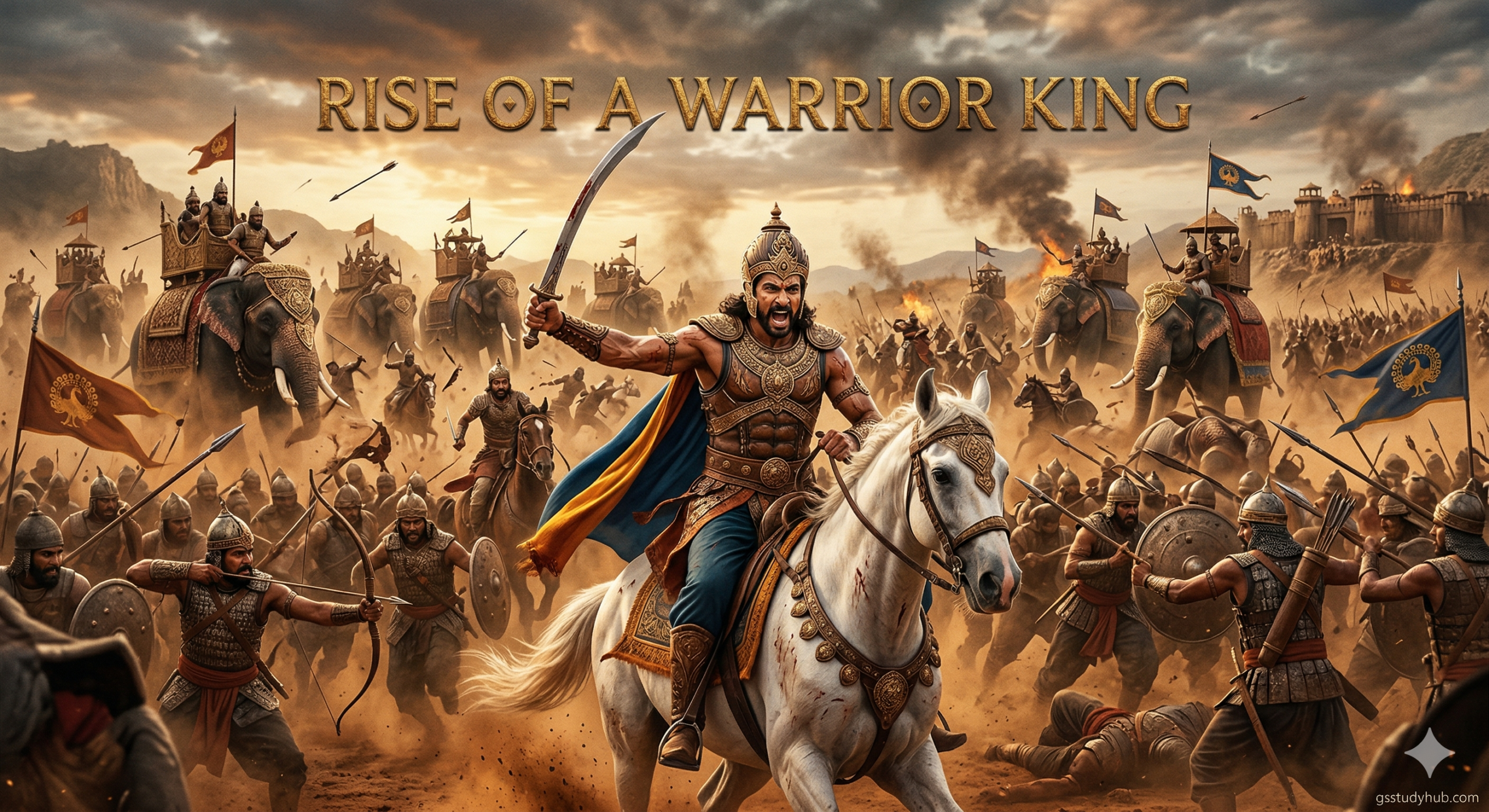
The Mauryan army consisted of four main divisions: infantry, cavalry, war elephants, and chariots. This balanced composition allowed the army to fight effectively in different terrains and situations. War elephants, in particular, were a unique strength of the Mauryan military. They created fear among enemies and were used to break enemy formations during battles.
What truly set Chandragupta apart was not just the size of his army but his approach to warfare. Under the guidance of Chanakya, military campaigns were carefully planned. Instead of relying only on direct confrontation, they used tactics such as surprise attacks, strategic positioning, and psychological warfare. This made their victories more efficient and less costly.
Another key aspect of Mauryan military strategy was the use of intelligence and espionage. Spies were deployed not only for governance but also for military purposes. They gathered information about enemy movements, strengths, and weaknesses. This allowed Chandragupta to make informed decisions and stay one step ahead of his opponents. In many ways, this approach is similar to modern intelligence-based warfare.
The Mauryan Empire also focused on strong defense systems. Fortified cities, well-guarded borders, and strategically located military bases ensured the safety of the empire. This defensive strength allowed Chandragupta to maintain control over vast territories without constant conflict. It highlights an important principle: true strength lies in both offense and defense.
From a modern perspective, the military strategy of Chandragupta Maurya teaches us that planning and intelligence are more powerful than sheer force. Whether in business, competition, or personal challenges, having the right strategy can make all the difference.
In conclusion, the military strength and strategy of the Mauryan Empire were key factors behind its rapid rise and long-term stability. Chandragupta Maurya combined power with intelligence, creating a system that was both effective and sustainable. His approach continues to inspire leaders and strategists even in today’s world.
Understanding the rapid spread of Buddhism requires a closer look at its institutional foundation. Explore how the Buddhist Sangha expanded across ancient India and became the backbone of one of the world’s most influential religions.
Economy and Trade System of the Mauryan Empire
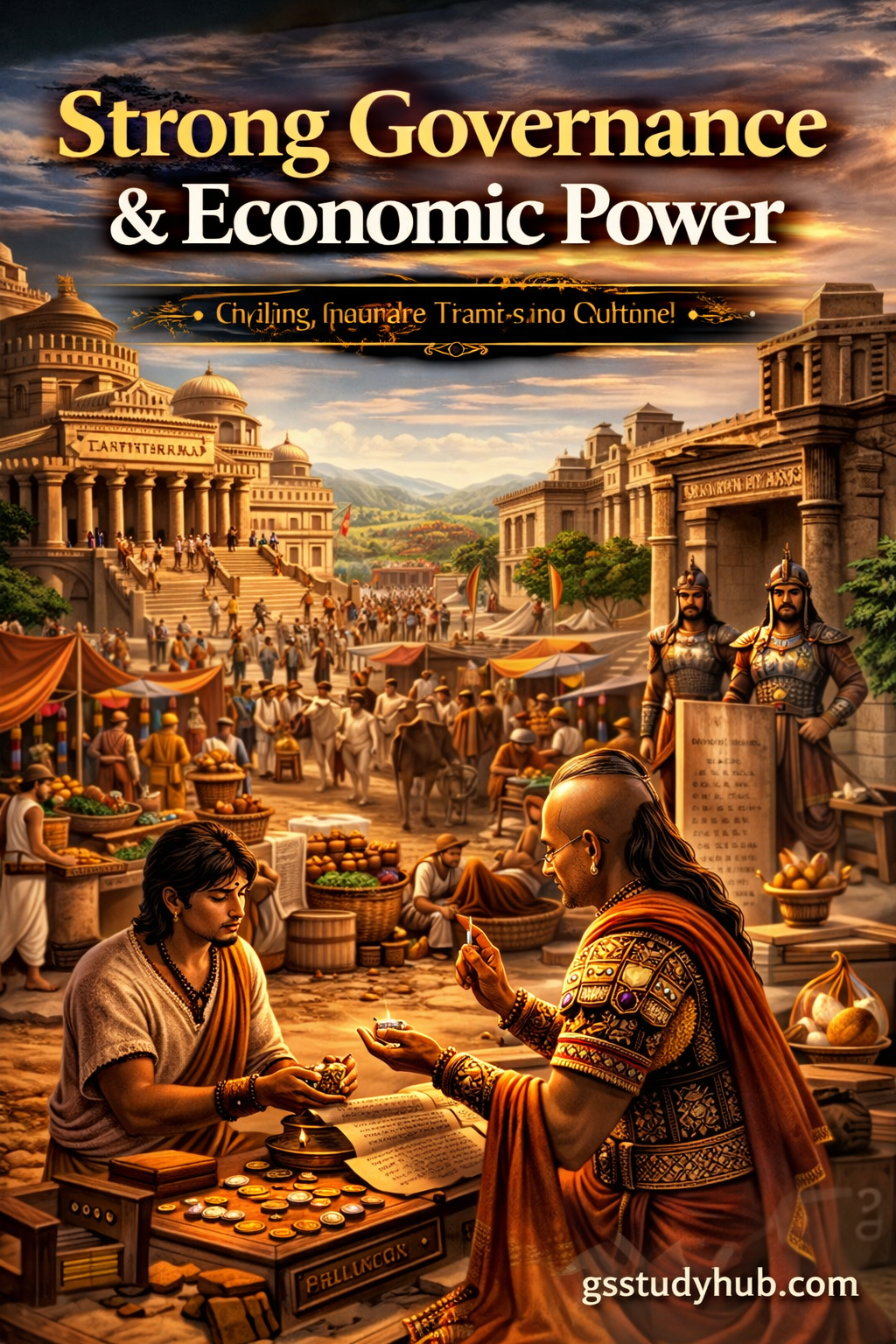
The strength of Chandragupta Maurya and the Mauryan Empire was not limited to military power and governance—it was deeply rooted in a strong and well-organized economic and trade system. A stable economy acted as the backbone of the empire, enabling growth, development, and long-term sustainability. Chandragupta understood that without economic strength, even the most powerful empire could not survive.
Agriculture was the primary source of income for the Mauryan Empire. The majority of the population depended on farming, and the state ensured proper irrigation systems, land management, and support for farmers. Fertile lands in regions like the Ganga plains contributed significantly to agricultural productivity. The government also collected taxes from agricultural produce, which formed a major part of state revenue.
In addition to agriculture, trade played a crucial role in the Mauryan economy. The empire developed extensive trade networks, both internal and external. Roads were constructed to connect major cities and regions, making transportation of goods easier and more efficient. Trade routes linked India with Central Asia, Persia, and even parts of the Mediterranean world, facilitating the exchange of goods, culture, and ideas.
One of the most impressive aspects of the Mauryan economic system was its regulation and standardization. The government maintained standardized weights and measures, ensuring fairness in trade. Markets were supervised by officials who monitored prices, quality, and transactions. This level of regulation helped prevent fraud and ensured trust among traders and consumers.
The state also played an active role in industries such as mining, metallurgy, textiles, and handicrafts. Certain industries were directly controlled by the government, which ensured quality production and steady revenue. This approach highlights how the Mauryan Empire balanced both private trade and state involvement for economic stability.
From a modern perspective, the economy of Chandragupta Maurya and the Mauryan Empire teaches us a valuable lesson: a strong economy is built on balance, regulation, and infrastructure. Whether it is a country or a business, focusing on production, fair trade, and efficient systems is key to long-term success.
In conclusion, the economy and trade system of the Mauryan Empire were highly advanced and well-structured for their time. Chandragupta Maurya created an economic framework that supported growth, ensured stability, and connected India with the wider world. This economic strength played a crucial role in making the Mauryan Empire one of the greatest empires in history.
The emergence of powerful states in ancient India can be best understood through the remarkable rise of Magadha. Explore how strategic location, strong leadership, and economic strength contributed to the dominance of the Magadha Empire , which eventually became the foundation of one of India’s greatest imperial traditions.
Society and Culture of the Mauryan Empire
The social and cultural life of Chandragupta Maurya and the Mauryan Empire reflects a vibrant and diverse civilization that balanced tradition with progress. While political unity was a major achievement, the Mauryan period also witnessed significant development in social organization, cultural practices, and everyday life. This combination made the empire not just powerful, but also deeply rooted in human values and traditions.
Mauryan society was structured but dynamic. It was broadly divided into different social groups based on occupations, which helped maintain order and efficiency. Farmers, artisans, traders, soldiers, and administrators all played important roles in sustaining the empire. While the system had its hierarchy, it also ensured that each group contributed to the overall functioning of society. This shows how specialization and division of labor were key to stability even in ancient times.
Religion and spirituality held a central place in the lives of people. The Mauryan Empire was known for its religious tolerance. Different beliefs, including Hinduism, Jainism, and other traditions, coexisted peacefully. Chandragupta himself is believed to have embraced Jainism later in life, which reflects the openness of the society toward different philosophies and ways of life.
Cultural development during this period was equally impressive. Art, architecture, and literature flourished under Mauryan rule. Cities were well-planned, with proper roads, drainage systems, and public spaces. The influence of culture was visible in everyday life—from clothing and food habits to festivals and social customs. This rich cultural environment contributed to a sense of identity and unity among people.
Education and knowledge were also valued in Mauryan society. Centers of learning attracted scholars and students, where subjects like politics, economics, philosophy, and science were studied. The teachings of thinkers like Chanakya played an important role in shaping intellectual life. This focus on knowledge highlights how education was considered a powerful tool for both personal and societal growth.
From a modern perspective, the society of Chandragupta Maurya and the Mauryan Empire teaches us the importance of diversity, tolerance, and cultural balance. A strong society is not just built on power, but on respect for different ideas and harmonious coexistence.
In conclusion, the social and cultural framework of the Mauryan Empire played a crucial role in its success. It created a stable and inclusive environment where people could live, work, and grow together. This rich cultural heritage continues to inspire modern society, reminding us that true progress comes from unity in diversity.
The transformation of Magadha into a dominant political power was not accidental, but the result of strategic planning, strong leadership, and economic strength. To understand these factors in depth, explore the detailed analysis of the rise of the Magadha Empire , which highlights the key elements behind its remarkable success.
Comparison with Other Empires
To truly understand the significance of Chandragupta Maurya and the Mauryan Empire, it is important to compare it with other major empires of the ancient world. Empires like the Roman, Persian, and Greek civilizations were also powerful during different periods, but each had its own unique features. By comparing them, we can better appreciate what made the Mauryan Empire stand out.
When we compare the Mauryan Empire with the Roman Empire, one key difference lies in governance. The Mauryan system was highly centralized, with strong control from the emperor and a well-organized administrative structure. In contrast, the Roman Empire often relied on a mix of centralized authority and local autonomy. While Rome excelled in law and infrastructure, the Mauryan Empire was ahead in administrative planning and intelligence systems.
Comparing the Mauryan Empire with the Persian Empire, we see similarities in size and diversity. Both empires ruled vast territories with different cultures and populations. However, the Persian Empire focused heavily on expansion and maintaining control through regional governors, known as satraps. The Mauryan Empire, on the other hand, emphasized internal governance, economic stability, and strong central policies to ensure unity.
The Greek influence, especially after the campaigns of Alexander the Great, also provides an interesting comparison. Greek kingdoms were known for their cultural achievements, philosophy, and city-states. However, they often lacked long-term political unity. Chandragupta Maurya successfully filled the power vacuum left by the Greeks in northwestern India and established a stable and lasting empire, something that many Greek rulers struggled to achieve.
Another important aspect of comparison is military strategy. While Roman and Persian armies were known for their discipline and organization, the Mauryan military combined strength with intelligence. The use of war elephants, a strong spy network, and strategic planning gave Chandragupta a unique advantage. This balance between power and strategy made the Mauryan Empire highly effective in both expansion and defense.
From a modern perspective, comparing these empires teaches us that there is no single formula for success. Each empire had its strengths and weaknesses, shaped by geography, culture, and leadership. The Mauryan Empire’s focus on governance, economy, and strategic planning makes it especially relevant even today.
In conclusion, while many great empires have existed in history, Chandragupta Maurya and the Mauryan Empire stand out for their balanced approach to power. By combining strong leadership, efficient administration, and cultural inclusivity, the Mauryan Empire created a model that continues to inspire historians, leaders, and thinkers around the world.
The political landscape of ancient India was significantly shaped by the emergence of the Mahajanapadas, which included both powerful monarchies and early republican states (Gana-Sanghas). These republics introduced collective decision-making systems, assemblies, and participatory governance, offering valuable insights into the evolution of democratic principles. Their administrative structure, political organization, and socio-economic frameworks continue to provide important lessons for understanding modern governance and statecraft.
Strengths and Weaknesses of the Mauryan Empire
Every great empire in history, including Chandragupta Maurya and the Mauryan Empire, had its own strengths and weaknesses. Understanding both sides gives us a balanced view of how such a powerful empire rose to greatness and what challenges it faced. This analysis is not only important for history but also offers valuable lessons for modern leadership and systems.
One of the greatest strengths of the Mauryan Empire was its strong and visionary leadership. Chandragupta Maurya, guided by Chanakya, established a powerful and stable government. Their ability to plan strategically, make informed decisions, and adapt to changing situations played a key role in the empire’s success. This shows how effective leadership can shape the destiny of an entire nation.
Another major strength was the empire’s efficient administrative system. With a centralized government supported by a structured bureaucracy, the Mauryan Empire was able to manage vast territories effectively. The use of spies, tax systems, and regional governance ensured stability and control. This level of organization was far ahead of its time and contributed significantly to the empire’s long-term success.
The military strength of the Mauryan Empire was also a key advantage. A large and well-organized army, combined with intelligent strategies, allowed Chandragupta to expand and protect his empire. The use of war elephants and a strong intelligence network made the Mauryan military unique and highly effective.
However, despite these strengths, the Mauryan Empire also had certain weaknesses. One of the main issues was its heavy dependence on strong rulers. The system worked efficiently under capable leaders like Chandragupta and Ashoka, but it struggled when weaker rulers came to power. This highlights a common problem in centralized systems—success often depends on the quality of leadership.
Another weakness was the complexity of the administrative structure. While it was efficient, it also required constant monitoring and control. Managing such a vast empire with limited communication tools of that time was challenging. Over time, this complexity could lead to inefficiencies and difficulties in maintaining control over distant regions.
From a modern perspective, the strengths and weaknesses of Chandragupta Maurya and the Mauryan Empire teach us an important lesson: balance is the key to sustainability. Strong leadership, efficient systems, and adaptability are essential for success, but over-dependence on any one factor can create vulnerabilities.
In conclusion, the Mauryan Empire stands as a powerful example of how strengths can build greatness and weaknesses can challenge it. By learning from both, we can better understand not only history but also the principles of effective leadership and long-term success.
The Mahajanapada era represents a crucial turning point in ancient Indian history, marking the transition from tribal societies to organized and territorial states. This period (6th–4th century BCE) witnessed the rise of powerful kingdoms and republics, the growth of urban centers, and the development of structured political systems. It also laid the foundation for economic expansion through agriculture and trade, while simultaneously encouraging intellectual and religious movements such as Buddhism and Jainism. Understanding the significance of this era is essential for analyzing the evolution of governance, society, and early state formation in India.
Legacy and Impact of Chandragupta Maurya and the Mauryan Empire
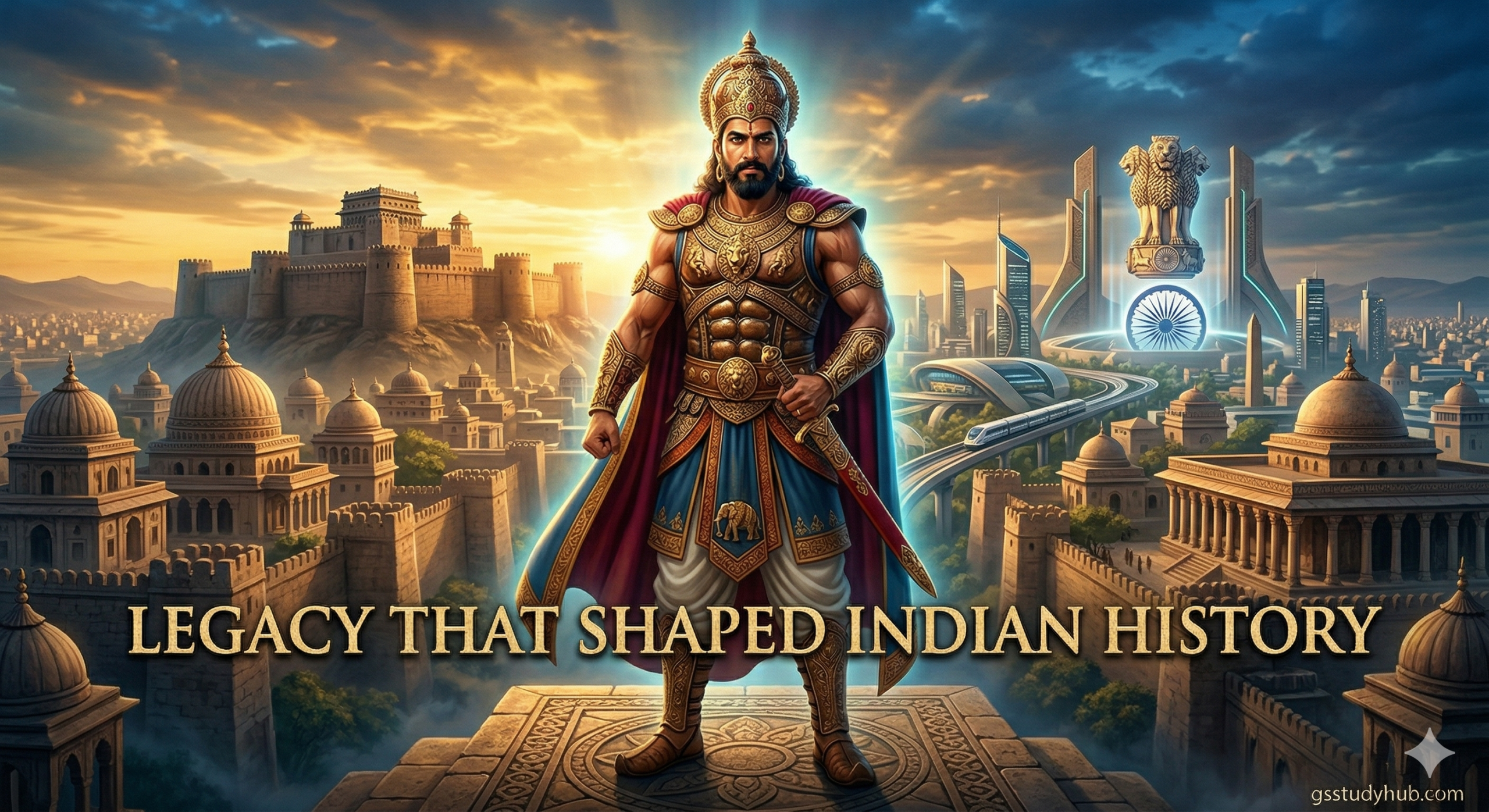
The legacy of Chandragupta Maurya and the Mauryan Empire is one of the most powerful and long-lasting in Indian history. While many empires rose and fell, the Mauryan Empire left behind a system, a vision, and a model of governance that continued to influence generations. Chandragupta’s achievements were not limited to his lifetime—they created a foundation upon which future rulers built even greater success.
One of the most significant impacts of Chandragupta Maurya was the political unification of India. Before his rise, the subcontinent was divided into numerous small states and kingdoms. By bringing these regions under one centralized rule, he established a sense of unity and stability. This idea of a unified political system later became a key element in India’s historical development.
Another important part of his legacy was the administrative framework he created. The systems of governance, taxation, intelligence, and law that were developed during the Mauryan period set a benchmark for future empires. Even today, many principles found in Chanakya’s Arthashastra are studied in fields like political science, economics, and management.
The Mauryan Empire also had a strong cultural and social impact. It promoted diversity and tolerance, allowing different religions and traditions to coexist peacefully. This cultural openness helped in creating a society that valued harmony and mutual respect. It also influenced later rulers, especially Emperor Ashoka, who further promoted peace and moral governance.
Economically, the Mauryan Empire established strong trade networks and infrastructure, which connected India with other parts of the world. This not only boosted economic growth but also encouraged the exchange of ideas and cultures. Such global connections can be seen as an early form of globalization, showing how advanced the Mauryan system was for its time.
From a modern perspective, the legacy of Chandragupta Maurya teaches us that true success lies in building systems that last beyond individuals. Whether in business, governance, or personal life, creating a strong foundation ensures long-term impact. His story reminds us that leadership is not just about immediate achievements but about creating a lasting difference.
In conclusion, the legacy and impact of Chandragupta Maurya and the Mauryan Empire continue to inspire historians, leaders, and thinkers even today. From political unity and administrative excellence to cultural harmony and economic strength, their influence remains deeply embedded in the history of India and the world.
The rise of large-scale empires in ancient India reached its peak under Chandragupta Maurya, the founder of the Mauryan Empire. With the guidance of Chanakya (Kautilya), he successfully overthrew the Nanda dynasty and established one of the first centralized empires in Indian history. His rule marked a significant shift towards administrative efficiency, military strength, and political unity across the subcontinent. His achievements laid the foundation for future rulers like Ashoka and shaped the course of Indian history.
Key Takeaways from Chandragupta Maurya and the Mauryan Empire
- Vision Creates History: Chandragupta Maurya proved that a clear vision can transform a fragmented region into a powerful empire.
- Humble Beginnings Don’t Limit Success: Starting from a modest background, Chandragupta’s journey shows that determination matters more than origin.
- Power of Mentorship: The role of Chanakya highlights how the right guidance can shape leadership and accelerate success.
- Strategy Over Strength: Intelligent planning and execution are often more powerful than brute force.
- Strong Administration is Key: A well-organized governance system ensures stability and long-term success.
- Economic Strength Drives Growth: A stable economy and trade system are essential for sustaining any empire or organization.
- Adaptability Leads to Success: Learning from failures and adjusting strategies played a major role in Chandragupta’s rise.
- Unity Brings Power: Political unification under one rule created strength and stability across regions.
- Balanced Systems Matter: Military, economy, governance, and culture must work together for sustainable growth.
- Legacy is Built on Systems: Long-term impact comes from creating structures that continue even after leadership changes.
The rise of the Mauryan Empire marks a turning point in ancient Indian history, with Chandragupta Maurya emerging as a powerful ruler who transformed a fragmented political landscape into a centralized empire. Following the decline of Alexander’s influence in north-western India, Chandragupta, under the guidance of Chanakya (Kautilya), overthrew the Nanda dynasty and established the Mauryan Empire around 322 BCE. This empire rapidly expanded across northern and western India, laying the foundation for political unity, administrative efficiency, and economic growth. The Mauryan system of governance, supported by strategic policies outlined in the Arthashastra, became a model for future empires.
Frequently Asked Questions (FAQs)
1. Who was Chandragupta Maurya?
Chandragupta Maurya was the founder of the Mauryan Empire and one of the greatest rulers in Indian history. He established a powerful centralized state around 321 BCE and unified large parts of the Indian subcontinent. His journey from humble beginnings to becoming an emperor continues to inspire millions even today.
2. Who was Chanakya and what was his role?
Chanakya, also known as Kautilya, was a brilliant scholar, economist, and political strategist. He mentored Chandragupta Maurya and played a crucial role in planning the rise of the Mauryan Empire. His book Arthashastra is still considered a masterpiece in political science and economics.
3. How did Chandragupta Maurya establish the Mauryan Empire?
Chandragupta Maurya established the empire by defeating the Nanda Dynasty of Magadha with the help of Chanakya’s strategic planning. He built a strong army, formed alliances, and used intelligence networks to weaken his enemies before finally taking control and establishing his rule.
4. How large was the Mauryan Empire?
The Mauryan Empire was one of the largest empires in ancient India. It extended from Afghanistan in the northwest to Bengal in the east, and from the Himalayas to parts of the Deccan Plateau. This vast territory made it a dominant power in the ancient world.
5. What were the key features of Mauryan administration?
The Mauryan administration was highly organized and centralized. It included a strong bureaucracy, efficient tax system, and an advanced intelligence network. The empire was divided into provinces governed by officials, ensuring smooth management of large territories.
6. Why is the Mauryan Empire important in history?
The Mauryan Empire is important because it was the first empire to unify most of India under one rule. It introduced advanced governance systems, promoted economic growth, and encouraged cultural diversity. Its legacy influenced future rulers and continues to be studied even today.
Chandragupta Maurya stands as one of the most influential rulers in ancient Indian history, credited with founding the Mauryan Empire and establishing the first large-scale centralized administration in the subcontinent. Under his leadership, India witnessed political unification, administrative reforms, and military expansion on an unprecedented scale. With the guidance of Chanakya (Kautilya), he overthrew the Nanda dynasty and laid the foundation of an empire that extended from the northwestern frontiers to central India, shaping the future of governance and imperial traditions.
Conclusion: Chandragupta Maurya and the Mauryan Empire
The journey of Chandragupta Maurya and the Mauryan Empire is not just a historical narrative—it is a timeless lesson in leadership, vision, and resilience. From humble beginnings to establishing one of the greatest empires in ancient India, Chandragupta’s story reflects the power of determination and strategic thinking. It reminds us that even in the most challenging circumstances, great achievements are possible with the right mindset and guidance.
What makes this story truly remarkable is not just the rise of an empire, but the systems and values that supported it. With the guidance of Chanakya, Chandragupta built a strong foundation based on efficient administration, economic stability, and intelligent military strategy. These elements ensured that the Mauryan Empire was not only powerful but also sustainable and organized.
From a modern perspective, the lessons from Chandragupta Maurya and the Mauryan Empire are highly relevant. Whether you are building a business, managing a team, or working toward personal goals, the principles of vision, strategy, discipline, and adaptability remain essential. Chandragupta’s journey shows that success is not about instant results—it is about consistent effort and long-term planning.
Another important takeaway is the importance of mentorship and knowledge. Just as Chanakya played a crucial role in shaping Chandragupta’s future, having the right guidance can accelerate growth and help avoid unnecessary mistakes. This highlights the value of learning, seeking advice, and continuously improving oneself.
The Mauryan Empire also teaches us the importance of balance—between power and responsibility, expansion and stability, and tradition and progress. A successful system is one that not only grows but also sustains itself over time. This balance is what made the Mauryan Empire one of the most respected and influential empires in history.
In conclusion, Chandragupta Maurya and the Mauryan Empire continue to inspire generations across the world. Their story is a powerful reminder that with a clear vision, strong strategy, and unwavering determination, anyone can create a lasting impact.
👉 Now it’s your turn—apply these timeless lessons in your life, think strategically, and start building your own success story today.