
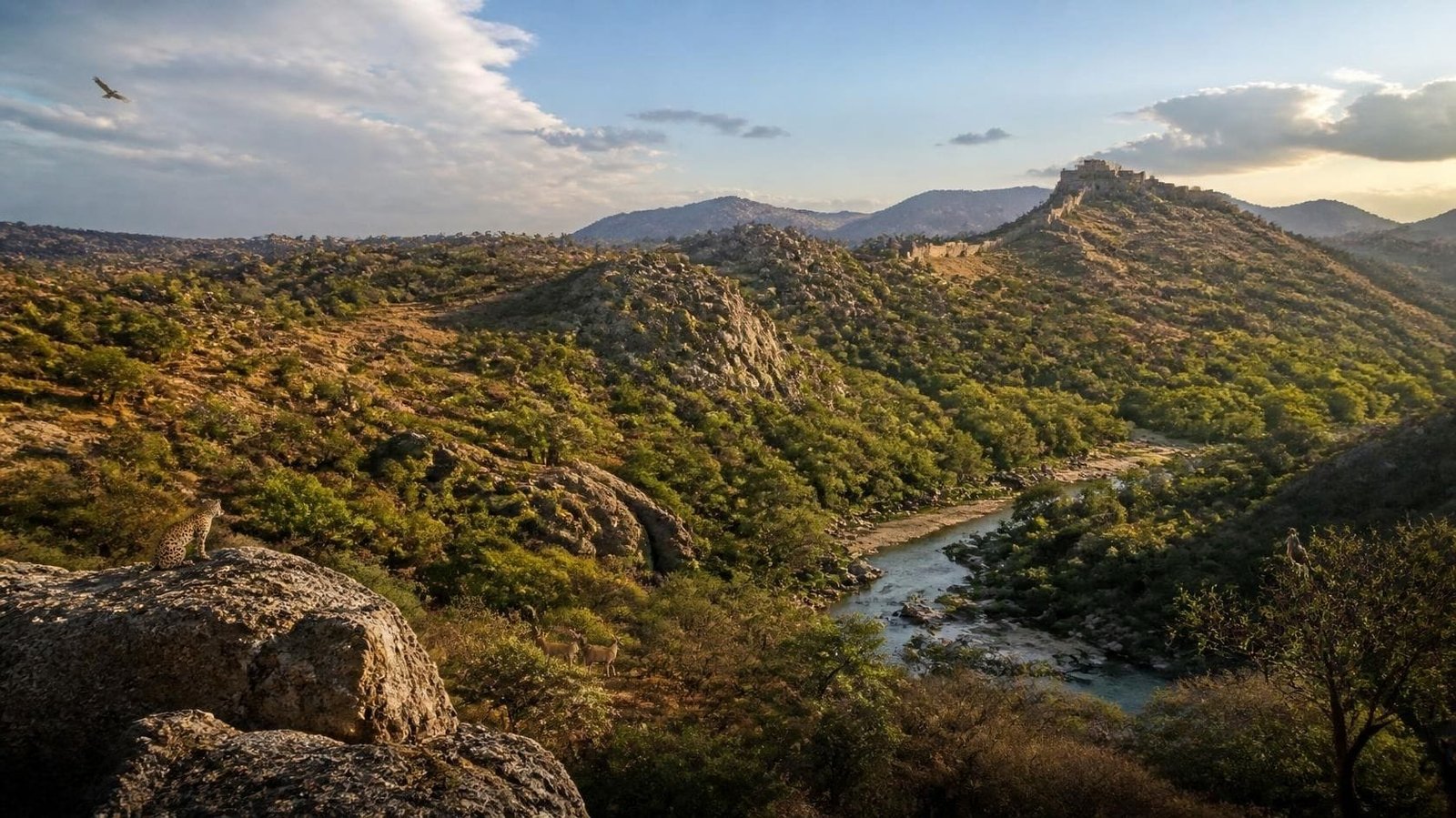
The Aravalli plays a special role in understanding the geography, climate, and environment of Rajasthan. ...
The Aravalli Mountain Range also influences the drainage and water resources of Rajasthan. Its hills and valleys act as important watersheds, helping collect and channel rainwater into rivers, streams, lakes, and groundwater systems.
The importance of the Aravalli is not limited to physical geography. ...
Aravalli Mountain Range: An Introduction
The Aravalli Mountain Range is one of the oldest mountain systems in India. It mainly passes through Rajasthan and is generally considered to extend from the Delhi-Haryana region to Gujarat. Geologically, the formation of the Aravalli is associated with extremely ancient geological processes, which makes it one of the important ancient mountain systems of the Indian subcontinent.
The Aravalli plays a special role in understanding the geography, climate, and environment of Rajasthan. The mountain range has an important influence in dividing the state into different geographical and climatic regions. The Aravalli region is also important for watersheds, vegetation, wildlife, and local water resources. Several small and large rivers and streams are associated with its mountain slopes and valleys.
The importance of the Aravalli is not limited to physical geography. It has also played an important role in the history, culture, strategic politics, and economic development of Rajasthan. In several historical regions, including Mewar, the Aravalli hills influenced natural defence, fort construction, and political activities. At the same time, the mineral resources found in this region have also contributed to the economy of Rajasthan.
Introduction to the Aravalli Mountain Range
Meaning of the Name Aravalli
The name Aravalli is believed to be associated with Sanskrit words. It is generally explained as meaning a “line of peaks” or a chain of hills. In reality, the Aravalli is not a continuous high mountain wall but an extensive mountain system consisting of numerous hills, mountain peaks, valleys, and passes. This geographical characteristic distinguishes it from many of the younger mountain systems of India.
Formation and Geological History
The Aravalli Mountain Range has an extremely ancient geological history. Its formation is associated with mountain-building processes, the transformation of rocks, and prolonged erosion that occurred during very ancient geological periods of the Earth. Over millions and billions of years, wind, water, and other natural forces continuously changed its height and shape. As a result, the Aravalli hills are now relatively low, highly eroded, and fragmented in appearance.
Importance as an Ancient Mountain System
The Aravalli is counted among the ancient mountain systems of the world. Its importance is not limited to geological history. It has also played an important role in the geography, water resources, vegetation, biodiversity, and development of human settlements in Rajasthan. The presence of ancient rocks and mineral resources has also made this region economically significant.
Extent and Geographical Location of the Aravalli
Extension from Delhi through Haryana and Rajasthan to Gujarat
The Aravalli Mountain Range is an important mountain system of northwestern India. It is generally considered to extend from the Delhi region through Haryana and Rajasthan to Gujarat. The mountain range extends in a northeast to southwest direction and occupies an important position among the ancient geomorphological structures of the Indian subcontinent.
Major Regions of the Aravalli in Rajasthan
The most extensive and important part of the Aravalli is located in Rajasthan. The mountain range passes through several districts of the state, including Alwar, Jaipur, Ajmer, Rajsamand, Udaipur, and Sirohi. In Rajasthan, the hills appear high in some areas, while in other regions they are broken and fragmented. The Mount Abu region represents the highest part of the Aravalli, where Guru Shikhar is located.
Approximately 700 km Long Mountain System
The total length of the Aravalli Mountain System is generally stated to be around 700 kilometres. However, its actual geographical extent may vary slightly depending on different sources and methods of measurement. Its direction, elevation, and landforms also vary considerably from one region to another. This extensive spread of the Aravalli influences the climate, drainage, vegetation, and human settlements of Rajasthan.
Major Peaks of the Aravalli
Guru Shikhar
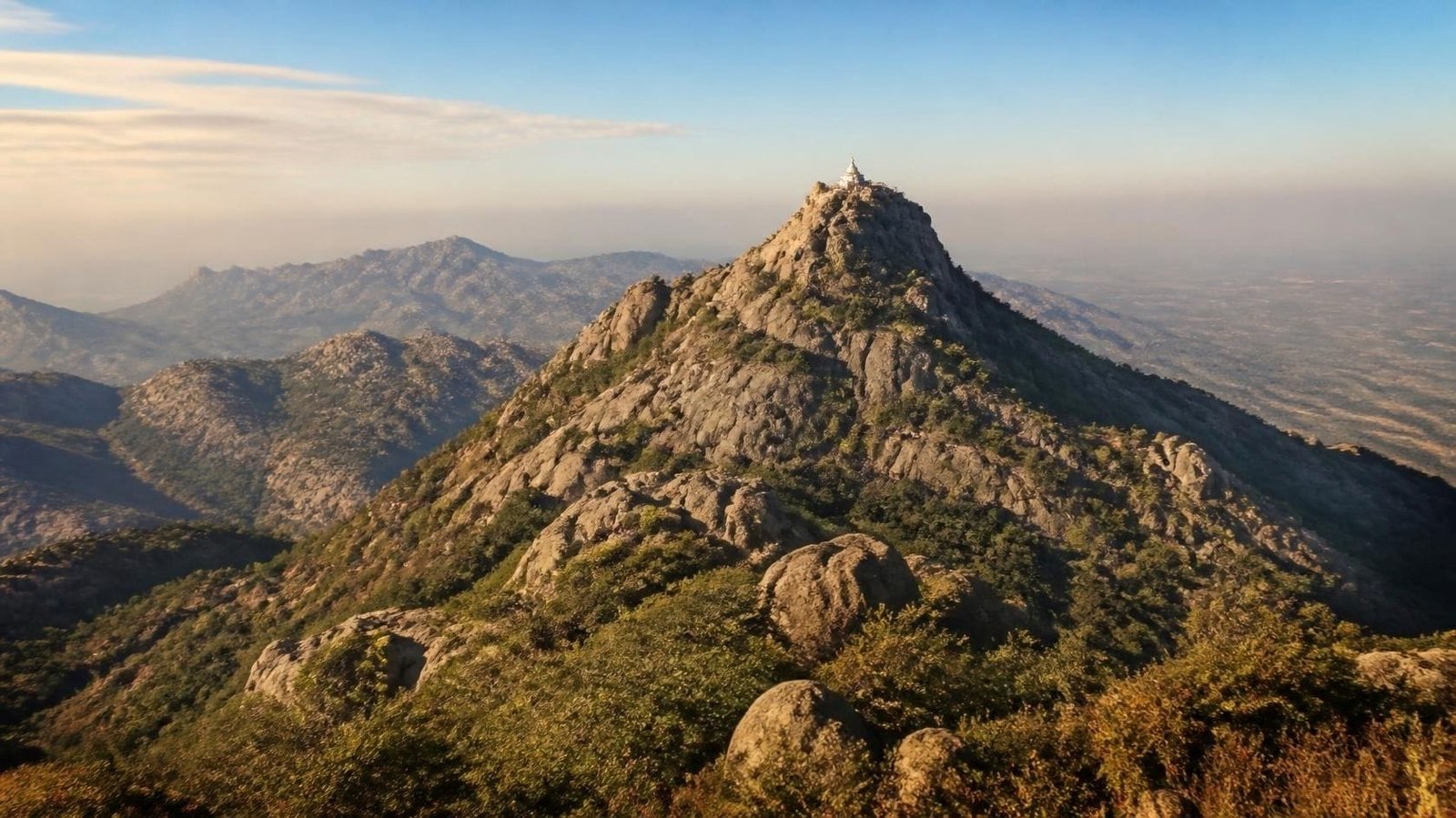
Guru Shikhar is the highest peak of the Aravalli Mountain Range and is located in the Mount Abu region of Rajasthan. It has an elevation of approximately 1,722 metres above sea level. Guru Shikhar is not only the highest peak of the Aravalli but is also one of the important geographical and tourist destinations of Rajasthan. Its name is associated with the religious tradition of Guru Dattatreya.
Ser Peak and Other Major Peaks
Apart from Guru Shikhar, the Aravalli Mountain Range contains several important peaks and mountainous regions. Ser Peak is among the prominent high peaks of the Mount Abu region. In addition, the Aravalli region contains numerous local mountain peaks and elevated hills spread across different parts of Rajasthan. The elevation and geographical characteristics of these peaks vary from one region to another.
Relationship Between Guru Shikhar and Mount Abu
Mount Abu is a major hill station of Rajasthan and forms an important part of the southwestern mountainous structure of the Aravalli. Guru Shikhar is located within the Mount Abu mountainous region. Its elevation, natural environment, and relatively cooler climate distinguish it from the plains of Rajasthan. Therefore, the relationship between Guru Shikhar and Mount Abu has special significance in terms of the geography, tourism, and natural heritage of Rajasthan.
Role of the Aravalli in the Geography of Rajasthan
Role in Dividing Rajasthan into Two Broad Geographical Regions
The Aravalli Mountain Range plays an important role in understanding the physical geography of Rajasthan. It extends diagonally across the state and broadly separates the western desert region from the relatively more humid southeastern part of Rajasthan. Although this division is not an absolute geographical boundary, the Aravalli strongly influences the distribution of rainfall, drainage, vegetation, and landforms across the state.
Western Arid Region and Relatively Wetter Southeastern Region
The region to the west and northwest of the Aravalli is generally more arid and includes large parts of the Thar Desert. Rainfall is relatively low and the landscape is dominated by sandy plains and dunes. In contrast, areas to the southeast of the Aravalli generally receive comparatively higher rainfall and have more varied vegetation, agricultural land, and river systems. The Aravalli therefore forms an important geographical factor influencing the climatic differences within Rajasthan.
Influence on Drainage and Rivers
The Aravalli also has a significant influence on the drainage pattern and river systems of Rajasthan. Its slopes act as important watersheds from which several rivers and streams originate or receive tributary flows. Rivers such as the Banas, Luni, and Sabarmati are associated with different parts of the Aravalli region. The direction of slopes and valleys helps determine the movement of surface water and the formation of drainage basins.
The Aravalli Mountain Range also influences the drainage and water resources of Rajasthan. Its hills and valleys act as important watersheds, helping collect and channel rainwater into rivers, streams, lakes, and groundwater systems.
Aravalli and Rivers
Banas River
The Banas River is one of the important rivers associated with the Aravalli region of Rajasthan. It originates in the Khamnor Hills of the Aravalli Range and flows mainly through southeastern Rajasthan before joining the Chambal River. Its basin supports agriculture, settlements, and several local water resources. The Banas demonstrates the important relationship between the Aravalli hills and the drainage system of Rajasthan.
Sabarmati River
The Sabarmati River originates in the Aravalli region of Rajasthan and flows southwestward into Gujarat before reaching the Gulf of Khambhat. Its upper catchment is closely associated with the hills and valleys of the southern Aravalli. The river is important for the water resources and agricultural activities of the regions through which it flows.
Luni and Sukri Rivers
The Luni River originates near the Aravalli region close to Ajmer and flows westward through Rajasthan toward the Rann of Kutch. Unlike many perennial rivers, its flow is highly seasonal. The Sukri River is an important tributary of the Luni and drains parts of the western Aravalli region. Together, these rivers illustrate how the slopes of the Aravalli influence westward drainage in Rajasthan.
Role of the Aravalli in Catchment Areas
The Aravalli hills act as important watersheds and catchment areas. Their slopes collect and channel rainwater into valleys, streams, rivers, lakes, and groundwater systems. The mountain terrain therefore influences the direction of surface runoff, the formation of drainage basins, and the availability of water in surrounding areas. Protecting the Aravalli is consequently important for maintaining water security, groundwater recharge, and ecological balance.
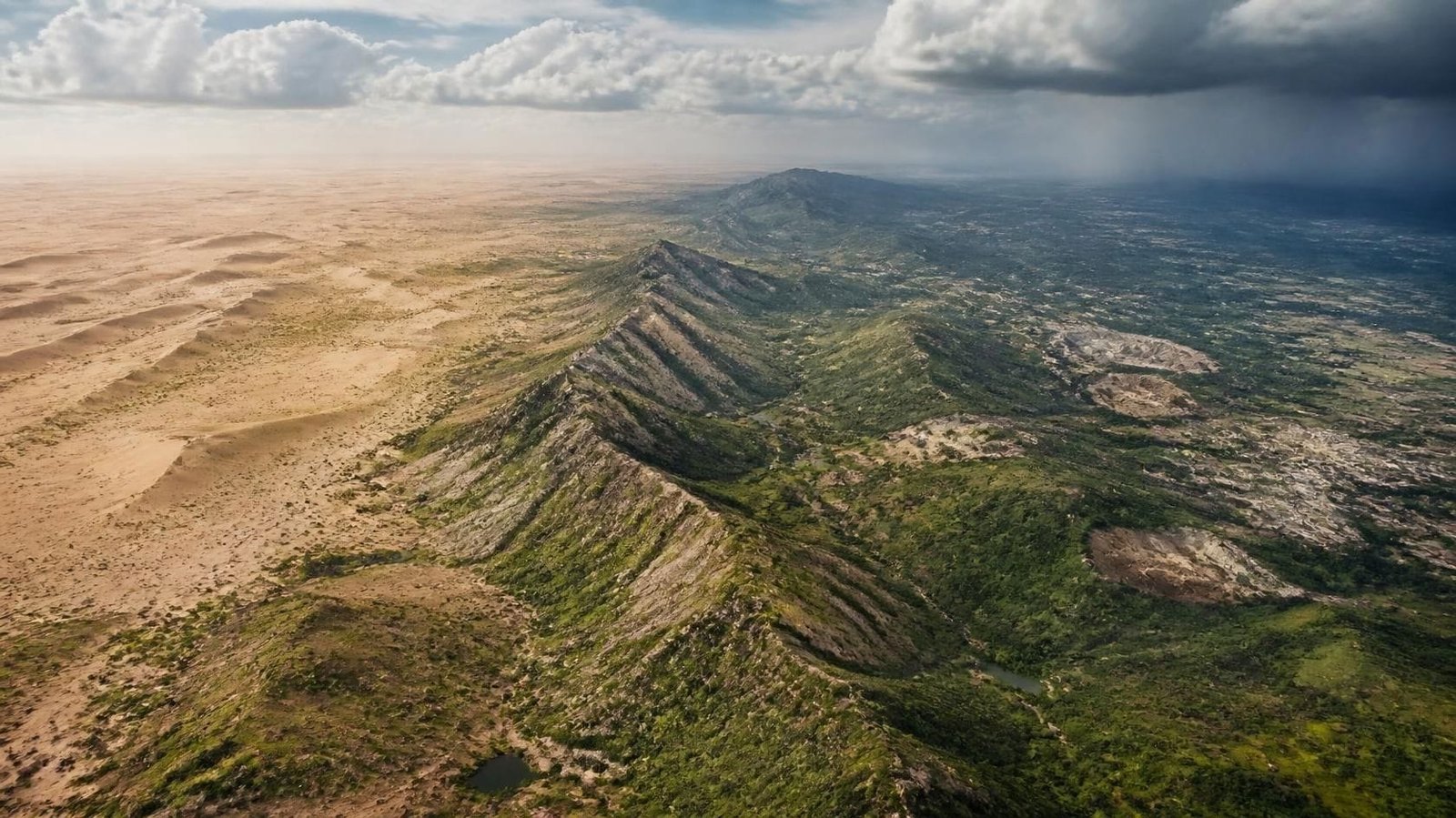
The geographical position of the Aravalli Mountain Range also makes it an important natural feature for understanding the regional climate and rainfall patterns of Rajasthan. Its orientation and varied topography influence local drainage, vegetation, and moisture distribution.
Aravalli and the Climate of Rajasthan
Influence on Monsoon Winds
The Aravalli Mountain Range plays an important geographical role in shaping the climate of Rajasthan. It extends broadly from northeast to southwest and interacts with the regional movement of monsoon winds. However, unlike the Himalayas, the relatively low and discontinuous Aravalli does not form a major barrier to the southwest monsoon. Its orientation and topography nevertheless influence local rainfall patterns, wind movement, drainage, and the distribution of moisture across different parts of Rajasthan.
Relationship with the Regional Distribution of Rainfall
Rainfall in Rajasthan varies considerably from one region to another, and the Aravalli Range is one of the geographical factors associated with this variation. The southeastern and southern parts of the state generally receive more rainfall than the arid western regions. Differences in elevation, slope, wind direction, and distance from moisture sources all contribute to this pattern. The Aravalli therefore interacts with other physical factors to influence the regional distribution of rainfall in Rajasthan.
Potential Role in Controlling Desertification
The Aravalli is also important in discussions about desertification and land degradation in northwestern India. Its forests, vegetation cover, and rocky terrain can help stabilize soil, support biodiversity, and slow the movement of wind-blown sand in some areas. However, this role depends strongly on the condition of the ecosystem. Deforestation, mining, urban expansion, and land degradation can reduce the ecological effectiveness of the Aravalli landscape.
Historical Importance of the Aravalli
Ancient Human Settlements
The Aravalli Mountain Range has played an important role in the development of human settlements in northwestern India. Its valleys, water sources, forests, and mineral-rich areas provided favourable conditions for early communities. Archaeological evidence from the wider Aravalli region indicates a long history of human activity, agriculture, trade, and metal working. The availability of natural resources helped settlements develop around the hills and adjoining plains.
Connection with Mewar and Rajput States
The Aravalli has a close geographical and historical connection with Mewar and several Rajput-ruled regions of Rajasthan. The rugged hills and valleys provided natural protection and influenced patterns of settlement, warfare, and political control. The landscape of the Aravalli was particularly important in the history of Mewar, where mountainous terrain became closely associated with the region's forts, settlements, and military strategies.
Development of Forts and Strategic Routes
The difficult terrain of the Aravalli encouraged the development of hill forts, defensive positions, passes, and strategic routes. Forts were often located on elevated or naturally protected sites, allowing rulers to monitor important routes and defend their territories. Mountain passes also connected different settlements and helped facilitate movement, trade, and military campaigns across Rajasthan.
Economic Importance of Mineral Resources
The Aravalli region has also been economically important because of its rich mineral resources. Copper, zinc, lead, marble, and other minerals have been extracted from different parts of the range. Mining and metalworking contributed to local economies and supported traditional industries and trade networks.
Mineral Resources of the Aravalli
Copper
The Aravalli Mountain Range is historically important for its copper deposits. The Khetri region of Rajasthan is particularly known for copper mineralization and has been associated with copper mining for a long period. Copper has played an important role in the development of metalworking and mining activities in the region.
Zinc
The Aravalli region is also an important source of zinc. The mineral-rich belts of southern Rajasthan contain significant deposits, and the Zawar area near Udaipur has a long history of zinc and lead mining. These resources have contributed to the development of Rajasthan's mineral-based industries.
Lead
Lead is another important mineral associated with the Aravalli geological belt. Lead deposits are found particularly in southern Rajasthan, often occurring together with zinc and other associated minerals. Mining and processing of these ores have supported industrial and economic activities in the region.
Marble and Other Minerals
Apart from metallic minerals, the Aravalli region is well known for marble, limestone, granite, feldspar, quartz, and other minerals. Rajasthan's marble-producing areas have gained national and international importance, while other non-metallic minerals support construction, manufacturing, and related industries.
Economic Importance of Mining
Mineral extraction has significant economic importance for Rajasthan. It generates employment, supports mineral-based industries, contributes to state revenue, and promotes infrastructure and regional economic activity. At the same time, sustainable mining practices are essential because excessive mining can affect forests, groundwater, biodiversity, and the fragile ecology of the Aravalli landscape.
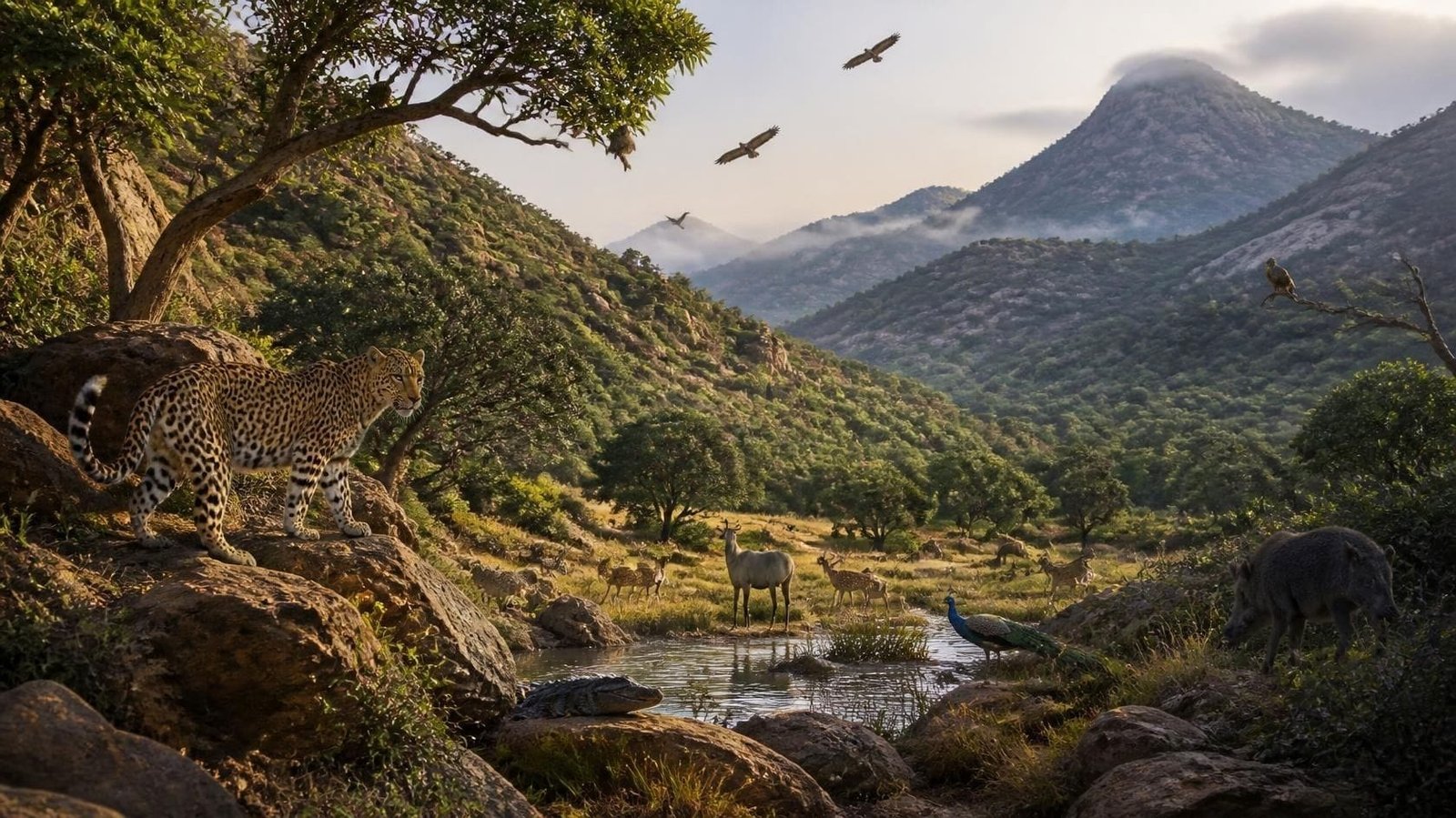
The biodiversity of the Aravalli Mountain Range supports several important wildlife habitats across Rajasthan. Forests, rocky hills, valleys, grasslands, and water sources provide suitable environments for a variety of plants, birds, mammals, and reptiles.
Biodiversity of the Aravalli
Vegetation
The Aravalli Mountain Range supports a diverse range of vegetation adapted to the varied climate, soil, and elevation of the region. Dry deciduous forests, thorny shrubs, grasses, and other native plant species are commonly found across different parts of the range. In areas with better moisture and forest protection, vegetation is relatively denser. These forests help conserve soil, support groundwater recharge, regulate local temperatures, and provide habitat for wildlife.
Wildlife
The Aravalli landscape provides habitat for a variety of wildlife species, including leopards, deer, nilgai, wild boar, hyenas, jackals, foxes, and numerous species of birds and reptiles. The diversity of habitats across hills, valleys, forests, grasslands, and water bodies makes the Aravalli ecologically significant for Rajasthan and northwestern India.
Sariska, Kumbhalgarh and Mount Abu
Important biodiversity areas associated with the Aravalli include Sariska, Kumbhalgarh, and Mount Abu. The Sariska landscape is well known for its tiger habitat and diverse wildlife. Kumbhalgarh supports forests and wildlife in the southern Aravalli region, while Mount Abu has distinctive vegetation and species associated with its relatively cooler and more humid environment.
Importance of Wildlife Corridors
Wildlife corridors are essential for connecting fragmented habitats. They allow animals to move between forests in search of food, water, shelter, and breeding areas. Maintaining ecological connectivity across the Aravalli is therefore important for genetic diversity, population stability, and long-term wildlife conservation.
Aravalli and Desertification
Role of the Aravalli in Limiting the Spread of the Thar Desert
The Aravalli Mountain Range forms an important ecological landscape between the arid regions of western Rajasthan and the more relatively humid areas to the southeast. Its forests, vegetation, rocky terrain, and natural drainage systems can help stabilize soil and reduce land degradation in parts of the region. Therefore, a healthy Aravalli ecosystem can contribute to limiting the expansion and intensification of desertification, although it is not an absolute barrier against the spread of the Thar Desert.
Deforestation and Land Degradation
Deforestation, mining, overgrazing, urban expansion, and unplanned development can weaken the ecological condition of the Aravalli. Loss of vegetation exposes the soil to wind and water erosion, reduces moisture retention, and can affect groundwater recharge. Continuous land degradation may also fragment wildlife habitats and reduce the landscape's ability to withstand drought and climatic stress.
Environmental Impact in Delhi-NCR and Rajasthan
The environmental condition of the Aravalli has significance beyond Rajasthan. In the Delhi-NCR and adjoining Haryana region, remaining Aravalli forests and hills contribute to green cover, biodiversity, groundwater recharge, and local environmental regulation. In Rajasthan, degradation of the range can contribute to soil erosion, habitat loss, reduced vegetation cover, and increasing ecological pressure in already water-stressed areas.
Current Challenges Facing the Aravalli
Illegal and Excessive Mining
Illegal and excessive mining is one of the major challenges facing the Aravalli Mountain Range. Mining activities can remove hills, disturb natural drainage systems, damage vegetation, and increase soil erosion. Unsustainable extraction of minerals may also affect groundwater recharge and wildlife habitats, particularly in ecologically sensitive areas.
Urbanization and Infrastructure Development
Rapid urbanization, roads, industries, and infrastructure development are putting increasing pressure on the Aravalli landscape. Expansion of cities and settlements can fragment natural habitats and reduce the continuity of forests and open spaces. These changes are particularly significant around rapidly developing areas of Rajasthan, Haryana, and the Delhi-NCR region.
Deforestation and Encroachment
Deforestation and encroachment can reduce natural vegetation and convert ecologically important land into agricultural, residential, or commercial areas. Loss of vegetation increases soil erosion and weakens the ability of the landscape to retain water. Habitat fragmentation also makes it more difficult for wildlife to move safely between different forest areas.
Water Stress
Increasing water scarcity is another major concern in Aravalli regions. Reduced vegetation, groundwater extraction, urban growth, and degradation of traditional water systems can affect groundwater recharge and local water availability.
Loss of Biodiversity
Habitat destruction, pollution, mining, and fragmentation can contribute to the loss of biodiversity. Protecting forests, wildlife habitats, water sources, and ecological corridors is therefore essential for maintaining the long-term ecological health of the Aravalli.
Conservation Efforts for the Aravalli
Role of the Government and Judiciary
The government and judiciary have an important role in protecting the Aravalli Mountain Range. Government authorities implement environmental laws, regulate land use, protect forest areas, and take measures against activities that may damage ecologically sensitive areas. Courts have also issued directions in different cases concerning mining, forest protection, land use, and environmental conservation. Effective implementation and regular monitoring remain essential for long-term protection.
Forest Conservation
Forest conservation is one of the most important measures for maintaining the ecological health of the Aravalli. Protecting existing forests helps conserve soil, support wildlife, improve groundwater recharge, and maintain natural habitats. Preventing unnecessary clearing of native vegetation is particularly important in environmentally sensitive areas.
Afforestation and Ecological Restoration
Afforestation, reforestation, and ecological restoration can help recover degraded landscapes. Restoration programs should focus on native plant species, soil conservation, water harvesting, and the revival of natural habitats rather than simply increasing tree numbers.
Control of Mining
Effective mining regulation is necessary to reduce damage to hills, forests, groundwater, and wildlife habitats. Legal mining should follow environmental conditions, while illegal mining and unauthorized extraction require strict enforcement and monitoring.
Participation of Local Communities
Local communities are essential partners in Aravalli conservation. Community participation in forest protection, water conservation, sustainable grazing, restoration, and biodiversity monitoring can make conservation efforts more effective and locally sustainable.
The Future of the Aravalli
Why Conservation Is Necessary
The future of the Aravalli Mountain Range depends largely on how effectively its forests, hills, water systems, and biodiversity are protected. The Aravalli is a fragile ecological landscape that supports wildlife, vegetation, groundwater recharge, and human settlements. Protecting it from uncontrolled mining, deforestation, encroachment, and unsustainable development is therefore important for maintaining long-term environmental stability.
Water Security and Environmental Balance
The Aravalli has an important connection with water security in Rajasthan and adjoining regions. Forests, hills, soil, and natural drainage systems help collect and regulate rainwater and support groundwater recharge. Conservation of these natural systems can contribute to more sustainable water availability. At the same time, healthy vegetation helps conserve soil, support biodiversity, reduce land degradation, and maintain local ecological balance.
Long-Term Importance for Rajasthan and Northwestern India
The Aravalli has long-term significance for Rajasthan and northwestern India because of its influence on geography, water resources, biodiversity, climate-related conditions, and human settlements. Its conservation can support ecological resilience in a region that faces recurring challenges such as water scarcity, land degradation, and habitat fragmentation. Future development therefore needs to balance economic activity with protection of the Aravalli's natural landscape.
Protecting the Aravalli Mountain Range is important for the ecological future of Rajasthan. Conservation of its forests, water systems, wildlife habitats, and natural landscapes can contribute to long-term environmental stability and sustainable development.
Conclusion: The Importance of the Aravalli
The Aravalli Mountain Range is much more than a chain of ancient mountains. It is a natural system closely connected with the water resources, forests, climate, biodiversity, and historical and cultural identity of Rajasthan. Its hills, valleys, forests, and drainage systems have influenced human settlements, agriculture, wildlife, and economic activities for centuries.
The ecological importance of the Aravalli becomes even more significant in the context of water scarcity, land degradation, urban expansion, mining, and biodiversity loss. Healthy forests and natural landscapes can support groundwater recharge, soil conservation, wildlife habitats, and ecological stability. Therefore, protecting the Aravalli is closely linked with the long-term environmental security of Rajasthan and adjoining parts of northwestern India.
At the same time, conservation requires a balanced approach that combines environmental protection, responsible development, scientific land management, regulated mining, forest restoration, and local community participation. Protecting the remaining natural areas and restoring degraded landscapes can help preserve the ecological functions of the Aravalli for the future.