
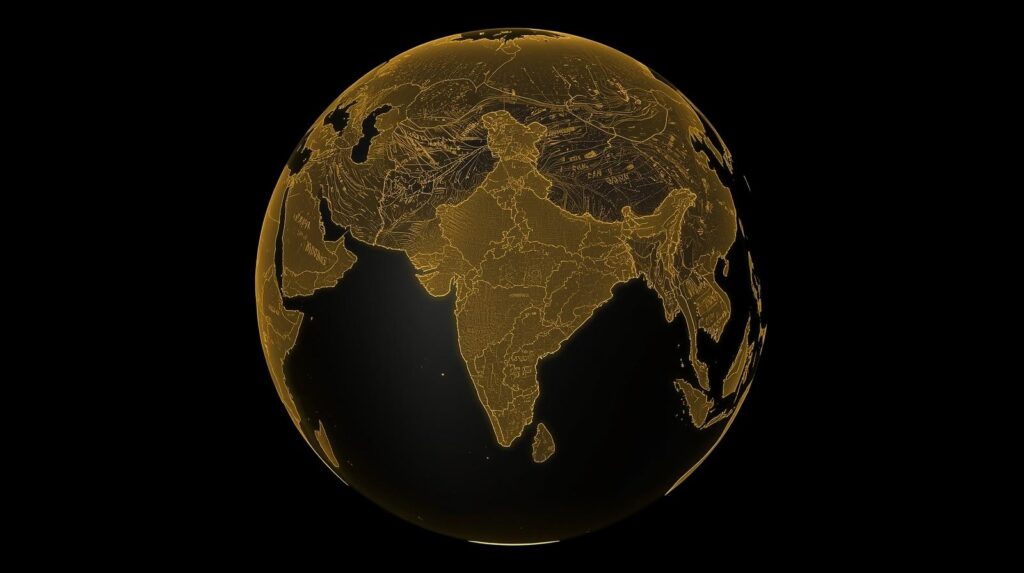
Introduction — The Beginning of India's Neighbourhood Story
When we talk about India’s neighbouring countries, we do not merely discuss geographical borders — we step into a world of shared histories, intertwined cultures, and common aspirations. This article draws upon my personal experiences and academic reflections, tracing how India’s neighbours have shaped its identity and regional outlook.
I still remember the first time I saw the map of India in school — surrounded by Pakistan, China, Nepal, Bhutan, Bangladesh, Myanmar, Sri Lanka, and Afghanistan. I wondered: beyond those borders, do people dream, feel, and hope the same way we do? That curiosity gradually transformed into a lifelong pursuit of understanding.
The purpose of this piece is not just to present facts, but to narrate a story — a human story of relationships, challenges, and shared destinies. Through this journey, you and I will cross borders not with maps, but with minds and hearts — discovering how proximity can lead to peace, and how diversity can create unity.
Historical Background of India’s Neighbouring Countries
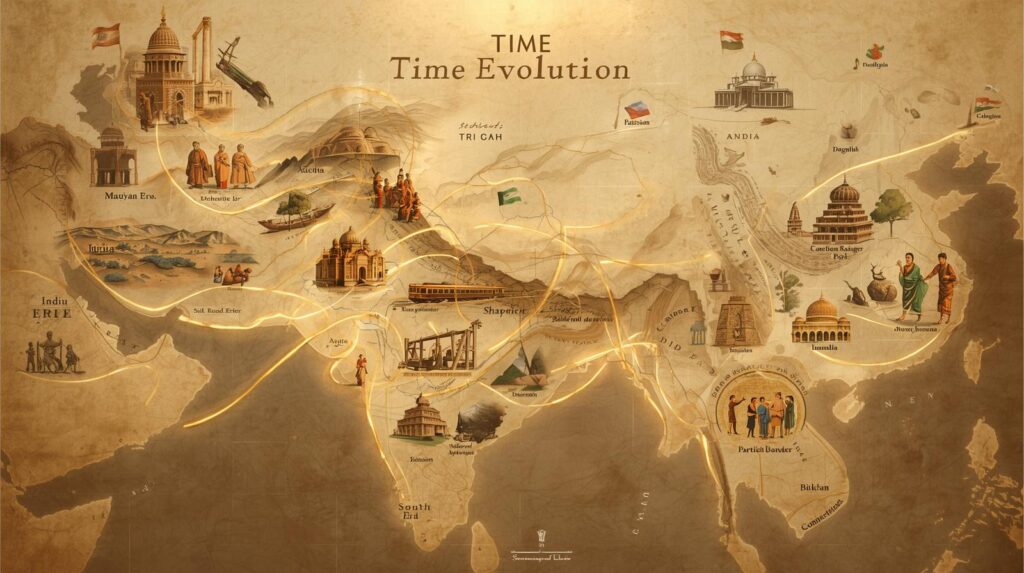
The history of India’s Neighbouring Countries is deeply rooted in centuries of shared trade, migration, and cultural evolution. Long before modern borders existed, the Indian subcontinent and surrounding regions were connected through rivers, routes, and relationships. Empires rose and fell, but civilizational bonds continued to link these lands together.
Ancient Civilisations and Early Connections
From the Indus Valley Civilization to the Mauryan Empire, interactions among India’s Neighbouring Countries were intense and organic. Trade routes like the Silk Road and the Uttarapatha allowed goods, ideas, and faiths to flow freely. Buddhism became a spiritual bridge connecting India with Sri Lanka, Nepal, Myanmar, and beyond.
Medieval Period — Cultural and Political Crossroads
During the medieval era, borders were fluid and cultural exchange was constant. Rulers from Central and West Asia introduced new languages, architecture, and artistic traditions, shaping the shared identity of India’s Neighbouring Countries. Bengal and Assam maintained close ties with present-day Bangladesh and Myanmar through trade and kinship.
These centuries reflected convergence rather than division. Food, music, textiles, and traditions in border regions still testify to a long history of coexistence and exchange.
Modern Era — Partition, Pain, and New Beginnings
The twentieth century redefined South Asia’s geography and psychology. The Partition of 1947 divided territories but could not erase centuries of shared heritage among India’s Neighbouring Countries. Since independence, relationships have evolved through diplomacy, conflict, cooperation, and regional aspirations.
This layered historical background continues to influence India’s strategic outlook and its engagement with neighbouring nations today.

Cultural and Human Connections — The Threads Beyond Borders
The relationship between India and its neighbouring countries is not limited to geography or politics. It is deeply rooted in culture, tradition, and shared humanity. For centuries, language, faith, and art have served as invisible bridges connecting communities across borders. These connections have shaped collective memories, emotions, and the rhythm of daily life — reminding us that before nations were born, civilizations already knew one another.
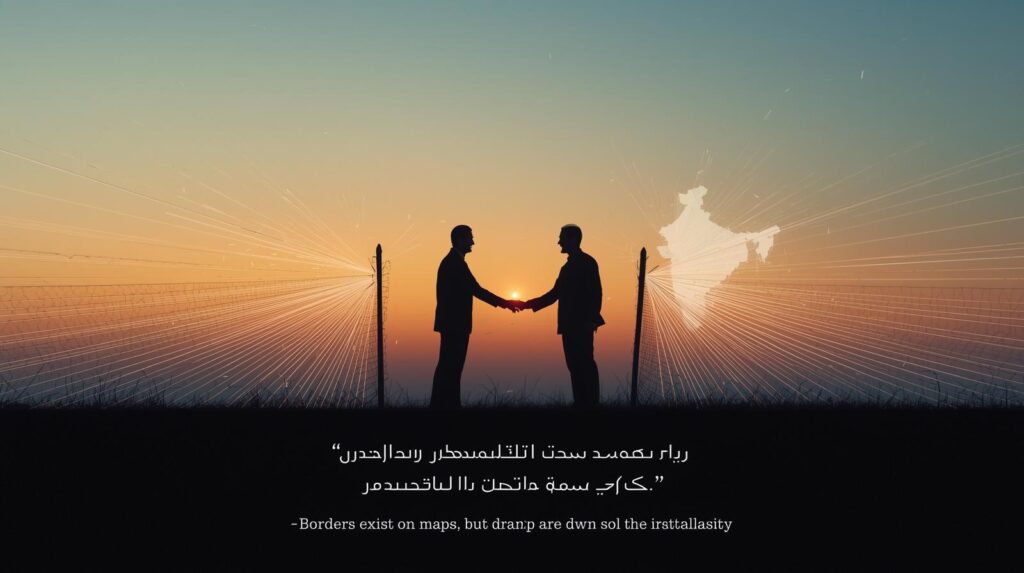
Borders can divide maps, but folk tales, food, and festivals often flow seamlessly across them. In villages of India, Nepal, Bangladesh, Bhutan, and Sri Lanka, songs and stories echo with similar emotions — of love, courage, and the eternal quest for peace. The cultural identity of South Asia is like a fabric woven with many colours, yet held together by one common thread — humanity.
Folklore, Food, and Festivals — A Shared Heritage
The epics of Ramayana and Mahabharata are not confined within India’s borders. They have shaped the artistic and spiritual traditions of Nepal, Sri Lanka, Myanmar, and even Thailand. Temples like the “Sita Amman Temple” in Sri Lanka or “Janaki Mandir” in Nepal stand as living proof of this timeless cultural exchange. These stories are not merely mythological — they are emotional bridges that have connected hearts across centuries.
Food, too, speaks the language of unity. The kitchens of India and Bangladesh share the aroma of mustard, fish, and spices; Nepal’s momos, Bhutan’s ema datshi, and Sri Lanka’s spicy “hopper” all carry flavours influenced by the same ancient Trade routes and shared memories. Each dish tells a story — of travellers, traders, and families who carried recipes instead of passports.
Festivals erase boundaries in the most beautiful way. Durga Puja glows brightly in both Kolkata and Dhaka, Diwali illuminates homes from Delhi to Kathmandu, and Vesak (Buddha Purnima) fills Sri Lanka and India with a common sense of spiritual joy. These celebrations are not just rituals — they are affirmations of how deeply the people of South Asia are connected.
A Short Story — My Personal Experience
A few years ago, I attended a small Diwali celebration in Pokhara, Nepal. Local Nepalis and visiting Indians lit lamps together along the lakeside. No one asked who belonged to which country — only laughter, songs, and shimmering lights filled the air. In that moment, I realized that true boundaries exist only on maps, not between hearts.
Similarly, during a visit to Bangladesh, I attended a Baul music gathering in Kushtia. The singers performed verses inspired by Indian poets like Lalon and Kabir, blending philosophy with melody in a way that transcended nations. One elderly singer told me, “Songs do not belong to countries; they belong to those who feel them.” His words still echo within me — a reminder that cultural dialogue is the most peaceful diplomacy of all.
These experiences taught me that neighbours are not just nations — they are emotional reflections of one another. When we taste their food, hear their songs, or join their festivals, we discover new shades of our own culture. This is the true beauty of South Asia — unity in diversity, and diversity that unites.
Understanding India’s Neighbouring Countries
In South Asia, India stands not only as a geographic centre but also as an economic and strategic anchor. Its relationships with neighbouring countries extend beyond politics — encompassing trade, energy, connectivity, and regional stability. India’s foreign policy in the 21st century is shaped largely by how effectively it can sustain mutual growth and balance in the region.
Trade, Borders, and Partnerships
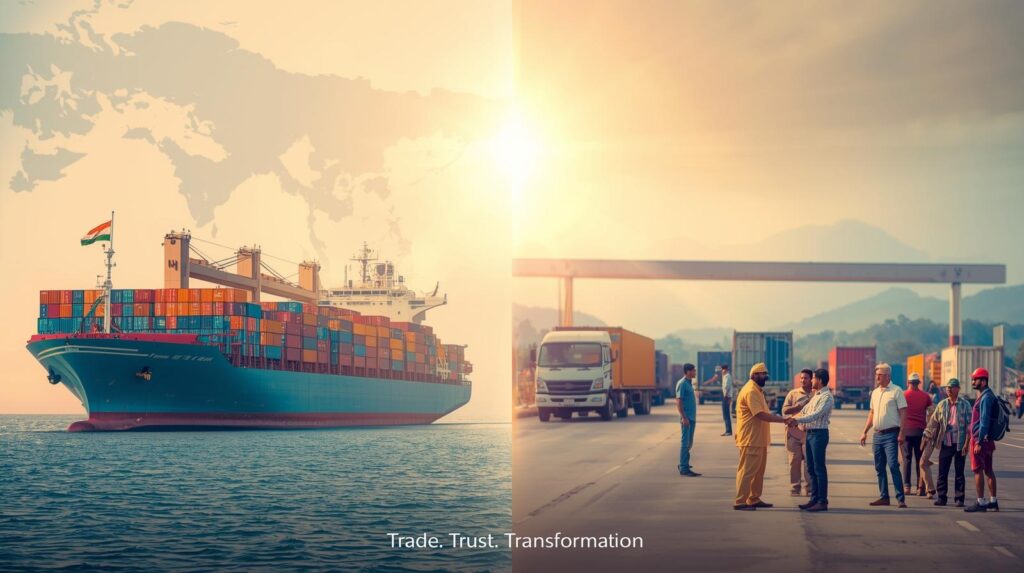
India’s trade relationships with most of its neighbours are centuries old. With Nepal and Bhutan, India shares open borders that allow free movement of goods and people. India exports petroleum, medicines, and consumer goods to these countries, while importing hydropower and forest products — forming a sustainable and mutually beneficial model of cooperation.
Trade with Bangladesh has expanded significantly over the last two decades. Through road and rail corridors, the two countries exchange textiles, agricultural products, electronics, and steel. The Petrapole–Benapole border is one of the busiest land ports in Asia. India also supplies electricity to Bangladesh, symbolising the growing strength of their energy partnership.
India’s relationship with China remains complex — a blend of competition and cooperation. While India imports electronics, machinery, and raw materials from China, it exports pharmaceuticals, steel, and agricultural products in return. However, recurring border tensions in the Himalayas have made this relationship sensitive and strategic. To reduce dependence, India has introduced policies like Make in India and Atmanirbhar Bharat (Self-Reliant India).
Maritime neighbours like Sri Lanka, Myanmar, and the Maldives are integral to India’s Indian Ocean strategy. Under the SAGAR policy — “Security and Growth for All in the Region” — India promotes port development, maritime security, and capacity building in these nations. Such initiatives strengthen India’s role as a guardian of peace and stability in the Indian Ocean.
In Afghanistan, India has focused on reconstruction and humanitarian projects — building roads, hospitals, schools, and even the Afghan Parliament building. These efforts reflect India’s philosophy of development-driven diplomacy. For India, a stable neighbourhood is not just a political necessity but a moral and strategic commitment.
Personal Case Study — From Local Trade to National Connection
A few years ago, I visited a small border town called Raxaul on the India–Nepal border. Every morning, dozens of trucks loaded with food oil, medicines, and daily goods move towards Nepal, while trucks carrying fruits, timber, and handicrafts enter India. The town hums with the rhythm of commerce, showing how local trade sustains regional prosperity.
I spoke with several small shop owners who told me that whenever the border closes, both sides suffer — not only financially but emotionally. One trader said, “Each truck that crosses the border doesn’t just carry goods; it carries our livelihoods and the hopes of our children.” That statement made me realize how deeply human the idea of economics really is.
Another memorable experience was at the Moreh–Tamu border between India and Myanmar. Local traders exchanged vegetables, fabrics, and wood products daily. Despite language barriers, bargaining and laughter created a sense of friendship. When I asked one merchant what he valued most about border trade, he smiled and said, “We may not speak each other’s language, but we understand the language of exchange and trust.” That moment reflected what no treaty could — the power of human connection in diplomacy.
These interactions taught me that economic cooperation is not confined to documents or summits. It lives in the hands of farmers, artisans, and truck drivers who cross borders every day. When people on both sides see their progress linked with one another’s success, true strategic stability takes root — built on trust, not tension.
Challenges and Opportunities — From Conflict to Cooperation
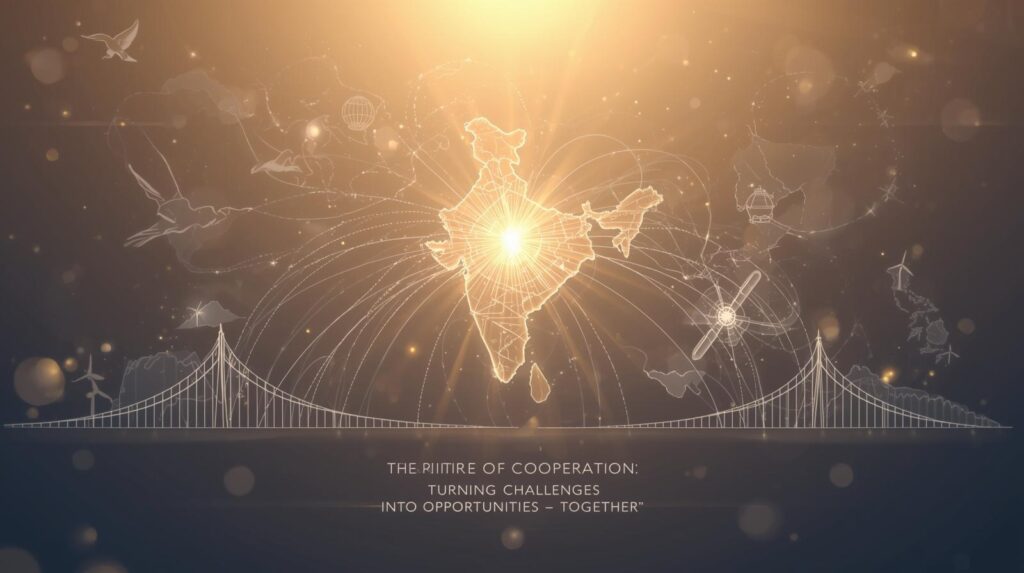
The story of India’s relationship with its neighbours has always been a mixture of cooperation and complexity. Shared geography, history, and culture have created strong ties, yet political disputes and border challenges have occasionally strained these bonds. However, every challenge carries the seed of opportunity — a chance to rethink, rebuild, and reconnect. This philosophy forms the essence of India’s “Neighbourhood First Policy”, which seeks to promote peace, development, and stability in South Asia through mutual trust and collaboration.
Security and Diplomacy — The Art of Balancing Beyond Borders
One of India’s biggest challenges lies in maintaining border security while nurturing healthy diplomatic relationships with neighbouring nations. Tensions along the Line of Actual Control with China and along the Line of Control with Pakistan continue to test India’s strategic patience. Yet, India’s approach to diplomacy has evolved from confrontation to conversation — a balance of firmness and flexibility.
India’s new model of smart diplomacy combines soft power with strategic pragmatism. Initiatives like the Kartarpur Corridor with Pakistan highlighted humanitarian engagement even amidst political tension. Meanwhile, India’s efforts to reduce economic dependency on China through “Atmanirbhar Bharat” (Self-Reliant India) reflect a modern, strategic mindset. This approach underlines that diplomacy today is not limited to foreign offices — it is embedded in trade, technology, and cultural cooperation.
On the security front, India’s navy and air force have become crucial players in the Indian Ocean region. Under the SAGAR policy (Security and Growth for All in the Region), India collaborates with maritime neighbours such as Sri Lanka, Maldives, and Myanmar to ensure a peaceful and secure Indo-Pacific. This vision transforms India from a regional power into a responsible maritime partner.
Future Pathways — Cooperation, Technology, and Trust
Despite political hurdles, the future of South Asia holds immense promise. India and its neighbours can achieve unprecedented growth by investing in economic integration, technological innovation, and regional connectivity. Through regional frameworks such as SAARC (South Asian Association for Regional Cooperation) and BIMSTEC (Bay of Bengal Initiative for Multi-Sectoral Technical and Economic Cooperation), India aims to lead projects that connect people and markets across borders — from rail and road corridors to digital networks and energy grids.
Climate change, health security, and energy sustainability are emerging as key areas of collaboration. India’s global initiative, the International Solar Alliance, has already opened new doors for clean energy cooperation in the region. Similarly, during the pandemic, India provided vaccines and medicines to its neighbours — a shining example of humanitarian diplomacy that strengthened regional trust.
The road ahead lies in dialogue and confidence-building. If South Asian nations prioritize people-to-people contact, shared trade benefits, and environmental responsibility, the region could evolve into a genuine Zone of Peace and Prosperity. The future belongs to those who view their neighbours not as rivals but as partners in progress.
Thus, India’s relationship with its neighbours is not merely a chapter in diplomacy — it is a reflection of its civilizational philosophy. When cooperation outweighs confrontation, South Asia can move together towards a future defined by shared growth and enduring peace.
Lessons from India’s Neighbouring Countries
As I explored the story of India’s Neighbouring Countries, I realized that this subject is not just about politics or geography — it is about human connection, empathy, and shared destiny. Each border carries countless stories of cooperation, resilience, and hope.
The relationships among India’s Neighbouring Countries have survived conflict, transformation, and time. Governments may negotiate treaties, but the bond between ordinary people — traders, artists, students, and families — continues to sustain regional harmony.
This journey taught me that international relations are not shaped only by policy, but also by compassion and understanding. When empathy becomes central to how India engages with its neighbours, cooperation becomes stronger and more sustainable.
If there is one enduring lesson from studying India’s Neighbouring Countries, it is this: dialogue and trust are far more powerful than rivalry and suspicion. South Asia’s future depends not merely on agreements, but on shared values and mutual respect.
Ultimately, thinking beyond borders means recognizing that strength lies in unity. When India and its neighbours walk together toward shared prosperity, South Asia becomes a living example of cooperation in diversity.
Conclusion and The Road Ahead for India’s Neighbouring Countries
The story of India’s Neighbouring Countries is not just about borders or political agreements — it reflects shared histories, cultural bonds, and interconnected futures. Peace and progress in South Asia depend not on dominance but on dialogue, not on competition but on collaboration.
Strengthening relationships among India’s Neighbouring Countries requires cooperation, empathy, and shared development strategies. When nations see one another as partners in progress rather than rivals in politics, regional harmony becomes achievable.
It is time to look beyond divisions and work collectively toward a future where prosperity is shared and stability is sustained. Together, India’s Neighbouring Countries can transform South Asia into a region defined by trust, unity, and collective growth.
Frequently Asked Questions (FAQs)
1. Which countries share land or maritime borders with India?
India shares land borders with Pakistan, China, Nepal, Bhutan, Bangladesh, and Myanmar. It also has close maritime neighbours such as Sri Lanka and the Maldives in the Indian Ocean. These neighbouring countries are strategically important for India's security, trade, and regional diplomacy.
2. Why are India's neighbouring countries strategically important?
India's neighbouring countries are important because they influence border security, regional stability, trade, connectivity, energy cooperation, water-sharing, maritime security, and India's role in South Asia and the Indo-Pacific region. Strong neighbourhood relations are essential for India's economic growth and national security.
3. What is India's 'Neighbourhood First' Policy?
The Neighbourhood First Policy is India's foreign policy initiative that prioritizes stronger political, economic, cultural, and security cooperation with neighbouring countries. The policy emphasizes regional connectivity, infrastructure development, disaster relief, trade, and people-to-people ties to promote peace and shared prosperity.
4. What are the major regional organizations involving India and its neighbours?
India actively participates in regional organizations such as SAARC (South Asian Association for Regional Cooperation), BIMSTEC (Bay of Bengal Initiative for Multi-Sectoral Technical and Economic Cooperation), BBIN (Bangladesh-Bhutan-India-Nepal Initiative), the Indian Ocean Rim Association (IORA), and the International Solar Alliance to strengthen regional cooperation.
5. What are the major challenges in India's relations with neighbouring countries?
India faces several challenges, including border disputes, cross-border terrorism, illegal migration, water-sharing issues, geopolitical competition, maritime security concerns, and balancing relations with major powers. Despite these challenges, diplomacy and regional cooperation remain central to India's foreign policy.
6. How do cultural and historical ties strengthen India's relations with its neighbours?
India shares deep cultural, religious, linguistic, and historical connections with neighbouring countries through Buddhism, Hinduism, Sikhism, shared festivals, Trade routes, literature, and centuries of civilizational exchange. These people-to-people ties continue to strengthen regional goodwill and cooperation.
7. Why are India's neighbouring countries important for UPSC and other competitive exams?
India's neighbouring countries are among the most important topics in Geography, international relations, and Current Affairs. Questions frequently cover international borders, strategic significance, bilateral relations, regional organizations, connectivity projects, maritime security, India's foreign policy, and geopolitical developments in South Asia.
References
- Government of India – Ministry of External Affairs, Official Website
- “India and South Asia: Historical and Strategic Perspectives” by Dr. Shashi Kumar (2021), Rajkamal Publications
- United Nations Development Programme (UNDP) – South Asia Regional Human Development Reports
- Observer Research Foundation (ORF) – “India and Its Neighbours: A Strategic Overview”, New Delhi
- World Bank Open Data – Regional Economic Indicators for South Asia
- South Asian Association for Regional Cooperation (SAARC) – Official Documents and Declarations
- Indian Council of World Affairs (ICWA) – “Neighbourhood Policy and India’s Diplomatic Engagements”, 2022
*All references listed above are used for educational and informational purposes only. You may update this list according to your own research papers, books, or verified online sources.*