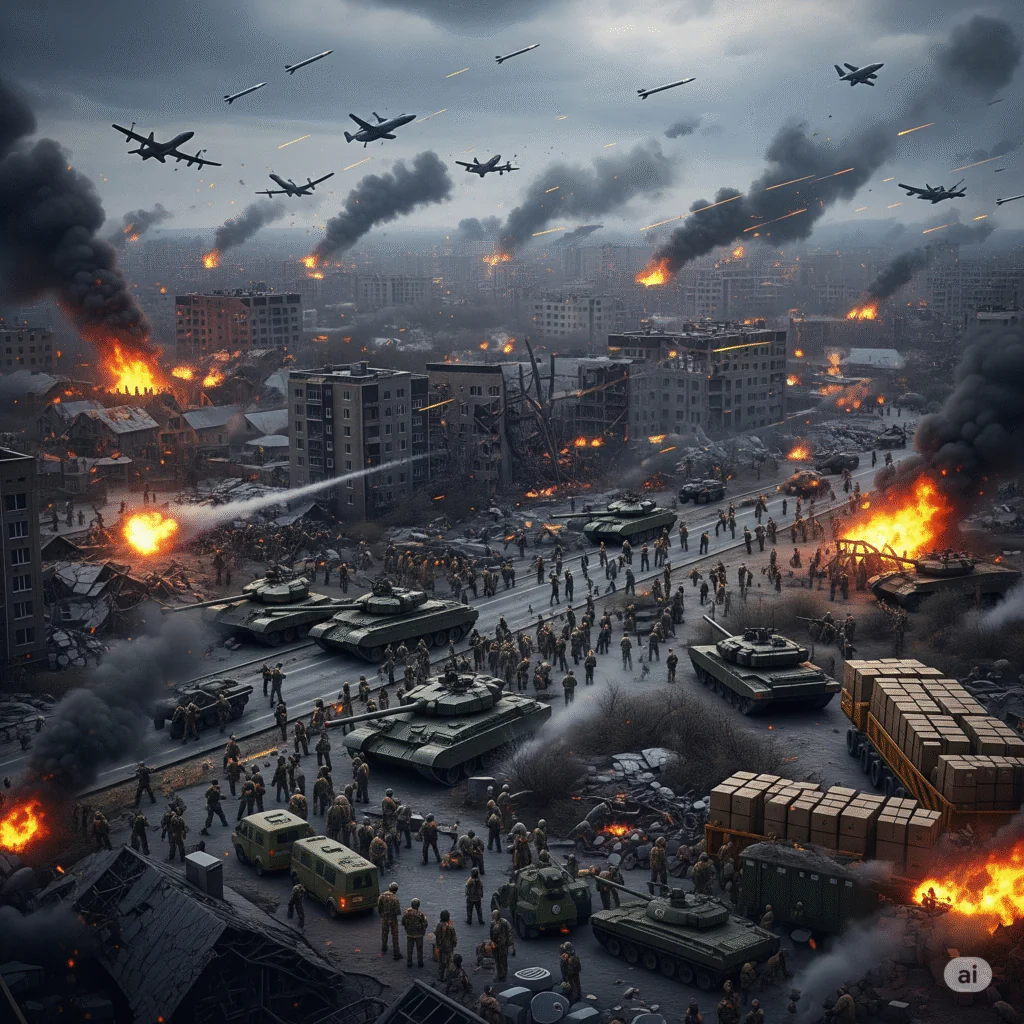
The Russia-Ukraine War

```html Background of R<a href="https://gsstudyhub.com/united-states-america/">US</a>sia Ukraine War (Before 2022)

Background of Russia Ukraine War (Before 2022)

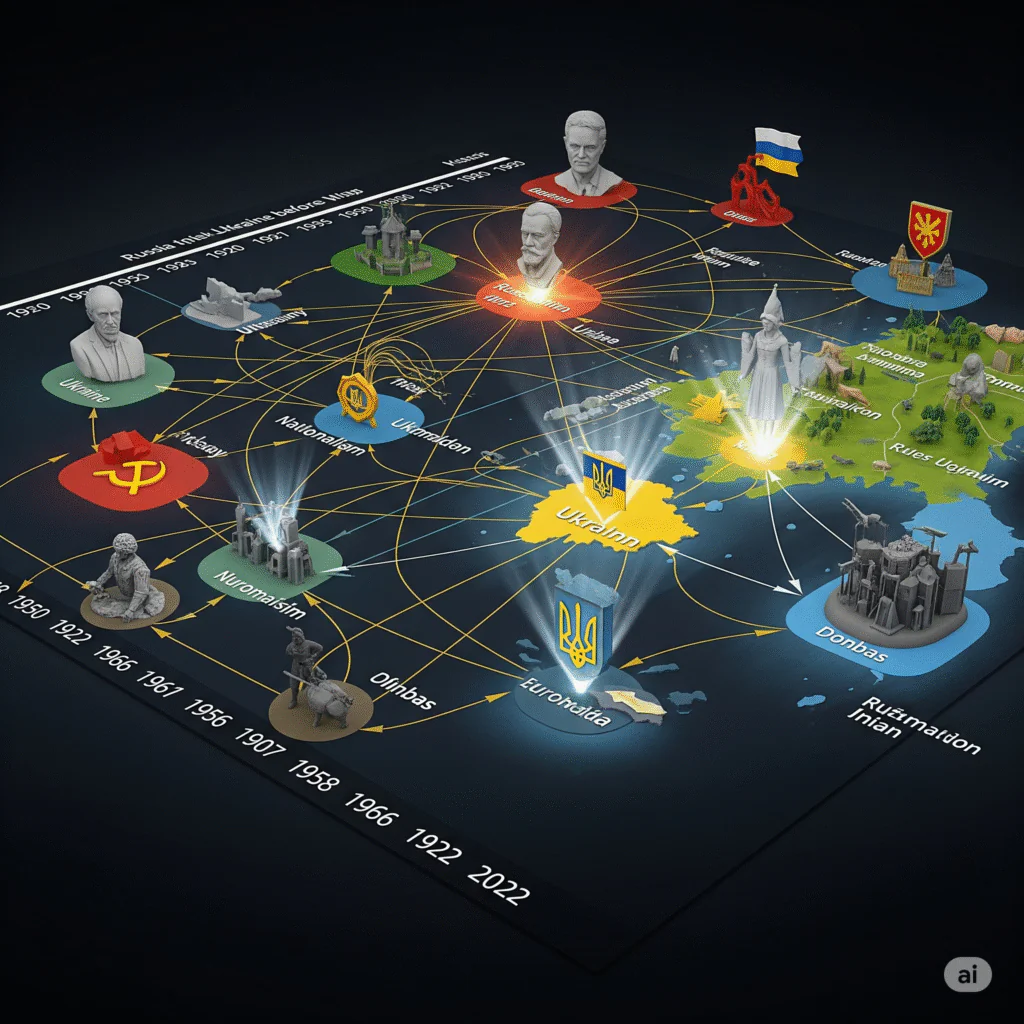
Background of Russia Ukraine War refers to the historical, political, and geopolitical developments that shaped the conflict before 2022. The roots of the Russia-Ukraine war can be traced back to the dissolution of the Soviet Union in 1991, followed by disputes over Crimea, NATO expansion, and regional security concerns.

The background of the Russia-Ukraine war before 2022 involves deep historical, political, cultural, and regional factors. Understanding these developments is essential to comprehend why tensions between Russia and Ukraine gradually escalated into one of the most significant geopolitical conflicts of the 21st century.

Dissolution of the Soviet Union (1991)

After the dissolution of the Soviet Union in 1991, Ukraine emerged as an independent nation. Although Ukraine and Russia shared historical, cultural, and economic ties, Ukraine increasingly sought to establish its own national identity and independent foreign policy.

Russia, which inherited much of the Soviet Union's geopolitical influence, continued to view Ukraine as a strategically important neighbor. This difference in vision became one of the major sources of tension between the two countries.

Ukraine’s Western Tilt

Since independence, many Ukrainian leaders have supported closer relations with Western institutions such as the European Union (EU) and NATO. These efforts aimed to strengthen democratic governance, economic development, and security cooperation.

In 2004, Ukraine witnessed the Orange Revolution, a series of mass protests against electoral fraud and corruption. The movement led to political reforms and signaled Ukraine’s desire to move closer to Western democratic institutions.

Russia interpreted these developments as a challenge to its traditional sphere of influence in Eastern Europe.

⭐ Editor's Choice

Discover a highly rated product selected for its quality, functionality, and positive customer feedback.

View Details & Reviews →

Crimea Conflict (2014)

A major turning point occurred in 2014 during the Euromaidan protests, when Ukrainian President Viktor Yanukovych was removed from office following widespread demonstrations.

In response, Russia annexed Crimea, a strategically important peninsula located on the Black Sea. The annexation triggered international criticism, with many countries viewing it as a violation of international law.

Western nations imposed sanctions on Russia, significantly worsening relations between Russia and the West.

Donbass War

Following the annexation of Crimea, armed conflict broke out in eastern Ukraine, particularly in the Donetsk and Luhansk regions collectively known as Donbass.

Russian-backed separatist groups declared independence from Ukraine, leading to prolonged fighting with Ukrainian government forces. Thousands of civilians and soldiers lost their lives during the conflict.

The Donbass War remained active from 2014 to 2021 and became one of the key factors contributing to the larger conflict that followed in 2022.

Ukraine’s Relationship with NATO and the EU

Ukraine’s growing cooperation with NATO and the European Union became a major concern for Russia. NATO's eastward expansion had already been viewed with suspicion by Russian policymakers.

After 2014, Ukraine strengthened military cooperation with NATO and pursued closer political and economic integration with European institutions.

Russia argued that Ukraine joining NATO would directly threaten its national security and strategic interests.

Russia’s Security Concerns

Russia has historically considered Ukraine an important buffer state between itself and Western military alliances. Russian leaders repeatedly expressed concerns about NATO military infrastructure moving closer to Russian borders.

Additionally, Crimea and the Black Sea region hold immense military and economic significance for Russia, particularly due to the presence of naval facilities and maritime trade routes.

Gateway to the Russia Ukraine War (2014–2021)

Between 2014 and 2021, diplomatic negotiations and ceasefire agreements attempted to reduce tensions. The Minsk Agreements were among the most significant efforts to establish peace in eastern Ukraine.

Despite these agreements, violations continued and a permanent political solution remained elusive. Military buildups, mutual distrust, and geopolitical rivalry intensified throughout this period.

By late 2021, tensions had reached unprecedented levels, with large numbers of Russian troops positioned near Ukraine's borders.

Conclusion

The Background of Russia Ukraine War reveals that the conflict did not begin suddenly in 2022. Instead, it developed over decades through historical grievances, geopolitical competition, territorial disputes, security concerns, and competing visions for Ukraine's future.

The dissolution of the Soviet Union, Ukraine’s growing ties with Western institutions, the annexation of Crimea, and the prolonged Donbass conflict collectively created the conditions that ultimately led to the large-scale invasion of Ukraine in 2022.

Frequently Asked Questions (FAQs)

What caused the Russia Ukraine War?

The conflict was caused by historical disputes, Crimea's annexation, NATO expansion concerns, and long-standing geopolitical tensions between Russia and Ukraine.

Why is Crimea important to Russia?

Crimea provides strategic access to the Black Sea and hosts Russia’s important naval facilities, making it crucial for military and economic interests.

What was the Donbass War?

The Donbass War was a conflict between Ukrainian forces and Russian-backed separatists in eastern Ukraine from 2014 onward.

How did NATO influence Russia-Ukraine relations?

Russia viewed Ukraine’s increasing cooperation with NATO as a threat to its national security, which contributed to rising tensions.

When did tensions between Russia and Ukraine begin?

Tensions increased after the Soviet Union dissolved in 1991 and intensified significantly after the Crimea crisis in 2014.
Background of Russia Ukraine War (Before 2022)
Background of <a href="https://gsstudyhub.com/russia-geography-economy-military-foreign-policy/">Russia</a> <a href="https://gsstudyhub.com/russia-ukraine-war-global-impact/">Ukraine War</a> (Before 2022)USsia-Ukraine war before 2022, including Soviet dissolution, Crimea 2014, NATO relations, and growing geopolitical tensions.">Soviet Union Dissolution">

Background of Russia Ukraine War (Before 2022)

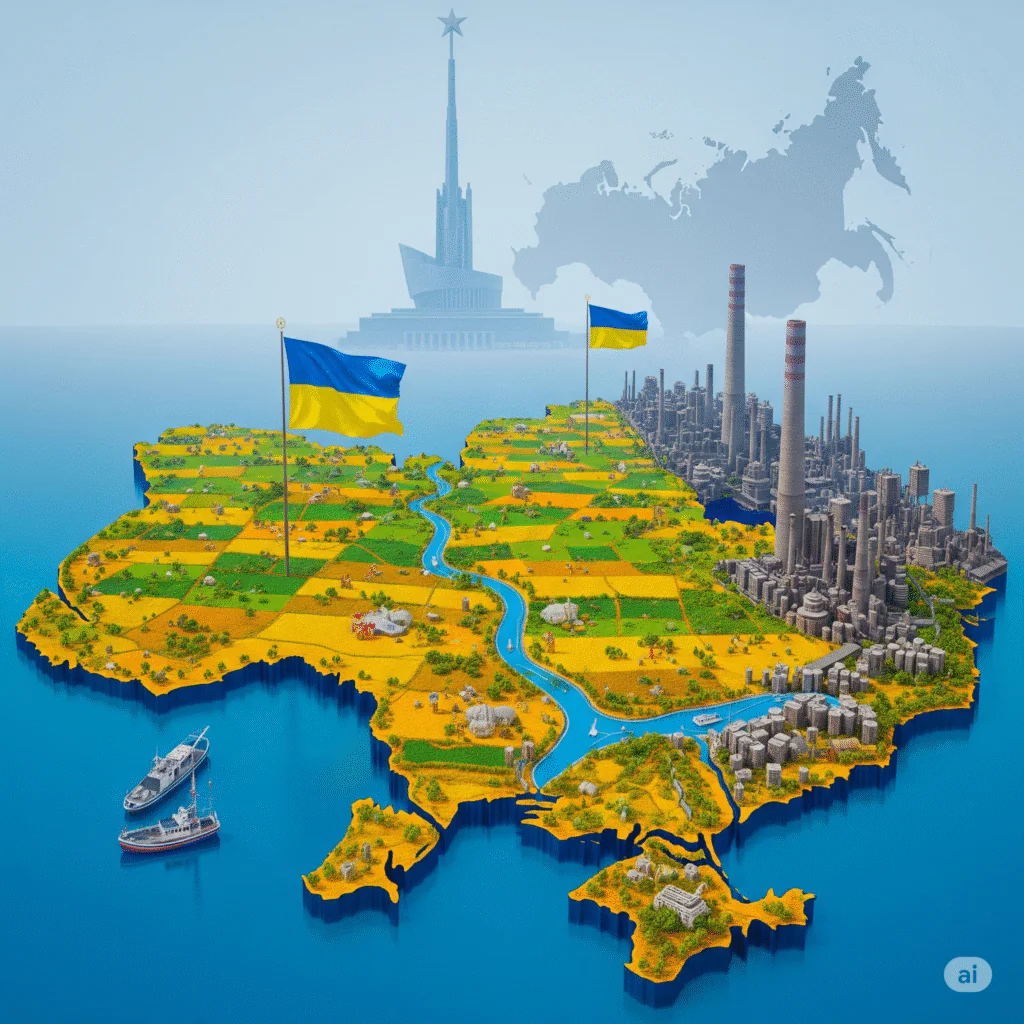
The background of the Russia-Ukraine war before 2022 involves very deep historical, political, and regional factors. The roots of this conflict begin with the dissolution of the Soviet Union in 1991, and subsequent events played a significant role in shaping this war.

Dissolution of the Soviet Union (1991)

After the dissolution of the Soviet Union, Ukraine emerged as an independent nation. Ukraine’s geography, politics, and culture were deeply intertwined with Russia, but after gaining independence Ukraine focused on its identity and political independence. Russia, once Ukraine’s influential partner, now struggled to maintain its power and influence in its geopolitical sphere.

Ukraine’s Western Tilt

Since 1991, most of Ukraine’s political leadership has leaned towards an alliance with the European Union (EU) and NATO. In 2004, Ukraine experienced the Orange Revolution, when Ukrainians protested against corruption and fraud in their presidential election and voted for the Western-backed leader Viktor Yushchenko. This movement signaled to Russia that Ukraine might be moving westward, taking it out of Russia’s sphere of influence.

Crimea Conflict (2014)

In 2014, a major turning point came when Viktor Yanukovich, a pro-Russian leader, was removed from power by the Ukrainian people during the “Euromaidan” protests. Soon after, Russia invaded and annexed Crimea, a strategically important region of Ukraine, triggering an international crisis. Western countries considered the annexation a violation of international law and responded by imposing sanctions on Russia.

Following the annexation of Crimea, Russian-backed separatist groups in the eastern Donbass region (Luhansk and Donetsk) revolted against the Ukrainian government. This further escalated tensions between Russia and Ukraine. Russia formally supported these separatist regions, although it never fully admitted its direct involvement.

Ukraine’s Relationship with NATO and the European Union

Ukraine’s growing closeness with NATO and the EU was viewed by Russia as a major threat to its national security. In 2010, Ukrainian President Viktor Yanukovich cooled relations with NATO, but after 2014, newly elected Ukrainian leaders again strengthened ties with the West to counter rising Russian influence.

Russia’s Concerns

Russia repeatedly warned Ukraine against becoming a close supporter of Western countries. For Russia, Ukraine acted as a crucial strategic buffer state. If Ukraine joined NATO, it would bring Western military power directly to Russia’s borders, posing a serious security challenge. The Black Sea region and Crimea were also critical to Russia’s military operations and commercial interests.

Gateway to Ukraine War (2014–2021)

Between 2014 and 2021, the conflict between Ukraine and Russia continued but never stabilized. The Donbass War resulted in the deaths of thousands of people from both sides. Russia labeled it an “internal conflict,” while Western countries held Russia responsible for fueling and supporting the separatist movements.

Several peace negotiations, including the Minsk Agreements, attempted to reduce tensions. However, none of these efforts brought a lasting solution to the conflict.

Conclusion

Thus, Russia’s invasion of Ukraine in 2022 was not a sudden event but the outcome of long-standing diplomatic disagreements, territorial disputes, and growing geopolitical tensions. The war represented the culmination of escalating friction between Russia and Western countries.

Crimea Dispute (2014) – Complete Background, Ca<a href="https://gsstudyhub.com/united-states-america/">US</a>es & Global ImpactRussia's annexation, international reaction, and the connection to the 2022 Russia-Ukraine War.">

Crimea Dispute (2014)

Crimean Crisis

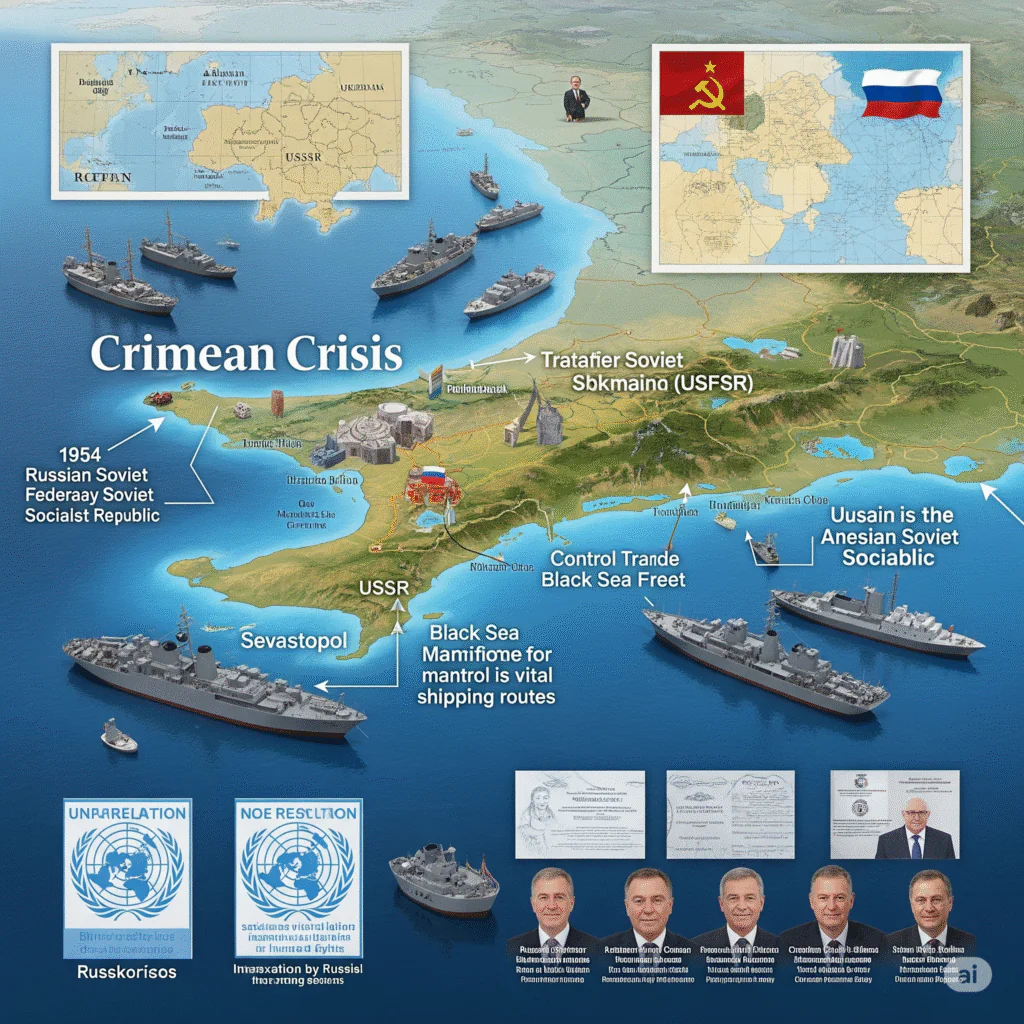
The dispute and crisis that erupted over Crimea in 2014 was a turning point in the history of Russia-Ukraine relations. The dispute was linked to Russia’s illegal occupation of the Crimean Peninsula and its annexation to Russia, which the international community considered a serious violation and a war crime. There were many historical, political and geopolitical reasons behind this dispute, which led to a new conflict over control of the region in 2014.

Historical Context of Crimea

Crimea is a strategically important peninsula located in the Black Sea. It has historical significance for both Russia and Ukraine. The peninsula was part of the Soviet Union’s Russian SSR until 1954, but was ceded to the Ukrainian SSR that year. When the Soviet Union disintegrated, Crimea became part of Ukraine, even though the majority of the population there was ethnic Russian. The region has always been strategically important to Russia, as it is home to the Russian naval base at Sevastopol, which is the centre of Russia’s major military presence in the Black Sea.

2014 Uprising in Ukraine and Russia’s Response

In late 2013, Ukrainian President Viktor Yanukovich rejected a partnership agreement with the European Union (EU) and instead moved towards closer ties with Russia. This led to mass protests (called Euromaidan) in Ukraine. The protests became more violent when Yanukovich began suppressing democratic reforms in Ukraine in early 2014. When Yanukovich fled power in February 2014 due to public pressure, the situation was a major setback for Russia. Russia feared that Ukraine might now move closer to Western countries, especially the EU and NATO, thereby endangering Russia’s Black Sea region and its military interests.

Russia’s Annexation of Crimea

After the ouster of President Yanukovich in Ukraine, pro-Russian groups based in Crimea took advantage of the instability. Russia sent troops to Crimea and began deploying “green men” (soldiers in civilian clothes) who were taking action against the Ukrainian army. In March 2014, Russia held a dubious referendum, claiming that the majority of the population of Crimea voted in favor of joining Russia. However, this referendum was considered illegal by Ukraine and Western countries, as it violated international law and was conducted without the consent of the Ukrainian government. Despite this, Russia annexed Crimea based on the referendum and declared it part of Russia.

International Reaction

Russia’s move to annex Crimea was rejected by the international community. The United Nations considered it a violation of international law and passed a resolution against it. The European Union (EU) and the United States imposed economic sanctions on Russia and termed it a violation of sovereignty. NATO also strongly criticized Russia’s actions and expressed full support for Ukraine.

At the same time, Russia justified its move by claiming that the annexation was necessary to protect the rights of pro-Russian citizens in Crimea, and that a “legitimate referendum” was held. Russia also argued that Crimea had no historical connection with Ukraine and therefore had the right to return to Russian sovereignty.

Results and Effects

The annexation of Crimea led to increased tensions between Ukraine and Russia. In 2014, the Donbass conflict also began, with Russia supporting pro-Russian rebels in the Luhansk and Donetsk regions. This resulted in a deadly conflict that continues to affect the region.

Russia’s annexation of Crimea triggered a broader geopolitical crisis in Europe and worldwide, marking a major shift not only in Russia-Ukraine relations but also in global strategic dynamics.

Current Status

Although Russia annexed Crimea, the international community continues to recognize the region as part of Ukraine. The United Nations General Assembly passed a resolution condemning Russia’s actions and affirming Crimea as Ukrainian territory. Despite this, Russia has continued expanding its military bases in Crimea and strengthening its overall control.

2022: Full-Scale Invasion of Ukraine

In 2022, Russia launched a full-scale military invasion of Ukraine on February 24, calling it a “special military operation.” The invasion marked the expansion of the conflict that began in 2014, significantly escalating the humanitarian and military crisis.

Main Reasons for the Invasion

  • Russia’s fear: Russia feared Ukraine could become a member of NATO, threatening its national security.
  • Ukrainian territorial integrity: Russia claimed it needed to “protect” Russian-speaking populations in eastern Ukraine.
  • Geopolitical objectives: Russia wanted to keep Ukraine within its sphere of influence and weaken its ties with Western countries.

Impact of the Invasion

  • Humanitarian crisis: Millions were displaced, thousands killed, and civilians faced severe shortages of basic necessities.
  • International response: Western nations imposed severe economic sanctions on Russia, while many countries provided military and financial aid to Ukraine.
  • Ukraine’s resistance: Ukrainian forces and civilians showed strong resistance, leading to heavy Russian casualties in many regions and preventing the capture of Kyiv.

Aftermath of the War

By the end of 2022, the war had reached a stalemate, though the situation continued to evolve. The conflict had profound effects on global energy markets, food supplies, and security frameworks. The war demonstrated how fragile European security could be in the 21st century.

The invasion ushered in a new era in global politics and security—one that will shape international relations for decades to come.

February 24, 2022 Russia Invades Ukraine
February 24, 2022: <a href="https://gsstudyhub.com/russia-geography-economy-military-foreign-policy/">Russia</a> Invades UkraineUSsia's full-scale invasion of Ukraine on February 24, 2022, including causes, global reactions, humanitarian crisis, and long-term effects.">Ukraine War, Ukraine invasion, NATO Ukraine, Russian aggression, Ukraine conflict timeline">

February 24, 2022: Russia Invades Ukraine

On February 24, 2022, Russia launched a full-scale invasion of Ukraine, which became one of the largest military conflicts of the 21st century. It was called a “special military operation” by Russia, but it was an open and clear invasion, using a huge number of troops, tanks, aircraft and missiles. The invasion caused deep political and military instability in Ukraine and resulted in a massive humanitarian crisis on a global scale.

Major Reasons for Invasion

Russia’s Security Concerns

Russia had serious concerns about the prospects of Ukraine joining NATO. Russia’s leaders, especially President Vladimir Putin, saw this as a threat to their national security.

Ukraine’s Western Tilt

Ukraine’s growing Western tilt, especially towards the EU and NATO, was becoming a challenge for Russia. Russia feared that Ukraine could become part of Western military and political blocs.

Russia’s Geopolitical Objective

Russia claimed that it was intervening to protect the rights of Russian-speaking and Russian-cultured citizens in Ukraine. Putin referred to Ukraine as an “artificial nation” and claimed that it has historically been part of Russia.

Conflict in Ukraine

Since Russia’s annexation of Crimea in 2014 and the conflict in the Donbass region, tensions between Ukraine and Russia had escalated. Russia supported separatist forces in eastern Ukraine, which has now turned into a full-blown war.

Start of Invasion

Start of Military Invasion

On February 24, 2022, Russia attacked various parts of Ukraine. It included attacks from land, air and sea. Russia targeted Kiev (the capital of Ukraine), Kharkiv, Odessa, and several other major cities.

Siege by Russian Troops

Russian troops began to surround various regions of Ukraine, while Russia planned to quickly capture Kiev while advancing towards it. However, strong resistance by the Ukrainian army and civilians foiled this plan.

International Response

Western Countries’ Response

Following Russia’s invasion, the US, the EU, and other Western countries imposed strict economic sanctions against Russia, targeting Russian banks, companies, and individual Russians. Western countries provided military, financial, and humanitarian aid to Ukraine, including armaments, human rights assistance, and support for refugees.

NATO and EU Support

NATO and the EU showed solidarity with Ukraine, although NATO did not directly participate in the war. NATO countries provided Ukraine with military material and training, while the EU adopted economic sanctions against Russia and welcoming policies for refugees.

Impact of the War

Humanitarian Crisis

The war displaced millions of people, and thousands died. The war in Ukraine caused massive devastation, and massive damage to infrastructure.

Global Economic Impact

The war had a severe impact on global energy markets, food supplies, and financial markets. The energy crisis in Europe deepened as Russia was a major supplier of natural gas and oil. There were also disruptions in global food supplies, as Ukraine was a major exporter of wheat and other agricultural products.

War Strategy

In the war, the Ukrainian army and civilians showed unparalleled resistance. Russia’s army faced massive resistance, and their offensive in major cities like Kiev and Kharkiv was postponed. Ukraine rapidly improved its strategy and strengthened its defense due to Western aid.

Current Situation

Russia’s invasion has led to a constant state of war in Ukraine, with fighting continuing in various regions. Russian and Ukrainian forces are struggling to maintain influence in their respective areas. The conflict has now become a long and bloody one, resulting in heavy losses for both countries while the international community continues its efforts to push toward peace.

This war has the potential to have long-term effects on global politics, security, and economic conditions.

⭐ Editor's Choice

Discover a highly rated product selected for its quality, functionality, and positive customer feedback.

View Details & Reviews →

References

  • Raghavan, Srinath. The War of 2022: Russia, Ukraine and the Future of Global Order. Harvard University Press, 2023.
  • Mearsheimer, John J. “Why the Ukraine Crisis Is the West’s Fault.” Foreign Affairs, 2014.
  • Snyder, Timothy. The Road to Unfreedom: Russia, Europe, america. Tim Duggan Books, 2018.
  • Plokhy, Serhiy. The Gates of Europe: A History of Ukraine. Basic Books, 2015.
  • Freedman, Lawrence. Ukraine and the Art of Strategy. Oxford University Press, 2019.
  • United Nations. “UN General Assembly Resolution 68/262 on the Territorial Integrity of Ukraine” (2014).
  • BBC News. “Ukraine Profile – Timeline” (2022–2024).
  • Al Jazeera. “Russia-Ukraine Conflict: Latest Updates and Analysis” (2022–2024).
  • The Guardian. “Russia’s Invasion of Ukraine: Causes and Consequences” (2022–2024).
  • Ministry of Defense of Ukraine – Official reports and press releases (mod.gov.ua).
  • NATO Official Website. “NATO and Ukraine Relations” (nato.int).
  • European Union External Action Service. “EU Response to Russia’s Invasion of Ukraine” (europa.eu).
  • Council on Foreign Relations (CFR). “The Russia-Ukraine War: A Timeline.”
  • Human Rights Watch. “Reports on Humanitarian Crisis in Ukraine.”
  • International Crisis Group. “Ukraine Crisis Reports.”

Frequently Asked Questions (FAQs)

1. Why did RUSsia invade Ukraine in 2022?

Russia cited security concerns, NATO expansion, and the protection of Russian-speaking populations as reasons for the invasion. However, Ukraine and most Western countries view it as an act of aggression and a violation of Ukraine's sovereignty.

2. What role did NATO play in the Russia-Ukraine conflict?

NATO did not directly participate in the war, but Ukraine's growing ties with NATO were a major concern for Russia. NATO countries have provided military, financial, and humanitarian support to Ukraine.

3. Why is Crimea important in the Russia-Ukraine conflict?

Crimea is strategically important because of its location in the Black Sea and the Russian naval base at Sevastopol. Russia annexed Crimea in 2014, but most countries continue to recognize it as part of Ukraine.

4. What was the Donbass conflict?

The Donbass conflict began in 2014 when Russian-backed separatists in the Donetsk and Luhansk regions fought against the Ukrainian government. It became one of the key factors leading to the full-scale war in 2022.

5. How has the Russia-Ukraine war affected the global economy?

The war has disrupted energy markets, increased fuel prices, affected food supplies, and created economic uncertainty worldwide, especially due to Ukraine's role as a major agricultural exporter.

6. What humanitarian impact has the war caused?

Millions of Ukrainians have been displaced, thousands have lost their lives, and significant damage has been caused to homes, infrastructure, healthcare facilities, and public services.

7. Is the Russia-Ukraine war still ongoing?

Yes, the conflict continues with military operations in several regions. Diplomatic efforts for peace are ongoing, but a permanent resolution has not yet been achieved.

Leave a Comment

Your email address will not be published. Required fields are marked *

Scroll to Top