
The Modern World Order
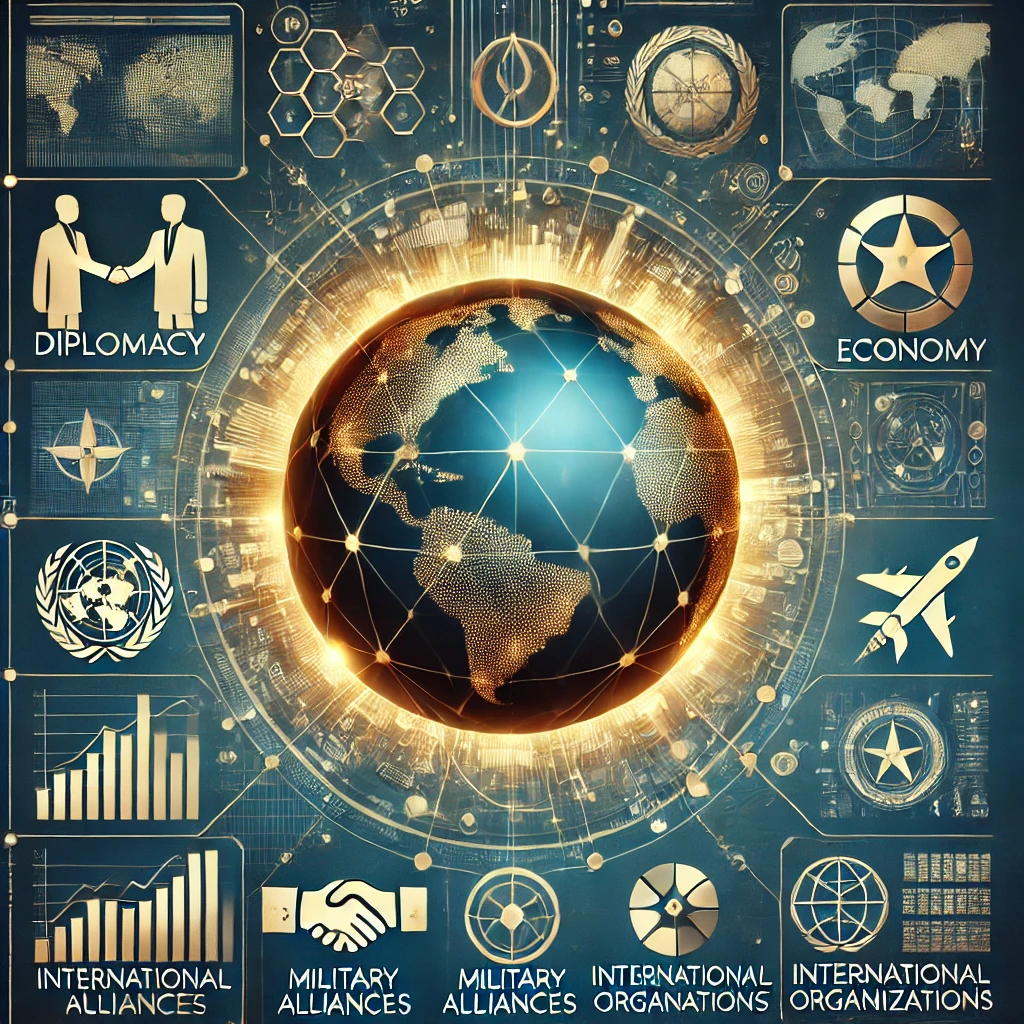
The modern world order is the system UNder which relations, politics, economy, diplomacy, and security between countries are conducted on a global scale. This framework is shaped by international organizations, economic policies, military alliances, the global balance of power, and rapid technological progress.
In today’s interconnected era, understanding the modern world order is not just an academic exercise, but a practical learning journey. By studying its evolution, key elements, and challenges, we gain valuable insights into how nations cooperate, compete, and adapt. These insights help us develop a more informed and balanced perspective on global events.
1. The Emergence of the Modern World System
The development of the modern world system took place mainly after the Second World War (1939–1945). The devastation caused by the war forced countries to rethink global governance, security, and cooperation. The modern world order gradually emerged as nations sought stability, peace, and economic reconstruction.
Major Reasons for the Emergence of the Modern World System
- Establishment of the United Nations (UN) – 1945: Created to promote international peace, security, and cooperation, the UN became the central platform for global diplomacy and conflict resolution.
- Cold War and Bipolar System (USA vs USSR): The world was divided into two major power bLOCs led by the United States and the Soviet Union. This bipolar system shaped international politics, alliances, and conflicts for decades.
- End of Colonialism and Rise of Newly Independent Nations: After World War II, many Asian, African, and Latin American countries gained independence, changing the global political map and increasing the number of participating states in world affairs.
- Establishment of Global Institutions: Institutions such as the World Bank, the International Monetary Fund (IMF), and later the World Trade Organization (WTO) were established to stabilize the global economy, support development, and regulate international trade.
2. Key Elements of the Modern World System
(a) Political System
United Nations (UN)
The United Nations works to maintain global peace and security, promote human rights, encourage social and economic development, and provide a platform for international dialogue. Its various organs and agencies influence decision-making on crucial global issues.
G7 and G20
The G7 and G20 are groupings of major economies. They discuss and coordinate policies on global economic stability, financial regulations, climate issues, and development. Their decisions can significantly impact the global economic system.
Regional Organizations – European Union (EU), NATO and Others
Regional blocs such as the European Union (EU) and security alliances like NATO play an important role in maintaining regional and, indirectly, global stability. They influence trade, defense, security policies, and diplomatic alignments within their regions and beyond.
(b) Economic System
capitalism and Liberalisation
The economic model led by the United States and many Western countries is based on capitalism, free markets, and liberalisation. This encourages private ownership, competition, international trade, and foreign investments, shaping the modern global economic order.
Globalization
Globalization involves the free flow of goods, services, capital, technology, and information across borders. It has connected markets, increased interdependence among nations, and allowed businesses to operate on a truly global scale.
Rise of China
China’s rapid economic growth and initiatives such as the Belt and Road Initiative (BRI) have significantly impacted the global economic and strategic landscape. China’s expanding trade networks and investments have increased its influence in Asia, Africa, Europe, and beyond.
(c) Military and Strategic Arrangements
America and NATO
The United States, along with NATO, remains a central actor in global military power. Through alliances, defense agreements, and military bases around the world, the US and its partners shape security frameworks and respond to threats.
Alliance and Coordination Between China and Russia
Strategic coordination and growing cooperation between China and Russia seek to balance the influence of Western countries. Their collaboration in defense, energy, and diplomacy affects regional and global power equations.
Nuclear Weapons and the Military Balance
Nuclear-armed states such as the United States, Russia, China, India, and others play a major role in the global military balance. Nuclear deterrence, arms control agreements, and non-proliferation efforts are key aspects of the modern security architecture.
(d) Technology and Information Systems
Digital Revolution
The digital revolution, driven by the Internet, Artificial intelligence (AI), and advanced communication technologies, has transformed how states and societies function. E-governance, digital economies, and online platforms now influence politics, business, and social life.
Information Warfare
Information warfare includes the use of social media, fake news, and targeted propaganda to influence public opinion and political outcomes. Data protection, privacy, and cybersecurity have become critical issues in the modern world order.
Space Dominance
Space exploration and satellite systems have strategic and economic importance. Satellites support communication, navigation, weather forecasting, and military surveillance. Nations are increasingly competing for technological superiority in outer space.
3. Current Global Challenges
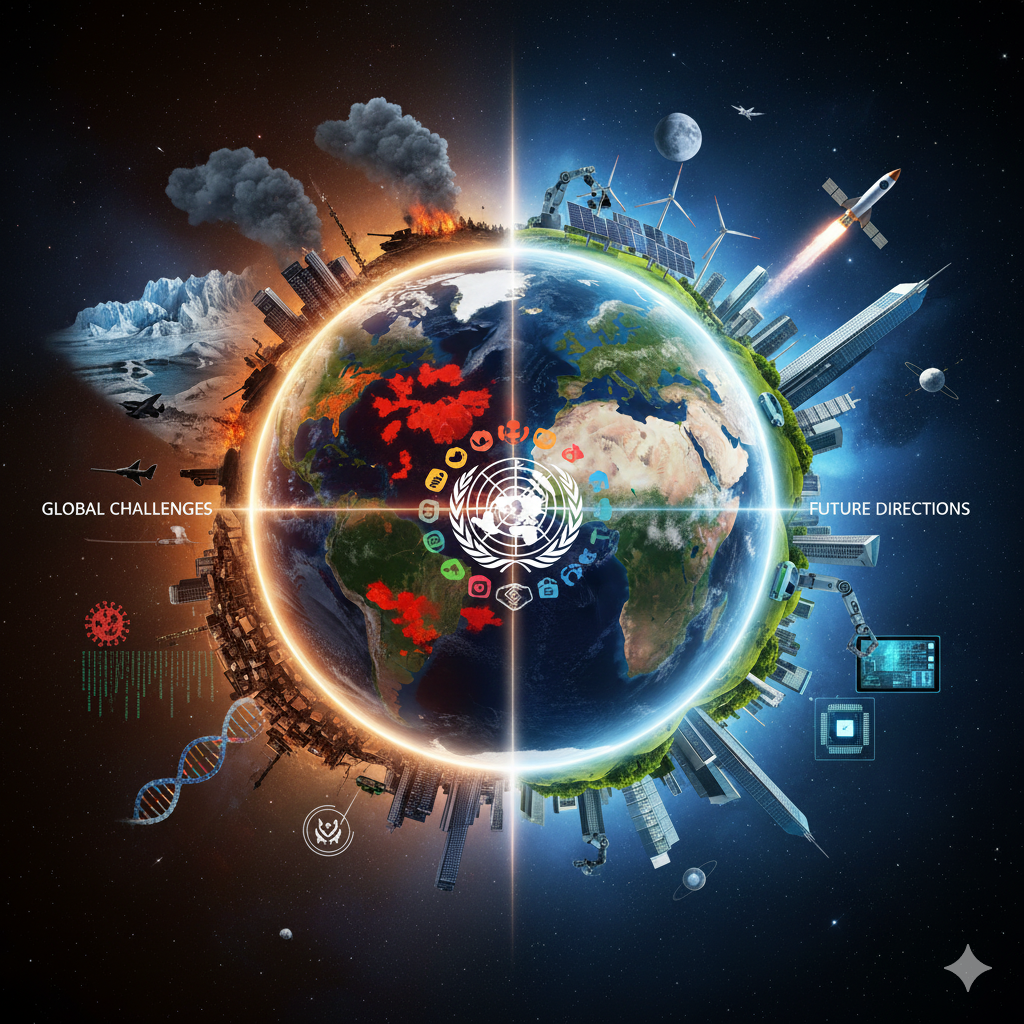
The modern world order faces multiple challenges that test the strength of international institutions and cooperation. Understanding these challenges helps us learn how fragile yet interconnected our systems are.
- Ukraine–Russia War and Geopolitical Tensions: The conflict has heightened geopolitical rivalries, impacted global energy markets, and raised concerns about security in Europe and beyond.
- China–US Trade War: Trade disputes, tariffs, and technology restrictions between China and the United States have affected global supply chains and economic stability.
- Climate Change and Environmental Crisis: Rising temperatures, extreme weather events, and environmental degradation pose long-term risks to economies, ecosystems, and human health.
- Terrorism and Cyber security threats: Cross-border terrorism and sophisticated cyber attacks threaten national security, financial systems, and critical infrastructure.
- Global Pandemics and Health Crises: Pandemics like COVID-19 have highlighted the importance of global health cooperation, resilient healthcare systems, and quick information sharing.
4. Future Direction of the Modern World Order
The future of the modern world order will be shaped by how nations respond to current challenges and manage emerging opportunities. The choices made today will define global stability, prosperity, and justice for future generations.
Key Trends Shaping the Future
- Promotion of Multilateral Cooperation (Multilateralism): Strengthening multilateral institutions and encouraging collective decision-making will be crucial to tackle global challenges such as climate change, pandemics, and financial crises.
- Sustainable Development and Environmental Policies: Adoption of green technologies, Renewable energy, and sustainable development goals (SDGs) will guide long-term economic and social policies.
- Changes in the Global Balance of Power: The growing influence of countries like India, China, and others will gradually transform the distribution of power in international institutions and forums.
- New World Order in the Digital and AI Age: Artificial intelligence, big data, automation, and digital innovation will redefine economic models, labor markets, and even governance structures.
Conclusion
The modern world system is a complex and dynamic structure, influenced by political, economic, military, and technological factors. It is constantly changing, and countries must continuously adjust their policies in response to global shifts.
Learning about the modern world order teaches us that no country can exist in isolation. Cooperation, dialogue, and foresight are essential for building a stable and just global system. As individuals, staying informed and critically aware of global developments empowers us to form balanced opinions and contribute positively—no matter how small our sphere of influence may seem.
Frequently Asked Questions (FAQ) on the Modern World Order
Q1. What is meant by the modern world order?
The modern world order refers to the current global system through which political, economic, diplomatic, and security relations are conducted among countries. It includes the role of international organizations, global institutions, power blocs, and technological developments that collectively shape international affairs.

Highly Rated Amazon Product
Well-reviewed and reliable product with positive customer feedback. Check the latest price, deals & availability on Amazon.
👉 View on AmazonQ2. How did the modern world order emerge after World War II?
After World War II, the world witnessed massive destruction, economic collapse, and political instability. To prevent future wars and maintain peace, institutions such as the United Nations, the World Bank, and the IMF were established. The Cold War rivalry, decolonisation, and the rise of newly independent nations further contributed to the formation of the modern world order.
Q3. What are the main components of the modern world system?
The main components of the modern world system include global political institutions (like the UN, G7, G20), economic structures (capitalism, liberalisation, globalization), military and strategic alliances (such as NATO, cooperation between major powers), and technological systems (digital revolution, AI, information networks, and space technologies).
Q4. What are the biggest challenges facing the modern world order today?
Key challenges include geopolitical conflicts such as the Ukraine–Russia war, trade tensions between major powers like China and the US, climate change and environmental crises, terrorism and cybersecurity threats, and global health emergencies like pandemics. These issues test the strength of global governance and cooperation.
Q5. How might the modern world order change in the future?
The modern world order is likely to evolve through stronger multilateral cooperation, a shift towards sustainable development and green policies, changes in the global power balance with rising powers such as India and China, and the increasing influence of digital technologies and artificial intelligence on politics, economies, and societies.
Q6. Why is it important for individuals to understand the modern world order?
Understanding the modern world order helps individuals interpret news, policies, and global events more accurately. It encourages critical thinking, promotes informed citizenship, and allows people to appreciate how international decisions impact their daily lives—from the economy and security to the environment and technology.
Internal Linking Suggestions
Suggested Articles to Link Internally
The Rise of the Modern World Order
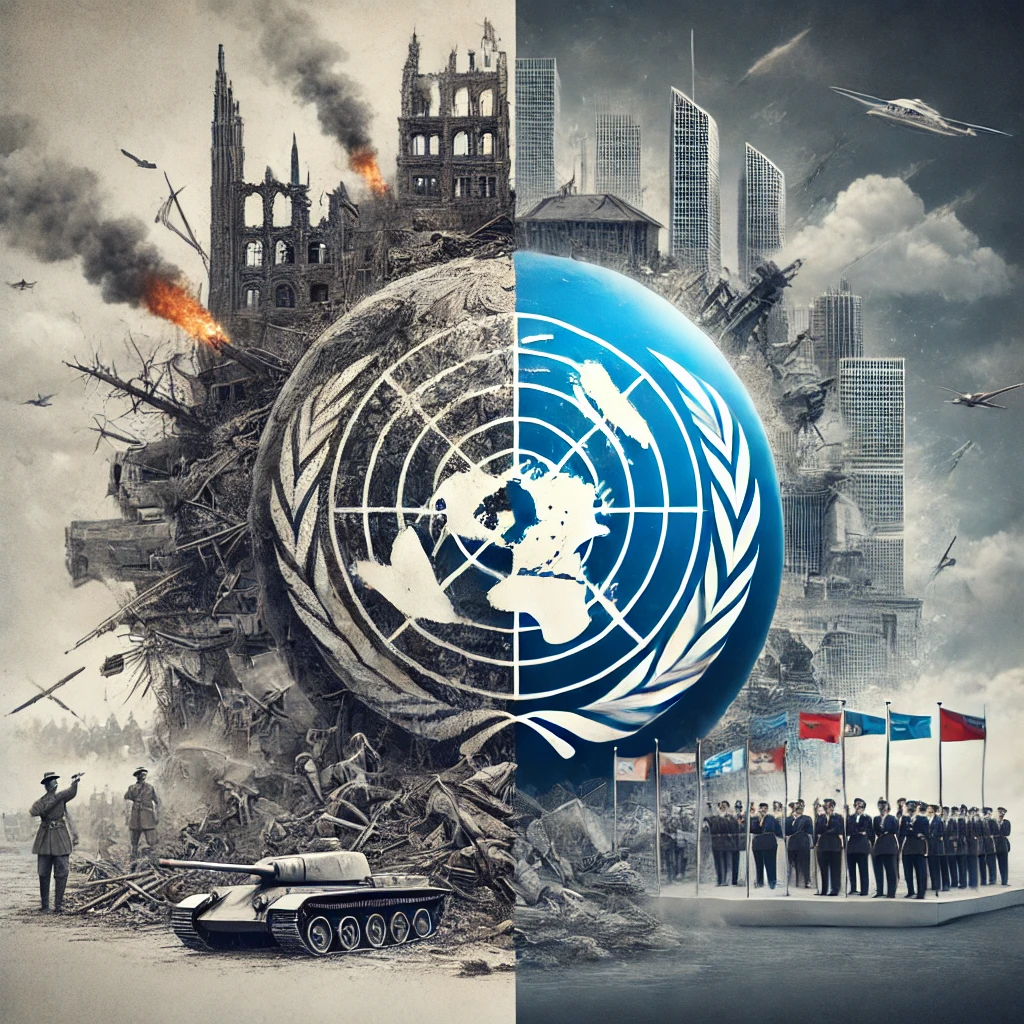
The modern world order emerged primarily in the 20th century, especially after World War II (1939–1945). It evolved through major international events, political ideologies, economic policies, and the creation of global institutions. Its core objective was to maintain global stability, promote economic cooperation, and reduce military conflict. During this period, several international organizations were formed, a new balance of power was established, and the nature of global politics UNderwent significant transformation.
1. The Main Reasons for the Emergence of the Modern World System
(a) Second World War and Its Effects
- The Second World War (1939–1945) completely transformed the global power structure.
- The United States and the Soviet Union emerged as two superpowers, creating a bipolar world system.
- European powers such as Britain and France were significantly weakened.
- International institutions were created to ensure world peace and economic reconstruction.
(b) United Nations and International Institutions
- United Nations (UN) – 1945: Established to promote global peace, security, and development.
- International Monetary Fund (IMF) & World Bank: Formed to maintain global economic stability.
- World Trade Organization (WTO): Ensures smooth and regulated international trade.
- NATO – 1949: A military alliance of Western nations.
(c) Cold War and Bipolar System
- The Cold War (1947–1991) began between the usA and the Soviet Union.
- The world was divided into two bLOCs—Capitalist America and Communist Soviet Union.
- military alliances such as NATO and the Warsaw Pact were formed.
- After the dissolution of the Soviet Union in 1991, the USA emerged as the sole superpower, marking the rise of a unipolar world order.
2. Globalization and the New Economic Order
(a) The Impact of Globalisation
- The 1990s saw the rise of Liberalization, Privatization, and Globalization (LPG policies).
- Free trade policies accelerated international trade and investment.
- Developing countries like China and India became major players in the global economy.
(b) Bretton Woods System and Economic Institutions
- Bretton Woods Conference (1944): Held to build a new global economic framework after World War II.
- IMF & World Bank: Established for global economic stability and development assistance.
- The US dollar became the accepted global reserve currency.
3. Strategic and Technological Changes
(a) Nuclear Power and Military Alliances
- The nuclear arms race intensified between the US and the Soviet Union.
- The UN Security Council (UNSC) established five permanent members (P5): the US, Russia, China, Britain, and France.
- Major Cold War conflicts included the Korean War (1950–53), Vietnam War (1955–75), and the Afghanistan conflict (1979–89).
(b) Scientific and Technological Progress
- Intense US–USSR competition during the Space Race.
- The rise of the Internet, computer revolution, and global communications.
- Rapid advancements in Artificial intelligence (AI) and Cyber Security marked the beginning of the Digital Age.

Top Rated Amazon Product
Well-reviewed and trusted product with excellent user feedback. Check the latest price, deals & availability on Amazon.
👉 View on Amazon4. Current Global Scenario and Future Direction
(a) Movement Toward a Multipolar World
- In the 21st century, China, India, the European Union, and other regional powers are rising.
- New coalitions are emerging to challenge US dominance in global affairs.
(b) New Global Challenges
- The Ukraine–Russia war and shifts in the global balance of power.
- China–US trade war and deepening Geopolitical Tensions.
- Climate Change and growing environmental crises.
- The rising threat of Terrorism and cyber attacks.
Conclusion
The modern world system is a constantly evolving structure, shaped by historical events, political developments, economic policies, and technological advancements. Since World War II, the global order has undergone significant transformation, and in the future, new centers of power are likely to emerge as nations continue to adapt to changing geopolitical realities.
Frequently Asked Questions (FAQ)
Q1. What is the modern world order?
The modern world order refers to the global system through which countries coordinate political, economic, and security relations.
Q2. When did the modern world order emerge?
It primarily emerged after World War II due to major geopolitical changes and the formation of global institutions.
Q3. What role did the Cold War play in shaping world order?
The Cold War created a bipolar world dominated by the US and the Soviet Union, influencing global politics for decades.
Q4. How did globalization transform the world system?
Globalization increased trade, investment, and technological exchange, making economies more interconnected.
Q5. What are the major global challenges today?
Key challenges include climate change, cyber threats, geopolitical conflicts, and global power shifts.
Q6. What is the future direction of the world order?
The world is moving toward a multipolar system with rising powers like China, India, and regional blocs.
Internal Linking Suggestions
Key Elements of the Modern World System
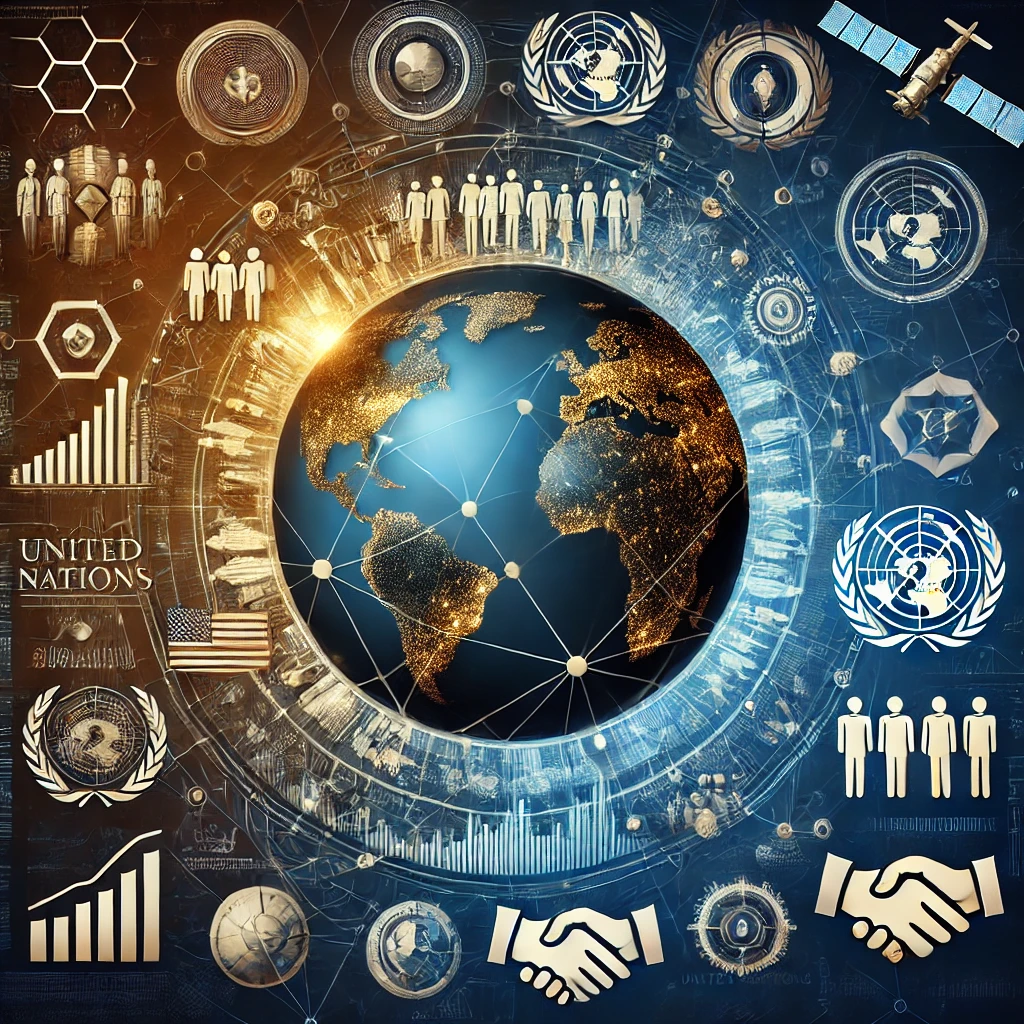
The Modern World Order is a complex and dynamic structure shaped by international politics, global economy, military alliances, technological progress, and global institutions. Although it began taking shape after World War II, it has continuously evolved in response to global events, economic transitions, and strategic challenges.
Let us UNderstand the major elements of the modern world system in detail.
1. Political Elements
(a) United Nations (UN)
Establishment: 1945, after World War II.
Objective: To maintain global peace, protect human rights, and promote international cooperation.
Structure of the UN
- United Nations Security Council (UNSC): Five permanent members (USA, Russia, China, UK, France) and 10 temporary members.
- United Nations General Assembly (UNGA): A platform where all member nations are represented.
- UN Peacekeeping Forces: Deployed in conflict regions to maintain peace.
(b) International Organisations and Alliances
- European Union (EU): A political and economic union of European countries.
- NATO: Military alliance between America and European nations.
- G7 and G20: Groups of major economies that discuss global policies and economic issues.
- BRICS: An alliance of Brazil, Russia, India, China, and South Africa focusing on economic and political cooperation.
(c) Diplomatic Relations
- International treaties and alliances.
- Cooperation in trade, military, and environmental issues.
- Bilateral and multilateral negotiations to resolve conflicts.
2. Economic Elements
(a) Global Economy
- Influence of globalization and the rise of the free market economy.
- Growth of international trade, multinational corporations (MNCs), and global supply chains.
Major Global Economic Organizations
- International Monetary Fund (IMF): Ensures global financial stability.
- World Bank: Provides financial assistance for development projects.
- World Trade Organization (WTO): Regulates international trade rules and agreements.
(b) economic policies and Challenges
- Debate between Protectionism and Free Trade.
- China–US trade war and economic tensions.
- Rise of digital economy and cryptocurrencies.
- Increasing role of India, China, and other emerging economies.
3. Military & Security Elements
(a) Military Alliances and Strategies
- NATO: Major military alliance of Western nations.
- Power rivalry between the United States and China.
- Strengthening military ties between Russia and China.
(b) Nuclear Power and Military Balance
- Major nuclear powers: US, Russia, China, India, France, UK, Pakistan, North Korea.
- NPT & CTBT: Treaties aimed at nuclear non-proliferation and banning nuclear testing.
(c) Terrorism and Cyber Security
- Rising threat of global terrorism.
- ISIS, Al-Qaeda, and other extremist groups.
- Cyber attacks, data theft, and digital security challenges.
4. Scientific & Technological Elements
(a) Digital Age and Artificial intelligence (AI)
- Global impact of the Internet and information revolution.
- Growth of Artificial Intelligence (AI) and Machine Learning.
- Emerging challenges in data privacy and cyber security.
(b) Space and Defence Technology
- Space Exploration: Moon and Mars missions by NASA, ISRO, SpaceX, CNSA.
- Development of military satellites and missile defense systems.
- Advancements in quantum computing and 5G networks.
5. Social & Environmental Elements
(a) Global Social Change
- Advancement in human rights and gender equality.
- Increase in global migration and refugee crises.
- Global efforts toward education, health, and poverty reduction.
(b) Climate Change and Environment
- Paris Climate Agreement (2015): Global commitment to reducing carbon emissions.
- Promotion of Renewable energy sources.
- Efforts to prevent deforestation and protect biodiversity.
6. Challenges and Future of the Modern World Order
(a) Current Global Challenges
- Ukraine–Russia war and rising Geopolitical Tensions.
- China–US strategic and economic competition.
- Climate change, environmental degradation, and natural disasters.
- Global pandemics such as COVID-19 and related health crises.
(b) Future Prospects
- Transition towards a multipolar world.
- Deepening influence of Artificial Intelligence and digital revolution.
- Strengthening roles of India and other emerging economies.
- Need for reform in the United Nations and global institutions.
Amazon Choice Product
Well-reviewed and trusted item with positive user feedback. Check the latest price, offers & availability on Amazon.
👉 View on AmazonConclusion
The modern world system is shaped by political, economic, military, technological, social, and environmental factors. It is a dynamic and constantly evolving structure. With shifting power balances, changing economic policies, and rapid technological development, the system is entering a new phase where emerging powers and global institutions will play a decisive role.
Frequently Asked Questions (FAQ)
Q1. What are the key elements of the modern world system?
The main elements include political organizations, global economy, military alliances, technological advancements, and social-environmental factors.
Q2. When did the modern world system begin to take shape?
It began after World War II with the establishment of institutions like the UN, IMF, World Bank, and NATO.
Q3. What role does globalization play in the modern world order?
Globalization promotes free trade, increases economic interdependence, and integrates global markets through technology and investment.
Q4. Why is cyber security a major concern today?
Growing dependence on digital technologies makes countries vulnerable to cyber attacks, data breaches, and digital warfare.
Q5. What is the future of the modern world order?
The future points toward a multipolar world shaped by emerging powers, AI-driven innovation, and structural reforms in global institutions.
Internal Linking Suggestions
Political and Economic Systems of the Modern World
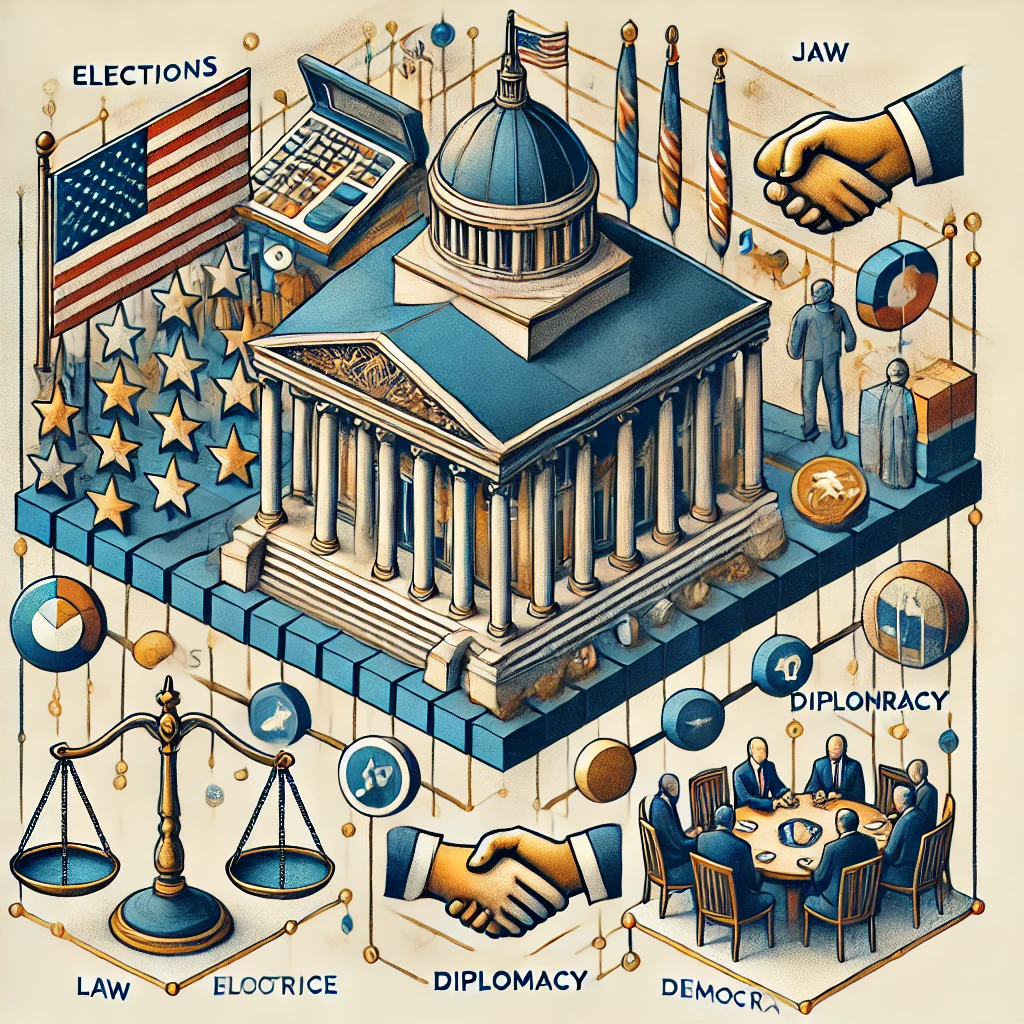
The political and economic systems of any nation shape how it fUNctions, how resources are used, and how people participate in governance and development. These systems evolve based on historical, cultural, social, and economic conditions. Below is a detailed explanation of the major types of political and economic systems found in the modern world.
Political System
A political system defines the method of governance in a country. It determines how governments are formed, how they function, how rights are distributed, and how citizens engage with the state. Modern political systems vary across countries, influenced by their unique histories and social structures.
1. Major Types of Political Systems
(a) Democracy
Definition: A system in which the people hold supreme power and elect their representatives.
Key Features:
- Citizens have the right to vote.
- Governments are elected through free and fair elections.
- Media and judiciary are independent.
- Fundamental rights and individual freedoms are protected.
Types of Democracy:
- Direct Democracy: Citizens make decisions directly (e.g., Switzerland—some regions).
- Representative Democracy: Citizens elect representatives (e.g., India, USA, UK).
Examples: India, USA, Canada, Britain, France
(b) Authoritarian Rule
Definition: Power is concentrated in the hands of a few individuals or groups; public participation is limited.
Key Features:
- Limited personal freedom.
- Government controls media and information.
- Dissent and protests are suppressed.
Types:
- Dictatorship: One leader holds all power (Hitler’s Germany, Stalin’s USSR).
- Military Rule: Military controls governance (Myanmar, former Pakistan).
- One-Party Rule: Only one political party rules (China).
Examples: North Korea, China, Saudi Arabia, Myanmar
(c) Monarchy
Definition: Rule by a king or queen, often hereditary.
Key Features:
- Governance based on succession.
- King/queen holds symbolic or absolute authority.
Types:
- Constitutional Monarchy: Monarch has limited powers; elected government rules (UK, Japan).
- Absolute Monarchy: Monarch has complete power (Saudi Arabia).
Examples: Britain, Japan, Saudi Arabia
(d) Socialism and Communism
Definition: Government controls major means of production to ensure equality.
Key Features:
- Limited private property.
- Government manages distribution of resources.
- State plans to meet public needs.
Types:
- Socialist Democracy: Democratic governance with socialist policies (Sweden, Norway).
- Communist Rule: One-party rule with complete state control (China, Cuba, North Korea).
Examples: China, Cuba, North Korea
2. Components of the Modern Political System
(a) Executive
Responsible for implementing policies and administering government functions.
Types:
- Presidential System: President is the executive head (USA).
- Parliamentary System: Prime Minister leads government, accountable to Parliament (India, UK).
(b) Legislature
Law-making body responsible for drafting and passing legislation.
Types:
- Unicameral: One legislative house (Nepal, China).
- Bicameral: Two houses (India—Lok Sabha & Rajya Sabha; USA—Senate & House).
(c) Judiciary
Interprets laws and protects citizens’ rights. An independent judiciary is essential for a functioning democracy.
3. Global Political Organisations and Alliances
(a) United Nations (UN)
Established in 1945 to maintain global peace and security.
Main Organs:
- Security Council
- General Assembly
- World Health Organization (WHO)
(b) NATO
A military alliance of the US and European countries.
(c) European Union (EU)
An economic and political union of 27 European nations.
(d) BRICS
Group of emerging economies—Brazil, Russia, India, China, South Africa.
4. Challenges of the Modern Political System
- Threats to democracy due to rising authoritarianism.
- Corruption and bad governance causing instability.
- International conflicts (Russia–Ukraine, US–China tensions).
- Cyber security threats and digital misinformation.
- Climate Change influencing global political policies.
Conclusion
Political systems are essential for societal governance. While democracy is considered the most stable and effective system today, other forms also function successfully in certain regions based on culture and history.
Economic System
An economic system determines how a society produces, distributes, and consumes resources. Each nation develops its economic model based on its historical, cultural, and political background.
1. Main Types of Economic Systems
(a) Capitalist Economy
Definition: Production and resources are owned by private individuals or companies.
Key Features:
- Free market based on demand and supply.
- Private property rights.
- Competition drives innovation.
- Profit is the main objective.
Examples: USA, Canada, Australia, Japan
(b) Socialist Economy
Definition: Government or society owns major means of production.
Key Features:
- Collective ownership of property.
- Government-led economic planning.
- Emphasis on equality and welfare.
- Basic services provided at low or no cost.
Examples: China (socialist model), Cuba, North Korea
(c) Mixed Economy
Definition: Combines both capitalist and socialist principles.
Key Features:
- Coexistence of private and public sectors.
- Government regulates essential services.
- Some businesses are government-controlled, others private.
Examples: India, France, Germany, Sweden
(d) Communist Economy
Definition: Government controls all economic activities and distribution.
Key Features:
- No private ownership.
- Government-owned production.
- Equal distribution of resources.
Examples: Former USSR, China (1950s), North Korea
2. Components of the Modern Economic System
(a) Production
Process of creating goods and services using natural resources, labour, capital, and entrepreneurship.
(b) Distribution
Transporting and supplying goods to consumers based on market systems.
(c) Consumption
Use of goods and services; demand and supply depend on consumption patterns.
3. Global Economic Organizations
(a) International Monetary Fund (IMF)
Maintains global financial stability; provides loans to nations in crisis.
(b) World Bank
Supports developing nations through financial and technical assistance.
(c) World Trade Organization (WTO)
Regulates global trade and resolves trade disputes.
(d) BRICS
Works to reform global finance and strengthen cooperation among emerging economies.
4. Modern Economic Challenges
(a) Economic Inequality
Large differences in wealth between developed and Developing countries.
(b) Unemployment
Automation and recessions cause rising job losses.
Top Rated Amazon Product
Well-reviewed and trusted product with excellent customer feedback. Click below to check the latest price, deals & availability on Amazon.
👉 View on Amazon(c) Inflation & Instability
Price increases reduce purchasing power; recessions affect global markets.
(d) Climate Change & Sustainable Development
Environmental damage from industrialization requires global SDG-driven policies.
5. India’s Economic System
(a) Mixed Economy
India has both government and private sectors; LPG reforms began in 1991.
(b) Major Sectors
- Agriculture: Backbone of rural economy.
- Industry: Manufacturing, textiles, automobiles.
- Services: IT, banking, tourism, healthcare.
Conclusion
Every country shapes its economic system based on its needs, resources, and political structure. capitalism, socialism, mixed economies, and communism each function differently and continue to evolve in the modern era.
Military and Strategic Arrangements
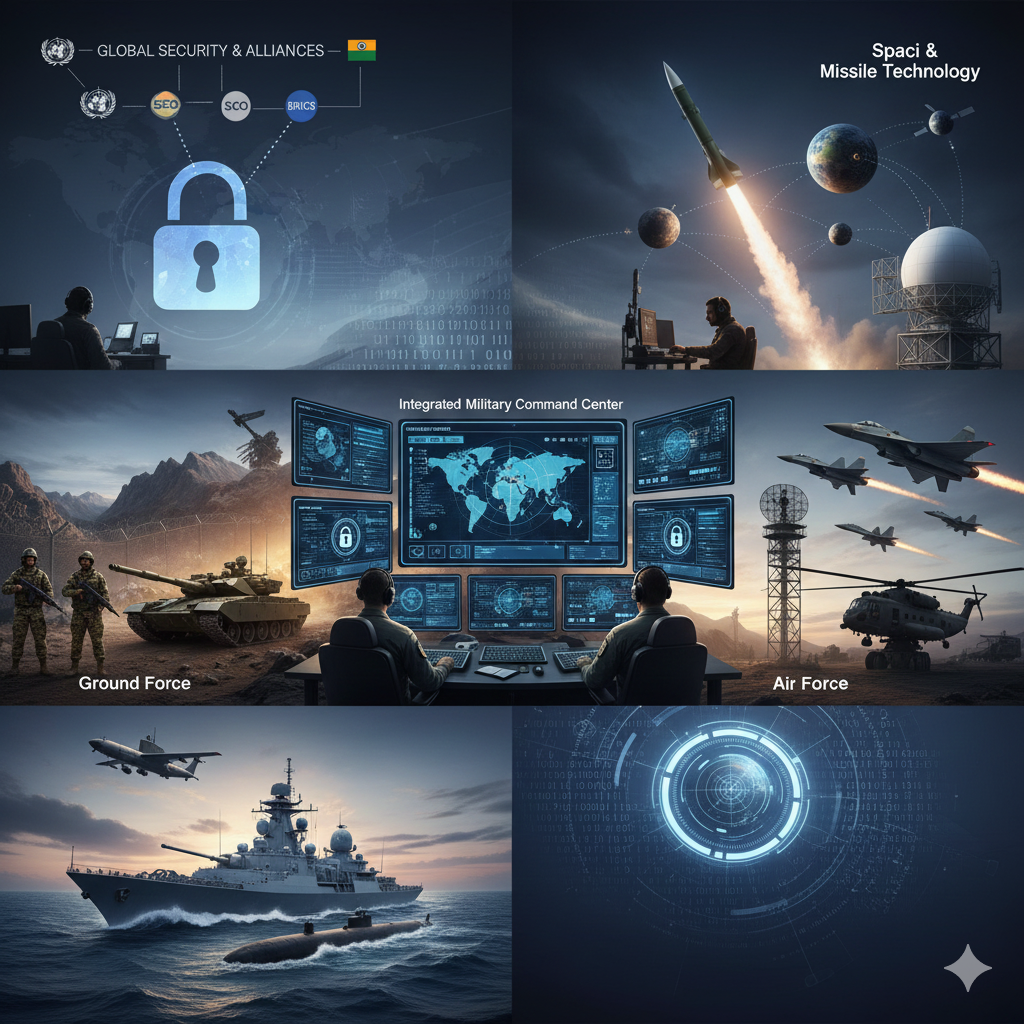
Military and strategic systems shape the defense, security, and war strategies of any nation. These systems protect national sovereignty, prevent external threats, control internal conflict, and contribute to global security mechanisms. Beyond war operations, the military system includes strategic planning, defense policies, intelligence, weapons technology, cyber warfare, and military diplomacy.
1. Main Components of the Military System
(a) Major Branches of the Military
Army
- Responsible for groUNd combat operations.
- Protects borders and fights land-based conflicts.
- Equipped with tanks, artillery, armored vehicles, and infantry units.
Navy
- Protects maritime borders and sea routes.
- uses submarines, warships, missile systems, aircraft carriers, and patrol vessels.
- Conducts counter-Terrorism and humanitarian operations in oceans.
Air Force
- Responsible for air defense and air combat operations.
- Uses fighter jets, transport aircraft, helicopters, missiles, and drones.
- Provides air support, surveillance, and rapid response during conflict.
(b) Paramilitary Forces
Paramilitary forces assist the military and are usually under the Ministry of Home Affairs.
Examples (India): BSF, CRPF, ITBP, CISF, SSB
(c) Intelligence Agencies
Intelligence agencies play a crucial role in national security and strategic planning.
Examples:
- India: RAW, IB
- USA: CIA
- Russia: FSB

Top Rated Amazon Product
Trusted and well-reviewed product with excellent customer feedback. Click below to check the latest price, offers & availability on Amazon.
👉 View on Amazon2. Strategic Order and Military Doctrine
(a) Defense Policy
Every nation formulates a defense policy to maintain security, strengthen military capabilities, and protect sovereignty.
India’s Defense Policy Includes:
- “No First Use” nuclear policy.
- Promotion of indigenous defense manufacturing under “Atmanirbhar Bharat.”
(b) Military Strategy
Military strategy refers to the planning and execution of war operations.
Types of Strategies:
- Defensive Strategy: Protecting borders and citizens.
- Offensive Strategy: Attacking enemy bases to weaken them.
- Guerrilla Warfare: Small, surprise attacks (used in Indian Freedom Struggle).
(c) Nuclear Doctrine
Nuclear doctrine defines the policy for the development, use, and control of nuclear weapons. India follows a “No First Use” policy—meaning it will only respond if attacked with nuclear weapons.
3. Global Military Organizations and Alliances
(a) United Nations Security Council (UNSC)
Works for global peace and security. It has 5 permanent members (USA, Russia, China, UK, France). India seeks permanent membership.
(b) NATO
A military alliance of the US and European nations. Based on the Collective Defense Principle: “An attack on one is an attack on all.”
(c) Shanghai Cooperation Organisation (SCO)
A military-political organization led by China and Russia. India and Pakistan are members.
(d) BRICS
Primarily an economic group but increasingly cooperating in strategic and defense matters.
4. Modern Military Technology and Innovation
(a) Cyber Warfare
Attacks on computer systems, power grids, and communication networks to damage enemy infrastructure.
(b) Drone Warfare
Countries like the US, India, Russia, and China use advanced drones for surveillance and attacks.
(c) Missile & Space Technology
- India’s Agni and BrahMos missile programs are globally recognized.
- ISRO launches defense satellites for surveillance and communication.
5. Military Strength and Defense Organization of India
(a) Indian Armed Forces
One of the largest and strongest military forces in the world.
Main Branches:
- Indian Army
- Indian Navy
- Indian Air Force
(b) Major Defence Agencies
- DRDO: Develops defense equipment and systems.
- HAL: Manufactures military aircraft.
- BDL: Develops missile systems.
(c) Major Military Strategies of India
- Cold Start Doctrine: Quick offensive strategy against Pakistan.
- Mountain Strike Corps: Prepared for high-altitude conflict with China.
6. Modern Military Challenges and Solutions
(a) Border Conflicts
LAC (China) and LOC (Pakistan) are sensitive conflict zones. Diplomacy + military readiness is essential.
(b) Terrorism & Internal Security
India faces threats from Cross-border terrorism, Naxalism, and extremism.
(c) Cyber Attacks
India needs stronger cyber defense systems and advanced digital surveillance.
Conclusion
Military and strategic systems are crucial for national sovereignty and long-term security. In modern times, cyber security, intelligence, diplomacy, and advanced technology are as important as traditional military power.
Technical and Information System
Technology and Information Systems are the backbone of modern governance, communication, business, and security. Information technology enables the creation, distribution, storage, and analysis of data that drives national development in all sectors.
1. Major Components of Technical and Information Systems
(a) Information & Communication Technology (ICT)
Major ICT Components:
- Internet and Web Technologies (Websites, Emails)
- Mobile Technologies (4G, 5G, Wi-Fi)
- Cloud Computing (AWS, Azure, Google Cloud)
- Cyber Security
(b) Information Management Systems (IMS)
Key Tools:
- DBMS: MySQL, Oracle, MongoDB
- GIS: Google Maps, ISRO satellite data
- AI & ML: Chatbots, automation systems, recommendation engines
(c) Communication Systems
- Telephone Networks (2G–5G)
- Satellite Communications
- Social Media Platforms
- Online Meeting Tools (Zoom, Google Meet, Teams)
2. Major Applications of Information Technology
(a) Education Technology
- Online Learning Platforms (Coursera, Udemy, Unacademy)
- Smart Classrooms & Digital Boards
- AI-based adaptive learning tools
(b) Health Technology
- Telemedicine
- Digital Health Records
- AI-assisted medical diagnosis
- Robotic surgeries
(c) E-Governance
- Aadhaar & Digital Identity
- Online public services (Passport, GST, PAN)
- UPI-based digital payments
(d) Business & Industry Technology
- Automation & Robotics
- E-commerce platforms (Amazon, Flipkart)
- Blockchain & Cryptocurrency
cybersecurity">3. Information Security & Cyber Threats
(a) Cyber Security
- Antivirus software
- Data encryption
- Multi-factor authentication
(b) Major Cyber Threats
- Hacking & data theft
- Phishing attacks
- Ransomware
- Dark web & cyber terrorism
4. Information Systems & International Organisations
(a) Internet Governance Bodies
- ICANN
- ITU
- CERT
(b) Global Data protection Laws
- GDPR (Europe)
- India’s DPDP Act 2023
5. Digital Transformation and Tech Initiatives in India
(a) Digital India Mission
Promotes e-governance, online education, telemedicine, digital banking, and digital literacy.
(b) Make in India & Atmanirbhar Bharat
Encourages indigenous technology development in defense, space, and electronics.
(c) 5G & Broadband Revolution
India launched 5G services and aims to provide high-speed internet in rural areas via BharatNet.
6. Modern Technology and Future Prospects
(a) Artificial intelligence (AI) & Machine Learning
Used in robotics, healthcare, finance, governance, defense, and automation.
(b) Blockchain & Cryptocurrency
Ensures secure digital transactions; India launched Digital Rupee (CBDC).
(c) Quantum Computing
Offers ultra-fast computing for cybersecurity, defense, and scientific research.
Conclusion
Technology and information systems are the foundation of modern society. With proper innovation, cybersecurity, and self-reliance, countries like India can accelerate development and strengthen national security.

References
- UNited Nations Report on Sustainable Development Goals (UN SDGs), 2023.
- Intergovernmental Panel on Climate Change (IPCC), Climate Change Assessment Reports.
- World Bank – Global Economic Prospects Report.
- International Monetary Fund (IMF) – World Economic Outlook.
- World Health Organization (WHO) – Global Health Observatory Data.
- UNESCO – Education & Technology Innovation Reports.
- World Economic Forum (WEF) – Future of Jobs Report.
- International Energy Agency (IEA) – Renewable energy Statistics.
- Pew Research Center – Global Attitudes & Trends.
- cybersecurity & Infrastructure Security Agency (CISA) – Global Cyber Threat Reports.
- NASA & ISRO – Space Missions and Future Exploration Data.
- OECD – Digital Economy & AI Policy Framework.
- UNHCR – human rights & Refugee Crisis Reports.
- World Trade Organization (WTO) – Trade & Globalization Reports.
- BRICS Summit Declarations & global cooperation Reports.