
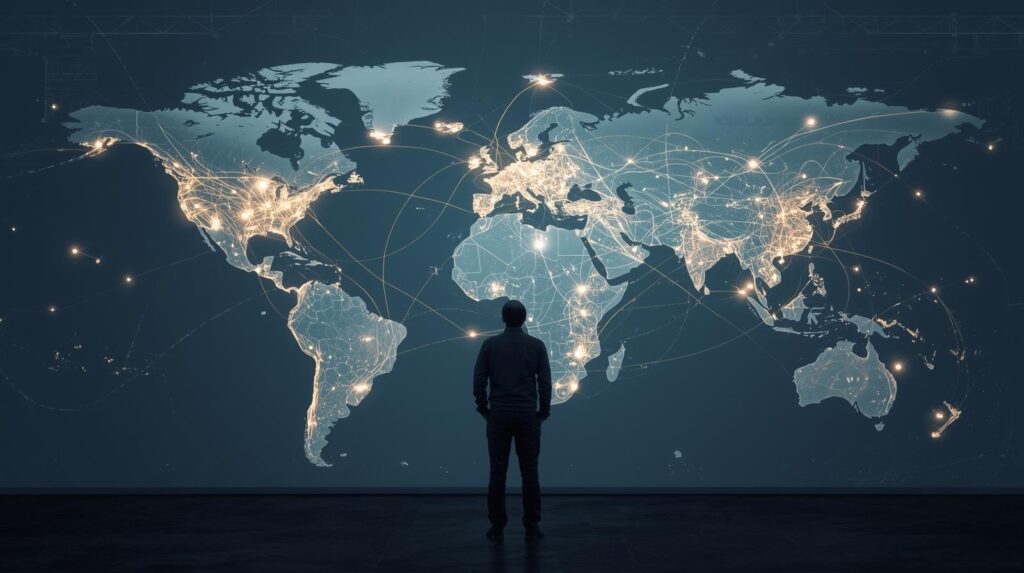
What Is Geopolitics: My Journey and Lessons
The first time I heard the word geopolitics, I thought it was simply about lines on a map. Over time—through study, travel, and small but telling experiences—I learned that geopolitics is really a story of land, power, and decisions that shape national policies, economies, and people's everyday lives.
Geopolitics refers to the study of how geography influences global politics and international relations. According to Wikipedia’s overview of geopolitics, it examines the relationship between power and space in world affairs.From Student to Practitioner: A Personal Background
My interest in international affairs and geopolitics deepened in university when I first held a geopolitical map in my hands. During a classroom debate, a professor remarked, "the land often explains who gained power and why." That single line sparked a curiosity that pushed me into case studies, field visits, and years of observing how high-level policies translate into local realities.
Opening Scene — A Small Incident That Changed My View
I still remember visiting a small town near a contested border where the impact of policy decisions was visible everywhere: prices in markets, employment opportunities, and the condition of roads — all shaped by distant geopolitical choices rarely seen in headlines. That trip was a reality check: geopolitics is not only theory — it's people's lives.
What You Will Gain from This Article
- A clear definition and historical overview of geopolitics
- An introduction to classic theories and modern perspectives
- Real-world examples and lessons drawn from my personal experiences
- An analysis of emerging challenges and opportunities in Asia, especially for India
This piece aims not just to inform but to inspire you to look beyond the map — to understand context, connect the dots, and see how geopolitical shifts reshape the world around us. If you're ready, let's move forward and explore the roots, theories, and real-world impacts of geopolitics.
Definition and Historical Evolution of Geopolitics
The term Geopolitics is derived from two words — “Geo” meaning Earth or land, and “Politics” meaning the science of governance and power. Therefore, geopolitics can be defined as the study of the relationship between geography and political power.
When a nation formulates its policies based on its geographical location, natural resources, population, culture, and the influence of neighboring countries, it is engaging in geopolitics. For example — India’s coastal position, Himalayan borders, and strategic role in South Asia clearly reflect its geopolitical identity.
The Origin and Historical Background of Geopolitics
The concept of geopolitics emerged in the late 19th and early 20th centuries, during the age of European imperial expansion and global competition for territory. The British scholar Halford Mackinder introduced the famous “Heartland Theory,” in which he stated, “Who rules Eastern Europe commands the Heartland; who rules the Heartland commands the World Island; who rules the World Island commands the world.”
Later, American strategist Nicholas Spykman developed the “Rimland Theory,” emphasizing that coastal regions — or “Rimlands” — hold the key to global power balance. These classical theories deeply influenced world politics during both World Wars and the Cold War era.
The evolution of geopolitical thought did not stop with early theorists. The Cold War further transformed global power structures, alliances, and strategic doctrines. To understand how those historical rivalries continue to shape global politics today, read Lessons from the Cold War for Today’s Geopolitics.
From the Colonial Era to Modern Geopolitics
During the colonial period, geopolitics mainly revolved around land, sea routes, and resource control. However, in the 21st century, the scope of geopolitics has expanded significantly. Today, it includes elements like energy, technology, cyber security, climate change, maritime security, and space politics. In essence, modern geopolitics goes beyond national borders — it now represents global interdependence and strategic influence.
Insights from My Studies and Experience
When I began studying geopolitics at university, I realized that it is not limited to politics or war — it is the science of human decisions, resources, and strategy. My biggest lesson was that to understand any international event, one must first understand its geography — because power is born where geography provides opportunity.
For instance, India’s geographical position — located at the crossroads of South Asia, Southeast Asia, and Central Asia — gives it a pivotal role in world politics. Therefore, India’s foreign policy priorities such as maritime security, energy routes, and neighborhood diplomacy are all shaped by its geopolitical realities.
The Contemporary Relevance of Geopolitics
In today’s world, where boundaries are shrinking through technology and economic globalization, geopolitics has become more important than ever. Whether it’s the Russia–Ukraine conflict, China’s Belt and Road Initiative, or India’s Indo-Pacific vision — each reflects deep-rooted geopolitical motives.
Thus, geopolitics is not merely the story of power or policy — it is the foundation of economic, social, and cultural strategies. Understanding it is the first step toward becoming a responsible global citizen.

Major Theories — Mackinder, Spykman, and Modern Perspectives
Geopolitics is not merely the study of maps or geographical facts — it is the result of ideas and theories that have profoundly shaped world politics. Throughout history, many scholars and strategists have tried to explain how land, sea, and resources determine the power and policies of nations.
1. Halford Mackinder’s “Heartland Theory”
The British geographer Sir Halford J. Mackinder introduced the Heartland Theory in 1904. He argued that the key to global power lay in controlling the vast central region of Eurasia — what he called the Heartland.
“Who rules Eastern Europe commands the Heartland;
who rules the Heartland commands the World Island;
who rules the World Island commands the world.”
Mackinder believed that land power — not sea power — would decide the future of global dominance. His theory influenced the strategic thinking of both World Wars and the Cold War. During the 20th century, the Soviet Union was seen as the “Heartland Power,” while the United States and its allies focused on containing it through control of the surrounding “Rimlands.”
2. Nicholas Spykman’s “Rimland Theory”
American scholar Nicholas Spykman challenged Mackinder’s ideas in the 1940s with his Rimland Theory. He emphasized that the real center of power was not the Heartland, but the coastal regions — the so-called Rimlands — that encircle Eurasia.
“Who controls the Rimland rules Eurasia;
who rules Eurasia controls the destinies of the world.”
Spykman’s theory greatly influenced U.S. foreign policy during the Cold War. America focused on maintaining influence over Europe, the Middle East, and Southeast Asia — regions forming the Rimland — through military alliances and naval presence.
3. Alfred Mahan’s “Sea Power Theory”
Another major contributor to classical geopolitics was Alfred Thayer Mahan, an American naval strategist who emphasized the role of maritime power. He famously wrote that “whoever controls the sea, controls the trade, and thus the world.” His theory shaped the naval policies of both Britain and the United States.
4. Modern Geopolitics — Technology, Energy, and the Digital Era
In the 21st century, geopolitics has expanded far beyond traditional borders. Today, factors such as energy security, cyber warfare, space policy, artificial intelligence, and digital infrastructure have become crucial elements of geopolitical power. For instance, China’s Belt and Road Initiative (BRI) is not merely an economic project — it is a long-term geopolitical strategy aimed at expanding influence through trade and connectivity.
Similarly, India’s Indo-Pacific vision highlights that geopolitics is not limited to land or sea, but extends to a continuous process of global power balancing. Today, data, technology, and energy are the new frontiers of power — and wars are increasingly being fought not only with weapons but with information and influence.
My Reflections and Insights
When I first studied the theories of Mackinder and Spykman, I thought they belonged to an old era of imperial rivalry. But as I explored modern conflicts and global policies, I realized that today’s world still operates on those same principles — only the forms have changed. The “Heartland” today might be data centers, and the “Rimland” might be digital oceans of connectivity.
Understanding geopolitics, therefore, is not just about reading maps — it is about reading the movement of the world. In the next section, we will examine how Asia — especially India, China, and Russia — play defining roles in the ongoing global balance of power.
Geopolitics refers to the study of how geography influences global politics and international relations. According to Wikipedia’s overview of geopolitics, it examines the relationship between power and space in world affairs.
Geopolitical Competition in Asia — India, China, and Russia
Asia has become the geopolitical axis of the world today. Here, power, economy, resources, and strategy are all intertwined in a complex web of competition. The rivalry between India, China, and Russia is not limited to borders or military might — it extends to energy, technology, trade routes, and global alliances.
1. India’s Position: Balance and Strategic Autonomy
India stands at the heart of Asia, leading in geography, population, and democracy. The foundation of India’s geopolitical outlook lies in “Strategic Autonomy” — the ability to make independent decisions based on national interests rather than joining any one power bloc.
India’s “Act East Policy” and “Indo-Pacific Vision” reflect this philosophy. These initiatives position India as a bridge between South Asia and Southeast Asia. Through its involvement in the Quad Alliance — alongside the United States, Japan, and Australia — India seeks to balance China’s growing influence in the Indo-Pacific region.
India’s Key Geopolitical Challenges
- Border tensions with China (Ladakh and Arunachal Pradesh)
- Ongoing conflict and terrorism threats from Pakistan
- Dependence on imported energy and maritime security concerns
- Need for technological and industrial self-reliance
Despite these challenges, India has established itself as a credible power-balancing player. Its strong defense ties with Russia, growing strategic partnership with the United States, and diplomatic presence across Asia reflect India’s multidimensional geopolitical approach.
2. China’s Strategy: Expansion and Influence
China’s geopolitical focus is built around expansion and dominance. Its primary objective is to extend economic and strategic influence from Asia to Africa and Europe. The Belt and Road Initiative (BRI) is a core part of this strategy, creating a vast network of roads, railways, and ports under Chinese influence.
Additionally, China continues to strengthen its presence in the South China Sea, through which nearly one-third of global maritime trade passes. This assertion of control directly affects regional power balance and poses a challenge to India, Japan, and the United States.
Key Aspects of China’s Geopolitical Vision
- Military modernization and investment in artificial intelligence
- Economic influence across Asia, Africa, and Europe
- Efforts to control Taiwan, Tibet, and the South China Sea
- Long-term strategy to challenge U.S. global dominance
3. Russia’s Role: The Traditional Power Balancer
Russia’s geopolitical strength has historically rested on its military power, energy resources, and strategic influence. Even after the Cold War, Russia has maintained a central position in Eurasia. The Ukraine conflict demonstrated that Russia remains deeply sensitive about its “security perimeter.”
For India, Russia continues to be a reliable defense partner, while its alignment with China through groups like the SCO and BRICS helps Moscow maintain a strategic balance against Western influence in Asia.
Russia’s Geopolitical Objectives
- Maintaining influence in Eurasia
- Preserving economic strength through energy exports
- Balancing against Western strategic expansion
- Maintaining ties with both India and China
4. Asia’s Emerging Balance of Power
Today, Asia is moving toward a tri-polar balance of power, where India, China, and Russia each pursue their interests through cooperation and competition. The United States’ growing presence in the Indo-Pacific adds another layer of complexity to this evolving landscape.
The future of Asia will depend on whether these three powers can shift from rivalry to collaboration. With over half of the world’s population and economic output concentrated in this region, Asia’s stability will shape the course of global politics in the 21st century.
My Perspective
Through my studies, I’ve come to understand that Asia is not just a region on the map — it is the center of global transformation. For India, the challenge lies not only in defending its borders but also in asserting its vision, leadership, and cultural influence in this dynamic environment. That, I believe, is the true test of 21st-century geopolitics.
.
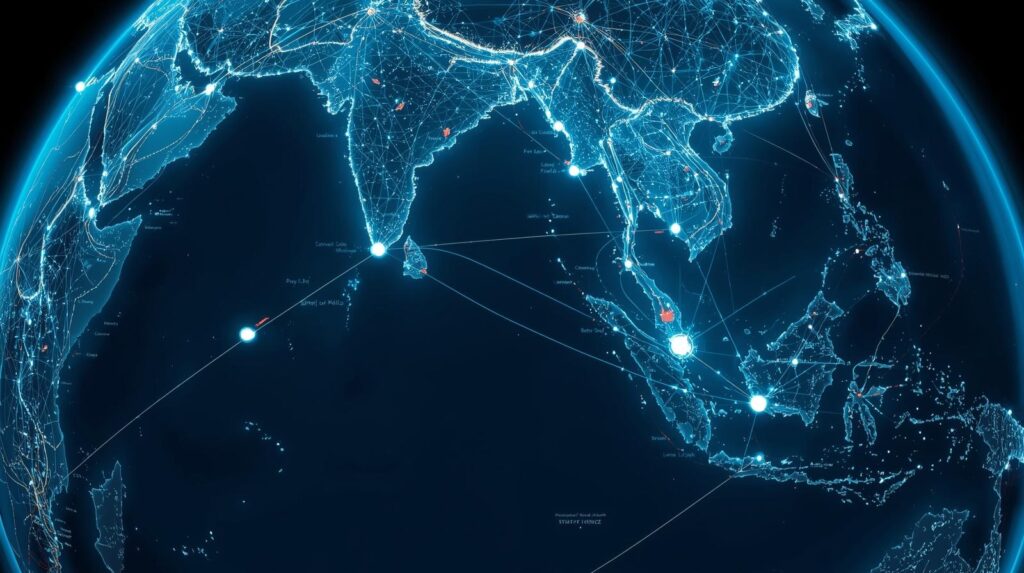
Maritime Power, Energy Resources, and Global Strategy
Throughout the history of geopolitics, maritime power has always played a decisive role. The nation that controls the seas ultimately controls trade, resources, and influence. Even in the 21st century, sea routes remain the lifelines of global politics, as energy, commerce, and technology continue to flow across them.
1. Strategic Importance of the Seas
Nearly 90% of global trade is carried through maritime routes. Oil, gas, and other vital commodities travel through the oceans, making them essential to global stability. This is why major powers — the United States, China, India, and Russia — are constantly expanding their naval presence.
The Indian Ocean is now called the “Ocean of the 21st Century” as it connects Asia, Africa, and the Middle East. For India, this region is not just strategically significant but also vital for energy security and the protection of global trade lanes.
2. India’s Role in Maritime Power
With over 7,500 kilometers of coastline and around 1,300 islands, India is a natural maritime nation. The Indian Navy plays a crucial role not only in safeguarding national borders but also in maintaining peace and stability in the Indian Ocean Region (IOR).
India’s SAGAR Policy — “Security and Growth for All in the Region” — is based on the belief that the oceans are a shared responsibility rather than a contested domain. Under this vision, India has expanded cooperation with countries in Africa, Southeast Asia, and West Asia through defense, trade, and maritime partnerships.
India’s Key Maritime Strategies
- Expansion of naval bases in the Andaman & Nicobar Islands
- Defense and security cooperation with Mauritius, Seychelles, and the Maldives
- Strategic partnerships under the Quad Alliance to balance China’s influence
- Protection and monitoring of vital oil and trade routes
3. Energy Resources and Geopolitics
Energy is the backbone of modern geopolitics. Oil, natural gas, coal, and now renewable energy determine the economic and political stability of nations. Countries that possess energy resources often shape global power dynamics.
For example, the Middle East has remained at the center of world politics for decades due to its oil wealth. Similarly, Russia maintains strategic leverage through its gas exports to Europe. On the other hand, India and China — being major energy importers — are deeply connected to global energy markets.
Key Elements of Energy Geopolitics
- Control of oil and gas pipelines (e.g., Russia–Europe gas corridor)
- Maritime choke points such as the Strait of Malacca and Hormuz Strait
- Competition in renewable energy — solar, hydrogen, and wind power
- Strategic reserves to ensure long-term energy security
As the world transitions toward sustainable energy, energy geopolitics is also transforming. Technology, climate policy, and green innovation are becoming new instruments of global power.
4. The Role of Sea Routes in Global Strategy
The world’s major economies are competing to secure control over critical maritime choke points — such as the Strait of Malacca, Strait of Hormuz, and Bab-el-Mandeb. Trillions of dollars’ worth of trade passes through these narrow corridors each year.
The naval presence of the United States, China, and India is most active in these regions. This competition is not merely about security; it is about economic dominance, diplomacy, and influence.
Lessons from My Study
When I studied maritime geopolitics, I realized that the sea is not just a body of water — it is the lifeblood of human civilization and the global economy. The nation that can safeguard and utilize the sea responsibly will shape the power structures of the future.
For India, this presents both an opportunity and a responsibility — to transform the Indian Ocean into a zone of peace, security, and prosperity.
Geopolitics and Economy — From Oil to Technology
In the modern era, geopolitics and economics are deeply interconnected. A nation’s political power is no longer defined solely by its military might, but by its economic strength, technological progress, and position in the global supply chain. That is why the 21st century is often described as the age of “economic geopolitics.”
1. The Politics of Oil and Energy
Much of the 20th century’s geopolitical rivalry revolved around oil and energy resources. From wars in the Middle East to the ongoing Russia–Ukraine conflict, energy supply has remained a decisive factor. Nations that control energy sources also shape global power structures.
For example, Saudi Arabia and other Gulf nations influence global politics through oil production, while Russia maintains leverage over Europe’s energy security through its gas pipelines. Thus, energy has transformed from a commercial commodity into a strategic weapon.
Economic factors are a core part of how nations exercise power on the world stage. For insights on how global economic shifts affect developing nations, see Global Inflation and Its Impact on Developing Countries.
2. China’s Economic Geopolitics: The Belt and Road Initiative
Over the past two decades, China has converted its economic power into geopolitical influence. Its Belt and Road Initiative (BRI) is not just an infrastructure program — it is a global economic network linking Asia, Africa, and Europe.
Through roads, railways, ports, and digital corridors, China is expanding its sphere of economic influence. However, for many participating countries, this initiative has become a “debt trap,” threatening their economic sovereignty.
3. India’s Economic Diplomacy and Global Role
In recent years, India has redefined its economic diplomacy. Programs such as Make in India, Startup India, and Vocal for Local are strengthening India’s self-reliance and geopolitical standing. India is now emerging as a key global supply hub rather than just a consumer market.
India’s participation in forums such as G20, BRICS, and the Quad Alliance reflects its growing economic leadership. India’s message to the world is clear — promoting partnership, transparency, and a multipolar global order.
Key Elements of India’s Economic Geopolitics
- Diversification of energy sources
- Digital India and technology diplomacy
- Participation in global trade agreements
- Defense and industrial cooperation models
4. Technology: The Foundation of New Power
In the 21st century, technology has become the new foundation of power. Influence is no longer determined by oil reserves alone, but by control over data, artificial intelligence (AI), semiconductors, and cyber infrastructure.
The ongoing tech war between the United States and China exemplifies this shift. The U.S. seeks to maintain global dominance through technological control, while China aims to expand its influence through its Digital Silk Road.
India has adopted a balanced approach — acting as a technology partner to Western nations while promoting indigenous innovation through initiatives like Digital India and the Semiconductor Mission.
New Dimensions of Tech-Based Geopolitics
- Data and cybersecurity as national priorities
- AI and machine learning applications in defense and governance
- Global competition in semiconductor manufacturing
- Space policy defining new strategic frontiers
5. The Balance of Power in the Global Economy
Today’s global economy is increasingly multipolar. The U.S., China, the European Union, India, and Russia all influence international policy based on their unique economic interests. Trade wars, economic sanctions, and investment alliances have emerged as new tools of geopolitical competition.
Economic competition is no longer limited to markets — it now extends to ideological and strategic domains. The U.S.–China tech war and the Western sanctions on Russia are clear examples of how economics has become a new battleground of geopolitics.
My Reflections and Conclusion
Through my study of economic geopolitics, I’ve realized that the politics of the future will be driven not by power, but by production. The nation that integrates technology, energy, and innovation effectively will lead the world order of tomorrow.
India has the opportunity to become not only a symbol of democracy but also a model of economic resilience and technological advancement. This is where geopolitics and economics converge — writing the story of the world’s future together.
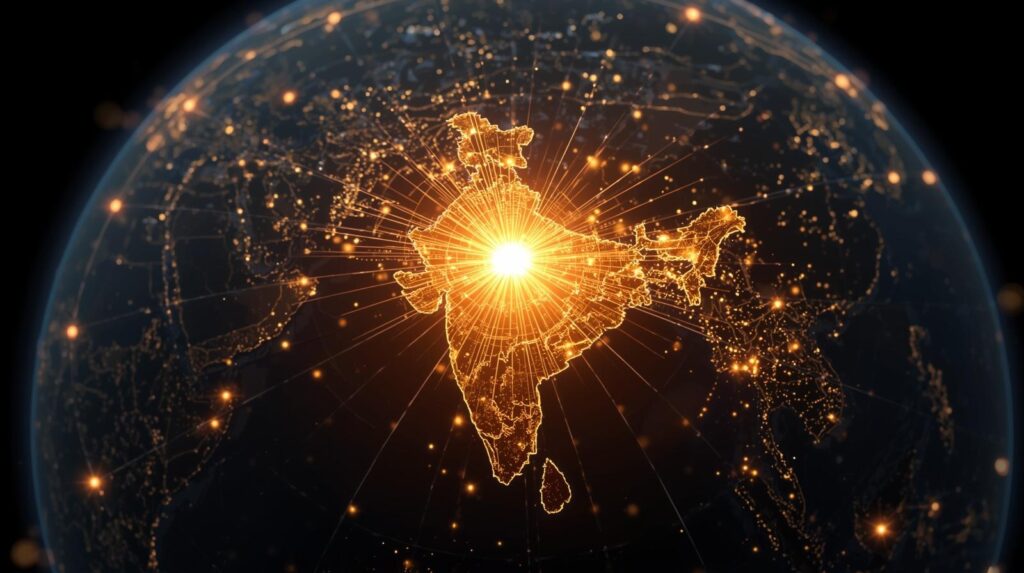
India’s Geopolitical Position — Opportunities and Challenges
India is one of the fastest-rising powers in the world today. Its geographic location, population, democratic governance, and economic potential make it a central player in global politics in the 21st century. However, alongside these opportunities, India also faces several geopolitical challenges.
1. India’s Geographical Significance
India lies at the heart of South Asia, sharing borders with seven countries — Pakistan, China, Nepal, Bhutan, Bangladesh, Myanmar, and Sri Lanka (through maritime borders). This gives India a unique position as a connectivity hub linking Asia, the Middle East, and the Indian Ocean region.
This geographical position is both India’s greatest strength and its biggest challenge. It opens avenues for regional trade and diplomacy, but also exposes India to border disputes, terrorism, and strategic rivalries with neighboring powers.
2. India’s Foreign Policy: Balance and Autonomy
The foundation of India’s foreign policy lies in strategic autonomy — the ability to make independent decisions based on national interest, rather than aligning with any one bloc of power.
For instance, India maintains defense cooperation with Russia, deepens technological and strategic ties with the United States, and plays an active role in multilateral forums like BRICS, the Quad, and G20. This approach reflects India’s multi-alignment diplomacy in the evolving world order.
3. Major Geopolitical Opportunities
- Leadership role in the Indo-Pacific region.
- Harnessing India’s youth and demographic dividend for technological growth.
- Building energy partnerships with Central Asia and the Middle East.
- Expanding economic influence through “Make in India” and “Startup India.”
- Establishing thought leadership at global platforms such as G20, BRICS, and SCO.
4. Major Geopolitical Challenges
- Border tensions and China’s growing influence in Asia.
- Ongoing disputes and terrorism threats from Pakistan.
- Maritime security concerns due to China’s expanding presence in the Indian Ocean.
- Dependence on imported energy and volatility in global markets.
- Climate change and environmental insecurities affecting national policy.
5. India’s Diplomatic Strategies
India is pursuing a phase of multi-dimensional diplomacy. It is building balanced relationships not only with Western powers but also with Asia, Africa, and Latin America.
The “Neighbourhood First Policy” aims to foster cooperation and trust among neighboring nations, while the “Act East Policy” connects India more deeply with Southeast Asian economies. Through these initiatives, India is expanding its geopolitical reach from the local to the global level.
6. India’s Security and Defense Policy
The guiding principle of India’s defense policy is “Strength with Responsibility.” The goal is not only to protect its borders but also to ensure regional peace and stability.
India’s modern defense technology, naval strength in the Indian Ocean, and space-defense programs have become pillars of its strategic identity. These advancements enable India to safeguard its sovereignty and contribute to the global security framework.
7. The Road Ahead: India’s Global Role
In the coming decades, India’s aim is not just to be a regional power, but to emerge as a global policymaker. To achieve this, India must focus on economic resilience, technological innovation, social unity, and smart diplomacy.
My Reflections
From my perspective, India’s greatest strength lies in its ability to maintain balance. India does not believe in confrontation, nor does it depend on any single power bloc. This balanced approach will make India a stable and trustworthy power in the future.
India’s geopolitical journey is still unfolding — and in this journey, every citizen, policymaker, and decision matters. This is where India’s destiny and the world’s stability are deeply intertwined.
The Future Direction — New Technology, Environmental Politics, and the Changing World Order
As the world moves deeper into the 21st century, the nature of geopolitics is transforming rapidly. It is no longer limited to borders and wars — it now encompasses the politics of technology, environment, energy, and data. In the coming decades, the leading nations will be those that base their strategy on knowledge, innovation, and sustainability.
1. The Rise of New Technology and Digital Power
The technological revolution has redefined the very rules of geopolitics. Artificial Intelligence (AI), cybersecurity, quantum computing, space technology, and data diplomacy are now at the center of global power. Data has become not just the “new oil,” but the new weapon of influence.
The countries leading in this technological race are the ones shaping the world’s future. For example, the United States and China are locked in an AI supremacy competition, while India is presenting a model of digital democracy — where technology is used for inclusive development and citizen empowerment.
2. Environmental Politics and Climate Diplomacy
Climate change has evolved from being a scientific issue to becoming a political and diplomatic instrument. Developed nations often use emission control agreements to pressure developing countries, while developing nations assert their right to sustainable development.
In this new era of green geopolitics, renewable energy, clean technology, and sustainable diplomacy are emerging as critical factors. India has taken a leadership role through initiatives like the International Solar Alliance (ISA) and Mission LiFE (Lifestyle for Environment), promoting the idea that environmental protection and development can go hand in hand.
3. Shifts in the Global Balance of Power
The world has entered a new multipolar era. Power is no longer concentrated in the hands of the West — nations in Asia, Africa, and Latin America are playing increasingly significant roles in global decision-making. India, China, Russia, the European Union, and the Gulf nations are all shaping this evolving order.
Platforms such as the United Nations (UN), G20, and BRICS are also evolving to reflect this change. Decisions are no longer made solely by powerful nations but through collective participation. This transformation is pushing global governance toward a more democratic and inclusive framework.
4. Technology and Ethics: The Challenge of the Future
In the coming years, technologies such as AI, robotics, biotechnology, and gene editing will not only reshape human life but also influence political decisions and power structures. The question will not be who has the most advanced technology, but who uses it ethically and responsibly.
India has the potential to become a model nation in this field — one that combines technology with humanity and morality. This will require long-term investments in education, research, and forward-thinking policy-making.
5. Global Cooperation and the New Diplomacy
The geopolitics of the future will be defined by collaboration and shared responsibility. No single nation can face challenges like climate change, pandemics, or cyber threats alone. The world must embrace a new form of “collective responsibility diplomacy.”
India’s philosophy of “Vasudhaiva Kutumbakam” — meaning “The world is one family” — offers a timeless foundation for this new diplomacy. Through this principle, India can guide the world from conflict toward cooperation.
My Reflections: Inspiration for the Future
From my studies and experiences, I have come to believe that the true center of future geopolitics will be humanity itself. Technology, power, and resources will hold meaning only when used for shared growth and lasting peace.
Countries like India — endowed with the strengths of ideas, people, and culture — must provide moral leadership in this global transition. From here begins the possibility of a new, balanced, and inclusive world order — one built on cooperation, sustainability, and mutual respect.
Conclusion — My Learnings, Inspiration, and Vision for the Future
When I first began studying geopolitics, it seemed like a subject limited to nations, borders, and power. But as I delved deeper, I realized that geopolitics is not just about politics — it is the story of human life, thought, and survival. It shows how geography shapes our decisions, conflicts, and cooperation.
1. My Personal Learnings
This study has taught me that the true strength of any nation or individual lies not merely in resources, but in their vision and mindset. A nation becomes powerful when it can strike a balance between interest and humanity.
I’ve also learned that geography is not just lines drawn on a map — it’s the living expression of our culture, economy, environment, and relationships. Understanding this is essential for every student, policymaker, and responsible citizen.
2. Inspiration from Geopolitics
Geopolitics taught me that understanding the world is a continuous journey. There are no permanent friends or enemies — only permanent interests, which must be pursued with wisdom and empathy.
I have realized that every person — whether a student, professional, or citizen — should view the world through a global lens. When we think beyond boundaries, we grow into true global citizens.
3. India as an Inspiration
For me, India’s story is the greatest inspiration. It is a nation that symbolizes unity in diversity, resilience in conflict, and balance in progress. India has shown the world that power and morality can coexist.
In my vision, India will emerge in the coming decades not only as an economic powerhouse but also as a moral and intellectual leader — a country that demonstrates that cooperation, tolerance, and stability are the truest forms of strength.
4. My Thoughts for the Future
The future world will be defined by ideas, innovation, and ethical choices. Technology, energy, and resources will continue to change, but the nations that cultivate responsibility, creativity, and compassion among their people will lead the new world order.
I believe that through education and awareness, we can transform geopolitics from a tool of power into a medium for human progress. That, to me, is the essence of this journey — From Knowledge to Understanding, from Understanding to Policy, and from Policy to Peace.
5. Final Message: From Learning to Inspiration
This journey has taught me that true power does not come from control — it comes from restraint and cooperation. A nation becomes truly great not when it dominates others, but when it uses its strength to lift others.
For me, geopolitics is no longer just a subject — it is a way of thinking. It teaches that every decision, every policy, and every step should move in the direction of humanity and sustainability.
Conclusion
Ultimately, this study has been more than an academic journey — it has been a transformative personal experience. It has given me a deeper understanding of the world and inspired me to see myself as a responsible global citizen.
Geopolitics teaches us that real change doesn’t always appear on the map — it is reflected in ideas, values, and cooperation. And that is the true power that will shape the future of humanity.
This, then, is my story — my learning, my inspiration, and my vision — that through knowledge, empathy, and awareness, we can build a better, balanced, and peaceful world.