
Water Scarcity in India: A Growing National Crisis
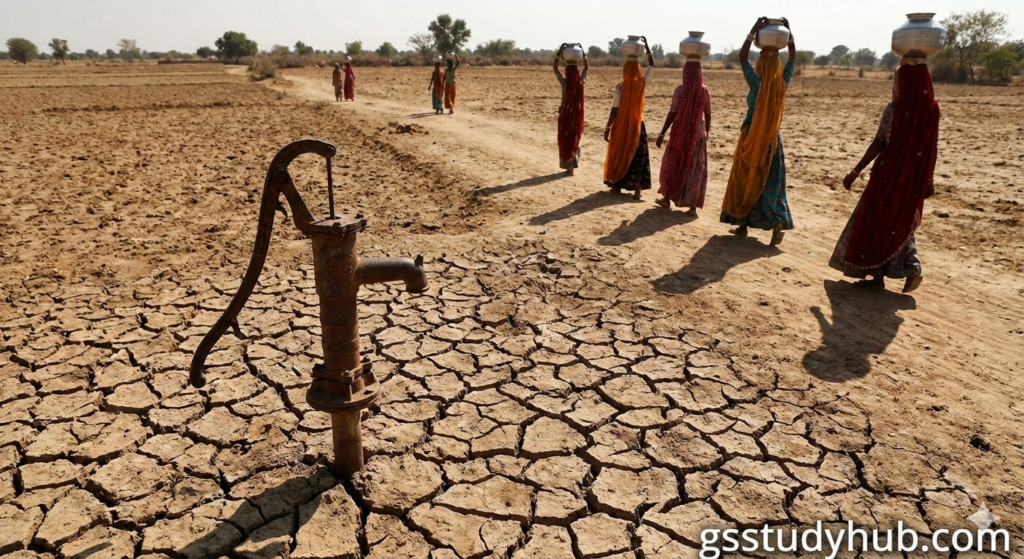
Water scarcity in India is no longer just an environmental concern; it has evolved into a serious national crisis affecting millions of lives. Across the country, communities are struggling to secure safe drinking water. Rapid population growth, declining groundwater levels, erratic monsoon patterns, and rising demand from agriculture and industry have intensified the nation’s water crisis. What was once considered a seasonal issue has now become a long-term structural challenge.
Current Situation of the Water Crisis
The present water situation is alarming. Several regions are experiencing severe groundwater depletion, and many rivers are shrinking due to overuse and pollution. Urban centers face irregular supply, while rural communities depend heavily on wells and hand pumps that are drying up. This growing shortage is visible in both metropolitan cities and remote villages, highlighting the scale of the challenge.
Key Statistics and Facts
Recent reports indicate that per capita water availability has significantly declined over the past few decades. Millions of people lack access to safe drinking water, and several major cities have faced near “Day Zero” situations. Studies show that a large percentage of districts are categorized as water-stressed. These statistics clearly demonstrate that the crisis is not a future threat but a present reality.
Impact on Rural and Urban Areas
In rural regions, the shortage directly affects agriculture, livestock, and livelihoods. Farmers struggle with reduced crop yields, leading to economic instability and migration. In cities, residents increasingly rely on private tankers and bottled supplies. This creates inequality, as only those who can afford alternative sources gain reliable access. The ongoing water emergency therefore deepens social and economic disparities across regions.
Changing Lifestyles and Consumption Patterns
Modern lifestyles have also contributed to rising demand. High household usage, expansion of water-intensive industries, and lack of awareness about conservation have increased pressure on limited freshwater resources. Without responsible usage and sustainable planning, demand will continue to exceed supply, worsening the overall situation.
Future Outlook: What Could Happen by 2030?
If current trends continue, experts warn that the country could face far more severe shortages by 2030. Major cities may experience critical supply breakdowns, agricultural productivity could decline, and economic growth may slow. Climate change is expected to further disrupt rainfall patterns, making resource management even more complex. Urgent reforms and sustainable strategies are essential to secure the nation’s future.
Understanding Water Scarcity in India: Meaning and Reality
Water scarcity in India is not merely about the physical absence of water; it represents a situation where available resources are insufficient to meet the growing demands of population, agriculture, and industry. Over the past few decades, the country’s water crisis has evolved into a complex national challenge driven by demographic pressure, environmental degradation, and weak resource management.
To truly understand the issue, it is important to recognize that the challenge is both natural and human-made. While irregular rainfall and climate change play a role, excessive groundwater extraction, pollution, and inefficient distribution systems have significantly worsened the overall situation.
What Does Water Scarcity Really Mean?
Water scarcity occurs when demand exceeds available supply within a region. It can be categorized into two types: physical scarcity and economic scarcity. Physical scarcity happens when natural resources are limited due to climatic conditions or overuse. Economic scarcity occurs when water may exist, but infrastructure, governance, or financial constraints prevent access. In India’s case, both forms are visible, making the challenge multidimensional.
The Reality of India’s Water Resources
India supports nearly 18% of the world’s population but possesses only around 4% of global freshwater resources. This imbalance highlights the seriousness of the current water stress. Groundwater levels in several states are declining rapidly, and many rivers are shrinking due to over-extraction and contamination. Seasonal dependence on monsoon rainfall further increases vulnerability.
Natural and Human Factors Combined
The crisis cannot be attributed solely to nature. Climate change has disrupted rainfall patterns, leading to frequent droughts and unpredictable monsoons. However, human activities such as deforestation, rapid urban expansion, industrial growth, and unsustainable agricultural practices have intensified pressure on limited freshwater supplies. The overuse of borewells and tube wells has accelerated groundwater depletion across the country.
Rural vs Urban Water Crisis
The impact differs between rural and urban areas. In villages, inadequate supply directly affects agriculture, livestock, and livelihoods, leading to declining yields and financial instability. In cities, unequal distribution and rising demand create dependence on private tankers and packaged water. This widens social inequality, as only wealthier households can afford reliable alternatives.
Consequences of Ignoring the Crisis
If the situation continues to be neglected, the consequences could be severe. Food security may weaken, economic productivity may decline, and public health risks could rise due to unsafe sources. Addressing this national water emergency requires urgent recognition, responsible consumption, and sustainable management strategies to secure long-term stability.
Major Causes of Water Scarcity in India
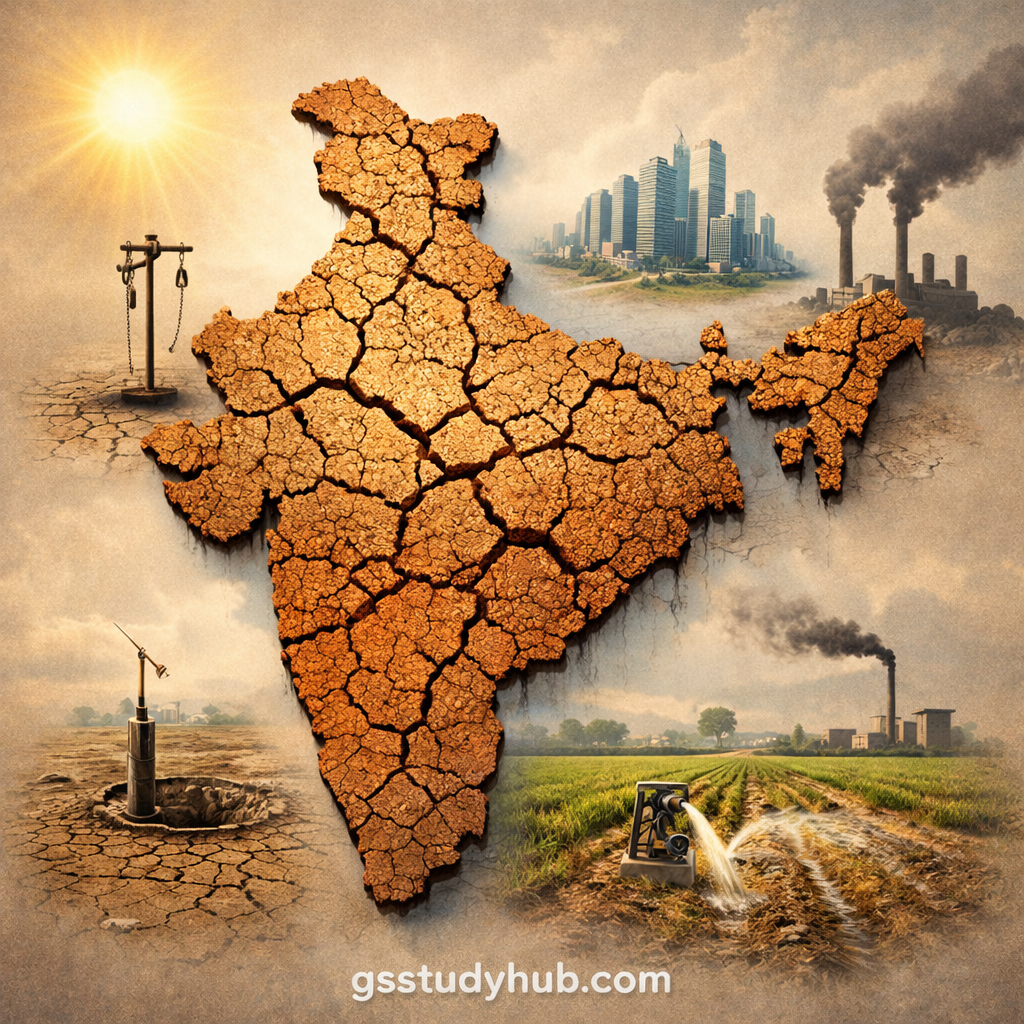
Water scarcity in India is not the result of a single factor but a combination of environmental, demographic, and economic pressures. Rapid development, population expansion, and unsustainable consumption patterns have intensified the country’s water crisis. Understanding these underlying causes is essential for designing long-term and sustainable solutions.
For daily updates on national issues, you can also explore our 11 February 2026 Current Affairs Quiz.
Climate Change and Irregular Monsoon Patterns
Climate change has significantly disrupted traditional rainfall cycles. India depends heavily on monsoon rains to replenish rivers, reservoirs, and groundwater reserves. However, unpredictable rainfall, prolonged droughts, and extreme weather events have reduced reliable availability. These shifting climatic conditions are a major driver of the growing water crisis, particularly in drought-prone regions.
Overexploitation of Groundwater
The country is one of the largest users of groundwater globally. Excessive drilling of borewells and tube wells for agriculture and urban consumption has led to alarming depletion levels. In many states, aquifers are declining faster than they can naturally recharge. This unsustainable extraction has become one of the primary reasons behind the worsening shortage.
Rapid Population Growth
With a population exceeding a billion people, demand continues to rise sharply. Water is required for domestic use, farming, industry, and energy production. As consumption increases while supply remains limited, the gap between availability and usage widens. Demographic pressure therefore plays a critical role in intensifying the national water emergency.
Urbanization and Industrial Expansion
Fast-paced urban growth has increased pressure on existing infrastructure. Expanding cities replace natural recharge zones with concrete structures, reducing groundwater replenishment. Simultaneously, industries consume large volumes and often discharge untreated wastewater into rivers. These factors significantly strain freshwater resources.
Water Pollution and River Degradation
Pollution of rivers, lakes, and aquifers reduces the amount of usable freshwater. Industrial waste, agricultural chemicals, and untreated sewage contaminate water bodies across the country. Even when water is physically present, it may not be safe for consumption. This effectively reduces accessible supply and worsens the overall crisis.
Inefficient Water Management
Poor governance and inefficient distribution systems further aggravate the situation. Leakage in pipelines, outdated irrigation methods, and lack of proper storage facilities result in significant losses. Without effective planning and sustainable management strategies, the pressure on limited resources will continue to escalate.
Regions Most Affected by Water Scarcity in India
Water scarcity in India does not affect all regions equally. Certain states and districts face far more severe challenges due to geographical conditions, low rainfall, excessive groundwater extraction, and weak management systems. In many of these areas, the shortage has shifted from being a seasonal issue to a long-term structural crisis.
Rajasthan: Deepening Crisis in a Desert State
Rajasthan is naturally arid and receives very low annual rainfall. Large parts of the state depend heavily on groundwater for drinking and irrigation. Continuous over-extraction has caused levels to decline sharply. In many villages, people must travel long distances to fetch water. The strain on traditional systems such as stepwells and ponds shows how serious the regional water crisis has become.
Maharashtra: Recurring Drought Conditions
Regions such as Marathwada and Vidarbha frequently experience drought-like conditions. Irregular monsoons and cultivation of water-intensive crops like sugarcane have worsened the situation. Farmers face crop failures and financial instability due to unreliable supply. This ongoing shortage significantly affects agricultural productivity in the state.
Bundelkhand: Chronic Drought and Migration
The Bundelkhand region, spanning parts of Uttar Pradesh and Madhya Pradesh, has struggled with persistent drought for years. Limited rainfall, inadequate storage infrastructure, and poor irrigation systems have intensified the challenge. As a result, many families migrate in search of employment and stable living conditions.
Chennai: Urban Water Emergency
Chennai, the capital of Tamil Nadu, has experienced severe shortages in recent years. Major reservoirs ran dry, and the city became heavily dependent on private tankers. This crisis demonstrated that the problem is not limited to rural or drought-prone areas; even major metropolitan cities are vulnerable when resources are mismanaged.
Punjab and Haryana: Groundwater Depletion in Agricultural States
Punjab and Haryana, known for high agricultural output, face serious groundwater depletion due to intensive irrigation practices. The cultivation of water-intensive crops, particularly rice, has placed enormous pressure on underground reserves. This trend raises concerns about long-term food security and sustainable farming models.
Karnataka and Telangana: Rising Urban and Industrial Demand
In parts of Karnataka and Telangana, rapid urbanization and industrial growth have sharply increased demand. Irregular rainfall and limited storage capacity further strain available resources. As consumption continues to exceed supply, pressure on freshwater systems is becoming more pronounced in these southern states.
Impact of Water Scarcity in India on Agriculture and Economy
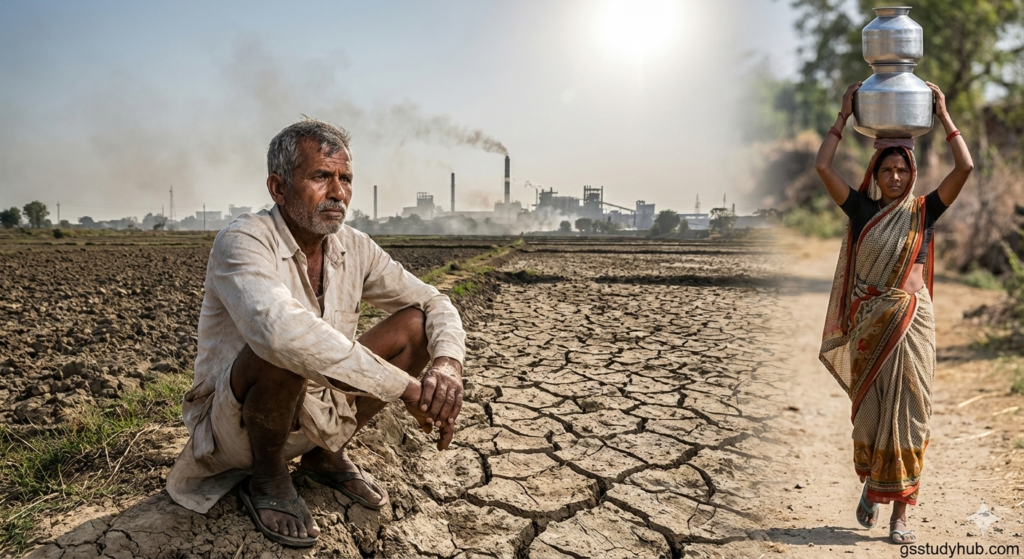
Water scarcity in India has a profound impact on agriculture and the overall economy. Since a large portion of the population depends directly or indirectly on farming, limited availability disrupts food production, rural livelihoods, and national stability. The growing water crisis is therefore not just an environmental concern but a serious economic challenge that affects long-term development.
The economic consequences of water scarcity in India extend beyond agriculture, affecting industry and national productivity.
Decline in Agricultural Productivity
Indian agriculture relies heavily on monsoon rainfall and groundwater irrigation. When supply becomes uncertain, crop yields decline significantly. Water-intensive crops such as rice, sugarcane, and wheat are particularly vulnerable. Repeated shortages have led to crop failures in several regions, reducing farmers’ income and increasing financial stress.
Impact on Farmers’ Income and Rural Economy
Reduced agricultural output directly affects farmers’ earnings. Lower income weakens purchasing power in rural markets, slowing local economic activity. In many drought-prone areas, the worsening crisis forces farmers to seek alternative employment, leading to rural-to-urban migration. This movement places additional pressure on city infrastructure and job markets.
Threat to Food Security
If shortages continue to intensify, national food security could face serious risks. Lower production may result in higher food prices and increased dependence on imports. A prolonged water emergency could destabilize supply chains and create inflationary pressures, affecting millions of households.
Impact on Industrial Production
Many industries, including textiles, energy generation, steel manufacturing, and food processing, require substantial quantities of water. When availability becomes limited, production costs rise and operations may slow down. This situation can discourage investment and reduce industrial growth, particularly in water-stressed regions.
Long-Term Economic Consequences
The combined impact on farming and industry ultimately influences national GDP growth. Increased healthcare costs due to unsafe supplies, declining labor productivity, and infrastructure strain add to the economic burden. If not managed effectively, the crisis could significantly hinder long-term economic progress.
Migration and Employment Challenges
Persistent shortages drive migration from rural areas to cities. As agricultural livelihoods become unsustainable, workers seek opportunities elsewhere. This trend contributes to urban overcrowding, expansion of informal employment, and rising socio-economic inequality.
Social and Health Consequences of Water Scarcity in India
Water scarcity in India is not only an environmental and economic issue; it also carries serious social and health consequences. Limited access to safe and clean supplies affects vulnerable populations the most, including women, children, and low-income communities. As the crisis intensifies, it deepens inequality, weakens public health systems, and threatens social stability.
Direct Impact on Public Health
When access to clean drinking water becomes limited, communities often rely on unsafe sources. This increases the spread of waterborne diseases such as diarrhea, cholera, typhoid, and hepatitis. Millions are forced to consume contaminated supplies, placing additional pressure on healthcare systems and increasing mortality risks, especially among children.
Disproportionate Burden on Women and Children
In many rural areas, the responsibility of fetching water falls primarily on women and children. They often walk long distances each day, reducing time available for education, income-generating activities, and rest. The ongoing shortage therefore reinforces gender inequality and limits opportunities for social and economic advancement.
Social Inequality and Resource Conflicts
As freshwater becomes limited, competition over available resources intensifies. Wealthier households can afford private tankers or packaged supplies, while poorer communities depend on unreliable public systems. This imbalance can create local tensions, disputes, and unequal access to essential services, widening socio-economic gaps.
Impact on Sanitation and Nutrition
Insufficient availability affects sanitation practices and hygiene standards. Without adequate supply, maintaining cleanliness becomes difficult, increasing the risk of infections and malnutrition. Poor access to safe resources for cooking, cleaning, and personal hygiene can compromise child development and overall community health.
Mental Stress and Community Instability
Persistent shortages create anxiety and uncertainty among affected populations. Fear of future scarcity and loss of livelihoods contributes to psychological stress. In extreme cases, prolonged crisis conditions may lead to migration, displacement, and long-term social instability, particularly in already vulnerable regions.
Government Policies to Address Water Scarcity in India
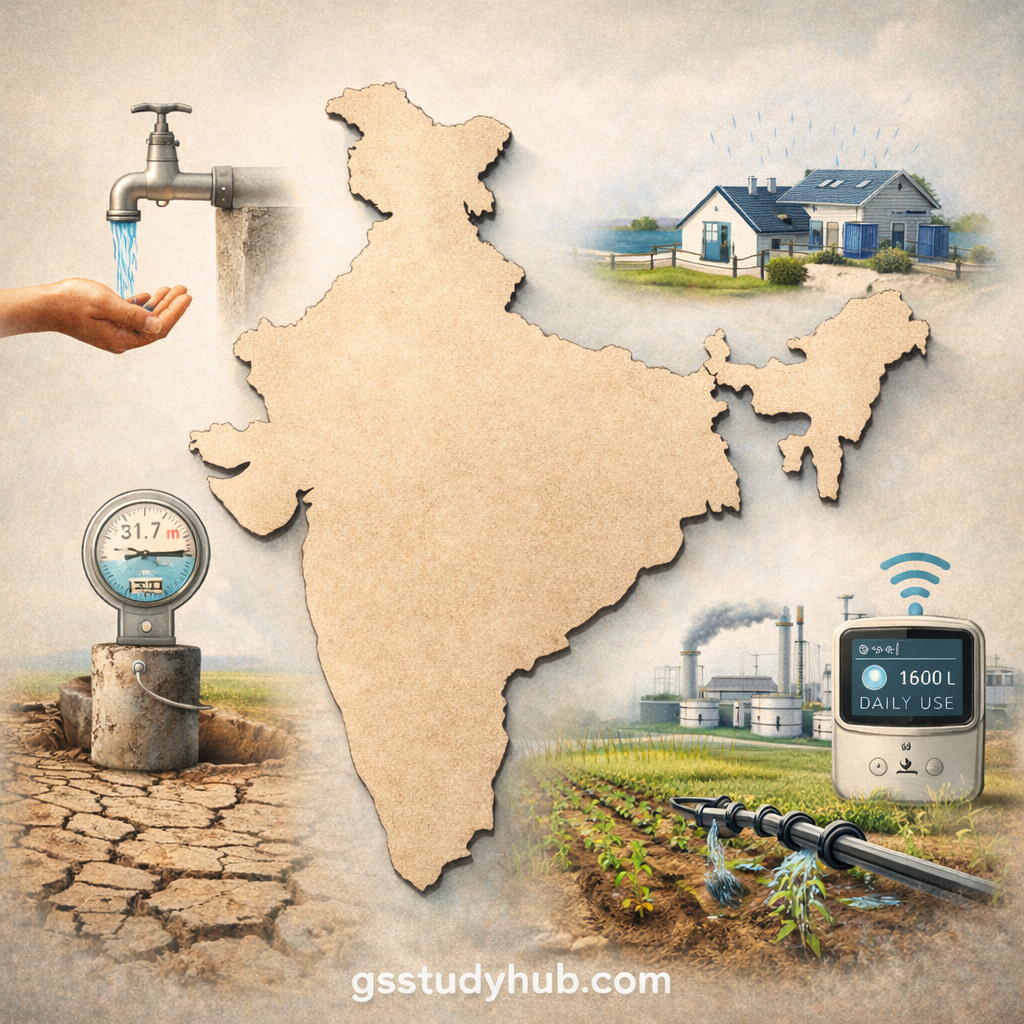
Water scarcity in India cannot be resolved through individual efforts alone; it requires strong policy intervention, institutional reform, and effective implementation. Both central and state governments have introduced multiple schemes to improve access, strengthen groundwater management, and promote sustainable usage. However, given the scale of the national water crisis, consistent monitoring, transparency, and community participation remain essential.
Effective implementation of these programs is critical to reducing water scarcity in India over the coming decade.
Jal Jeevan Mission
The Jal Jeevan Mission aims to provide safe and adequate drinking water to every rural household through functional tap connections. The program focuses on infrastructure development, quality monitoring, and long-term sustainability of supply systems. In severely affected regions, this mission plays a critical role in improving living standards and reducing dependency on unsafe sources.
Atal Bhujal Yojana
The Atal Bhujal Yojana focuses on sustainable groundwater management in water-stressed states. It promotes community participation, scientific monitoring of aquifer levels, and better planning of usage. Since over-extraction is one of the key drivers of the ongoing crisis, this initiative directly addresses a major structural challenge.
National Water Policy
The National Water Policy provides a comprehensive framework for integrated resource management. It emphasizes conservation, rainwater harvesting, wastewater reuse, and equitable distribution. Addressing long-term shortages requires coordinated planning across sectors, and this framework attempts to create a unified strategy for sustainable governance.
River Linking Projects
River interlinking projects aim to transfer resources from surplus river basins to deficit regions. While technically complex and environmentally debated, these proposals are presented as long-term structural solutions to reduce regional imbalances. If carefully implemented, they may help ease pressure in drought-prone areas.
Urban Water Management and Rainwater Harvesting
Several states have made rainwater harvesting mandatory in urban buildings. Smart city initiatives also promote wastewater treatment and recycling systems. Strengthening urban infrastructure is crucial, as expanding cities face rising demand and mounting stress on limited freshwater supplies.
Challenges in Policy Implementation
Despite multiple initiatives, implementation gaps remain a serious concern. Leakage in distribution systems, weak inter-agency coordination, and limited public awareness reduce effectiveness. To successfully manage the crisis, stronger accountability mechanisms and deeper local community engagement are essential.
Innovative and Sustainable Solutions for Water Scarcity in India
Water scarcity in India cannot be solved through short-term fixes alone. It requires a combination of technological innovation, sustainable planning, community participation, and responsible consumption. Addressing the national water crisis demands long-term strategies that balance environmental protection with economic growth and social equity.
Rainwater Harvesting
Rainwater harvesting is one of the most practical and cost-effective solutions. By collecting and storing rainwater from rooftops and open spaces, communities can recharge groundwater and reduce dependence on external sources. Large-scale adoption of such systems can significantly ease regional shortages, especially in urban and semi-arid areas.
Drip and Sprinkler Irrigation Technologies
Traditional flood irrigation methods waste large quantities of water. Drip and sprinkler systems deliver controlled amounts directly to plant roots, minimizing wastage. Expanding micro-irrigation techniques in agriculture can preserve resources while maintaining crop productivity.
Wastewater Treatment and Recycling
Urban wastewater can be treated and reused for industrial, agricultural, and non-potable purposes. Recycling reduces pressure on freshwater reserves and helps conserve natural ecosystems. Strengthening treatment infrastructure is especially important for rapidly expanding cities.
Community-Based Water Management
Local participation is crucial for sustainable governance. Reviving traditional bodies such as ponds, stepwells, and tanks through collective efforts can improve availability. Grassroots conservation initiatives have demonstrated measurable success in improving long-term resilience.
Smart Water Monitoring and Technology
Digital tools such as smart meters, sensor-based leak detection systems, and data-driven management platforms enhance efficiency. These innovations help reduce losses, track usage patterns, and support evidence-based planning. Integrating such technologies offers a forward-looking approach to resource management.
Policy Integration and Sustainable Urban Planning
Urban planning must incorporate water-sensitive design, green infrastructure, and sustainable drainage systems. Coordinated implementation across agriculture, industry, and urban development is necessary to ensure long-term security. A holistic strategy is essential for lasting improvement.
Individual Responsibility and Public Awareness
Beyond policies and technology, behavioral change plays a decisive role. Reducing household wastage, promoting conservation awareness, and encouraging responsible consumption habits can collectively make a meaningful difference. Sustainable management ultimately requires active participation from every citizen.
Without sustained innovation and community participation, water scarcity in India will continue to intensify.
Future Outlook: Will Water Scarcity in India Worsen by 2030?
Water scarcity in India is projected to intensify if current trends continue. Rapid population growth, expanding urbanization, industrial development, and climate variability are placing unprecedented pressure on limited resources. Without immediate and coordinated action, the national water crisis could become one of the most serious development challenges by 2030.
Rising Population and Increasing Water Demand
By 2030, the country’s population is expected to grow further, increasing demand for drinking water, agriculture, energy, and industry. As consumption rises while supply remains constrained, the gap between availability and usage may widen significantly. Without sustainable management practices, shortages could become more widespread and severe.
Impact of Climate Change on Water Availability
Climate change is expected to disrupt rainfall patterns, intensify droughts, and increase the frequency of extreme weather events. Irregular monsoons may reduce groundwater recharge and reservoir storage. These environmental shifts could further complicate long-term resource management, particularly in already water-stressed regions.
Declining Groundwater Levels
Groundwater depletion remains one of the most pressing concerns. If over-extraction continues at the current rate, several regions may experience critical shortages by 2030. Since aquifers support agriculture and urban supply systems, declining reserves would significantly worsen the overall crisis.
Urban Water Emergencies
Rapidly growing cities are especially vulnerable. Inadequate infrastructure, leakage, and rising consumption could push major metropolitan areas toward severe supply breakdowns. Future shortages may increasingly manifest as urban emergencies, affecting economic productivity and quality of life.
Can the Crisis Be Prevented?
Despite these risks, the future is not predetermined. Strategic investment in conservation, improved governance, technological innovation, and community participation can alter the trajectory. Proactive measures taken today can prevent the situation from reaching irreversible levels by 2030.
Conclusion: The Time to Act on Water Scarcity in India Is Now
Water scarcity in India is no longer a distant warning—it is a pressing present-day reality. What once appeared to be a seasonal or regional concern has evolved into a nationwide challenge affecting agriculture, industry, public health, and economic stability. Ignoring the growing crisis today will only deepen its consequences tomorrow.
Addressing this challenge requires more than policies and infrastructure; it demands collective responsibility. Government initiatives, technological innovation, sustainable urban planning, and efficient agricultural practices must work together. At the same time, individuals and communities must adopt conservation-focused habits and promote responsible usage at the grassroots level.
Addressing water scarcity in India is essential for ensuring sustainable development and long-term national stability.
The solutions already exist—rainwater harvesting, wastewater recycling, smart irrigation systems, and improved governance frameworks. What is needed now is urgency, coordination, and long-term commitment. With proactive action, the situation can be stabilized and gradually improved before it reaches irreversible levels.
Water is not just a resource; it is the foundation of life, economic growth, and social harmony. Securing the nation’s future means safeguarding its freshwater systems. Overcoming this crisis is not merely an environmental objective—it is a national responsibility.
The choice is clear: act decisively now, or face a far more severe crisis in the years ahead.
Addressing water scarcity in India today is essential to prevent long-term environmental, economic, and social instability.
📚 Recommended Books on Water Scarcity in India
To better understand water scarcity in India — including groundwater depletion, climate change impact, river disputes, and policy challenges — the following books provide in-depth research and global perspectives relevant to India.
These expert-recommended books explore the causes, consequences, and sustainable solutions to the growing water crisis in India and other developing nations.
| Book | Cover | Focus Area | Rating | Check Price |
|---|---|---|---|---|
| Water Wars – Vandana Shiva ⭐ Editor’s Choice | 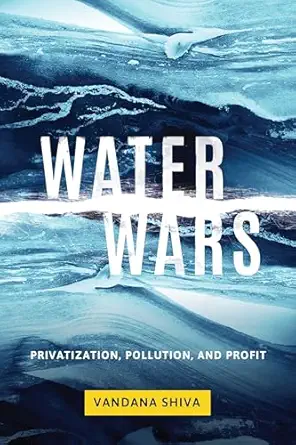 | Water Privatization & Policy Crisis | 4.6/5 ⭐⭐⭐⭐⭐ | Check Price on Amazon |
| Unquenchable – Robert Glennon |  | Groundwater Depletion & Mismanagement | 4.4/5 ⭐⭐⭐⭐☆ | Check Price on Amazon |
| The Water Will Come – Jeff Goodell |  | Climate Change & Rising Water Risks | 4.3/5 ⭐⭐⭐⭐☆ | Check Price on Amazon |
| Blue Gold – Maude Barlow |  | Corporate Control of Global Water | 4.2/5 ⭐⭐⭐⭐☆ | Check Price on Amazon |
| Let There Be Water – Seth M. Siegel |  | Sustainable Water Management Solutions | 4.1/5 ⭐⭐⭐⭐☆ | Check Price on Amazon |
If you want a powerful analysis connecting water scarcity in India with global privatization and policy challenges, Water Wars by Vandana Shiva offers the most relevant and research-driven perspective.
Check Price on AmazonFrequently Asked Questions (FAQs) About Water Scarcity in India
Water scarcity in India raises several critical questions related to its causes, regional impact, health risks, and long-term solutions. Below are the most frequently asked questions.
1. What is water scarcity in India?
Water scarcity in India refers to a condition where available freshwater resources are insufficient to meet the needs of population, agriculture, and industry. It is driven by declining groundwater levels, irregular rainfall, rapid urbanization, and inefficient management systems.
2. What are the main causes of water scarcity in India?
The primary causes include climate change, excessive groundwater extraction, population growth, pollution of water bodies, outdated irrigation methods, and rapid industrial expansion. These factors increase demand while reducing usable supply.
3. Which regions are most affected by water scarcity in India?
States such as Rajasthan, Maharashtra, Punjab, Haryana, Tamil Nadu, and the Bundelkhand region face severe shortages. Drought-prone and intensively irrigated agricultural areas are particularly vulnerable.
4. How does water scarcity in India affect agriculture?
Limited availability reduces crop yields, increases irrigation costs, and threatens national food security. Water-intensive crops suffer the most, leading to financial stress for farmers and increased rural migration.
5. What is the impact of water scarcity in India on public health?
Restricted access to clean drinking water increases the risk of waterborne diseases such as diarrhea, cholera, and typhoid. Poor sanitation and hygiene conditions further worsen health outcomes, especially in low-income communities.
6. What government initiatives are addressing this issue?
Key initiatives include the Jal Jeevan Mission, Atal Bhujal Yojana, National Water Policy, and mandatory rainwater harvesting in several states. These programs aim to improve access, strengthen groundwater governance, and promote sustainable use.
7. What are the long-term solutions?
Long-term strategies include rainwater harvesting, wastewater recycling, drip irrigation, smart monitoring systems, sustainable urban planning, and community-based conservation efforts. Coordinated action across sectors is essential for lasting improvement.
References
- NITI Aayog (2018). Composite Water Management Index: A Tool for Water Management. https://www.niti.gov.in
- World Bank. (2023). Water Resources Management in India. https://www.worldbank.org
- Central Ground Water Board (CGWB). (Latest Report). Groundwater Year Book – India. http://cgwb.gov.in
- Ministry of Jal Shakti, Government of India. National Water Policy & Jal Jeevan Mission Reports. https://jalshakti-ddws.gov.in
- UNICEF India. Water, Sanitation and Hygiene (WASH) Reports. https://www.unicef.org/india
- Food and Agriculture Organization (FAO). (2022). Water Use in Agriculture – India Analysis. https://www.fao.org