
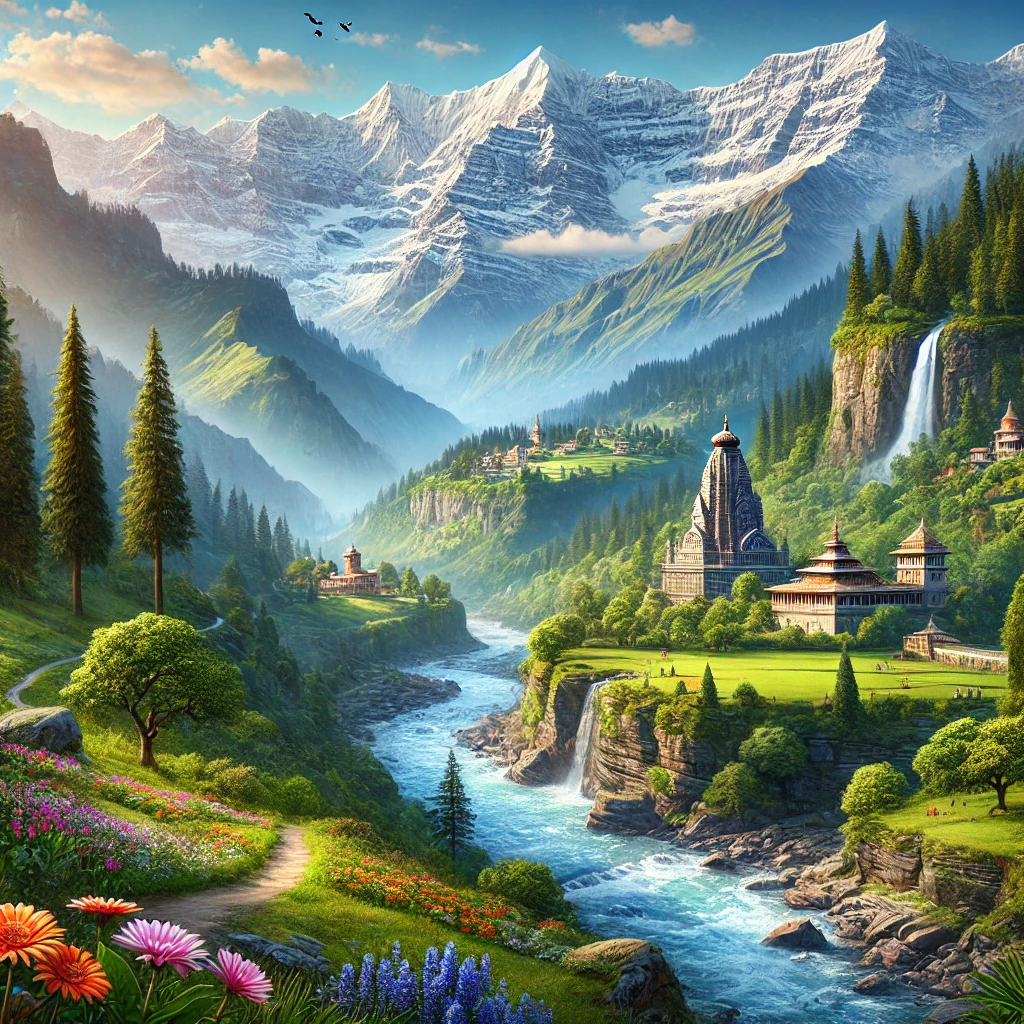
Uttarakhand – Devbhoomi (Land of Gods)
Uttarakhand, formerly known as Uttaranchal, is a beautiful and important state located in the northern part of India. It is popularly called Devbhoomi (Land of Gods) because it is home to many ancient temples and religious places, snow-clad mountains, holy rivers and spiritual centres.
From its unique geography in the Himalayas to its inspiring history of statehood, Uttarakhand is a place where natural beauty, culture, faith and development come together. To understand this journey in depth, you can also read the section on the History of the Establishment of Uttarakhand.
1. Introduction to the State
Uttarakhand was established on 9 November 2000 after being separated from Uttar Pradesh. It became the 27th state of India. Earlier, the state was known as Uttaranchal, and in 2007 its name was changed to Uttarakhand.
- Founded: 9 November 2000
- Former Name: Uttaranchal (renamed Uttarakhand in 2007)
- Winter Capital: Dehradun
- Summer Capital: Gairsain
- Area: 53,483 sq km
- Population (2011 Census): About 1 crore
- Official Language: Hindi
- Major Regional Languages: Garhwali, Kumaoni, Jaunsari
- Nicknames: Devbhoomi (Land of Gods), Yoga Capital (especially for Rishikesh)
2. Geographical Location and Natural Features
Uttarakhand is mainly situated in the Himalayan region. Its location and natural environment make it extremely important for India’s climate, rivers, biodiversity and strategic security.
2.1 Location and Boundaries
Uttarakhand is located in the middle of the Himalayas and shares its borders with:
- North: Tibet
- East: Nepal
- South: Uttar Pradesh
- West: Himachal Pradesh
2.2 Major Rivers
The state is very important for India’s Himalayan glaciers, which are a major source of the country’s water supply. Many holy and life-giving rivers originate here:
- Ganga
- Yamuna
- Bhagirathi
- Alaknanda
- Saryu
- Mandakini
2.3 Lakes and Glaciers
- Major Lakes: Nainital Lake, Bhimtal and other high-altitude lakes
- Major Glaciers: Gangotri and Yamunotri glaciers
2.4 Natural Resources
Uttarakhand is gifted with the beautiful Himalayan mountain ranges, rivers, lakes and rich forest wealth. These natural resources support biodiversity, tourism, agriculture and hydropower.
2.5 National Parks and Biosphere Reserves
- Jim Corbett National Park
- Nanda Devi National Park (part of the Nanda Devi Biosphere Reserve and a UNESCO World Heritage Site)
- Valley of Flowers National Park
3. Administrative Structure
Uttarakhand has a well-defined administrative system despite its challenging hilly terrain.
3.1 Divisions and Districts
- Divisions:
- Garhwal Division
- Kumaon Division
- Total Districts: 13
3.2 Major Districts
- Dehradun
- Nainital
- Chamoli
- Tehri Garhwal
- Haridwar
3.3 Capitals
- Winter Capital: Dehradun
- Summer Capital: Gairsain
4. Culture, Tradition and Festivals
The culture of Uttarakhand is simple, vibrant and deeply connected to nature and faith. The state is a unique amalgamation of natural beauty, cultural diversity and religious significance.
4.1 Languages
- Garhwali
- Kumaoni
- Jaunsari
- Hindi (official language)
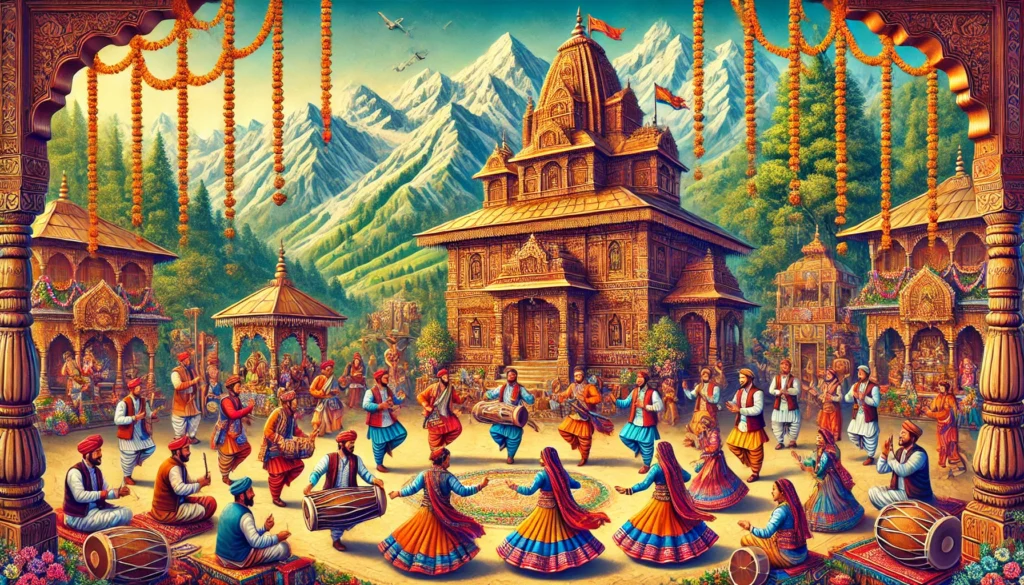
4.2 Folk Arts and Dances
Traditional folk dances and music are an important part of the state’s culture:
- Major Folk Dances: Jhora/Jhoda, Chanchari, Chaunphala
- Folk Music: Hymns and songs dedicated to Mother Nanda, Goddess Durga and other deities, along with traditional regional songs.
4.3 Traditional Musical Instruments
Folk music uses traditional instruments such as:
- Dhol
- Damau (Damou)
- Flute
4.4 Traditional Costumes
- Men: Dhoti–Kurta and traditional caps
- Women: Ghaghra and Chunri, along with regional jewellery
4.5 Festivals and Fairs
- Kumaoni Holi
- Nanda Devi Fair
- Nanda Devi Raj Jat Yatra
- Ganga Dussehra
5. Religious Significance – Devbhoomi
Uttarakhand is called Devbhoomi because many holy places and pilgrimage sites are located here. The spiritual environment of the state attracts devotees and seekers from all over the world.
5.1 Char Dham Yatra
The famous Char Dham Yatra of Uttarakhand includes:
- Badrinath
- Kedarnath
- Gangotri
- Yamunotri
5.2 Other Holy Places
- Haridwar: Famous for the holy Ganga Aarti and as a major pilgrimage centre.
- Rishikesh: Known as a centre of yoga and spirituality; often called the Yoga Capital.
6. Tourism and Adventure Activities
Tourism is one of the most important sectors of Uttarakhand. Religious tourism, nature tourism and adventure tourism together make it a popular destination for all types of travellers.
6.1 Religious Tourism
- Haridwar and Rishikesh
- Kedarnath and Badrinath
- Gangotri and Yamunotri
6.2 Nature Tourism
- Mussoorie
- Nainital
- Ranikhet
- Chopta
- Auli
6.3 Adventure Tourism
- Mountaineering and trekking in the Himalayas
- River rafting in the Ganga and other rivers
- Skiing in Auli
7. Economy and Industries
The economic situation of Uttarakhand is based on agriculture, horticulture, tourism, hydropower and emerging industries like pharmaceuticals and herbal products.
7.1 Agriculture and Horticulture
- Major Crops: Paddy (rice), wheat, millet, madua (finger millet)
- Fruits: Apples, pears and peaches are widely cultivated in hilly regions.
7.2 Forests and Medicinal Herbs
The forests of Uttarakhand are rich in medicinal plants and herbs. Herbal and Ayurvedic products are produced and exported from this region.
7.3 Major Industries
- Agriculture and horticulture-based industries
- Tourism and hospitality
- Hydropower projects
- Pharmaceutical and herbal product manufacturing
- Handloom and local crafts
8. Education and Research Institutions
Despite its tough terrain, Uttarakhand has several major institutions for education, research and training.
- Indian Military Academy (IMA), Dehradun
- Wadia Institute of Himalayan Geology
- The Doon School
- Govind Ballabh Pant University of Agriculture and Technology
9. History of the Establishment of Uttarakhand
The formation of Uttarakhand as a separate state on 9 November 2000 is the result of a long struggle and strong socio-political movement by the people of the region.
9.1 Background and Early Demands
Geographical and Administrative Challenges
People living in the Uttarakhand region had been facing geographical and administrative problems of the hilly areas for a long time. The region is mountainous and often inaccessible, which made it difficult for the Uttar Pradesh government to provide basic amenities such as education, health, roads and employment.
Beginning of Political Demands
The demand for a separate hill state began to rise in the 1930s and became more active in the 1950s and 1960s. Those agitating for a separate state argued that the region’s social and economic conditions were distinct and required special attention.
9.2 Chipko Movement and Growing Awareness
The famous Chipko Movement of the 1970s, started for environmental protection, played a major role in strengthening social and political consciousness in the region. This movement made people more aware of their rights and the need for balanced development in the hilly areas.
9.3 Struggle for a Separate State – 1994 Agitation
Centre of the Main Movement
The year 1994 was historic for the Uttarakhand movement. The repression of pro-state agitators in the Muzaffarnagar incident (in Uttar Pradesh) further strengthened the demand for a separate state. Despite government pressure, the movement intensified, and public support increased.

Premium Amazon Product
High-quality build, reliable performance, and excellent value — perfect for everyday needs.
Buy on AmazonSocial and Political Pressure
Regional parties, organisations and state leaders began to put strong pressure on the Central Government and the Uttar Pradesh government. People of the Garhwal and Kumaon regions united, giving the movement new energy.
9.4 Formation of Uttarakhand State (2000)
Uttar Pradesh Reorganisation Bill, 2000
In August 2000, the Central Government introduced the Uttar Pradesh Reorganisation Bill. This bill proposed creating a new state by separating the hilly areas of Uttar Pradesh. The bill was passed in both the Lok Sabha and the Rajya Sabha.
Creation and Renaming of the State
On 9 November 2000, a new state named Uttaranchal was officially formed by combining the Garhwal and Kumaon regions of Uttar Pradesh. Later, on 1 January 2007, the state was renamed Uttarakhand.
9.5 Reasons Behind the Formation of the State
- Geographical Conditions: Difficult hilly terrain made administration and development work challenging.
- Economic Concerns: Despite having rich natural resources, the region was not getting adequate development and utilisation of its potential.
- Cultural Difference: People of the Garhwal and Kumaon regions have distinct cultural identities and specific regional issues.
- Development Imbalance: The hill region was considered deprived compared to other parts of Uttar Pradesh.
9.6 Post-Establishment Changes and Development
Since its establishment, Uttarakhand has made considerable progress in infrastructure, education, health and tourism. It has been developed and promoted as the Land of Gods and the Capital of Yoga (especially through Rishikesh). The journey from a neglected hill region to a separate state reflects the determination and unity of its people.
10. Conclusion
Uttarakhand is a unique state from religious, cultural and natural points of view. Its Himalayan landscapes, holy rivers, ancient pilgrimage sites, folk traditions and developing economy make it special not only for India but for the whole world.
The story of Uttarakhand’s formation teaches us that when people come together to protect their identity, environment and rights, they can bring about meaningful change. Today, Uttarakhand maintains its unique identity among the hill states of India as a place where beauty, spirituality and progress walk side by side.
Frequently Asked Questions (FAQ) about Uttarakhand
Q1. Why is Uttarakhand called Devbhoomi (Land of Gods)?
Uttarakhand is called Devbhoomi because it is home to many ancient temples, pilgrimage sites and sacred rivers. Famous holy places such as Badrinath, Kedarnath, Gangotri, Yamunotri, Haridwar and Rishikesh are located here, making the state spiritually very significant.
Q2. When was Uttarakhand formed as a separate state?
Uttarakhand was formed as a separate state on 9 November 2000 after being separated from Uttar Pradesh. It became the 27th state of India. Initially it was named Uttaranchal, and in 2007 the name was changed to Uttarakhand.
Q3. What are the capitals of Uttarakhand?
Uttarakhand has two capitals. Dehradun is the winter capital, while Gairsain is the summer capital of the state.
Q4. What are the major tourist attractions in Uttarakhand?
Major tourist attractions include Haridwar, Rishikesh, Badrinath, Kedarnath, Gangotri, Yamunotri, Mussoorie, Nainital, Ranikhet, Chopta and Auli. The state is also famous for adventure activities like trekking, river rafting and skiing.
Q5. What is the economic base of Uttarakhand?
The economy of Uttarakhand is based on agriculture, horticulture, tourism, hydropower, herbal and Ayurvedic products, handloom and emerging pharmaceutical industries. Forest resources and medicinal herbs also contribute to the state’s income.
Q6. Why is Uttarakhand important for India’s rivers?
Uttarakhand is important for India because many Himalayan glaciers and major rivers such as the Ganga and Yamuna originate here. These rivers provide water for drinking, irrigation, hydropower and religious activities across large parts of northern India.
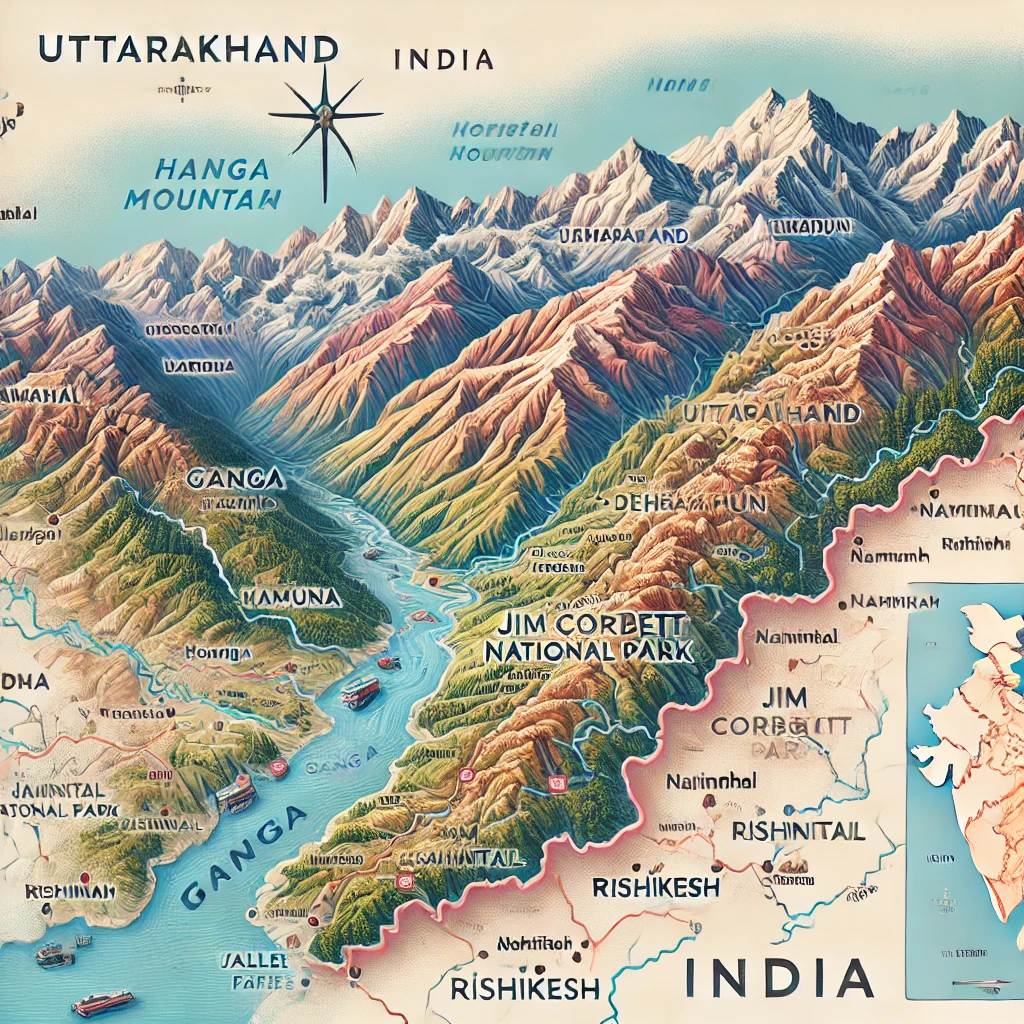
Geographical Location of Uttarakhand
Uttarakhand, located in the northern part of India, is a state rich in natural beauty, Himalayan landscapes, important rivers and mountainous terrain. Its unique geographical location makes it environmentally, culturally and strategically significant.
1. Location and Extent
Uttarakhand is situated in the Himalayan region of India and forms an important part of the Central Himalayas.
- Longitude: 77°34′ E to 81°02′ E
- Latitude: 28°43′ N to 31°27′ N
- Altitude: From about 300 metres (Terai region) to 7,816 metres (Nanda Devi Peak)
Boundaries
- North: Tibet (China)
- East: Nepal
- South: Uttar Pradesh
- West: Himachal Pradesh
2. Area and Geographical Structure
- Total Area: 53,483 square kilometres
- Mountainous Area: About 86%
- Forest Area: Approximately 65%
Geographically, Uttarakhand can be divided into three main regions:
Terai and Bhabhar Region
This region lies in the foothills of the Himalayas. The Terai belt is fertile and supports agriculture, forests and dense human settlements.
Mountainous Region
Most of Uttarakhand is mountainous. This region contains high and low Himalayan ranges, snow-capped peaks, deep valleys and gorges.
Important Mountain Peaks
- Nanda Devi (7,816 metres)
- Trishul
- Panchchuli
Glacier Region
Uttarakhand is home to major Himalayan glaciers, which are the sources of important rivers like the Ganga and Yamuna.
Major Glaciers
- Gangotri Glacier
- Yamunotri Glacier
- Pindari Glacier
3. Rivers and Water Bodies
Uttarakhand is often called the “State of Rivers” because many major rivers originate here.
Main Rivers
- Ganga – originates from the Gangotri Glacier
- Yamuna – originates from the Yamunotri Glacier
- Alaknanda
- Mandakini
- Bhagirathi
- Sarayu
- Kosi
- Ramganga
Major Lakes
- Nainital Lake
- Bhimtal
- Sattal
4. Climate
The climate of Uttarakhand varies according to altitude and geographical location.
Terai and Bhabhar Region
- Summer: Hot and humid (35–40°C)
- Winter: Mild cold
Middle Himalayan Region
- Moderately cold climate
- Snowfall during winters
Upper Himalayan Region
- Extremely cold climate
- Covered with snow throughout the year
- Temperatures often fall below zero
5. Flora and Wildlife
Uttarakhand has rich biodiversity due to its varied altitude and climate.
Forest Vegetation
- Pine
- Cedar
- Oak
- Rhododendron
- Alpine forests in higher regions
National Parks and Protected Areas
- Jim Corbett National Park – famous for tigers
- Nanda Devi Biosphere Reserve – UNESCO World Heritage Site
- Valley of Flowers National Park
- Rajaji National Park
Wildlife
- Animals: Tiger, Himalayan bear, Snow leopard, Musk deer
- Birds: Himalayan Monal (State Bird), Chakor
6. Major Geomorphic Features
- The Himalayan mountain ranges with high and low peaks
- Famous valleys like Alaknanda and Bhagirathi
- Terai plains of the Ganga–Yamuna basin
- Glaciers that serve as lifelines for millions of Indians
7. Geological Structure
Uttarakhand forms a part of the Central Himalayan Belt, which is geologically young and dynamic. Due to active tectonic movements, earthquakes and avalanches occur in this region from time to time.
Conclusion
The geographical location of Uttarakhand makes it naturally rich and environmentally significant. The diversity of Himalayan peaks, glaciers, rivers and forests gives the state a unique place among India’s geographical regions.
Administrative System of Uttarakhand
The administrative system of Uttarakhand is strong and democratic. The executive, legislature and judiciary work together to ensure smooth governance, even in difficult geographical conditions.
1. Administrative Structure
Uttarakhand is administratively divided into two divisions and thirteen districts.

Premium Amazon Product
High-quality build, excellent performance, and reliable value — a perfect choice for everyday use.
Buy on AmazonGarhwal Division
- Dehradun
- Haridwar
- Tehri Garhwal
- Rudraprayag
- Uttarkashi
- Pauri Garhwal
- Chamoli
Kumaon Division
- Nainital
- Almora
- Pithoragarh
- Udham Singh Nagar
- Bageshwar
- Champawat
District Administration
- District Magistrate (DM): Overall administration, law and order, revenue and development
- Superintendent of Police (SP): Maintenance of law and order
- District Panchayat President: Rural development under Panchayati Raj system
2. Structure of State Government
Executive
- Governor: Constitutional head appointed by the President of India
- Chief Minister: Head of the executive
- Council of Ministers: Implements laws and government schemes
Legislature
Uttarakhand has a unicameral legislature.
- Legislative Assembly with 70 members
- Passes bills and approves the budget
- Makes the executive accountable
Judiciary
- Uttarakhand High Court located in Nainital
- District and subordinate courts
- Lok Adalats and Gram Nyayalayas for alternative dispute resolution
3. Panchayati Raj and Local Administration
Panchayati Raj System
- Gram Panchayat – village level
- Block Panchayat – block level
- District Panchayat – district level
Urban Local Bodies
- Municipal Corporations – large cities like Dehradun and Haridwar
- Municipal Councils – medium towns
- Town Panchayats – small towns
4. Police and Law & Order
The Uttarakhand Police Department maintains law and order in the state. It is divided into Garhwal and Kumaon zones, with a Commissioner system in major cities like Dehradun.
5. Important Administrative Institutions
- State Secretariat – Dehradun
- High Court – Nainital
- Raj Bhawan (Governor’s Residence) – Dehradun
6. State-Level Departments
- Tourism Department
- Water Resources Department
- Education Department
- Forest Department
7. Challenges and Administrative Reforms
- Difficult mountainous geography
- Balancing development and environmental conservation
- Improving transparency and accountability
- Promotion of e-governance and digital services
Conclusion
The administrative system of Uttarakhand is designed to address the challenges posed by its geography while ensuring democratic governance. Through Panchayati Raj, e-governance and institutional reforms, the state aims to create a transparent, efficient and people-friendly administration.
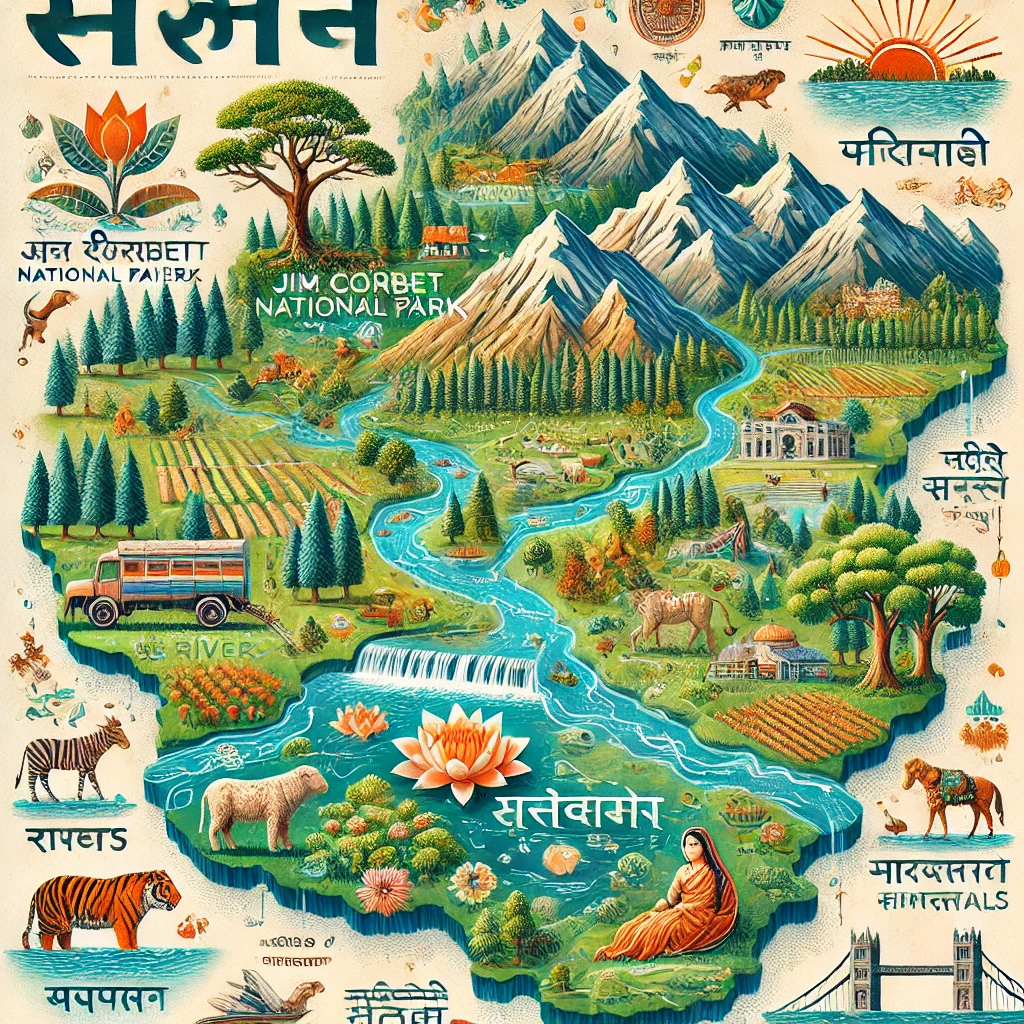
Natural Resources of Uttarakhand
The state of Uttarakhand is extremely rich in natural resources. The region is famous for its mountainous terrain, dense green forests, sacred rivers, mineral wealth and rich biodiversity. The geographical location of Uttarakhand and the presence of the Himalayas make it one of the most naturally endowed states of India.
1. Water Resources
Uttarakhand is often referred to as the “State of Rivers”. Many major rivers, lakes and waterfalls originate or flow through the state.
Major Rivers
- River Ganges: Originates from the Gangotri Glacier and is the most sacred and one of the largest rivers of India.
- Yamuna River: Originates from the Yamunotri Glacier.
- Other Rivers: Alaknanda, Bhagirathi, Mandakini, Kosi, Ramganga and Saryu.
Lakes and Waterfalls
Major Lakes
- Nainital Lake
- Bhimtal
- Sattal
- Naukuchhiyatal
Important Waterfalls
- Kempty Falls (Mussoorie)
- Tiger Falls
Hydroelectric Projects
Uttarakhand plays an important role in hydroelectric power generation in India.
- Tehri Dam – Asia’s tallest dam
- Srinagar Hydroelectric Project
- Vishnuprayag Project
- Maneri–Bhali Project
2. Forest and Vegetation Resources
Nearly 65% of Uttarakhand is covered by forests, making it one of the richest states in terms of forest resources and biodiversity.
Types of Vegetation
- Tropical forests
- Temperate forests
- Alpine forests
Main Tree Species
- Pine
- Oak
- Cedar
- Rhododendron (Buransh)
- Sal
- Teak
Important Forest Areas
- Nanda Devi Biosphere Reserve
- Jim Corbett National Park
- Rajaji National Park
- Valley of Flowers National Park
Medicinal Plants
Uttarakhand is famous for its medicinal plants and Himalayan herbs, which support the pharmaceutical, Ayurvedic and cosmetics industries.
- Ashwagandha
- Brahmi
- Safed Musli
- Various Himalayan medicinal herbs
3. Mineral Resources
Uttarakhand is a storehouse of mineral resources that contribute to the industrial and economic development of the state.
Main Minerals
- Limestone: Used in the cement industry
- Soapstone (Talc): Used in soap and paper industries
- Dolomite: Used in the steel industry
- Copper: Found in parts of Kumaon and Garhwal regions

Premium Amazon Product
High-quality build with reliable performance — a great choice for everyday use and long durability.
Buy on AmazonMajor Mining Areas
- Almora
- Pithoragarh
- Nainital
- Haridwar
4. Biodiversity
The biodiversity of Uttarakhand makes it one of India’s most important ecological regions.
Wildlife
- Tiger
- Elephant
- Himalayan Musk Deer
- Snow Leopard
- Bears
- Himalayan Monal (State Bird)
Protected Areas
- Jim Corbett National Park (Tiger Reserve)
- Nanda Devi National Park
Birds and Insects
Birds like Monal, Chakor and Himalayan Vulture are commonly found here. Beekeeping is promoted for honey production, supporting rural livelihoods.
5. Agriculture and Soil Resources
Soil Types
- Fertile Soil (Terai and Bhabhar): Suitable for paddy, wheat and sugarcane
- Alpine Soil (High Altitude Areas): Suitable for maize, potatoes and pulses
- Sandy Soil: Found along river banks
Agricultural Products
- Food Crops: Paddy, wheat, barley, potatoes, amaranth
- Fruits: Apple, peach, apricot, pear
- Cash Crops: Chilli, turmeric, ginger
6. Natural Energy Resources
Water Energy
Uttarakhand is one of the leading states in hydroelectric power generation due to its fast-flowing rivers.
Solar Energy
- High potential in high-altitude regions
- Solar lights provided in many villages
Wind Energy
The high-altitude Himalayan regions have potential for wind energy generation.
7. Tourism and Cultural Resources
The natural beauty and cultural heritage of Uttarakhand make it a major tourist destination.
Religious Places
- Kedarnath
- Badrinath
- Gangotri
- Yamunotri
- Haridwar and Rishikesh
Hill Stations
- Mussoorie
- Nainital
- Auli
Adventure Activities
- Trekking
- River rafting
- Skiing
- Paragliding
8. Conservation and Challenges
Major Challenges
- Deforestation and land erosion
- Melting of glaciers due to climate change
- Illegal mining and environmental pollution
Conservation Measures
- Promotion of afforestation
- Water management and biodiversity conservation
- Sustainable tourism practices
- Balanced and responsible use of natural resources
Conclusion
The natural resources of Uttarakhand make it invaluable in terms of biodiversity, water resources, forests, minerals and agricultural products. It is essential for the state to ensure the conservation and sustainable use of these resources so that future generations can also benefit from this natural wealth.
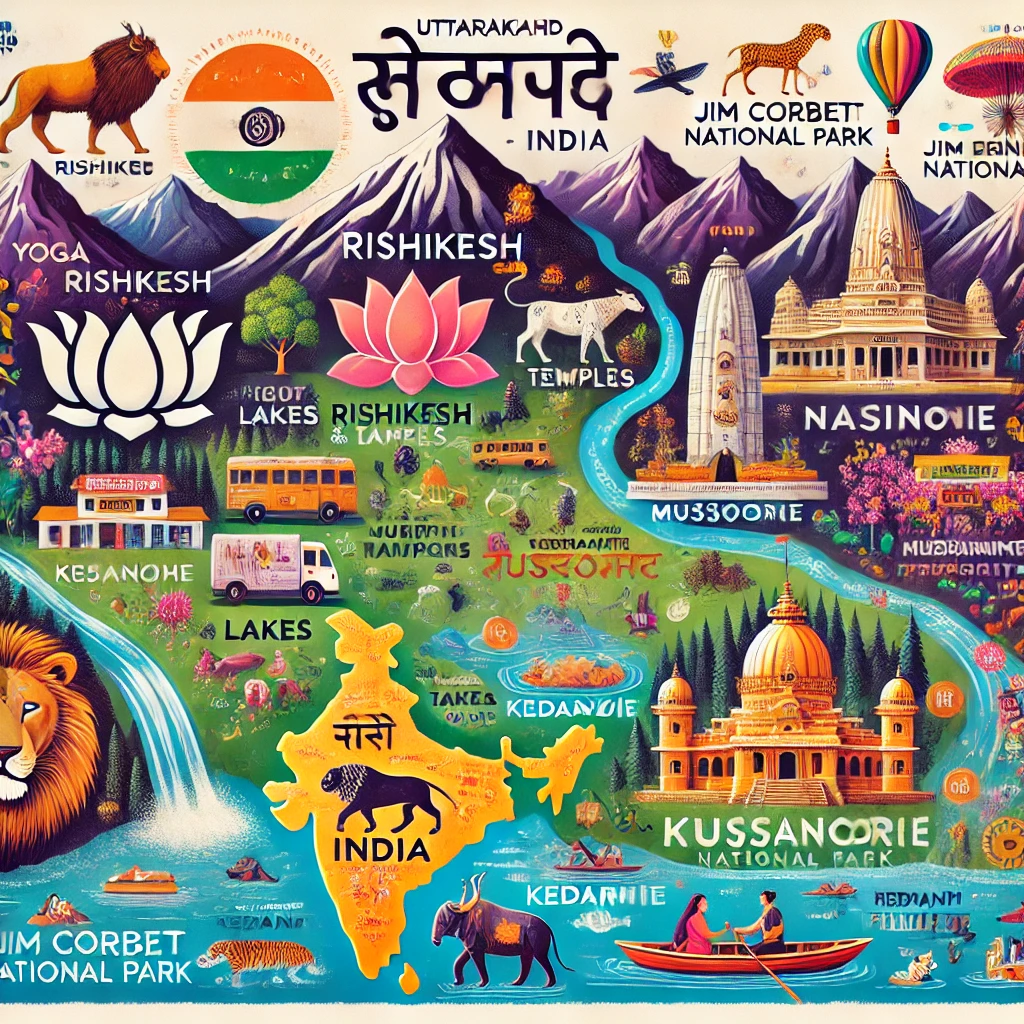
Tourism in Uttarakhand
Uttarakhand is widely known as “Devbhoomi” (Land of the Gods). Its natural beauty, Himalayan heights, sacred rivers, ancient religious sites, rich culture and adventure sports make it one of the most important tourist destinations in India.
1. Religious Tourism
i. Char Dham Yatra
Uttarakhand is home to the four most sacred pilgrimage sites of Hinduism, collectively known as the Char Dham.
Kedarnath
- Sacred Jyotirlinga of Lord Shiva
- Located on the banks of the Mandakini River
Badrinath
- Main abode of Lord Vishnu
- Situated on the banks of the Alaknanda River
Gangotri
- Origin of the holy River Ganga
- Located near the Gangotri Glacier
Yamunotri
- Source of the Yamuna River
- Situated in the lap of the Himalayas
ii. Haridwar and Rishikesh
Haridwar
- Famous for Har Ki Pauri
- Grand Ganga Aarti
- Venue of the world-famous Kumbh Mela
Rishikesh
- Global centre for yoga and meditation
- River rafting on the Ganga
- Popular attractions: Laxman Jhula and Ram Jhula
iii. Other Religious Places
- Hemkund Sahib: Important pilgrimage site of Sikhism
- Chandak Cave Temple: Unique religious site
- Kalimath Temple: Sacred Shakti Peeth of Uttarakhand
2. Nature Tourism
i. Hill Stations
Mussoorie
- Known as the “Queen of the Mountains”
- Kempty Falls, Company Garden and Gun Hill
Nainital
- Popularly called the “City of Lakes”
- Naini Lake, Mall Road and Snow View Point
Ranikhet
- Famous for lush green meadows and scenic Himalayan views
ii. Valleys and Himalayan Beauty
- Valley of Flowers National Park: UNESCO World Heritage Site famous for colourful alpine flowers
- Auli: World-class skiing destination
- Panchchuli Base Camp (Pithoragarh): Popular among mountaineers and nature lovers
3. Adventure Tourism
i. Trekking and Mountaineering
Uttarakhand offers some of the most popular trekking routes in the Himalayas.
- Roopkund Trek: Famous for the mysterious skeleton lake
- Har Ki Dun Trek: Known for breathtaking Himalayan views
- Gaumukh Trek: Route leading to the Gangotri Glacier
Premium Amazon Product
High-quality build, dependable performance and great value — a perfect choice for daily use.
Buy on Amazonii. River Rafting and Kayaking
- Rishikesh – world-famous rafting destination on the River Ganga
- Alaknanda and Mandakini rivers also popular for rafting
iii. Paragliding and Other Adventure Sports
- Paragliding centres in Pauri and Pithoragarh
- Jungle safari in Jim Corbett National Park
- Skiing in Auli
4. Wildlife Tourism
National Parks and Sanctuaries
- Jim Corbett National Park: India’s first national park, famous for tiger conservation
- Rajaji National Park: Known for elephants and bird species
- Nanda Devi Biosphere Reserve: Rich centre of biodiversity and rare plants
5. Cultural and Heritage Tourism
i. Folk Culture and Fairs
- Kumbh Mela: World-famous religious festival held in Haridwar
- Nanda Devi Fair (Almora): Celebration of folk music and dance
- Jauljibi Fair: Cultural and trade festival
ii. Historical Sites
- Cathedral Church (Mussoorie): Remains of British colonial architecture
- Katarmal Sun Temple: Ancient temple in Almora district
- Kalsi Inscription: Historical site from the time of Emperor Ashoka
6. Wellness and Yoga Tourism
Uttarakhand is an international hub for yoga, meditation and wellness tourism.
- Rishikesh and Dehradun are major centres of yoga and Ayurveda
- Yoga ashrams, spa retreats and health centres attract global tourists
7. Rural and Eco-Tourism
i. Rural Tourism
- Experience local food, handicrafts and traditional customs
- Popular villages: Kuari and Munsiyari
ii. Eco-Tourism
- Exploring forests and biodiversity
- Nandaur Wildlife Sanctuary and Askot Sanctuary
8. Challenges and Development Plans
i. Challenges
- Environmental damage due to excessive tourism
- Inadequate transport and accommodation infrastructure
ii. Development Plans
- Char Dham Road Project to improve connectivity
- Promotion of eco-friendly and sustainable tourism
- Encouraging local tourism to generate rural employment
Conclusion
Tourism in Uttarakhand is a unique blend of religious faith, natural beauty, adventure and cultural diversity. The state attracts both domestic and international tourists. With a strong focus on sustainable development and environmental conservation, Uttarakhand aims to promote tourism while preserving its natural and cultural heritage for future generations.
Culture and Tradition of Uttarakhand
The culture and tradition of Uttarakhand reflect its ancient heritage, rich folklore, deep religiosity and strong connection with nature. Nestled in the lap of the Himalayas, the cultural identity of the state carries a distinct imprint of the Garhwal and Kumaon regions.
1. Languages and Literature
Languages
Uttarakhand is linguistically diverse, with regional languages forming the backbone of its cultural expression.
- Garhwali – spoken mainly in the Garhwal region
- Kumaoni – spoken mainly in the Kumaon region
- Other languages: Hindi, Jaunsari, Bhotiya and English
Literature
Garhwali and Kumaoni literature preserve folk tales, religious narratives and epic traditions passed down through generations.
- Gauri Dutt Pant
- Sumitranandan Pant (renowned poet)
- Shailesh Matiyani
2. Religion and Faith
Uttarakhand is called “Devbhoomi” (Land of Gods) because religion and spirituality form the core of its cultural life.
i. Religious Places and Traditions
- Char Dham Yatra: Badrinath, Kedarnath, Gangotri and Yamunotri
- Haridwar and Rishikesh: Ganga Aarti and Kumbh Mela
- Local Deities: Nanda Devi, Golu Devta and Chamunda Devi
ii. Local Festivals and Pujas
- Ghee Sankranti – celebration of new crops
- Harela Festival – symbol of greenery and environmental protection
- Bhumyal Puja – performed for good agricultural yield
3. Folk Songs and Folk Dances
i. Folk Songs
Folk songs of Uttarakhand express love, devotion, nature, bravery and everyday life.
- Jhoda and Chhapeli – popular in Kumaon
- Chauphala and Bair – popular in Garhwal
- Mangal – sung during weddings and auspicious occasions
ii. Folk Dances
- Chauphala – group dance performed during festivals
- Chhapeli – pair dance expressing emotions
- Jhumailo – performed mainly by women on joyful occasions
4. Costumes and Jewellery
i. Men’s Attire
- Kumaon: Dhoti-kurta with Gandhi cap
- Garhwal: Dhoti-kurta and angrakha
ii. Women’s Costumes
- Kumaon: Ghaghra-choli and angadi
- Garhwal: Lehenga-choli with pichhoda (yellow embroidered scarf)
Traditional Jewellery
- Poolu – traditional nose ornament
- Chareau – necklace
- Earrings and bracelets
5. Traditional Food
The cuisine of Uttarakhand is simple, nutritious and based on locally available products.
Famous Dishes
- Jhangora Kheer – millet-based dessert
- Chansu – made from black urad dal
- Phaanu – pulse-based dish
- Lurki/Lurking – mixed pulse preparation
- Bathua Paratha and potato dishes (winter special)
- Hemp and sesame seed chutney
Traditional Drinks
- Rice pudding
- Apple and Rhododendron (Buransh) juice
6. Handicrafts and Arts
i. Handicrafts
- Ringal craft made from bamboo and cane
- Woollen garments from Munsiyari and Kumaon
- Paintings made with organic colours
ii. Wood Carving
Wood engraving is widely used in temples and traditional homes.
7. Fairs and Festivals
Traditional Fairs
- Nanda Devi Fair – Almora and Pithoragarh
- Jauljibi Fair – famous trade and cultural fair

Premium Amazon Product
High quality, reliable performance, and excellent value — great choice for everyday use.
Buy on AmazonMajor Festivals
- Harela – festival of greenery
- Igas-Bhagwal – celebrated 11 days after Diwali
- Uttarayani – marks the Sun’s movement towards the north
8. Sacred Customs and Folklore
Customs
- Marriage rituals accompanied by folk songs
- Bhumiyal Puja for agricultural prosperity
Folktales and Mythology
- Legend of Malusahi and Rajasuli
- Stories associated with the five Pandavas
9. Natural Worship Tradition
People of Uttarakhand worship rivers, mountains and forests as divine entities, reflecting their deep respect for nature.
Conclusion
The culture and tradition of Uttarakhand are integral to its identity. Religious beliefs, folk arts, cuisine, attire and environmental consciousness make the state culturally distinct and spiritually rich.
Economic Condition of Uttarakhand
The economy of Uttarakhand is primarily based on agriculture, tourism, hydropower, forest resources and industries. The state is emerging as a developing economic region by effectively utilizing its natural resources and strategic geography.
1. Primary Sector: Agriculture and Animal Husbandry
Agriculture
- About 65% of the population depends on agriculture
- Main crops: Paddy, wheat, maize, mandua (ragi), jhangora
- Horticulture products: Apple, malta, kiwi, plum
- Challenges: Small landholdings, low productivity and natural disasters
Animal Husbandry and Dairy
- Sheep and goat rearing for wool
- Growth of organic dairy products
2. Secondary Sector: Industrial Development
Major Industries
- Hydroelectric power generation
- Food processing industries
- Handicrafts and traditional industries
- Pharmaceutical and chemical industries
Industrial Areas
- SIDCUL industrial parks
- Haridwar, Roorkee, Pantnagar, Kashipur
3. Tertiary Sector: Service Industry
Tourism
- Religious tourism – Char Dham, Haridwar, Rishikesh
- Adventure tourism – Auli skiing, Rishikesh rafting
- Eco-tourism – Valley of Flowers, Jim Corbett
Education and Research
- IIT Roorkee
- Forest Research Institute (FRI)
4. Hydropower and Energy
- Bhagirathi and Alaknanda river projects
- Tehri and Pancheshwar Dam projects
- Focus on renewable and green energy
5. Economic Challenges
- Migration from hilly areas
- Natural disasters like floods and landslides
- Pressure on traditional agriculture
6. Development Plans
- Expansion of industrial zones
- Promotion of eco-friendly projects
- Skill development and self-employment
- Improvement of roads and infrastructure
Conclusion
Uttarakhand’s economy is rooted in natural resources, hydropower, agriculture and tourism. Despite challenges, the state is steadily moving towards sustainable and inclusive economic development.

Education and Science in Uttarakhand
Uttarakhand represents a confluence of ancient heritage and modern progress in the fields of education and science. The state is not only a centre of Himalayan culture and religion, but also attracts students, researchers and scientists from India and abroad.
1. Education System
i. Primary and Secondary Education
- Government and private schools play a major role at the primary and secondary levels
- Special schemes are implemented to extend education to rural and remote areas
- Atal Utkrishta Vidyalaya Scheme aims to provide quality education and reduce migration
ii. Higher Education Institutions
Uttarakhand hosts several prestigious universities and centres of higher learning.
- IIT Roorkee: Established in 1847, a premier engineering institution
- GBPUAT: Asia’s first agricultural university
- Kumaon University (Nainital) and Garhwal University (Srinagar)
- Doon University (Dehradun): Focus on management and environmental studies
iii. Vocational Education
- Tourism and Hotel Management
- Pharmacy and Nursing
- Horticulture and Organic Farming
2. Development of Science and Technology
i. Major Scientific Institutions
- Forest Research Institute (FRI), Dehradun: Forestry and environmental research
- Wildlife Institute of India (WII), Dehradun: Wildlife and ecological studies
- DRDO Laboratories, Dehradun: Defence research and development
- Engineering and medical colleges supporting technical research
ii. Environmental Science and Climate Studies
- Research on climate change and disaster management
- Conservation of rivers and water resources
iii. Agricultural Research and Biotechnology
- Hill agriculture research for high-altitude regions
- Promotion of organic farming and medicinal plant research
3. Digital Education and Innovation
i. Digital Initiatives
- Smart classes and online learning platforms
- E-libraries and virtual laboratories
ii. Startup and Incubation Centres
- Promotion of innovation and technology startups
- Research in AI, drone technology and biotechnology
iii. Robotics and Artificial Intelligence
Institutions like IIT Roorkee are actively engaged in AI and robotics research.
4. Environmental Education
- Eco-friendly curriculum in schools and colleges
- Awareness programmes on forest and biodiversity conservation
5. Challenges and Reform Efforts
Challenges
- Difficult access to remote and hilly areas
- Lack of teachers and infrastructure
- Urban–rural educational disparity
Reform Efforts
- Atal Utkrishta Vidyalaya Scheme
- Scholarships and free education for SC/ST and economically weaker students
- Employment-oriented education to reduce migration
6. Future Prospects
- Green technology and renewable energy research
- GIS and space technology for disaster management
- Technology-driven accessible education
- Global recognition of educational institutions
Conclusion
Uttarakhand plays a vital role in advancing education and science. With strong institutions, growing research capacity and technological adoption, the state is set to achieve greater academic and scientific heights in the future.
Special Facts About Uttarakhand
Uttarakhand is renowned for its natural beauty, religious significance, cultural heritage and rich history. The following facts highlight the uniqueness of the state.
1. Natural Beauty and Geography
- Known as Devbhoomi due to the Char Dham pilgrimage sites
- Valley of Flowers – UNESCO World Heritage Site with over 500 flower species
- Located largely in the Himalayan mountain range
- Jim Corbett National Park – India’s oldest national park

Premium Amazon Product
Stylish design with great performance, reliable quality and excellent everyday value.
Buy on Amazon2. Historical and Cultural Significance
- Garhwali and Kumaoni cultures form the cultural foundation
- Ancient temples and archaeological remains in Baijnath and Chamoli regions
3. Famous Tourist Places
- Rishikesh – Yoga Capital of the World
- Haridwar – Major pilgrimage centre
- Auli – Popular skiing destination, often called the “Switzerland of India”
- Nainital and Almora – Prominent hill stations
4. Natural Resources and Hydropower
- Leader in hydroelectric power generation
- Tehri Dam – India’s largest storage hydroelectric project
- About 70% forest cover supporting biodiversity
5. Major Institutions
- Forest Research Institute (FRI), Dehradun
- IIT Roorkee
- Wildlife Institute of India (WII), Dehradun
6. Political Leadership
- First Chief Minister: N.D. Tiwari (2000)
- Other leaders contributed significantly to development
7. Agricultural Identity
- Major products: Apple, kiwi, plum, maize, amaranth
- One of India’s major apple-producing states
- Growing focus on organic farming
8. Environmental Conservation Efforts
- Awareness programmes on climate change
- Water, forest and energy conservation initiatives
9. Famous Personalities
- Sumitranandan Pant – Renowned Hindi poet
- Leaders who played key roles in state formation
10. Traditions and Festivals
- Jhoda and Chhapeli – Traditional dances
- Harela Festival – Celebration of nature
- Nanda Devi Fair, Kumbh Mela and Magh Mela
Conclusion
The special facts of Uttarakhand give it a distinct identity. Its natural beauty, spiritual importance, scientific institutions and cultural richness place it among India’s most unique and progressive states.

Premium Amazon Product
High quality, reliable performance and long-lasting build — great choice for everyday use.
Buy on AmazonReferences
- Government of Uttarakhand – Official State Portal. Information on geography, administration, economy and culture.
- Ministry of Tourism, Government of India. Tourism statistics, religious tourism and adventure tourism in Uttarakhand.
- Ministry of Education, Government of India. Higher education institutions and educational development in Uttarakhand.
- Forest Research Institute (FRI), Dehradun. Forest resources, biodiversity and environmental studies.
- Wildlife Institute of India (WII), Dehradun. Wildlife conservation and ecological research.
- Geological Survey of India (GSI). Geological structure and mineral resources of the Himalayan region.
- Census of India 2011. Population, literacy rate and demographic data of Uttarakhand.
- Uttarakhand Tourism Development Board (UTDB). Information on tourist destinations, Char Dham Yatra and eco-tourism.
- NCERT Geography and Social Science Textbooks. Standard academic references on Indian geography and culture.
- UNESCO World Heritage Centre. Valley of Flowers and Nanda Devi Biosphere Reserve.