
 |
Amazon Product Title HereBrief product description goes here. 👉 Check Price on Amazon |
My Personal Journey: Learning from the Uttar Vedic Society
The Beginning: A Childhood That Echoed the Past
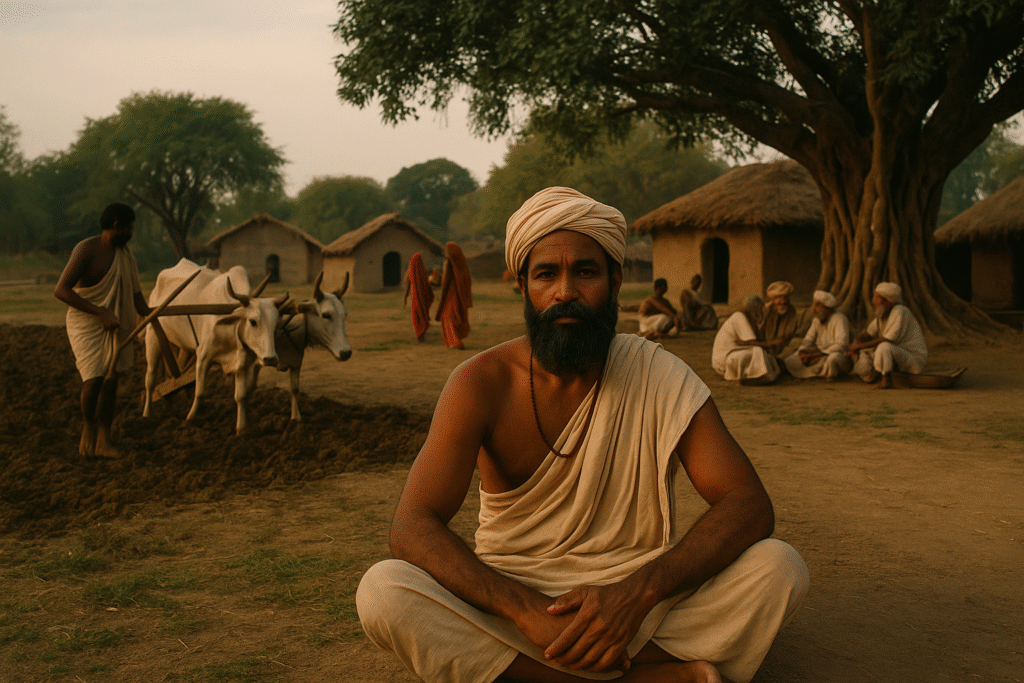
My childhood, spent in a quiet Indian village, carried a simplicity that I never realized had deep historical roots. The sound of cattle bells early in the morning, the earthy smell after the first plough cut the soil, the evening gatherings under the banyan tree, and the stories narrated by elders—all of these seemed like regular rural experiences. But as I grew older, something within me began to draw connections between the life I saw around me and the descriptions of ancient societies that I later encountered in books. It was only when I studied the structure and transformation of the Uttar Vedic society that I understood how closely the rhythms of my village resembled the patterns of a civilization that existed thousands of years ago.
My grandfather would often say, “Society changes, but its soul remains the same.” Those words stayed with me. Back then, they felt like simple wisdom passed down through generations, but life later taught me that these words captured the very essence of the Uttar Vedic transformation. During that age, people moved from pastoral life to settled agriculture, from loose tribal gatherings to well-defined communities, and from ritual-centered living to philosophical inquiry. Yet, the values that defined their lives—family, responsibility, community, cooperation, and spirituality—remained firmly rooted.
The Question That Changed My Perspective
One day, out of curiosity, I asked my history teacher, “Why should we study such ancient periods? How does the Uttar Vedic age matter to our modern lives?” He smiled and replied, “Because what you see today is built on what was shaped then. Every society carries the memory of its past.” This single line ignited a spark in me. I began reading more, not just for exams, but to genuinely understand how the past and present thread themselves together.
As my interest grew deeper, I started observing my village with a new lens. The cooperative work in the fields reminded me of the collective agricultural practices that emerged in the Uttar Vedic period. The village council meetings resembled the early institutional gatherings described in historical accounts. The respect for elders, the shared values, and the community-based decision making—all mirrored the same foundations that shaped early Indian society. It felt as if history was not a distant narrative but a living presence woven into my daily surroundings.
When Research Met Experience
As I grew older, I approached history with more seriousness. The Uttar Vedic period fascinated me the most—not because it was ancient, but because it told a story of transition, resilience, and adaptation. The shift from tribal groups to stable villages, from cattle-based wealth to agricultural prosperity, from basic rituals to deep philosophical thinking—each part of this transformation felt strangely familiar to my own journey.
In life, I too have faced moments where circumstances pushed me to change directions. Much like the Uttar Vedic society adapted to new environments, changing resources, and evolving needs, I found myself learning new skills, exploring new ideas, and taking paths that I had not imagined. Through these experiences, I realized that transformation is not merely an external shift—it is an internal awakening. The Uttar Vedic period, with its blend of continuity and change, offered a perspective that helped me understand my own life’s transitions with greater clarity.
Lessons My Family and Community Taught Me
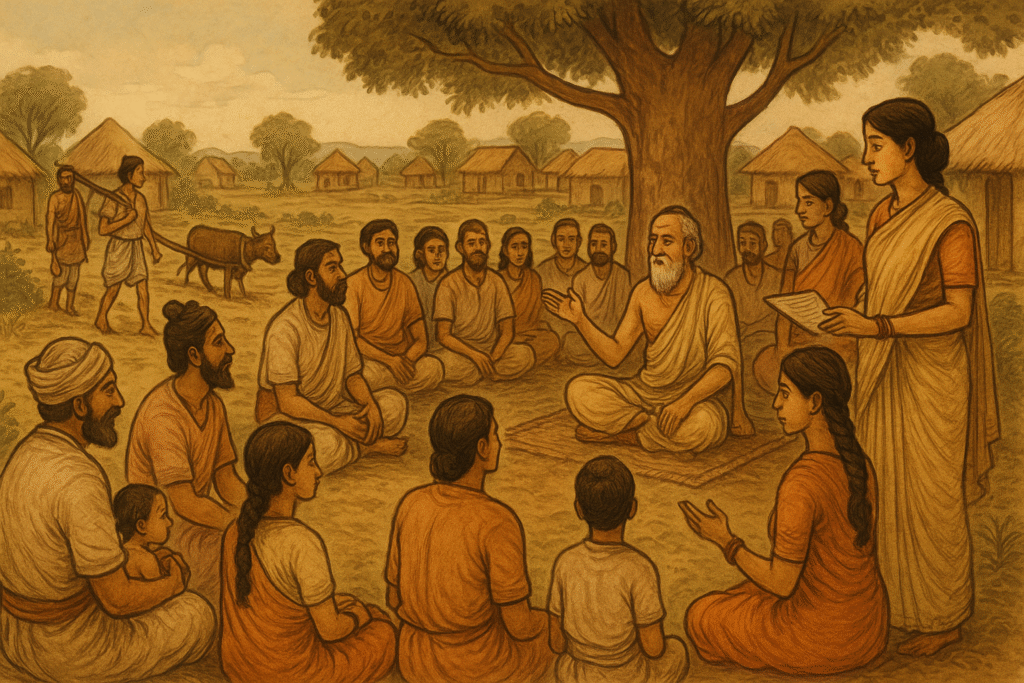
Growing up, my family emphasized values such as collective effort, responsibility, respect, and cooperation. These values were not just part of our household culture; they were the invisible threads that held the entire community together. When I studied the Uttar Vedic period, I discovered that these were the same principles that sustained the society of that era. The family (kula), the extended lineage (gotra), and the community collectively formed the foundation of social order. Decisions were shared, responsibilities were distributed, and the well-being of the group was placed above individual gain.
This realization taught me something profound: society is not built by structures alone but by emotions, relationships, and values. Even today, when facing personal or professional challenges, I find myself leaning on the same principles of cooperation and collective strength that have guided Indian communities for centuries. The world around us may have become fast-paced and fragmented, but these ancient values still provide a sense of grounding.
Spirituality and Thought—A Personal Awakening
A turning point in my life came when I began exploring spirituality. As I read about the evolution of religious practices during the Uttar Vedic period, I realized that society back then was also moving from external rituals to deeper internal inquiry. The transition from elaborate sacrifices to introspective philosophical thought echoed my own journey of shifting focus from outer achievements to inner understanding.
It became clear to me that the greatest transformation of the Uttar Vedic age was not merely social or economic but spiritual. It taught me that while material progress is important, true stability comes from cultivating inner awareness. This balance between external growth and internal clarity has helped me navigate the complexities of modern life with a sense of purpose and calm.
The Present and the Past—A Continuous Dialogue
Whenever I look at the rapidly changing world around me—new technologies, shifting careers, social challenges—I am reminded of how the Uttar Vedic society also went through its own phase of transformation. They adapted to change with resilience, wisdom, and community support. In many ways, we are walking the same path today.
My journey and the journey of the Uttar Vedic society may be separated by thousands of years, but the essence remains the same: adaptation, learning, community, and balance. This article, therefore, is not just a historical reflection, but also a personal attempt to understand how the lessons of that era can guide us in shaping our present and future.
Economic Changes: The Rise of a Structured and Diversified Economy
Agricultural Expansion—From Nomadic Life to Permanent Settlements
One of the most significant economic transformations of the Uttar Vedic period was the rapid expansion of agriculture. While the early Vedic age was largely pastoral, the later period witnessed a decisive shift toward settled agricultural life. The adoption of the plough, the use of bullocks, and the introduction of iron tools greatly improved efficiency and productivity. Fertile river valleys, seasonal rainfall, and innovative irrigation methods helped in increasing crop yields. As agricultural production grew, villages became stable economic units, marking a clear transition from nomadic patterns to a more organized, agrarian-based society.
 |
Amazon Product Title HereBrief product description goes here. 👉 Check Price on Amazon |
Agriculture and Animal Husbandry—A Complementary System
Although agriculture gained primacy, animal husbandry continued to remain central to the economic system. Cattle, oxen, horses, and other livestock were symbols of wealth as well as essential assets for daily life. They supported ploughing, transportation, dairy production, and trade. The interdependent relationship between farming and animal husbandry created a balanced and resilient economic structure. The people of the Uttar Vedic age understood that sustainable prosperity depended on maintaining harmony between natural resources, agriculture, and livestock.
Growth of Craftsmanship and Cottage Industries
Alongside agriculture, the Uttar Vedic society saw rapid growth in craftsmanship and small-scale industries. Metalwork, pottery, woodcraft, textile production, jewelry making, and tool manufacturing became increasingly prominent. Skilled artisans played a vital role in fulfilling both local needs and the demands of growing trade networks. These industries diversified the economic base and ensured that society was not dependent solely on agriculture. The rise of crafts also encouraged specialization of labor, which later became a defining feature of early Indian economic life.
Expansion of Trade Routes and Barter System
Trade flourished significantly during the Uttar Vedic period. Villages and regions began to connect through emerging trade routes. Roads, cattle paths, and riverbanks became important channels for the exchange of goods. Although the use of money was still limited, the barter system served as the primary mode of transaction. Agricultural produce, livestock, metals, pottery, textiles, and tools were commonly exchanged. This system not only supported economic growth but also strengthened social relations and inter-community networks.
Ownership of Land and Emerging Inequalities
As agriculture expanded, the idea of land ownership became more defined. Families, clans, and communities began to assert rights over land, which led to differences in access to resources. While this was not as rigid or unequal as later historical periods, it marked the beginning of economic stratification. These developments influenced power structures within society and shaped the distribution of wealth and responsibilities.
The Village Economy—Cooperation and Self-Sufficiency
A remarkable feature of the Uttar Vedic economic system was the emergence of the self-sufficient village economy. Each village functioned as an integrated unit of production, consumption, and exchange. Farmers, herders, artisans, and traders collaborated to maintain a balanced and interdependent economic life. Cooperative labor, shared resources, and collective decision-making ensured stability and sustainability. This model later became a defining characteristic of the Indian economic structure and continues to influence rural life in many regions even today.
Thus, the economic changes of the Uttar Vedic period were not limited to new tools or increased production. They represented a transformative shift in how society organized work, managed resources, and built long-term stability. These developments laid the foundation for the sophisticated economic systems that emerged in subsequent centuries of Indian civilization.
Religion and Rituals: The Spiritual Transformation of the Uttar Vedic Society
From Sacrificial Rituals to Philosophical Inquiry
The religious landscape of the Uttar Vedic Society witnessed profound transformation. In the early Vedic age, religion revolved primarily around elaborate sacrificial rituals—such as Agnihotra, Soma rituals, fire sacrifices, and various offerings to the gods. People believed that by performing these rituals correctly, they could maintain harmony with the natural forces and ensure prosperity, health, and protection. However, as society transitioned toward settled living, expanded agriculture, and new socio-economic structures, religious thought also shifted from external ceremonies to deeper introspection.
Questions began to arise regarding the purpose, complexity, and cost of these rituals. Thinkers and seekers started exploring the idea that religion might not be limited to outward actions but could also involve inner understanding and self-realization. This intellectual movement led to the emergence of the Upanishadic tradition, where concepts like Brahman, Atman, Karma, Maya, and Jnana took center stage. The Uttar Vedic period thus marks a shift from ritualistic religion to philosophical spirituality, emphasizing knowledge, meditation, and ethical living.
Transformation in the Concept of the Divine
The nature of the gods also evolved during this period. While early Vedic worship focused on natural deities such as Indra, Varuna, Agni, and the Maruts, the Uttar Vedic era saw the rising prominence of Prajapati, Vishnu, and Rudra. The focus gradually shifted from deifying natural forces to exploring the idea of a supreme cosmic principle. Religion became more inward-looking, encouraging individuals to understand their relationship with the universe, the soul, and moral duty within the evolving Uttar Vedic Society.
 |
Amazon Product Title HereBrief product description goes here. 👉 Check Price on Amazon |
Householder Life and Daily Religious Duties
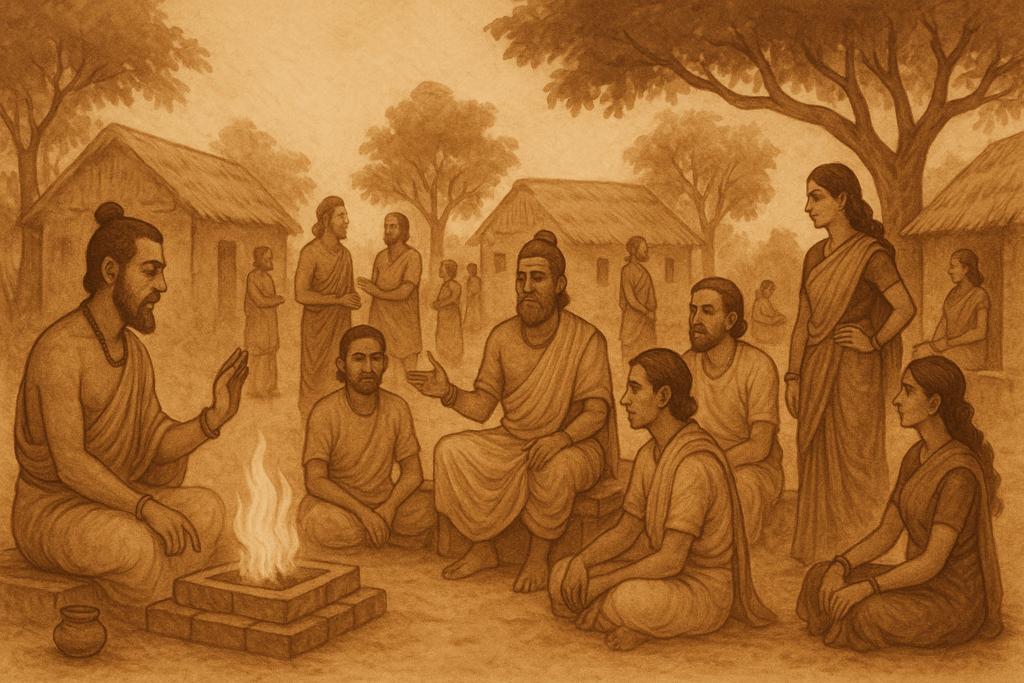
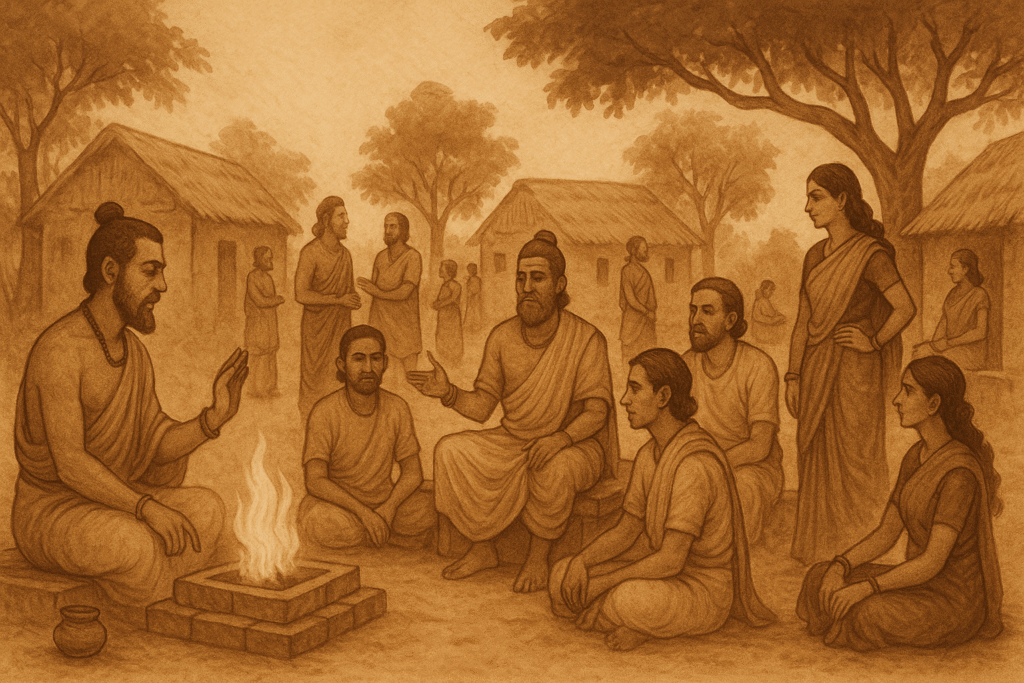
In the Uttar Vedic society, the householder (grihastha) held a central position not only in the social system but also in religious life. It was believed that the householder sustained society through responsible living, hospitality, family care, and economic productivity. As a result, specific religious duties were prescribed for householders, such as the performance of daily fire rituals, the observance of the Pancha Mahayajnas, and the practice of charity and service.
These duties highlight the practical and moral dimension of religion during this period. Religion was not limited to priestly rituals; it was woven into daily life through values such as kindness, discipline, responsibility, and respect for guests—an idea that still resonates in modern Indian culture.
The Role of Women in Religious and Intellectual Life
Women played an active role in the religious and philosophical life of the Uttar Vedic age. They participated in rituals, studied sacred texts, and even engaged in debates. Prominent female scholars such as Gargi, Maitreyi, and Vishwavara contributed significantly to the philosophical discourse of the time. Their presence illustrates that spirituality was not restricted to men but was accessible to anyone with dedication, intellect, and curiosity.
Ethics, Dharma, and Social Harmony
The concept of dharma expanded during the Uttar Vedic period. Dharma came to represent not just religious obligations but a comprehensive code of ethics centered on truth, compassion, self-control, and duty. Texts such as the Dharmasutras and early legal codes began to outline moral conduct, social responsibilities, and guidelines for harmonious living.
These developments reveal that religion in the Uttar Vedic society was deeply intertwined with social order. A person’s spiritual growth was believed to be inseparable from their ethical behavior and contribution to the community. This holistic view of religion continues to shape Indian thought, where spirituality is not merely ritual performance but a way of life rooted in values.
Thus, the religious and ritualistic transformation of the Uttar Vedic period was far more than a ceremonial shift. It was a profound evolution of human consciousness—moving from ritual action to philosophical reflection, from external worship to inner awakening, and from personal belief to social responsibility.
 |
Amazon Product Title HereBrief product description goes here. 👉 Check Price on Amazon |
Social Structure: The Evolving Framework of the Uttar Vedic Society
Family, Lineage, and Kinship—The Foundation of Social Order
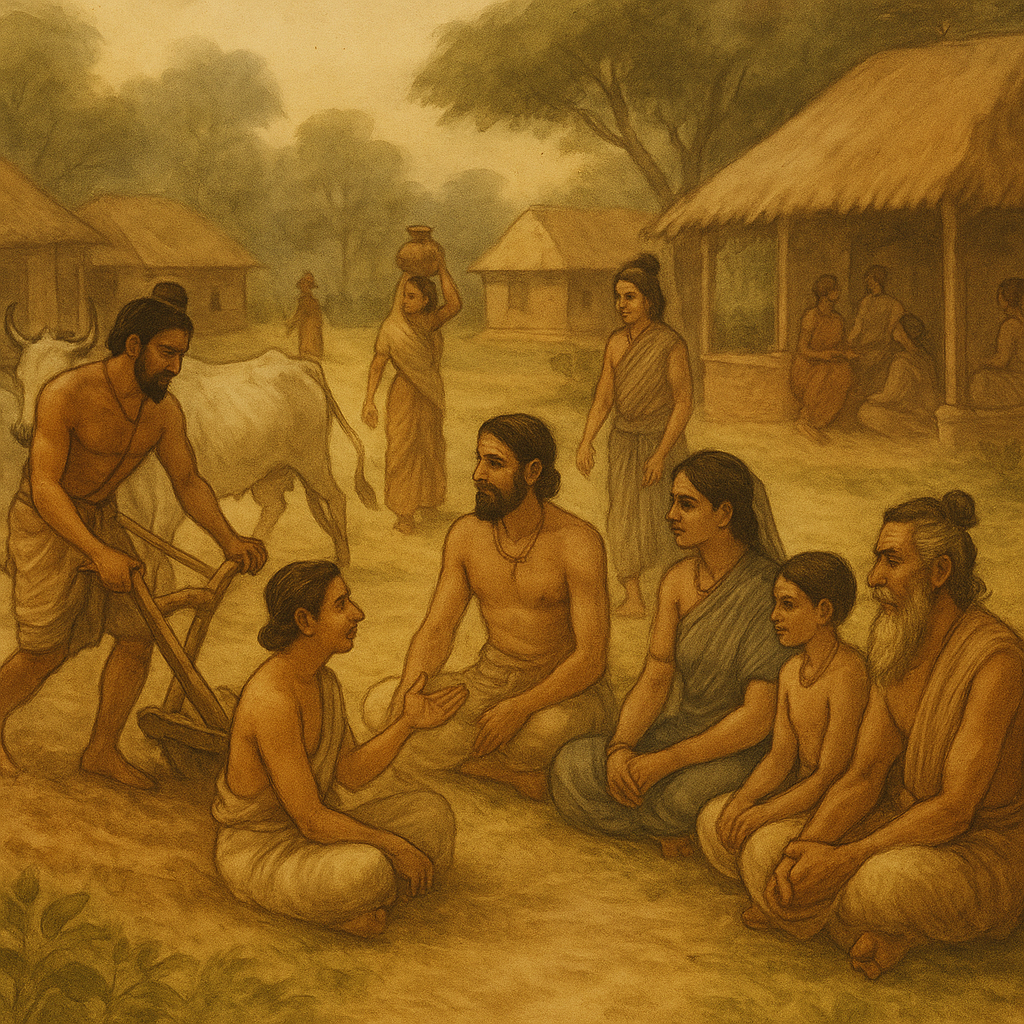
To understand the social structure of the Uttar Vedic society, one must begin with its most fundamental unit—the family and lineage. The family during this period was not merely a household based on blood relations; it was the center of social, economic, and moral organization. The concept of the joint family was well-developed, where responsibilities, labor, and resources were shared among all members. The head of the family, often referred to as the “kulapati,” guided decisions, maintained harmony, and ensured the welfare of the entire kin-group. His role was not of dominance but of stewardship, emphasizing balance and collective wellbeing.
Lineages (kula) and gotras played a crucial role in defining identity, social conduct, and marital regulations. They served as important markers that helped maintain social order and discipline. Gotras were used to regulate marriages, create social cohesion, and preserve the hereditary identity of families across generations. This framework added stability to the society and continues to influence many aspects of Indian culture even today—from family traditions to community norms.
Evolution of the Varna System—From Flexibility to Structure
One of the most notable features of the Uttar Vedic period was the gradual development of the varna system. In the early Vedic age, occupational roles were relatively fluid and often based on skill and personal ability. However, as society grew more complex and organized, the varna system became more structured. Brahmins assumed responsibilities related to knowledge and spiritual leadership. Kshatriyas took charge of administration and defense. Vaishyas became prominent in agriculture, pastoralism, and trade, while Shudras contributed through service, craftsmanship, and labor.
Although this system later became rigid, during the Uttar Vedic period, its primary purpose was functional: to ensure social balance through a clear division of labor. Each varna was deeply interdependent on the others, creating a symbiotic relationship essential for community stability. In many ways, this division of labor parallels the modern classification of professional fields, where different sectors work together for the progress of society as a whole.
Village Communities—The Core of Social and Economic Life
Rural life lay at the heart of the Uttar Vedic social structure. The village was not only a place of residence; it was the nucleus of economic, social, political, and cultural activities. Village assemblies and community councils evolved gradually and played a central role in governance, conflict resolution, and collective decision-making. Leadership often rested with wise, experienced, and respected elders who acted as mediators and custodians of tradition.
Agricultural production, the mainstay of the economy, required cooperation and systematic division of labor. The presence of farmers, artisans, herders, and traders created a diverse and interdependent ecosystem within the village. This self-sustaining structure allowed villages to function as independent economic units, a feature that became deeply embedded in India's social and economic history and can still be observed in many rural regions today.
The Role of Women—Participation, Responsibility, and Respect
Women held an important position in the Uttar Vedic society. Their role extended far beyond household duties. They participated in education, spiritual discourse, cultural activities, and sometimes even in community-level discussions. Textual references suggest that women were encouraged to engage in intellectual debates, take part in religious rituals, and study sacred texts.
Although the status of women changed in later periods, the Uttar Vedic age remains an example of dignity, contribution, and active participation. This highlights a significant lesson—that the growth of any society is deeply tied to the empowerment of its women. Even today, the principles of equality and respect that flourished during this time remain essential for progress.
Community Ethics and Social Harmony
The Uttar Vedic society placed immense importance on moral and ethical values. Truth, generosity, cooperation, discipline, and duty were considered vital pillars of social life. Every individual was expected to contribute to the well-being of the community. This shared sense of purpose nurtured unity and stability, even during periods of social transition.
Amazon Product Title Here
Brief product description goes here.
👉 Check Price on AmazonWhen we compare this with the modern world, we find that despite technological and material advancements, the foundation of a strong society still rests on these same timeless values. The Uttar Vedic social structure reminds us that harmony arises not from rigid regulations but from shared values and collective responsibility.