
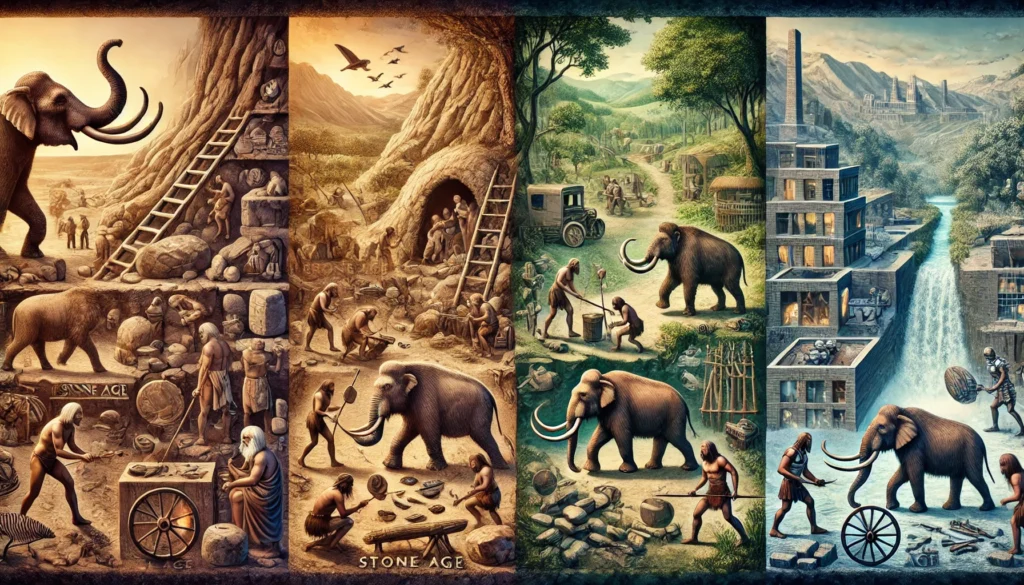
The Prehistoric Period – A Journey into the Earliest Human Civilisation
Before we dive into the structured historical phases, imagine yourself walking through dense forests, hearing the sound of rivers, and watching early humans shaping stones into tools. This journey into the prehistoric period is not just a study—it is a story of human courage, discovery, and evolution. Below is your original article presented clearly and professionally for learning and inspiration.
The Prehistoric Period
The prehistoric period is classified on the basis of the early development of human civilization and technological progress. It is mainly divided into three eras:
1. Paleolithic Age
Period: Around 500,000 BCE to 10,000 BCE
Key Features:
- Human life was based on hunting and food gathering.
- Stone tools were used , such as axes , scrapers , and chisels.
- Inhabits caves and forests.
- The discovery of fire and its use.
- Art: Ancient paintings in Bhimbetka caves.
- Sites: Narmada Valley , Bhimbetka (Madhya Pradesh) , Belan Valley (Uttar Pradesh).
2. Mesolithic Age
Period: from about 10,000 BCE to 8,000 BCE
Key Features:
- The use of small and sharp stone tools (microliths) began in this era.
- Beginning of animal husbandry and early agriculture.
- People now started moving towards permanent residence.
- Fishing and hunting improved.
- Site: Adamgarh (Madhya Pradesh) , Baigha (Rajasthan).
3. Neolithic Age
Period: from about 8,000 BC to 2,000 BC
Key Features:
- Development of agriculture and establishment of permanent settlements.
- Animal husbandry and the use of domestic animals.
- The manufacture and use of pottery.
- Cultivation of cotton and other crops.
- Development of tribal society and complex social structure.
- Venue: Mehargarh (Balochistan , Pakistan), Burzahom (Jammu and Kashmir), Chirand (Bihar).
4. Chalcolithic Age
Period: from about 3000 BC to 1500 BC
Key Features:
- Use of mixed tools of copper and stone.
- Early signs of the Indus Valley Civilisation appear.
- Advanced development of agriculture , animal husbandry , and trade.
- Site: Rajasthan (Ahar) , Maharashtra (Jorwe).
Summary:
In the prehistoric period, man gradually developed tools from stone to copper and moved from hunter-gatherer life to agriculture and permanent residence. This period is an important era that laid the foundation of human civilization.
Paleolithic Age Period
Paleolithic Age
Period: Around 500,000 BCE to 10,000 BCE
Introduction:
The Paleolithic Age is the earliest phase of human history , in which humans learned to depend completely on nature for their living. This age is also called the “Old Stone Age” , because tools made of stone were used at this time.
Key Features:
1. Lifestyle:
- Human life is mainly Hunt And Food Collection was based on.
- People lived in groups and took shelter in caves or under rocks.
2. Tools and Techniques:
- Tools were made from thick and unpolished stones.
- These tools included axes , scrapers , spears, and knives.
- The stones were sharpened by hitting them.
3. Discovery of fire:
- During this period, fire was discovered , which brought a revolutionary change in human life.
- Fire was used for cooking food , getting warmth and protection from wild animals.
4. Food:
- Tubers , fruits , roots , and hunted wild animals were the staple foods.
- The fishing began.
5. Social structure:
- The society is mainly Nomad Was.
- Living in small groups , where everyone was dependent on each other.
- Equality prevailed in the society.
6. Arts and cultural activities:
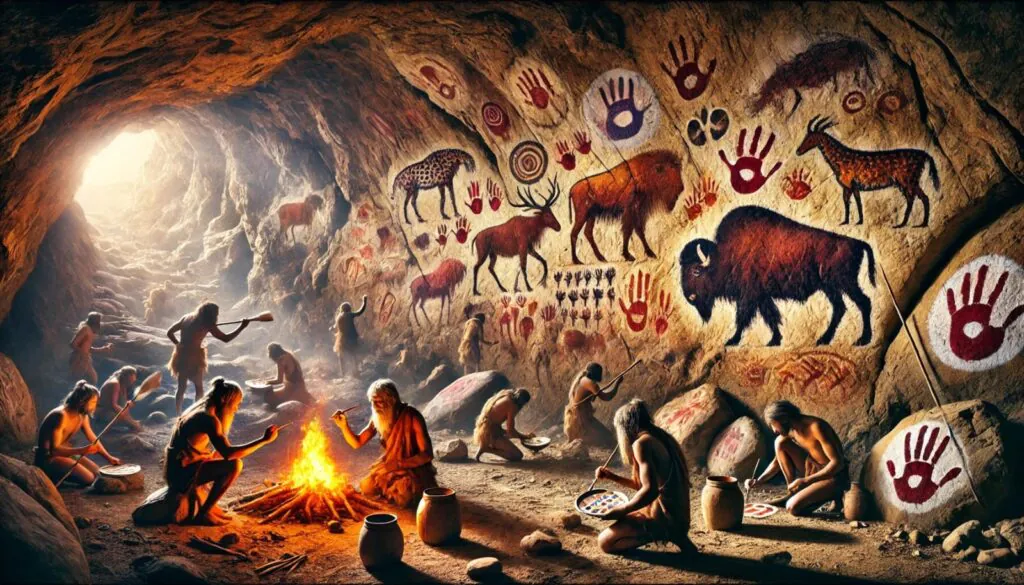
Cave Paintings: hunting , animals and daily life were drawn on the walls of caves. The most famous cave paintings Bhimbetka (Madhya Pradesh) It has been found in.
7. Environment and habitat:
- People of this era mostly lived around rivers and forests.
- The climate was cold , and the last phase of this period also saw an Ice Age.
Paleolithic Sites in India:
Important sites and discoveries:
- Bhimbetka (Madhya Pradesh): Cave paintings and the earliest evidence of human life.
- Narmada Valley (Madhya Pradesh): Remains of bones of prehistoric humans.
- Indus and Son Rivers Region (Pakistan and North India): stone tools.
- Belan Valley (Uttar Pradesh): tools and other remains.
Importance of Paleolithic Age:
- This era is the fundamental stage of human development.
- Humans learned to make tools , use fire , and live in groups.
- Cave paintings and hunting techniques demonstrated human creativity and intellectual development.
- From the Paleolithic Age, man slowly started moving towards civilization , which became a guide for the subsequent ages.
Lifestyle in the Paleolithic Age
Lifestyle in the Paleolithic Age
In the Paleolithic era, the human lifestyle was completely dependent on nature. This was the initial stage of human development , when humans learned to fulfill their basic needs for living.
Key Aspects of Lifestyle
1. Food and hunting:
- Man was a hunter and food gatherer.
- The food included wild fruits , tubers , seeds , roots , leaves , and wild animals.
- Small and large animals were hunted with stone tools and spears.
- Fishing also began at this time.
2. Place of residence:
- People lived in caves , under rocks , or under the open sky.
- Caves provided protection , especially from wild animals and weather hardships.
- Cave paintings have been found at sites like Bhimbetka (Madhya Pradesh).
3. Society and organization:
- The society was nomadic ; people moved around in search of food and water.
- They lived in families or small groups.
- The society was based on equality , and resources were collectively shared.
4. Tools and equipment:
- Stone tools were the main tools , such as axes , scrapers , and spears.
- Tools were used for hunting , cutting food , and skinning leather.
- To make tools, stones were sharpened by hitting them.
5. Use of fire:
- In this era, the discovery of fire brought a big change in human life.
- Use of fire: for cooking, to escape the cold, to scare and ward off wild animals.
6. Art and creativity:
Cave Art: hunting , animals and daily life were made on the walls of caves. Colors were made from natural sources , such as clay , coal , and minerals. This art may be a part of religious rituals or social activities.
7. Environment and Transport:
- Life was totally based on the environment.
- The climate was cold , and people lived mostly near rivers , forests, and grasslands.
- There were no means of transportation , so people used to walk.
Importance of Paleolithic Lifestyle:
- This era was the basis of human’s physical and mental development.
- Social organization began from the life of hunters and gatherers.
- The use of fire and tools laid the foundation for further civilisations.
- The lifestyle of the Paleolithic era was simple , but connected to nature. This is the first chapter of human history , in which man learned the basic skills of life.
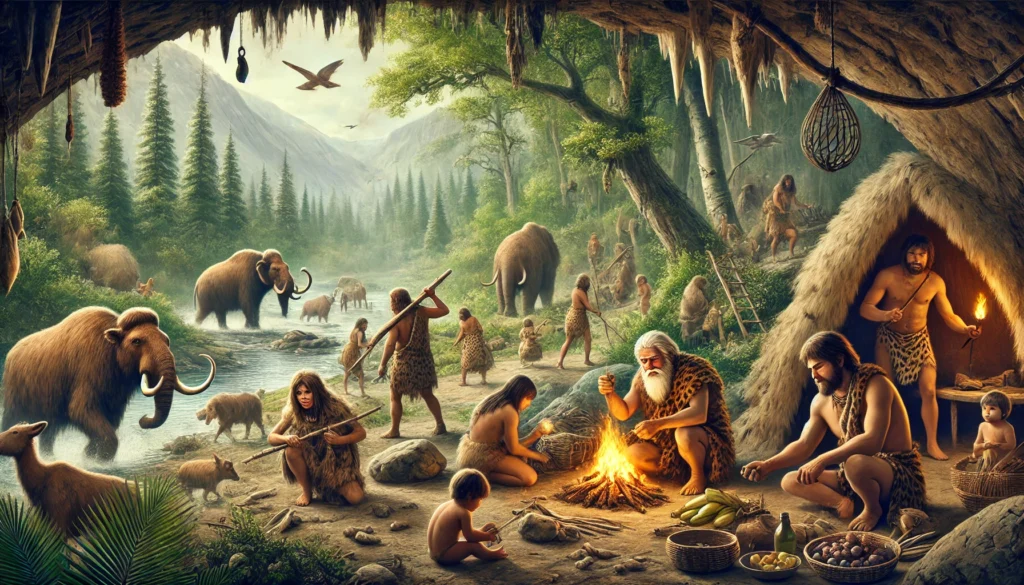
Tools and Techniques in the Paleolithic Age
Imagine stepping into a time when survival depended not on machines or metal, but on the creativity of human hands and the strength of stone. The Paleolithic Age marks a turning point in human evolution—when technology, though simple, became a bridge between nature and survival. Below is your original article, preserved without alteration and presented in clean, structured, SEO-friendly HTML.
Tools and Techniques
Tools and Technology in the Paleolithic Age
In the Paleolithic era, humans used stones to facilitate various tasks of life. This was the stage of human history when survival began through tools and technology.
Types and Uses of Tools:
1. Coarse and unpolished stone tools:
- Most of the tools of this era were made by breaking thick stones.
- The stones were sharpened by hitting them against each other.
- These tools were used for hunting , cutting meat , breaking wood and scraping leather.
2. Main types of tools:
- Axe : This was the most common tool. Used for hunting , chopping wood, and digging holes.
- Scraper : To remove flesh from animal skins and prepare leather.
- Spear : Sharp stones were made for hunting by attaching them to a wooden stick.
- Blade : For chopping meat and peeling roots.
- Hammer Stones : Others break stones or make tools.
- Pointed Tools : To kill animals or for protection.
Tool Making Technology:
1. Flaking Technique :
- A sharp edge was created by striking the stones.
- Smaller stones were used to remove thicker surfaces of the stone.
2. Core Tools :
- The main tool is made from a large piece of stone.
- These tools were thick and strong.
3. Flake Tools :
- Use of small sharp pieces obtained by breaking the stone.
4. Percussion Method :
- Two stones were hit together with force to give the shape of a tool.
Evolution of Technique:
- Over time, tools were made sharper and more useful.
- Along with stones, wood and bones also began to be used for making tools.
- Development of tools such as spears and arrows to increase hunting effectiveness.
Importance of Tools and Techniques:
- Helpful in living: Made hunting and food gathering simple and effective.
- Evolution of the Human Brain: The making and use of tools fostered creativity and problem solving abilities.
- Foundation of Future Civilization: This practice of tool making gradually reached iron and copper tools.
The tools and technology of the Paleolithic era are evidence of the first mechanical attempts of human life , which helped them to adapt to nature and develop new abilities.
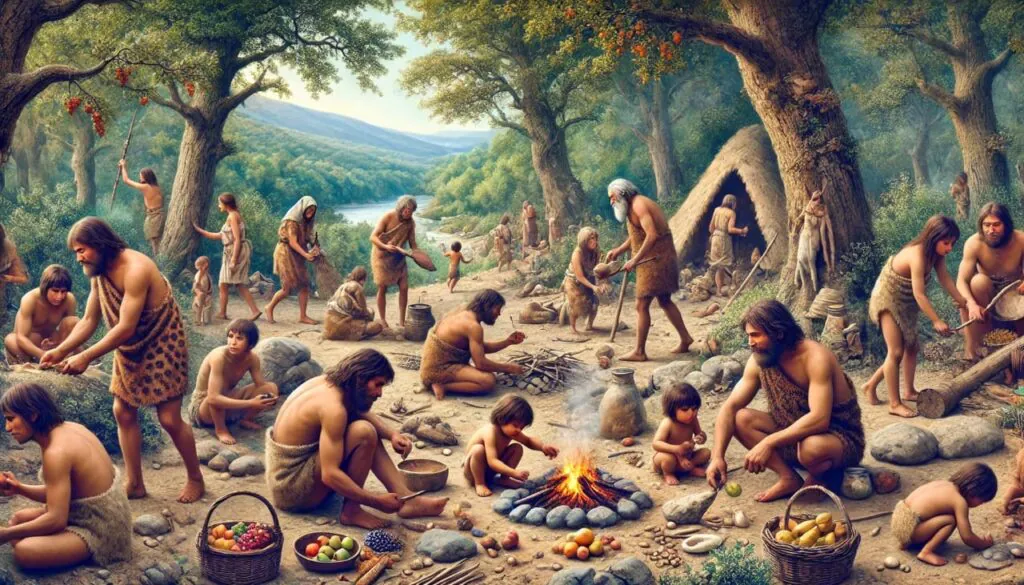
Discovery of Fire and Food in the Paleolithic Age
The story of early humans is a tale of courage, discovery, and survival. Among all prehistoric achievements, nothing changed human life as dramatically as the discovery of fire. Below is your original article, preserved without content changes and presented in clean, SEO-optimized HTML for educational clarity and website publishing.
Discovery of Fire
Discovery of Fire in the Paleolithic Era
Discovery of fire is one of the most important events in human history. The cradle of fire brought revolutionary changes in lifestyle and the way of existence. Fire was first used during the Paleolithic era, which accelerated the development of human civilization.
How Was Fire Discovered?
It is believed that fire was discovered through natural events, such as:
- Forest fires caused by lightning.
- Sparks produced by the collision between two stones.
Initially, man learned how to preserve burning fire. Later, techniques to produce fire by striking stones or rubbing wood were developed.
Uses of Fire:
1. To Cook Food:
- Fire provided facilities for cooking food.
- By cooking food it could be made more digestible and tasty.
- The risk of infection from raw meat and other foods was reduced.
2. Protection from Cold:
- Fires provided warmth during cold and snowy weather.
- This gave humans the courage to live in areas with cold climate.
3. Security:
- The fire helped scare away wild animals.
- The fire provided security and light at night.
4. Development of Equipment and Tools:
- Fire was used to strengthen tools and weapons.
- Wood was burnt and given a suitable shape for making tools.
5. Centre of Social Activities:
- Sitting in groups around the fire strengthened social ties.
- The groups shared meals near the fire and exchanged their experiences.
Effects of the Discovery of Fire:
1. Effect on Physical Development:
- Cooked food adapted to the human digestive system and provided more energy.
- This contributed to the development of the brain.
2. Migration and Settlements:
- With the help of fire, man started settling in areas with cold and harsh climate.
- Fire helped develop new ways of living.
3. The Foundation of Civilization:
- Fire led to technological advances in tool making, metal smelting, and agriculture.
- This became the basis for agricultural and industrial development in later eras.
Importance of Discovery of Fire:
The discovery of fire brought such a change in human life that it made him different and more capable than other creatures. This discovery was not limited to convenience of living, but became an important pillar of the development of human civilization.
Food in the Paleolithic Age
In the Paleolithic era, human food was completely dependent on nature. Humans of this era were hunters and food gatherers, and they gradually improved the techniques of searching and obtaining food.
Major Sources of Food:
1. Plant-Based Diet:
- Tubers and roots: Underground tubers and roots, such as potatoes and sweet potatoes.
- Fruits and berries: Fruits were gathered from wild trees and berries from bushes.
- Seeds and leaves: Use of seeds and edible leaves of wild plants.
2. Meat-Based Meals:
- Hunting wild animals: Deer, buffalo, rabbit, birds, and smaller animals.
- Hunting was done using stone tools and spears.
- Fish and aquatic life: Fishing started in rivers and lakes.
- Simple tools made of stone and wood were used for fishing.
3. Insects and Small Creatures:
- During times of food shortage, insects, snails, and small creatures were also consumed.
Methods of Food Collection:
- People worked in groups to collect food.
- Exploratory instinct: Humans roamed in search of new areas for food.
- Any type of food was consumed immediately, as there was no technology to preserve it for a long time.
Start of Cooking:
After the discovery of fire:
- Cooking of food became possible.
- Hard foods like meat and tubers became soft and easily digestible.
- Cooked food provided more energy.
- The risk of infections and diseases caused by eating raw meat decreased.
Importance of Food:
- Source of Energy: Food provided humans with energy to face daily hardships and long journeys.
- Brain and Physical Development: The proteins and fats in meat and fish played a key role in brain and physical development.
- Society and Cooperation: The process of gathering and sharing food strengthened collective living and social bonds.
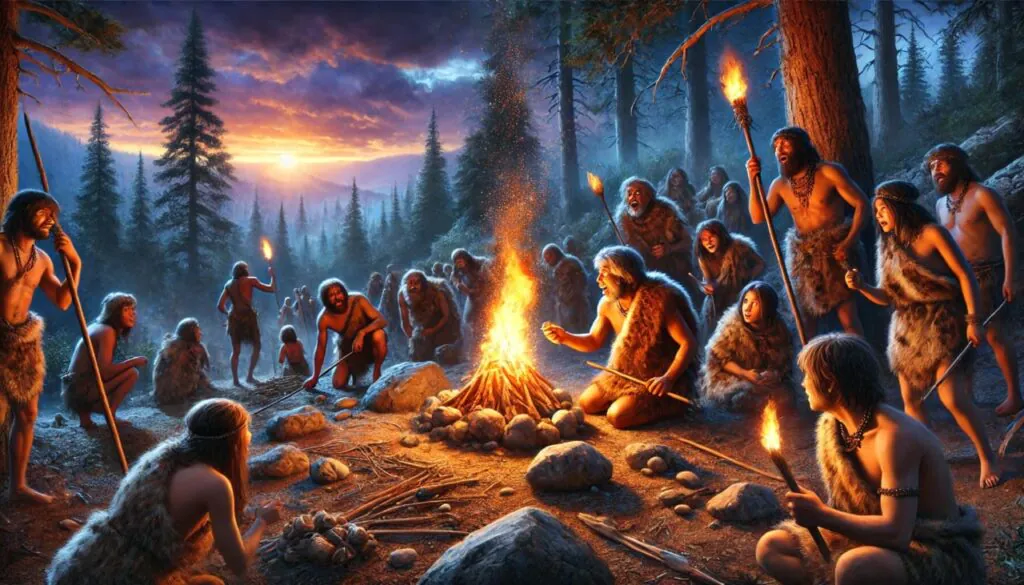
Social Structure, Art, Habitat & Bhimbetka in the Paleolithic Age
The Paleolithic Age represents the dawn of humanity—an era where humans learned survival, creativity, cooperation, and adaptation. This article preserves your original content exactly as given, and is presented in clean, structured HTML for education, research, and SEO-friendly web publishing.
Social Structure in the Paleolithic Age
In the Paleolithic era, the organization of human society was based on nature and the needs of survival. The structure of society was simple and cooperative, where every individual contributed to the well-being of the group.
Main Features of Social Structure:
1. Nomadic Lifestyle:
- The society as a whole was nomadic.
- People moved from one place to another in search of food and water.
- There were no permanent settlements; habitation was limited to caves, under rocks, or temporary shelters.
2. Organisation into Small Groups:
- People lived in small groups, which may be called clans.
- A group usually consisted of 20–30 people.
- Members were connected by kinship or family ties.
3. Society Based on Equality:
- There was no discrimination or class division.
- Everyone had equal importance, and responsibilities were shared equally.
- Resources were shared; no one had exclusive rights over food or tools.
4. Cooperation and Dependency:
- Group members were completely dependent on one another.
- Men: Skilled in hunting and tool-making.
- Women and children: Helped in food gathering and other small tasks.
- Food collection and security were collective responsibilities.
5. Security and Collectiveness:
- Living in groups ensured safety.
- Unity was necessary to protect against wild animals and dangers.
- Hunting was performed collectively.
6. Traditions and Rituals:
- Collectivism was expressed through cave paintings and art.
- Paintings may depict social events, hunting scenes, and beliefs.
Importance of Social Structure:
1. Beginning of Collective Life:
- The Paleolithic Age laid the foundation for cooperative living.
- People understood the value of partnership.
2. Foundation of Social Development:
- Early society prepared the way for later complex social structures.
- Laid the base for permanent settlements and agriculture.
3. Safety and Survival:
- Nomadic group living helped avoid dangers and food scarcity.
Conclusion:
The social structure of the Paleolithic era was simple but effective. This era marked the beginning of human society, where cooperation, equality, and collectiveness were priorities—forming the base for civilized life.
Art and Cultural Activities in the Paleolithic Age
Art was a means of expressing human creativity, emotions, and daily life. The most prominent art form of this era was cave paintings, which represent humanity's earliest artistic efforts.
Main Features of Cave Paintings:
1. Location of the Paintings:
- Paintings were made on cave walls and ceilings.
- Found mainly where primitive humans lived or performed rituals.
- In India, Bhimbetka (Madhya Pradesh) is the prime example.
2. Theme:
- Paintings depict nature and daily life.
- Major Themes:
- Hunting scenes – human-animal interaction.
- Animals – deer, buffalo, elephant, lion, horse.
- Dance and festivals – group activities.
- Primitive man – hunting and daily tasks.
3. Color and Material:
- Colors made from natural sources:
- Red & Yellow: Ochre clay.
- Black: Charcoal.
- White: Lime.
- Applied using stones, wood, or bones.
4. Style:
- Simple, symbolic, line-based drawings.
- More emphasis on animals and humans.
- Depiction of motion and realism.
5. Objectives and Significance:
- Hunting Plan: Drawings used for mental preparation.
- Spirituality: Animal figures may represent rituals.
- Communication: Shared stories through art.
Important Cave Sites:
1. In India:
- Bhimbetka (Madhya Pradesh): Hunting, dancing, and community life.
- Belan Valley (Uttar Pradesh): Paintings and stone tools.
2. Globally:
- Lascaux Caves (France)
- Altamira Cave (Spain)
Importance of Cave Paintings:
- Evidence of creativity and intellectual growth.
- Preserve cultural identity and beliefs.
- Source of information about lifestyle and environment.
- Beginning of human artistic expression.
Conclusion:
Cave paintings symbolize human creativity and cultural awareness. They document life and emotions, offering a window into the earliest artistic minds.
Environment and Habitat in the Paleolithic Age
People of the Paleolithic Age were completely dependent on nature. Their residence and lifestyle were shaped by natural resources and environmental conditions.
Effect of Environment:
Dependence on Natural Resources:
- Environment was vital for food, water, and protection.
- Rivers, forests, and mountains were ideal for human life.
Climatic Conditions:
- People lived mostly in temperate and subtropical regions.
- Caves and rocks were shelters from heat and cold.
Places of Residence:
1. Along Rivers:
- Provided water, fish, and hunting opportunities.
2. Near Forests:
- Source of wood, fruits, tubers, and animals.
3. Caves and Rocks:
- Main habitats offering protection from weather.
- Cave paintings show cultural activities.
Types of Residence:
1. Temporary Shelters:
- Made using leaves, branches, and leather.
2. Use of Caves:
- Primary choice in cold regions.
- Fires provided warmth and safety.
3. Open Area Residence:
- Used in warm climates; shelters from skins and branches.
Importance of Environment and Habitat:
- Ensured availability of food and water.
- Strengthened social structure.
- Helped protect against animals and hazards.
- Laid the foundation for future settlements.
Conclusion:
Humans lived in harmony with nature. Rivers, forests, caves, and shelters shaped early life and later influenced permanent settlements and civilization.
Bhimbetka (Madhya Pradesh): Cave Paintings and Evidence of Human Life
Bhimbetka is an important archaeological site in Raisen district of Madhya Pradesh. It is famous for ancient cave paintings and early evidence of human life. Bhimbetka is also recognized as a UNESCO World Heritage Site.
Introduction to Bhimbetka:
- Located in the foothills of the Vindhyachal Range.
- Human evidence from Paleolithic to Medieval periods.
- Name believed to be linked to Bhima of Mahabharata.
Features of Cave Paintings:
1. Number of Caves:
- About 750 caves; paintings in 500 of them.
2. Themes:
- Hunting, dancing, warfare, group activities.
- Animals: buffalo, elephant, horse, wild boar, lion.
- Human activities such as hunting, dancing, music.
3. Colors Used:
- Red & yellow: ochre soil.
- Black: charcoal.
- White: lime.
- Animal fats and plant juices for durability.
4. Style:
- Simple lines, dynamic poses.
- Symbolic and realistic depictions.
Archaeological Importance:
1. Evidence of Human Life:
- Tools, weapons, food remains from all prehistoric periods.
2. Culture and Civilisation:
- Reflects early cultural and religious beliefs.
- Shows collectivism and hunting strategies.
3. Development of Art:
- Shows early artistic skills and communication methods.
Environment and Habitat of Bhimbetka:
- Located near forests and rivers.
- Ideal for nomadic life.
Importance:
- Oldest evidence of human development.
- Cultural and artistic heritage.
- Major centre for archaeological studies.
- Important tourist destination.
Conclusion:
Bhimbetka is one of the oldest cultural sites in the world. Its caves offer a glimpse of ancient human life, art, and culture. The site shows how early humans lived with nature and expressed creativity.
Narmada Valley, Indus–Son Region & Belan Valley: Prehistoric Evidence
To understand how humanity evolved, we must walk through the landscapes where the earliest humans lived, hunted, created tools, and left behind traces of their existence. This article preserves your original content exactly while organizing it into clean, SEO-optimized HTML for your website.
Narmada Valley (Madhya Pradesh): Remains of Bones of Prehistoric Humans
The Narmada Valley, located in Madhya Pradesh, is one of the important evidences of the earliest human life in India. The region is famous for its archaeological findings dating back to the Paleolithic period, especially remains of bones and stone tools of prehistoric humans.
Major Archaeological Evidences of Narmada Valley:
1. Remains of Bones of Primitive Man:
- In the 1970s, near Hoshangabad district at a site called Hathnora, a cranial fragment was discovered.
- This remains is believed to be approximately 500,000 to 200,000 years old.
- This skull is considered one of the earliest evidences of Homo erectus in India.
- This prehistoric human is popularly known as "Narmada Man".
2. Stone Tools:
- Various Paleolithic tools such as axes, scrapers, and spears have been found.
- Tools were made mainly from quartzite and other hard stones.
3. Fossil and Environmental Evidence:
- Animal fossils such as elephants, horses, deer, and wild animals show a rich ecosystem.
- These fossils indicate the environmental diversity of the region during prehistoric times.
Archaeological Importance of Narmada Valley:
1. Study of Early Human Life:
- The discovery of Narmada Man gives crucial evidence of early human presence in India.
- It suggests that human evolution in this region began hundreds of thousands of years ago.
2. Evidence of Homo erectus:
- An important link in the global study of human evolution.
- Proves that ancestors like Homo erectus lived in South Asia.
3. Environmental Adaptation:
- The climate and resources of the Narmada Valley were suitable for early human settlement.
4. Ancient Tools and Technology:
- Tools indicate that early humans had begun hunting and daily survival activities.
Environment and Habitat:
- The Narmada River region was ideal for hunting, fishing, and collecting fruits.
- The river provided water, food, and transportation.
Scientific Studies and Research:
- Narmada Man is crucial for understanding human evolution from a global perspective.
- Geological studies confirm that the region sustained life for millions of years.
Conclusion:
The Narmada Valley is a major site for studying early humans in India. The remains of “Narmada Man” prove that this region was a centre of prehistoric human life. These discoveries contribute significantly to Indian and global human history.
Indus and Son Rivers Region (Pakistan and North India): Stone Tools
The region of the Indus and Son rivers, stretching across Pakistan and parts of North India, is an important site of ancient human civilisation. Stone tools from the Paleolithic period found here help understand the lifestyle of early humans.
Indus and Son River Region: Geography and Importance
Indus River:
- Flows through northern Pakistan and parts of India.
- Cradle of the ancient Indus Valley Civilization.
- Human life in the region began in very ancient times.
Son River:
- Flows in northern India and is a tributary of the Ganges.
- Important evidence of the Paleolithic era found in the Son Valley.
Significance and Discovery of Stone Tools
Technology of Tools:
- Stone tools were thick, rough, and used for hunting, cutting, and scraping.
- Axes, scrapers, spears, and knives were common.
Manufacture of Tools:
- Made from quartz, sandstone, and flint.
- Prepared by chipping, rubbing, and breaking stones.
- Shows early humans’ technical skills and resource use.
Types of Stone Tools:
- Serrated tools: Used for cutting and scraping.
- Pointed tools: Spears and sharp tools for hunting.
- Flake tools: Used for shaping wooden tools.
Indus and Son River Region: Lifestyle and Habitat
Hunting and Diet:
- Hunting was the main activity of early humans.
- They ate meat, fruits, tubers, and roots.
- Rivers provided fish and other aquatic food.
Place of Residence:
- People lived on riverbanks for water and food.
- Early farming began in fertile lands.
Cultural and Historical Significance
Indus Valley Civilization:
- Indus Valley was the centre of Harappan culture, known for town planning, water systems, and writing.
Culture and Life in Son Valley:
- Stone tools show Paleolithic and Mesolithic activity.
Conclusion:
The Indus and Son river region was an important centre of ancient human civilisation. The stone tools found here reveal early human skills, hunting, and lifestyle. These discoveries highlight the region’s significance in prehistoric development.
Belan Valley (Uttar Pradesh): Tools and Other Remains
The Belan Valley in Mirzapur district, Uttar Pradesh, is an ancient archaeological site famous for evidence of Paleolithic and Mesolithic human life. The discovery of stone tools and remains provides valuable information about ancient civilization.
Geography and Importance of Belan Valley
- Located between the Ganges and Yamuna rivers.
- Ideal for early humans due to its food resources and climate.
- Evidence of many ancient civilizations found here.
Importance of Tools and Remains
1. Stone Tools:
- Large axes used for hunting and wood cutting.
- Scrapers and knives for skinning animals and cutting meat.
- Spears and pointed tools for hunting.
- Carving tools shaped for various daily uses.
2. Animal Bones and Other Remains:
- Fossils of deer, bears, elephants, and other animals.
- Evidence indicates active hunting in the region.
3. Reservoirs and Environmental Evidence:
- Remains of ponds and reservoirs show water availability.
- Climate evidence helps understand early human life.
Environment and Habitats of Belan Valley
- The Belan River provided water for early humans.
- Forests offered tubers, fruits, and animals for hunting.
- People lived in caves and temporary shelters.
Cultural and Historical Significance
- Stone tools show Paleolithic and Mesolithic activity.
- Indicates early development of hunting and gathering.
- Shows that the region was a centre of culture and early society.
Conclusion:
Belan Valley's archaeological evidence—stone tools, fossils, and environmental remains—helps us understand the lifestyle and development of ancient humans. It provides an important record of prehistoric civilization.