
1. The Great Depression: Background
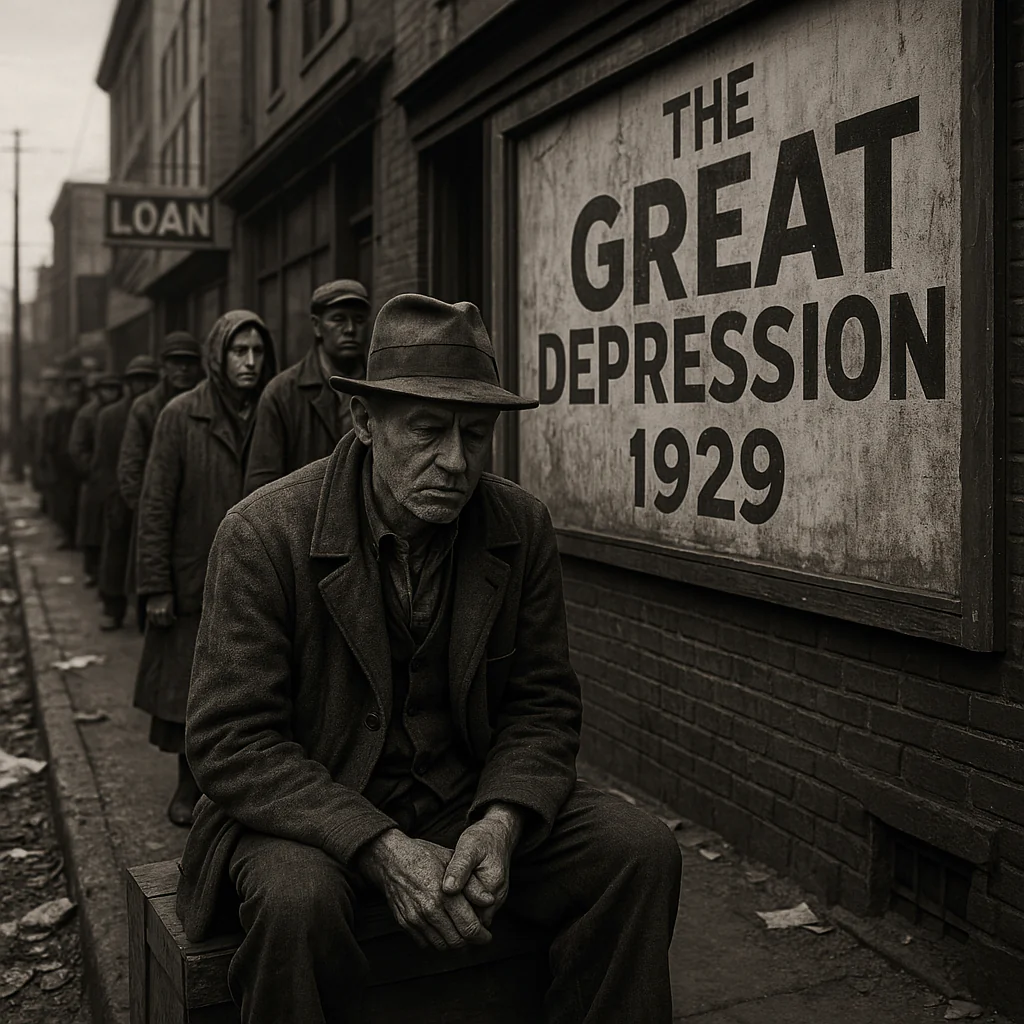
To understand the background of the Great Depression, we must examine the global economic situation of the 1920s, the impact of the First World War, and the economic policies followed by the United States during this period.
(a) Impact of the First World War (1914–1918)
- After the war, many European countries were economically devastated.
- The United States supplied weapons, food, and loans to Europe during the war, which helped it rise as a major economic power.
- Post-war Europe became economically dependent on the United States.
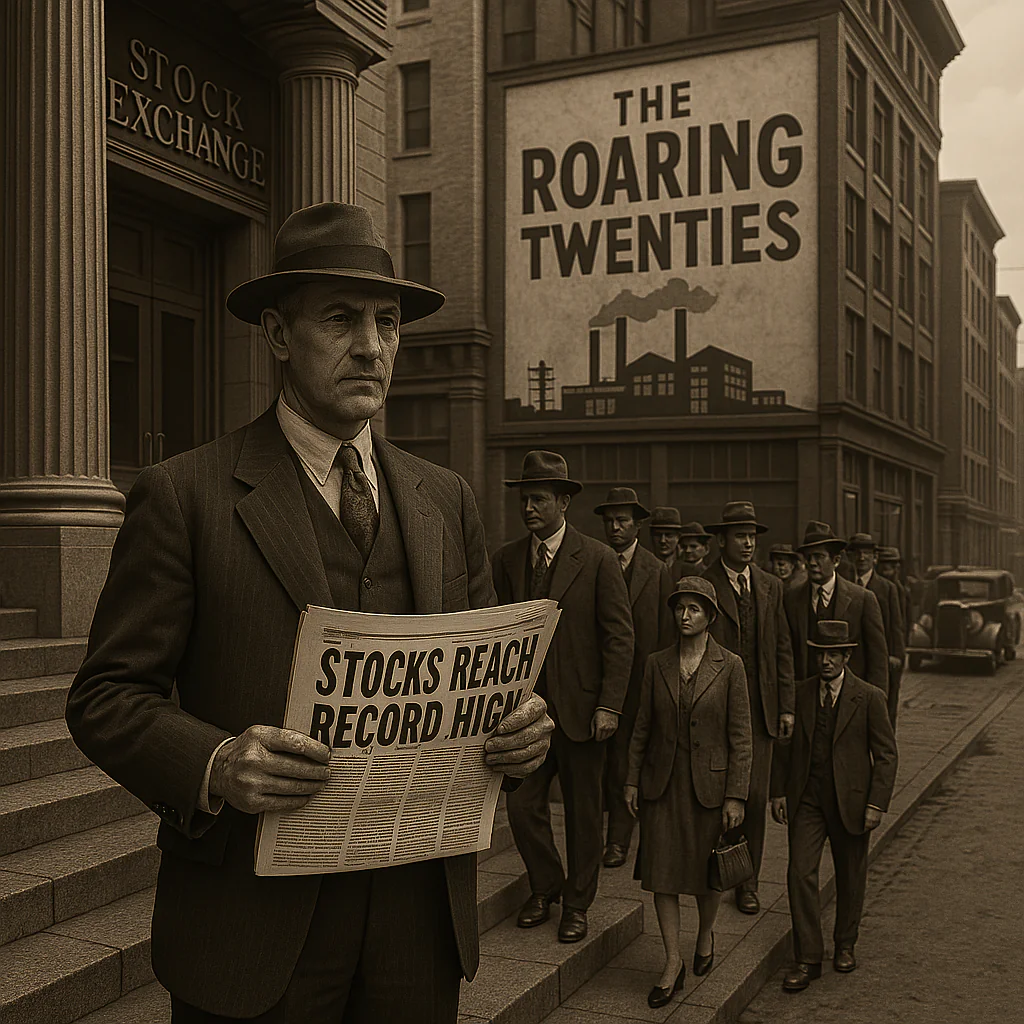
(b) The 1920s — “Roaring Twenties”
- The decade saw rapid industrialization, rising production, and growing consumerism in the United States.
- The stock market attracted heavy investment, and people began earning quick profits from shares.
- New technologies such as automobiles, radio, telephones, and electric appliances developed rapidly.
Production and Demand Imbalance
Companies produced goods in very large quantities, but the purchasing power of the public was limited. Production increased far more than demand, causing unsold inventory to accumulate across industries.
Over-enthusiasm and Speculation in the Stock Market
Many people invested in shares using borrowed money (margin trading). As a result, a speculative bubble formed—share prices rose far beyond the real economic condition of companies.

Awesome Amazon Product
Buy on AmazonWeak Foundation of Banking and Financial Institutions
- Banks themselves invested heavily in the stock market and issued risky loans.
- Even a small economic shock could collapse banks because they lacked adequate cash reserves.
(vi) Economic Inequality
- The nation’s wealth was concentrated in the hands of a few industrialists and wealthy elites.
- Workers, farmers, and the lower classes had very low incomes, which reduced overall consumption.
(vii) International Economic Situation
- Post-war Europe was burdened by American loans and struggled to rebuild its economy.
- Germany, under the Treaty of Versailles, faced heavy reparations, leading to deep economic instability.
Summary
The background of the Great Depression shows how an unstable, unbalanced, and overly optimistic capitalist economy collapsed due to its weak foundations. When even a small shock appeared—such as the stock market crash of 1929—the entire global system was shaken.
2. The Beginning of the Great Depression
The Great Depression began in the United States, but its effects rapidly spread across the world. The start of this crisis is closely tied to a few crucial dates and events—most importantly, the collapse of the stock market.
Stock Market Crash of 1929
24 October 1929 — “Black Thursday”
- Sudden and massive sell-offs began at the New York Stock Exchange (NYSE).
- About 13 million shares were traded in a single day—an unprecedented volume.
- The market plunged into chaos as panicked investors rushed to sell their shares.
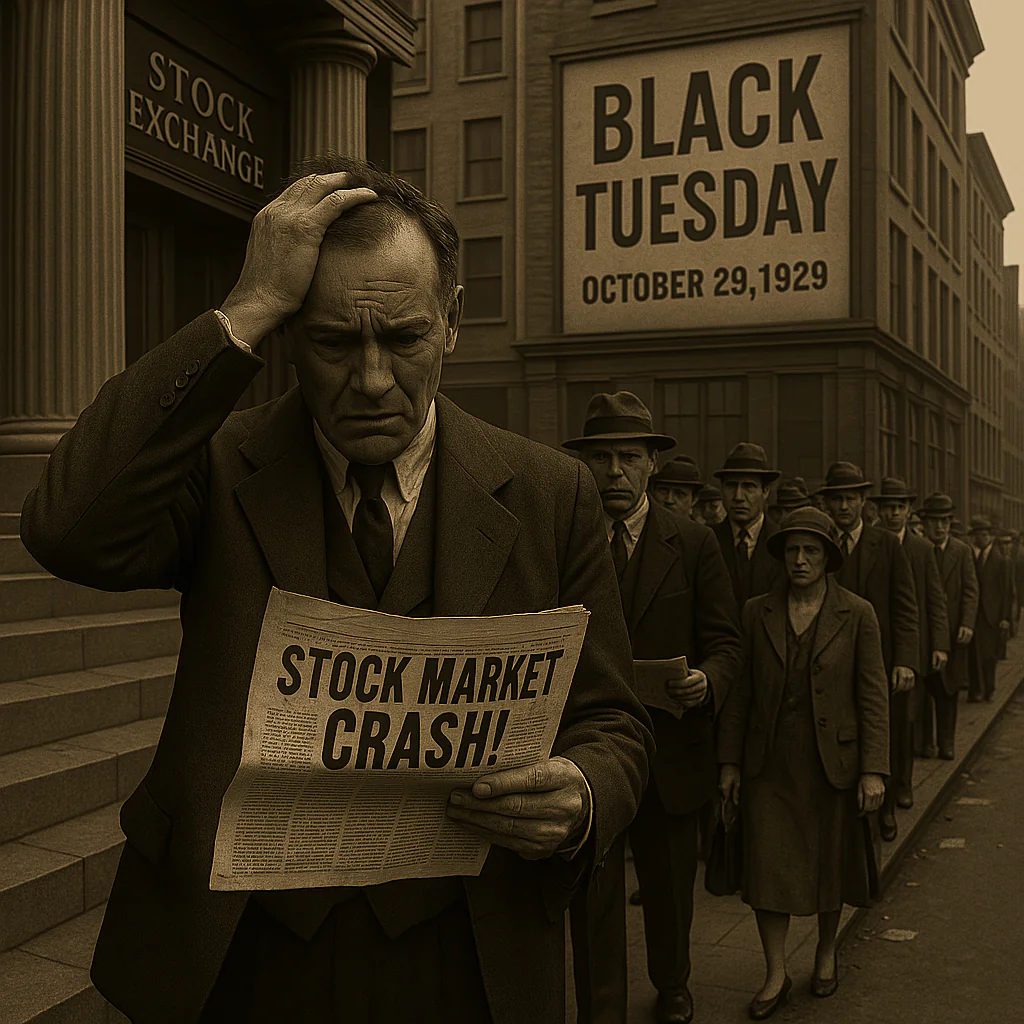
29 October 1929 — “Black Tuesday”
- Approximately 16 million shares were traded—marking the largest one-day collapse in stock market history.
- Billions of dollars in value were wiped out within hours.
- Thousands of investors—including ordinary workers, businessmen, and banks—lost everything.
Failure of Banks and Financial Institutions
- Many banks had invested heavily in the stock market or offered risky loans connected to it.
- Panic led people to withdraw their money in large numbers, causing banks to collapse.
- By 1930, more than 1,300 banks had shut down in the United States.
Decline in Production and Trade
- Businesses suffered heavy losses and began cutting production.
- Factories shut down, and mass layoffs began.
- By 1933, unemployment in the U.S. had risen above 25%.
Agricultural Collapse
- Farmers already burdened with debt could no longer sell their produce due to collapsing prices.
- Demand for crops fell sharply, pushing many farmers to the brink of ruin.
Global Effects
- The U.S. stopped foreign loans and reduced imports, affecting Europe, Latin America, and Asia.
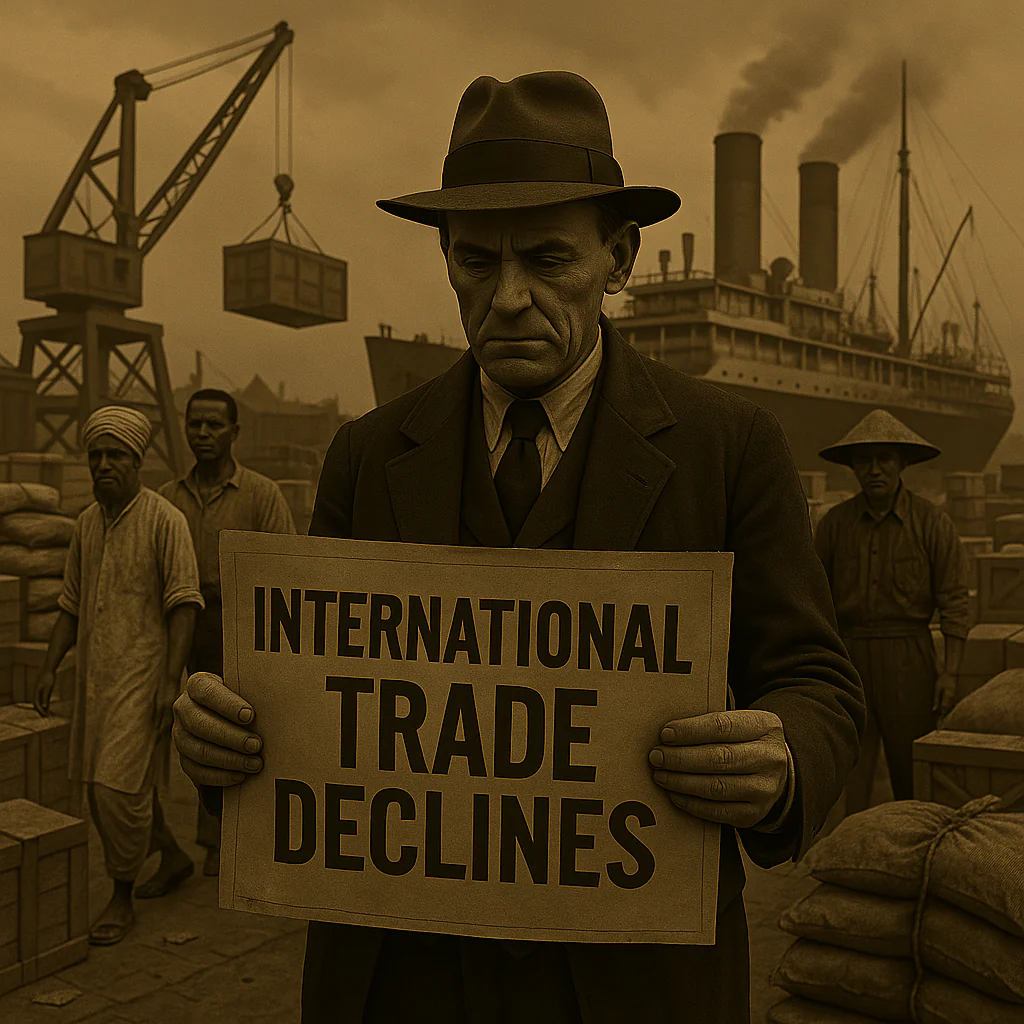
- World trade shrank by nearly 70%.
- Export-dependent countries experienced severe economic distress.
Collapse of Consumer Confidence
- People became afraid to spend money.
- Consumerism declined sharply, reducing demand further.
- A vicious cycle began: falling demand → falling production → rising unemployment → further decline in demand.
Conclusion
The beginning of the Great Depression was like an economic earthquake. What started as a stock market crash soon pulled the entire global economy into its grip. It was not just a financial crisis—it became a profound social and human tragedy.
3. Major Impacts of The Great Depression, 1929
The Great Depression affected not only the United States but the entire world. Its impacts were immediate and long-lasting across economic, political, and social dimensions.
(i) Global Impact
1. Decline in International Trade
- World trade fell by almost 70%.
- Countries increased import tariffs, further reducing global commerce.
- The pace of globalization slowed dramatically.
2. Unemployment Worldwide
- By 1933, U.S. unemployment exceeded 25%.
- Europe, Canada, Australia, Argentina, and India also experienced widespread unemployment and poverty.
3. Political Instability
- Public confidence in democratic systems weakened in several countries.
- Germany witnessed the rise of the Nazi Party and Adolf Hitler.
- Fascist movements gained strength in Italy, Spain, and other nations.

Awesome Amazon Product
Buy on Amazon(ii) Impact on the United States
1. Collapse of Banking and Industry
- Thousands of banks shut down.
- Hundreds of companies and industries went bankrupt.
2. Introduction of the New Deal
President Franklin D. Roosevelt introduced a series of economic reforms known as the New Deal:
- Public works programs to provide jobs.
- Social security and welfare measures.
- Banking and stock market reforms to restore stability.
3. Growth of Government Role
The government moved away from the “laissez-faire” approach and began actively intervening in the economy.
(iii) Impact on India
1. Agricultural Crisis
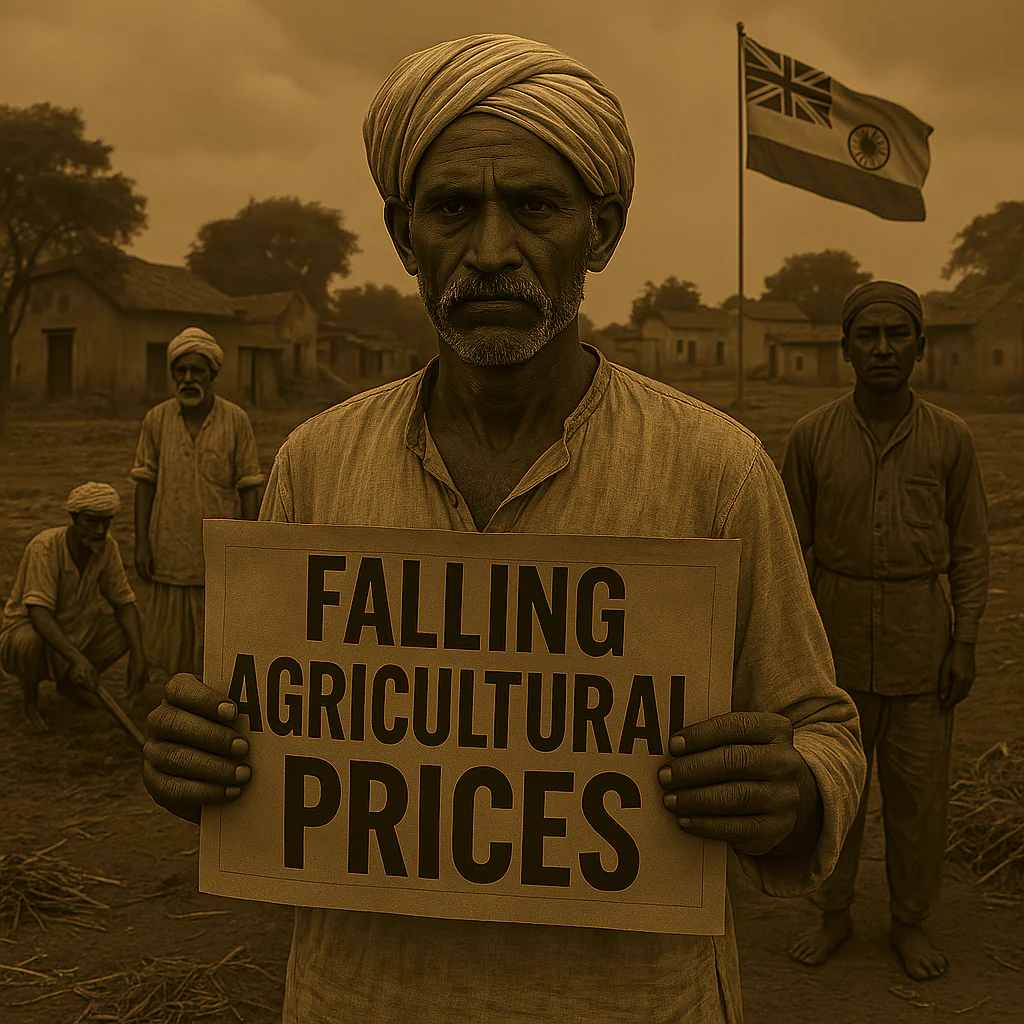
- Prices of major crops such as wheat and cotton declined sharply.
- Farmers received very low returns, worsening economic hardship.
2. Rising Debt and Starvation
- Rural populations sank deeper into debt.
- Starvation and migration increased in several regions.
3. Harsh British Policies
- The British government increased taxes and cut expenditure.
- This worsened poverty among peasants and workers.
4. Rise in Nationalist Movements
Economic distress heightened dissatisfaction with colonial rule. Under Mahatma Gandhi’s leadership, public participation in the freedom struggle grew significantly.
(iv) Social Impact
1. Poverty and Homelessness
- Millions of people in the U.S. and Europe became homeless.
- Long queues for food and basic necessities became common.
2. Mental Health Crisis
- Suicides, depression, and crime rates increased.
3. Growth of Labour Movements
- Trade unions gained strength.
- Workers demanded better wages, rights, and protection.
(v) Long-Term Impact
1. Shift in Economic Policies
Nations began adopting Keynesian economics, which emphasized the need for active government intervention.
2. Establishment of International Institutions
- The World Bank and the International Monetary Fund (IMF) were created to promote global economic stability.
3. Link to the Second World War
The Depression intensified economic and political instability in countries like Germany and Japan, contributing to the rise of fascism and ultimately the outbreak of World War II.
Conclusion
The Great Depression was not merely an economic crisis—it was a global human, social, and political catastrophe. It reshaped the role of governments, influenced economic thought, and highlighted the need for balance and regulation in capitalist systems.
(i) Economic Impact of The Great Depression, 1929
The Great Depression had its most immediate and profound effects on the global economy. Production, trade, finance, agriculture, and industry—all sectors were severely disrupted.
1. Sharp Decline in Production
- Factories and companies reduced or stopped production due to drastically falling demand.
- Industrial production in the United States dropped by nearly 50%.
- Global industrial activity slowed down, leaving millions of workers unemployed.
2. Explosion in Unemployment
- By 1933, around 25% of the U.S. population—nearly 15 million people—were unemployed.
- Unemployment rose sharply in Europe, Canada, Australia, and other regions.
- Many businesses could not afford workers, and labor demand collapsed.
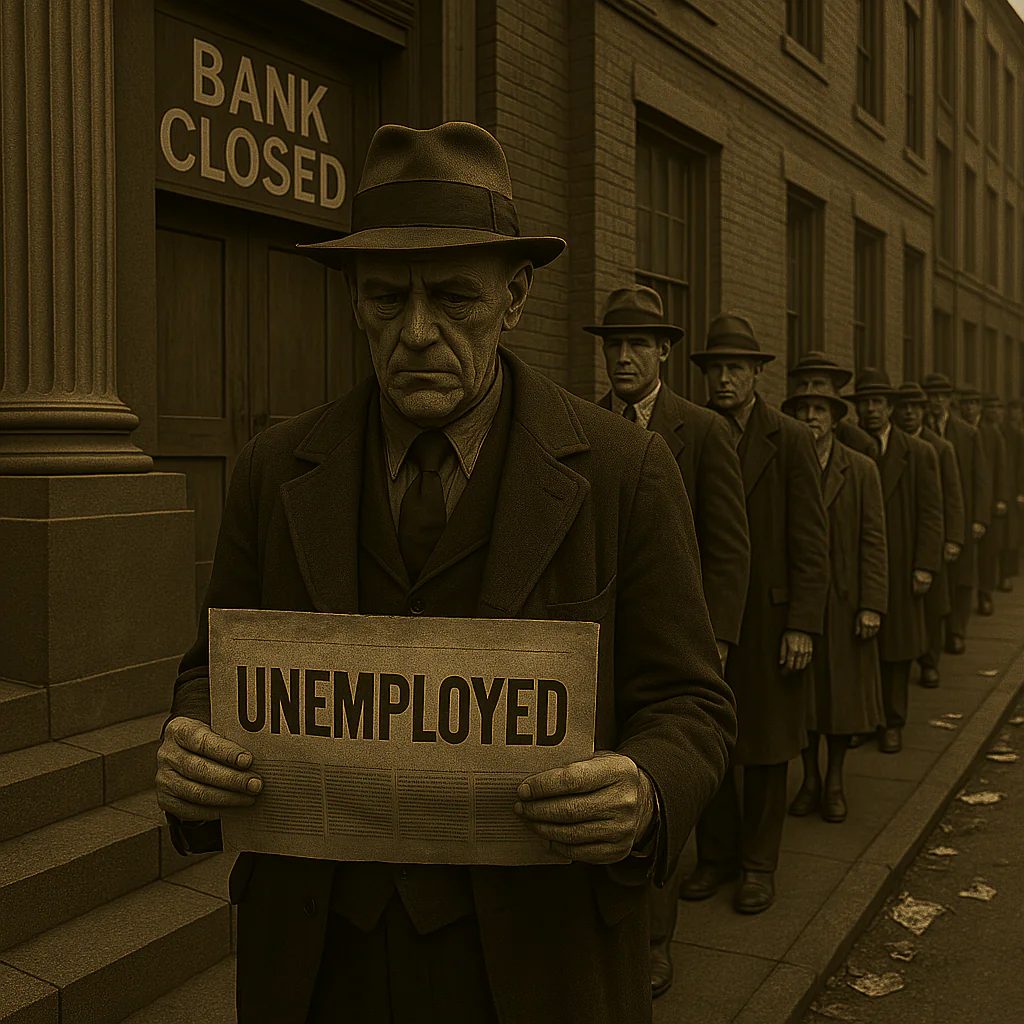
3. Collapse of the Banking System
- Thousands of banks went bankrupt due to massive losses in stock market investments.
- People rushed to withdraw their savings, causing widespread “bank runs.”
- By 1933, nearly 9,000 banks had closed in the United States.
4. Fall in Trade and Exports
- International trade shrank by nearly 70%.
- Countries adopted protectionist policies and raised import–export tariffs.
- Global supply chains broke down and cross-border commerce nearly collapsed.
5. Impact on Agriculture
- Crop prices fell sharply, causing heavy losses for farmers.
- The U.S. region known as the “Dust Bowl” faced severe natural disasters that worsened conditions.
- Farmers failed to repay loans, and many agricultural lands were auctioned off.

Awesome Amazon Product
Buy on Amazon6. Halt in Investment and Capital Flow
- Private companies became afraid to invest.
- Massive stock market losses led people to withdraw capital from markets.
- New businesses stopped emerging, and entrepreneurship declined.
7. Deflation in Many Countries
Several economies experienced deflation—continuous reduction in the prices of goods and services. Falling prices led to reduced production, wage cuts, and further job losses.
8. Fall in Government Revenues
- With fewer businesses, reduced taxes, and lower production, government income fell sharply.
- Many governments cut public spending, which further increased unemployment and slowed recovery.
Summary
During the Great Depression, the global economy came to a standstill. It was an “economic tsunami” that devastated banks, industries, farmers, and workers alike. The crisis exposed the weaknesses of capitalist systems and taught governments that active economic intervention is essential for long-term stability.
(iii) Impact of The Great Depression on India, 1929
Although the Great Depression began in the United States and Europe, its effects were deeply felt in India as well. At that time, India was under British colonial rule, and its economy depended heavily on agriculture and the export of raw materials. The collapse of international trade, combined with harsh colonial policies, pushed farmers, workers, and the middle class into severe hardship.
1. Impact on Agriculture
- A majority of India’s population relied on agriculture.
- Prices of key crops—such as wheat, cotton, and jute—fell drastically in global markets.
- The British government continued collecting taxes at old rates, increasing farmers’ suffering.
Example
The price of cotton fell from around ₹350 per candy in 1929 to nearly ₹150 by 1931.
2. Farmer Debt and Starvation
- With falling crop prices and compulsory taxes, farmers borrowed heavily from moneylenders.
- As crops could not be sold profitably, loan repayment became impossible.
- Many farmers lost their land and starvation became widespread in several regions.
3. Impact on Industry and Trade
- Exports of jute, textiles, and other Indian products declined sharply.
- Foreign orders were canceled, leading to factory closures or reduced production.
- Urban unemployment rose, and wages were cut for many workers.
4. Decline in Merchant Activity and Capital Investment
- Foreign capital inflow slowed, halting new projects.
- Banks reduced lending, and traders suffered heavy losses.
5. Growth of Rural Discontent and Movements
- Economic stress led to increasing dissatisfaction in rural areas.
- Tax-relief protests and resistance movements grew stronger (e.g., the Bardoli Satyagraha of 1928).
- Farmer movements and localized revolts became more common.
6. Strengthening of the Freedom Movement
- British economic policies appeared unjust to the Indian people.
- Mahatma Gandhi’s Civil Disobedience Movement (1930) gained mass support.
- Boycott of foreign goods and promotion of local industries intensified.
7. Impact on Middle Class and Salaried Groups
- Salaried employees faced wage cuts or job losses.
- Falling property values wiped out the financial security of middle-class families.
Summary
The Great Depression shook India economically, socially, and politically. An agriculture-dependent economy could not withstand the global crisis, and colonial policies worsened conditions. The experience strengthened public belief that only self-rule (Swaraj) could solve India’s problems and gave powerful momentum to the national freedom struggle.
4. Government Responses to The Great Depression, 1929
The severity of the Great Depression forced governments worldwide to rethink their economic policies. Governments that previously believed in minimal market intervention began adopting active roles in economic recovery. Although responses varied across nations, the most notable and influential measures came from the United States through the New Deal.
(i) United States Response — The “New Deal” Policy
1. Leadership of Franklin D. Roosevelt
In 1933, Franklin D. Roosevelt (FDR) became the President of the United States. He introduced a series of reform programs known as the “New Deal” to combat the Depression.

Awesome Amazon Product
Buy on Amazon2. Main Objectives of the New Deal
- Relief: Immediate help for the unemployed and the poor.
- Recovery: Revival of industries, banks, and businesses.
- Reform: Long-term structural reforms to prevent future depressions.
3. Key Programs and Agencies
| Program / Institution | Objective |
|---|---|
| CCC (Civilian Conservation Corps) | Provided employment to youth in environmental and conservation projects. |
| WPA (Works Progress Administration) | Created millions of jobs through public construction projects. |
| NRA (National Recovery Administration) | Improved labor conditions and encouraged fair work practices. |
| AAA (Agricultural Adjustment Act) | Controlled agricultural production and stabilized crop prices. |
| Social Security Act (1935) | Provided security for the elderly, disabled, and unemployed. |
| FDIC (Federal Deposit Insurance Corporation) | Guaranteed public deposits in banks to restore confidence. |
4. Results of the New Deal
- The New Deal provided significant relief and revived confidence.
- The Depression did not end completely, but foundations for social security and modern economic planning were established.
(ii) Britain’s Response
- Britain abandoned the Gold Standard in 1931 to expand currency supply.
- Government expenditures were reduced (though this increased unemployment).
- Trade was expanded with “Sterling Bloc” nations like India, Australia, and Canada.
- Gradually adopted Keynesian policies to stimulate economic demand.
(iii) Germany’s Response
- Economic hardship contributed to Hitler’s rise to power in 1933.
- The Nazi regime implemented a state-controlled economy.
- Massive spending on military, autobahns, and war industries created employment.
(iv) British Government Response in India
- The British continued strict revenue collection despite widespread rural distress.
- No substantial relief policies—such as tax cuts or food support—were implemented.
- Public dissatisfaction grew, fueling the freedom movement.
(v) Shift in Global Economic Thinking
- The idea of “laissez-faire” (minimal government interference) weakened.
- Governments began playing an active role in stabilizing economies.
- Keynesian economics gained popularity, emphasizing increased public spending during unemployment.
Conclusion
The Great Depression taught governments that leaving the economy entirely to the market could be dangerous. This crisis led to the rise of welfare states, mixed economies, and social security systems. It also laid the foundation for new global financial structures such as the IMF and World Bank.
Awesome Amazon Product
Buy on AmazonReferences
- Galbraith, John Kenneth. The Great Crash 1929. Penguin Books, 1955.
- Kindleberger, Charles P. The World in Depression, 1929–1939. University of California Press, 1973.
- Bernanke, Ben S. "The Macroeconomics of the Great Depression." Princeton University, 1983.
- Maddison, Angus. Historical Statistics of the World Economy. OECD, 2003.
- U.S. National Archives — Stock Market Crash of 1929 (Official Records).
- International Monetary Fund (IMF) — History and Articles of Agreement.
- World Bank — Global Economic History & Post-Depression Reconstruction Data.
- Reserve Bank of India — Reports on Indian Economic Conditions (1920–1940).
- NCERT — Modern World History: The Great Depression.