Rivers of India: Types, Classification and Their Importance
The civilization of India developed along the banks of rivers. From ancient times to the modern era, rivers have remained the lifeline of Indian society. Rivers are not only sources of water, but also form the foundation of agriculture, industry, transportation, energy production, and cultural traditions.
Rivers have also played an important role in my own life. As a child, standing for the first time on the bank of a river and watching its continuous flow was a memorable experience. At that moment, I realized that rivers are not just geographical features, but powerful forces that shape human life.
In this article, we will explore the types of rivers in India, their classification, characteristics, and their importance in national life, so that we can become more aware of the need for their conservation and sustainable use.
Importance of Rivers in India
Rivers of India are the backbone of the nation’s social, economic, and cultural life. Since ancient times, rivers of India have played a vital role in the growth of civilization. Rivers of India are not only sources of water, but also support agriculture, industry, transportation, and energy production.
Rivers of India provide the most reliable source of drinking water. A large part of both rural and urban water supply depends on rivers of India. Moreover, rivers of India help in irrigation, which increases agricultural productivity and strengthens national food security.
Rivers of India are extremely important for hydropower generation. Many dams and hydroelectric projects have been built on rivers of India to produce clean and renewable energy. In addition, rivers of India support industrial growth by supplying water for various processes.
Top Amazon Product
A premium product offering dependable performance and everyday usability. Designed for quality and trusted satisfaction, this item gives excellent value and reliable results.
Check Price on AmazonFrom a transportation point of view, rivers of India have been used as trade routes since ancient times. Even today, in several regions, rivers of India serve as economical and effective means of transport.
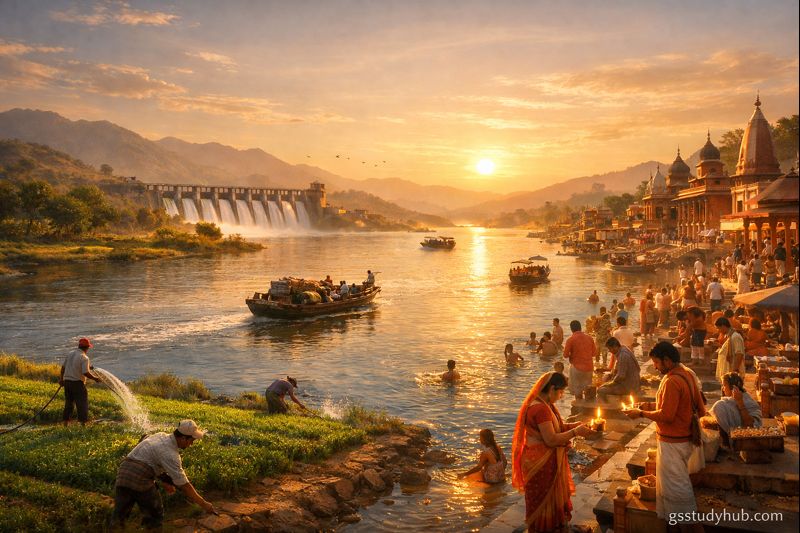
Rivers of India also hold immense cultural and religious significance. They are considered sacred, and many religious rituals, fairs, and festivals are organized along the banks of rivers of India. Thus, rivers of India represent the living heritage of Indian culture and traditions.
Therefore, it is clear that rivers of India are not merely natural water streams, but the lifelines of the nation. Conservation and sustainable use of rivers of India are essential for a secure and prosperous future.
Classification of Rivers in India
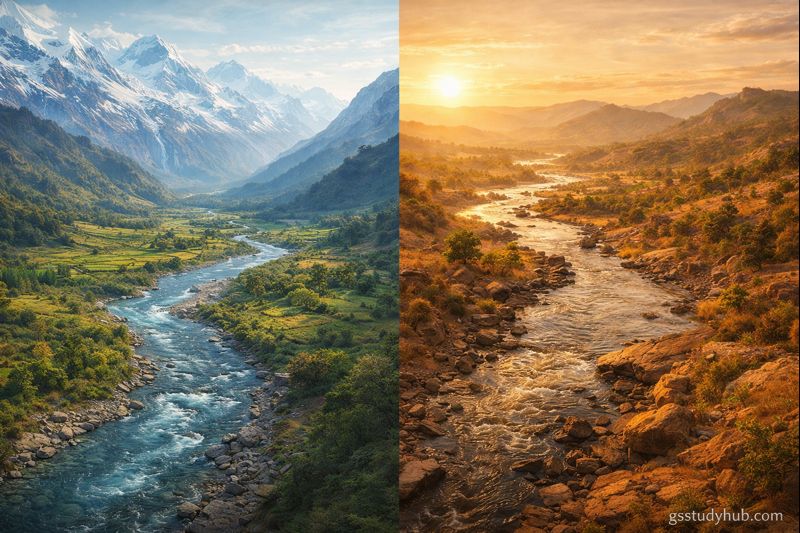
Rivers in India are classified on the basis of their origin, flow pattern, geographical conditions, and availability of water. This classification helps us understand the nature, usefulness, and importance of different rivers. Broadly, rivers of India are divided into two major categories – Himalayan Rivers and Peninsular Rivers.
Himalayan Rivers
Himalayan rivers are the most important and water-rich rivers of India. They originate from glaciers in the Himalayan mountain range, which is why they carry water throughout the year. These rivers form vast river systems and make the northern plains highly fertile.
Features of Himalayan Rivers
- They are perennial in nature and flow throughout the year.
- They originate from glaciers and snowfields.
- They are long in length and have many tributaries.
- They deposit fertile alluvial soil in the plains.
- They are extremely useful for agriculture, drinking water, and hydropower generation.
Major Himalayan Rivers
- Ganga
- Yamuna
- Brahmaputra
- Indus
Peninsular Rivers
Peninsular rivers are found mainly in central and southern India. They originate largely from the Vindhya, Satpura, and Western Ghats mountain ranges. Most peninsular rivers depend on monsoon rainfall for their flow.
Features of Peninsular Rivers
- They are mostly seasonal in nature.
- They are shorter than Himalayan rivers.
- They follow relatively fixed courses.
- They flow over hard and rocky plateaus.
- They play an important role in regional agriculture and water supply.
Major Peninsular Rivers
- Godavari
- Krishna
- Kaveri
- Narmada
- Tapi
- Mahanadi
Classification of Rivers Based on Flow
Rivers can also be classified according to the nature of their water flow. This classification helps us understand which rivers carry water throughout the year and which rivers remain active mainly during the rainy season. In India, rivers are broadly divided into two categories based on flow – Perennial Rivers and Seasonal Rivers.
Perennial Rivers
Perennial rivers are those rivers that have continuous flow throughout the year. The main sources of water for these rivers are melting glaciers and regular rainfall. Most Himalayan rivers fall under the category of perennial rivers.
These rivers are extremely important because they provide a reliable source of water for drinking, irrigation, hydropower generation, and industrial use. Rivers such as the Ganga, Yamuna, Brahmaputra, and Indus are major examples of perennial rivers.
Seasonal Rivers
Seasonal rivers are those rivers whose flow depends mainly on rainfall. They carry significant water during the monsoon season, but during the summer months their flow reduces greatly or they may even dry up.
Most peninsular rivers in India are seasonal in nature and depend on monsoon rainfall. Rivers such as the Luni, Sabarmati, Ghaggar, and many smaller rivers are examples of seasonal rivers.
Although seasonal rivers have limited water flow, they still play an important role in local irrigation, groundwater recharge, and rainwater harvesting.
River System
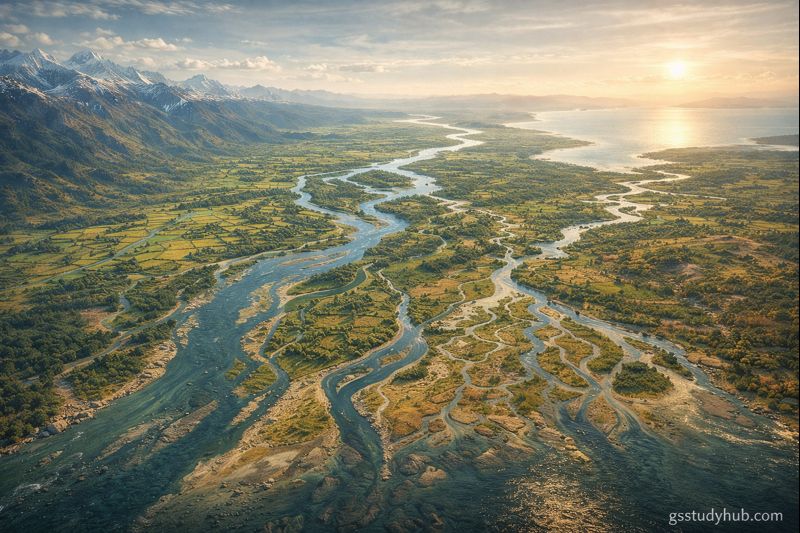
A river system refers to a main river along with all its tributaries, which together form an extensive drainage network. Each river system has a defined drainage basin where rainwater is collected and carried by the main river and its tributaries toward the sea or a large water body.
India has several large and well-developed river systems, such as the Ganga River System, Brahmaputra River System, Indus River System, Godavari River System, Krishna River System, Kaveri River System, and Narmada River System. These river systems supply water to vast areas and are extremely important for agriculture, industry, and human settlements.
River systems also help in understanding the geographical structure of a region. In mountainous areas, rivers flow swiftly and carve deep valleys, whereas in plains, rivers flow slowly and form wide floodplains and fertile soils.
The environmental importance of river systems is equally significant. They support biodiversity by providing natural habitats for various plants and animals. In addition, river systems play a key role in groundwater recharge and in maintaining the balance of the hydrological cycle.
Thus, river systems form the backbone of a country’s water resources. The river systems of India are essential for the nation’s overall development and sustainable progress.
Cultural and Religious Significance
Rivers of India are not merely natural water streams, but the soul of Indian culture and spiritual traditions. Since ancient times, rivers have been regarded as life-giving and sacred. In Indian society, rivers are often worshipped as mother figures and are lovingly referred to as “Mother Rivers.”
Many ancient religious texts, including the Vedas, Upanishads, and Puranas, contain references to rivers. Rivers such as the Ganga, Yamuna, Saraswati, Narmada, Kaveri, and Godavari are considered especially holy. It is believed that bathing in these rivers washes away sins and brings spiritual purification.
Most religious rituals and ceremonies in India are performed using river water. From birth to death, several Hindu sacraments involve the use of sacred river water. Practices such as immersion of ashes, ancestral rites, and offerings are commonly carried out on riverbanks.
Many famous pilgrimage centers, temples, and ashrams are located along the banks of rivers, attracting millions of devotees every year. Festivals and events such as the Kumbh Mela, Ganga Dussehra, Chhath Puja, and the Narmada Parikrama are deeply connected with rivers.
Thus, rivers of India guide not only the physical life of people but also their spiritual journey. Protecting rivers is therefore equal to preserving India’s rich cultural and religious heritage.
Featured Amazon Product
A high-quality and dependable product offering reliable performance and everyday usability. Great choice for users seeking quality, durability, and trusted Amazon satisfaction.
Check Price on AmazonEconomic Importance
Rivers of India play a vital role in strengthening the nation’s economy. From ancient times to the modern era, rivers have supported economic growth through agriculture, industry, trade, and energy production. Millions of people depend directly or indirectly on rivers for their livelihoods.
In the agricultural sector, rivers are extremely important. Water from rivers is widely used for irrigation, which increases crop productivity and helps ensure food security. Many of India’s fertile plains have been formed by alluvial soil deposited by rivers, making these regions highly suitable for farming.
Rivers are also a major source of hydropower. Numerous dams and hydroelectric projects have been constructed on rivers to generate clean and renewable energy. This supports industrial development and helps meet the growing demand for electricity.
Industries depend heavily on rivers for water required in processing, cooling, and manufacturing activities. As a result, many industrial centers have developed along river banks.
In addition, rivers serve as an economical and efficient means of inland water transport. In certain regions, goods and passengers are transported through waterways, which reduces transportation costs and promotes trade.
Thus, rivers of India support almost every sector of the economy and play a crucial role in the overall development of the country.
My Personal Learning and Experience (Storytelling Section)
My relationship with rivers began in childhood. A small river flowing near my village was not just a source of water for me, but a place of peace, play, and connection with nature. On my way back from school, I often stopped by its bank to watch the flowing water and wondered why the river never seemed to get tired.
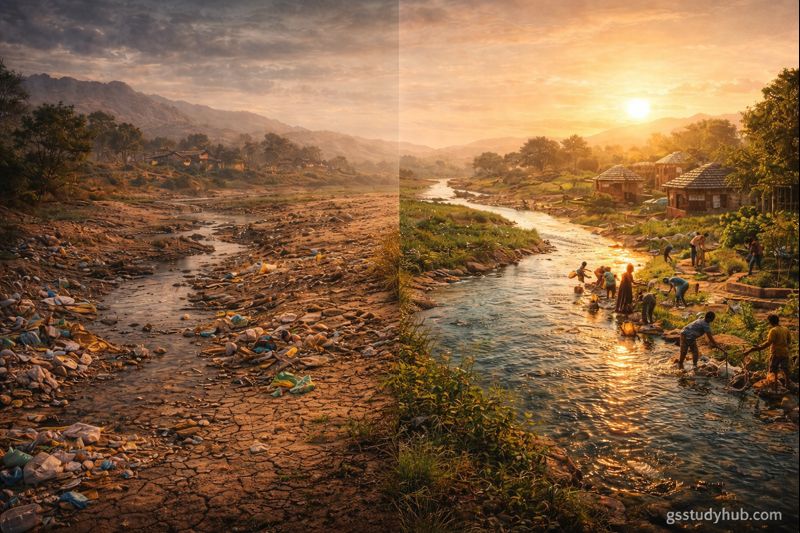
As time passed, I moved to the city for education and work. Many years later, when I returned to my village and visited the same river, the scene was completely different. Where clear water once flowed, there was now dry sand and cracked soil. That moment deeply shocked me.
On that day, I realized for the first time that the water crisis is not a distant problem, but a reality happening around us. When I saw the river drying up, I understood that water conservation is not only the responsibility of the government, but the responsibility of every individual.
This experience changed my way of thinking. I began to save water in my daily life, understood the importance of rainwater harvesting, and started encouraging others to do the same.
Now, whenever I look at a river, I remember that experience. I no longer see a river merely as a natural resource, but as a priceless heritage for future generations.
My personal learning is simple: if we respect and protect our rivers today, we can build a safe and prosperous future for tomorrow.
Current Challenges and Solutions
Today, rivers of India are facing several serious challenges. Rapid population growth, industrialization, urbanization, and climate change have put immense pressure on river systems. As a result, many rivers have become polluted and their natural flow has been disturbed.
River pollution is one of the most critical problems. Domestic sewage, industrial effluents, plastic waste, and harmful chemicals are discharged directly into rivers, which severely degrades water quality. This not only affects human health but also threatens the survival of aquatic life.
Unplanned dam construction and excessive human interference in river courses have damaged natural ecosystems. In addition, illegal sand mining and deforestation have weakened river catchment areas, increasing the risk of floods and droughts.
To overcome these challenges, strong and coordinated efforts are required. Strict control must be imposed on sources of pollution, and effective wastewater treatment systems should be implemented.
Promoting water conservation through rainwater harvesting, water recycling, and efficient use of water is essential. At the same time, public awareness campaigns should be conducted to educate people about the importance of rivers and the need for their protection.
If the government, communities, and individuals work together, it is possible to restore and protect our rivers. Conservation of rivers is the key to sustainable development and a secure future.
Conclusion
Rivers of India are not just streams of water, but the lifelines of the nation’s civilization, culture, economy, and environment. From ancient times to the present, India’s development has remained closely connected with its rivers.
The classification of rivers into Himalayan and Peninsular types helps us understand their nature, characteristics, and usefulness. Similarly, classifying rivers based on their flow provides a scientific basis for effective water resource management.
Today, rivers are facing serious challenges such as pollution, overexploitation, and climate change. If timely and concrete steps are not taken for their conservation, the problem of water scarcity may become more severe in the future.
Therefore, it is our collective responsibility to keep rivers clean, use water wisely, and actively participate in conservation efforts.
Only by protecting our rivers can we safeguard our environment, preserve our cultural heritage, and ensure a secure future for coming generations.
Frequently Asked Questions (FAQ)
How many major rivers are there in India?
India has hundreds of rivers, out of which about 12 major river systems are recognized. These include the Ganga, Brahmaputra, Indus, Godavari, Krishna, Narmada, Kaveri, and Mahanadi.
Which is the longest river in India?
The Ganga is the longest and most important river in India. It originates from the Gangotri Glacier and flows into the Bay of Bengal.
Why are Himalayan rivers perennial?
Himalayan rivers originate from glaciers and receive water from both glacial melt and rainfall. Therefore, they flow throughout the year.
Why are most peninsular rivers seasonal?
Most peninsular rivers depend mainly on monsoon rainfall. During the dry season, their water flow decreases significantly.
Why is river conservation important?
Rivers are essential for drinking water, agriculture, energy production, and biodiversity. Conserving rivers helps reduce water scarcity and ensures water availability for future generations.
Which rivers in India flow westward?
Rivers such as the Narmada, Tapi, Mahi, and Periyar flow westward and drain into the Arabian Sea.
References
- Ministry of Jal Shakti, Government of India – Official portal for water resources, river basins, and river management in India.
- Central Water Commission (CWC), Government of India – Reports and statistical data on river systems, water flow, and river basin planning.
- NCERT Geography Textbooks (Classes VI–XII) – Physical Geography of India and Drainage System chapters.
- India Year Book – Government of India publication on water resources and environmental statistics.
- UNESCO – Publications on water resources, river basin management, and sustainable development.
- World Bank Reports – Studies on water resource management and river conservation in India.
- Encyclopaedia Britannica – Articles on major rivers of India and river systems.
- National Geographic – Features on rivers, hydrology, and environmental conservation.
- Research journals and academic papers related to hydrology, river ecology, and sustainable water management.
Featured Amazon Product
A reliable and well-built product offering excellent everyday performance and usability. Perfect for users seeking quality, durability, and trusted satisfaction with Amazon-backed support.
Check Price on Amazon