

What Is Religion

Religion: Meaning, Principles, Objectives and Modern Understanding

Religion: Meaning, Principles, Objectives and Modern Understanding

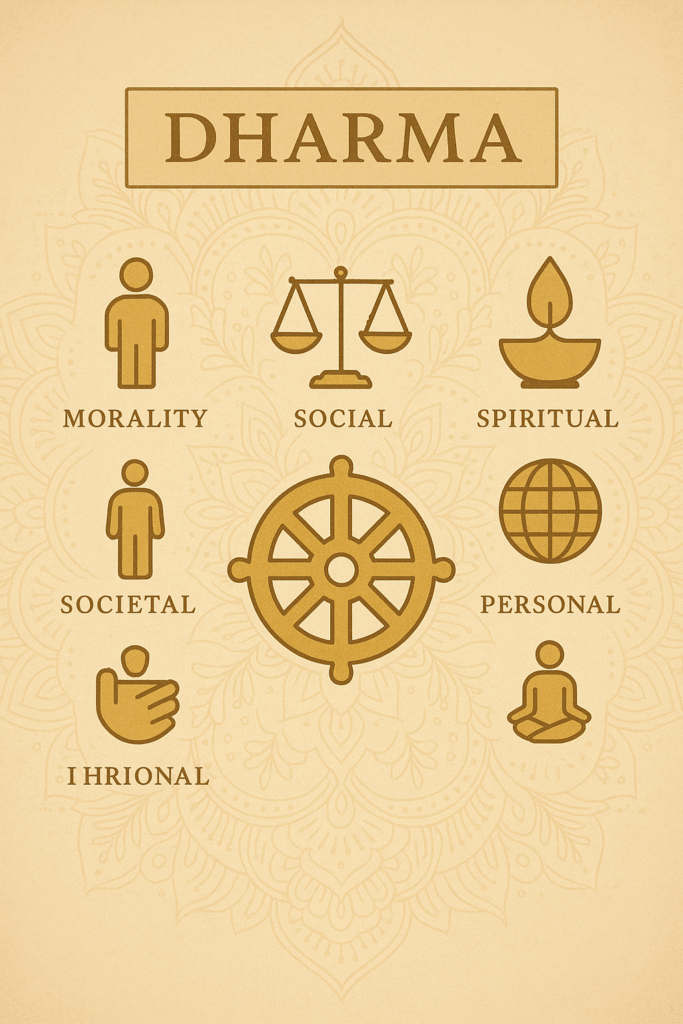
“Religion” is a very esoteric and multifunctional word whose meaning is not limited to just the term “religion.” It originates from the Sanskrit root “dhṛ,” which means “to hold” or “to sustain.” Thus, the original essence of religion is that which holds life and society together, creating stability and balance.

1. Various Meanings of Religion

ApproachMeaning of Religion
PhilosophicalA moral and spiritual path of life
SocialA system of rules, duties, and behaviour
ReligiousFaith in God, worship, scriptures
PersonalValues like truth, non-violence, compassion, restraint

2. Difference Between Religion and Denomination

Religion

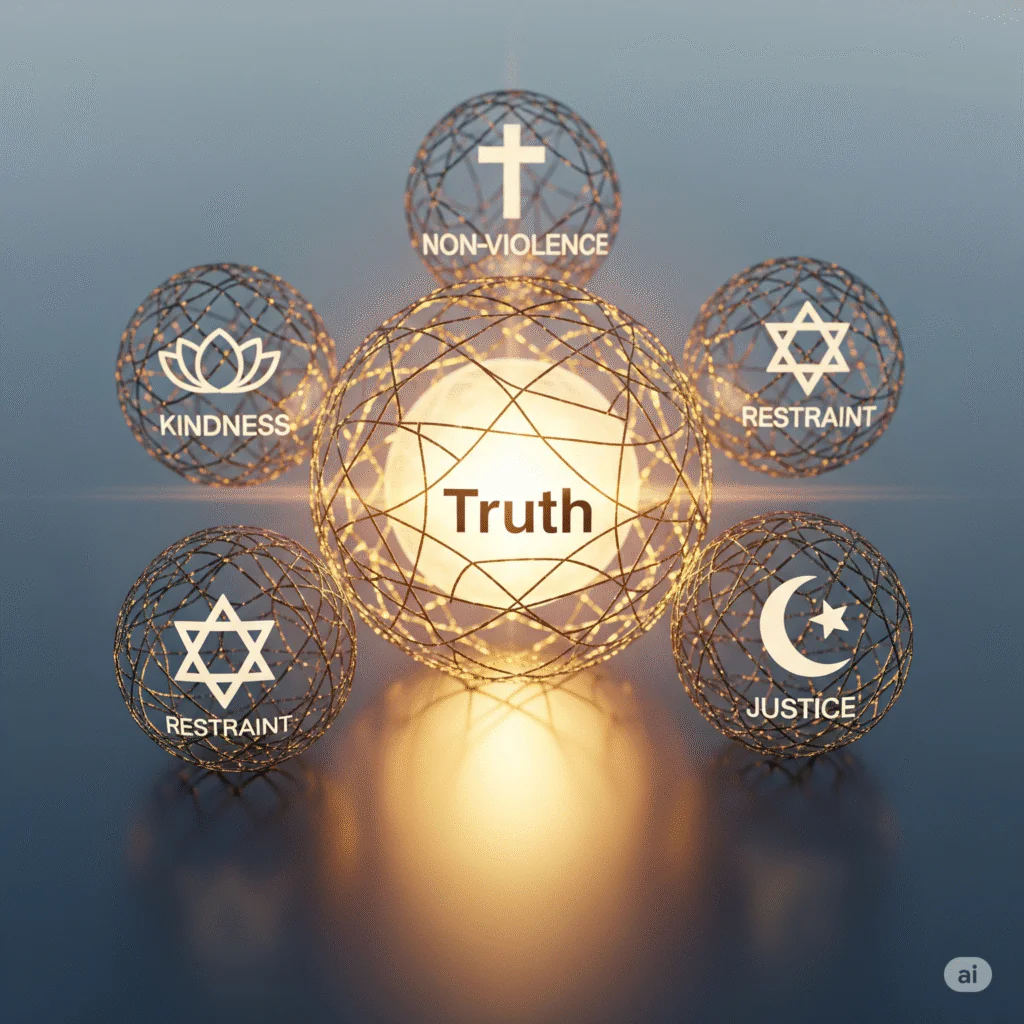
Religion is based on universal and widespread principles such as truth, non-violence, love, and kindness.

Denomination

A denomination refers to a specific belief system, tradition, or method of worship such as Hinduism, Islam, or Christianity.

Example

A person’s religion may be truthfulness, while his denomination may be Hindu, Muslim, or Christian.

3. Fundamental Principles of Religion

According to the Hindu tradition, the four main pillars of religion are:

  • Satya – Speaking the truth and following it.
  • Ahimsa – Not causing physical or mental harm to anyone.
  • Asteya – Not stealing.
  • Sauch (Purity) – Maintaining internal and external cleanliness.

4. Objectives of Religion

  • Creating balance in personal and social life
  • Establishing ethical rules and behavioural conduct
  • Providing a path for spiritual growth and salvation

5. Religion in the Modern Context

Today, religion is not only a spiritual subject; it also influences politics, culture, and social life. However, the true objective of religion is not division but unity, compassion, and service to humanity.

Conclusion

Religion is not limited to prayers or scriptures. It is a living guide that helps humans realize truth, compassion, and duty. True religion is that which promotes the welfare of all beings.


1. Religion and Its Various Meanings (Expanded Explanation)

Your question about “various meanings of religion” is very important. Below is a clear explanation of religion at different levels and contexts:

🕉️ Religion in Different Contexts

OrderReferenceMeaning of ReligionExample
1Linguistic / EtymologicalAn element that sustains or holdsThat which sustains life, society, and the universe
2Moral / PersonalDuty, morality, ethicsSpeaking truth, serving others
3Spiritual / PhilosophicalNatural property or temperament of the soul“Agne: Dharma: Dahakta” – The religion of fire is to burn
4SocialRules and responsibilities in societyThe father’s religion is to raise his children
5Political / GovernmentalJustice and duty to govern“Rajdharma” – The king’s duty to govern impartially
6ReligiousSystem of worship and beliefHindu religion, Islam, Christianity, etc.
7Scientific (Natural)Inherent natural propertiesThe religion of water is coolness and flow
8TheologicalVarna, Ashrama, life dutiesBrahmacharya, Grihastha, Vanaprastha, Sannyasa

📘 Examples for Better Understanding

  • The religion of a mother: Serving and nurturing her children
  • The religion of the sun: Giving light and energy
  • The religion of humans: Practicing humanity, compassion, and cooperation

🧘‍♂️ Indian Understanding of Religion

According to Indian scriptures, the main objective of religion is explained as:

“Dharmo Rakshati Rakshitah”
(One who protects religion is protected by religion.)

Final Conclusion

Religion is not merely prayer or observance of denominations. It is a complete system that keeps life organized, balanced, and meaningful. It encompasses everything—from personal behaviour to cosmic principles.

Religion vs Denomination — Meaning, Principles & Original Dharma

Religion and Denomination — Difference, Principles and Original Dharma

Question: “What is the difference between religion and denomination?” These two words are often used interchangeably, but they differ in meaning, origin and scope. Below is a clear, structured and SEO-friendly explanation that preserves the original ideas while improving clarity and grammar.

1. Difference Between Religion and Denomination

Although the terms are sometimes used as synonyms, they have distinct roots and connotations. The table below summarizes the main differences.

CriteriaReligionDenomination (Mazhab)
EtymologySanskrit root dhṛ — meaning “to hold” or “to sustain”.Arabic root often associated with the idea of a path or way (examples vary by language and tradition).
MeaningUniversal moral, spiritual and life principles.A specific organized system of belief: God, prophet, scripture and rituals.
ScopeComprehensive and universal in reach.Limited, community-specific and tradition-specific.
EmergenceOften rooted in ancient philosophical or Vedic ideas (contextual).Often arises from particular historical traditions — e.g., Abrahamic traditions (Islam, Christianity, Judaism) or others.
TargetSoul’s growth and social harmony.Worship of God, obedience to religious duties and communal practice.
FormEthics, truth, compassion and duty.Scriptures, rituals, traditions and customs specific to the community.
ExamplePracticing truthfulness, non-violence and service.Islam, Christianity, Hinduism, Buddhism, Jainism (as organized traditions/denominations).

In simple language

Religion is a global set of life values — truth, kindness, non-violence, restraint, justice, etc. A denomination is a specific religious arrangement that includes God, prophets, scripture, rituals and traditions.

Example to clarify

  • Speaking truth, caring for elders and living honestly — these belong to the universal idea of religion.
  • Praying in a specific way, reading the Christian Bible, or visiting a Hindu temple — these are practices of a denomination.

Conclusion: Religion is the foundation based on humanity and universal values, while a denomination is one specific institutional or traditional expression of those values. Many denominations can be inspired by the same universal religion.


2. Why Understanding the Original Principles of Religion Is Important

To understand religion deeply, we must look beyond ritualism. Religion at its core is a moral and spiritual way of life built on universal principles that many religions and denominations share.

🌼 Fundamental Principles of Original Dharma (Core Principles)

  1. Truth (Satya)

    Every authentic religion emphasizes speaking the truth and living according to truth. As the Indian phrase says: “Satyameva Jayate” — truth alone triumphs.

  2. Non-violence (Ahimsa)

    Do not cause physical, mental or emotional harm to any living being. Ahimsa is central to Jain and Buddhist ethics and a core virtue across many traditions.

  3. Patience and Forgiveness

    Religion teaches us to move away from anger, hatred and revenge. Forgiveness purifies the soul and strengthens moral character.

  4. Kindness, Compassion and Mercy

    Treat all living beings with love, kindness and compassion. The ideal “Vasudhaiva Kutumbakam” means the entire world is one family.

  5. Svadharma — Duty & Responsibility

    Each person has duties toward family, society and the soul. For example, a father’s dharma is to care for his children; a teacher’s dharma is to impart knowledge.

  6. Self-control

    Control the senses, curb greed, and avoid unchecked desire. The Bhagavad-Gita teaches “Yogastha kuru karmani” — act with a steady mind.

  7. Cleanliness and Purity (Sauch)

    Inner and outer purity of body, thought and action is essential for spiritual practice — for meditation, penance and sadhana.

  8. Equality and Justice

    See all human beings with equal vision; behavior should rise above caste, creed or sectarian divisions.

Manusmriti's summary of religious qualities

The Manusmriti and other classical texts list key virtues (often summarized as ten signs of dharma): patience, forgiveness, self-control, avoidance of theft, purity, restraint of the senses, wisdom, knowledge, truth and absence of anger.

3. Final Conclusion

Original religious principles guide personal excellence, spiritual development and social harmony. Religion is not merely a set of rituals; it is a moral lifestyle that inspires a person to become their best self — to rise toward higher humanity.


Quick summary (bullet points)

  • Religion = universal values and life principles (truth, compassion, duty).
  • Denomination = specific organized tradition with its own scripture, rituals and practices.
  • Core dharma principles are shared across many religions and form the ethical foundation of a healthy society.

Key idea: Many denominations exist, but true religion is the larger, universal set of values that nurtures humanity.

If you would like, I can now convert this version into: (a) a Hindi translation, (b) an SEO-optimized article with focus keywords and headings for your CMS, or (c) structured FAQ schema (JSON-LD) to add to your page. Tell me which option you prefer and I'll generate it directly in HTML format.

Objectives of Religion and Its Modern Context
Religion: Objectives and Modern Context

Objectives of Religion and Its Modern Context

Understanding the purpose of religion is essential for grasping its depth and utility. Religion is not merely a system of worship—it is a guiding force whose objective is connected with the welfare of both individuals and society.

4. Objectives of Religion

The objectives of religion are multi-functional and operate at three levels: personal, social and spiritual.

🧘‍♂️ 1. Objectives at the Personal Level

ObjectiveDescription
Moral GuidanceTo embrace values like truth, non-violence, and self-restraint.
Spiritual PurificationTo free the soul from ego, greed and hatred and attain purity.
Sense of DutyTo fulfill responsibilities towards life, family and society.
Liberation (Moksha)To gain freedom from the cycle of rebirth and achieve divine union.

👨‍👩‍👧‍👦 2. Objectives at the Social Level

ObjectiveDescription
Social Order and BalanceTo identify duties of all individuals and maintain harmony.
Collective WelfareTo work for the well-being of all living beings.
Justice and EqualityTo promote fairness and equality within society.
Development of HumanityTo inspire kindness, love and compassion among individuals.

🌌 3. Objectives at the Spiritual Level

ObjectiveDescription
Connection with the DivineTo experience God through devotion, meditation and worship.
Living According to DharmaTo develop the soul by following righteous principles.
Spiritual KnowledgeTo seek answers to deeper questions such as “Who am I?”.

Classical Citations

“Dharmo Rakshati Rakshitah”
He who protects religion is protected by religion.

“Sarve Bhavantu Sukhinah”
The objective of religion is that all beings may be happy.

Conclusion

The objective of religion is not limited to devotion or rituals. It guides individuals and society towards morality, balance and liberation. Religion provides a pathway to make life meaningful, disciplined and dedicated.


Modern Reference in Religion

To understand the role of religion in today’s social, political and global environment, it is important to examine religion in the modern context.

🌐 A. The Present Role of Religion

AreaRole of Religion
Personal LifeProvides moral direction, mental peace and spiritual support.
Social LifeEstablishes values and strengthens community bonds.
Political SphereSometimes positive (public welfare), sometimes controversial (polarization).
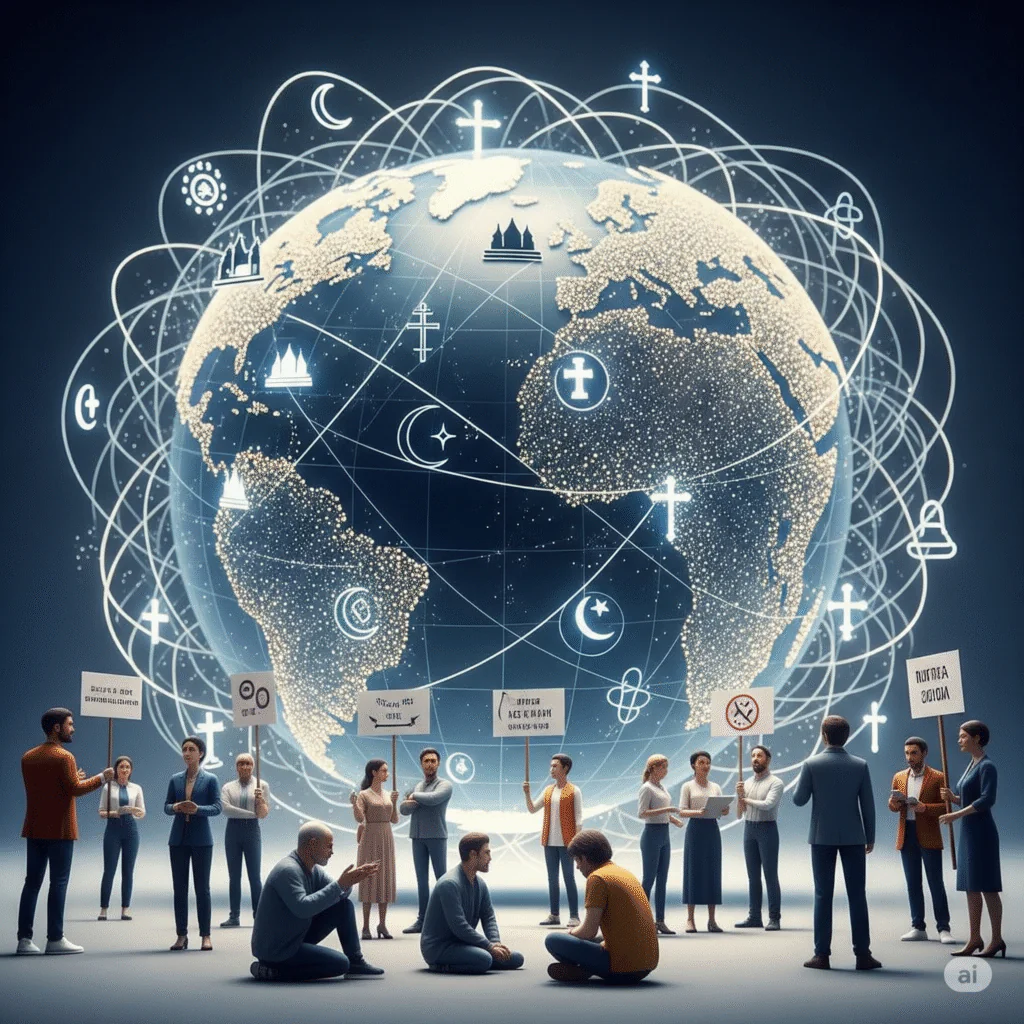
Global LevelActs as a bridge for peace dialogue; at times can also become a source of conflict.

🧘‍♂️ B. Positive Role of Religion

  • Mental and Spiritual Balance: Through meditation, prayer and spiritual practices, religion provides calmness in today’s stressful life.
  • Moral Values: Religion strengthens qualities like truth, compassion, service and cooperation.
  • Service to Society: Many religious institutions contribute to education, healthcare and disaster relief.
  • Environmental Respect: Religion promotes care for nature and compassion for all living beings.

⚠️ C. Challenges in the Modern Era

ChallengeDescription
Religious FanaticismThe misuse of religion for spreading hatred or violence.
Political Exploitation of ReligionUsing religion for votes or power gains.
CommunalismDividing society based on denominations and labels.
Religion vs ScienceOccasional clashes between scientific thinking and certain beliefs.

🧩 D. Coordination Between Religion and Science

The modern world needs a balance where religion guides ethics and values, while science leads progress and logic. They are not opposites but complementary when understood correctly.

💡 E. What Is True Religion Today?

Mahatma Gandhi said:

“True religion is that which connects humanity, not divides it.”

Meaning: Religion today should create good human beings, strengthen society and promote compassion for all living beings.

Conclusion

In the modern context, religion is not merely a worship system. It is a force for humanity, morality and universal unity. Today’s religion must inspire inclusion rather than division and contribute to building a better, peaceful world.
Dharma A Universal Principle
Dharma – A Universal Principle: Conclusion & References

Conclusion: Dharma – A Universal Principle

Dharma is not a narrow religious definition. It is a moral, social and spiritual framework that guides human life. It is not limited to worship, rituals or religious identity; rather, it is based on values such as truth, compassion, justice, duty and service.

Main Conclusion Points

  • Religion is not merely a denomination—it is a moral and spiritual guide for life.
  • Religion and denomination differ: religion is universal and comprehensive, while denomination is a specific form or expression of it.
  • Fundamental principles of religion—truth, non-violence, forgiveness, self-restraint—remain relevant in every era and society.
  • The objective of religion is not only divine attainment but the welfare of both society and the soul.
  • In the modern world, religion must harmonize with scientific thinking, promote social unity, and strengthen humanity.

Ending Thought

“Truthful religion is that which works for the welfare of all living beings.”

This approach is the greatest need of religion in today’s world.


References

Vedas and Upanishads

  • Rigveda, Yajurveda, Samaveda, Atharvaveda
  • Kathopanishad, Ishopanishad, Chandogya Upanishad

Mahabharata and Bhagavad Gita

  • Vyasa, Mahabharata – Shanti Parva
  • Bhagavad Gita (especially Chapters 2, 3 and 18)

Manusmriti

  • Ten Characteristics of Dharma (Dharma-Lakshana)

Dharmasutras & Classical Texts

  • Gautama Dharmasutra
  • Apastamba Dharmasutra
  • Ancient Indian theological sources

Buddhist and Jain Literature

  • Tripitaka, Dhammapada
  • Acharanga Sutra, Tattvartha Sutra

Modern Thinkers

  • Mahatma Gandhi – Hind Swaraj
  • Swami Vivekananda – Complete Works of Swami Vivekananda

Educational Sources

  • Sharma, R.S. – History of Ancient India
  • Chatterjee, S.K. – The Concept of Dharma in Indian Philosophy
  • Encyclopaedia Britannica – “Dharma”

Leave a Comment

Your email address will not be published. Required fields are marked *

Scroll to Top