

Introduction
It was an ordinary morning in March 2020, yet nothing about the world felt ordinary anymore. Streets that once echoed with the sounds of daily life had fallen silent, hospitals were struggling to manage long queues of anxious patients, and people everywhere were searching for answers amid unprecedented uncertainty. In those moments, I realized that the pandemic was far more than a health crisis—it was a mirror reflecting the vulnerabilities of our global systems and the fragility of human life. COVID-19 showed us that despite technological progress and medical advancements, our world could still come to a halt because of a microscopic virus, exposing deep weaknesses in global health preparedness worldwide.
During those months, people were not only fighting the disease but also fear, isolation, unemployment, misinformation, and emotional exhaustion. Digital screens suddenly replaced classrooms, office spaces, and social gatherings. Scientists were racing to develop vaccines while ordinary families were struggling to cope with loss and unpredictability. For me, this period became a phase of deep introspection—a reminder of how delicate our lives are and how urgently our health systems require resilience, preparedness, and innovation to strengthen the future of global health systems.
As we step into the post-COVID-19 era, the world faces a new set of global health challenges. Hospital capacities, shortages in healthcare workers, mental health crises, inequities in vaccine distribution, gaps in emergency preparedness, and the looming threat of future pandemics—all these issues highlight that our existing structures are not equipped to handle crises of this scale. What we need now is a renewed vision, practical strategies, and stronger global collaboration to reshape the future of health.
Purpose of This Article
The aim of this article is to explore the major global health challenges that emerged after COVID-19, share the lessons we learned from this unprecedented crisis, and offer insights and solutions that can guide us toward a safer, healthier, and more resilient future. As you read further, you will discover the hidden weaknesses exposed by the pandemic, the opportunities we must leverage, and the actions necessary to prepare the world for the health emergencies of tomorrow.

Background: What the Pandemic Revealed
The first officially confirmed case of COVID-19 emerged in December 2019 in Wuhan, China (WHO Report, 2020). By January 2020, the World Health Organization (WHO) had declared it a “Public Health Emergency of International Concern,” and on March 11, 2020, it was officially recognized as a global pandemic. That moment marked a turning point when the world realized that this crisis was not limited to one nation—it was a challenge for all of humanity and a defining stress test for global health preparedness worldwide.
Between February and June 2020, the pandemic placed unprecedented pressure on health systems across the globe. Countries such as Italy, Spain, the United States, Brazil, and India saw their hospitals overwhelmed in just a few weeks. In the Lombardy region of Italy, ICU occupancy exceeded 95% in early April 2020 (The Lancet, 2020). India faced severe shortages of oxygen cylinders, ICU beds, essential medicines, and emergency transport during its second wave in April–May 2021.
The pandemic exposed deep inequalities in global health systems. Even in high-income countries with advanced medical infrastructure, shortages of ventilators, PPE kits, and trained medical staff became common. In low-income countries, the situation was even more fragile—primary health centers struggled due to inadequate oxygen supply, limited workforce, and inconsistent access to essential drugs. According to UN data, global PPE production dropped by nearly 60% during the first quarter of 2020 (UN Data, 2020).
Key Turning Points of the Pandemic
- December 2019: First detected case of COVID-19.
- January 2020: WHO declares a global health emergency.
- March 2020: COVID-19 declared a global pandemic; worldwide lockdowns begin.
- June 2020: Global cases surpass 10 million.
- December 2020: First COVID-19 vaccine receives emergency-use approval (CDC, 2020).
- 2021: Multiple countries face second and third waves; vaccine distribution challenges intensify.
Uneven Pressure on Health Systems
At the peak of the pandemic, hospital occupancy rose to 80–100% in many nations. Disruptions in global supply chains led to shortages of masks, gloves, surgical kits, oxygen, ventilators, and ICU equipment. The pharmaceutical supply chain also suffered—production delays in China and India, especially in Active Pharmaceutical Ingredients (APIs), caused medication shortages and price spikes worldwide.
The crisis made one thing clear: no health system in the world was truly prepared for a pandemic of this scale. Systems lacked not only advanced capacity and infrastructure but also effective data management, emergency-response coordination, trained personnel, and equitable resource distribution. COVID-19 exposed cracks that had been ignored for years—and reminded us that strengthening global health resilience requires far more investment, collaboration, and preparedness.

Healthcare System Weaknesses
The COVID-19 pandemic revealed that even the most advanced healthcare systems were far from prepared to handle a crisis of such magnitude. The global health framework, which appeared strong on the surface, showed deep structural flaws when hospitals overflowed, supply chains collapsed, and frontline workers became overwhelmed. These weaknesses can be understood clearly under four major categories: infrastructure, workforce, supply chain, and data systems, all of which are central to strengthening global health resilience.
1. Limitations in Healthcare Infrastructure
One of the most visible weaknesses during the pandemic was the shortage of hospital beds, ICU units, oxygen support, and basic medical equipment. In several countries, hospital occupancy rates reached 80–100% during peak waves. Patients struggled to access critical care, and routine treatments for chronic illnesses were disrupted.
In Italy’s Lombardy region, ICU capacity became nearly saturated in early April 2020, forcing medical teams to make heartbreaking decisions about prioritizing patients. In India, during the second wave (April–May 2021), families ran from hospital to hospital searching for oxygen beds as cities faced acute shortages.
Solutions / Recommendations
- Increase permanent investment in ICU and oxygen-supported infrastructure.
- Develop modular and rapidly deployable hospital units at the regional level.
- Create “surge capacity plans” to manage emergency spikes.
2. Healthcare Workforce Shortages
The pandemic highlighted a critical shortage of trained doctors, nurses, lab technicians, and frontline workers. Many healthcare professionals worked long hours under extreme stress, leading to burnout, exhaustion, and even loss of life. In some hospitals, staff had to manage patient loads far beyond safe limits.
Countries like the United States, Italy, and the United Kingdom faced severe workforce gaps, with many workers resigning due to burnout or infection risks. In India, thousands of doctors and nurses struggled due to PPE shortages in early 2020, which increased their exposure to the virus.
Solutions / Recommendations
- Launch national-level programs to increase the number of trained health workers.
- Ensure adequate PPE, mental health support, and safe working conditions.
- Implement 30-day emergency training modules for nursing and technical support roles.
3. Breakdown of Medical Supply Chains
Global supply chains collapsed during the pandemic, creating a shortage of PPE kits, masks, gloves, ventilators, oxygen cylinders, and medicines. Many countries faced delays in importing essential items due to lockdowns, transport disruptions, and manufacturing slowdowns.
During India’s second wave, oxygen scarcity became one of the biggest crises. Transportation delays, lack of storage facilities, and insufficient tanker availability resulted in preventable fatalities. Even developed nations struggled—early in 2020, the United States and European Union faced severe PPE shortages.
Solutions / Recommendations
- Increase domestic manufacturing of essential medical supplies.
- Create national and regional medical stockpiles for emergency use.
- Use real-time tracking and IoT systems to strengthen supply chain monitoring.
4. Weaknesses in Health Data Systems and Surveillance
A major challenge during the pandemic was the lack of accurate and real-time health data. Many countries struggled with reporting delays, incomplete case records, limited testing integration, and inconsistent hospital data.
In India and several other nations, the absence of unified digital health records made it difficult to track infection spread, allocate resources, or forecast upcoming waves. Poor surveillance systems also limited the ability to detect emerging variants quickly.
Solutions / Recommendations
- Develop a national integrated health data platform with real-time reporting.
- Promote widespread adoption of Electronic Health Records (EHRs).
- Use AI-powered prediction and surveillance models for early detection.
In summary, COVID-19 exposed the long-overlooked cracks within global healthcare systems. Strengthening infrastructure, investing in the workforce, building resilient supply chains, and modernizing data systems are essential steps if the world hopes to prevent similar crises in the future and build a more secure global health ecosystem. The next pandemic may be unpredictable, but our preparedness does not have to be.

Socio-Economic Impacts
The COVID-19 pandemic was not merely a public-health emergency — it triggered one of the most profound socio-economic shocks of the 21st century. Lockdowns, travel restrictions, market slowdowns and prolonged uncertainty disrupted education, livelihoods and social protections for hundreds of millions of people. The full impact was uneven: vulnerable communities, informal workers and those already living on the margins suffered disproportionately, highlighting major gaps in global health and social resilience.
1. Disruption in Education and the Widening Learning Gap
School closures affected children worldwide, producing large-scale learning losses and widening pre-existing inequalities. Remote learning became the default in many regions, but access to devices, reliable internet and supportive learning environments varied dramatically. Students from low-income households, rural areas and congested urban settlements frequently missed weeks or months of structured education. Beyond academics, closures interrupted school-based nutrition, counseling and child protection services — critical supports for many disadvantaged children.
The long-term consequences include increased dropout rates, reduced future earning potential and heightened risk of child labor or early marriage in some communities. Education recovery cannot be limited to reopening classrooms; it requires targeted remediation, psychosocial support and policies that focus on the most affected learners.
Suggested Actions for Education Recovery
- Implement accelerated learning and catch-up programs prioritizing the most affected students.
- Expand low-tech and no-tech learning solutions (radio, SMS, community tutors) where internet is scarce.
- Restore and expand school-based services (meals, counseling, immunization drives) alongside academic recovery.
2. Employment Shock and Livelihood Losses
The pandemic devastated jobs across sectors — hospitality, retail, construction and services were especially hard hit. Informal and daily-wage workers lost income instantly; many small businesses saw cashflow collapse and closed permanently. Mass layoffs, furloughs and reduced hours translated into a sharp contraction in household incomes, weakening demand and slowing recovery.
Migrant and seasonal workers experienced abrupt displacement as urban lockdowns forced mass return movements to rural areas, straining household resources and social services in origin communities. For many households, job loss meant depletion of savings, sale of assets, and an erosion of resilience to future shocks.
Suggested Actions for Livelihoods and Jobs
- Scale up re-skilling and up-skilling initiatives aligned to emerging labor market needs (digital skills, health services, logistics).
- Provide targeted credit lines, tax relief and grants to help micro, small and medium enterprises (MSMEs) recover.
- Formalize informal workers through registration schemes so they can access benefits and protections.
3. The Poorest Bore the Greatest Costs
The social and economic toll fell heaviest on those with the fewest buffers: low-income households, informal workers, persons with disabilities and marginalized groups. Reduced incomes translated into food insecurity, interrupted medical treatment, and compromised child nutrition. In dense urban settlements and refugee camps, social distancing was often impractical, increasing exposure and illness.
Where social protections existed, they frequently proved insufficient or poorly targeted. The crisis exposed gaps in registration systems, delivery mechanisms and last-mile logistics — undermining the ability of safety nets to reach those in need quickly and transparently within the broader global health response.
Suggested Actions to Protect Vulnerable Populations
- Expand and institutionalize social safety nets: cash transfers, food distribution and emergency health coverage.
- Use digital payment systems with safeguards to reach beneficiaries quickly while minimizing exclusion.
- Strengthen community-level social protection (local registries, community kitchens, mobile health units).
4. Strengthening Social Safety Nets and Building Resilience
Robust social safety nets are the frontline defense against livelihood shocks. Beyond one-off relief, countries need sustainable systems that combine universal basic services with targeted support for high-risk groups. Designing adaptive safety nets — capable of scale-up during crises and tapering as conditions normalize — will reduce the depth and duration of future poverty spikes.
Strategic Recommendations
- Adopt hybrid social protection models that mix universal entitlements (health, schooling) with conditional and shock-responsive cash assistance.
- Invest in labor market information systems to design training that matches demand, enabling faster re-employment.
- Promote public-private partnerships to expand job opportunities, apprenticeships and market access for small producers.
Ultimately, socio-economic recovery after COVID-19 must center equity. Education remediation, workforce re-skilling and resilient safety nets — targeted to those who lost the most — will not only restore livelihoods but also build societies better prepared for the next crisis and strengthen long-term global health stability.

Technology and Innovation
The COVID-19 pandemic accelerated digital health adoption and exposed both the promise and the pitfalls of rapid technological deployment. Telemedicine scaled within weeks, AI systems were used to detect trends and allocate resources, and cold-chain logistics became a central focus during vaccine rollouts. Each innovation delivered real benefits — but also raised questions around equity, privacy, and operational resilience across global health systems. The following subsections examine Telemedicine, AI for surveillance, and cold-chain innovations with practical examples and policy suggestions.
1. Telemedicine — benefits and limitations
Telemedicine proved invaluable when face-to-face consultations were risky or impossible. It enabled continuity of care for chronic disease management, mental health counseling, and triage services. For many patients, teleconsultations reduced travel time, lowered out-of-pocket costs and opened access to specialists in remote areas.
Key benefits
- Improved access: remote and rural patients obtained specialist input without long journeys.
- Infection control: reduced exposure risk for vulnerable patients and frontline staff.
- Efficiency: routine follow-ups and medication reviews could be handled virtually, freeing clinic capacity.
Limitations and risks
- Digital divide: lack of devices, connectivity or digital literacy excluded segments of the population.
- Clinical constraints: remote assessments cannot fully replace physical exams for many conditions.
- Regulatory and reimbursement gaps: inconsistent payment models and unclear liability frameworks slowed uptake.
Practical suggestions
- Adopt hybrid care models that combine tele-triage with targeted in-person visits.
- Provide low-tech options (voice calls, SMS) and local tele-hubs staffed by trained health workers.
- Standardize telemedicine reimbursement and clinical protocols to ensure quality and continuity.
2. AI for surveillance — privacy, bias and interoperability
AI and machine learning proved useful in detecting outbreak hotspots, forecasting demand for beds and oxygen, and optimizing resource allocation. However, AI systems depend on high-quality, representative data and transparent governance to avoid biased outcomes or privacy violations, which remain critical concerns in global health data ecosystems.
Challenges
- Data privacy: health data is sensitive; lack of clear consent and anonymization standards risks misuse.
- Bias and representativeness: models trained on incomplete datasets may under-serve marginalized groups.
- Interoperability: disparate EHRs, lab systems and public-health platforms limit data sharing and model performance.
Recommendations
- Establish data governance frameworks with explicit consent, anonymization and audit trails.
- Use standards (e.g., FHIR) and open APIs to enable secure interoperability between systems.
- Implement regular model audits and local re-training to mitigate bias and improve contextual relevance.
3. Cold-chain logistics and vaccine distribution innovations
Vaccine deployment highlighted the operational complexities of cold-chain logistics, especially for temperature-sensitive products like mRNA vaccines. Innovations focused on temperature monitoring, decentralized storage, and last-mile solutions that maintained vaccine potency under challenging conditions.
Small case examples
- IoT-enabled temperature monitoring: Trucks and crates fitted with IoT sensors that streamed temperature and GPS data in real time, enabling rapid rerouting or quarantine of compromised batches.
- Solar-powered cold storage hubs: In remote districts, solar refrigerators provided reliable storage where grid power was intermittent, reducing spoilage and enabling regional vaccine staging.
- Time–temperature indicators (TTIs) at vial level: Low-cost color-change stickers on vials that gave immediate visual cues to clinicians if a vial had been exposed to damaging temperatures.
Policy and operational suggestions
- Invest in distributed cold-chain capacity (regional hubs, mobile refrigeration) rather than only centralized storage.
- Mandate real-time tracking and temperature logging for critical shipments, with automatic alerts for breaches.
- Build local logistics capacity through training and public–private partnerships to ensure sustainable operations.
In summary, technology offered vital tools to respond to the pandemic — but the benefits will be lasting only if solutions are implemented inclusively, governed transparently, and integrated into resilient service models. Innovation must be matched by policy, training and equitable access to deliver sustainable global health gains.

Mental Health
The COVID-19 pandemic left a deep and lasting mark on mental health worldwide. In the first year alone, the global prevalence of anxiety and depression rose by approximately 25%, underscoring the scale of psychological fallout from the crisis and its long-term implications for global health systems. :contentReference[oaicite:0]{index=0}
1. Loneliness and Grief
Social distancing, lockdowns and the disruption of usual mourning rituals amplified feelings of loneliness and complicated grief for many people. Several population studies found clear increases in loneliness during pandemic peaks, and loneliness has been associated with higher rates of anxiety, depression and poorer self-reported physical health. :contentReference[oaicite:1]{index=1}
Practical note: grief during a pandemic is often disenfranchised (losses that are hard to publicly acknowledge), which makes outreach and community recognition important parts of recovery.
2. Burnout — especially among healthcare workers
Frontline staff experienced exceptionally high levels of burnout, emotional exhaustion and depersonalization. Meta-analyses during the pandemic reported pooled burnout prevalence rates exceeding 50% among healthcare workers in many settings, with nurses and physicians particularly affected. :contentReference[oaicite:2]{index=2}
Contributing factors included long shifts, moral distress, infection risk, inadequate PPE early on, and prolonged exposure to traumatic caseloads. These drivers also increased staff turnover and weakened service resilience.
3. Community-level interventions
Community-based responses helped reduce isolation and provided essential psychosocial support. Effective approaches included organised peer-support groups, befriending programmes, telephone check-ins for older adults, and community volunteers trained in psychological first aid. Local faith and civic organizations often acted as trusted connectors to reach people who might not access formal care. :contentReference[oaicite:3]{index=3}
Practical examples
- Scheduled neighborhood phone trees / check-ins for older or isolated residents.
- Small-group community support circles (online or outdoors, as permitted) facilitated by trained volunteers.
- Local outreach to recognise collective grief (memorial events, digital remembrance spaces).
4. Digital counselling and tele-mental-health
Digital mental health services—including video therapy, guided self-help apps, and telecoaching— scaled rapidly and demonstrated real-world effectiveness in improving depressive symptoms and wellbeing when delivered with a trained provider or structured program. However, digital solutions must address access barriers, privacy, and quality assurance within the broader global health digital ecosystem. :contentReference[oaicite:4]{index=4}
Design tips: offer low-tech alternatives (phone/SMS), subsidise access for low-income users, and embed clinical escalation pathways for higher-risk clients.
5. Workplace mental health policies
Employers play a key role in prevention and recovery. Effective workplace measures include clear sick-leave policies, flexible scheduling, access to confidential counselling, manager training to recognise distress, and proactive burnout screening. Such policies reduce presenteeism, support retention and improve overall organisational resilience.
Quick practical steps (summary)
- Scale community check-ins and peer support networks.
- Invest in evidence-based digital counselling while ensuring low-tech alternatives.
- Implement workplace protections: paid sick leave, flexible work, mental-health benefits.
- Track utilization and outcomes (surveys, service-use metrics) to adapt programs.
In short, loneliness, grief and burnout were major secondary impacts of COVID-19. Combining community action, accessible digital care and robust workplace policies can substantially reduce harm and build longer-term psychological resilience across global health systems. :contentReference[oaicite:5]{index=5}
Equity and Access — Who Paid the Price?
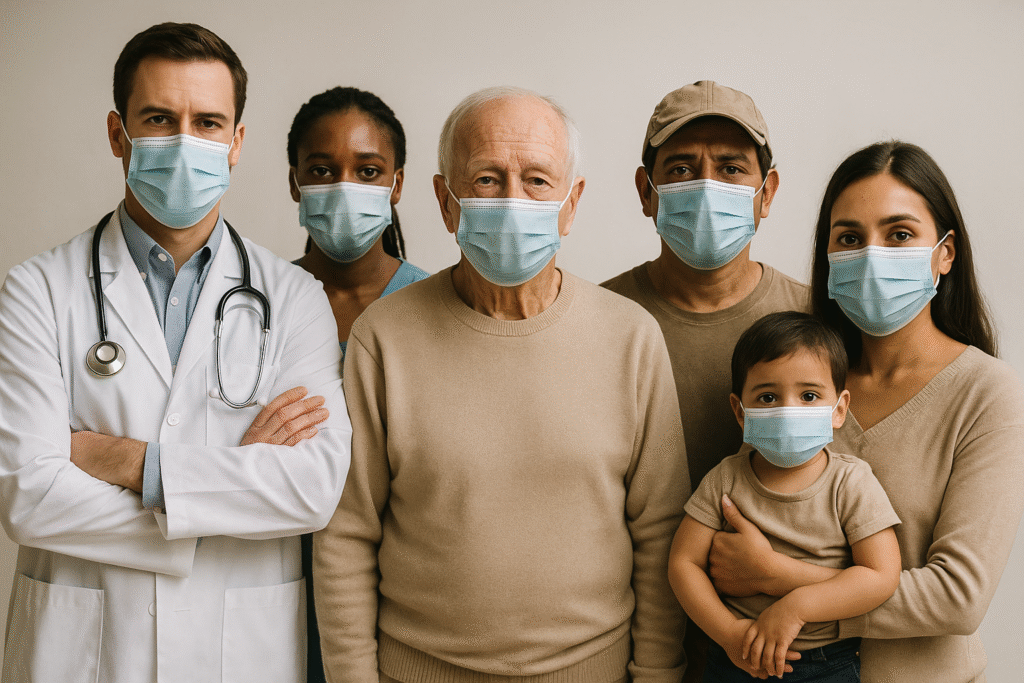
The COVID-19 pandemic exposed stark inequalities in access to health services and life-saving resources. Vaccines, testing, therapeutics and health system capacity were distributed unevenly across countries and within populations. These disparities did not just reflect differences in wealth; they amplified health risks, prolonged transmission, and increased the chance that new variants would emerge, posing serious concerns for global health security.
1. The Global Vaccine-Equity Challenge
Vaccine allocation became a defining equity issue of the pandemic. High-income countries (HICs) secured large volumes of early supply through pre-purchase agreements, while many low- and middle-income countries (LMICs) waited months for deliveries. This “first-come, first-served” dynamic slowed global coverage, left vulnerable populations exposed, and undermined the overall goal of pandemic control. Beyond access, logistical hurdles — cold-chain capacity, last-mile delivery, and trained personnel — further limited effective uptake in many settings.
Practical consequences
- Uneven protection: Higher vaccination rates in some countries reduced severe disease there while transmission continued elsewhere.
- Variant risk: Prolonged circulation in under-vaccinated populations increased the likelihood of new variants.
- Economic divergence: Unequal recoveries deepened global economic gaps, affecting trade and livelihoods.
2. HICs vs LMICs — Gaps in Capacity and Resources
HICs typically benefit from stronger health infrastructure, greater fiscal space, and quicker access to procurement channels. They could mount large vaccination campaigns, expand ICU capacity, and finance booster programs. LMICs, by contrast, often faced constrained budgets, weaker supply chains, limited cold storage, and shortages of trained staff — all of which made widespread, rapid vaccination and case management far more difficult across many global health systems.
Key structural differences
- Infrastructure: fewer ICU beds, limited oxygen and fewer hospital resources per capita in many LMICs.
- Financing: constrained public health budgets and competing development priorities.
- Local production: limited domestic vaccine and pharmaceutical manufacturing capacity.
3. Within-Country Inequities — Marginalized Communities
Even inside countries, the pandemic hit some groups far harder: informal workers, migrants, ethnic minorities, persons with disabilities, refugees and residents of informal settlements often faced multiple barriers. These included lack of official documentation, language barriers, inability to take time off work, costs of travel to vaccination sites, and distrust of authorities due to historical exclusion.
Examples of barriers
- Registration and ID requirements that exclude undocumented migrants.
- Digital-only booking systems that disadvantage people with low digital literacy or no internet.
- Geographic barriers where rural or peri-urban clinics are distant and transport unaffordable.
4. Towards a Right-to-Health Approach — Policy Recommendations
Framing health as a human right shifts policy priorities: it requires governments and global institutions to proactively ensure equitable access rather than relying on market dynamics alone. A right-to-health model emphasizes universal entitlements, nondiscrimination, and accountability mechanisms that protect the most vulnerable.
Core components of a rights-based model
- Universal Health Coverage (UHC): Guarantee essential services (prevention, primary care, emergency treatment) without financial hardship.
- Progressive financing: Use progressive taxation, pooled funds, and international solidarity to finance services for low-resource settings.
- Local production & technology transfer: Support regional vaccine and medicine manufacturing to reduce dependency and lower costs.
- Inclusive delivery: Remove administrative barriers, deploy mobile and outreach clinics, and provide multilingual, culturally appropriate communication.
- Disaggregated data & accountability: Collect data by gender, income, location and marginalized status to measure gaps and direct policy action.
Operational recommendations
- Establish pre-committed global equity mechanisms (shared stockpiles, binding allocation frameworks) for future emergencies.
- Invest in cold-chain, logistics and workforce training in LMICs as a development priority, not an afterthought.
- Mandate public–private partnerships that include technology transfer clauses and equitable pricing provisions.
- Design social protection measures (paid leave, travel stipends) to remove access costs for marginalized groups.
Achieving equitable health outcomes requires both global cooperation and domestic reforms grounded in the principle that health is a right. When access is universal and deliberate efforts target the most excluded, societies become healthier, more resilient and fairer — strengthening long-term global health resilience and preparedness for future crises.

Policy and Preparedness
The COVID-19 pandemic made one truth unmistakable: pandemic preparedness is not a narrow health sector concern but a whole-of-society responsibility. Effective policy combines scientific leadership, sustained financing, multi-sector coordination and transparent communication. The measures below outline a practical framework to strengthen readiness, reduce response time, and protect populations in the next global health emergency.
1. One Health approach
One Health recognizes the interconnectedness of human, animal and environmental health. Many emerging infectious diseases are zoonotic in origin, and preventing future spillovers requires coordinated surveillance across veterinary, agricultural, wildlife and public-health systems. Integrating these sectors improves early-warning capacity and enables interventions at the source.
Implementation actions
- Establish multi-sectoral surveillance networks linking veterinary, environmental and public-health data.
- Promote biosecurity and sustainable agricultural practices that reduce human–animal contact risk.
- Fund community-based reporting systems and frontline training for early detection of unusual events.
2. Sustained funding and dedicated preparedness financing
Episodic or crisis-driven funding leaves systems fragile. Preparedness requires predictable, long-term investments in workforce, labs, logistics and research. A dedicated preparedness fund — at national and regional levels — ensures resources are available before emergencies hit.
Implementation actions
- Create ring-fenced preparedness budgets with transparent governance and audit provisions.
- Leverage blended finance: public funds, development finance institutions and catalytic private capital.
- Support LMICs with sustained international financing tied to capacity-building outcomes.
3. Surge capacity and strategic stockpiles
Systems must be able to expand rapidly when cases spike. Surge capacity spans physical infrastructure, trained personnel, and logistics; strategic stockpiles of PPE, oxygen, essential medicines and diagnostics reduce dangerous delays during early response phases.
Implementation actions
- Define surge thresholds and pre-agreed activation protocols for regional response (e.g., hospital occupancy triggers).
- Maintain rotating, quality-controlled regional stockpiles with clear ownership and distribution rules.
- Invest in modular field hospitals, cross-trained reserve cadres, and rapid deployment logistics.
4. Strategic recommendations
Regional manufacturing of essentials
Diversifying production reduces dependency on a few global suppliers. Encourage regional manufacturing of PPE, APIs, diagnostics and vaccine fill/finish capacity through incentives, technology transfer and public–private partnerships. Local production accelerates access and stabilizes prices during crises.
Global data-sharing accords
Timely, secure and standardized data sharing is foundational for detection and response. Develop international accords that specify data types (genomic, case, mobility), interoperability standards, privacy safeguards and rapid-sharing timelines while protecting sovereign and individual rights.
Transparent communication
Trust is built through honesty, clarity and cultural sensitivity. Governments should adopt proactive risk-communication strategies: share knowns and unknowns, correct misinformation quickly, engage community leaders, and use multilingual channels. Transparency about mistakes and evolving evidence strengthens public cooperation.
5. Operational framework & accountability
- Conduct regular simulation exercises that include cross-border and multi-sector scenarios.
- Adopt data-driven indicators (hospital occupancy, supply alerts, wastewater signals) that trigger automatic operational steps.
- Embed community representation and civil-society oversight in preparedness planning to improve equity and uptake.
- Measure readiness with independent third-party assessments and publish results to maintain accountability.
Policy and preparedness are only effective when financed, operationalized and trusted. Adopting a One Health mindset, ensuring sustained funding, building surge capacity and enabling regionally resilient supply chains — coupled with binding data-sharing agreements and transparent communication — will make future responses faster, fairer and more effective.
Conclusion and Call to Action
In the most difficult months of the pandemic, I witnessed how quickly life can change and how even the strongest systems can bend under unexpected pressure. The long queues outside hospitals, the uncertainty in people’s eyes, the grief of losing loved ones, and the kindness of strangers offering help—all of these experiences taught me a profound lesson: in moments of crisis, our greatest strength is not our technology or infrastructure alone, but our humanity, empathy and willingness to stand together in support of stronger global health systems.
COVID-19 confronted us with fear, loss and disruption, but it also revealed the power of collaboration, transparency and community resilience. We learned that when nations share data, resources and knowledge, solutions emerge faster. We also learned that inequality, misinformation and fragmented communication can multiply the harm. The pandemic may have passed, but its lessons must remain alive—guiding how we rebuild and how we prepare for what may come next.
The road ahead is not just about strengthening healthcare systems or improving technology; it is about building a culture of preparedness, compassion and shared responsibility. Whether through supporting vulnerable communities, promoting mental well-being, or insisting on equitable access to healthcare, each of us has a role to play in creating a safer future for global health resilience worldwide.
What You Can Do (Clear Call to Action)
- Share this article: Awareness grows when information is shared responsibly.
- Volunteer with local NGOs: Offer support to children, the elderly and marginalized communities.
- Support public health efforts: Participate in vaccination drives, mental health campaigns and hygiene initiatives.
- Combat misinformation: Share verified information and correct false claims whenever possible.
- Build a culture of preparedness: Encourage first-aid training, community readiness discussions and local safety planning.
Ultimately, the pandemic showed us that we are vulnerable alone but powerful together. If we place equity, science and solidarity at the center of our choices, we can protect not only ourselves but also build a more just, resilient and compassionate world for everyone.
FAQ — Frequently Asked Questions
Below are concise answers to common questions people often search for regarding global health challenges in the post–COVID-19 era. These responses are short, clear and designed for quick understanding.
1. Can a pandemic like COVID-19 happen again?
Yes. Experts agree that future pandemics are possible. Strong surveillance systems, global cooperation, early detection and preparedness planning can significantly reduce their impact.
2. What should countries do to prepare for the next pandemic?
Countries should strengthen healthcare systems, invest in surge capacity, build strategic stockpiles, improve data-sharing mechanisms and develop transparent communication strategies.
3. What actions can individuals take to stay prepared?
Stay updated with verified information, get vaccinated, maintain good hygiene, support community health efforts and help combat misinformation.
4. How useful are telemedicine and digital health services?
They improve accessibility, reduce travel barriers and ensure continuity of care—especially during emergencies. However, digital gaps must be addressed to ensure equal access.
5. How can marginalized communities be better protected?
Through stronger social safety nets, mobile health services, affordable care, multilingual communication, and targeted outreach programs tailored to vulnerable groups.

References & Further Reading
Below are key sources used for data, analysis and additional reading on global health, COVID-19 and pandemic preparedness. These references offer reliable insights for deeper understanding.
- World Health Organization (WHO) — COVID-19 updates, global health reports and preparedness guidelines
- Centers for Disease Control and Prevention (CDC) — COVID-19 facts, vaccine information and public health guidance
- The Lancet — peer-reviewed research on global health systems, mental health and pandemic impacts
- United Nations (UN) — reports on global supply chains, socio-economic effects and humanitarian responses
- World Bank — data on LMICs, health infrastructure, economic recovery and inequalities
- Our World in Data — comprehensive COVID-19 datasets on cases, vaccination, testing and mortality trends