
The Inspiring Story of the Pala Dynasty: Rise, Glory and Legacy
History has always been my greatest teacher. While reading about the Pala dynasty, I felt as if I were traveling through time — witnessing how a powerful empire was born out of chaos and later transformed into a golden age of learning, art and Buddhism. This article presents that journey as a story filled with leadership lessons, cultural achievements and timeless inspiration.
Establishment of the Pala Dynasty
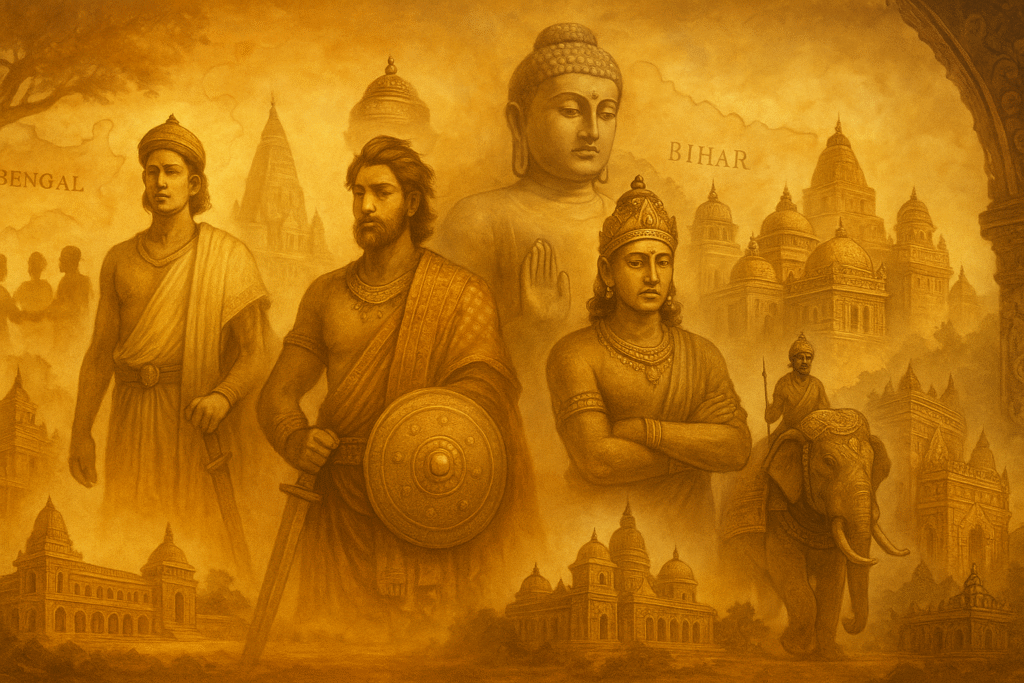
The Pala dynasty emerged in Bengal and Bihar between the 8th and 12th centuries. It began at a time when the region was suffering from political instability and anarchy. In such difficult circumstances, Gopal was elected king by the regional chiefs — a rare event that shows the people’s trust in his leadership.
Gopal: The Founder
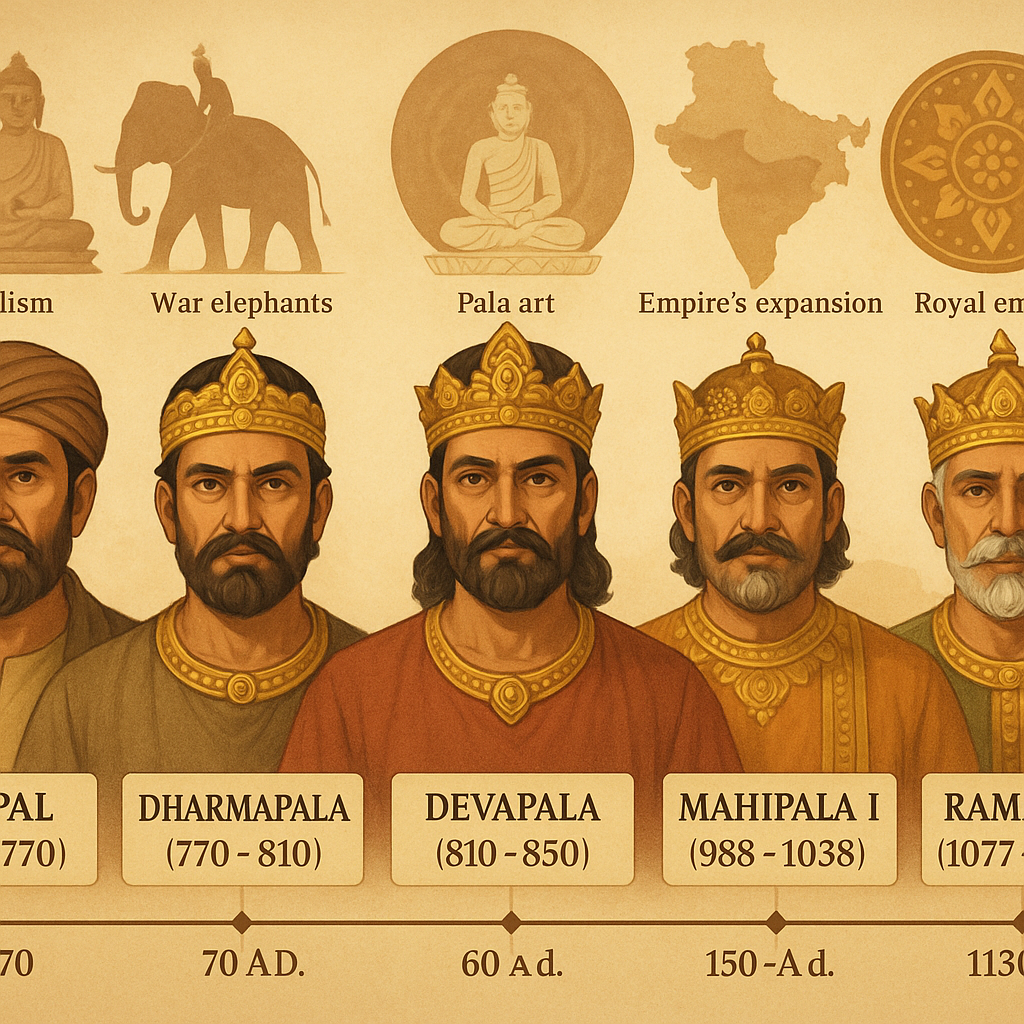
Gopal (750–770 A.D.) laid the foundation of the Pala dynasty. He restored peace and stability, proving that strong leadership can transform disorder into progress. This moment in history teaches that even in chaos, the right guidance can build a powerful future.
Major Rulers of the Pala Dynasty
Dharmapala (770–810 A.D.)
As Gopal’s son, Dharmapala expanded the empire and strengthened it further. He played a major role in the famous Tripartite Struggle and made a bold attempt to capture Kannauj. His reign showcases ambition, strategy and the will to rise beyond boundaries.
Devapala (810–850 A.D.)
Under Devapala, the Pala empire reached its peak. His leadership brought wealth, stability and military strength. He continued promoting culture and religion, making his reign one of the most prosperous periods in eastern India’s history.

Top Quality Amazon Product
A high-quality product with strong performance and reliable build — ideal for everyday use and highly rated by customers.
View on AmazonCultural Contributions and Legacy
Buddhism and Education
The Pala rulers were devoted patrons of Buddhism. They supported great learning centers like Nalanda and Vikramshila University, attracting scholars from across Asia. Their reign truly became the Golden Age of Indian Buddhism.
Art and Architecture
The Palas promoted literature, sculpture and architecture. The distinctive Pala art style, known for its elegance and spiritual depth, remains famous even today. Their contributions continue to inspire artists, historians and learners worldwide.
Military Strength and Governance
The Pala army placed great importance on elephants, symbolizing power and prestige. The rulers were skilled administrators who maintained discipline, justice and prosperity in their territories.
Downfall of the Pala Empire
By the 12th century, internal weaknesses and external pressures led to the decline of the Pala empire. Eventually, the Sena dynasty replaced them, marking the end of a remarkable era.
Conclusion: A Timeless Lesson from the Pala Dynasty
The Pala dynasty stands as one of the most significant chapters in Indian history. Their contributions to education, religion, art and administration shaped the cultural identity of eastern India. For learners like us, their story teaches that great leadership, commitment to knowledge and cultural pride can build a legacy that inspires generations.
Culture and Contributions of the Pala Dynasty

Top Amazon Product Choice
A highly rated and reliable product with excellent performance and durability. Perfect for everyday use with trusted customer satisfaction.
Check Price on AmazonThe cultural and intellectual achievements of the Pala dynasty hold an important place in Indian history. Their rule brought political stability to Bengal and Bihar and ushered in a golden age of Buddhist learning, art, education, architecture, and literature. The Pala period is widely considered the Golden Age of Buddhism and culture in eastern India.
1. Preservation and Promotion of Buddhism
The Pala rulers were devout patrons of Buddhism, especially Mahayana Buddhism. Their support transformed the region into a global centre of Buddhist education and spiritual growth.
- Numerous monasteries and Viharas were established as major centres of Buddhist learning.
- Vikramshila, Nalanda, and Somapura Mahavihara were founded or supported by Pala rulers.
- Students and monks from Tibet, China, Korea, and Southeast Asia visited these universities to study.
- Due to the travel and outreach of Buddhist monks, the Pala Empire became an international hub of Buddhist knowledge.
2. Development of Education and Learning
The Pala period witnessed extraordinary progress in education. Their patronage helped create influential centres of Indian knowledge systems.
- Vikramshila University, founded by Dharmapala, became one of the leading educational institutions of its time.
- Subjects such as logic, theology, astronomy, grammar, and medicine were taught here.
- Nalanda University also flourished under Pala patronage, continuing its legacy as a world-famous centre of learning.
- Tibetan Buddhist texts were translated, allowing Indian knowledge to spread to Tibet and China.
3. Art and Architecture
The art style of the Pala dynasty, known simply as the Pala style, remains admired worldwide for its beauty, craftsmanship, and spiritual depth.
- Stone, bronze, and terracotta sculptures depicting Buddha and other Buddhist deities were created during this period.
- Architectural masterpieces such as Somapura Mahavihara, Jagaddal Mahavihara, and Odantapuri were built.
- Pala sculptures are known for their fine carvings, expressive figures, and elegant detailing.
4. Literature and Buddhist Texts
The Pala rulers supported the creation, preservation, and translation of Buddhist literature.
- Many important texts on Mahayana Buddhism were composed during their reign.
- Older manuscripts were preserved and copied for future generations.
- Tibetan Buddhist literature grew rapidly due to the influence and scholarship of Pala-era monks.
5. Economic and Commercial Contribution
Trade and commerce flourished under the Pala dynasty, contributing to both regional and international economic growth.
- Bengal and Bihar emerged as major centres of craftsmanship, trade, and maritime activity.
- Buddhist connections helped establish economic ties with Tibet, China, and Southeast Asian regions.
6. Religious Tolerance and Harmony
Although the Palas were devoted Buddhists, they also upheld the principles of religious harmony and supported other faiths.
- Temples dedicated to Shiva, Vishnu, and Shakti were built during their reign.
- This religious tolerance strengthened their administration and increased their popularity among people.
Conclusion
The Pala dynasty played a transformative role in shaping the cultural and intellectual history of India. Their reign brought unparalleled development in education, art, architecture, religion, and international relations. Their influence extended far beyond Bengal and Bihar, reaching Tibet, China, and Southeast Asia. The cultural and intellectual contributions of the Pala dynasty remain a proud and golden chapter in Indian history.


Featured Amazon Product
A quality choice with dependable performance and trusted durability — perfect for everyday use and recommended by many satisfied customers.
View on AmazonNalanda University
Nalanda University was the most renowned educational centre of ancient India, established by the Gupta ruler Kumaragupta I in the 5th century. It became a major global hub of learning, knowledge, and Buddhism, especially of the Mahayana tradition. Nalanda is regarded as one of the largest and oldest universities in the ancient world.
Location
Nalanda is located in present-day Nalanda district of Bihar, about 90 km from ancient Pataliputra (modern Patna). Surrounded by natural beauty, it was an ideal environment for learning and meditation.
Structure and Features
1. Huge Campus
- Nalanda had a vast complex consisting of meditation centres, viharas (residential quarters), libraries, stupas, and gardens.
- The university had eight grand buildings and around 3000 rooms with well-organized facilities for students and teachers.
2. Education and Curriculum
- Subjects included Buddhism, logic, astronomy, medicine, grammar, philosophy, yoga, and mathematics.
- The mediums of instruction were Pali and Sanskrit.
- Admission required passing a highly challenging entrance examination.
3. Students and Teachers
- Nalanda had nearly 10,000 students and 2,000 teachers.
- Students came from India, Tibet, China, Korea, Japan, Sri Lanka, and Southeast Asia.
- The university taught not only Buddhism but also science, literature, and comparative religion.
4. Library
Nalanda’s library complex, known as Dharmaganja, had three main buildings:
- Ratnasagar
- Ratnodadhi
- Ratnaranjak
These buildings stored millions of manuscripts on Buddhism, Vedas, medicine, astrology, and various Indian sciences. It was one of the largest libraries in the world at the time.
Patronage and Contribution
- Along with Gupta rulers, Harshavardhana and the Pala kings offered great patronage to Nalanda.
- The university reached its height during the reign of the Pala dynasty.
- Nalanda played a major role in spreading Buddhism across Asia.
Decline of Nalanda
In the 12th century, Nalanda suffered massive destruction when Turkic invader Muhammad bin Bakhtiyar Khilji attacked it. The university was set on fire, and its priceless library and structures were destroyed. Millions of manuscripts were burned, marking the tragic end of a glorious educational era.
Importance
Nalanda University stands as a symbol of India’s ancient intellectual and cultural achievements. Its educational system played a crucial role in spreading knowledge and Buddhism across Asia. It is considered one of the greatest centres of learning in world history.
Reconstruction Efforts
In 2014, the Indian government, along with international support, re-established Nalanda University in Bihar as a centre of modern education. The name “Nalanda” continues to inspire the world as a symbol of knowledge and wisdom.
Art of the Pala Dynasty
The art of the Pala dynasty (8th–12th century) is celebrated for its beauty, refinement, and cultural depth. This style, known as the Pala style, made lasting contributions in sculpture, architecture, painting, and handicrafts. Deeply influenced by Mahayana and Vajrayana Buddhism, Pala art spread from India to Nepal, Tibet, and Southeast Asia.
1. Sculpture
The sculpture of the Pala period is known for its elegance, fine carving, and symbolic expression.
Features
- Use of stone, bronze, and black basalt.
- Sculptures emphasized beauty, lifelike expressions, and intricate detailing.
- Main themes included Buddha, Tara, Avalokiteshvara, and Buddhist deities.
- Strong focus on symbolism and spiritual meaning.
Major Centres
- Bihar, Bengal, and Nepal were leading centres of sculpture.
- Bronze sculptures from this period are admired for their shine and craftsmanship.
2. Architecture
Pala architecture flourished in the construction of viharas, monasteries, stupas, and educational complexes.
Major Architectural Works
- Vikramshila University – grand vihara and prayer hall.
- Somapura Monastery (Bangladesh) – iconic example of Pala architecture.
- Nalanda University – an important architectural and educational centre.
- Odantapuri and Jagaddal Mahavihara – renowned Buddhist institutions.
- Architecture displayed a balance of simplicity and grandeur.
3. Painting
Very few Pala paintings have survived, but manuscripts from Tibet and Nepal reflect the style’s influence.
- Most paintings were religious, centred on Buddhist themes.
- Elements of nature were often included.
- Manuscripts were decorated with detailed illustrations.
4. Handicrafts
Pala handicrafts include metalwork, wooden artefacts, and finely crafted sculptures.
- Bronze statues were the most distinctive feature.
- Stone carvings and wooden art pieces show advanced craftsmanship.
5. Religious Influence
- Pala art was heavily shaped by Mahayana and Vajrayana Buddhism.
- Tantric symbols appear frequently in sculptures and architecture.
- Hindu deities such as Shiva, Vishnu, and Shakti were also depicted.
6. International Influence
- Pala art strongly influenced Tibetan and Nepalese Buddhist art.
- The style of Tantric Buddhist sculpture in Tibet was inspired by Pala traditions.
- Southeast Asian art also absorbed elements of Pala aesthetics.
Conclusion
The art of the Pala dynasty represents one of the finest achievements of Indian cultural heritage. Its sculpture, architecture, and painting enriched the artistic traditions of India and influenced Asia-wide Buddhist art. The remains of Nalanda, Vikramshila, and other sites continue to reflect the artistic excellence of the Pala era.

Architecture of the Pala Dynasty
The architecture of the Pala dynasty is a glorious chapter in Indian history. Deeply influenced by Buddhism, it reflects spiritual, religious, educational, and Tantric traditions. Between the 8th and 12th centuries, remarkable Viharas, Stupas, and temples were constructed, showcasing exceptional craftsmanship and beauty.
Architectural Features
- A blend of simplicity and grandeur: Pala structures show a unique balance of elegance and powerful design.
- Religious inspiration: Architecture was guided by Mahayana and Vajrayana Buddhist traditions.
- Use of local materials: Local stone and brick were commonly used.
- Carving and sculpture: Fine carvings and detailed sculptures formed an integral part of the structures.
Major Architecture Centres
Bihar, Bengal, and present-day Bangladesh were important architectural centres during the Pala rule. The Viharas, Stupas, and monasteries built here show the advanced skill and artistic excellence of Pala craftsmen.
1. Vikramshila University
- Located in Bhagalpur district of Bihar.
- Excellent example of Pala architecture.
- Had a large central building with prayer halls, meditation rooms, and classrooms.
- Square structure with several small cloisters around the main compound.
2. Nalanda University
- Unique architectural style consisting of eight huge buildings.
- Included hostels, meditation centres, viharas, and a grand library.
- Constructed primarily with well-designed brick structures, gardens, and ponds.
3. Somapura Monastery
- Located in present-day Bangladesh.
- One of the largest Buddhist mahaviharas of the Pala era.
- Remains contain stupas and ancient statues showcasing the Pala style.
4. Jagaddal Mahavihara
- Situated in northern Bengal.
- Centre for Tantric Buddhist learning and research.
- Strong influence of Vajrayana Buddhism in its structural features.
Stupas and Viharas
Stupas
- Important part of Buddhist architecture in the Pala period.
- Depicted Tantric symbols and Mahayana Buddhist art.
- Dome-shaped structures with high peaks were common features.
Viharas
- Served as residences and study centres for monks.
- Designed with a central courtyard surrounded by rooms.
- Major monasteries included Vikramshila, Nalanda, and Somapura.
Religious and Tantric Influences
- Strong influence of Mahayana and Vajrayana Buddhism.
- Meditation centres and Tantric shrines were integral parts of architecture.
- Buddhist symbols and sacred carvings were widely used.

Amazon Product Highlight
A dependable and well-reviewed product with solid performance and trusted quality — ideal for regular use and strong customer satisfaction.
Check Price on AmazonTemple Architecture
- Although primarily Buddhist, the Palas also built Hindu temples.
- Temples dedicated to Shiva, Vishnu, and Shakti show Pala architectural features.
- Combination of Gupta and Pala architectural elements is visible in temple remains.
International Impact
- Pala architecture significantly influenced the styles of Tibet, Nepal, and Southeast Asia.
- Monasteries and stupas in these regions show clear Pala inspiration.
- Tantric Buddhist art in Tibet developed under Pala influence.
Conclusion
The architecture of the Pala dynasty holds a golden place in India’s heritage. Their religious, educational, and cultural structures continue to reflect the artistic brilliance of the period. The remains of Nalanda, Vikramshila, Somapura, and other sites still preserve this glorious legacy.
Literature of the Pla Dynasty
The literature of the Pala period (8th–12th century) flourished under the patronage of the Pala rulers. They promoted Buddhist learning, especially the Mahayana and Vajrayana traditions, resulting in the development of religious, philosophical, Tantric, and classical Sanskrit literature.
Characteristics of Pala Literature
- Religious and philosophical focus: Strong influence of Buddhism and Tantric traditions.
- Languages: Sanskrit and Pali were the main languages, while Bengali and Apabhramsha also began developing.
- Translation activity: Many Buddhist texts were translated into Tibetan, Chinese, and other Asian languages.
Main Literary Contributions
1. Buddhist Religious Texts
- Texts of Mahayana and Vajrayana Buddhism were composed during this period.
- Books describing the glory of Avalokiteshvara, Manjushri, Tara, and other deities were written.
- Pala rulers supported scholars and educational institutions to spread Buddhism.
2. Tantric Literature
- Vajrayana tradition encouraged the creation of Tantric scriptures.
- Important texts include the Guhyasamaja Tantra, Hevajra Tantra, and Chakrasamvara Tantra.
- These texts form important sources for meditation, yoga, and Tantric rituals.
3. Educational and Philosophical Literature
- Nalanda, Vikramshila, Jagaddal, and Somapura became major centres of study and writing.
- Texts from the Madhyamika and Yogacara schools of philosophy were developed.
- Scholars composed treatises on logic, debate, and Buddhist philosophy.
Famous Scholars and Their Works
1. Atish Dipankar Shrigyan (980–1054 A.D.)
- A leading Buddhist scholar and Tantric practitioner from Bengal.
- Played a major role in establishing Buddhism in Tibet.
- Author of the famous text Bodhipathapradip.
2. Ratnakar Shanti
- Renowned Buddhist philosopher and Tantric master.
- Wrote important Vajrayana Buddhist texts.
3. Kamalashila
- Great scholar of Nalanda University.
- Contributed to the development of meditation and philosophical texts.
- Promoted Buddhist teachings in Tibet.
4. Dharmakirti
- Famous Buddhist logician and philosopher.
- Wrote the important text Pramanavartika.
Literary Patronage
- Pala rulers supported the preservation and promotion of literature.
- They established universities and great libraries.
- Texts on Buddhism, medicine, astronomy, and philosophy were preserved and taught.
Linguistic Contribution
- Pala rule contributed to the early development of the Bengali language.
- Buddhist monks presented teachings in local languages, enriching regional literature.
International Influence
- Pala literature influenced Tibet, China, Nepal, and Southeast Asia.
- Many Buddhist texts were translated into Asian languages.
- Tantric Buddhism in Tibet developed strongly due to Pala literary traditions.
Conclusion
The literature of the Pala dynasty was rich, diverse, and profoundly influential. It played a vital role in spreading Buddhism, preserving philosophical knowledge, and shaping India’s intellectual heritage. Its contributions reached far beyond India, marking the Pala era as a golden age of learning and literary excellence.
Pala Style Sculptures
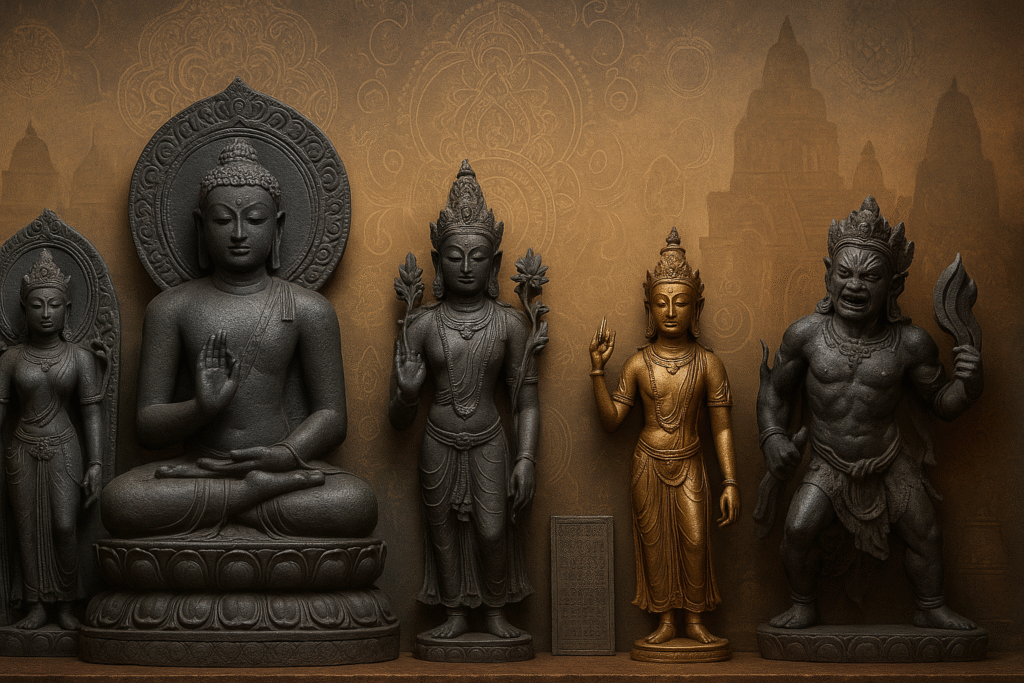
Pala style sculptures represent one of the most distinctive and beautiful traditions of Indian art. From the 8th to the 12th century, the Pala dynasty nurtured a unique sculptural style deeply influenced by Buddhism—especially the Mahayana and Vajrayana branches. These sculptures depicted Buddhist deities, symbols, and Tantric imagery with extraordinary craftsmanship.
Features of Pala Sculptures
Materials & Art Style
- Made primarily from black basalt stone, granite, and bronze.
- Known for fine carvings, smooth finish, and deep spiritual expression.
- Most statues depict meditation, sadhana, and spiritual calmness.
Religious Influence
- Strong influence of Mahayana and Vajrayana Buddhist traditions.
- Common deities: Buddha, Tara, Avalokiteshvara, Manjushri, Vajrapani.
- Hindu deities like Shiva, Vishnu, Durga were also sculpted in Pala style.
Expression and Gesture
- Calm, peaceful facial expressions showing deep spirituality.
- Balanced body proportions and natural posture.
- Detailed carvings of clothes, jewelry, and ornaments.
Tantric Influence
- Depiction of Tantric symbols and mudras from Vajrayana Buddhism.
- Many sculptures were used for meditation and Tantric worship.
Main Themes in Pala Sculpture
1. Buddha Sculptures
- Famous mudras: Dhyanamudra, Bhumisparsha Mudra, Dharmachakra Pravartan.
- Common features: elongated ears, ushnisha, calm expression, seated posture.
2. Tara and Bodhisattvas
- Tara statues are masterpieces of grace and divinity.
- Avalokiteshvara, Manjushri, and Vajrapani reflect both Mahayana and Vajrayana traditions.
3. Tantric Idols
- Inspired by Vajrayana practices.
- Used in meditation rituals and Tantric sadhana.
4. Hindu Deities
- Sculptures of Shiva, Vishnu, Durga, and Ganesha reflect a fusion of Buddhist and Hindu art.
Materials Used
- Black Basalt Stone — most common.
- Bronze Sculptures — world famous for shine and detail.
- Wood & Metals — also used in smaller works.
Major Centres of Pala Sculptures
- Bihar, Bengal, Bangladesh.
- Nalanda and Vikramshila were major sculptural centres.
- Style spread to Nepal, Tibet, and Southeast Asia.
International Influence
- Pala art shaped Buddhist sculpture in Tibet and Nepal.
- Tantric Buddhist imagery in Southeast Asia reflects Pala influence.
- Vajrayana sculptures in Tibet were directly inspired by Pala models.
Prime Examples
- Meditating Buddha statues from Nalanda and Vikramshila.
- Tara statues showing artistic beauty and spirituality.
- Avalokiteshvara sculptures symbolizing compassion.
Conclusion
Pala style sculptures are a priceless heritage of Indian art. They beautifully combine religious, cultural, and Tantric traditions. Their influence extended beyond India and contributed to the spread of Buddhism across Asia.

Featured Amazon Product
A high-quality and reliable product with trusted performance and great usability — perfect for everyday use with strong customer satisfaction.
Check Price on AmazonArchitecture of the Pala Dynasty
The architecture of the Pala dynasty is a remarkable chapter of Indian history. Influenced by Mahayana and Vajrayana Buddhism, the Palas constructed impressive Viharas, Stupas, temples, and learning centres between the 8th and 12th centuries.
Features of Pala Architecture
Religious & Educational Centres
- Construction of Buddhist Viharas, Mahaviharas, and Stupas.
- Centres were used for study, meditation, and rituals.
Use of Local Materials
- Brick and stone were used extensively.
- High-quality materials for carvings and decorations.
Shape & Structure
- Simple yet grand structures.
- Dome-shaped stupas and square courtyards in Viharas.
Religious Influence
- Mahayana and Vajrayana traditions shaped architecture.
- Hindu temples were also constructed during this period.
Major Architectural Structures
1. Vikramshila Mahavihara (Bihar)
- Most famous learning centre of the Pala dynasty.
- Square central structure with a large prayer hall.
- Surrounded by smaller Viharas and meditation halls.
2. Nalanda University (Bihar)
- Reached its peak under the Pala rulers.
- Contained eight huge buildings, hostels, library, meditation centre.
- Simplicity and balance defined its architectural style.
3. Somapura Mahavihara (Bangladesh)
- One of the best examples of Pala architecture.
- Structure includes stupas, Viharas, and carved sculptures.
4. Jagaddal Mahavihara (West Bengal)
- Famous centre for Buddhist Tantric literature.
Stupa & Vihara Architecture
Stupas
- Dome-shaped structures symbolizing Mahayana & Vajrayana traditions.
- Major stupas: Nalanda, Vikramshila.
Viharas
- Living and learning centres for monks.
- Designed with a central courtyard and rooms built around it.
- Decorated with carvings and symbolic sculptures.
Temple Architecture
- Hindu temples dedicated to Shiva, Vishnu, and Durga were also built.
- Temple structures show a blend of Gupta and Pala styles.
- Shikhara (tower) and sanctum were key components.
Religious & Tantric Influences
- Structures often included meditation and Tantric worship spaces.
- Tantric symbols appeared in sculptures and pillars.
International Influence
- Pala architecture spread to Tibet, Nepal, and Southeast Asia.
- Buddhist monasteries and Stupas in these areas were inspired by Pala style.
- Architectural remains reveal deep cultural and religious exchange.
Conclusion
The architecture of the Pala dynasty reflects deep Buddhist influence and artistic brilliance. These structures served religious, educational, and cultural purposes. The Viharas, Stupas, and Mahaviharas of the Pala period remain invaluable contributions to Indian architectural heritage.
References
- R. C. Majumdar, History of Bengal, Vol. I (University of Dacca, 1943)
- K. A. Nilakanta Sastri, A History of South India (Oxford University Press)
- Romila Thapar, Early India: From the Origins to AD 1300 (Penguin Books, 2002)
- Sailendra Nath Sen, Ancient Indian History and Civilization (New Age International, 1999)
- Encyclopaedia Britannica – Pala Dynasty
- National Portal of India
- Archaeological Survey of India
- UNESCO World Heritage – Nalanda Mahavihara
- Vikramshila University Excavation Reports