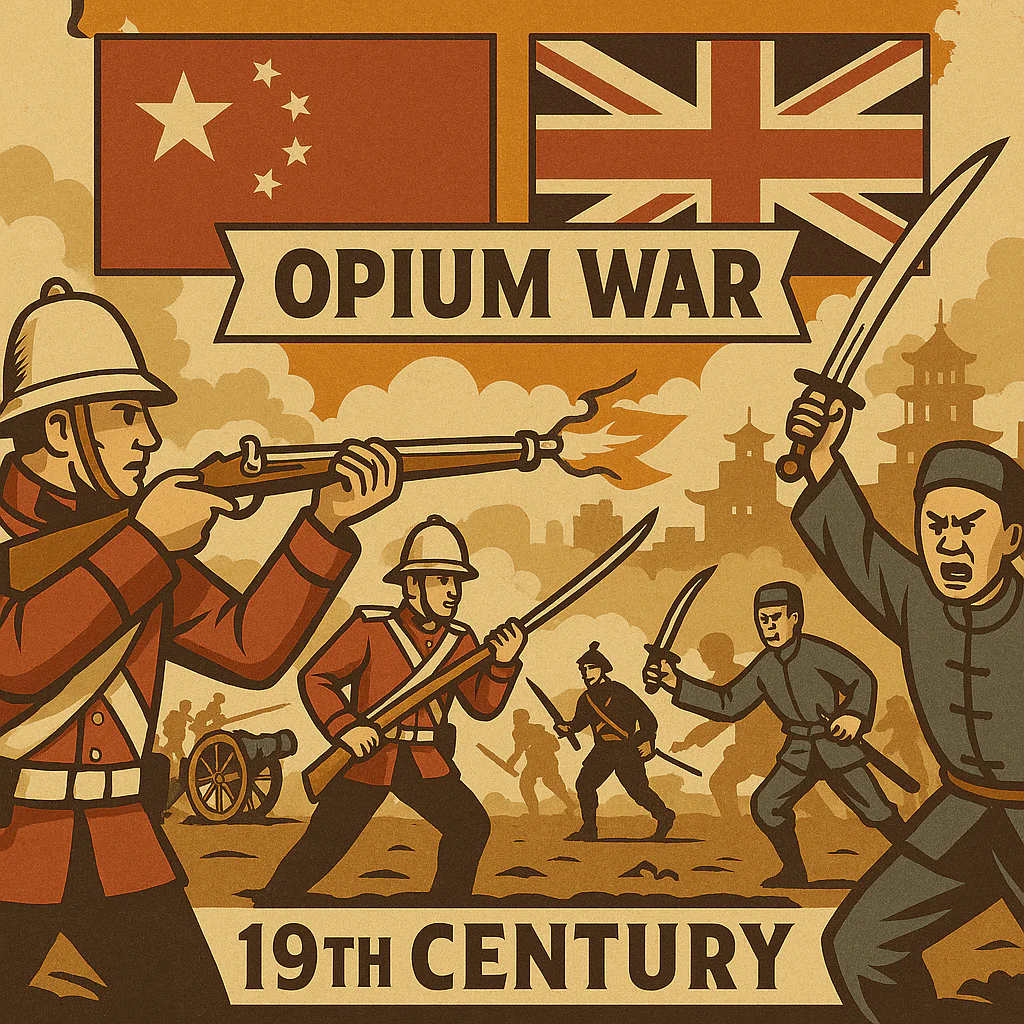
China and the Opium Wars (19th Century): An Illustrated Narrative
Introduction
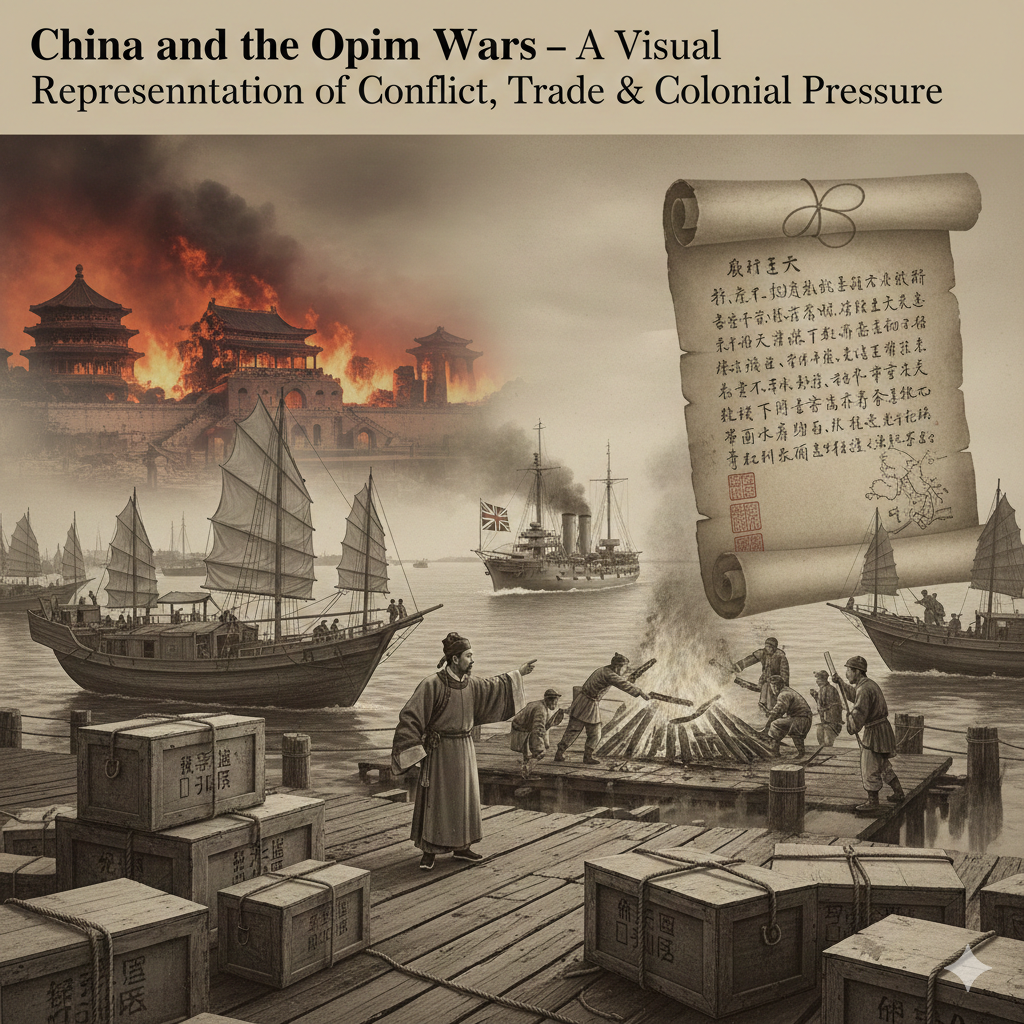
The Opium Wars were two major military conflicts between Qing China and Western powers (primarily Great Britain) in the mid-19th century. These wars were driven not only by trade disputes—chiefly the illegal opium trade—but also by imperial expansion, diplomatic friction, and conflicting ideas about sovereignty and legal rights. The conflicts altered China’s trajectory and opened a painful chapter often described as the beginning of modern China's "semi-colonial" period.
1. Background
By the end of the 18th century, trade between Britain and China was highly imbalanced. China exported highly demanded goods such as tea, silk, and porcelain, while Western manufactured goods attracted far less interest among Chinese consumers. To correct the trade deficit, Britain turned to opium cultivated in India and began exporting it to China. The opium trade was illegal under Qing law but proved enormously profitable for British merchants and helped rebalance British trade accounts.
2. First Opium War (1839–1842)
Main cause
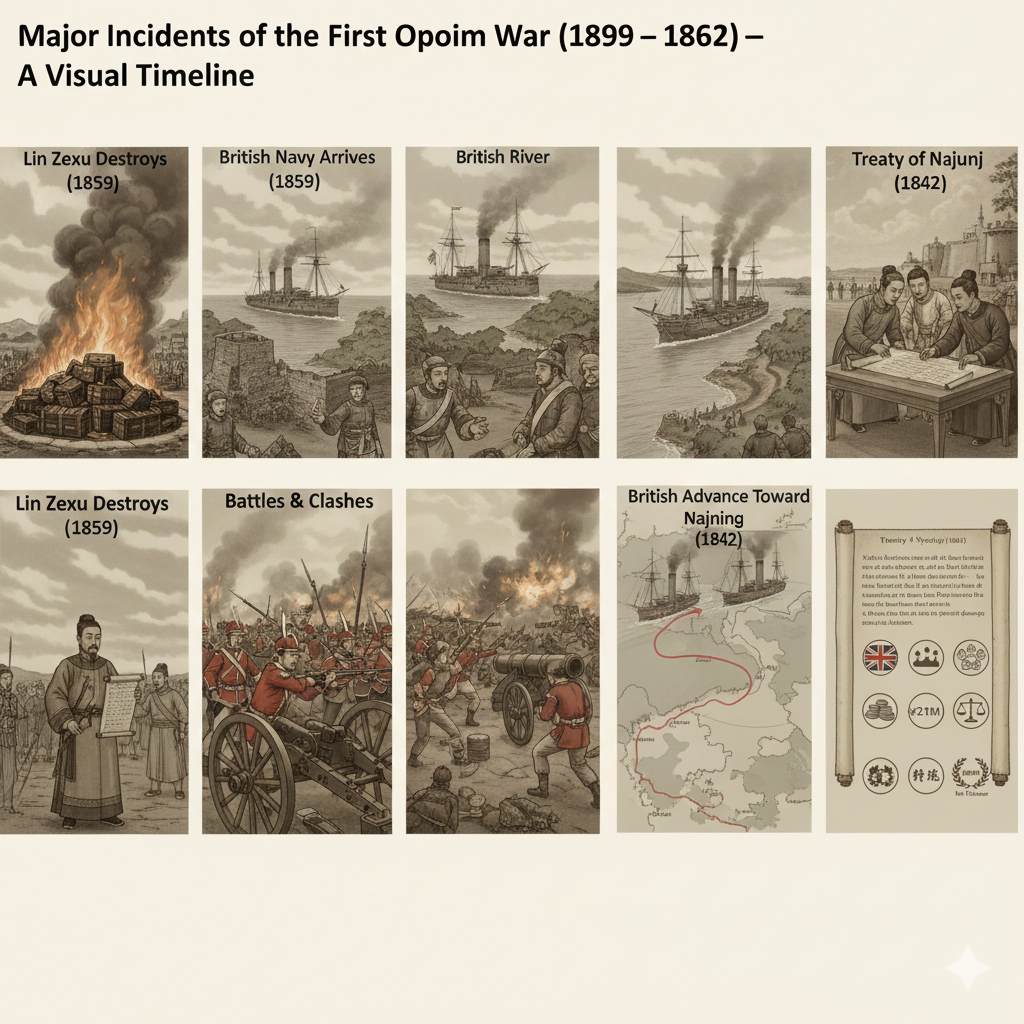
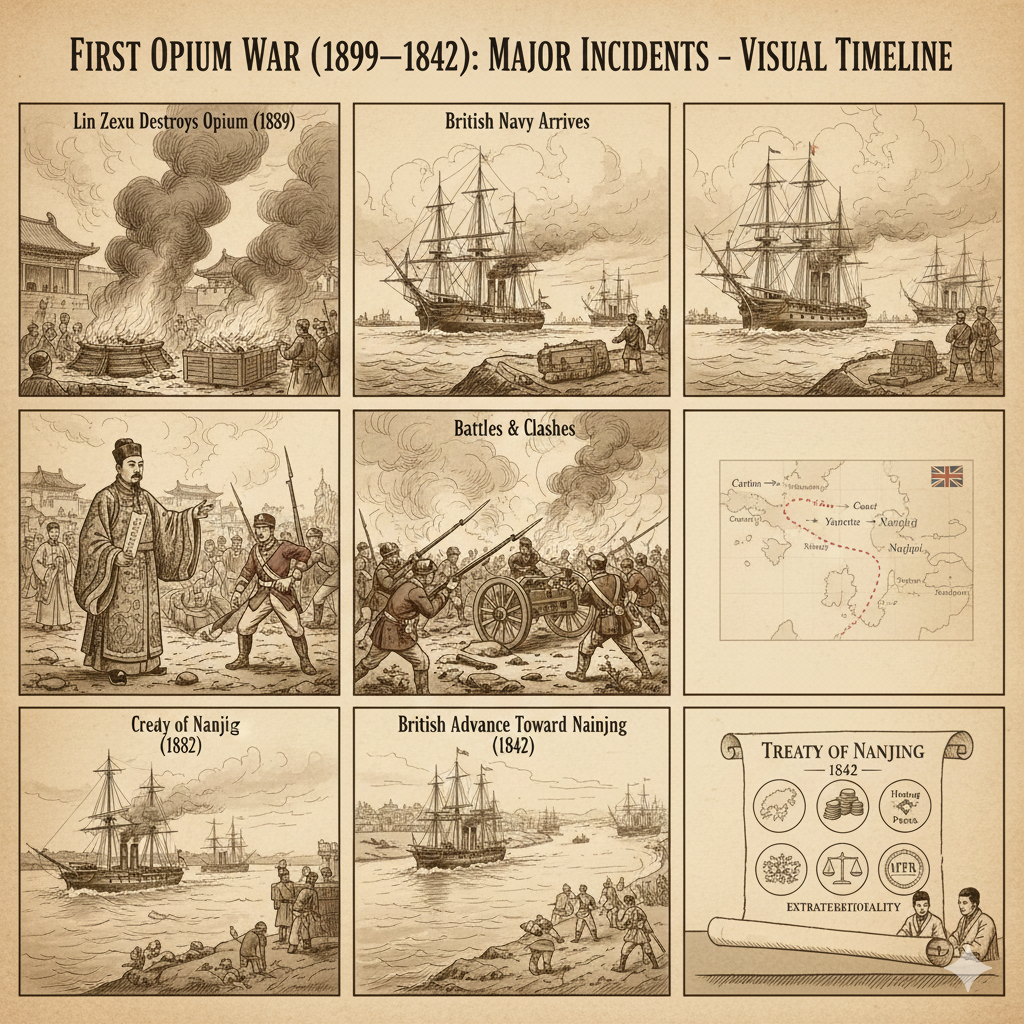
Widespread opium addiction caused severe social and economic problems in China. The Qing government attempted to halt the opium inflow and its harmful effects. In 1839, imperial commissioner Lin Zexu took decisive action against opium — famously confiscating and destroying large quantities of opium held by British merchants in Canton (Guangzhou).
Course of the war
Britain reacted to the loss of property and to what it claimed were threats to its mercantile rights by deploying naval and military forces along China’s coast. Superior British naval technology and military organization produced repeated defeats for Qing forces, and key Chinese ports and waterways were pressured or occupied.
Result — Treaty of Nanking (1842)
- China ceded the island of Hong Kong to Britain.
- Five treaty ports (including Canton, Shanghai, Ningbo, Fuzhou, and Xiamen) were opened to British trade and residence.
- China paid large indemnities and accepted other concessions.
- British subjects gained extraterritorial rights under subsequent arrangements (legal protections outside Chinese jurisdiction).
3. Second Opium War (1856–1860)
Why it happened
After the First Opium War, Western powers sought further commercial and diplomatic privileges in China. In 1856 a dispute surrounding the Chinese boarding of the British-registered ship Arrow was used as a casus belli by Britain. France later joined Britain, citing additional incidents and pretexts. The conflict aimed to force China to accept even broader foreign rights and trade freedoms.
Major events
Anglo-French forces launched combined military campaigns against key Chinese positions. In 1860, allied troops reached and occupied parts of Beijing (Peking). During the campaign the Old Summer Palace (Yuanmingyuan) was looted and destroyed, a dramatic cultural loss that remains highly symbolic.
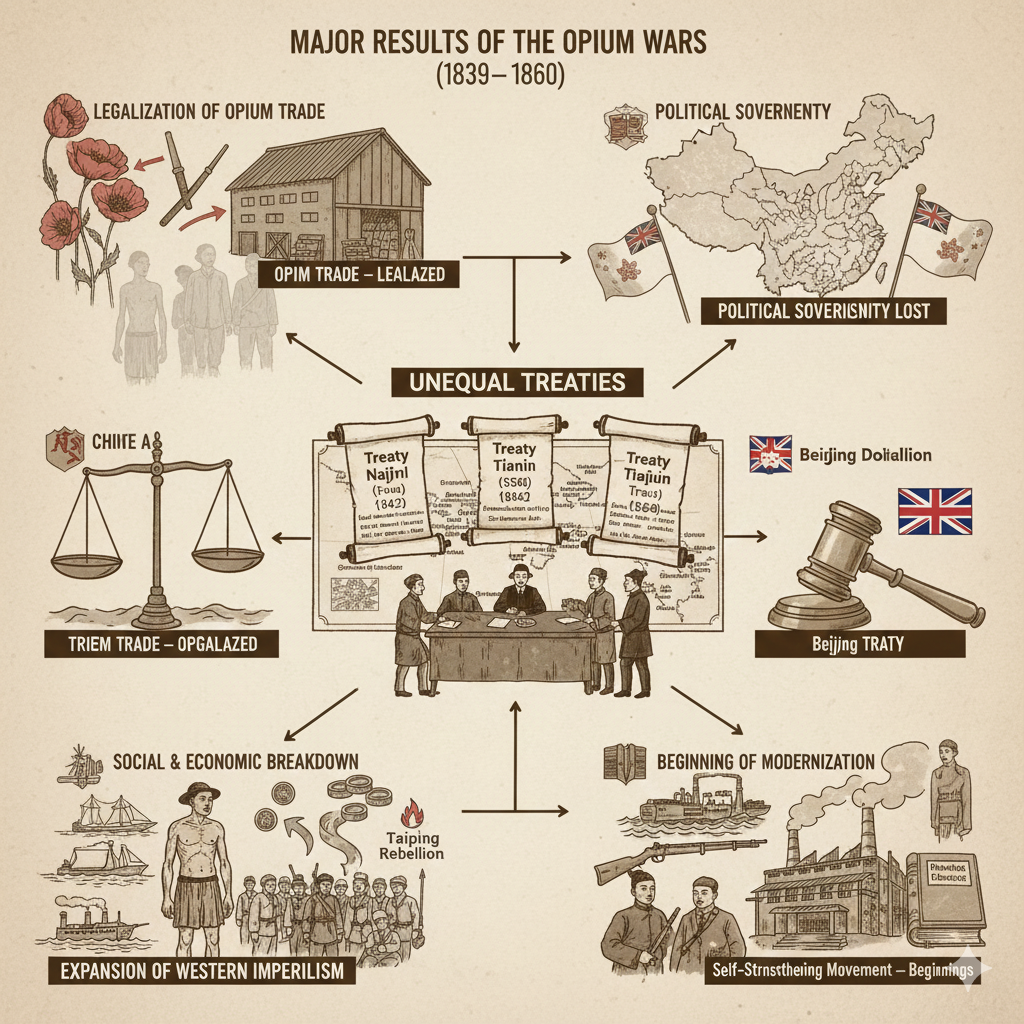
Results — Treaties of Tientsin (1858) and the Convention of Peking (1860)
- Additional ports and inland access were opened to foreign trade.
- The opium trade effectively gained legal recognition under new arrangements and taxation in some contexts.
- Christian missionaries obtained greater freedom to operate in China.
- Territorial adjustments included British control over parts of the Kowloon area adjacent to Hong Kong.
4. Consequences of the Opium Wars
Effects on China
- Qing sovereignty and control were significantly weakened.
- China became increasingly dependent on Western powers economically and diplomatically.
- The system of “unequal treaties” began and expanded, eroding central authority and legal autonomy.
- Domestic discontent and rebellions (for example, the Taiping Rebellion) intensified amid the social and economic turmoil.
Effects for Britain and Western powers
- Western merchants and states gained expanded commercial benefits and influence in China.
- These events accelerated Western imperial expansion and the spread of colonial interests in East Asia.
5. Conclusion
The Opium Wars were a turning point in modern Chinese history. They were not merely trade disputes over opium — they signaled a clash between imperial power and a declining imperial order, and they forced China onto a difficult path that many historians describe as the transition toward a semi-colonial status in the 19th century. The legacy of the Opium Wars shaped China's subsequent attempts at reform, resistance, and eventual modernization.
Key takeaway
The Opium Wars exposed the limits of Qing-era diplomacy and military power and marked the beginning of a period in which foreign powers imposed unequal terms on China — changes whose effects were felt for generations.
Suggested image
Replace the placeholder image with an original or licensed image. Use descriptive alt text for accessibility and SEO.