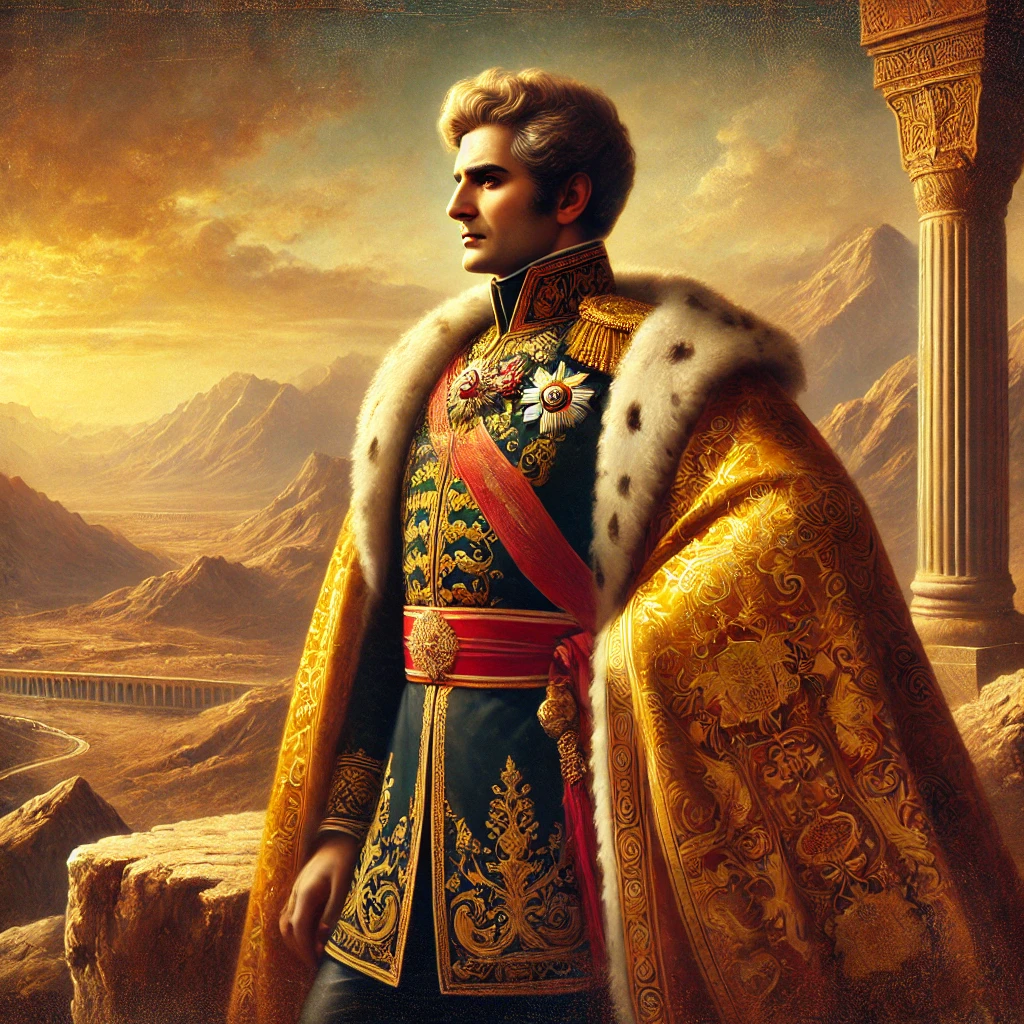
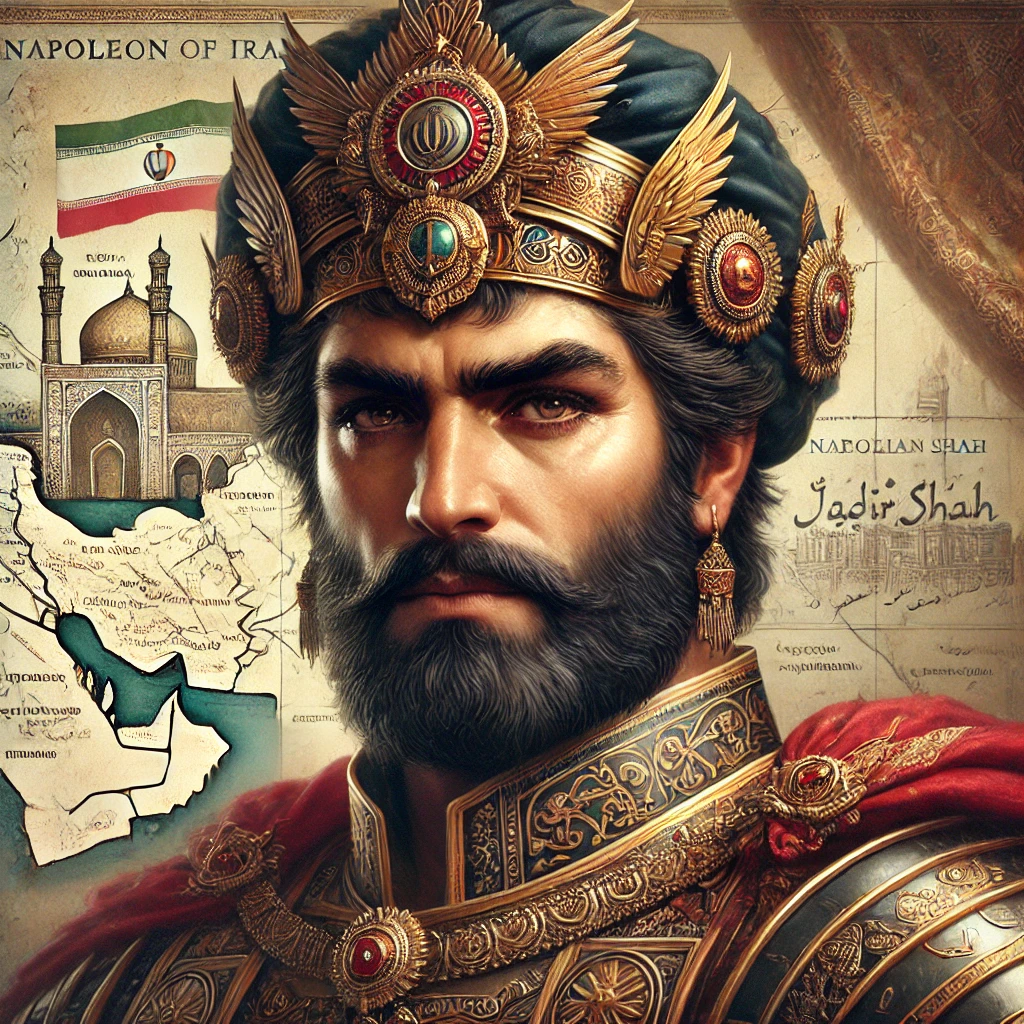
Nadir Shah (1688-1747)

Nadir Shah (1688–1747) – Life, Conquests, Administration, and Legacy

Nadir Shah (1688–1747)

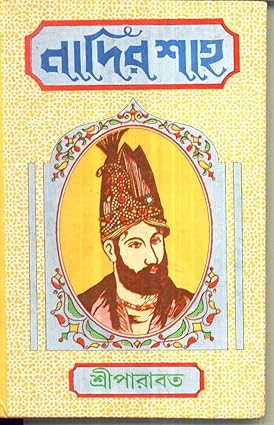
Nadir Shah was a powerful warrior, commander, and ruler of Persia (modern Iran). Born as Nadir Quli, he founded the Afshar dynasty and earned the title “Napoleon of Iran.” His extraordinary military skills, conquests, and leadership etched his name permanently into world history.

Characteristics and Major Events of Nadir Shah

Political Rise

Nadir Shah was born into a humble shepherd family. Through sheer military brilliance, he unified Iran after the collapse of the Safavid Empire and established the Afshar dynasty. His strategic mind and courage lifted him from poverty to power.

Invasion of India (1739)

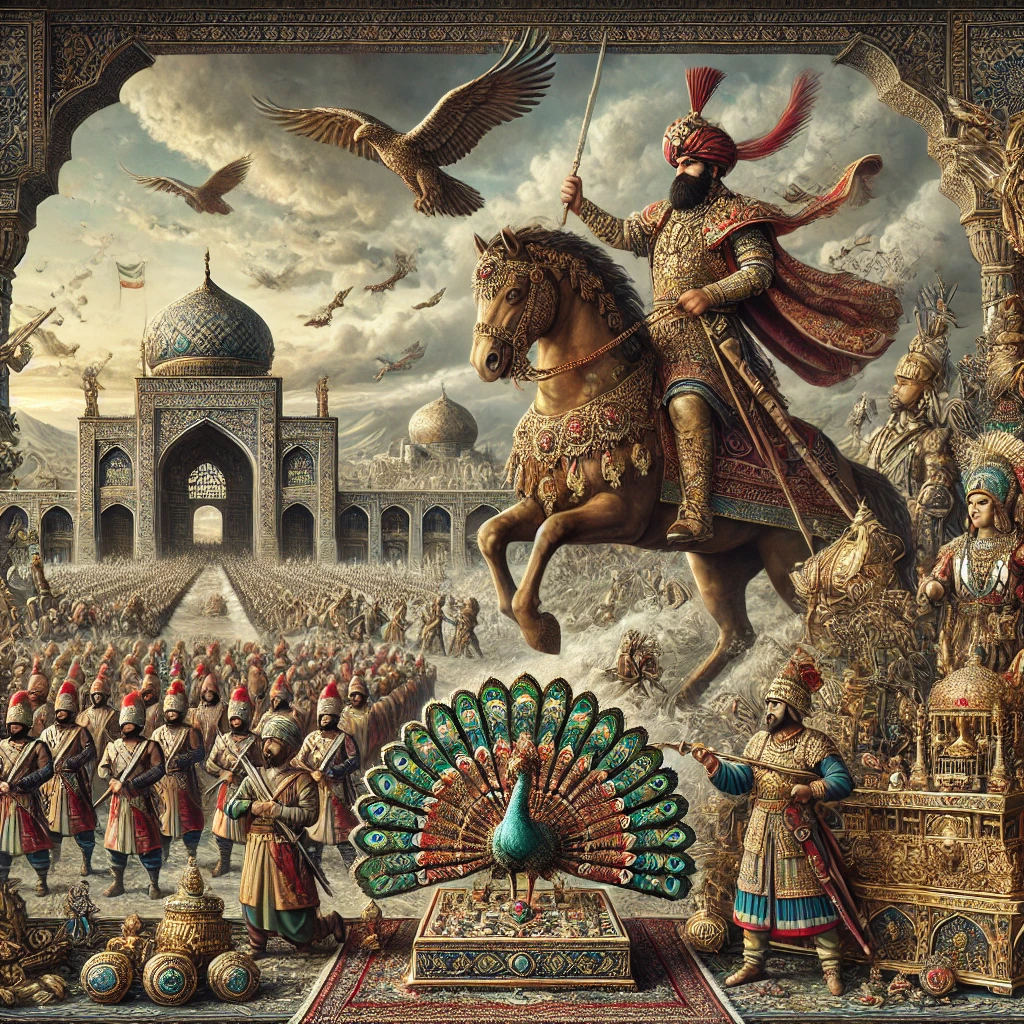
The 1739 invasion of India remains one of the most discussed events in Asian history. Nadir Shah defeated Mughal Emperor Mohammed Shah Rangeela and captured Delhi. He seized unimaginable wealth, including the famous Kohinoor Diamond and the Takht-e-Taous (Peacock Throne), taking them back to Persia.

Military Strategies

His warfare style combined speed, intelligence, and fearlessness. His army was disciplined, agile, and strategically superior, enabling him to defeat large empires.

Conquests

Nadir Shah expanded his empire by conquering vast regions of Central Asia, India, and parts of the Ottoman Empire. His victories made Persia one of the most formidable powers of the 18th century.

Death

Due to his increasing cruelty, harsh taxation, and suspicion towards his own officers, Nadir Shah was assassinated by his generals in 1747.

History remembers him as a genius military strategist, though his excessive greed and brutality made his rule controversial.

Early Life

Nadir Shah was born on 22 October 1688 in Khorasan (north-eastern Iran). His father died when he was young, forcing him into a life of hardship. Despite poverty, Nadir trained himself as a skilled fighter and eventually rose to prominence through his bravery and talent.

Rise to Power

After the fall of the Safavid Empire, Nadir restored unity in Persia. He defeated rebels, external invaders, and reclaimed lost territories. With the support of Safavid ruler Tahmasp II, he freed Persia from enemies and eventually declared himself the king in 1736, establishing the Afshar dynasty.

Military Campaigns and Conquests

Conquests in Central Asia and the Ottoman Empire

Nadir Shah launched successful campaigns against the Ottoman Empire and Russia. He strengthened Persia’s western borders and regained territories lost during earlier conflicts.

Invasion of India (1739)

Nadir Shah capitalized on the weak political and military condition of the Mughal Empire. Key events include:

  • Crushing the Mughal army in the Battle of Karnal near Panipat.
  • Capturing Delhi in March 1739.
  • Ordering a massive massacre during unrest in Delhi.
  • Seizing priceless treasures—Kohinoor, Darya-i-Noor, and the Peacock Throne.

Other Expansions

He conducted further campaigns in Afghanistan, Central Asia, and other parts of the Indian subcontinent, continuing to widen his dominion.

Rule and Brutality

Nadir Shah’s reign is known for both administrative reforms and extreme cruelty. He modernized the army, restructured taxation, and maintained strict discipline. However, his suspicious nature led him to punish officers and nobles harshly, fueling internal resentment.

Death

His tyrannical actions turned even his trusted generals against him. In 1747, Nadir Shah was assassinated in his own camp. After his death, the Afshar dynasty weakened and the empire gradually collapsed.

Legacy of Nadir Shah

Nadir Shah remains one of history’s most formidable military commanders. His achievements include:

  • Huge military conquests and imperial expansion.
  • Seizure of legendary treasures like the Kohinoor.
  • A powerful yet unstable empire marked by brutality and fear.

His life stands as an example of how vision, courage, and strategy can lift a man from poverty to empire—but unchecked ambition can lead to downfall.

Read related article here: History of Mughal Empire – Decline and Challenges

Amazon Product
Top Amazon Product
Durable build and practical design with dependable performance — perfect for daily use with long-lasting reliability.
Buy on Amazon

Frequently Asked Questions (FAQ)

1. Who was Nadir Shah?

Nadir Shah was the founder of the Afshar dynasty and one of the greatest military commanders of Persia (Iran). He ruled from 1736 to 1747.

2. Why did Nadir Shah invade India?

He invaded India in 1739 due to the political weakness of the Mughal Empire and the lure of its immense wealth.

3. What treasures did he take from India?

He took the Kohinoor Diamond, Darya-i-Noor, immense gold, and the Peacock Throne.

4. Why was Nadir Shah considered cruel?

His harsh punishments, massacres, and suspicious behavior towards his own officials made him infamous for brutality.

5. How did Nadir Shah die?

Nadir Shah was assassinated by his own generals in 1747 due to dissatisfaction with his oppressive rule.

References

  • Historical records of Persia and Central Asia
  • 18th-century Mughal texts and chronicles
  • Scholarly studies on Afshar dynasty and Nadir Shah’s campaigns
Early Life of Nadir Shah – Struggles, Childhood, and Rise from Poverty

Early Life of Nadir Shah

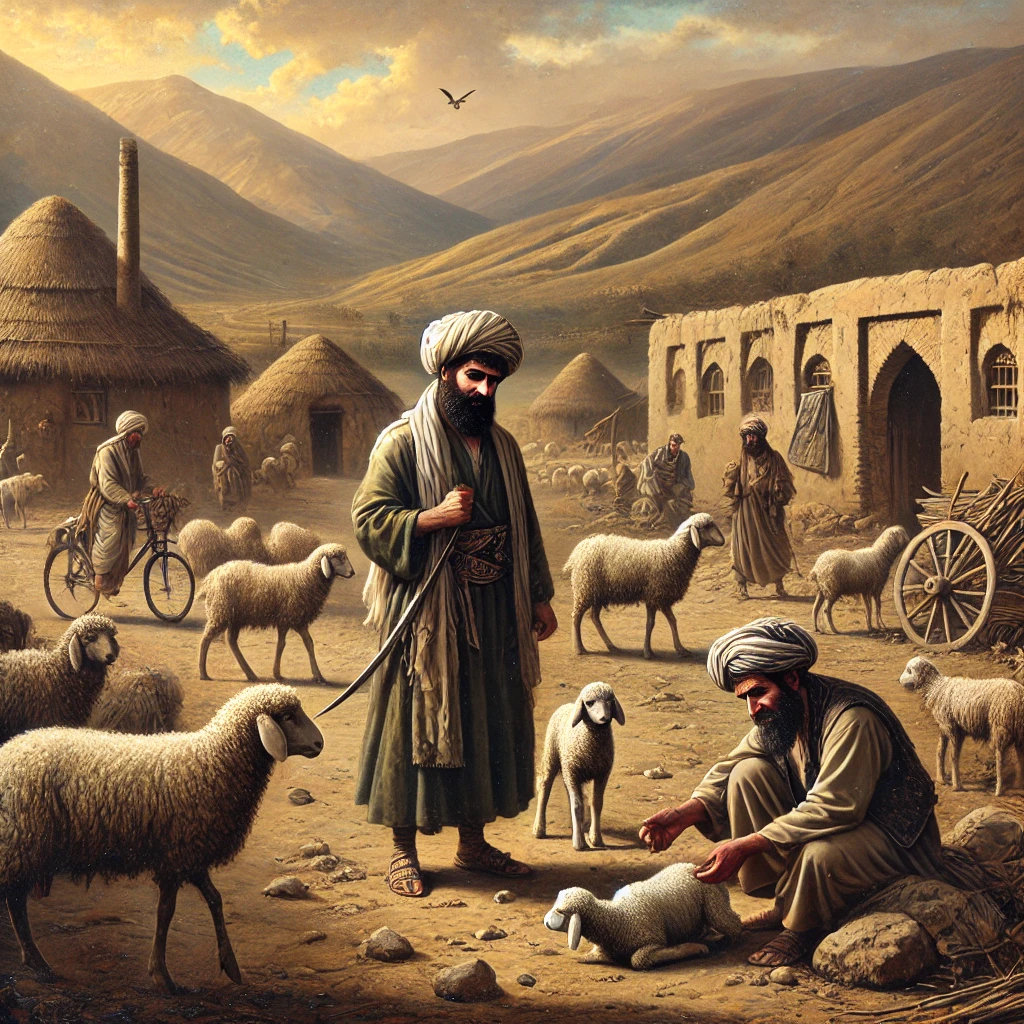
Nadir Shah’s early life was filled with struggle, poverty, and hardship. He was born on 22 October 1688 in the Khorasan region, in a small village named Qajar in present-day north-eastern Iran. Born into a simple and poor Turkmen shepherd family, he was given the name Nadir Quli. His father’s name was Imam Quli Beg.

Family and Childhood

Nadir Shah’s family lived in poverty, and he faced numerous challenges from a very young age. His father had limited resources, making it difficult to support the household.

  • When Nadir was only 13 years old, his father passed away.
  • The death of his father pushed the family into even greater hardship.
  • Due to poverty, Nadir did not have access to formal education.
  • He and his mother struggled to survive in extremely difficult circumstances.

Slavery and Difficult Conditions

After his father’s death, Nadir worked tirelessly to support his mother. In the midst of these struggles, he was once sold as a slave. However, his intelligence, courage, and determination helped him escape this situation.

During this period, he learned the essential arts of warfare—handling weapons, archery, and horse riding. These skills later became the cornerstone of his rise to power.

Entry into the Army and Early Experiences

Nadir’s military journey began when he joined the forces of local chieftains as a teenager. He took part in small conflicts and battles where he demonstrated bravery, discipline, and leadership.

Through his early experiences, Nadir developed a strong, warrior-like personality. His determination to prove himself in every challenge shaped him into a formidable military commander.

Learning from Struggles and Ambition

The hardships of Nadir Shah’s early life fuelled a deep ambition within him. He realised early on that:

  • A strong, organised army is the foundation of power.
  • Leadership, strategy, and discipline are essential for success.

These learnings became central to his future achievements as a ruler and military strategist.

Early Life Legacy

Nadir Shah’s early life illustrates that even the harshest circumstances can shape greatness when met with courage and determination. His experiences of poverty, slavery, and struggle transformed him into a leader who never gave up.

This resilience and confidence later defined his military campaigns and rule, making him one of the most notable figures in Persian history.

The Napoleon of Iran – Why Nadir Shah Received This Title

The Napoleon of Iran

Nadir Shah, famously known as the “Napoleon of Iran”, earned this title because of his extraordinary military skills, strategic victories, and exceptional leadership. The comparison with Napoleon Bonaparte highlights how both leaders transformed their nations through disciplined armies, bold conquests, and unique wartime strategies. The life and achievements of Nadir Shah remain a golden chapter in the history of Iran.

Why Was Nadir Shah Called the “Napoleon of Iran”?

1. Military Skills and Strategic Brilliance

Nadir Shah transformed Persia into a powerful military nation. His strategies, known for speed and precision, continue to inspire military historians even today.

  • He reorganized the weak and scattered Persian army into a strong, disciplined force.
  • Like Napoleon, he personally led his troops on the battlefield.
  • His leadership, courage, and tactical intelligence became the foundation of his success.

2. Reviving Persia’s Political Situation

Just as Napoleon brought stability to France during an era of turmoil, Nadir Shah united Persia after the collapse of the Safavid Empire.

  • He protected Persia from internal rebellions and external enemies.
  • He united diverse regions and ethnic groups under his rule.
  • His leadership restored order and confidence among the people of Persia.

3. Similarities in Conquests

Nadir Shah, through sheer military skill, conquered several territories just as Napoleon did across Europe.

  • He expanded Persia into Central Asia, India, and parts of the Ottoman Empire.
  • In 1739, he defeated the Mughal army in the Battle of Karnal and captured Delhi.
  • Like Napoleon, he challenged powerful empires and emerged victorious in multiple campaigns.
Amazon Product
Premium Amazon Product
Excellent build quality with a sleek design and reliable performance — ideal for everyday use and long-lasting durability.
Buy on Amazon

4. Economic Gain and Plunder

Nadir Shah brought immense wealth to Persia through his conquests—especially after the invasion of Delhi.

  • He seized treasures such as the Kohinoor Diamond and the Takht-e-Taous (Peacock Throne).
  • This enormous wealth strengthened Persia’s economy.
  • Similarly, Napoleon’s conquests brought economic and political power to France.

5. Military and Administrative Reforms

Both rulers introduced reforms that modernized their respective nations.

  • Nadir Shah modernized the Persian army with improved weapons and strict discipline.
  • He restructured the tax system for better administration.
  • Napoleon introduced major military, legal, and social reforms in France.

Similarities Between Nadir Shah and Napoleon

SpecialtyNadir ShahNapoleon Bonaparte
Military LeadershipOrganized and strengthened the Persian army.Built the strongest army in Europe.
ConquestsIndia, Afghanistan, Central Asia, and parts of the Ottoman Empire.Conquered most of Europe.
Administrative ReformsTax reforms, disciplined military structure.Legal, administrative, and social reforms.
Controversy and BrutalityKnown for cruelty and the plunder of Delhi.Criticized for wars and hunger for power.
DownfallAssassinated by his own soldiers due to suspicion and cruelty.Defeated at Waterloo and exiled.

Weaknesses of Nadir Shah

1. Extreme Cruelty

Despite his achievements, Nadir Shah’s rule is marked by extreme harshness. His severe punishments created widespread fear and dissatisfaction among the people.

2. Suspicion Towards His Own Men

His habit of doubting his officers and close associates became a major weakness. This eventually led to conspiracies and his assassination.

3. Lack of Political Stability

He failed to establish a stable and long-lasting administrative system. After his death, Persia once again fell into instability.

Legacy

Being called the “Napoleon of Iran” is a tribute to Nadir Shah’s unmatched military brilliance and leadership. His victories and reforms strengthened Persia and made it a dominant power during his reign.

However, his cruelty, ambition, and harsh rule made his legacy controversial. His story teaches us that true greatness requires not only victory on the battlefield, but also compassion, trust, and stable governance.
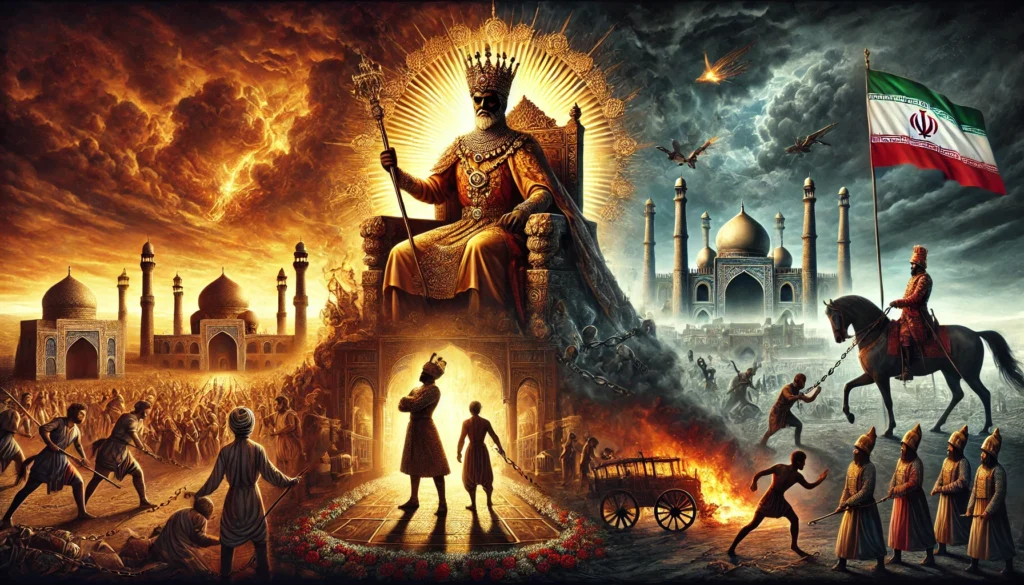
Nadir Shah’s Political Rise – How He Became the Ruler of Persia

Nadir Shah’s Political Rise

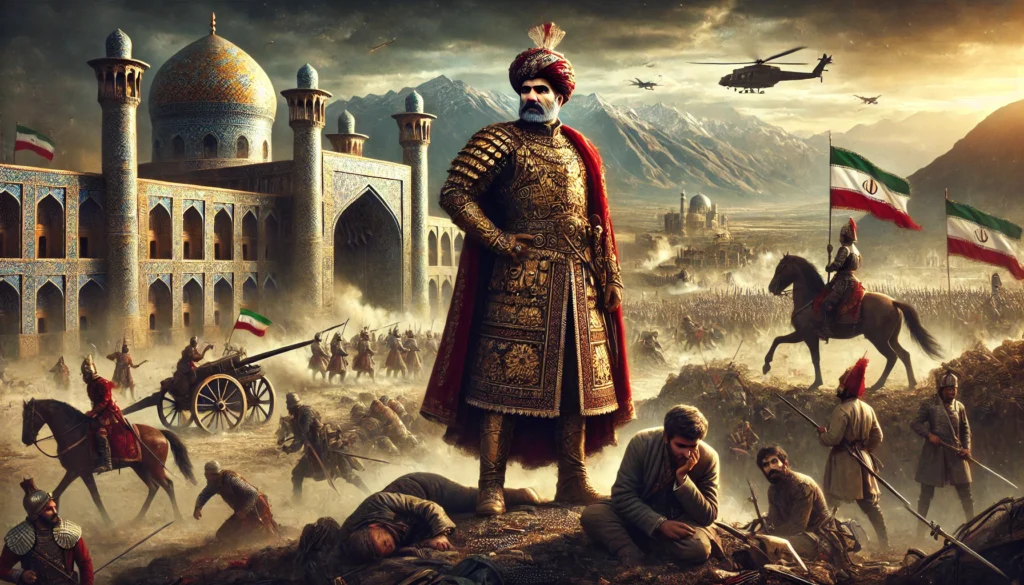
Nadir Shah’s political rise was the result of his extraordinary military skill, strategic vision, and exceptional leadership. His journey began in 18th-century Persia (present-day Iran) during the decline of the Safavid Empire. At that time, Persia was suffering from political instability, internal rebellions, and invasions from foreign powers. Nadir Shah used this chaotic environment to carve his path to dominance.

Condition of the Safavid Empire

By the early 18th century, the Safavid Empire had weakened significantly. Due to military inefficiency, corruption, and poor administration, Persia became vulnerable to foreign attacks.

  • The Ottoman Empire and Afghan tribes occupied large territories of Persia.
  • In 1722, the Afghan Ghilzai tribe captured Isfahan, the capital, and dethroned Shah Sultan Husayn of the Safavid dynasty.
  • Persia descended into chaos as rival forces fought for power.

Rise of Nadir Shah

Initial Military Service

Nadir Shah began his military career under a local chieftain. His bravery, discipline, and tactical brilliance quickly earned him recognition.

  • He participated in local battles and gradually strengthened his personal army.
  • His growing reputation made him a promising military leader.

Alliance with Tahmasp II

Tahmasp II, the son of the dethroned Shah Sultan Husayn, sought to reclaim his throne and restore the Safavid Empire.

  • Tahmasp II recognized Nadir Shah’s military talent and appointed him as his chief commander.
  • Nadir led successful campaigns against the Afghan Ghilzai tribe in eastern Persia.
  • He defeated them and restored Isfahan under Safavid control.

Victory Over the Afghans

In 1729, Nadir Shah achieved a decisive victory over the Afghans. This became his first major triumph and established him as one of Persia’s most powerful commanders.

  • Following his victory, he reinstated Tahmasp II as the ruler in Isfahan.

Campaign Against the Ottoman Empire

Nadir Shah launched strategic campaigns to reclaim territories from the Ottoman Empire, which had taken control of western Persia.

  • He freed important regions such as Kurdistan, Azerbaijan, and Khorasan.
  • His military successes made him the de facto leader of Persia.

Dethroning of Tahmasp II

Tahmasp II proved to be an incompetent ruler. To stabilize Persia, Nadir Shah removed him from power.

  • Nadir declared Tahmasp’s young son, Abbas III, as king.
  • Nadir Shah ruled as his guardian, gaining real control over the empire.

This marked a turning point in Nadir Shah’s political journey.

Being Declared King

In 1736, Nadir Shah officially dethroned Abbas III and proclaimed himself the King of Persia.

  • He established the Afshar dynasty, ending the Safavid rule.

Leadership and Administrative Efficiency

Nadir Shah’s leadership transformed Persia into a disciplined and powerful empire.

  • He unified Persia’s scattered regions and brought stability.
  • He modernized and strengthened the army with advanced weapons.
  • He reformed the tax system to improve governance.

Importance of His Political Rise

Nadir Shah’s political ascent reflects both his personal brilliance and the unstable political environment of Persia at the time.

  • He united a divided and weakened Persia.
  • He transformed the nation into one of the strongest military powers of his era.
  • His rise is often compared with great historical leaders who restored order during chaos.

Nadir Shah’s political rise stands as a testament to how determination, military talent, and strategic decision-making can elevate a leader to extraordinary heights.

Nadir Shah’s Rule and Brutality – Governance, Policies, and Decline

Nadir Shah’s Rule and Brutality

Nadir Shah’s reign (1736–1747) is known for powerful military achievements, administrative reforms, and territorial expansion. However, his rule also became infamous due to excessive brutality, harsh policies, and an overwhelming lust for power. While he re-established Persia as a dominant empire, his cruelty overshadowed many of his accomplishments.

Features of Governance

1. Creation and Expansion of Military Power

Nadir Shah built one of the strongest and most modern armies of his time.

  • He adopted new weapons and advanced warfare techniques.
  • His forces conquered territories across the Ottoman Empire, Afghanistan, and India.
  • His disciplined military campaigns made Persia a powerful state once again.

2. Economic Policies

Nadir Shah initiated financial reforms to stabilize the economy.

  • He reorganized the tax system to increase revenue.
  • The wealth obtained from the plunder of Delhi greatly strengthened Persia’s economy.
  • However, excessive taxation burdened the common people and created widespread discontent.

3. Religious Tolerance

Unlike many rulers of his time, Nadir Shah attempted to reduce sectarian tensions.

  • He worked to ease conflict between Shia and Sunni communities.
  • Presented himself as a secular ruler committed to unity.

4. Administrative Reforms

Nadir Shah tried to strengthen the central administration to bring stability.

  • He implemented strict policies across the empire.
  • Reduced the influence of local chiefs and jagirdars.
  • Introduced stronger systems of governance to maintain order.

Cruelty and Atrocities

1. Burden of Excessive Taxes

To finance continuous military campaigns and expand the empire, Nadir Shah imposed heavy taxes.

  • These taxes became unbearable for ordinary people.
  • Frequent revolts erupted due to financial pressure.
Amazon Product
Premium Amazon Product
Stylish design, good build quality and dependable performance — ideal for daily use with long-lasting durability.
Buy on Amazon

2. Suppression of Political Opponents

Nadir Shah’s suspicious nature made him ruthless toward anyone who posed a threat.

  • He executed many chieftains, courtiers, and even his own relatives.
  • His intolerance for opposition created fear within the empire.

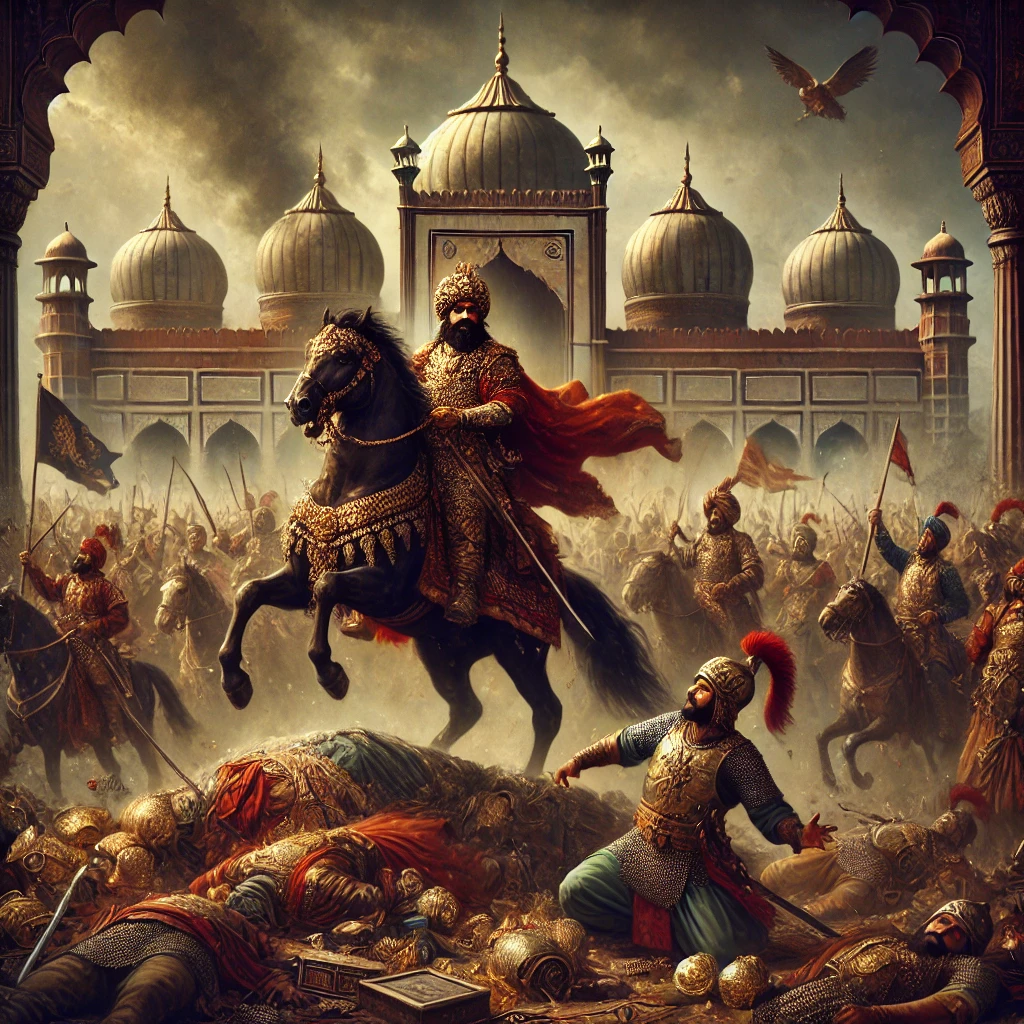
3. Loot and Massacre of Delhi (1739)

One of the most infamous events of his rule was the conquest and plunder of Delhi.

  • During the invasion, his army carried out mass killings of civilians.
  • He seized immense wealth including jewels, gold, and treasures.
  • This brutality remains one of the darkest chapters of his reign.

4. Cruelty Against Internal Rebellions

Towards the end of his reign, internal revolts increased across the empire.

  • Nadir Shah suppressed these revolts with extreme force.
  • Entire regions suffered harsh punishment for resisting his rule.

5. Cruelty Toward Family and Court

Nadir Shah’s suspicion extended to his own family.

  • He ordered his son, Reza Quli Mirza, to be blinded, accusing him of treachery.
  • Many of his trusted commanders were executed or punished.

Fall of the Empire Due to Cruelty

The excessive brutality of Nadir Shah eventually led to the collapse of support around him.

  • The people and nobility became dissatisfied with his harsh rule.
  • Revolts increased across different regions.
  • In 1747, Nadir Shah was assassinated by his own soldiers in a conspiracy.

Impact of His Cruelty and Rule

Nadir Shah’s rule strengthened Persia militarily and economically, but his harshness damaged his long-term legacy.

  • The Afshar dynasty weakened rapidly after his death.
  • Persia once again plunged into political instability.
  • His reputation became a mix of glory and brutality.

Conclusion

Nadir Shah’s rule was a double-edged sword. He rebuilt Persia into a powerful empire, yet his excessive cruelty, tyranny, and thirst for power led to his downfall. History remembers him as a brilliant commander and strategist whose achievements were overshadowed by his harsh and oppressive rule. His story teaches that military success and power can endure only when supported by justice, tolerance, and the goodwill of the people.
Legacy of Nadir Shah – Military Impact, Empire, and Historical Influence

Legacy of Nadir Shah

Nadir Shah’s legacy reflects both his extraordinary military achievements and the darker aspects of his cruelty and harsh policies. His reign strengthened Persia and expanded its territories, but after his death, the weaknesses of his rule became evident. His impact extended across Iran, Central Asia, and the Indian subcontinent, shaping the course of regional history.

Legacy of Nadir Shah

1. Military Achievements

  • Restoring Persia: Nadir Shah transformed a weak and fragmented Persia into a powerful military nation.
  • Military Strategy: His innovative tactics and combat skills are still studied in military history.
  • He achieved major victories over the Ottoman Empire, the Afghan Ghilzai, and the Mughals.
  • The Battle of Karnal and the plunder of Delhi highlight his military dominance in India.

2. Expansion of the Empire

  • Nadir Shah significantly expanded Persia’s borders.
  • His empire included Iran, Afghanistan, large parts of Central Asia, and parts of the Indian subcontinent.
  • These conquests elevated Persia to one of the greatest powers of the era.

3. Economic Impact

  • Loot of Delhi: The plunder of Delhi brought enormous wealth to Persia, including the Koh-i-Noor diamond and the Peacock Throne (Takht-i-Taus).
  • His short-term economic policies temporarily stabilized Persia’s finances.
  • However, excessive taxation created widespread dissatisfaction and triggered revolts.

4. Religious and Cultural Influences

  • Religious Tolerance: Nadir Shah attempted to reduce tensions between Shia and Sunni Muslims and foster unity.
  • Cultural Impact: His reign gave new energy to Persian art, architecture, and cultural expression.

5. Political Structure

  • He established a centralized administrative system that continued for some time after his death.
  • Nadir Shah founded the Afshar dynasty, although it weakened quickly due to poor leadership and instability after his demise.

Negative Legacy

1. Cruelty and Atrocities

  • Nadir Shah became infamous for his excessive brutality and harsh policies.
  • His suspicious nature and hunger for power led him to punish his family, soldiers, and court members mercilessly.
  • His reign instilled fear among the people, damaging his long-term reputation.

2. Decline of the Empire

  • The empire began to collapse soon after his death.
  • The Afshar dynasty he founded could not survive due to weak leadership and internal rivalries.
  • Persia once again fell into political chaos and instability.

3. Revolt and Discontent

  • His oppressive tax policies led to widespread revolts during his lifetime.
  • These uprisings weakened his authority and further destabilized the empire.
  • His brutal governance diluted the positive effects of his reforms.

Global Image of Nadir Shah

1. “Napoleon of Iran”

Nadir Shah is often called the “Napoleon of Iran” due to his military brilliance and leadership abilities. Similar to Napoleon, his downfall was rooted in his ambition and excessively harsh rule.

2. Impact in India

  • His invasion and plunder of Delhi severely weakened Mughal power.
  • The decline of the Mughal Empire accelerated, enabling regional powers like the Marathas to rise.

3. Impact on Central Asia and the Ottoman Empire

  • Nadir Shah’s military campaigns altered the political balance in Central Asia and the Ottoman Empire.
  • His conquests established Persia as a dominant force in these regions.

Conclusion

Nadir Shah’s legacy is a combination of greatness and controversy. On one hand, he is remembered as a brilliant general and strategist who elevated Persia into a strong military and political power. On the other hand, his cruelty, tyranny, and relentless hunger for power led to the collapse of his empire immediately after his death.

His story is both an inspiration—showing how determination and skill can elevate a leader—and a warning that power and conquest are sustainable only when supported by justice, tolerance, and the trust of the people.

Nadir Shah’s Invasion of India (1739) – Causes, Events & Consequences

Nadir Shah’s Invasion of India (1739)

Nadir Shah’s invasion of India in 1739 is one of the most devastating and widely discussed events in Asian history. It symbolized not only his military strength but also his expansionist ambitions. The invasion had long-lasting political and economic consequences for the Indian subcontinent. Nadir Shah’s primary objective was to loot India’s immense wealth and demonstrate his military superiority.

Background of the Attack on India

Weaknesses of the Mughal Empire

By the 18th century, the Mughal Empire had become extremely weak.

  • After Aurangzeb’s death in 1707, political instability and succession struggles weakened the empire.
  • Regional powers like the Marathas, Jats, and Sikhs grew stronger.
  • The administrative and military structure was collapsing.

Weakness of the Northwestern Borders

The Mughal frontier stretching toward Afghanistan and the Khyber Pass had become vulnerable.

  • Internal revolts created instability.
  • Border disputes with Persia exposed Mughal military weakness.

Objective of Nadir Shah

  • To acquire wealth and strengthen Persia’s economy.
  • To take advantage of the weakened Mughal court and its rich treasury.

Process of the Attack

1. Departure from Persia and Advance Toward India

  • Nadir Shah launched his Indian campaign in 1738.
  • He entered India through the Khyber Pass after crossing Kandahar and Ghazni.
  • The Mughal forces on the frontier failed to stop his advance.

2. Battle of Karnal (24 February 1739)

Mughal Emperor Mohammed Shah confronted Nadir Shah at Karnal, around 110 km from Delhi.

  • The Mughal army was larger but poorly organized.
  • Nadir Shah’s smaller yet disciplined and strategically superior army crushed the Mughals.
  • This battle exposed the complete military weakness of the Mughal Empire.

3. Capture of Delhi

  • After defeating the Mughals at Karnal, Nadir Shah entered Delhi without resistance.
  • Mohammed Shah surrendered, and Nadir Shah took control of the Mughal court.
Amazon Product
Excellent Amazon Product
High quality product with attractive design and reliable performance — perfect for everyday use with great durability.
Buy on Amazon

4. Loot of Delhi (March 1739)

  • Nadir Shah demanded heavy wealth from nobles, courtiers, and citizens.
  • On 22 March 1739, a revolt erupted in Delhi, during which some Persian soldiers were killed.
  • In retaliation, Nadir Shah ordered a brutal massacre of Delhi.
  • Thousands of innocent people were killed, and the city was ruthlessly looted.

Amount of Loot and Property Taken

Koh-i-Noor Diamond and Peacock Throne

Nadir Shah seized the famous Koh-i-Noor Diamond and the legendary Peacock Throne (Takht-i-Taus) from the Mughal treasury.

Estimated Wealth

It is estimated that he looted wealth worth nearly ₹70 crore (value of that era).

Impact on Delhi’s Economy

The massive plunder destroyed the economic stability of the Mughal Empire and weakened Delhi’s prosperity.

Consequences of the Invasion

1. Decline of the Mughal Empire

  • The invasion exposed the empire’s military and administrative weakness.
  • The Mughals never recovered their former strength, accelerating their decline.

2. Political Instability

  • The weakening of Mughal power gave rise to regional powers like the Marathas, Jats, and Sikhs.
  • Provincial governors began acting independently.

3. Economic Prosperity of Persia

  • The wealth taken from India temporarily boosted Persia’s economy.
  • However, due to Nadir Shah’s cruelty and instability, this prosperity did not last long.

4. Opening the Way for Future Invaders

  • Nadir Shah’s invasion exposed the vulnerability of the Indian frontier.
  • This encouraged invaders like Ahmad Shah Abdali to attack India multiple times.

Historical Importance of Nadir Shah’s Invasion

Decline of the Mughal Empire

The invasion marks the beginning of the rapid fall of the Mughal Empire.

Display of Military Might

Nadir Shah’s tactical genius placed him among the greatest military commanders in history.

Cultural Damage

Many cultural and architectural sites in Delhi were destroyed during the massacre and plunder.

Basis for Future Power Shifts

The invasion destabilized northern India, paving the way for the rise of regional powers and eventually British colonial rule.

Conclusion

Nadir Shah’s invasion of India was both a demonstration of military ambition and a turning point in Indian history. While the conquest brought immense wealth to Persia, it brought suffering, destruction, and political turmoil to India. The plunder of Delhi weakened the Mughal Empire, reshaped the political landscape, and initiated a chain of events that changed the future of the Indian subcontinent.

Kohinoor Diamond – History, Origin, Journey & Controversy

Kohinoor Diamond

The Kohinoor Diamond, also known as the “Mountain of Light,” is one of the most famous and valuable gemstones in the world. Known for its brilliance, size, and long history, the Kohinoor has been the center of political power, wars, and international controversy for centuries.

Origin and Discovery of Kohinoor

Origin

The Kohinoor originated in India. It is believed to have been discovered in the Golconda mines of Andhra Pradesh in the 13th century.

Early References

The earliest mentions of the Kohinoor appear during the rule of the Kakatiya dynasty, where it was embedded in the crown of a deity in their temples.

Historical Journey of the Kohinoor

1. Kakatiya Dynasty

  • The Kohinoor was part of the Kakatiya treasury.
  • Later, it passed into the hands of rulers of the Delhi Sultanate.

2. Mughal Empire

  • In the 16th century, Babur added the Kohinoor to his treasury, as recorded in the Baburnama.
  • Shah Jahan placed the diamond in the Peacock Throne (Takht-e-Taus).

3. Nadir Shah and Persia

  • In 1739, Nadir Shah looted the Kohinoor during his conquest of Delhi.
  • He renamed it “Koh-e-Noor” (“Mountain of Light”).
  • After his death, it passed into the hands of Afghan rulers.

4. Sikh Empire

  • In the 19th century, Maharaja Ranjit Singh took possession of the Kohinoor.
  • It became a symbol of Sikh prestige and royal power.

5. British Empire

  • After the British annexed Punjab in 1849, the Kohinoor was taken to England.
  • Queen Victoria added it to the British Crown Jewels.

Current Status

The Kohinoor is currently housed in the Tower of London as part of the British Crown Jewels. Its present weight is approximately 105.6 carats.

Disputes and Claims

India’s Claim

India demands the return of the Kohinoor, claiming it was taken illegally during British colonial rule.

Pakistan and Afghanistan

These countries also claim ownership due to the diamond’s historical association with their empires.

Britain’s Stance

The British government maintains that the Kohinoor was legally gifted to Queen Victoria.

Cultural Significance

Faith and Mythology

The Kohinoor is believed to bring misfortune to male rulers but good fortune to female monarchs.

Historical Heritage

The diamond is deeply connected to India’s cultural, political, and artistic history.

Conclusion

The Kohinoor is known as much for its brilliance as for its controversial past. It stands as a symbol of colonialism, imperialism, and the struggle for cultural restitution. Its story continues to inspire debates about history, justice, and identity.

Takht-e-Taus (Peacock Throne) – Construction, Plunder and Historical Legacy

Takht-e-Taus (Peacock Throne)

Takht-e-Taus, commonly known as the Peacock Throne, was the supreme symbol of Mughal royal splendour. Commissioned under Shah Jahan, it embodied unmatched craftsmanship, precious gems, and imperial authority.

Construction and Purpose

The Peacock Throne was commissioned during the reign of Emperor Shah Jahan (1628–1658) to showcase the grandeur of the Mughal court. Built as a seat of state, it symbolised the emperor’s divine authority and the artistic excellence of the era.

Time and Cost

  • The throne reportedly took years to craft, involving master artisans and vast materials.
  • Contemporary sources suggest the cost ran into immense sums for the period, reflecting its opulence.

Design and Materials

  • Constructed from gold and precious metals.
  • Encrusted with sapphires, emeralds, rubies, pearls, diamonds (including historically the Kohinoor and Darya-i-Noor).
  • The throne’s centerpiece was a carved peacock motif; colourful gems formed the feather patterns.

Role in Mughal Court

The Peacock Throne was placed in the Diwan-i-Khas at the Red Fort, Delhi. It served as both the ceremonial seat of the emperor and a powerful symbol of Mughal cultural and political supremacy.

Nadir Shah and the Plunder

In 1739, during Nadir Shah’s invasion, the Peacock Throne was seized and carried to Persia as a trophy. Following Nadir Shah’s assassination, the throne was dismantled and its gems dispersed—no complete original throne remains today.

Legacy and Cultural Significance

Though the physical throne no longer survives, the Peacock Throne endures as a powerful emblem of Mughal artistry, imperial authority, and the cultural losses associated with war and plunder.

Conclusion

Takht-e-Taus remains legendary: a combination of artistic achievement, imperial symbolism, and a poignant reminder of how war can erase even the greatest works of art.

Nadir Shah’s Conquest of Central Asia and Conflicts with the Ottoman Empire

Nadir Shah’s Conquest of Central Asia and the Ottoman Empire

Nadir Shah expanded Persian influence across Central Asia and confronted Ottoman power on Persia’s western front. His campaigns reshaped regional politics and strengthened Persian strategic position in the 18th century.

Campaigns in Central Asia

Nadir Shah launched operations in Khorezm, parts of modern Uzbekistan (including Samarkand), and neighboring territories.

Objectives

  • Secure important trade routes linking Persia and Central Asia.
  • Subdue rival clans and regional rulers to stabilize Persia’s northern frontiers.

Key Victories

  • Defeated various Uzbek chiefs and local rulers, securing control over strategic towns and trade corridors.
  • Control of these routes enhanced Persia’s commerce and revenues.

Conflicts with the Ottoman Empire

Nadir Shah’s campaigns also challenged Ottoman influence in border regions, recovering territories lost during earlier conflicts and asserting Persian strength.

Nature of Engagements

  • Series of military confrontations and manoeuvres along Persia’s western borders.
  • Focus on securing provinces such as Azerbaijan, Kurdistan, and strategic passes.

Outcomes

  • Although the Ottomans were a formidable rival, Nadir Shah’s victories destabilised Ottoman control in contested areas.
  • His campaigns forced the Ottomans to reassess frontier policies and regional alliances.

Strategic and Economic Impact

By controlling Central Asian routes and challenging the Ottomans, Nadir Shah strengthened Persia’s geopolitical role and improved access to commerce, which bolstered the empire’s wealth—at least in the short term.

Conclusion

Nadir Shah’s operations in Central Asia and against the Ottomans made Persia a central actor in Eurasian politics. His successes demonstrated how military power, when combined with strategic control of trade, could reshape regional influence.

Death of Nadir Shah – Assassination, Causes and Aftermath

Death of Nadir Shah

Nadir Shah’s violent death in 1747 marked the end of an era. His later years were dominated by suspicion, cruelty, financial strain, and increasing unrest—conditions that produced a fatal conspiracy among his own officers.

Final Years and Growing Discontent

  • Continuous military campaigns drained the imperial treasury and exhausted the population.
  • Heavy taxation and harsh punishments created widespread resentment among civilians and soldiers.
  • Internal court rivalries and doubts about succession fuelled conspiracies.

The Murder Plot

As discontent grew, key officers and members of his household were drawn into conspiracies. Allegations suggest involvement from close commanders and even family members.

Assassination (20 June 1747)

On 20 June 1747, while in the Khorasan region (accounts vary over exact location details), Nadir Shah was assassinated by conspirators among his troops. Historical narratives name several participants; the motive was largely to end his tyranny and halt the empire’s decline.

Causes and Immediate Consequences

  • Family disputes, suspicion, and cruelty were immediate causes behind the plot.
  • His death precipitated the rapid disintegration of the Afshar dynasty.
  • Local governors and rival factions asserted autonomy, returning Persia to political fragmentation.

Long-term Historical Impact

Nadir Shah’s assassination demonstrated the instability of highly centralised, autocratic systems that lack institutional legitimacy. While his military brilliance had temporary effects, the empire’s foundations were weak without broader governance structures.

Conclusion

The violent end of Nadir Shah serves as a historical lesson: extraordinary military success cannot substitute for durable political institutions, legitimacy, and the support of both elites and common people.

Nadir Shah – References and Further Reading

References & Further Reading on Nadir Shah

Amazon Product
Premium Amazon Product
Stylish design, strong build quality and reliable performance — ideal for daily use with long-lasting durability.
Buy on Amazon

Below is a curated list of books, articles, and reference works to support detailed study of Nadir Shah, his campaigns, and related historical topics.

Books

  • Lockhart, Laurence. Nadir Shah: A Critical Study Based Mainly upon Contemporary Sources. London: Luzac, 1938.
  • Axworthy, Michael. The Sword of Persia: Nader Shah, from Tribal Warrior to Conquering Tyrant. London: I.B. Tauris, 2006.
  • The Cambridge History of Iran, Vol. 7: From Nadir Shah to the Islamic Republic. Cambridge University Press.
  • Satish Chandra. Medieval India: From Sultanat to the Mughals (1526–1748).
  • Jadunath Sarkar. Fall of the Mughal Empire.

Encyclopedias & Online Resources

  • Encyclopaedia Britannica – entry on “Nadir Shah”.
  • Encyclopaedia Iranica – iranicaonline.org (detailed articles on Persian history).
  • BBC History – article on Nadir Shah and the invasion of India.
  • World History Encyclopedia – worldhistory.org (overview articles and primary-source summaries).

Academic and Educational Sources

  • NCERT History textbooks (Class 7–12) — Chapters on Mughal decline and 18th-century regional powers.
  • Peer-reviewed journal articles on 18th-century Persia and Central Asian dynamics (search JSTOR, Project MUSE for scholarly papers).

Leave a Comment

Your email address will not be published. Required fields are marked *

Scroll to Top