
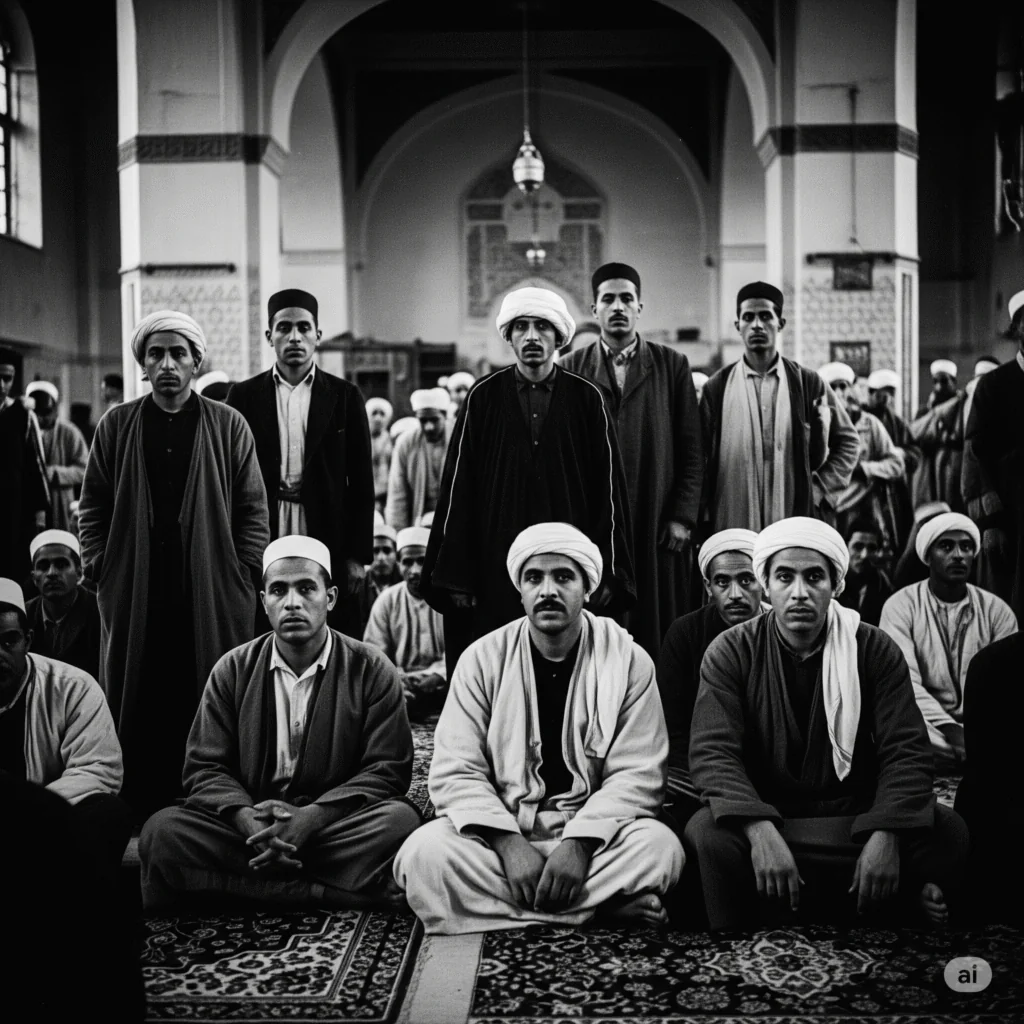
Muslim Brotherhood
The Muslim Brotherhood is an Islamic political and social organization founded in 1928 in Egypt. It is considered one of the most influential and controversial Islamic movements in the Middle East and the Islamic world. Its primary objective is to apply Islam to all aspects of life—politics, society, education, and law.
1. Establishment and Founder
Founder
Hassan al-Banna
Founded
1928, Ismailia (Egypt)
Initial Objective
To reorganize society according to the principles of Islam and oppose Western cultural influence and colonialism.
2. Ideology
Core Ideological Statement
❝ Allah is our objective, the Quran is our constitution, the Prophet is our leader, and Jihad is our path. ❞
The organization believes Islam is not only a religion but a complete system of life. According to the Brotherhood, Sharia (Islamic law) must be implemented in the governance of the state. Its concept of Jihad ranges from self-improvement to armed struggle, explained in various contexts.
3. Political Role
For a long time, the Muslim Brotherhood functioned as a religious and social organization. Over time, however, it also became politically active.
- It remained an illegal organization in Egypt for several decades but continued its social work and indirect political involvement.
- After the 2011 Arab Spring, the Muslim Brotherhood rose to political prominence.
4. The Brotherhood in Egyptian Government
In 2012, Mohammed Morsi, supported by the Muslim Brotherhood, became Egypt’s first democratically elected president. However, in 2013, the military removed him from power and subsequently banned the organization.
Following this, many of the organization’s leaders were either arrested or forced into exile.
5. International Impact
Branches and affiliated movements of the Muslim Brotherhood are active in several countries, including:
- Jordan
- Syria
- Palestine (Hamas)
- Tunisia
- Sudan
- Libya
- Qatar
Hamas
Hamas is a major Islamic organization in Palestine inspired by the Muslim Brotherhood.
International Perception
- Declared a terrorist organization by several countries such as Saudi Arabia, UAE, and Egypt.
- Recognized as a political movement in nations like Qatar and Turkey.
6. Criticism and Support
Criticism
- Accused of promoting religious extremism.
- Considered anti-democratic and anti-secular.
- Certain factions have been linked to violence and terrorism.
- Criticized for conservative stances on women’s and minority rights.
Support
- Active in public welfare, education, and healthcare initiatives in many countries.
- Strong grassroots organizational structure, giving it broad public support.
- Some scholars view it as an experiment in Islamic democracy.
7. Conclusion
The Muslim Brotherhood is a multi-dimensional organization linking religion, politics, and society. While many view it as a symbol of Islamic revival, others see it as a major challenge to both Western and Arab governments. Its role, intentions, and activities continue to generate debates and controversies worldwide.
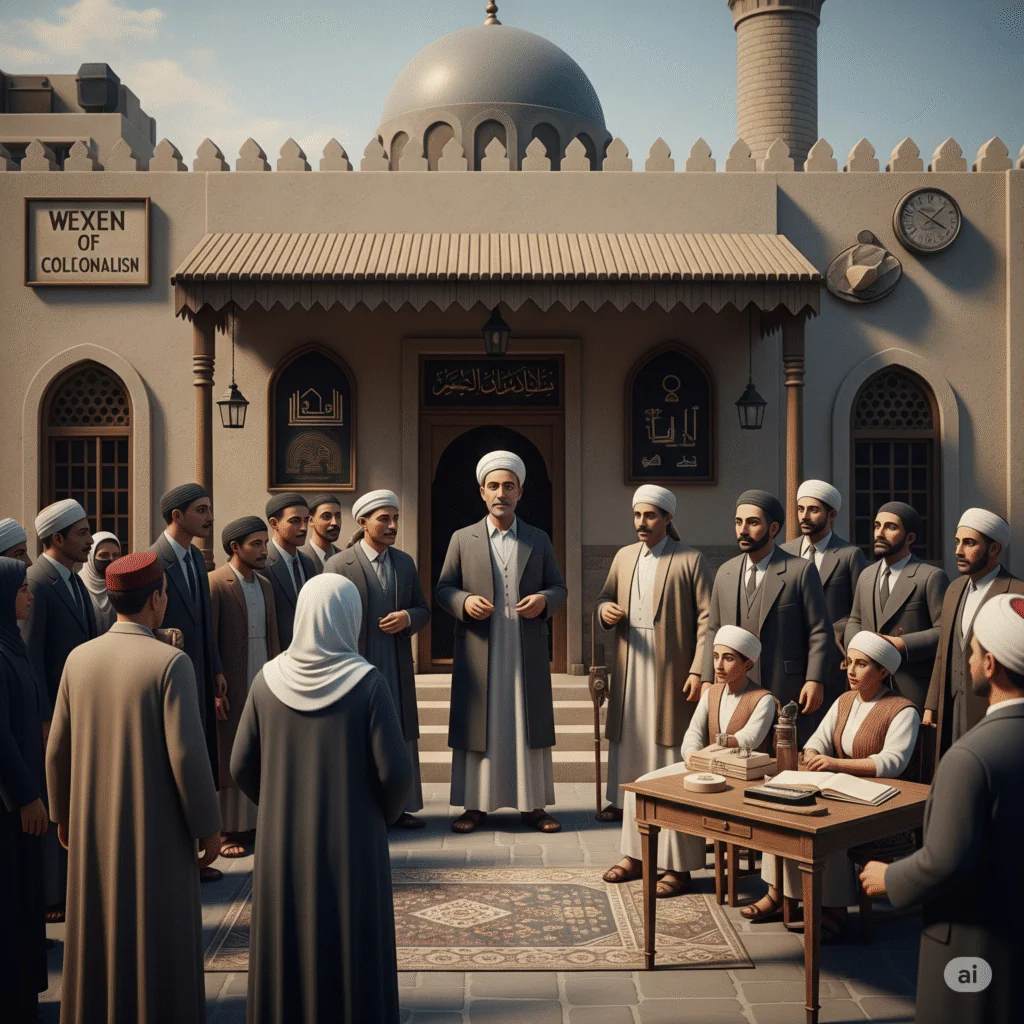
Establishment and Founder: Muslim Brotherhood
Founder of the Muslim Brotherhood
Establishment Year
1928 AD
Establishment Place
Ismailia, Egypt – A city located on the banks of the Indigo (Ismailia) Canal. During the period of British colonization, this region experienced significant social and political changes.
Founder: Hasan al-Banna (Hassan al-Banna)
Birth
October 14, 1906, Al-Mahalla Al-Kubra, Egypt
Death
February 12, 1949, Cairo (Assassinated during a political conspiracy)
Introduction to Hasan al-Banna
Hasan al-Banna was a teacher, religious thinker, and social reformer. He received his education from Al-Azhar University and was a strong advocate of Islamic revival. He believed that Western influence and colonialism had weakened the Islamic world.
His Objectives
- To implement Islamic principles in social and political life.
- To establish an organization that could revive Islamic values among the public.
Objectives of Establishment
- Reconstruction of society based on Islamic principles.
- Opposition to Western cultural influence and colonial dominance.
- Promoting Islamic awareness through education, healthcare, and social work.
- Establishing governance based on Sharia (Islamic law).

Ideology – Muslim Brotherhood's Ideological Foundation
The ideology of the Muslim Brotherhood is based on a comprehensive Islamic worldview. According to the organization, Islam is not limited to worship alone—it provides guidance for politics, society, law, education, economy, and all aspects of human life.
Main Motto (Ideal Sentence)
❝ Allah is our target, the Prophet (Muhammad ﷺ) is our leader, the Quran is our constitution, Jihad is our way, and death for the sake of Allah is our highest hope. ❞
Main Ideological Principles
1. Islam as a Complete System
The Muslim Brotherhood believes Islam is not only a religion but a complete system covering politics, law, culture, education, and justice. Every part of society, according to them, must be aligned with Islamic principles.
2. Establishment of Sharia (Islamic Law)
The Brotherhood holds that Sharia should be the supreme law in Islamic countries. The constitution, judiciary, and education system should all operate according to Islamic law.
3. Restoration of the Islamic Caliphate
One long-term goal of the Brotherhood is the establishment of an Islamic State (Caliphate) that unites the Muslim world. This idea became stronger after the fall of the Ottoman Empire.
4. Role of Jihad
The Brotherhood explains Jihad in multiple forms—from self-improvement and social struggle to armed resistance when necessary. While internal moral Jihad is emphasized, some extremist factions have interpreted it violently.
5. Opposition to Western Influence
The Brotherhood opposes Western culture, consumerism, secularism, and colonial forces, viewing them as threats to Islamic values. Their aim is to help Muslim societies revive their own cultural identity.
6. Peaceful Reform & Social Welfare
In its early phase, the Brotherhood focused on peaceful reform through education, healthcare, and poverty relief. These initiatives helped it gain strong grassroots support.
7. Strategic Relationship with Democracy
The Muslim Brotherhood has participated in elections in many countries (e.g., Egypt, Tunisia). However, their acceptance of democracy is considered strategic rather than ideological—they see it as a pathway to establishing an Islamic government.
Key Features of Muslim Brotherhood Ideology
| Element | Description |
|---|---|
| Religious Foundation | Based on the Quran and Sunnah |
| Political Objective | Establishment of an Islamic government |
| Social Approach | Reconstruction of society according to Islamic principles |
| Perceived Adversaries | Secularism, Western culture, Judaism, and colonialism |
| Internal Focus | Morality, discipline, education, and self-improvement |
| External Activities | Jihad, political struggle, and public mobilization |

Political Role – Muslim Brotherhood's Participation in Politics
The political role of the Muslim Brotherhood gradually expanded from a social movement to national and international political influence. Initially, the organization focused on religious and social reform, but over time it began striving for political power as well.
Initial Role (1928–1950)
- After its establishment, the Brotherhood focused on religious education, healthcare, and public welfare.
- In the 1940s, the organization became increasingly active politically.
- 1948: The Egyptian government dissolved the Brotherhood; in the same year, some of its members assassinated Prime Minister Nuqrashi Pasha.
- 1949: Hasan al-Banna was assassinated.
Confidential and Resistant Politics (1950–1980)
During President Gamal Abdel Nasser's rule, the Brotherhood faced severe restrictions:
- Members were arrested, tortured, and exiled.
- Sayyid Qutb emerged as a key ideological figure, giving the organization a more radical ideological direction.
- The Brotherhood’s activities became underground during this period.
Organized Political Entry (1980–2010)
Egypt
- Under Hosni Mubarak, the Brotherhood remained illegal but participated indirectly in politics.
- Their candidates contested elections as independents.
- 2005 Parliamentary Elections: The Brotherhood won 88 seats (around 20% of Parliament) — their biggest success to date.
- Their rise in popularity caused the Egyptian government to impose restrictions on their activities.
Other Countries
- Jordan: The Brotherhood’s political wing, the Islamic Action Front (IAF), functions as a legal party.
- Palestine: Hamas, inspired by the Brotherhood, won the 2006 elections and took control of Gaza.
- Tunisia: The Ennahda Party is one of the most prominent Brotherhood-influenced political groups.
Arab Spring and After (2011–present)
2011: Arab Spring – A New Era
After the fall of Hosni Mubarak, the Muslim Brotherhood gained the opportunity to participate openly in Egyptian politics. They formed the Freedom and Justice Party (FJP) to contest elections.
2012: Presidential Election
- The Brotherhood-backed candidate Mohamed Morsi became Egypt’s first democratically elected President.
- This was the organization’s biggest political achievement.
2013: Military Coup and Restrictions
- Due to dissatisfaction with Morsi’s policies and mass protests, the Egyptian military removed him from power.
- The Brotherhood was declared a terrorist organization.
- Thousands of members were arrested, exiled, or forced into clandestine operations.
Political Influence in Other Countries
| Country | Political Role |
|---|---|
| Jordan | Active as a legal political organization |
| Palestine (Gaza) | Hamas governs Gaza |
| Qatar & Turkey | Supportive of the Muslim Brotherhood |
| Saudi Arabia, UAE, Egypt | Declared the Brotherhood a terrorist organization |
| Tunisia | Ennahda Party came to power, later shifted to moderate Islamic politics |
Summary of Political Performance
| Aspect | Description |
|---|---|
| Main Strategy | Gain public support through social service, then enter politics |
| Political Wings | Freedom and Justice Party (Egypt), Islamic Action Front (Jordan), Ennahda (Tunisia) |
| Major Success | Winning the 2012 presidential election in Egypt |
| Major Failure | Removal from power in 2013 and subsequent banning |
Conclusion
The political journey of the Muslim Brotherhood spans from social reform to gaining political power and later being banned. Its rise and fall highlight the complexities and controversies surrounding religious movements entering political spaces, especially when they advocate governance based on Sharia.
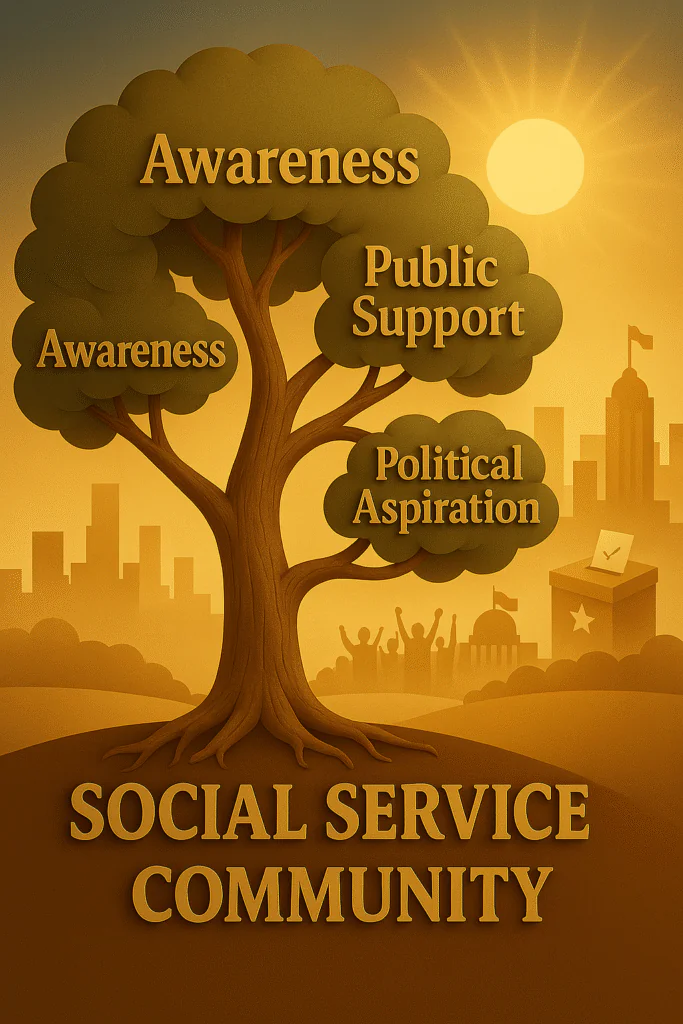
Egypt in Government – Muslim Brotherhood’s Entry into Political Power and Downfall
For nearly 84 years, the Muslim Brotherhood expanded its influence in Egypt through social service, religious awareness, and political opposition. The Arab Spring (2011) gave the organization its first real opportunity to enter state power directly.
1. Background: Arab Spring and the Fall of Hosni Mubarak (2011)
- In January 2011, Egypt witnessed massive protests under the influence of the Arab Spring.
- Hosni Mubarak, who had ruled since 1981, was forced to resign in February 2011.
- After his resignation, state power shifted to the Supreme Council of the Armed Forces (SCAF).
- Political parties were legalized, and the Muslim Brotherhood’s Freedom and Justice Party (FJP) emerged as the strongest group.
2. Elections and Entry into Power (2011–2012)
Parliamentary Elections (2011–12)
The Freedom and Justice Party won 235 out of 498 seats, becoming the largest political faction in Parliament.
Presidential Election (2012)
Dr. Mohamed Morsi, the Brotherhood’s candidate, won the election and became Egypt’s first democratically elected President in June 2012.
3. Mohammed Morsi’s Rule (2012–2013)
Main Achievements
- Removed several top military officers to reduce army influence.
- Initiated plans to combat unemployment and corruption.
- Opened dialogue with the Hamas leadership in Palestine.
Controversies and Growing Opposition
- In November 2012, Morsi issued a decree stating that his decisions were beyond judicial review — widely seen as authoritarian.
- Protests erupted over attempts to place Islamic law at the center of the new constitution.
- Secularists, Christians, liberals, and youth groups opposed his governance.
- Economic conditions worsened, tourism collapsed, and foreign investment dropped sharply.
4. The Military Coup and Removal from Power (2013)
- 30 June 2013: Millions protested against Morsi after one year in office.
- 3 July 2013: Army chief General Abdel Fattah al-Sisi removed Morsi and suspended the constitution.
5. Restrictions and Repression of the Muslim Brotherhood
- The Brotherhood was declared a terrorist organization.
- Morsi and many top leaders were arrested; several received death sentences.
- The organization was banned legally, and its networks were dismantled.
- During the Rabaa al-Adawiyya sit-in dispersal (August 2013), hundreds of protesters were killed.
6. Summary
| Aspect | Description |
|---|---|
| Beginning | Came to power through strong public support and elections |
| Key Reason for Downfall | Islamic constitution, power centralization, economic crisis |
| Main Opponents | Liberals, military, secular class, minorities |
| Result | Military coup, bans, repression, arrests |
The Brotherhood’s rule in Egypt was brief (just one year), but it demonstrated that a religious organization could rise to power through democratic processes. However, failure to balance governance with public expectations led to its rapid downfall.
International Effect – Muslim Brotherhood’s Global Impact and Responses
The influence of the Muslim Brotherhood extended far beyond Egypt. Its ideology, organizational model, and activities spread across multiple Muslim-majority countries. Some nations viewed it as a symbol of Islamic awakening and democratic reform, while others considered it a source of instability and extremism.
1. Influence in the Middle East and Arab World
Palestine – Hamas
- Hamas is considered the Palestinian branch of the Muslim Brotherhood.
- Formed in 1987, Hamas adopted armed resistance against Israel.
- Won the 2006 Palestinian parliamentary elections and took control of Gaza.
- Declared a terrorist organization by the U.S., Israel, EU, and others.
Jordan
- The Brotherhood is legally recognized in Jordan.
- Its political wing, the Islamic Action Front (IAF), is a major opposition party.
- However, the government has imposed certain limitations on its activities.
Tunisia – Ennahda Party
- Inspired by Brotherhood ideology but evolved into a more moderate and democratic movement.
- Came to power after the 2011 revolution.
- Later cooperated with secular groups, integrating into mainstream politics.
Saudi Arabia, UAE, and Egypt (after 2013)
- These countries formally designated the Muslim Brotherhood as a terrorist organization.
- They accuse it of threatening state stability and monarchy systems.
- Financial support, media access, and organizational activities were restricted.
Turkey
- Turkey’s AKP (under Erdoğan) shares ideological similarities with the Brotherhood.
- Provided asylum and support to Brotherhood leaders after the 2013 coup.
- Pro-Brotherhood media outlets operate from Turkey.
Qatar
- One of the strongest political and economic supporters of the Brotherhood.
- Al Jazeera amplified Brotherhood voices on the global stage.
- This support caused diplomatic tensions between Qatar and other Gulf countries.
2. Influence in Europe and the Western World
Europe
- The Brotherhood operates as religious and social organizations across Europe.
- Often accused of promoting radicalization and “Islamization.”
- The UK reviewed its activities but did not classify it as a terrorist organization.
United States
- Several U.S. Islamic organizations and advocacy groups are linked ideologically to the Brotherhood.
- Debates continue whether the Brotherhood is a moderate Islamic movement or a hidden threat.
- Proposals to label it a terrorist organization (2017–2020) did not materialize.
3. Influence on International Islamic Movements
- Inspired organizations such as Ikhwanul Muslimeen, Jamaat-e-Islami, and Hizb-ut-Tahrir.
- South Asian groups like Jamaat-e-Islami (Pakistan and Bangladesh) reflect Brotherhood-influenced thought.
- International human rights bodies criticized Egypt for harsh repression of Brotherhood members.
4. Global Reactions (Short Comparison)
| Region / Country | Response |
|---|---|
| Egypt, Saudi Arabia, UAE | Declared as a terrorist organization |
| Turkey, Qatar | Provided support and asylum |
| Jordan, Tunisia | Permitted political participation |
| Europe, America | Concerns over ideology but legal operations allowed |
| Palestine (Gaza) | Hamas in power; armed conflict continues |
Conclusion
The Muslim Brotherhood is a movement whose influence extends from the Middle East to Europe. Some consider it a representative of Islamic democracy, while others view it as a source of political instability. Its global impact depends on how individual countries define secularism, Islamism, and national security.

Criticism and Support – Understanding the Debates Around the Muslim Brotherhood
The ideology and activities of the Muslim Brotherhood have always generated intense debate, controversy, and division. Some consider it a symbol of Islamic awakening and democratic participation, while others view it as a source of radicalism and political instability. Its criticism and support arise from political, ideological, religious, and international perspectives.
Criticism
1. Religious Fanaticism and Islamisation
- The Brotherhood is accused of using democracy only as a tool to gain power, after which it aims to implement Islamic theocracy.
- Its emphasis on Sharia-based governance is viewed as opposed to secularism, women’s rights, and minority freedoms.
2. Violence and Terrorism Links
- Some branches or affiliated groups have been accused of involvement in violent actions, assassinations, and bombings.
- Hamas, considered the Brotherhood’s Palestinian branch, is designated as a terrorist organization by many countries.
- Egypt, Saudi Arabia, and the UAE believe the Brotherhood poses a national security threat.
3. Secretive Organizational Structure
- The Brotherhood’s hierarchical and disciplined structure is often described as a “state within a state.”
- Governments fear it because of its closed networks and hard-to-monitor global links.
4. Authoritarian Tendencies in Power
- During Mohammed Morsi’s presidency (2012–13), the Brotherhood faced accusations of centralizing power and suppressing opposition.
- This contributed to distrust among civil society and political groups.
5. Security Concerns in Western Countries
- Some analysts claim the Brotherhood inspires young Muslims toward extremism behind a moderate façade.
- Certain agencies describe it as promoting “soft jihad.”
6. Women and Minority Rights
- The Brotherhood is viewed as holding a conservative stance against women’s equality and leadership.
- Its approach toward non-Muslim minorities, especially Coptic Christians, is criticized as discriminatory.
7. International Instability and Gulf State Conflicts
- Saudi Arabia, Egypt, and the UAE consider the Brotherhood a destabilizing force.
- Its alliances with Turkey and Qatar have created regional diplomatic tensions.
8. Instrumental Use of Democracy
- Critics argue the Brotherhood uses democracy only as a means to power, not as a long-term commitment.
- Famous criticism: “One person, one vote, one time.”
Support
1. Deep Public Penetration Through Social Services
- For decades, the Brotherhood has provided education, healthcare, poverty relief, and emergency services.
- In many regions, it filled gaps where governments failed, earning public trust.
2. Participation in Democratic Processes
- The Brotherhood contested elections in Egypt, Jordan, Tunisia, and other countries.
- Morsi’s election in Egypt (2012) demonstrated its acceptance of democratic mechanisms.
3. Rise as an Alternative Political Force
- In countries ruled by military or authoritarian regimes, the Brotherhood became the primary opposition voice.
- People viewed it as a political alternative where democratic options were limited.
4. Promotion of Ethical and Islamic Values
- The Brotherhood emphasizes morality, discipline, family values, and religious education.
- Members are often seen as socially active, organized, and service-oriented.
5. Sympathy Due to Political Persecution
- Widespread arrests, torture, and death sentences (especially after 2013) generated international sympathy.
- Human rights groups criticize harsh repression against Brotherhood members.
6. Ideological Flexibility and Modern Adaptation
- Some branches, such as Tunisia’s Ennahda, embraced democratic and secular-friendly politics.
- This shows the organization’s internal ideological diversity and adaptability.
7. Support from Qatar and Turkey
- Qatar provides financial, political, and media support (e.g., Al Jazeera).
- Turkey under Erdoğan offered asylum and public backing, especially after Egypt’s 2013 coup.
Comparison of Critical and Supportive Perspectives
| Subject | Criticism | Support |
|---|---|---|
| Government Approach | Authoritarian tendencies | Democratic participation |
| Religious Approach | Radicalism and forced Islamisation | Ethics and societal improvement |
| Social Role | Hidden agenda behind services | Support for the poor and needy |
| Violence Links | Terror-related associations | Only some branches act violently |
| International Perception | Source of instability | Symbol of Islamic democracy and empowerment |
Conclusion
The Muslim Brotherhood remains one of the most debated religious-political movements in the world. Its criticism stems from concerns over authoritarianism, extremism, hidden agendas, and threats to democratic institutions. Its support arises from its social work, public connections, ethical messaging, and political persecution.
Evaluating the Brotherhood requires considering not only its political decisions but also its social contributions, grassroots relations, and ideological evolution.
Conclusions – Muslim Brotherhood Overall Analysis
The Muslim Brotherhood remains one of the most influential, controversial, and multilayered organizations in modern Islamic movements. Founded in 1928 by Hasan al-Banna in Egypt, its original goal was to build a social and political system grounded in Islamic principles.
Main Points of Review
- The organization combines religious faith, social service, and political activism.
- Its ideological foundation lies in considering Islam as a complete system of life—including religion, politics, society, law, and education.
- The Brotherhood attempted to gain power through democratic means, but its governance period in Egypt remained highly controversial.
- Its 2012–13 rule in Egypt marked its peak, followed by a military coup and a wave of restrictions.
Controversy and Contradictions
- Some view the Brotherhood as a hope for Islamic democracy, while others see it as a warning sign of religious authoritarianism.
- Supporters point to its service-driven work, ethical emphasis, and political persecution.
- Critics highlight allegations of radicalism, hidden agendas, and misuse of democratic processes.
Present Situation
- In countries like Egypt, Saudi Arabia, and the UAE, the Brotherhood is banned and designated a terrorist organization.
- In Turkey, Qatar, and some European nations, its networks remain active.
- Its global branches continue to operate ideologically, though largely in secret or indirect forms.
Conclusion Statement
❝ Muslim Brotherhood is a movement that continuously seeks a balance between Islam, politics, and society. However, its methods and objectives generate not only support but also intense criticism. ❞
References
- Mitchell, Richard P. The Society of the Muslim Brothers. Oxford University Press.
- Kepel, Gilles. Jihad: The Trail of Political Islam. Harvard University Press.
- Wickham, Carrie. The Muslim Brotherhood: Evolution of an Islamist Movement.
- Dalacoura, Katerina. Islamist Terrorism and Democracy in the Middle East.
- UK Government. Muslim Brotherhood Review (2015).
- Carnegie Middle East Center – Research Papers on Muslim Brotherhood.
- Brookings Institution – Political Islam Research Reports.
- International Crisis Group – Reports on Egypt’s Muslim Brotherhood.
- Human Rights Watch. Rabaa Massacre Report (2013).
- BBC News – Timeline and analysis on the Muslim Brotherhood.
- Reuters – Reports on Egypt’s political developments (2011–2014).
- Al Jazeera English – Arab Spring & Muslim Brotherhood Coverage.
- The Guardian – Reports on Mohamed Morsi & Egypt coup (2013).
- New York Times – Arab Spring and Egypt political transitions.
- Amnesty International – Egypt crackdown and human rights reports.