

Corruption: Types, Causes, Effects and Prevention
An informative overview of corruption — its forms, causes, impact and practical steps that citizens and institutions can take to reduce it.
Introduction
Corruption refers to the misuse of entrusted power for private benefit. It weakens institutions, increases inequality and slows national development. Such unethical practices damage public trust and create long-term social and economic instability.
Major Forms
Political misconduct
When politicians or high officials misuse authority for personal gain, such as through bribery, scams or vote manipulation.
Administrative malpractice
Government officials demanding illegal payments, delaying work intentionally or ignoring established procedures.
Moral decline
When individuals prefer dishonest means over integrity and fairness.
Educational irregularities
Rigged admissions, fake certificates and examination cheating.
Economic offences
Black money transactions, tax evasion and financial manipulation in public contracts.
Root Causes
- Weak enforcement of laws
- Delay in judicial processes
- Lack of ethical education
- Poverty and unemployment
- Limited transparency in governance
- Absence of strong accountability mechanisms
Impact on Society and Economy
Economic slowdown
Misuse of authority reduces investment, causes policy failure and weakens economic growth.
Social inequality
Public resources are diverted unfairly, widening the gap between rich and poor.
Decline in public trust
Citizens lose confidence in institutions and democratic systems.
Weak moral standards
Unethical behaviour becomes normalized in daily life.
Reduced foreign investment
Investors hesitate to enter environments lacking transparency and stability.
Practical Prevention Measures
- Strict laws with speedy implementation
- Digital governance to reduce discretion
- Public awareness and civic education
- Strengthening institutions such as Lokpal and CVC
- Effective use of RTI for transparency
- Encouraging ethical leadership and responsible media
Conclusion
Eliminating this problem requires joint responsibility. Governments must enforce transparency and accountability, while citizens should reject unethical practices in everyday life. Only an honest and responsible society can ensure sustainable progress.
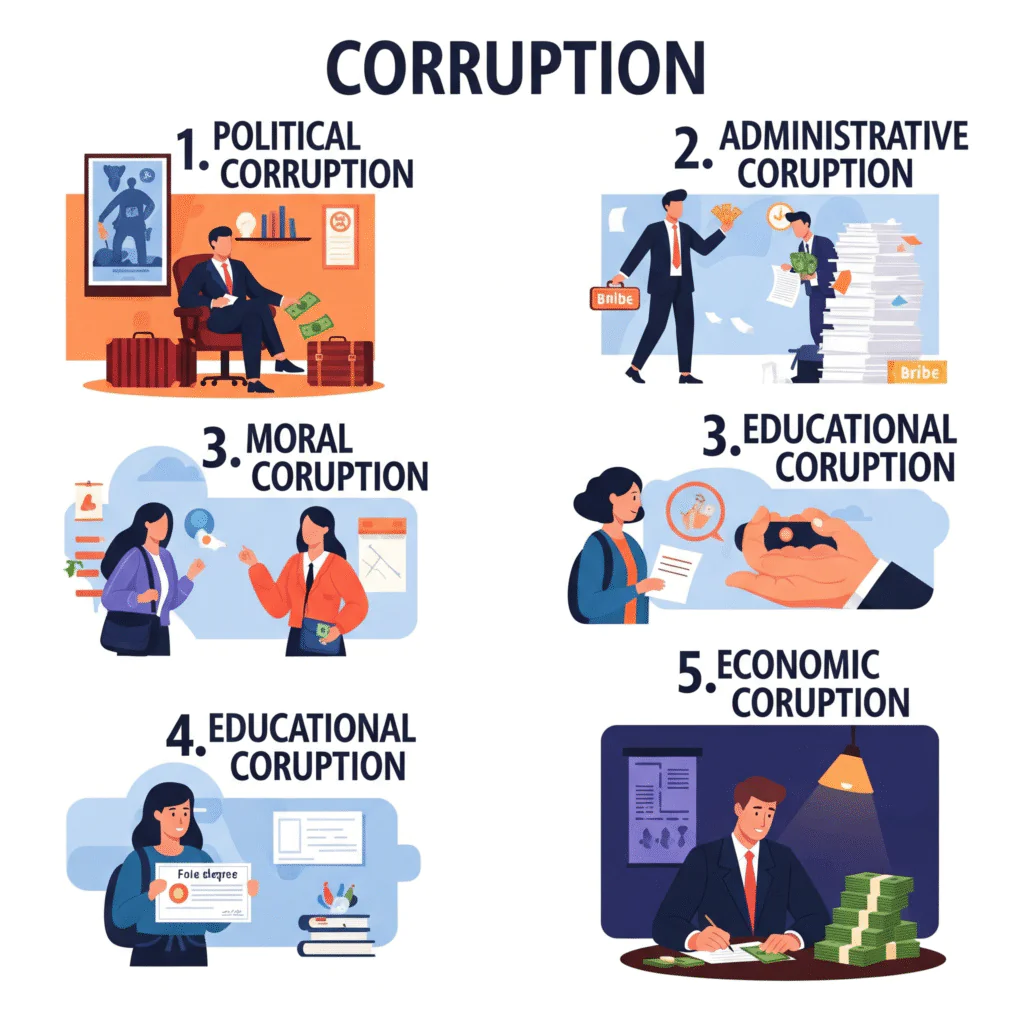
Types of Corruption
Corruption is one of the most serious challenges facing modern society. It weakens governance, damages economic development and erodes public trust. It refers to the misuse of authority or position for personal gain and can occur at every level of social and institutional life.
This unethical practice affects education, healthcare, administration, business and even the justice system. Its impact goes beyond financial loss—it undermines democratic values and social morality.
Political Corruption
When public representatives misuse power for personal or party benefit—such as vote buying or policy manipulation— it is considered political corruption.
Administrative Corruption
Government officials demanding illegal payments, delaying work intentionally or granting unfair advantages fall under administrative corruption.
Economic Corruption
Activities such as tax evasion, black money transactions and financial scams are examples of economic corruption.
Educational Irregularities
Fake degrees, paid admissions and examination manipulation reflect unethical practices in the education sector.
Judicial Misconduct
Accepting bribes to influence verdicts or delaying cases intentionally damages the credibility of the justice system.
Moral or Social Decline
When citizens adopt dishonest methods such as bribery or forgery to gain benefits, it reflects moral degradation.
Private Sector Malpractice
Corporate bribery, favouritism and internal fraud weaken transparency and fairness in private organisations.
Every form of corruption, regardless of scale, weakens the foundation of society and governance.
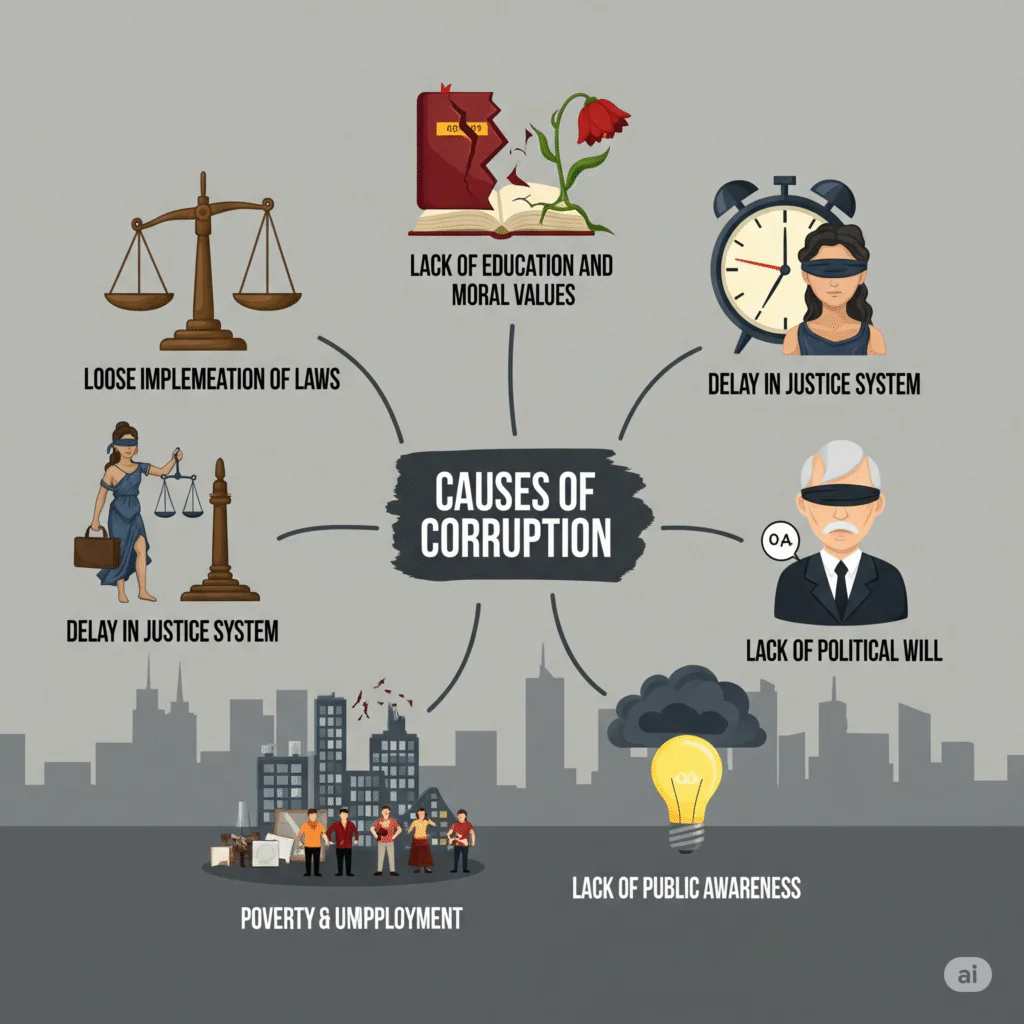
Causes of Corruption
Corruption arises due to a combination of social, economic, political and administrative weaknesses. Poor governance, lack of accountability and weak enforcement systems allow unethical practices to spread within institutions and society.
Poor Enforcement of Laws
Laws may exist, but ineffective implementation and delayed punishment reduce their impact. When consequences are weak, dishonest behaviour increases.
Lack of Political Will
If political leadership fails to take strict action, reforms remain incomplete and integrity mechanisms become ineffective.
Delay in the Justice System
Long trials and slow judicial processes reduce fear of punishment and weaken deterrence.
Lack of Ethical Education
Absence of moral values, honesty and civic responsibility in education encourages acceptance of unfair practices.
Unemployment and Poverty
Economic hardship may push individuals toward illegal income sources and misuse of authority.
Social Acceptance
When society normalizes bribery or favoritism, such behaviour spreads more rapidly.
Administrative Complexities
Complicated procedures and excessive red-tapism often encourage bribery to speed up processes.
Lack of Transparency
Limited public access to information and weak accountability systems allow unethical conduct to remain hidden.
Understanding these root causes is essential for designing effective reforms and building transparent governance systems.
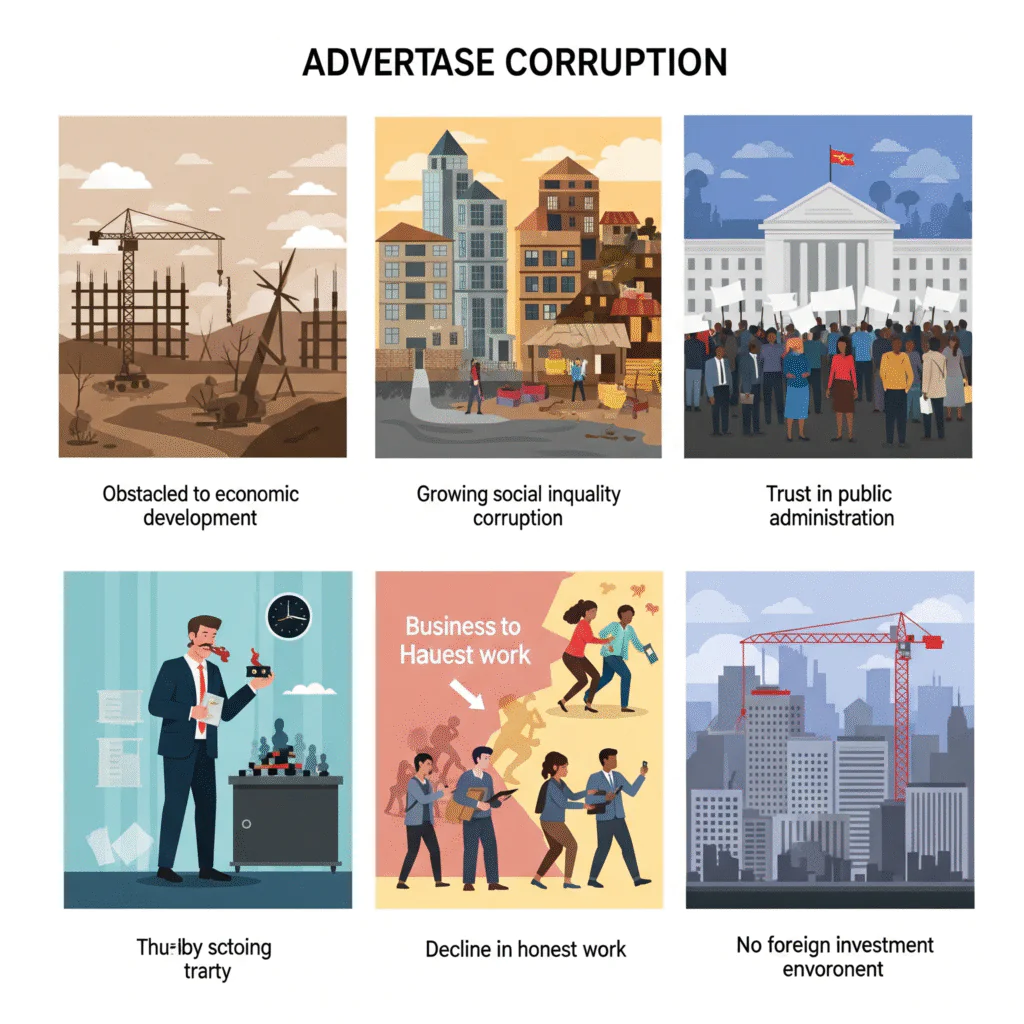
Effects of Corruption on Society and Governance
Corruption has far-reaching economic, social and political consequences. It slows development, weakens democratic institutions, reduces governance efficiency and damages public trust. Over time, these effects create instability and hinder national progress.
Economic Damage and Slow Growth
Misuse of public funds and unfair allocation of resources reduce productivity, discourage foreign investment and weaken long-term economic development.
Rising Social Inequality
Unethical practices benefit a small group of individuals, widening the gap between rich and poor and increasing dissatisfaction among citizens.
Loss of Trust in Democratic Institutions
When public officials engage in misconduct, citizens lose confidence in governance, justice systems and democratic accountability.
Moral and Ethical Decline
Observing dishonesty rewarded in public life encourages unethical behaviour, weakening moral standards across society.
Failure of Welfare and Development Schemes
Public programs in health, education and rural development often fail to reach intended beneficiaries due to leakages and mismanagement.
Administrative Inefficiency
Decision-making influenced by favoritism or personal gain reduces policy quality and overall governance effectiveness.
Suppression of Talent and Merit
Bribery and recommendation-based appointments discourage meritocracy and limit innovation.
Internal Instability and Rise in Crime
Persistent injustice and inequality may increase social unrest, weaken law enforcement and contribute to criminal activity.
Controlling corruption is essential for sustainable development, social justice and long-term national stability.
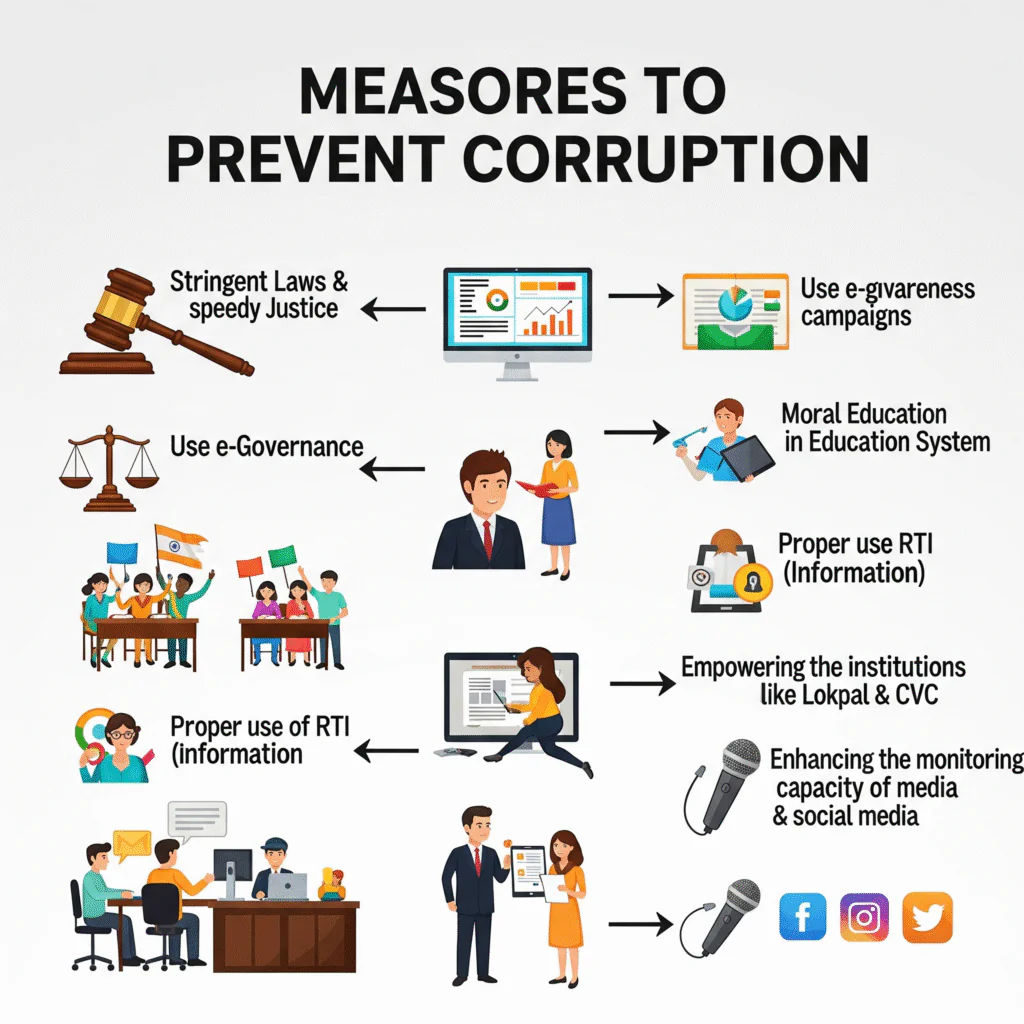
Measures to Prevent Corruption
Preventing corruption requires strong institutions, transparent systems and active citizen participation. Sustainable reforms in governance, accountability and ethical education are essential for building a clean and responsible society.
Strong and Effective Laws
Clear legislation with strict penalties and speedy trials discourages unethical practices and strengthens public confidence in governance.
Expansion of E-Governance
Digital services reduce direct human interaction, increase transparency and limit opportunities for bribery in public administration.
Effective Use of RTI
The Right to Information empowers citizens to demand accountability from public authorities and promotes openness in decision-making.
Empowering Lokpal and Oversight Bodies
Institutions such as Lokpal and the Central Vigilance Commission must function independently with sufficient authority and resources.
Promotion of Ethical Education
Value-based education develops honesty, integrity and civic responsibility among young citizens.
Public Awareness Campaigns
Media and civil society organizations help inform citizens about their rights and expose misconduct.
Administrative Reforms
Simplified procedures, transparent transfers and performance-based evaluation enhance accountability in public offices.
Rewarding Integrity
Recognizing honest officers encourages a culture of integrity within institutions.
Responsible Media Monitoring
Independent journalism and responsible reporting create pressure for transparency and institutional reform.
Conclusion
A transparent governance system can only be achieved through collective responsibility, ethical leadership and consistent enforcement of laws. Individual integrity and institutional reform together form the foundation of a corruption-free nation.
References
- NCERT Political Science (Class 9–12)
- Indian Polity – M. Lakshmikant
- Transparency International – Corruption Perceptions Index
- Lokpal and Lokayuktas Act – Government of India