
Major Source Materials of Indian History: An Introduction
The major source materials of Indian history provide the foundation for reconstructing India’s political, social, cultural, and economic development. History is not merely a collection of dates and events; it is a living journey preserved through evidence such as inscriptions, monuments, manuscripts, coins, and archaeological remains.
When I first studied the subject “Source Materials of Indian History” at the university, I realized that history doesn’t live only in books — it breathes beneath the soil, in inscriptions carved on stones, and in the verses of ancient poets.
My history teacher once said — “If you truly wish to know India, read its sources and listen to its voices.” From that day onward, I began my journey to understand India through its own evidence.
The Discovery of Ancient Indian Sources
The history of India begins from an age when there were no written words, yet humankind left behind signs of its civilization. Those signs later became what we call the “sources of history,” forming the earliest major source materials of Indian history.
1. Archaeological Sources
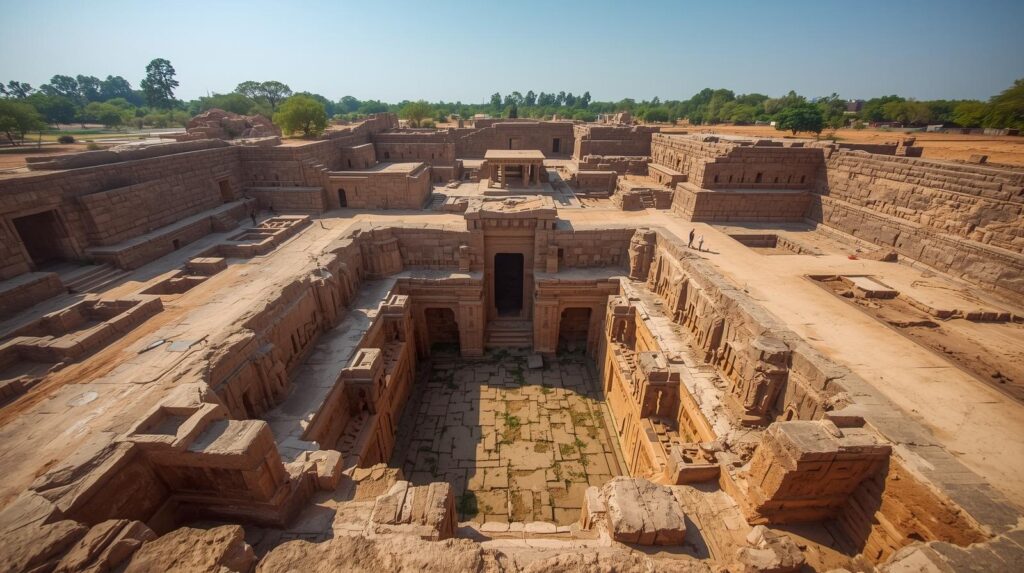
Archaeological discoveries are among the most reliable major source materials of Indian history. Excavations, monuments, tools, pottery, and urban remains help historians reconstruct ancient civilizations.
The Discovery of Harappa and Mohenjo-Daro
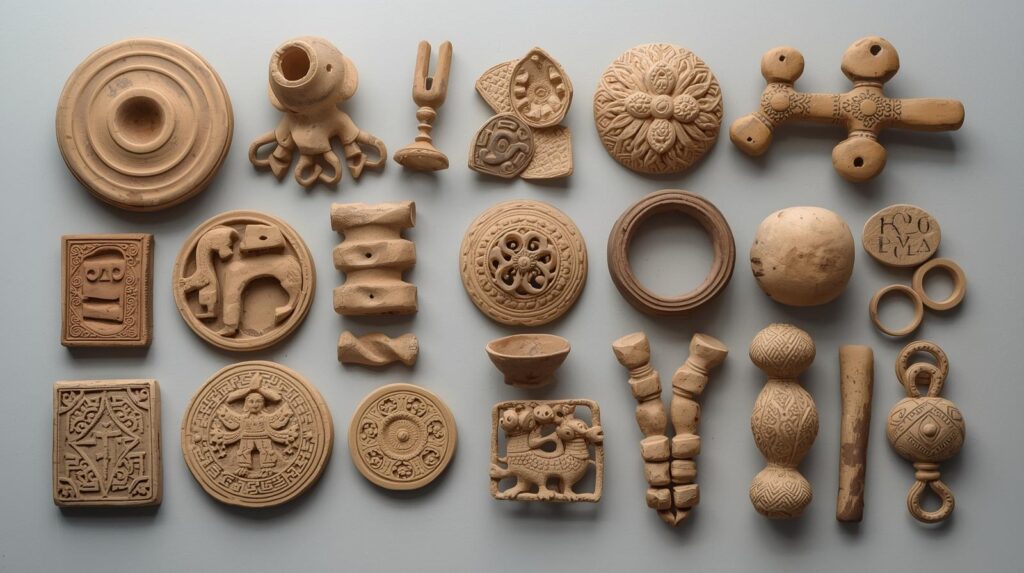
The excavation of Harappa and Mohenjo-Daro revealed a highly developed urban civilization nearly five thousand years old. Streets, drainage systems, the Great Bath, seals, and terracotta toys reflect the advanced social and economic life of the Harappans.
When I visited the National Museum in Delhi and saw Harappan clay figurines, I wondered how similar their hopes and dreams might have been to ours.
2. Literary Sources
Literary works form another important category of the major source materials of Indian history. Ancient texts preserve cultural, religious, and political insights into different periods.
Vedic Literature
The Vedas, especially the Rigveda, provide information about early Indian society, political assemblies such as Sabha and Samiti, and religious practices. These texts reveal the philosophical depth and social structures of early India.
Epics — The Ramayana and the Mahabharata
The Ramayana and Mahabharata are not only epic narratives but also reflect moral values, governance principles, and cultural ideals. Concepts such as Rajdharma and Nyaya influenced later political traditions.
Buddhist and Jain Texts
Texts like the Tripitaka and Jain Agamas provide valuable details about trade, education, urban centers, and the role of women. These writings are crucial literary sources in understanding ancient Indian civilization.
3. Epigraphic Records
Inscriptions, pillar edicts, and copper plates transform history into documented evidence. These epigraphic records are among the most concrete major source materials of Indian history.
Ashokan Inscriptions
The edicts of Emperor Ashoka, inscribed in Brahmi script, reflect policies of Dhamma, welfare governance, and administrative ideals. They provide first-hand evidence of Mauryan administration.
Copper Plates and Pillar Records
Gupta and Chalukya copper plates detail land grants, taxation systems, and royal decrees. They offer insights into administration, religion, and educational institutions such as Nalanda.
4. Numismatic Sources (Coins)
Coins are significant major source materials of Indian history because they provide information about economic conditions, rulers, religious symbols, and trade networks.
Mauryan punch-marked coins and Gupta gold coins illustrate political authority and artistic excellence, often described as symbols of India’s golden age.
5. Accounts of Foreign Travelers
Foreign travelers such as Megasthenes, Faxian, and Xuanzang provide valuable external perspectives on Indian society, administration, religion, and urban life.
Their accounts complement indigenous evidence and strengthen the reliability of the major source materials of Indian history.
My Learnings from These Historical Sources
Through the study of the major source materials of Indian history, I realized that India’s past is not a single narrative but a symphony of countless voices, symbols, and philosophies.
Every brick, manuscript, inscription, and coin is a living testimony of civilization. These sources remind us that our present stands firmly upon foundations laid centuries ago.
Thus, the major source materials of Indian history remain essential in constructing an accurate, balanced, and evidence-based narrative of India’s past.
Medieval Indian Sources
After completing my study of ancient Indian sources, I realized that the journey of history does not end there. The past of India is like a flowing river — beginning from the Indus Valley, passing through the Vedic age, Mauryan and Gupta empires, and then entering the medieval period — each era adding new layers of culture and wisdom.
During my research work, I traveled to historic cities such as Delhi, Ajmer, and Jodhpur. The inscriptions on the walls of mosques, forts, and dargahs, the Persian manuscripts, and the rhythm of folk songs — all revealed to me glimpses of that era we now call “Medieval India.”
1. Persian and Arabic Sources
The richest sources of medieval Indian history are those written in Persian. When Muslim rulers arrived in India, they brought with them the tradition of chronicling history. These works are not merely political narratives but mirrors reflecting the social, religious, and administrative life of that age.
Court Historians and Their Works
Once, at my university, I attended a seminar on Persian historiography. That was the first time I heard in detail about Minhaj-us-Siraj’s Tabaqat-i-Nasiri and Ziauddin Barani’s Tarikh-i-Firuzshahi. These chronicles vividly describe the Delhi Sultanate’s administrative systems, religious policies, and social structures.
When I read Barani’s writings, his philosophical perspective struck me deeply — a historian is not just a witness to events, but also a carrier of ideas.
Abul Fazl and the Akbarnama
During the Mughal era, Abul Fazl’s Akbarnama and Ain-i-Akbari elevated historical writing to new intellectual heights. When I read the first volume of Ain-i-Akbari, it felt as if I were sitting in Akbar’s grand court — among scholars, artists, musicians, and soldiers who together were shaping a new civilization.
Abul Fazl’s writing is not mere praise of an emperor; it presents a vivid portrayal of India’s geography, economy, administration, and religious tolerance. His intellectual breadth and organizational insight still inspire me today.
Other Persian Chronicles
Firishta’s Tarikh-i-Firishta, Nizamuddin Ahmad’s Tabaqat-i-Akbari, and Badauni’s Muntakhab-ut-Tawarikh offer diverse perspectives on politics, culture, and religion in medieval India. They remind us that history changes depending on who is telling the story.
2. Sanskrit and Regional Texts
During the same period, the tradition of Sanskrit literature continued to thrive. Kalhana’s Rajatarangini — a poetic chronicle of Kashmir’s kings — combines literary beauty with historical truth. As I studied this work, I could almost visualize a civilization flourishing among lakes and mountains.
Meanwhile, historical and heroic ballads also developed in Hindi, Marathi, Bengali, and Tamil. Texts like Prithviraj Raso, Hammir Raso, and Pabuji Ki Phad are not merely poems — they are cultural reflections of Rajasthan’s valor, faith, and social identity.
Rajasthani and Folk Traditions
The folk traditions of Rajasthan have always fascinated me. When I visited villages near Jhunjhunu and Nagaur, I met folk artists who sang ballads of Tejaji, Gogaji, and Pabuji. I realized that history does not only survive in books — it lives in the memories of people.
These ballads do not just narrate bravery; they preserve moral values, struggles, and faith. The folk tradition has kept history connected with common life — and that is its greatest strength.
3. Architectural and Artistic Sources
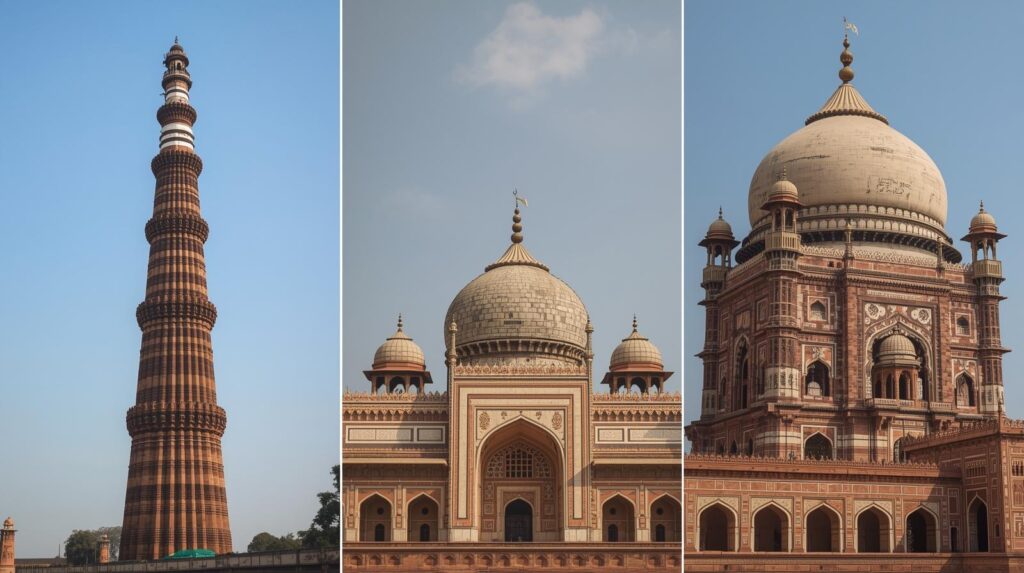
Architecture is another vital source for understanding medieval Indian history. The Qutub Minar in Delhi, Adhai Din Ka Jhopra in Ajmer, Buland Darwaza at Fatehpur Sikri, and the Taj Mahal at Agra — these monuments are not just examples of art, but symbols of political power and cultural dialogue.
When I first visited Fatehpur Sikri, the red sandstone walls seemed to whisper stories of time. Standing inside Akbar’s “Ibadat Khana,” I realized that intellectual diversity was as alive then as it is today.
Painting and Sculpture
Mughal miniature paintings, Rajput art, and Pahari paintings are visual sources that express the emotions of history through colors. Once, in Jaipur’s City Palace Museum, I saw an Akbar-era painting depicting scholars in discussion — and in that artwork, I saw the living beauty of history itself.
4. Epigraphic and Inscriptional Sources
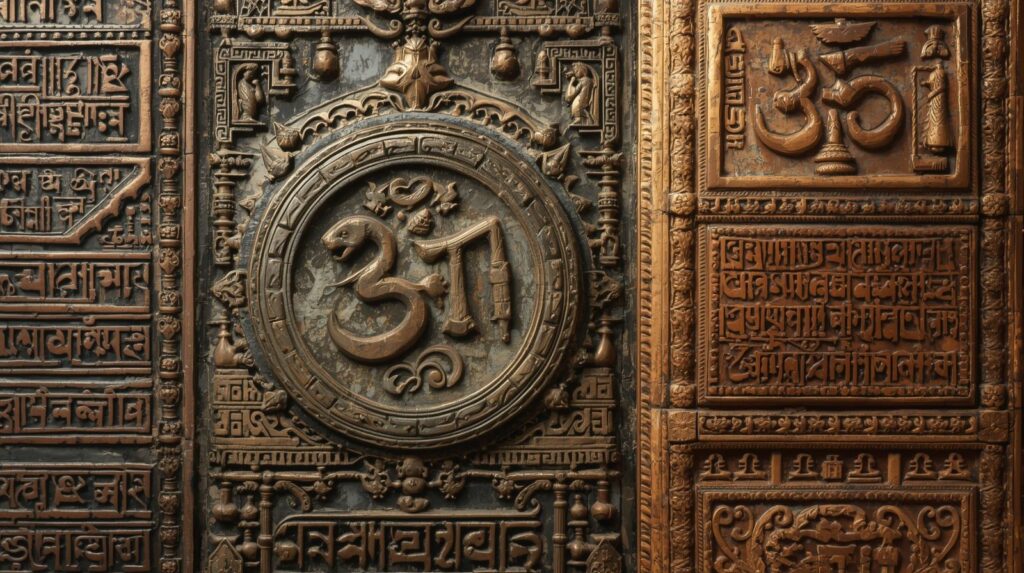
The tradition of inscriptions continued during medieval India as well. Temple and dargah walls, copper plates, and stone slabs carried records of donations, trade, and religious structures.
In the Jain temples of Ranakpur and Mount Abu, inscriptions reveal the economic structures and trade guilds of that time. Reading them, I realized how deeply religion and economy were interlinked.
5. Accounts of Foreign Travelers
The writings of foreign travelers provide another valuable window into medieval India. The journeys of Ibn Battuta — who served in Muhammad bin Tughlaq’s court — have always amazed me. His descriptions of Delhi’s streets, markets, and governance are more vivid than any contemporary source.
Similarly, Portuguese traveler Duarte Barbosa and French traveler François Bernier recorded detailed observations on India’s economy, caste system, and administration — invaluable for reconstructing the era.
Lessons from Medieval India
The sources of medieval India taught me that history is not just the story of conquerors; it is a journey of dialogue, coexistence, and cultural synthesis. Between Persian and Sanskrit texts, between temples and mosques, and in the melodies of folk songs — there exists an India that stands as living proof of unity in diversity.
Even today, when I touch the walls of an old fort, I feel the warmth of history within the dust of time. These sources are not merely relics of the past — they form the very foundation of our national character.
Modern Indian Sources
As my study progressed beyond the forts and poems of medieval India, time led me into an era where India stood at the threshold of a new age — Colonial India.
This was the period when the pen, paper, and print press began to write new chapters of history. History was no longer only the saga of kings and rulers; the voices of the common people — peasants, workers, and students — began to echo as well.
The first time I visited the National Archives in Delhi, the smell of those yellowing files made me feel the dampness of the past. Every file, every letter, every report was a new witness to history.
1. Colonial Administrative Records (British Administrative Records)
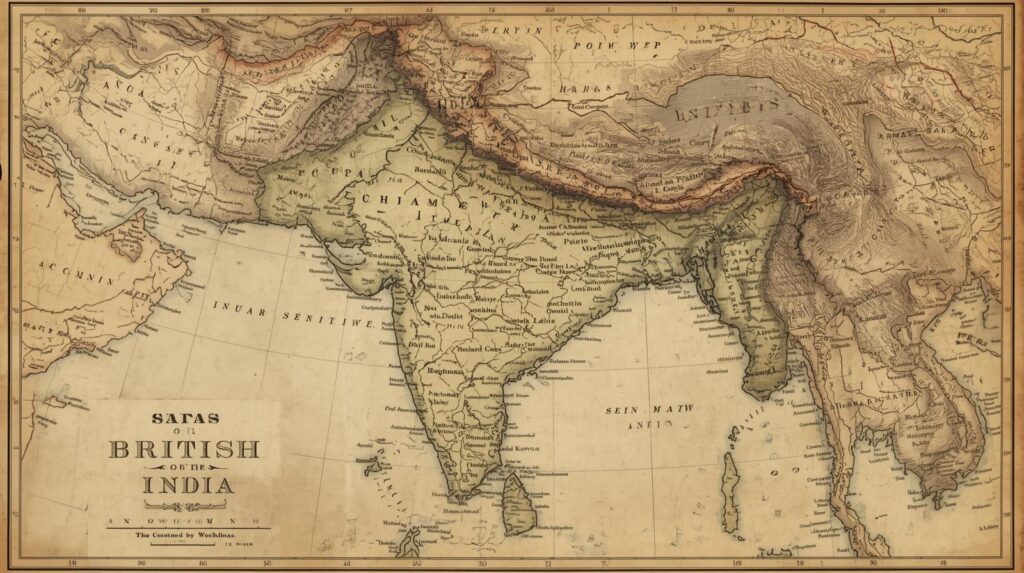
In the British period, the largest form of historical sources emerged as official documents. The British recorded everything in writing — land, revenue, population, law, trade, even education and religion.
Revenue and Land Records
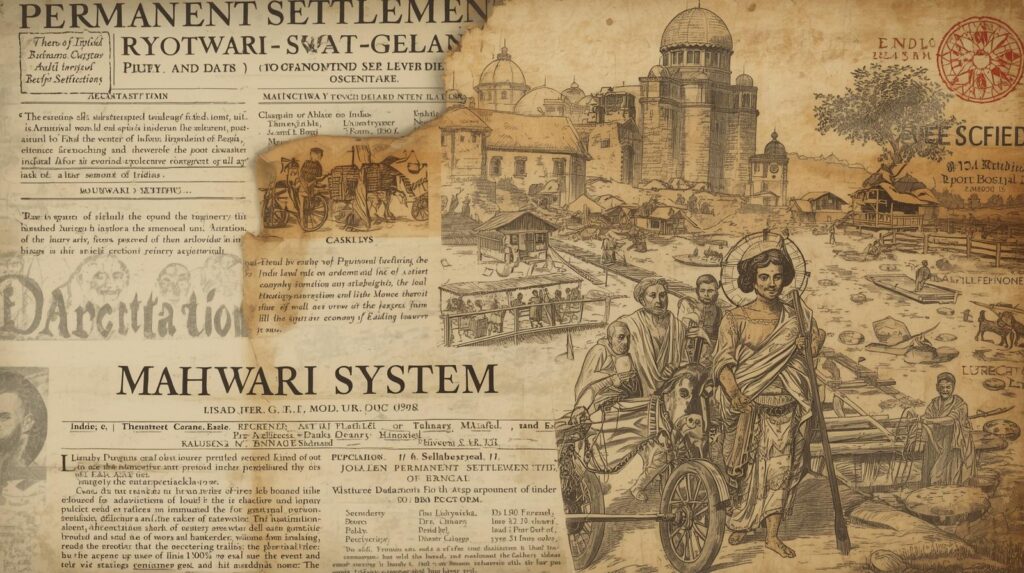
Reports on the Permanent Settlement, the Ryotwari system, and the Mahalwari system are available to us in great detail today. When I read the reports on the Permanent Settlement in Bengal, the harsh realities of the peasant’s life became painfully clear.
These records show how colonial policies shaped the structure of Indian agriculture, society, and economy.
Census Reports
The British began conducting regular censuses from 1871. These reports document not only population counts but also caste, religion, occupation, and education.
During one of my research projects I studied the 1901 census report. The figures recorded there revealed how colonial policies gradually divided society into categories and communities. This data remains invaluable for historians even today.
Legal and Administrative Documents
Acts like the Indian Penal Code (IPC), the Indian Evidence Act, and court proceedings reflect the judicial and administrative thinking of that time.
When I studied records related to court proceedings, I observed the tensions between social values and the British legal framework.
2. English and Indian Newspapers
A second major source for modern history is newspapers.
When newspapers like the Bengal Gazette and Amrita Bazar Patrika began in the nineteenth century, the voice of the Indian public was recorded on paper for the first time. These papers did more than report news; they raised social consciousness.
While working on a university project, I read issues of The Hindu and Kesari from the 1880s. The passion and self-respect in Tilak's writings gave me a new understanding of the meaning of freedom.
Editorials and Opinion
The editorials in these newspapers vocally criticized colonial policies. They became not only spokesmen for political movements but also instruments of public awakening.
It was inspiring to see how a simple printing press could challenge the foundations of British rule.
3. Private Letters, Diaries, and Autobiographies
Among all sources, private letters and autobiographies revealed the most human dimensions to me.
Letters of Leaders and Reformers
Letters of Mahatma Gandhi, Nehru’s Discovery of India, Subhas Chandra Bose’s diaries, and Sarojini Naidu’s personal correspondences — these writings pulse with the heartbeat of history.
They are documents not only of political events but of emotions, struggles, and ideals.
I remember reading a letter in which Gandhiji wrote, “Truth alone is God.” That single sentence made me realize that history is not only about ideologies but also about the soul.
Autobiographical Sources
Autobiographies like Gandhi’s, Nehru’s, and Tagore’s biographies provide deep insights into the socio-political life of modern India.
Reading these accounts feels as if time itself is speaking through personal experience.
4. Documents Related to the Freedom Movement
Documents connected to India’s freedom struggle are among the most inspirational sources of modern history. Proceedings of Congress sessions, resolutions, and leaders’ speeches — these are the memories of our national struggle.
All-India Congress Records
These documents show the evolution of India’s political consciousness — from petition-based movements and the Swadeshi movement, to non-cooperation, and finally the demand for full independence.
I once read an original report about the 1930 Salt Satyagraha — it said, “When salt was made on the shores of Dandi, not only a law was broken, but the chains of slavery also began to melt.”
That sentence taught me that documents can sometimes sow the seeds of revolution.
Revolutionary Records
Bhagat Singh’s jail diary, correspondence of the Anushilan Samiti, and records of the Indian National Army — these are the voices of colonial India’s youth.
Reading these documents felt as if history had not merely been written but lived.
5. Cultural and Educational Sources
During the British period, sources related to education, literature, and culture also gained great importance.
University and Institutional Records
The founding of the universities of Calcutta, Madras, and Bombay ushered in a new era of education. Their annual reports and curricula today reflect the intellectual thinking of the time.
When I read the 1885 annual report of Calcutta University, it stated, “The purpose of education in India should not be merely employment, but the development of citizenry.” That line remains a guide for me.
Literary Sources
Modern Indian literature — works by Premchand, Tagore, Subhadra Kumari Chauhan, and Keshav Chandra Sen — serves as social history.
Novels and poems like Godaan, Gitanjali, and writings on figures like the Rani of Jhansi express the era’s social injustices, nationalism, and awakening.
My Learnings from Modern Indian Sources
Studying all these sources made me realize that history is not merely a tale of the past but the foundation of the present. British administrative records warn us, newspapers inspire us, and the documents of freedom fighters fill us with pride.
As a researcher I felt that every document — whether official or personal — carries within it an emotion, a perspective, and a struggle.
Even today, when I open an old file, it feels as though it is telling me — “We are not history; we are your identity.”
Interpretation and Lessons of History
My journey through the major source materials of Indian history was now almost complete — from the soil of the Indus Valley to the archives of Delhi, from the ancient Vedas to modern newspapers. But the closer I moved toward the past, the more I realized that history is not merely a record of dates and events — it is the mirror of human consciousness.
Every era expressed itself in its own way — some through stone, some through paper, and others through words. As a student exploring the major source materials of Indian history, I tried to listen to all these voices — because history is not something to be memorized; it is something to be understood.
1. Interpretation of History — Perspective and Truth
While examining the major source materials of Indian history, it became clear that history is never uniform. Every source is shaped by its own context and perspective.
For example, Ashoka’s edicts interpret “Dhamma” from the perspective of a moral ruler; Abul Fazl’s works reflect Akbar’s policies through the eyes of a court intellectual; and British records portray India as a colony, whereas Indian newspapers present it as an awakening nation.
That is the beauty of history — it is not built from one viewpoint but from many.
Objectivity and Emotion in History
I realized that while reading history, knowing facts is not enough; one must understand the emotions and circumstances behind them. When I read Gandhi’s letters, it was not just words I heard — it felt as if a soul was speaking. When I read Ashoka’s inscriptions, I could sense the echo of compassion carved into the stone.
The major source materials of Indian history teach us that truth does not exist only on paper — it also lives within human experience.
2. History as Education
Through studying the major source materials of Indian history, I understood that history is not merely a subject to pass an exam, but a guide to living life. It teaches us that civilizations rise and fall, rulers come and go — but values and ideas endure forever.
Lessons Learned from History
- Humility — because every civilization, no matter how great, can decline.
- Tolerance — because diversity is India’s true strength.
- Search for Truth — because the essence of history lies in the journey toward truth.
- Sense of Duty — because every generation is responsible for its own time.
When I teach history to students, I often say — “History is not something to memorize, but an art of thinking.”
3. History and Modern Awareness
In today’s age of information overload, history teaches us wisdom. It reminds us that every piece of information has a context, every fact has a background.
Modern documents, digital archives, and research journals are also becoming part of the evolving major source materials of Indian history. Where once we had stone and copper plates, now we have the internet and data servers.
Yet the purpose remains the same — to preserve the memory of our civilization.
History and National Identity
History also teaches us that our national identity is built not just on geography, but on memory and culture. The soul of India resides in its sources — in the hymns of the Vedas, the edicts of Ashoka, the walls of Fatehpur Sikri, and the documents of independence.
Together, these major source materials of Indian history compose a living narrative of India.
4. My Personal Learnings
The study of the major source materials of Indian history gave me not just knowledge of the past, but depth in life itself.
History taught me that while people change and eras evolve, the values of truth, compassion, and wisdom remain eternal.
5. The Importance of History — A Final Reflection
History is the mirror of our society, and source materials are the light that makes that mirror visible. Without them, we cannot see ourselves clearly.
The remains of ancient civilizations, the chronicles of the medieval era, and the modern documents — all tell us who we were, where we came from, and where we are heading.
Conclusion — The Living Spirit of History
The major source materials of Indian history — soil, inscriptions, scriptures, records, and words — come together to form an eternal dialogue.
Those who understand their history make their present meaningful and their future bright.
“History is not a thing of the past; it is the heartbeat of our existence.”