
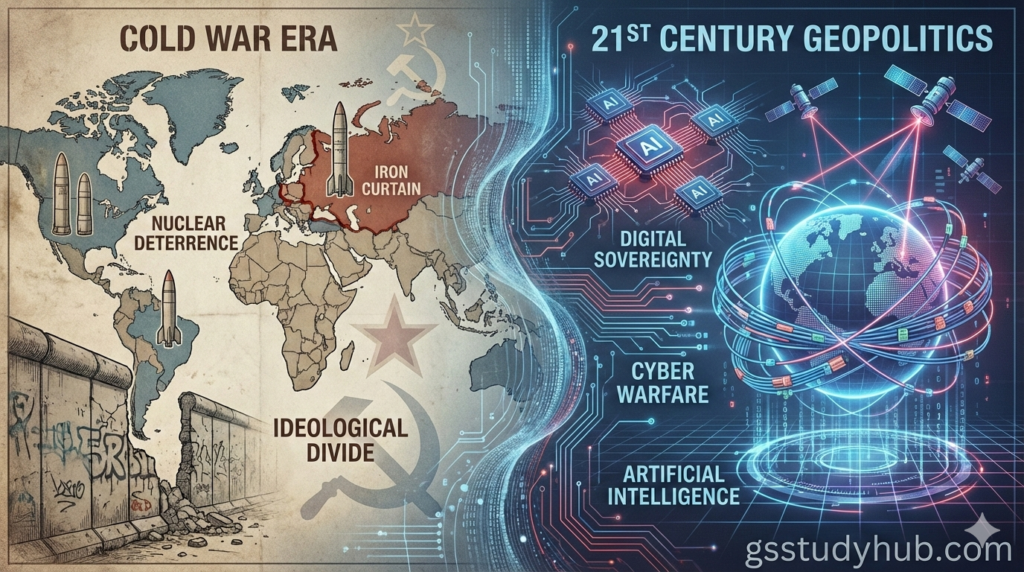
Strategic Echoes of the Cold War in 21st-Century Geopolitics
Lessons from the Cold War for today's geopolitics remain essential to understanding modern global power competition.
To understand the complexities of 21st-century global politics, one must look beyond current headlines and revisit the historical moments that shaped today’s international order. Among those defining periods, the Cold War stands out as a strategic turning point in modern history. The lessons from the Cold War for today's geopolitics are not confined to history books; they continue to influence how nations compete, cooperate, and calculate power in an increasingly multipolar world.
The Cold War was not merely a rivalry between the United States and the Soviet Union. It was a global contest of ideologies, economic systems, military doctrines, and diplomatic strategies. Capitalism and communism were not just economic models; they were competing visions of global order. Nuclear deterrence was not simply a military strategy; it was a psychological balance of fear that prevented direct confrontation between superpowers. When examining current tensions—whether in US-China strategic competition, Russia-West confrontation, Indo-Pacific alliances, or technological rivalry—it becomes clear that the lessons from the Cold War for today's geopolitics remain deeply embedded in modern statecraft.
My own study of the Cold War began as an attempt to understand a historical conflict. However, the deeper I explored its strategies and consequences, the more I realized that its patterns echo loudly in contemporary geopolitics. Concepts such as balance of power, spheres of influence, proxy warfare, and strategic alliances are not relics of the past. They are active instruments shaping today’s international system. In many ways, the Cold War never fully ended; it evolved into new forms of competition, particularly in technology, economics, and information warfare.
One of the most powerful lessons from the Cold War for today's geopolitics is that power is multidimensional. Military strength alone does not determine global influence. Economic resilience, technological innovation, ideological appeal, and diplomatic credibility are equally critical. During the Cold War, the arms race and the space race symbolized technological supremacy. Today, competition over artificial intelligence, semiconductor supply chains, cyber capabilities, and digital infrastructure represents the modern equivalent of that rivalry. The battlefield has shifted, but the logic of strategic competition remains strikingly similar.
Another enduring lesson is the importance of deterrence and strategic restraint. The doctrine of Mutually Assured Destruction (MAD) created a paradox: the existence of overwhelming nuclear weapons prevented their actual use. This fragile stability forced leaders to prioritize negotiation, backchannel diplomacy, and crisis management mechanisms. In today's geopolitical environment—where nuclear states remain central actors—the lessons from the Cold War for today's geopolitics emphasize the necessity of communication, calculated responses, and the avoidance of escalation.
The Cold War also demonstrated that direct confrontation between major powers is often replaced by indirect conflict. Proxy wars in Korea, Vietnam, Afghanistan, and other regions allowed superpowers to compete without triggering a global nuclear war. In the contemporary era, regional conflicts and strategic flashpoints reveal a similar pattern of indirect rivalry. This continuity highlights another crucial dimension of the lessons from the Cold War for today's geopolitics: great power competition frequently unfolds in peripheral regions, shaping global stability in subtle but profound ways.
Furthermore, the Cold War reshaped alliance politics. NATO and the Warsaw Pact institutionalized collective security structures that defined global alignments for decades. Today’s emerging coalitions, strategic partnerships, and regional groupings reflect a comparable search for security and influence. Alliances remain central to geopolitical survival, and their evolution underscores the continued relevance of the lessons from the Cold War for today's geopolitics in understanding modern power blocs.
Ultimately, the Cold War teaches us that history does not repeat itself in identical form, but it often rhymes. The ideological binaries of the past may have softened, yet strategic distrust, technological rivalry, and economic competition persist. As power gradually shifts toward Asia and the global order becomes more complex, the lessons from the Cold War for today's geopolitics provide both warning and guidance. By studying the strategic successes and failures of that era, policymakers and scholars can better navigate the uncertainties of our present and the challenges of the future.
The Origins of the Cold War and Its Strategic Foundations
The origins of the Cold War lie in the immediate aftermath of the Second World War, when the global balance of power shifted dramatically. Europe was devastated, colonial empires were weakening, and two superpowers—the United States and the Soviet Union—emerged with unmatched military and ideological influence. Although they had been wartime allies against Nazi Germany, their cooperation was rooted in necessity rather than trust. Once the common enemy disappeared, underlying tensions quickly resurfaced.
The strategic foundations of the Cold War were built upon mutual suspicion, security dilemmas, and competing visions of world order. The United States promoted liberal democracy, open markets, and a rules-based international system. The Soviet Union sought to expand socialism, secure its borders through buffer states, and reshape the global system according to communist ideology. These conflicting objectives transformed postwar uncertainty into structured rivalry. Understanding these early dynamics is essential for grasping the lessons from the Cold War for today's geopolitics, because they reveal how insecurity and ideological ambition can escalate into long-term systemic competition.
The Yalta and Potsdam conferences initially suggested that cooperation might continue in shaping postwar Europe. However, disagreements over Eastern Europe, Germany’s future, and political influence soon intensified. The Soviet consolidation of control in Eastern Europe was viewed by Washington as expansionism, while Moscow perceived American economic initiatives, such as the Marshall Plan, as strategic encirclement. The Cold War thus emerged not from a single event, but from a gradual breakdown of trust combined with incompatible geopolitical visions.
One of the key lessons from the Cold War for today's geopolitics is that great power rivalry often begins with competing security perceptions. Each side believes it is acting defensively, yet the other interprets those actions as aggressive. This security dilemma remains a defining feature of contemporary geopolitics.
Ideological Conflict and the Birth of Global Rivalry
At the heart of the Cold War was a profound ideological conflict: capitalism versus communism. The United States framed itself as the defender of freedom, individual liberty, and market economies. The Soviet Union positioned itself as the champion of socialist equality and anti-imperial struggle. These were not merely domestic policy preferences; they were universal ideologies claiming global legitimacy.
The Truman Doctrine formalized the American policy of containment, pledging support to nations resisting communist expansion. Meanwhile, the Soviet Union strengthened its influence across Eastern Europe by establishing communist governments aligned with Moscow. This ideological polarization divided the world into opposing blocs and institutionalized rivalry through military alliances such as NATO and the Warsaw Pact.
The ideological dimension of the Cold War offers enduring lessons from the Cold War for today's geopolitics. Even in the absence of a strict capitalist-communist divide, ideological competition persists in new forms. Debates over democratic governance, authoritarian stability, digital surveillance, economic state control, and human rights continue to influence global alignments. Ideology still shapes foreign policy decisions, alliance structures, and strategic narratives.
Moreover, ideology amplified mistrust. Each side viewed the other not simply as a rival state, but as a systemic threat to its way of life. This perception intensified geopolitical confrontation and reduced the space for compromise. The birth of global rivalry during the Cold War demonstrates how ideological absolutism can transform competition into existential struggle—an insight highly relevant when evaluating contemporary great power tensions.
https://gsstudyhub.com/the-rise-of-the-cold-war-causes-conflicts/The Role of Media and Psychological Warfare
The Cold War was not fought on conventional battlefields alone; it was also a battle for hearts and minds. Psychological warfare and media influence became central tools of strategic competition. Radio broadcasts such as Voice of America and Soviet international programming sought to shape global opinion. Cultural diplomacy, sports competitions, cinema, literature, and educational exchanges became instruments of ideological persuasion.
Propaganda served a dual purpose: reinforcing domestic legitimacy and undermining the credibility of the opponent. Each superpower portrayed its system as morally superior and economically inevitable. Even technological achievements—most notably the Space Race—were framed as evidence of systemic superiority. The launch of Sputnik and the American moon landing were not merely scientific milestones; they were symbolic victories in the struggle for global prestige.
From this dimension emerge powerful lessons from the Cold War for today's geopolitics. Information is a strategic asset. Control over narratives, public perception, and technological communication platforms can significantly shape international influence. In today’s digital age, social media campaigns, cyber operations, artificial intelligence, and data governance represent the evolved forms of Cold War psychological competition.
The Cold War demonstrated that influence is not exercised solely through military power. It is also cultivated through perception management, ideological storytelling, and strategic communication. Nations that shape global narratives often gain advantages without firing a single shot. This insight remains deeply relevant in an era defined by information warfare and digital rivalry.
Ultimately, the origins of the Cold War and its strategic foundations reveal how insecurity, ideological conviction, alliance formation, and narrative competition can combine to produce prolonged global rivalry. These early patterns provide critical context for interpreting contemporary power politics. The lessons from the Cold War for today's geopolitics remind us that great power competition is rarely sudden; it develops gradually through mistrust, structural tension, and competing visions of international order.
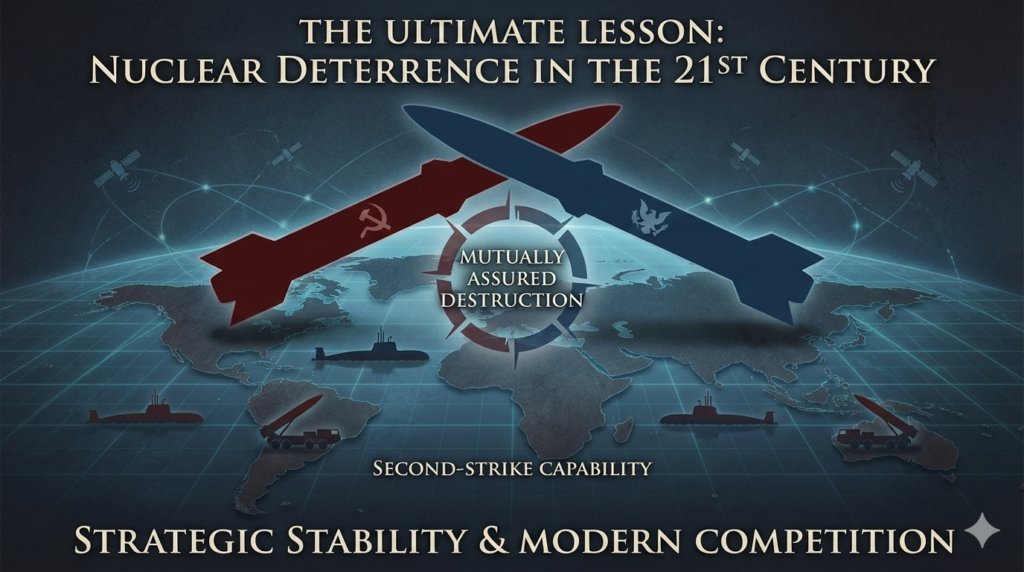
Nuclear Deterrence: The Ultimate Lesson for Today's Geopolitics
Among all the strategic dimensions of the Cold War, nuclear deterrence stands out as the most transformative and enduring. The development of atomic and thermonuclear weapons fundamentally altered the nature of international conflict. War was no longer merely a contest of armies or territories; it became a potential threat to human civilization itself. The presence of nuclear weapons reshaped global strategy, forcing superpowers to rethink confrontation, escalation, and survival.
This is where the lessons from the Cold War for today's geopolitics become particularly significant. Nuclear deterrence did not eliminate rivalry, but it constrained it. The fear of catastrophic retaliation prevented direct war between the United States and the Soviet Union, even during moments of extreme tension. In doing so, deterrence introduced a paradox: the possession of devastating weapons became a mechanism for maintaining peace.
The balance of power during the Cold War was no longer measured solely by conventional military strength. Instead, strategic stability depended on credible second-strike capability—the assurance that a nation could respond decisively even after absorbing a nuclear attack. This logic continues to influence global security calculations in the 21st century.
Mutually Assured Destruction (MAD) Doctrine
The doctrine of Mutually Assured Destruction (MAD) was the central pillar of Cold War nuclear strategy. Its premise was stark and uncompromising: if one nuclear power launched an attack, the other would retaliate with equal or greater force, ensuring the destruction of both. Under this framework, victory became meaningless because survival itself was uncertain.
While morally unsettling, MAD created a grim stability. Leaders on both sides understood that initiating nuclear war would result in their own annihilation. This mutual vulnerability generated caution and reinforced the importance of crisis management mechanisms. The establishment of direct communication channels, arms control negotiations, and confidence-building measures all emerged from the recognition that miscalculation could be fatal.
One of the most enduring lessons from the Cold War for today's geopolitics is that deterrence relies not only on military capability but also on rational leadership and clear communication. Nuclear stability is sustained through transparency, signaling, and strategic restraint. In a world where multiple states now possess nuclear weapons, these principles remain essential for preventing escalation.
The Arms Race and Strategic Competition
The Cold War also witnessed an intense arms race, as both superpowers rapidly expanded and modernized their nuclear arsenals. The development of hydrogen bombs, intercontinental ballistic missiles (ICBMs), submarine-launched ballistic missiles (SLBMs), and strategic bombers created a triad of delivery systems designed to guarantee second-strike capability.
This relentless competition was driven by insecurity. Each technological breakthrough by one side was perceived as a threat by the other, prompting further expansion. The arms race consumed vast economic resources and heightened global anxiety. Yet paradoxically, it also reinforced deterrence by ensuring that neither side could eliminate the other’s retaliatory capacity.
In contemporary geopolitics, the arms race has evolved into new domains. Hypersonic weapons, missile defense systems, cyber capabilities, space militarization, and artificial intelligence are shaping a new era of strategic competition. The lessons from the Cold War for today's geopolitics suggest that technological rivalry, if left unmanaged, can destabilize existing balances and increase the risk of miscalculation. Arms control frameworks and transparency mechanisms remain critical to maintaining strategic equilibrium.
Cuban Missile Crisis as a Turning Point
The Cuban Missile Crisis of 1962 marked the most dangerous moment of the Cold War. When the United States discovered Soviet nuclear missiles being deployed in Cuba, just 90 miles from its shores, the world stood on the brink of nuclear war. For thirteen tense days, global leaders confronted the terrifying reality of escalation.
The crisis ultimately ended through diplomatic negotiation and strategic compromise. The Soviet Union agreed to withdraw its missiles from Cuba, while the United States secretly agreed to remove its missiles from Turkey. More importantly, both sides recognized the catastrophic consequences of brinkmanship. The experience led to improved communication channels, including the establishment of a direct hotline between Washington and Moscow, and later contributed to arms control agreements.
The Cuban Missile Crisis provides one of the clearest lessons from the Cold War for today's geopolitics: crises between major powers must be managed with restraint, dialogue, and strategic patience. Escalatory rhetoric and rapid military posturing can push rivals toward unintended conflict. In today’s nuclear-armed world, crisis management mechanisms are not optional—they are essential for survival.
Ultimately, nuclear deterrence reshaped global politics by replacing total war with calculated rivalry. It demonstrated that absolute dominance is neither achievable nor sustainable in a nuclear environment. Stability emerges from balance, communication, and mutual recognition of vulnerability. These enduring lessons from the Cold War for today's geopolitics continue to guide policymakers navigating an increasingly complex and multipolar international order.
Proxy Wars and Regional Conflicts: Indirect Confrontation in a Divided World
The Cold War is often described as a period of “cold” confrontation because the United States and the Soviet Union never engaged in direct large-scale military conflict. However, for many regions across Asia, Africa, Latin America, and the Middle East, the war was anything but cold. Instead of fighting each other directly, the superpowers engaged in proxy wars—conflicts in which they supported opposing sides through funding, weapons, intelligence, and political backing.
To fully understand the lessons from the Cold War for today's geopolitics, it is essential to examine these regional conflicts. Proxy wars reveal how great power rivalry can be displaced onto smaller states, turning local disputes into arenas of global competition. By avoiding direct confrontation, nuclear-armed superpowers sought to expand influence while minimizing the risk of escalation into world war.
Major examples of Cold War proxy wars include the Korean War (1950–1953), the Vietnam War, the Soviet-Afghan War (1979–1989), and various conflicts across Africa and Latin America. These wars were driven not only by local grievances but also by broader ideological and strategic calculations. In each case, regional instability became intertwined with global rivalry.
Strategic Logic Behind Proxy Wars
The strategic rationale behind proxy wars was closely linked to nuclear deterrence. Since direct conflict between the United States and the Soviet Union could have triggered catastrophic escalation, both powers sought indirect methods to compete. Supporting allies, insurgent movements, or friendly regimes allowed them to test influence, weaken opponents, and shape regional balances without initiating nuclear confrontation.
This dynamic offers critical lessons from the Cold War for today's geopolitics. When direct military engagement is too risky or costly, states often turn to indirect strategies. These may include military aid, economic assistance, intelligence operations, cyber interference, or diplomatic backing. Proxy competition allows major powers to pursue strategic goals while maintaining plausible deniability and limiting direct exposure.
However, the consequences for local populations were severe. Proxy wars often prolonged violence, deepened political fragmentation, and hindered economic development. External support could intensify conflicts rather than resolve them, creating cycles of instability that persisted long after the superpowers shifted priorities.
Regional Impact and Long-Term Consequences
The long-term effects of Cold War proxy wars were profound. In Afghanistan, the conflict between Soviet forces and Western-backed resistance fighters reshaped regional geopolitics and contributed to enduring instability. In Vietnam, prolonged war influenced domestic politics within the United States and altered global perceptions of American power. In Korea, the division of the peninsula remains one of the most visible legacies of Cold War rivalry.
These historical experiences reinforce the lessons from the Cold War for today's geopolitics: regional conflicts cannot be viewed in isolation. Great power involvement transforms local disputes into strategic battlegrounds with global implications. Moreover, unresolved proxy conflicts can generate long-term security challenges, including terrorism, refugee crises, and regional arms proliferation.
Proxy wars also complicated the principles of sovereignty and non-intervention. External interference blurred the line between legitimate support and destabilizing intervention. This tension continues to shape debates in contemporary international law and diplomatic practice.
Modern Parallels in Contemporary Geopolitics
Although the ideological divide of the Cold War has evolved, the logic of proxy competition remains visible in today’s geopolitical landscape. Major powers continue to influence regional conflicts through indirect means—providing military assistance, imposing economic sanctions, engaging in cyber operations, and shaping diplomatic alignments.
The lessons from the Cold War for today's geopolitics suggest that indirect confrontation remains a preferred strategy in a nuclear-armed world. Instead of large-scale wars between major powers, competition unfolds through regional crises, technological rivalry, and economic pressure. The methods may have changed, but the strategic calculation is familiar: avoid direct escalation while preserving influence.
Ultimately, proxy wars demonstrate that the burden of great power rivalry is often borne by smaller states. Stability in a multipolar world requires not only balance among major powers but also responsible engagement in regional conflicts. The enduring lessons from the Cold War for today's geopolitics remind policymakers that indirect competition, while seemingly controlled, can produce long-lasting and unpredictable consequences.
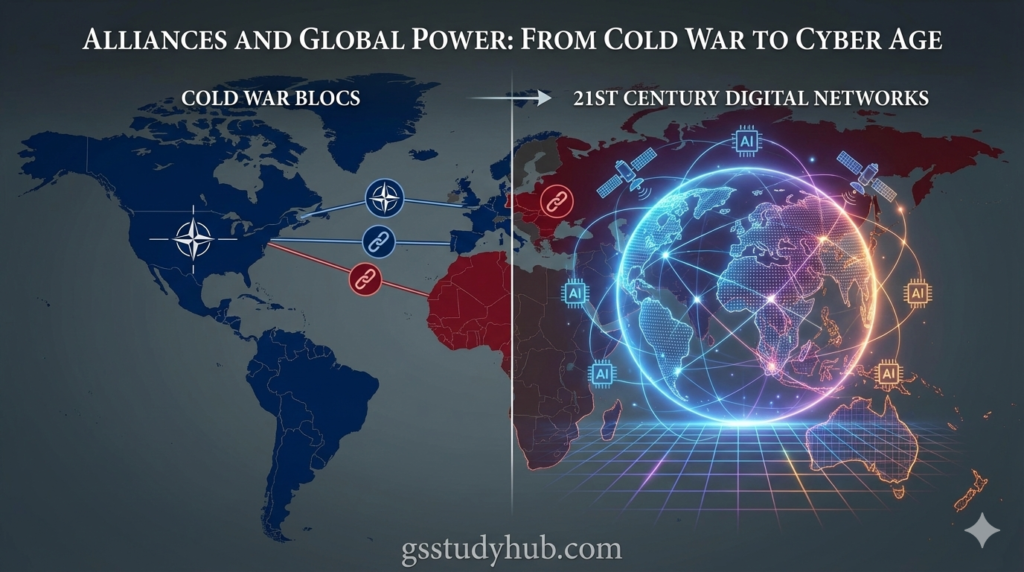
The Role of Alliances: NATO and the Warsaw Pact in Shaping Global Power
During the Cold War, global politics was not limited to rivalry between two superpowers; it evolved into an organized structure of power blocs built through formal alliances. The United States and its Western partners established the North Atlantic Treaty Organization (NATO), while the Soviet Union and its Eastern European allies formed the Warsaw Pact. These two military alliances institutionalized division, effectively splitting the world into opposing strategic camps.
To fully understand the lessons from the Cold War for today's geopolitics, it is essential to analyze alliance politics. Alliances during the Cold War were not merely military arrangements; they embodied ideological solidarity, political coordination, and collective security commitments. The principle was clear—an attack on one member would be treated as an attack on all. This collective defense doctrine fundamentally shaped global power calculations.
NATO: Collective Defense and Western Unity
Established in 1949, NATO was designed to deter Soviet expansion and guarantee Western European security. In the aftermath of World War II, Europe was economically fragile and militarily vulnerable. The United States provided both economic recovery assistance and security assurances, institutionalizing transatlantic cooperation through NATO.
NATO’s strength extended beyond military coordination. It became a symbol of political unity and strategic cohesion among democratic states. Member nations conducted joint military exercises, shared intelligence, and developed integrated defense planning structures. This institutionalized cooperation enhanced deterrence and reinforced Western confidence.
One of the key lessons from the Cold War for today's geopolitics is that alliances amplify power. When states act collectively, their combined economic, military, and diplomatic capacities far exceed what they could achieve individually. Alliances therefore function not only as security mechanisms but also as instruments of balance of power.
Warsaw Pact: Soviet Sphere of Influence
In 1955, the Soviet Union responded to NATO’s consolidation by forming the Warsaw Pact. Officially presented as a collective defense organization, it served to institutionalize Soviet influence across Eastern Europe. Unlike NATO’s more decentralized political structure, the Warsaw Pact operated under strong Soviet leadership, reinforcing Moscow’s strategic control over its satellite states.
The interventions in Hungary (1956) and Czechoslovakia (1968) demonstrated that the Warsaw Pact was used not only to defend against external threats but also to maintain internal political conformity within the Eastern bloc. This revealed the limits of alliance autonomy under hegemonic dominance.
This experience highlights important lessons from the Cold War for today's geopolitics: alliances remain stable when member states perceive mutual benefit and respect for sovereignty. When alliances become instruments of coercion rather than cooperation, internal legitimacy weakens over time.
Alliances as Instruments of Balance of Power
Throughout the Cold War, alliances played a central role in maintaining strategic equilibrium. The clear division between NATO and the Warsaw Pact created predictable security boundaries. Each bloc understood that aggression would trigger collective retaliation, thereby reinforcing deterrence.
This structural clarity reduced uncertainty and helped prevent direct confrontation between the superpowers. In this sense, alliances functioned as stabilizing mechanisms within a deeply polarized international system.
In contemporary geopolitics, alliance politics continues to shape global power dynamics. Although the Cold War has ended, regional security partnerships and strategic coalitions remain central to balance-of-power strategies. Emerging alignments in the Indo-Pacific and other regions reflect a similar logic of collective deterrence and strategic coordination.
The lessons from the Cold War for today's geopolitics therefore emphasize that alliances are dynamic institutions. They must adapt to evolving threats, technological changes, and shifting economic interests. Flexibility, transparency, and shared strategic vision are essential for long-term stability.
Long-Term Impact of Alliance Politics
Even after the dissolution of the Warsaw Pact, NATO continued to exist and expand. This continuity illustrates that alliances can outlast the immediate threats that gave birth to them. Over time, they evolve into institutional frameworks shaping broader political, economic, and strategic cooperation.
The alliance structures of the Cold War institutionalized global security management. International relations increasingly relied on multilateral coordination rather than purely bilateral arrangements. Collective security mechanisms became embedded within the global strategic architecture.
Ultimately, the enduring lessons from the Cold War for today's geopolitics demonstrate that alliances remain powerful tools for deterrence, strategic signaling, and balance of power. In an increasingly multipolar world, their role has become more complex—but no less significant.
Information Warfare and Technology Rivalry: From Propaganda to Digital Power
The Cold War was not fought solely through military deployments and ideological speeches; it was also a battle of information and technological supremacy. Control over narratives, scientific advancement, and communication channels became central instruments of influence. In many ways, the Cold War marked the beginning of modern information warfare. Today, in the digital age, this rivalry has intensified and expanded into cyberspace, artificial intelligence, and global data networks.
To fully grasp the lessons from the Cold War for today's geopolitics, one must recognize that information and technology are no longer secondary tools of power—they are core strategic assets. During the Cold War, shaping global perception was almost as important as maintaining military strength. In the 21st century, digital infrastructure, cyber capabilities, and technological innovation have become decisive factors in global competition.
Cold War Propaganda and the Battle for Narrative Control
Throughout the Cold War, both the United States and the Soviet Union invested heavily in propaganda and psychological influence. International radio broadcasts, state-sponsored media, films, literature, and cultural diplomacy were used to promote ideological legitimacy and undermine rival systems. Initiatives such as Voice of America and Soviet global broadcasting networks sought to shape public opinion across continents.
The objective was not simply to inform, but to persuade and influence. Information became a weapon designed to project moral superiority, question the credibility of the opponent, and win the loyalty of newly independent nations. This strategic communication campaign formed a critical component of Cold War rivalry.
One of the enduring lessons from the Cold War for today's geopolitics is that narrative control shapes global legitimacy. States that successfully influence perception often expand their geopolitical reach without resorting to direct military confrontation. Information dominance can generate diplomatic leverage, economic partnerships, and ideological alignment.
The Space Race: Technology as Strategic Prestige
The technological dimension of Cold War rivalry became dramatically visible during the Space Race. The Soviet Union’s launch of Sputnik in 1957 and the United States’ successful moon landing in 1969 were more than scientific achievements—they were symbols of systemic superiority. Each milestone signaled technological capability, industrial strength, and military potential.
Space exploration was deeply intertwined with missile technology and national defense. Advances in rocket systems and satellite communications had direct strategic implications. Technological innovation thus became a measure of geopolitical power.
This historical episode provides important lessons from the Cold War for today's geopolitics: technological competition is rarely confined to civilian domains. It often carries military, economic, and symbolic consequences. In today’s world, rivalry over artificial intelligence, semiconductor manufacturing, quantum computing, 5G infrastructure, and space militarization reflects a similar logic of strategic prestige and national security.
Cyber Warfare and Digital Geopolitics
In the 21st century, information warfare has evolved into cyber warfare and digital geopolitics. Cyberattacks on infrastructure, data breaches, digital surveillance, election interference, and coordinated disinformation campaigns represent new forms of strategic confrontation. Unlike conventional military action, cyber operations often operate in gray zones—difficult to attribute and challenging to deter.
The lessons from the Cold War for today's geopolitics suggest that technological dependence creates new vulnerabilities. Just as nuclear deterrence reshaped military balance, digital interdependence now shapes strategic stability. States must defend not only physical borders but also digital networks, financial systems, and communication platforms.
The ambiguity of cyber conflict introduces additional instability. Attribution challenges and rapid escalation risks make crisis management more complex than during the Cold War. As a result, international norms and cooperative frameworks are increasingly necessary to prevent unintended digital escalation.
Technology Rivalry in a Multipolar Era
Unlike the bipolar Cold War system, today’s geopolitical landscape is increasingly multipolar. Technological rivalry is not confined to two superpowers; multiple states compete for innovation leadership, supply chain dominance, and strategic autonomy. Semiconductor production, rare earth resources, digital infrastructure investments, and AI development have become central elements of national security policy.
This transformation reinforces the continuing relevance of the lessons from the Cold War for today's geopolitics. Strategic competition now unfolds across technological ecosystems rather than solely military frontlines. Economic policy, industrial strategy, and digital regulation are deeply intertwined with national security considerations.
Ultimately, the evolution from Cold War propaganda to modern digital competition demonstrates that power increasingly depends on knowledge, innovation, and information control. Military strength remains important, but technological leadership and narrative influence often determine long-term strategic advantage. The enduring lessons from the Cold War for today's geopolitics remind policymakers that future conflicts may be fought less with conventional weapons and more through code, data, and technological ecosystems.
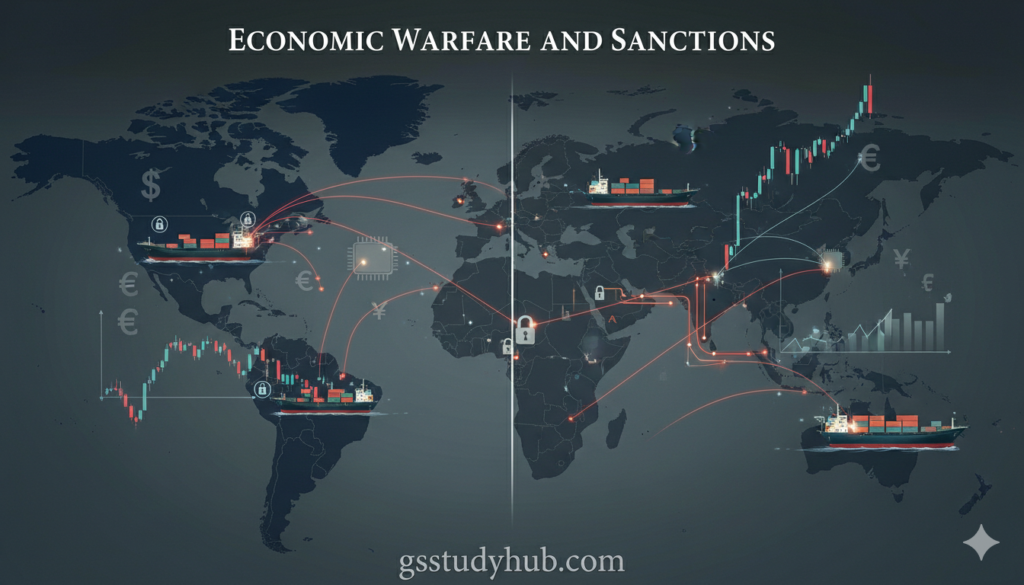
Economic Warfare and Sanctions: The Silent Instruments of Geopolitical Power
The Cold War was not fought only through military confrontation and ideological rivalry; it was also waged through economic pressure and strategic isolation. Economic warfare emerged as a powerful tool for weakening adversaries without direct military engagement. Trade restrictions, technology embargoes, financial controls, and resource manipulation became central mechanisms of geopolitical competition.
To understand the lessons from the Cold War for today's geopolitics, one must recognize that economic power often shapes global outcomes more quietly—but sometimes more decisively—than military force. During the Cold War, the United States and its allies imposed export controls and restricted access to advanced technology for the Soviet bloc. Meanwhile, the Soviet Union attempted to build an alternative economic system insulated from Western influence. Economic rivalry thus reinforced political and ideological division.
Trade Restrictions and Technological Containment
One of the most significant economic strategies of the Cold War involved limiting the transfer of advanced technologies. Through mechanisms such as the Coordinating Committee for Multilateral Export Controls (CoCom), Western nations sought to prevent the Soviet Union from acquiring high-tech goods with potential military applications. This approach aimed to slow technological advancement without escalating into open conflict.
This dimension highlights important lessons from the Cold War for today's geopolitics: technological capacity is a foundation of national power. Restricting access to critical technologies can influence a rival’s economic growth, military capability, and global competitiveness. In today’s context, disputes over semiconductor supply chains, advanced computing systems, and critical minerals reflect similar strategic calculations.
Sanctions as Political Leverage
Economic sanctions became a prominent instrument of political pressure during the Cold War. Freezing assets, limiting trade access, and restricting participation in global financial systems allowed states to exert influence without deploying troops. Sanctions provided a middle ground between diplomacy and war.
In contemporary geopolitics, sanctions remain a central feature of international strategy. Control over global financial networks, currency dominance, and access to international markets can significantly shape state behavior. The lessons from the Cold War for today's geopolitics demonstrate that economic interdependence creates both leverage and vulnerability. States that dominate financial systems can exercise substantial influence over adversaries.
Energy Politics and Resource Strategy
Energy resources have long been intertwined with geopolitical strategy. During the Cold War, oil supplies, pipeline routes, and resource dependencies influenced diplomatic alignments and security calculations. Energy access was not merely an economic concern—it was a strategic asset.
Today, energy politics continues to shape international relations. Control over oil, natural gas, rare earth elements, and renewable energy technologies influences global alliances and economic security. These realities reinforce the enduring lessons from the Cold War for today's geopolitics: resource dependency can constrain foreign policy choices, while resource autonomy enhances strategic flexibility.
Economic Interdependence in a Multipolar World
Unlike the rigid economic division of the Cold War, the contemporary world is deeply interconnected through globalization, trade agreements, and financial integration. However, this interdependence does not eliminate economic rivalry—it transforms it. Trade wars, supply chain disruptions, investment restrictions, and strategic decoupling illustrate how economic competition has evolved rather than disappeared.
The lessons from the Cold War for today's geopolitics suggest that excessive dependence on a single economic partner can create strategic risk. Diversification, resilience, and technological self-reliance have become priorities for many states seeking to protect national interests in an uncertain global environment.
Ultimately, economic warfare demonstrates that power in the modern world extends far beyond military capability. Financial systems, technological ecosystems, resource flows, and global trade networks are integral to geopolitical influence. The enduring lessons from the Cold War for today's geopolitics remind us that economic instruments can shape outcomes just as profoundly as traditional weapons—often with longer-lasting consequences.
Lessons from the Cold War for Today's Geopolitics
The Cold War is not merely a historical episode confined to the 20th century; it is a foundational chapter in understanding modern international relations. When we analyze contemporary global dynamics—great power competition, technological rivalry, economic sanctions, regional instability, and the emergence of multipolarity—it becomes evident that the lessons from the Cold War for today's geopolitics continue to shape strategic thinking and policy decisions across the world.
The Cold War demonstrated that power is multidimensional. Military capability alone does not determine influence; ideology, economic strength, technological innovation, diplomatic credibility, and alliance networks collectively define geopolitical standing. In today’s interconnected yet competitive international system, these dimensions are even more complex and interdependent.
1. Balance of Power Remains Essential
One of the most enduring lessons from the Cold War for today's geopolitics is the centrality of balance of power. During the Cold War, stability was maintained through structured rivalry and strategic equilibrium between two superpowers. When one side appeared to gain excessive advantage, counterbalancing mechanisms emerged—whether through alliances, arms buildup, or diplomatic maneuvering.
In the contemporary multipolar world, balance of power continues to function as a stabilizing principle. Emerging powers, regional blocs, and strategic coalitions seek to prevent dominance by any single actor. While the structure is no longer strictly bipolar, the logic of balancing remains deeply embedded in global politics.
2. Deterrence Prevents Escalation
Nuclear deterrence was a defining feature of Cold War stability. The doctrine of Mutually Assured Destruction (MAD) created a paradoxical peace: the certainty of catastrophic retaliation discouraged direct confrontation. The lessons from the Cold War for today's geopolitics emphasize that credible deterrence, combined with rational leadership, can prevent escalation even amid intense rivalry.
In a world where multiple states possess advanced military capabilities, deterrence—whether nuclear, conventional, cyber, or economic—remains a key instrument of stability. However, deterrence must be accompanied by communication channels and crisis management frameworks to avoid miscalculation.
3. Alliances Multiply Strategic Influence
Alliances such as NATO and the Warsaw Pact institutionalized collective security during the Cold War. These structures amplified influence and created predictable security alignments. One of the core lessons from the Cold War for today's geopolitics is that partnerships and coalitions significantly enhance strategic leverage.
Today’s alliances and strategic partnerships reflect a similar logic. States increasingly rely on cooperative frameworks to address shared security challenges, technological competition, and economic uncertainty. Collective action often outweighs unilateral strategy.
4. Economic Power Shapes Political Outcomes
Economic warfare and sanctions revealed that financial systems, trade networks, and technological supply chains are strategic instruments. The Cold War illustrated how economic containment could weaken adversaries without direct military confrontation.
The lessons from the Cold War for today's geopolitics show that economic interdependence creates both opportunity and vulnerability. Trade dependencies, currency dominance, and technological supply chains can influence state behavior as effectively as traditional military tools.
5. Information and Technology Define Modern Competition
The propaganda battles and Space Race of the Cold War foreshadowed today’s digital and technological rivalry. Narrative influence, innovation leadership, and control over communication platforms have become decisive factors in global power competition.
Another crucial dimension of the lessons from the Cold War for today's geopolitics is the recognition that future conflicts may unfold in cyberspace, artificial intelligence ecosystems, and digital infrastructure rather than traditional battlefields. Technological superiority now carries both economic and security implications.
6. Diplomacy is Indispensable
Moments such as the Cuban Missile Crisis underscored the necessity of diplomacy in preventing catastrophe. Direct communication channels, arms control agreements, and negotiated compromises helped avoid nuclear escalation.
The lessons from the Cold War for today's geopolitics reinforce the importance of sustained dialogue, transparency, and crisis management mechanisms. In an era of rapid information flow and instant escalation risks, diplomatic engagement remains vital for global stability.
7. Strategic Patience in a Multipolar World
The Cold War operated within a relatively predictable bipolar structure. Today’s international order is more fragmented and fluid. Multiple centers of power, regional conflicts, and technological shifts create a more complex environment.
Yet the enduring lessons from the Cold War for today's geopolitics suggest that strategic patience, long-term planning, and measured responses are essential in managing rivalry. Short-term gains achieved through aggressive escalation can undermine long-term stability.
Ultimately, the Cold War teaches that history does not repeat itself in identical form, but its patterns echo across generations. By understanding the structural dynamics of rivalry, deterrence, alliances, economic competition, and technological innovation, policymakers can navigate present uncertainties with greater clarity. The enduring lessons from the Cold War for today's geopolitics provide not only historical insight but also strategic guidance for shaping a more stable and balanced international order.
What I Learned from Studying the Cold War
When I first began studying the Cold War, I approached it as a historical rivalry between two superpowers. It seemed like a distant chapter of the 20th century—a prolonged confrontation between the United States and the Soviet Union shaped by ideology and military competition. However, as I examined its strategic logic more closely, I realized that the Cold War was not just a past conflict. It was a blueprint for understanding the structure of modern global politics.
The deeper I explored the subject, the clearer it became that the lessons from the Cold War for today's geopolitics are not abstract academic theories. They are living principles that continue to influence global strategy, alliance formation, economic competition, and technological rivalry. What appeared at first to be a closed historical era turned out to be a foundation for interpreting the present.
Power is Multidimensional
One of the most important realizations from my study was that power extends far beyond military strength. During the Cold War, ideological appeal, economic resilience, technological innovation, and diplomatic credibility were just as decisive as nuclear arsenals. Superpower competition unfolded across multiple domains simultaneously.
The enduring lessons from the Cold War for today's geopolitics show that modern power is even more layered. Financial systems, digital infrastructure, supply chains, and innovation ecosystems now shape global influence. Military capability remains critical, but it is only one dimension of strategic power.
Deterrence Can Preserve Stability
The concept of nuclear deterrence initially seemed paradoxical to me. How could the existence of catastrophic weapons prevent war? Yet the doctrine of Mutually Assured Destruction demonstrated that fear, when combined with rational leadership, can create stability. The awareness of mutual vulnerability discouraged direct confrontation.
This insight remains one of the most striking lessons from the Cold War for today's geopolitics. Stability often depends not on eliminating rivalry, but on managing it responsibly. Clear communication, strategic restraint, and credible deterrence mechanisms are essential in preventing escalation.
Alliances Shape Strategic Reality
Studying NATO and the Warsaw Pact revealed that no major power operates in isolation. Alliances institutionalized rivalry and structured the global order. They amplified influence, deterred aggression, and created predictable alignments.
The lessons from the Cold War for today's geopolitics highlight that partnerships remain central to strategic success. In an interconnected world, cooperation often multiplies national strength more effectively than unilateral action.
Technology Determines Long-Term Advantage
The Space Race taught me that technological leadership is not merely symbolic—it translates into economic power, military capability, and international prestige. Innovation during the Cold War reshaped global competition and altered strategic balances.
Today, artificial intelligence, cyber capabilities, quantum computing, and semiconductor production play similar roles. Another key dimension of the lessons from the Cold War for today's geopolitics is that technological ecosystems define long-term strategic advantage.
Diplomacy is Not Weakness—It is Strategy
The Cuban Missile Crisis profoundly changed my understanding of diplomacy. In moments of extreme tension, dialogue and compromise prevented catastrophe. Backchannel communication and negotiated restraint proved as powerful as military readiness.
This remains one of the most enduring lessons from the Cold War for today's geopolitics: diplomacy is not a sign of weakness but a necessary instrument of survival. In a nuclear and digitally interconnected world, communication channels are as vital as defense systems.
Strategic Patience in a Complex World
The Cold War unfolded within a bipolar framework. Today’s world is more fluid and multipolar, with overlapping rivalries and regional complexities. Yet the fundamental patterns of competition persist.
Ultimately, what I learned is that the lessons from the Cold War for today's geopolitics encourage strategic patience, long-term thinking, and measured responses. History does not repeat itself exactly, but it echoes. By studying those echoes carefully, we gain the clarity needed to navigate present uncertainties and future challenges.
In reflecting on the Cold War, I no longer see it merely as a historical confrontation. I see it as a strategic classroom—one that continues to teach policymakers, scholars, and observers how power operates, how rivalry evolves, and how stability can be preserved in an imperfect world.
📚 Further Reading on Cold War Strategy

Recommended Reading: Forged in War
- In-depth military & geopolitical analysis
- Updated edition with modern relevance
- Useful for IR, UPSC & security studies
Conclusion: Why the Cold War Still Shapes Today’s Geopolitical Order
The Cold War may have formally ended in 1991, but its strategic legacy continues to shape the foundations of modern international relations. From great power competition and alliance politics to economic sanctions, technological rivalry, and nuclear deterrence, the structural patterns established during that era remain deeply embedded in today’s global system. This enduring relevance underscores the importance of understanding the lessons from the Cold War for today's geopolitics not as historical abstractions, but as practical strategic insights.
In an increasingly multipolar and interconnected world, the dynamics of power have become more complex—but not fundamentally different. Balance of power, deterrence, strategic alliances, economic leverage, and information control continue to define global competition. The Cold War demonstrated that rivalry can be managed without direct large-scale war, provided that communication, restraint, and institutional mechanisms remain intact.
The lessons from the Cold War for today's geopolitics also highlight the importance of strategic patience. Escalation without calculation can destabilize entire regions, while diplomacy and crisis management can prevent catastrophe. The Cuban Missile Crisis, arms control agreements, and alliance coordination serve as reminders that dialogue is not weakness—it is strategic necessity.
Moreover, technological and economic competition now operate at unprecedented speed. Artificial intelligence, cyber capabilities, supply chain security, and energy transitions represent the new arenas of geopolitical rivalry. Yet even in these modern domains, the structural logic mirrors earlier patterns of competition observed during the Cold War.
Ultimately, history does not repeat itself exactly, but it often echoes through evolving forms. By studying and applying the lessons from the Cold War for today's geopolitics, policymakers and scholars can better navigate uncertainty, manage rivalry responsibly, and foster a more stable international order. The future of geopolitics may not repeat the Cold War, but it will certainly rhyme with it — especially in Asia.
Frequently Asked Questions (FAQs)
1. What are the most important lessons from the Cold War for today's geopolitics?
The Cold War demonstrates that balance of power, deterrence, strategic alliances, economic strength, and technological superiority are central to international stability. The lessons from the Cold War for today's geopolitics show that long-term rivalry can be managed without direct large-scale war, provided that communication, restraint, and institutional mechanisms are maintained.
2. Is today’s great power competition similar to the Cold War?
In several ways, contemporary rivalries—particularly in technology, economics, and strategic influence—mirror patterns seen during the Cold War. However, today’s world is more interconnected and multipolar. Even so, the lessons from the Cold War for today's geopolitics help explain how prolonged competition can be structured and managed responsibly.
3. Why is nuclear deterrence still relevant today?
During the Cold War, nuclear deterrence prevented direct superpower conflict by ensuring mutual vulnerability. In today’s geopolitical environment, deterrence remains an important stabilizing mechanism. The lessons from the Cold War for today's geopolitics emphasize that deterrence must be supported by dialogue, transparency, and crisis management systems to prevent escalation.
4. Why are alliances important in modern geopolitics?
Cold War alliances such as NATO and the Warsaw Pact structured global power balances and reinforced collective security. Today, regional and global partnerships continue to shape strategic influence. The lessons from the Cold War for today's geopolitics show that cooperation and coordinated strategy often provide greater stability than unilateral action.
5. Are economic sanctions effective geopolitical tools?
Economic sanctions were widely used during the Cold War to exert political pressure without military confrontation. In the modern global system, financial networks, trade restrictions, and technological controls remain powerful instruments of influence. The lessons from the Cold War for today's geopolitics highlight that economic leverage can be as impactful as military force.
6. How does information warfare today compare to Cold War propaganda?
Cold War propaganda battles and the Space Race laid the foundation for modern digital competition. Today’s cyber operations, disinformation campaigns, and technological rivalry represent evolved forms of that earlier struggle. The lessons from the Cold War for today's geopolitics suggest that control over narratives and innovation ecosystems increasingly determines long-term strategic advantage.
7. Can studying the Cold War improve future policymaking?
Yes. The Cold War provides valuable insight into crisis management, strategic restraint, alliance coordination, and long-term rivalry. Understanding the lessons from the Cold War for today's geopolitics equips policymakers and scholars with frameworks to manage uncertainty, prevent escalation, and maintain global stability.
References
- Gaddis, John Lewis. The Cold War: A New History. Penguin Press, 2005.
- Westad, Odd Arne. The Global Cold War: Third World Interventions and the Making of Our Times. Cambridge University Press, 2007.
- Leffler, Melvyn P. For the Soul of Mankind: The United States, the Soviet Union, and the Cold War. Hill and Wang, 2007.
- Brands, Hal. The Twilight Struggle: What the Cold War Teaches Us about Great-Power Rivalry Today. Yale University Press, 2022.
- Allison, Graham. Destined for War: Can America and China Escape Thucydides’s Trap?. Houghton Mifflin Harcourt, 2017.
- National Security Archive (George Washington University). “Cold War International History Project.”
- United Nations Digital Library. “Cold War Diplomacy and Arms Control Documents.”
- NATO Official Archives. “Historical Overview of NATO during the Cold War.”
The above sources provide the historical and analytical foundation for understanding the lessons from the Cold War for today's geopolitics. These references explore strategic rivalry, alliance politics, economic statecraft, technological competition, and the structural dynamics that continue to shape contemporary international relations.