
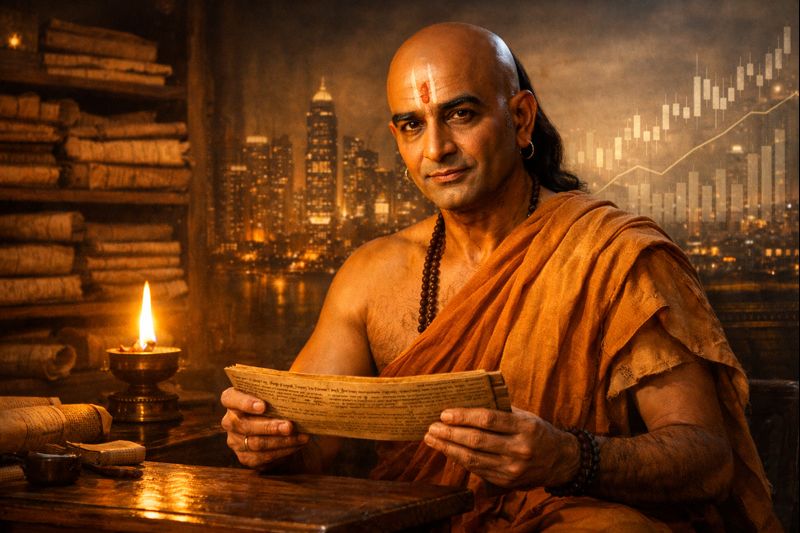
Introduction: A Journey That Began with Curiosity
When I first began reading about Kautilya and Arthashastra, I assumed it was simply an ancient Indian text preserved for historical interest. In an age dominated by digital economies, globalization, and complex financial systems, I wondered how a treatise written more than two thousand years ago could still hold relevance. However, as I gradually immersed myself in its pages, this assumption began to fade.
I discovered that the Arthashastra is not merely a book about money, taxation, or trade. It is a comprehensive manual on statecraft, governance, public welfare, and economic balance. The ideas presented in Kautilya and Arthashastra explain that the true strength of a nation does not lie only in military power or territorial expansion, but in a stable economy and the well-being of its people.
Today, as the world struggles with inflation, unemployment, widening economic inequality, and uneven distribution of resources, an important question arises: could the solutions to many modern economic challenges already exist within the wisdom of Kautilya and Arthashastra? Can Kautilya’s economic ideas offer guidance to today’s policymakers, students, and entrepreneurs?
This curiosity led me to view Kautilya not only as a master strategist and political thinker, but also as a visionary economist. At the heart of his economic philosophy lies a simple yet powerful principle: “The happiness of the people is the happiness of the ruler.” His policies were designed not merely to fill the royal treasury, but to ensure long-term prosperity and social stability.
This article is the result of my personal journey of exploration and learning. Through this narrative, I aim to show how Kautilya and Arthashastra are not just relics of history, but living sources of inspiration that can still guide humanity toward a more balanced, just, and prosperous world.

Top Choice Amazon Product
Premium quality and dependable performance make this product a trusted choice for everyday use with excellent long-term value.
- ✔ Highly rated by customers
- ✔ Durable and long-lasting
- ✔ Excellent value for money
- ✔ Ideal for everyday use
Who Was Kautilya?
When discussing the greatest thinkers in Indian history, the name Kautilya stands out with exceptional reverence. He is also widely known as Chanakya and Vishnugupta. Kautilya was not merely a learned Brahmin scholar, but a remarkable political philosopher, economist, diplomat, and master strategist. His life demonstrates how intellect, discipline, and visionary thinking can shape the destiny of an entire nation.
The enduring legacy of Kautilya and Arthashastra continues to influence discussions on governance and economic thought even today. Kautilya’s most significant contribution is his celebrated treatise, the Arthashastra, which is regarded as a foundational text of Indian political economy. In this monumental work, he systematically explained principles of governance, administration, taxation, trade, agriculture, industry, justice, and public welfare.
He is best known as the mentor and chief advisor of Chandragupta Maurya, the founder of the Mauryan Empire. Under Kautilya’s guidance, a young and inexperienced Chandragupta rose to become one of the most powerful rulers of ancient India, establishing a vast and well-organized empire. The strategic vision found in Kautilya and Arthashastra played a crucial role in building this powerful state structure.
Early Life
Historical records about Kautilya’s early life are limited, yet available sources suggest that he was born into a scholarly Brahmin family. From a very young age, he displayed extraordinary intelligence and a strong inclination toward learning. He showed deep interest in the Vedas, Upanishads, and disciplines related to politics and statecraft.
It is widely believed that Kautilya received his education at Takshashila (Taxila) University, one of the most renowned centers of higher learning in the ancient world. There, he mastered not only religious and philosophical texts but also practical subjects such as political science, economics, diplomacy, and military strategy — foundations that would later define Kautilya and Arthashastra as timeless works of statecraft.
Kautilya lived a life of strict discipline and simplicity. He rejected luxury and believed that true knowledge must serve society and strengthen the state. His austere lifestyle reflected his conviction that personal sacrifice is essential for achieving national prosperity.
The experiences of his early life shaped his understanding that the success of a state depends not solely on the strength of its ruler, but on a strong administrative system and a stable economic foundation. This realization later became the cornerstone of the ideas embodied in Kautilya and Arthashastra.
Relationship with Chandragupta Maurya
The relationship between Kautilya and Chandragupta Maurya is regarded as one of the most inspiring teacher–student partnerships in Indian history. It was not merely a bond between a mentor and a disciple, but a powerful collaboration between a visionary thinker and a future leader that transformed the political destiny of the Indian subcontinent.
According to historical traditions, Kautilya encountered Chandragupta when he was still a young and ordinary boy, yet one who displayed extraordinary courage and leadership potential. Kautilya immediately recognized these qualities and resolved to shape him into a great ruler — a vision that would later be systematically reflected in Kautilya and Arthashastra.
Kautilya trained Chandragupta not only in warfare and statecraft, but also in administration, diplomacy, economics, and governance. He emphasized that a successful king must place the welfare of the people above personal ambition and must build a strong economic foundation for the state, principles that form the core philosophy of Kautilya and Arthashastra.
Guided by Kautilya’s strategic brilliance, Chandragupta first consolidated power by defeating regional rulers and later overthrew the powerful Nanda dynasty, thereby establishing the Mauryan Empire. This historic achievement was not solely the result of military strength, but also of careful planning, economic organization, and popular support — ideas deeply articulated in Kautilya and Arthashastra.
Even after the foundation of the Mauryan Empire, Kautilya continued to serve as Chandragupta’s chief advisor. He played a crucial role in designing the empire’s taxation system, administrative structure, judicial framework, and trade policies. These institutions became the pillars of Mauryan stability and prosperity.
Thus, the relationship between Kautilya and Chandragupta Maurya demonstrates how the combination of visionary guidance and strong leadership can turn an ordinary individual into an architect of history, a legacy preserved through Kautilya and Arthashastra.
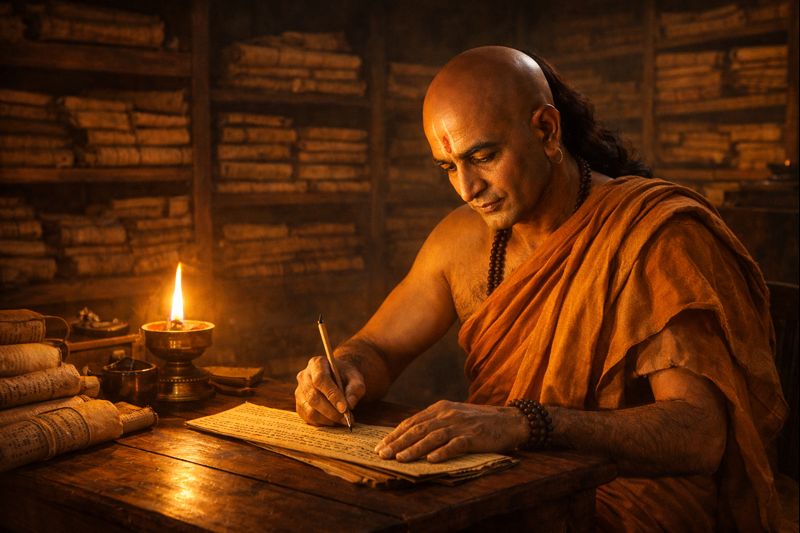
Introduction to the Arthashastra
The Arthashastra, authored by Kautilya, is one of the most influential texts in the history of political economy. The intellectual legacy of Kautilya and Arthashastra is not merely an ancient reflection on governance, but a practical manual that explains how a state can be organized, administered, and strengthened in a systematic manner.
When I first explored the content of this monumental work, I realized that Kautilya’s thinking was far ahead of his time. The philosophy embedded in Kautilya and Arthashastra emphasizes a balanced pursuit of Dharma (moral duty), Artha (economic prosperity), and Kama (material well-being), while clearly recognizing that economic strength forms the foundation of a stable and powerful state.
The Arthashastra is often described as an encyclopedia of governance, administration, and economics. It covers a wide range of subjects, including the duties of the king, organization of the state, council of ministers, taxation system, agriculture policy, trade and commerce, industry, mining, forest resources, labor management, judicial administration, internal security, and foreign policy — themes that collectively define the vision of Kautilya and Arthashastra.
The text is traditionally divided into 15 books (Adhikaranas) and more than 180 chapters, each addressing a specific administrative or economic issue. Its language is precise, direct, and purpose-driven, indicating that Kautilya wrote it primarily as a guide for rulers and administrators rather than as a purely philosophical work.
One of the most remarkable features of the Arthashastra is its realistic approach. While Kautilya upheld ethical principles, he also acknowledged the complexities of real-world politics and governance. Therefore, he advocated a careful balance between moral ideals and practical necessity — a balance that remains central to Kautilya and Arthashastra.
Even in the modern era, the Arthashastra remains highly relevant. It teaches that the ultimate goal of economic policy is not merely the accumulation of revenue, but the promotion of public welfare, social justice, and long-term stability, a principle deeply rooted in Kautilya and Arthashastra.

Top Rated Amazon Choice Product
Excellent build quality and reliable performance make this product a trusted choice for everyday use with long-term durability.
- ✔ Highly rated by customers
- ✔ Durable and long-lasting
- ✔ Excellent value for money
- ✔ Ideal for daily use
Kautilya’s Economic Principles
The economic vision presented in Kautilya and Arthashastra is highly practical, realistic, and deeply rooted in the idea of public welfare. Kautilya believed that the strength of a state lies in a stable and prosperous economy. Without economic stability, neither political independence nor social harmony can be sustained. Therefore, he regarded economic policy as the foundation of effective governance.
The central objective of Kautilya’s economic principles, as articulated in Kautilya and Arthashastra, was the prosperity of the state along with the well-being of its people. According to him, a ruler must design policies that ensure balanced development of agriculture, trade, industry, and labor.
Role of the State
Kautilya viewed the state not merely as a tax-collecting authority, but as an active economic manager. The state should encourage production, regulate markets, and ensure the availability of essential goods — principles clearly outlined in Kautilya and Arthashastra.
Importance of Agriculture
Kautilya considered agriculture the backbone of the economy. He emphasized irrigation systems, distribution of quality seeds, land reforms, and protection of farmers. In his view, when farmers prosper, the entire state prospers.
Trade and Commerce
He supported both internal and external trade. Kautilya stressed fair pricing, accurate weights and measures, and clear regulations for merchants to protect the interests of both consumers and traders.
Industry and Craftsmanship
Kautilya advocated state support for handicrafts, mining, textiles, and manufacturing activities. Industrial growth, according to him, generates employment and increases state revenue.
Balanced Taxation System
Kautilya believed that taxation should be just and moderate. Excessive taxation burdens the people and leads to dissatisfaction, whereas reasonable taxes ensure steady revenue without harming economic activity — a balanced approach emphasized in Kautilya and Arthashastra.
Principle of Public Welfare
The essence of Kautilya’s economic philosophy, central to Kautilya and Arthashastra, is captured in the famous maxim: “The happiness of the people is the happiness of the ruler.” Thus, all economic policies must ultimately aim at public welfare.
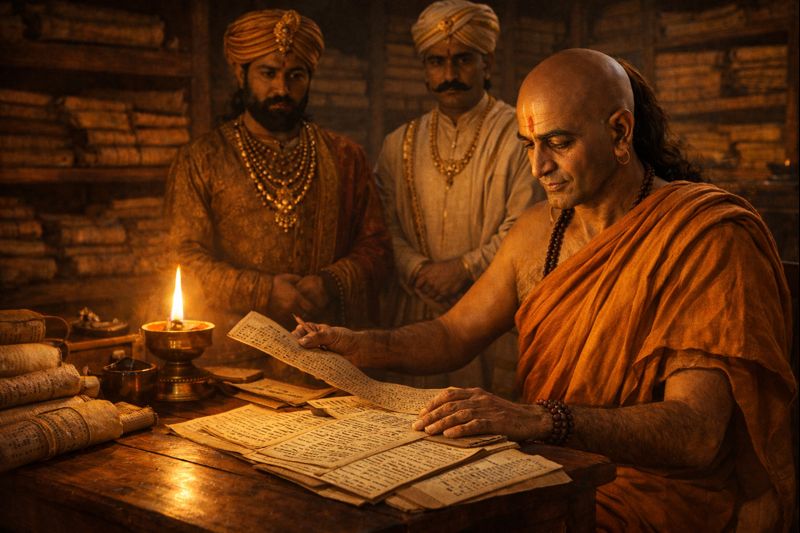
Taxation System in Arthashastra
The taxation framework described in Kautilya and Arthashastra presents revenue not merely as a financial tool, but as the economic backbone of the state. In the Arthashastra, Kautilya explains that no kingdom can remain strong or stable without a well-organized, fair, and efficient system of taxation. For him, taxes were not a burden imposed on the people, but a mechanism of cooperation between the ruler and the citizens.
The primary objective of taxation, according to the principles of Kautilya and Arthashastra, was not merely to fill the royal treasury, but to ensure internal security, administrative efficiency, public welfare, and long-term economic growth. Therefore, he emphasized moderation, transparency, and justice in tax collection.
Fundamental Principles of Taxation
Kautilya compared taxation to a bee collecting nectar from a flower without destroying it. This famous analogy, central to Kautilya and Arthashastra, highlights that taxes should be moderate, non-oppressive, and sustainable. Excessive taxation discourages production and leads to public resentment, while reasonable taxation strengthens both the economy and the state.
The state derived income from mining, metal production, salt works, forests, textiles, and other industries. Many of these sectors were directly supervised or operated by the state to ensure efficiency and prevent exploitation.
Tax Collection Mechanism
Kautilya recommended appointing well-trained and trustworthy officials for tax collection. Strict measures were prescribed to prevent corruption, and officials found guilty of misconduct were severely punished.
Utilization of Tax Revenue
Revenue collected through taxes was used for maintaining the army, running the administration, constructing public works, promoting education and healthcare, and providing relief during emergencies. Thus, taxation in the Arthashastra was closely linked to public welfare and good governance.
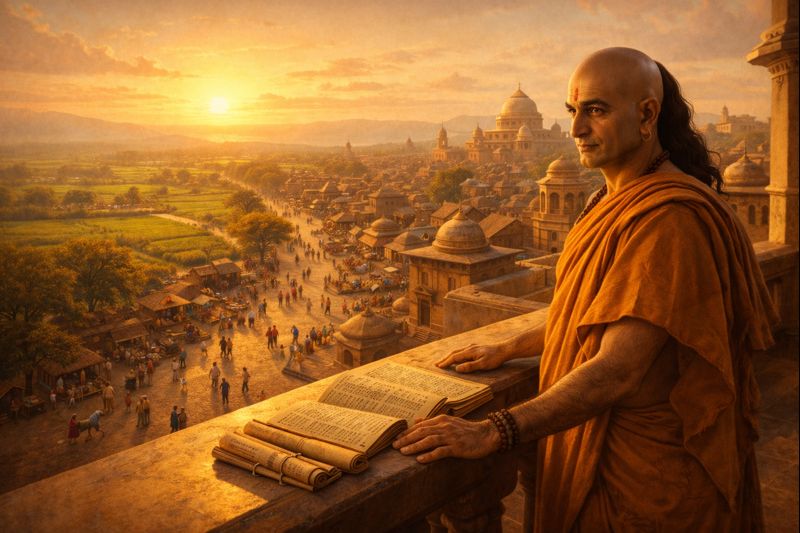
State Control and Free Market Balance
The balanced economic framework presented in Kautilya and Arthashastra does not support a completely state-controlled economy, nor does it advocate an entirely free market system. Instead, it proposes a balanced model in which the active role of the state and the autonomy of the market coexist. According to Kautilya, excessive state control suppresses enterprise and innovation, while unrestricted freedom can lead to exploitation, monopoly, and disorder.
Kautilya believed that markets should be allowed to function naturally, but the state must ensure that this freedom does not operate against public interest. This regulatory vision, central to Kautilya and Arthashastra, envisions the state primarily as a regulator and protector of economic activity.
Regulatory Role of the State
The state, according to Kautilya, should supervise weights and measures, pricing practices, quality standards, and market discipline. Such regulation protects consumers from fraud and ensures that goods are sold at fair and reasonable prices.
Encouragement of Free Trade
Kautilya emphasized the importance of encouraging traders and entrepreneurs. He advocated safe trade routes, well-organized marketplaces, and access to credit. When traders feel secure and supported, commerce expands and state revenue increases.
Direct State Participation in Key Sectors
Kautilya recommended direct state involvement in strategic sectors such as mining, salt production, forests, and arms manufacturing. This ensured control over vital resources and prevented private monopolies.
Prevention of Exploitation
The state, in Kautilya’s view, must prevent exploitation by merchants, moneylenders, and employers. Clear laws and strict penalties were prescribed to curb unfair practices and protect weaker sections of society.
Goal of Economic Balance
The ultimate objective of Kautilya’s model was to create an economic environment in which production grows, trade flourishes, and the standard of living of the people improves. The balance between state control and free market activity remains one of the most distinctive features of his economic thought, as articulated in Kautilya and Arthashastra.

Top Choice Amazon Product
This product combines quality and performance to deliver reliable results and excellent value for everyday use.
- ✔ Highly rated by customers
- ✔ Durable and long-lasting
- ✔ Excellent value for money
- ✔ Ideal for daily use
Public Welfare and Governance
The core of Kautilya’s political and economic philosophy lies in public welfare. According to him, the purpose of the state and the ruler is not the mere exercise of power, but the happiness, security, and prosperity of the people. His famous principle states: “The happiness of the people is the happiness of the ruler, and their welfare is his welfare.”
Kautilya believed that a successful system of governance is one that fulfills the basic needs of citizens and maintains justice, order, and stability in society. Therefore, he emphasized an administration that is accountable, disciplined, and transparent.
Duties of the Ruler
The ruler, according to Kautilya, must act as the protector and servant of the people. His primary responsibilities include ensuring national security, maintaining law and order, and promoting economic development. Personal luxury and self-interest should never come before the interests of the state.
Administrative System
Kautilya envisioned a well-organized and efficient administrative structure. The responsibilities of ministers and officials were clearly defined, and appointments were to be based on merit, competence, and integrity.
Judicial System
A strong and impartial judicial system is essential for public welfare. Kautilya emphasized swift and fair justice. In his view, the law must apply equally to all, regardless of wealth or social status.
Social Security and Welfare
Kautilya advocated state support for widows, orphans, the elderly, and the destitute. The state was also expected to provide relief during disasters such as famines, epidemics, and natural calamities.
Education and Healthcare
Education and healthcare, according to Kautilya, form the foundation of long-term national progress. The state must invest in these sectors so that citizens become capable, productive, and self-reliant.
Thus, Kautilya’s model of governance is not merely a system of administration, but a human-centered and welfare-oriented framework whose relevance continues even in the modern world.

Comparison with Modern Economics
When Kautilya’s economic philosophy is compared with modern economic theories, it becomes clear that his ideas were far ahead of his time. Many concepts that are considered fundamental to contemporary economics can be found in embryonic form within the Arthashastra.
Kautilya’s approach was practical, balanced, and welfare-oriented, while modern economics encompasses diverse models such as capitalism, socialism, and mixed economy. Interestingly, Kautilya’s framework closely resembles the idea of a mixed economy, where both the state and the private sector play important roles.
Role of the State
Kautilya viewed the state as an active economic manager. Similarly, in modern economies, governments are expected not only to regulate markets but also to promote growth, create employment, and provide social security.
Taxation System
Kautilya’s concept of fair and moderate taxation aligns with modern progressive taxation, in which higher-income groups contribute a larger share while lower-income groups receive relief.
Public Welfare
The core of Kautilya’s economic philosophy is public welfare. This is comparable to the modern concept of the welfare state, where governments aim to reduce inequality and improve living standards.
Market Regulation
Kautilya emphasized price control, quality standards, and consumer protection. Today, regulatory authorities and consumer protection laws perform similar functions.
Global Trade
Kautilya recognized the importance of foreign trade. In the age of globalization, international trade has become a central pillar of economic development.
Thus, Kautilya’s Arthashastra should not be seen merely as an ancient text, but as a living body of ideas that continues to resonate with the principles of modern economics.
What I Learned from Kautilya
Studying Kautilya and Arthashastra has been more than an academic exercise for me; it has been a transformational journey. As I gradually understood his ideas, my perspective on success, leadership, and life itself began to change. I realized that true achievement is not a matter of luck, but the result of clear thinking, discipline, and consistent effort.
The Importance of Vision
Kautilya taught me that every meaningful goal requires vision. His long-term strategic thinking, reflected throughout Kautilya and Arthashastra, inspired me to focus on long-term objectives rather than short-term gains in both my personal and professional life.
Discipline and Self-Control
Kautilya’s life reflected simplicity and strict discipline. From him, I learned that without self-control, no individual can reach his or her full potential. Wise use of time, continuous learning, and a disciplined lifestyle are essential for success.
Spirit of Public Welfare
Kautilya believed that the ultimate purpose of all action should be the welfare of society, not merely personal profit. This idea taught me that when our work contributes to the well-being of others, our success becomes more meaningful.
Practical Thinking
Kautilya was both idealistic and practical. He showed me that real-world problems cannot be solved by emotions alone; they require logic, analysis, and pragmatic decision-making.
True Meaning of Leadership
According to Kautilya, a true leader is one who empowers others. From this, I learned that leadership is not about giving orders, but about guiding, inspiring, and setting an example.
Overall, the lessons I have learned from Kautilya continue to shape my thinking and guide me toward becoming a more responsible and purposeful individual.
Lessons for Students, Entrepreneurs, and Policymakers
The ideas of Kautilya are not confined to ancient history; they offer timeless guidance for people across different walks of life. Students, entrepreneurs, and policymakers can all draw valuable lessons from his economic and political philosophy.
Lessons for Students
Kautilya emphasized the importance of discipline, continuous learning, and character development. Students can learn that knowledge should not be limited to textbooks alone, but must be applied practically. Hard work, curiosity, and ethical conduct are essential for long-term success.
Lessons for Entrepreneurs
For entrepreneurs, Kautilya’s teachings highlight strategic planning, risk assessment, and market awareness. He encouraged innovation while also stressing the need for ethical business practices. Entrepreneurs should focus on creating value for society, not just maximizing profits.
Lessons for Policymakers
Policymakers can learn from Kautilya the importance of evidence-based decision-making, balanced economic policies, and strong institutions. Public welfare should remain the central objective of governance, and policies must aim for inclusive and sustainable growth.
By applying these lessons, individuals and leaders can contribute to building a more stable, prosperous, and just society.
Conclusion
The study of Kautilya and Arthashastra reveals that ancient Indian economic and political thought was remarkably advanced and deeply practical. Kautilya did not view economics in isolation, but as an integral part of governance, public welfare, and national strength.
His emphasis on balanced taxation, state responsibility, market regulation, and public welfare closely aligns with many principles of modern economics. More importantly, the philosophy embedded in Kautilya and Arthashastra reminds us that the welfare of the people is the ultimate goal of the state.
Kautilya’s ideas remind us that true development is not measured only by wealth or power, but by the well-being, security, and dignity of citizens. In a world facing economic inequality, governance challenges, and social unrest, the wisdom of Kautilya and Arthashastra continues to offer valuable guidance.
Thus, Kautilya and Arthashastra should not be seen merely as historical texts, but as enduring sources of inspiration for building a balanced, just, and prosperous society.
References
- Kautilya (Chanakya). Arthashastra. Translated by R. Shamasastry.
- Kangle, R. P. The Kautiliya Arthasastra, Parts I–III. Motilal Banarsidass.
- Boesche, Roger. The First Great Political Realist: Kautilya and His Arthashastra. Lexington Books.
- Thapar, Romila. Early India: From the Origins to AD 1300. University of California Press.
- Basham, A. L. The Wonder That Was India. Penguin Books.
- Sen, Amartya. The Idea of Justice. Harvard University Press.
- Subramanian, Arvind. India’s Turn: Understanding the Economic Transformation. Oxford University Press.