
Jharkhand
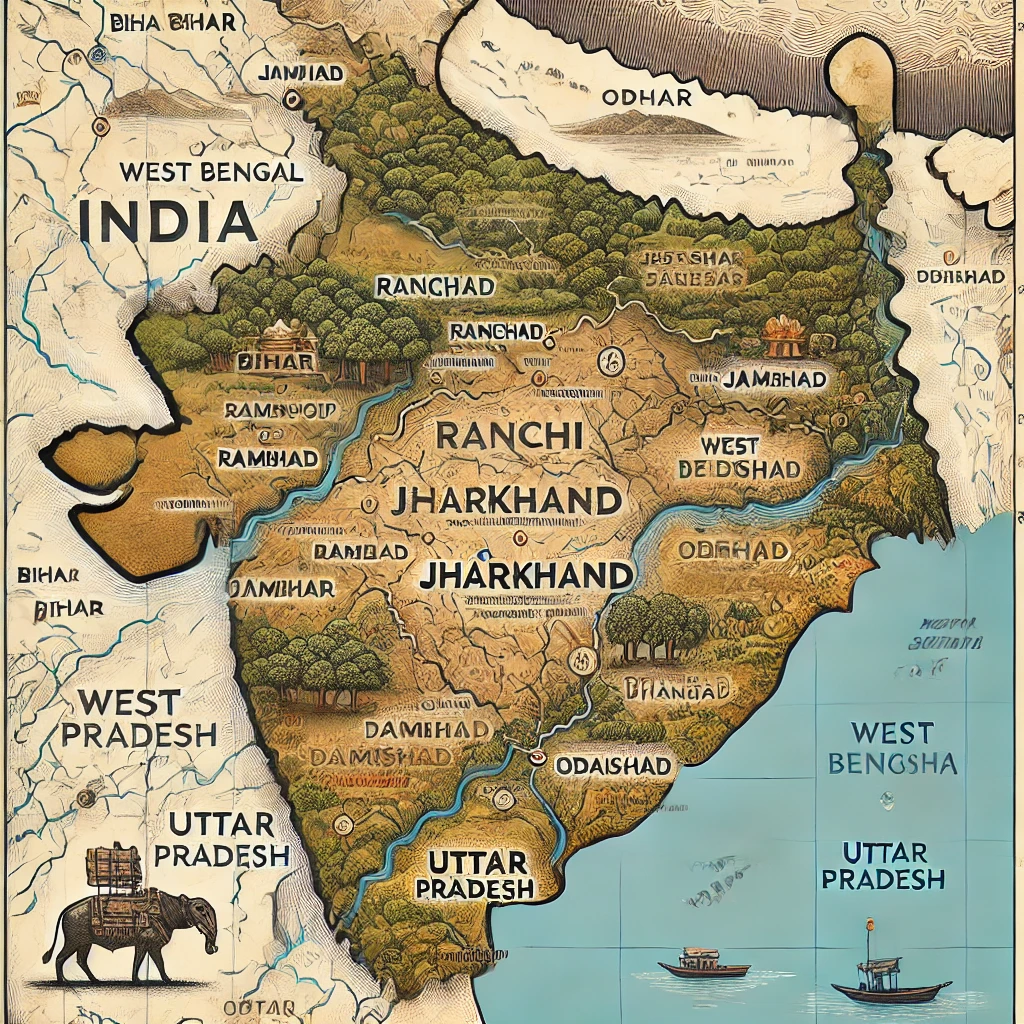
Jharkhand is a mineral-rich state of India, located in the eastern part of the country. It was separated from Bihar in the year 2000 and established as a new state. Jharkhand means "forest area". The natural beauty, mineral wealth, and tribal culture of this state make it different and special from other parts of the country.
Meaning of the Name "Jharkhand"
Yes, Jharkhand literally means "forest area". This name is made up of two words:
- Jhar: which means forest or jungle.
- Khand: which means area or region.
Most of Jharkhand is covered with dense forests, and the region is rich in wildlife, biodiversity, and natural resources. This connection between the name of the state and its geography reflects the natural environment and ecology of Jharkhand.
Geographical Location
Jharkhand is located in the eastern part of India and has a diverse geographical structure.
Boundaries of Jharkhand
- North: Bihar
- South: Odisha
- East: West Bengal
- West: Chhattisgarh and Uttar Pradesh
Area and Major Rivers
- Total area: 79,716 square kilometers
- Major rivers: Subarnarekha, Damodar, Koel, and Barakar
- Forests and biodiversity: About 29.6% of Jharkhand’s area is covered with forests. Important trees such as Sal, Shisham, and Mahua are found here.
History of Jharkhand
The history of Jharkhand is rich and ancient. Various tribal communities have been living here for centuries. This region played an important role during the Mughal period, the British Raj, and the Indian freedom movement.
Great freedom fighters like Birsa Munda came from this region, whose struggle for the rights of tribal people made a deep impact on the history of India.
Tribal Culture of Jharkhand
Jharkhand is known for its vibrant tribal culture. Many tribal communities live in this state, and their traditions, beliefs, and lifestyles give Jharkhand a unique identity.
Major Tribal Communities
- Santhal
- Munda
- Oraon
- Ho
- Kharia
- Asur (Asuras)
Tribal Festivals and Traditions
Tribal dance, music, and festivals are an integral part of the culture of Jharkhand. Festivals like Sarhul and Karma are celebrated with great enthusiasm. These festivals are closely linked with nature, agriculture, and traditional beliefs.
To explore more about cultural traditions and tourism of Indian states, you can also visit our internal guide on Jharkhand tourism and culture.
Natural Resources and Mineral Wealth
Jharkhand is extremely rich in mineral resources and is often called the "mineral storehouse of India". Many important minerals are found and extracted here, which play a crucial role in India’s industrial growth.
Major Minerals of Jharkhand
- Iron ore
- Coal
- Uranium
- Copper
- Gold
Coal Mines and Steel Industry
- Coal mines: Dhanbad is famous for its coal mines and is often called the "Coal Capital of India".
- Steel industry: Bokaro and Jamshedpur are major centres of the steel industry.
Economy of Jharkhand
The economy of Jharkhand is mainly based on the mineral industry, agriculture, and forests. Industrial development and natural resources together make Jharkhand an economically important state.
Agriculture and Horticulture
- Main crops: paddy, wheat, maize, and millet.
- Apart from this, fruits and vegetables are also cultivated in different regions of the state.
Industries
- Large industrial units like Tata Steel and Bokaro Steel Plant are located in Jharkhand.
- Mining, steel, and related industries provide employment and contribute significantly to the state’s economy.
Tourist Places in Jharkhand
The natural beauty and historical heritage of Jharkhand attract tourists from all over India.
Major Tourist Spots
- Netarhat: Known as the "Shimla of Jharkhand" due to its pleasant climate and scenic beauty.
- Betla National Park: A famous national park where tigers, elephants, and other wild animals can be seen.
- Deoghar: Home to Baidyanath Dham, one of the 12 Jyotirlingas and a major pilgrimage site.
- Hazaribagh: Known for its natural beauty and Hazaribagh National Park.
Language and Religion
Jharkhand is linguistically and religiously diverse.
Main Languages
- Hindi (official language of the state)
- Santhali
- Mundari
- Kharia
- Urdu
- Nagpuri
Religion
People in Jharkhand mainly follow:
- Hinduism
- Tribal or indigenous religions
- Islam
- Christianity

Major Cities of Jharkhand
- Ranchi: The capital and an important centre of education and administration.
- Dhanbad: Famous for coal mines.
- Jamshedpur: The main industrial centre of the Tata Group.
- Bokaro: A major hub of the steel industry.
Key Features of Jharkhand
- It is known for its tribal traditions, natural resources, and cultural diversity.
- Its rich mineral wealth and industrial development make it one of the important states of India.
- Environmental protection and sustainable development are major issues for Jharkhand, as the state balances industrial growth with ecological conservation.
- Jharkhand presents a wonderful confluence of ancient traditions and modern development.
Conclusion
Jharkhand is a unique state where dense forests, tribal culture, mineral wealth, and industrial progress come together. From the struggles of tribal freedom fighters to modern steel plants and national parks, Jharkhand represents both the heritage and the future of India. Understanding Jharkhand means understanding the deep relationship between nature, people, and development.
FAQs about Jharkhand
What is the meaning of the name Jharkhand?
The name Jharkhand means "forest area". It is derived from two words: "Jhar" meaning forest or jungle, and "Khand" meaning area or region. This name reflects the dense forests and rich biodiversity of the state.
When was Jharkhand formed as a separate state?
Jharkhand was formed as a separate state in the year 2000, when it was carved out of the state of Bihar in eastern India.
Why is Jharkhand called the mineral storehouse of India?
Jharkhand is called the mineral storehouse of India because it is rich in minerals like coal, iron ore, uranium, copper, and gold. These minerals form the backbone of many industries, especially steel and power.
What are the major tourist attractions in Jharkhand?
Major tourist attractions in Jharkhand include Netarhat (known as the Shimla of Jharkhand), Betla National Park, Deoghar with the Baidyanath Dham Jyotirlinga, and Hazaribagh with its scenic landscapes and national park.
Which tribal communities mainly live in Jharkhand?
Major tribal communities in Jharkhand include the Santhal, Munda, Oraon, Ho, Kharia, and Asur (Asuras). Their culture, festivals, music, and dance are an integral part of the state’s identity.
What are the main industries in Jharkhand?
The main industries in Jharkhand are mining and steel. Large industrial units like Tata Steel in Jamshedpur and the Bokaro Steel Plant are located here, along with several coal-based industries in Dhanbad and surrounding areas.
Geographical Location of Jharkhand
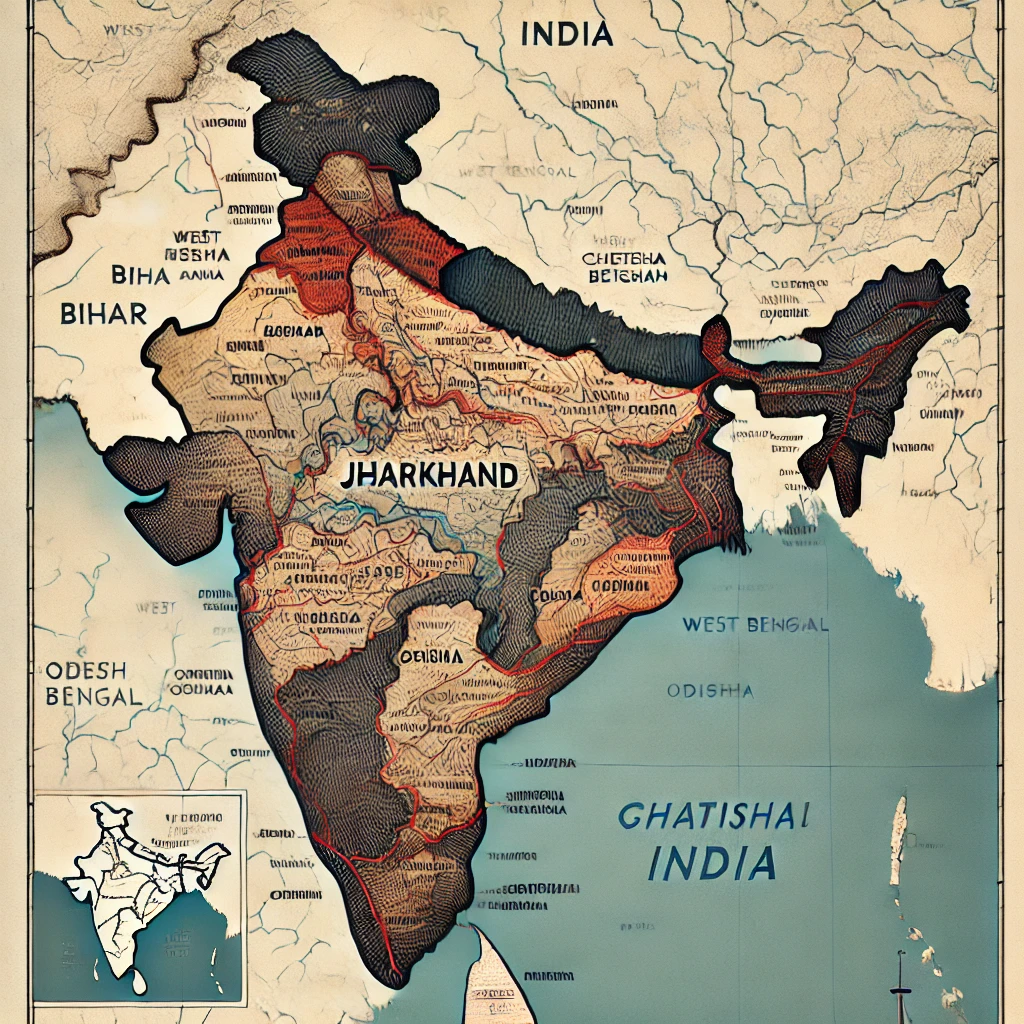
The geographical location of Jharkhand is very important due to its natural beauty, mineral resources, and strategic position in eastern India. This state is geographically diverse and plays a vital role in the economic, industrial, and ecological structure of the region. Let us study its geographical location in detail.
Geographic Range of Jharkhand
Jharkhand is surrounded by four Indian states and is economically and culturally connected with other parts of eastern India.
- North: Bihar
- South: Odisha
- East: West Bengal
- West: Chhattisgarh and Uttar Pradesh
Area and Landforms
- Total area: 79,716 square kilometres
- The terrain of Jharkhand is mostly plateau and hilly.
- Most of the state lies on the Chota Nagpur Plateau, which is the catchment area of important rivers like the Damodar and Koel.
Plateaus and Hills
Chota Nagpur Plateau
The largest part of Jharkhand lies on this plateau. It is the richest mineral region of India and forms the backbone of the state’s economy.
Rajmahal Hills
Located in the eastern part of Jharkhand, this region is famous for its volcanic rocks and historical importance.
Parasnath Hill
Parasnath Hill is the highest peak of Jharkhand and is also a major pilgrimage site for Jainism.
Rivers and Water Bodies
Jharkhand has several important rivers that support agriculture, mining, industry, and hydropower generation.
Major Rivers
Subarnarekha River
This is one of the main rivers of Jharkhand. It originates near Ranchi and is vital for irrigation and industry.
Damodar River
Called the “lifeline of Jharkhand”, this river is important for transportation and industrial development. Several dams like Maithon and Panchet have been built on it.
Koel and Son Rivers
These rivers supply water to the western part of Jharkhand and support agricultural activities.
Weather and Climate
The climate of Jharkhand is mainly tropical in nature.
- Summer: March to June, temperatures may rise up to 40°C
- Monsoon: June to September, heavy rainfall
- Winter: November to February, temperatures may drop to 5°C
The average annual rainfall ranges between 1,100 mm and 1,600 mm.
Vegetation and Biodiversity
About 29.6% of Jharkhand’s total area is covered with forests.
Main Forest Trees
- Sal
- Shisham
- Mahua
- Tendu
The forests are home to tigers, elephants, and many other wildlife species.
Major Wildlife Sanctuary
Betla National Park is the most famous wildlife area in Jharkhand.
Mineral Wealth and Geographical Importance
Jharkhand is known as the mineral reserve of India. About 40% of the country’s mineral resources are found here.
Major Minerals
- Coal
- Iron ore
- Copper
- Uranium
The plateau terrain of Jharkhand is highly suitable for mineral extraction and industrial development.
Natural Sites and Tourism
The geographical location of Jharkhand makes it an attractive destination for nature and wildlife tourism.
Major Tourist Places
- Netarhat: Known as the “Shimla of Jharkhand”, famous for beautiful sunrise and sunset views
- Hazaribagh National Park: Ideal for wildlife and nature lovers
- Patratu Valley: Famous for winding roads, hills, and greenery
Geographical Importance of Jharkhand
Jharkhand’s geographical location makes it suitable for mineral mining, hydropower generation, agriculture, biodiversity conservation, and tourism. Its natural landscape plays a vital role in maintaining environmental balance and economic development.
Geographical Situation
Geographically, Jharkhand is located in the eastern part of India and lies in the tropical region of the Northern Hemisphere.

Latitude and Longitude
- Latitude: 22°00′ to 24°37′ North
- Longitude: 83°15′ to 87°01′ East
Terrain and Geography
The state consists of plateau regions, hills, dense forests, and river systems. Being a part of the Chota Nagpur Plateau, Jharkhand is rich in minerals.
Important Cities and Their Location
- Ranchi: Capital city, located in central Jharkhand
- Jamshedpur: Industrial city in the south-eastern region
- Dhanbad: Coal industry hub in the north-eastern region
- Bokaro: Steel production centre in the north-western region
Boundaries of Jharkhand
The borders of Jharkhand make it strategically and economically important.
- Bihar: Northern boundary, with strong historical and cultural ties
- Odisha: Southern boundary, rich in forests and minerals
- West Bengal: Eastern boundary, known for coal and industrial activities
- Chhattisgarh and Uttar Pradesh: Western boundary
These boundaries strengthen trade, transportation, and cultural exchange between Jharkhand and neighbouring states.
Area of Jharkhand
The total area of Jharkhand is 79,716 square kilometres, which is about 2.42% of India’s total geographical area. Jharkhand is considered a medium-sized state.
Area Details
- Dominated by Chota Nagpur Plateau and Rajmahal Hills
- Dense forests, rugged terrain, and fertile fields
- Major mineral belts in Dhanbad, Bokaro, and Singhbhum
Jharkhand ranks as the 16th largest state in India in terms of area.
Administrative Divisions
The state is divided into 24 districts, including Ranchi, Dhanbad, Bokaro, and East Singhbhum (Jamshedpur).
Major Rivers of Jharkhand
The rivers of Jharkhand are the lifeline of the state and play a key role in agriculture, industry, and biodiversity.
Important Rivers
- Damodar River: Lifeline of Jharkhand, important for industry and hydropower
- Swarnarekha River: Supports agriculture and industries like Jamshedpur
- Koel River: Tributary of Damodar, important for irrigation
- Barakar River: Largest tributary of Damodar
- North Koel River: Tributary of Son River
- Ajay River: Joins Bhagirathi River in West Bengal
- Shankha River: Known for Shankha Reservoir
Forests and Biodiversity of Jharkhand
Jharkhand’s forests and biodiversity are a major part of its natural heritage and support the livelihood of tribal communities.
Forest Area
- Dense forests: 11,787 sq km
- Medium density forests: 9,920 sq km
- Open forests: 5,898 sq km
Wildlife
The forests are home to tigers, elephants, leopards, deer, gaur, and various bird and reptile species.
National Parks and Sanctuaries
- Betla National Park (Palamu Tiger Reserve)
- Hazaribagh Wildlife Sanctuary
- Dalma Wildlife Sanctuary
- Netarhat Forest Region
Forest and Biodiversity Conservation
Government Efforts
- Forest Conservation Act, 1980
- Wildlife Protection Act, 1972
- Reforestation campaigns
- Dalma Elephant Corridor project
Local Community Participation
Tribal communities play an important role in conserving forests through traditional knowledge and sustainable practices.
Conclusion
Jharkhand’s geographical location, forests, rivers, mineral wealth, and biodiversity make it a unique and valuable state. Its geography supports industrial development while maintaining ecological balance. Sustainable conservation of natural resources is essential so that future generations can continue to benefit from Jharkhand’s rich natural heritage.
History of Jharkhand
The history of Jharkhand is rich, diverse, and deeply connected with the lives of its tribal communities. Since ancient times, this region has been a center of cultural, historical, and social activities. The traditions, struggles, and cultural identity of tribal societies have played a particularly important role in shaping the history of Jharkhand.
The history of Jharkhand can be broadly divided into different periods.
1. Ancient Period
The ancient history of Jharkhand is associated with early civilizations and the Vedic age.
Emergence of Tribal Culture
- The region was inhabited by tribal communities such as the Asur, Munda, Santhal, and Ho.
- These communities depended on farming, hunting, and forest resources for their livelihood.
- Tribal customs, social systems, and nature-based beliefs developed during this period.
Mahajanapada Period
- Parts of Jharkhand came under the influence of the Magadha and Anga Mahajanapadas.
- The region was known for iron ore and other minerals, which were used in tools and weapons.
Jain and Buddhist Influence
- The teachings of Lord Mahavira and Gautam Buddha reached parts of Jharkhand.
- Parasnath Hill (Giridih) became an important pilgrimage site for Jainism.
2. Medieval Period
During the medieval period, Jharkhand was mainly ruled by local kings and tribal chiefs.
Rule of Local Kings
- The Chhotanagpur region was ruled by the Nagavanshi dynasty.
- The Singhbhum region was under local rulers of Manbhum and Singhbhum.
Influence of Muslim Rulers
- Jharkhand came under the influence of the Delhi Sultanate and later the Mughal Empire.
- Muslim culture and architectural elements entered the region during this time.
Tribal Resistance
Local tribal communities frequently revolted against external rulers and oppressive tax systems, showing early resistance to outside control.
3. British Period
The British period is marked by intense tribal resistance and exploitation of natural resources.
Establishment of British Rule
- In 1765, the British annexed most of Jharkhand into the Bengal Presidency.
Major Tribal Rebellions
- 1772 – Paik Rebellion (Palamu region)
- 1831–1832 – Kol Rebellion
- 1855–1856 – Santhal Rebellion, led by Sido–Kanhu and Chand–Bhairav
- 1900 – Birsa Munda Movement

Birsa Munda and Ulgulan
Birsa Munda organized tribal communities and launched the “Ulgulan” (Great Rebellion) against British rule, exploitation, and missionary influence.
Exploitation of Mineral Resources
- The British began large-scale mining of coal, iron, and other minerals.
- Tata Steel was established in Jamshedpur in 1907, marking industrial development.
4. Contribution to the Indian Freedom Struggle
The people of Jharkhand actively participated in India’s freedom struggle.
Major Freedom Fighters of Jharkhand
- Birsa Munda
- Sidhu and Kanhu
- Tilka Manjhi
Tribal leaders and local rulers resisted British authority and contributed significantly to the national freedom movement.
5. Post-Independence Period (1947–2000)
After India’s independence in 1947, Jharkhand became a part of the state of Bihar.
Jharkhand Movement
- Movements began demanding a separate state for Jharkhand to protect tribal identity and resources.
- In 1939, Jaipal Singh Munda founded the Adivasi Mahasabha.
- Jharkhand Mukti Morcha (JMM) was established in 1973.
These movements laid the foundation for the creation of a separate state.
6. Formation of Jharkhand (15 November 2000)
Jharkhand was separated from Bihar and became a new state on 15 November 2000. It became the 28th state of the Republic of India.
Main Objectives of State Formation
- Preservation of tribal culture and regional identity
- Proper utilization of mineral resources
- Social and economic development of tribal communities
Historical Importance of Jharkhand
Tribal Struggles and Identity
The history of Jharkhand symbolizes the continuous struggle of tribal communities for freedom, dignity, and self-respect.
Minerals and Industrial Development
Jharkhand’s mineral resources played a crucial role in India’s industrial growth, especially in steel and mining industries.
Culture and Traditions
Folk songs, folk dances, tribal art, and festivals of Jharkhand reflect the cultural diversity of India.
Conclusion
The history of Jharkhand is a powerful blend of struggle, culture, and natural resources. The state is not only known for its mineral wealth and forests but also for its proud traditions and history of resistance. Understanding the history of Jharkhand helps us appreciate its cultural roots and the sacrifices made by its people.
Frequently Asked Questions (FAQs) on the History of Jharkhand
Which tribal communities lived in Jharkhand in ancient times?
In ancient times, Jharkhand was inhabited by tribal communities such as the Asur, Munda, Santhal, and Ho, who depended on agriculture, hunting, and forests.
Who was Birsa Munda and why is he important?
Birsa Munda was a great tribal leader who led the Ulgulan (Great Rebellion) against British rule in 1900. He fought against exploitation and worked for tribal rights.
When was Jharkhand formed as a separate state?
Jharkhand was formed as a separate state on 15 November 2000 after being separated from Bihar.
What were the major tribal rebellions in Jharkhand during British rule?
Major tribal rebellions included the Paik Rebellion (1772), Kol Rebellion (1831–32), Santhal Rebellion (1855–56), and the Birsa Munda Movement (1900).
Why was the Jharkhand Movement started?
The Jharkhand Movement was started to protect tribal culture, ensure proper use of mineral resources, and promote the social and economic development of tribal communities.
Tribal Culture of Jharkhand
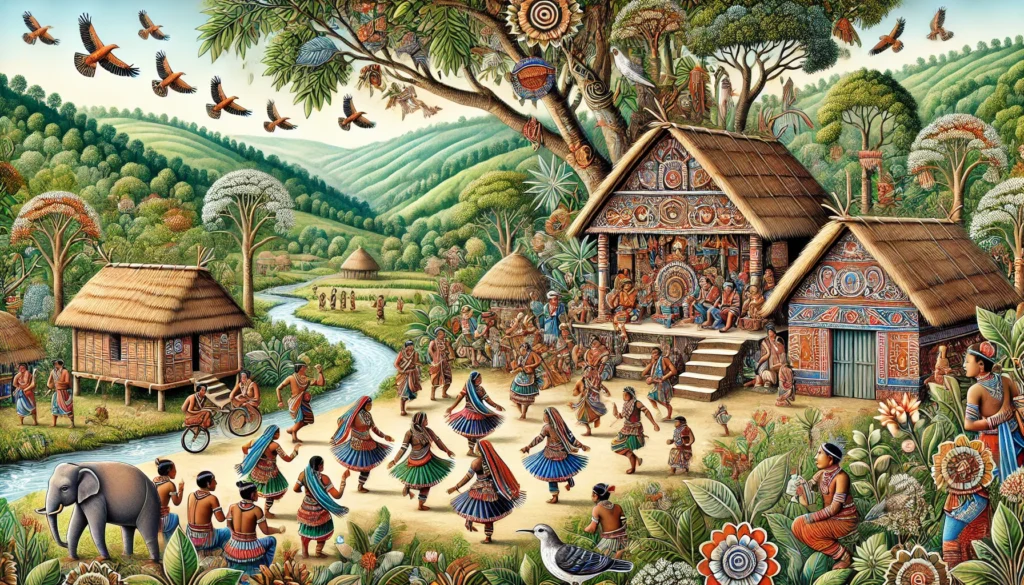
The tribal culture of Jharkhand forms the very foundation of the state’s identity and cultural heritage. The lifestyle, traditions, festivals, folk dances, art, and languages of the tribal communities are unique and deeply rooted in nature. These communities reflect a harmonious relationship with forests, land, and natural resources, making Jharkhand one of the richest regions in terms of indigenous culture in India.
1. Major Tribal Communities of Jharkhand
There are 32 recognized tribal communities in Jharkhand. Some of the major tribes include:
- Santhal: The largest tribal group of Jharkhand
- Munda: Known for the historic rebellion led by Birsa Munda
- Ho: Mainly settled in the Singhbhum region
- Oraon: Found in Palamu, Lohardaga, and Gumla districts
- Asur: Known for ancient iron-smelting skills
- Korwa, Birhor, Kharia, Parha: Other important tribal groups
2. Lifestyle and Traditional Economy
Lifestyle
- Tribal communities live close to nature with a simple and eco-friendly lifestyle.
- They depend on forests, agriculture, and animal husbandry.
- Traditional houses are made of mud, bamboo, and leaves.
Economic Activities
Farming
- Jhum cultivation (shifting cultivation) is practiced in some areas.
- Main crops include rice, maize, and coarse grains.
Forest-Based Livelihood
- Collection of Mahua, tendu leaves, bamboo, and wood
Hunting and Fishing
- Traditionally practiced as part of food habits and cultural customs
3. Language and Literature
Languages
The major tribal languages spoken in Jharkhand are:
- Santhali
- Mundari
- Ho
- Kurukh
- Kharia
- Asuri
Literature and Oral Traditions
Tribal literature is largely oral in nature. Folk tales, songs, stories, and epics are passed down from generation to generation. These oral traditions reflect nature, bravery, morality, and collective values of tribal society.
4. Religion and Belief Systems
Nature Worship
Tribal religion in Jharkhand is deeply connected with nature. Natural elements such as the sun, moon, rivers, mountains, trees, and earth are worshipped.
Main Deities
- Singbonga: Supreme deity of the Munda and Ho tribes
- Marang Buru: Principal god of the Santhal community
- Mother Earth: Worshipped by all tribal groups
Shamanism
Religious rituals are performed by tribal priests or shamans, who act as mediators between humans and spiritual forces.
5. Arts and Handicrafts
Traditional Painting
Sohrai and Kohbar Art
- Wall paintings made using natural colours
- Created during weddings and festivals
- Depict animals, nature, fertility, and religious symbols
Handicrafts
- Bamboo and wooden crafts
- Iron tools and ornaments
- Stone and clay sculptures
6. Folk Dance and Music
Folk Dances
Dance is an integral part of tribal life and is closely linked to festivals and agricultural cycles.
- Santhali Dance: Performed with drums and madal
- Sarhul Dance: Celebrated in spring
- Karma Dance: Associated with harvest
- Paika Dance: Symbol of bravery and martial spirit
Music
Tribal music reflects themes of nature, love, and festivals. Common musical instruments include dhol, mandar, flute, and nagada.
7. Festivals of Jharkhand Tribes
Tribal festivals are closely connected with nature, agriculture, and community life.
- Sarhul: Worship of Mother Earth during spring
- Karma: Celebrated after harvesting
- Magha Festival: Worship of nature and forest deities
- Sohrai: Worship of cattle during Diwali
- Baha: Festival of flowers
8. Social Order and Governance
Traditional Panchayat System
Tribal society follows the traditional Parha system. The village head or Mukhiya plays an important role in resolving disputes.
Social Solidarity
Tribal communities are based on equality, cooperation, and collective living. Collective farming, dances, and festivals strengthen social unity.
9. Modern Challenges and Conservation Efforts
Challenges
- Urbanization and mining threatening tribal culture
- Displacement and poverty
- Decline of tribal languages
Conservation Efforts
- Government and NGO initiatives to preserve tribal culture
- Revival of traditional arts, languages, and festivals
- Laws for tribal rights and land protection
Major Tribal Communities of Jharkhand (In Detail)
1. Santhal Tribe
The Santhals are the largest tribal community, mainly inhabiting the Santhal Pargana region.
- Language: Santhali
- Culture: Agriculture-based society with strong traditions of music and dance
- Festival: Sarhul
- Historical Role: Santhal Rebellion (1855–56)
- Religion: Nature worship, Singbonga and Dharti Mata
2. Munda Tribe
- Language: Mundari
- Livelihood: Agriculture and forest resources
- Famous Leader: Birsa Munda
- Religion: Nature worship, Marang Buru
3. Oraon Tribe
- Language: Kurukh
- Region: Palamu, Lohardaga, Gumla
- Culture: Agriculture, Karma festival and dance
- Religion: Worship of natural elements
4. Ho Tribe
- Language: Ho
- Region: Singhbhum and parts of Odisha
- Dance: Ho Dance
- Religion: Worship of Mother Earth and Sun God
5. Kharia Tribe
- Language: Kharia
- Livelihood: Forest-based economy
- Festivals: Lohri and Holi
- Religion: Nature worship
6. Asur Tribe
- Language: Asuri
- Region: Lohardaga and Ranchi
- Specialty: Ancient iron-smelting and metal craftsmanship
- Religion: Community-based nature worship
Conclusion
The tribal culture of Jharkhand is known for its rich traditions, strong connection with nature, and collective way of life. This culture not only forms the identity of Jharkhand but also represents one of the oldest and most original forms of human civilization. Preserving and promoting tribal culture is essential for maintaining India’s cultural diversity and heritage.
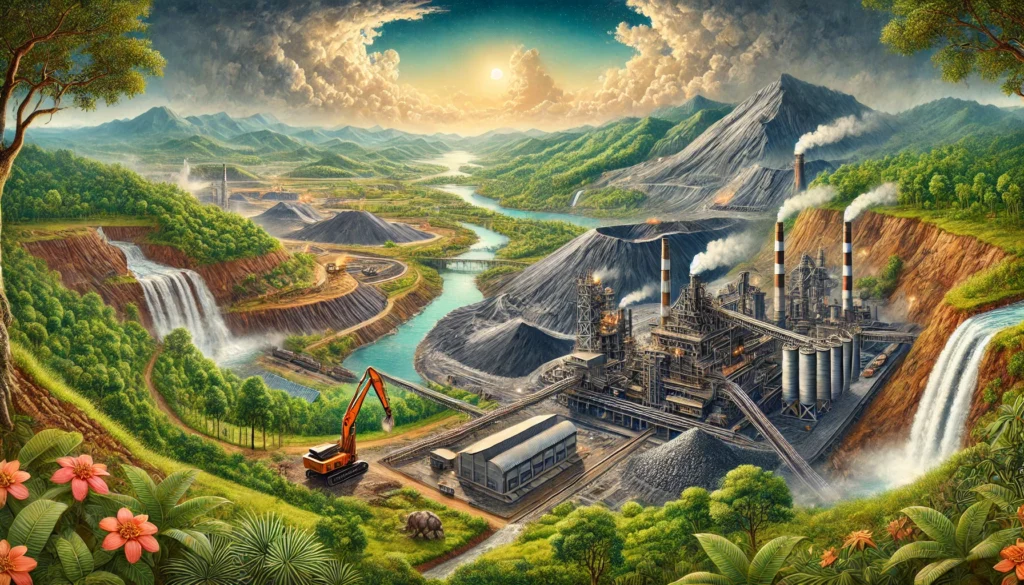
Natural Resources and Mineral Wealth of Jharkhand
Jharkhand is famous not only in India but also globally for its rich natural resources and mineral wealth. The extensive underground and surface minerals of the state have made it one of the most important industrial and mining regions of India. Along with minerals, Jharkhand is also blessed with forests, water resources, fertile land, and biodiversity, all of which strengthen the state’s economy.
1. Mineral Resources of Jharkhand
Jharkhand is a major hub of mineral resources and has deposits of almost all important minerals. Mining activities are spread across different regions of the state and play a vital role in industrial development.
1.1 Coal
- Jharkhand is one of the largest coal-producing states in India.
- The state contributes about 25% of India’s total coal production.
- Major coalfields are located in Dhanbad, Koderma, and Ramgarh.
- Public and private sector companies such as Coal India Limited and Bharat Coking Coal Limited operate here.
- Coal mining has led to the growth of steel and thermal power industries in the state.
1.2 Iron Ore
- Jharkhand is the second-largest producer of iron ore in India.
- Major iron ore belts include Singhbhum, Chotanagpur Plateau, and Palamu.
- High-quality iron ore from Jharkhand supplies major steel plants.
- Industries like Tata Steel depend heavily on iron ore from this state.
1.3 Rock Phosphate
- Jharkhand has reserves of rock phosphate, which is essential for fertilizer production.
- These reserves are mainly found in the Chotanagpur Plateau.
1.4 Limestone
- Limestone is produced in large quantities in Jharkhand.
- It is widely used in the construction and cement industries.
- Major limestone mining areas include Lohardaga, Ranchi, and Garhwa.
1.5 Manganese
- Jharkhand also produces manganese, which is important for steel and metallurgy industries.
- Manganese mines are mainly located in the Kolhan region and Singhbhum district.
1.6 Bauxite
- Bauxite, the primary ore of aluminium, is found in Jharkhand.
- Major bauxite belts are located in Lohardaga, Ranchi, and Gumla.
1.7 Crude Oil and Natural Gas
- Jharkhand has limited reserves of crude oil and natural gas.
- These resources are comparatively less significant than coal and iron ore.
2. Water Resources
Jharkhand is rich in water resources, which are essential for agriculture, drinking water, and energy generation.
2.1 Rivers
- Major rivers flowing through Jharkhand include Son, Swarnarekha, Kosi, Barakar, and Mahanadi.
- River water is used for irrigation, domestic needs, and hydroelectric power generation.

2.2 Hydroelectric Projects
- Hydroelectric projects such as Chutupalu and Thora help in power generation.
- These projects contribute to meeting the energy needs of the state.
3. Forest Resources
Jharkhand is a forest-rich state, with nearly 29% of its land area covered by forests. These forests support wildlife, tribal livelihoods, and medicinal resources.
3.1 Mahua and Tendu Leaves
- Mahua: Mahua flowers are an important source of income for tribal communities. They are used to prepare traditional liquor and sweets.
- Tendu leaves: Used in the production of beedis and provide seasonal employment to tribal families.
3.2 Bamboo
- Bamboo is widely available in Jharkhand.
- It is used for construction, handicrafts, furniture, and household items.
3.3 Wood and Natural Resins
- Various types of timber and forest resins are produced.
- These resources are important for both domestic use and industries.
4. Agricultural Resources
Agriculture is the backbone of Jharkhand’s rural economy. The land and climate of the state support diverse agricultural activities.
Main Crops
- Rice: Staple and major food crop
- Maize and wheat
- Pigeon pea (tuar) and other pulses
- Sesame, mustard, potato, and groundnut
Agricultural Strengths
- Fertile soil in river valleys
- Availability of irrigation from rivers and reservoirs
- Traditional knowledge of farming among tribal communities
5. Wildlife and Biodiversity
Jharkhand is rich in wildlife and biodiversity, supported by its dense forests and varied terrain.
Protected Areas and Biodiversity Hotspots
- Regions like Palamu and Hazaribagh are well-known biodiversity zones.
- Wildlife species include tigers, elephants, leopards, deer, and numerous bird species.
Conclusion
Jharkhand is a state endowed with abundant natural resources and mineral wealth. Its minerals, water resources, forests, agricultural land, and biodiversity together form the foundation of the state’s economy. With proper planning and sustainable use, these resources can ensure economic growth, environmental protection, and social justice. Responsible management of Jharkhand’s natural wealth is essential for balanced development and the well-being of future generations.
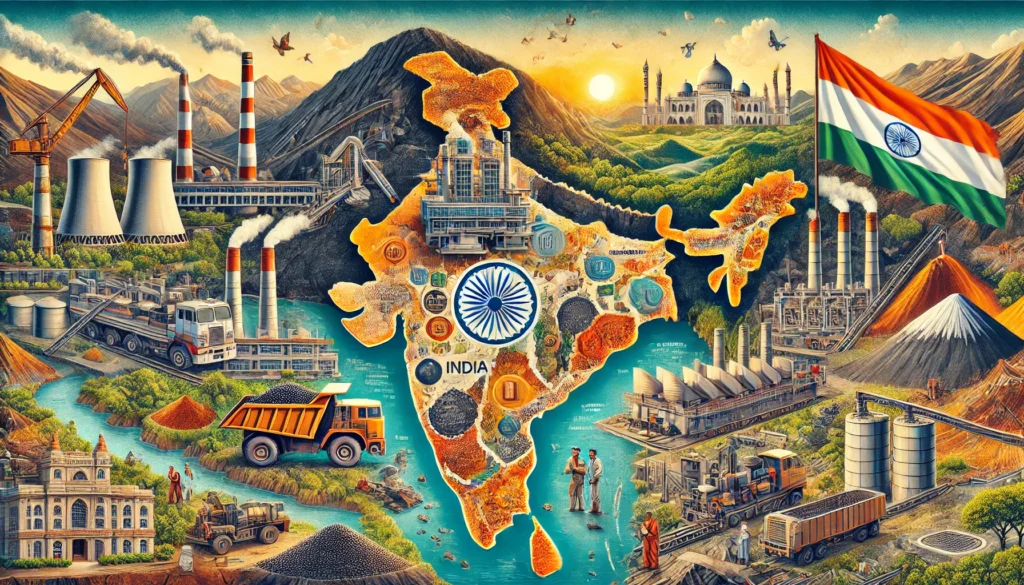
Mineral Reserves of India
India is a mineral-rich country, and its mineral reserves are among the largest and most diverse in the world. These mineral resources play a vital role in industry, construction, energy production, and economic development. The availability and production of minerals such as coal, iron ore, bauxite, and limestone significantly strengthen India’s industrial base and energy security.
Major Mineral Reserves of India
1. Coal
India is the second-largest producer and consumer of coal in the world. Coal is the backbone of India’s energy sector and is widely used in electricity generation, steel manufacturing, and other industries.
Coal Reserves
- Large coal reserves are found in Jharkhand, Chhattisgarh, Odisha, Madhya Pradesh, and Rajasthan.
- Major coalfields include Dhanbad (Jharkhand), Singrauli (Madhya Pradesh), and Korba (Chhattisgarh).
- Coal mining is mainly operated by Coal India Limited (CIL) and its subsidiaries.
2. Iron Ore
India is the fourth-largest producer of iron ore in the world. Iron ore is a crucial raw material for steel production.
Iron Ore Reserves
- Major iron ore belts are located in Jharkhand, Odisha, Karnataka, Chhattisgarh, and Goa.
- Important mining regions include Singhbhum (Jharkhand), Kendujhar and Balasore (Odisha), and Bellary (Karnataka).
3. Bauxite
Bauxite is the principal ore of aluminium and plays an important role in the manufacturing and transportation industries.
Bauxite Reserves
- Major bauxite-producing states are Odisha, Jharkhand, Karnataka, Maharashtra, and Gujarat.
- Important mining areas include Kalahandi (Odisha) and Belagavi (Karnataka).
- Companies like NALCO and BALCO are major producers.
4. Limestone
Limestone is a key mineral for the cement and construction industries.
Limestone Reserves
- Found mainly in Rajasthan, Madhya Pradesh, Uttar Pradesh, and Bihar.
- Major limestone-producing areas include Pali and Udaipur (Rajasthan) and Jabalpur (Madhya Pradesh).
5. Gold
India is a major consumer of gold, though its domestic reserves are limited.
Gold Deposits
- Gold mines are located in Karnataka, Rajasthan, and Andhra Pradesh.
- Important areas include Hutti (Karnataka) and Ramagiri.
6. Diamonds
India has historical significance in diamond mining, though present reserves are limited.
Diamond Deposits
- The most famous diamond mine is located in Panna (Chhattisgarh).
7. Rock Phosphate
Rock phosphate is essential for fertilizer production.
- Major reserves are found in Rajasthan (Alwar, Jodhpur) and parts of Uttar Pradesh.
8. Copper
Copper is widely used in electrical, metallurgical, and manufacturing industries.
- Major copper mining areas are Jhunjhunu and Sirohi (Rajasthan) and parts of Madhya Pradesh.
9. Zinc
Zinc is important for galvanization and alloy manufacturing.
- Main zinc-producing areas include Udaipur and Rajsamand (Rajasthan).
- Hindustan Zinc Limited (HZL) is the leading producer.
10. Potash

Potash is a critical fertilizer mineral.
- Potash deposits are mainly found in Rajasthan (Sikar, Jodhpur).
11. Manganese
Manganese is essential for steel manufacturing.
- Major manganese-producing states include Maharashtra, Madhya Pradesh, Odisha, and Karnataka.
12. Other Minerals
India also has reserves of silica sand, graphite, tin, and various minor minerals that support diverse industries.
Coal Mines in India
Coal mines play a crucial role in meeting India’s energy needs and supporting industrial development.
Major Coal Mining Regions
1. Jharkhand
- Dhanbad – Known as the “Coal Capital of India”.
- Jharia Coalfield – Famous for high-quality coking coal.
- Koderma and Hazaribagh – Important coal-producing areas.
2. Madhya Pradesh
- Singrauli – One of the largest coal reserves in India.
- Pachmarhi – Important for commercial coal production.
3. Chhattisgarh
- Korba – One of the largest coal-producing regions.
- Janjgir–Champa – Significant contributor to coal output.
4. Odisha
- Kendujhar and Sukinda – Important coal-bearing regions.
- Koraput and Balangir – Support energy generation.
5. West Bengal
- Raniganj – India’s oldest coalfield.
- Durgapur – Important for steel and power industries.
6. Maharashtra
- Chandrapur – Largest coal-producing area in the state.
7. Uttar Pradesh
- Sonbhadra – Important for power generation.
8. Rajasthan
- Ramgarh and Pali – Limited coal mining areas.
Role of Coal Mines in India
- Major source of electricity generation
- Essential for steel, cement, and chemical industries
- Employment generation for millions
- Significant contribution to government revenue
Steel Industry in India
The steel industry is one of the pillars of India’s industrial growth. Steel is widely used in construction, infrastructure, automobiles, defense, energy, and manufacturing.
History of the Steel Industry in India
- 1907 – Tata Steel established at Jamshedpur
- 1950–60 – Expansion of public sector steel plants
- Post-1991 – Rapid growth of private sector steel companies
Importance of the Steel Industry
- Major contribution to GDP and exports
- Large-scale employment generation
- Essential raw material for infrastructure and defense
Major Steel Producing Companies
- Tata Steel – Jamshedpur, Odisha
- SAIL – Bhilai, Burnpur, Bokaro
- JSW Steel – Maharashtra
- ArcelorMittal – Jharkhand and Odisha
- RINL (Vizag Steel)
Major Steel Producing Regions
- Jharkhand – Jamshedpur, Bokaro
- Chhattisgarh – Bhilai
- Odisha
- Maharashtra – Raigad
- West Bengal – Burnpur
Challenges Facing the Steel Industry
- Irregular supply of raw materials
- Environmental pollution
- Global competition
- Need for technological modernization
Conclusion
India’s mineral reserves form the backbone of its industrial and economic development. Coal, iron ore, and other minerals support energy production, manufacturing, and infrastructure growth. Similarly, the coal mining and steel industries play a vital role in employment generation and national development. Sustainable mining practices, technological advancement, and environmental protection are essential to ensure long-term benefits from India’s mineral wealth.

References
- Government of India, Ministry of Mines – Mineral Resources and Mining in India
- Geological Survey of India (GSI) – Major Mineral Resources of India
- Ministry of Coal, Government of India – Coal Reserves and Production in India
- Ministry of Steel, Government of India – Indian Steel Industry: Structure and Growth
- NCERT Geography Textbooks – Minerals and Energy Resources of India
- NITI Aayog – Industrial and Mineral Development in India
- Official publications of Tata Steel and SAIL – Steel Production and Industrial Contribution
- Economic Survey of India – Economic Importance of Mineral Resources