
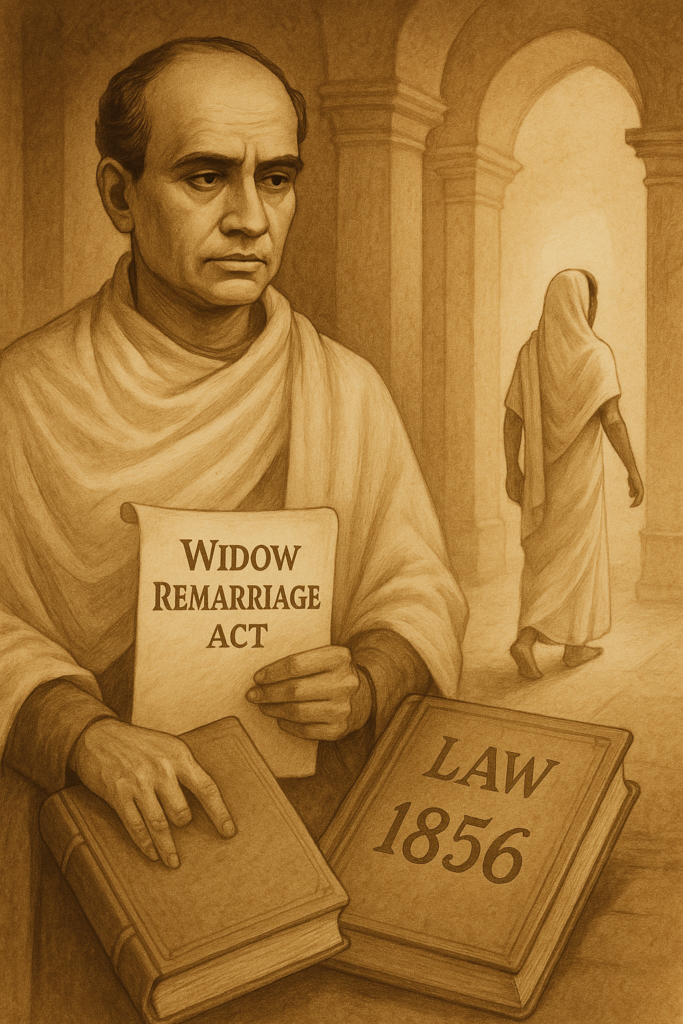
Ishwar Chandra Vidyasagar: Social Reformer and Educationist
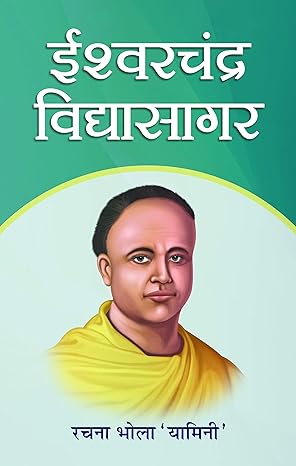
Ishwar Chandra Vidyasagar (26 September 1820 – 29 July 1891) was a great social reformer, educationist and writer of India. He was one of the main pillars of the Bengal Renaissance, and his role in women’s education, widow remarriage and social reform was highly significant.
Early Life and Education
Ishwar Chandra Vidyasagar was born on 26 September 1820 in Veersingh village of Medinipur district of West Bengal in a poor Brahmin family. His father, Thakurdas Bandopadhyay, and mother, Bhagwati Devi, were religious and simple-minded people.
Despite poverty, Vidyasagar worked hard and continued his studies. He received his early education in the village, and in 1829 he joined Sanskrit College in Calcutta (now Kolkata). There he studied Sanskrit, grammar, literature, astronomy, astrology, theology, the Vedas and Upanishads, as well as English.
Due to his extraordinary intellect and deep knowledge, he was given the title “Vidyasagar”, meaning “ocean of learning” or “ocean of knowledge”.
Contribution to Education Reform
Vidyasagar was a visionary educationist who brought revolutionary changes in the Indian education system. He believed that education should be practical, accessible and inclusive.
Support for Women’s Education
At that time, society paid little attention to women’s education. Vidyasagar strongly promoted the idea that women must have equal access to learning.
Key Initiatives for Women’s Education
- Established girls’ schools to promote women’s education.
- Helped in the establishment of the Bethune School, the first school for girls in Bengal.
- Advocated education for widows and poor women, encouraging society to accept educated women.
Reforms in Sanskrit College
As a leading scholar and later principal of Sanskrit College, Vidyasagar modernised its curriculum.
Modernisation of Curriculum
- Introduced modern subjects along with traditional Sanskrit learning.
- Made English and Science part of formal education.
- Improved textbooks and made them simpler and more practical for students.
Spread of Education
Vidyasagar believed that education should reach every section of society, including the poor and the oppressed.
Efforts to Expand Access to Education
- Established schools in different parts of Bengal.
- Launched campaigns to provide free education to poor children.
- Ran several schools at his own expense to support needy students.
Literary Contributions
Ishwar Chandra Vidyasagar was also a great writer and translator. His works played a crucial role in the development of Bengali language and literature.
Barnaparichay
Barnaparichay is his most famous book written in Bengali, designed to help children learn the Bengali alphabet.
- It simplified learning for Bengali children.
- It is still popular in Bengal even today.
Translation of Sanskrit Literature
Vidyasagar translated many Sanskrit texts into Bengali so that common people could understand religious and classical literature.
- Made scriptures and classical works easily accessible to the public.
- Translated important works such as “Shakuntala” and “Sitar Vanvas” into Bengali.

✔ Easy & convenient to use
✔ Great value for daily use
✔ Popular choice among customers
Development of Bengali Prose
He is widely regarded as the father of modern Bengali prose.
- Simplified Bengali language and writing style.
- Made prose more practical, clear and accessible for common people.
- Laid the foundation for modern Bengali literature.
Personality and Values
Vidyasagar was famous for his simple, kind and fearless nature. He never hesitated to stand up for truth and justice, even against powerful forces.
- Always ready to help the poor and the needy.
- Used his own money to support widow remarriage and education for poor students.
- Lived a simple life and dedicated himself to the welfare of society.
Demise and Legacy
This great social reformer passed away on 29 July 1891. However, his ideas and reforms continue to influence Indian society even today.
- Inspired long-term improvement in the status of women in Indian society.
- Helped women’s education and widow remarriage gain social and legal recognition.
- Gave a new direction to Bengali language and literature through his writings.
Ishwar Chandra Vidyasagar was a strong pillar of education and reform in Indian society. Through his actions, he helped shape the future of the country and showed how courage, compassion and knowledge can transform the world.
Conclusion
Ishwar Chandra Vidyasagar was a towering personality who spread awareness in society through his thoughts and actions. He made invaluable contributions in the fields of education and social reform.
His life teaches us that true efforts, compassion and fearlessness can bring deep and lasting changes in society. Vidyasagar remains a source of inspiration not only for Bengal but for the entire India, reminding us to stand for justice and use education as a tool for transformation.
Frequently Asked Questions (FAQ)
Who was Ishwar Chandra Vidyasagar?
Ishwar Chandra Vidyasagar was a great Indian social reformer, educationist and writer. He played a key role in the Bengal Renaissance and worked for women’s education, widow remarriage and the removal of social evils.
Why was he called “Vidyasagar”?
He was called “Vidyasagar”, meaning “ocean of knowledge”, because of his extraordinary intellect, deep scholarship in Sanskrit and other subjects, and his remarkable achievements in education.
What was Ishwar Chandra Vidyasagar’s contribution to women’s education?
Vidyasagar strongly supported women’s education at a time when it was largely neglected. He established girls’ schools, helped in founding Bethune School in Bengal and encouraged education for widows and poor women.
What is the Widow Remarriage Act of 1856?
The Widow Remarriage Act of 1856 was a law passed by the British government in India that legally allowed widows to remarry. Ishwar Chandra Vidyasagar was one of the main forces behind this act, and he actively promoted and supported widow remarriage.
How did Vidyasagar reform the education system?
Vidyasagar reformed the education system by introducing modern subjects in Sanskrit College, adding English and Science to the curriculum, simplifying textbooks, and opening schools for poor children and marginalized communities.
What are some famous works of Ishwar Chandra Vidyasagar?
His most famous work is Barnaparichay, a foundational Bengali primer for children. He also translated several important Sanskrit works into Bengali, such as “Shakuntala” and “Sitar Vanvas”, and played a major role in developing modern Bengali prose.
How does Ishwar Chandra Vidyasagar inspire society today?
Vidyasagar inspires society through his courage, compassion and dedication to education and social justice. His life shows that one person’s commitment to truth and reform can bring long-lasting change, especially in areas like women’s rights, education and social equality.
Suggested Internal Linking Ideas
- Link the phrase “Bengal Renaissance” to an article on your site about the Bengal Renaissance, for example: Bengal Renaissance: Causes and Impact.
- Link “women’s education in India” to a detailed post on the history and current status of women’s education, for example: Women’s Education in India: History and Challenges.
- Link “social reformers of India” to a broader article on Indian reformers such as Raja Ram Mohan Roy, Jyotiba Phule, etc.: Major Social Reformers of India.
- Link “Bengali literature” or “Bengali prose” to an article on the evolution of Bengali literature: Growth of Modern Bengali Literature.
- Link “Widow Remarriage Act, 1856” to a legal or historical analysis post: Widow Remarriage Act 1856: Background and Significance.
You can adjust the anchor texts and URLs according to the structure of your website to improve internal linking, user engagement and SEO.
Early Life and Education of Ishwar Chandra Vidyasagar
Ishwar Chandra Vidyasagar was born on 26 September 1820 in Veersingh village of Medinipur district, West Bengal. He belonged to a poor Brahmin family, but his parents were deeply religious and greatly valued education. His father, Thakurdas Bandopadhyay, and mother, Bhagwati Devi, taught him high moral values from childhood.
Childhood Spent in Poverty
Vidyasagar’s childhood was filled with hardships due to his family’s financial struggles. Despite poverty, his parents were determined to provide him with proper education. The village lacked educational facilities, yet young Ishwar Chandra showed extraordinary intelligence and curiosity.
His early education began in the village, but his desire for knowledge and the support of his parents led him to Kolkata for further studies.
Beginning of Education in Kolkata
Admission to Sanskrit College (1829)
In 1829, at just 9 years of age, Vidyasagar went to Kolkata and took admission in the prestigious Sanskrit College, the leading institution of traditional Indian education.
Subjects Studied at Sanskrit College
- Sanskrit Language and Grammar
- Vedas, Upanishads and Dharmashastras
- Astronomy and Astrology
- Nyaya Philosophy (Logic)
- English Language and Mathematics

✔ Easy & comfortable to use
✔ Great performance & value
✔ Popular among Amazon buyers
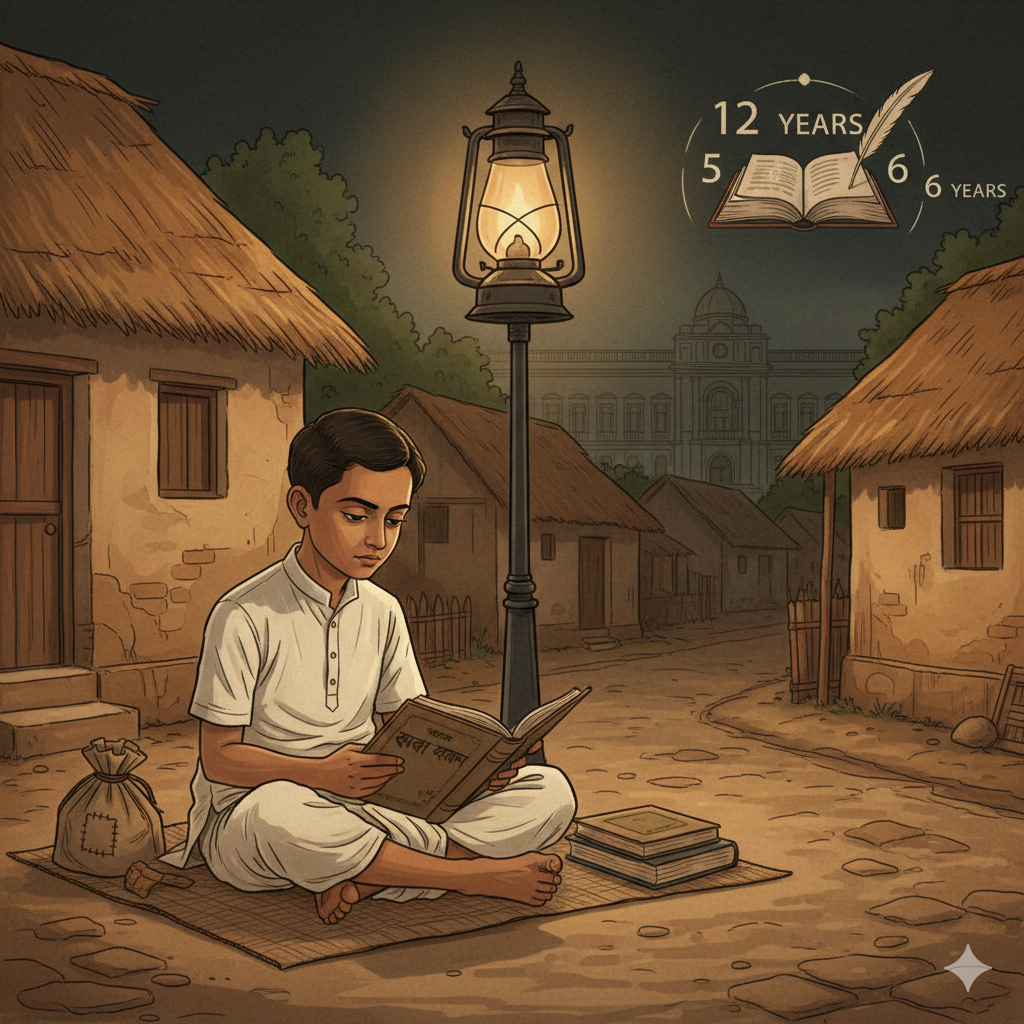
He was so brilliant that he completed the 12-year course in just 6 years, surprising teachers with his exceptional understanding.
Economic Struggle and Self-Reliance
Due to financial problems, Vidyasagar had to work while studying. His determination toward education was remarkable:
- At night, he studied under street lamps because there was no money to buy oil for lamps at home.
- He worked as a home tutor to support his education and help his family financially.
- His discipline, hard work, and self-reliance made him stronger and more focused.
Obtaining the Title “Vidyasagar”
His exceptional performance at Sanskrit College impressed all his teachers. He consistently topped examinations and displayed deep knowledge across subjects. Seeing his scholarship, he was honored with the title “Vidyasagar”, meaning “Ocean of Knowledge.”
Attitudes Towards Education
Ishwar Chandra Vidyasagar believed that the true purpose of education is not merely to acquire knowledge but to use it for the upliftment of society.
His Educational Views
- Education should be available to everyone—girls, boys, poor and rich alike.
- Education should be practical and scientific so that society can progress.
- Along with Sanskrit, subjects like English, Mathematics and Science are essential.
- The poor and backward classes must also get an opportunity to receive education.
Conclusion
The early life of Ishwar Chandra Vidyasagar was filled with poverty and struggles, yet his hard work, discipline and passion for knowledge made him one of India’s greatest educationists and social reformers.
He proved that no struggle is too big if there is dedication and determination. He used education not only for personal growth, but to improve society and uplift the backward and oppressed. This is why he is considered one of the strongest pillars of the Indian education system.
Frequently Asked Questions (FAQ)
When and where was Ishwar Chandra Vidyasagar born?
He was born on 26 September 1820 in Veersingh village of Medinipur district, West Bengal.
Why was he called “Vidyasagar”?
He received the title due to his exceptional intelligence, academic excellence and vast knowledge across many subjects.
How did Vidyasagar manage his education despite poverty?
He studied under street lamps, worked as a home tutor, and supported his family while completing his studies.
Which subjects did he study at Sanskrit College?
Sanskrit grammar, Vedas, Upanishads, logic, astronomy, astrology, English and mathematics.
What was Vidyasagar’s view on education?
He believed education must be accessible to all, scientific, practical and useful for the progress of society.
Suggested Internal Linking Ideas
- Link to your article on Bengal Renaissance to give readers more historical context.
- Link to posts about women’s education in India to connect Vidyasagar’s reforms with modern education.
- Link to major social reformers of India to enhance topical authority.
- Link to an article on Indian education system history for deeper insight.
Ishwar Chandra Vidyasagar’s Contribution to Education Reform
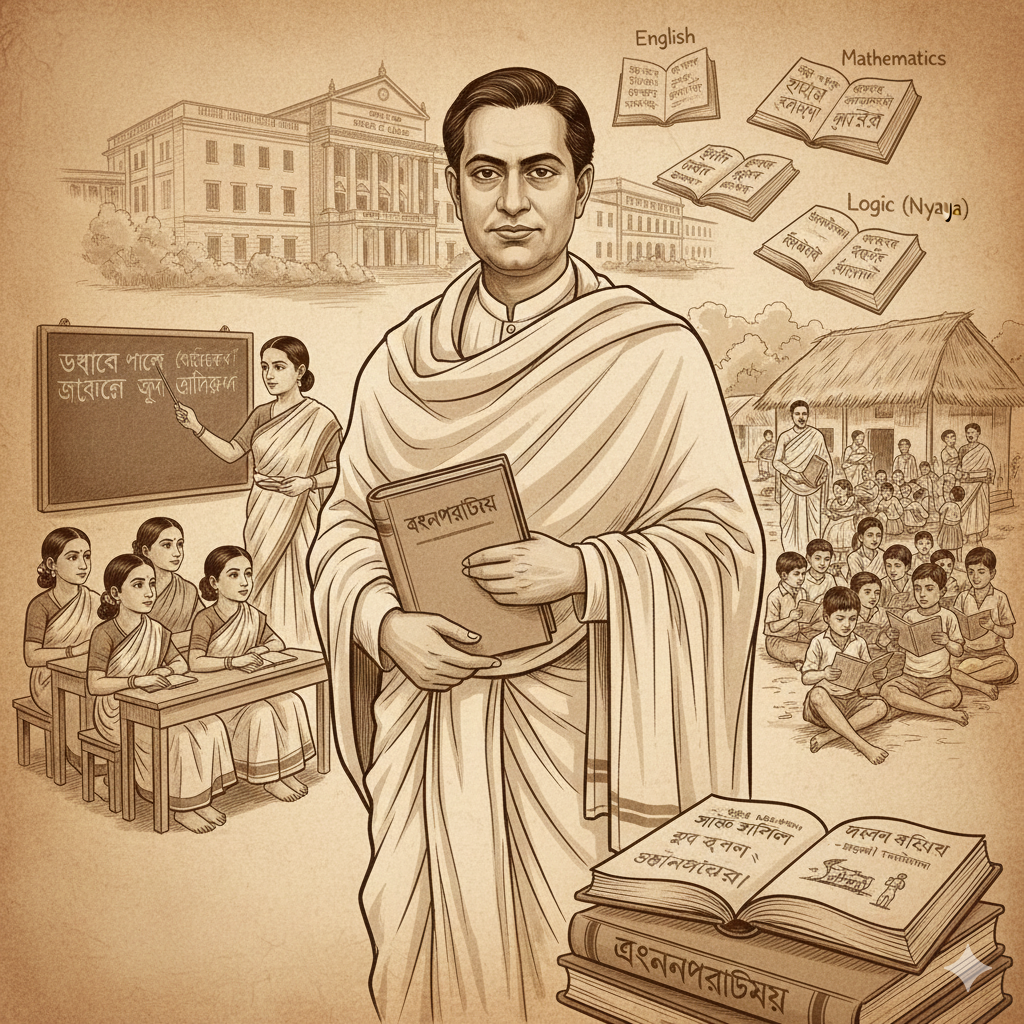
Ishwar Chandra Vidyasagar was not only a social reformer; he was also a visionary educationist who worked tirelessly to make education accessible to every section of society. His main objective was to improve the Indian education system and make it practical, scientific and inclusive. He made major contributions in women’s education, primary and higher education, Sanskrit college reforms, curriculum development and educational opportunities for poor students.
1. Promotion of Women’s Education
During Vidyasagar’s time, women’s education was neglected and even discouraged. Many believed that educating women would “spoil” them. Vidyasagar worked with courage and compassion to change this mindset.
Key Contributions in Women’s Education
Opening of Girls’ Schools
- Established multiple girls’ schools across Bengal.
- Personally financed school operations and paid teachers’ salaries.
Equal Importance to Girls’ Education
- Strongly believed that boys and girls deserve equal educational rights.
- Linked women’s education with overall social reform.
Contribution to Bethune School (1849)
- Played a major role in establishing Bengal’s first women’s school.
- Helped create a structured curriculum for women’s primary education.
Awareness Campaign
- Encouraged families to educate their daughters.
- Collaborated with Brahmo Samaj and other reformers to promote women’s literacy.
2. Reforms in Primary and Higher Education
Vidyasagar believed that the Indian education system must be modern, practical and useful for society. Therefore, he initiated significant reforms both at the primary and higher education levels.
Expansion of Primary Education
- Established more than 35 schools in Bengal.
- Arranged free education for poor students.
- Designed simple and practical courses to make learning easier.
Reforms in Higher Education
- Advocated introducing modern subjects such as English, Science and Mathematics.
- Promoted logical reasoning and scientific thinking alongside Sanskrit education.
3. Improvement in Sanskrit College
In 1851, Vidyasagar became the Principal of the historic Sanskrit College, Kolkata. He modernized the entire curriculum and made the college more inclusive and progressive.
His Major Reforms in Sanskrit College

✔ Comfortable and easy to use
✔ Excellent performance & value
✔ Highly popular among buyers
Inclusion of Modern Subjects
- Introduced English, Mathematics, Science and Social Science.
- Shifted focus from purely religious studies to practical knowledge.
Scholarship Schemes
- Created scholarships for poor and meritorious students.
- Enabled financially weak students to pursue higher education.
Ending Caste-Based Restrictions
- Opened admissions to all castes.
- Previously, only Brahmin boys were allowed in the college.
Teacher Qualification Reforms
- Appointed trained and capable teachers.
- Started teacher training programs for improved teaching quality.
4. Development and Improvement of Textbooks
Vidyasagar contributed immensely to making education simpler and easier for children by developing high-quality textbooks.
Important Works
1. Writing of Barnaparichay
- A simple Bengali primer for children to learn alphabets.
- Still considered the most popular learning book in Bengal.
2. Translation of Sanskrit Texts
- Translated many Sanskrit classics into Bengali.
- Made literature accessible to common people.
- Translated works like Shakuntala and Sitar Vanvas.
3. Making Curriculum Practical
- Promoted conceptual understanding instead of rote memorization.
- Presented grammar, mathematics, science and history in simple language.
5. Making Education Accessible to All
Vidyasagar believed that education should not remain a privilege of the wealthy. Everyone — especially the poor and women — should have equal access to learning.
- Provided free education for poor students.
- Introduced scholarships and financial assistance schemes.
- Simplified curriculum to make learning easy.
- Launched special educational programs for girls and widows.
Conclusion
Vidyasagar played a transformative role in modernizing the Indian education system. His efforts promoted women’s education, helped poor students, and made learning more practical and scientific. He believed that education is not just a tool for knowledge but the strongest weapon for social reform. His contributions make him one of India’s greatest pioneers in education and social progress.
Ishwar Chandra Vidyasagar’s Contribution to Social Reform
Along with revolutionizing education, Vidyasagar fought against social evils such as widow oppression, child marriage, polygamy, caste discrimination and inequality. He was one of the leading social reformers of India.
1. Struggle for Widow Remarriage
During his time, widows were socially excluded and denied the right to remarry. Vidyasagar fought courageously to uplift their status.
Key Steps Taken
Widow Remarriage Act, 1856
- He campaigned for legal protection of widow remarriage.
- Due to his efforts, the Hindu Widows’ Remarriage Act, 1856 was passed.
Social Awareness
- Used scriptures to prove that widow remarriage is not forbidden in Hindu texts.
- Wrote articles, delivered speeches and educated communities.
Personal Support
- Organized widow marriages with his own funds.
- Provided financial assistance to widows entering new marriages.
2. Promotion of Women’s Education
- Opened more than 35 girls’ schools.
- Helped establish Bethune School (1849)—Bengal’s first girls’ school.
- Trained women teachers and encouraged family participation.
3. Movement Against Child Marriage
- Raised awareness about the physical and mental harm caused by child marriage.
- Pressured the British government to enact legal restrictions.
- Convinced families and religious leaders to delay marriages to the proper age.
4. Opposition to Caste System and Social Discrimination
- Advocated admission of lower caste students in Sanskrit College.
- Promoted equality and brotherhood.
- Worked for the upliftment of poor and backward sections.
5. Movement Against Polygamy
- Exposed the injustice of polygamy in Hindu society.
- Appealed for legal reforms to stop the practice.
- Promoted monogamy as a fair and ethical social system.
Conclusion
Vidyasagar fought throughout his life against social evils and inequalities. Due to his tireless efforts, women’s education strengthened, widow remarriage gained legal recognition, caste discrimination decreased, and awareness against child marriage and polygamy increased. He was not just a reformer — he was a revolution.
“Ishwar Chandra Vidyasagar was not just a name but a reform movement in himself.”
Frequently Asked Questions (FAQ)
What was Vidyasagar’s biggest contribution to education?
His biggest contribution was promoting women’s education, introducing modern subjects and making education accessible to all.
What social evils did Vidyasagar fight against?
He fought against widow oppression, child marriage, polygamy, caste discrimination and denial of women’s rights.
What is the Widow Remarriage Act of 1856?
It legally allowed Hindu widows to remarry, a reform made possible largely due to Vidyasagar’s efforts.
Why is Vidyasagar called a pioneer of social reform?
He modernized education, fought social injustices and helped shape a progressive Indian society.
Suggested Internal Linking Ideas
- Link to: Bengal Renaissance article.
- Link to: Women’s Education in India: History and Development.
- Link to: Indian Social Reformers: Raja Ram Mohan Roy, Jyotiba Phule.
- Link to: History of Indian Education System.
Literary Contribution of Ishwar Chandra Vidyasagar
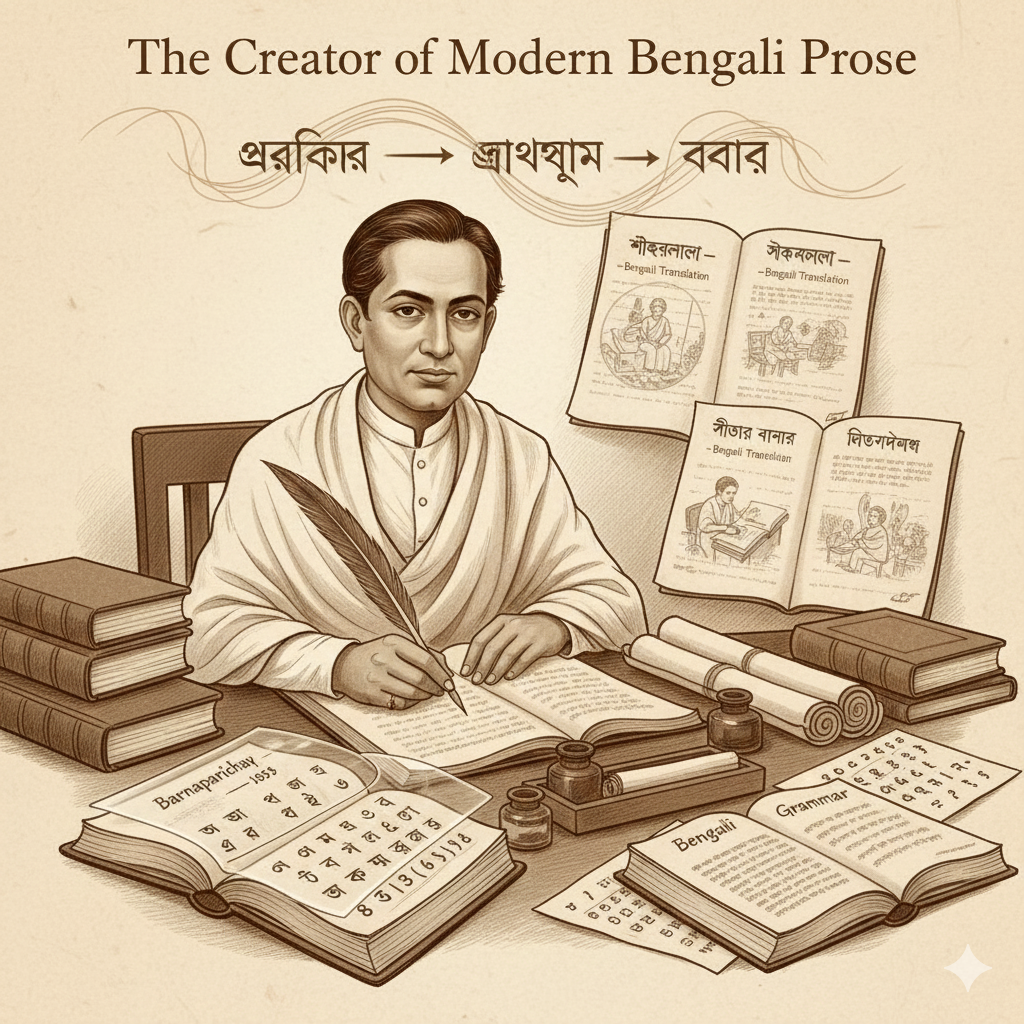
Ishwar Chandra Vidyasagar was not only a social reformer and educationist, but also an exceptional litterateur. He played a pivotal role in enriching the Bengali language and literature. Vidyasagar simplified Bengali prose, making it accessible and practical for common people. He wrote and translated several important books, which remain cornerstones of Bengali literature.
1. Father of Modern Bengali Prose
Vidyasagar is known as the “Father of Modern Bengali Prose.” His efforts transformed Bengali prose into a simple, clear and easy-to-understand language.
Improvements Made by Him
- He replaced Sanskrit-heavy, complex language with simple and practical prose.
- Made literature accessible to both educated and uneducated readers.
- Enriched Bengali grammar and established organized writing principles.
Significant Impact
His reforms connected Bengali prose to modernity and rational thinking. Later writers like Rabindranath Tagore were greatly inspired by his style.
2. Major Literary Works
(i) Barnaparichay – 1855
- His most famous work, still used as a primary education book in Bengal.
- Explains letters, vowels, consonants and basic grammar in a simple style.
(ii) Translation of Sanskrit Texts
He translated several Sanskrit classics into Bengali to make them accessible to common people.
Notable Translations
- Kalidasa’s Shakuntala
- Sitar Vanvas (from Ramayana)
- Hitopadesh and Panchatantra stories
(iii) Biographical and Historical Works
- Betal Panchavimshati (Baital Pachisi) – a collection of folk tales
- Books on simplified Sanskrit grammar

✔ Easy & comfortable for everyday use
✔ Excellent performance & value
✔ Popular choice among customers
(iv) Ethical Literature
He composed many moral and instructive stories to promote values and character building in society.
3. Improvement in Bengali Language and Grammar
Vidyasagar organized Bengali language scientifically and systematically.
- Created new rules for Bengali grammar independent of Sanskrit grammar.
- Improved spelling and pronunciation consistency.
- Standardized the Bengali script and introduced proper punctuation usage.
4. Creation of Textbooks
To make education simple and effective, he wrote several textbooks for primary and secondary classes.
- Barnaparichay – for primary learning
- Sanskrit Grammar – simplified grammar for students
- Betal Panchavimshati – for moral instruction
5. Contribution to Magazines and Literary Movements
Vidyasagar contributed to Bengal’s journalistic and literary movements by writing articles on women’s education, widow remarriage, caste discrimination and social reform. His writings ignited modern literary awareness and inspired literary giants like Rabindranath Tagore.
Conclusion
Vidyasagar’s literary contribution was extensive and transformative. He gave Bengali language a modern, organized form, simplified prose writing, created textbooks and made Sanskrit literature accessible through translations. His contributions continue to shape Indian language, education and society. He was not only a writer but a guide for the nation.
Personality and Values of Ishwar Chandra Vidyasagar
Vidyasagar was a rare personality whose thoughts and actions brought a new direction to Indian society. He was an educationist, reformer, writer and philanthropist. His life symbolized integrity, sacrifice and dedication towards social reform.
1. Personality Characteristics
(i) Discipline and Hard Work
- He lived a life dedicated to discipline and self-study.
- Worked day and night to spread knowledge among the masses.
- Provided educational opportunities to the poor and deprived.
(ii) Simplicity and Humility
- Lived a very simple life, free from luxury and ego.
- His humble lifestyle made him relatable to common people.
(iii) Integrity and Honesty
- He never compromised on truth or morality.
- Opposed dishonesty and corruption in all forms.
(iv) Courage and Determination
- A fearless reformer who stood against conservative social norms.
- Fought for widow remarriage and women’s education despite opposition.
(v) Compassion and Generosity
- Helped the poor, needy and students with financial support.
- Established orphanages, schools and rest houses.
2. Moral and Social Values
(i) Importance of Education
- Believed education is the foundation of societal progress.
- Opposed ignorance, superstition and exploitation.
- Strongly promoted women’s education.
(ii) Equality and Social Justice
- Opposed caste discrimination.
- Fought for equal rights for all people, regardless of caste or class.
(iii) Protection of Women’s Rights
- Supported widow remarriage, women’s education and prohibition of child marriage.
- Considered women equal to men in rights and dignity.
(iv) Morality and Social Reform
He believed true education builds character, morality and humanity.
(v) Self-Reliance and Hard Work
Encouraged people to shape their destiny through hard work and knowledge.
3. Inspirational Incidents
(i) Helping the Poor
He once donated a major portion of his earnings to help an underprivileged student, saying: “I only need what is necessary to survive, but it is more important to support a student deprived of education.”
(ii) Supporting Widow Remarriage
He personally arranged and financially supported several widow marriages to give them social acceptance.
(iii) Truthfulness Before a British Officer
When asked why people loved him, he replied: “Because I follow the path of truth and justice.”
4. Influence and Legacy
- Strengthened women’s education in India.
- Legal recognition of widow remarriage was achieved through his efforts.
- Encouraged morality, simplicity and honesty in society.
- Inspired great personalities like Tagore, Vivekananda and Gandhi.
Conclusion
Vidyasagar’s life symbolizes truth, justice, courage, education and social reform. His teachings inspire us to create a just, equal and educated society. “Vidyasagar was not just a person but an ideology.”
Death and Legacy of Ishwar Chandra Vidyasagar
1. Death
(i) Difficulties of His Last Days
In his final years, he suffered physical and mental distress. Despite his efforts, society often failed to appreciate his contributions.
(ii) 29 July 1891 — End of an Era
Vidyasagar passed away on 29 July 1891 in Kolkata at the age of 70. His death marked the end of an era but left behind an immortal legacy.
(iii) Impact of His Death
His demise shocked the nation. India lost a true humanist, reformer and intellectual.
2. Legacy of Vidyasagar
(i) Contribution in Education
- Father of women’s education in India.
- Established schools and colleges still operating today.
- His books remain integral to Bengali learning.
(ii) Contribution in Social Reform
- Legalized widow remarriage.
- Fought child marriage and caste discrimination.
(iii) Impact on Literature and Language
- Father of modern Bengali prose.
- Simplified grammar and wrote influential books.
- Translated Sanskrit texts for public understanding.
(iv) A Source of Inspiration
His ideas influenced Gandhi, Tagore, Vivekananda and many movements for women’s rights and social justice.
3. Honors in His Memory
(i) Institutions and Awards
- Vidyasagar College (Kolkata)
- Vidyasagar Setu (Hooghly River Bridge)
- Vidyasagar University (West Bengal)
(ii) Postage Stamps and Monuments
Government of India issued stamps and built monuments in his honor.
(iii) Symbol of Social Consciousness
Even today, Bengal remembers him as a symbol of morality, reform and education.
Conclusion
“Vidyasagar was not just a person but a movement.” The seeds of education and social reform he planted have grown into a vast tree. His legacy will forever remain alive in Indian history.
Frequently Asked Questions (FAQ)
Why is Vidyasagar called the Father of Modern Bengali Prose?
Because he simplified Bengali prose, standardized grammar and made literature accessible to common people.
What books did Ishwar Chandra Vidyasagar write?
Barnaparichay, Betal Panchavimshati, Sanskrit grammar books and translations of Sanskrit classics such as Shakuntala.
How did Vidyasagar contribute to social reform?
He fought for widow remarriage, women’s education, social equality, and against child marriage and caste discrimination.
When did Ishwar Chandra Vidyasagar die?
He died on 29 July 1891 at the age of 70 in Kolkata.
Suggested Internal Linking Ideas
- Link to your article on Bengal Renaissance.
- Link to a post about Women’s Education in India.
- Link to Great Social Reformers of India.
- Link to History of Bengali Literature.
References
✔ Convenient & easy for daily use
✔ Excellent performance & value
✔ Popular choice among Amazon buyers
- Ishwar Chandra Vidyasagar’s collected works and biographies – Government of West Bengal Publications.
- “Life and Contributions of Vidyasagar” – Ministry of Culture, Government of India.
- Books on Bengal Renaissance and Vidyasagar’s reforms – National Library, Kolkata.
- Historical documents related to Widow Remarriage Act, 1856 – British India Legislative Records.
- Bengali Literature & Language Development Studies – Various academic journals and research papers.
Contribution to Social Reform
Ishwar Chandra Vidyasagar was not only an educationist but also a courageous social reformer. He took bold steps to challenge deep-rooted social evils and injustices.
Widow Remarriage Movement
During his time, the condition of widows was extremely pitiable. They faced social contempt, humiliation and strict restrictions.
Key Steps for Widow Remarriage
Struggle Against Child Marriage
Child marriage was widely prevalent, and young girls suffered physically, emotionally and socially.
Awareness Against Child Marriage
Opponent of Polygamy
Polygamy was a common practice in society, where men married multiple times without social objection.
Promotion of Monogamy